
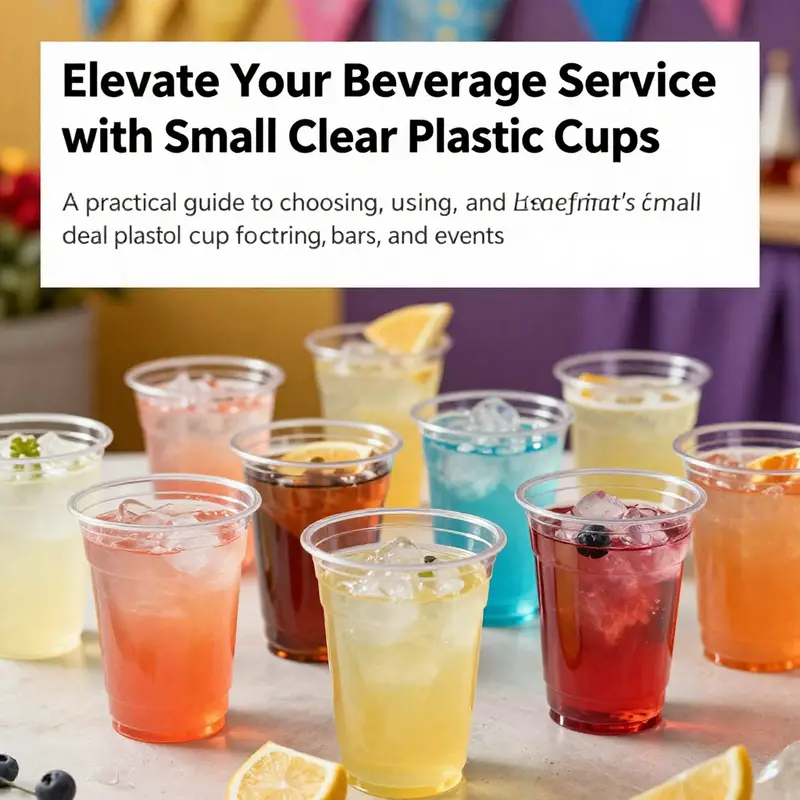
Small clear plastic cups are essential in beverage service and event planning. Their clear, professional look enhances presentation while enabling quick cleanup and efficient service. This article explores Walmart’s small clear plastic cups, comparing them with offerings from other retailers and outlining versatile use cases for catering, food trucks, restaurants, and gatherings.
null
null
Beyond the Aisle: How Walmart’s Small Clear Cups Measure Up Across Retailers
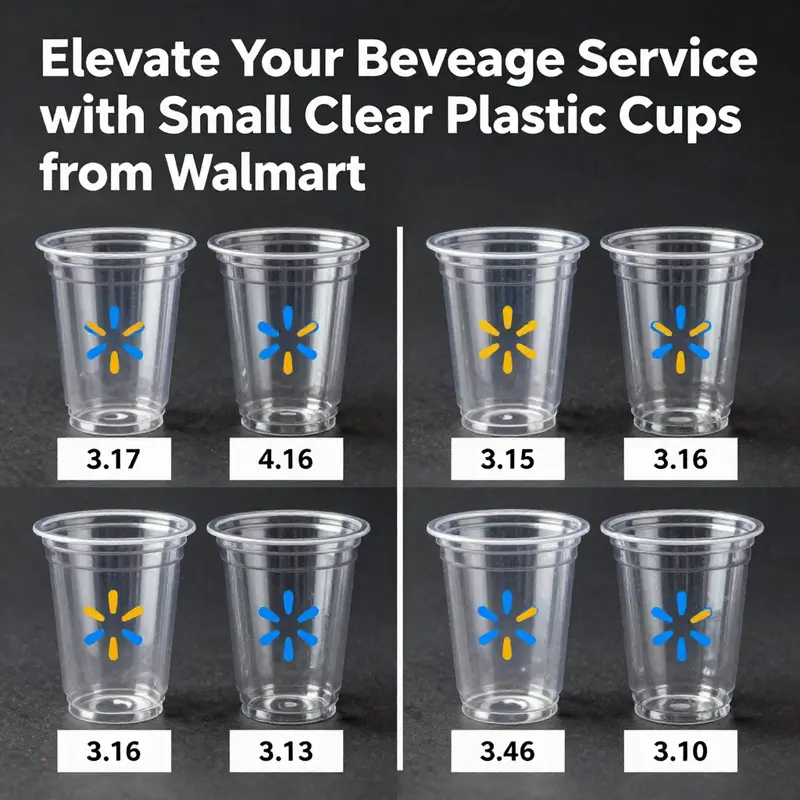
When planners size up the hardware of a gathering, the humble clear plastic cup often becomes a subtle hinge point between a smooth experience and a hiccup at the beverage station. The Walmart listing for small clear disposable cups provides a practical baseline: a 9 ounce cup sold in a 100 count pack, priced in a way that makes a large event feel manageable without overextending the budget. This baseline is not flashy, but it matters. It offers a dependable silhouette that presents beverages, desserts, and canap es with clarity, while the single use design minimizes cleanup time and the burden of glassware transport. For casual events, school functions, or workplace mixers, this kind of package hits a sweet spot: enough cups to cover a weekend of gatherings, a price tag that stays within reason, and a standard size that suits a wide range of drinks and portions. In other words, Walmart fulfills a core need for reliability and ready availability, which is why it frequently anchors the planning process for hosts who want predictability as a starting point rather than a leap of faith.
Beyond this baseline, Walmart’s catalog often includes a premium disposable option in the same 9 ounce class. This variant typically comes in a smaller count but a higher price, a reminder that look and feel still matter even in disposable tableware. The premium option is designed to project a cleaner edge, a tighter rim, and a more polished presentation that can be advantageous at venues where the cups sit in high-visibility spots or are associated with a more curated beverage experience. The contrast between the budget bundle and the premium set underscores an important nuance in event planning: when the moment calls for subtle elevating cues, a few more dollars per cup can translate into a more confident first impression. At Walmart this contrast is made visible through packaging choices and branding cues that hint at durability and aesthetics without insisting on a complete overhaul of the servingware.
Not all Walmart offerings align with the standard small clear cup mold, however. The catalog can feature a glow in the dark or novelty variant in a larger, nonstandard size, designed to pair with party lighting or a playful theme. These items are less about everyday utility and more about creating a moment at a specific event—an example of how the same retailer can address both ordinary needs and special occasions within a single product family. The presence of these options signals a broader strategy: catering to a spectrum of event contexts, from routine hydration to themed dessert corners. While such items may not be the go to choice for the majority of guests at a formal reception, they reveal a practical truth about inventory management and consumer desire—the same shelf can serve both the daily and the festive.
To understand how Walmart stacks up against other major channels, it helps to trace the terrain of size, cost, and availability that event planners navigate. On leading online marketplaces with bulk offerings, there are compact cups sold in small sizes at extremely large quantities. A popular configuration in this space is a 5 ounce cup in very large bundles, which dramatically lowers the unit price when the math adds up. The appeal here is straightforward: if the event calls for hundreds of servings and the look can stay simple, the per cup cost becomes the dominant factor. The upside is clear—a reduced bill for every guest served. The tradeoff, though, tends to be the absence of the more substantial 9 ounce profile and a potential shift in how the drink or dessert is showcased. For many hosts, this is a worthwhile trade if the focus leans toward volume rather than a specific presentation style.
Another layer of the landscape is the midrange market where 9 ounce cups come in medium sized packs, designed to balance quantity and cost for parties that straddle casual and semi formal spaces. Here the price per cup is higher than the extreme bulk option but still lower than the premium tier, making it attractive for events that want to keep costs predictable while avoiding the appearance of a giveaway product. In this tier, planners often discover a practical middle ground: enough cups to cover several service periods without sacrificing the sense of value they aim to convey to guests. It is in this middle ground that many event budgets find their rhythm, offering a reliable compromise between cost efficiency and presentation quality.
When the conversation shifts toward branding and durability, premium disposable lines come into sharper relief. A cup that looks sturdier, feels crisper to the touch, and presents a clean, consistent rim can contribute significantly to the perceived quality of the event experience. For guests who handle the cup repeatedly over the course of a program—think tasting stations, dessert spreads, or bar-like setups—the tactile impression can matter nearly as much as the liquid inside. In these moments, the upcharge for a premium option can be justified by the extra confidence it lends to the guest experience. At the same time, hosts must weigh the need for elegance against the practicalities of stocking, storage, and waste, ensuring that the final choice aligns with how the cups will be used and displayed.
The catalog diversity at larger retailers also mirrors shifts in consumer expectations around sustainability and convenience. A segment of shoppers arrives with a search for recyclable or lightweight compostable options, even within disposable categories. This drives demand for cups that preserve the simplicity of single use while offering a more responsible end-of-life profile. It is not uncommon to see a mix of standard disposable cups alongside environmentally oriented alternatives, sides of the same aisle, allowing hosts to tailor the servingware to the values of their audience. Walmart, like many major retailers, recognizes this nuance by stocking a spectrum of products that cater to everyday use and to occasions where a more deliberate environmental stance is important. The result is a catalog that can support a straightforward backyard barbecue just as readily as a town festival with a decor plan that leans on cohesive, themed presentation.
From a planning perspective, the numbers tell a practical story. The 9 ounce, 100 pack at Walmart translates to a cost per cup that can be clearly compared with online bulk bundles and with specialty lines. The budget option moves the needle on total event cost when hundreds of cups are needed, and the per cup savings compound across large scales. The premium option, while raising the per cup price, can yield dividends in the form of guest perception and the perceived polish of the beverage service. The 12 ounce novelty variant, though not a standard headcount option for every event, demonstrates how even single product families can be stretched into themed experiences without changing other elements of the setup. In sum, Walmart anchors the decision tree with a reliable baseline, while the broader market offers alternatives that expand the vocabulary of what a disposable cup can signify at the table.
This landscape matters most when translating inventory into event outcomes. For small gatherings with a clear focus on efficiency and cost control, Walmart’s baseline 9 ounce option is often sufficient. It supports a steady cadence of refills, a consistent guest experience, and a predictable storage footprint for the host. For larger events with fluctuating footfall, bulk options available through online marketplaces can yield meaningful savings, particularly when the choice centers on volume rather than presentation. For brand-conscious occasions, premium lines—even at a higher unit price—can help align the servingware with the overall tone of the event, reinforcing the impression of care and attention to detail without overpowering the drink or dessert being offered. Finally, for hosts who want to sprinkle a bit of whimsy into the experience, novelty cups can add a talking point without derailing the core function of the cup itself.
The broader takeaway is that the best choice is context dependent. Walmart serves as a dependable anchor, providing a solid starting point for many scenarios. The rest of the market offers pathways to pursue even lower unit costs, higher presentation value, or thematic enhancements. By recognizing how these options align with the event type, guest expectations, and logistical constraints, planners can map a clear route from the baseline to an optimized combination of price, quantity, and presentation. The result is not a single perfect cup but a tailored solution that supports the flow of the event while keeping the focus on what matters most—the guest experience and the ease of turning planning into a memorable gathering.
External resource: https://cupbowlpack.com/product/senang01-hot-sale-customized-disposable-single-wall-paper-ice-cream-cups-with-lid-eco-friendly-food-grade/
Clear Solutions for Event Service: The Role of Small Clear Plastic Cups

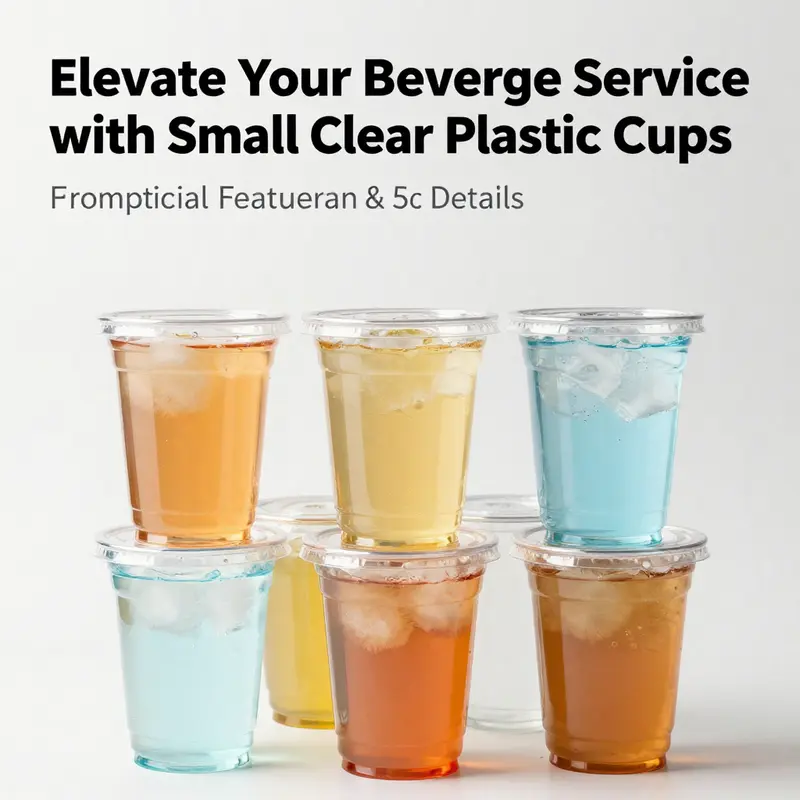
Small, clear plastic cups carry a quiet authority at events. They are not the stars on stage, but they quietly enable the experience guests remember: clean presentation, predictable portions, and quick service that frees people to mingle, sip, and sample without distraction. In practice, these cups—modest in size and humble in appearance—become essential instruments for event teams who need to balance speed, cost, and guest comfort. A typical vessel in this category holds around 7 ounces, equivalent to roughly 207 milliliters. This size hits a sweet spot for beverages, light desserts, or bite-sized appetizers, making it versatile enough to support a wide array of service styles. The transparency of the walls allows the color and texture of the contents to shine through, which is especially important when the host wants to showcase layered drinks, vibrant fruit drinks, or dessert shooters. The clear design communicates cleanliness and attention to detail, subtly elevating the perceived quality of the offering even as the cups are designed for easy disposal at the end of the event.
The practical appeal of these cups extends beyond their appearance. They are lightweight, stackable, and compatible with quick-service workflows. When an event spans several hours or requires multiple service points, the ability to transport large quantities in compact bundles becomes a real logistical advantage. Packs often contain a hundred cups, a number that maps neatly onto many event checklists and staffing plans. This quantity supports a steady cadence of refills without frequent trips back to the storage area, which in turn reduces the risk of bottlenecks at beverage stations. The cost-per-unit is typically favorable for large gatherings, making them a favorite for organizers who must deliver consistent service across dozens or hundreds of attendees.
Outdoor gatherings illuminate another strength of the small clear cup—their resilience in environments where glass is less practical. The combination of light weight and shatter resistance makes these cups a sensible choice for picnics, family barbecues, and park events where kids are running around and footing is uneven. The cups can be used for juice, water, or any non-alcoholic beverage, with or without lids, depending on whether the event calls for a grab-and-go model or a seated tasting setup. In these settings, the cups contribute to a calm, orderly service flow by offering guests a uniform, easily accessible vessel. Clear walls help staff confirm that a guest’s cup is clean and free of residue, while the lack of ornate embellishments means there is less that can break or interfere with stacking and restocking between stations.
For children’s parties, the value goes beyond practicality. The simplicity of a familiar, transparent cup makes it easy for young guests to identify their drinks quickly, whether it’s juice, water, or a specially colored beverage. The predictable size helps parents manage portions and reduces the risk of spills during high-energy activities. Even with kids in the mix, the cups’ neutral, unobtrusive design blends with a wide range of party themes and color schemes. In such environments, organizers often lean toward straightforward labeling or color-coded lids to avoid confusion when several flavor options are available. The goal is to maintain a smooth flow so children can participate in the party rhythm without interrupting the service sequence or creating clutter on the tables.
Weddings and receptions present a nuanced use case for disposable clear cups. While many venues opt for glassware to align with a formal aesthetic, disposable options still play a crucial role in high-volume service areas like cocktail stations, buffet lines, or dessert corners. In these settings, the cups serve as efficient workhorses that keep the focus on hospitality rather than on logistics. The clear cups showcase the beverage or dessert while minimizing the handling required by staff. They also support a quick, tidy cleanup after the event winds down, a feature many planners value highly when choreographing multiple service points and ensuring a timely exit for the venue team. The balance between presentation and practicality is what makes these cups a dependable choice when budgets, staffing, or weather complicate the plan.
In corporate and professional contexts, the ability to deliver uniform servings at scale is especially prized. Office lunches, conference breaks, training sessions, and town halls depend on a steady supply of cups that can be replenished rapidly. The simplicity of a single, standardized cup reduces decision fatigue for staff and volunteers who are focused on keeping lines moving and ensuring everyone has a drink before the next speaker or activity. This is not merely about convenience; it is about preserving the pace of an event, maintaining attendee engagement, and preventing long pauses that can break concentration. The same logic applies to school functions and community events, where volunteers shoulder a range of responsibilities. A dependable, low-maintenance cup helps those volunteers stay on schedule, allowing them to focus on the core activities that define the gathering.
Seasonality adds another layer to how these cups are employed. In hot months, guests seek refreshing beverages, and a steady supply keeps fountains of lemonade, iced tea, and flavored waters flowing. In cooler seasons, the same transparent vessels accommodate warm or room-temperature offerings with equal ease, especially when paired with lids or sleeves designed for stability. The adaptability of a small clear cup—in terms of temperature tolerance, flavor compatibility, and stacking efficiency—positions it as a versatile tool across a broad calendar of events. And for hosts exploring the aesthetic potential of their beverage program, the cup’s clarity becomes a blank canvas. Layered drinks, floating garnishes, or color-gradient concoctions benefit from a vessel that preserves the integrity of the presentation from the moment it’s poured to the moment it’s carried away by a guest.
Beyond the immediate experience, there is a broader logistical logic behind selecting disposable serving ware. When planning a large-scale event, hosts must consider storage, transport, and setup time. The cups’ compact form, combined with their straightforward geometry, makes them easy to inventory, stack, and load into vehicles. The uniformity across hundreds of units supports streamlined distribution, with attendants trained to identify and restock cups without interrupting guest flow. The end-to-end workflow—from delivery at the loading dock to the final sweep of the cleanup crew—benefits from the predictability a standard cup provides. In practice, this translates into measurable savings in labor hours and a reduced risk of service delays that can ripple through the entire event schedule.
Despite their strengths, any disposable solution invites considerations about sustainability and waste management. Hosts today weigh convenience against environmental impact, often seeking options that reduce waste while preserving service quality. Clear cups of this type are frequently compatible with recycling streams, and some venues pair them with waste-sorting programs and clear labeling to encourage responsible disposal. In planning conversations, organizers may also compare disposable options with more durable, reusable systems. The best choice depends on the event’s scale, duration, location, and the capacity of staff to manage cleanup. Even within the disposables category, there are gradations in manufacturing philosophy—some lines emphasize straightforward single-use convenience, while others adopt eco-friendly materials or post-consumer recycled content. The decision, then, is not a binary one but a spectrum where cost, efficiency, presentation, and sustainability converge.
For readers seeking practical inspiration, consider a representative product page that demonstrates the interplay between clarity, lid compatibility, and packaging quantity. The page highlights how a simple cup can be paired with lids for grab-and-go service and how stacking characteristics influence setup time. This example helps planners translate the general benefits of a clear cup into concrete actions—how many stations to staff, where to position cold beverage dispensers, and how to label flavors to minimize guest confusion. [hot-sale customized disposable single-wall paper ice-cream cups with lid] provides a useful contrast point, illustrating how packaging choices, even across different materials, reflect the same underlying priorities: efficiency, presentation, and guest experience. The key takeaway is that the right cup supports the broader service model, enabling smooth throughput without sacrificing the guest’s sense of care and hospitality.
As this exploration shows, the small clear plastic cup is more than a container. It is a tool that enables rhythm, clarity, and control in event environments. Its size, transparency, and disposability align with contemporary staffing realities, permitting quick set-up, rapid replenishment, and straightforward cleanup. The goodness of the cup lies in its ability to disappear as a barrier, allowing guests to focus on the moment—whether that moment is raising a toast, sampling a bite-sized dessert, or simply staying hydrated while conversations flow. In this sense, the cup becomes an ally for hosts and guests alike, adding a dependable layer to the day’s experience and helping events run more smoothly, whether the setting is a sunlit park, a corporate campus, or a community hall.
For readers who want a broader regulatory lens, a helpful external resource offers context about food-safe containers and usage standards. See the linked external guideline for a general framework that informs material choices and safety expectations. https://scjg.tj.gov.cn/tjsscjdglwyh_52651/xwdt/zlc
null
null
Clear Vessels, Clear Markets: The Economic Footprint of Walmart’s Small Clear Cups on the Party Supplies Landscape

In the world of party planning, a simple clear plastic cup can influence demand, pricing, and convenience. When a national retailer with broad reach makes a low-priced option for drinks, desserts, and appetizers widely available, it reshapes budgets, supplier pricing, and inventory planning. This chapter examines the economic ripple of commoditized, small clear cups sold in bulk. These cups, typically seven ounces or similar, invite mass adoption at social gatherings, backyard barbecues, and corporate events. The triad of portability, translucence, and disposability supports quick service, easy cleanup, and predictable costs that fit event budgets. The result is more than a convenient product; it is a strategic node in the disposable partyware ecosystem.\n\nProduct variety flows from availability across sizes, from seven ounces upward to larger options, and from packs ranging from dozens to hundreds. These cups hold roughly 200 milliliters, a size useful for cocktails, iced tea, or bite-sized desserts. Packaging often comes in bulk (for example, 100 cups per carton), signaling value and planning. Hosts can calculate quantities quickly, and a retailer’s logistics network helps keep stock reliable across regions. When a single retailer can serve rural towns and dense urban centers, the risk of stockouts during peak seasons is reduced.\n\nFrom a pricing standpoint, scale creates pressure across the segment. Competition—across brands and private-labels—faces a price floor set by procurement power. A common frame shows a 16-ounce clear cup in a 25-count package for a few dollars, aiding budgets for individuals and small businesses. The market responds through design innovations that improve clarity, strength, and production efficiency to maintain margins. The cycle tightens competitive dynamics: lower list prices, faster replenishment, and reliable service become baseline expectations.\n\nDistribution acts as the engine behind this dynamic. A retailer with an expansive network, combining stores and online channels, can push a steady stream of ready-to-use cups to households and event organizers. This reach accelerates growth in the party supplies market, linking routine entertaining and hospitality needs. The affordable, dependable disposable option becomes a default for many occasions, especially when guest counts are uncertain. The result is a steady revenue flow for the retailer and a stable demand signal for suppliers, encouraging them to align production and packaging with the retailer’s cadence. Even as environmental concerns enter the conversation, scale helps keep the product category vibrant and adaptable for new entrants and flexible inventory management.\n\nCustomer feedback often highlights durability, versatility, and uniformity. In practice, hosts value a cup that withstands beverages without warping, presents desserts cleanly, and remains comfortable to handle after hours of use. The broad availability of these cups supports both casual home entertaining and larger gatherings, where speed of service and cleanup reduce stress. The ability to source the same item across multiple locations—or via a single online order—reduces friction when coordinating supply for a multi-event agenda. These signals translate into repeat purchases and a more predictable revenue stream for retailers and their supply-chain partners.\n\nIn response, suppliers pursue efficiency and packaging innovations while retailers pursue price discipline. Volume buys lower unit costs, which can be passed to customers. Over time, manufacturers may invest in manufacturing efficiency and broader size assortments to capture more shelf space or digital listings. The economies of scale extend to wholesale channels, catering networks, and local party stores that rely on dependable, low-cost goods. The retailer acts as a catalyst, aligning demand with producer capability and encouraging standardized offerings that emphasize reliability and speed.\n\nPeople host more frequent, smaller celebrations, and the cup becomes a facilitator rather than a showpiece. The combination of affordability and convenience lowers the barrier to hosting, making it easier to offer drinks and bites to more guests. For caterers and event planners, the trend translates into a business model focused on turnover, predictability, and consistent execution. The lower price point encourages last-minute purchases when plans shift, celebrations grow, or impromptu gatherings arise. It nudges planners toward standardized service ware in basic colors and transparent designs.\n\nYet alongside convenience, environmental considerations matter. Disposable items carry a footprint, and the market’s momentum is tempered by calls for recyclability and responsible sourcing. The retailer’s scale can push suppliers to offer greener options that do not sacrifice price or performance. As customers increasingly seek eco-conscious choices, the ecosystem expands to include recycled-content cups, clearer labeling, and transparent end-of-life guidance. The goal is a balance between affordability and sustainability that supports simple, responsible consumption.\n\nAcross this landscape, the cup sits at the intersection of consumer habit, supplier strategy, and retailer policy. A simple disposable cup design illustrates how the ecosystem communicates value to buyers and sellers. For readers curious about how such items are framed in supplier networks, a product page that highlights disposability, portability, and eco-friendly credentials helps translate supply-chain choices into consumer outcomes. For example, consider the broader view of low-cost, high-turnover cups in standard packaging. External data on retail dynamics and consumer behavior can provide context for how mass-market cups shape budgets and expectations across diverse markets.
Final thoughts
In summary, small clear plastic cups from Walmart offer an excellent solution for beverage service across various contexts, including restaurants, catering, and events. Their combination of quality, economy, and versatility makes them a preferred choice for professionals aiming to elevate service without sacrificing aesthetics or practicality. By understanding features, comparing options, and considering feedback, businesses can make informed purchasing decisions that enhance satisfaction and efficiency.