
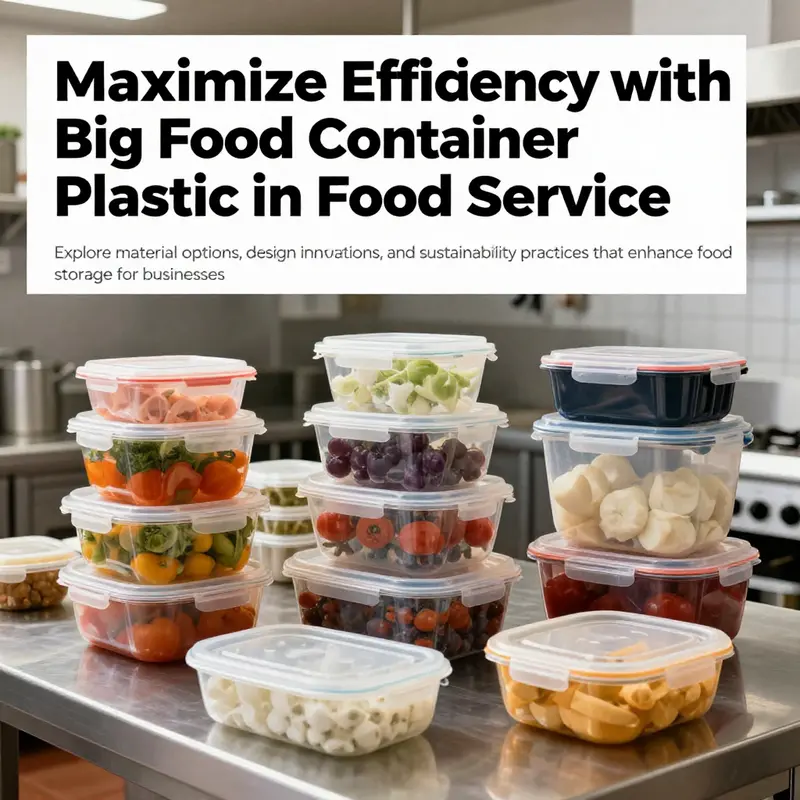
Food service operators like bubble tea shops, restaurants, food trucks, and catering services face unique challenges when it comes to storing and transporting ingredients effectively. Big food container plastics offer robust, versatile solutions tailored for bulk storage needs. This article delves into material options that ensure safety and longevity, highlights innovative designs that enhance functionality, illustrates their industrial applications in food businesses, and emphasizes the importance of sustainability and safety in food storage practices. Together, these chapters will equip your business with insights that optimize storage while ensuring compliance with safety standards.
null
null
Designing for Scale: How Innovative Plastics Reimagine Big Food Containers
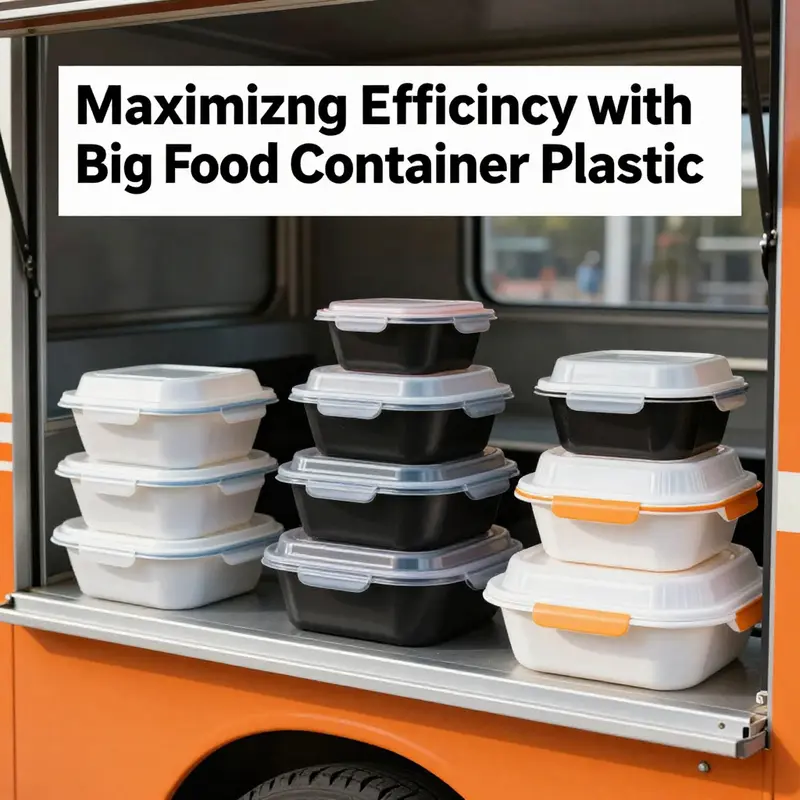
The storage, transport, and packaging of bulk food items rely on a class of plastic containers built to endure heavy use, long service life, and the demands of both commercial and household settings. Big food container plastics are more than simple vessels; they are engineered systems that harmonize material science with practical design to protect product quality, streamline handling, and minimize waste. In kitchens that move at the pace of mass production and in pantries that must keep staples fresh for weeks, these containers must perform across a spectrum of tasks, from bulk storage of dry ingredients like flour and rice to the careful containment of liquids such as oils or sauces. The overarching objective is to create a durable, safe, and multifunctional platform that can be reused many times, resisted the rigors of temperature fluctuations, and still play a part in a more sustainable food chain. The materials most often chosen—polypropylene, polyethylene, and, in some cases, PET or polycarbonate—are not selected for color or capacity alone. They embody a balance of chemical resilience, heat tolerance, and compatibility with food safety standards that a busy operation cannot afford to undermine. The capacity of these containers spans a broad range, commonly from about four liters up to seventy-five liters, a scale that mirrors the diversity of applications from compact home storage to large-scale industrial handling. The 4–75 liter spectrum accommodates both dry goods and liquids, and in many operations the sweet spot lands around the 12 to 30 liter mark for daily use, while larger formats serve as bulk reservoirs for warehouses or production lines. Within this spectrum, design evolves to protect content and to simplify the labor involved in moving, loading, emptying, and re-stocking. The shape, texture, and interface of the container—lids, seals, handles, wheels, and stackable features—are all part of a single engineering language that prioritizes efficiency and safety in equal measure. The most common materials for big food containers come with distinct profiles. Polypropylene, widely valued for its heat resistance and toughness, performs well in both hot and cold storage and is a frequent choice for 20 and 30 liter containers. Polyethylene, available in high- and low-density grades, offers chemical resistance and versatility for a range of applications, including waterproof and impact-resistant designs. PET brings clarity and barrier properties in some cases, particularly for liquids with shorter shelf lives, while polycarbonate has contributed to transparency and rigidity in certain broader handling systems. Each material choice comes with trade-offs in terms of stiffness, clarity, heat tolerance, and recyclability, and all must align with food safety requirements such as FDA approval or equivalent regional certifications. In practical terms, these options translate into a family of containers that are reusable, easy to clean, and designed to resist the rigors of routine handling in kitchens, warehouses, and transport fleets. The emphasis on food-grade assurance means that the walls, seals, and closures must resist leaching, must be compatible with repeated washing cycles, and must not impart flavors or odors to stored foods. In this context, the design of big containers extends beyond raw material selection to include a suite of features that safeguard content and enhance usability over time. Airtight seals and leak-proof lids are foundational, especially for foods with moisture content that could otherwise drift into a container’s lid seam or join under certain temperature conditions. A seal that remains reliable through hundreds of cycles reduces the risk of spoilage, contamination, and unnecessary waste. Ergonomics follow closely behind. Handles, grip textures, and balanced weight distribution are refined to minimize operator fatigue during routine use. Some designs incorporate wheels or trolleys, enabling easy movement of hefty, full containers without compromising staff safety. Stackability is another practical attribute; well-conceived nesting and interlocking features allow multiple containers to occupy the same footprint when stored, expanding the usable space in crowded pantries or loading docks. The interior geometry has also grown more sophisticated. Compartmentalized interiors, as seen in modern 58-ounce designs, demonstrate how interior zoning can enable users to segment leftovers, meal-prep portions, or sandwich ingredients within a single unit. This arrangement prevents cross-flavor contamination and supports portion control, a trend that aligns with evolving consumer expectations around organization and nutrition. Compartmentalized interiors also contribute to more efficient inventory management. When teams can visually confirm what remains in a single vessel, they reduce spoilage and optimize restocking cycles, a practical benefit in bustling facilities where time and accuracy matter as much as yield. The choice of interior geometry is closely tied to the exterior form. A rounded exterior may ride more easily in a transit vehicle and resist impact from accidental bumps, while a squared, modular profile can maximize storage density in racking systems. The surface finish matters too, as it affects grip, washability, and odor control. A slightly textured surface can improve handling, while a smooth interior simplifies cleaning and reduces crevices where residues might lodge. The design language thus becomes a layered conversation among performance, hygiene, and convenience, with engineers and procurement specialists weighing trade-offs for each application. The environmental implications of big food containers have grown in importance as brands and institutions seek longer lifecycles and reduced waste. Contemporary design often leans toward eco-friendly solutions, including the use of recycled plastics and the pursuit of recyclability at end of life. In practice, this means selecting materials that not only meet safety and durability requirements but also fit into circular economy models. For instance, many modern containers advertise their recyclability and sometimes incorporate recycled content, aligning with broader commitments to sustainability. Yet the question of end-of-life management remains complex. While a container may be recyclable in theory, the practical realities of regional recycling capabilities, contamination prevention, and post-consumer recovery rates determine whether a given product will actually contribute to a closed loop. In response, manufacturers increasingly design with disassembly in mind. Lids, seals, and bodies that can be separated easily facilitate proper recycling streams and reduce the risk of contamination in the recycling process. The push toward durability also intersects with safety considerations. As containers are exposed to different climates and heating cycles, the risk of chemical leaching, particularly when stored or heated, must be minimized. This leads to a preference for food-grade plastics that meet stringent safety standards and to labeling that clearly communicates microwave- or oven-safety where applicable. It is important to emphasize that not all plastics are created equal in this context; specifications matter. The distinction between materials that are safe for repeated heating and those better suited for cold storage is a central theme in modern design. The ongoing refinement of color, texture, and transparency also contributes to the user experience. A well-chosen material not only seals in fragrance and moisture but can also convey a sense of cleanliness and order. In environments where presentation and aesthetics matter—think a consumer-facing kitchen as well as a professional workspace—the appearance of a container can influence how teams perceive safety and hygiene. The trend toward aesthetic flexibility does not come at the expense of functionality. Instead, designers often thread style with practicality, delivering containers with sleek lines that fit into modern kitchens while maintaining the rugged durability expected of bulk storage solutions. Even as new materials and manufacturing techniques expand what is possible, the fundamental requirements persist: the container must be robust, safe for food contact, easy to clean, and economical over many cycles. The economics of bulk storage emphasize cost-per-use and reliability. A container with a long service life, low maintenance, and straightforward repair or replacement parts tends to offer lower total cost of ownership. From a procurement perspective, the ability to specify precise dimensions, wall thickness, lid geometry, and sealing systems enables facilities to tailor containers to their workflows. In many regions, standards and certifications—such as FDA approvals or equivalent regulatory marks—assist buyers in validating that a container meets necessary hygiene and safety criteria. The conversation around big food container plastics also intersects with the broader supply chain landscape. For users and buyers, the choice of container often hinges on the balance between initial capital expenditure and ongoing operational savings. The design features discussed—airtight seals, ergonomic handles, and stackable geometry—contribute to measurable improvements in waste reduction, labor efficiency, and product integrity. In this way, the container becomes a strategic asset rather than merely a tote for storage. The relationship between container design and the broader system—temperature control, sanitation protocols, and the handling equipment used in a facility—highlight how incremental improvements in one element can cascade into more reliable and safer food operations. Suppliers and manufacturers respond to these demands with increasingly modular and customizable options. Containers can be specified with particular lid designs, seal materials, or interior configurations to suit the unique needs of a facility, whether it is a bakery, a batch cooking operation, a central kitchen, or a distribution hub. The performance of these systems is not determined solely by the raw material; it is also shaped by the manufacturing process, molding precision, and finishing steps that ensure uniform wall thickness, consistent sealing integrity, and predictable performance across thousands of cycles. The integration of quality assurance into manufacturing—through in-process testing, final inspections, and documentation of certifications—helps ensure that large-volume containers meet the high standards that professionals expect. Beyond the factory floor, the movement toward design-for-disassembly and design-for-recycling signals a more climate-conscious approach to bulk packaging. The industry recognizes that durability cannot be the sole measure of value if the container contributes to waste in landfills or to pollution through improper disposal. As a result, designers increasingly consider end-of-life pathways, looking for plastics that are easier to recycle and for processes that support higher recovery rates. This shift dovetails with evolving standards and best practices in material science, where emphasis on barrier properties, chemical resistance, and mechanical performance continues to drive improvements in both safety and sustainability. The evolving design language also reflects a desire to harmonize utility with user experience. In kitchens and warehouses where staff rotate through a variety of tasks, from measuring and pouring to portioning and labeling, the container must behave predictably. The lid must seal reliably without excessive torque, the interior should be easy to scrape clean, and the exterior should resist fingerprints and staining while remaining comfortable to grip. In clinical terms, the practical outcomes are straightforward: reduced contamination risk, improved shelf life for bulk ingredients, and more consistent preparation results across shifts. The legacy of bulk storage containers—mediocre designs that served a practical purpose but demanded frequent replacement—has given way to systems that treat the container as a long-term partner in food quality and operational efficiency. The design innovations discussed here are not isolated experiments but part of a continuum guided by safety, durability, and sustainability. As new standards for plastic jugs and related containers emerge, the industry learns to balance robust dispensing mechanics with long-lasting materials that withstand UV exposure, repeated dispensing cycles, and the stresses of daily use. For researchers and practitioners, this means paying attention to how each design decision affects performance in real-world settings—from the speed of access in a busy prep line to the reliability of a seal after months of use in a fluctuating warehouse climate. For consumers, the practical upshot is simple: better storage solutions that keep foods fresh, organized, and ready for cooking, with fewer leaks and less waste. The intersection of functionality and aesthetics today also invites a broader audience to engage with the idea of bulk storage as a practical, recyclable, and even elegant component of the kitchen and the facility. This convergence—between utility, safety, and environmental accountability—points to a future in which big food container plastics are not only about capacity but about smarter systems. When a 58-ounce vessel can compartmentalize a week’s worth of meals while offering a secure seal and a comfortable grip, it becomes more than a container; it becomes a tool that supports healthier eating habits and more efficient food operations. In the end, the story of design innovations in big food container plastics is a story of how material science, engineering pragmatism, and sustainability goals converge toward a shared aim: to preserve quality, reduce waste, and make bulk storage a more seamless, safer, and more responsible part of how we feed ourselves. For those interested in exploring the landscape of large, food-grade containers further, supplier pages and technical specifications provide a practical gateway to comparing performance characteristics, dimensions, and certifications. The ongoing dialogue among designers, manufacturers, and end users continues to push toward containers that look and function better while standing up to the realities of routine use in diverse environments. A glance at current market thinking reveals a cohesive thread: durability, safety, and recyclability are no longer competing priorities but intertwined design constraints that shape every new product introduced to bulk storage and distribution. The result is a family of plastic containers that not only meet the demands of today’s kitchens and processing facilities but also adapt to the evolving expectations of a world that treats food safety, waste reduction, and responsible packaging with increasing seriousness. In the end, the story of big food container plastics is not just about how to keep bulk items fresh; it is about how thoughtful design can transform a simple vessel into a reliable ally in the chain from farm to table, guiding practices toward greater efficiency, clarity, and sustainability. For observers seeking a concise point of reference, a recent design standard discussion highlights how jug-like containers and their dispensing interfaces are evolving under new guidelines that emphasize durability under UV exposure and repeated use, a trend that speaks to the broader trajectory of the industry. External resource: https://www.plasticsindustry.org/2026/01/23/new-design-plastic-jug-standards-composition-and-industrial-use/ Additionally, industry players often point to supply partners who offer adaptable formats with safety assurances and easy-to-clean surfaces. For example, procurement teams frequently review options on supplier pages that provide clarity about material types, dimensions, certifications, and customization options. One key takeaway is the importance of selecting containers that align with the facility’s hygiene protocols, storage workflows, and end-of-life plans. When considering a supplier, teams may examine not only the core attributes of the container but also the ease with which the lid, seal, and interior can be serviced or replaced. By focusing on modular designs and standardized interfaces, facilities can reduce downtime and simplify maintenance as volumes scale. And while the conversation often centers on performance, design also extends to the look and feel of the container in its work environment. A container that visually communicates cleanliness and order can contribute to a culture of food safety, encouraging staff to adhere to protocols and to treat the storage system with care. For readers who want a practical starting point in this broader landscape, a reliable way to begin exploring options is to consult an authoritative supplier page that highlights material types, dimensions, and safety certifications. A convenient entry point is the domain that aggregates technical specifications and customization options, illustrating how a single product family can support diverse operations without sacrificing safety or efficiency. jieyuplastic.com offers a window into the kinds of food-grade plastics that underpin large-volume containers, including an emphasis on BPA-free materials and FDA-compatible formulations that are suitable for repeated use. This reference point helps frame the conversation around how design, material science, and regulatory compliance intersect to produce containers capable of standing up to daily industrial demands while remaining workable in household contexts. The picture that emerges is one of deliberate, evidence-informed design choices that push toward longer life, safer storage, and easier handling across the spectrum of bulk foods. As this narrative continues to unfold, the core message remains clear: innovations in big food container plastics are not isolated improvements but an integrated effort to align performance with safety, practicality with sustainability, and scale with a human-centered touch that makes everyday food storage more reliable, efficient, and responsible.
Industrial Applications of Big Food Container Plastic: Storage, Safety, and Scale in Modern Food Systems
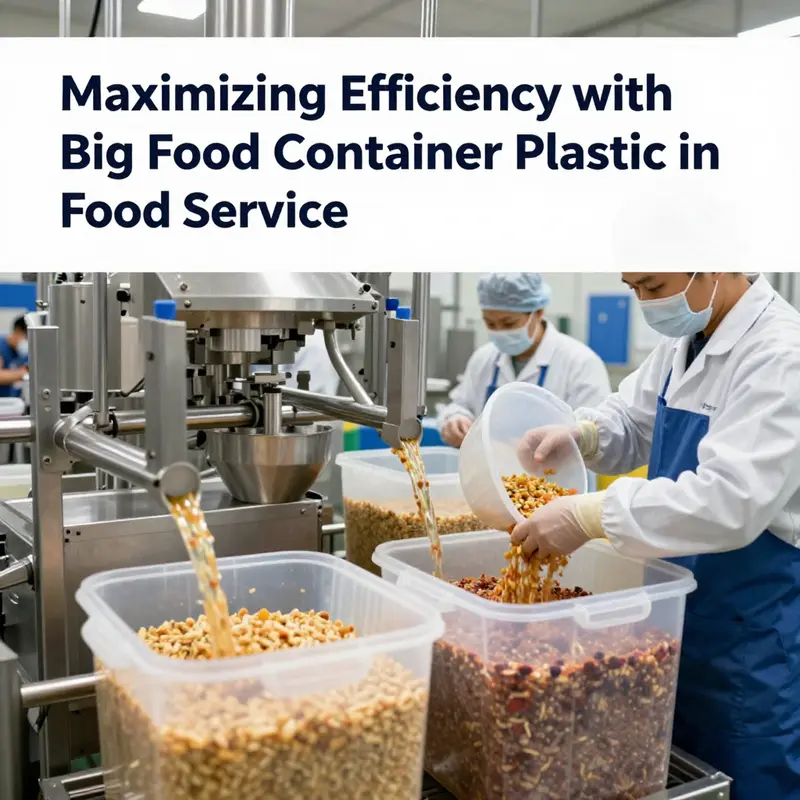
A single thread runs through the modern food system, from the moment a raw ingredient is harvested or milled to the final moment a consumer opens a sealed package. That thread is plastic used in big, bulk-capacity containers. These large-volume vessels—often made from food-grade polypropylene (PP) and high-density polyethylene (HDPE, a form of PE)—are not merely storage boxes. They are the silent workhorses of kitchens, factories, warehouses, and distribution networks. They withstand the rigors of high-volume handling, resist moisture and many chemicals, and keep products hygienic from the point of manufacture to the point of sale. The choices designers and operators make about material, design, and size ripple through every stage of the supply chain, shaping how quickly goods move, how reliably they stay safe, and how responsibly they can be reused or recycled. In practice, these containers are designed for a spectrum of demands: from the steady hum of a bakery supply room to the exacting conditions of a pharmaceutical clean room and the heavy-duty needs of a processing plant that handles grains, oils, syrups, and bulk powders. The materials most commonly employed—PP and PE—are selected for a balance of durability, chemical resistance, and ease of sanitation. PP offers impressive rigidity, heat resistance, and chemical stability, making it well suited for hot or cold storage, repeated use, and a broader temperature window. PE, particularly the high-density variety used in many bulk containers, brings excellent impact resistance, moisture barrier properties, and cost efficiency. Together, they form a flexible toolkit that can be adapted to a range of contents, from dry staples to liquid concentrates, from powders to viscous sauces. The nuance lies in understanding how each material behaves under real-world conditions, how its surface resists microbial colonization, and how it integrates with cleaning regimes, sealing technologies, and regulatory compliance standards.
In food production and distribution, the design of large plastic containers goes beyond bulk capacity. The lids, seals, and gaskets are engineered to be airtight and leakproof, protecting products from contamination and minimizing spoilage during long storage or transport. For liquids, the seal is a critical barrier against evaporation or leakage, while for dry goods, the absence of micro-leaks helps prevent moisture ingress that could jeopardize texture, aroma, and safety. The robustness of the container walls supports stacking and nesting, enabling warehouses to organize pallets with precision and reducing the risk of damage during handling. The inclusion of handles, wheels, or chassis-like bases can transform a container from a static storage vessel into a mobile unit that negotiates tight loading docks, elevator landings, and racking systems without compromising hygiene. Each element—material choice, wall thickness, closure style, and ergonomic features—interacts with a particular workflow. In a brewery or winery environment, for example, containers may hold fermentation-ready liquids or transitional parcels during aging. Their inert nature helps minimize chemical interactions that would otherwise alter flavor, aroma, or clarity. In a dairy operation, a container may store liquids or semi-solids under refrigerated conditions, with the design emphasizing cleanability and resistance to milk fats and enzymes. In a condiment plant, the focus shifts toward chemical compatibility with oils, syrups, and salt-based solutions, while light exposure protection may become a priority to preserve color and fragrance in finished products.
The relevance of these containers extends into pharmaceutical and dietary supplement manufacturing as well. Here, large, food-grade plastic containers often anticipate sterile or near-sterile environments. They are designed to hold powders, liquids, or semi-solid formulations with a surface that is easy to inspect visually, ensuring that contaminants or sediment can be identified without opening the container. Materials used in pharmaceutical-adjacent packaging must meet stringent non-toxicity and odorless criteria, with surface finishes chosen to resist microbial growth under typical processing and storage conditions. The design language combines hygiene with transportability. Containers are typically transparent or translucent to facilitate visual checks, while their seals and closures are engineered to withstand repeated cycles of opening and resealing during batch transfers or sampling. The same containers, when employed in agricultural settings or meat, fruit, or vegetable processing facilities, become part of a broader ecosystem designed to reduce waste and maintain product integrity through long, multi-step workflows. In these environments, large plastic containers must resist moisture, chemical exposure from preservatives, and occasional cleaning agents used in wash-down protocols. They must also tolerate temperature variations, from cold refrigeration to hot wash cycles, without warping or losing seal integrity. The capacity range—often in increments from 4 liters to 75 liters—reflects a practical balance between handling efficiency and the management of bulk inventories. Size choices are rarely arbitrary; they align with production throughput, warehouse footprint, and the logistical constraints of transport fleets and storage racks. The modularity of these containers—being stackable, nestable, and compatible with standard pallet dimensions—underpins the efficiency of entire supply chains. When these systems operate at scale, the cumulative impact becomes measurable: fewer product losses to spoilage, faster batch turnover, and the ability to respond quickly to demand fluctuations without compromising safety.
In the broader landscape of food processing and packaging, large plastic containers also perform a crucial function in logistics and supply chain management. Their durable shells and standardized shapes enable containerization-friendly handling, which translates into smoother loading, more predictable warehousing flows, and reduced damage rates along distribution routes. Stackability is not merely a space-saving feature; it is a risk-reduction mechanism that lowers the likelihood of container ruptures, spillage, and contamination during long-haul transport. In many facilities, the containers are part of a just-in-time or close-to-zero-waste approach, where precise inventory control reduces stockouts while limiting obsolescence and spoilage. The ability to reuse these containers across multiple cycles—provided they are properly cleaned, inspected, and sanitized—also drives cost efficiency and environmental stewardship. Indeed, the sustainability narrative surrounding big food containers has shifted from “single-use vs. reusable” to a more nuanced conversation about lifecycle management. Modern facilities increasingly emphasize certified, food-safe materials and manufacturing processes that minimize chemical migration and microbe growth, along with clear labeling that supports end-user safety and regulatory compliance. The conversations around sustainability also extend to end-of-life options: recyclability of PP and PE components, the feasibility of reclaiming and reprocessing plastic for bulk containers, and the integration of recycled content into new products without compromising performance.
The realities of regulatory frameworks shape every design decision. In many jurisdictions, large food-grade containers must meet food safety standards, with certifications that verify that materials are non-toxic, odorless, and safe for repeated contact with food substances. FDA-equivalents and SGS-type testing regimes often play a central role in validating that a container will not release harmful substances, even when exposed to heat, detergents, or extended storage times. The sanitary integrity of these containers is reinforced through smooth, seam-free interiors, created to prevent harboring food residues and to simplify cleaning. The interior surfaces are typically designed to avoid rough textures where microbes could settle, and surface finishes must resist staining and odor absorption so that cleaning agents can remove residues without degradation of the plastic. Even the color and transparency of containers serve practical purposes: visibility of contents helps prevent cross-contamination and facilitates routine inspection during production lines or warehouse audits.
The material choices—PP and PE in particular—also intersect with ongoing conversations about consumer safety and environmental responsibility. PP is favored for its heat resistance, enabling it to withstand hot-fill processes and steam cleaning without deformation. It also resists many common sanitizers used in industrial settings. PE provides a robust moisture barrier and shock resistance, supporting long-term storage under variable conditions. Yet neither material is a universal remedy. Each comes with trade-offs in terms of chemical compatibility with certain substances, UV exposure, and end-of-life recyclability. This is where innovation in design and the broader packaging ecosystem matters. The push toward eco-friendly labeling, recyclable packaging streams, and even the use of recycled content in new containers is part of a larger transition toward more sustainable industrial packaging. In practice, this means manufacturers and facilities continually assess and adjust their container specifications, balancing performance, safety, and environmental impact across the product portfolio. It is not unusual for food manufacturers to adopt multi-material packaging strategies that pair plastic containers with secondary containment or liners in specific applications, ensuring product quality while preserving the benefits of bulk handling. The emphasis remains on hygiene, reliability, and the ability to scale operations without compromising consumer health or product integrity.
As we consider the broader ecosystem, the cultural and logistical shifts around packaging become apparent. Large plastic containers are a form of infrastructural confidence: they say that a business can rely on a predictable supply chain, on consistent sanitation, and on the ability to move goods through processing stages with minimal risk. They are the physical proxies for efficiency—sturdy enough to endure rough handling, transparent enough to permit quick checks, and adaptable enough to fit into diverse production lines. In many facilities, containers in the 20 to 30-liter range strike a balance between portability and capacity, while the 75-liter class provides bulk handling for longer storage cycles or for distributing fluids in the field. The evolution of these containers continues as manufacturers explore better surface finishes, tighter seals, and smarter resistance to environmental challenges. They balance factory-floor realities with end-user expectations, ensuring that the containers contribute to product safety, operational efficiency, and sustainability goals.
In this evolving landscape, a broader view of packaging choices becomes essential. The drive to diversify packaging materials—without sacrificing safety—leads to a thoughtful integration of paper-based and other sustainable options alongside traditional plastics. Some facilities experiment with kraft-paper-based, take-away, or single-use alternatives for particular lines or markets, especially where consumer demand is high for recyclable or compostable solutions. For readers looking for a concrete example of this kind of packaging ecosystem, an illustrative instance is found in the concept of an eco-friendly kraft paper container designed for takeaway meals, which demonstrates how packaging can be aligned with sustainability goals without compromising functionality. For a representative example of this trend, see the product listing that highlights a factory-round, eco-friendly kraft-paper bowl with a polypropylene lid, which showcases how design can reflect both durability and environmental considerations. Factory Round Disposable Eco-Friendly Kraft Paper Takeaway Salad Bowl with PP-Lid. This link serves as a practical reminder that the packaging ecosystem is not monolithic: it accommodates diverse materials, from plastics to papers, each chosen for its specific fit within a given workflow, content profile, or consumer expectation. The presence of such options in a modern supply chain underscores the ongoing conversation about responsible packaging, lifecycle thinking, and the trade-offs that accompany any bulk-storage decision.
Beyond the immediate industrial concerns, the chapter’s arc also touches the user experience of those who handle and move these containers on site. The ergonomics of lifting, tilting, and transferring heavy contents must be balanced with container durability and sanitation. Operators seek containers that are easy to clean, resistant to abrasion, and capable of resisting the growth of microbes in crevices or seams. This involves an emphasis on interior smoothness and exterior resilience against scuffs, as well as careful attention to the compatibility between closure mechanisms and cleaning protocols. The best designs minimize the risk of splash or leak during pouring while still enabling straightforward manual handling by staff with varied strength and reach. The end effect is a packaging system that, though invisible to most customers, enables the smooth functioning of the supply chain, reduces waste, and supports consistent product quality over time.
The industrial reach of big food container plastic is thus not only a matter of raw capacity or material science; it is a conversation about how to sustain a complex network of production, storage, transport, and retail with safety, efficiency, and environmental stewardship in mind. Each container is part of a bigger story about how we feed a growing population while limiting waste, controlling costs, and maintaining trust in the safety and integrity of food products. As the industry continues to innovate, the dialogue between plastic and sustainability will intensify, with new materials, new designs, and new standards guiding the evolution of bulk storage and handling. For readers who want to explore the broader packaging landscape beyond plastics, or who are considering the full spectrum of options for bulk storage and transport, it is useful to examine representative case studies and product lines in the market. The packaging ecosystem is dynamic, and the choices made in the design and deployment of big food containers often reflect a careful negotiation among performance, safety, cost, and environmental responsibility. For more insights into the marketplace dimensions of bulk plastic containers and related packaging options, see industry listings and supplier references that catalog a wide range of sizes, materials, and certifications. External resources such as global supplier marketplaces provide a window into the practical availability of these containers, illustrating how demand, regulatory standards, and consumer expectations shape the real-world features of bulk storage packaging. External resource: https://www.alibaba.com/trade/search?fsb=y&IndexArea=product_en&CatId=&SearchText=food+grade+plastic+container
Bulk Capacity, Safer Plastics, and the Circular Path of Large Food Containers
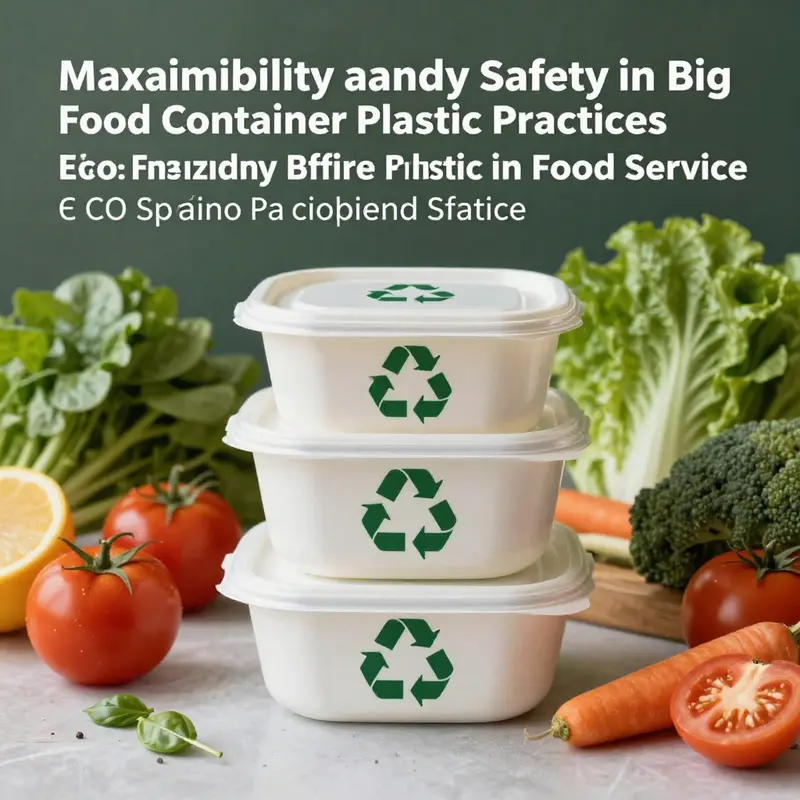
The modern food system relies on large-volume plastic containers that bridge production floors and pantry aisles. They are not mere receptacles; they are critical infrastructure that shapes how ingredients move, how long they stay fresh, and how efficiently a business can operate. The promise of big containers lies in their ability to store bulk staples and liquids with minimal handling, while their design determines whether a kitchen can scale up operations without compromising safety or sustainability. In exploring sustainability and safety within big food container plastics, it is impossible to separate the material from the practice. What you choose to store in matters, but so does how you store it, how you clean it, how often you reuse it, and how easy it is to return it to a loop that keeps plastics out of waste streams. This chapter threads together material science, safety standards, and design logic to illuminate a path that honors both performance in high-demand environments and the pressing demand for responsible stewardship of resources.
From a material perspective, the most common workhorses in large-volume storage are polypropylene (PP), high-density polyethylene (HDPE), and, to a lesser extent, low-density polyethylene (LDPE) and polyethylene terephthalate (PET). Each material brings a distinct profile of heat resistance, chemical inertness, mechanical durability, and end-of-life options. PP is widely favored for bulk storage because of its excellent heat stability and mechanical strength. It can tolerate repeated use and often accepts reuse with appropriate cleaning protocols, which suits the long cycles typical of bulk dry goods like flour, sugar, or grains. Its reputation for microwave tolerance also makes PP a practical choice for operations that rely on hot storage or on re-thermalization tasks, where containers might need to pass through heating steps in a controlled way. HDPE, meanwhile, is the pillar of robust, chemical-resistant storage for liquids and more aggressive contents. Its dense molecular structure contributes to stiffness and impact resistance, enabling large-volume containers that resist denting or cracking under rough handling and frequent transport. LDPE offers flexibility and a softer surface chemistry, which can be beneficial for certain lid formations and seal technologies, though it is less common for the largest, rigid bulk containers than HDPE and PP. PET provides the transparency that helps with inventory control and product monitoring, and it is highly recyclable in many regions, though its performance under high heat can be more limited than PP or HDPE. Each resin class carries trade-offs that become more pronounced when containers move between cold storage, ambient warehouses, and hot processing lines.
The relative safety of these plastics arises not only from the resin itself but also from how it is used in practice. A growing body of guidance emphasizes the importance of selecting resins known for chemical inertness and low risk of leaching under typical storage and handling temperatures. Among widely studied materials, HDPE (resin code #2), LDPE (resin code #4), and PP (resin code #5) frequently appear as the preferred choices for food contact in large containers. These materials tend to maintain their integrity without releasing significant amounts of residual chemicals under normal conditions, and they are generally compatible with routine cleaning and sanitizing regimens used in commercial kitchens and processing facilities. By contrast, materials such as PVC (polyvinyl chloride) have become less common in food-contact applications due to well-documented health considerations and regulatory caution, while polycarbonate (PC) has faced ongoing scrutiny over the presence of BPA and related substances. In practice, many facilities actively avoid PC for bulk food storage to align with precautionary safety principles and evolving regulatory expectations. The core takeaway is that material choices should be guided by both laboratory safety data and real-world performance across the temperatures and cleaning regimes typical of large-scale operations.
Alongside the chemistry of materials, the geometry and design of big containers play a central role in safety and sustainability. Large containers are engineered to minimize contamination risk through features such as airtight seals, robust leak-proof lids, and smooth interior surfaces that resist residue buildup. A well-sealed lid protects against moisture ingress, pest exposure, and aroma loss, which collectively extend shelf life and reduce waste caused by spoilage. Handles, wheels, and ergonomic textures are not merely conveniences; they shape how efficiently staff can move heavy loads with reduced risk of spills or injuries. The size spectrum for such containers often ranges from a few liters up to tens of liters, with 4 to 75 liters representing common footprints. Within this spectrum, the 20–30 liter range is especially prevalent for bulk dry goods and liquids that require moderate handling and stacking compatibility. Yet even with airtight seals and sturdy lids, there is a recurring challenge: space efficiency. The geometry of round or spherical forms can leave significant gaps when stacked, a phenomenon that compounds with large volumes and slow-cycle restocking. This is not merely a matter of warehouse organization; it translates directly into transportation emissions and energy use, as less efficient stacking demands more trips or larger fleets to move the same quantities.
In practice, the conversation about sustainability in big containers requires a holistic lens that includes end-of-life pathways, recyclability, and the potential for circularity. Many modern plastic containers are labeled as recyclable and, in some cases, manufactured with recycled content. The ideal designs minimize the use of mixed materials that complicate recycling streams and maximize the possibility of disassembly at the end of life. A circular approach would encourage the use of monomaterial constructions when possible, or design for easy separation of layers when multi-material construction is unavoidable. It also calls for straightforward resin identification codes so recycling facilities can route containers to the most appropriate processing streams. The broader shift toward a circular economy means that producers and users alike should favor materials and designs that support reuse, remanufacturing, and recycling without sacrificing functional performance in the field. In many regions, this translates to a preference for materials with established, scalable recycling streams and to adherence to safety certifications and regulatory approvals that verify food-contact suitability.
Another facet of sustainability concerns the energy and resource intensity of production and recycling. Manufacturing large plastic containers involves plastic resin polymerization, extrusion, molding, and finish work that collectively demand substantial energy. When a container reaches the end of its service life, collection, cleaning, sterilization, and processing into new products consume additional energy and water. The ideal scenario is a closed-loop dynamic in which bulk containers are designed for repeated use with durable surfaces that withstand repeated cleaning and sanitizing without degradation of performance or safety. In addition, the avoidance of unnecessary coatings or laminates can simplify recycling and reduce the input of hazardous additives. The design community increasingly recognizes that the best compromises lie in materials that maintain performance, aging gracefully under repeated cycles, and offer predictable recycling pathways that align with local infrastructure.
Yet the practical reality is layered. Bulk storage often occurs across a mosaic of facilities with different cleaning regimes, temperature profiles, and sanitation standards. The choice of resin becomes a negotiation among chemical compatibility with stored ingredients, cleaning chemicals, heat exposure, and the feasibility of achieving a hygienic, non-porous interior. The operational reality also involves the economics of supply. In large-volume procurement, minimum order quantities and customization options influence what materials and designs are even available to a given facility. When a facility can standardize on a common, robust design across multiple product lines, it reduces spare-part inventories, simplifies staff training, and supports a more predictable recycling flow. This is the operational heart of sustainability: it is not only about material properties in a lab but about how a system of procurement, use, cleanup, and end-of-life returns value to the organization and to the environment.
In the market, real-world use cases illustrate how safety and sustainable design converge. Large-volume containers are frequently employed to store both dry goods and liquids in warehouses and food manufacturing settings. For dry staples, a container with a stable base, high-stackability, and a non-porous interior helps maintain product integrity over long storage periods. For liquids, a container with a leak-proof seal and a robust lid that remains secure through transport is essential, particularly when temperate or fluctuating storage conditions are involved. The ability to resist UV exposure and maintain color and clarity—where transparency is desired for inventory checks—also factors into material selection. In some operations, the choice to downgrade from heat-tolerant plastics to less expensive alternatives can be a tempting cost-cutting measure, but such decisions may compromise safety, increase waste, and undermine operational resilience. As a result, many practitioners gravitate toward the most tested combinations of resin and design that offer safety margins, recyclability, and predictable performance under the full spectrum of use cases encountered in bulk storage.
The conversation about waste, space, and efficiency also touches on a broader set of standards and certifications. In the safety domain, authorities emphasize the importance of identifying and validating materials appropriate for food contact, including clear labeling and compliance with FDA-equivalent standards and third-party tests such as SGS. The knowledge that a container has undergone appropriate testing, and that it can sustain repeated use without releasing harmful substances, provides a level of confidence necessary for high-volume kitchens and manufacturing environments. On the sustainability front, there is growing acknowledgment that reducing empty space in packaging geometry can cut down on transport emissions and improve warehouse throughput. The pursuit of smarter stacking, nestable designs, and standardized dimensions is not a mere architectural concern; it is an operational strategy that directly affects carbon footprint and energy efficiency across the supply chain. In practice, these design choices translate into fewer trips, more efficient pallets, and more predictable logistics planning.
For readers who explore the broader packaging ecosystem, it is useful to consider how alternative packaging formats fit into this dialogue. Paper-based and bagasse-based options, for example, offer certain advantages in end-of-life handling and renewability. They are increasingly used for take-away and portion-control scenarios, complementing plastic containers in a diversified portfolio of packaging solutions. When evaluating such alternatives, it is important to weigh performance metrics that matter in bulk storage: dimensional stability, chemical compatibility with stored ingredients, thermal tolerance, and sanitation compatibility. While plastics dominate bulk storage due to their durability and low weight, a mature sustainability program recognizes the benefits of a mixed-material approach where appropriate, with clear strategies for recycling and compostability where feasible and legally supported. The ongoing challenge remains aligning the design and material choices with a realistic, scalable path to reuse and recycling across the lifecycle of the product.
From a practical standpoint, best-practice guidelines for safety and sustainability in big containers revolve around three core priorities. First, select materials with strong chemical inertness and low risk of leaching under expected conditions; favor HDPE, PP, and LDPE in appropriate applications, and avoid materials with known safety concerns for food contact. Second, design for reuse and end-of-life clarity; prioritize monomaterial constructs when possible, and keep pathways to recycling simple and well-supported by local infrastructure. Third, optimize geometry and finish to minimize waste and maximize transport efficiency; flat-ended, stackable shapes, uniform dimensions, and minimal use of adhesives or multi-material laminates can improve both handling and recycling outcomes. When these priorities converge, the big container system becomes a resilient component of a sustainable food economy rather than a single-use artifact, enabling facilities to operate with safety assurances and environmental mindfulness at scale.
Operationally, these principles shape how a facility can approach procurement, maintenance, and decontamination. Effective cleaning protocols protect both product quality and staff safety, extending container life and maintaining surface integrity that resists harboring residues. Regular inspections for cracks, warping, or seal degradation ensure that leaks or contamination do not creep into the storage chain. In addition, the industry increasingly recognizes the value of documentation—tracking resin types, batch certifications, and cleaning histories—to maintain a robust traceability framework. Traceability supports both safety and sustainability; it helps facilities assess performance across material types and designs, optimize cleaning cycles, and evaluate the environmental impact of different container solutions over time.
The real-world implications of this integrated approach extend beyond individual facilities. When warehouses and processors align on durable, safe, and recyclable container systems, the entire supply chain benefits through reduced spoilage, fewer incidents of cross-contamination, and lower emissions from optimized transport. The interplay between material science, safety standards, and design efficiency becomes a strategic asset rather than a technical footnote. It enables organizations to pursue continuous improvement—incremental enhancements in material composition, seal technology, and geometry that collectively move the system toward a more sustainable equilibrium. In this light, big food container plastics are less a single choice and more a living ecosystem that must adapt to evolving safety expectations, evolving recycling infrastructure, and the practical realities of high-volume operations.
In sum, building a safe and sustainable big container ecosystem requires a disciplined synthesis of material properties, sealing performance, user-centered design, and end-of-life feasibility. The best outcomes arise when leaders treat safety as a non-negotiable baseline and sustainability as a design constraint that guides every decision—from resin selection and lid geometry to stacking patterns and cleaning protocols. By embracing materials with proven safety profiles, prioritizing monomaterial designs where possible, and pursuing geometry that maximizes space efficiency without compromising integrity, the industry can advance toward bulk storage solutions that uphold product quality, protect public health, and minimize environmental impact. The journey toward this future is iterative and collaborative, drawing on advances in material science, regulatory science, and intelligent packaging design to deliver containers that perform superbly in the real world while supporting a more circular economy for plastics.
As a practical aside for readers navigating the wider packaging landscape, there is value in acknowledging the broader ecosystem of packaging formats and the interfaces between them. For instance, some operators explore alternative materials for bulk applications where suitable, including paper-based or fiber-based options that can complement plastic in a diversified packaging strategy. These choices reflect a nuanced assessment of performance, cost, sanitation, and end-of-life considerations. Yet for many bulk storage contexts, the core decisions still hinge on selecting the right resin class, ensuring compatibility with cleaning and sanitizing protocols, and designing containers that balance longevity with recyclability. The goal remains clear: achieve safe storage for a broad range of food products while reducing waste and emissions across the lifecycle of the packaging system. In this way, the journey toward sustainability in big food container plastics is not a single stop but a continuous re-evaluation of materials, designs, and practices that together support a safer, more efficient, and more circular food future.
One final note on language and practice helps connect theory to everyday operations. Consider the simple yet decisive act of choosing a storage container that can withstand repeated heating and cooling cycles without degrading. This choice reduces the need for replacements, which in turn minimizes energy expenditure and waste. It also influences how staff approach cleaning and sanitation workflows, shaping the overall safety profile of the operation. As the industry continues to gather data on material performance and recycling outcomes, decisions grounded in robust safety data and practical efficiency will increasingly determine which container architectures become the standard in bulk storage. The intersection of science, practice, and policy thus remains the crucial frontier where sustainability and safety converge in big food container plastics, guiding businesses toward solutions that endure in both performance and responsibility.
For readers who want to explore a related packaging option in more depth, some suppliers offer take-away and single-serve formats that demonstrate the breadth of container design. While these formats differ from large-volume bulk containers, they share the same underlying concerns about material safety, recyclability, and end-of-life handling. The move toward safer, more sustainable packaging in bulk storage does not imply abandoning efficiency; it asks for smarter choices that respect food safety, worker health, and environmental impact across the entire lifecycle. The narrative of big food container plastics is thus a story of balance—between capacity and safety, between reuse and disposal, and between today’s operational needs and tomorrow’s circular economy goals.
Internal link note: As packaging ecosystems diversify, some suppliers present a range of take-away and consumer-facing packaging options that illustrate the continuum from bulk storage to retail-ready solutions. For a practical example of the kinds of packaging formats that appear alongside large-volume containers, you can explore a sample product page linked here: disposable kraft paper soup cup with paper lid.
External reference: For a broader technical and regulatory perspective on the safety and materials commonly used in plastic food containers, see the official resource pages of industry-standard specifications and safety reviews at https://www.jieyuplastic.com.
Final thoughts
Choosing the right big food container plastic is crucial for food service businesses aiming to enhance efficiency, safety, and sustainability. By understanding material options, leveraging innovative designs, and recognizing their industrial applications, businesses can make informed decisions that benefit their operations and comply with safety standards. Embracing sustainability not only supports health and safety but also satisfies increasingly environmentally conscious consumers. Invest in quality containers today to ensure your food service business thrives in an evolving market.