
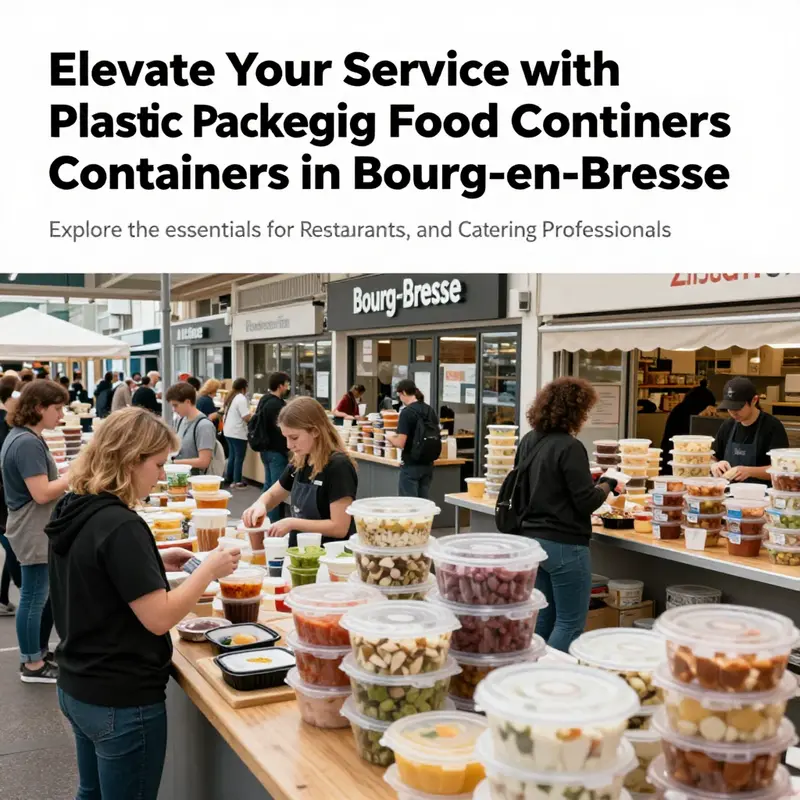
Bourg-en-Bresse has emerged as a key player in the production and supply of plastic packaging food containers, essential for businesses in the food and beverage industry. This article delves into various aspects that affect the usage and supply of these containers, focusing on how they benefit Bubble Tea shops, restaurants, food trucks, catering services, event planners, and procurement teams. We will explore the market landscape, economic factors, technological advancements, societal impacts, and the regulatory environment that shapes the usage of plastic packaging in this vibrant French region. Together, these insights will help stakeholders make informed decisions for their food packaging needs.
Navigating Bourg‑en‑Bresse’s Plastic Food Container Market: Supply, Standards, and the Shift Toward Sustainable Options
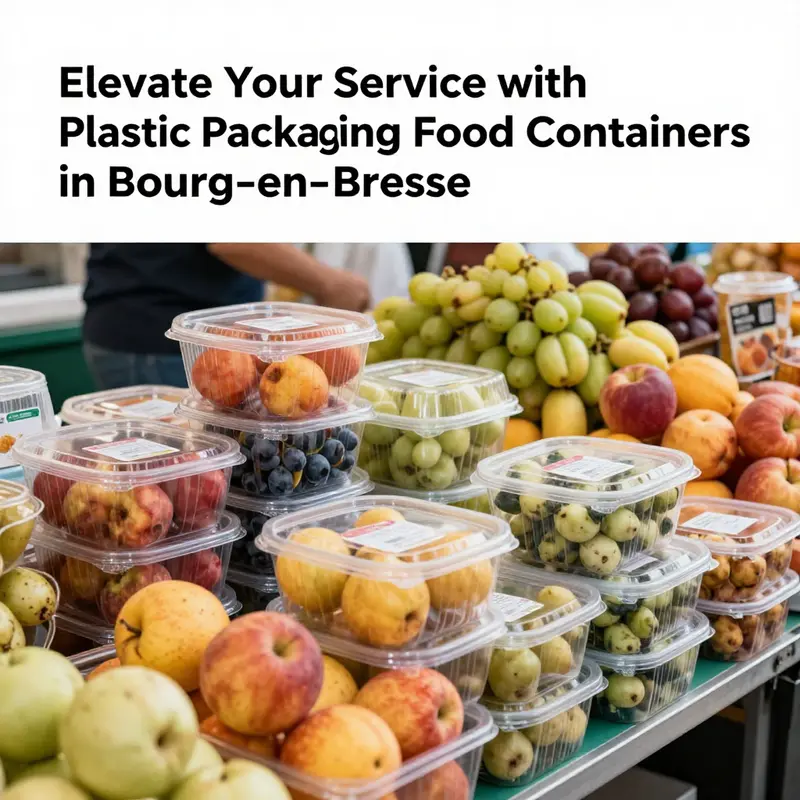
Bourg‑en‑Bresse sits at the intersection of local demand and broader shifts in how food is packaged. Retailers, caterers, processors and daily consumers still rely on clear plastic containers for fruits, salads and prepared meals because they are inexpensive, lightweight and effective at preserving visibility and shelf life. At the same time, tighter regulations in France and the European Union and growing concern about microplastic contamination are reshaping supplier offerings and buyer expectations. This chapter maps the current market dynamics in Bourg‑en‑Bresse, highlights the technical and regulatory expectations that shape product selection, and outlines practical directions the local supply chain is likely to follow in the near term.
Price and supply are practical drivers of choice. For plain clear fruit containers used in high-volume retail and processing, unit pricing at scale is a key metric. Recent market sourcing shows bulk pricing around $0.145 per unit for orders in the 100,000–499,999 range, with lower unit costs at orders above one million. Those figures indicate a capacity for large-volume supply that can serve supermarkets and food processors in Bourg‑en‑Bresse and the surrounding Ain department. Local businesses that buy at these volumes can secure predictable costs, but smaller independent retailers often face tighter margins and must weigh cost against regulatory compliance and consumer preference.
Regulation now features prominently in purchasing decisions. European and French measures introduced by 2026 impose stricter controls on single‑use plastics intended for food contact. Key requirements include use of food‑grade virgin materials where specified, prohibition of certain additives known to pose health risks, and performance testing that simulates real‑world use. Typical performance criteria include resistance to deformation at hot‑water temperatures (100°C), drop and impact resilience, and sufficient bending strength to survive routine handling. Health‑focused tests apply microbiological limits and overall migration limits for chemical substances to ensure material safety during storage and heating of food. For Bourg‑en‑Bresse suppliers, compliance is not optional; it is a baseline that affects which products can be sourced and sold.
Health concerns extend beyond regulated additives. Recent research into takeaway containers has demonstrated measurable microplastic release from commonly used polymers, with certain foam and polystyrene variants releasing higher quantities under typical use conditions. While such studies are not yet localized to Bourg‑en‑Bresse, they influence French consumer sentiment and procurement policies in public institutions and food service establishments. Foodservice buyers increasingly ask for material safety documentation, migration test results and certification that a product meets current EU food contact and safety standards. Packaging that cannot supply such documentation will struggle to compete, regardless of price.
Local market habits reflect a balance between convenience, cost and emerging sustainability preferences. Fresh fruit sellers and small caterers in Bourg‑en‑Bresse still value transparent rigid containers for display and hygiene. These containers reduce handling and spoilage while offering clear merchandising benefits. At the same time, restaurants and grocers face pressure to limit single‑use plastic distribution. Many are experimenting with alternatives such as compostable paper bowls with sealing lids, bagasse trays and reusable containers for local delivery and takeaway. These alternatives frequently appear alongside plastic options rather than replacing them outright, forming a transitional landscape in which multiple materials coexist.
From the supplier perspective, the rules of engagement are clear: provide compliant materials, transparent test results, and scalable pricing. Wholesalers and manufacturers serving Bourg‑en‑Bresse that can offer validated food‑contact certs, guaranteed absence of prohibited additives and documentation of physical performance will maintain an advantage. Larger orders still favor plastic for cost reasons, yet buyers increasingly prefer products that either demonstrate improved environmental credentials or integrate with reuse and recycling schemes. One practical response among local distributors has been to add mixes of products—clear plastic containers where visibility is critical, and kraft or bagasse alternatives for hot or greasy foods. For retailers who want to reduce plastic use without compromising display, hybrid solutions that pair a paper base with a small clear lid can be an effective compromise.
Operational decisions at the municipal and retail level are also shaping demand. Public procurement guidelines increasingly favor materials that meet environmental and health standards, and local institutions in Bourg‑en‑Bresse may soon adopt procurement policies that prioritize compostable or reusable solutions for internal catering and school meals. For private businesses, the incentives are largely reputational and economic: improving packaging sustainability can attract environmentally conscious customers while reducing waste management costs if materials are composted or reused.
Practical procurement advice for Bourg‑en‑Bresse buyers centers on three points. First, insist on documented compliance: physical performance tests, migration test results and confirmation of permitted material composition. Second, assess total cost of ownership rather than unit price alone. A cheaper single‑use plastic that fails to meet emerging regulations or prompts customer backlash can be more expensive in the long run. Third, pilot alternatives in controlled settings before broad rollout: trial biodegradable bowls for hot foods, test bagasse trays for greasy items, and run small reuse schemes for regular takeaway customers.
The market trajectory is clear: plastic containers will not disappear overnight, but the composition of demand will change. Manufacturers who invest in safer polymers, produce validated food‑contact materials, or provide takeback and reuse systems stand to keep business in Bourg‑en‑Bresse. Meanwhile, retailers and public buyers will increasingly blend options—using clear plastics where visibility and cost are paramount, and favoring paper‑based or compostable choices for other applications.
For local operators seeking product examples that combine practical use and improved sustainability, there are accessible alternatives to traditional single‑use plastic containers. Options such as food‑grade salad bowls with durable lids demonstrate how familiar functionality can be retained while shifting material choice. Exploring such alternatives helps businesses maintain convenience and hygiene while reducing environmental impact; one useful reference for reusable PP‑lidded salad bowl options can be used to compare specifications and adaptability for retail settings.
Looking ahead, suppliers and buyers in Bourg‑en‑Bresse should prepare for two converging pressures: regulatory tightening that raises the minimum compliance bar, and customer expectations that push toward lower environmental impact. Those who can demonstrate compliance, provide transparent documentation, and offer product mixes that match use cases will remain competitive. The local landscape will continue to feature clear plastic containers for specific needs, but their role will narrow as more sustainable and reusable systems scale.
External reference: For a comprehensive look at the global plastic food container market’s projected growth, drivers and competitive landscape, see the market overview at Markets and Markets: https://www.marketsandmarkets.com/Market-Reports/plastic-food-containers-market-175989553.html
Balancing Cost, Compliance, and Change: The Economic Trajectory of Plastic Food Packaging in Bourg-en-Bresse

In Bourg-en-Bresse, the economics of plastic packaging for food is a story of both steady demand and evolving priorities. The city sits at a crossroads where traditional packaging practices meet rising expectations for hygiene, efficiency, and environmental responsibility. For many local players in retail, catering, and processing, clear plastic containers for fruits and similar items have become a practical mainstay. They provide a predictable barrier against moisture and contamination, excellent visibility for product appeal, and straightforward stacking and transport within crowded supply chains. A typical clear food packaging container, priced around $0.145 per unit for orders in the 100,000 to 499,999 range, embodies a cost structure that favors bulk procurement. Suppliers are able to offer deeper prices as volumes climb beyond the million-unit mark, a reflection of the economies of scale that characterize plastics manufacturing wherever capacity is available. As of January 11, 2026, this pricing snapshot also hints at the market’s responsiveness to demand signals, currency fluctuations, and supply chain resilience—factors that are especially salient in regional markets with close ties to both national logistics hubs and cross-border trade networks. Local buyers are frequently directed to suppliers operating out of Bourg-en-Bresse, with a physical address such as 19 Place Bernard serving as a touchpoint for inquiries and small-batch purchasing alongside larger, more formal procurement channels. The practical upshot is a pricing regime that rewards large, steady consumption, while still accommodating smaller orders through alternative distribution arrangements. In this context, the economic calculus for plastic containers becomes a balance between unit cost, handling efficiency, and the broader costs of waste and disposal that increasingly shape decision-making across the supply chain.
Beyond the immediate arithmetic of price per unit, the Bourg-en-Bresse market sits within a larger conversation about material choices, end-of-life pathways, and the potential for innovation to unlock longer-term savings. Local producers and buyers are aware that even modest shifts in material performance or recycling compatibility can tilt the total cost of ownership. For fruit packaging, where clarity, lightness, and reliable barrier properties matter, the appeal of transparent, single-use plastics remains substantial. Yet the same context invites scrutiny: what if a biodegradable alternative could deliver comparable performance while reducing waste management costs, especially in a region where municipal programs increasingly prioritize composting and resource recovery? The tension between low upfront cost and long-term externalities is not unique to Bourg-en-Bresse, but the city’s ecosystem provides a natural laboratory for observing how regional players respond to this tension. A pivotal dimension of this response is engagement with ongoing research that explores eco-friendly materials without sacrificing the everyday utility of packaging.
In this regard, the work conducted at CTCPA-Bourg en Bresse stands out for illustrating a pragmatic pathway from conventional plastics toward biodegradable polymer blends. The researchers employed twin-screw extrusion to develop blends based on poly(3-hydroxybutyrate-co-3-hydroxyvalerate) (PHBV) combined with poly(lactic acid) derivatives, commonly referred to in the literature as PBSA in this context. The technical impulse is clear: to retain the functional performance required by modern food packaging—mechanical strength, clarity for product visibility, adequate barrier properties—while steering toward materials that are more compatible with circular economy principles. The significance for Bourg-en-Bresse lies not only in the science, but in the recognition that scalable production, feedstock availability, and market receptivity are deeply intertwined. If a biodegradable blend can be produced at scale with predictable quality, and if end-of-life streams can accommodate it smoothly, a new cost structure begins to emerge—one where material costs, process efficiencies, and waste management responsibilities converge toward a different equilibrium.
Of course, the financial viability of such innovations hinges on several operational realities. Production scalability remains the image most people in the Bourg-en-Bresse packaging corridor watch closely. Twin-screw extrusion can deliver consistent dispersion of a bioplastic blend, but throughput, energy consumption, and equipment uptime all influence unit economics. Raw material costs for PHBV and PLA-based components remain subject to fluctuations in agriculture and biopolymer markets, which can dampen the near-term competitiveness of bio-based options relative to conventional polyethylene or polypropylene. Yet, as global initiatives like the New Plastics Economy emphasize resource productivity and circularity, local industries in Bourg-en-Bresse may gain a strategic edge by investing in research-driven capabilities that align with government and industry priorities. The potential payoff is not merely environmental but economic: reduced waste handling costs, improved consumer perception, and greater resilience against regulatory shocks that penalize single-use plastics as public policy tightens.
The balance between cost and compliance is particularly acute when considering end-of-life pathways. Conventional plastics can be recycled within established municipal streams, but bioplastic blends introduce new questions about compatibility and segregation. To readers familiar with the practicalities of French packaging compliance, the critical challenge is designing systems that minimize contamination and maximize recovery. If a PHBV-PBSA blend demonstrates adequate barrier properties, it could open doors to regional composting or industrial recycling programs designed to handle bioplastics alongside traditional resins. In Bourg-en-Bresse, where waste governance and environmental stewardship are part of the public conversation, the economic calculation must extend beyond the factory floor to the municipal waste stream, the availability of composting facilities, and the reporting requirements that accompany sustainability claims. In other words, the economics of innovation are inseparable from the governance architecture that shapes how materials are treated after their useful life.
This integrated perspective naturally leads to considerations of consumer and market adoption. The allure of eco-friendly packaging is increasingly tangible for consumers who value transparency and responsibility, and local actors in Bourg-en-Bresse observe a growing demand for packaging that signals stewardship without compromising reliability. The challenge remains to translate environmental benefits into measurable financial outcomes for businesses. Even when a biodegradable blend can meet or near the performance of conventional plastics, the price delta—driven by feedstock costs and processing complexities—must be justified by downstream savings, whether through reduced waste handling fees, enhanced shelf appeal, or stronger supplier relationships founded on sustainability commitments. In practice, the decision to adopt or pilot PHBV-PBSA blends is rarely a binary choice. Instead, it unfolds as a staged approach: maintain incumbent packaging where it delivers proven cost and performance, while gradually integrating bioplastics in select applications, documenting performance, and building the data set that can justify broader investment.
Within this evolving landscape, the Bourg-en-Bresse ecosystem has the potential to resemble a living laboratory for circular economy experimentation. The regional capacity to trial new materials, coupled with access to bulk markets and strong relationships with fruit and fresh-produce suppliers, creates an environment conducive to measured risk-taking. A critical enabler will be collaboration among researchers, municipal authorities, manufacturers, and end-user businesses. When this collaboration aligns with market signals—such as clear consumer demand for sustainable options, or regulatory incentives that reward circularity—the economic case for biodegradable blends gains credibility. Importantly, such alignment does not require a sudden replacement of all plastic packaging. Instead, it supports a nuanced strategy that prioritizes function, cost-effectiveness, and end-of-life compatibility while gradually expanding the portfolio of available materials.
Looking ahead, Bourg-en-Bresse could chart a course that preserves the speed and reliability of established plastic packaging while cultivating the research-to-market channels that make more sustainable options feasible. The discussion of bioplastic blends, their production realities, and their life-cycle implications provides a framework for evaluating other innovations that might emerge in the region. For instance, while the current focus centers on a PHBV-PBSA blend, the broader lesson is the importance of scalable processing, stable supply chains for biopolymer inputs, and clear demonstration of total-cost-of-ownership advantages. The economic narrative, therefore, is not merely about unit price or volume discounts; it is about shaping a packaging economy where environmental performance and financial performance reinforce one another. In Bourg-en-Bresse, the path toward such an economy is being drawn through careful experimentation, pragmatic adoption, and ongoing dialogue among stakeholders who understand that the future of packaging lies not in a single breakthrough, but in an integrated, phased transformation.
For readers seeking more technical detail on the bio-based polymer blends and extrusion processes shaping this discussion, a recent research article offers a deeper technical lens on the feasibility and economics of these materials. New developments in biodegradable polymer blends for food packaging.
Internal reference: a related example of accessible packaging options in the region can be explored through one of Bourg-en-Bresse’ local product lines that focuses on take-away containers and lids designed for durability and easy handling in busy service environments. See this example of a new-design salad rectangle take-away kraft paper octagonal box with lid as an illustration of alternatives in the broader packaging landscape: new-design salad takeaway kraft paper octagonal box with lid.
In sum, the Bourg-en-Bresse story of plastic packaging economics is a narrative of balancing today’s cost realities with tomorrow’s regulatory and environmental expectations. The ongoing exploration of biodegradable polymer blends, supported by regional research infrastructure and a climate-conscious policy environment, positions the city to manage the transition with prudence and purpose. The outcome will hinge on scalable production, predictable material costs, and the capacity to harmonize end-of-life solutions with consumer habits and municipal waste systems. When these elements align, Bourg-en-Bresse can demonstrate that sustainable packaging need not come at the expense of price, performance, or supply security—and that local innovation can translate into meaningful economic resilience for a regional economy rooted in food culture and strong logistical networks.
Smart, Safe, and Sustainable: How Bourg-en-Bresse Drives Plastic Food Container Innovation
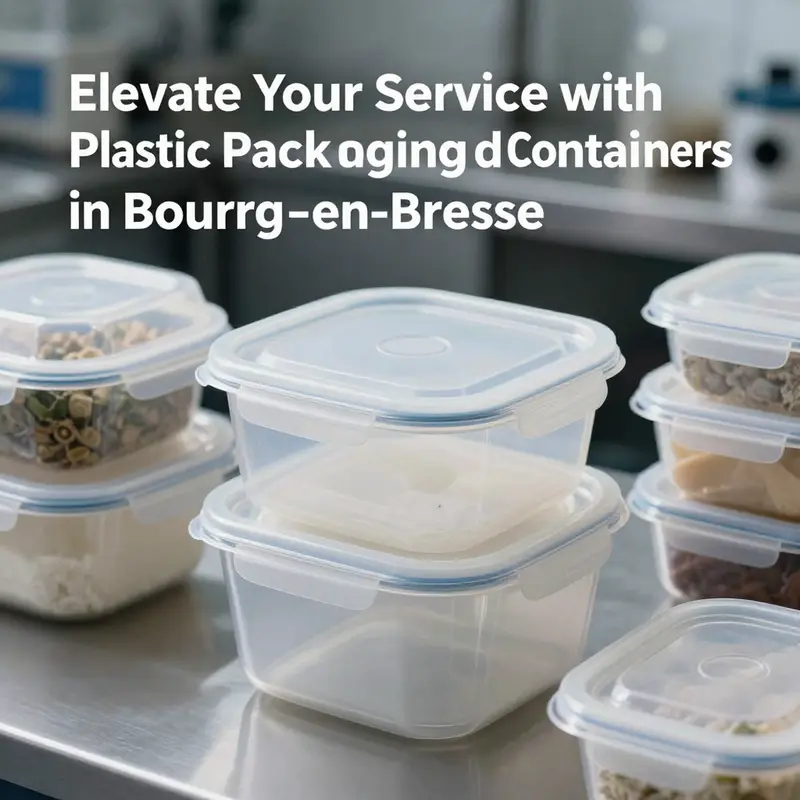
Bourg-en-Bresse has quietly become an important node in the evolution of plastic food packaging. What once meant simple clear boxes for display now embraces a layered approach: material science, safety assessment, production intelligence, and functional design converge to produce containers that extend shelf life, protect food, and meet rising sustainability expectations. This chapter examines the technological advances emerging from the city and the practical ways they reshape plastic food containers used across retail, catering, and food processing.
At the core of recent progress is a rigorous focus on food contact safety. Local technical centers concentrate on understanding how polymer formulations behave when in contact with foodstuffs under realistic conditions. Research programs analyze the potential migration of additives and monomers into food and seek process improvements that limit extraction. These efforts are not academic abstractions. They directly influence how containers are engineered: selecting resins with lower migration potential, refining additive packages for stability, and optimizing surface finishes to reduce interaction with fat- or acid-rich foods. The result is packaging that preserves flavor and safety without relying on heavy barrier laminates or excessive material thickness.
Material innovation in Bourg-en-Bresse also targets barrier performance. Developers combine polymer blends and thin, engineered coatings to resist oxygen and moisture ingress. These multilayer strategies are calibrated so they maintain transparency and recyclability where possible, while delivering the oxygen and moisture protection demanded by fresh produce, deli items, and prepared meals. Improved barrier control means less reliance on preservatives and better maintenance of texture and nutritional value. It also reduces food waste along the supply chain, since packaged items remain fresher for longer during transport and retail display.
Smart packaging concepts have moved beyond simple labels or tamper seals. Local initiatives integrate sensors and digital markers that communicate storage conditions, time-temperature history, and estimated remaining shelf life. When combined with predictive models, these sensors enable dynamic inventory decisions: items with a higher risk of spoilage can be prioritized for sale or redistribution, while others remain on normal rotation. The intelligence can be embedded in labels or housed in thin, low-cost modules compatible with standard plastic containers. Crucially, this digital layer is designed to inform logistics and retailers, not to complicate disposal or recycling.
Artificial intelligence plays a key role in accelerating design and production cycles. Machine learning models process historical sales and environmental data to anticipate demand patterns and suggest optimal packaging formats. This leads to two important efficiencies. First, manufacturers can better match container volumes to actual product throughput, reducing overproduction of packaging. Second, AI-guided optimization tailors barrier and geometry properties to specific food types, avoiding one-size-fits-all approaches that waste material. Local platforms use real-time telemetry from production lines to minimize downtime and control quality, ensuring consistent sealing, dimension tolerances, and print accuracy.
Sustainability is woven into the technical agenda. Innovations aim to reduce the carbon footprint of containers through lighter constructions, recyclable mono-materials, and incorporation of recycled content where safety permits. Engineering lightweight clear containers that retain stiffness and barrier performance requires advanced polymer design and precise molding control. When recycling streams support it, mono-polymer containers with compatible closures simplify mechanical recycling. Where compostable solutions are appropriate, developers evaluate lifecycle trade-offs to ensure the environmental benefit is real and not offset by increased food spoilage or hygiene shortcomings.
Design for multifunctionality has become a hallmark of recent products. Containers now combine display clarity with stacking stability, resealability, and microwave-safe features. Molded geometries are optimized to shrink packaging volume during empty return logistics, and lids are engineered to lock securely without requiring secondary adhesives. These refinements enhance user experience, reduce breakage in transport, and improve the container’s second life, whether as a temporary storage vessel in households or as part of industrial cleaning and reuse cycles.
Regulatory compliance and robust testing underpin all of the above advances. Local testing capabilities simulate realistic use scenarios: repeated heating cycles, fat-rich foods, acidic contents, and extended storage at various temperatures. These protocols expose potential weaknesses in polymer composition or processing and guide corrective measures. Designers iterate quickly, supported by local labs capable of assessing migration and extraction in line with European food contact regulations. This proximity between research and manufacturing shortens feedback loops, so compliant, safe solutions can reach market faster.
Collaboration is central to the region’s progress. Academic labs, technical centers, and innovative digital startups work with manufacturers and retailers to create viable solutions. For example, packaging engineers coordinate with supply chain partners to pilot containers that carry embedded monitoring while remaining cost-competitive. These pilots test not only technical performance but also user acceptance and operational fit in real retail environments. Lessons learned inform both the next generation of containers and the policies needed to scale sustainable packaging practices.
Practical outcomes of Bourg-en-Bresse’s efforts are visible across the food service and retail sectors. Clear containers designed for fruits and prepared foods maintain visual appeal while offering improved barrier and hygiene properties. Rigid containers now combine thin-wall economy with reinforced rims to prevent deformation under load. Resealable systems minimize leakage and extend opened-life freshness in consumer homes. At scale, these design shifts reduce product returns and food waste, generating economic and environmental gains for producers and retailers alike.
The region’s emphasis on digital integration and material safety also enables smarter procurement decisions. Buyers can use predictive analytics to select container types that best match seasonal demand and spoilage risk. Real-time production data helps coordinate large orders and maintain price competitiveness, particularly when ordering in high volumes. For example, the ability to forecast demand accurately allows bulk purchasing strategies that lower per-unit costs while aligning supply to consumption patterns.
One practical tie-in to broader packaging choices is the coexistence of robust plastic containers with alternative fiber-based options. Where disposable fiber bowls and boards serve well, plastic remains the material of choice when transparency, barrier strength, or tight reclosability are decisive. These distinctions are part of a nuanced local approach: selecting material according to function, safety, and lifecycle impact rather than ideology.
Bourg-en-Bresse continues to evolve as a testing ground for future-ready packaging. The region’s mix of labs, manufacturers, and digital innovators creates a cycle of continuous improvement. As materials science and AI capabilities advance, containers will become ever more efficient, safer, and better integrated into supply chains that prioritize food integrity and reduced waste. For more detailed academic background on migration assessment and material interactions that guide these developments, see the relevant study published in Innovative Food Science and Emerging Technologies: https://www.sciencedirect.com/science/article/pii/S144076292500038X
For suppliers seeking complementary fiber-based or hybrid options that pair with modern plastic containers in multi-material strategies, consider exploring reusable square salad bowls with PP lids as an example of how lid compatibility and container function can be balanced in mixed-packaging systems: https://cupbowlpack.com/product/senang-130-disposable-eco-friendly-food-grade-reusable-square-salad-bowls-with-pp-lids-for-pet-food/
Woven in Policy and Plate: The Social Currents Shaping Plastic Food Packaging in Bourg-en-Bresse
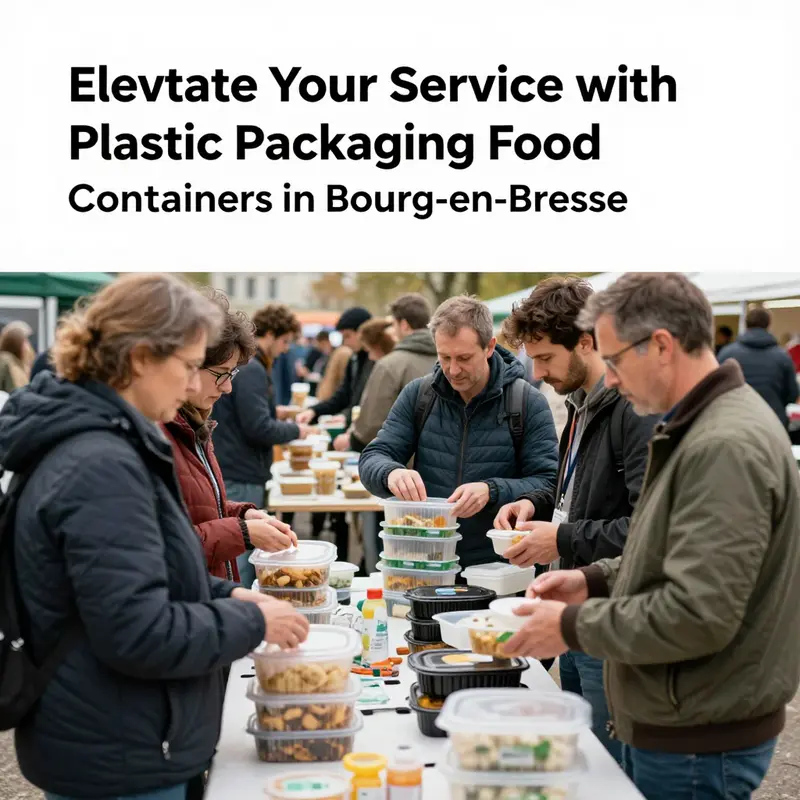
In Bourg-en-Bresse, the plain, clear boxes and trays that cradle fruit, prepared meals, and fresh produce carry more than food from producer to consumer. They carry a complex tapestry of convenience, hygiene, and social meaning. The valley’s markets, the rhythms of the town’s cafés, and the logistics corridors that connect local growers to regional distribution hubs reveal a community negotiating everyday life with packaging that must be reliable, affordable, and safe. The price signals in this system offer a telling snapshot: a typical clear plastic food packaging container suitable for fruits and similar items can cost about $0.145 per unit when orders range from 100,000 to 499,999 pieces, with the price dipping further for orders surpassing a million units. This pricing snapshot, updated on January 11, 2026, does not merely reflect cost; it hints at scale, supply chains, and the capacity of the local market to absorb packaging that travels from factory floors to display cases and kitchen counters. The address listed for inquiries, 19 Place Bernard in Bourg-en-Bresse, stands as a practical anchor in a web of suppliers, wholesalers, and manufacturers that service a regional appetite for hygienic, visually neutral packaging that keeps food safe and presentable. Yet the same numbers that reveal the economy of scale also illuminate the social tensions around waste, responsibility, and the future of materials in everyday life. The same containers that preserve freshness can also accumulate as litter, contributing to waterways and landfills in a city like Bourg-en-Bresse, where life on the street is closely tied to the cleanliness of public spaces and the health of local ecosystems. The social consequences of plastics in food packaging thus unfold at street level, in the eyes of residents who notice more than the price tag: they notice the visible footprint of consumption and the invisible chain of energy, emissions, and waste that accompanies it. The broader reality, shaped by national and European trends, is that plastic packaging is both a crucial tool for food safety and a pressure point for environmental policy, consumer behavior, and institutional accountability. The European and French contexts heighten this duality. In France, regulatory measures have grown stricter, curbing certain single-use plastics and encouraging reusable or biodegradable alternatives. In Bourg-en-Bresse, these regulatory currents interact with local business practices, education campaigns, and the daily choices of households and food-service operators who balance cost with responsibility. The social story here is not simply about packaging as a commodity; it is about the kind of community Bourg-en-Bresse aspires to be—cleaner, more resilient, and more mindful of the material life cycle that accompanies every meal. Public awareness about the consequences of plastic waste has risen, with residents showing a preference for products with minimal or eco-friendly packaging. This shift in consumer sentiment matters because it translates into demand signals that local retailers and caterers cannot ignore. Even as price and availability drive choices, the sustainability dimension of packaging becomes a differentiator in a market that seeks to align quality with social value. The transition is not uniform, and the path forward is shaped by a combination of legislative pressure, corporate adaptation, and evolving consumer expectations. Regulatory measures in France and Europe push for reduced reliance on single-use plastics, the promotion of reusable systems, and the adoption of materials with lower environmental footprints. These policies influence the decisions of Bourg-en-Bresse-based businesses by encouraging experimentation with alternative materials, such as paper-based or compostable options, as well as more robust recycling and waste-management practices. In turn, these shifts create localized opportunities for workers who can reskill toward sustainable packaging design, waste reduction initiatives, and green procurement strategies that consider both cost and the social good. The social dimension extends to public health and quality of life. When packaging is easy to clean, safe, and tamper-evident, it reduces the risk of contamination and foodborne illness. At the same time, the life-cycle impacts of plastic—from production to disposal—call for greater transparency about energy use, emissions, and end-of-life pathways. Community dialogue, municipal environmental programs, and national policy discussions increasingly frame these issues as shared responsibilities. The European Commission’s Plastics Strategy offers a broad, policy-guided lens for understanding these dynamics across member states. It highlights the need to reduce plastic pollution, promote a circular economy, and ensure that packaging design incorporates recyclability and biodegradability wherever feasible. For Bourg-en-Bresse and similar urban centers, the strategy translates into concrete expectations about supplier transparency, waste management infrastructure, and the accessibility of sustainable alternatives to everyday packaging. The social narrative thus moves from a focus on price per unit to a broader recognition that packaging is a fabric of daily life—one that shapes consumer behavior, business practices, and community health. In practical terms, this means local retailers and caterers weigh not only the immediate cost of a packaging container but also its environmental footprint, reputational implications, and compatibility with recycling streams. It means suppliers and wholesalers must respond with options that meet strict regulatory criteria while remaining affordable at scale. It also means residents increasingly notice and discuss how their choices about a simple fruit box or a take-away tray ripple outward, influencing waste flows, recycling rates, and the cleanliness of shared spaces. The dialogue around packaging in Bourg-en-Bresse is thus a dialogue about responsibility as much as convenience, a conversation that blends the practicalities of logistics with the ethics of stewardship. When one walks through the town’s markets or visits small eateries, the storefronts often reveal a pragmatic compromise: cautious adoption of more sustainable options where budget and supply permit, paired with ongoing use of dependable plastic where it serves essential needs. The challenge is not merely to replace plastic but to reimagine the packaging ecosystem in a way that sustains freshness and safety while reducing environmental costs. In this sense, the social impact of plastic food packaging emerges as a shared project—local, incremental, and continuous. It invites citizens, businesses, and policymakers to align on goals for cleaner streets, healthier ecosystems, and more responsible consumption patterns. The practical ingredient of this narrative is the ability to access reliable packaging at scale, a capability that the Bourg-en-Bresse market demonstrates through its willingness to engage with large-volume suppliers, even as it remains attentive to regulatory signals and consumer expectations. The potential to transition toward more sustainable options is not a distant horizon but an evolving path shaped by cost incentives, regulatory clarity, and a growing public appetite for ecologically sound choices. For those who study urban society, the Bourg-en-Bresse case offers a compact illustration of how a local economy negotiates the tension between the needs of food safety, the realities of waste management, and the aspiration for a healthier environment. It is a reminder that packaging is not merely a container, but a channel through which community values are expressed and tested. In that sense, the social life of plastic packaging in this French city is not simply about material use; it is about the kind of future residents want to build—one where convenience and care for the planet walk hand in hand, and where every boxed apple or packed salad is a small act of civic thought as well as a practical act of provisioning. To explore the broader implications of these dynamics, one can turn to international and regional policy resources that illuminate how Europe seeks to convert packaging from a linear to a circular material, encouraging reuse, recycling, and smarter design. See the EU’s Plastics Strategy for a comprehensive view of these aims and the policy scaffolding that supports them, which helps frame Bourg-en-Bresse’s current choices within a wider trajectory toward more sustainable packaging systems. For those interested in the concrete, local dimension of these shifts, one can also explore practical examples of eco-friendly packaging options that have gained traction in nearby markets, such as accessible fiber-based formats and reusable systems that align with waste-diversion goals. An example of this kind of shift can be found in resources detailing kraft-based, eco-friendly packaging alternatives available to take-away providers, including a representative option described under the heading of craft paper bowls and lids that illustrate how a city can edge toward sustainability without sacrificing reliability or affordability. Accessing these kinds of materials helps explain why the conversation in Bourg-en-Bresse—about price per unit, supply scale, and environmental responsibility—matters beyond the storefront. It situates local decisions within a larger movement toward responsible consumption and production that the European framework increasingly codifies. In sum, the social impact of plastic packaging in Bourg-en-Bresse represents a convergence of market forces, regulatory signals, and public sentiment. It is a living example of how a community negotiates the daily realities of food safety and hygiene with the urgent need to reduce environmental harm. The path forward, while nuanced, is navigable through informed procurement, meaningful consumer choices, and robust waste-management strategies that together can bend the curve toward a more sustainable packaging ecosystem while preserving the convenience that modern life in Bourg-en-Bresse expects. For readers seeking practical, locally relevant context, consider the following resources as you reflect on the interplay between policy, commerce, and daily life: an internal pointer to sustainable packaging options available within regional suppliers is provided here [senang-kraft-paper-octagonal-bowl-1200ml-waterproof-eco-friendly-disposable-salad-bowl-for-snack-cookie-warm-cold-food-pet-lid], and for a broader policy perspective, consult the European Commission’s Plastics Strategy at https://ec.europa.eu/environment/chemicals/plastics_en.htm.
Policy Under Pressure: The Evolution of Plastic Food Packaging Regulations in Bourg-en-Bresse, France
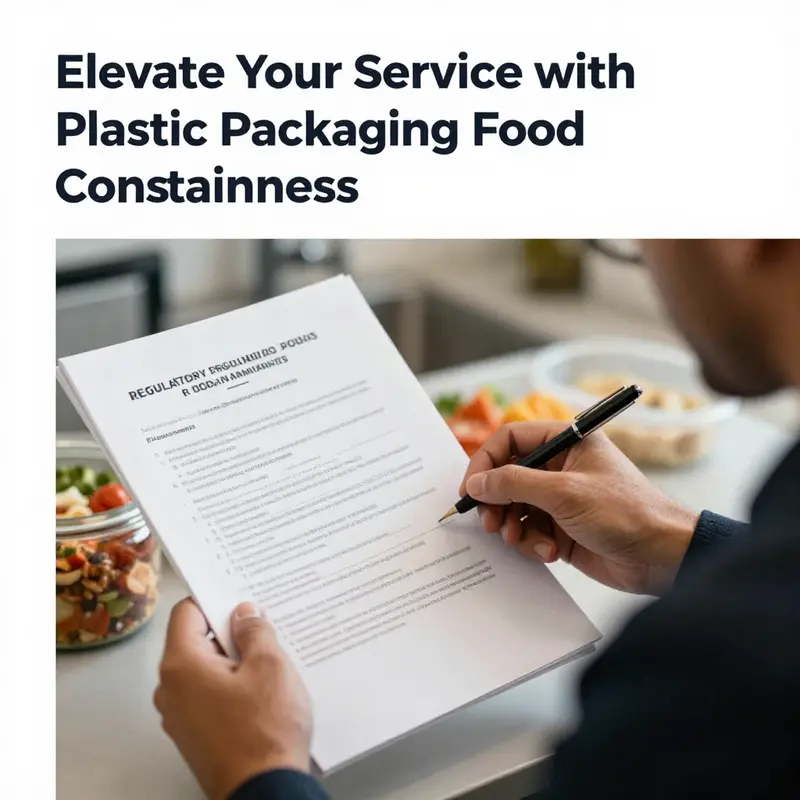
In Bourg-en-Bresse, as in much of France, plastic packaging for food sits at the intersection of keeping produce fresh and protecting public health, and the regulatory landscape has become increasingly intricate. The city’s businesses that supply or use plastic containers for fruits, vegetables, ready-to-eat meals, or take-away solutions must navigate an evolving web of European directives and national laws that push toward recyclability, reuse, and transparency. This tension between practicality and sustainability is not merely a matter of meeting a quota; it shapes supplier choices, pricing, labeling, and how food is presented to shoppers in markets, catering operations, and processing facilities around Bourg-en-Bresse. The latest framework emphasizes design for recyclability, clear consumer information, and responsibility across the supply chain. The result is a packaging ecosystem that rewards those who integrate circular economy principles into product development, procurement, and waste management strategies.
At the European level, the Single-Use Plastics Directive (2019/904) stands as a cornerstone. It targets a broad swath of single-use plastics and imposes extended producer responsibility, turning manufacturers and distributors into stewards of the materials they place on the market. The directive extends to packaging, nudging the market toward recyclable or reusable solutions by 2030 and setting a concrete recycling rate target of 55% for plastic packaging. In practical terms, this means that a business in Bourg-en-Bresse cannot rely on throwaway conventions that hinder recycling rates. Instead, producers and retailers are increasingly selecting packaging designed to be accepted by recycling streams, or even reusable systems, so they can meet the ambitious EU target while maintaining the hygiene standards that customers expect for fruits and other perishable items. The directive’s uniform rules across member states assist Bourg-en-Bresse by reducing cross-border compliance complexity, yet they place a premium on local operational alignment with sorting facilities, which often differ in capability and efficiency from region to region.
France has taken these imperatives further through the Anti-Waste for a Circular Economy law, known as AGEC, enacted in 2020. AGEC strengthens environmental standards and adds a set of concrete milestones that local authorities translate into ground rules for packaging. By 2025, France aims to ban non-recyclable plastic packaging for fruits and vegetables, a milestone that challenges retailers and growers to convert their packaging inventories and to re-evaluate how produce is presented to shoppers. The law also requires labeling that informs consumers about recyclability, a feature that connects consumer behavior with system performance. These labels educate buyers on whether a given container can be processed in the local sorting infrastructure, and they influence choices in procurement and display because transparency reduces contamination and improves recycling outcomes. In Bourg-en-Bresse, local enforcement of AGEC is often synchronized with regionally targeted initiatives in Auvergne-Rhône-Alpes to improve sorting infrastructure, support public awareness campaigns, and encourage the adoption of reusable or compostable packaging where feasible.
The French approach also emphasizes restraint on virgin plastics in many food packaging applications, particularly in contexts such as supermarkets and restaurant sectors where packaging is scrutinized by both consumers and regulators. This restriction compounds the need for alternative materials or recycled-content plastics and fosters a market environment where recycled resins and renewable materials become more commercially viable. For companies operating in Bourg-en-Bresse, these rules translate into a shift in supplier criteria, product development timelines, and inventory planning. The interplay of these laws with EU directives creates a regulatory tempo that requires ongoing diligence, not just periodic compliance checks. The French Ministry of Ecological Transition provides a comprehensive overview of the evolving regime, enabling businesses to stay aligned with national requirements while anticipating future changes.
The practical implications of this regulatory climate become particularly tangible when considering the fruit and fresh food supply chain in Bourg-en-Bresse. A typical plastic clear food packaging container used for fruits, for example, must not only keep produce pristine but also be compatible with the region’s recycling streams and labeling requirements. The price and availability of such packaging are sensitive to regulatory signals. Data available as of January 11, 2026, indicates that a standard clear food container priced around $0.145 per unit is common when ordering in the range of 100,000 to 499,999 pieces; suppliers often offer price reductions for larger orders, with costs dipping further for quantities surpassing 1 million units. While these prices reflect market dynamics, they also signal the need for long-term contracts and supply chain stability that align with a regulatory push toward recyclability and durable packaging, rather than short-lived, single-use items. In Bourg-en-Bresse, a physical address such as 19 Place Bernard provides a focal point for regional wholesalers and manufacturers, highlighting the role of local networks in translating national and European rules into practical procurement decisions. The regulatory environment thus intersects with market realities, shaping how firms secure packaging that satisfies hygiene, cost, and compliance criteria.
From a systems perspective, the obligation to label packaging for recyclability and to minimize reliance on virgin plastics nudges designers and producers toward more circular materials and easier-to-recycle configurations. The landscape encourages packaging that is not only technically recyclable but aligned with consumer understanding of what is recyclable in their locale. In practice, this demands collaboration across the supply chain: suppliers must offer packaging that can be processed by Bourg-en-Bresse’s sorting facilities, retailers must ensure clear labeling on products, and waste managers must be ready to handle the resulting streams efficiently. The result is a more resilient local economy where compliance reduces contamination, improves recycling yields, and ultimately lowers the environmental footprint of food packaging.
For businesses in Bourg-en-Bresse, the regulatory mix also signals a more strategic role for packaging design and material choice. A shift toward recyclable materials, or toward reusable systems where feasible, can help avoid regulatory friction and even reduce long-term costs through reduced material waste and improved end-of-life performance. The numbers around packaging costs—such as unit prices tied to order size—need to be considered alongside the broader policy trajectory. While a given container’s price is important for budgeting, the total lifecycle cost—encompassing collection, sorting, and potential reuse—often proves more decisive in meeting regulatory expectations and customer preferences. The direction of travel is clear: packaging must be designed to circulate, not accumulate, within the local economy. This shift aligns with the national and regional ambition to improve sorting infrastructure and public understanding of recycling, a collective effort that Bourg-en-Bresse is well positioned to support through its existing networks and channels.
From a consumer standpoint, the AGEC framework and the EU directive converge on a clearer narrative about what happens to packaging after use. Labeling that communicates recyclability is not simply a compliance checkbox; it helps customers make informed choices at the point of purchase and contributes to the public’s understanding of how best to recover materials. In turn, retailers and food-service operators respond with packaging that matches consumer expectations for hygiene and convenience while also meeting environmental criteria. The governance architecture—spanning EU-level mandates, national laws, and local execution—thus creates a continuous feedback loop between policy, industry practice, and consumer behavior. Bourg-en-Bresse’s steady coordination among authorities, suppliers, and businesses allows it to respond to regulatory pressures without sacrificing the efficiency and reliability demanded by modern food packaging.
As the landscape evolves, one practical pathway for business leaders in Bourg-en-Bresse is to foreground design for recyclability and to build redundancy into sourcing strategies. The recent regulatory emphasis on recyclability labeling means that even when a given packaging performs technically well in preserving freshness, its continued viability depends on whether it can be accurately sorted and recovered in the local system. This reality encourages collaboration with packaging partners who can supply materials with established end-of-life pathways. It also invites procurement teams to diversify suppliers to reduce risk and to negotiate terms that reflect the total cost of ownership, including waste management considerations. In this sense, the Bourg-en-Bresse market is moving toward a framework where the environmental profile of packaging is as critical as its functional performance. The changes are gradual, but the direction is unequivocal: packaging solutions that are easy to recycle, easy to sort, and easy for customers to understand will be favored, even as market prices fluctuate with demand and supply dynamics.
For readers seeking a concrete exemplar of the direction discussed above, consider a practical option that aligns with recyclability priorities while addressing consumer convenience. An option such as a take-away rectangle box made from kraft paper with a lid demonstrates how a non-foil, biodegradable-friendly design can meet hygiene and presentation standards while remaining compatible with many sorting streams. In context, in-stock-new-design-salad-rectangle-takeaway-kraft-paper-octagonal-box-with-lid represents a category of packaging that can be adapted to local recycling capabilities and labeling requirements. The choice to select such packaging should be paired with careful attention to labeling and to the availability of end-of-life processing in Bourg-en-Bresse, ensuring that the entire lifecycle remains within the circular economy framework.
Ultimately, Bourg-en-Bresse’s journey with plastic food containers is a microcosm of Europe’s broader transition. The interplay of EU directives, French AGEC provisions, and local implementation shapes what is permissible, feasible, and economically viable in daily operations. This is not about adopting a single best practice but about embedding a shared commitment to sustainability into procurement, product design, and waste management. As regulations tighten and recycling networks grow more capable, the region stands to benefit from greater predictability, reduced environmental impact, and a consumer environment that increasingly values transparent information about packaging end-of-life. The path forward will require continued collaboration among policymakers, suppliers, and food-service operators, and Bourg-en-Bresse is well positioned to model a balanced approach that respects public health, supports local businesses, and advances the European objective of a circular economy. For those seeking official guidance, the French Ministry of Ecological Transition remains a primary resource for current rules and compliance requirements applicable nationwide, including Bourg-en-Bresse.
External resource: https://www.ecologie.gouv.fr/lois-anti-dechets-pour-une-economie-circulaire
Final thoughts
The market for plastic food packaging containers in Bourg-en-Bresse offers invaluable opportunities for a variety of businesses in the food and beverage sector. Understanding the economic stakes, embracing technological innovation, recognizing societal implications, and adhering to regulatory frameworks will empower stakeholders to make informed decisions. By leveraging insights from this article, Bubble Tea shops, restaurants, catering services, event planners, and procurement teams can enhance their offerings, ensuring quality and sustainability in their packaging choices.