
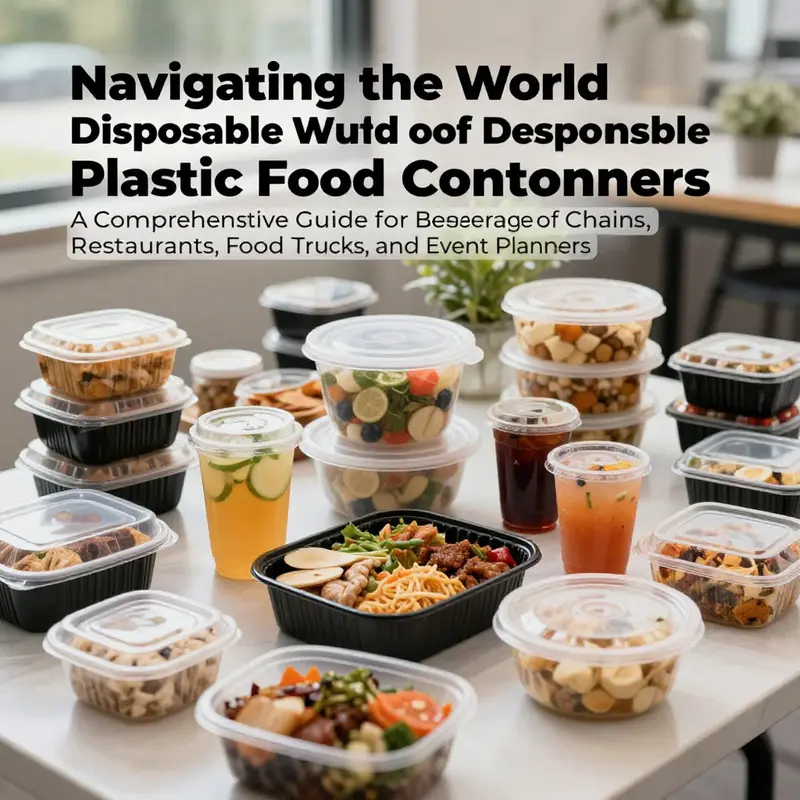
In a rapidly evolving food service landscape, disposable plastic food containers have become indispensable to businesses like bubble tea shops, restaurants, and catering services. These containers offer a convenient and safe solution for food storage, transport, and service, and their material composition and features significantly impact their utility. Understanding the available materials, their environmental implications, economic factors, convenience features, and market trends can help professionals in the food service industry make informed choices. As we delve into each chapter of this guide, we will explore how these elements not only enhance operational efficiency but also address sustainability concerns in today’s conscientious market.
From Molecules to Meals: The Materials Blueprint Behind Disposable Plastic Food Containers
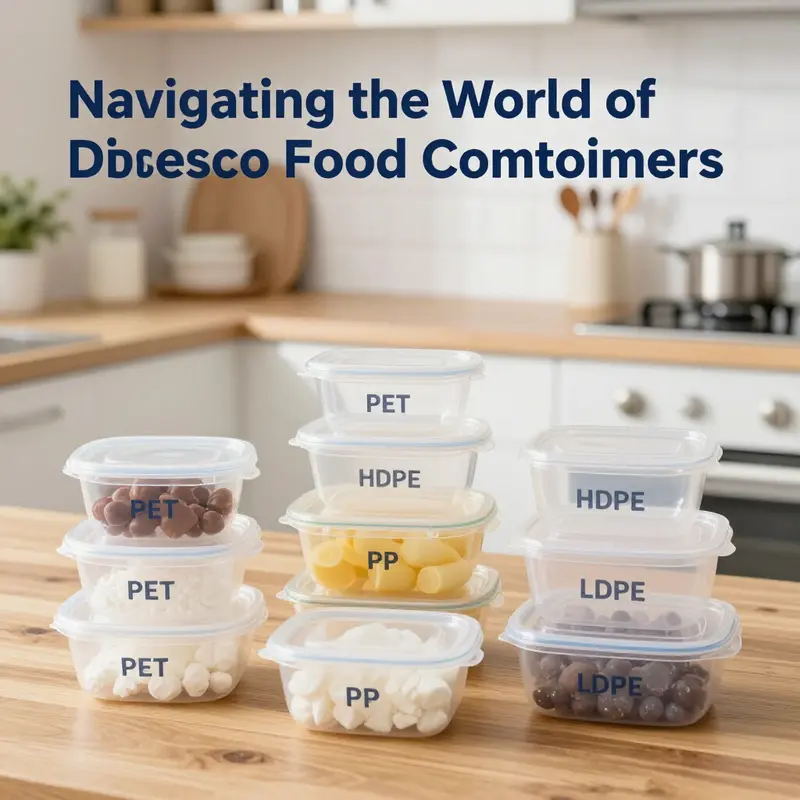
The materials chosen for disposable plastic food containers are more than a list of polymers; they are a carefully balanced set of properties that determine how a container preserves freshness, protects safety, and streamlines service. In everyday kitchens and food-service operations, the light weight, strength, and sealability of plastics translate into practical outcomes: food stays protected from moisture and air, temperatures are managed, and workflows move from prep to plate. This chapter traces the core thermoplastics behind common containers and shows how their intrinsic traits shape safety, performance, and sustainability.
At the heart of many packaging choices is Polyethylene Terephthalate (PET). PET is valued for clarity and rigidity, making it suitable for cold dishes and beverages that benefit from a crisp, fresh appearance. Its barrier properties help slow spoilage and protect flavors during short-term storage and transport. Yet PET has a heat ceiling, tolerating roughly up to 70°C (158°F), which limits hot-food use and microwaving. PET is recyclable, but maintaining integrity across recycling streams requires careful handling and design considerations.
High-Density Polyethylene (HDPE) provides a sturdier profile with robust chemical resistance, ideal for containers holding liquids, sauces, or ready-to-eat meals that may encounter oils. HDPE can tolerate higher temperatures (up to about 110°C/230°F), broadening its use in warming scenarios, though heating should be done with care. Its opacity and stiffness convey durability in multi-pack containers, while many jurisdictions recognize it as food-grade. Recyclability depends on local infrastructure and consumer participation.
Less rigid but versatile, Low-Density Polyethylene (LDPE) offers flexibility and puncture resistance, common in films, lids, and certain flexible components that require airtight seals. LDPE’s transparency can aid product visibility in some formats, but its lower stiffness and heat resistance constrain its applications relative to HDPE or polypropylene (PP).
Polystyrene (PS) brings low cost and light weight to many takeout formats, including some foam clamshells and cups. However, PS has a comparatively low melting point and can release volatile compounds when heated, limiting its suitability for hot foods or microwaving. The choice to use PS often balances manufacturing efficiency against safety considerations for reheating.
Polypropylene (PP) offers higher heat resistance, with service temperatures up to around 160°C (320°F). This makes PP a leading option for microwave-ready containers and leftovers. PP resists oils and fats and is widely used in dishwasher-safe formulations, aligning with consumer expectations for convenience. Yet PP can become brittle in very cold environments, underscoring temperature-aware design for freezing or cold-chain contexts. The rise of microwave-safe PP highlights versatility but does not erase sustainability questions.
Beyond the big five, brands explore material blends, barrier coatings, and surface finishes to extend shelf life and reduce waste. Material selection balances barrier properties, clarity, strength, and cost across scales from small eateries to global supply chains. The label ‘food-grade’ carries significant weight, yet concerns remain about additives, heat interaction, and longer storage. A cross-disciplinary view that includes toxicology and lifecycle thinking helps address these questions.
Growing emphasis on safety and sustainability drives safer, more inert designs and careful consideration of chemical migration. BPA-free formulations are common, but substitutes may exhibit endocrine activity under certain conditions. The practical takeaway is to choose materials with well-characterized behavior and robust safety certifications when heat, acidity, or long storage are involved.
Sustainability concerns encourage exploring compostable bioplastics, bio-based resins, and recyclable systems that align with circular economy goals. Real-world constraints—cost, supply chains, and performance—mean trade-offs remain, with a pragmatic balance between convenience and environmental responsibility. Designers also emphasize features like microwave-safe certification, airtight seals, and stackability to support safe, efficient service.
In sum, the materials blueprint behind disposable containers is a living synthesis of science, safety culture, and consumer expectations, balancing performance with responsibility across production, use, and end-of-life management.
From Lifecycle to Legacies: Tracing the Environmental Burden of Disposable Plastic Food Containers
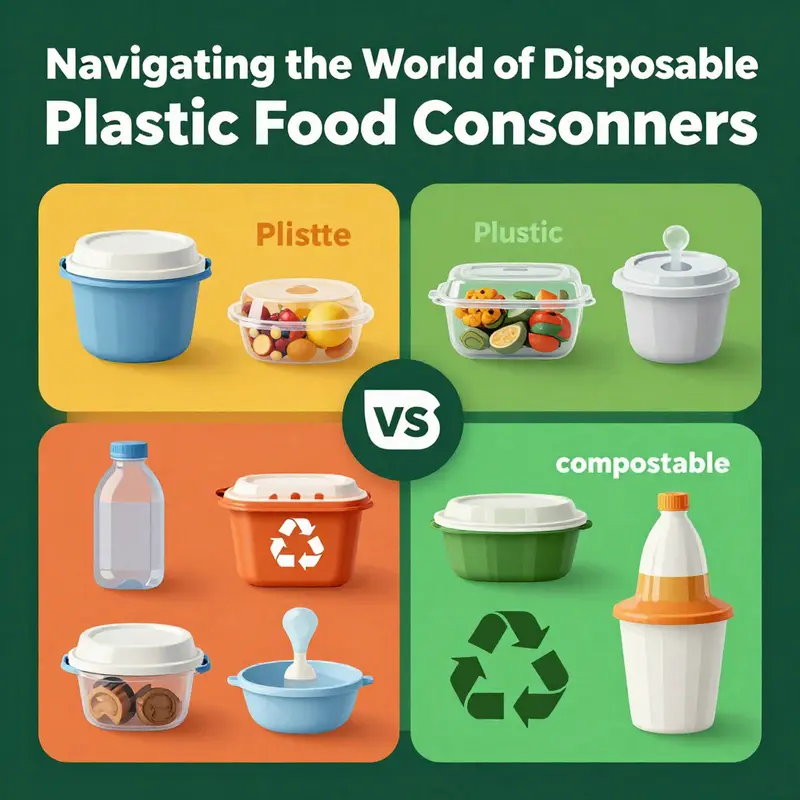
Disposable plastic food containers sit at the intersection of convenience and environmental impact. Their light, low-cost design makes them popular, but every tray, cup, and lid travels through a lifecycle that affects climate, resources, and waste systems. Life cycle assessments show that there is no single winner among aluminum, polypropylene (PP), and extruded polystyrene (EPS). PP tends to have high energy demands in use and production, while aluminum offers durability and recycling benefits but requires energy-intensive processing. EPS often shows lower manufacturing footprints yet struggles with end-of-life recycling, leading to persistence as litter. The overall environmental burden depends not just on production, but on how waste is collected, sorted, and reintegrated into productive use. The use phase also raises health questions, as heating can release micro- and nano-plastics into food, underscoring the need for careful use and safer packaging choices. Policy and innovation should focus on improving recycling infrastructure, design for recyclability, and system-level changes that shift from linear to circular material loops. While biodegradable or compostable options may help in some contexts, they require robust waste-management networks to avoid contaminating recycling streams. The takeaway is that sustainability emerges from the interaction of material properties, user behavior, and the capacity of the waste system, not from a single material choice. Readers are invited to consider how packaging design, procurement, and end-of-life governance can align to reduce environmental impact while maintaining food safety and convenience. For further grounding, see comparative lifecycle studies of take-away containers that quantify emissions and resource use across materials.
Riding the Price Waves: The Economic Forces Shaping Disposable Plastic Food Containers
The economics of disposable plastic food containers are a constant undercurrent in the modern food system, where convenience, speed, and scale meet the stubborn realities of cost, regulation, and global supply chains. At their core, these containers ride on petroleum-based feedstocks—principally polypropylene and polystyrene—that cradle every stage from design to disposal. When crude oil prices swing, the cost of producing these containers tends to follow. A predictable pattern emerges: higher feedstock costs translate into higher production outlays, which in turn press upward on wholesale and retail prices. Yet the relationship is not linear or isolated. It unfolds within a broader ecosystem where producers chase margins through efficiency, while buyers seek predictability in an arena of volatile inputs. The result is a market that often values reliability and scale nearly as much as material performance, especially for high-volume users like foodservice operations that depend on a steady supply of containers for hot meals, cold salads, soups, and desserts. In this setting, the economics of raw materials do not simply dictate price; they influence choices about material families, packaging designs, and even the likelihood of switching to alternatives that might carry different cost structures or environmental implications.
Production techniques fuel another essential axis of cost. Modern injection molding, thermoforming, and automation enable higher output with less waste, smoothing the bottom line in environments where margins are tight and demand is predictable. When a plant invests in newer machinery or robotics, the initial capital outlay can be substantial, but the long-run savings from reduced scrap, scrap rework, and faster cycle times frequently justify the expenditure. Producers also optimize through better process controls, reduced energy usage, and more precise dosing of additives and colorants. The upshot is a more cost-efficient product, but one that remains sensitive to energy prices, maintenance, and the cost of skilled labor in the plant floor. In aggregate, these production dynamics shape the unit economics of containers across sizes, from compact 16-ounce packages to larger 48-ounce bowls. The same efficiencies that push down per-unit costs in high-volume production can be stretched thinner in smaller runs or in new product introductions, where the cost of setting up a new mold or a new line can weigh on pricing for early adopters.
Transportation and logistics add another layer of complexity to the cost equation. Plastic containers are lightweight, which is a blessing for shipping in bulk. Yet their very lightness can complicate freight economics when distance grows or when demand shifts across regional markets. Fuel price volatility, fuel efficiency, and route optimization all play pivotal roles in the final landed cost. For global supply chains, the costs of transporting feedstocks from petrochemical complexes to conversion sites, and then moving finished goods to distributors or end users, can be substantial. Seasonal demand spikes—think back-to-school lunch shipments or holiday catering—expose capacity constraints and can widen price differentials between regions. In regions with robust domestic production, the balance of costs leans more toward labor and local energy use, whereas in import-reliant markets, freight and currency fluctuations become meaningful drivers of price and availability. The sensitivity to transportation costs helps explain why buyers in different geographies often see markedly different price trajectories even when global feedstock prices are moving in tandem.
Market competition compounds the economics in meaningful ways. The disposable plastic container landscape is characterized by intense price competition, commoditization, and a constant push to differentiate through packaging features such as airtight seals, clarity, heat resistance, and microwave safety. In highly competitive markets, manufacturers may trim prices to gain share, relying on volume to sustain profits. In markets with fewer players or supply constraints, price power can tilt toward the producer, enabling selective price increases that reflect differences in service levels, lead times, and packaging customization. The competitive dynamic is not merely about the container itself. It also encompasses value-added services, such as cooperative packaging programs, private labeling, and responsive logistics. Procurement strategies in this environment emphasize efficiency—bulk purchasing, standardized specifications, and long-term supplier relationships—that help stabilize costs and reduce the risk of sudden price shocks. The interplay between competition and regional variability is further nuanced by regulatory frameworks, which can alter the cost of compliance and shape the relative attractiveness of competing materials.
Regional variability is a central feature that shapes cost behavior. Different regions exhibit distinct cost structures driven by labor, energy, and regulatory regimes, as well as by consumer demand and waste-management infrastructures. In some areas, stringent recycling mandates or bans on certain single-use plastics can increase the effective cost of traditional containers or push buyers toward alternative materials. In others, favorable tax regimes or energy pricing may keep costs more anchored to feedstock economics. The result is not simply a map of lower or higher prices; it is a mosaic of supply chain resilience, risk management, and strategic sourcing choices. Operators who can align procurement with region-specific cost curves often realize more stable margins, even as global price signals move up or down. This regional texture also shapes product mix decisions—whether to push more rigid, transparent PET containers for cold foods, or to lean into opaque HDPE for sauces and condiments—driven by both consumer expectations and the cost premium those material choices entail.
Demand dynamics drive how costs translate into prices and, crucially, into packaging strategy. The appetite for disposable containers is rooted in the structure of the food industry: restaurants, cafeterias, caterers, and rapidly expanding meal-prep services rely on containers that are predictable, stackable, and compatible with a range of storage and serving environments. The typical size continuum—from 16-ounce to 48-ounce round containers with airtight lids—reflects a balance between portion control, storage efficiency, and handling convenience. The design story often emphasizes microwave compatibility, seal integrity, and clear visibility of contents, all features that can add to production complexity and cost. In parallel, there is a parallel narrative about demand for smaller running costs, sustainability preferences, and the push toward reusable systems or compostable alternatives. These pressures feed back into the economics: when customers seek lower total cost of ownership, producers must monetize efficiency gains precisely, and when customer demand tilts toward sustainability, some of the cost is shifted toward materials, processing, and end-of-life management. The net effect is that cost, price, and packaging choice evolve together, each responding to the other in a market that prizes both reliability and responsiveness.
A thread worth following in this economic tapestry is the way sustainability considerations intersect with cost structures. As environmental concerns rise, there is growing attention to recycled content, recyclability infrastructure, and end-of-life costs. Even as some stakeholders pursue compostable or fiber-based alternatives, the price premiums for these options can be substantial, and the economic calculus must weigh the availability and performance of such materials against the established reliability of conventional plastics. Infrastructure for recycling and composting varies by region, influencing the practical cost of disposal and, indirectly, the price that producers and retailers are willing to bear for packaging choices. In this context, the long-run economics may tilt toward a mixed approach: conventional plastics for high-performance, cost-sensitive applications, complemented by more sustainable options in segments where consumer perception, regulatory pressure, or corporate sustainability goals justify the higher unit cost. The result is not a single path but a portfolio strategy in which cost, performance, and environmental considerations are balanced to deliver packaging solutions that meet financial targets while addressing societal expectations.
The forward-looking question for this economic landscape centers on how innovation, regulation, and market pressures will reshape the container ecosystem. Material science continues to probe lighter, stronger, and more recyclable plastics, as well as bio-based and recycled-feedstock pathways that promise greater price stability and lower environmental footprints. The regulatory sphere—where bans, taxes, and labeling requirements can alter cost trajectories—will further influence supplier strategies and product offerings. Finally, customer behavior—ranging from the preferences of foodservice operators to the end consumer’s tolerance for price changes—will determine how aggressively the industry adopts new materials and how much price relief is achievable through efficiency gains. In this dynamic, the container remains more than a simple wrapper for food; it is a rotating lever in a complex system that coordinates supply chain design, cost discipline, and sustainability ambition across markets. The economic currents that shape these products will persist, even as the mix of materials, technologies, and policy responses evolves.
For readers seeking a tangible path through this economy, consider the broader shifts in packaging strategy and procurement practices. The cost picture is not static, but patterns emerge: scale tends to compress unit costs, automation raises upfront capital, and regional logistics define the margins of feasibility. Operators who align their sourcing with regional cost curves, who demand reliability from suppliers, and who track regulatory changes with an eye toward adaptability are better positioned to weather price fluctuations and to capture opportunities arising from efficiency and innovation. The long arc points toward a packaging ecosystem where traditional plastics still play a central role, but where ongoing improvement in materials, processing, and end-of-life management broadens the palette of viable options while mitigating the financial risks associated with volatile inputs. External research on this market corroborates the importance of these dynamics, highlighting how raw materials, processing technologies, and regional factors collectively shape affordability and access across industries. External resource: Grand View Research’s industry analysis on disposable food containers, which provides a comprehensive view of market drivers, competitive structure, and price trends. https://www.grandviewresearch.com/industry-analysis/disposable-food-containers-market
As part of the broader exploration of packaging choices, readers may also encounter practical examples of how businesses navigate these cost pressures in everyday operations. For instance, a sustainability-focused sourcing approach could steer buyers toward an option such as disposable kraft-paper takeaway boxes, which is described in detail in product listings that emphasize clear lids and custom printing. Such alternatives illustrate how market offerings respond to the twin demands of performance and price in a way that can influence procurement decisions and, ultimately, consumer experiences. In this light, the economics of disposable plastic containers are not only about numbers on a balance sheet; they reflect strategic decisions about how to balance cost, convenience, and responsibility in a highly distributed food system. To learn more about a related packaging option that frames the cost and value conversation from a paper-based perspective, see disposable kraft paper takeaway boxes with clear lids and customization options.
Designed for Ease: How Disposable Plastic Food Containers Simplify Storage, Transport and Service
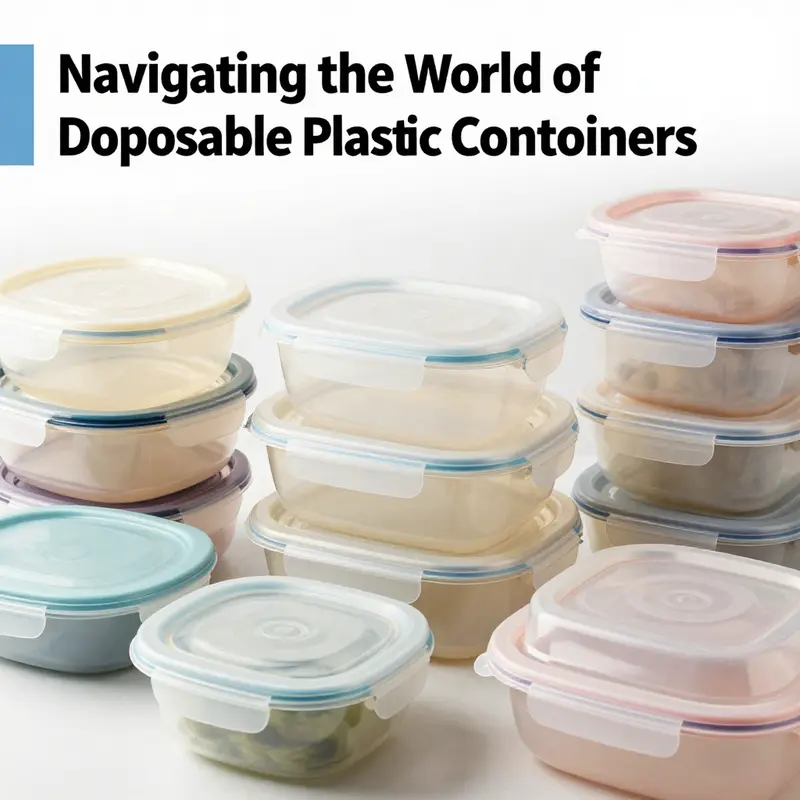
Practical convenience that shapes choice
Disposable plastic food containers owe their popularity to straightforward, well-engineered conveniences. They are light and strong, so a full load stays manageable. Stacking and nesting designs reduce storage footprint in kitchens and supply rooms. Clear materials give instant visual confirmation of contents. Lids with secure seals prevent spills and preserve freshness. These attributes combine to create a reliable, low-effort system for packing, delivering, and serving food.
The physical properties of common plastics translate directly into convenience. Materials such as PET and polypropylene offer clarity, heat tolerance, or rigidity, depending on the need. Clear PET shows salads and desserts at a glance. Heat-resistant polypropylene allows reheating without transferring food to another dish. Flexible LDPE finds use in films and soft lids that snap in place. These options let operators match container function to menu demands. The result is less handling, fewer dishes, and faster service.
Portability and leak control matter most during transport. Containers designed for takeout use often feature raised ridges, reinforced rims, and gasket-style lids. These features help maintain seal integrity under movement. Lightweight construction keeps overall weight down, which reduces fatigue for delivery staff and customers carrying multiple orders. For consumers, stacking, stable bases, and secure lids mean meals can travel in backpacks and bike baskets without catastrophe.
Airtight seals and tamper-evident features support both freshness and trust. Containers with snap locks, heat-sealed lids, or pressure-fit designs keep odors in and contaminants out. Some lids are engineered to show clear evidence of interference, adding an important layer of food safety for catered events and deliveries. Practical sealing also extends shelf life for refrigerated items, giving businesses more flexibility with prep schedules and reducing day-of waste.
Portion control and consistent sizing streamline operations. Standard capacities—ranging from small dipping-cup sizes up to large multi-serving bowls—allow cooks to scale recipes predictably. Pre-portioned meals speed assembly lines during busy shifts. For consumers, familiar sizes simplify meal planning and storage. Clear volume markings or standardized capacity ranges reduce guesswork for both commercial and home cooks.
Microwave, freezer, and dishwasher compatibility deliver convenience across meal lifecycles. Heat-tolerant plastics let customers reheat takeout without transferring food to different dishes. Freezer-safe containers permit bulk meal prep and long-term storage. Dishwasher-safe designs save washing time in small operations. When containers can move directly from storage to reheating and back to storage, the number of touchpoints falls. Fewer touchpoints mean less labor and fewer chances for cross-contamination.
Design details tailored to food types improve real-world usability. Deep bowls with tight-fitting lids suit broths and sauced dishes. Shallow trays work better for pastries and salads. Rigid bases resist softening from hot contents. Integrated vents allow steam escape during reheating. Clear lids that snap open easily support single-handed access. Each of these seemingly small choices reduces friction in food handling and consumption.
Stackability and nesting are critical for space efficiency. Empty containers that nest into compact stacks save back-of-house space. Filled containers that stack stably cut down on shelf and cooler clutter. Uniform shapes simplify shelving systems and transport racks. Compact storage reduces the need for costly storage space, especially in constrained kitchens and food trucks.
Labeling and customization features add convenience for tracking and presentation. Smooth, flat panels provide space for stickers, dates, and ingredient notes. Transparent lids let staff confirm contents at a glance without opening containers. Options for printed branding support order accuracy and customer recognition. Clear labeling surfaces also support allergen control and FIFO (first in, first out) rotation, lowering safety risks and food loss.
Speed matters in high-volume environments. Containers designed for quick sealing, stable stacking, and easy transport shave minutes from each service cycle. For catering and delivery, those minutes compound across dozens or hundreds of orders. Faster handling reduces labor costs and improves customer throughput. For meal-prep businesses, this efficiency supports larger order volumes and scalable operations.
Hygiene and single-use convenience intersect in important ways. Single-use containers eliminate the need for washing and reduce cross-contamination risks when compared to shared reusable wares. For events and temporary setups without sink access, disposables offer a hygienic option that requires little infrastructure. When paired with clear disposal and recycling guidance, single-use containers can meet both practical and public-health needs.
Customization choices further ease operational workflows. Containers are available with features like partitioned compartments, injection-molded lids, or integrated cutlery pockets. These integrated solutions minimize extra packaging and simplify handoffs. For example, a partitioned container keeps wet and dry components separate until consumption, preserving texture and flavor. Built-in cutlery saves time and eliminates another item to distribute or track.
There is also convenience in procurement and logistics. Disposable containers are inexpensive and widely available in bulk. Standardized sizes and materials simplify purchasing and inventory control. Many suppliers offer modular packaging lines that can be ordered in predictable quantities. This predictability reduces administrative overhead and keeps kitchens stocked with the right supplies for peak demand.
Convenience does not come without trade-offs, however. Single-use systems create post-consumption responsibilities. Clear recycling instructions, waste-separation policies, and supplier take-back programs help mitigate downstream friction. In contexts where compostable options are viable, choosing those materials aligns convenience with waste reduction. Yet compatibility with existing waste streams remains a key consideration when selecting alternatives.
Finally, consumer expectations shape convenience features. Customers expect containers that travel well, maintain temperature, and present food attractively. They prize leak resistance and easy reheating. Containers that meet these expectations reduce complaints, returned orders, and wasted food. Meeting practical consumer needs increases repeat business and strengthens brand reputation.
For operators weighing options, practical questions narrow the field. Do containers stack and nest efficiently? Are lids leak-resistant under transport? Are materials compatible with reheating and freezing? Can labeling be applied clearly? Answers to these questions determine whether a container saves time or becomes an additional chore.
For a ready example of a food-safe, purpose-built take-away option that reflects many of these conveniences, see the food-grade take-away bowl with lids.
Further guidance on safe use of plastic food containers is available from official food safety resources: https://www.foodsafety.gov/food-safety-basics/safe-food-handling/plastic-food-containers
null
null
Final thoughts
Disposable plastic food containers are a critical component of the food service industry, balancing convenience, safety, and cost-effectiveness. By understanding the specific materials, environmental impacts, and market dynamics, businesses can make informed decisions that align with both operational goals and sustainability efforts. As the market continues to evolve, staying attuned to these factors will not only enhance customer satisfaction but also contribute to a greener future in food service.