
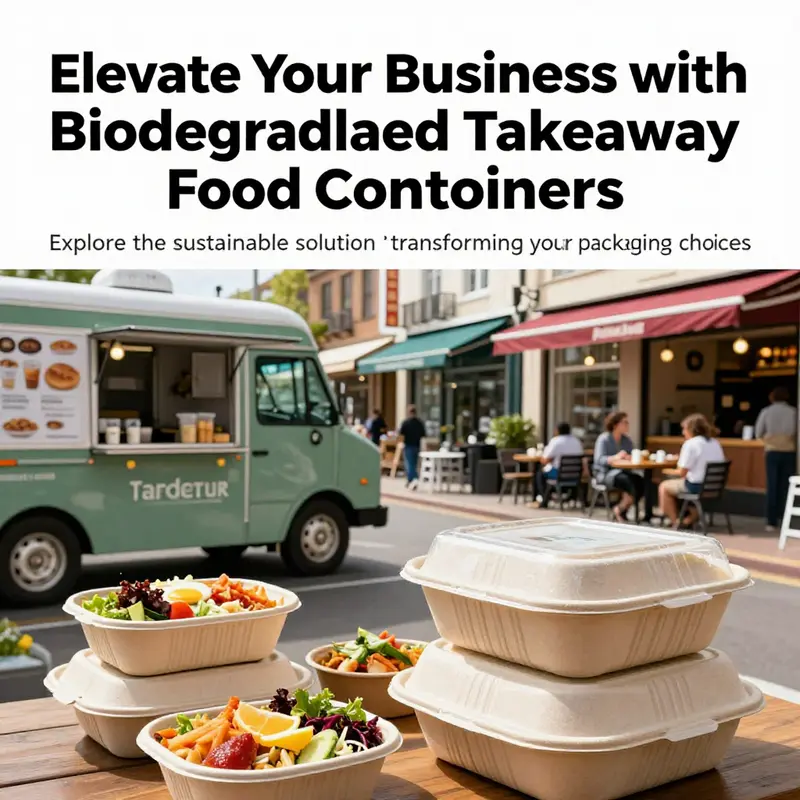
As the food service industry grapples with environmental concerns, the shift towards biodegradable takeaway food containers is becoming increasingly important. These innovative containers, crafted from renewable plant-based materials like sugarcane bagasse, cornstarch, and bamboo, present a compelling solution for reducing plastic waste and promoting sustainability. This article provides a comprehensive look at the environmental impacts, customization opportunities, and economic viability of biodegradable takeaway boxes. Whether you’re a bubble tea shop, restaurant, food truck, or an event planner, understanding these facets will help you make more informed packaging choices for your business.
How Biodegradable Takeaway Boxes Change the Waste Equation: Materials, Lifecycles, and Real-World Impact
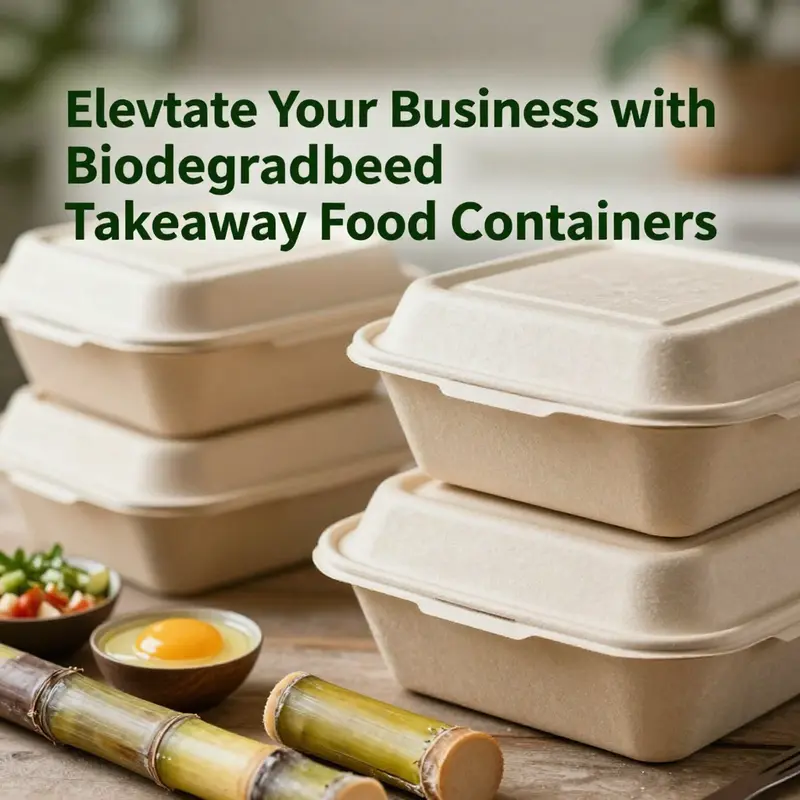
Material choices reshape the environmental story of takeaway packaging. When a restaurant switches disposable plastic for plant-based containers, the change is more than cosmetic. The raw materials used—sugarcane bagasse, cornstarch, bamboo pulp, or recycled kraft fibers—set the stage for carbon balance, resource demand, and end-of-life behavior. Plant-derived feedstocks avoid direct reliance on fossil fuels. They often sequester carbon while growing, and their industrial processing emits less fossil carbon than petrochemical routes. Sugarcane bagasse, the fibrous residue left after sugar extraction, transforms an agricultural byproduct into rigid, heat-tolerant dinnerware. Cornstarch turns into molded clamshells that perform like plastic in many ways. Bamboo, thanks to fast growth and low chemical input, yields durable fibers. Each choice comes with trade-offs in energy use, water demand, agricultural impacts, and supply-chain geography. The overall environmental footprint depends on these trade-offs and how the containers are produced, transported, and disposed of.
The next layer is manufacturing. Automated production lines in major manufacturing regions can stamp out thousands of units per hour. High throughput reduces per-unit energy consumption, but the origin of electricity matters. Plants powered by coal-heavy grids will have higher embodied emissions than those using renewables. Additives and coatings complicate the picture. Many paper-based boxes gain grease and waterproof resistance through thin coatings or laminations. Some coatings are industrially compostable; others are not. The presence of non-biodegradable barriers can undermine the claim of compostability when the design is not holistic. Certification systems exist precisely to test that the finished product—container plus coating—meets recognized composting or biodegradability standards. Certifications also cover chemical safety for food contact and responsible sourcing of fibers.
End-of-life pathways determine whether a biodegradable container reduces pollution or simply becomes another discarded item. In ideal flows, a used container is collected with food waste, delivered to an industrial composting facility, and decomposed into mature compost within sixty to ninety days. That compost returns nutrients to soil, closing a biological loop and offsetting synthetic fertilizer use. When such systems function at scale, the environmental advantages are clear: lower persistence in nature, fewer microplastics, and a reduction in the long-term accumulation of synthetic polymers.
But ideal systems are rare in many regions. In practice, several things can go wrong. If biodegradable containers enter mixed recycling streams, they can contaminate plastic recycling. If they reach landfills, degradation occurs anaerobically and can produce methane unless the landfill captures it. This methane is a potent greenhouse gas. Compostable claims therefore only translate into climate benefits when matched by collection infrastructure, clear consumer guidance, and robust sorting systems. A container certified to break down quickly under industrial composting conditions may persist for years in an ordinary landfill. That creates a paradox: materials designed to vanish can still cause harm if disposed of incorrectly.
Certification systems are the connective tissue between manufacturing and end-of-life performance. Standards such as industrial compostability certifications test for disintegration, biodegradation to carbon dioxide, and ecotoxicity. They also verify that no harmful residues remain in the resulting compost. Independent marks tell waste managers and buyers that a product should behave as advertised in the right environment. Certifications for responsible forestry and recycled content guarantee that fiber-based containers do not drive deforestation or destroy biodiversity. These labels are crucial for procurement decisions and for communicating credibility to customers. Yet certification alone cannot fix absence of infrastructure. A certified container still needs a coherent collection and treatment system to realize environmental benefits.
Economic realities shape what businesses adopt. Biodegradable materials remain more expensive than conventional plastic in many markets. Higher raw material costs, additional processing steps, and the need for specialized coatings push price up. For a restaurant operating on thin margins, switching to biodegradable containers can be a significant cost decision. Yet these costs must be weighed against regulatory pressures and shifting customer expectations. In cities where single-use plastics face bans or surcharges, biodegradable containers become not just an environmental choice, but a practical compliance step. Furthermore, the value of branding and differentiation matters: businesses can communicate sustainable commitments through on-package printing and customization, which may justify higher per-unit costs by attracting environmentally aware customers.
Performance constraints influence which biodegradable solutions are suitable for specific menu items. Some plant-based products are highly heat-resistant and microwave-safe. Others lose structural integrity in prolonged contact with acidic or oily foods. Liquid containment is a common challenge. A container that holds curry for a brief delivery trip may fail if used for extended storage. Providers address such limits through layered designs, improved processing, and innovative coatings that remain compostable. Designers also incorporate compartmentalization—three-compartment clamshells for balanced meals, for example—to limit mixing of wet and dry items. These design choices directly impact user experience and the likelihood that the container will be reused or disposed of properly.
Infrastructure and consumer behavior are the weak link in the chain. Even the most responsibly produced compostable container depends on a functioning recovery system. Large urban centers increasingly offer separate food-waste collection and industrial composting, but suburban and rural areas lag. Where curbside composting is absent, consumers face confusing choices. Should a compostable box go into the green bin, the recycling, or household trash? Inconsistent labelling and differing local rules create uncertainty. When consumers are unsure, contamination of streams increases. Simple steps can improve outcomes: clear labeling that states whether the product composts at industrial facilities, not at home; standardized color coding; and public education campaigns about what belongs in which bin.
Procurers and buyers must think in systems. Choosing compostable packaging should come with questions about collection partners, signage, and vendor agreements. A pragmatic procurement policy ties packaging choices to local waste-management realities. If industrial composting is unavailable, a better interim choice may be a recyclable paper container with no non-recyclable coatings. When composting exists, contracts can specify certified compostability, and suppliers can help set up bin infrastructure. Packaging choices should align with waste-haulers to ensure the packaging enters the right stream. Otherwise, the environmental promise remains theoretical.
Lifecycle assessments illustrate where gains are possible. When properly composted, plant-based containers often show lower cumulative fossil fuel use and reduced persistence in the environment. However, the benefits vary by material and geography. A life cycle study that ignores end-of-life methane from landfill burial can overstate gains. Conversely, analyses that include avoided fertilizer production due to returned compost can show additional credits for compostable solutions. The most honest assessments model real-world flows, including collection rates, contamination, and the proportion of materials that actually reach industrial composting. These models help businesses prioritize investments in packaging types, waste collection, and consumer education.
Policy and regulation influence adoption. Where single-use plastics face restrictions, demand for compostable alternatives rises. Procurement policies for public institutions and event organizers create large, predictable markets. Incentives for composting infrastructure—grants, subsidies, or mandated collection—change the calculus by lowering the system-level cost of compostable packaging. Regulation can also standardize labeling, reducing consumer confusion. Where rules require clear markings for compostable and recyclable materials, contamination falls. Policymakers and waste managers must communicate harmonized rules to supply chains to avoid unintended consequences, like compostable items entering traditional recycling facilities.
Design for circularity matters beyond composting. The simplest circular outcome for a bagasse box is composting back to soil. But other design choices can extend circularity. Durable, reusable systems for delivery or takeout reduce demand for disposables altogether. Hybrid models that combine reusable inner containers with compostable outer liners can balance hygiene, convenience, and environmental performance. Biodegradable containers also need design attention to reduce food residue and improve emptying behavior. Easier-empty containers lower contamination and increase the fraction of material that reaches treatment facilities.
The supply chain influences availability and cost stability. Concentrated manufacturing in certain regions has pros and cons. High-volume production yields economies of scale. But shipping long distances inflates embodied emissions and raises exposure to trade disruptions. Localized manufacturing, using nearby agricultural residues, can offer lower logistics emissions and support regional economies. Procurement strategies that prioritize local supply can reduce transport footprints and foster resilience.
Businesses should adopt a pragmatic, evidence-based approach. Start with a mapping exercise: what waste services exist, where are customers located, and which menu items demand liquid-tight containers? Choose materials aligned with those constraints. Insist on third-party certification for compostability and food safety. Clarify labeling to direct consumers correctly. Create collection plans with local waste managers. Train staff to empty and prepare containers for the correct stream. Track outcomes over time. Measurement reveals whether the packaging strategy reduces landfill diversion and lowers greenhouse gas emissions as intended.
Consumer expectations and narratives matter. When packaging looks and performs like conventional containers, customers more readily accept the swap. Visible sustainability claims, clear labeling, and messaging about what happens after disposal create trust. Yet transparency matters more than marketing. Honest communication about the limits of home composting, and the importance of industrial composting, helps set realistic expectations. Brands that overclaim or mislabel face backlash and loss of trust.
Innovation continues along multiple fronts. New composite materials aim to combine barrier performance with industrial compostability. Advances in coatings and laminations reduce the need for plastics while maintaining food safety. Process improvements lower energy inputs during molding and drying. Waste management technologies, such as anaerobic digestion optimized for diverse organic inputs, can provide alternative recovery routes that capture energy and treat biodegradable materials without producing harmful residues.
One practical resource for product selection and procurement is product pages that demonstrate certified compostable bagasse designs and compartment features. For instance, suppliers offer multi-compartment bagasse trays designed for sushi and snack packaging, which balance portion control and compostability. These offerings illustrate how design can align with service models and disposal systems. See an example of a bagasse product designed with multiple compartments for portioned meals: bagasse sugarcane biodegradable self-erecting lunch box.
Finally, industry standards and certification bodies provide essential guidance. Look for third-party marks that confirm industrial compostability and food-contact safety. These certifications link product claims to recognized test methods. For broader policy and composting guidance, resources from recognized certification bodies explain testing criteria and commercial composting requirements. One helpful external reference on compostability certification is the Biodegradable Products Institute: https://bpiworld.org/.
Branding by Design: Customization, Compliance, and the Market Currents of Biodegradable Takeaway Boxes
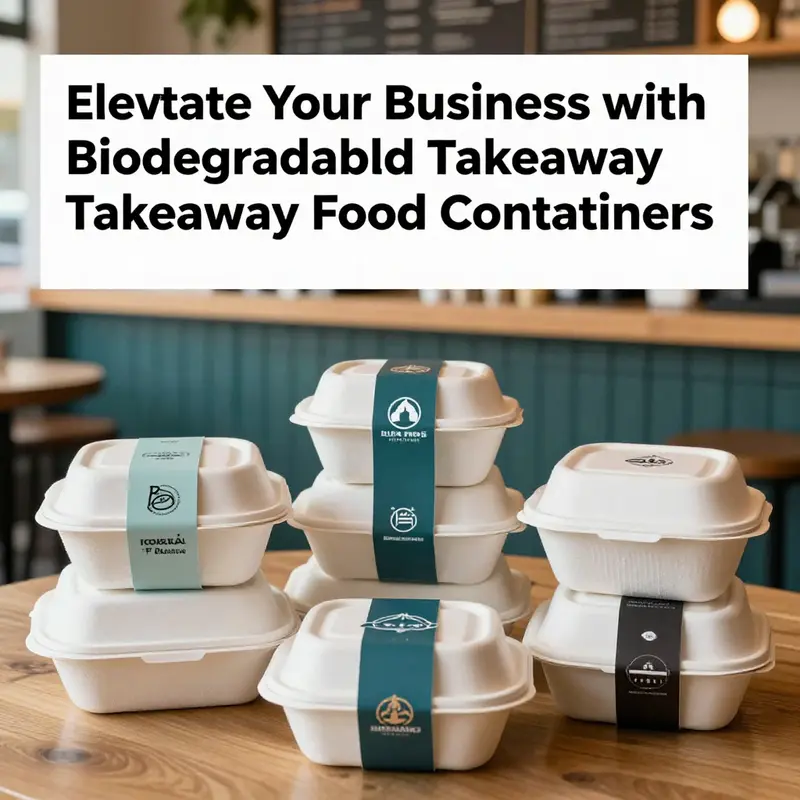
A new equilibrium is forming in the packaging world, where the choice of a takeaway box is as much about storytelling as it is about shelf life. Biodegradable takeaway boxes have moved from novelty to necessity as cities, regulators, and diners demand packaging that aligns with sustainability goals without compromising convenience. In this evolving landscape, customization has emerged as a central driver of growth. Brands want to stamp their identity on every element of the customer journey, from the first glance at a glossy logo on the lid to the reassurance of a color-coded system that signals portion size and heat tolerance. This is not merely about aesthetics; it is a strategic response to a crowded market where differentiation comes from design, traceability, and the perceived integrity of the material itself. The market research points to a chorus of demand signals: restaurants seeking packaging that reinforces brand values, event organizers requiring branded but compostable options for large gatherings, and retailers embracing the sustainability story as part of customer loyalty programs. Customization options—printing, logo placement, size adjustments, and color variations—are no longer peripheral add-ons but core capabilities that shape procurement decisions. When suppliers on major sourcing platforms present a spectrum of customization, the decision becomes a blend of brand alignment and practical performance. A simple box design can carry a powerful message about responsibility, while also delivering the robust performance needed for hot soups, sauces, and multi-component meals. The practical implications extend into the operational realm as well. For operators, the ability to tailor packaging to different meal categories, service styles, and delivery formats translates into streamlined workflows and improved customer satisfaction. The rise of three-compartment clamshell designs, for instance, demonstrates how portion control and cross-contamination prevention can be integrated into packaging that remains easy to handle, even in high-pressure service periods. The objective is clear: packaging should be a facilitator of the dining experience, not a barrier, and customization is the channel through which this objective is realized. In this sense, the packaging itself becomes a touchpoint for brand storytelling. When a consumer holds a box that carries a distinctive emblem, a carefully chosen color palette, and a surface finish that communicates quality, the act of disposal becomes a subtler signal of brand commitments. This is where the synergy between aesthetics and sustainability becomes most potent. The narrative the packaging conveys—eco-conscious, thoughtfully designed, and reliable—can reinforce a consumer’s choice at the point of payment and again at home when reheating or composting. It is important, too, that customization does not compromise environmental goals. The materials themselves—renewable, plant-based inputs like sugarcane bagasse, bamboo, or PLA—bring inherent advantages. They offer a path to compostability that aligns with industrial facilities in ready markets, and they can be engineered to withstand heat and moisture long enough to perform in both takeout and meal-prep contexts. The market literature emphasizes certifications that reassure buyers and end users alike. OK Compost, CE/EU conformity, and EPR-compliance signals are more than banners; they are the practical proof that a packaging solution can be responsibly disposed of in appropriate facilities. PFAS-free formulations are increasingly highlighted to address consumer concerns about chemical exposure. In an era when regulatory bodies expand definitions of recyclability and compostability, these certifications serve as credible, portable indicators of a product’s lifecycle performance. The emphasis on safety goes hand in hand with the emphasis on convenience. Consumers expect packaging that can withstand both microwave reheating and cold storage without leaking or deteriorating. Advances in material science have allowed designers to push the envelope on durability without sacrificing compostability. For example, a three-compartment clamshell is not just a neat way to separate components; it can be engineered with specialized wall thicknesses and seal technology to prevent seepage, maintain structural integrity when held in hand or stacked during delivery, and still break down in composting streams. Beyond the raw materials and structural performance, there is a growing enthusiasm for smart packaging as a niche but expanding frontier. QR codes, temperature indicators, and digital branding elements offer ways to connect with consumers after the meal is consumed. A packaging solution can become a conduit for loyalty programs, post-consumption engagement, and even supply-chain transparency. Imagine a shopper scanning a lid to access the food’s origin, its composition, the composting guidance, and a direct link to a brand’s sustainability story. This is not about gimmickry; it is a practical bridge between the physical container and a brand narrative that resonates with increasingly informed consumers. The broader market trends reinforce this shift toward integration. The global takeaway box market is poised for meaningful growth across North America, Europe, and the Asia-Pacific region as governments respond to single-use plastic bans with certified sustainable alternatives. The market is moving toward a framework in which ready-to-ship products, efficient production lines, and scalable capacity become differentiators. Suppliers are aligning with this demand by offering rapid dispatch times and bulk-make opportunities that can meet varying MOQs, sometimes as low as several thousand units, depending on the material and customization level. In practice, this means a brand can refresh its packaging with new colors for seasons, introduce limited-edition finishes for events, or pilot a regional variant that aligns with a local cuisine while maintaining global standards of compostability. The supply chain dynamics reflect a broader transformation in manufacturing hubs, particularly in regions known for high-volume packaging production. The emphasis on automated machinery and streamlined processes has risen as manufacturers seek consistency at scale. In some of these hubs, the convergence of material science, mold design, and robotic assembly has reduced cycle times, minimized waste, and supported more intricate designs—such as multi-compartment arrangements and snap-on lids that deliver reliable closure with a satisfying tactile feel. This is critical when the same box might be used in a bustling cafe, a vendor at a stadium event, or a food truck moving between locations. The consumer-facing implications are equally important. As more people choose takeout as a default rather than a rare exception, the packaging they receive becomes part of their everyday conversation about sustainability. A branded box carries a message about the business’s environmental stance and its attention to detail. The first impression is formed not solely by the food but by the careful choices a brand makes in the packaging itself. Consumers increasingly evaluate a restaurant’s values by the packaging they handle, and this evaluation happens at the precise moment of purchase, before the meal is even encountered. The allure of customization thus becomes amplified by practicalities. Brands seek packaging that supports temperature management, prevents cross-contamination, and aligns with the restaurant’s culinary category. A versatile rectangular box may suit salads and bowls, while a three-compartment clamshell might be ideal for bento-style meals or hybrid dishes that include both dry ingredients and sauces. The design vocabulary—such as ergonomic handles, transparent viewing panels, and secure lids—helps reduce the cognitive load for workers handling the product during peak service windows and for customers who rehearse the box’s contents in-store or at home. This is a reminder that the packaging choice operates on multiple levels: it must perform physically under the pressures of transport, speak visually to the brand, and align with the consumer’s expectations of responsible disposal. The commercial implications of this alignment are significant. Buyers across hospitality and food-service segments are not simply purchasing a container; they are investing in a platform for brand integrity, a tangible demonstration of sustainability commitments, and a material that can be integrated into a broader circular economy strategy. The pricing implications, while always a concern, are increasingly tempered by volume discounts tied to MOQs and scalable production runs. In the current market environment, pricing per piece can be remarkably favorable when orders are large enough to justify the investment in automated, high-volume production lines. Suppliers often present a spectrum of options—from standard sizes that fit common portion guidelines to customized configurations that accommodate unique meal formats or event-specific needs. The result is a dynamic where the packaging is not a separate purchase but a coordinated element of the brand’s operational plan. To illustrate how this plays out in sourcing decisions, consider the workflow of a mid-sized restaurant chain evaluating options for a nationwide rollout. The chain might start with a core, compostable clamshell in a neutral color palette to ensure brand consistency while testing for heat resistance and leak-proof performance. As feedback accumulates from kitchens and delivery partners, the chain can introduce seasonal color accents and a logo-fixed treatment on a subset of boxes without sacrificing the ability to revert to a standard configuration when needed. The procurement team benefits from suppliers who can provide both the core packaging solution and the customization options required for regional or seasonal campaigns, all while maintaining certifications and ensuring that the final product remains compostable in industrial facilities. This is where the practical tie-ins to policy and regulation become most evident. With governments tightening waste management standards and encouraging or mandating the use of certified sustainable materials, packaging strategies now require a dual focus: optimizing the consumer experience and achieving compliance across diverse jurisdictions. The market response has been to standardize on materials and processes that yield consistent certifications. This standardization makes it easier for brands to forecast disposal outcomes and to communicate disposal instructions clearly to consumers. In turn, this reduces the risk of confusion and non-compliance that can accompany more opaque packaging schemes. The interplay between customization and compliance is not a mere balancing act; it is the backbone of a scalable, responsible packaging ecosystem. For readers who want a practical glimpse into current supplier behaviors, one may observe suppliers offering free samples alongside MOQs that are framed to accommodate both small boutiques and larger operators. The willingness to provide samples helps brands test print quality, color fidelity, lid fit, and the ergonomic feel of the packaging. At the same time, the market continues to push for faster delivery windows—some providers offer five-day dispatch—so brands can respond quickly to seasonal demand or marketing campaigns without being left with stagnant inventories. As the landscape evolves, it is helpful to anchor expectations with a broader industry trajectory. The adoption of biodegradable and compostable materials is not an isolated trend; it is a key component of a systemic shift toward restorative consumption patterns. The packaging sector is increasingly recognized as a lever in the sustainability toolkit of any food business, enabling waste reduction, improved customer perception, and a tangible link to responsible sourcing and production. The consumer’s role in this dynamic should not be underestimated. People are learning to navigate disposal options in their communities and to reward brands that align with local composting capabilities. When packaging carries clear disposal guidance and demonstrates credible certifications, the consumer experience becomes smoother and more coherent. This coherence translates into higher trust and stronger loyalty, which in turn reinforces a brand’s market position. The conversation around customization thus intersects with multiple axes: design science, regulatory alignment, operational feasibility, and consumer behavior. It is not enough to offer a pretty box or a clever lid; the packaging must be a reliable, trustworthy companion to the meal it contains. That reliability depends on the synergy of materials science, manufacturing discipline, and transparent communications about end-of-life options. As this chapter circles back to the central question of how customization shapes the market, one takeaway becomes clear: the most successful biodegradable takeaway boxes are those that harmonize form and function with brand values and compliance realities. They carry a story that resonates with consumers and a process that vendors can scale without compromising environmental goals. In practice, this means the packaging must be adaptable enough to cover a range of meal formats, sturdy enough to survive the logistics chain, and transparent enough to guide responsible disposal. The result is a packaging solution that does not merely contain food; it conveys a commitment to a future where consumption and the environment move forward together. For practitioners seeking concrete steps, the path forward lies in three linked priorities: invest in design-for-performance prototypes that test heat resistance and leak protection across multiple use cases; align with certifications that demonstrate compostability and safety; and cultivate a branding strategy that leverages customization to communicate sustainability without overwhelming the consumer with complexity. The interplay of these elements—design, certification, and brand storytelling—will determine which biodegradable takeaway boxes become preferred choices in a crowded market. As the sector continues to mature, platforms that aggregate verified suppliers with transparent specifications will play a crucial role in reducing risk for buyers and accelerating adoption. In the narrative of packaging evolution, customization is not an add-on but a strategic channel through which sustainability, brand equity, and operational efficiency converge. The consumer and the planet both benefit when a well-designed, certifiably compostable box aligns with modern dining habits. Finally, the integration of digital elements with physical packaging—through code-based traceability and interactive branding—offers an incremental pathway to connect customers with the lifecycle of their meals, reinforcing trust and encouraging responsible disposal. For readers who want to explore current supplier offers and customization capabilities in greater depth, a practical starting point is a document portal featuring kraft paper takeaway box with clear lid options that can be tailored to specific needs. This example underscores how even a single packaging format can embody the broader shift toward branded, sustainable, and scalable solutions. kraft paper takeaway box with clear lid In closing this exploration of customization and market momentum, it is clear that the biodegradable takeaway box is morphing from a niche alternative into a standard component of brand strategy and regulatory compliance. The best designs will be those that anticipate the future—where materials choice aligns with waste infrastructure, where print and color communicate intent, and where digital integration enhances the relationship between consumer, restaurant, and planet. External resources for ongoing insights into the global landscape of biodegradable takeaway packaging can be found in industry platforms that curate supplier intelligence, certifications, and market trends. External resource: https://www.alibaba.com/showroom/biodegradable-takeaway-box.html
Greening the Takeout Economy: The Economic Viability of Biodegradable Takeaway Box Food Containers

Biodegradable takeaway boxes have moved from a niche sustainability bet to a practical financial instrument for the modern food economy. They sit at the intersection of regulatory pressure, consumer expectation, and the relentless push for efficiency in the kitchen and in logistics. When a business weighs the costs of packaging, it typically looks for reliability, scalability, and a predictable total cost of ownership. In this frame, biodegradable takeaway containers are not just an ethical choice; they are a strategic asset that can align cost structure with growth, brand value, and risk management. The core argument centers on three interlocking drivers: the scalability of production and competitive pricing, ongoing material innovations that keep performance high while costs trend downward, and shifts in consumer attitudes that can translate into stronger loyalty and preference signals. Together, these factors create a compelling business case that grows stronger as volumes rise and markets mature.
The economics of scale begin with what many buyers might consider the obvious hurdle: price. The data show a clear gradient where unit costs drop as order sizes climb, creating an incentive for operators to consolidate purchasing across multiple outlets, districts, or even franchises. For compostable bento-style boxes, bulk pricing is often presented as tiered, with costs per piece moving decisively downward as the quantity crosses set thresholds. In the most aggressive bands, per-piece pricing can fall to levels that are competitive with traditional, non-biodegradable alternatives when measured over a typical service cycle. Rectangular compostable containers echo this dynamic, and in very large runs the cost per unit can approach a fraction of a dollar. These incentives are not marginal; they are material enough to alter the economics of meal bundles, catering trays, and quick-service formats where packaging costs are a meaningful portion of the margin.
But price alone does not capture the entire story. The production landscape has evolved to support volume without sacrificing the environmental promises that customers expect. Production lines have become more automated, more precise in material use, and better at handling the more challenging feedstocks that underpin plant-based packaging. The most important development is the improvement in yield and process stability across high-speed lines that previously faced throughput constraints with alternative materials. When you can run hundreds of thousands of units with consistent thickness, heat resistance, and seal integrity, you reduce waste and labor—both factors that directly improve unit economics. The economics are further improved by the versatility of these materials. Many plant-based containers can be designed to tolerate hot foods and hot liquids, to be microwave-safe, and to hold sauces or oils without leaking. This functional parity reduces the cost of substitutions or supplementary packaging when a menu item requires heat or liquid containment.
A parallel driver is material innovation. The emergence of seaweed-based coatings applied to paperboard represents more than a clever labeling of a greaseproof surface. It is a structural enhancement that improves water resistance, grease resistance, and overall durability without reintroducing dependence on fossil-based barriers. The result is a packaging solution that behaves more like conventional plastics in a hot, greasy, or steam-rich environment, while remaining fully compostable at the end of its life. This shifts the cost-benefit balance in favor of biodegradable options in several meaningful ways. First, it reduces the risk of product returns or customer dissatisfaction linked to leaks or soggy packaging, which can translate into lower waste and lower replacement costs. Second, it minimizes regulatory risk associated with weaker barriers and microplastic concerns that might emerge as oversight tightens. Third, it helps defend against price volatility in traditional plastics, a risk that has increased as fossil fuel dynamics ripple through global markets. In short, innovations like seaweed coatings widen the safe operating space for biodegradable containers, enabling higher-value features without a commensurate rise in price.
Consumer attitudes complete the trifecta by supporting a cost-effective transition rather than a reputational risk. A growing segment of diners actively seeks brands that demonstrate environmental stewardship, and many are willing to pay a premium or adjust their order patterns to align with sustainable practices. This behavioral shift matters because it changes competitive dynamics. If a café or restaurant can charge or tactically upsell a marginally more expensive container as part of a broader sustainability story, the incremental revenue can cover a portion of the packaging cost. More importantly, sustainable packaging often strengthens brand loyalty, repeat visits, and even word-of-mouth referrals, which translate into higher lifetime value per customer. The 2026 overview from ScienceDirect Topics emphasizes that the market for environmentally compatible products is expanding rapidly, reinforcing the idea that the demand curve for sustainable packaging has not peaked yet. In practice, this means that early adopters or first movers who pair a credible sustainability narrative with reliable supply chains can realize a longer-term cost advantage as the market grows.
From the perspective of a mid-size or growing chain, the economics are not solely about unit price. They also involve the total cost of ownership, which includes procurement complexity, supplier risk, and the operational efficiency gained through standardized packaging. When a single supplier can offer a consistent product across multiple sizes and use-cases—three-compartment clamshells for meals, rectangular lunch boxes for delivery, or single-compartment cups for sides—the procurement team reduces the friction of product diversification. Fewer SKUs, smoother inventory management, and easier demand forecasting all feed back into lower overhead and fewer stockouts, which indirectly improve margins. To illustrate how this translates in practical terms, consider the value of standardized sizes. A typical family of containers—ranging from 200 mL mini-portions to 2,000 mL meal platters—allows a business to curate portions with predictable thermal performance and user experience. When the same material family can be leveraged across these sizes, the business can amortize tooling, drying times, and quality-control checks over a broader base, pushing unit costs further down while maintaining consistent quality.
An important nuance is the role of supply-chain proximity and manufacturing hubs in shaping the real cost of ownership. In regions with advanced automated packaging ecosystems, manufacturers can achieve higher throughput with lower defect rates, translating into fewer returns and less waste. This is especially relevant for a global takeout economy that must scale quickly in response to fluctuating demand. Regions with established biodegradable packaging ecosystems have developed logistics networks that minimize delays, reduce lead times, and offer more predictable delivery windows for restaurateurs and caterers. When a market can rely on a steady stream of material inputs—green farm outputs, fiber sheet stock, barrier coatings, and sealants—production becomes less cyclical and more predictable. That predictability matters for cash flow, credit terms, and the ability to sustain price discipline even as demand surges.
The consumer-facing value proposition feeds back into the financials in a subtle but powerful way. Sustainability signals can enable brand differentiation in crowded markets, allowing operators to convert occasional customers into regulars who value responsible choices. While price sensitivity remains real, there is evidence that customers are willing to adjust their baskets to favor brands with credible environmental credentials. This creates a form of price elasticity that benefits the business in a sustainability-driven economy. When combined with the efficiency gains from high-volume production and the risk mitigation of a stable supply chain, the economic viability of biodegradable takeaway containers becomes robust rather than brittle.
The practical takeaway for operators is straightforward: seek scale not merely for price reduction but to stabilize the entire value chain. A well-ordered procurement plan that blankets multiple outlets under a single sourcing strategy reduces the administrative burden and improves forecasting accuracy. It also enables a stronger negotiating position with suppliers who can offer more favorable terms at higher volumes. In turn, this incentivizes broader adoption across a brand or network, reinforcing the long-term business case for switching away from conventional plastics. As production technologies mature and consumer demand continues to grow, the economic advantages accumulate, not as a one-time discount but as a continuing compounding effect that improves margins and resilience.
For businesses exploring sourcing options, the choice often reduces to three priorities: reliability, performance, and cost predictability. A supplier landscape that offers high-volume capability, consistent seals and liners, and proven heat resistance across temperature ranges helps ensure that packaging performance never becomes a bottleneck for service. A practical approach is to establish a baseline of required sizes, test performance across typical menus, and then scale up to a preferred tier that unlocks the best price-per-unit without compromising quality. In practice, some operators may find themselves drawn to distribution channels or platforms that can consolidate orders across locations, enabling economies of scope and more favorable terms. In this context, the economic viability of biodegradable containers is not merely a matter of per-piece price but of the entire ecosystem that supports a sustainable, scalable takeout operation.
Within this broader narrative, there is also room for brand-specific storytelling that translates into measurable commercial gains. Companies can lean on the green credentials of their packaging to support menu labeling, loyalty programs, and sustainability dashboards that customers can access. The result is a more transparent and trusted takeout experience, where the container becomes part of the product’s identity rather than a passive backdrop. This kind of alignment between packaging and brand narrative can amplify price tolerance and retention, particularly among customers who are willing to support responsible businesses with loyal advocacy. The net effect, in many cases, is a healthier top line and a more resilient cost structure, especially as companies diversify by cuisine, service model, and geography.
To ground these insights in concrete examples, consider how a chain could leverage a standardized portfolio of compostable containers across its takeout, delivery, and catering services. A 200 mL mini-portioned option might be used for savory sides, a 500–750 mL range for entrees, and a 1000–2000 mL variant for family meals or catering trays. The seaweed-based barrier technology can be applied across this spectrum to ensure consistent performance even when sauces or gravies are involved. When the procurement function can align with a single family of materials, the savings from reduced SKU complexity, lowered waste, and improved forecasting compound quickly. In the end, the business achieves not just a lower cost per unit but a more predictable, scalable, and resilient packaging program that aligns with a broader sustainability strategy.
From a consumer behavior standpoint, the shift toward biodegradable containers is less about a single purchase and more about ongoing brand alignment. Consumers increasingly recognize that packaging choices reflect a company’s values, and they reward consistency in environmental stewardship with higher trust and more frequent engagement. This has downstream effects on profitability: better customer retention, stronger favorable word of mouth, and an enhanced willingness to participate in sustainability-driven promotions or loyalty initiatives. The economics of such a strategy are not abstract; they translate into repeat visits, higher lifetime value, and more effective capital deployment. When retailers and food-service operators connect product quality, packaging performance, and environmental responsibility in a seamless experience, they create a virtuous cycle that sustains growth and reduces long-term risk.
In summary, the economic viability of biodegradable takeaway food containers is robust and growing, anchored by scalable pricing, material innovation, and supportive consumer behavior. The path to profitability is not a single leap but a series of deliberate optimizations across procurement, manufacturing, and customer engagement. Operators who invest in scale, embrace ongoing material improvements, and tell a credible sustainability story are positioning themselves to thrive in a green economy. By doing so, they are not merely complying with regulations or appeasing trends; they are reconfiguring the cost architecture of the takeout business in a way that is sustainable, resilient, and inherently adaptable to changing markets. The result is a packaging solution that helps reduce environmental impact while maintaining the economic vitality essential to competitive food service. For businesses, the choice is not whether to switch but when and how to scale in a way that preserves margins and strengthens brand equity over time.
For readers seeking practical sourcing options aligned with this strategic shift, consider exploring bulk-friendly, microwave-safe, compostable options that support large-scale operations. A representative range available through bulk channels offers consistent performance across sizes and service formats, enabling a unified packaging strategy that scales with a brand. In practice, this means standardizing on a family of products that can cover nearly every takeaway need while delivering the environmental and financial benefits described above. Senang05 food-grade takeaway bowls provides a concrete example of how a single product line can be extended across a restaurant network, reducing procurement complexity and enabling more predictable costs as volumes grow.
The broader implication is clear: biodegradable takeaway containers are not a transient trend but a structural element of a modern, efficient, and responsible food-service operation. As markets continue to adopt circular economy principles and as producers push constant improvements in barrier properties, heat resistance, and end-of-life performance, the economic case will only strengthen. The chapter has started with cost curves and the mechanics of scale, but the endgame is a packaging system that supports fast, reliable service while minimizing environmental impact and supporting a sustainable business model over many years.
External reading: For a deeper dive into the regulatory and market dynamics shaping biodegradable packaging, see the ScienceDirect overview on biodegradable products: https://www.sciencedirect.com/topics/engineering/biodegradable-products
Final thoughts
Biodegradable takeaway food containers are not merely a trend, but a necessary evolution in the food service industry. Their environmental, customizable, and economic benefits make them a smart choice for businesses of all sizes, from bubble tea shops to large catering services. By opting for these containers, you not only contribute to sustainability efforts but also position your brand favorably in an increasingly eco-conscious market. Explore your options today and make a lasting impact through responsible packaging!