
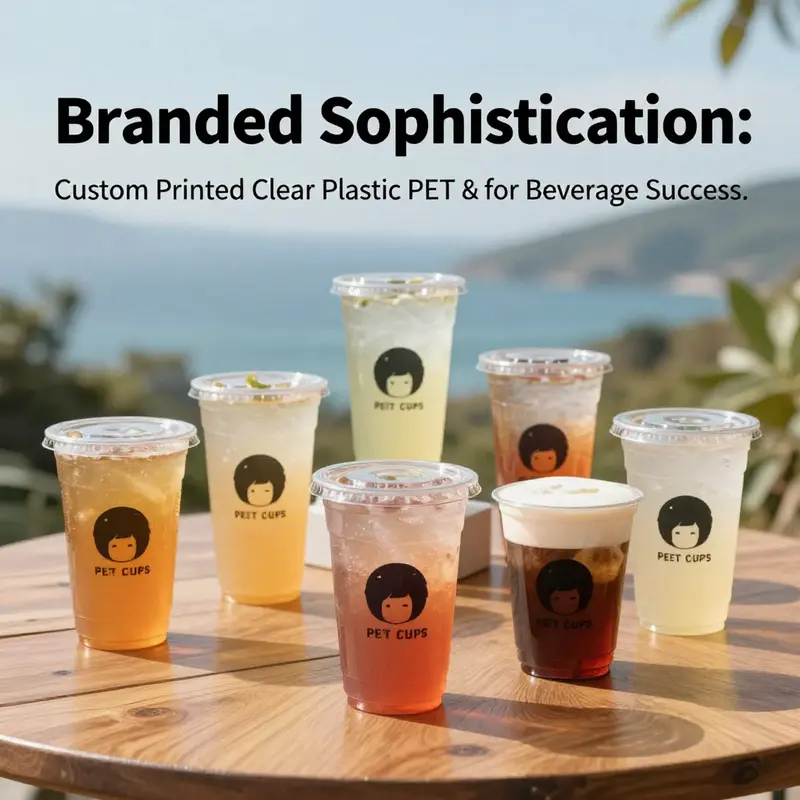
For bubble tea shops, restaurants, food trucks, and catering services, presentation matters as much as the product. Custom printed clear plastic PET cups allow businesses to showcase their offerings while enhancing brand visibility. These versatile cups are made from durable materials, suitable for both hot and cold beverages, making them a perfect fit for various beverages, from refreshing smoothies to comforting coffees. This article will explore the key features of these cups, their economic benefits for businesses, and the growing importance of environmental considerations in modern beverage service.
Clarity as Brand Story: Key Features of Custom Printed Clear PET Cups
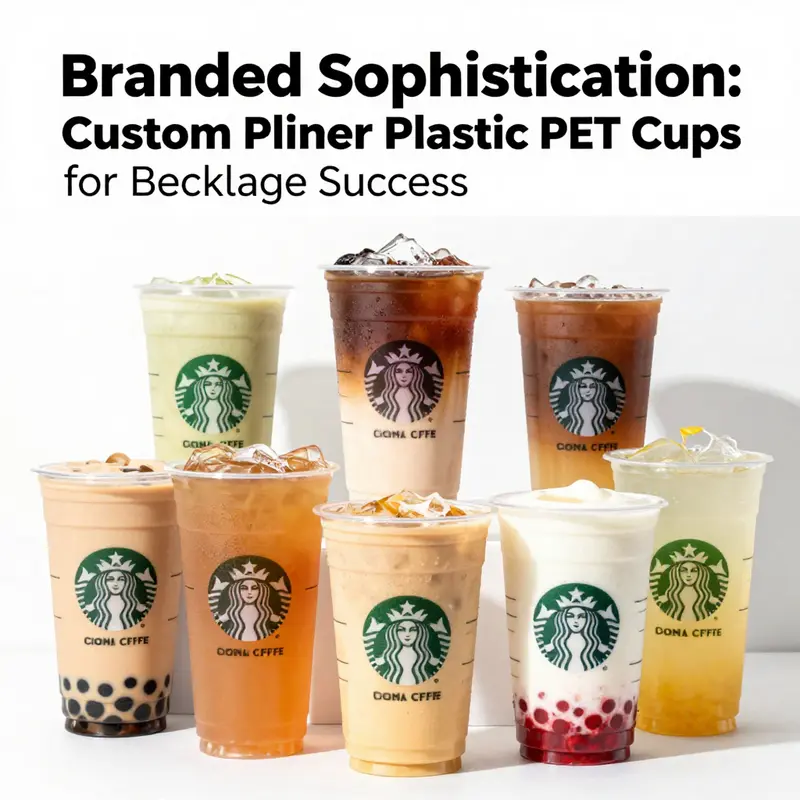
Clear PET cups offer outstanding transparency that showcases beverages and reinforces brand visuals. The material’s glass-like clarity supports trust in product quality while remaining lightweight for takeaway service. Custom printing on clear PET cups leverages color and contrast without obscuring the drink, enabling logos and campaigns to travel with the customer. Printing typically supports multiple colors via flexo or digital approaches, with a practical range of colors that balance visibility with production efficiency.
Capacity and lid design play a practical role in consumer experience. Cups commonly range from 250 ml to 700 ml, with 16 oz (about 540 ml) serving as a popular standard for cold beverages. Dome-style lids with secure seals help prevent spills while keeping the artwork visible from a distance. Durability under handling and temperature variation is a core benefit of PET, supporting reliability from counter to curbside.
Certifications and sustainability considerations influence buyer confidence. FDA food-grade status and ISO quality management are common markings, and some suppliers highlight eco-friendly credentials. PET is recyclable in many markets, and some product lines offer environmentally friendly certifications to align with sustainability goals while maintaining visual appeal.
In practice, brands use clear PET cups as a portable canvas for storytelling. A unified design language across sizes and SKUs helps streamline ordering and maintain brand consistency, while careful cap and lid selection protects usability and experience. For sourcing teams, the key is balancing clarity, print versatility, capacity options, lid compatibility, and safety certifications to optimize both aesthetics and operational practicality.
Clear Value in Every Cup: The Economic Dynamics of Custom Printed PET Cups
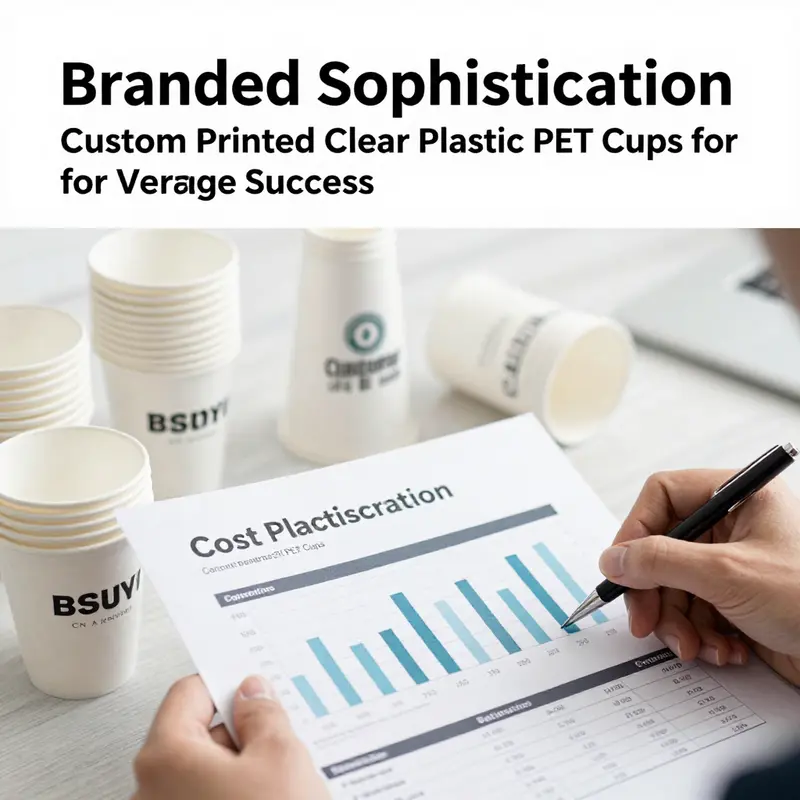
Seeing a drink through a clear PET cup is not just about aesthetics. It is also a calculated choice for businesses weighing packaging costs against brand exposure. Custom printed clear PET cups align the quick service workflow with marketing efforts, turning every takeaway into a potential billboard. The economics of this alignment hinge on material costs, the scale of production, and the range of customization options that suppliers can support without sacrificing reliability or margins. In fast casual dining, coffee shops, smoothie bars, and juice counters, the value proposition rests on a simple balance: keep the unit cost predictable while allowing for vivid branding that travels with the product from the counter to the customer’s hands. The clarity of PET helps showcase color, texture, and even the layering of ingredients, which in turn supports premium pricing in certain market segments. Yet clarity alone does not guarantee profitability. The real gains come when procurement teams can lock in favorable unit costs through volume, while still delivering print quality that convinces customers to choose one brand over another.
Material costs play a fundamental role. PET resin prices fluctuate with feedstock markets and currency swings, making the base cost of the cup itself variable. Because the cups are designed for mass use, the per-unit price benefits heavily from scale. Suppliers often set minimum orders that reflect the cost of tooling, setup, and color runs. The typical minimums enable significant price reductions as order sizes rise, creating a steep but predictable cost curve: a business purchasing 100,000 units can secure margins tighter than those ordering 10,000 units, provided the customization matches demand. The ability to amortize the cost of multi-color printing across many thousands of units can transform a one-time branding expense into a long-term marketing investment. Even with high MOQs, the per-unit price can remain competitive compared to other branding media, particularly when the alternative is bespoke packaging that requires separate production lines or longer lead times. In many cases, this is the moment where operations teams see real savings: an investment in branding in cups replaces separate marketing collateral or signage purchases at scale while maintaining service speed.
Printing and customization add both value and cost. Flexo printing, commonly used for these cups, enables vibrant multi-color designs with solid color fidelity. The per-unit price rises with the number of colors, the complexity of the artwork, and the need for color matching across lots. Yet the ability to deliver full-branding on a disposable cup is powerful. A single spell of careful design can become a consistent brand message across hundreds of thousands of customers. Setup fees, plate costs, and potential color proofs are piecewise but amortize as volumes grow. A 6-color print, for example, may increase the unit cost by a few fractions of a cent, but the impact on perceived quality and recognition can yield higher average purchases and repeat visits. In practice, many buyers discover that the incremental branding value justifies the incremental cost, especially when the cups are part of a broader, cohesive packaging strategy. The choice of color palette, typography, and even subtle branding cues such as texture or gloss can elevate the cup from mere containment to an extension of the store’s identity.
Accessories such as lids and sleeves contribute to the total cost, but they also expand usability. A dome lid fits securely and helps preserve temperature and freshness during transport, reducing spill-related waste and customer complaints. When a cup ships with a compatible lid and, in some cases, a straw or sleeve, the buyer captures additional value in the form of convenience and protection. This reduces the post-purchase friction that can otherwise erode margins when customers rely on secondary packaging or need third-party lids. From an economic standpoint, bundling cups with lids or sleeves can create a bundled price offer that is more appealing in high-volume channels. The supplier ecosystem often rewards such bundles with slightly lower per-unit costs, provided the buyer commits to a longer-term or higher-volume agreement. For operators who manage both dine-in and take-away, the flexibility to switch between cup configurations without renegotiating the supply chain preserves efficiency and reduces procurement overhead.
Beyond the raw material and printing costs, certifications add a layer of trust that translates into market access and pricing power. Cups that are certified by food-safety authorities and quality management standards reassure buyers that the product meets strict requirements for contact with consumables. In regulated markets, this trust becomes a determinant of whether a business can operate in certain locations or with particular chains. The presence of FDA-like or ISO9001-compliant processes signals that a supplier can sustain consistent quality at scale, which reduces risk for purchasers. While certifications can add overhead to production, many buyers view them as a form of insurance that justifies modestly higher prices. In addition, eco-certifications or biodegradable variants, if offered, may open new revenue streams in sustainability-minded markets. Even when premium segments are not the target, these certifications contribute to smoother audits, fewer supply interruptions, and easier, faster onboarding of new customers who insist on standardized practices.
From a production standpoint, the ability to scale is the backbone of the economics. PET cups are produced in high-speed lines that run continuous shifts, allowing manufacturers to spread fixed costs over millions of units. Lead times for first-time orders can be longer, as tooling, color matching, and quality testing take place. Reorder cycles are shorter when the supplier has established inventory and a predictable production schedule. The supplier’s logistics capability matters as much as the printing capability. For customers who need seasonal campaigns or event-specific branding, the option to adjust print runs without causing production bottlenecks is essential. In many cases, buyers will negotiate partial shipments or staged delivery to align with marketing calendars, reducing storage costs and cash flow pressure. The economics, therefore, are not simply about price per unit but about the total cost of ownership across time, including warehousing, inventory risk, and the potential savings from avoiding rushed last-minute purchases.
With the market’s demand leaning toward mass customization, the perceived value of branded cups rises in categories where beverages are a social currency. A well-printed cup is more than packaging; it becomes a walking advertisement with each sip. The ROI story, however, rests on careful measurement. Brands can track the uplift in customer recognition and recall, the incremental sales when promotions align with cup designs, and the long-term loyalty that accrues from consistent, aesthetically pleasing packaging. This is especially true for operators who participate in large events, corporate giveaways, or seasonal campaigns where scale makes a breakthrough difference in cost efficiency. The economics of these cups therefore hinge not only on unit costs but on the effectiveness of the branding effort, the timing of campaigns, and the ability to convert impressions into measurable outcomes at the cash register. As a result, a company that plans a broad branding initiative may find that the cups themselves play a central role in the campaign’s success, far beyond their role as a simple container.
Environmental considerations increasingly enter the balance sheet. PET’s recyclability is a major plus, but the reality of recycling infrastructure varies by region. When buyers invest in programs that emphasize end-of-life collection, the long-term cost of ownership can improve, particularly if recycled content is integrated into new production. Some suppliers offer eco-friendly or biodegradable PET variants that command a premium but may deliver marketing advantages in markets where consumers reward sustainable choices. For brands with a stated sustainability agenda, this can translate into a premium price point and stronger customer goodwill. On the other hand, if a business must compare true total costs, including potential disposal fees or regulatory shifts related to single-use packaging, the savings from a lower upfront price may be offset by future liabilities. The choice between standard PET and an eco-conscious option thus becomes a strategic decision, one that aligns with the broader goals of the business and its stakeholder base. The result is not a single number but a spectrum of trade-offs among cost, branding impact, and environmental responsibility.
On the procurement side, negotiating terms is a skill in itself. The economics of these cups improve when buyers leverage multiple supplier quotes, demand clear MOQs, and request samples before committing to large orders. Prices in bulk tend to fall as order quantity increases, but buyers must also consider currency exposure and insurance costs for international shipments. Payment terms—typically a deposit followed by a balance before shipment—help manage cash flow for both sides. Lead times are a critical factor; early planning enables customers to lock in favorable pricing while ensuring timely delivery for campaigns or seasonal peaks. The ability to split shipments across regions can also smooth out distribution challenges and align with regional marketing calendars. In practice, those who plan ahead and build supplier relationships can navigate the price volatility of raw materials, colorants, and linings more effectively, ensuring that the total cost of ownership stays within acceptable bounds while still delivering the intended brand impact.
Finally, the economics of custom printed clear PET cups are inseparable from the broader marketing ecosystem. The brand gains achieved through the cup influence not only the average transaction value but also the consumer’s perception of the brand’s attention to detail. The cups act as a portable canvas for storytelling, a feature that can extend the life of a promotion beyond the actual event. The most effective programs use these cups as anchor points for social engagement, encouraging customers to share images and experiences that amplify reach. When evaluating suppliers, buyers should look for reliability as much as price. A stable production schedule, consistent print quality, and dependable delivery timelines can save money that would otherwise be spent on rush orders, damaged goods, or inventory write-offs. The bottom line is that economic viability comes from a disciplined approach to sourcing, a clear understanding of the total cost of ownership, and an integrated strategy that treats packaging as a strategic asset rather than a one-off expense.
To illustrate how branding on cup surfaces translates into consumer touchpoints in related packaging, explore this example of eco-friendly printed-logo paper cups: eco-friendly printed-logo paper cups.
For a broader view of current production capabilities, ordering terms, and sample options in the market, reference the supplier overview on a major global sourcing platform: https://www.alibaba.com/product-detail/Fuling-PET-CUP-16-oz-Clear-Plastic-Cups1600557985719.html?src=product&spm=a2700.shopshoplist.d11100000000000000000000000000000000000000000000000000000000000000000000000000000000000000000000000000000000000000000000000000000000000000000000000000000000000000000000000000000000000000000000000000000000000000000000000000000000000000000000000000000000000000000000000000000000000000000000000000000000000000000000000000000000000000000000000000000000000000000000000000000000000000000000000000000000000000000000000000000000000000000000000000000000000000000000000000000000000000000000000000000000000000000000000000000000000000000000000000000000000000000000000000000000000000000000000000000000000000000000000000000000000000000000000000000000000000000000000000000000000000000000000000000000000000000000000000000000000000000000000000000000000000000000000000000000000000000000000000000000000000000000000000000000000000000000000000000000000000000000000000000000000000000000000000000000000000000000000000000000000000000000000000000000000000000000000000000000000000000000000000000000000000000000000000000000000000000000000000000000000000000000000000000000000000000000000000000000000000000000000000000000000000000000000000000000000000000000000000000000000000000000000000000000000000000000000000000000000000000000000000000000000000000000000000000000000000000000000000000000000000000000000000000000000000000000000000000000000000000000000000000000000000000000000000000000000000000000000000000000000000000000000000000000000000000000000000000000000000000000000000000000000000000000000000000000000000000000000000000000000000000000000000000000000000000000000000000000000000000000000000000000000000000000000000000000000000000000000000000000000000000000000000000000000000000000000000000000000000000000000000000000000000000000000000000000000000000000000000000000000000000000000000000000000000000000000000000000000000000000000000000000000000000000000000000000000000000000000000000000000000000000000000000000000000000000000000000000000000000000000000000000000000000000000000000000000000000000000000000000000000000000000000000000000000000000000000000000000000000000000000000000000000000000000000000000000000000000000000000000000000000000000000000000000000000000000000000000000000000000000000000000000000000000000000000000000000000000000000000000000000000000000000000000000000000000000000000000000000000000000000000000000000000000000000000000000000000000000000000000000000000000000000000000000000000000000000000000000000000000000000000000000000000000000000000000000000000000000000000000000000000000000000000000000000000000000000000000000000000000000000000000000000000000000000000000000000000000000000000000000000000000000000000000000000000000000000000000000000000000000000000000000000000000000000000000000000000000000000000000000000000000000000000000000000000000000000000000000
Balancing Brand Appeal and Planet Health: Environmental Considerations for Custom Printed Clear PET Cups
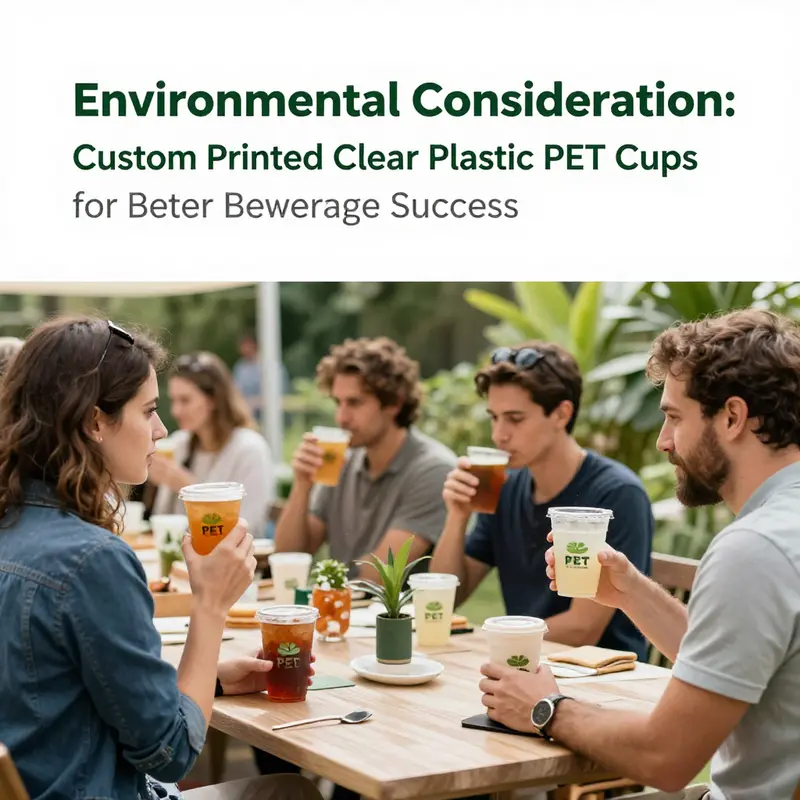
Custom printed clear PET cups are prized for their clarity, strength, and printable surface. Their transparency showcases beverages, their durability protects contents, and printing allows brands to communicate identity. Yet these same strengths create environmental trade-offs. Understanding those trade-offs helps businesses make informed choices that reduce waste, lower emissions, and maintain the practical benefits customers expect.
At the core of the environmental challenge is the material itself. Polyethylene terephthalate (PET) is durable and food-safe. It does not biodegrade on human timescales. When a PET cup escapes managed waste streams, it persists for decades. Over time, larger items fragment into microplastics. These particles travel through soil and waterways. They enter marine food webs and can return to human consumers. The environmental persistence of PET is therefore not a hypothetical problem. It is a direct pathway by which single-use packaging contributes to long-term pollution.
Recycling is often presented as the obvious solution. Indeed, PET is one of the more recyclable plastics. Many municipal programs accept PET beverage containers and invest in collection, sorting, and reprocessing. Yet real-world recycling performance depends on many linked factors. Collection infrastructure must exist where cups are used. Consumers must separate and rinse cups. Sorting facilities must be equipped to identify and grade clear PET correctly. Even then, printed surfaces, residual liquids, and lids of different polymers can complicate processing. Contamination from leftover drink residues often downgrades a bale of materials or forces entire loads to landfills. Low recovery rates are therefore as much a systems problem as they are a material property issue.
Design and supply decisions can dramatically change a cup’s end-of-life fate. First, choosing post-consumer recycled PET (rPET) reduces virgin resource extraction. rPET lowers embodied carbon and can create a market signal that supports recycling programs. The use of rPET is not a silver bullet, however. Quality considerations matter for food safety and clarity. High percentages of rPET can affect cup transparency and heat resistance. Sourcing certified rPET from reputable suppliers and balancing recycled content with performance needs ensures the brand promise remains intact while reducing environmental burden.
Printing choices sit at the intersection of branding and sustainability. Flexographic printing delivers vibrant, multi-color logos on PET. But some inks, varnishes, and adhesives hamper recycling. Solvent-based inks and heavy coatings can make PET unsuitable for reprocessing into food-grade rPET. Water-based and UV-cured inks typically have lower volatile organic compound (VOC) emissions and may be easier to remove during recycling. Minimizing ink coverage also improves recyclability. A design that reserves clear windows or limits ink areas enhances sorting and reprocessing. Similarly, avoiding shrink sleeves and complex multi-material labels simplifies the recycling stream and increases the chance a cup will be recycled rather than downcycled or landfilled.
Lids and accessories deserve careful attention. Dome lids, straws, and sleeves are common companions to PET cups. When these accessories are mismatched in material or color, they complicate mechanical sorting. Clear, compatible lids made from the same polymer family support seamless recycling. If lids must be a different polymer, clear on-pack instructions and staff training can encourage consumers to dispose of components correctly. Where possible, reducing accessory use or designing integrated solutions that do not interfere with recycling improves overall outcomes.
Compostable and biodegradable alternatives often attract interest. Materials such as polylactic acid (PLA) or other bio-based polymers can offer compostability under industrial conditions. These materials can reduce reliance on fossil-based feedstocks. They also create confusion when introduced into mixed recycling systems. PLA and some other bioplastics can contaminate PET recycling bales and downgrade the quality of recycled resin. Additionally, PLA requires industrial composting facilities for proper breakdown. In areas lacking such infrastructure, PLA cups may persist in landfills much like conventional plastics. For businesses considering compostable options, it is crucial to match material choice with local waste management capacity and to label products clearly so consumers and waste managers can route them correctly.
Lifecycle thinking helps reconcile material selection with measurable outcomes. Lifecycle assessment (LCA) compares impacts from raw material extraction, manufacturing, transport, use, and end-of-life. Switching to rPET typically reduces global warming potential compared to virgin PET. Lightweighting—reducing the thickness of the cup while preserving function—cuts material use and transport emissions. However, lightweight designs must still meet durability standards to avoid increased product loss in transit and service. Reuse models, such as deposit-return and reusable cup programs, often yield the largest environmental benefits when implemented at scale. These systems require operational changes and behavior shifts, but they significantly reduce single-use volumes and the downstream burden on recycling systems.
Supply chain collaboration amplifies progress. Brands can work with material suppliers to secure certified recycled content. They can engage printers to adopt low-impact ink systems and to test print removal during recycling trials. Procurement teams can prioritize suppliers with ISO9001 quality management and other credible certifications that align with environmental claims. Transparent specifications for material composition, adhesive types, and lid compatibility reduce surprises at the recycling facility. In addition, procurement can insist on third-party verification for recycled content and for compostability claims where relevant, closing the gap between marketing and real performance.
Operational measures at the point of sale are often the simplest levers for change. Clear signage that explains how to dispose of cups correctly increases recovery. Providing separate bins for recyclables and compostables in cafés and food courts improves capture rates. Offering staff training on which cups go where can prevent contamination at source. Many successful programs pair education with convenience: if recycling is straightforward and visible, customers adopt the habit quickly. Brands should also consider modest nudges such as reduced prices for customers who bring reusable cups. Such incentives change daily behavior and yield measurable reductions in single-use consumption.
Take-back and closed-loop programs further close the lifecycle. When brands offer to collect used cups and channel them into dedicated recycling or reprocessing streams, they control quality and reduce contamination. These programs require logistics, but they deliver branded narratives that resonate with conscious consumers. Deposit-return schemes perform well for beverage containers because the financial incentive drives collection and lowers litter. For businesses considering branded take-back systems, pilot programs help assess participation rates, operational costs, and the local recycling capacity for processing recovered material.
Certifications and transparent claims build trust. An eco-friendly claim without verification risks consumer cynicism. Certifications for recycled content, compostability, and food safety (such as FDA compliance for food contact) help substantiate claims. Clear on-pack information about material composition and instructions for disposal also helps waste handlers. Brands that publish environmental data and that commit to incremental targets for recycled content or waste reduction demonstrate accountability and create pressure for industry-wide improvements.
Finally, consider end-to-end system resilience. Circular outcomes are not produced by a single design choice. They require aligned infrastructure, consistent consumer behavior, supportive regulation, and market demand for secondary materials. Investments in local recycling infrastructure increase recovery rates and reduce export of waste. Regulation that standardizes labelling and that restricts problematic materials incentivizes better design. Market demand for high-quality rPET supports price stability for recycled resin. Brands that participate in multi-stakeholder initiatives multiply their impact by sharing lessons and scaling successful practices.
The environmental path for custom printed clear PET cups balances operational needs with planetary limits. Thoughtful material choices, intelligent printing decisions, compatible lids, and end-of-life planning collectively shape outcomes. When brands match product design to local waste infrastructure, prioritize recycled content, reduce ink coverage, and support convenient disposal, they significantly lower environmental risks. Complementary measures—such as take-back programs, staff training, and transparent claims—strengthen recovery and consumer trust. By approaching packaging as a system rather than a single touchpoint, businesses can keep the benefits of clear PET cups while reducing their ecological footprint and moving toward a more circular future.
For those exploring alternatives or complementary options, consider comparing paper-based reusable and compostable cup ranges that fit take-away service models. A practical example of such alternatives can be found in a selection of eco-friendly printed paper cup options that pair durability with more compostable materials: https://cupbowlpack.com/product/senang07-eco-friendly-printed-logo-buy-paper-cup-take-away-coffee-cup-8-oz-12-oz-paper-cup/.
For detailed guidance on plastic waste management and the role of recycling, the U.S. Environmental Protection Agency provides clear resources and recommendations that can inform corporate and operational strategies: https://www.epa.gov/epawaste/consumption/understanding-plastic-waste
Final thoughts
Incorporating custom printed clear plastic PET cups into your beverage service is not just about functionality—it’s about leaving a lasting impression. The clarity, durability, and customizable nature of these cups provide businesses with a unique branding opportunity while maintaining quality. Monitoring the economic benefits, these cups can reduce costs at scale, and focusing on environmental considerations fulfills growing consumer demands for sustainability. Leveraging these aspects, your business can not only stand out but also resonate with the values of your patrons.