
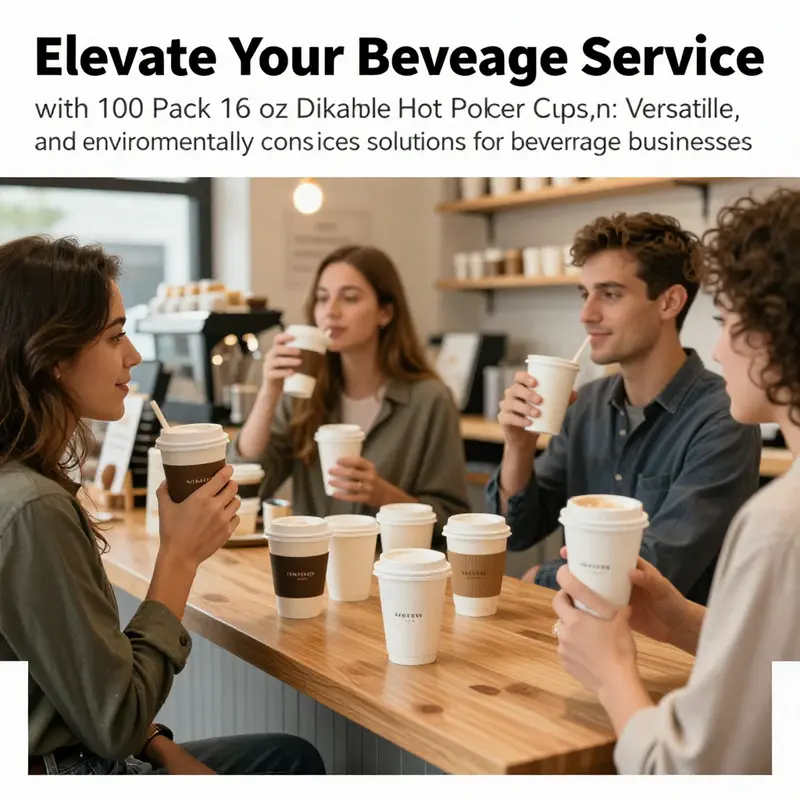
In today’s competitive beverage market, providing customers with a quality experience while maintaining efficiency is essential. The 100 pack of 16 oz disposable hot paper coffee cups stands out as a perfect option for businesses ranging from bubble tea shops to corporate procurement teams. These cups are not just simple paper containers; they embody a blend of innovative design, economic viability, and an eco-friendly ethos. In the following chapters, we will explore the materials and design of these cups, their economic significance for your operations, and the environmental considerations that align with contemporary consumer values. By delving into these aspects, we aim to illustrate why these disposable cups are not only practical but also a responsible choice for your beverage service.
Beneath the Sleeve: Material and Design Secrets of 100-Pack 16 oz Disposable Hot Paper Coffee Cups
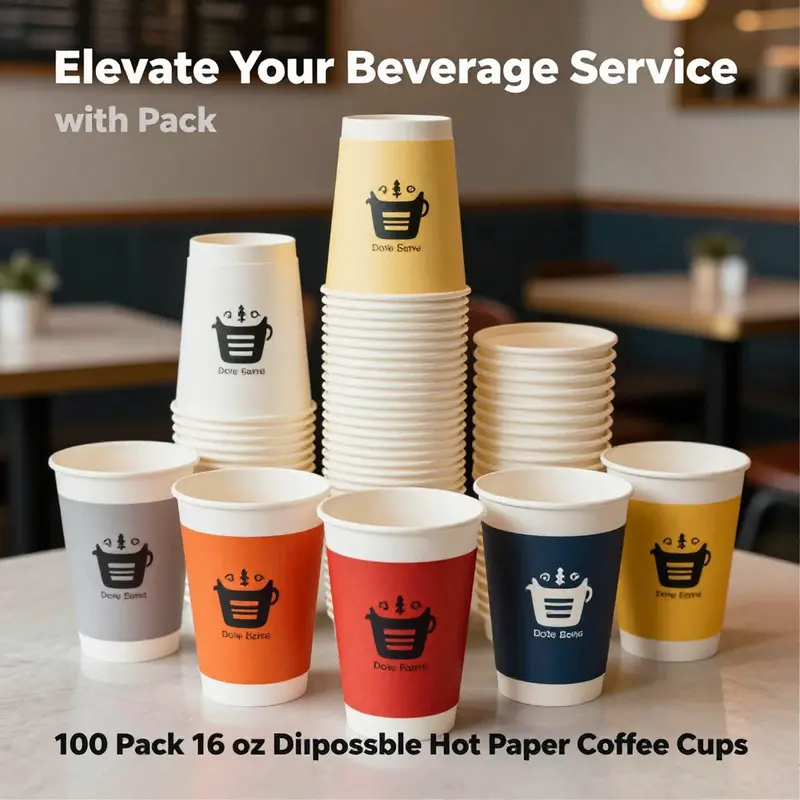
Material and design define performance. For a 100-pack of 16 oz disposable hot paper coffee cups, every choice matters. The paper grade, wall structure, internal barrier, rim construction, and lid geometry all combine to control heat retention, hand comfort, leak resistance, stackability, and end-of-life impact. This chapter examines how those elements work together, and what to look for when selecting a bulk pack for a café, office, catering event, or home use.
A reliable 16 oz cup must start with the right paper. Manufacturers commonly use high-quality virgin paper that is specifically engineered for hot beverage use. This paper delivers rigidity so the cup keeps its form when filled. It also provides a consistent printable surface for branding. To handle heat and liquid, the paper is frequently treated with a barrier layer. Traditionally that barrier has been polyethylene, but modern products often favor biodegradable or compostable alternatives. These include plant-based coatings and specialized clay or waterborne barriers that prevent leaks while avoiding plastic content. When a product advertises plastic-free, PFAS-free, and BPA-free construction, it typically relies on such alternatives to meet both performance and environmental goals.
Beyond the paper itself, wall construction makes the biggest difference in user experience. A three-layer thickened wall gives superior rigidity and thermal protection. Rather than a single thin sheet, the layered construction creates a small pocket of air or structural depth that slows heat transfer. Many designs go further with a double-wall structure. The inner cup carries the liquid, while an outer sleeve or second wall creates an insulating gap. Some manufacturers add a ripple or S-shaped corrugation between the walls. That pattern works as a natural thermal detachment, trapping air and breaking the chain of heat conduction. The result is a cup that holds a hot drink without forcing the user to grip a scalding surface.
Double-wall and corrugated designs also affect tactile feel and perceived quality. A smooth double wall feels sleek and compact. A ripple or wave pattern gives a tactile grip and a craft aesthetic. Both approaches reduce the need for a separate cardboard sleeve. For busy service lines, eliminating extra components lowers waste and speeds service. For events that demand visual appeal, the ripple design reads as purposeful and premium. Function and form meet when insulation is integrated into the cup, not added as an afterthought.
Insulation performance is only part of the story. Rim engineering keeps the experience safe and pleasant. A rolled bead at the cup’s lip adds stiffness and prevents the paper from absorbing heat at the drinking edge. The bead also improves the seal between cup and lid. Precision in that rolled edge is a sign of reliable manufacturing. Poorly formed rims lead to pinhole leaks, loose lids, and a messy serving.
Lids are a critical element of the 16 oz system. Food-grade lids are typically molded from materials that secure to the cup and resist spillage. For plastic-free lines, compostable lids made from plant-based polymers may be offered. A well-designed lid locks in place and incorporates a vent or small hole to allow steam to escape while enabling a steady sip. Leak-proof lids include a raised rim around the sipping area, a recessed channel to catch drips, and a compression fit that mates precisely with the cup’s rolled bead. When lids and cups are specified as a matched set, the risk of failure drops dramatically. Always confirm lid compatibility when ordering bulk packs.
Thermal retention and burn prevention are often debated in comparative testing. Single-wall cups transfer heat more quickly. They are lighter and cost less but usually require sleeves. Double-wall cups and corrugated designs add material and cost, yet they reduce the surface temperature by several degrees. In practice, a properly constructed double-wall 16 oz cup will let a consumer hold a full serving of hot coffee without discomfort for longer. That reduced need for additional accessories also simplifies logistics for high-volume settings.
Customization also plays into material choices. Businesses commonly ask for printed logos or seasonal artwork on bulk packs. Printing technologies such as flexographic and offset printing deliver crisp graphics on paper surfaces. To preserve food safety and environmental claims, printers use food-safe, eco-friendly inks. These inks avoid heavy metals and harmful solvents. They also adhere well to plant-based barrier layers. Customization must consider durability; high-wear environments need inks and coatings that resist smudging and moisture.
Some customization options include special finishes. Matt lamination reduces glare and conveys a premium feel. Embossing adds tactile branding. However, every finish introduces new variables for recyclability and compostability. If the goal is to maintain a plastic-free profile, ask suppliers whether lamination or foiling uses non-plastic materials or if it will interfere with local sorting and composting systems.
Certifications are a useful shorthand when assessing material and process claims. Look for chain-of-custody marks like FSC to verify responsible sourcing. Food safety systems such as FSSC 22000, BRC, and HACCP indicate that production environments are controlled to reduce contamination risks. For biodegradable claims, check whether materials meet compostability standards and whether those standards are industrial or home compostable. Many plant-based barriers require industrial composting to fully break down. Clear certification reduces ambiguity and helps buyers match product claims to local disposal infrastructure.
Sourcing and price are practical considerations that reflect material choices. A 100-pack price around $15.74 translates to approximately sixteen cents per cup. That price point is realistic for mass-produced, high-quality paper cups with double-wall construction and matched lids. Buyers should weigh per-unit cost against labor and waste savings. For example, an insulated cup that eliminates separate sleeves reduces storage needs and speeds service. In event contexts, that speed and reduced accessory count can offset a slightly higher per-cup price.
Production tolerances and packaging also matter. Cups intended for high-speed espresso machines or automated fill lines must meet tight diameter and weight specifications. Stackability is another hidden design factor. Well-formed nesting rims and consistent wall thickness prevent jams during dispensing and reduce damaged units. Packaging in cases of ten 100-packs or similar bulk cartons helps shipping efficiency. When ordering a 100-pack, confirm case counts and palletization to avoid unexpected freight costs.
End-of-life behavior deserves focused attention. A paper cup that claims to be biodegradable may still fail to break down in a typical household environment. Composting conditions vary widely. If a product is certified industrially compostable, confirm local access to such facilities. In the absence of industrial composting, recycling becomes the default option for many buyers. Yet recycling infrastructure for coated paper cups is inconsistent. The presence of plant-based or waterborne coatings improves the chances of recovery, but local facilities must accept coated papers. Removing lids and sorting components can make a difference. Clear disposal instructions printed on the cup encourage proper consumer behavior. For organizations that prioritize sustainability, offering disposal guidance on cups and at points of sale reduces contamination and increases correct disposal rates.
Design for lifecycle means balancing durability in use with ease of breakdown after use. A thicker wall makes the cup more robust for hot liquids, while a plant-based barrier can allow composting. However, adding decorative finishes or mixed-material components may reduce the ability to recover materials. Buyers should request a materials declaration from suppliers that spells out every layer and finish. That transparency makes it easier to align procurement with local waste management strategies.
Beyond materials and finishes, the unassuming geometry of a 16 oz cup supports the beverage itself. A sixteen-ounce volume is a practical sweet spot for espresso-based drinks and long drinks alike. The extra capacity accommodates foam, flavor shots, and added milk without risking overflow during transport. For service staff, a consistent fill line improves portion control and reduces waste. From a design perspective, that volume requires a base diameter that maintains stability and a slightly tapered sidewall to facilitate nesting in storage.
Finally, user experience extends to tactile cues and perceived value. A double-wall cup that stays comfortable to hold signals quality to customers. Crisp, well-registered printing communicates care. A secure lid that prevents spills builds trust during transport. Taken together, these small details drive repeat purchases, reduce complaints, and make bulk purchases more economical over time.
If you are comparing options, inspect sample units in hands-on tests. Fill a cup with near-boiling water and time how long it takes before the outer wall becomes uncomfortable. Test lid engagement with gentle knocks and simulated tumbles. Examine printed finishes for smearing when exposed to steam. Ask the supplier for a declaration of materials and any relevant certifications. Verify lead times and case counts so the 100-pack quantity fits your storage and inventory cycles.
For organizations that want a similar look in smaller sizes, there are eco-friendly double-wall craft paper options in adjacent volumes. If you need a visual reference for that style and its typical construction, see this eco-friendly double-wall craft paper coffee cup listing. It demonstrates many of the design principles described here and shows how a double-wall approach adapts across sizes: https://cupbowlpack.com/product/senang07-eco-friendly-disposable-double-wall-craft-paper-coffee-cup-with-lid-12-oz-for-wine-tequila/
When materials and design are selected with intention, a 100-pack of 16 oz disposable hot paper cups becomes more than a convenience. It becomes a functional system that supports service speed, brand expression, user comfort, and environmental responsibility. The ideal pack balances insulation, lid fit, barrier choice, and printable surfaces while matching procurement budgets and local waste-processing capabilities. Keep these trade-offs in mind when evaluating bulk offers, and request documentation to back up claims about compostability and plastic-free construction.
For technical specifications, certifications, and bulk ordering options, consult the product listing and manufacturer details available on Alibaba: https://www.alibaba.com/wholesale/paper-cup-lid-16oz_2.html
From Counter to Cart: The Economic Reach and Everyday Use of 100-Pack 16 oz Hot Paper Coffee Cups
Economic Reach and Everyday Use
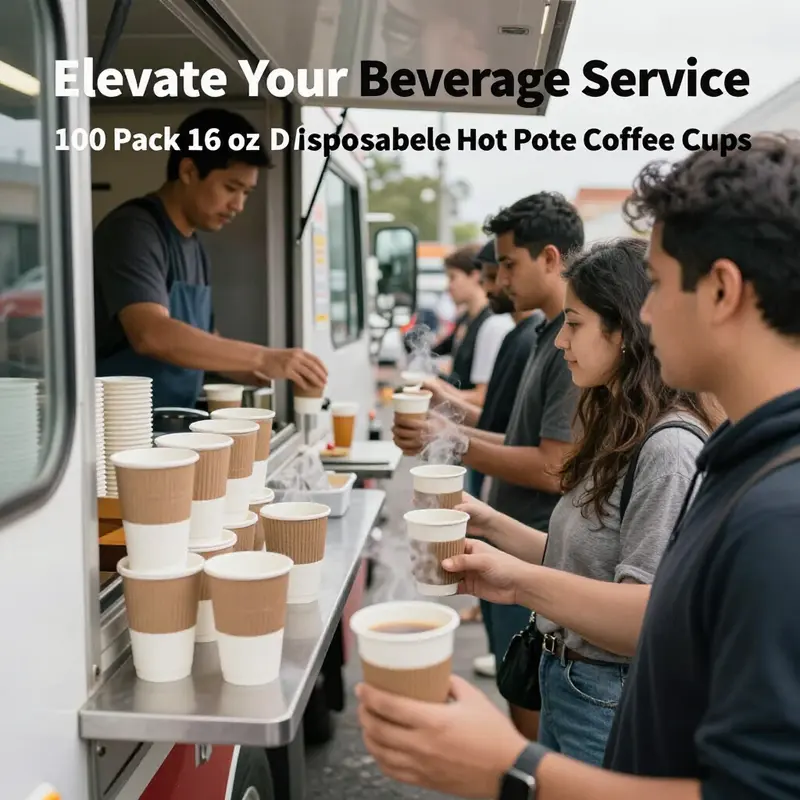
A 100-pack of 16 oz hot paper coffee cups functions as a small but powerful instrument in foodservice economics. These cups are more than simple vessels. They alter labor decisions, inventory practices, customer experience, and environmental messaging. Their standard size and insulating features make them suitable for everything from a morning commuter’s latte to a corporate event’s beverage service. Because they sit at the intersection of price sensitivity and practical utility, their economic effects ripple through cafés, caterers, offices, and households.
At the most immediate level, a 100-pack provides predictable inventory and cash flow implications. The per-unit price for such packs is low enough to be absorbed into menu pricing, yet high enough that poor procurement can erode margins. For smaller businesses, the ability to buy in modest quantities matters. A 100-pack is large enough to support a busy weekend but small enough to avoid tying up too much working capital. For larger operations, the 100-pack becomes a familiar unit of storage and distribution: multiple small packs make restocking simple, while palletized bulk orders reduce per-unit cost. That flexibility helps businesses balance working capital with storage constraints, especially where space is limited.
The economic calculus does not stop at acquisition cost. Choosing disposable paper cups shifts expenses across categories. Labor savings are immediate: disposable cups eliminate time spent washing and tracking reusable vessels. In settings where staff costs are a major portion of operating expenses, these time savings translate to measurable financial impact. Reduced table turnover time and simplified cleanup can increase throughput. For event caterers, the ability to serve large groups quickly with minimal cleanup reduces staffing needs and rental fees. For workplaces, providing paper cups for employees avoids the administrative overhead of maintaining communal dishware.
On the revenue side, disposable cups enable mobility and convenience—two traits customers pay for. Lids and insulating walls make it easy for patrons to take drinks off-premises. This convenience supports higher price points for takeaway beverages. In many urban markets, takeaway sales make up a significant share of daily revenue. A consistent cup format—16 oz for customers who want a larger serving—simplifies menu descriptors and helps staff communicate options quickly, enhancing the customer experience and encouraging repeat purchases.
Material and construction choices influence both cost and perception. A double-wall or ripple-wall design adds manufacturing complexity, which raises price slightly. Yet the insulation benefit reduces complaints about hot cups and lowers the chance of burns. Food-grade inks and thickened paper stock increase durability and allow clearer printing for branded messaging. These features may push a 100-pack from the lowest price tier into a mid-range bracket, but they also support brand positioning. A cup that feels sturdy reinforces perceived product quality. For establishments trying to differentiate on experience, the extra cost can be recouped through modest price adjustments and improved customer retention.
Sustainability has become a central variable. Demand for cups made from recyclable or biodegradable materials has grown. When a supplier offers certification—such as those verifying responsibly sourced paper—the cup conveys explicit environmental value to consumers. These eco-friendly variants often cost more per pack, but they unlock longer-term brand benefits. Businesses that adopt biodegradable cups can credibly promote reduced environmental impact. This can attract a segment of customers willing to pay slightly more for perceived sustainability. At scale, these choices also matter for corporate procurement policies and for complying with municipal regulations that increasingly favor compostable or recyclable packaging.
Supply chain stability is another pivotal economic factor. Suppliers with long-term export and manufacturing experience deliver predictable lead times and consistent quality. For buyers, that translates into fewer emergency purchases at higher prices. Efficient logistics enable bulk pricing that significantly lowers the per-unit cost. For example, large volume orders can reduce unit price to a fraction of what smaller runs cost. Nonetheless, smaller and mid-sized buyers often prefer the flexibility of 100-packs because they limit exposure to inventory obsolescence and new regulatory changes related to packaging materials.
Customization presents a nuanced economic trade-off. Printing logos, promotional messages, or seasonal designs on cups elevates branding. Custom-printed cups help businesses reinforce identity and support promotions without heavy investment in permanent signage. The marginal cost for custom printing typically increases with color complexity and minimum order quantities. For businesses that rotate promotions frequently, ordering small batches of customized 100-packs allows testing of new campaigns without large upfront costs. Conversely, long-term campaigns often benefit from larger custom runs that lower per-unit print cost. The decision depends on campaign length, available storage, and expected return on marketing spend.
Waste management and disposal costs are a hidden component of the full economic picture. Disposable cups reduce dishwashing, but they increase waste handling expenses. Municipal disposal fees, composting service costs, and recycling infrastructure influence the net benefit. In regions with robust composting and recycling, biodegradable cups may lower disposal cost and environmental impact. In areas lacking such infrastructure, even biodegradable cups can end up in landfills, negating some sustainability benefits. Smart procurement includes considering downstream disposal options and, where possible, partnering with local waste management services that accept compostable paper cups.
Regulatory trends are shaping future economics. Bans on certain single-use plastics and incentives for compostable packaging change demand patterns. Buyers who proactively shift to certified compostable materials gain a competitive edge. They also avoid compliance costs and sudden supply disruptions. For entities managing large-scale events or institutional procurement, aligning purchases with upcoming regulations prevents wasteful inventory write-offs.
For households and small gatherings, a 100-pack makes practical sense. It supports parties, family gatherings, and holiday events. Economically, individual per-cup cost is often lower than purchasing an equivalent number of reusable cups if one considers occasional events where washing and storage are impractical. In such contexts, the convenience of disposable cups translates to a lower total cost of ownership for infrequent use. They are also useful for rentals and pop-up food services where transport and space constraints exist.
Across industries, the 16 oz capacity is a sweet spot. It serves large coffee drinks, lattes with milk, and hot chocolate. That universality reduces SKU complexity for foodservice operators. Fewer SKUs mean lower administrative costs and simplified ordering. A single cup size that meets a variety of menu items improves operational efficiency and minimizes the chance of stockouts for popular sizes.
The economics of cups also affect promotional strategies. Limited-time branded designs on cups create collectible moments and social media visibility. While the cost of special printing raises expenses, the marketing return can offset this through free online exposure and heightened customer interest. Small businesses often use a rotating series of printed designs to keep customers engaged without heavy ad spend.
Procurement strategies that optimize costs while maintaining quality are essential. Combining smaller 100-pack orders with occasional bulk buys allows businesses to balance flexibility and price. Tracking consumption rates, seasonality, and event calendars helps predict when bulk orders will yield savings without overstocking. Establishing relationships with reliable suppliers can open opportunities for tiered pricing and reduced lead times. For many buyers, leveraging multiple suppliers mitigates risk and keeps pricing competitive.
Forecasting demand is a practical exercise that ties usage patterns to economic planning. Seasonal spikes—like holidays and conference seasons—require preemptive ordering. Understanding average daily cup usage, waste rates, and customer purchase behavior lets managers calculate reorder points and safety stock levels. These operational practices avoid last-minute purchases at premium rates and reduce the chance of running out during high-demand periods.
Finally, lifecycle thinking reframes the cost discussion. Evaluating a cup’s environmental footprint across production, transportation, use, and disposal highlights additional costs and benefits not captured by purchase price alone. For businesses committed to sustainability, investing in certified materials and partnering with local recycling or composting services reduces total lifecycle costs. That investment can be marketed to consumers as a competitive differentiator, potentially recapturing higher procurement costs through premium pricing and customer loyalty.
For a practical supplier example and current market pricing, see this detailed product listing that illustrates unit costs and packaging options: https://www.alibaba.com/product-detail/16oz-Disposable-Hot-Paper-Cups-with-Lids_1600327882598.html
For businesses considering companion packaging and eco alternatives, exploring options for printed, recyclable, or compostable cup choices can be useful. One accessible option for smaller, branded runs is an eco-friendly printed logo paper cup offering that supports takeaway operations: eco-friendly printed logo paper cup options.
In sum, a 100-pack of 16 oz hot paper coffee cups is a modest purchase with outsized operational implications. It affects labor, inventory, waste management, branding, and customer experience. Procurement choices influence margins and public perception. Thoughtful buying strategies that consider material certifications, disposal infrastructure, customization needs, and seasonal demand produce the best economic outcomes. These cups bridge everyday convenience and strategic business choices, making them a small but essential tool for modern foodservice and retail operations.
Beyond Convenience: The Environmental Footprint of 100-Pack 16 oz Disposable Hot Paper Coffee Cups

Each time a stack of 100-pack 16 oz disposable hot paper coffee cups appears in a breakroom, it carries more than a promise of convenience. It carries a web of choices about materials, manufacturing practices, and end-of-life management that ripple through waste streams, energy use, and the health of ecosystems. The research into these cups reveals a narrative that is not simply about keeping beverages hot, but about how design decisions intersect with environmental outcomes. The double-wall construction, often highlighted for insulation and burn prevention, works in concert with an interior liner to protect users from heat and spills. Yet the same features that improve user safety can complicate what happens to the cup after the last sip. The liner, the paper composition, and any coatings determine whether the cup is readily recyclable or compostable, or whether it ends up in a landfill where its fibers and any plastics resist breakdown. This is the complexity that underpins an ostensibly ordinary product used in offices, cafeterias, and events alike.
Material choices matter not only for performance, but for the cradle-to-grave journey of the cup. Paper cups designed for hot beverages are frequently layered with a polymer coating to prevent leaks. In many cases, that coating is polyethylene, a material that protects the cup in the cup but can hinder recycling streams because it binds with the paper fibers in a way that standard recycling systems struggle to separate. When makers turn to biodegradable or compostable options, they often pivot toward alternatives such as bioplastics or differently engineered papers. These shifts carry their own implications: some coatings enable compostability only in industrial facilities that maintain high heat and controlled moisture, conditions that are not universally available. This means that a cup labeled as “biodegradable” or “compostable” may only realize its environmental promise if it reaches the right kind of facility, a nuance that consumers and businesses must understand.
Beyond coatings, the very fibers chosen for these cups influence their end-of-life fate. Traditional paper cups can be made from virgin fibers or from blends that include post-consumer recyclables or pre-consumer fibers. The sourcing of these materials matters because it affects the energy and water needed to produce the base paper, the biodiversity implications of forest management, and the potential for closed-loop recycling. The presence of a double-wall design adds an insulating layer that contributes to heat retention and user comfort, potentially reducing the need for insulating sleeves or secondary packaging. However, insulation does not automatically translate into a gentler environmental footprint if the cup’s total lifecycle, from pulp to disposal, relies on energy-intensive processes or if the final product is difficult to divert from landfills.
A central concern in evaluating environmental credentials is the credibility of claims about sustainability. Labels such as “eco-friendly,” “biodegradable,” or “compostable” can attract attention, yet they require verification to avoid greenwashing. Certification bodies, standards, and third-party testing play a critical role in confirming whether a product’s performance aligns with its marketing. For instance, certifications from recognized organizations guard against overstated timelines for decomposition and ensure that the materials meet health and safety requirements for contact with hot beverages. In this sense, the environmental performance of a 100-pack hinges not only on the materials and coatings chosen, but on the transparency of the supplier’s documentation and the scope of the certification.
There is a broader context to consider as well: the production footprint and distribution network associated with these cups. A pack produced far from where it is consumed entails energy and water use for fabrication, plus emissions from transportation. The energy mix of the producing facility—the share of renewable versus non-renewable sources—can tilt the environmental balance one way or another. Transportation logistics matter too; shorter, regional supply chains can reduce total greenhouse gas emissions, factoring in not just fuel use but the efficiency of the distribution system and the capacity to consolidate orders. In environments where cups are replenished en masse for large groups, the opportunity to streamline logistics and reduce trips can contribute to minimizing emissions, while maintaining an adequate stock to meet demand.
End-of-life management remains one of the thorniest aspects of disposable cup sustainability. Even cups marketed as compostable may only break down efficiently if they are diverted to industrial composting facilities designed to handle lignin-rich papers and any bioplastics present. When such facilities are scarce or geographically distant, the same cups may end up in municipal landfills where decomposition occurs far more slowly, or, worse, as litter that finds its way into waterways. This reality raises practical questions for offices, event planners, and caterers: do waste streams offer a viable path to composting or recycling for these products, and what infrastructures or partnerships are required to realize that path? The answer is seldom simple and varies by local capabilities, municipal regulations, and the availability of specialized facilities that can process composite materials.
All of these considerations underscore a core truth: the environmental footprint of a 100-pack of disposable hot paper cups is not a fixed figure. It is the outcome of a set of variables—materials, coatings, insulation design, manufacturing practices, energy sources, logistics, and end-of-life infrastructure. A thoughtful evaluation begins with the simplest questions: What is the base material, and what coatings are used? Are there credible certifications validating compostability or recyclability, and do they apply to the intended disposal environment? Is the supply chain local enough to minimize transport emissions without sacrificing product integrity? And crucially, will the cups find an appropriate destination for disposal that aligns with their material design? When these questions are addressed in concert, the decision to adopt disposable cups in a given setting can be guided by a lifecycle mindset rather than a snapshot of convenience.
The potential to improve environmental outcomes often lies in choosing options that move beyond legacy materials and embrace more responsible production and disposal ecosystems. Some suppliers emphasize eco-friendly synthetic paper and biodegradable construction as a way to reduce reliance on traditional plastics while retaining the performance needed for hot beverages. Yet the true value of these innovations rests on independent verification rather than marketing language. Certifications such as those offered by recognized bodies help ensure that the product’s environmental claims reflect real-world performance. For example, a packaging solution that avoids plastic coatings altogether or replaces them with compostable alternatives can substantially improve compostability, provided that the supporting waste management infrastructure exists. In such cases, the cup’s lifecycle may align more closely with circular economy principles, where materials are returned to a usable state rather than relegated to the waste stream. Within this context, it is useful to consider how organizations approach verification and improvement; this is where transparent documentation, third-party testing, and consumer education converge to shape sustainable choices. As part of this narrative, one may encounter options that intentionally prioritize recyclability or compostability through design simplification, avoidance of multi-material laminates, or the selection of materials that are compatible with existing municipal systems. The effectiveness of these approaches deserves careful scrutiny and ongoing dialogue among manufacturers, facility operators, and end users. A practical way to begin is through direct engagement with suppliers who offer clear documentation about material composition, coatings, and the environmental standards they meet. For instance, a growing number of suppliers promote eco-friendly, printed-logo options for takeaway cups, highlighting the alignment between branding needs and sustainability goals. See the discussion of eco-friendly, printed-logo options in this context in the linked resource: eco-friendly printed-logo paper coffee cups. This reference illustrates how sustainability claims can be integrated with practical design choices that support both brand identity and environmental responsibility.
From a consumer and business perspective, verification is not a one-off task but an ongoing discipline. The most credible environmental credentials arise when a supplier’s documentation is consistent across multiple independent sources, and when the product’s disposal pathways are aligned with local waste infrastructure. The USDA’s BioPreferred program, for example, provides a robust framework for certifying products derived from renewable biological resources. While not every cup will fall under this program, it exemplifies how third-party verification can anchor sustainability claims in a standardized, auditable process. Businesses that seek to improve the environmental profile of their beverage service can use such certifications as a baseline for comparison, while also investing in local waste management partnerships that ensure the intended end-of-life outcomes are achievable in their community. For readers seeking authoritative verification, the program’s resources offer a structured approach to identifying genuinely renewable content and responsible use of resources across packaging materials.
In practical terms, what should buyers and operators do differently when they consider a 100-pack of hot paper cups? First, they should prioritize material transparency. Request documentation that discloses fiber sources, coatings, and any bioplastic content. Second, they should examine the disposal infrastructure available in their locale. If the nearest industrial composting facility is several counties away, a product labeled as compostable may not deliver its promised benefits. Third, they should assess the packaging’s overall design for end-of-life performance. A simpler laminate or a single-material solution is often more compatible with recycling and composting streams, provided it meets safety standards for hot beverages. Fourth, they should look for third-party certifications that are current and relevant to their disposal context, rather than relying solely on marketing claims. These steps help ensure that the environmental benefits claimed at purchase translate into tangible gains in real-world settings.
The broader takeaway from this environmental lens is not to reject disposable cups outright but to approach their use with a lifecycle mindset. In settings where cleaning, washing, and reusing are impractical, carefully chosen paper cups can still be part of a responsible packaging strategy if they are sourced and disposed of within a system that values material recovery. The challenge lies in aligning product characteristics with the available waste-management landscape, so that the cup’s life ends in a way that preserves resources rather than depleting them. This alignment requires a collaborative effort among manufacturers, waste-management operators, policymakers, and end users who recognize that even small daily choices accumulate into significant environmental footprints over time.
In closing, the environmental considerations of a 100-pack of disposable hot paper cups encompass a spectrum of factors—from coatings and fiber sourcing to production footprints and end-of-life pathways. The goal is not to stigmatize convenience but to encourage smarter choices that respect the constraints and opportunities of local waste systems. By interrogating claims, seeking credible certifications, and prioritizing designs that maximize recyclability or compostability, institutions and households can foster more sustainable beverage service without sacrificing the practicality that makes these cups so widely adopted. The journey toward greener options is incremental, yet every informed decision contributes to a more resilient circular economy for single-use packaging. To explore a concrete example of an eco-friendly option that blends design with sustainability goals, see the linked resource on eco-friendly printed-logo cups, which illustrates how branding and environmental responsibility can coexist in a practical, market-ready package. eco-friendly printed-logo paper coffee cups.
For readers seeking external validation and broader context, the USDA BioPreferred program provides a framework for certifying products made from renewable biological resources, helping buyers distinguish genuinely renewable packaging options from greenwashed claims: https://www.usda.gov/biopreferred
Final thoughts
The 100 pack of 16 oz disposable hot paper coffee cups represents a combination of convenience and responsibility, essential for any beverage business. Their innovative material and design ensure a high-quality experience for customers, while their economic advantages help maintain a profitable operation. In addition, their environmentally friendly attributes align with growing consumer expectations for sustainability. By incorporating these cups into your service, you not only enhance the customer’s experience but also contribute positively to the environment—a win-win situation for your business. Embrace these disposable cups and position your brand as a forward-thinking leader in the beverage industry.