
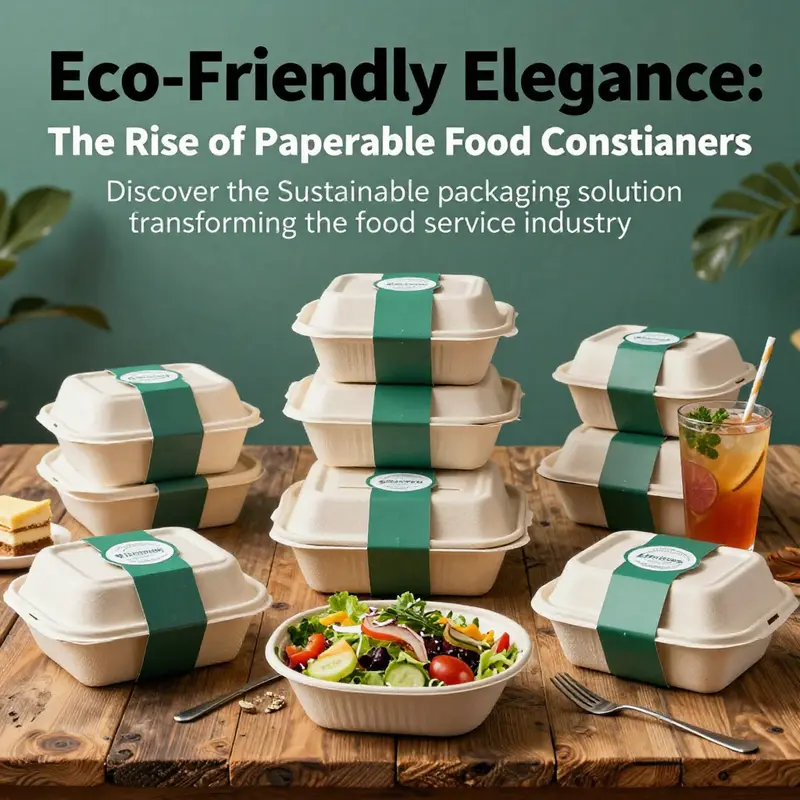
As the demand for sustainable practices grows, papercraft disposable food containers are emerging as a favored choice in the food service industry. These eco-friendly alternatives, constructed from renewable paper-based materials, not only cater to the need for convenience but also align with environmental goals. Their versatility and customizable options make them an appealing choice for bubble tea shops, restaurants, food trucks, and event planners. In this article, we will explore the various properties and types of papercraft disposable food containers, their positive environmental impact, and the current market trends shaping their industrial applications. Understanding these facets will help businesses make informed choices that enhance their sustainability efforts while meeting customer expectations.
Materials, Performance, and Selection: The Practical Guide to Papercraft Disposable Food Containers
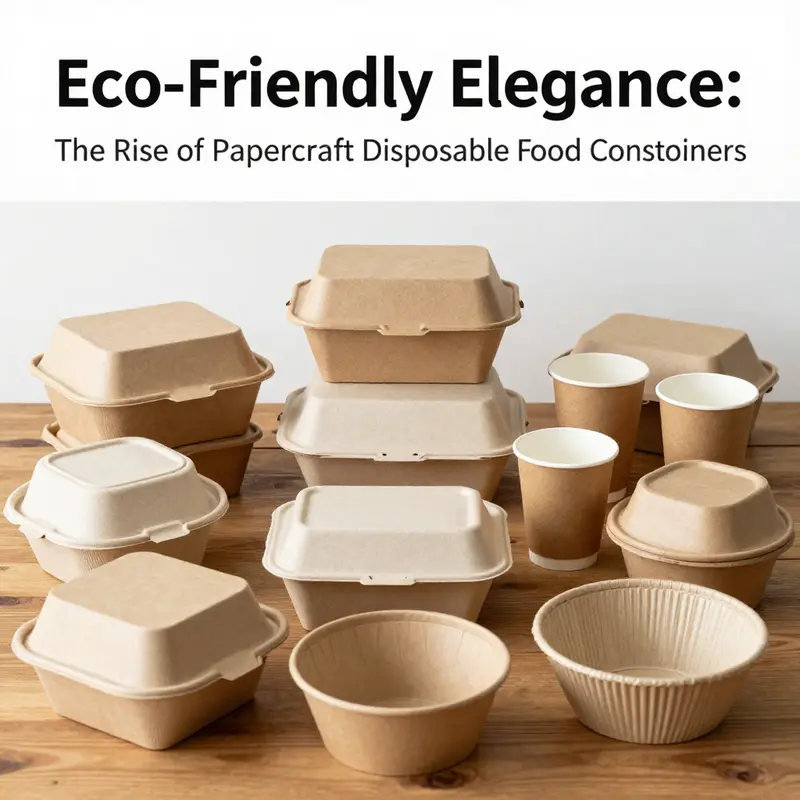
Properties and Types of Papercraft Disposable Food Containers
Papercraft disposable food containers blend simple materials with purposeful design. They are rooted in paper-based substrates, yet the final products behave very differently depending on fibers, coatings, and construction. Understanding those differences is essential for making choices that protect food quality, reduce waste, and preserve brand integrity.
At the core are a few basic material families: natural kraft paper, bleached or white paper, and recycled paperboard. Each offers distinct aesthetic and mechanical properties. Kraft paper is sturdy and naturally brown. It hides grease well, resists tearing, and communicates a rustic or eco-minded look. Bleached paper delivers a clean white canvas suited for vibrant printing and premium presentation. Recycled paperboard varies by source and finish; it often balances cost and environmental messaging while meeting many functional needs.
Beyond the base paper, performance depends on surface treatments and internal linings. Uncoated paper provides breathability and compostability in dry applications. For liquids, oily foods, and extended hot holding, coatings are critical. Plant-based polymer coatings, such as some polylactic acid (PLA) options, add moisture resistance while remaining compostable under industrial conditions. Polyethylene or other synthetic coatings offer excellent barrier performance and heat tolerance, but they can complicate recycling and industrial composting. Choice of coating must weigh the intended disposal stream against functional demands.
Mechanical structure matters too. Single-wall constructions are lightweight and economical. Double-wall or reinforced rims give thermal protection and structural stiffness for hot drinks and stacked handling. Fold patterns and locking tabs affect leak resistance and stacking stability. Lids, paper or clear polymer, further determine spill control and oxygen exchange for takeout foods.
A useful way to evaluate containers is by considering five practical properties that determine real-world performance: moisture and grease resistance, heat resistance, structural strength, thermal insulation, and surface printability.
Moisture and grease resistance determine whether a container will hold soups, dressings, and oily foods without softening or leaking. Uncoated paper will perform poorly with long exposure to grease or steam. Coatings change that behavior. Plant-based linings can keep a bowl stable for a few hours, while full synthetic barriers extend holding times and permit refrigeration or short-term freezing. Designers also use laminated liners and internal cups within containers when long-term liquid storage is required.
Heat resistance matters for hot soups and takeaway meals. Containers intended for piping-hot contents must resist softening, maintain shape, and not transfer excessive heat to the user. Heat tolerance comes from material selection and construction. Heavy-weight kraft or double-wall designs resist deformation. Coatings that remain stable under hot temperatures are crucial; some compostable coatings degrade at lower temperatures and should not be used for near-boiling foods.
Structural strength determines how well a container handles filling, stacking, and transport. It is affected by paper grammage, ply count, and reinforcement at stress points. Rectangular bowls and octagonal forms can deliver more stacking rigidity than a simple circular cup. Handles, reinforced lips, and integrated lids increase load capacity and reduce spillage risk during delivery.
Thermal insulation relates to both product safety and customer comfort. Insulation reduces heat transfer to hands and slows cooling of hot foods. Double-wall cups, corrugated sleeves, and air pockets are common strategies. For cold foods, insulation reduces condensation and sogginess. Some containers incorporate barrier layers that preserve temperature without heavy additional bulk.
Surface printability affects branding and perceived value. Bleached or clay-coated papers yield sharp, vibrant prints suitable for complex logos. Kraft papers provide a muted but authentic aesthetic. Printing technologies, such as flexography and digital print, allow full-color graphics and variable data. Important considerations include ink compatibility with food contact, drying times, and the effects of lamination on print longevity.
Types of containers evolve from these properties. Paper cups, both single-wall and double-wall, remain staples for hot and cold beverages. Their design variations include open rims for easy sipping, fitted lids for spill control, and insulating sleeves for user comfort. Paper bowls and tubs, ranging from small dessert cups to large soup buckets, adapt to portion size and hot or cold contents. Their shapes—round, rectangular, or octagonal—influence stacking and shelf display.
Takeaway boxes and food trays use folding construction to combine rigidity and compact storage. Box styles can integrate compartments for portion control or vents for hot foods. Windowed boxes combine visibility with protection for delicate items. Flatware and napkins complement containers, assuring a complete, sustainable table setting.
Specialty substrates are gaining traction. Bagasse, a sugarcane fiber byproduct, offers a compostable alternative for heavy or oily foods. Its natural fiber matrix resists grease and handles domestic microwave use in many cases. Other pulp-based materials provide similar benefits and are often blended with paperboard for optimized strength.
Coating options deserve a closer look because they transform a paper blank into a functional vessel. Bioplastic coatings derived from plant starches or PLA improve grease resistance and permit liquids to be held for moderate durations. They align well with industrial composting programs. They do not, however, perform identically to synthetic polymers in long-term wet conditions. Synthetic polyethylene coatings are economical and durable. They require appropriate recycling streams for full environmental benefit.
Lids and accessory parts are part of system design. Paper lids with tight seals can reduce waste by enabling compostability across the entire item. In contrast, clear polymer lids often provide microwave-safe transparency and high sealing performance. Hybrid approaches balance compostability and functionality: a paper bowl with a separate clear lid for display, or a compostable film window for ventilation.
Selecting the right container is a matter of matching product needs with disposal and branding goals. Begin by defining the key requirements. Is the food hot or cold? Will it be consumed immediately or after transit? Does it contain oil or free liquid? How important is image and print quality? What disposal stream will customers most likely use—recycling, industrial composting, or municipal waste? Answers to these questions narrow material options and coating choices.
For hot, oily, or wet foods consumed shortly after purchase, heavy kraft paper with a robust lining is a sound choice. It combines strength with heat resistance. Where branding and printing matter most, a bleached, coated stock provides a crisp look. For businesses pursuing low-impact disposal, bagasse or other pulp-based bowls offer strong compostable credentials.
Operational considerations shape procurement decisions. Lightweight containers reduce shipping cost and storage footprint. Standardized sizes ease inventory management. Stackable designs speed packing and minimize breakage during transport. Custom features—tabs, perforations, or handles—can simplify service tasks, but they add manufacturing complexity and cost.
Customization deserves a practical perspective. Printed packaging increases brand recognition and perceived quality. But it also raises minimum order quantities and lead times. For smaller operators, pre-printed generic designs or short-run digital prints allow flexibility without major commitments. When choosing inks, ensure food-safe formulations and consider how coatings affect adhesion.
Regulatory and safety factors cannot be ignored. Materials must meet food-contact standards in target markets. Coatings and inks should be free from regulated substances. Certifications, such as compostability certificates and recyclability claims, must reflect real-world disposal pathways. A container labeled compostable should decompose in an accepted industrial system. Recyclable claims should match local collection infrastructure; coated papers may require special processing.
Environmental trade-offs are real. Compostable coatings often require industrial facilities, which are not universally available. Recyclable options may be hindered by mixed-material constructions. The best environmental choice depends on the local end-of-life system and the materials used. Asking suppliers for life-cycle information and end-of-life guidance helps align procurement with sustainability goals.
Performance testing helps avoid surprises. A simple soak test reveals how a container holds up to oil and moisture. Heat tests simulate filling with hot liquids. Stack tests show how many containers can be safely piled without collapse. Conduct these in-house or ask suppliers for third-party test results. When possible, trial packaging in real service conditions before full rollout.
Cost considerations often guide final selection. Base paper costs, coatings, printing, and custom tooling all affect unit price. Balance cost against function. A cheaper container that fails during delivery imposes hidden costs through refunds and brand damage. Conversely, over-specified packaging increases per-order expense and landfill weight.
Supply chain factors influence availability and lead times. Many manufacturers offer OEM and ODM services to create tailored solutions. Negotiating minimum order quantities, sample programs, and flexible packaging runs can reduce risks. For trial runs, look for sample kits or low-quantity options that allow performance evaluation before committing to large orders.
Practical examples illustrate trade-offs. A busy catering operation serving hot soups needs containers that resist steam and grease, stack reliably, and provide insulation. A double-wall kraft bowl with a tight-fitting lid and reliable lining meets these needs. A bakery selling delicate pastries favors windowed boxes with secure closures and excellent printability. A pop-up vendor with limited storage may prioritize light weight and compact flat-pack boxes.
Durability during transport is critical for delivery-based services. Containers that deform under hot steam or collapse under weight cause spills and complaints. Attention to lid locking mechanisms and reinforcing seams can reduce these risks. Leak-resistant designs with folded flaps or integrated gaskets improve confidence in delivery.
Finally, a pragmatic approach to sustainability treats packaging as a system. Combine appropriate materials with clear customer guidance about disposal. Use labeling that indicates whether a container is compostable, recyclable, or should go to residual waste. Educate staff and customers about separating components, such as removing clear lids from compostable bowls. Small changes in communication can significantly improve end-of-life outcomes.
For further reference on foundational supplier information and historical product outlines, see this external resource: https://www.slideserve.com/PaperCraftDisposablesLtd
For a practical product example that reflects many of the properties discussed, review the details for 500–1000ml food-grade takeaway bowls available at this link: 500–1000ml food-grade takeaway bowls.
This integrated view of materials, coatings, and design shows why papercraft disposable containers remain versatile. They adapt to hot and cold foods, meet branding needs, and offer pathways toward lower-impact disposal. Choosing wisely demands clear requirements, realistic testing, and alignment with local waste systems. When those elements come together, papercraft containers deliver functionality and sustainability in equal measure.
Rethinking the Life Cycle: The Environmental Footprint of Papercraft Disposable Food Containers
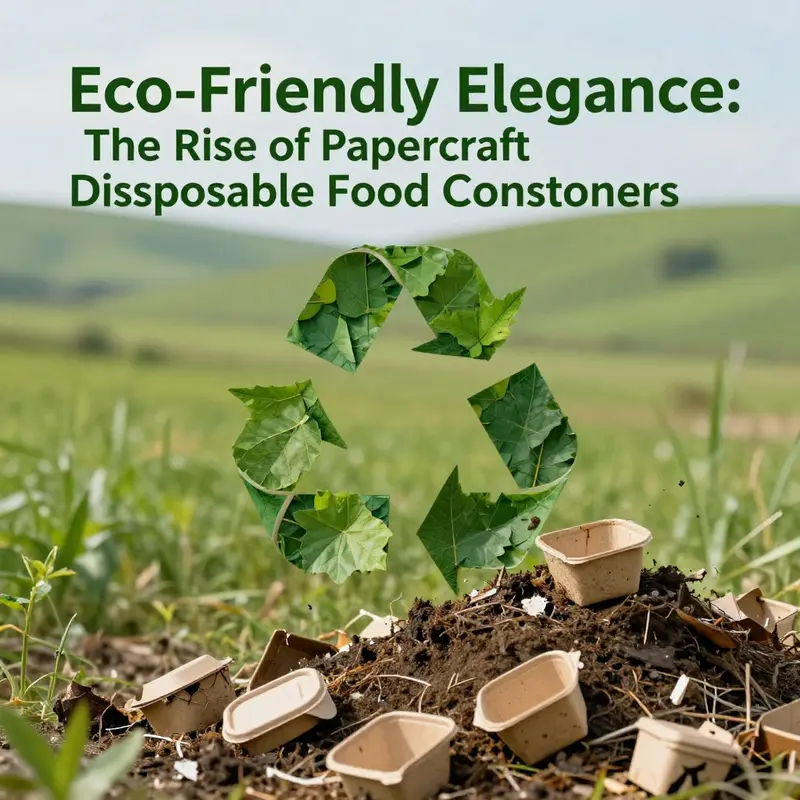
The belief that papercraft disposable food containers are inherently gentle on the planet is widespread, and for good reason at a glance. Paper comes from a renewable source, and many variants are designed to be recyclable, compostable, or biodegradable. Yet any single material claim must be unpacked against the full life cycle of the product. From the forest to the factory floor, from the dining table to the composting facility, the environmental footprint of papercraft containers is shaped by a cascade of choices, trade-offs, and system-level realities. This chapter follows that cascade, tracing how decisions at each stage—raw material sourcing, processing, conversion, use, and end-of-life management—accumulate into an overall impact that can be either reasonably modest or unexpectedly burdensome depending on context. It is not an indictment of paper packaging, but a call to recognize complexity and to align design, production, and disposal with the realities of local waste networks and consumer behavior.
A helpful starting point is to acknowledge the apparent advantages of paper: rapid renewability, the potential for high recycled content, and the ability to be recycled or composted under certain conditions. Yet these advantages are conditional. Paper fibers are a renewable resource only if they come from responsibly managed woodlands and are harvested with attention to ecosystem health. In practice, many papercraft containers begin their life with fibers sourced from forests where certification schemes attempt to balance harvest rates with regrowth and biodiversity preservation. Even with such assurances, the environmental story does not end at the cutting plant. The processing stage demands energy and water, generates effluents, and involves pulping chemicals that can vary in environmental intensity. In a sector-wide view, the energy mix available at the manufacturing site and the efficiency of water use substantially influence the basin-wide footprint. When these factors are optimized, paper products can achieve low to moderate energy intensity relative to plastics, but the margin depends on scale, technology, and the surrounding infrastructure that handles post-consumer waste.
Coatings and linings are a central hinge in this narrative. To perform as containers for greasy or wet contents, many papercraft products rely on barrier coatings such as plastics or waxes. Polyethylene (PE) and polylactic acid (PLA) coatings are among the most common. While coatings improve moisture resistance and grease containment, they complicate end-of-life outcomes. A container that resists leaks in a hot soup may be far less likely to biodegrade in a landfill or industrial composting facility if its interior barrier is not itself compostable or if separation of materials is not practiced. The result can be a container that effectively prolongs residence time in the waste stream or contributes to microplastic pollution when coatings degrade. Even in contexts where a coating is labeled as compostable, actual compostability requires industrial facilities with appropriate temperatures, residence times, and feedstock conditions. If a local facility is absent or underfunded, the coating’s intended end-of-life advantage dissolves into a delayed, uncertain outcome.
This tension highlights a broader truth: the environmental performance of papercraft packaging is inseparable from what happens after disposal. In many regions, coproducts from paper packaging are landfilled because curbside programs do not accept the coated or composite structures used for food contact. In others, industrial composting networks are expanding, yet they remain unevenly distributed and sometimes misaligned with consumer habits. When paper cups and boxes end up in landfills, the oxygen and moisture levels that would enable biodegradation are suboptimal, and even truly biodegradable materials can persist for longer than expected. This reality helps explain why some cradle-to-grave assessments still identify plastics or plastic-like coatings as the most significant contributors to environmental burdens in certain packaging systems, despite the underlying paper foundation.
To assess true impact, one must consider multiple dimensions of the life cycle. Resource use is the first dimension: what are the forest management practices, what is the energy intensity of pulping and drying, how much water is consumed, and what are the emissions associated with processing? Alongside resource use, the cumulative environmental footprint hinges on product design choices. A heavily coated, high-strength container may perform well in transport and during service, yet its end-of-life options could be severely constrained. Conversely, a simpler, uncoated kraft offering might be fully recyclable in many systems, but its liquefaction resistance and heat tolerance could limit its applicability to certain foods and temperatures. The design decision, then, becomes a balancing act between performance needs in the kitchen and the realities of waste management downstream. This balance is rarely a fixed target; it shifts with geography, regulatory regimes, and consumer practices.
Another layer of complexity arises from the material mix and the sourcing of fibers. Kraft paper, bleached paper, and recycled paper each come with distinct aesthetic and performance profiles. Kraft paper’s natural brown hue and sturdy feel have made it a preferred substrate for takeout boxes and ice cream cups. Bleached paper offers a cleaner canvas for branding and print, which matters in premium or promotional packaging contexts. Recycled paper closes the loop by reusing fiber, but it can also bring in variability in strength or barrier performance. The environmental advantage of recycled content, while clear in principle, is not automatic. The energy and chemical inputs involved in repulping, extra processing for contaminants, and the potential need for coatings to ensure performance must be weighed. The broader life-cycle literature suggests that when recycled content is high and processing is efficient, the overall footprint can be lower than virgin paper; yet in practice, differences in regional energy grids and recycling infrastructure can shift the outcome.
The environmental performance story thus becomes a question of context rather than a universal truth. In a network with robust municipal recycling and accessible composting facilities, paper-based containers can contribute to a circular economy where materials flow back into production, rather than draining resources into landfills. In places where waste systems struggle to separate compostable from non-compostable fractions, the most eco-friendly label on a container may be the simplest design that also meets the product’s functional needs without introducing complex barrier layers. The literature emphasizes that the future of sustainable packaging lies not only in greener materials but in stronger circular-economy practices. This means aligning design, sourcing, and end-of-life management so that packaging is reused, recycled, or returned to nature with minimal harm.
Despite the nuanced picture, there are clear pathways for improvement. One pathway is to advance the development and deployment of coatings and barriers that are genuinely biodegradable or compostable under municipal conditions. The challenge is substantial: such coatings must maintain integrity during use, resist heat and grease, and yet disappear in the right waste stream without leaving microplastics or toxic residues. Standards bodies and researchers are actively pursuing performance metrics that can guide manufacturers toward coatings that harmonize with end-of-life infrastructure. In parallel, there is growing attention to the design-for-end-of-life principle, a mindset that prioritizes disassembly, material separation, and clarity for waste handlers. A container that is easier to sort and that minimizes mixed materials reduces the risk of contamination and can improve recycling or composting rates. The design ethos also extends to labeling: clear, accurate disposal instructions help consumers navigate properly, avoiding the all-too-common scenario in which a container, despite its theoretically recyclable materials, ends up in the wrong stream because of misleading or ambiguous guidance.
Beyond the raw materials and coatings, waste management realities shape outcomes in another crucial way: consumer behavior. Even when packaging is crafted with end-of-life in mind, the best infrastructure can be undermined by habits, misunderstandings, and convenience-focused choices. If consumers discard a food container with residual oil or food scraps, contamination can make recycling less viable or composting less efficient. If a compostable container is treated like ordinary waste, the opportunity for industrial composting is lost. The social dimension—education, awareness, and consistent waste-sorting behavior—often determines the difference between a good packaging choice and a suboptimal one. This is where industry and policy intersect with everyday practice. Public communication campaigns, labeling standards, and municipal guidance all influence how packaging performs in the real world. In this sense, the environmental impact of papercraft containers is not just a function of material science but of systems thinking—how products meet waste streams, how waste streams meet facilities, and how individuals navigate that interface.
Looking toward the horizon, several trends promise to tilt the balance toward lower impact outcomes. Innovations in fiber sourcing, such as certified sustainable wood pulp and a greater emphasis on agro-based materials, offer the potential to reduce deforestation pressures and to lower energy footprints associated with pulping and drying. The literature also notes the growing viability of compostable lamination systems that are designed to break down in industrial facilities rather than fragment into microplastics in the environment. These developments gain strength when accompanied by transparent performance data, third-party certification, and credible lifecycle assessments that compare alternatives under realistic operating conditions. In practice, the most meaningful gains occur when manufacturers, waste managers, and policymakers collaborate to tailor solutions to local realities—whether that means investing in regional composting capacity, supporting better sorting at the consumer level, or creating incentives for using materials with verified end-of-life performance.
To illustrate how these principles play out in real terms, consider the broader ecosystem of packaging choices that accompany papercraft paper containers. The paper-based family of products often competes with plastics and foams on several fronts, but it can shine where discard and reuse opportunities align with local waste streams. When a city offers a robust curbside recycling program with high participation and effective contamination control, recycled content and efficient processing can yield a favorable life-cycle profile. When a region provides industrial composting for truly compostable structures and enforces rigorous source separation, compostability can become a meaningful end-of-life pathway. In other contexts, where collection, sorting, and processing are fragmented or absent, the most sustainable option may be to favor material simplicity and a design that minimizes waste, rather than chasing an ideal of “biodegradable everywhere.” The central lesson is that sustainability is not a fixed label attached to a material; it is a dynamic outcome that depends on how the package is produced, used, disposed of, and accommodated within the local waste architecture.
Within this landscape, one finds opportunities to broaden the range of materials and processes that count as desirable alternatives rather than mere compromises. Eco kraft paper, for example, is produced from responsibly sourced wood pulp with an emphasis on lower-impact processing and recovery. It is often presented as a bridge between traditional kraft performance and a more climate-conscious footprint. Similarly, recycled- or partially recycled-content papers can cut energy use and reduce virgin-fiber demand when the supply chain is well managed. Yet the choice to adopt any of these options should be accompanied by an honest appraisal of the end-of-life system. If recycled content is used but the post-consumer stream is poorly organized or contaminated, the benefits can be muted. Conversely, a simple, well-suited coating that enables hot food serving can be a positive if it is compatible with an existing composting or recycling stream and does not create downstream complications.
The environmental reality, therefore, is that papercraft disposable food containers hold potential for lower environmental impact relative to non-renewable packaging, but only when the entire system—the forest, the factory, the design, the delivery chain, and the waste management network—works in concert. This is not an abstraction. It is a practical framework that guides where investment and innovation will yield the most meaningful improvements. Designers can contribute by prioritizing performance that matches the intended use while using recyclable or compostable barriers where feasible, ensuring that the product is both fit for purpose and compatible with downstream processing. Manufacturers can contribute by investing in energy efficiency, water stewardship, and responsible fiber sourcing. Waste managers can contribute by expanding access to sorting, composting, and recycling, and by clarifying disposal guidelines. And consumers can contribute by becoming more discerning about disposal options and by supporting products that carry transparent end-of-life information.
In this evolving conversation, it is essential to distinguish between aspirational claims and verifiable outcomes. The path to improvement is not a single leap but a sequence of incremental steps—improved sourcing, smarter design, better coatings, clearer labeling, broader access to appropriate waste facilities, and more consistent consumer behavior. Each step reduces the risk that a paper-based container becomes a dead-end in a landfill or a source of microplastics, and each step helps to realize the potential of papercraft packaging as part of a genuinely circular economy. The story is not about abandoning paper; it is about aligning its use with a waste ecosystem that can absorb it responsibly and at scale. When alignment is achieved, the environmental narrative shifts from a sometimes-rosy promise to a measurable, steady improvement in the footprint of disposable food containers.
For readers seeking a concrete illustration of the science underpinning these discussions, it is instructive to examine how researchers evaluate life-cycle impacts and what metrics they emphasize. Life-cycle assessments (LCAs) weigh energy use, greenhouse gas emissions, water consumption, and toxicity across stages from raw material extraction to end-of-life. They often reveal that small shifts—such as increasing recycled content, adopting certified sustainable fiber sources, or enabling industrial composting for truly compostable coatings—can yield measurable gains. Yet LCAs also remind us that the benefit hinges on end-of-life realities. A paper carton that ends up in a landfill with little oxygen and moisture will not realize the same advantages as one directed into a functioning composting facility. In other words, the LCA’s verdict is only as good as the waste system that receives the product and the honesty of the information provided to consumers about disposal. This is why sector-wide progress depends as much on policy and infrastructure as on the innovations that occur in the design room or the factory floor.
In sum, the environmental impact of papercraft disposable food containers is a tapestry rather than a single thread. It weaves together forest stewardship, fiber processing, manufacturing energy, product design, coating chemistry, logistics, consumer use, and the vagaries of waste management. The challenge—and the opportunity—is to optimize this tapestry through coherent strategies that respect local conditions, enhance material circularity, and preserve the functional benefits of paper in food service. When these elements align, papercraft containers can offer a credible path toward lower-impact packaging without sacrificing safety, performance, or brand integrity. The conversation continues to evolve as standards, facilities, and consumer habits adapt to the realities of a world increasingly oriented toward sustainable practice. One piece of the puzzle is embracing options that broaden the material base beyond traditional papers, including renewably sourced alternatives that maintain performance while improving end-of-life outcomes. For instance, exploring routes such as bagasse-based packaging, which leverages the fibrous by-products of sugarcane, can offer distinct advantages in certain markets and is worth considering as part of a diversified strategy. To learn more about such possibilities, you can explore a dedicated resource on natural sugarcane bagasse packaging, which presents an example of how renewable fibers can be shaped into functional, everyday containers while highlighting considerations around compostability and supply chain integration. natural-sugarcane bagasse packaging.
Ultimately, the environmental footprint of papercraft disposable food containers is a function of systems thinking as much as material science. It invites a holistic approach where sourcing, design, and disposal are synchronized with community waste infrastructures and consumer practices. When such synchronization is achieved, paper-based packaging can be not only a practical and attractive option for food service but a genuinely responsible one as well. The journey from forest to fork then becomes a story of stewardship—one that recognizes both the promise and the responsibility embedded in every sheet of paper that travels from supplier to customer to composting facility or recycling plant. For those who study or implement packaging at scale, the key is to ask not only how a container performs during use, but how its end-of-life story unfolds in a world of diverse waste streams, climate considerations, and evolving regulatory expectations. Only then can we responsibly claim that papercraft disposable food containers are part of a sustainable future rather than merely a step toward it.
External reference for further reading: https://www.sciencedirect.com/science/article/pii/S0959652620301478
From Kraft to Coated Confidence: The Rise of Papercraft Disposable Food Containers in a Sustainable Food Landscape
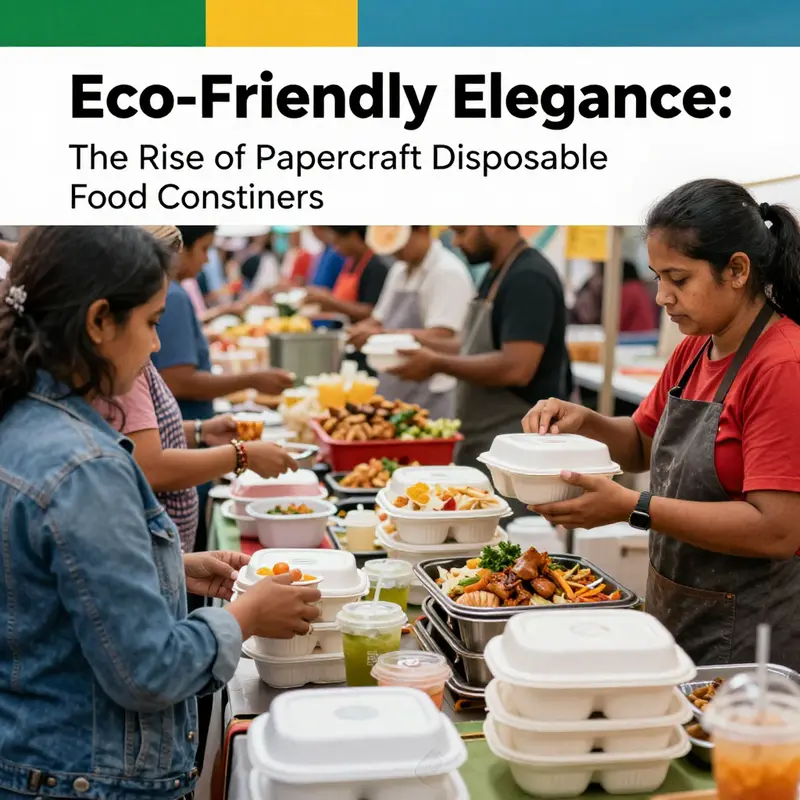
The shift from plastic and foam to papercraft disposable food containers is not a simple substitution of materials; it is a rethinking of how a single-use object can perform across varied culinary contexts while aligning with environmental and regulatory expectations. The modern papercraft container, once a modest vehicle for carrying soup or a sandwich, has become a workhorse of the food service ecosystem. Its evolution is rooted in material science, sustained by supply-chain ingenuity, and propelled by an ever-expanding appetite from brands and customers for packaging that is greener, smarter, and more adaptable to diverse foods and service models. As these containers move from novelty options to standard practice, they reveal a triad of forces shaping the market: better materials that resist moisture and grease, coating technologies that expand performance without sacrificing recyclability, and a global manufacturing network that scales responsibly while meeting stringent standards for food contact substances.
At the heart of the papercraft revolution is a reexamination of what paper can do in the kitchen. Paper, in its most familiar form, is porous and vulnerable to liquid and heat. Yet it also offers a renewable, recyclable, and highly versatile substrate that can be engineered to meet demanding requirements. The most common base materials—kraft paper, bleached paper, and recycled paper—each bring distinct aesthetics and technical profiles. Kraft paper, with its natural brown hue and rugged texture, conveys authenticity and practicality; it is celebrated for strength and moisture tolerance when treated appropriately. Bleached paper, with a clean white surface, supports sharp branding and high-visibility printing, appealing to premium or promotional packaging where visual identity matters as much as function. Recycled paper emphasizes the circular economy, reinforcing a narrative of reuse and responsibility that resonates with consumers who value sustainability as a decision factor in support of a brand’s environmental commitments.
However, the practical performance of papercraft containers hinges on how they handle two persistent challenges: moisture and grease. In uncoated forms, paper will absorb liquids and fats, leading to softness, loss of structural integrity, or even leakage—outcomes that are unacceptable for hot soups, oily dressings, or sauces that ride along with a meal. Materials science has addressed these issues through thoughtful design choices and protective coatings. Water-based laminates, oil-resistant treatments, and specialized coatings have become the lifeblood of modern papercraft packaging. These innovations enable containers to hold cold foods such as salads and sandwiches, and, with careful selection, to perform reliably with reheated meals as well. The coatings are designed to balance barrier properties with recyclability, an ever-present tension in packaging design. In practice, this means manufacturers must select coatings that minimize environmental compromise while delivering the grease and moisture resistance needed to sustain product integrity during transport and service.
Coatings and barrier technologies are not merely afterthoughts; they are central to the argument for papercraft containers as legitimate, scalable alternatives to conventional plastics. The move toward water-based laminates, for instance, offers a comparatively eco-friendly approach to prolonging shelf life and maintaining surface integrity in environments ranging from a bustling campus cafe to a high-volume quick-service restaurant. Oil-resistant treatments on kraft substrates expand the applicability to items that exude fats from sauces or oils from dressings, including cold or room-temperature offerings that must travel without compromising the container’s structure. These advancements extend the utility of papercraft packaging across diverse service models—from build-your-own salad bars to grab-and-go noodle bowls and pre-portioned meals—without forcing a concession on either form or function.
Material choices also influence how these containers are perceived by customers and regulated by authorities. The drop-in of high-grade materials such as solid bleached sulfate (SBS) and corrugated board points to a broader trend: performance upgrades that do not abandon recyclability. SBS, a strong, smooth, and printable substrate, allows brands to pursue vivid logos, informative labeling, and attractive branding while maintaining the structural integrity required for payloads that include liquids or semi-liquids. Corrugated board, with its layered geometry, provides a robust framework for larger or multi-compartment containers, supporting modularity in portion sizes and meal configurations. The nuance is in calibration: the thickness, stiffness, and barrier properties must align with the intended use—whether a delicate smoothie in a paper cup, a hot noodle dish in a takeout box, or a chilled salad with a cold-pack insert.
Regulatory compliance has become an ever more visible dimension of how papercraft packaging is evaluated and chosen. Across major markets, food contact regulations govern permissible materials, coatings, and processing methods. Requirements for migration of substances into food, limits on extractables, and general safety standards influence every stage of container design—from the choice of pulp source to the finished coating. Companies that pursue compliant outcomes often pursue certifications such as FSC (Forest Stewardship Council) for responsibly sourced fibers, and they prefer substrates and coatings that demonstrate compatibility with widely recognized safety standards. The emphasis on compliance integrates with ESG objectives that many buyers now prioritize during supplier selection, reflecting a broader shift in procurement where environmental and social governance become as decisive as cost or lead times.
The industrial geography behind papercraft containers further shapes how the market evolves. In recent years, certain manufacturing hubs have emerged as critical engines for scale, reliability, and innovation. Chinese production centers, notably in Guangdong, Shanghai, and Hebei, have become central to the global supply of paper-based packaging. The Pearl River Delta, which includes Shenzhen and Guangzhou, has become a focal point for moisture-barrier coatings and oil-resistant configurations that extend the functional envelope of paper containers. The presence of Baoding in Hebei, recognized for high-purity virgin wood pulp tissue, underscores the importance of upstream material quality in ensuring food safety and performance standards. These regions benefit from vertically integrated supply chains, proximity to ports, and established manufacturing ecosystems that can push through iterations at a pace aligned with consumer demand and brand campaigns.
The economics of scale are inseparable from the environmental narrative. When a supplier can offer bulk production with consistent quality, the availability of coated and uncoated variants, and reliable lead times within a 15- to 30-day cycle, confidence in adopting papercraft packaging grows. A diversified supplier network helps buyers mitigate risk—from the supply of raw pulp to the final printed lid. Yet scale does not happen in a vacuum. It depends on collaborative planning, transparent quality assurance, and continuous investment in process improvements that keep pace with evolving regulations and consumer expectations. In this sense, papercraft packaging reflects a broader industrial reality: packaging is no longer a simple barrier between food and consumer; it is a designed experience that communicates brand values, ensures safety, and participates in the circular economy narrative that underpins market resilience.
The supplier landscape in B2B procurement for papercraft containers has also matured. Traditional buyers increasingly pursue a two-pronged strategy: they demand the flexibility to move quickly from prototypes to large container loads, and they seek suppliers who can demonstrate responsiveness, customization capability, and robust regulatory compliance. With this approach, the evaluation criteria expand beyond price to include the capacity for small-scale trials, rapid iterations, and scalable manufacturing runs. Some manufacturers offer sample kits that allow brands to test performance in real-world settings, with low upfront costs and short delivery times. This approach reduces risk for new concepts such as novel portion sizes, multi-compartment designs, or branding through printed graphics. The concept of OEM/ODM collaboration has grown from a footnote to a central feature of how packaging is developed, enabling brands to align packaging aesthetics with product lines while maintaining consistent performance characteristics across batches.
The sustainability narrative is not only about end-of-life outcomes. It begins with the sourcing of raw materials and ends with the fate of used containers after service. Paper-based packaging has the potential to be compostable or recyclable, but these outcomes depend on system-level considerations. The presence of coatings, for example, can complicate recycling streams if they interfere with fiber separation or contaminate the process. Conversely, coatings that are water-based or designed for easy removal can support recyclability while still delivering needed barrier properties during transport. Companies are increasingly transparent about their material choices, often highlighting the cycle from renewable feedstocks to recyclability and, where feasible, compostability in industrial facilities. This transparency supports a consumer ecosystem that wants to know not just what a package can do, but what it will do after it leaves the restaurant hand and enters the waste stream.
In practice, the strategic value of papercraft containers emerges from how well they balance several competing demands. They must withstand the rigors of fast-paced foodservice environments, including stacking, transport, and varying ambient temperatures. They must present a surface suitable for high-quality branding, accurate labeling, and consumer information. They must offer predictable performance across different contents, from cold salads to hot soups, without compromising safety or structure. They should contribute to a circular economy by being designed for recyclability or compostability where possible, while maintaining a favorable cost structure that makes them viable for everyday use. Achieving this balance is not a one-off achievement; it is an ongoing process of product development, process optimization, and market feedback.
The narrative around papercraft packaging is also shaped by consumer expectations and brand storytelling. Sustainability has evolved from a niche preference to a baseline criterion for many customers. A growing segment of diners now views packaging not as an afterthought but as part of the overall dining experience—an impression that can reinforce perceptions of quality, responsibility, and modernity. In this context, brand owners increasingly leverage printed surfaces to communicate provenance, certifications, and commitments to responsible sourcing. The ability to print on kraft or bleached substrates with bold, durable graphics expands the utility of these containers beyond containment to mere branding. The shift toward OEM/ODM customization enables brands to deliver a cohesive, on-brand experience across multiple service channels, whether it is a grab-and-go counter, a university cafeteria, or a commercial catering event. It is this synergy between material capability, regulatory alignment, and brand storytelling that makes papercraft disposable containers not just an option, but a strategic component of a sustainable food services ecosystem.
From a practical perspective, businesses that adopt papercraft solutions must navigate a few essential considerations. The selection process hinges on matching the container to the application: a hot hot-beverage or soup container benefits from wax-like or polymer-based coatings that resist liquid infiltration; a salad or fruit cup requires barrier properties to prevent ingress of oils or dressings that could weaken the fiber matrix. The decision between bleached and brown paper is not only color and branding; it is about surface energy, printability, and consumer perception. Bleached substrates can offer sharper print results for logos and nutritional information, while kraft substrates convey a natural, rustic ethos that resonates with sustainability narratives. In some cases, a hybrid approach works best: a bleached exterior for premium branding with a kraft interior designed to take advantage of a stronger barrier and better oil resistance, all while remaining compatible with existing recycling streams.
An important, often overlooked, dimension is the logistical and economic reality of scaling these containers for global distribution. The manufacturing hubs in China, with their tight integration of pulp supply, coating technologies, and packaging conversion, offer an efficient path to large orders with consistent quality. The lead time dynamics—15 to 30 days for production cycles—can align with seasonal demand swings, promotional campaigns, and the ramp-up of new menu items across regions. Suppliers who maintain robust quality control, traceability, and transparent testing data can help brands feel confident in the uniformity of product across continents. In turn, this reliability reduces the risk of supply disruptions that could derail a restaurant’s service levels or a caterer’s on-site performance.
In terms of environmental stewardship, the papercraft sector is increasingly aligned with broader sustainability goals that influence investor confidence, consumer trust, and regulatory expectations. Two recurring themes underscore this alignment. First, the integration of tribal knowledge from forestry management to fiber sourcing—ensuring that pulp is produced from responsibly managed forests and that suppliers adhere to recognized standards—speaks to an emphasis on responsible supply chains. Second, the development and adoption of coatings that improve barrier performance without compromising recyclability signals a willingness to innovate within environmental constraints rather than circumvent them. The net effect is a packaging system that is not only functional and appealing but also compatible with a circular economy framework in which materials are recovered, processed, and reused rather than relegated to landfill.
What does all of this mean for the future of papercraft disposable food containers? It points to a market that will continue to grow, but at a pace tempered by the need to maintain safety, performance, and environmental integrity. The compound annual growth rate (CAGR) projected for the paper-based food container market—from 2026 to 2033, approximately 8.9 percent—signals a sustained interest in replacing conventional plastics with paper-based alternatives across a range of foodservice applications. This trajectory will likely be supported by ongoing improvements in barrier coatings, the expansion of compliant, FSC-certified fiber supply, and continued optimization of supply chains that can deliver both rapid prototypes and large-scale production with equal reliability. It will also demand more sophisticated supplier evaluation frameworks from buyers who must balance price, speed, and ESG considerations in a single decision. The market’s vitality comes not from a single breakthrough but from the cumulative effect of multiple incremental advances—stronger substrates, smarter coatings, more versatile formats, and a more mature, interlinked global supply network that can deliver on the promise of sustainable, high-performing packaging for meals that are eaten on the go, shared in workplaces and schools, or enjoyed at events and gatherings.
For businesses exploring papercraft packaging as a strategic choice, the value proposition is rooted in risk-reducing capabilities and brand-enhancing potential. The ability to customize sizes, add lids and handles, or print designs directly onto the container supports a cohesive consumer experience that aligns with marketing goals and service requirements. In this context, the packaging becomes an extension of product quality rather than a disposable afterthought. The practical implications extend to operations as well: lighter-weight solutions reduce logistics costs, and multi-functional designs can streamline inventory and storage across multiple lines. When these containers are used in meal prep services, takeout operations, and catered events, the benefits become tangible in the form of lower shipping costs, improved user experience, and stronger brand impression—all while contributing to a more sustainable practice that resonates with a growing base of environmentally conscious consumers.
One practical takeaway for practitioners is the strategic importance of aligning material selection with intended use. If a food item is hot and liquid, coatings that enhance heat resistance and moisture barrier performance are essential. For items that are pre-chilled or served cold, the emphasis shifts toward ensuring structural stiffness and leak resistance during transport. In either case, manufacturers and buyers should consider the entire lifecycle of the container—from pulp origin, through coating chemistry and manufacturing processes, to end-of-life stewardship. This lifecycle-aware approach supports not only regulatory compliance but also an enduring consumer trust that packaging decisions can be part of a meaningful sustainability narrative.
To illustrate the scope of this transition, consider the broader implications for branding and design. A well-executed papercraft container can carry brand elements, communicate critical information, and signal a commitment to the environment without compromising performance. The surface quality of bleached substrates makes high-resolution branding feasible, while the tactile experience of kraft paper can reinforce a perception of durability and practicality. The ability to tailor container designs to specific event types—seasonal promotions, seasonal menus, or venue-specific packaging—supports a more personal consumer experience and helps brands differentiate themselves in a crowded marketplace. The convergence of design flexibility, regulatory compliance, and material innovation thus positions papercraft packaging not simply as a container but as a platform for storytelling, engagement, and responsible consumption.
In closing, the rise of papercraft disposable food containers reflects a broader shift in the packaging industry toward solutions that honor both performance and planet. Their growth is anchored in advances in substrate selection, barrier coatings, and coatings that preserve recyclability; it is reinforced by a robust industrial base capable of meeting global demand with speed and consistency; and it is propelled by a regulatory and consumer landscape that increasingly favors sustainability, safety, and transparency. The choreography of these elements—materials science, manufacturing scale, regulatory alignment, and brand storytelling—will continue to shape how papercraft packaging evolves in the coming years. As foodservice operators seek to balance efficiency with responsibility, papercraft containers offer a compelling answer: a single-use solution that can perform under pressure, carry a message of care, and participate in a circular economy without demanding a costly toll on the environment. For those exploring this path, the journey is about testing, refining, and integrating packaging into a broader strategy that values people, planet, and profitability in equal measure.
As a practical invitation to ongoing exploration, consider the role of design and procurement in shaping this future. The choice of substrate, the selection of barrier coatings, and the decision to pursue FSC certification or other environmental credentials are all strategic moves that influence not only product performance but brand perception and regulatory compliance. Selecting the right supplier becomes not merely a procurement decision but a collaborative partnership that advances mutual goals—risk mitigation, innovation, and responsible growth. In this sense, papercraft disposable containers are less a product category than a platform for aligning operational excellence with environmental stewardship, branding ambition, and customer satisfaction. The market’s momentum, the technology that underpins it, and the global network that sustains it together create a dynamic, resilient, and increasingly indispensable component of modern foodservice. For those who want to dive deeper into the market trends and the shift toward sustainable packaging, further reading is available at industry analyses that project growth and outline the regulatory landscape guiding these materials. eco-friendly printed-logo paper ice-cream cups with lid This link provides context on branding-enabled, eco-conscious packaging options and how they fit into the broader ecosystem of papercraft solutions. External resources, including comprehensive market assessments and regulatory guidance, can augment this understanding and illuminate pathways for practical implementation across brands and service models. For a broader market perspective, see the market analysis at https://www.marketresearchfuture.com/reports/paper-based-food-container-market-3748.
Final thoughts
Papercraft disposable food containers serve as an outstanding solution for businesses aiming to reduce their environmental footprint while providing quality service. Their diverse properties and eco-friendly nature meet the growing consumer demand for sustainable packaging options across the food industry. By understanding their advantages and market trends, businesses can make informed decisions that not only align with sustainability goals but also enhance brand reputation. As you consider your own packaging needs, embracing these disposable containers could be a significant step toward a greener future for your enterprise.