
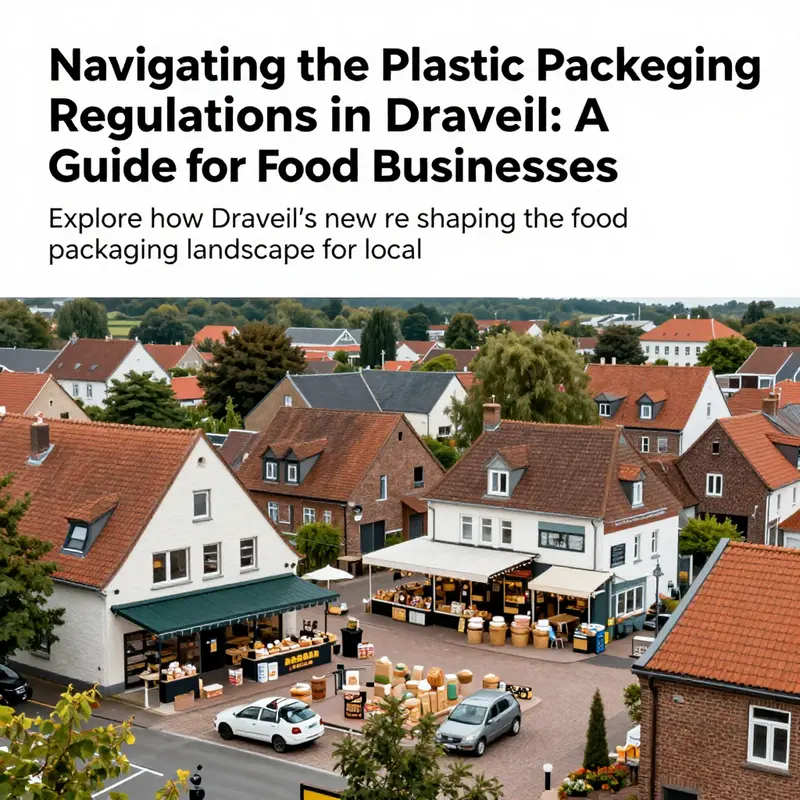
As the European Union’s mission to minimize plastic waste gains momentum, Draveil, France finds itself at the forefront of these mudanças. With strict regulations on plastic food packaging, particularly targeting single-use items, city food businesses—including bubble tea shops, restaurants, and food trucks—must adapt to new practices. This article delves into the current regulations on plastic food containers in Draveil, the impact of the EU plastic ban on local businesses, innovative alternatives available, and how society is responding to these changes. Through this exploration, food service stakeholders will gain valuable insights into maintaining compliance while fostering sustainability.
Regulatory Currents in Draveil: How France’s Recycled-Plastics Mandate Redesigns Food Containers
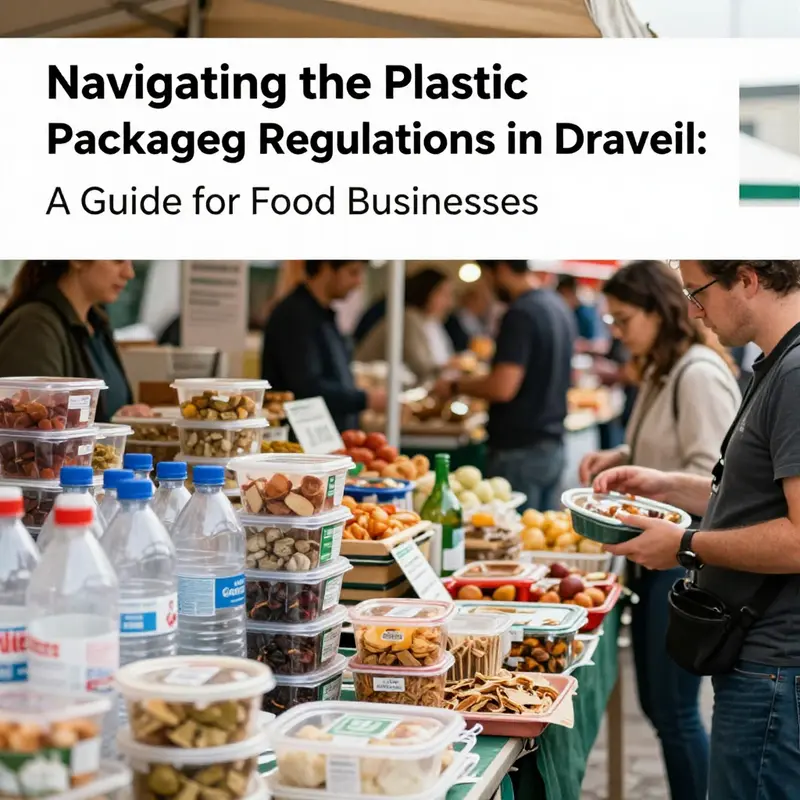
Draveil sits quietly along the Île-de-France panorama, yet its municipal life now moves to a louder rhythm of regulations and the quiet churn of alternative packaging. The shift is not just a national trend or a European headline; it is a local transformation that touches bakers, market stalls, school cafeterias, and the everyday choices of residents who order takeout or buy prepared foods. In Draveil, as in many French communities, the regulatory tide has moved from whispered compliance to a structured, habits-informing framework. The backbone of this change is the Circular Economy Act, complemented by a decree on recycled plastics in packaging issued on September 5, 2025. Together they set a clear direction: plastic packaging used in food containers must increasingly come from recycled sources, and the options for single-use plastic containers, once ubiquitous in takeout and delivery, must be replaced with reusable or compostable alternatives where possible. This is not a mere compliance checklist; it is a rethinking of how packaging can be designed to fit a circular system where materials are kept in productive use longer and waste generation is minimized.
At the heart of the French approach is a staged commitment to recycled content that translates into real production and sourcing decisions. The decree establishes binding targets for all plastic packaging used for food in Draveil and across France. By 2027, at least 30 percent of plastic packaging for food products must be composed of recycled plastic. That target rises to 50 percent by 2030. Importantly, the rule covers both primary packaging—such as takeaway containers and bottles—and secondary packaging like wraps and outer cartons. This universality matters for a town like Draveil, where many small eateries, groceries, and participation-driven programs still rely on a mix of container types. The enforcement is coordinated by the Ministry of Ecological Transition and monitored through ADEME, the national agency charged with environmental protection and the promotion of sustainable practices. This coordination ensures that local inspectors have a consistent standard by which to assess compliance and to guide businesses toward feasible alternatives.
The practical effect of the recycled-plastics decree in Draveil is felt at every level of the food service ecosystem. For a restaurant that previously relied on a single-use plastic takeout box, the options now include paper, wood fiber, or polypropylene alternatives that meet the recycled-content requirements or are designed as reusable systems. The law explicitly recognizes the role of design in reaching recycled-content targets. It encourages packaging that is easier to collect, sort, and recycle and that integrates with producer-responsibility schemes. This links to the Extended Producer Responsibility (EPR) framework, which places financial responsibility for packaging waste on producers and distributors. In Draveil, producers who bring packaged goods to market are required to register with Valorplast, the packaging-waste recovery organization, thereby contributing to the lifecycle management of their products. The practical upshot is that a local bakery, a neighborhood deli, or a school canteen becomes a participant in a broader system where decisions about packaging materials are tied to end-of-life outcomes, not merely to product presentation or short-term convenience.
The regulatory architecture is complemented by a broader ban on certain single-use plastics in the food service sector. In alignment with the EU Single-Use Plastics Directive, Draveil has banned plastic cutlery, straws, plates, and cups in restaurants, cafés, and delivery services. Disposable plastic containers for takeout are prohibited unless they meet specific criteria—either being reusable or made from compostable materials such as plant-based bioplastics. This aligns with a growing preference for materials that can be returned to a system of reuse or composted in municipal facilities. The consequence for day-to-day operations is tangible: menus and service models shift toward on-site consumption and reuse protocols that minimize waste, while delivery channels increasingly adopt certified compostable packaging or reusable takeout systems.
A parallel driver is the reusable-packaging mandate for takeaway services that began taking effect in January 2024. Draveil’s food vendors are required to offer reusable packaging options for takeout and delivery orders, with clear communication to customers about these options. The guidance encourages deposit-return arrangements or partnerships with local reuse networks. In practice, this means a restaurant may offer a customer a reusable container with a small deposit that is refunded upon return within a defined period, or it may participate in a trusted community reuse program. The deposit-return model is not merely a financial mechanism; it is a behavioral nudge designed to foster ongoing engagement with reuse systems. The aim is to normalize reuse as a standard feature of takeout culture, rather than a niche program.
From a municipal standpoint, Draveil’s authorities collaborate with regional environmental agencies to monitor compliance. Regular inspections assess whether businesses are offering compliant packaging, whether reusable options are clearly presented to customers, and whether producers and distributors are properly registered with Valorplast. Sanctions are calibrated to severity, with fines ranging from €1,500 to €15,000 depending on the infraction. These penalties are not footnotes; they signal that the local level will actively enforce the national framework. In the process, small food-service operators—who often operate on thin margins—are supported by guidance and transitional provisions to help them retrofit packaging choices, adjust supply chains, and communicate new options to customers.
The Paris pilot program in the 10th arrondissement, led by a local startup initiative in partnership with authorities, offers a useful backdrop for Draveil’s future path. The pilot demonstrates how reusable systems can be scaled to support a broader city-wide transition. It shows how a deposit-return model can work in practice, how shops and supermarkets can coordinate to manage returns, and how customers respond to the invitation to participate in a circular system. The example helps frame expectations for Draveil and for other municipalities within the Île-de-France region as the 2026 deadline for broader adoption approaches. The aim is not merely to replace one container with another; it is to reimagine the lifecycle of packaging so that materials circulate, rather than accumulate as waste, and so that cities become hubs of reuse rather than nodes of disposable consumption.
In this regulatory landscape, labeling becomes a key concern as well. France, like many EU members, has mandated clear environmental warnings for products containing plastic when disposed of improperly. The requirement underscores the connection between packaging choices and consumer behavior, reminding users of the environmental footprint attached to their purchases. This labeling practice complements the extended-life strategies, creating an ecosystem in which packaging decisions are transparent to customers and measurable by regulators.
The enforcement reality is nuanced. Compliance is uneven across Europe, with some regions moving more quickly than others in adopting reuse and recycled-content targets. Yet France stands out as a frontrunner in implementing and enforcing EU-wide restrictions, with Draveil as a microcosm of that national momentum. The local experience is shaped by the convergence of legislative clarity, municipal enforcement, and a growing network of suppliers who are evolving to meet recycled-plastic content requirements. The result is a packaging ecosystem that gradually tilts away from single-use plastics toward a combination of recycled-content plastics, certified compostables, and reusable systems. Storefronts, canteens, and takeaway counters in Draveil are gradually alluding to this mix, with a sense of practical progression rather than abrupt upheaval.
An important nuance in integrating these regulations into daily life is the way businesses and residents interpret “recyclability” versus “reusability.” Recycled-content plastics enable a closed-loop logic where materials are reintroduced into production streams. Reusability, however, shifts the emphasis toward the design of containers that can withstand repeated use and that integrate with deposit-return or community-swap arrangements. Draveil’s local stakeholders are navigating that spectrum—assessing the balance between material performance, cost, consumer convenience, and environmental impact. Small eateries are exploring more durable, washable packaging for on-site dining and robust, standardized reusable systems for takeout and delivery. Meanwhile, larger retailers and institutions are aligning with Valorplast’s framework to ensure their packaging waste is captured, sorted, and reintegrated into production cycles.
The journey is not merely about compliance, but about reshaping the local economy around sustainable packaging. It requires collaboration among restaurateurs, grocers, municipal officials, waste-management authorities, and residents who increasingly expect products to be designed with the end of life in mind. In Draveil, this collaborative spirit is being reinforced by public information campaigns, guidance on selecting compliant materials, and practical support for businesses transitioning to new packaging configurations. The presence of a range of packaging options that can meet recycled-content targets—whether through printed paper, board, or reusable systems—offers a menu of choices for different types of foods and service models. For instance, a takeout scenario can leverage a combination of reusable containers for certain orders and compostable alternatives for others, depending on the dining context and delivery logistics. In practice, this diversity helps ensure that the regulatory aims do not come at the cost of practical access to meals or the vibrancy of local food culture.
From a consumer perspective, the shift also nurtures a different habit loop. As customers encounter clearer labeling and more visible reuse opportunities, participation in deposit-return schemes or local reuse networks can become as routine as paying for a meal. The social signaling of choosing a reusable option—paired with a small deposit returned after returning the container—can cultivate a sense of collective responsibility. In Draveil, the evolution of packaging is thus part policy, part culture, and part market transformation. It is a story of how a compact municipality translates high-level environmental goals into everyday actions—an environment in which packaging is designed to be recovered, components are made to be recycled, and reuse becomes a standard feature of the dining-out experience.
For readers seeking a tangible example of packaging evolution, consider the shift from traditional takeout boxes to more sustainable designs that can support the recycling and reuse targets now enshrined in law. A practical entry point for businesses and designers alike is the availability of takeout packaging options designed with reuse in mind. Examples of such options are accessible through suppliers that emphasize recyclable or reusable configurations, including a takeout paper box with a lid that is suitable for reheating and safe transport, aligning with Draveil’s regulatory expectations. For those exploring the broader design space, browsing a range of packaging configurations can illuminate how form and function intersect with environmental performance. In this regard, the path from PS takeaway boxes to paper, wood, and PP alternatives is more than a change in materials; it is a reimagining of how meals travel from kitchen to customer while respecting environmental boundaries.
As Draveil and the broader Île-de-France region implement these changes, the collective experience feeds back into policy and practice. The legal text that formalizes these expectations is publicly accessible, and the ongoing dialogue among policymakers, waste-management professionals, and the public continues to refine implementation. It is a living policy environment, one that aims to harmonize the goals of environmental protection, economic feasibility, and social acceptance. For practitioners in the field, the message is clear: packaging decisions are now legal commitments with downstream consequences, not purely aesthetic or convenience-based choices. The commitment to recycled content and to reusable systems reflects a broader European ambition to reduce plastic waste and to pull the region toward a more circular economy.
To connect the discussion to tangible resources, a practical look at packaging options in the market can illuminate how these principles translate into choices on the ground. For example, consider a takeout container line designed to satisfy both performance and sustainability criteria. Such designs illustrate how a single choice can align with regulatory requirements while providing reliable service to customers. (Inline reference: in-stock-new-design-salad-rectangle-takeaway-kraft-paper-octagonal-box-with-lid). This kind of packaging option demonstrates that compliance and practicality can go hand in hand, enabling a smoother transition for food businesses under Draveil’s governance.
The legal backbone for these developments is accessible for those who want to understand the precise obligations. For those who need to review the formal decree and its implications, the official source provides the exact text and implementation details. External resources offer further context on how these regulations interact with broader European directives and national strategies. In Draveil, as in many French communities, the journey toward sustainable packaging is a structured process—one that combines legal clarity, administrative oversight, and a growing ecosystem of suppliers and reuse networks to support a circular economy in everyday meals.
External resource: https://www.legifrance.gouv.fr/
Shifting Ground: Draveil, France, and the EU’s Plastic Ban as a Catalyst for Local Food Packaging Transitions
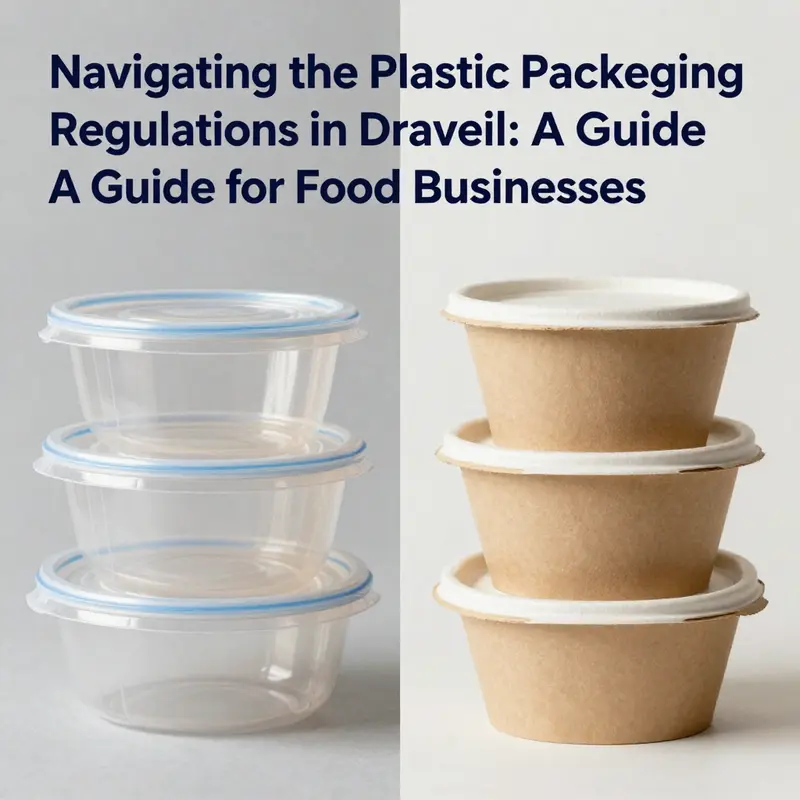
Draveil sits on the southern fringe of the greater Paris region, a town where everyday life intersects with policy in small, tangible ways. The European Union’s plastics directive has driven a quiet but pervasive redesign of what can hold, carry, and present a meal. The chapter that follows traces how national ambitions and city-scale pilots ripple through a municipality like Draveil, where takeaway and delivery are daily practices for residents, restaurateurs, and small food shops. The narrative is not about a single rule but about a cascade of regulatory moves that recalibrate supply chains, consumer expectations, and the economics of packaging. It begins with a policy environment that matured through a series of phased prohibitions and labeling requirements, a sequence that reframed the material choices available to local businesses and the rituals by which customers interact with their food on the go. By 2026, Paris’s ambition to abolish single‑use plastic takeout containers would stand as a bold experiment in municipal-scale circular economy planning; Draveil’s experience sits just outside that capital’s orbit, yet it cannot be entirely severed from it. The question for Draveil is not whether the ban is inevitable, but how to balance compliance with practical constraints while maintaining the reliability and convenience that customers expect when they order a meal away from home.
From an EU-wide perspective, the Single-Use Plastics Directive, implemented in July 2021, laid out a framework that transcended national boundaries. Polystyrene (PS) meal boxes, plastic cutlery, and plastic straws were among the most visible targets, with production, sale, and import restricted across member states. In France, the once-ubiquitous yellow kebab-style takeaway boxes used in many fast-food locales faced a clearly signposted decline, making way for paper, molded fiber, or polypropylene (PP) alternatives. The rationale was straightforward in environmental terms: reduce litter, simplify recycling, and incentivize a shift toward materials designed for reuse or higher rates of recovery. Yet the actual transition required more than a national decree. It required a change in the logistical playbook—where packaging is sourced, how it is transported, and how a kitchen schedules orders that arrive in compostable containers rather than conventional plastics.
In Draveil, as in many communes near major urban centers, the immediate effects of these policy shifts emerged most clearly in the choices made by small businesses that depend on efficient, affordable packaging for takeaway. A local cafe that historically relied on a steady stream of PS boxes for busy lunchtimes found itself compelled to source alternative materials. A neighborhood bistro that offered set plates for takeaway had to redesign its packaging stack to accommodate paper-based cartons and compostable lids. The economics of packaging changed too: paper and molded-fiber solutions generally carried higher unit costs, complicating price planning for operators who must keep meals affordable for a broad spectrum of customers. These pressures did not appear in isolation. They converged with growth in recycling infrastructure and a greater emphasis on waste separation, which in turn influenced how operators negotiated supplier contracts, waste collection schedules, and customer communication about disposal options.
One of the most striking features of the EU’s approach is the labeling requirement that products containing plastic or plastic components must carry warnings if they are misdisposed of. In Draveil, as elsewhere in France, this has encouraged a broader public conversation about end-of-life stewardship. It is not merely a matter of choosing a substitute material; it is about persuading customers to understand and participate in a circular economy where packaging is designed to be reused, recycled, or composted. The visibility of these labels helps demystify disposal choices for many residents who previously treated packaging as a disposable abstract. The practical upshot is that local takeout businesses have had to incorporate clearer disposal guidance into their ordering and pickup experiences. Customers now see cues that invite them to separate organic waste from recyclables and to consider repurposing or returning certain containers where programs exist. This is not a minor aesthetic adjustment; it is a behavioral nudge embedded within everyday transactions.
The Paris‑driven pilot projects, while centered in the capital, radiate outward through the region and into adjacent towns like Draveil. The scale of these experiments—aiming to phase out single-use containers in 2021 and to extend reuse-and-refill systems across hundreds of restaurants and stores—provides a template for how the transition might unfold in smaller communities. The reuse model, often described in policy literature as a deposit-return or container-reuse scheme, introduces a simple economic logic: customers pay a small deposit for a reusable container and recover it by returning the container within a given period. The operational reality, of course, depends on reliable take-back channels, efficient cleaning processes, and consistent customer participation. In Draveil, such schemes would require coordination among restaurants, retailers, and municipal waste managers. The potential benefits are compelling: reduced single-use waste, better asset utilization, and the cultivation of a culture that values reusing rather than discarding.
Yet the reality on the ground remains nuanced. Compliance across Europe has shown uneven patterns. Some operators embrace the change eagerly, redesigning menus and packaging ecosystems to prioritize compostable and reusable solutions. Others face the strain of higher costs, uncertain supply chains, and the logistical complexity of integrating new packaging into busy service flows. Draveil’s proximity to Paris means it is frequently influenced by the capital’s regulatory tempo, but it also benefits from closer connections to suppliers, waste management partners, and educational campaigns that accompany the transition. The local business community often learns from larger urban centers, translating broader policies into practical, incremental steps. A typical path might begin with mandating more sustainable materials for takeout, followed by a gradual introduction of reusable containers in collaboration with neighborhood platforms that promote eco-conscious errands and food experiences. Even in the absence of a formal local ordinance, the sheer momentum of national policy and the nearby city’s ambitions can nudge businesses toward more sustainable choices, especially when municipal services provide guidance on waste separation, composting, and recycling.
In the broader regulatory frame, the EU’s Deposit Return Scheme (DRS) for beverage packaging, slated to drive at least 90% recovery by 2029, looms as a strategic constraint that shapes packaging decisions in retail and foodservice. While Draveil may not yet host a full DRS implementation locally, the regional development of reverse logistics and recycling infrastructure is a tangible development that influences how suppliers price, package, and transport products. For many restaurants and takeaway shops, this translates into a preference for packaging formats that align with a circular economy—packaging that is easily recycled or easily collected for reuse. It also encourages them to engage with distributors and packaging manufacturers who offer certified materials and transparent end-of-life pathways. The cumulative effect is not just a shift in material choice, but a rethinking of how a meal is conceived, produced, and returned to the system after consumption.
Within Draveil’s experience, the exemptions and negotiated compromises that shape French packaging policy have mattered too. For example, some traditional wooden boxes used for certain cheeses managed to persist through lobbying efforts at the European level, illustrating that policy often negotiates between environmental aims and cultural, culinary, and economic realities. The takeaway for local operators is instructive: while the baseline is a move away from conventional plastics, there remains room for thoughtful exceptions and innovations that honor regional culinary traditions while aligning with environmental objectives. The practical implication is that local packaging strategies will increasingly rely on materials that can mimic the appealing properties of plastics when needed—lightness, stability, heat resistance—without compromising the overarching aims of waste reduction and higher rates of reuse and recycling.
A crucial social dynamic underpins these technical and regulatory shifts: consumer expectations are adjusting, and with them, the social contract around takeout. The customer who once accepted a plastic box as a neutral container now asks about recyclability, compostability, and the availability of reuse programs. In towns like Draveil, this recalibration intersects with broader urban sustainability messaging—information campaigns, school-based education, and visibility of recycling streams—that support behavior change. The net effect is a gradual, culturally embedded transformation. People adapt their routines, bringing reusable containers to work or to a café for a packed lunch, or choosing vendors who participate in take-back schemes. The consumer becomes a participant in the circular economy, rather than a passive recipient of packaging choices.
From a design perspective, the shift toward paper, molded-fiber, and other compostable or reusable options invites creativity in how meals are presented. The packaging must protect food quality, ensure safety, and communicate disposal instructions clearly. It must also honor the aesthetic expectations of a French urban consumer—where presentation matters almost as much as function. In Draveil, as elsewhere, local designers and suppliers have begun to experiment with packaging forms that optimize space, minimize weight, and maximize the potential for reuse or recycling. A design example in the broader market—a new-design salad rectangle with a Kraft paper octagonal box and lid—offers one illustration of how form can harmonize with function and sustainability. For readers curious about such innovations, a practical reference to a recent packaging design is available here: new-design-salad-rectangle-takeaway-kraft-paper-octagonal-box-with-lid. This example demonstrates how a single packaging concept can balance rigidity, moisture control, and the tactile quality customers associate with fresh, ready-to-eat meals. It also underscores how material choices—Kraft paper, coatings, and lids—can be configured to support reuse or recycling without compromising the sensory experience of the dish.
The path forward for Draveil will likely be iterative and collaborative. Local authorities, restaurant associations, and waste-management partners will continue to share data, best practices, and lessons learned from nearby urban pilots. The municipality’s own guidance, mirrored in national and European strategies, will help unify the approach to labeling, waste separation, and the promotion of reusable container systems where feasible. In the absence of a citywide mandate today, Draveil’s operators can still anticipate future policy movements by investing in packaging that is recyclable, compostable, or designed for future reuse schemes. The economic calculus may favor early adaptation if suppliers offer reasonable pricing for alternative materials and if waste management services provide convenient and reliable collection and processing options. When customers see a coherent narrative—packaging that is environmentally responsible, easy to dispose of, and clearly labeled for end-of-life pathways—the adoption of new packaging practices becomes more than a regulatory obligation; it becomes part of a shared community identity around sustainability.
The broader lesson for Draveil is that regulatory change, far from being a distant rulebook, acts as a catalyst for local innovation. It prompts a reconfiguration of supply chains, alters the economics of packaging, and reshapes the daily rituals of eating on the go. It also elevates the role of cooperation among actors who may not normally work in the same ecosystem: chefs, packaging designers, municipal waste managers, and customers who are increasingly aware of the environmental footprint of their meals. In this sense, Draveil’s experience reflects a larger European trend toward circularity that does not erase the region’s culinary diversity but instead invites new packaging concepts that preserve it while reducing waste.
For readers seeking additional local context, the City of Draveil’s official site provides current information on municipal services and guidance relevant to residents and businesses navigating the evolving packaging landscape. See the city’s resources at https://www.ville-draveil.fr. As this transition unfolds, Draveil’s packaging choices will continue to be shaped by the twin forces of European ambition and French practical pragmatism, producing a story of adaptation that is smaller in scale than Paris but no less consequential for the daily habits of its people. The chapters that follow will explore how these shifts manifest in neighborhood supply chains, waste streams, and consumer behaviors, illuminating the ways in which a single commune can contribute to a broader, greener future.
External resource: https://www.ville-draveil.fr
From Ban to Blueprint: Draveil’s Path Toward Circular Packaging for Food Containers
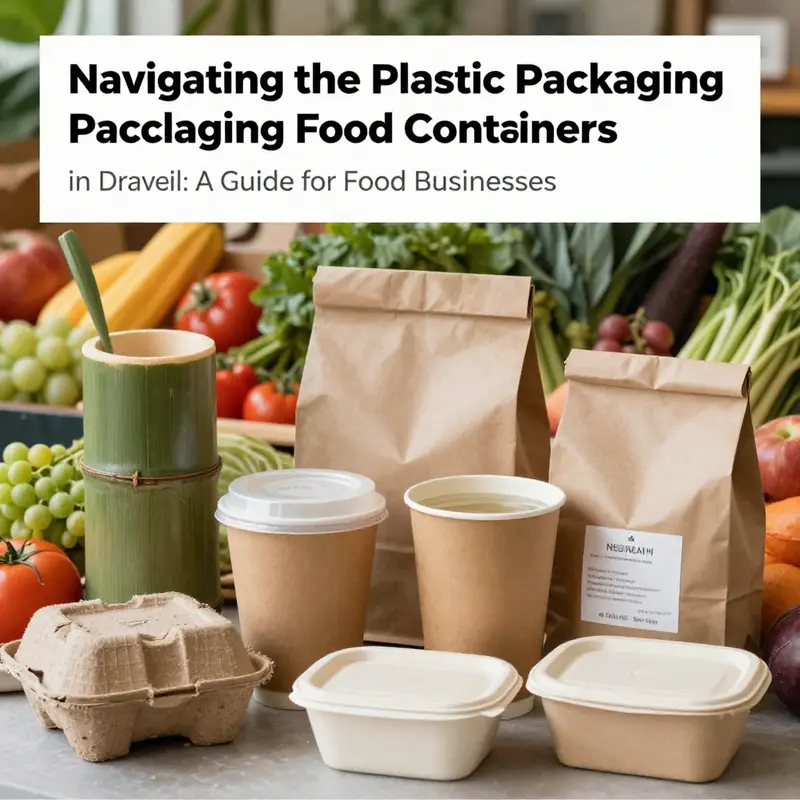
Draveil sits at a moment of transition that mirrors a broader shift across France and much of Europe. In the wake of regulatory action that began with a sweeping ban on certain single-use plastic items, including many takeout food containers, communities like Draveil are reimagining how meals travel from kitchen to table. The law driving this change is visible in every restaurant window and market stall alike: packaging that was once the default material is now scrutinized for its lifecycle, its end of life, and its hidden costs. In practice, the shift has been uneven. National policy moves swiftly enough to shutter the easier paths, yet local adoption requires a new mix of logistics, consumer habits, and supplier readiness. The result is a landscape where the old yellow boxes and foam clamshells that once dominated street food are increasingly replaced by durable alternatives—paper, wood, and polypropylene-based systems designed for reuse or better end-of-life outcomes. The regulatory backdrop is clear and consequential: polystyrene has faced prohibitions, and items containing plastic must carry explicit environmental warnings if mismanaged. Draveil, like many French towns, is learning to translate this regulatory pressure into real-world solutions that do more than simply check a compliance box. They must also improve cleanliness, reduce waste, and maintain the quality and safety of the foods being transported and stored. The practical challenge centers on shaping a packaging ecosystem that is both attractive to businesses and reassuring to customers about hygiene and convenience. The Paris pilot program, widely discussed in planning circles, illustrates a concrete path forward: a deposit-and-return system for reusable containers, with a defined time window for returning items. While this approach is city-led, it offers a blueprint that smaller municipalities can adapt. Draveil could, in time, mirror such a model in a scaled-down form that leverages local markets and neighborhood eateries. The idea is not merely to replace one material with another, but to create a closed-loop system in which containers circulate until they are no longer usable, at which point they are remanufactured or recycled. In practice, the shift to eco-friendly packaging options means better end-of-life outcomes for materials that previously littered streets and waterways. They must be designed for multiple uses, easy cleaning, and straightforward sorting. This is not a luxury; it is a practical response to the realities of urban waste collection, which benefits from predictability and standardization. A critical element of this transition is the availability of packaging that is both functional and compatible with existing food safety and cold-chain requirements. Cold-chain integrity depends on barrier properties, moisture control, and thermal stability. Reusable systems can meet these demands if the containers are designed for repeated washing and reuse without degrading performance. In practice, this means designing systems with user-friendly collection points, rapid refill or replacement cycles, and transparent pricing that incentivizes customers to participate. The economic calculus for local businesses is nuanced. Initial up-front costs for durable containers may be higher, but those costs are offset over time by reduced purchase frequency, less packaging waste, and potential benefits from participation in municipal or regional sustainability programs. In this sense, the Draveil context benefits from the broader European momentum toward packaging redesign—an approach that treats packaging as a product with a distinct lifecycle rather than as a disposable afterthought. The conversation around packaging in Draveil also dovetails with shifting consumer expectations. People increasingly want to know that the packaging they receive is not simply inert waste, but a component of a responsible system. Customers are more receptive when they can see and understand the return pathways, the deposit structures, and the environmental reasoning behind these moves. Education plays a silent but decisive role. Short, practical communications in markets, schools, and public venues can demystify the reuse cycle and foster trust. When people understand that a container in their hands is part of a loop that returns to a refurbisher, or to a certified recycler, they are more likely to participate. The interplay between regulation and consumer behavior is a dance of incentives and clarity. In Draveil, as in other towns, local authorities can catalyze this process by coordinating with small businesses, market organizers, and community groups to map routes for reuse and to pilot small-scale experiments. A practical example is the trial of paper-based packaging systems that mimic the performance of plastic containers without the end-of-life baggage. Paper and wood-based options have progressed to offer moisture resistance, cool storage compatibility, and stackability for display in stores. They also render waste streams more straightforward for residents who sort by material type. For small and medium-sized enterprises, the availability of supply options matters as much as the regulatory signal. Packaging suppliers in the region are increasingly offering lines that pair with reusable programs or with standardized recyclable materials. The shift to eco-friendly packaging often requires changes in labeling, branding, and product information offered to customers. It is common to see packaging that carries clearer recycling instructions, or messaging that emphasizes the container’s reusability and the system in which it operates. In Draveil, this combination of regulatory push, market adaptation, and consumer awareness could begin with a modest set of neighborhood pilots. A host of opportunities exists for local markets, small eateries, and municipal facilities to test reusable containers in a controlled way. Temporary pilot programs can collect data on return rates, cleaning and sanitization requirements, and logistical costs. The learning from such pilots informs a longer-term strategy about whether to scale, adjust, or diversify approaches. The local context also invites attention to the types of packaging that align with refrigerated foods. Cold-chain integrity depends on barrier properties, moisture control, and thermal stability. Reusable systems can meet these demands if the containers are designed for repeated washing and reuse without degrading performance. This is where the broader market for eco-friendly materials becomes relevant. Biodegradable and compostable options have gained traction, yet they require careful attention to composting infrastructure, labeling, and consumer behavior. In some cases, compostable materials can be a step forward, but only if the local waste streams are equipped to handle them. Elsewhere, reusable options may offer more robust long-term benefits, particularly in urban and peri-urban settings where the density of eateries and markets makes a depot-and-return model more viable. In practice, the economics of reuse depend on the efficiency of the recovery system and on consumer participation. If customers perceive the process as simple and fair, they will support higher deposit levels and faster returns. If not, containers may sit idle, undermining both environmental and financial goals. The design and procurement processes for packaging in Draveil can be oriented toward modularity and interoperability. In other words, packaging should be adaptable across different food formats, surfaces, and temperature requirements, while also fitting neatly into the town’s waste management infrastructure. This approach reduces the risk that a new packaging choice becomes a one-off experiment that fails to integrate with existing systems. To reinforce practical connectivity, consider a tangible packaging option that many local suppliers already produce: a kraft paper octagonal container with a lid. Such a box offers better recyclability than coated plastics, aligns with consumer expectations for compostability in some contexts, and can be sourced through regional distributors. For readers who want a sense of real-world options, a sample option is accessible here: kraft paper octagonal box with lid. This example illustrates how a single design can be repurposed across different menu formats, from salads and sandwiches to warm meals, while still providing a robust barrier and stackable footprint in retail settings. The broader narrative in Draveil, however, remains one of gradual, collaborative progress rather than a single transformative overhaul. Policymakers, restaurateurs, and households must participate in a shared learning process. Transparent communication about the costs, benefits, and timelines of transitions helps moderate expectations. It also invites communities to contribute ideas about local recycling streams, cleaning standards for reusable containers, and incentives that encourage participation. The long arc of these changes points toward a future where plastic packaging is not simply banned but reimagined as a resource in a circular economy. The experiences emerging from larger urban centers can guide Draveil, while local experimentation ensures that solutions are practical and scalable within the town’s unique social and logistical fabric. In this sense, Draveil’s path is not a copy of any other city’s approach. It is a tailored response to regulations, supply chains, and community expectations that emphasizes durability, clarity, and cooperation. As the town evolves, so too does its packaging culture. What begins as compliance nudges can mature into everyday norms—containers that are designed for reuse, materials chosen for easiest recovery, and systems that reward participation. The result is not merely a compliance victory but a foundational shift in how food travels through Draveil—from kitchen to street and back again as a renewed, productive resource. For further context into wider European policy frameworks shaping these movements, see the EU plastic waste regulations. Additionally, the broader research literature outlines how edible packaging, reusable containers, and eco-friendly materials collectively contribute to reducing non-biodegradable waste and fostering consumer trust in sustainable food systems. The journey in Draveil, while local in scale, resonates with a continental ambition to reconstitute packaging as a finite part of a circular economy, rather than a disposable byproduct of modern life.
Draveil on the Frontline: How France’s Plastic Packaging Regulations Reshape a Small Town and Its Markets
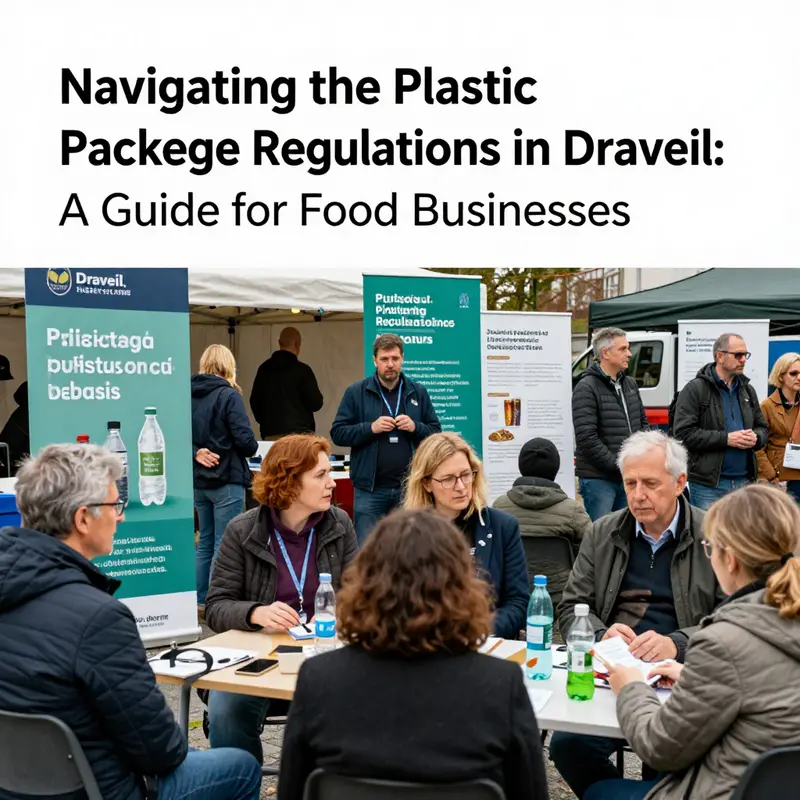
Draveil sits along the Essonne’s riverbank, a town where daily routines hinge on small shops, market stalls, and the rhythm of municipal life. Yet behind the familiar calendar of groceries, bakeries, and cafe tables, a regulatory tide has quietly altered the terms of everyday consumption. The chapter that follows traces how Draveil’s residents, retailers, and local officials have navigated a nationwide push to curb single-use plastics, a push that began in earnest with France’s 2020 ban on non-recyclable plastic packaging and intensified with EU-wide measures applied at the national scale. The changes in Draveil are not just about compliance; they reveal how a community negotiates values, costs, and future possibilities when the waste stream becomes a public matter rather than a private nuisance. They show how a town’s attention to packaging, what it is made of, how it is disposed of, and what must be displayed on the label, becomes a measure of civic identity and collective stewardship.
France’s regulatory landscape makes the local scene intelligible. The government moved decisively to phase out certain single-use plastic items, with the July 1, 2021, deadline marking a clear boundary between old habits and new practices. Across the country, producers, retailers, and consumers were pressed to shift away from polystyrene takeaway boxes and other non-recyclable packaging toward alternatives that could be recycled or composted more readily. For many small businesses in Draveil, the transition was not merely a matter of changing a few containers; it demanded rethinking supply chains, supplier catalogs, and even the way a simple lunch break is organized in a shop or cafe. As with many French towns, Draveil faced the challenge of aligning its local commercial reality with a policy that treats packaging as a shared resource rather than a private amenity. The national narrative also included extended producer responsibility schemes, which obligate producers to finance the end-of-life management of their packaging. This shift places more of the financial weight on manufacturers but also ties them more closely to the lifecycle of their goods, creating an incentive to reduce overall packaging and to invest in safer, more sustainable materials.
Within this framework, the social response in Draveil has tended to combine measured optimism with practical caution. Residents broadly supported efforts to reduce waste and curb pollution, especially after local campaigns highlighted the visible benefits of cleaner streets and better waste separation. Eco-conscious citizens and community groups have become visible participants in the urban fabric, attending meetings, volunteering in cleanup drives, and advocating for clearer labeling that explains how to dispose of different materials. What emerges from these collective efforts is a sense that environmental policy is not an abstract directive but something that reshapes everyday routines. Sorting waste, choosing recyclable packaging, and supporting retailers who make an effort to source sustainable materials are no longer niche concerns; they have become ordinary expectations in Draveil’s public discourse.
Yet the path to sustainable packaging in a town is not uniformly smooth. Many small businesses and local retailers reported higher costs when transitioning to compliant packaging alternatives, including biodegradable or reusable options. The prices for paper or plant-based containers can be higher than traditional plastics, and the supply chains, once dominated by plastics, have had to broaden to accommodate new materials. The financial strain is real for a shop with tight margins, a factor that complicates the political appeal of regulatory ambition. In Draveil, as elsewhere, there is a delicate balancing act between environmental aims and the practical realities of operating a small business. The need for reliable suppliers, predictable pricing, and consistent product quality becomes part of the political conversation, as much about economic resilience as about ecological responsibility. The local government, influenced by national policy and European trends, has sought to ease these pressures through education campaigns, information sessions, and by highlighting available alternatives that can reduce costs in the long run.
Education, too, has become a central instrument of policy implementation. Municipal campaigns have explained not only what must be avoided but why certain materials are preferred. The rationale goes beyond aesthetics; it includes life-cycle thinking, how much energy is consumed to produce a single-use plastic container compared with a reusable or recyclable alternative, and how waste separation helps recover resources rather than simply filling landfills. In Draveil, schools, libraries, and community centers have hosted sessions on waste reduction, the value of local recycling streams, and how residents can participate in or even help organize neighborhood exchanges of reusable containers. The educational emphasis has a dual effect: it improves compliance and cultivates a sense of stewardship among younger residents who will inherit the town’s waste management infrastructure. When the public understands the chain from packaging to disposal, attitudes begin to shift from a mindset of personal duty to a collective commitment, and the language of policy becomes part of everyday conversation. That transformation appears in the town’s markets, where customers increasingly demand products packaged in materials that align with local waste streams, and in the council meetings where questions about cost-sharing, supplier diversification, and educational outreach dominate the agenda. The net effect is a more mature relationship between residents and their governing institutions, two important aspects of sustaining momentum while policy supports a fair and practical path to sustainable consumption.
In closing, Draveil offers a microcosm of how communities adapt to France’s and Europe’s packaging reforms. It shows a town negotiating costs, changing shopping practices, fostering collective learning, and embracing a longer-term view of waste as a public resource rather than an individual burden. The result is not a monolithic decree but a negotiated, evolving practice that reflects local realities while staying aligned with a shared European ambition: to reduce the footprint of packaging on our streets and in our ecosystems, without sacrificing nourishment, convenience, or economic vitality. The Paris example of reuse-deposit systems hints at future possibilities for Draveil and towns like it, where collaboration between municipal leadership, retailers, and citizens can translate policy into daily life that feels both practical and principled. For those seeking a concrete image of how packaging can be redesigned around user behavior and local infrastructure, consider sustainable packaging options and how they could be integrated into local retail spaces as a visible symbol of this shift. The external resource is an example of a container that fits into a broader strategy of rethinking disposal and reuse. This is not merely a change of materials; it is a change in collective habits and city life alike, a shift that will define Draveil’s relationship with its waste streams for years to come.
Final thoughts
The regulations governing plastic packaging in Draveil present a substantial shift toward sustainability in the local food industry. As bubble tea shops, restaurants, and food trucks adapt to these changes, embracing innovative alternatives not only fulfills regulatory requirements but also caters to a growing environmentally-conscious consumer base. By fostering a community that prioritizes sustainable practices, stakeholders can contribute to a cleaner, greener future while thriving in their businesses.