
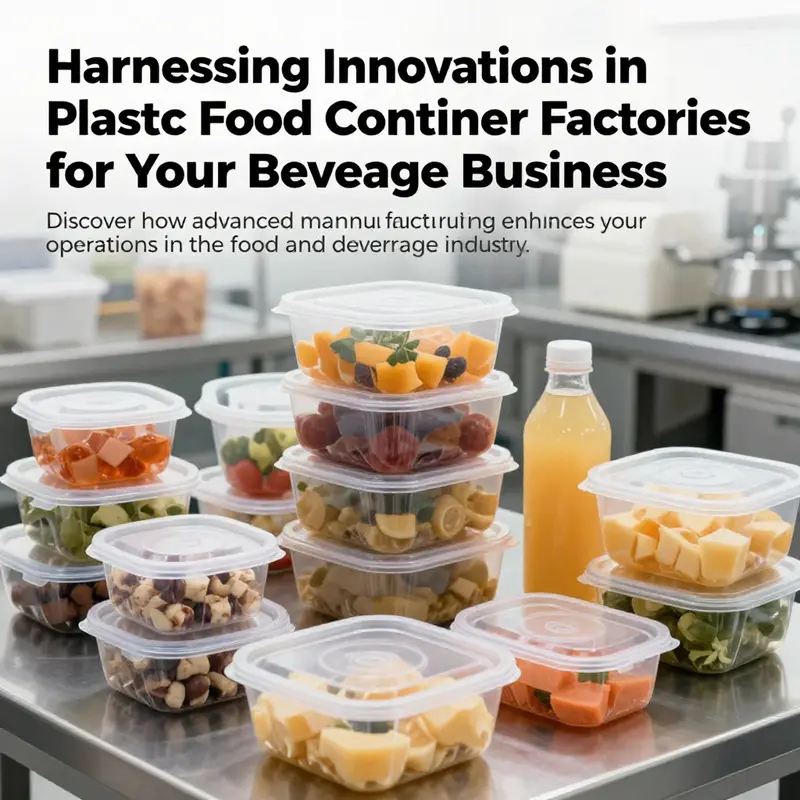
Plastic food container factories play a crucial role in meeting the diverse needs of businesses such as bubble tea shops, restaurants, food trucks, and catering services. Understanding supply chain dynamics, technological innovations, and market trends offers insights that empower you to choose the right packaging solutions. This article explores how these factories ensure quality, sustainability, and compliance with safety standards, ultimately supporting your business’s efficiency and success in a competitive environment.
From Resin to Rim: Navigating the Global Supply Chain Dynamics of Plastic Food Container Factories
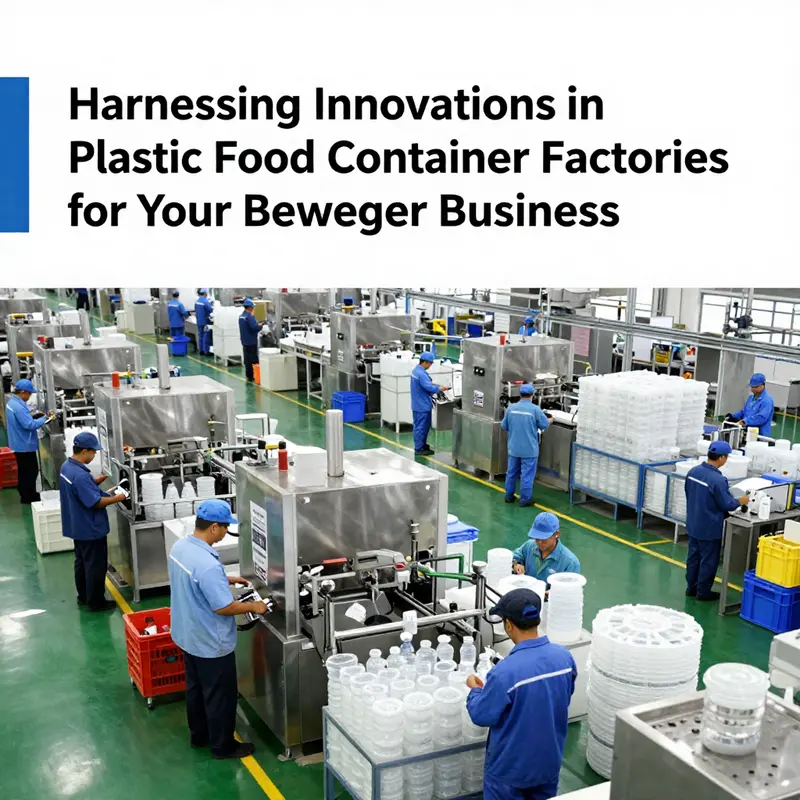
On the surface, a plastic food container factory might resemble a straightforward producer of boxes and lids. In truth, it sits at the center of a dense, liquidity-driven network that stretches across oceans and continents, guided by geography, technology, and high-stakes compliance. This chapter traces that ecosystem, focusing on how geographic specialization, manufacturing techniques, supplier selection, and regulatory expectations converge to shape the reliability and resilience of the end products that rest on benches in restaurants, schools, and homes around the world. It is a narrative of how the ordinary takeout box emerges from a web of decisions made long before resin is fed into a machine and long after the lid snaps shut on a finished batch.
Geography remains a primary force shaping the architecture of the supply chain. East Asia, and China in particular, has evolved into a vertically integrated hub for plastic food containers. Here, the logic of specialization and scale intersects with access to raw materials such as polypropylene, PET, and polystyrene—polymers that underpin a broad spectrum of consumer and commercial packaging. The advantage is not only raw material proximity but the ecosystem that grows around it: toolmakers, mold shops, color specialists, and quality-control labs that share the same regional gravity well. When a resin supplier and a plastic-fabrication facility sit within a short distance, the ripple effects are measurable. Lead times for critical components shrink, sampling cycles compress, and the ability to respond to shifting demand increases. The proximity dynamic can shave weeks off product development timelines, turning a long product concept into a tested, market-ready design with surprising alacrity.
Within China itself, this geographic clustering becomes more granular. Guangzhou, for instance, benefits from port access and a robust export infrastructure that accelerates the processing of orders destined for overseas markets. The city’s logistics network supports agile prototyping and small-batch production—a lifeline for startups that test new formats, sizes, or functions before committing to large-scale production. Proximity to shipping lanes, combined with a culture of rapid iteration, creates an environment where a design tweak can move from concept to physical prototype in under three weeks. This speed-to-market capability is increasingly valued as brands seek to establish a foothold in crowded categories such as meal containers, snack trays, and multi-compartment boxes. In other parts of the country, such as Wuhan, the equation tilts toward scale. Wuhan-based operations leverage regional access to PET and HDPE resins and related processing capabilities to drive high-volume output. The procurement advantage here is not merely lower unit cost but the ability to align supplier relationships with large requirements—an essential feature for distributors and retailers who demand predictable delivery at scale. The juxtaposition of agility in Guangzhou and scale in Wuhan illustrates a broader truth: the modern supply chain for plastic food containers thrives on a mosaic of capabilities rather than a single universal path.
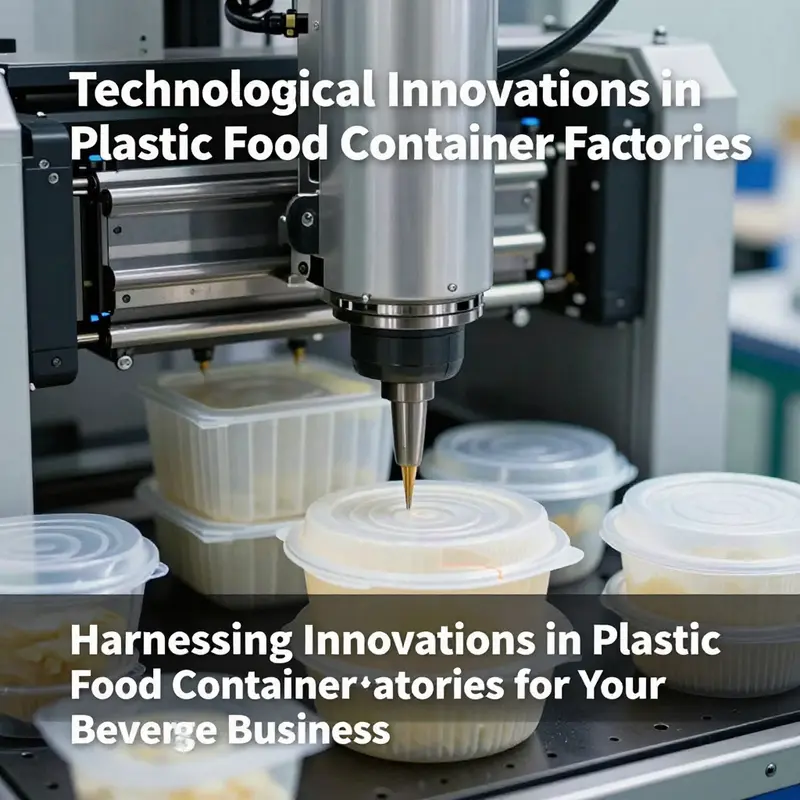
The manufacturing techniques at the heart of this network are equally telling. Injection molding and thermoforming are the primary engines that convert resin into the shapes that populate kitchens and takeout counters. Each technique has its own economics, tolerances, and functional attributes. Injection molding excels at producing precise, complex geometries with excellent repeatability, which is essential for leak-proof seals, secure lid-fitment, and reliable snap mechanisms. Thermoforming, by contrast, often offers superior throughput for large, simple profiles and can be more cost-effective for high-volume, single-wall products. The choice between these technologies is not a matter of one being superior to the other; it is a negotiation between performance requirements and the realities of tooling, material costs, and production cadence. In practice, many factories maintain both capabilities, selecting the method that best aligns with the product family’s intended use—ranging from microwave-safe, multi-partition meal boxes to sealed lunch containers with robust lids.
A critical benefit of geographic clustering is the reduction in component lead times. When a factory sits close to resin suppliers and local tooling workshops, lead times for molds and auxiliary components can be shortened by significant margins, often cited as reductions of up to 30%. Shorter lead times feed a tighter product development cycle, enabling testing phases that are more iterative and more responsive to customer feedback. For international buyers, this translates into faster time-to-sample, a feature that matters just as much as cost per unit. The modern buyer no longer evaluates a supplier solely on price or minimum order quantity; instead, a multi-dimensional assessment governs sourcing. Technical capability, compliance assurances, depth of customization, and transactional reliability are all weighed in a dynamic scoring system. A factory with in-house mold design and development teams gains a systemic advantage. The ability to modify existing molds or to create new ones within a narrow window—often 15–25 days—gives buyers the flexibility to respond to shifting brand specifications or regulatory expectations without prolonged downtime. It is not unusual to see full-service capabilities that include color matching, shape engineering, logo embossing, and graphic printing, all as part of a single engagement. In the modern market, differentiation increasingly hinges on such in-house capabilities rather than external outsourcing, because the more a factory can do in-house, the faster and more precisely it can align with a customer’s brand and functional requirements.
Compliance and safety standards form another axis along which these supply chains must operate. Food-contact applications demand material certifications that reassure buyers about safety and regulatory alignment. The FDA’s designation of compliant resins, the EU’s stringent material-contact regulations under 10/2011, and LFGB standards in Germany together shape a global baseline. SGS testing and other third-party verifications serve as independent validators of quality and safety. In practice, this means transparency across the supply chain: raw material certificates, process validation documents, batch traceability, and robust QA protocols that record every variation from resin type to molded geometry. Buyers—particularly those serving institutions, hospitals, or major foodservice networks—expect this level of documentation not as a luxury but as a prerequisite for doing business. The no-surprises ethos drives factories toward more rigorous internal governance and more formal collaboration with certification bodies. It is a shift from policing quality after production to designing quality into the process from the outset. That anticipatory approach reduces the likelihood of recalls, non-compliances, or last-minute production stoppages that erode margins and damage brand trust.
The supply chain is also a theater for strategic sourcing decisions that blend risk management with competitive advantage. Supplier selection has evolved beyond a single price bargain. Buyers now evaluate the vendor’s ability to deliver on a range of criteria: technical capability to meet exacting specs, compliance assurance that demonstrates ongoing adherence to safety standards, customization depth to support brand differentiation, and transactional reliability, including lead times, shipping performance, and post-sale service. It is common for successful suppliers to offer end-to-end capabilities, including in-house mold development, color engineering, surface finishing, and packaging optimization. This integrated approach reduces coordination overhead for buyers, accelerates decision cycles, and yields more predictable outcomes. In this context, the choice of a supplier is not simply a function of factory capacity but of the ecosystem the supplier can mobilize around a given project—an ecosystem that includes resin suppliers, mold makers, testing labs, logistics providers, and even regulatory consultants who help navigate regional requirements.
The human dimension of the supply chain should not be overlooked. The speed and reliability of this network depend on collaborative relationships built on trust, visibility, and shared risk. Small-batch trial orders act as critical learning loops, enabling a brand to test a new container concept or feature without incurring prohibitive upfront costs. The willingness of a factory to accommodate such pilots reflects not only manufacturing flexibility but also organizational culture—a factor that, in practice, differentiates good suppliers from excellent partners. The capability to adjust sizes, integrate brand logos, or tailor functional attributes such as microwave compatibility or freeze resistance is increasingly treated as a standard service rather than a premium add-on. The result is a supply base that can scale with a customer’s ambitions, delivering both the nimbleness required by startups and the reliability demanded by multinational distributors.
The case studies that dot the literature—though often focusing on specific industries or regional contexts—offer a useful lens for understanding how theory translates into practice. Real-world modeling demonstrates how policy settings, inventory management, and production policies interact to influence profitability and service levels under uncertainty. A representative example might model a factory’s decision-making framework using system dynamics to explore how resin utilization, finished goods inventory, and sales volume converge to determine profits. Such simulations emphasize the importance of policy levers that govern capacity utilization, procurement lead times, and the balance between make-to-stock and make-to-order strategies. They also illustrate the value of enabling insights: the ability to forecast demand, test alternative sourcing strategies, and validate assumptions with expert judgment and actual operational data. In a world where disruption—whether from supply shortages, tariff shifts, or logistical bottlenecks—can ripple through a network, such modeling becomes a strategic asset. It translates abstract concepts of supply chain resilience into actionable playbooks that managers can execute when markets move quickly.
Within this broader narrative, the role of sustainability has moved from a peripheral concern to a central criterion for supplier selection and process design. The market’s growing appetite for materials that balance performance with environmental responsibility exerts pressure on container designers and manufacturers to optimize resin usage, reduce waste in molding cycles, and adopt greener packaging formats when feasible. Even as standard disposable items remain essential for foodservice and consumer use, there is increasing interest in multi-partition designs that optimize space and material use, as well as microwave-safe and freeze-resistant properties that enhance durability and reusability in certain contexts. The trend toward eco-friendly or recyclable configurations shapes the product development agenda and, in turn, the supply chain’s configuration. Factories that can demonstrate circularity in their processes—through better resin recovery, more efficient injection cycles, and robust end-of-life solutions—will be better positioned to meet evolving regulatory expectations and consumer preferences. The ability to align technical prowess with environmental stewardship becomes a differentiator in a crowded marketplace, where the cost of compliance and the risk of disruption are nontrivial.
For buyers, the implication is clear: a resilient supply chain for plastic food containers is built not merely on capacity but on a holistic capability—an integration of proximity to feedstock, agile manufacturing, rigorous compliance, and adaptable design services. The most successful partnerships blend the speed of Guangzhou’s prototyping enthusiasm with the scale and reliability of Wuhan’s mass production, anchored by a shared commitment to safety standards and rigorous testing. They are characterized by the capacity to transform a concept into a certified, market-ready product within a cadence that keeps pace with demand across global channels. In this environment, a supplier’s value proposition extends beyond the box and its lid. It encompasses the ability to manage risk, to deliver on exacting specs, and to participate in a brand’s longer-term product roadmap. The buyer, conversely, becomes a co-architect of a packaging solution, shaping the material, geometry, and finishing processes to fit specific use cases while maintaining a robust traceability and compliance profile.
The evolution of this supply chain is not uniform; it contains pockets of regional sophistication—while continuing to rely on a global frame of reference. Localized capabilities in resin procurement, toolmaking, and QA testing co-exist with international standards and cross-border logistics that enable firms to reach far-flung markets. The net effect is a dynamic, adaptive system that can absorb shocks and respond to evolving consumer expectations with a combination of scale, precision, and ingenuity. The supply chain is a dynamic conversation rather than a static pipeline. Its health depends on the continuous alignment of engineering excellence with regulatory discipline and with the customer’s strategic aims. The modern plastic food container factory thus embodies the synthesis of geography, technology, and governance—a synthesis that ultimately structures everyday experiences, from the takeout bag to the shelf at a science-lab cafeteria.
To illustrate the practical side of this synthesis, consider how a buyer might navigate the early stage of a project. The buyer begins with a clear specification of the container’s intended use: the required material properties, the necessary sealing performance, and any regulatory constraints tied to the markets of distribution. The factory then evaluates whether injection molding or thermoforming best meets those specs, considering the expected production volume, the need for multi-partitions, and the desired finish for branding. If logo embossing or color matching is integral to the product identity, in-house capabilities can significantly shorten the design-to-production cycle. The path from concept to samples often unfolds in an iterative loop: design refinement, mold modification, initial trial runs, and validation tests. Each loop yields learning that informs subsequent iterations, reducing risk and expediting eventual scale-up. When a partner can demonstrate reliable supply chain visibility—real-time production status, batch-level traceability, and proactive communication about potential delays—the buyer gains confidence to commit to larger volumes and longer-term contracts. In this landscape, small innovations—whether a slightly different lid geometry to improve leak resistance or a modified wall thickness to optimize microwave performance—can become market differentiators if carried through a robust development and testing process. The factory’s role, in short, is to translate design ambitions into reliable, certifiable products and to do so with an attention to speed and repeatability that today’s markets demand.
As the narrative of this supply chain unfolds, a single message stands out: resilience is built through capability. It is the capability to move swiftly from idea to prototype, to verify compliance, to adjust design parameters, and to scale production without sacrificing quality. It is the capability to manage the dual pressures of cost parity and performance demands, to ensure that a container keeps its integrity through freezing, microwaving, and daily wear-and-tear, while also meeting global safety standards. It is the capability to navigate a world where regulatory scrutiny is intensifying, where consumer expectations are evolving toward more sustainable packaging options, and where the logistics backbone must keep pace with the speed of digital demand signals. In this sense, the supply chain for plastic food containers is less a linear chain than a living system—one that requires constant calibration across regions, processes, and partnerships to stay aligned with market realities and regulatory guardrails.
For readers seeking concrete illustrations of how these dynamics play out in practice, it is worth noting that the market reward for a well-integrated supply chain is measured in both efficiency and reliability. High-volume, low-cost production is valuable, but only when it is matched by dependable compliance and the ability to respond quickly to shifts in demand. The most effective suppliers are those that can provide end-to-end services—from mold creation and color customization to packaging optimization and logistics planning—while also maintaining rigorous quality assurance and transparent documentation. These capabilities enable buyers to pursue not just better margins but also greater market resilience in the face of disruption. The result is a more predictable operational environment for manufacturers, distributors, and the end users who rely on durable, food-safe containers every day.
To keep this narrative grounded in practical realities, one can imagine a buyer seeking a new line of sealed, three-partition containers with improved heat-retention characteristics. The project would involve evaluating candidate injection-molding partners with capabilities for precise wall thickness control, reliable lid closure systems, and compatibility with food-grade resins. The supplier would be assessed on their mold-development velocity, their ability to offer color and branding options, and their track record in meeting safety certifications. The questions would extend to supply-chain risk: does the factory have contingency plans for resin shortages, and can they adjust production schedules without compromising quality? Can they demonstrate traceability across raw materials, intermediates, and finished goods? The answers illuminate not only the feasibility of the project but the strategic relationship that underpins it. In this way, the supply chain becomes a strategic asset rather than a mere operational backbone—a differentiator that enables brands to deliver consistent performance while sustaining growth.
As this exploration closes, the reader should carry away a sense of how deeply intertwined the fate of a plastic food container with its wider supply chain is. It is not enough to ask whether a factory can produce a given shape or whether the unit price is competitive. The essential inquiry concerns the factory’s ability to synchronize technical excellence with regulatory rigor, to maintain a robust supply network that can weather volatility, and to partner with customers in ways that accelerate time-to-market without compromising safety or quality. In a world where takeout culture and home meal-prep habits continue to evolve, the containers that carry meals across borders will remain enduring touchpoints of daily life. The supply chains behind them—geographically dense, technologically sophisticated, and governed by a shared commitment to safety—will continue to adapt, innovate, and scale in tandem with the needs of global consumers.
Internal link note: For readers interested in how packaging formats beyond plastics intersect with the broader takeout ecosystem, a practical example of adaptable single-use packaging in a kraft-based format can be found here: disposable kraft paper soup cup with paper lid. This example underscores the market’s demand for flexible, efficient solutions that bridge traditional and innovative packaging approaches, while keeping safety and sustainability at the forefront.
External resource: For a comprehensive market perspective on the dynamics described, see the external resource on the plastic food container market at Markets and Markets, which provides deeper context on growth drivers, competitive landscape, and regulatory trends shaping the industry: https://www.marketsandmarkets.com/Market-Reports/plastic-food-container-market-1868.html
null
null
Tides of Scale and Substance: Market Dynamics and Economic Impact of China’s Plastic Food Container Factories
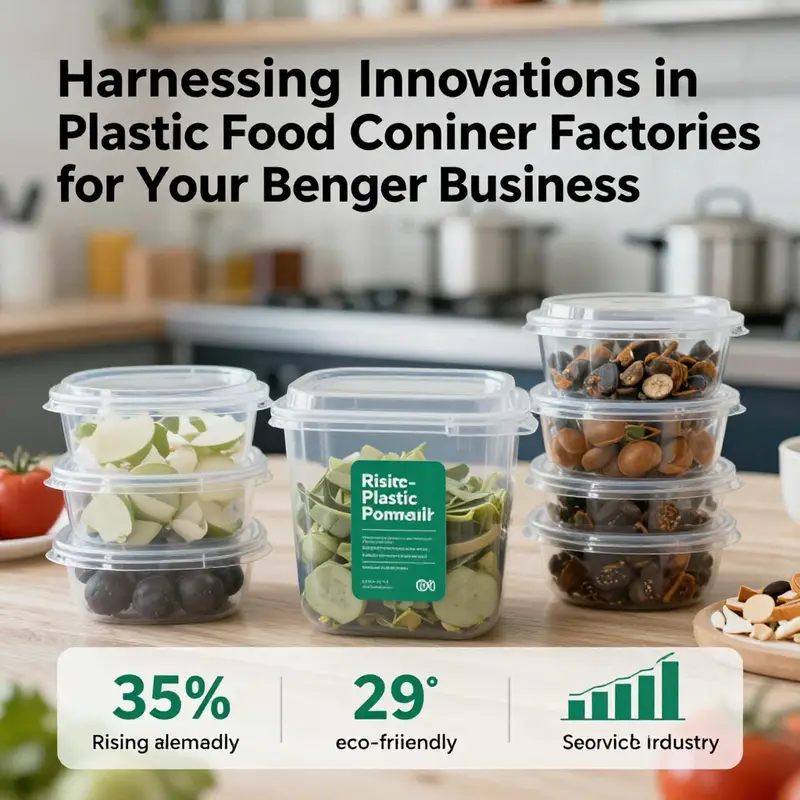
The global appetite for convenient, affordable, and safe food packaging has rewritten the map of modern manufacturing, and plastic food container factories in China sit at the center of that dynamic. In 2023, the market for plastic food containers stood at roughly 38.6 billion dollars, a figure that has not merely grown in size but evolved in character. What was once described largely in terms of raw capacity and cost competitiveness now unfolds as a narrative of integrated ecosystems, rapid technology upgrades, and a nuanced balance between efficiency and safety. The growth is not random; it is emergent from clusters that knit together polymer sourcing, advanced molding and forming technologies, rigorous testing, and streamlined export logistics. When one thinks of the modern plastic container, one should think not only of a single factory but of a regional geography that enables scale, customization, and global reach with remarkable speed.
In China, the most mature and influential hubs sit along the coast and inland corridors that connect port cities with dense manufacturing belts. Guangdong, Zhejiang, Jiangsu, and neighboring provinces have built ecosystems where every stage of production is synchronized. Polymer sourcing feeds directly into automated injection molding and thermoforming lines, which in turn feed into assembly, quality control, labeling, packaging, and logistics. The advantage is not simply one of labor costs or a single technology, but a holistic pipeline that reduces lead times and lock-in costs for buyers across food service, retail, and e-commerce. Factories in these regions routinely report monthly output in the hundreds of thousands and, in some cases, reach into the low millions. The economics of such scale translate into unit costs that can dip toward the sub-cent range, with educationally accessible price points, even for complex, multi-partition meal boxes or microwave-safe containers.
A striking feature of these Chinese manufacturing hubs is their capacity for customization without sacrificing volume. The same facilities that produce standard single-layer or double-layer meal boxes can also deliver multi-compartment containers, takeout boxes, and sealed containers with precision lids tailored to a client’s brand. This flexibility is underpinned by the integration of powerful automation with agile design workflows, enabling small-batch trials and large-scale production to occur within the same facility ecosystem. The practical effect for buyers is meaningful: a supplier can iterate on an idea—perhaps a new three-part partition for a health-conscious meal or a container designed to perform reliably in cold-chain contexts—while still meeting aggressive MOQs that are approachable for startups and smaller distributors. In many cases, MOQs can be as low as a hundred pieces, making entry into the market less daunting for new ventures and enabling more vibrant competitive dynamics across the supply chain.
The economics of cost are influenced by a lattice of inputs that begins with resin availability and procures through to the finished product. Domestic resins, including HDPE, LDPE, PP, and PS, provide a degree of cost insulation by reducing the need for long-haul import commitments. This domestic sourcing can lower material input costs by as much as a quarter relative to offshore procurement, a margin that compounds as production scales. For buyers, the translation of this cost structure is not simply lower price tags; it also implies greater bargaining power around quality controls, packaging aesthetics, and the scheduling of production runs that align with demand waves—from school cafeterias reopening to the surge of takeout orders during peak summer seasons.
Beyond raw materials, the machinery that underpins capacity in these clusters has become a market differentiator in its own right. Automated injection molding lines, precision tooling, and inline quality checks reduce variability and improve repeatability. When factories can push millions of units per month with a tight tolerance, they create opportunities for standardized specifications—leak-proof seals, freeze resistance, and microwave compatibility—that broaden a product’s usability across foodservice and consumer markets. This reliability matters, because food-contact packaging must satisfy a suite of safety and performance benchmarks that are increasingly prioritized by brand owners and retailers who must demonstrate responsible sourcing, consistent quality, and safety in every shipment.
Standards and certifications are a cornerstone of credibility in this market. Leading suppliers commonly align with international food-safety frameworks, such as FDA 21 CFR for materials intended for the U.S. market, EU Regulation 10/2011 for materials in contact with food, and LFGB for German-speaking markets, in addition to SGS testing protocols. This triad of compliance signals a robust capability to operate across borders, and it reassures customers that products not only perform but meet the highest safety expectations demanded by global supply chains. The ability to clearly label products as “food-grade PP” and to certify through recognized testing bodies is not merely a regulatory requirement but a reputational asset in a market that values traceability and accountability as much as price.
These certifications dovetail with an extraordinary degree of transparency in the supply chain. Buyers can verify test reports, confirm the presence of leak-proof features, demonstrate resistance to freezing, and verify microwave suitability. They can also validate branding and customization options, such as logo embedding, size adjustments, and function-specific modifications—features that are increasingly important as consumer expectations shift toward convenience without compromise in safety. The result is a marketplace where quality and customization are not trade-offs but concurrent capabilities that help Chinese factories compete with global suppliers on both price and performance.
The market’s growth trajectory is not immune to the broader pressures shaping packaging practices in the 2020s. Sustainability concerns and regulatory scrutiny are reframing what constitutes acceptable materials and end-of-life options. A growing segment of buyers seeks packaging that aligns with circular economy principles, favoring recyclable materials and designs that minimize environmental footprint. In response, the industry has stepped up efforts to diversify materials—PP, HDPE, and other polymers that retain performance while improving recyclability—and to explore composite or alternative materials where appropriate. The shift toward environmentally conscious packaging is not a single trend but a structural turn in product development, procurement, and supplier selection. This has important implications for Chinese factories, which must balance the economics of scale with the evolving preferences of customers who increasingly demand sustainability alongside safety and price efficiency.
The coastal and inland clusters have thus nurtured an ecosystem where scale, speed, and safety converge. Proximity to major shipping hubs—Guangzhou Nansha, Qingdao Qianwan, Shenzhen, Ningbo—reduces lead times and enhances export reliability. The geographic advantages translate into logistics savings that can shorten the time-to-market by as much as fifteen percent, a meaningful advantage in fast-moving foodservice and retail channels. When a buyer places a bulk order across multiple SKUs, the ability to consolidate shipments and optimize routing becomes a competitive edge. This logistical leverage, coupled with competitive resin costs and advanced manufacturing capability, underpins the global competitiveness of Chinese plastic container factories and helps explain why the country remains a central node in the international supply chain for packaging.
The conversation around market dynamics must also acknowledge the broader economic and policy environment. Low MOQs democratize access for startups and regional distributors, enabling experimentation with new formats, logos, and functional features. This access is crucial in a market that prizes speed-to-market and design flexibility. Yet, it also introduces a level of risk management to buyers who must ensure that supplier capacity and lead times align with their demand forecasts. The ability of suppliers to absorb shocks—whether from raw material price swings, regulatory shifts, or trade frictions—depends on their diversification of inputs, ongoing automation investments, and robust quality management systems. In practice, this means that the strongest players are those who continuously optimize the balance between capacity utilization, inventory held for trials and new product introductions, and the reliability of on-time deliveries.
As buyers navigate these dynamics, they increasingly leverage digital channels to identify credible manufacturers and verify compliance. Online marketplaces and industry portals offer filters for “Verified Supplier” statuses, comprehensive testing reports, and evidence of certifications. Yet the value of these digital tools depends on the integrity of the information behind them. For this reason, buyers place a premium on transparent documentation—material safety data, test certificates, process validation records, and clear statements on product specifications. They also expect consistent supply relationships, not just occasional orders, and they look for partners who can scale up to meet rising demand while honoring commitments to safety and quality. In short, the modern plastic container market is not just about the lowest price; it is about dependable delivery, rigorous safety performance, and a demonstrated ability to evolve with customer needs.
From the perspective of end users—restaurants, retail chains, schools, and households—the impact of these factors is the reliability of everyday packaging. An economical, well-made container translates into reduced waste through dependable lids and leak-proof designs. It supports efficient food service operations, whether in a bustling urban cafeteria or a drive-through line that must move quickly without compromising safety. It also enables brands to project a consistent image, thanks to the potential for branded logos and customized configurations that do not sacrifice functional performance. In every case, the chain from raw resin to final consumer experience is a testament to the industrial clusters that sustain this market and to the strategic choices that buyers and manufacturers make along the way.
Yet the path forward is not without its tensions. As sustainability becomes more central, manufacturers confront both the regulatory expectation and the consumer demand for eco-friendly options. This means continuing to explore recyclable materials and designing products with end-of-life in mind, while preserving the functional requirements of food-contact packaging. It also means investing in capabilities that reduce waste in the manufacturing process itself—improved material utilization, waste heat recovery, and smarter quality-control cycles that minimize scrapped components. The long view suggests a packaging industry that remains cost-competitive and reliable, but that also embraces material innovations, smarter logistics, and more transparent sustainability reporting. In this sense, the market trends described here are not episodic; they reflect an ongoing recalibration of what it means to deliver safe, affordable, and convenient packaging at scale in a global economy that increasingly prioritizes environmental responsibility.
For readers who want to explore practical pathways within this landscape, consider the opportunities that arise when a buyer leans into networks that emphasize both performance and a sense of shared responsibility. A thoughtful packaging partner can offer more than a product; they can provide a collaborative platform for design iteration, certification verification, and compliance assurance that helps brands stay ahead of regulatory curves while still achieving the scale that markets demand. In short, the current market is a story of convergence—of technology and logistics, of regulatory rigor and consumer needs, and of local manufacturing strength feeding global consumption. The result is a dynamic that rewards efficiency without compromising safety, scale without sacrificing customization, and cost discipline that aligns with sustainability ambitions.
In this context, there is value in recognizing how buyers can decide where to source. The clusters in Guangdong, Zhejiang, Jiangsu, and beyond provide a dependable backbone for global procurement, supported by a track record of compliance, certification, and performance. The fear that large-scale production means a loss of flexibility has diminished as automation and flexible tooling make it possible to switch formats quickly, respond to new branding requests, and adjust specifications for different markets. The market’s future will likely be shaped by a continued emphasis on customization at scale, a steady improvement in recyclability and end-of-life management, and a growing emphasis on transparency across the supply chain. All of these elements reinforce the central premise: that the plastic food container factories of China have evolved into an integrated system capable of delivering safety, value, and innovation in a rapidly changing world.
To illustrate how buyers can engage with this landscape in practical terms, consider the role of sourcing platforms that allow buyers to filter for suppliers with established shipping records, extensive testing documentation, and explicit declarations of food-grade materials. Such platforms help ensure that the procurement process begins with a foundation of credibility and safety. They encourage buyers to move beyond price alone and to assess the total value of a supplier’s offering, including lead times, customization capabilities, and the assurance that the product meets diverse regulatory requirements across markets. The result is a procurement approach that reduces risk, improves predictability, and aligns with a business strategy that prioritizes quality, safety, and responsible stewardship of the packaging supply chain.
For readers seeking to connect with practical exemplars of this trend, one can consult the broader ecosystem of packaging suppliers that emphasize eco-friendly and recyclable packaging options. The shift toward environmentally mindful packaging is not simply a moral imperative; it is a business strategy with real implications for cost structures, supply chain resilience, and brand perception. An example of this ongoing shift is the expansion of options in kraft-based, recyclable, and compostable packaging formats, which co-exist with traditional plastic solutions to provide a broader spectrum of choices for foodservice operators and retailers. The convergence of these options underscores a fundamental point: the market rewards innovation that preserves performance while offering clearer pathways to sustainability.
As the global packaging market continues to evolve, expect to see further consolidation around capabilities that enable rapid product iteration, tighter supply chain coordination, and stronger compliance profiling. In particular, suppliers who invest in end-to-end quality control, traceability, and transparent reporting will be better positioned to meet evolving regulatory demands and customer expectations. Meanwhile, buyers who adopt a holistic sourcing approach—evaluating not only price and lead time but also environmental impact, safety certifications, and long-term supply continuity—will extract greater value from their supplier relationships. The chapter’s throughline is clear: market trends in plastic food containers are driven by scale and safety, but the most resilient players will be those who marry these strengths with sustainability, transparency, and flexible design.
Internal link note: for readers interested in examples of eco-friendly packaging options, a practical resource in this space can be found at this page about Kraft paper packaging options. eco-friendly Kraft paper packaging.
External resource: for additional regulatory guidance on materials intended for contact with food, see the FDA’s packaging guidance and food-contact materials resources. FDA packaging guidance.
Final thoughts
The importance of plastic food container factories extends beyond mere supply; they are vital partners for businesses across the food and beverage industry. By understanding supply chain dynamics, embracing technological innovations, and staying informed about market trends, businesses can leverage these factories to enhance their efficiency and sustainability practices. As the demand for quality and eco-friendly packaging solutions continues to rise, aligning with the right manufacturing partners becomes essential for achieving your business goals.