
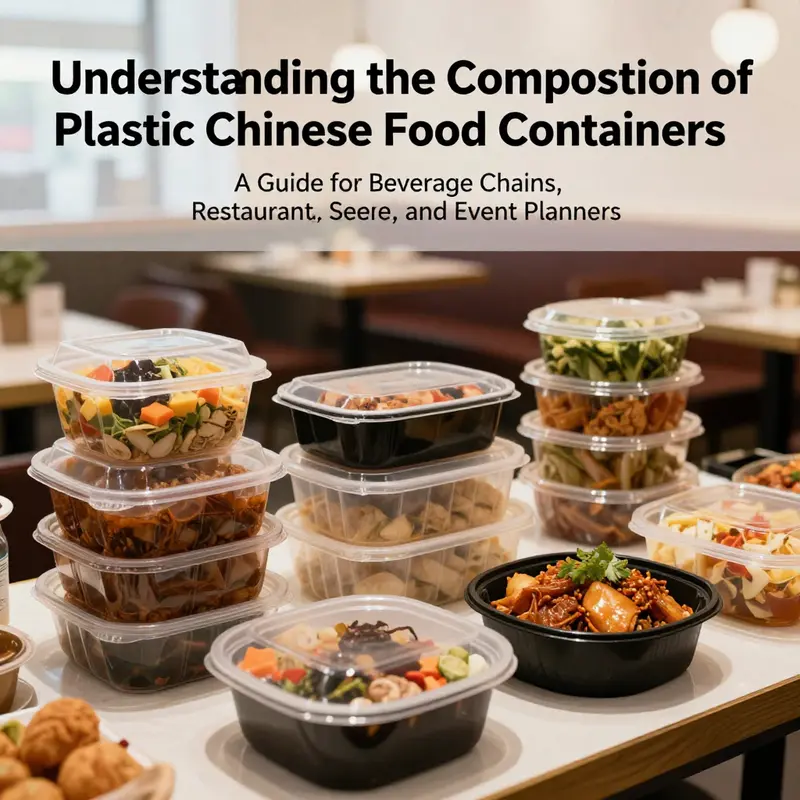
Plastic Chinese food containers are ubiquitous in the food industry, favored for their strength and versatility. But what exactly are they made of? This article aims to dive deep into the composition of these takeout staples, starting with their core material, polypropylene. As we explore various aspects of plastic containers, this guide will cover essential safety standards and regulations, and ultimately discuss their environmental impact, ensuring that food service professionals can make informed decisions about their use.
The Hidden Anatomy of Takeout Might: What a Plastic Chinese Food Container Is Made Of and Why It Matters
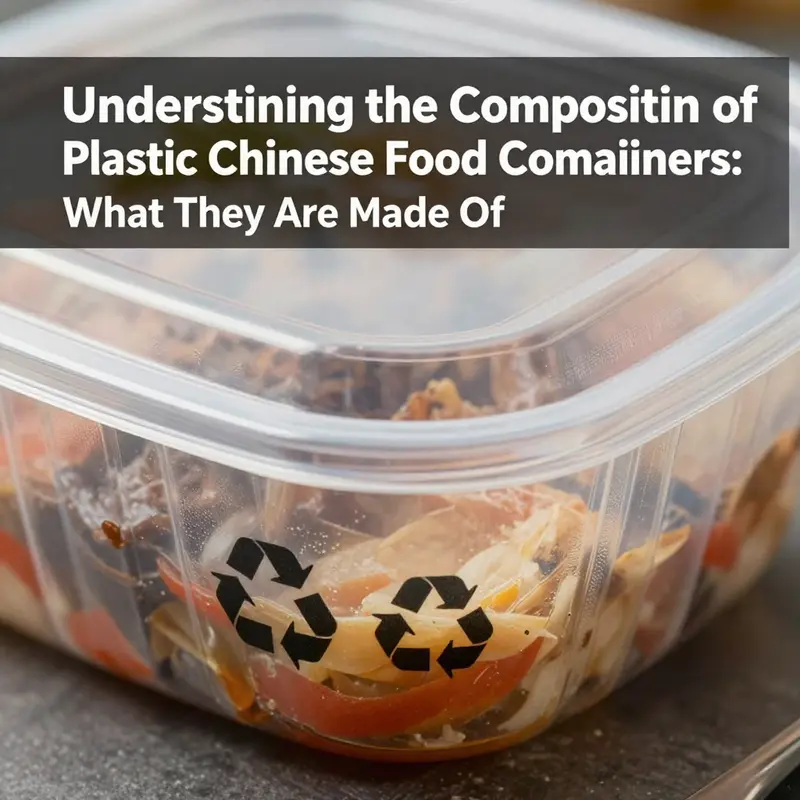
The takeout box that arrives steaming with soy-sauce aroma and the quiet clatter of chopsticks is more than a simple vessel. It is a carefully chosen material system, engineered to balance heat, strength, safety, and convenience. When one peels back the layers of these familiar containers, a single story emerges: polypropylene, or PP, dominates the landscape of plastic Chinese food packaging. The material’s popularity rests on a set of interlocking properties that make it especially suited to the rhythms of modern dining—quick-service kitchens, fast delivery, and the microwave. PP is not the only option present in the wider world of plastic food containers, but it is the backbone of most takeout boxes. The symbol on the bottom—a triangle with the number 5 inside—identifies polypropylene and serves as a quick cue for recyclers and consumers alike. This numeric code is more than a label; it is a compact map of safety and reuse potential that has become a practical shorthand in kitchens and households around the world.
Polypropylene is a thermoplastic polymer that blends resilience with warmth tolerance in a way that suits hot meals and rapid reheating. In practice, this means a typical Chinese takeout container made from PP can handle the rise of steam and the pressure of a hot, oily dish without warping, cracking, or leaching unacceptable amounts of residuals when used as intended. The material’s high heat resistance—often cited around 160°C (320°F)—is not a guarantee that every dish can be heated directly from the fridge to the microwave, but it does establish a robust safety margin for many common takeout scenarios. The inherent lightness of PP makes containers easy to stack, transport, and portion, which translates into efficiency for busy restaurants and convenience for diners who want a box that travels well and feels sturdy in the hand. In short, the everyday reliability of PP underpins the practical promise of a takeout meal that travels from kitchen to doorstep without turning into a sagging, oily mess.
The microstructure of PP and its additives tells a deeper part of the story. PP is semi-crystalline, a characteristic that gives it a balance of stiffness and toughness. This balance becomes particularly important in the context of a hinged lid and a box that must hold a meal together during transit. The material resists deformation under typical loads and temperatures encountered in storage, heating, and transport. Some containers incorporate mineral-filled polypropylene, a variant that tweaks the base polymer with mineral fillers to improve rigidity and heat resistance. This refinement helps the container better resist sagging when filled with dense foods or when subjected to prolonged warming in a microwave. The result is a container that remains stable under stress, preserving the integrity of the lid seal and the overall shape of the package. While the exact formulation varies by producer, the shared thread is clear: PP’s compatibility with heating and its mechanical resilience make it a natural default for takeout packaging.
Yet plastic packaging for food is not a one-material story. Other plastics appear across the spectrum of containers, each chosen for particular jobs. Polystyrene, often found in disposable meal boxes or clamshells, is rigid and offers excellent clarity, which can be advantageous for displaying the meal inside. However, its heat tolerance is lower than PP’s, and it tends to deform or release resistance-raising substances when exposed to hot foods or prolonged microwaving. This makes PS less ideal for microwave use or for hot, fatty meals, where consumer safety and container performance can be compromised. PET, another familiar plastic, is strong and clear, and while it is more commonly associated with beverage bottles, it also appears in some cold-food packaging. Its performance under high heat and repeated use is typically more limited, so PET is usually reserved for short-term storage and cold-service applications rather than for repeated heating.
Two other polyethylene variants also appear in the packaging landscape. HDPE provides rigidity and durability for containers meant to withstand rough handling, while LDPE offers flexibility for wraps, pouches, and some seals. Both HDPE and LDPE have lower heat resistance compared with PP, making them less suitable for direct microwave use. PVC, meanwhile, has a troubled history in food packaging due to concerns about leaching toxic substances under heat and fats. Although it still appears in some contexts, its use in direct contact with hot or fatty foods is discouraged in many regulatory frameworks. The broader map of materials thus reveals a careful orchestration: where heat and durable sealing are paramount, PP often wins; where display or rigidity under mild conditions matters more, PS or PET may be favored; and where flexibility is key, different grades of polyethylene come into play. The consumer-facing takeaway is simple: the material choice matters for safety, heating, and the overall dining experience.
The practical implications extend to how these containers are labeled and recycled. The recycling symbol with the number 5 inside the triangle serves as a quick reference point. It tells you, in a compact, standardized form, that the container is polypropylene and that it belongs to a processing stream designed for PP items. Of course, there is nuance. Not all PP containers are created equal; some may incorporate blends, additives, or coatings that alter their recyclability or compatibility with certain recycling streams. For example, a container might be described as mineral-filled PP to highlight enhanced stiffness, while another variant may rely on specific barrier properties to contain oils and sauces. The labeling, while helpful, should be interpreted in conjunction with local recycling guidelines, because curbside programs vary in their treatment of PP and in what they accept as PP-only versus multi-material composites.
Within the safety framework for food contact materials, PP’s reputation is reinforced by standards and guidelines from recognized authorities. In China, compliance with GB 4806.7—2023 and related regulations helps ensure that containers intended for hot foods and microwave use meet defined safety criteria. In other regions, analogous standards guide what substances may migrate from the plastic into food under typical conditions. The practical upshot for consumers is that PP-based containers used for takeout or reheating are designed to minimize health risks while delivering reliable performance. The more cautious reader recognizes that not all plastics used in food packaging are equally safe for every purpose, and that the choice of material often reflects a trade-off between cost, performance, and safety in real-world scenarios.
The broader conversation also invites reflection on sustainability and evolving packaging trends. The dominance of PP in takeout containers reflects a broader balance between functionality and disposability. PP boxes can be lightweight, heat-tolerant, and inexpensive to manufacture at scale, which aligns with the needs of fast-service operations. At the same time, environmental considerations push producers and policymakers to explore recycling solutions, redesign packaging to reduce material usage, and consider alternatives that might lower lifecycle impacts. In this context, even as PP is favored for its practical fit, the packaging ecosystem continues to experiment with recyclability improvements, barrier enhancements, and strategies to recover and reuse materials efficiently. The story remains dynamic: as regulations tighten, as consumer expectations shift toward sustainability, and as new processing technologies emerge, the choices around plastic Chinese food containers will continue to evolve.
In the microcosm of a single meal, the container’s material identity matters on several planes. It determines how well the box preserves temperature and moisture, how safely it withstands handling en route to the table, and how easily it can be disposed of or redirected into a recycling stream. It shapes the experience of reheating a leftover noodle dish in the microwave, where a well-chosen PP container can withstand multiple cycles without significant degradation. It also informs the consumer’s trust: a container with a clear polypropylene symbol is a signal that the packaging is aligned with common food-safety expectations for hot foods and reheating. This alignment of performance, safety, and practicality is what sustains PP’s central role in plastic Chinese food containers, even as other materials offer complementary strengths in different packaging contexts.
For readers who want to visualize the broader packaging ecosystem, consider how PP fits with more complex configurations. Some containers combine PP bodies with different seals or coatings to enhance oil resistance or to extend shelf life. Others use a laminate approach, where a PP layer sits in concert with other polymers or with a paperboard substrate to strike a balance between rigidity, heat tolerance, and cost. In all these cases, the PP index remains a common thread, a reliable anchor in a field where the line between “food-grade” and “non-food-grade” is defined, in part, by the material’s interaction with heat and fats during use.
If you are curious about specific packaging options that emphasize PP and related materials, you may encounter variants described in industry catalogs as mineral-filled polypropylene or as PP with specialized lid systems. The lid itself—often hinged and sometimes supplemented with a metal wire handle in some designs—illustrates how packaging engineers tailor a module to deliver convenience without sacrificing performance. A box that holds a meal, survives a bumpy ride, and can be safely heated in a microwave embodies a careful selection of material properties, processing methods, and design features. This is where science meets everyday life: a polymer’s crystallinity, its thermal window, and its interaction with oils and acids converge in a simple takeaway experience that many of us rarely question as we tear open a box and begin to eat.
From a consumer education perspective, recognizing the PP designation provides practical safeguards. If a container bears the number 5, you have a reasonable assurance that it has been designed with microwave safety in mind for typical meal components. If the container is PS (number 6) or PVC (number 3), the recommendations shift: these may be less compatible with heating or hot contents, and their regulatory and health considerations are more complex. The message is not to frighten but to empower—a simple check before reheating or reusing. In many households, this translates into a straightforward habit: heat in the PP container only when the labeling confirms microwave compatibility, and avoid heating in PS or PVC containers to minimize deformation and potential health concerns. The cumulative effect of such habits is a more informed relationship with the packaging that accompanies Chinese takeout and similar meals.
The conversation about plastic Chinese food containers is ultimately a conversation about material choices, safety, and everyday behavior. It is about how a single material can perform across storage, transport, heating, and disposal, and how the choices we make at the point of purchase ripple into our kitchens and recycling streams. The PP-based containers that predominate this space illuminate a broader truth: the best packaging is not merely a container but a carefully engineered system that integrates heat resistance, mechanical strength, and safety into a form that fits the speed and scale of modern dining. When you next open a takeout order, consider the small but meaningful engineering story encoded in the bottom symbol, the box’s heft, and the way the lid snaps closed. It is a reminder that the ordinary act of sharing a meal can hinge on the precise properties of a material, and that those properties are the product of thoughtful science and practical design working in concert.
For readers seeking a concrete example that highlights how packaging materials can be integrated with other forms of container design, consider a packaging option that blends the convenience of a sturdy lid with a PP-based base, a system designed to withstand microwave heating while remaining compact for transport. While this chapter focuses on the material identity of plastic Chinese food containers, the broader takeaway is that the material choice is a starting point for understanding safety, performance, and end-of-life considerations. The chain from raw resin to finished container to consumer meal is a chain of decisions, each with implications for safety, convenience, and sustainability. And in that chain, polypropylene often serves as the linchpin that keeps the patient, patient, and practical aspects of takeout packaging in harmonious balance.
As you reflect on this material story, you may find it helpful to explore a related packaging option that demonstrates how the PP concept intersects with other substrates. A wholesale brown kraft paper disposable rectangle takeaway salad bowl with a PP paper lid, for example, illustrates how the PP concept migrates beyond pure plastic into hybrid configurations that seek to combine the tactile appeal and recyclability of paper with the sealing performance of a plastic lid. This kind of hybrid packaging highlights the ongoing evolution in food packaging, where designers seek to optimize safety, performance, and end-of-life outcomes without compromising the user experience. For readers who want a quick reference to such packaging options, a practical example can be found here: wholesale brown kraft paper disposable rectangle takeaway salad bowl with pp paper lid.
Finally, for those who want to anchor their understanding in authoritative guidance, consult the regulatory resources that govern food contact materials in your region. U.S. and European authorities provide guidance on migration limits, labeling, and safety testing, which together shape how containers are designed, manufactured, and used in everyday dining. You can learn more about food contact materials through official channels that summarize safety requirements and best practices for handling, heating, and recycling plastic containers. For authoritative guidelines, see the FDA resource on food contact materials: https://www.fda.gov/food/food-contact-materials/food-contact-materials-and-products
Reading the Surface: Material Truth, Safety Standards, and Heat in Plastic Chinese Takeout Containers
A practical question sits at the heart of every takeaway meal: what is the container made of, and what does that mean for safety, heat, and health? In the world of Chinese takeout, the answer often centers on a family of plastics that are chosen for their balance of performance, cost, and convenience. The most common material is polypropylene, known by its recycling symbol with the number five inside a triangle. Polypropylene, or PP, has earned a reputation for being durable yet lightweight, and for holding up under microwave heating. A typical takeout vessel may be described as a hinged-lid carton, sometimes with a metal wire handle, designed to carry meals, sauces, and leftovers from the restaurant to the home. In practice, these containers are frequently labeled as microwave-safe and are considered well suited for hot foods and oily sauces. Yet the true story of composition runs deeper than a single number on the recycling symbol, and the regulatory landscape is what ultimately shapes what ends up on shelves and at tables across the country.
The typical contrast in the material landscape is simple but consequential. The majority of compliant and widely used food-contact plastic containers are PP (recycling code #5) and polyethylene, whether high-density or low-density (codes #4 for PE). Both materials offer a reliable combination of heat resistance, chemical stability, and oil resistance that make them practical for packaged meals. These properties are essential when containers undergo the rigors of hot meals, fatty sauces, and, increasingly, microwave reheating. In many commercial contexts, this is exactly what is needed: a container that can withstand a heated, oily meal without softening, leaking, or degrading the sensory experience of the food inside. The practical benefits of PP and PE extend beyond the kitchen; they also align with broader waste-management and safety guidelines, which emphasize predictability and standardization in food-contact materials.
A point worth emphasizing is the ongoing nuance around “mineral-filled” or filled variants of PP. Some suppliers describe their PP as mineral-filled, a formulation intended to reinforce stiffness and heat performance, which can be important for the rigidity of hinged containers and for maintaining a clean seal with the lid. While these details may sound technical, they matter in everyday use: a slightly stiffer PP container can handle quick, repeated openings and closings without warping, and it can maintain integrity when exposed to hot foods. Yet the essential message remains clear: the core material is still polypropylene, designated as code 5, and it is this family of plastics that forms the backbone of most compliant takeout containers in the market today. The use of PP is not just a matter of chemistry; it is a decision shaped by what regulators and manufacturers know about heat transfer, chemical compatibility, and consumer safety.
But the story of safety does not end with a single material choice. The regulatory framework that governs plastic food-contact materials in China has undergone a notable evolution in recent years. On September 6, 2024, the country formally implemented the national standard for food-contact plastics and products, GB 4806.7-2023. This is not merely a labeling requirement; it is a comprehensive framework that specifies the chemical safety and use conditions under which plastic materials and articles can come into contact with food. The standard requires that, under the intended use conditions—meaning the specific temperatures and durations the container is expected to endure—the migration of potentially harmful substances must stay within safety limits established by national regulations. Furthermore,GB 4806.7-2023 mandates clear labeling of the maximum use temperature, enabling consumers to apply the container within its safe thermal envelope. The emphasis here is practical: packaging must be designed and tested so that, when used as intended, it does not release hazardous substances in amounts that could pose a risk to health.
From a practical perspective, the mainstays of compliant food-contact containers continue to be PP (code #5) and PE (code #4). Experts in food science point to the combined heat resistance, chemical stability, and oil barrier performance of these materials as ideal for food-contact use. The emphasis on performance is not technical flourish; it translates into real-world guidance for consumers and manufacturers alike: containers that perform reliably when hot, oily foods are involved, while also offering predictable behavior in heating and storage. This is particularly important because the modern takeout experience often involves high-temperature, high-oil foods that are either consumed immediately or stored briefly before reheating. In such scenarios, a material that maintains its integrity, resists oil permeation, and minimizes degradation products is essential for safety and sensory quality.
A note about fluorinated coatings and related concerns is worth addressing head-on. Some discussion in the public sphere has claimed that fluorinated compounds are necessary to provide robust oil and water resistance in disposable food containers. However, experts in food-grade plastics have cautioned that the notion of fluorinated additives or coatings as a routine requirement for safe, food-grade plastics is overstated. While fluorination can be used in certain coatings or functional layers, the cost and complexity are high, and high-quality food-grade PP and PE already offer strong oil resistance and moisture barriers without relying on such coatings. In other words, for compliant, food-grade containers, the presence of fluorinated substances is not a default or required feature. The focus, instead, remains on the base polymer, its additives, and the integrity of the packaging system under realistic use conditions.
The real safety risks surface when the wrong combination of factors comes together: inferior plastics, poor manufacturing controls, and exposure to extremely hot, high-oil foods. When low-quality plastic containers are subjected to boiling hot oil-based foods, a number of hazards can emerge. Research indicates that under these conditions, microplastics can be released into the meal and, in some scenarios, may transgress the intestinal barrier. Once microplastics enter the circulatory system, they can accumulate over time and contribute to chronic inflammation, vascular endothelial injury, and potentially accelerate cardiometabolic pathways linked to atherosclerosis and related conditions. The mechanism is not simple or universal, but the concern is credible enough that it informs consumer guidance on selecting containers and reheating practices. The risk is amplified if there is prolonged exposure to heat or if the plastic is of questionable quality and is carrying high-fat, high-temperature contents that encourage aggressive migration of residual additives.
Additives themselves can compound these concerns. In some plastic formulations, substances used to modify flexibility or processability—such as certain plasticizers or stabilizers—may migrate when subjected to heat. In the context of polypropylene and polyethylene, the well-known culprits are not as prevalent as they are in some other plastics, but the general principle applies: the migration of additives is a function of material quality, formulation, and the thermal and chemical environment to which the container is exposed. When a container is designed with a clear focus on food safety under the stated use conditions, the likelihood of harmful migration is minimised. When it is not, the risks—ranging from endocrine disruption to metabolic disturbances—become part of the hazard assessment that regulators and health professionals monitor. In short, the safety story is not about a single molecule or a single product; it is about a system: the material, its processing, its labeling, and the way it performs when it meets hot, oily meals.
Against this regulatory and material backdrop, consumer behavior plays a pivotal role. The best practice, from a safety-first perspective, is to select containers that are explicitly labeled as food-grade and microwave-safe, with a clearly indicated maximum use temperature. Consumers should heed the temperature guidance and avoid heating in containers that have no thermal limits or that are not intended for high-heat or high-fat foods. It is equally prudent to be mindful of the container’s age and condition; over time, wear and micro-damage can alter barrier properties and increase the potential for material migration. In addition, it is wise to inspect the container for any signs of cracking, clouding, or warping, which can be indicators of compromised integrity that may alter performance during heating. These are practical steps that complement the broader regulatory framework and the scientific understanding of material behavior under heat and oil exposure.
From a systems perspective, manufacturers and regulators are working toward greater transparency and traceability. The GB 4806.7-2023 standard is designed to ensure that the chain—from raw material selection to final consumer use—addresses the critical touchpoints of safety: the migration of chemicals, the ability to withstand intended temperatures, and the clarity of labeling that guides correct use. For the consumer, this means that a container’s material composition, its heat tolerance, and its suitability for particular foods should not be a mystery but a clearly stated attribute that helps make safer choices. In practice, this translates into a few concrete behaviors: prioritizing PP and PE containers with explicit microwave-use statements, avoiding fragile or unknown plastics with hot or oily meals, and recognizing that not all packaging is created equal in terms of heat tolerance and oil barrier performance. These choices reflect a broader commitment to safe eating, waste reduction, and public health.
For readers seeking a nearby or practical point of reference beyond the laboratory and the regulator, other packaging options exist that may present attractive trade-offs. If you are curious about alternatives to traditional plastic takeout containers—such as fiber-based or compostable options—there are products in the broader marketplace that illustrate how packaging can be designed to meet safety and environmental goals without compromising usability. For example, you can explore kraft-paper-based takeaway bowls that are designed to be oil-resistant and microwave-tolerant for certain applications. These containers demonstrate that the goal is not solely to replace plastic with another material, but to optimize the overall system of packaging, heat, and food safety. See more about durable, heat-tolerant kraft-paper options like the Kraft paper octagonal takeaway bowls with lid to understand how non-plastic systems are approaching similar performance targets.
The landscape of guidance for consumers, manufacturers, and regulators remains dynamic, with ongoing research refining our understanding of how different materials behave under real-world conditions. The core takeaway remains consistent: material choice matters, but it is the interplay of material properties, processing quality, regulatory oversight, and informed consumer use that ultimately determines safety in the context of plastic Chinese food containers. Within this ecosystem, polypropylene and polyethylene stand out as the reliable workhorses for everyday packaging, while the regulatory standard GB 4806.7-2023 provides a framework to safeguard health through defined use conditions and explicit temperature guidance. The emphasis on clarity in labeling and the retreat from questionable coatings or additives reinforces a public-health ethic that favors predictability and accountability in the packaging around meals that are meant to be both convenient and safe.
Ultimately, the lesson for the consumer is simple and practical: when reheating or serving hot, oily foods in a plastic container, look for explicit safety claims—food-grade, microwave-safe, and maximum-use-temperature indicated on the container. If a container lacks clear labeling or appears degraded, it is wise to avoid using it for high-heat or high-fat foods. In the same breath, the standard’s rigorous validation gives confidence that the mainstream PP and PE-based containers can perform as intended when used correctly. By aligning consumer choices with this safety-informed framework, you participate in a larger system that values health, transparency, and responsible packaging.
External resource for further detail on the regulatory framework and implementation timeline: GB 4806.7-2023, which outlines the mandatory safety and labeling requirements for food-contact plastics in China. https://www.samr.gov.cn/xxgk/gzdt/tzgg/202408/t20240816_368955.html
From Material to Microplastic: Tracing the Composition of Chinese Takeout Containers and the Path Toward Sustainability
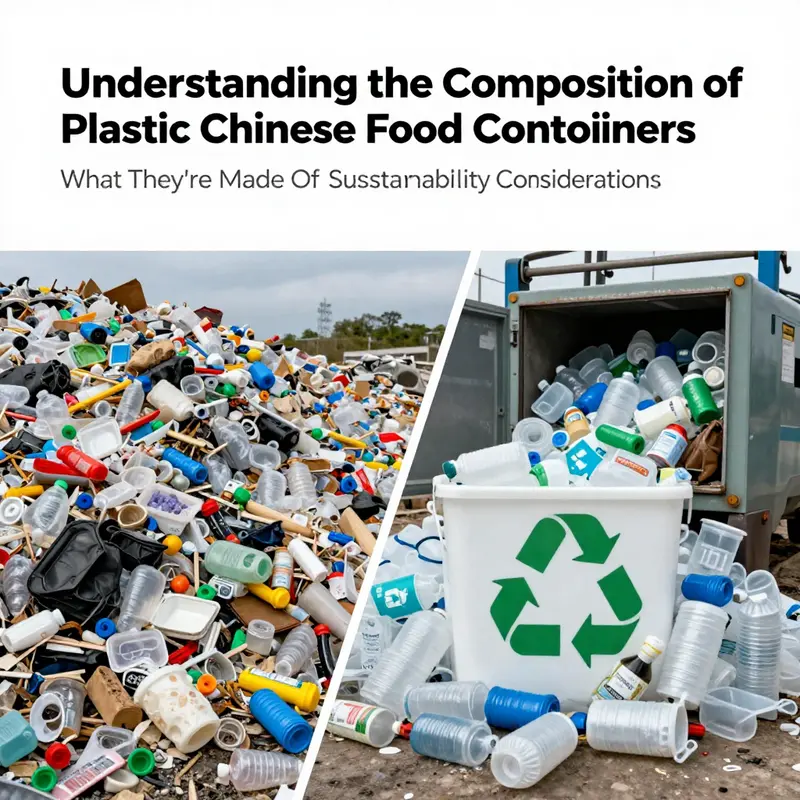
Every day, countless meals arrive in a familiar clamshell or rectangular box, steam coaxing through the seam as the lid gives way to a chorus of aromas. The moment we lift the lid, the container dissolves into a mental image of its origin: a blend of polymers and processes that turned raw resin into a convenient vessel. Yet the question behind the visual is more than curiosity about function; it is a question about responsibility, about the invisible footprints left by that everyday object, and about how a city’s appetite for quick meals intersects with global waste systems. When we ask what a plastic Chinese food container is made of, we invite a larger conversation about material choices, temperature realities, and the long arc of environmental consequence. The answer, in simple terms, hinges on a few workhorse plastics—polystyrene, polypropylene, and forms of extruded polystyrene—but the implications stretch far beyond the box itself, into the air, water, and soils that cradle us all.
Polystyrene and polypropylene occupy the foreground in most discussions of takeout packaging. Polystyrene, light and clear, excels at insulation. Its low density means a box can be tall enough to accommodate a generous portion while still feeling light in the hand. The plastic’s crystalline clarity also helps customers gauge contents at a glance, an intuitive feature for both diners and servers. But this same material poses a paradox: while it preserves warmth, its production and end-of-life fate create a pressure point for ecosystems. A growing body of research has traced the pathways of polystyrene waste from takeout counters into landfills and, eventually, the broader environment, where fragmentation yields microplastics that migrate through waterways and accumulate in habitats far from the point of purchase. The scale of this issue is nontrivial. A study conducted in 2026 estimated that takeaway food services in China generated about 1.6 million tons of plastic waste in 2020, comprising roughly 3 percent of the nation’s total plastic waste. That statistic is more than a number; it is a reminder that packaging choices made in kitchens ripple through urban systems, affect waste-management infrastructures, and intersect with consumer habits.
Polypropylene, by contrast, is often celebrated for its durability and temperature resistance. It withstands the jolts of transport, the heat of a microwave, and the rigors of reuse if the container is designed for it. In many takeout contexts, polypropylene containers are chosen precisely for their microwave compatibility and their ability to handle hot foods without deforming. Yet, the sustainability lens complicates this preference. When polypropylene is used as a single-use packaging material, its environmental performance can rank unfavorably across several impact categories, including global warming potential and human toxicity, largely due to the energy-intensive processes required to manufacture it. The tension between convenience and consequence is not a hypothetical; it is baked into the numbers and into the design of systems that rely on single-use plastics for speed and economy.
Another material often described in discussions of “takeout boxes” is extruded polystyrene. This variant blends the insulation benefits of polystyrene with production processes that aim to optimize material use. In some assessments, extruded polystyrene has shown comparatively favorable environmental indicators across multiple metrics, sometimes outperforming aluminum and single-use polypropylene in certain life-cycle assessments. Notably, some studies have suggested that extruded polystyrene can rival reusable polypropylene containers if the reusable option is employed between roughly three and thirty-nine times. In other words, the environmental calculus for a takeout vessel hinges not only on the base material but also on how many times it is used, how it is cleaned, and how it finally enters the waste or reuse stream.
The narrative of these materials cannot be decoupled from ecotoxicology and the longer arc of pollution. The degradation of plastic containers under environmental conditions gives rise to microplastics and nanoplastics, particles small enough to traverse water systems and enter food chains. The concern is not only about what is seen in the immediate moment of disposal but about what remains invisible for years to come. Microplastics can persist in environments, accumulate in sediments, and be transported through currents to places far removed from their original source. This ongoing dispersion underscores a fundamental truth: the choice of container material matters for decades, not just for the minutes of meal consumption.
Design decisions Therefore, are inseparable from end-of-life management. Policies and labeling, such as those referencing food-safety standards like GB 4806.7—2023 in China or their equivalents elsewhere, shape how containers are manufactured, marketed, and disposed of. Proper labeling helps ensure that consumers use containers within safe temperature ranges and follow appropriate recycling or disposal pathways. Yet labeling alone cannot absolve the environmental burden. A more holistic approach considers how the system could encourage reuse, facilitate recycling, or promote compostable alternatives that align with local waste-management infrastructure. This is where sustainability discussions move from product-level analysis to systems thinking. It is not merely a question of whether a box is made of PS, PP, or another polymer; it is a question of whether the system rewards durability, whether the design encourages reuse, and whether end-of-life options are viable in the community’s context.
The broader discourse on sustainability also invites a critical look at substitution. If a particular container type dominates a market, the push toward alternatives—such as paper-based, fiber-reinforced, or bagasse-derived packaging—must be evaluated with the same scrutiny as plastics. Material choices should consider not only feeding a demand for convenience but also shaping a future in which waste streams are simpler to separate and recapture. Paper-based and bagasse-based options, for instance, offer compostability that aligns with certain municipal waste management practices. However, their own environmental footprints depend on the sourcing of raw materials, the energy intensity of processing, and the logistics of end-of-life management. In some life-cycle analyses, fiber-based systems can outperform plastics in several impact categories when they are produced responsibly and used in contexts that support actual composting or high-rate recycling. The challenge remains that no single material is inherently superior in all dimensions; the most sustainable choice often depends on context, usage patterns, and the scale at which the system operates.
Against this backdrop, designers and policymakers are increasingly looking beyond the material itself to the container’s life story. A takeout vessel does not exist in a vacuum; it is embedded in a flow of consumer behavior, restaurant supply chains, and municipal waste-processing capabilities. The practical implications are significant. If a city has robust recycling streams for plastics and incentives to return or reuse containers, a single-use PP option might be less problematic than in a setting with weak collection. Conversely, if a community lacks the infrastructure to segregate materials, a compostable alternative could reduce some risk, provided it enters a proper composting stream and does not contaminate other recycling streams. The literature consistently emphasizes that end-of-life outcomes are as consequential as the production choices themselves. In other words, the sustainability of takeout packaging cannot be achieved by material substitution alone; it demands a coordinated strategy that includes curbside sorting, consumer education, and investment in waste-management capacity.
Within this framework, the everyday box becomes a testing ground for how society balances hunger for convenience with responsibility for waste. This is why the conversation about what these containers are made of deserves more than a product-focused answer. It deserves a holistic narrative that connects the chemistry of polymers to the realities of urban waste systems, to the incentives that drive restaurant choices, and to the daily decisions of households. The chain from resin to restaurant to recycling bin is long, and each link deserves scrutiny. Encouraging reuse by design—such as containers that pair durability with easy cleaning and compatibility with microwaving—can shift the calculus in meaningful ways. Similarly, enhancing the market for compostable or low-impact packaging requires collaboration among material scientists, waste managers, policymakers, and consumers. Without alignment across these stakeholders, even well-intentioned shifts can falter, leaving the environmental burden largely unchanged.
To embrace a more sustainable path, some researchers and practitioners point to end-of-life innovations as a critical lever. This includes developing materials that degrade harmlessly in natural environments, improving mechanical recycling methods to handle composite packaging, and creating standardized labeling so consumers can properly segregate items. It also means recognizing that the most sustainable solution may involve reducing overall packaging material, optimizing packaging geometry to use less plastic while maintaining safety and integrity, and promoting reuse where it makes sense in terms of logistics and consumer patterns. The practical takeaway is straightforward: material choice matters, but the system around that material matters even more. The container is a small artifact within a much larger circular economy puzzle, and solving that puzzle requires coordinated action across production, use, and disposal.
In contemplating the future, it is worth returning to the tangible reality of the modern takeout box. The materials described—polystyrene, polypropylene, and extruded variants—each embody a different balance of insulating performance, strength, cost, and environmental footprint. The choices restaurants make about these materials are influenced by the needs of hot, oily foods, the ease of stacking and transport, and the expectations of customers who want reliability and speed. Yet those same choices carry consequences that extend well beyond the moment of purchase. If the container contributes to microplastic pollution or consumes disproportionately high energy in production, the cost is borne not only by the environment but by communities that must contend with polluted water, contaminated soils, and the health implications that follow long after a box is used up.
The path forward, then, involves a synthesis of better materials, smarter design, and reinforced systems for end-of-life. It invites a shift from viewing packaging as a mere barrier to food toward recognizing it as a participant in a broader ecological conversation. It requires curiosity about alternatives and honesty about trade-offs. It invites policymakers to align standards with real-world waste streams, industry leaders to invest in scalable sustainable solutions, and consumers to participate in informed choices. In the end, the question isn’t merely what a plastic Chinese food container is made of; it is how our shared systems can evolve so that the convenience of a takeout meal unfolds within a framework that respects resources, safeguards health, and protects environments for generations to come.
For readers seeking a practical glimpse into how a shift toward more sustainable packaging is being imagined in the market, consider exploring eco-friendly kraft packaging options as an alternative pathway. These solutions aim to align material performance with end-of-life realities in many communities, offering materials that can be composted or recycled within appropriate streams. eco-friendly kraft box packaging options illustrates the design logic behind containers that prioritize both functional integrity and environmental compatibility, emphasizing that the container of today can be designed with tomorrow in mind. While no single material or approach is a panacea, this line of thinking helps anchor the broader discussion in tangible paths forward.
Ultimately, understanding what a plastic Chinese food container is made of necessitates looking past the glossy surface to the complex system that shapes its fate. It is a reminder that materials carry stories—from resin pellets to the hands that fill, transport, heat, and eventually retire them. It is a call to weigh short-term benefits against long-term consequences, to design for reuse, and to invest in waste-management infrastructure that can capture value rather than releasing it as loss. The chapter on materials thus becomes a chapter on responsibility, a chapter about how we can enjoy the convenience of takeout while honoring the ecological balance that sustains us.
External resource: For a rigorous look at the environmental trade-offs across different packaging materials, see the ScienceDirect study at https://www.sciencedirect.com/science/article/pii/S0956053X1830275X.
Final thoughts
In summary, understanding the components and implications of using plastic Chinese food containers—particularly those made from polypropylene—should be essential for all stakeholders in the food industry. By adhering to safety standards and making environmentally conscious choices, businesses can ensure compliance and promote sustainability. Whether you’re operating a food truck, managing a restaurant, or planning an event, being informed about what these containers are made of and their potential impacts will aid in better decision-making for your service.