
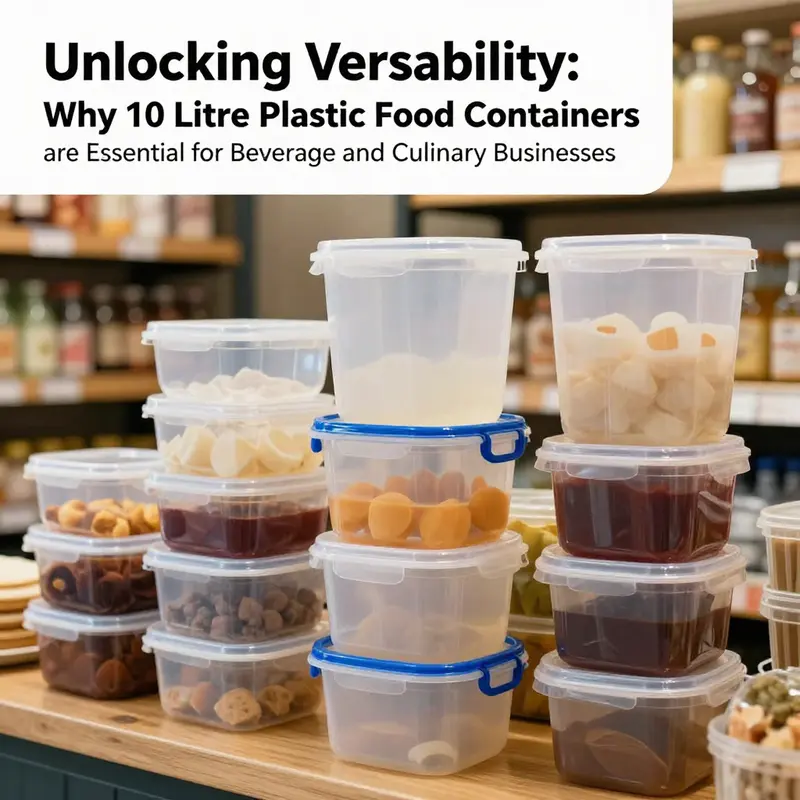
In the ever-demanding world of food and beverage service, efficiency and safety are paramount. Enter the 10 litre plastic food container: a multifunctional solution cherished by bubble tea shops, restaurants, food trucks, and caterers alike. With their robust design and versatile applications, these containers play a vital role in enhancing food storage practices across various culinary environments. This exploration dives into the practical features that make these containers indispensable, the stringent safety standards they adhere to, their multi-faceted applications both at home and in industrial kitchens, the environmental considerations for sustainable sourcing, and the latest market trends shaping consumer preferences.
End-to-End Efficiency: Practical Design Features of 10 Litre Plastic Food Containers
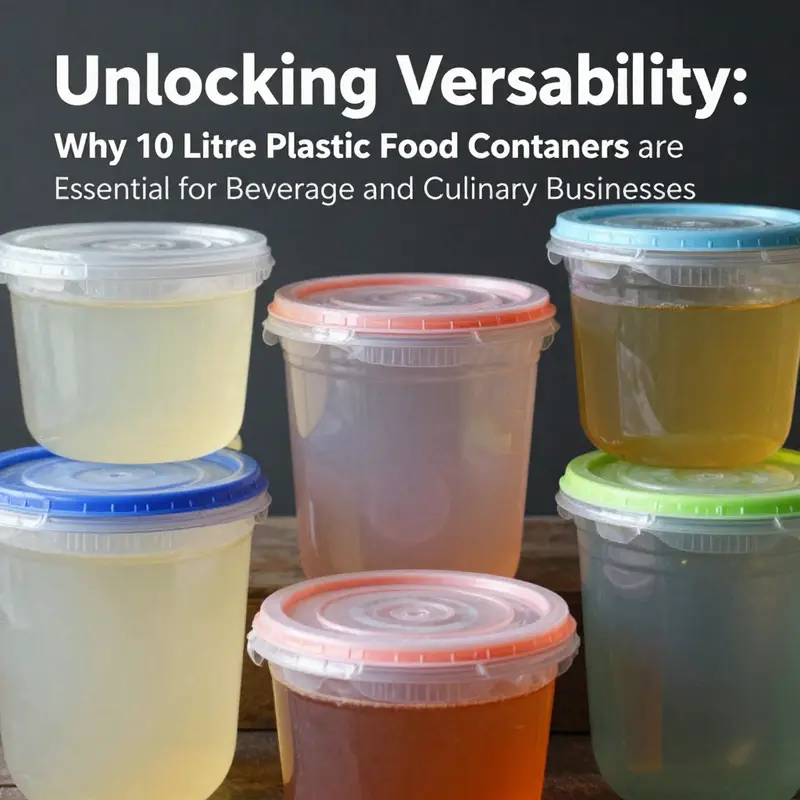
Across kitchens, warehouses, and processing lines, the 10 litre plastic food container has become more than a simple bin or tub. It is a modular element of a larger system, engineered to keep materials safe, move them efficiently through handling stages, and preserve quality from batch to batch. The practical design features that make this class of containers work so reliably are not accidental; they are the result of balancing rigorous safety standards with real-world workflow demands. In this sense, a 10 Litre plastic container is not just a receptacle. It is a solution that helps ensure consistency, traceability, and hygiene across the supply chain, from bulk ingredients to finished products, even when the process involves tight storage spaces, frequent transfers, and varied environmental conditions. A leading packaging approach blends materials science, manufacturing precision, and human-centered ergonomics, producing a container that can be trusted in the most demanding settings while remaining adaptable to everyday kitchen and factory tasks.
The sealing system sits at the heart of this balance. A precision-engineered lid paired with a high-quality sealing ring—often crafted from food-grade silicone or a carefully formulated rubber—creates an airtight barrier that resists air, moisture, and external contaminants. This seal is more than a nuisance-preventer; it preserves the stability and quality of sensitive contents. Powdered additives that cling to humid air, or liquids prone to oxidation, stay consistent when the container is sealed. In transit, the seal minimizes leakage and keeps the outer surface free of residue, reducing cross-contamination risks along the way. The reliability of the seal also reduces the need for frequent repackaging, helping to streamline operations and lower total cost of ownership.
Material choice anchors both safety and performance. Many 10 Litre containers are molded from high-density polyethylene (HDPE), selected for its excellent chemical resistance, resilience, and compliance with food-contact safety standards such as FDA and EU regulations. HDPE is inherently non-reactive, which minimizes the risk of leaching into the contents. In addition, HDPE’s impact resistance and durability help containers endure the rough handling typical of warehouses and distribution centers. When stabilized against ultraviolet light, HDPE can also resist the gradual degradation that sunlight exposure can bring during outdoor storage or unmanned trailer stops. The result is a container that remains robust over repeated cycles of use, cleanings, and restocking, an essential advantage for central kitchens and industrial facilities that rely on consistent performance across many months or years.
Ergonomics are not an afterthought. A 10 Litre container typically features side grips or molded handholds that enable safe lifting with one hand, even when the tub is full. The handling geometry is designed to distribute weight and reduce strain, supporting workers who must move many units per shift. In addition to grips, the container’s exterior geometry often favors a form that is both easy to grasp and stable when set down. Such details may seem small, but they matter greatly in fast-paced environments where every second counts and improper handling can lead to injuries or product damage. The ergonomic design also complements the stacking strategy that underpins space efficiency, as well-handled units are less likely to slip or topple when moved in bulk.
Space efficiency is a practical necessity in busy facilities. Rectangular or cuboid shapes are favored because they align with pallet grids and shelving, allowing tighter packing and more predictable storage—an important advantage when floor space is at a premium. This geometry supports higher density storage in both horizontal and vertical directions, improving warehouse throughput and reducing the number of trips required to stage a shipment. The square-edged silhouette also helps when multiple containers are stacked; the flat surfaces bear load more evenly and minimize deformation under compression. In an era of lean inventories and just-in-time logistics, every centimeter gained in storage efficiency can translate into meaningful cost savings and faster throughput.
Cleanability underpins hygiene and compliance. The interiors of these containers are designed to be smooth and non-porous, eliminating nooks where residues can accumulate and where cleaning agents might be difficult to reach. A clean interior facilitates rapid sanitation between uses and supports HACCP protocols, which require that surfaces be easy to disinfect and free of hidden pockets that could harbor microbial growth. A glossy interior finish also makes inspection easier, enabling staff to see clean surfaces and confirm absence of residue before refilling. When switching between products or ingredients, the ease of cleaning reduces the risk of cross-contamination and helps ensure consistent product quality across batches. This is particularly important for facilities that handle a range of liquids and powders that must be kept separate to preserve flavor, texture, or chemical stability.
Labeling and measurement round out the practical toolbox. Many 10 Litre containers provide dedicated labeling areas or side markings that stay legible through cleaning cycles. Clear labeling supports batch traceability and regulatory compliance by enabling quick checks of contents, batch numbers, or production dates. Integrated measurement markings on the side offer a simple, on-the-spot reference for fill levels or portioning. In high-volume environments, this reduces reliance on separate scales or tags and keeps workflows streamlined. The ability to visually verify a fill level without additional equipment speeds up processing and minimizes interruptions, supporting both accuracy and efficiency across the supply chain.
Structural integrity is the backbone of long lifecycle performance. A well-designed 10 Litre container can withstand repeated handling, stacking, and occasional moderate drops without cracking or warping. This resilience is essential when thousands of containers circulate through production lines, cold rooms, loading docks, and freight vehicles. Durable construction supports reuse and reduces waste, aligning with sustainability goals while preserving the cost benefits of bulk storage and transport. The robustness of the container also softens the hit from accidental mishandling, a common risk in busy environments, and extends its usable life across multiple cycles of fill, transport, and sanitation. The cumulative effect is a container that remains reliable and predictable from first use to last, which in turn steadies the entire workflow that depends on it.
Beyond the intrinsic design features, the trend toward sustainability continues to shape 10 Litre containers. Recycled content and recyclable end-of-life options are increasingly integrated into the material mix, catering to customers who want to minimize environmental impact without sacrificing performance. The lifecycle value of a durable, reusable container is high; fewer replacements and less waste translate to tangible savings and a smaller ecological footprint. Yet, sustainability must be balanced with regulatory and safety standards, ensuring that recycled content does not compromise chemical resistance or food-contact safety. Manufacturers carefully validate formulations to maintain the non-reactive, stable properties of HDPE or its recycled equivalents, while still delivering the performance needed in high-demand settings. This ongoing refinement helps facilities meet both corporate responsibility goals and the practical demands of daily operations.
The design philosophy behind the 10 Litre container also reflects a broader understanding of how packaging influences workflow. In industrial and commercial contexts, containers are not isolated products; they are nodes in a system. They must integrate with labeling systems, inventory controls, and sanitation schedules. They must withstand the rigors of cold storage, cleaning cycles, and high-volume handling. They must enable precise measures for batch control and be intuitive to use for workers who move quickly through tasks. When these conditions are met, the container becomes a reliable partner in the process—one that supports speed without compromising safety, that keeps product integrity intact while enabling efficient logistics, and that contributes to a safer, cleaner, more cost-effective operation.
For a concrete sense of how these features translate into a real-world option, consider the broader spectrum of packaging solutions that strive to emulate this balance. Designers like those behind bulk-storage buckets and lids highlight the same principles—airtight seals, chemical resistance, ergonomic handling, space-conscious geometry, cleanability, traceable labeling, and durable construction. While the specific materials and tooling may vary, the underlying philosophy remains consistent: create a container that performs reliably under the conditions of modern food manufacturing and distribution, while supporting sustainability goals and worker safety. In practice, this means selecting a container with a proven lid-seal system, HDPE composition appropriate for the intended use, and geometry that optimizes stacking and handling in your facility.
If you are exploring related packaging options that share these design tenets, you can explore a related offering that showcases how a compact, lid-ready container can complement larger storage systems. See the octagonal kraft paper bowl with lid option for a sense of how lid integration and secure containment translate across materials and use cases. This internal reference highlights how easy lid access, reinforced sealing, and clear markings contribute to a cohesive approach to food-grade packaging across different formats. octagonal-bowl-pet-lid-waterproof-eco-friendly-disposable-customizable-snack-pet-food-salad-containers-1l
In sum, the 10 Litre plastic food container embodies a holistic approach to packaging design. Its practical features—precise sealing, HDPE safety and durability, ergonomic handling, compact geometry for space efficiency, ease of cleaning, legible labeling and measurement, and robust structural integrity—work in concert to support safe storage, efficient handling, and reliable distribution. When these elements come together, they enable operations to maintain product quality, improve throughput, and reduce waste. The result is a packaging solution that not only stores and transports ingredients and finished items but also contributes to the integrity and efficiency of the entire food-production ecosystem. For further reading on technical specifications and applications, an externally hosted reference provides detailed insight into the material stability and performance profiles that underlie these containers: https://www.dawangpackaging.com/product/10-liter-food-grade-plastic-bucket
Guardians of Freshness: Safety and Material Standards That Shape 10-Litre Plastic Food Containers
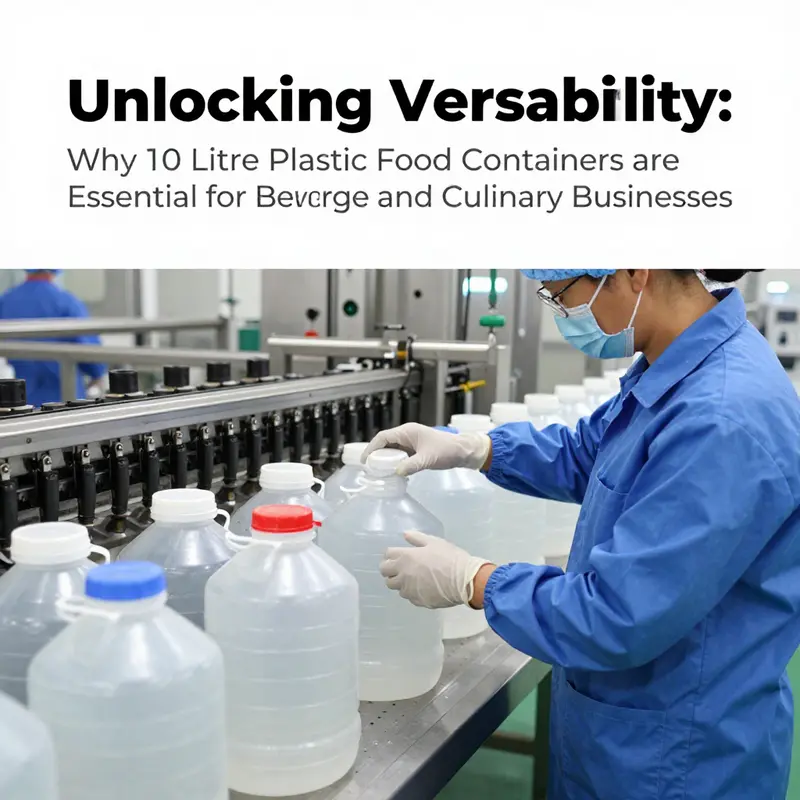
Every 10-litre plastic food container carries more than its hollow form and lid. It embodies a carefully balanced set of safety and material standards that safeguard the food inside from the moment raw materials are chosen, through production, and into storage, transport, and eventual reuse or disposal. In this chapter, the focus shifts from appearance and capacity to the quiet but decisive rules that determine whether a container can truly keep foods fresh, safe, and stable across a spectrum of uses. When a chef lines up a batch of bulk ingredients, or a household family stacks cans and sauces for the week, they rely on a system of protections that begin at the source and end with responsible handling long after the container leaves the shelf. These protections are not incidental; they are the backbone of trust in a product that sits at the intersection of everyday practicality and industrial rigor. The journey from resin to receptacle is governed by standards that address what the material is, how it is processed, how it interacts with contents, and how it behaves under real-world conditions of heat, cold, moisture, and time.
At the heart of material choice for 10-litre containers is the decision between HDPE and other candidates like PP. High-Density Polyethylene is prized for its chemical resistance, low permeability to gases and moisture, and an established safety profile that makes it well suited to direct contact with a wide range of foods. Its rigidity and impact resistance help the container withstand stacking and handling in kitchens, warehouses, and transport corridors without deforming. The non-toxic nature of HDPE reduces the risk of harmful substances migrating into food, a consideration that becomes especially important for liquids such as oils, sauces, and syrups, which can intensify contact with container walls. In many contexts, HDPE provides a reliable balance between strength, clarity of labeling, and cost-effectiveness that supports both commercial scale and domestic use. While some formulations of the same broad family of resins can also perform well, HDPE remains a dependable default for 10-litre vessels that must endure repeated use and occasional microwave or dishwasher cycles.
Safety standards for food-contact plastics go far beyond the choice of resin. Regulatory frameworks across regions require that the base resin, additives, colorants, and processing aids used in the final container are approved for direct contact with food. In the European Union, for example, regulations around materials intended to come into contact with food are structured to limit migration of substances from packaging to food. In the United States, similar protections are embedded in FDA rules governing substances that may contact food. The common thread is a precautionary approach to ensure that substances do not compromise consumer health, alter taste or odor, or pose long-term exposure concerns. That is why manufacturers verify that the resins meet recognized criteria and conduct migration tests to quantify any potential transfer of additives or decomposition products under expected storage and use conditions. The results guide not only the materials chosen but also the design and processing methods used to produce the containers.
Raw materials are only the first line of defense. The production process, including extrusion, molding, and assembly, must preserve the material’s integrity while preventing contamination. Clean, dedicated machinery and strict hygiene protocols help ensure that the interior surface of the container remains smooth and non-porous, a feature that facilitates thorough cleaning and sanitization between uses. A smooth interior minimizes residue buildup that can harbour microbes or foster uneven drying, which in turn helps extend shelf life and maintain sanitation standards across cycles of use and reuse. When colorants are employed, they must be certified for food-contact safety, and the additives used to enhance performance—such as stabilizers or antioxidants—must be chosen with their potential interactions with food in mind. The goal is to prevent any unintended chemical changes in food while preserving the container’s mechanical properties over time.
Beyond the raw materials and manufacturing steps, the container’s design itself is a guardrail against degradation and contamination. The lid and sealing mechanism are engineered to form an airtight and watertight barrier. Precision threads and high-quality gaskets or O-rings—often made from food-safe elastomers—are selected to resist leakage, moisture ingress, and air exchange that can lead to oxidation, flavor loss, or spoilage of delicate contents. A reliable seal also helps maintain consistent storage conditions, which is critical when containers are used for semi-solid or viscous products that might otherwise creep or separate at the edges. The interior surface, as noted, is optimized for cleaning: it is smooth, non-porous, and resistant to staining so that sanitation procedures can be performed efficiently, a crucial consideration in both commercial kitchens and large-scale food processing facilities.
In practical terms, a 10-litre container must perform under a range of temperatures and handling scenarios. Some users rely on reheating foods directly in the container; in those cases, the container must be explicitly rated for the temperatures involved. HDPE can tolerate moderate heat, but not all HDPE formulations are microwave-safe or dishwasher-safe by default. Clear labeling and proper guidance on use ensure that users do not expose the container to conditions that could damage the plastic, cause warping, or promote the migration of substances. Manufacturers balancing performance with safety will typically provide explicit use-case guidelines, including limits on time in heat, compatibility with detergents, and recommended stacking configurations to prevent deformation under heavy loads. This attention to use-case details helps ensure that the container performs consistently whether it is stored in a cold storage room, transported in a refrigerated vehicle, or heated for a finished dish.
The lifecycle of safety and material standards also intersects with sustainability. Many 10-litre containers are produced with some level of recycled content, a practice that supports environmental goals while still demanding strict quality control to ensure that properties such as rigidity, clarity, and chemical resistance are maintained. Recycled content must be thoroughly screened to avoid contaminants that could undermine food safety or performance. At the same time, end-of-life considerations—recyclability, options for cleaning and return reuse, and compatibility with local recycling streams—are integral to the standard that governs everyday use. A well-designed container provides a balance: it can be reliably reused, cleaned to high sanitary standards, and recycled when its useful life ends, all without compromising safety during its tenure in food storage and handling.
Standards do not live in a vacuum. They are part of a broader quality system that supports traceability, accountability, and continuous improvement. A responsible producer adopts an integrated approach that covers supplier qualification, incoming material testing, in-process checks, and final inspection. Documentation accompanies every batch, detailing resin grade, molding conditions, sealing materials, and sterilization or cleaning cycles used in manufacturing. This transparency helps establish confidence among users who rely on consistent performance across batches and years of operation. It also provides a foundation for audits, which verify that the entire chain—from resin to finished container—meets the regulatory and institutional expectations that govern food safety.
From the consumer’s perspective, the most tangible indicators of safety and material rigor are clarity about which foods can be stored, and how long. The safe storage of liquids like oils or syrups hinges on low permeability to minimize gas exchange and potential oxidation. For powders and semi-solid ingredients, maintaining dryness and minimizing caking are paramount, which again ties back to the seal quality and interior smoothness. For households and professional kitchens alike, these mechanisms translate into a practical promise: the container not only keeps contents contained but also preserves taste, texture, and nutritional value over time. This is why the label on a 10-litre container often carries more weight than its visible features; it signals that a matrix of standards has been satisfied—from material safety and manufacturing hygiene to design choices intended to sustain quality through varied storage conditions.
The overarching takeaway is that safety and material standards are not a checklist but a continuous discipline. They require ongoing attention to evolving science, regulatory updates, and real-world feedback from users. In the end, the container becomes more than a vessel; it becomes a governed environment that protects ingredients, supports operational efficiency in kitchens and facilities, and aligns with broader commitments to public health and environmental stewardship. The relentless focus on safe materials, robust seals, cleanable interiors, and thoughtful use guidelines makes the 10-litre plastic container a reliable workhorse across domestic and commercial food ecosystems.
External reference: https://www.dawapackaging.com/
null
null
From Footprint to Food Safety: Rethinking the 10-Litre Plastic Food Container for a Circular Economy
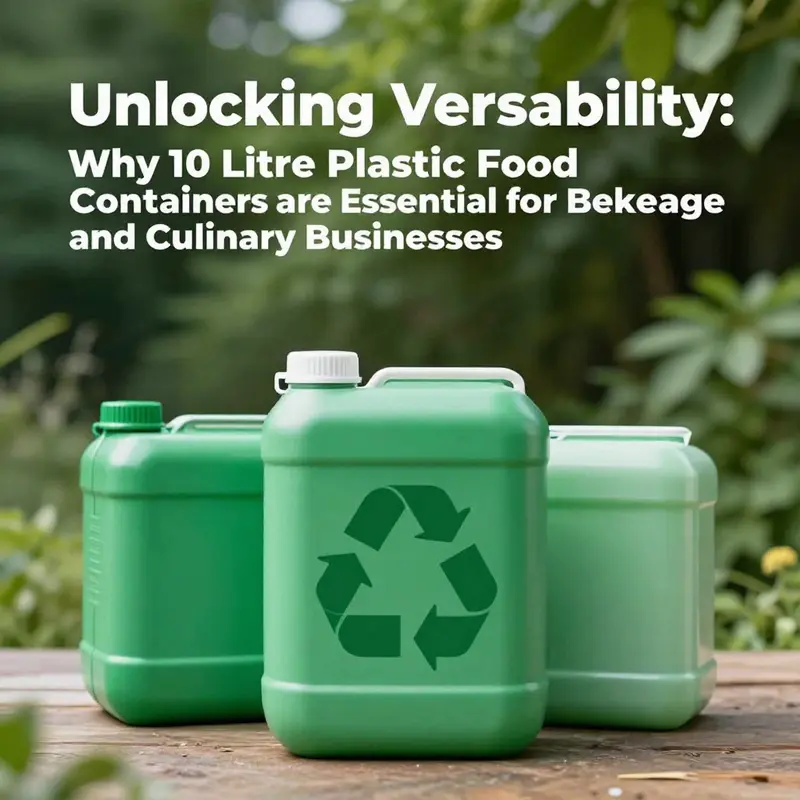
The 10-litre plastic food container sits quietly at the heart of kitchens, storage rooms, and production lines. Its plain, utilitarian form belies a set of questions about sustainability, safety, and the way modern food systems move. These containers are commonly made from food-grade polymers such as polypropylene (PP) or high-density polyethylene (HDPE). They are chosen because they can withstand the rigors of daily use, resist a range of temperatures, and provide reliable sealing that keeps products fresh. Yet their everyday practicality raises a parallel concern: what is their environmental footprint across a lifecycle—from raw material extraction to end-of-life disposal? The conversation about these containers threads together material science, industrial design, waste management, and consumer behavior, all within the frame of responsible food storage and supply chain efficiency.
At the core of sustainability in this space is material choice. PP and HDPE are derived from fossil fuels and require energy-intensive processing. They are valued for chemical resistance, durability, and the capacity to form robust, light, and stackable vessels. Their non-biodegradable nature, however, means that a single container can persist in environments for decades if not handled properly. The environmental narrative, then, is not simply about what these plastics can do for food; it is about how the materials are sourced, how efficiently they are used, and how effectively they are recovered after their useful life ends. In many cases, the most meaningful gains come not from a single improvement but from a design and system-wide approach that keeps products circulating longer and minimizes leakage into nature.
The lifecycle perspective makes it clear that the environmental impact of a 10-litre container is a function of both the polymer’s intrinsic properties and the ways it is designed, manufactured, and used. The production phase consumes energy and emits greenhouse gases, while the end-of-life phase depends on how the container is disposed of, sorted, and recycled. When designed with recycling in mind, containers can be recovered more efficiently. Clear labeling and the use of mono-material constructions can simplify post-consumer processing, reducing contamination and enabling higher-quality recycled streams. But even with clear labeling, real-world recycling rates are shaped by local infrastructure, collection practices, and consumer behavior. A container that is not cleaned adequately or that contains residual food can compromise an entire batch of recyclables, undermining potential environmental benefits. This is a critical reminder that sustainability is not only about the material but also about the stewardship of that material at every stage of its life.
In many applications, these containers support central kitchens, food manufacturing facilities, and households that batch-prepare meals or ingredients. The ability to seal tightly with gaskets and secure clamps helps to preserve freshness and reduce waste, a practical boon that can translate into fewer spoilage-related losses. The trade-off, however, is that highly durable, reusable designs may encourage repeated use but require diligent cleaning between uses. If a container is dishwasher-safe, it can be cleaned efficiently at scale, but this benefit relies on compatible dishwasher cycles and energy use that aligns with environmental goals. The design engineers who shape these containers balance a host of criteria: heat tolerance for reheating, chemical resistance for storing oils or sauces, mechanical strength to withstand stacking, and, increasingly, the capacity to be reused across many cycles without degrading.
From an industrial perspective, the appeal of 10-litre containers lies in their standardized capacity, which streamlines mixing, portioning, and logistics. A consistent size supports predictable handling in warehouses, distributors, and transport fleets, reducing the energy and fuel required for heavy lifting and reducing space requirements. Yet redundancy can creep in if the same containers are used for incompatible products or if contaminated items end up mixed with clean stock. Here, process discipline matters as much as material science. Good practices—such as separate streams for rinsing, sanitizing, and storage—help keep the recycling loop closed and minimize waste. The interface between container design and cleaning regimes is a subtle but consequential frontier. Smooth interior walls, for example, reduce spots where residues cling, making sanitation easier and more reliable. These features matter not only for food safety but also for the downstream efficiency of recycling, where clean, uniform materials are far easier to re-enter the production cycle.
There is also a growing conversation about reuse versus single-use in plastic storage. While a 10-litre container can provide long service life, the environmental benefits depend on how many times it is reused and how many resources are saved through that reuse. When a container is built to withstand multiple cycles of use, incorporating durable materials and robust sealing systems, its per-use environmental impact declines as its lifespan increases. In practice, that means fostering a culture of responsible reuse, where containers are returned, cleaned, and repurposed rather than discarded after a single cycle. Of course, reuse hinges on the ecosystem in which the container operates—an ecosystem shaped by local recycling programs, municipal waste management, and consumer awareness. The simplest path to meaningful gains is to design for reuse without compromising food safety, then align product stewardship with the realities of users and facilities.
The end-of-life path for a 10-litre container is equally telling. A mono-material construction—where the same polymer family is used throughout the container and lid—tends to be more recyclable than multi-material assemblies that fuse disparate plastics or attach non-plastic components. Proper labeling helps recycling facilities identify the material and sort it appropriately. Yet even the best design can stumble if contamination from residual food or improper segregation enters the stream. This is why consumer education and clear disposal guidance matter as much as the container’s physical properties. In places with advanced recycling infrastructure, these containers can be diverted back into manufacturing loops, replaced by new or better designs, and kept out of landfills for longer periods. In places with less mature systems, the environmental upside is far more limited, underscoring the topic’s global dimension: what works in one region may face practical barriers elsewhere.
A fair comparison with alternative materials—such as glass or stainless steel—adds nuance to the sustainability assessment. Glass and metal can offer longer lifespans and potentially infinite recycling loops under the right conditions. They are, in some contexts, better suited for repeated reuse over many years. Yet their heavier weight increases transportation emissions and energy use during distribution. In contrast, plastics achieve lower carbon footprints during transit due to their light weight. The system-wide verdict, then, depends on how the container is used: short-term, high-turnover storage can benefit from plastic’s lightness and durability, while long-term reuse with robust recovery systems may tilt the balance toward other materials. The most sustainable outcomes arise from aligned choices across design, use, and disposal, coupled with strong municipal and corporate commitment to circular economy principles.
The evolving landscape also points to scientific and policy-driven innovations aimed at closing the loop. Bioplastics, recycled content, and closed-loop mechanisms promise to reduce reliance on virgin fossil materials. These avenues can contribute to lower life-cycle emissions and greater post-consumer recovery, but they require careful evaluation. Bioplastics, for example, may demand industrial composting facilities that are not universally available, and their environmental credentials depend on the feedstock, the manufacturing process, and the end-of-life facilities that can actually process them. In this sense, the sustainability of a 10-litre container is not a fixed attribute but a dynamic assessment that shifts as technology, infrastructure, and consumer practices evolve. The European Environment Agency’s work on plastic packaging spotlights these dynamics, emphasizing reuse, recycling, and policy intervention as critical levers for improving environmental outcomes across the packaging value chain.
For practitioners and researchers, the practical implications are clear. When designing or selecting a 10-litre container, the goals should include enabling multiple reuse cycles, ensuring compatibility with common cleaning methods, and supporting efficient recycling with straightforward material identification. Consumer education should accompany product design, guiding users to separate, cleanse, and return containers in ways that maximize recovery. The cultural shift toward a circular economy hinges on both smarter design and smarter behavior, a combination that transforms a simple storage bucket into a leverage point for broader environmental improvements.
A useful way to see how these dimensions fit together is to consider a practical decision framework. If a facility prioritizes long-term reuse, it will benefit from sturdy construction, reliable sealing, and compatibility with available washing processes. If a community focuses on high recycling yields, mono-material construction and clear labeling become essential. If the goal is to minimize transport-related emissions, the container’s lightweight design makes sense, provided the system can absorb and properly manage post-consumer material streams. In all cases, the container’s environmental story is tempered by the surrounding infrastructure, from factory floors to municipal recycling plants, and by the shared responsibilities of manufacturers, users, and policymakers.
As packaging designers and end users respond to these pressures, collaboration becomes a key driver of meaningful progress. The supply chain needs transparent information about material composition, recycling compatibility, and end-of-life options. Retailers and food-service operators can model best practices by prioritizing containers that are easy to clean, clearly labeled, and designed for repeated use. Consumers, for their part, can contribute by rinsing containers before disposal, sorting them correctly, and choosing options aligned with local recycling capabilities. Together, these actions form a practical, everyday expression of sustainability that starts with a 10-litre container but extends far beyond it.
To illustrate how contemporary packaging design can embody these principles, consider the broader packaging ecosystem. A practical example of sustainable packaging design can be found in eco-friendly kraft box packaging, which highlights a mono-material approach and a system-friendly mindset aimed at simplifying recycling. While kraft boxes are not plastic, they reflect a core principle that resonates across materials: design for end-of-life clarity and recovery. This principle—spreading through different packaging formats—helps explain why a seemingly simple container can become a cornerstone of a circular economy when decisions at sourcing, manufacturing, use, and post-use management are aligned.
External resource: for a broader, policy-oriented view of the lifecycle impacts of plastic packaging and strategies to improve sustainability through reuse, recycling, and policy intervention, see the European Environment Agency report on the Environmental Impact of Plastic Packaging at the following link: https://www.eea.europa.eu/publications/environmental-impact-of-plastic-packaging
Bulk Resilience: The Expanding Role of 10-Litre Plastic Food Containers in Homes, Kitchens, and Industry
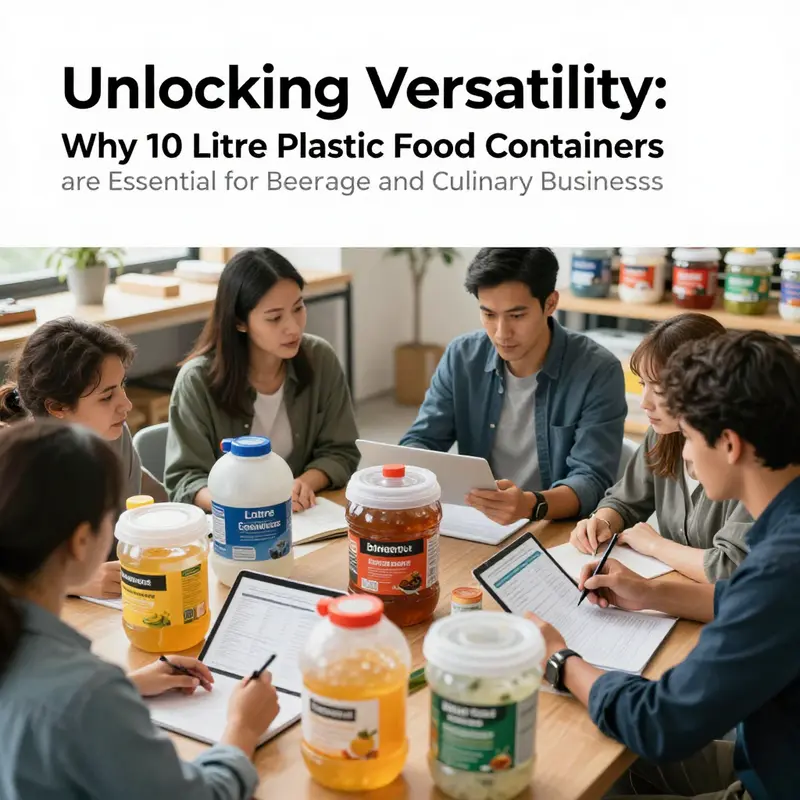
Bulk Resilience: The Expanding Role of 10-Litre Plastic Food Containers in Homes, Kitchens, and Industry
The 10-litre plastic food container occupies a quiet but pivotal space in modern food storage. It is large enough to handle substantial quantities yet compact enough to fit within the constraints of both home kitchens and professional facilities. In households, these containers become workhorses for batch cooking, meal prepping, and bulk storage of pantry staples, sauces, and oils. In restaurants and central kitchens, they serve as standardized vessels for ingredient sorting, portioning, and pre-production staging. In industrial settings, their uniform capacity supports streamlined metering, controlled dispensation, and efficient logistics. Across these contexts, the container’s value rests on a blend of material safety, durability, and thoughtful design that respects the realities of busy workflows and tight preparation timelines.
Material safety remains foundational. Most 10-litre solutions are made from food-grade polypropylene (PP) or high-density polyethylene (HDPE). These plastics are selected for their clean-slate safety profile, resistance to chemical interaction, and general resilience under typical handling and storage conditions. PP and HDPE commonly withstand brief exposure to elevated temperatures, making them compatible with reheating or hot-fill processes in some workflows, and they often tolerate repeated washing. The emphasis on non-toxic materials also aligns with regulatory expectations that call for strict controls on substances that may migrate into food. Consumers and operators alike expect containers that do not impart off-flavors or harmful residues to the contents, a standard that underpins trust in routine use.
Sustainability sits at the core of current demand. A growing share of the market favors eco-friendly options, including containers made from recycled feedstock and those designed for recyclability at end of life. The shift toward circularity influences choices beyond the container body. Lid designs, sealing mechanisms, and labels are engineered for longevity and ease of cleaning, reducing the need for replacement and supporting longer service lifetimes. Even when disposability remains a practical reality in some operations, the aim is to minimize waste by promoting reusability where feasible and by selecting materials that can re-enter the recycling stream with minimal processing. In tandem, manufacturers highlight durability and reuse potential—two attributes that help lower lifetime environmental impact and align with cost-conscious procurement strategies.
Design details are the unsung drivers of performance in 10-litre containers. A robust seal around the lid, often featuring a gasket or lockable clips, helps prevent air and moisture ingress that can accelerate spoilage or compromise ingredient integrity. The well-engineered interface between lid and body reduces the risk of leaks during transport or handling in crowded production lines. A smooth inner wall simplifies cleaning and disinfection, an important factor in facilities that must maintain high sanitary standards. Some models incorporate clear measurement marks on the interior or exterior, enabling precise portioning and reducing guesswork during batch preparations. Stackability is another practical attribute; containers are molded with rounded corners and uniform heights to promote safe, space-efficient storage in crowded kitchens, cold rooms, or shipping pallets. All these features coalesce into a singular purpose: to preserve freshness, reduce waste, and speed up routine tasks that would otherwise slow down operations.
The chapter’s scope extends beyond the kitchen. In industrial settings, the uniform 10-litre capacity becomes a lingua franca for production lines, warehousing, and distribution. When a facility relies on standardized volumes, inventory control becomes more reliable, forecasting easier, and scheduling more predictable. The ability to weigh, measure, and portion contents into identical units improves process traceability and helps ensure consistency from batch to batch. Clear labeling and compatibility with existing packaging lines streamline integration in complex supply chains, where even small inefficiencies can ripple into delays or miscounts. In this sense, the 10-litre container is much more than a storage vessel; it is a modular piece of a larger system designed to optimize flow, minimize human error, and support scalable operations.
In parallel, consumer expectations continue to evolve toward safer, smarter packaging choices. BPA-free formulations and the avoidance of controversial additives have become baseline requirements for many buyers. Recyclability percentages, the use of PCR (post-consumer recycled) content, and explicit guidance on end-of-life handling are increasingly part of product literature. Consumers also show a preference for containers that can withstand frequent use without degrading in appearance or performance. Visible indicators of cleanliness—smooth inner surfaces, absence of etched residues, and resistance to staining—contribute to a perception of reliability. Beyond material chemistry, the perception of safety is reinforced by the presence of lid seals that maintain integrity during transport and storage, which in turn reassures users about the freshness and safety of stored foods.
The interplay of practicality, safety, and sustainability feeds directly into observed market dynamics. Recent market research places the global Plastic Food Container Market at about US$5.09 billion in 2024 and projects growth to roughly US$8.83 billion by 2032, a compound annual growth rate (CAGR) of around 7.12%. This trajectory mirrors the expanding role of 10-litre containers across households, food manufacturers, and foodservice channels. The growth reflects a combination of rising meal-prep culture, increased bulk storage for bulk ingredients, and a need for reliable, sanitary containers that can handle routine handling, stacking, and transport. In households, the appeal lies in convenience, reusability, and the ability to prepare meals for the week. In professional settings, the container supports standardized processes, inventory discipline, and improved yield management. The trend toward multi-use, reusable vessels with durable construction is also a countercurrent to single-use plastics, signaling a more deliberate approach to purchasing decisions and a greater focus on long-term value.
The connection between material choice and consumer behavior is nuanced. While PP and HDPE offer robust performance for many uses, the market also rewards containers fabricated with attention to environmental impact. Manufacturers increasingly emphasize transparent communication about the lifecycle of their products, including sourcing of resins, manufacturing efficiency, and end-of-life options. This transparency helps buyers align packaging choices with corporate sustainability goals, particularly in segments like food manufacturing and large-scale catering where procurement decisions carry both financial and reputational weight. As a result, the conversation about 10-litre containers has shifted from a narrow focus on affordability to a broader dialog about total cost of ownership, safety, and environmental responsibility.
The design language of these containers also adapts to shifting foodservice patterns. In central kitchens and catering operations, a reliable, leak-proof lid plus clear marks for measurement supports batch cooking, portion control, and rapid replenishment. The need to minimize cross-contamination drives attention to smooth interior finishes that resist residue buildup and facilitate thorough cleaning. In consumer homes, ease of use matters: microwave compatibility for reheating, dishwasher-safe construction for quick turnover, and a lid that remains secure even after repeated openings. These functional attributes influence purchasing choices at different price points, with buyers weighing upfront costs against long-term savings from reduced waste and streamlined workflows. The practical narrative is simple: a well-made 10-litre container can save time, reduce waste, and contribute to safer, more efficient storage across the entire supply chain.
In this broader context, one can see how packaging ecosystems intersect with broader retail and hospitality trends. The rise of home meal-prep and bulk buying has elevated the role of large-capacity containers in households, while professional kitchens seek standardized formats that play nicely with automated processes, cold storage, and regulatory compliance. The ongoing emphasis on hygiene and traceability compounds the value proposition of robust, easy-to-clean interiors and reliable seals. Even when substitutes like paper-based or compostable options enter the conversation, the plastic 10-litre format persists where durability, repeat use, and precise handling are non-negotiable. The market’s resilience lies in its ability to adapt while preserving core advantages: safety, durability, and efficient design that makes everyday storage, and large-scale storage, more predictable and economical.
For practitioners seeking a concrete example of how packaging choices translate into everyday efficiency, consider bulk catering or institutional kitchens, where standardized containers streamline inventory and reduce training needs. The way these containers stack, seal, and integrate with existing racking systems can influence everything from spend per meal to the pace of service. When one container meets the demands of a fast-paced line—resisting leaks, maintaining freshness, and tolerating repeated cycles of washing—the value becomes tangible in both cost savings and throughput gains. In such environments, the 10-litre size represents a sweet spot: large enough to handle substantial quantities, yet versatile enough to be repurposed for sauces, dry ingredients, or mixed products without complicating the workflow.
From a design and procurement perspective, the chapter’s takeaway is clear. Buyers should evaluate materials not only for their immediate performance but also for how they fit into larger systems of use. Brand-agnostic features like secure lids, inner-wall smoothness, graduations, and stackability matter, but so do subtle considerations such as color-coding for different product lines, compatibility with standardized pallets, and the availability of compatible accessories that extend the container’s utility. The evolving market signals a preference for containers that can do more with less waste, that stand up to the rigors of both home kitchens and industrial environments, and that align with a growing expectation of responsible packaging across the supply chain.
In closing, the 10-litre plastic food container is a convergence point for material science, operational efficiency, and sustainability ideology. Its continuing relevance across homes, food-service settings, and production facilities stems from a careful balance of safety, durability, and practical design. As consumer preferences tilt toward eco-conscious choices without sacrificing performance, the container remains an adaptable platform for storage, preparation, and logistics. It is a reminder that the most effective packaging often looks ordinary on the outside but embodies a disciplined approach to safety, cleanliness, and efficiency that supports the everyday rhythms of kitchens and the larger tempos of industry.
Internal link for reference on bulk packaging options: 1200ml heavy-duty kraft paper octagonal bowl with lid.
For a broader market perspective, see the external market insights here: https://www.researchandmarkets.com/reports/6085254/plastic-food-container-market-size-share-trends-forecast
Final thoughts
In summary, 10 litre plastic food containers offer a wealth of benefits for bubble tea shops, restaurants, food trucks, and catering services, seamlessly blending practicality with safety. Their thoughtful design and adherence to strict safety standards ensure that they meet the needs of both home cooks and professional chefs. With increasing consumer awareness around sustainability, the shift towards eco-friendly practices reveals a promising direction for the future of food storage solutions. Embracing these containers not only supports efficient operations but also satisfies a growing commitment to environmental responsibility. As the market continues to evolve, understanding these dynamics will keep businesses at the forefront of culinary innovation.