

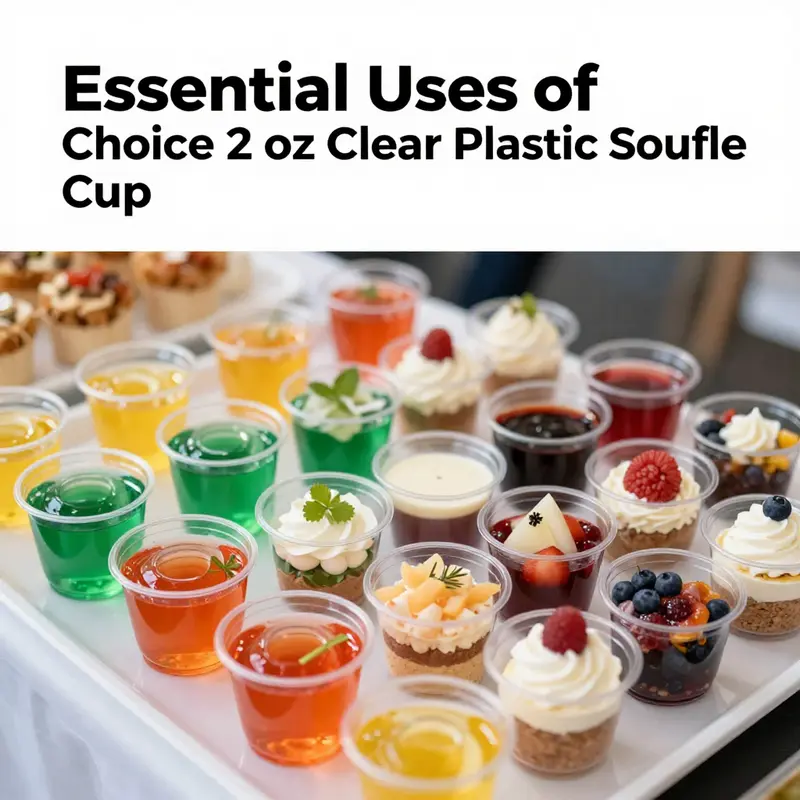
The Choice 2 oz clear plastic souffle cup serves as an invaluable tool for various sectors in the food and beverage industry, including bubble tea shops, restaurants, food trucks, catering services, event planners, and corporate procurement teams. Its unique design promotes practical application, ensuring portion control while enhancing food presentation. This article delves into its practical uses, material composition, and cost efficiency, offering insights to elevate your service standards and streamline operations.
null
null
Material Composition and Durability of the Choice 2 oz Clear Plastic Souffle Cup
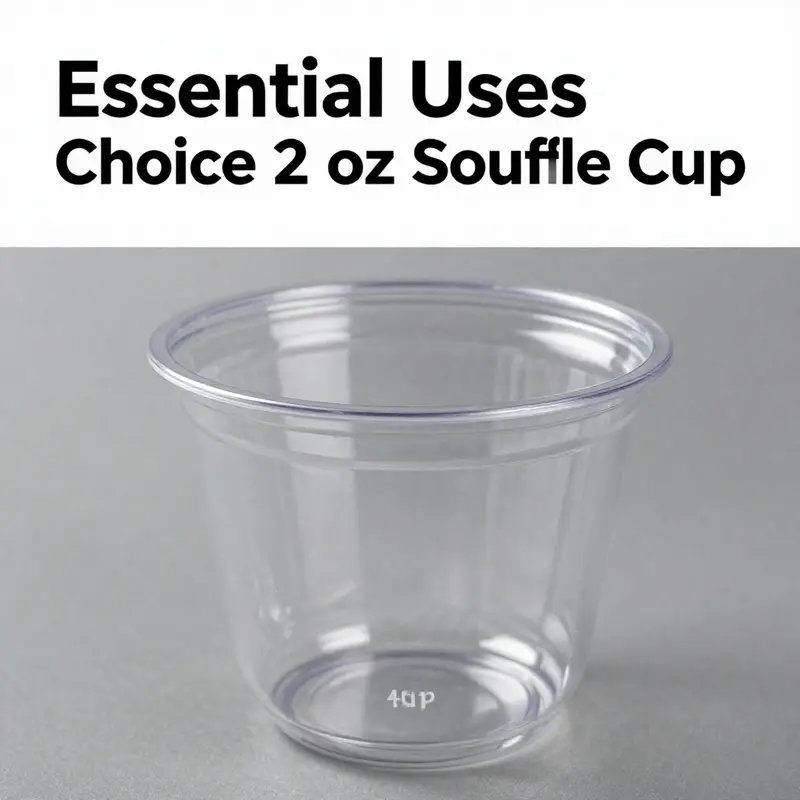
Every serving begins with a decision about what sits in the vessel and how the vessel itself will carry that content from kitchen to table, from tray to tasting station. The choice of material for a small, clear, 2-ounce souffle cup matters as much as the recipe or the garnish. It shapes not only the way the product looks on a countertop or at a catered event, but also how reliably it performs under the pressures of a busy service environment. The core of this discussion centers on clear polypropylene, a material that has become a quiet workhorse in foodservice for its combination of visibility, resilience, and safety. When a customer looks into a transparent cup and sees a vibrant hue—a bright jelly, a glossy sauce, a delicate dessert shard—the material behind that clarity becomes part of the experience. The cup must be more than merely functional; it must be dependable, hygienic, and simple to use in high-volume settings. In these ways, the material composition directly informs the durability that service professionals rely on day after day. The polypropylene that underpins this approach brings with it a suite of properties that align with the demands of modern catering and casual dining alike. It is known for being crack-resistant, capable of withstanding the rigors of frequent handling, stacking, and transportation. In a service line that cycles through dozens or hundreds of portions, a cup that shatters or warps can disrupt the flow, create waste, and complicate food safety checks. The durability of a 2-ounce clear plastic souffle cup is a practical, not merely a theoretical, advantage. The structure is designed so that the cup can be picked up, carried, and presented without excessive caution or fear of breakage. That assurance translates into fewer disruptions during service and more consistent portion presentation. The stability of the cup under typical operating temperatures is part of its reliability. A food-contact grade polypropylene base endows the item with a balance of rigidity and modest flexibility. It resists cracking when dropped onto a hard surface and resists deformation when portions are slotted into a crowded display or during transport between kitchen and event space. The material’s inherent resilience helps prevent leaks and spillage, which is especially important for sauces, dressings, and dessert toppings that rely on a clean, glossy surface to maintain their appeal as guests are served. Clear plastic, in particular, offers visual advantages that enhance portion control and presentation. In the world of sampling and tasting, the ability to view contents without removing the lid is a design feature that informs the entire serving concept. The color, texture, and even the level of fill are immediately apparent, enabling hosts to maintain uniform plating aesthetics and ensuring guests can assess portion sizes at a glance. This level of visibility helps protect margins by promoting accurate servings, a factor that is not just cosmetic but operational. The material’s clarity is not incidental; it is a property engineered to support the overall experience of a tasting or sampling moment, turning what could be a merely utilitarian vessel into a confident, trustworthy component of the service chain. The clear polypropylene used in these cups also emphasizes safety. It is BPA-free, a designation that has become standard in responsible food-contact plastics. This characteristic reduces concerns about potential chemical migration from the cup into the food or drink, a consideration that matters to both food handlers and guests who are increasingly mindful of what touches their meals. The BPA-free status, paired with compliance to general food-safety standards, contributes to a sense of security among operators who must balance speed with consumer trust. From a practical perspective, the fact that the cup is microwavable adds a layer of versatility to a space where reheating small portions is common. In catering and retailers that offer samples or ready-to-consume desserts, being able to reheat a portion within the same vessel can streamline workflow. It eliminates the need to transfer contents to another dish, which reduces the risk of contamination or mess. It also accelerates service, as a single vessel can go from display to a brief warm-up and back to the counter with minimal handling. Yet microwavability, like any feature, must be understood within safe usage parameters. The choice of polypropylene supports this capability because it maintains shape and integrity under the brief heat exposures typical of reheating small portions. It should not be interpreted as permission to subject the cup to prolonged, high-temperature cycles, especially with fatty or carbohydrate-rich fillings that can interact with the plastic over time. Still, for day-to-day service needs, the ability to microwave a small portion without switching containers is a practical benefit that many operators appreciate. The durability of the cup is not merely about the material’s resistance to heat and impact. It also encompasses how it performs in bulk packaging and repeated use in a busy kitchen or event setup. These cups are designed to be stackable, a feature that is as much about logistics as aesthetics. Stacking reduces storage space in crowded replenish points and allows for more efficient inventory management. A stack of 250 or more cups can be stored compactly in a drawer, cabinet, or prep area, freeing up critical square footage for kitchen tools, ingredients, or additional serving ware. The stackability is a product of design, including the wall thickness and the rim geometry, which together ensure that cups nest without damaging the rims or distorting the shape. Durable plastics maintain their form under repeated stacking and unstacking cycles, unlike more fragile materials that may deform after a handful of engagements. For the operator, this translates into more predictable stock levels, fewer damaged units, and less time spent on waste control or product replacement. Vendors often emphasize the commercial-grade nature of these cups as part of their value proposition. The term “commercial-grade” signals a threshold of performance that aligns with high-volume operations. It implies resilience under frequent handling, consistent production tolerances, and a material composition that can endure the rigors of a fast-paced service line. The cups have proven their worth in settings that require speed, reliability, and clear presentation. They are designed to stand up to the occasional rough handling that occurs when servers scramble to assemble hundreds of samples, fill trays with evenly portioned servings, and keep display lines attractive. In this context, durability is measured not only by the absence of cracks but also by how well the cups maintain their integrity during transport, display, and return to storage. The absence of lids on this particular product is an intentional design choice that aligns with its role in sampling and quick-service scenarios. Lids add an extra layer of protection and keep contents from spilling during movement; however, for sampling and short-term servings, a lid would complicate display, hinder visibility, and introduce another step in the customer experience. The lidless design favors speed and ease of access, letting guests view and touch, as appropriate, the contents. It also reduces material usage and simplifies the disposal footprint for events where guests may sample multiple items in quick succession. The trade-off is that the cups are not sealed, so they are best suited for non-dense transport and shorter time frames between display and consumption. In such contexts, the crystal-clear appearance works in concert with the absence of a lid to create a clean, approachable presentation that invites direct sampling. The manufacturing choice of clear polypropylene into a 2-ounce format also reflects a careful calibration of size, rim strength, and base stability. A cup of this size must be thin enough to be economical and convenient, yet sturdy enough to resist cracking when a server grips the rim or when the cup is gently placed on a tray. The balance of rigidity and flexibility ensures the cup holds its shape under light pressure and returns to its intended form after mild deformation, reducing the likelihood of leaks or spills. The result is a vessel that delivers consistent service quality across many cycles, a hallmark of equipment designed for large-scale use. When considering the broader packaging ecosystem, the clear 2-ounce souffle cup intersects with a broader trend toward disposable yet hygienic serving solutions. In many operations, disposability aligns with sanitation goals, reducing wash loads and minimizing cross-contamination risks, especially when serving a variety of small portions during events or in casual dining settings. The material choice here supports that model by offering food-safe contact, ease of disposal, and compatibility with typical waste streams in many venues. Still, sustainability considerations remain part of the discussion. Polypropylene, while durable and reusable in some contexts, is primarily marketed for single-use applications in these cups. Operators weighing environmental impact often pair such disposables with recycling programs or seek vendor options that emphasize recycled content or post-consumer recycled (PCR) materials. The balance between convenience and sustainability is a continuous negotiation for kitchens and event planners, one that shapes purchasing decisions, supplier partnerships, and the way menus are designed around portion-controlled servings. It is worth noting that the clear presentation of the contents also relates to branding and guest experience beyond mere practicality. A guest’s ability to see a vibrant layer of jello, a glossy sauce, or a creamy dessert through a crystal-clear wall can influence perceived quality and appetite. In many venues, display plays a crucial role in how guests evaluate options and choose samples. The vessel contributes to the narrative—how the food is perceived, how easy it is to compare options, and how the entire tasting journey unfolds. A reliable, crystal-clear cup can enhance this narrative by delivering an honest, unobstructed view of the product inside. For operators, the choice of this cup is about more than immediate cost; it’s about lifecycle efficiency, from storage to service to disposal. The bulk packaging that commonly accompanies these cups—often in cases of thousands—speaks to the realities of large-scale operations. Bulk packaging reduces the time spent stocking individual units, speeds up restocking during service, and lowers per-unit handling costs. A bulk approach also minimizes the frequency of replenishment runs, which can disrupt service flow if cups are constantly out of stock. The net effect is a smoother operation, especially in high-demand seasons or in venues that host frequent tastings or sampling events. Finally, it is essential to situate this discussion within the broader family of packaging options available to operators who need quick, clean, and visually appealing serving solutions. While the focus here has been on a specific 2-ounce clear polypropylene cup, the landscape includes a spectrum of materials and designs that balance appearance, durability, and cost. In settings that demand a more substantial or sealed serving, other formats—such as paper or PET alternatives with lids—may be favored. For those who value the combination of clarity, safety, heat tolerance, and crack resistance in a short-serving vessel, the 2-ounce clear plastic souffle cup provides a reliable, versatile option that dovetails with modern service expectations. Operators who are mindful of efficiency will appreciate its stackable design, which translates into practical gains in storage, inventory management, and on-the-floor speed. In sum, the material composition—clear polypropylene—underpins a chain of advantages: visual clarity for presentation and portion control, safety through BPA-free composition, heat tolerance that enables convenient reheating, and mechanical durability that resists cracking during rapid service. The absence of lids reinforces its role in sampling and ephemeral displays, while bulk packaging and stackability address the realities of commercial kitchens and large events. The result is a practical, ready-to-use tool that supports consistency, efficiency, and a positive guest experience in the fast-paced realm of food service. For readers who want to explore alternatives within the packaging family, a related option exists in contexts where a lid or a different material profile is preferred, such as eco-friendly paper ice-cream cups with lid, which can be explored through related product pages. eco-friendly disposable single-wall paper ice-cream cups with lid. External resource: https://www.ebay.com/itm/Choice-2-oz-Clear-Plastic-Souffle-Cup-Portion-Cup-2500-Case/387167468927
Smart Portions, Clean Margins: Cost Efficiency and Environmental Considerations of the 2 oz Clear Plastic Souffle Cup

Every tool in a professional kitchen or a bustling event hall carries more weight than its obvious utility. The humble 2 oz clear plastic soufflé cup is no exception. It is designed to be a silent workhorse, a small vessel that quietly channels portion control, presentation, and speed into the flow of service. In a landscape where margins matter as much as taste, the value of a cup with the right size, visibility, and durability compounds. The capacity—precisely two ounces—along with a clear, uninterrupted view of its contents, creates a direct link between what the customer sees and what ends up on the plate. This is not merely about ease of use; it is about the rhythm of a service operation. When sauces, dressings, or dessert samples meet a transparent container that shows every glint of color and texture, the visual cue alone can reduce hesitation in the guest and shorten decision time at the counter. The cup is designed to be light yet reliable, a single-wall construct that reduces material costs without sacrificing the resilience required to hold liquids and dense mixtures during the thick of a service period. The absence of a lid further crystallizes its intended role: sampling, tasting, or quick portioning in short-term scenarios where sealing is unnecessary. In such contexts, the cup becomes a facilitator of experience rather than a barrier to it. As events scale up, the importance of visibility and portion accuracy rises in tandem with demand for efficiency. In this sense, the two-ounce size is not a whim but a strategic decision—one that aligns with the practical realities of both consumer expectations and operational discipline. The design, therefore, is more than a matter of form; it is a careful calibration of function, economy, and presentation that resonates across sectors—from high-volume catering fleets to intimate, at-home demonstrations. The value proposition is reinforced by its bulk packaging practicality. When an operation can count on reliable, stackable units delivered in large, predictable quantities, the planning horizon expands. The ability to stockpile without sacrificing space or incurring disproportionate handling costs translates into smoother procurement and steadier inventory turnover. The capacity for 100 units per pack and even larger case configurations is not merely a packaging detail. It is a financial lever that reduces the per-unit cost as usage scales. In commercial kitchens and event operations, this translates into tangible savings that can ripple across the bottom line: lower ingredient waste due to precise portions, reduced labor time spent on measuring and serving, and fewer operational disruptions as supplies run low mid-service. The efficiency gains extend beyond the kitchen floor. In a catering setting, for instance, the compact, stackable design simplifies storage in transport crates and staging areas. When time and space are scarce, every inch saved matters. A well-organized stack of cups can speed up the sequence from prep to service, enabling staff to focus on the more complex tasks of timing and coordination rather than rummaging through cluttered storage. The clear plastic also doubles as a quality control feature. It allows staff to verify the freshness and integrity of contents at a glance, a small but meaningful safeguard against misidentification and spoilage. This is particularly relevant when cups are used for a range of items—jello shots, sauces, dressings, and dessert samples—all of which have different visual cues in terms of color, opacity, and density. The ability to spot any lane of unsavory color or separation without opening the cup reduces waste and protects the guest experience. On the financial side, the unit price of the cup in bulk configurations is a critical driver of profitability. The economics work in two directions: the initial outlay and the ongoing per-unit cost. In bulk environments, the per-unit price drops as volume increases, a classic economy of scale that is especially meaningful for venues that rely on high turnover and frequent restocking. This is not just about the headline price. It is also about supply chain reliability. When a single SKU becomes a core component of service, consistent supply and predictable lead times prevent service interruptions. The common practice of sourcing in packs of 100 or cases that reach into thousands of units helps stabilize budgeting and forecasting. Moreover, the clear design reduces the likelihood of waste due to misidentification. A dish or a sample that looks slightly off may be discarded if it cannot be reliably identified, especially in events with multiple menu items presented in similar containers. The transparency prevents that misstep by letting color and texture speak for themselves at a glance. The environmental conversation around disposable plastics is not a private debate but a public responsibility that applies to every procurement decision. The cup in question is BPA-free and made from food-safe PET or PP plastic. This choice reflects a common industry standard that aims to balance safety, performance, and environmental considerations. BPA-free materials alleviate certain health concerns associated with older polycarbonate plastics, particularly in applications that involve contact with food and beverages. The PET/PP family offers a familiar combination of clarity, rigidity, and recyclability. Yet, even with BPA-free claims and a recyclable designation, the lifecycle story is more nuanced than a single certification could convey. The product is not compostable in home settings, and while it can be recycled in municipal systems, recycling outcomes depend on local infrastructure and consumer participation. This nuance matters because end-of-life outcomes shape the broader sustainability profile of any disposable option. In a market that increasingly prizes circular economy principles, the cup’s environmental footprint is a composite of design efficiency, material choice, and post-consumer handling. The cup’s compact geometry and the absence of a lid contribute indirectly to its sustainability profile by reducing packaging complexity and material usage per serving. The single-wall construction minimizes raw material input, and its resilience supports reuse in a limited, controlled context; though the product is marketed as disposable, a tiny portion of operators choose to repurpose rinsed containers within a closed-loop system where permitted. The broader takeaway for sustainability-minded buyers is that this cup represents a middle ground. It offers the convenience and cost savings characteristic of disposable plastics while remaining aligned with common recycling streams and avoiding the more controversial trade-offs associated with some biodegradable options that require specific industrial processes or certifications. For buyers who prioritize stricter eco-certifications or who operate in regions with robust industrial composting programs, the conversation understandably shifts toward products that carry seals like BPI or those that explicitly advertise compostability. The reality is that such certifications and capabilities are not universal, and their presence can substantially influence price and availability. In the chapters that follow, readers will encounter a spectrum of packaging options, from traditional plastics to plant-based alternatives. This chapter positions the 2 oz clear plastic souffle cup as a pragmatic, cost-conscious choice that aligns with many business models while acknowledging its environmental trade-offs and opportunities for responsible end-of-life management. The discussion remains anchored in real-world usage: sampling at events, portion control in food service, and the presentation value of a transparent container that invites curiosity rather than suspicion. It is within these practical contexts that the cup earns its place in the toolkit of modern food operations. The decision to use this cup should be guided by a clear set of criteria: portion accuracy, visual appeal, handling efficiency, and the local recycling landscape. When these elements converge, the result is not merely a cost saving but a smoother workflow, greater guest satisfaction, and a clearer alignment between operational discipline and sustainability goals. In this sense, the cup functions as a microcosm of the broader packaging ecosystem: a simple object whose design choices ripple outward, shaping how food is displayed, measured, and managed from prep table to plate. As with any packaging decision, the bottom line ultimately rests on how well the solution fits the specific demands of the business, the expectations of the audience, and the capabilities of the waste management system in place. For buyers who require a straightforward, economical, and visually transparent container for sampling or short-term servings, the 2 oz clear plastic soufflé cup offers a compelling blend of properties. It is not the sole answer to every packaging question, but it is a robust option that harmonizes cost, performance, and presentation in ways that matter when appetites and budgets are in play. The broader takeaway is this: the most effective packaging decisions are those that reduce waste, support fast service, and respect environmental constraints without compromising on the guest experience. The cup’s economics—the favorable unit pricing in bulk, the simple supply chain, and the efficient handling—are matched by a practical environmental profile that, while not groundbreaking in certification terms, remains aligned with the evolving expectations of many operators. In the end, success with this kind of packaging rests on thoughtful integration into a total system: how items are prepared, displayed, stored, transported, and disposed of. When all the pieces align, the two-ounce cup becomes more than a tiny vessel; it becomes a measured, repeatable step toward a better balance of cost, speed, and sustainability in everyday food service.
For readers who want to explore related packaging options and how cross-material choices can influence sustainability and presentation, a useful example is found here: disposable-biodegradable-kraft-paper-matt-lamination-clear-plastic-combo-pastry-dessert-tiramisu-cake-food-container-packaging.
As this chapter moves forward, the focus remains on practical decision-making that respects both cost pressures and environmental realities. The two-ounce cup is a tool, not a doctrine, and its true value emerges when it is chosen as part of a larger, coherent packaging strategy that considers product type, portioning needs, presentation goals, supply chain reliability, and end-of-life options. The broader article will continue to compare this option with alternatives that emphasize recyclability, compostability, or different material blends, while always returning to the realities of day-to-day operations where time, cost, and guest experience converge. External resource for further exploration of similar packaging choices and market options can be found at https://www.ebay.com/itm/394765824182.
Final thoughts
The Choice 2 oz clear plastic souffle cup stands out as a practical solution for a wide range of food service needs. Whether it’s for controlled sampling, efficient catering, or quick-service scenarios, its versatility, durability, and cost-effectiveness make it an essential item for any operation. By incorporating these cups into your offerings, you enhance presentation, improve service efficiency, and contribute to better waste management—benefits that resonate in today’s eco-conscious market.