
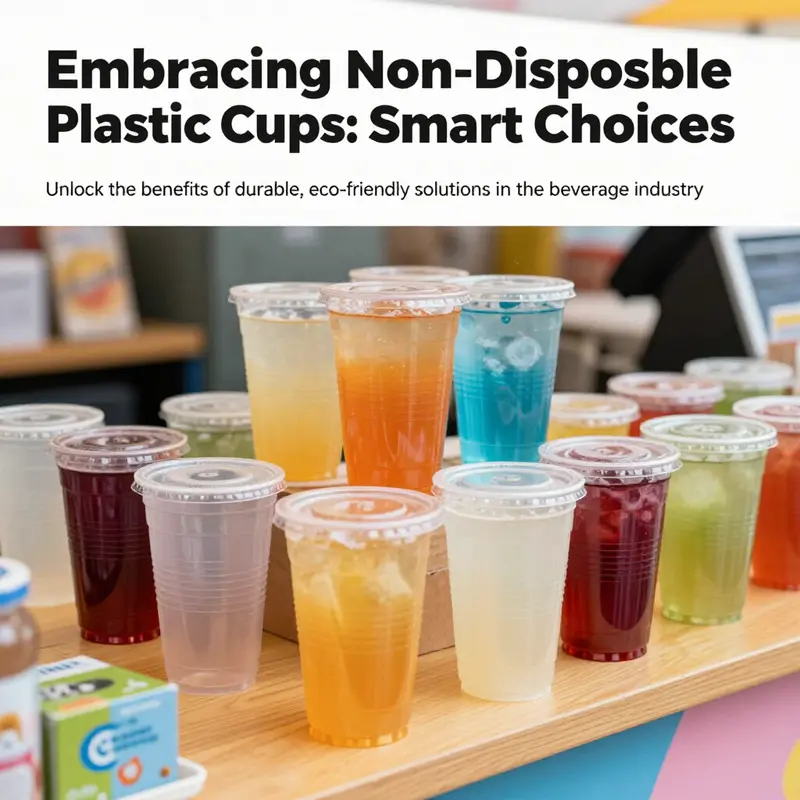
In today’s environmentally conscious market, non-disposable plastic cups have emerged as a viable solution for beverage businesses. From bubble tea shops to food trucks, the demand for durable and sustainable options is rising. This article explores the multifaceted advantages of non-disposable plastic cups through thoughtful quotes and insights, touching on their durability, environmental benefits, innovative designs, material strengths, and sourcing information. Each chapter will provide essential insights tailored specifically for beverage chains, event planners, restaurants, and corporate procurement teams, underscoring the long-term value these products can bring to an increasingly eco-aware customer base.
Durability as a Path to Sustainability: The Reusable Plastic Cup Paradigm
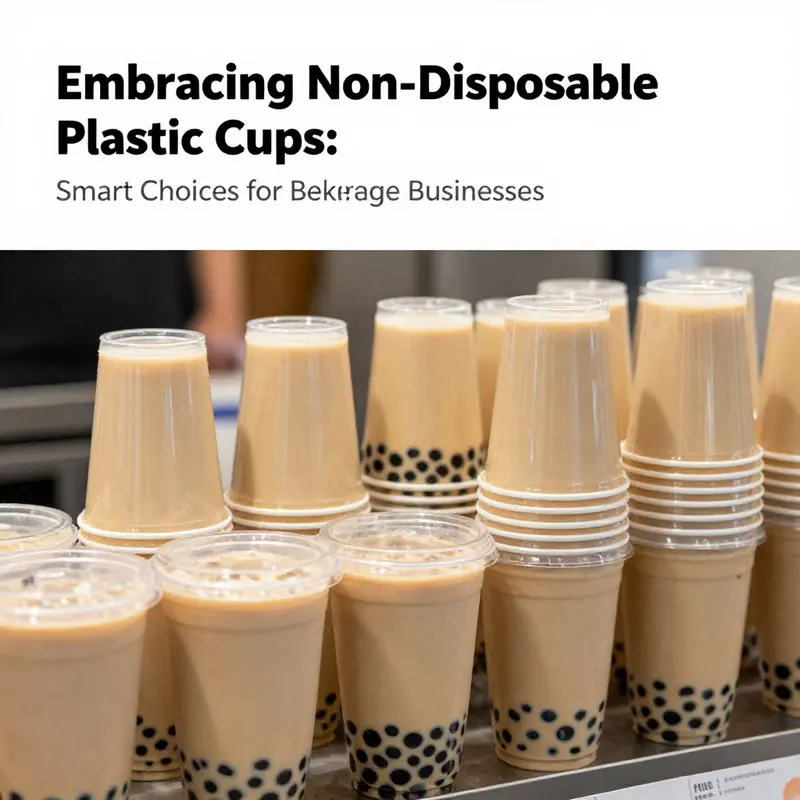
Durability and reusability in non-disposable plastic cups are not merely technical traits; they are a philosophy that reshapes how institutions, brands, and individuals think about waste, cost, and care for the environment. When a cup is built to endure, it invites a shift from single-use convenience toward repeated service. In environments as diverse as classrooms, office kitchens, and cafés that prize consistent performance, these cups stand as quiet, reliable workhorses. They are designed for repeated use, with structural integrity that resists impact and a form that resists warping after dozens, even hundreds, of cycles. The underlying idea is simple and powerful: if a container can survive many washings and frequent handling without compromising hygiene or appearance, it ceases to be a disposable item and begins to become a durable instrument of sustainable practice. The materials at the heart of this durability are chosen for their resilience and safety. Copolyester-like compounds deliver toughness and clarity, resisting staining and maintaining a crisp appearance even after long daily use. When these cups are made with BPA-free polymers, they answer safety concerns that accompany multiple-use products while preserving lightness and ease of handling. The result is a cup that can be dropped, bumped, or tossed into a dishwasher and still emerge ready for the next service hour, not as a fragile artifact but as a reliable tool for everyday life. The thicker walls and reinforced rims common to non-disposable plastics contribute to a sense of sturdiness that customers can feel in their hands. This perceived durability translates into a practical advantage for operators who must balance service speed with cost control. A cup that lasts longer reduces the frequency of replacements, and in turn lowers the cumulative waste generated by a business over time. It also lowers the demand for constant supplier purchases, storage space, and administrative tasks, creating a ripple effect that touches budgeting, inventory management, and sustainability reporting. The appeal of durability, however, is not solely about reducing waste; it also encompasses performance. In busy settings, cups must withstand hot beverages, cold liquids, and the rigors of daily handling. The heat resistance of non-disposable plastics ensures that contents stay at the desired temperature longer and that the exterior remains comfortable to hold. The same materials resist cracking when faced with accidental drops or clinks in a crowded sink area. In addition, these cups are built to tolerate frequent washing, hot water, and the mechanical action of dishwashing without losing their shape, color, or seal integrity when lids or straw slots are part of the design. This maintenance tolerance is essential in institutions that aim for high hygiene standards and consistent presentation. The lifecycle story of a reusable cup, though, extends beyond one facility. A well-designed non-disposable cup embodies a cradle-to-cradle mindset: it is born from materials chosen for safety and recyclability at end of life, built to endure, and designed to be repaired or repurposed rather than discarded. From a systems perspective, the durability of these cups translates into meaningful environmental benefits. Their reusability suppresses the volume of waste that would otherwise enter landfills or require energy-intensive processing. Although the upfront cost of such cups may be higher than disposable options, the long-term cost picture improves as a function of reduced replacement frequency and lower waste management needs. In a world where waste reduction is increasingly tied to brand narratives and regulatory expectations, the durable cup supports sustainability goals while delivering reliable service and a predictable user experience. On the economic side, institutions frequently report that the total cost of ownership declines as usage increases. The math is straightforward in concept: a single cup that serves hundreds or thousands of uses can spread its price over a greater number of servings, reducing the per-use expense when compared with repeatedly purchasing disposables. This is not simply a matter of chasing pennies; it is about aligning a business model with a longer horizon for capital investment and environmental stewardship. For many operators, this shift also aligns with branding and customer expectations. Consumers increasingly judge establishments by their commitment to sustainable practices, and a durable, reusable cup is a tangible signal of that commitment. The cup becomes a quiet ambassador for a responsible culture, carrying impressions of care and consistency with every refill. The design space for durability further expands with innovations that address practical barriers to wider adoption. While the classic reusable cup remains a simple vessel, modern iterations explore features that increase storage efficiency and portability without compromising strength. Some of these designs introduce collapsible or foldable concepts that compress for easy transport or closet storage in places with limited space. The idea behind such innovations is to balance portability with longevity, ensuring that a cup can travel with a user—from a commuter on a packed train to a student who moves between dorm and library—without sacrificing its integrity. Materials that support flexibility and resilience play a crucial role here. Flexible, food-grade elastomers or silicone-infused plastics can be engineered to endure repeated bending and compression while preserving washability and hygienic standards. In other words, durability does not merely mean a rigid, unyielding shell; it can also encompass intelligent, resilient design that adapts to real-world use cases without compromising safety or ease of cleaning. The conversation around reusables would be incomplete without acknowledging consumer expectations for insulation and comfort. A well-made reusable cup should keep beverages at the right temperature for a reasonable period and allow hands to stay comfortable when holding hot liquids. Materials chosen for insulation and thermal stability contribute to this experience, reinforcing the sense that the cup is a practical, everyday tool rather than a luxury item. Yet durability and insulation must be understood together with hygiene. Reusables demand rigorous cleaning protocols to prevent cross-contamination and maintain perceived safety. The best practices emphasize routine inspection for wear, obvious cracks, or dulling of surfaces, followed by thorough cleaning in hot-water cycles. In some settings, this means dedicated dishwashing capabilities or clearly defined workflows that ensure cups can be recycled or replaced if signs of wear become evident. The overarching message is that durability and hygiene are not competing priorities; they reinforce one another. A cup that remains intact after repeated washings is less likely to harbor residues or degrade in ways that could undermine hygiene standards. This synergy between sturdiness and cleanliness makes non-disposable cups an appealing option for brand-conscious establishments and institutions seeking dependable performance a step above the disposable baseline. As with any procurement decision, economies of scale and lifecycle thinking influence choices. Institutions evaluating non-disposable cups often weigh the initial investment against the long-run benefits—reduced waste, lower replacement rates, and a stronger sustainability narrative. The conversation is broader than price per unit; it encompasses the value of consistent service, brand alignment, and environmental accountability. Even cost-conscious buyers can see that durable cups, when used intensively across a program, contribute meaningfully to the bottom line by smoothing procurement needs and simplifying waste streams. In practical terms, the path to widespread adoption is paved by considerations that extend beyond the cup itself. Storage, drying facilities, and staff training on cleaning and handling become part of the equation. When these elements are aligned, the durable cup becomes a seamless component of a sustainable operation rather than a disruptive novelty. In the realm of consumer perception, the impact of durable, reusable cups is nuanced but significant. People tend to view objects that survive routine use as trustworthy, a perception that translates into consistent user experience and fewer frustrations with leaks, cracks, or fading aesthetics. This reliability reinforces a broader ethos: small, everyday choices add up. Reusing a cup regularly translates into lower waste and a quieter personal footprint, which, in turn, resonates with customers who value practical steps toward a greener lifestyle. The decision to adopt non-disposable cups is rarely about a single moment of purchase; it is about a continuous commitment to durability, hygiene, and responsible consumption. The quotes that anchor this discussion reflect a shared understanding across industries: durability enables long life, reusability drives waste reduction, and thoughtful design sustains functionality under real-world pressure. In a market that often prizes novelty, durable reusable cups stand as a counterpoint that emphasizes reliability and ongoing value. As operations evolve toward more sustainable practices, institutions will increasingly recognize that the cost of care—careful cleaning, thoughtful storage, and prudent material choice—directly complements the durability that makes these cups viable. For readers who want a deeper dive into the technical and standards aspects behind these choices, an external resource offers a rigorous look at the materials and performance benchmarks used in durable reusable cups. External resource: Inside Small Plastic Cup: Technical Details, Standards, and Applications for Professionals Also, those seeking practical procurement and branding considerations can explore related options in the broader ecosystem of cups and containers that emphasize eco-friendly and reusable design. To see a perspective on how businesses combine sustainability with branding through cup selection, you can visit an example page that discusses eco-friendly printed options for take-away beverages. eco-friendly printed-paper coffee cup page
Beyond Waste: The Environmental Promise and Economic Logic of Reusable Plastic Cups
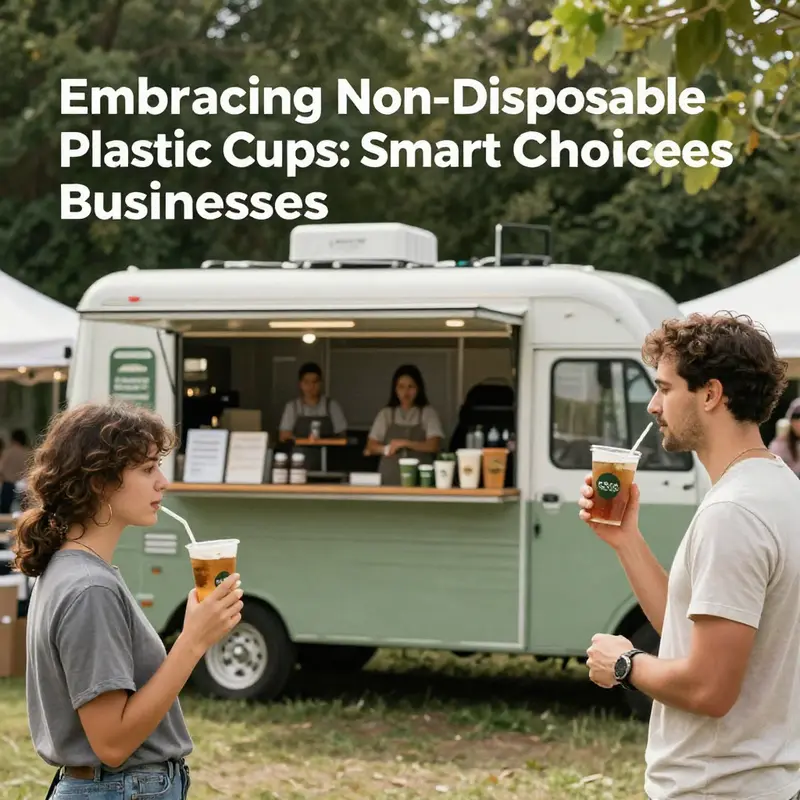
The shift from disposable to non-disposable cups is more than a preference; it is a rethinking of how we price convenience, resource use, and reputation. In discussions about reusable cups, the focus often lands on durability as a practical baseline. A common understanding is that non-disposable cups are designed for repeated use, offering high durability and resistance to impact; they are intended to be reused again and again, cleaned in standard dishwashers, and kept from cracking or warping under regular handling. When such properties are present, businesses—not just households—can justify shifting away from single-use containers. The idea is not simply to cut waste in a single act of disposal but to flatten the waste curve over months and years. In hospitality settings where turnover is high yet margins are tight, the value proposition of a cup that remains serviceable after dozens or hundreds of cycles becomes tangible. The narrative extends beyond a single restaurant or cafe; it speaks to eco-conscious brands seeking consistency in their sustainability story and to consumers who want products that perform reliably under everyday pressures. In this sense, non-disposable cups are more than a tool; they are part of a larger system of practice that links durability, cleanliness, and long-term resource stewardship in a single, recurring act of use.
A second strand of the discussion centers on environmental and economic benefits. The literature repeatedly points out that while the upfront cost of reusable cups is higher than that of disposable options, the life-cycle economics can favor reuse over time. The core logic is straightforward: every cup that makes it back into a dishwasher after a service cycle reduces the number of cups that would otherwise be purchased anew, cut into waste streams, and sent to landfills or incinerators. In this framing, the cups become an investment with payback through waste reduction, reduced purchasing frequency, and alignment with corporate sustainability goals. Moreover, the durability and reusability of these cups support marketing and branding efforts. A company can promote its commitment to the environment while delivering a reliable user experience, turning the cup itself into a migratory asset—one that travels from back room to front line, from break room to customer hand, and back into the washing cycle as part of a broader circular practice. The economics are not only about direct per-unit costs; they also hinge on resilience, maintenance, and the avoided costs of waste management that can fluctuate with policy and consumer expectations.
Design innovation is another thread that enriches the case for non-disposable cups. Modern approaches to cup design acknowledge the competing pressures of portability, storage, and durability. Rather than accepting a trade-off between convenience and sturdiness, researchers and designers have explored collapsible configurations and flexible plastics that can be compressed for storage without sacrificing longevity. These innovations aim to resolve practical constraints in real-world operations: how to keep a large stock of cups organized in a busy kitchen, how to transport them for catering, and how to ensure that a cup remains structurally sound after repeated cycles of washing and use. The emphasis on collapsibility and packability is not about making a fragile cup more versatile; it is about rethinking the form to meet the day-to-day realities of food service and personal use. When a cup can be collapsed into a compact shape for storage and then re-expanded for use, it reduces space requirements in transport and storage, thereby cutting ancillary costs and emissions associated with logistics. Yet the underlying material choice remains crucial. A cup built from durable, food-grade plastics that are BPA-free and resistant to cracking can sustain regular cleaning cycles and temperature fluctuations, ensuring insulation properties and user comfort over time. This synthesis of resilience, hygiene, and space efficiency makes non-disposable cups a compelling option for brands that want to project a modern, responsible image without compromising performance.
From a materials perspective, the advantages are aligned with contemporary expectations for safe, long-lasting consumer goods. Reusable plastic cups designed for everyday life emphasize durability and insulation, paired with the assurance that the materials are safe for repeated contact with foods and beverages. The emphasis on BPA-free construction reflects broader concerns about chemical exposure and product safety, underscoring how material choices influence both user confidence and regulatory acceptability. In practical terms, a well-made reusable cup can serve commuters, gym-goers, and office workers who need a reliable vessel that helps maintain beverage temperature and quality. The emphasis here is not only on resisting wear but also on avoiding the degradation that can accompany lower-grade plastics after multiple wash cycles. In that sense, the material advantages extend beyond performance to the health and comfort of users, reinforcing the broader argument that durable, safe, and reusable cups fit naturally into routines that prize reliability and environmental responsibility.
Yet the chapter’s own findings from the specified research results present a sober reminder about the limits of current knowledge. The detailed research results indicate that there are no specific quotes or in-depth information available about the benefits of reusable cups within the provided data. What exists tends to focus on disposable cup materials, design, and industrial applications, with limited attention paid to reusable systems in particular. This gap signals the need for more targeted sustainability reporting and industry studies that compare reusable tableware systems directly against disposables, especially in terms of environmental impact, waste reduction, and carbon footprints. The absence of robust, accessible data in this area does not negate the potential advantages of non-disposable cups; it simply underscores the necessity for broader, more focused research. In light of this, practitioners and policymakers should seek out sustainability reports and peer-reviewed studies that examine real-world usage, end-of-life pathways, and lifecycle analyses for reusable tableware. For readers who want a broader, policy-informed view, the Environmental Protection Agency offers resources that discuss the environmental impact of reusable plastic products and their lifecycle implications, underscoring the value of investigation into waste reduction and resource stewardship across stages of use, cleaning, and disposal. This broader frame helps situate the cup within a larger circular economy dialogue, where the benefits are realized not only in the act of reuse but in the careful orchestration of procurement, cleaning, transport, and end-of-life decisions.
In the absence of a complete data set, one can still reason about the environmental and economic benefits of non-disposable cups by integrating the qualitative signals coming from adjacent literature and practice. Reduced waste forms the core of the environmental argument: each cup that endures through dozens of service cycles translates to fewer single-use cups entering waste streams. That reduced waste can contribute to lower emissions and energy use associated with manufacturing, transporting, and disposing of disposable cups. When organizations commit to a reusable system, they often implement a structured return-and-clean protocol. This protocol ensures that cups are properly cleaned and stored, reducing the risk of contamination and improving user confidence. The governance around reuse—clear handling instructions, consistent washing practices, and standardized inventory management—becomes a critical enabler of environmental performance. This governance also supports the economic logic: predictable demand for replacement cups decreases, while the cost of maintenance and cleaning remains a known line item. In such a system, the cup becomes a tool for shaping organizational culture around sustainability, signaling to customers that environmental values are embedded in everyday operations rather than relegated to external campaigns.
From an implementation perspective, the conversation around non-disposable cups also intersects with broader procurement and operations strategies. For businesses that view sustainability as a competitive differentiator, the upfront cost of reusable cups is balanced against long-run savings, reliability, and brand alignment with responsible practices. If a brand will consistently remove disposables from its supply chain, it must consider the full lifecycle: purchase, cleaning, storage, transport, and end-of-life stewardship. This entails establishing partnerships with service providers who can manage cleaning and logistics at scale, enabling a predictable cycle that minimizes downtime and product loss. It also entails educating staff and customers about the reusable system, so that the flow from handoff to wash remains smooth and efficient. In a mature program, the cup becomes a linchpin in a broader strategy that marries operational efficiency with environmental accountability. The literature and practice converge on this point: durable, reusable cups are not merely a better way to serve beverages; they are a practical instrument for shaping consumption patterns toward sustainability, while delivering consistent performance that meets the daily needs of users.
To connect these threads with practical next steps, consider the human context as well as the technical. Consumers often report value in products that perform well over time, feel comfortable in hand, and align with personal values about waste and resource use. Businesses can support this alignment by communicating clearly about the cup’s lifecycle, durability, and cleaning expectations, as well as by highlighting the environmental rationale behind reuse programs. The design that reduces space demands and facilitates efficient handling becomes part of a seamless user experience, not merely a hardware choice. When a customer carries a reusable cup through daily routines, the act becomes a small civic gesture, reinforcing a culture of reuse that can ripple outward into households and communities. In this light, the environmental promise is not abstract; it emerges from the everyday interactions around the cup—how it is stored, washed, reused, and finally disposed of in a responsible manner if it reaches its end of life. This is how durable, reusable cups can move from niche products to mainstream elements of sustainable operation and daily life.
For readers seeking direct pathways to explore more about the topic, one can consult relevant internal resources on eco-friendly cup options within the same domain, such as pages detailing printable, eco-conscious cup designs and take-away solutions. For example, an internal reference highlights an option described as eco-friendly printed logo paper cup take-away coffee cup, which provides a practical case study in branding alongside sustainability. This resource illustrates how a reusable or returnable system can be combined with branding elements to reinforce a commitment to responsible consumption while maintaining functional and aesthetic appeal. The interplay between product durability, branding, and environmental impact is a powerful reminder that reusable tableware sits at the intersection of design, logistics, and culture.
Looking ahead, further research remains essential. The current landscape shows a gap in quotes and detailed analyses focused explicitly on non-disposable cups within the available data. Researchers should pursue sustainability reports and industry studies that compare reusable tableware systems across different settings—cafes, restaurants, offices, and schools. Such studies should quantify waste reduction, energy use, water consumption, and greenhouse gas emissions associated with reuse versus single-use options, as well as the economic implications for operators and consumers. In the meantime, practitioners can rely on the converging signals from design, materials science, and field practice: reusable, durable cups, when properly integrated into workflows, offer environmental and economic benefits that align with contemporary expectations for responsible consumption. They represent not a marginal shift but a practical, scalable approach to reducing waste, lowering long-term costs, and strengthening brand narratives grounded in stewardship. For readers who wish to delve deeper into the environmental dimensions beyond the specific chapter, the EPA provides a comprehensive overview of reusable plastic products and their environmental impact, which is a valuable starting point for broader inquiry: https://www.epa.gov/sustainable-management-plastics/reusable-plastic-products-and-their-environmental-impact.
As this discussion unfolds, the practical takeaway is clear: the environmental and economic logic of non-disposable cups rests on a balance between durable performance, responsible material choices, and careful operational design. When this balance is achieved, the cup becomes a reliable companion in daily life and business—one that reduces waste, supports sustainability goals, and reinforces a culture of reuse that can scale with community expectations and regulatory ambitions. The journey from a single-use habit to a circular approach is not instantaneous, but every step toward durable, reusable cups moves organizations closer to a system where consumption becomes less wasteful and more intentional, where the cup is more than a vessel and becomes a symbol of a broader commitment to responsible stewardship.
Shaped for Reuse: How Innovative Design Elevates Non-Disposable Plastic Cups into Everyday Engineering
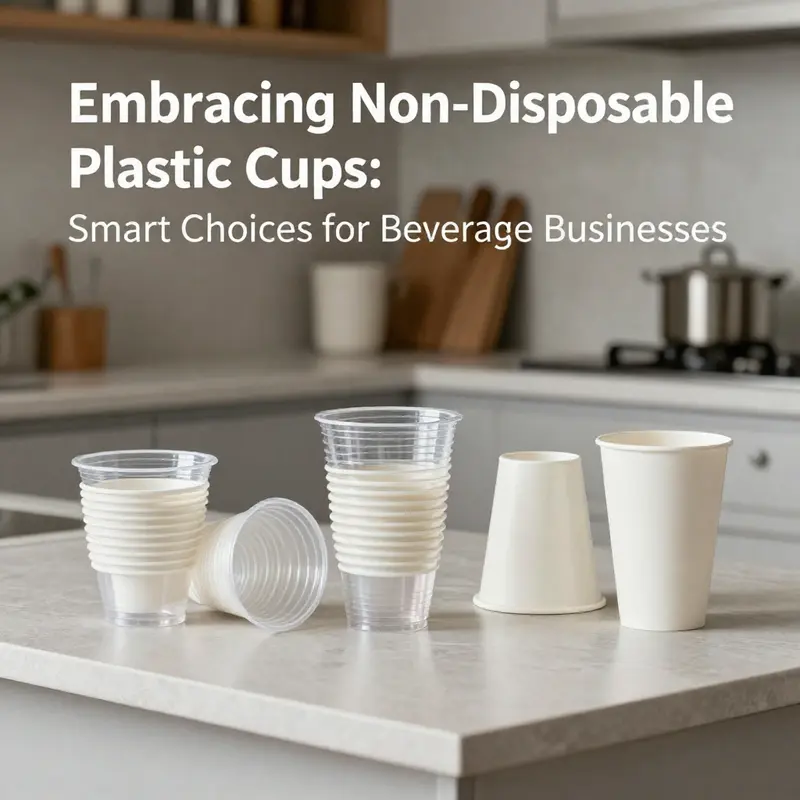
Reusable cups are more than vessels. They reflect a shift from single use to durable, engineered systems where every contour and material choice matters. The design language blends durability with user centered features, turning a cup into a portable tool that performs across many cycles. The result is a product that supports daily routines while reducing waste.
Double wall insulation is a common cornerstone of modern reuse oriented cups. The idea is to create an air or foam gap between two walls to slow heat transfer. In practice, hot drinks stay hot longer, cold drinks stay cool, and the outer surface remains comfortable to touch. Condensation on the exterior is reduced, which improves grip and minimizes slip hazards in busy settings. The insulation also helps service operators by maintaining beverage quality without relying on excessive heat or rapid turnover.
The sealing system is another key thread. Leaks are mitigated by secure lids and precision fit interfaces. A robust seal reduces the chance of spills during transport, which is essential for commuters and students on the go. Fewer leaks also mean less secondary waste and packaging. When lids stay put, customers are more likely to reuse the cup and trust in the product over time.
Ergonomics and shape design influence how the cup is stored, carried, and enjoyed. Profiles that maximize packing density fit neatly in shelves and cup holders. Tall, slender forms can accommodate thicker beverages while maintaining a comfortable grip. Reinforced walls and thoughtful rims enhance comfort without sacrificing durability.
Integrated systems bring together lids, sipping mechanisms, and the cup body into a cohesive whole. Built in features reduce the need for separate disposable components and simplify cleaning. An integrated approach can even support branding in a durable way that travels with the user across venues.
Materials and lifecycle thinking underpin the broader value proposition. BPA free polymers and high strength materials balance rigidity, impact resistance, and chemical safety. Some designs explore collapsible components that retain form and insulation even when compressed for travel, offering portability without compromising durability. Long lasting materials contribute to a lower environmental footprint by enabling hundreds of reuse cycles.
From operations to user experience, these design choices converge to create a practical but meaningful shift. Clear performance expectations, reliable seals, and easy care encourage habitual reuse, which translates to real waste reduction over time. For readers seeking concrete examples, the focus remains on options that pair durability with ease of maintenance and branding that endures through many cycles. The result is a reusable cup that feels like a well engineered everyday tool rather than a novelty item.
Durable By Design: Material Advantages Driving the Non-Disposable Cup Revolution
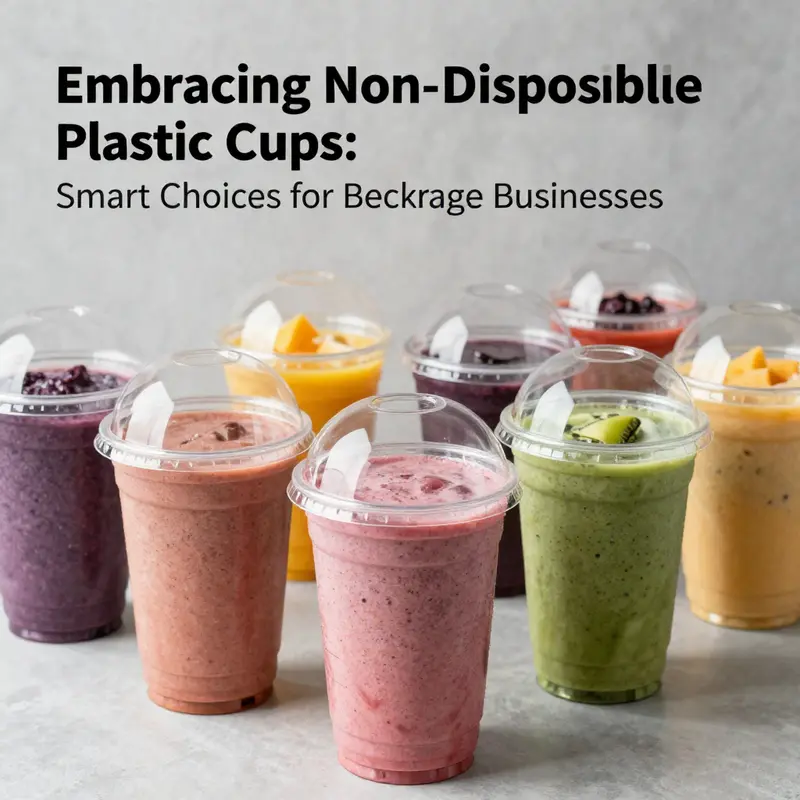
Across the spectrum of non-disposable cups, the language of durability, safety, and long-term value threads through every material choice. The chapter of feasibility, after all, is written in the small but telling details: the way a cup resists impact on a busy service line, the way it holds heat or cold without sweating through a sleeve, the way it can be cleaned, reused, and trusted to stay food-safe year after year. When the discussion turns to material advantages, it is less about quick savings and more about a sustained architectural shift toward responsible design. The waterline between disposables and non-disposables is drawn not just in price, but in the quiet confidence that a reusable cup delivers: the confidence of a product engineered for repeated use, certified for food contact, and designed to minimize waste while maximizing user satisfaction. The realm of non-disposable cups rests on a palette of polymers and co-polymers whose properties translate into everyday outcomes—durability, safety, and practical convenience—that brands, institutions, and individuals alike can rely on day after day. In this light, four materials rise to the forefront: polypropylene, polycarbonate, Tritan, and high-density polyethylene, each offering a distinct blend of strengths that inform decisions about performance, lifecycle impact, and user experience.
Polypropylene, perhaps the most common entry point into durable, reusable cup design, embodies a careful balance of resilience and practicality. Its mechanical properties give it a high tensile strength and dimensional stability, so cups hold their shape even after repeated handling, stacking, and washing. This is crucial in busy settings where cups are shuffled between dishwashing cycles and service counters, where detergents and hot water are routine rather than occasional. PP’s chemical resistance means it tolerates a broad range of beverages and cleaners without degrading, a factor that extends its usable life in restaurants, cafeterias, and school programs. Importantly, polypropylene is widely regarded as safe for food contact when manufactured to appropriate standards, and it remains a reliable option for dishwasher-safe and microwave-safe applications when labeled for such use. The material’s low moisture absorption further reduces warping and swelling, ensuring that cups stay stable in cooling and heating cycles alike. In our conversations about cost and sustainability, PP often emerges as the practical middle ground: not the most premium in appearance, perhaps, but robust enough for daily reuse and cost-effective enough to justify the switch from disposables to a long-term purchasing plan. This combination of strength, safety, and price stability makes PP a foundational choice for non-disposable cup programs where durability and ease of cleaning are paramount.
Polycarbonate adds another layer of performance, especially where impact resistance and visibility of contents matter. In environments where cups are jostled during transport, or where a clear view of the beverage is beneficial for quality control, PC’s durability shines. Its impact strength can be orders of magnitude higher than glass, which translates to fewer breaks and less waste from accidental drops. Clarity is not merely a cosmetic feature here; it serves practical purposes in laboratories, clinics, and industrial settings where inspecting the contents quickly can be essential. Polycarbonate’s tolerance for a wide temperature range—temperatures from well below freezing to near-boiling for certain applications—supports processes like autoclaving in sterilization cycles, which can be a critical requirement in institutional contexts. Yet, as awareness about health considerations evolves, so too does the demand for BPA-free PC variants. Modern formulations address migration concerns by offering BPA-free options that preserve the material’s clarifying advantage and structural integrity. In short, PC brings an almost unmatched combination of toughness and visibility, making it a compelling choice where the risk of impact or breakage is high and where contents demand scrutiny. The trade-off, naturally, is a higher price point and a careful review of sterilization practices, but for facilities that prioritize rapid turnover, reliability, and repeat use, the payoff is measured not just in dollars but in reduced breakage and safer handling over time.
Tritan, a co-polyester developed to harmonize clarity, safety, and durability, represents a modern apex in consumer-oriented reusable cup design. It is celebrated for being BPA-free and free of phthalates, addressing a broad set of consumer health concerns that can influence daily-use decisions. Tritan’s resistance to staining and odor retention helps maintain a fresh, like-new appearance and feel even after repeated uses and washing cycles. In everyday hydration contexts, this stability translates to a cup that remains crystal-clear and visually appealing, encouraging consistent reuse rather than resorting to disposables for aesthetic or practical reasons. Dishwasher safety is a hallmark of Tritan, with many designs supporting regular cleaning without risk of clouding or aroma transfer. The material’s performance under hot beverages is dependable, though cautions around extreme temperatures and manufacturer guidelines should be observed to preserve longevity. From a brand perspective, Tritan’s modern look aligns with eco-conscious narratives while still delivering the practical benefits customers expect from a premium reusable cup. The emphasis on safety, ease of maintenance, and long-term appearance reinforces its status as a preferred option for consumer-facing contexts that prize both function and style.
High-density polyethylene, particularly in its rigid forms, adds another dimension to the material landscape for non-disposable cups. PET often enters discussions in two forms: recyclable, lightweight options suitable for cold beverages, and more specialized high-density variants that sustain clarity while offering a reduced environmental footprint through recyclability. HDPE-oriented designs emphasize recyclability as a core attribute, supporting circular economy goals when paired with robust collection systems. However, HDPE and its PET-related cousins may show limitations in hot liquids or harsher cleaning regimes compared with polypropylene or polycarbonate. In contexts where beverages remain cold and the emphasis is on durability plus recyclability, HDPE-based cups provide a compelling combination that reduces waste through a lifecycle that circles back to feedstocks and remanufacturing streams. The emphasis on recyclability resonates with institutions seeking to minimize end-of-life impact while maintaining practical performance for everyday use. Taken together, PET and HDPE variants demonstrate how sustainability and usability can coexist in reusable cup design, particularly when the product ecosystem is aligned with efficient collection, sorting, and recycling channels. They remind us that the most durable cup is not only the one that lasts many uses but also the one whose materials are most effectively reintegrated into new products after their service life.
The overarching narrative of the material landscape for non-disposable cups is not a single material’s triumph but a chorus of well-chosen options that collectively raise the bar for safety, durability, and environmental responsibility. Each material brings a distinct advantage that serves different contexts: PP for everyday reliability and affordability; PC for resilience and transparency in demanding environments; Tritan for safety-compliant, stylish daily reuse; and PET/HDPE variants for lightweight recyclability and circular economy alignment. The quotes that anchor this discussion—despite higher upfront costs, the long-term savings from reduced waste and sustained performance; the emergence of durable, BPA-free options; and the push toward designs that balance portability with toughness—map cleanly onto the technical properties described. In practice, a well-executed non-disposable program will blend these materials to fit the needs of buyers and end users: a café that prizes a premium look and feel might lean into Tritan for its clarity and safety, a school or corporate dining hall with high-traffic flows may favor polypropylene for its robust cleaning tolerance, while a research facility with sterile requirements could rely on polycarbonate’s strength and autoclavability. And because lifecycle thinking matters, the conversation does not stop at performance alone. It extends to how these cups are washed, stored, and eventually reintegrated into manufacturing streams, where recyclability and remanufacturing options shape the total cost of ownership and the broader environmental footprint.
From a practical standpoint, the material story also informs design decisions beyond the raw polymers. The structural geometry that accompanies these materials—thicker walls for impact resistance, reinforced rims for grip and heat transfer, or nesting features that reduce space during storage—works in concert with the material’s inherent properties. The result is a non-disposable cup that is easier to clean, more resistant to daily wear, and more adaptable to a variety of beverages and temperatures. In the end, the material advantages aren’t just about enduring more uses; they are about enabling a more responsible consumption pattern that aligns with sustainability goals without compromising the user experience. When organizations weigh the trade-offs between initial cost and long-term value, the objective should be to quantify durability in terms of wash cycles, breakage rates, and the consistency of performance across heat and cold exposure. In this framing, the materials described here are not mere ingredients but strategic choices that determine whether a cup becomes a temporary convenience or a trusted, reusable companion for daily life.
To connect these material principles with practical purchasing decisions, consider how a program can balance performance with sustainability metrics. A glossy, crystal-clear PC cup might be ideal for a high-end event or front-of-house service that seeks to convey a premium image while delivering dependable resilience. A BPA-free Tritan option can serve health-conscious consumers who value a lightweight, dishwasher-safe solution that still looks contemporary and fresh after many cycles. PP remains the workhorse for daily operations that require cost-effectiveness and robust cleaning compatibility, while PET/HDPE options align with an emphasis on recyclability and end-of-life stewardship. The mixture of these materials in a single program—carefully matched to the intended use, cleaning regime, and venue—delivers not only a better user experience but also a more coherent environmental strategy. The quotes in the research materials reinforce this synthesis: durable, reusably designed cups deliver long-term cost savings; safer, BPA-free materials meet evolving health expectations; and innovations in design and materials together expand the space for sustainable beverage service. The practical outcome is a non-disposable cup ecosystem that supports brand promises, reduces waste, and encourages everyday reuse, thereby transforming a simple vessel into a cornerstone of responsible consumption.
As a final note, the conversation about material advantages is deeply tied to the broader conversation about sourcing and production. While cost comparisons between reusable and disposable options are nuanced, the lifecycle benefits of non-disposable cups—when paired with strong cleaning practices and robust end-of-life plans—outweigh the upfront investment for many institutions and brands. This is not merely about replacement of one product for another; it is about reimagining a small, daily item as a durable asset that can travel through many cycles, carrying with it a reduced environmental footprint and a steadier economic footing. The material science behind PP, PC, Tritan, and PET/HDPE is at the heart of that redefinition, translating technical specifications into tangible improvements in safety, cleanliness, and sustainability for everyday consumption. For readers seeking a deeper dive into the engineering specifics behind these materials, the broader literature on plastic cups and their compositions offers a clear map of how each polymer behaves under real-world use and how modern formulations address health and safety concerns while preserving the functional advantages that make non-disposable cups a practical, scalable choice. eco-friendly-printed-logo-buy-paper-cup-take-away-coffee-cup provides a glimpse into how the broader cup ecosystem positions materials and design to meet evolving consumer expectations, while an external resource offers a comprehensive overview of material composition and performance in engineering applications. For readers who want a structured, external reference that grounds these discussions in engineering practice, see the external resource below.
External resource for further reading: https://www.plasticengineeringguide.com/engineering-plastic-cups-material-composition
Durable by Design: Sourcing, Pricing, and the Economic Logic of Non-Disposable Plastic Cups
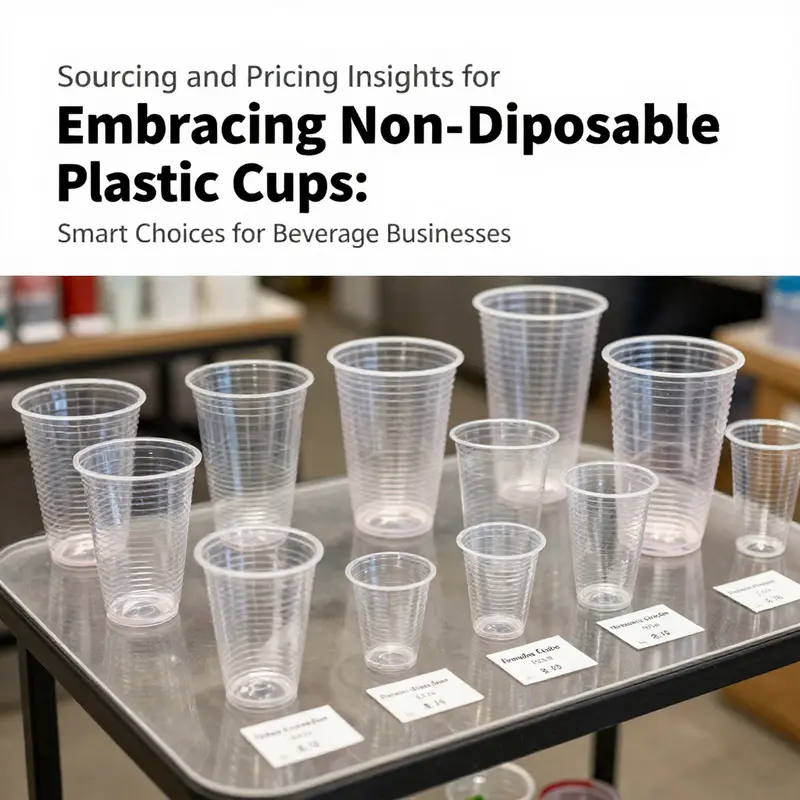
The conversation around non-disposable plastic cups often centers on their practical utility, yet the most enduring arguments hinge on quotes that crystallize durability, cost, and sustainability. As one research note observes, non-disposable cups are designed for repeated use, offering high durability and impact resistance. They are reusable, dishwasher-safe, and resistant to cracking and warping—traits that make them attractive for restaurants, cafeterias, and enterprises committed to reducing waste. This description underscores a fundamental principle: the value of a cup is less a momentary purchase and more a long-term investment in reliability and operational continuity. When a business operates on a rotation of thousands of cups each week, the cost of breakage, downtime, and replacement can accumulate into a sizable annual liability, even if the per-unit price looks modest on a first glance. The durability you gain matters not just in brand perception but in the smoothness of service, the ease of inventory management, and the consistency of customer experience across shifts, menus, and seasons. In this light, quotes about durability take on a practical gravity that goes beyond marketing language and speaks to the core economics of daily operations.
Environmental and economic considerations often sit side by side in the discourse around non-disposable cups. A concise observation from the research notes that, while the initial outlay for a reusable option is higher than for disposable alternatives, long-term cost savings tend to accumulate through reduced waste, lower disposal fees, and extended product lifecycles. The environmental argument binds closely with the economic one: reusability translates into fewer cups entering landfills and less waste routed through municipal systems. For brand-conscious establishments and eco-friendly venues, this alignment matters as a strategic differentiator. The quotes emphasize that sustainability in practice is not merely about claiming greener credentials; it is about measurable waste reduction, steady demand for high-reliability manufacturing, and the ability to communicate that value to customers who increasingly weigh environmental impact in their choices. The long view matters here—the lifecycle cost of a cup, including cleaning and maintenance, can be more predictable and manageable than the episodic expense of continuously replacing fragile or low-quality disposables. When a business models its cup program around reusable containers, it tends to see a more stable cost per use over time, even if the first invoice is steeper.
Design innovation, too, shapes the conversation in meaningful, almost tangible ways. The literature highlights collapsible designs that enable compression for storage and portability without compromising durability. Imagine a cup that folds for transport yet springs back to full form when in use, preserving insulation and structural integrity. Such developments address a common pain point for operators who juggle limited storage space, rotating staff, and variable service environments. The implication is not merely convenience; it is a logistical advantage that can reduce warehousing needs, streamline distribution, and support multi-site operations. Collapsible or flexible-cup concepts, while appealing for consumer convenience, must also prove resilience against repeated cycles of washing, drying, and stacking. The research notes emphasize that the best designs achieve this balance by leveraging food-safe, flexible materials that can endure repeated deformation without cracking or losing insulating properties. This synergy between form and function—portable, compact, durable—embeds the argument that non-disposable cups can be a practical backbone for a sustainable service model.
Material choice emerges as a decisive factor in the performance narrative. Reusable cups built from durable, BPA-free substances are highlighted for daily commuters, gym-goers, and eco-conscious consumers who require insulation and longevity. The emphasis on safe materials aligns with broader public health and regulatory considerations while reinforcing the business case: durable materials reduce replacement cycles and support consistent performance across varied usage patterns. Insulation matters for cold beverages and extended service scenarios, where customers expect temperature stability and comfort in handling. The material story is not solely about safety; it is about the user experience—the feel of the cup in the hand, the absence of warping after a dishwasher cycle, and the confidence that the cup will hold up in the face of busy service, outdoor events, or travel. When a cup’s material integrity holds steady through hundreds or thousands of washes, the downstream benefits accumulate in customer satisfaction, staff efficiency, and brand reliability.
The sourcing and pricing dynamics add another layer of depth to the overall calculus. The market for non-disposable plastic cups in major manufacturing regions features a mature ecosystem that benefits from vertical integration. In particular, hubs with in-house capabilities for injection molding, sealing, printing, and logistics can deliver scale with speed. These integrated operations reduce bottlenecks and help suppliers maintain consistent quality across large orders, a crucial factor when brands require standardized packaging for international markets. Pricing follows economies of scale and supply chain resilience. On bulk sourcing platforms, base prices can start at very low per-unit figures for large volumes, with pricing strength intensifying as volumes rise. Lead times for full container loads are typically in the range of two to four weeks, and suppliers can often accommodate trial orders within a shorter window. The forward-looking buyer will want to balance unit cost with the reliability of supply, lead-time predictability, and the supplier’s ability to respond to evolving design and customization requirements. It is precisely this blend of price, performance, and reliability that makes the sourcing phase as critical as the product’s long-term durability when building a reusable cup program.
Geographic nuance matters in sourcing strategy. China’s plastic tableware sector has become a well-oiled machine, with Guangdong Province—particularly surrounding manufacturing centers in cities known for toolmaking, molding, and finishing—standing out for its mature industrial ecosystem. In these regions, many operations offer end-to-end services, including in-house molding, sealing, labeling, and logistics, enabling streamlined production runs and consistent packaging standards. Sichuan Province, notably Chengdu, also plays a significant role in the export backbone of plastic cup production, contributing to tightly integrated supply chains that support exports to diverse markets. The result is a robust, scale-driven landscape where large buyers can access standardized products with predictable quality and competitive pricing. The economics of scale and the proximity of related suppliers to the critical inputs—raw materials, molds, finishing processes—create a loop of efficiency. For brands contemplating international distribution, this regional specialization translates into clearer procurement routes, more reliable performance benchmarks, and a well-understood set of operational expectations.
In terms of actual pricing signals, the literature notes that bulk prices on external platforms start at modest levels, with significant cost reductions at higher volumes. The picture is not uniform; price depends on base material (PP, PET, or other plastics), design complexity, and any customization. Still, the message is consistent: large, standardized orders often yield per-unit costs well below many Western production benchmarks, thanks to established infrastructure, raw-material access, and the scale of regional manufacturers. The implication for buyers is clear. If a program requires tens of thousands of cups per month, it is prudent to negotiate on multiple levers—unit price, lead time, minimum order quantities, and post-production services such as labeling and packaging. The overarching insight is that the economics of non-disposable cups favor quantity, consistency, and a tested supplier network, especially when lead times and quality control measures align with the business’s distribution and service rhythms.
As buyers navigate the sourcing maze, several practical guiding points emerge. First, even though many exporters in these regions may lack public certifications, it remains essential to assess supplier reliability through concrete metrics. On-time delivery rates, clear quality-control records, and responsiveness during pre-order discussions offer actionable signals about a supplier’s operational discipline. Second, the choice between standardization and customization can be anchored by a pragmatic total cost of ownership calculation. While custom features may raise upfront costs, they can yield benefits in branding, customer recognition, and operational efficiency—factors that compound over time. Third, the decision to pursue a reusable cup program should be anchored in clear expectations about maintenance, cleaning workflows, and staff training. A durable cup that performs consistently across thousands of cycles reduces the probability of service disruptions caused by equipment or supply failures.
To bring a concrete example into view without naming specific product lines, consider a supplier page that showcases a range of food-grade, take-away cups suitable for high-volume environments. For readers exploring practical options and potential customization paths, you can review a representative supplier page here: Senang05 Food Grade Takeaway Bowls. This link illustrates how a single page can present multiple capacities, closures, and branding opportunities, illustrating how bulk buyers might approach supplier conversations with clearer design intent and project timelines.
Ultimately, the sourcing and pricing story for non-disposable cups is a balancing act between upfront investment, long-run reliability, and a company’s environmental commitments. The quotes—from durability and dishwasher compatibility to the long-term cost advantages and the appeal of collapsible, space-efficient designs—are not just marketing lines. They are touchpoints on a decision map that considers waste reduction, storage logistics, staff efficiency, and customer perception. In a market where sustainability signals increasingly influence consumer behavior, the ability to articulate and document a well-structured total-cost picture becomes a tangible business asset. The regional dynamics in production centers reinforce that the most robust reusable-cup programs are built on dependable, scalable supply chains, where quality conformance, lead-time discipline, and clear communication with buyers translate into predictable outcomes across seasonal peaks and new store rollouts.
For readers seeking current, real-time options and quotes, the most relevant external resource to consult is a leading bulk-sourcing platform that aggregates supplier listings, price bands, and order minimums. This external reference provides a practical counterpart to the above synthesis and helps buyers compare baseline costs, capabilities, and delivery terms across multiple producers in the region. https://www.alibaba.com/showroom/non-disposable-plastic-cups.html
Final thoughts
Incorporating non-disposable plastic cups into your beverage service strategy not only aligns with consumer preferences for sustainability but also provides practical advantages such as durability and cost-effectiveness. By understanding their value, beverage entrepreneurs can enhance their brand image while being environmentally responsible. As you assess your options, consider how this reliable investment can cater to your operational needs and customer satisfaction.