

The food service industry is increasingly aligning with sustainable practices, and paper bowls are at the forefront of this evolution. These disposable containers not only serve convenience for takeout and delivery but also adopt a responsible approach to environmental impact. As Bubble Tea Shops, restaurants, food trucks, catering services, and event planners seek eco-friendly packaging solutions, the benefits of paper bowls cannot be overlooked. This article will delve into the sustainable features that make paper bowls a favored choice, the various applications that illustrate their versatility, the regulatory compliance ensuring safety, and the economic aspects that make them accessible for businesses of all sizes.
The Circular Promise: Exploring the Sustainable Features of Paper Bowls in Modern Food Packing
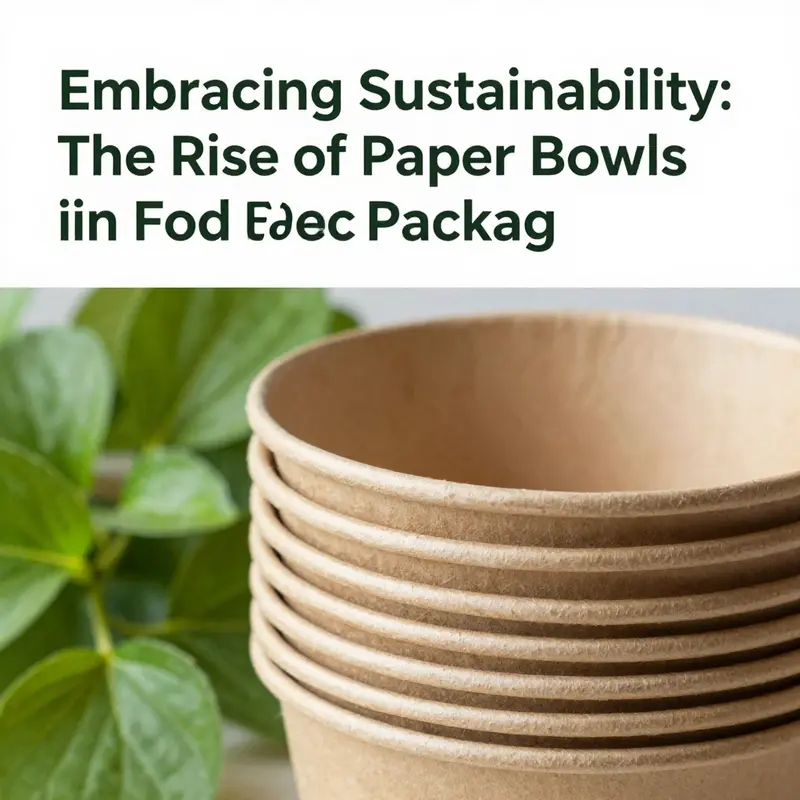
A shift in appetite for responsible packaging has quietly become a movement. Paper bowls, once dismissed as fragile or insufficient for hot meals, have emerged as a cornerstone of sustainable food packing containers. The core appeal lies not just in their ability to hold a meal but in how they are made, how they end their life, and how they perform across the full spectrum of food service—from quick-service cafes to upscale catering. The chapter that follows traces a seamless thread from renewable inputs to end-of-life pathways, revealing how these containers can align operational practicality with environmental responsibility. At the heart of this narrative is a simple truth: sustainability in paper bowls arises from a careful balance of material choice, coating strategy, and a lifecycle perspective that considers sourcing, production, use, and disposal as a connected chain rather than isolated steps.
Material selection is the first fulcrum of sustainability. Paper bowls are typically built from renewable resources such as kraft paper derived from wood pulp, bagasse from sugarcane, bamboo fibers, or recycled paper fibers. Each material carries its own story of renewability and recyclability. Kraft paper, with its natural strength and surface integrity, offers a sturdy base that enables reliable containment for both hot and cold foods. Bagasse, a byproduct of the sugarcane industry, adds a fossil-free dimension to the equation, while bamboo fibers contribute a fast-growing, low-impact feedstock option. Recycled fibers close the loop by diverting waste from landfills and reintroducing usable material into new packaging. Together, these inputs position paper bowls as a resource-efficient alternative to plastics and foams, reducing dependence on finite fossil fuels and shrinking the carbon footprint associated with production.
The environmental advantages extend beyond the raw inputs. A defining feature of modern paper bowls is their potential for biodegradability and compostability, especially when plant-based coatings replace traditional plastics. PLA, a polylactic acid derived from corn or other starches, is an increasingly common lining that lets bowls break down in industrial composting facilities within a matter of months. Even uncoated kraft paper bowls can be recycled through appropriate systems, supporting circular economy models when sorted and processed correctly. The ecological benefit multiplies when manufacturers optimize for end-of-life outcomes: bowls designed to be compostable or recyclable reduce long-term waste accumulation in landfills and aquatic environments, diminishing pollution and resource leakage that have historically burdened packaging systems.
Yet the sustainability story is nuanced. The environmental performance of a given paper bowl hinges on the precise materials and coatings used. A polyethylene (PE) coating or other hydrocarbon-based layers can compromise recyclability or compostability, even if the container performs well in the kitchen. Certification and labeling become critical signals for users who want to make responsible choices. Industry standards and third-party assessments help distinguish genuinely compostable or recyclable options from those that merely appear sustainable. For instance, programs and certifications such as those administered by recognized bodies guide the market toward packaging that behaves as expected in real-world waste streams. When a bowl bears a credible certification, it signals alignment with environmental safeguards and helps businesses meet corporate sustainability goals while maintaining customer trust.
An equally important dimension is energy use and resource intensity in production. Paper bowls often require less energy to manufacture than their plastic counterparts, and the lightweight nature of these containers lowers transport-related emissions. This is particularly relevant for takeout, delivery, and meal kit operations where fleets travel long distances to deliver meals. Reducing weight in packaging translates to more efficient logistics, fewer fuel emissions, and improved overall supply chain performance. The cumulative effect of these efficiencies extends beyond individual orders to the broader organizational footprint, reinforcing a brand narrative that resonates with eco-conscious consumers and investors.
The coatings that line paper bowls warrant careful consideration. Plant-based coatings like PLA enable compostability in industrial facilities and are generally seen as preferable to petroleum-derived plastics in terms of end-of-life. However, not all PLA-coated bowls are created equal. Some coatings may still hinder recyclability if the waste streams are not properly segregated or if facilities lack the infrastructure to process PLA effectively. Conversely, uncoated kraft paper bowls tend to be more straightforward to recycle, provided the sorting and recycling systems are robust in the local context. This complexity underscores a key insight: sustainability is not a one-size-fits-all attribute but a property that emerges from alignment across feedstock choices, manufacturing processes, and waste management capabilities in the destination market.
For businesses seeking to navigate these choices, certifications become a practical compass. Organizations such as the Biodegradable Products Institute (BPI) or other regional certifications provide criteria for compostability and recyclability that help buyers evaluate options with greater confidence. Certifications communicate that a product aligns with recognized end-of-life pathways, reducing guesswork and the risk of greenwashing. They also facilitate compliance with evolving regulatory frameworks that govern packaging hygiene, safety, and environmental impact. In the European context, safety and environmental standards intersect with packaging hygiene requirements, making adherence to certifications and documented standards essential for market access and consumer protection. The interplay between certification, performance, and regulatory compliance forms a practical triad that guides procurement decisions in food service operations.
From a regulatory perspective, the landscape is multifaceted. In many regions, packaging must satisfy safety standards that govern contact with food, migration of substances into food, and overall hygiene. Certifications that address both safety and sustainability help ensure that containers meet these dual expectations. For example, processes designed to isolate food contact materials from potentially harmful exposures are part of a broader framework that supports trust in takeout packaging. The net effect is a packaging system that not only performs its primary role—protecting food and containing mess—but also upholds public health and environmental stewardship throughout its life cycle.
Cost and scalability are practical realities that influence material choices and coating strategies. Paper bowls are available in a wide range of sizes, from compact snack portions to larger servings that accommodate generous portions or soups. Prices can be competitive, often with flexible minimum order quantities that suit both small cafes and large catering operations. In practice, the decision to favor a particular material or coating is often a balancing act between performance requirements, total cost of ownership, and alignment with sustainability targets. A more sustainable choice may entail a slightly higher upfront cost but can yield long-term savings through waste reduction, improved brand perception, and easier compliance with environmental regulations. In food service, these non-financial advantages can translate into tangible market advantages as customers increasingly prize responsible packaging alongside taste, value, and service.
The supply chain for sustainable paper bowls hinges on reliable sourcing and predictable quality. A robust supply chain supports batch-to-batch consistency, ensures that certifications are current, and maintains the integrity of the end-of-life story. For buyers, this means asking the right questions about fiber origin, coating composition, and certification scope, then validating claims through third-party documentation. A credible supplier will provide technical data, test results for food safety, and clear guidelines on disposal. In turn, suppliers that demonstrate transparency and consistency help food businesses avoid wasteful returns, mislabeling, and misaligned expectations that erode sustainability gains. This emphasis on reliability is not merely a nicety; it is a practical requirement for maintaining service levels and achieving environmental objectives across high-volume operations.
The design of a sustainable paper bowl also touches branding and customer experience. A bowl is not only a functional vessel; it is a visible signal of a business’s values. Custom-branded packaging can reinforce a green narrative, communicate care for the environment, and create a cohesive experience from the moment the customer picks up the order to the moment they dispose of the container. Customization options, such as color, size, and branding, enable operators to differentiate themselves while staying true to sustainability commitments. The capacity to print logos, messages, or recycled-content indicators on bowls or lids can amplify a company’s environmental story, turning packaging into a proactive communication channel rather than a passive necessity. In a market where packaging is often the most visible touchpoint, the ability to align packaging aesthetics with environmental messaging strengthens brand equity and supports customer loyalty.
The practical takeaway for operators is clear: sustainability is a running project, not a one-off decision. Choosing the right combination of materials, coatings, and end-of-life strategies requires ongoing assessment in light of evolving waste management infrastructure, consumer expectations, and regulatory developments. This means staying informed about advances in compostability standards, the emergence of new biobased coatings, and shifts in recycling stream capabilities. It also means engaging with suppliers who can demonstrate performance under real-world conditions—retaining heat, resisting leaks, and maintaining structural integrity across the life of the product. When these elements align, a paper bowl can deliver reliable performance while contributing to waste reduction, climate goals, and a memorable, responsible brand experience.
A practical illustration of this alignment can be found in the way packaging is presented to consumers and how it is treated after use. Consider a bowl designed for hot soups with a lid that seals against spills, paired with a compostable coating and accompanied by clear disposal guidance. In markets where industrial composting facilities are readily accessible, such a package can decompose within a predictable timeframe, leaving behind minimal residue. In regions where recycling is the dominant end-of-life pathway, an uncoated kraft option may be preferable, provided it is collected and processed through established recycling streams. The crucial point is that the end-of-life scenario should be factored into the initial design. A sustainable future for paper bowls depends on this holistic approach—one that explicitly connects material choices to the intended waste stream and that supports consistency across the supply chain.
To connect theory with practice, consider a real-world example of how packaging choices scale across operations. A large takeout channel that prioritizes sustainability would seek bowls that can withstand heat and moisture, use plant-based coatings when possible, and carry credible certifications to reassure both regulators and customers. The operation would also implement clear labeling about end-of-life options, integrate supplier audits into its procurement process, and monitor waste diversion rates to gauge progress. Such an approach not only minimizes environmental impact but also enhances the overall customer experience by communicating a coherent, credible sustainability story that resonates with today’s socially conscious consumer. For those curious about concrete product formats that embody this balance, a representative 26-ounce kraft paper bowl with a paper lid demonstrates how ample capacity and reliable containment can be achieved without compromising compostability or recyclability. See a practical example linked here: disposable 26oz kraft paper soup cup bowl with paper lid.
External resource: https://www.bpiworld.org/
Carrying Flavor: The Versatility and Life Cycle of Paper Bowls in Sustainable Food Packing

Paper bowls have evolved from simple, disposable vessels into versatile platforms that shape the entire experience of taking food to go. They are not merely containers; they are interfaces between cooking, commerce, and conscience. In a market where speed and sustainability increasingly determine success, these bowls serve a triad of roles: they protect and present, they travel and endure, and they signal a commitment to greener practices. The narrative of paper bowls is not one of compromise but of careful design, material science, and supply-chain savvy that allows a restaurant, a campus cafeteria, or a meal-kit service to deliver foods hot or cold, with dignity, while minimizing waste and environmental impact.
At the heart of their versatility are the materials that compose them. Kraft paper remains a foundational choice for its strength and processing simplicity. Yet contemporary paper bowls often pull from a broader mix: bagasse from sugarcane, strands of bamboo fiber, and recycled paper pulp. Each material brings a different balance of stiffness, barrier properties, and end-of-life behavior. The trend toward renewable and biodegradable inputs aligns with a global shift away from petroleum-based packaging and toward life-cycle thinking. A lot of the practical performance hinges on coatings that keep foods from soaking through and liquids from leaking. Plant-based coatings, especially polylactic acid, or PLA, replace traditional plastics in many applications. PLA is chosen for its compatibility with food contact and its potential to be composted under industrial facilities. The result is a package that can be strong enough to hold a hearty stew or a creamy dessert, yet leave a smaller environmental footprint when properly disposed of.
Beyond materials, design choices empower the bowl to perform across a spectrum of uses. The primary function—holding food securely—depends on a combination of rim geometry, wall rigidity, and the interplay with lids and linings. For hot dishes, the container must resist deformation and minimize heat transfer that could degrade packaging integrity. For cold items, it must resist condensation and maintain shape under load. In both cases, a waterproof lining derived from plant-based coatings helps prevent leaks, ensuring that a sauce or dressing does not seep through and ruin a consumer’s experience. The same bowl might be used for a nourishing soup on a windy street evening or for a cool, refreshing noodle salad in a café patio, a testament to its dual hot-and-cold versatility.
The inclusion of lids, handles, and branding options further broadens the scope of what a single packaging solution can accomplish. A lid keeps contents fresh during transit, protects from spills, and sometimes even preserves heat longer, enhancing the consumer’s comfort upon arrival. Handles are more than a convenience; they reduce the chance of accidental spills when customers carry a meal back to work or home. Branding capabilities—custom printing, color schemes, and finishes—transform a standard container into a recognizable extension of a brand. In a crowded market, the visual cue of a consistent packaging design can be as influential as the meal itself. Custom coatings and printed graphics can reinforce value propositions, such as fresh, natural ingredients or a commitment to sustainable sourcing, without requiring customers to read fine print on the menu.
The breadth of applications for paper bowls reflects the evolving needs of food service across settings. They are employed for soups and stews that benefit from a sturdy, heat-holding vessel; for hearty salads with toppings that require a stable base; for desserts that demand a clean, easy-to-scoop rim; and for takeout combinations that couple a main item with a side. The versatility extends into meal-kit ecosystems, where bowls must endure handling by multiple parties, maintain moisture balance, and accommodate compact storage in a refrigerator or pantry. The broad applicability makes paper bowls attractive to cafes, casual diners, caterers, and even event organizers who require reliable, compostable packaging options for large-scale service. The ability to move seamlessly from one food category to another—from a hot bowl of noodle soup to a cold fruit-and-yogurt parfait—speaks to the thoughtful engineering behind modern designs.
Of course, the success of these containers hinges on performance in real-world workflows. The bowl’s wall thickness, edge finish, and the choice of a lid or sleeve influence leakage resistance and user experience. A well-designed lid should be easy to align and seal, with a snug fit that prevents spills during brisk travel or a mid-ride bump. A handle, when included, must offer comfort and a secure grip, even with gloved hands. The interior may feature an anti-sog coating and a barrier layer to resist fats and oils that would otherwise compromise integrity or cause sogginess in foods with sauces. The combination of these features reduces the likelihood of consumer complaints about leaks, soggy bottoms, or awkward handling—issues that can undermine a repeat purchase decision.
The discussion of customization also touches on the marketing dimension of sustainability. Branded paper bowls give a tangible impression of care and responsibility, a signal to customers that a business is mindful of waste and the environment. Coatings and printing must be compatible with food safety standards while still delivering vibrant visuals. Lightweight, cost-effective customization options make it feasible for a wide range of operators to pursue branded packaging without sacrificing margins. For those seeking a concrete example of how customization translates into packaging strategy, consider suppliers that offer printed, branded solutions on plant-based, compostable containers. See for instance a supplier that presents an option to print logos directly onto a kraft paper bowl with a lid, reinforcing brand identity while maintaining sustainability goals. This kind of option demonstrates how a packaging choice can support both customer recognition and responsible disposal, turning packaging into a strategic asset rather than a mere utility.
From a systems perspective, the lifecycle of a paper bowl matters as much as its day-of-use performance. The lightweight nature of these containers contributes to lower transportation emissions and reduced material usage, which in turn translates to industrial and consumer benefits. The environmental footprint is further influenced by the end-of-life pathway. While plant-based coatings enable compostability in appropriate facilities, they are not universally compatible with home composting or waste streams. Industrial composting plants can break down PLA-coated paper products into organic matter, but such infrastructure is not ubiquitous in every region. This nuance has pushed many operators to pair these bowls with clear, honest messaging about disposal and to support take-back or recycling programs when possible. In places where composting facilities are accessible, the combined effect of renewable inputs and compostable coatings can significantly reduce landfill burden. In regions where this infrastructure lags, the emphasis shifts toward curb- appeal in packaging design and a willingness to educate consumers about proper disposal to maximize environmental gains.
Economic considerations also shape how widely these bowls are adopted. Competitive pricing, scalable production, and the availability of different sizes enable operators to tailor packaging to exact menu formats without overcommitting. A typical supplier landscape offers several sizes with corresponding MOQs designed to meet both small cafés and large catering operations. The economics become more favorable when one can amortize the cost of branding across large volumes and align packaging choices with promotional campaigns. In practice, this modularity lets a business adjust portion sizes, switch menus seasonally, or pilot new concepts without incurring prohibitive packaging costs. The result is a packaging ecosystem that supports flexibility and experimentation, rather than a rigid, one-size-fits-all approach.
Sourcing considerations add a final practical layer to this narrative. A robust supply chain for paper bowls depends on reliable raw material streams, consistent production quality, and transparent regulatory compliance. Reputable suppliers often emphasize certifications and safety standards that reassure retailers about hygiene and sustainability. The packaging required by international markets frequently adheres to a suite of standards that govern both safety and environmental accountability. Certifications such as packaging hygiene compliance and sustainability benchmarks help ensure that the containers perform well in storage and transit while meeting legal expectations in various jurisdictions. Together, these elements create a packaging option that is both technically capable and responsibly sourced, capable of integrating into diverse menus and business models.
In this broader context, a single paper bowl becomes a conduit for brand storytelling, operational efficiency, and environmental stewardship. It is a platform that enables a takeout concept to stand out, while also aligning with waste-reduction goals and consumer desires for eco-conscious packaging. The choice to use a plant-based coating, the decision to offer a lid, and the option to customize branding all serve to elevate the customer’s experience and solidify a business’s commitment to responsible practices. This fusion of function, form, and responsibility reflects a broader shift in the packaging landscape, where the goal is not merely to contain food but to enable better food experiences, from the moment the order is placed to the moment the container is disposed of properly.
For practitioners seeking practical references in this space, there are widely available resources that discuss the uses and mechanics of paper bowls, including how different materials and coatings influence performance. A comprehensive overview can provide deeper insights into the balance between leakage resistance, heat retention, and biodegradability, and how these factors interact with regulatory requirements in different markets. Such readings help businesses calibrate their packaging choices to support both culinary quality and sustainability commitments. In the end, the right paper bowl is one that respects the food it carries, delights the customer with its ease of use, and aligns with the operator’s broader environmental and brand objectives. The result is a packaging choice that travels well, performs reliably, and communicates a forward-looking story about food, service, and responsibility.
Internal resource note: a practical example of customization and branding options can be explored through one supplier offering printed, eco-friendly bowls with lids. See senang05-disposable-26oz-kraft-paper-soup-cup-bowl-with-paper-lid for a sense of how branding can be integrated into the packaging narrative while preserving sustainable design. While this is just one example, it illustrates how packaging decisions can reinforce a menu’s story and the business’s sustainability commitments across multiple channels.
External resource: for a broader, authoritative look at paper bowls, their uses, and industry trends, see the overview at https://www.packagingdigest.com/what-is-paper-bowl-uses-how-it-works-top-companies-2025.
Regulatory Compliance and Safety in Paper Bowl Packaging

Regulatory compliance for paper bowls sits at the intersection of safety, performance, and consumer trust. In the United States the FDA regulates food contact materials under a framework that governs which substances may migrate into food and at what levels. For paper bowls this means careful attention to coatings, adhesives and any additives that enhance water resistance or heat tolerance. Substances that have drawn scrutiny include BPA, phthalates and PFAS, each subject to migration limits and evolving regulatory positions. The goal is to keep migrants within tested boundaries under realistic temperature and contact conditions.\n\nAcross the Atlantic the European authorities pursue a parallel objective under Regulation 1935/2004 as a cornerstone for food contact materials and Regulation 2023/1687 which tightens evaluation of new substances. EFSA and the European Commission require risk assessment and approval before materials contact food, with a precautionary posture that translates science into enforceable rules. Bans on certain PFAS related substances have become more common, and European manufacturers align with standards to meet consumer expectations for safe, transparent packaging.\n\nTo demonstrate compliance manufacturers use documentation and third party verification such as certificates of compliance, material safety data sheets and certifications like ISO 22000 or FSSC 22000. Audits and laboratory testing verify performance and ensure changes in raw materials or coatings do not erode safety. Supplier qualification programs help prevent non compliant inputs from entering production. Labels such as food safe or PFAS free symbolize the compliance posture but do not replace thorough due diligence.\n\nThe path to safe packaging combines material science with rigorous processes. Selecting coatings that resist moisture and grease without introducing migration risk, validating recycled inputs for contaminants, and staying current with new migration data are essential. The regulatory environment rewards proactive risk management and transparent documentation. A well documented safety file validated by independent testing provides a durable competitive edge as buyers increasingly scrutinize packaging beyond aesthetics.\n\nFor practitioners the practical steps are clear. Create a materials map listing fibers coatings inks and adhesives with their regulatory status in target markets. Maintain a compliance calendar for re testing supplier audits and changes in certification schemes. Build a quality system around traceability HACCP style risk controls and incident response. Align labeling with regulatory language while avoiding overclaiming. Maintain open channels with regulators and labs to stay ahead of changes. Consider edge use cases such as hot beverages or fatty foods which stress coatings differently and adjust formulations accordingly.\n\nIn the wider packaging ecosystem learning from compliant examples can help without naming brands. A well designed liner that delivers water and grease resistance while preserving recyclability or compostability under industrial conditions illustrates how performance and sustainability can align with safety. This alignment supports responsible storytelling and guides disposal decisions.\n\nFinally, reference resources such as FDA guidance on food contact materials and EU risk assessment and approval processes illustrate how cross border supply chains are managed. The overarching message is that safety and compliance are ongoing disciplines, woven into product development, supplier management, and end of life planning. The aim is to protect food, support human health and contribute to a circular economy, making compliance the structural integrity of the packaging story.
Balancing Cost, Compliance, and Carbon: The Economic Imperative of Sourcing Paper Bowls for Modern Food Packaging
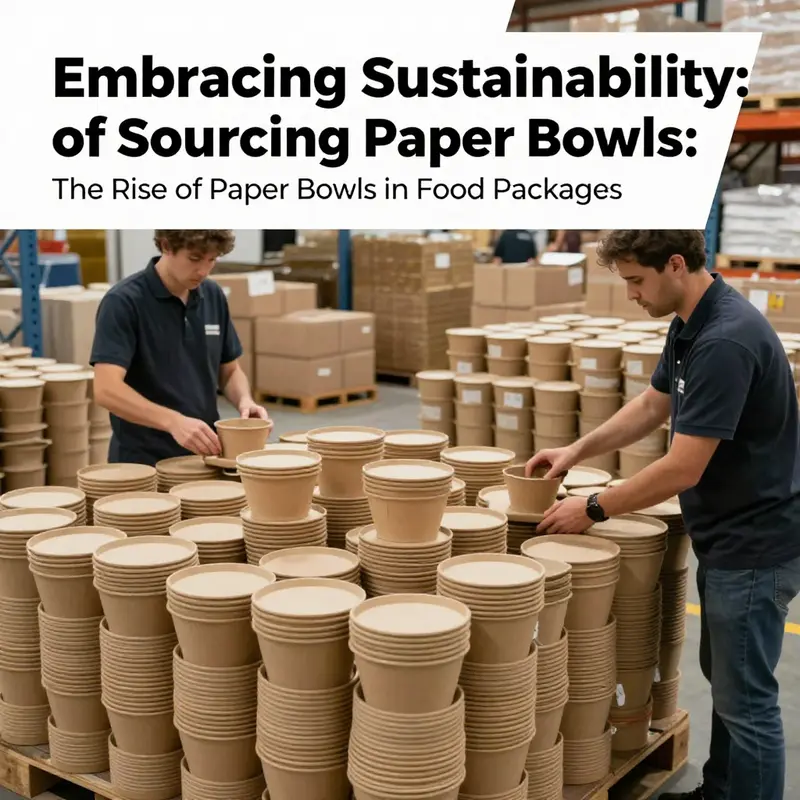
Sourcing paper bowls for food packaging sits at the intersection of cost discipline and consumer expectation. On the one hand, food businesses want packaging that protects freshness, fits diverse menus, and supports branding. On the other, stakeholders increasingly demand sustainable materials and responsible end-of-life outcomes. The economic challenge is not simply about the sticker price of a single bowl; it is about the total cost of ownership across procurement, operations, and regulatory risk. As takeout, delivery, and meal-kit services expand, these containers become a visible line item that can tilt profitability. In this landscape, paper bowls built from kraft pulp, recycled fibers, or bagasse fiber present a compelling combination of performance and environmental benefit, but they also introduce a set of cost drivers that must be understood and managed with discipline. The best purchasing decisions emerge not from choosing the cheapest option per unit, but from a holistic view of material costs, manufacturing efficiency, and demand-driven volumes that align with a company’s logistics and ESG objectives.
Material cost is the most immediate lever in the economics of paper bowls. Eco-friendly options such as kraft paper, bagasse pulp, bamboo fibers, and recycled pulp carry a different price architecture than conventional plastics or foams. In the period around 2025–2026, basic disposable kraft paper bowls with lids were commonly priced around US$0.042 per unit, a figure that reflects the combined cost of raw pulp, forming, and the basic coating processes. This price point underscores the economies of scale that have developed around renewable materials; it also signals that sustainability is increasingly feasible for bulk procurement when orders are sufficiently large. Yet the same data remind us that material costs remain sensitive to supply fluctuations in pulp markets, regional availability, and the underlying feedstock mix. A supplier’s choice of base material—whether plant-based kraft, sugarcane bagasse, or recycled pulp—directly influences unit cost, but also set-up costs and lead times, which can ripple through the production plan.
Coatings and barrier technologies add another layer of economic nuance. Plant-based coatings such as PLA can enable compostability and reduce fossil-based plastic content, but they also come with processing trade-offs. Coatings influence heat tolerance, moisture resistance, and shelf life, which in turn affect how a bowl performs under hot foods, sauces, or frozen desserts. For businesses that require hot-hold performance, the introduction of more robust barrier systems—sometimes involving multiple layers or air gaps—can raise unit costs. Two-layer or multi-layer constructions with air insulation, for instance, improve thermal performance but necessitate more complex manufacturing. The incremental cost is justified when it expands usage scenarios, reduces leakage, or supports higher-value product categories, yet it remains a critical consideration for price-sensitive applications like bulk takeout menus that emphasize price competition.
Production efficiency and design complexity are the next major cost determinants. A straightforward, single-wall kraft bowl with a lid can be produced at a lower cost than a premium configuration designed for heat retention, spill resistance, or branded customization. The operational realities of production lines—their speed, downtimes, waste rates, and changeover times—shape the unit price, particularly when manufacturers must switch between sizes, coatings, or lid types. When a bowl design requires specialized tooling or higher waste during setup, the incremental economic burden can be substantial until production runs reach a steady state. This dynamic helps explain why some premium designs are offered predominantly to high-volume chefs, caterers, or event venues where the premium can be amortized across long-term contracts and high-margin offerings.
Economies of scale remain a central theme in the economics of paper bowls. Bulk procurement lowers per-unit costs through optimized logistics, more efficient manufacturing runs, and negotiated pricing on materials and services. Custom printing and branding, while valuable for marketing and ESG storytelling, introduce a separate cost layer tied to plate or lid printing, color matching, and minimum order quantities. When procurement teams plan multi-year or multi-site sourcing, they can lock in favorable terms and mitigate price volatility tied to raw materials. The same principle applies to bagasse-based bowls, which, though potentially more expensive per unit than some kraft options, can achieve cost parity at scale as demand grows and supply chains mature. In practice, suppliers emphasize the potential for price stabilization when orders are consistent and predictable, enabling better forecasting and inventory management across distribution networks.
Branding and customization add value beyond the packaging’s functional role. For many buyers, branded bowls become a touchpoint that reinforces a catchphrase like sustainability, local sourcing, or a commitment to waste reduction. The economic model here blends higher per-unit costs with the marketing benefits of visible environmental credentials. Customization demands may also entail longer lead times and higher minimums, factors that can complicate short-cycle campaigns or seasonal promotions. Still, the ability to print logos, messaging, or color schemes on kraft bowls or lids can translate into stronger brand recognition, higher customer recall, and even the perception of premium quality. Businesses that plan for these factors—by budgeting for branding in procurement cycles and coordinating with marketing calendars—often find that the incremental cost buys disproportionate value over time.
Regulatory and standards compliance remains a nontrivial economic factor. Packaging safety and environmental stewardship are governed by a matrix of rules that differ by region but share a common aim: protecting consumers and advancing sustainable practices. Certifications aligning with European Union requirements, such as those that address packaging hygiene and material safety, introduce compliance costs that are often amortized across larger purchase volumes. For example, certifications like those associated with food-contact safety and end-of-life compliance imply testing, documentation, and potential process adjustments. In the long run, compliant packaging reduces regulatory risk, lowers the probability of costly product recalls, and improves investor and customer confidence. In a market where regulatory expectations are tightening, the cost of non-compliance is often higher than the marginal expense of meeting standards.
The risk landscape around sourcing paper bowls also includes supply chain dynamics and currency exposure. Pulp markets, demand for sustainable alternatives, and the availability of renewable feedstocks can shift quickly in response to macroeconomic conditions. Weather events, container shortages, and geopolitical developments can disrupt lead times and raise freight costs, especially for imports into regions with high appetite for eco-friendly packaging. Procurement teams can mitigate these risks through supplier diversification, buffer stock strategies for critical sizes, and transparent supplier scoring tied to reliability and environmental credentials. Effective risk management recognizes that the cheapest solution today may not be the most economical choice over a contract term, especially if it increases vulnerability to supply shocks or quality inconsistencies that disrupt service levels.
Another layer of analysis concerns the total cost of ownership, which includes not only the price per unit but also waste management costs, end-of-life considerations, and ecosystem impacts. Paper bowls that are industrially compostable or compatible with bagasse-based waste streams may incur different disposal costs or subsidies depending on local infrastructure. In regions where composting facilities are mature, end-of-life outcomes can translate into lower waste handling costs for businesses with high volumes of disposable packaging. Conversely, in areas lacking industrial composting, the environmental and financial benefits may hinge on consumer participation in proper disposal. The lifecycle profile of a packaging option—energy use in production, water footprints, and the emissions associated with transport—becomes a strategic input when companies publish ESG reporting or negotiate supply contracts that include sustainability clauses. In this sense, the environmental premium is not purely altruistic; it can be a driver of long-term financial resilience, especially as regulators and investors increasingly reward responsible packaging choices.
The market context also underscores how sustainability trends affect pricing and availability. The shift toward biodegradable and compostable solutions, including bagasse pulp bowls and recycled-fiber options, fuels both competition and innovation. As more players enter the space, innovations in coatings, barrier chemistry, and fiber blends broaden the design space while creating new benchmarks for cost efficiency. The competition spurs improved pricing, better performance, and enhanced material choice pipelines, which collectively push the market toward more robust, scalable solutions. This dynamic is visible in the broader literature on packaging design and economic resilience, which argues that design for circular economy principles can support price stability by reducing waste management costs and by aligning product end-of-life with consumer behavior. In other words, sustainability-driven demand can become an economic stabilizer when supply chains are prepared to scale responsibly and when life-cycle thinking informs procurement decisions.
From a practical sourcing perspective, many organizations adopt a structured approach to balance cost with performance and compliance. Start by defining a core set of sizes and materials that cover the majority of menu needs, then map suppliers capable of delivering reliable quality with acceptable lead times. Run small pilot orders to validate performance across hot, cold, and moisture-rich applications. Simultaneously, quantify branding options and their impact on unit economics to determine whether the premium aligns with marketing goals and customer perception. Assess the full portfolio of coatings and barrier technologies to choose configurations that meet temperature and leakage requirements without inflating costs beyond reason. And crucially, factor regulatory fees and testing into total cost estimates rather than treating them as afterthoughts. When procurement teams weave these elements into a cohesive sourcing strategy, they align cost structures with demand signals, quality expectations, and sustainability commitments.
To illustrate a concrete, practical touchpoint for procurement teams, consider the frequently used option of bulk-sourced disposable bowls with standard lids. This combination provides a reliable baseline for cost control and service reliability, while still offering room for branding and minor design tweaks. For teams evaluating jump points in the economic model, a long-run analysis of substitution possibilities—switching between kraft and bagasse or adjusting lid designs—can reveal where small design changes yield meaningful cost savings without compromising performance. It is in these nuanced decisions that the economics of paper bowls shift from being a simple price-per-unit calculation to a strategic capability that supports brand promises, customer satisfaction, and regulatory compliance. The result is a sourcing framework that not only minimizes total cost but also strengthens resilience across the entire packaging ecosystem.
For teams seeking practical examples of bulk procurement with branding and sustainability in mind, the following example illustrates how design choices translate into cost realities. A common option in bulk procurement is the disposable 26oz kraft paper soup cup with lid. It encapsulates the baseline performance needed for hot soups and salads while providing a canvas for branding or messaging. The per-unit cost, logistics footprint, and potential for customization must be weighed against the benefits of consistent supply, streamlined workflow, and an attributable sustainability narrative. The decision becomes less about chasing the cheapest projectable quote and more about building a dependable supply chain that delivers consistent service levels and supports the company’s environmental and market goals. As with any strategic procurement decision, the aim is to harmonize the technical, financial, and reputational implications into a coherent plan that can evolve with market conditions.
From a forward-looking lens, the economic calculus around paper bowls suggests a trajectory where sustainability and cost converge. The ongoing maturation of supply chains for renewable materials, coupled with innovations in coatings and multi-layer insulation, points toward greater efficiency and broader applicability. Companies that commit to diversified sourcing, robust supplier qualification, and clear performance criteria are better positioned to harness these advances. They can turn the early-stage premium associated with eco-friendly packaging into a durable business advantage by combining reliable performance with branding-driven value propositions and compliant, low-risk operations. In this sense, the economics of sourcing paper bowls is not merely a procurement problem; it is a strategic lever for competitive differentiation in a crowded, evolving food-packaging landscape.
Internal link note: for readers exploring concrete bulk options related to branding and sustainability in practical terms, a representative example of a disposable kraft bowl with a lid is discussed in depth here: Disposable 26oz kraft paper soup cup with lid. This example illustrates how design choices interact with cost, logistics, and marketing value in real-world procurement scenarios. The broader takeaway remains that the most economical sourcing strategy blends material choice, production efficiency, and demand certainty while aligning with regulatory expectations and corporate sustainability goals.
External resource: for a broader context on how paper cup and paper bowl design contributes to economic resilience in packaging supply chains, see https://www.sciencedirect.com/science/article/pii/S235234092400255X.
Final thoughts
Choosing paper bowls for your food packaging needs not only signifies a commitment to sustainability but also enhances the experience for consumers. Their versatility means they can accommodate a range of menu items, while their regulatory compliance assures safety for both the business and its customers. Economically, these bowls offer a practical solution without sacrificing quality. As the demand for eco-friendly options continues to rise, now is the time for food businesses—from bubble tea shops to catering services—to embrace this innovative, green packaging solution.