
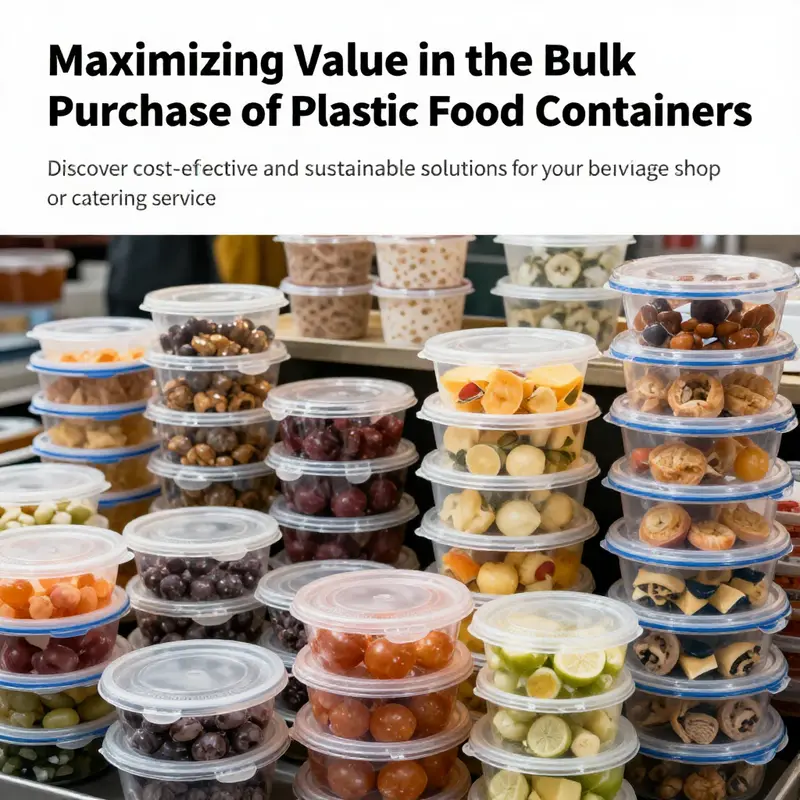
In today’s competitive food and beverage industry, the efficiency of packaging solutions significantly influences operational success. For bubble tea shops, restaurants, food trucks, catering services, event planners, and corporate procurement teams, sourcing plastic food containers in wholesale quantities offers compelling advantages. From cost savings to quality assurance and operational efficiency, understanding the nuances of bulk purchasing is essential. This article delves into the four critical aspects of plastic food container wholesale: cost-effectiveness, quality assurance and branding, operational efficiency, and regulatory and sustainability considerations. Each chapter provides insights to help you make informed decisions that align with your business goals.
null
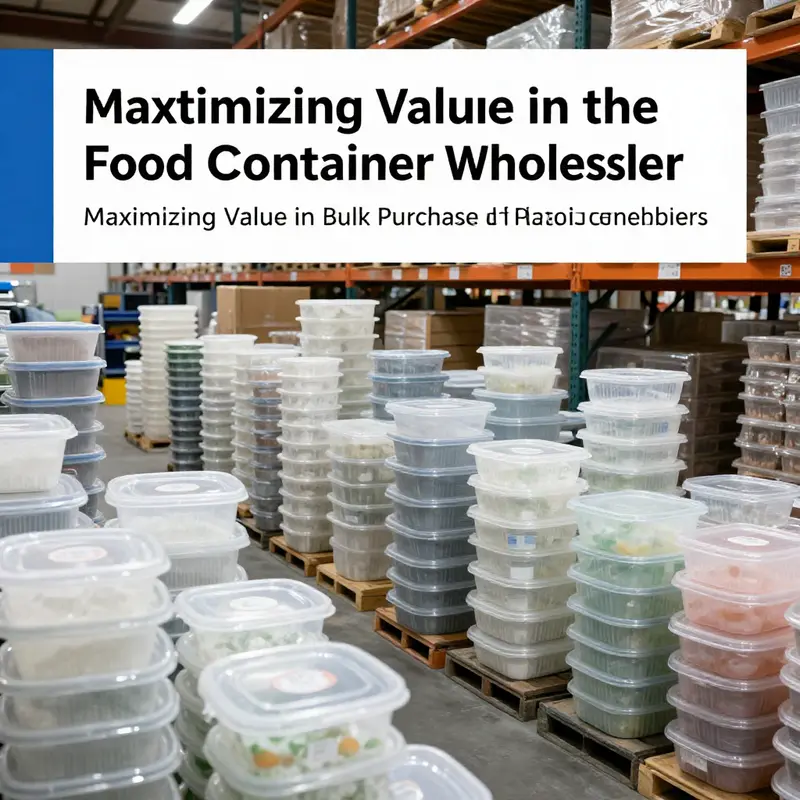
null
Quality as a Cornerstone: Assurance, Branding, and Reliability in Wholesale Plastic Food Containers
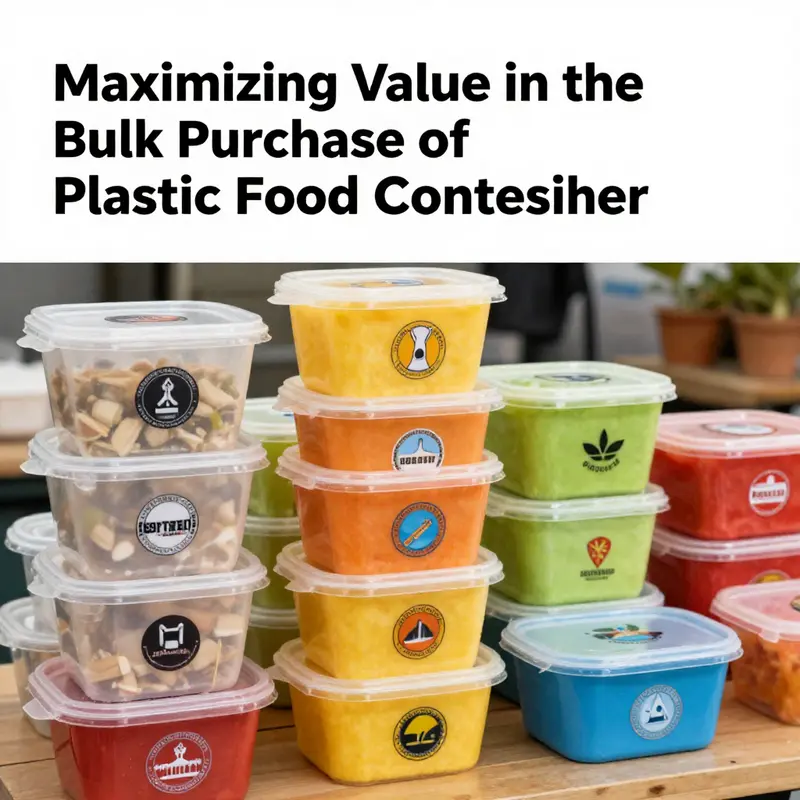
In the wholesale landscape for plastic food containers, reliability is the quiet anchor that keeps operations smooth when demand spikes or margins tighten. The chapter that follows moves beyond the arithmetic of price and volume to the more strategic terrain where safety, consistency, and brand resonance become levers of competitive advantage. Quality assurance and branding are not isolated functions tucked away in a production line; they are the heartbeat of a scalable supply chain that serves restaurants, caterers, meal-prep services, and retailers with equal measure. The logic is simple but powerful: when packaging performs safely and predictably, a business can promise consistent experiences to customers, nurture trust, and invest confidently in growth. In practice, this means a relentless adherence to global food-contact standards, a rigorous approach to production quality, and a thoughtful deployment of customization that turns ordinary containers into tangible brand ambassadors.
Quality assurance begins with a clear map of compliance that screens every material, process, and finished product for safety. Leading suppliers situated in major manufacturing hubs—especially in Guangdong and surrounding provinces, as well as cities like Qingdao—adopt a framework that aligns with international regulations governing food-contact materials. The most widely cited benchmarks include the U.S. FDA guidelines, the European Union’s Regulation 10/2011 for materials intended to come into contact with food, and Germany’s LFGB standard, which often serves as a prerequisite for European distribution. Equally important are management systems like ISO 22000 and HACCP, which structure the entire supply chain around risk assessment, critical control points, traceability, and continuous improvement. When a supplier holds these accreditations, buyers gain more than compliance; they gain a platform for consistent performance across batches and seasons.
From a production standpoint, the capability to manufacture at scale with precision is inseparable from safety. Modern facilities leverage automated injection molding and thermoforming lines capable of producing millions of units per month, with in-line checks that catch deviations before they reach customers. The most robust quality programs incorporate material testing designed to verify that compositions are BPA-free, phthalate-free, and non-toxic. They also run leakage and seal integrity tests, which are crucial for containers used for liquids or semi-solid foods. Durability tests simulate real-world conditions—exposure to microwave heat, refrigeration, and repeated handling—to ensure that containers maintain performance over time. A recent inspection report from a Guangzhou-based supplier highlighted these practices in action: PET- and PP-based disposable containers met FDA and EU 10/2011 requirements, and migration tests showed zero detectable migration of harmful substances after simulated use cycles. Such findings are not mere compliance footnotes; they translate into real-world reliability for kitchens that depend on predictable sealing and safe food contact every day.
Beyond safety, the promise of quality has a branding dimension that can elevate a buyer’s market position. In wholesale packaging, branding is less about flashy marketing and more about a coherent, professional appearance and practical features that reinforce a business’s identity and service level. Customization options—such as logo printing on lids or bases through pad printing, screen printing, or digital transfer—allow a brand to appear consistently across a full line of products. Color customization and shape variety—think tailored rectangular takeout boxes, or containers with ergonomic handles and integrated compartments—offer a way to differentiate while maintaining system-wide compatibility with existing stacking and storage practices. Packaging design extends to the presentation itself: bulk packaging tailored for retail shelves, labels that convey brand values, and inserts that communicate serving suggestions or eco-friendly messaging. A brand that projects a polished, cohesive image helps drive repeat orders and fosters trust with customers who interact with dozens of packaging decisions each day.
A practical illustration helps illuminate this dynamic. A Singapore-based catering outfit partnered with a Chinese manufacturer to create branded, compartmentalized lunch boxes that carried their logo and eco-friendly messaging. The containers supported school meal programs and, because of the careful attention to both branding and functionality, boosted brand visibility with minimal friction in distribution and use. The underlying lesson is that branding is not decorative; it is a strategic capability that aligns production with marketing and with the buyer’s operational routines.
To realize these opportunities, buyers often rely on sourcing platforms that connect them with verified producers and provide safeguards that support scale without compromising quality. Platforms such as Made-in-China.com and other major B2B marketplaces offer full customization services, ODM capabilities, and compliance with global standards. They also provide practical assurances—secure payment gateways, documented traceability, and sample programs that reduce the risk of large-scale misalignment between expectation and deliverable. For buyers testing a new supplier, the availability of sample kits is especially valuable. In some cases, samples start at nominal prices, even as low as pennies per piece, enabling teams to assess both the physical performance and branding accuracy before committing to multi-thousand unit orders. Importantly, these channels help buyers verify that a supplier can deliver uniform results across a long production horizon, which is essential for restaurants and caterers that must maintain a consistent look and function across dozens or hundreds of outlets.
To connect the dots between quality and branding, it helps to think of containers as what they really are: language in a takeout or dining room. The wording on a label, the color of a lid, or the visibility of a microwave-safe icon communicates a promise about safety and convenience. Modern packaging design integrates functional features that improve user experience without complicating sanitation or stackability. For example, containers can be designed with microwave-safe labeling that is durable through repeated heating, or with freezer resistance indicators that help kitchen staff manage inventory. Stackability reduces storage costs, while compartmentalization supports diverse menus in meal-prep operations and catering contexts. All of these features, when combined with a consistent color story or logo treatment, create a package that is not merely utilitarian but also a tangible extension of a brand’s identity.
The pathway to achieving this blend of quality and branding is iterative and collaborative. Buyers should expect a process that starts with rigorous supplier qualification and ends with ongoing performance monitoring. Early-stage testing includes material analysis for BPA-free status and migration testing to ensure compatibility with a specified range of foods. Then, the visual and functional aspects come into sharper focus: how the logo translates on the chosen substrate, whether color-matching holds across batches, and how the packaging can be adapted to meet unique regulatory or retail requirements in different markets. The beauty of a well-structured wholesale program is that it enables a business to move quickly from prototype to production while preserving the integrity of both safety standards and brand identity. This is no small feat in a market where the speed of delivery and the consistency of quality are non-negotiable.
In this context, the supplier’s capability to offer customization without compromising throughput becomes a critical differentiator. The best partners provide fully customizable packaging solutions, with options for customized shapes such as compartmentalized lunch boxes designed for balanced meals, ergonomic handles for easy transport, and even eco-conscious messaging that aligns with modern consumer expectations. This is where branding truly travels from marketing to product experience. When a customer sees a container that mirrors the brand’s color palette, bears the logo confidently across multiple channels, and works reliably under the conditions of a busy kitchen or a high-volume delivery operation, that customer’s perception of the brand shifts from “vendor of containers” to “consistent partner in service.”
To help readers connect these ideas to practical sourcing choices, consider the role of a global supplier network and the importance of geographic and regulatory alignment. China remains a central hub for the manufacture of plastic food containers, with dense production ecosystems in Guangdong and Zhejiang. The ability to leverage regional strengths—such as proximity to raw materials, experienced injection molding clusters, and established export channels—translates into predictable lead times and cost structures that can support aggressive growth plans. Buyers who align with suppliers that hold robust certifications and who participate in traceable quality control programs can plan with greater confidence, avoiding costly quality recalls or branding misalignment that erodes trust.
For teams evaluating potential partners, the due diligence often converges on a few practical questions: Does the supplier demonstrate continuous compliance with FDA, EU 10/2011, LFGB, and ISO 22000/HACCP? Are there transparent, auditable records of material testing, leakage performance, and thermal stability? Can the supplier accommodate logo printing, color matching, and shape customization without breaking production flow? Can the packaging be delivered in bulk with retail-ready presentation and appropriate branding supports? And finally, is there a credible pathway to samples, small-quantity testing, and scale-up that does not require sacrificing quality or lead time? The best answers tend to emerge when buyers engage early and maintain a collaborative posture with suppliers that share a long-term view of quality and branding as mutually reinforcing investments.
A practical note for readers seeking concrete options is to engage with sources that emphasize both compliance and customization. For instance, a supplier’s ability to provide full customization, ODM capabilities, and compliance with global standards offers a compelling value proposition for any business that wants to project reliability and professionalism. Moreover, platforms that protect buyers with secure payment options and clear return policies reduce the risk of misalignment during initial orders. For brands exploring logo-centric packaging, the option to test branding accuracy and print fidelity on sample kits is particularly valuable, ensuring that the final production run truly reflects the intended look and feel. In this sense, quality assurance and branding work in tandem to create a scalable, repeatable system that supports both safety and market differentiation.
From a broader perspective, the trajectory of the wholesale market for plastic food containers is moving toward greater emphasis on sustainability and circularity, alongside the enduring requirements for safety and performance. Regulators and customers alike increasingly expect packaging to be recyclable or compostable where feasible, and manufacturers are responding with materials and designs that meet evolving environmental standards without compromising safety or durability. This convergence of safety, branding, and sustainability creates an ecosystem where wholesalers can offer not just a container, but a packaged promise: a reliable, brand-consistent, and responsible solution for food service operations.
For readers seeking a tangible example of how branding can be embedded into wholesale packaging without sacrificing compliance or efficiency, one can explore the range of branding-compatible options available through specialized packaging providers. These offerings demonstrate how a brand’s mission and aesthetic can be translated into a physical form that travels through kitchens, delivery vehicles, and retail environments with the same ease and confidence as the product itself. In practice, this means designing a line of containers with uniform printing standards, color fidelity, and practical features that align with everyday workflows in diverse market segments—from quick-service venues to large-scale catering operations. The result is a cohesive packaging family that reinforces a brand at every touchpoint, while meeting the exacting safety criteria demanded by regulators and end users alike.
When it comes to the sourcing journey, a well-executed blend of quality assurance and branding creates a durable moat around a business. It ensures that every pallet, every batch, and every shipment carries the same assurance: that food-contact safety is respected, that the product performs as expected, and that the packaging communicates the brand’s values with clarity. This is the essence of wholesale success in plastic food containers: not just the procurement of components, but the orchestration of safety, consistency, and identity into a scalable, trusted supply chain. For teams ready to take that step, the path is clear—partner with manufacturers who inhabit the intersection of rigorous compliance and creative customization, leverage platforms that provide transparent qualification and samples, and embed branding as an operational capability rather than a marketing afterthought. The payoff is measurable in reduced waste from recalls or defects, steadier margins through consistent unit costs, and stronger customer loyalty built on a packaging experience that speaks as loudly as the product inside.
As a practical note for readers seeking to explore further, a path toward practical implementation can include reviewing catalogues that feature customizable features such as logo printing and color matching on lids and bases. The ability to select from a range of shapes, like rectangular takeout boxes measuring 220mm x 150mm, and to align packaging with brand aesthetics, should be weighed alongside technical considerations such as microwave compatibility and freezer resistance. A more tactile step would be to request samples that include both branding fidelity and performance assessments under typical restaurant conditions. This approach helps translate the theory of quality assurance and branding into an actionable, scalable procurement strategy that can support growth across multiple market channels.
For readers who want a concrete starting point in their sourcing journey, consider the following pathway: first, secure a supplier with verified compliance and strong preventive controls; second, test branding options through small, branded sample runs to validate color, print quality, and label durability; third, evaluate storage, handling, and transport implications in your operational context to ensure that the packaging contributes to efficiency rather than adding complexity. Finally, integrate feedback from kitchen staff, delivery teams, and customers to refine both the product and the branding elements. By treating quality assurance and branding as a unified capability rather than as two disconnected activities, wholesalers and buyers can establish a resilient lifecycle for plastic food containers that supports safe, scalable, and brand-forward food service.
To explore a concrete example of branding customization, readers can view a practical case of logo-based customization on a kraft catering box here: custom-logo-eco-friendly-disposable-matt-lamination-brown-kraft-catering-takeaway-sushi-food-box. This example illustrates how a single customization choice can carry through to packaging aesthetics, labeling clarity, and perceived value for end users, while remaining compatible with the stringent safety standards that define quality in this category.
In sum, the wholesale story for plastic food containers is evolving toward an integrated model where safety, consistency, and branding are not afterthoughts but core competencies. The most successful players recognize that quality assurance creates trust, which in turn empowers branding to elevate the customer experience and support sustainable growth. By embracing this continuum—from material safety testing and regulatory alignment to customization and market-ready packaging—businesses can navigate the complexities of global supply networks with confidence and clarity. This is the path that links reliable procurement to compelling brand presence, enabling food-service operations to thrive in a competitive, standards-driven marketplace.
External resource: For a broader framework on food-contact safety and regulatory expectations, see FDA’s guidance and resources at https://www.fda.gov/food-safety.
Efficiency in Motion: Harnessing Wholesale Plastic Food Containers to Power Food-Service Operations
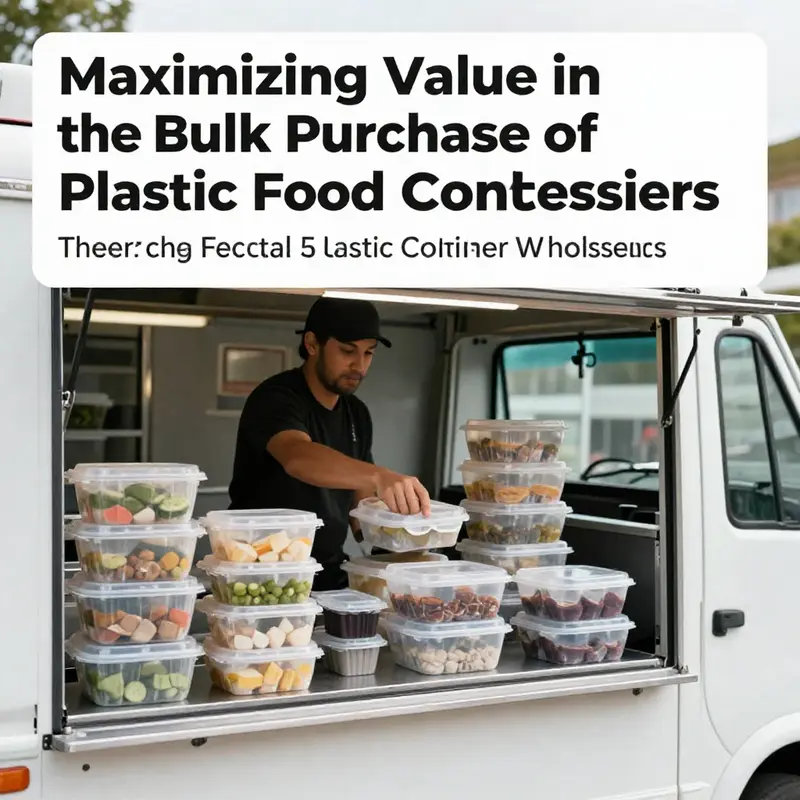
The move to wholesale plastic food containers reframes how a modern food service operation thinks about the daily grind of packaging. When a kitchen, cafe, or catering operation shifts from ad hoc purchases to a deliberate wholesale strategy, the impact ripples through every link in the supply chain. It begins with cost discipline but quickly broadens to supplier reliability, product design, and regulatory assurance. In markets that blend global reach with local needs, bulk procurement offers not just a price tag but a platform for consistent performance across a wide range of service models. Consider the arithmetic of bulk buying: the per unit cost drops as volumes rise, creating room for margins in markets where food prices, labor, and transportation costs are all under pressure. For buyers aiming to maintain profitability on tight margins, wholesale plastic containers—selected with care for material and design—become a foundational operational asset. In practice, this procurement approach translates into a quieter back room and a louder service line. With a reliable stockpile, a kitchen can weather seasonal spikes, promotional campaigns, or sudden surges in delivery orders without the crack of a lid signaling an interruption in service. Control over packaging stock reduces the risk of stockouts that disrupt a service window or compromise a guest experience. A wholesale strategy is not simply about buying more; it is about buying with a plan that aligns with the pace of the business and the expectations of the customer. The five entwined advantages that together reshape how an operation runs are cost-effectiveness and scale, consistent quality and branding, resilience to demand, regulatory and sustainability alignment, and clear access to reliable suppliers and hubs of production. Each thread matters because the containers themselves are more than mere vessels; they are the interface between food safety, brand representation, and the efficiency of every step from kitchen to customer hands.
First, cost-effectiveness and economies of scale drive the bulk logic. When a restaurant, meal-prep service, or delivery kitchen orders tens of thousands of units, the per-piece price often drops into a range that supports lean margins even during peak sale periods. This is not merely about the sticker price; it is about predictable channel costs that support menu prices, promotions, and large events. In real terms, wholesale programs can offer options with per-piece costs well below a dime for high-volume purchases, with the possibility of lower unit costs at higher quantities. Such pricing makes sense only when the supply chain can reliably deliver at scale: that means robust manufacturing, dependable logistics, and a supply partner who can meet MOQ targets without jeopardizing quality or lead times. In many cases, the strongest wholesale options come from manufacturers who offer full customization and ODM services, letting a single supplier align container shape, lid design, seal strength, and branding across the entire product line. The result is a lower risk of mismatched lids, inconsistent seals, or color variation that forces rework downstream.
The second strand centers on consistent quality and branding. In a wholesale relationship, standardized production runs yield uniform durability and sealing performance across batches. Uniformity matters on the shelf and in delivery. A consistent container that seals reliably under vibration during transit protects the integrity of soups, sauces, and ready meals while presenting a professional, cohesive brand image. Many buyers capitalize on customization options such as logo printing, color matching, and even unique shapes—think rectangular takeaway boxes designed for a specific footprint or a square, stackable profile that optimizes cold storage and transport. When a business can standardize the internal dimensions and lid compatibility across sizes, it minimizes the complexity of the packing line and reduces the chance of human error during filling and sealing. This streamlined workflow translates into faster service times and fewer delays caused by mismatched parts or defective seals. In a world where quick visual checks are paramount, manufacturers also emphasize clear, bright materials and consistent transparency that helps staff verify contents quickly without opening packages. Such visibility supports fast, accurate fulfillment, whether in a drive-through line, a bustling cafe counter, or a warehouse rack awaiting dispatch to a kitchen in another city.
A third advantage is resilience through high demand. The wholesale model anticipates surges from seasonal events, catering orders, or product launches. A well-structured stockpile prevents the brittleness that comes with just-in-time sourcing when a sudden order spike hits. The operational resilience of wholesale containers is the difference between meeting a deadline and apologizing to a client. For operators who manage food trucks or pop-up markets, consistent packaging availability is a non negotiable asset. The assurance of stock means no last-minute switches to inferior packaging or compromised formats, which could affect the product experience and brand trust. The ability to scale quickly is itself a competitive edge in markets where consumer expectations rise with busy seasons. The wholesale route supports this scale with predictable lead times, bulk discounts, and the capacity to negotiate terms that align with a business calendar rather than a one-off purchase.
Alongside resilience, regulatory compliance and sustainability shape the long view. Reputable suppliers in the wholesale arena emphasize food safety standards that align with global regulations. Materials such as polypropylene, polystyrene, PET, or other food-grade plastics are chosen for compatibility with heating, microwaving, or freezing where appropriate. Compliance with regulatory frameworks like FDA, EU standards, or other regional requirements provides a safeguard for the business and its customers. The growing emphasis on recyclability and eco-friendly packaging is not a mere trend; it is a strategic shift that intersects with consumer expectations and corporate responsibility. Operators who embrace sustainable packaging can leverage bulk packaging not just to reduce waste but to better manage end-of-life considerations through clear labeling and recycling streams. The market response to these shifts includes a broader array of recyclable, microwave-safe, and freezer-safe options, all designed to maintain performance while reducing environmental impact. In practice, this means selecting containers with proven resistance to leaks, strong seams, and reliable lids that minimize waste—an efficiency gain that directly affects the bottom line by reducing product loss and contamination risk.
The final thread concerns access to leading suppliers and market hubs. China remains a dominant manufacturing hub for plastic food containers, with major centers in Guangdong and Zhejiang. Wholesale buyers gain a competitive edge by engaging with suppliers who offer full customization, ODM services, and cross-border compliance. The market is well-developed on B2B platforms where buyers can compare thousands of SKUs, secure payment gateways, and track shipments. For many operations, the decision to work with a trusted supplier is as critical as the choice of container material: a reliable partner provides consistent product quality, predictable lead times, and responsive customer service. Beyond price and product, a strong supplier relationship brings confidence that the packaging program will evolve with the business needs, offering new formats, improved closures, or branding options as the brand grows. The practical implications are clear. A buyer who builds a long-term wholesale relationship is better positioned to negotiate favorable terms, align packaging with evolving sustainability goals, and quickly adapt to changes in demand or regulatory expectations. In this way, packaging becomes a strategic enabler rather than a mere expense line. It is this blend of efficiency and foresight that allows food-service operations to focus on what they do best: delivering quality, consistent experiences to diners, catering clients, and shoppers alike.
Integrating the wholesale approach into daily operations also requires attention to design details that drive efficiency on the floor and in transit. Standardized lid compatibility across sizes is a subtle yet powerful design consideration. When staff can rely on a single sealing mechanism across multiple container footprints, the training burden lightens and error rates drop. This standardization also simplifies inventory management; it reduces the number of SKU combinations that must be maintained, which in turn lowers picking errors during fulfillment. A related design concern is the use of transparent materials, such as PET or polycarbonate, which enable precise visual inspection of contents without opening the container. This feature is particularly valuable in retail and logistics settings, where time is money and mislabeling or miscounting can cascade into delays. For liquid or semi-solid foods, leak-resistant designs with screw-on or snap-on closures minimize spill risks during transport and storage, protecting both product quality and brand reputation. Lightweight yet durable materials like PET and HDPE support faster handling, easier stacking, and lower transport costs for both the supplier and the buyer. All of these design choices, when orchestrated at scale, shave minutes off every shift and reduce waste, while preserving the integrity of the food and the presentation that customers expect.
The practical value of these wholesale decisions is reinforced by the operational metrics they touch. Inventory turnover improves as stockouts become uncommon and replacement cycles align with demand patterns. Processing times in packing lines shorten when lids fit consistently and containers seal reliably with minimal rework. Waste is reduced as leaks are minimized and damaged goods are caught early in the inspection process. Overall resilience strengthens when the packaging system can absorb demand fluctuations without compromising safety, speed, or service quality. In such systems, the container is not merely a receptacle; it is a strategic interface between the kitchen, the delivery chain, and the consumer experience. A well-chosen wholesale program supports a consistently high standard of packaging that protects food, reinforces brand identity, and supports sustainable business practices.
For readers who want to explore a practical, real-world example of a wholesale path, there is a broad set of options available through major sourcing platforms offering customizable, food-grade containers and related packaging solutions. One illustrative entry point focuses on wholesale food container options that emphasize wholesale scaling, customization, and compliance. This resource provides a snapshot of how packaging decisions align with the operational realities described here, and it can help buyers frame their own wholesale strategy in a way that echoes the needs of their service model. Dispoable kraft paper takeaway boxes with clear lid and wholesale food container options. This link highlights how a blended approach to packaging—combining sturdy materials, clear visibility, and branding potential—can support a seamless flow from kitchen to customer. The broader context of global wholesale opportunities remains reachable through established market hubs and supplier ecosystems that connect buyers with manufacturers and distributors across regions. For those seeking a deeper, external comparative view of wholesale plastic container availability in the UK and beyond, consider the following external resource. https://www.alibaba.com/product-detail/Plastic-Food-Containers-Wholesale-Uk-Complete_1602573498529.html This external reference offers a broader picture of how wholesale strategies are evolving in regulated markets and how cost, quality, and sustainability are balanced at scale.
Balancing Safety, Sustainability, and Scale: The Regulatory and Environmental Frontier of Plastic Food Container Wholesale
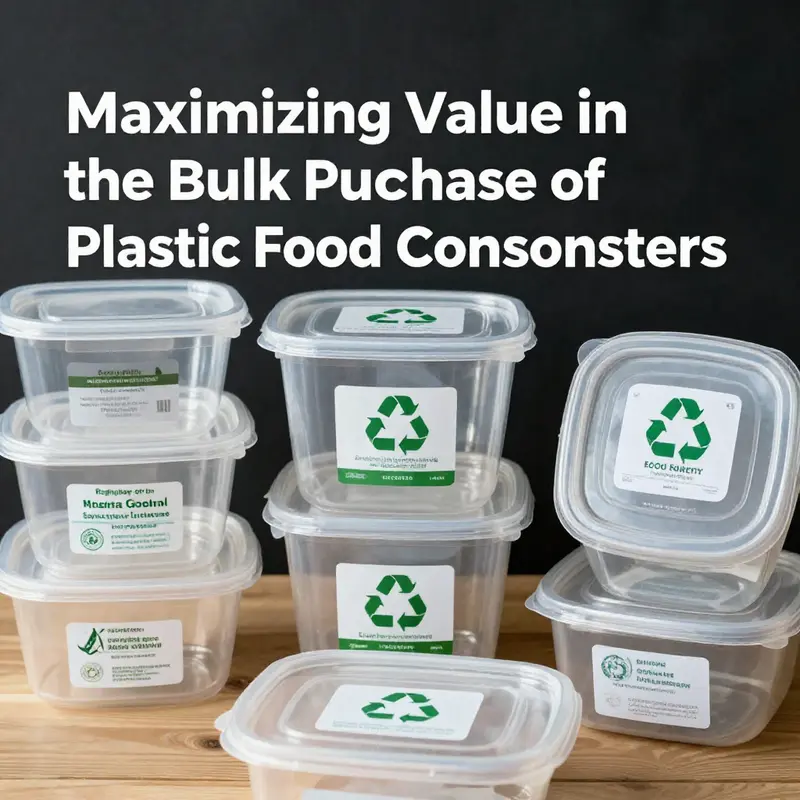
Sourcing plastic food containers in bulk sits at the intersection of strict safety rules and a shifting sustainability agenda. In wholesale terms, the choices that buyers make about materials, migration performance, and end-of-life options do more than protect a brand or a kitchen’s operation. They shape what a supplier can deliver, how reliably inventories can be restocked, and how a company can honestly claim responsible stewardship to customers, regulators, and the planet. The regulatory landscape governing plastic food-contact packaging is not a static backdrop. It is a living framework that presses wholesalers to demand rigorous testing, transparent documentation, and consistent quality across batches. In practice, that means looking beyond price per unit and considering how a container behaves from factory floor to table, under heat, light, and repeated use, as well as how it will be disposed of after its service life ends. The rules that govern us are global in reach, driven by bodies such as the European Commission, the U.S. FDA, and national standards organizations. They mandate that only approved additives appear in materials intended for direct contact with food, and they require migration testing that mimics real-world use. This testing assesses how much of any given substance could migrate into food under varying temperatures and with different types of food, notably fatty and acidic products. A key objective is to keep overall migration below established thresholds, unless a specific additive is identified as toxicologically risky. Those requirements protect consumer health, but they also carry practical implications for wholesale procurement. If a batch fails migration tests, a supplier cannot fulfill a large order, and a buyer faces costly delays. In turn, wholesalers must ensure that every lot they purchase or stock meets the same stringent criteria, which reinforces the value of certifications, traceability, and supplier audits. These elements underpin trust across the supply chain, ensuring that when a large batch is deployed for takeout, delivery, or catering services, the risk profile remains within clearly defined limits and is auditable on demand. The concept of performance, in the wholesale context, unfolds on multiple planes. First, there is material compliance. Polypropylene (PP) and high-density polyethylene (HDPE) have long been favored for their food-grade credentials and broad recyclability. They are designed to withstand typical consumer handling, temperature ranges, and mechanical stress without significant degradation that would alter safety characteristics or sealing integrity. By contrast, polystyrene (PS), especially in single-use formats, has faced intensified scrutiny because of leaching concerns when heated and its more challenging recycling profile. This has led many buyers to re-evaluate the use of PS in favor of more versatile, recyclable thermoplastics that can withstand repeated use or be integrated into circular loops where feasible. The migration testing regime also extends to additives used to enhance performance—such as antioxidants, lubricants, and certain fillers. Here, the modern standard is a two-tier approach: a positive list of permitted substances and a transparent declaration of each component’s function and source. Wholesalers should expect not only to see that ingredients are permitted but also to receive documentation showing batch-level conformity, supplier certifications, and, where possible, third-party test reports. These elements underpin trust across the supply chain, ensuring that when a large batch is deployed for takeout, delivery, or catering services, the risk profile remains within clearly defined limits and is auditable on demand. The regulatory conversation increasingly intersects with concerns about newer materials and emerging technologies. Nanomaterials, already part of ongoing risk assessments, require dedicated evaluation because their extremely small size may influence interactions with biological systems in ways that are not fully understood yet. This means wholesale buyers cannot assume that a packaging solution that passes conventional tests will be free of long-term concerns; continued scientific scrutiny and timely updates to compliance data are essential. The wholesale market therefore rewards suppliers who maintain robust quality management systems, keep pace with evolving guidance, and invest in independent verification of performance claims. The resource value of such compliance becomes most evident during large campaigns, seasonal spikes, and multi-channel distribution where a brand’s reputation can hinge on packaging integrity and safety. A packaging solution that seals reliably, resists leaks, travels well through courier networks, and preserves product quality in transit all hinges on a careful balance of chemical safety and structural design. In practice, that balance guides wholesale buyers to prioritize materials with proven safety records and clear migration data. The regulatory framework remembers that the consumer’s exposure involves more than one transfer point—from production and packaging to transport, retail display, and finally the consumer’s kitchen. That broader view justifies the insistence on consistent batch-to-batch performance, as well as on clear labeling and traceability that can be audited by regulators anywhere along the supply chain. The sustainability dimension adds another layer of complexity, but also opportunity. The industry’s environmental focus has sharpened around recyclability, material selection, and lifecycle thinking. In practice, this translates into encouraging packaging solutions that minimize waste, maximize recyclability, and, where possible, incorporate recycled content without compromising safety or performance. PP and HDPE are generally compatible with widely used recycling streams, making them favorable candidates in many wholesale contracts. Still, there is a growing awareness that not all plastics are equal from a lifecycle perspective. PS, with its high energy footprint and limited recyclability, often represents a less desirable choice, particularly for applications favoring take-away formats or longer consumer exposure. The challenge is to design products that are both functional and end-of-life friendly. In response, innovators are pursuing alternatives that reduce environmental impact while maintaining or improving barrier properties, heat resistance, and seal integrity. Biodegradable missions, recycled-content strategies, and advances in polymer chemistry are driving a new class of materials that aim to close the loop more effectively. Yet these innovations come with practical caveats. Biodegradable plastics, for instance, require specific industrial composting conditions to achieve the intended end-of-life outcomes. Without appropriate facilities, what is marketed as biodegradable may end up in landfills or mixed streams where it does not degrade as expected. This is where the wholesale buyer’s role becomes critical: selecting materials and suppliers that align with real-world waste-management infrastructure and local regulations. The sustainability equation also implicates design choices that influence recyclability. Packaging that relies on multiple materials or adhesives that hinder separation can complicate recycling. Conversely, simpler constructions, monomaterial designs, and clear labeling regarding recyclability can materially improve recovery rates and overall environmental performance. In wholesale procurement, such design considerations translate into clearer supplier specifications, more accurate recycling credit calculations, and more reliable end-of-life outcomes for customers who rely on bulk purchases for their everyday operations. The sustainability and regulatory narrative also touches branding and consumer trust. Consumers increasingly expect that the packaging used by their food-service operators not only protects freshness but also reduces environmental impact. For wholesalers, meeting this expectation can be a differentiator in a crowded market: it signals a commitment to responsible packaging without sacrificing reliability or cost competitiveness. It also means enabling customers to communicate those values clearly through branded packaging and responsible disposal messaging. This is where branding and sustainability can intersect meaningfully. A wholesale program can offer customization options that reinforce both a brand identity and an environmental stance. Imagine a range of takeout containers designed for easy separation, compatible with common recycling streams, and featuring printed logos that reinforce a brand while guiding consumers on disposal. Such a strategy requires rigorous alignment with regulatory statements and with environmental claims, to avoid greenwashing and to maintain credibility with regulators and customers alike. A practical way to navigate this is through a combination of supplier certifications, material declarations, and public-facing sustainability data that can be audited and updated as new information arises. In this sense, wholesale packaging is not only about meeting today’s rules but about anticipating tomorrow’s expectations for safer products and more responsible packaging ecosystems. The wholesale buyer benefits from keeping a pulse on evolving guidance, participating in supplier audits, and requesting updated migration studies whenever a new material or additive enters a product line. Finally, the broader ecosystem of standards and guidance continues to evolve as new materials emerge and as waste management infrastructures adapt to changing plastic flows. In this sense, wholesale packaging is not only about meeting today’s rules but about anticipating tomorrow’s expectations for safer products and more responsible packaging ecosystems. External resources and regulatory references provide a backbone for this ongoing effort, helping buyers translate complex science and policy into practical, scalable procurement decisions that support reliable operations without compromising public health or planetary health. For practical, branding-friendly and sustainability-oriented packaging examples, readers can explore a related resource that demonstrates how a wholesale program might integrate customization with recyclability and safety considerations: senang01-custom-logo-eco-friendly-disposable-matt-lamination-brown-kraft-catering-takeaway-sushi-food-box.
External Resource: For authoritative regulatory guidance on food-contact materials, see the FDA resource on migration testing, compliance, and safety standards. https://www.fda.gov/food/food-contact-materials/food-contact-materials-questions-and-answers
Final thoughts
Understanding the multifaceted benefits of sourcing plastic food containers in bulk can empower your business to achieve greater operational success. From significant cost savings to ensuring consistent quality, operational efficiency, and environmental compliance, navigating the wholesale landscape thoughtfully will yield lasting rewards in your food and beverage venture. Embracing these practices not only enhances your service offerings but also strengthens your brand reputation in a highly competitive market. Remember, when it comes to packaging solutions, being proactive is key to staying ahead.