
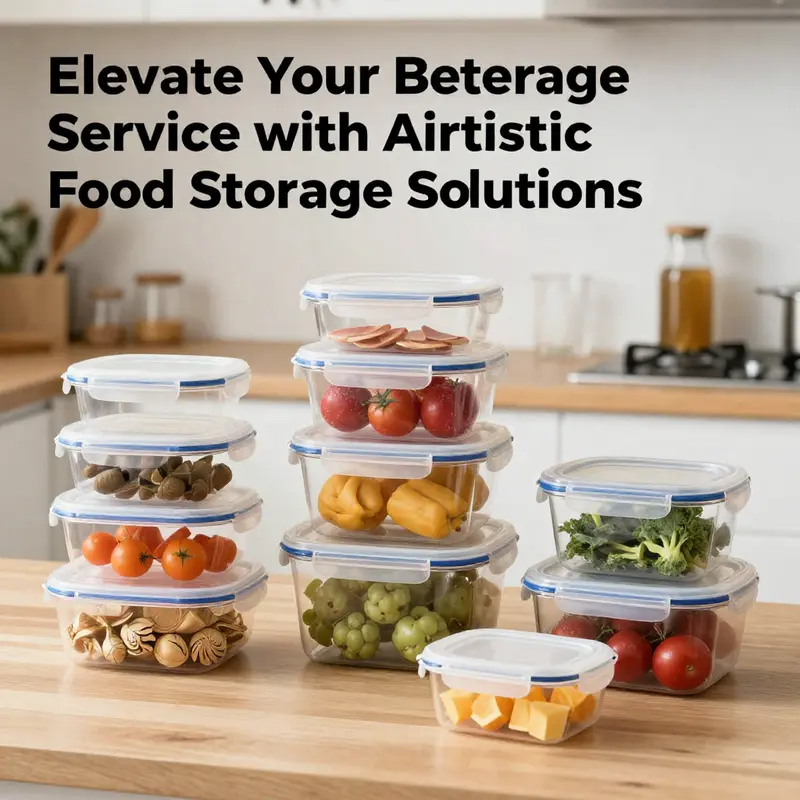
Plastic food storage containers with lids have become essential tools for beverage chains, restaurants, food trucks, and catering services in organizing and preserving food items. With a focus on maintaining freshness, preventing spills, and optimizing storage space, these containers play a crucial role across various settings including bubble tea shops and corporate events. This article explores three key elements of plastic food storage: the significance of airtight seals, the importance of durable and safe materials, and the rising demand for eco-friendly options. By understanding these components, food service businesses can make informed choices that enhance service quality and sustainability.
Locking in Freshness: The Quiet Power of Airtight Seals in Plastic Food Storage Containers
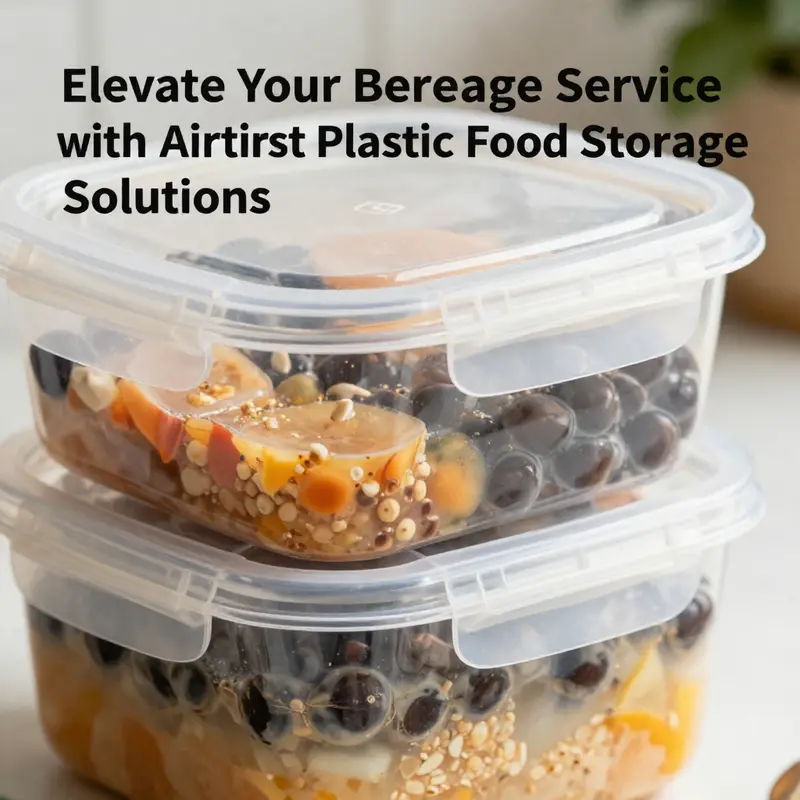
Every kitchen holds a routine moment when a lid snaps shut and the seal closes with a quiet, almost inaudible click. In that instant, a small but mighty barrier forms between the contents and the outside world. Airtight seals in plastic food storage containers do more than keep liquids from leaking or snacks from spilling. They are active guardians of quality, safety, and organization, shaping how long food stays flavorful, how often it can be reused, and how efficiently a space can be utilized in both home kitchens and busy commercial environments. The seal is a product of careful material choice, precise engineering, and an understanding of how air, moisture, and odors interact with food. When these elements come together well, the benefits extend beyond a simple containment solution; they transform everyday storage into a performance system that preserves texture, scent, nutrition, and peace of mind.
The science behind an airtight seal is elegantly practical. Food, once exposed to air, begins a slow dialogue with its surroundings. Oxygen can drive oxidative reactions, which dull flavor and degrade fatty acids in oils or nuts. Moisture migration can alter texture, turning crisp crackers soft or vegetables lifeless. Microbial growth, while often limited by refrigeration, can still find footholds if exposed to the wrong conditions. A well-designed seal interrupts these processes by creating a barrier that minimizes the exchange of air and moisture. This barrier also reduces the intrusion of outside odors, a critical factor when multiple items share a fridge or a pantry shelf. The practical upshot is not just longer shelf life but a more reliable experience each time a container is opened.
At the heart of most high-functioning plastic containers is a combination of heat-resistant, food-grade polymer and a carefully engineered lid. The polymer is commonly a robust, lightweight plastic such as polypropylene (PP) or high-density polyethylene (HDPE). PP is especially valued for its heat tolerance, allowing for safer microwave reheating and durable dishwasher performance. HDPE brings strength and chemical resistance, making it a solid choice for liquids and perishables that demand resilience against pressure and impact. These materials are chosen not only for performance but for safety. Reputable manufacturers emphasize BPA-free formulations and other food-contact certifications, ensuring that the container and lid meet stringent health standards while remaining safe for repeated use.
The sealing component itself often receives as much design attention as the container’s walls. A gasket made from food-grade silicone or a similar elastomer sits within a recessed lip on the lid. The silicone must be flexible yet resilient, remaining elastic after countless cycles of opening and closing and after dishwasher heat exposure. The geometry of the lid matters too. A flat-seal design can be excellent for some shapes, while a toroidal or multi-gasket approach may deliver superior compression in others. The goal is a uniform, bidirectional seal that distributes clamping force evenly across the contact surface and creates a watertight barrier when the lid is locked into place.
Many modern designs employ multi-point locking systems. A four-hinge arrangement, for example, ensures that pressure is distributed along the perimeter, preventing warping that could compromise the seal. The result is a lid that remains aligned with the container edge, keeping the gasket evenly compressed and preventing micro-gaps where air could slip through. Some systems integrate additional features such as a raised inner rim that helps the gasket settle properly on first use, or a secondary pour spout that remains sealed until deliberately opened. These details, while seemingly small, contribute significantly to real-world performance, especially in environments where containers are moved, stacked, or stored in crowded shelves.
Transparency and nestability also play a quiet but meaningful role in seal effectiveness. Clear or translucent bodies let users identify contents without cracking lids, which reduces the number of times a container is opened for visual checks. This is not merely convenience; it reduces unnecessary exposure to air and moisture. When a family uses a dozen containers weekly, the cumulative benefit of not breaking the seal prematurely is measurable. At the same time, many lids are designed to nest or stack in a way that protects the seal from deformation during storage. A tight nesting arrangement minimizes contact between lids and seals, preserving both shape and elasticity for longer service life.
The practical benefits of airtight seals extend across the lifecycle of food storage. Dry goods such as cereals, nuts, and snack mixes benefit from a seal that preserves crispness and prevents staleness. A well-sealed container can extend the perceived freshness and texture by substantial margins, sometimes up to half again as long as an unsealed container stored under comparable conditions. For liquids, the seal guards against leaks and oxidation, preserving the integrity of dressings, sauces, soups, and broths. The aroma profile is less likely to drift into the fridge or onto the next shelf, which helps prevent cross-odor transfer that can taint other foods. The overall effect is a system that supports reduced waste, better meal planning, and less frequent restocking—advantages that matter in households and professional kitchens alike.
Of course, the seal’s performance is inseparable from the container’s materials and construction. The choice of polymer, the thickness of the walls, the tolerances achieved during manufacturing, and the fit of the lid all contribute to how well air is excluded. A high-quality container will have tight dimensional tolerances so the lid sits flush against the rim, with no audible gaps when closed. The gasket must be positioned precisely so it sits in constant contact with the sealing surface, and it must resist creep under repeated compression. In some designs, the lid includes a secondary locking feature or a venting mechanism that adjusts to pressure changes during freezing or heating. These variations demonstrate how the concept of airtightness is a spectrum, not a single feature, with different configurations delivering different strengths across a range of use cases.
In everyday practice, a seal’s effectiveness is also a matter of care and maintenance. Proper cleaning of the gasket and seal surfaces is essential to prevent mineral buildup, food particles, and residue from compromising the seal’s elasticity. Most plastics used for food storage are dishwasher-safe, but lids with silicone rings may fare best when placed on the top rack or washed by hand to extend seal life. It is also prudent to inspect gaskets regularly for nicks, tears, or deformation. A worn gasket loses elasticity and can create micro-gaps where air can flow. Replacing worn seals is a straightforward way to restore performance without sacrificing the container’s overall durability. This practical mindset—treating the seal as a consumable part of a long-term storage system—helps maintain reliability across many cycles and uses.
The impact of airtight seals stretches beyond individual containers into how people organize and manage food. Transparent, stackable designs enable a clearer overview of what is stored, which in turn reduces the need to open multiple containers in search of a particular item. With shelves and refrigerators becoming increasingly efficient, the seal becomes a space-management ally. In commercial settings, airtight containers support standardized inventory practices. They help keep grab-and-go meals uniform, reduce waste from spoilage, and simplify rotation by preserving each batch’s intended shelf life. The practicalities of bulk packaging, retail inventory, and takeaway operations all benefit when the seal is dependable and easy to clean, so staff can focus on workflow rather than troubleshooting leaks or rancid aromas.
The conversation around airtight seals also intersects with broader concerns about sustainability and safety. Reusable containers with durable seals promote a long-term reduction in single-use waste, aligning with environmental goals in homes and across industries. Material choices that emphasize recyclability and food-grade safety contribute to a lifecycle that minimizes health risks and environmental impact. In markets that prize both performance and responsibility, designers pursue seals that resist chemical leaching, maintain integrity over time, and withstand repeated dishwashing without cracking or losing elasticity. Consumer education about proper use, care, and storage conditions further strengthens the value of airtight seals, helping households and businesses maximize the benefit of their investment while reducing waste and spoilage.
The design philosophy behind airtight seals is also evolving with new manufacturing capabilities. Precision molding, improved lip geometries, and enhanced gasket materials unlock better compression and longer service life. Some seals are enhanced with integrated measurement cues or marks that help fit lids to the correct containers, preventing mismatches that could compromise the seal. Others incorporate features that simplify cleaning, such as gasket designs that resist trapping residues in crevices or lids that resist warping in varying temperatures. The result is a family of storage solutions that not only keep food safe and fresh but also adapt to the rhythms of modern life, where meals are planned in advance, leftovers are common, and space is at a premium.
In the broader landscape of storage options, airtight plastic containers with lids occupy a flexible middle ground. They bring the resilience of plastic with the reliability of a seal that closes out air and moisture. They are not universal solutions for every scenario—some situations may benefit from glass or metal or even compostable alternatives—but when durability, reusability, and cost are priorities, airtight plastic containers consistently rise to the occasion. Their seals, when well designed and well cared for, become the quiet workhorses of kitchens and kitchens-in-process alike. They enable families to plan, cook, and store with confidence, and they offer a measurable pathway to reducing waste through better preservation of what would otherwise be discarded.
For readers who want to explore related design approaches and materials, one practical route is to examine lids and containment systems that emphasize lid integrity and ease of use. A specific example of a design family that addresses lid quality and storage practicality can be explored here: senang03-in-stock-new-design-salad-rectangle-takeaway-kraft-paper-octagonal-box-with-lid. While that example situates itself in a different material context, the governing principle remains the same: a lid that fits precisely, a seal that compresses evenly, and a system that supports modern storage needs through thoughtful geometry and robust materials. The comparison invites readers to consider how material choices and sealing strategies align with their own priorities, whether prioritizing microwave safety, freezer performance, or long-term pantry organization.
The practical implications extend into how users approach maintenance and lifecycle decisions. When choosing a container for frequent use, it is wise to assess not only the storage volume and shape but also the seal’s design and the ease with which it can be replaced or refreshed. In many professional environments, facilities managers look for modular, stackable solutions that maximize vertical storage while preserving seal integrity under heavy use. In homes, families seek a balance of affordability, durability, and the reassurance that meals prepared on Sunday remain appetizing through the week. In both cases, the airtight seal is a key performance indicator, signaling a well-considered balance of engineering, materials science, and practical habit. The seal is, in effect, a testament to the attention paid to the most understated of kitchen moments: the precise moment when containment becomes protection, and protection becomes habit.
External reference for further reading on seal performance and material choices can be found here: https://www.alibaba.com/product-detail/RUNTIAN-Airtight-Plastic-Storage-Food-Containers_1600382753973.html?spm=a2700.1.w.default.d1&productId=1600382753973
Durability and Safety in the Lab of Everyday Kitchen Storage: Material Choices for Plastic Food Containers with Lids
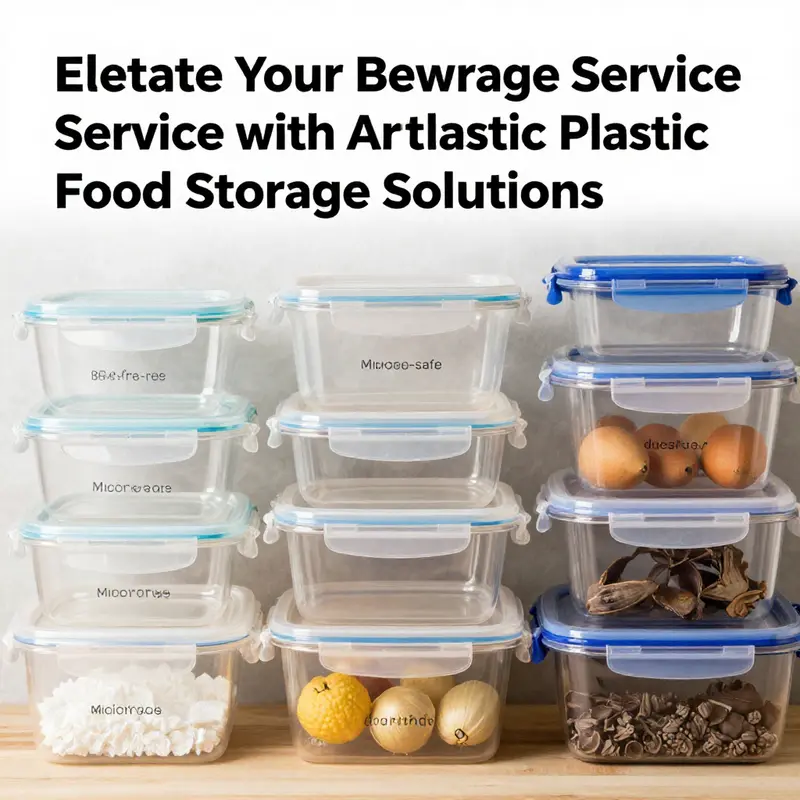
Choosing the right material for a plastic food storage container with a lid is not just a matter of appearance or price. It sets the trajectory for how long foods stay fresh, how safely they can be reheated or cleaned, and how easily a kitchen or a facility operates day after day. The decision rests on a balance between performance in real-world conditions and assurances about safety for the people who handle the containers and the foods they contain. When we look closely at the common families of materials used to manufacture these containers, a few core themes emerge: heat tolerance, chemical resistance, clarity for easy identification of contents, strength to withstand daily handling, and the ability to be cleaned, reused, or recycled with minimal risk of degradation or exposure to unwanted substances. The most widely used materials include polypropylene (PP), polyethylene terephthalate (PET), high-density polyethylene (HDPE), and, less frequently today for everyday storage, polyvinyl chloride (PVC). Glass remains an important alternative for those who prioritize inert, non-porous interiors, but it brings different design and handling considerations. Each material offers a distinct set of advantages and limitations, and the optimal choice often depends on the intended use case, whether that is home meal prep, school or office storage, restaurant take-out packaging, or industrial bulk packaging in a warehouse or kitchen. This is the practical core of material selection: durability under expected conditions, paired with safety for food contact and ease of maintenance over the container’s lifetime.
Polypropylene stands as a workhorse in the household and institutional toolkit. It combines a favorable mix of toughness and flexibility with strong chemical resistance. This makes PP well suited to containers that hold oils, acids, and a range of foods, even when they are stored for longer periods. An essential attribute is its heat tolerance. PP is one of the safer bets for microwave use, a common requirement in modern kitchens and many catering operations. It can be designed to be dishwasher-safe as well, which is a practical benefit for busy households and food service environments where routine cleaning is critical. From a design perspective, PP is friendly to injection molding, which means manufacturers can produce containers in a wide array of shapes and sizes, as well as with nuanced lid geometries that improve sealing performance. The materials can be manufactured to be transparent, translucent, or opaque, allowing manufacturers to balance aesthetic considerations with practical needs such as hiding stains or showcasing contents. Yet polypropylene does have its limits. In very cold conditions, PP can become brittle, which raises concerns for freezers or chilled storage in commercial settings that experience rapid temperature shifts. And in terms of clarity, PP typically does not match PET, so the visibility of contents may be reduced. Nevertheless, for many everyday uses, PP’s durable performance, heat resistance, and safety profile keep it at the top of the list for reusable containers that are meant to last.
PET, or polyethylene terephthalate, occupies a different niche with a different set of strengths. PET’s standout attribute is optical clarity. When a container is made from PET, contents are easy to inspect without opening the lid, which reduces handling and helps with inventory control in both homes and small commercial environments. PET offers strong moisture and gas barrier properties, which helps preserve flavors and textures over time. It is also lightweight and relatively tough for its weight class, which translates into energy efficiency in shipping and handling. PET is commonly recyclable, with a broad base of post-consumer recycling options in many regions, making it a favorable choice for users who want to combine performance with environmental considerations. The primary caveat with PET is heat resistance. While PET performs well under cold and room temperatures, it is not typically suitable for high-heat applications and microwaving. This makes PET ideal for refrigerated storage, cold meals, and shelf-stable dry goods, but it requires care if reheating or hot contents are involved. In terms of lid design, PET’s rigidity supports secure seal configurations, including snap-on or twist-lid mechanisms, that help maintain freshness and minimize leaks. Aesthetics are another perk: the near- flawless transparency supports quick recognition of contents and portion control, which is particularly valuable in meal prep routines. For those who value visibility and a strong barrier against moisture, PET can be the preferred container material, provided the temperature envelope aligns with its heat limits.
HDPE offers a different blend of strengths that suits many storage tasks. High-density polyethylene is known for its stiffness, chemical resistance, and durability. It is especially reliable for cold storage and for keeping perishables safe in refrigerators and freezers. HDPE’s opaque or translucent formulations allow for color-coding and product differentiation without relying on printed labels, a practical feature in busy kitchens and cut‑throat backstage areas of food service. The material’s impact resistance helps containers survive the inevitable bumps and drops that can occur in a busy household or a high-output commercial environment. HDPE is generally safe for hot and cold temperatures, but unlike PP, it is not typically designed for microwave use, and not all HDPE formulations are explicitly approved for high-heat or direct contact with steaming foods. One limitation to note is odor absorption. Some HDPE varieties can retain strong smells after repeated use, particularly from strongly scented foods. Users who re-purpose containers for multiple types of food may notice lingering aromas if proper cleaning is not observed.
PVC, or polyvinyl chloride, is less common today for mainstream food storage, but it still appears in certain industrial or specialized packaging contexts. The primary concerns with PVC relate to the presence of plasticizers such as phthalates, which have raised safety questions in some applications. When PVC is used in food-contact applications, it must be formulated and certified to be phthalate-free and suitable for contact with food under applicable regulations. While PVC can offer excellent clarity and, in some blends, good chemical resistance, the safety and regulatory considerations often steer designers toward PP, PET, or HDPE as the backbone materials for reusable containers intended for microwaving or frequent cleaning. PVC may appear in lids, seals, or liner materials rather than the main body, which means attention to the full assembly is essential to ensure no migration or leakage occurs.
Glass remains an important reference point for safety and sustainability. Glass containers with attached lids present a nearly inert alternative to plastics. They do not leach chemicals, and they are generally compatible with microwaves and some ovens when the lids are appropriate. Glass is often favored by users who want to minimize any risk of chemical interaction with foods or odors, and it can be an appealing long-term option for households that prefer durable, timeless store-and-reuse solutions. The downsides of glass are notable: heavier weight, higher upfront cost, and a greater likelihood of breakage if dropped or mishandled. For some commercial applications, the heavier weight of glass is balanced by the opportunity to present premium products, reduce plastic waste, and meet consumer demand for longer-lasting, reusable food storage options.
Between these materials, many designs combine elements to maximize performance. A common pattern is a rigid plastic body paired with a gasket-equipped lid to improve airtightness. The gasket, typically made from silicone or a compatible elastomer, forms a seal that protects against moisture ingress, which helps extend shelf life and maintain texture. The sealing system often includes a venting mechanism for microwave use, enabling steam release while preserving the seal when closed. Such designs illustrate how material science and mechanical design work together to deliver containers that are both durable and practical in everyday use. The choice of material also guides maintenance expectations: some plastics tolerate dishwasher cycles, some are simple to hand-wash, and some should be cleaned with care to preserve lids and seals over time. In consumer settings, the expectation of reusability, safe cleaning, and clear labeling about microwave or freezer compatibility becomes part of the decision-making process. For households aiming to minimize waste, the material choice also intersects with end-of-life considerations, including the feasibility of recycling streams and the potential for using recycled-content formulations in new products.
Beyond these core materials, other factors influence durability and safety in practical terms. The safety profile of food-contact plastics hinges on regulatory alignment, surface finish, and the use of safe colorants and additives. Many manufacturers now emphasize BPA-free formulations and other certifications that reassure consumers about ongoing safety. While BPA-free labeling has become common, it is important to understand that safety also depends on thermal exposure and cumulative use. A container that remains intact and non-degraded after repeated microwaving and washing is the practical test of durability. The integrity of seals and lids over time matters as much as the material of the body itself. If the seal begins to fail or the lid warps, air and moisture can enter, diminishing freshness and increasing the risk of cross-contamination. In this light, the choice of material becomes a long-term planning decision about how a family or a kitchen will use the container across seasons and cooking routines.
From a sustainability perspective, recyclability and the potential for reusing materials are increasingly influential. PET and HDPE are among the most recyclable plastics globally, with established streams in many communities. PP also offers decent recyclability in many regions, though recycling rates can vary by locale. The lifecycle of a container matters too: the energy costs of production, the durability of the item, and the ease of cleaning without wearing down the material. A container that lasts through dozens or hundreds of uses can reduce waste relative to single-use alternatives, especially when the user commits to proper cleaning, drying, and dry storage to prevent odor buildup and color contamination. In practice, families and facilities often weigh the upfront cost of a robust PP or HDPE container against the long-term savings from reduced waste, less frequent replacements, and improved food safety. The design can also reflect environmental goals, with models available that incorporate recycled content or that are designed for disassembly to ease recycling at end of life.
In the broader landscape of media and culture around storage, there is an ongoing conversation about how materials influence behavior. A clear, durable container can encourage better portion control and better organization. A transparent body makes it easier to see what is inside, reducing waste from forgotten leftovers. A reliable seal reduces spill risks during transport, which is especially important in households with active kitchens or in take-out contexts where containers move from fridge to bag to plate. The choice of material also informs heat management—whether you plan to reheat directly in the container or prefer to transfer to a dish. In institutional settings, such decisions affect workflow, as staff must choose containers that can withstand rapid temperature changes, frequent washing cycles, and high-volume handling without compromising safety or purity.
Looking ahead, material science continues to push toward containers that combine the best of all worlds: greater heat resistance, improved chemical stability, enhanced barrier properties, and better end-of-life options. Research and development efforts are exploring multi-layered or copolymer blends that deliver stronger moisture barriers without sacrificing clarity, along with durable gaskets and lids that maintain seal integrity after repeated use. The trend toward consumer transparency also encourages designs with straightforward labeling for microwave safety, freezing compatibility, and dishwasher suitability. For buyers, the practical takeaway is to map the expected use case to a material profile. If the priority is quick, everyday reheating and easy cleaning, PP with a reliable seal is often the most sensible starting point. If visibility and freshness control are paramount, PET can be preferable for cold storage. If bulk packaging and rugged handling in a warehouse or kitchen are essential, HDPE offers a compelling blend of strength and versatility. If inertness and long-term storage with minimal risk of chemical interactions are crucial, glass remains a robust, albeit heavier, alternative that informs plastic design by providing a benchmark for safety and purity. In any case, ensuring that the container is labeled as food-grade and free from harmful additives is a non-negotiable step in the purchase decision.
To illustrate how design and material choices converge, consider a scenario in which a household plans to batch-cook meals for the workweek. A user might choose a PP container for its microwave safety and sturdy lid seal, enabling quick reheating and easy stacking in the freezer. The user could opt for a PET container for a quick grab-and-go lunch with high visibility, ensuring they instantly recognize the contents during a rushed morning. For cold-storage needs where bulk items must be shelved with minimal risk of odor transfer, an HDPE option may prove more resilient, especially when the lid seals are robust and the container is rated for the environment. Each choice reflects a careful assessment of the anticipated conditions, the user’s cleaning habits, and the environmental considerations associated with recycled content and end-of-life disposal. The material, in short, is a guiding thread that runs through planning, purchasing, use, and eventual disposal, tying together safety, practicality, and responsibility in everyday storage.
An additional layer of practicality comes from how lids are engineered to complement the container body. The seal material, the geometry of the lid, and the method of closure all work together with the base material to determine overall performance. A well-matched combination can resist leaks during transport, keep odors contained, and maintain freshness over days or weeks, depending on the contents. In professional kitchens, this compatibility becomes even more critical, because batch sizes scale up and the stakes for food safety rise with volume. A lid that loses its seal under agitation or heat can undermine an entire storage plan, making the initial material choice a foundational decision that influences every subsequent step in the chain—from prep to service to cleanup. The market responds to these demands with a spectrum of configurations: airtight snap-locks, hinged lids with secure clasps, vented lids for microwaving, and even interchangeable gasket systems designed to extend the life of the container through repeated cycles. When a user understands the interplay of base material and lid design, they can select a system whose performance aligns with their routines and their expectations for safety and efficiency.
With all these considerations in mind, the chapter of material choices becomes less about chasing the latest technology and more about aligning properties with real-world use. It is a careful calculus of safety, durability, ease of cleaning, and environmental impact. The modern consumer can navigate this landscape by prioritizing food-grade certification, looking for BPA-free claims, and reading care instructions that reflect the material’s vulnerabilities and strengths. It is not merely a matter of whether a container can hold soup or pasta; it is a decision about how a household or business sustains freshness, minimizes waste, and protects health through thoughtful design and responsible material selection. To enrich this decision matrix, designers and buyers alike should consider a few practical heuristics: favor PP for microwave-ready, reusable storage; reserve PET for clear visibility and strong barrier performance in cold storage; lean toward HDPE when durability and chemical resistance matter in bulk or in tough handling environments; and view glass as a durable, inert option for those prioritizing maximum chemical stability and longevity, accepting its weight and fragility. In many cases, a versatile, well-sealed container that leverages a robust PP or HDPE base with a thoughtfully engineered lid will deliver an optimal blend of durability, safety, and practicality for most households and many commercial settings.
For readers who want to see how these principles translate into real-world product choices, a closer look at lid designs and material compatibility can offer additional clarity. Some manufacturers now offer PET-lid designs that combine clear visibility with reliable sealing, as shown in this example: senang kraft paper octagonal bowl with PET lid. While this particular link points to a product that blends paper packaging with a PET lid, the example demonstrates how lid materials and container bodies must work together to preserve freshness and simplify daily use. In the broader sense, PET lids are a reminder that even within a single product family, the lid’s material and seal design can dramatically influence overall performance, and that thoughtful pairing matters as much as the base polymer choice itself.
As you weigh options, consider not just the immediate needs but the lifecycle story of the container. Ask how it will be cleaned, how many times it can be reused, whether it will enter a freezer, a microwave, or a dishwasher, and what happens at the end of its useful life. The answers reveal a coherence between material science and everyday practicality, a harmony that keeps food safer, kitchens tidier, and waste lower. In the end, the most durable and safe choice is not a single material but a well-considered combination of material performance, design details, and responsible use. That is the heart of durable, safe plastic storage with a lid—the intersection where science meets daily life and where careful material choices translate into tangible benefits for homes and workplaces alike.
External reading: For additional context on material composition, performance, and best practices, see this external resource: https://www.made-in-china.com/products/2026/02/16/plastic-containers-with-metal-lid-explained-material-composition-performance-and-best-practices.html
Sealed for Sustainability: The Eco-Friendly Evolution of Plastic Food Storage Containers with Lids
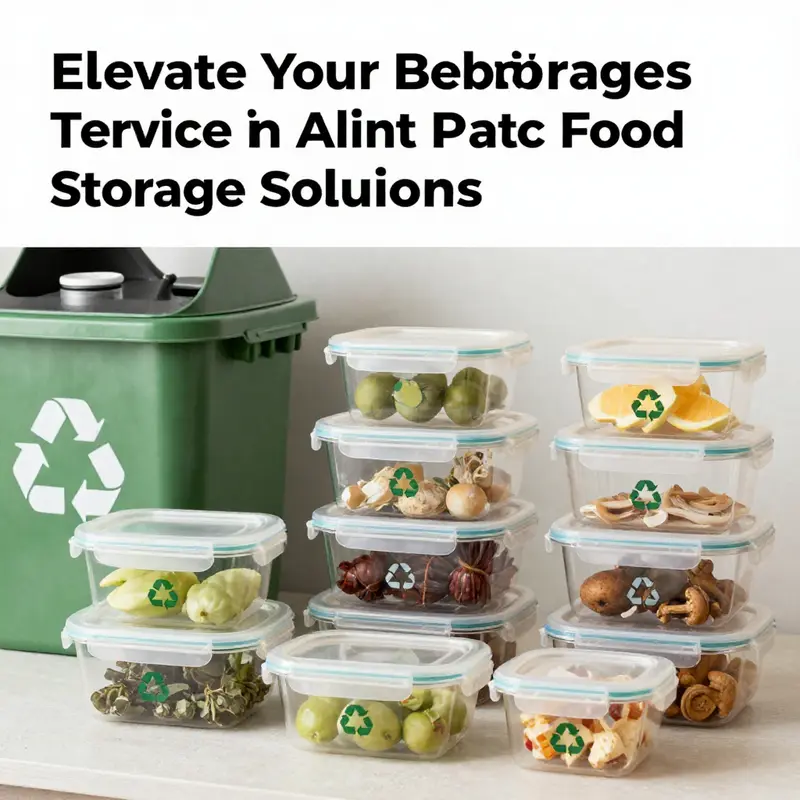
Every kitchen shelf tells a story of meals planned, leftovers saved, and ingredients ready for the next day. The plastic food storage container with a lid sits at the center of this narrative, a tool whose quiet reliability underpins daily routines in homes and kitchens around the world. Yet the story of these containers is not just about convenience; it is about a conversation between performance and responsibility. The lid’s snap, the edge’s seal, the container’s thickness, and the transparency of the plastic all contribute to a system that must be rugged enough to survive busy hands, safe for use with cold and warm foods, and discreet enough to disappear into a pantry without shouting for attention. The shift toward eco-conscious trends has not overshadowed the need for practicality, but it has reframed what counts as quality. To design and choose containers that last, stay sanitary, and minimize waste, manufacturers, retailers, and consumers are asking the same questions: How long can this piece endure in a real kitchen? How easily can it be repaired, recycled, or repurposed at the end of its life? And how can a seemingly simple object—made of plastic, with a lid that clicks shut—be part of a more sustainable cycle rather than a temporary, disposable moment?
Traditional kitchens demonstrate that small, well-made objects accumulate into a sustainable habit when they prove their worth day after day. The beauty of a reliable seal is not just in preventing spills; it is in preserving flavor, moisture, and nutrition by limiting exposure to air. When a container is designed to last through countless cycles of washing and stacking, it reduces the demand for new plastic production. In other words, durability becomes a sustainability strategy, not merely a quality signal. This practical mindset of resilience—the idea that good design invites repeated use—aligns with a broader understanding of environmental stewardship that extends beyond any single material choice. A well-made lid, a well-designed edge, and a container that resists cracking under temperature shifts all contribute to a longer functional life, which in turn lowers the carbon footprint per stored meal.
Traditionally, the most common materials powering these containers have been HDPE, PP, and PS. HDPE provides the strength for liquids and deli packaging, PP offers heat resistance that makes microwaving and dishwasher cleaning possible, and PS delivers clarity and stiffness. Yet every material carries a footprint. Fossil fuel origins, energy-intensive manufacturing, and a design bias toward replacement rather than repair complicate the image of truly sustainable plastic storage. The data from the U.S. EPA about recycling rates is stark: only about nine percent of plastic waste was recycled in 2021. That figure underscores the urgent need to rethink how these containers are made, used, and disposed of. If the aim is to keep food safe and fresh while reducing planetary impact, the path cannot rely solely on aftercare. It must begin with upstream choices—where materials come from, how much virgin resin is used, and whether the product can incorporate post-consumer recycled content without sacrificing safety or performance. In practice, this means product designers must balance chemical inertness with recyclability, orthogonal concerns like heat tolerance with the ability to be recycled, and a consumer experience that makes sustainable choices easy rather than inconvenient.
Enter the era of innovative materials that promise stronger sustainability profiles without surrendering function. Recycled PET is among the most visible shifts, offering a route to lower carbon footprints by reusing post-consumer plastics rather than extracting new raw material. Bio-based plastics, derived from plant sources, have entered conversations about circularity, yet they still face challenges in recyclability and heat resistance. They may degrade differently in typical recycling streams or fail to perform in high-heat contexts, which has limited their universal adoption in microwavable containers. What matters in practice is a spectrum of solutions that can be chosen based on use case: a deli container that stays cold for weeks may benefit from recycled content; a microwave-safe lunch box may require lower hazards and higher heat tolerance. In this landscape, safety remains nonnegotiable. Consumers expect food-grade materials with clear labeling and minimal risk from chemical migration. The push for BPA-free formulations has become more than a slogan; it is an industry-wide standard that helps reassure households navigating recipes, sauces, and baby foods.
Alongside material shifts, design strategies are redefining the performance of plastic containers. Many producers emphasize airtight seals and pressure-tested interlocking lids that prevent leaks while being easy to operate with one hand. The conversation expands beyond the seal to nestability and stackability, which is essential in cramped kitchens or commercial settings where every inch of shelf space counts. Clarity remains important, since visibility of contents reduces the number of times a container is opened, which in turn conserves freshness. Even as glass and other materials gain attention as zero-waste alternatives, the practical reality is that a portion of the market still relies on plastic because of its lightness, durability, and cost. This is where eco-friendly trends converge with practical trade-offs: redesigned plastics that incorporate higher post-consumer recycled content, improved impact resistance, and longer lifetimes; lids that use fewer materials while maintaining airtight performance; and liners or coatings that can be removed and recycled. The point is not to abandon plastic but to evolve it into a better neighbor of the environment—a material that can be part of a circular economy rather than a one-way route to landfills. To illustrate a connected approach, there is growing interest in modular systems that allow containers to be repurposed as heat-safe, snack-ready options for schools, offices, and home kitchens, while maintaining a consistent sealing language that makes them easy to use across a family of sizes.
Consumer and corporate demand are converging to push a holistic design philosophy. Durability is no longer optional; it becomes the baseline. Reusability is framed as a feature rather than a by-product of thriftiness. Cleaning convenience—dishwasher compatibility and stain resistance—directly influences whether a container will survive multiple cycles of use. Endurance matters because every piece that lasts longer reduces the need for new plastic production. In this sense, sustainable design is not merely a matter of the materials themselves, but of the entire lifecycle: from pre-consumer manufacturing practices and packaging to the ease of disassembly and recycling at end-of-life. Seals, welds, and colorants must be chosen with an eye toward recyclability, ensuring that the product can re-enter the manufacturing stream rather than ending up in a landfill. Transparent or translucent plastics still have a role, but transparency is no longer just about seeing the food; it also signals the presence of recycled content or compliance with safety standards. The industry is increasingly transparent about testing methods, from barrier performance to temperature cycling, to reassure buyers that sustainable choices do not compromise safety or convenience.
Another dimension of the eco-friendly trend is the expansion of take-away packaging into the ecological conversation. In restaurants and food-service operations, containers with lids are evaluated not only on seal strength and heat resistance but also on the potential to reduce waste through reuse or efficient recycling streams. Some wholesale providers emphasize recyclable or compostable materials at scale, including options that can be produced in large quantities—think thousands of sets for a single contract—that still meet food-contact safety standards. While this is a field of ongoing experimentation, it reflects a broader shift toward materials and designs that can circulate longer in the economy. In practice, this means considering the full life of a container—from its creation with minimal waste and energy use, to its daily use in kitchens, to its ultimate fate in a recycling or composting facility. It also means acknowledging the limits of current recycling streams and planning for end-of-life through product design, not after the fact. The outcome is a family of containers whose lids click firmly shut not only to preserve flavor but to signal that the product is designed with a future in mind, a future in which waste is minimized and resources are conserved rather than squandered.
An evolving reality is the incorporation of alternative materials and structural components within the broader plastic storage category. Glass containers frequently compete with plastic on grounds of durability and inertness, offering a non-porous barrier that resists odors and stains and stands up to microwave, freezer, and oven use. Yet glass is heavier and less forgiving in rugged environments. The emergence of silicone lids and flexible liners adds a layer of adaptability, enabling airtight seals without relying exclusively on rigid, multi-piece plastic assemblies. These innovations can complement, rather than replace, plastic in the design ecosystem, enabling consumers to choose combinations that balance weight, safety, and environmental impact. In addition, there are ongoing efforts to develop compostable liners or inserts that can be used inside plastic jars to extend shelf life while ensuring that they can be removed and collected by composting streams, where available. This is not a universal solution, but a demonstration of how the industry is pursuing a broader palette of materials. Above all, the aim is to keep food safe and appealing while reducing the negative externalities of the packaging pathway, especially in dense urban settings and busy workplaces where waste management is a daily challenge.
From a policy and industry perspective, the shift toward eco-conscious storage is reinforced by safety standards and consumer education. Labels such as food-grade certification and BPA-free claims have become baseline expectations, guiding households through decisions that affect not only their health but also the environment. Dr. Lena Patel, an Environmental Health Scientist at the Green Living Institute, notes that the choice set for modern households has expanded without sacrificing function: switching to high-quality, eco-conscious food storage doesn’t mean sacrificing function. In fact, many sustainable options outperform plastic in durability, safety, and sealing efficiency. This perspective helps reframe the narrative around sustainability from a moral indictment of plastic alone to a practical evaluation of materials, processes, and lifecycle outcomes. Consumers are learning to look beyond catchphrases and assess how a container behaves under real kitchen conditions: how well it resists denting, whether its lid stands up to repeated locking and unlocking, whether the contents stay fresh in the fridge, and how easily the container can be recycled or returned to a circular stream when its useful life ends. The emphasis is on responsible stewardship, not perfection, recognizing that progress happens in incremental steps that accumulate over time.
Looking to the future, the eco-friendly trajectory of plastic storage containers with lids rests on a design philosophy that treats end-of-life as a core concern from the outset. Material science is likely to deliver higher proportions of post-consumer recycled content without compromising safety, alongside catalysts, processing aids, and barrier technologies that keep food fresher longer. Bio-based plastics may continue to find safe, restricted roles in low-heat applications, while reclamation networks expand to accept more diverse streams. The real challenge is achieving a coherent system that makes it economically rational for manufacturers to invest in durable, recyclable products and for households to reclaim them at the end of their life. In practical terms, that means building partnerships among material suppliers, packaging manufacturers, grocery retailers, and municipal recycling programs to ensure that the path from product introduction to recycling is smooth and reliable. If the market can converge around standardized seal designs, compatible recycling streams, and clear labeling that reduces confusion, then the gap between aspiration and action narrows. The future will not be defined by a single material or a single technology; it will be defined by a portfolio of options that allow people to store, reuse, and discard with intention and care.
Within this evolving landscape, every container with a lid becomes part of a larger narrative about how households handle food, how industries reduce waste, and how cities design waste streams that honor resource limits. The chapter you read here is not a manifesto for abandoning plastic; it is a testament to how a familiar object can adapt, improving its environmental profile without sacrificing the comfort of everyday life. It invites readers to imagine a pantry where every container is designed for multiple lives and easy end-of-life integration, where the seal remains dependable after repeated use, and where the materials themselves tell a story of responsible manufacturing and thoughtful reuse. It is a call to informed decision-making that respects both health and habitat, and to a future in which sustainable choices are the default, not the exception. For a concrete example of a design concept aligned with these principles, see new-design brown paper disposable plastic salad bowl.
As readers move from the kitchen to the workshop of ideas, the broader context remains essential: the lifecycle of plastic storage containers is inseparable from how we design, use, and recycle. This is not merely a technical discussion about seals or materials; it is a narrative about how everyday choices translate into environmental outcomes. The path forward will require collaboration across disciplines and sectors, a willingness to experiment with new materials, and a commitment to clear, honest communication about what is recyclable, what is compostable, and what can be repaired or repurposed. In this light, the future of plastic storage with lids is not a retreat from responsibility but an invitation to participate in a more deliberate, efficient, and humane approach to keeping food fresh while tending to the health of the planet. For readers seeking a broader context on waste management and recycling progress, see the following external resource: EPA recycling report.
Final thoughts
Choosing the right plastic food storage containers can significantly impact operations in food service sectors, particularly when it comes to quality, safety, and sustainability. Airtight seals ensure freshness, while durable materials safeguard against spills and damage. Additionally, embracing eco-friendly practices aligns with growing consumer demand for sustainable solutions. By understanding these factors, businesses such as bubble tea shops, restaurants, and catering services can enhance their efficiency and appeal to environmentally conscious consumers.