
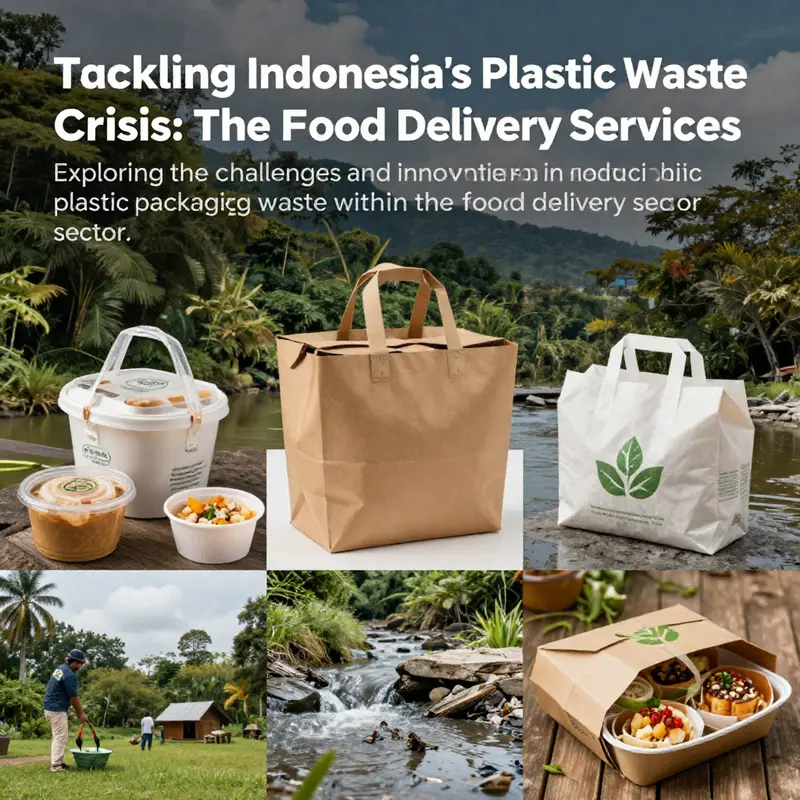
Indonesia faces a significant environmental challenge owing to its escalating plastic waste crisis, notably fueled by the rapid growth of food delivery services. As the second-largest contributor to marine plastic pollution globally, it has become imperative to address the single-use plastic packaging that defines the food delivery industry. This article delves into the impacts of these services on plastic waste, the challenges faced in mitigating this waste, and the innovative solutions emerging in sustainable packaging. Each chapter will shed light on critical aspects of the issue—a holistic exploration aimed at food and beverage providers keen on making a difference.
Waste on the Menu: Tracing Indonesia’s Plastic Footprint From Food Delivery to the Waste Stream
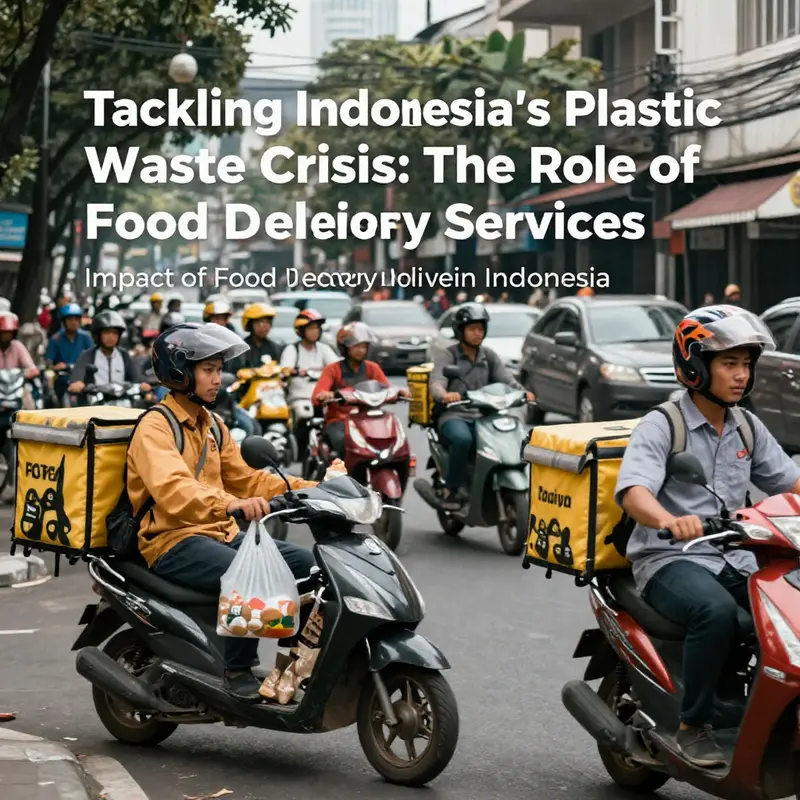
On a crowded city street, the rhythm of life is punctuated by the steady hum of delivery scooters and the chime of a notification ping. A meal arrives not as a memory of taste but as a bundle of packaging that travels with it—an emblem of modern convenience. In Indonesia, this pattern has become a common urban experience. The rapid expansion of food delivery services has reshaped dining habits, but it has also intensified a stubborn and costly problem: plastic packaging waste. The chapter that follows does not merely recount statistics; it traces how a single order sets in motion a system with environmental, social, and economic consequences that ripple far beyond the doorstep. It asks not only what is wasteful but where the waste originates, how everyday choices multiply, and what kinds of shifts might bend the trajectory toward a more circular, less plastic, future for the archipelago’s cities and coastlines.
From the first bite to the last disposal, the journey of a takeaway meal is dominated by packaging. Single-use containers, bags, and utensils are designed for convenience and speed, not for lifecycle longevity. In Indonesia, where urban demand for fast, reliable food delivery has grown swiftly, the dependence on throwaway packaging has become a reliable proxy for consumer behavior in a fast-changing economy. The scale is striking: millions of orders daily translated into millions of containers every day. Each container is part of a larger system—manufacturers, logistics networks, waste streams, and recycling facilities—that either thins the stream or thickens it. When taken together, these containers form a visible, accumulating layer over streets, drains, and rivers. The problem is not limited to the primary vessel that holds the meal. Secondary packaging—plastic wraps, sauce packets, and even small cable ties that secure the bundle—contributes substantially to the overall waste load. These components may seem minor in isolation, but their cumulative effect is profound. A 2025 study draws attention not just to the big pieces but to the little ones—the cable ties that seal the pack, the film that wraps the bundle, and the myriad plastics that evade easy separation in recycling streams. This broader lens reframes the packaging challenge from a series of discrete items to a systemic issue that requires coordinated action across producers, platforms, and households.
The environmental consequences of this packaging system become clearest when viewed through the lens of the urban environment and the atmosphere that envelops it. Indonesia ranks among the nations contending with alarming levels of air pollution, and recent research has started to connect the dots between air quality and consumer behavior in food delivery. Specifically, rising PM2.5 levels in densely populated urban areas have been linked to increased reliance on takeaway meals. The logic is unsettling but straightforward: poorer air quality pushes people to seek the comfort and convenience of readily available meals, often from nearby takeout spots, which in turn drives higher plastic waste generation. This creates a pernicious feedback loop in which environmental degradation both motivates and is reinforced by consumption choices. The city’s air tells a story about the choices people make in response to environmental conditions, and those choices, in turn, shape the environment back in more ways than one. The cycle is not a simple cause-and-effect relationship but a web of influences—economic, logistical, cultural, and regulatory—that together determine how much waste is produced and how long it remains in the system.
A crucial dimension of the problem lies in what many people might overlook: the secondary materials that accompany the main packaging. Plastic wraps that protect the contents, sauce packets, liners, and the myriad cable ties used to secure orders contribute an outsized share of the waste. A 2025 study highlights cable ties as a material category that complicates recycling. Their synthetic composition, small size, and ubiquity in food packaging make them particularly challenging to sort and process in recycling facilities. Public awareness about these often-invisible elements is essential because it directly shapes how households dispose of packaging and what local authorities prioritize in waste management programs. The study argues for consumer education focused not just on reducing plastic use in general but on recognizing and reducing the most intractable components—like cable ties—that hinder the recycling process.
The root of the problem, as research consistently shows, is systemic. It is not solely a matter of consumer habits, nor is it purely a matter of technology or policy. The accumulation of packaging waste is the result of a complex interplay among production systems, delivery platforms, urban waste management infrastructure, and consumer routines. Much of Indonesia’s waste management system is oriented toward collecting and disposing of garbage rather than collecting, sorting, and reusing materials. The mismatch between packaging design and the realities of local waste infrastructure means that a large portion of takeaway packaging ends up in landfills or waterways. In the most challenging contexts, waste leaks from informal dumping sites into rivers, streets, and coastal areas, where it breaks into microplastics that eventually enter marine ecosystems. Addressing this requires more than better recycling facilities; it demands redesign of packaging for circularity, clearer responsibility from platforms, and shifts in consumer behavior that reinforce sustainable norms over the long term.
In exploring pathways to change, the literature points to two complementary strands: material innovation and system-level reform. On one hand, there are promising examples of new packaging materials and business models that aim to close the loop. The Indian experience with converting agricultural residues like sugarcane into biodegradable packaging demonstrates the potential of circular economy ideas to scale beyond local borders. This approach embodies three core principles: source separation of waste, the use of renewable or waste-derived inputs, and the design of packaging that can return to the economy as a useful product rather than becoming waste. While those innovations are not a panacea, they illuminate a viable direction for Indonesia—an economy rich in agricultural byproducts and a growing appetite for sustainable alternatives. On the other hand, the literature emphasizes the need for systemic changes that go beyond material substitution. Reusable packaging models, improved recycling infrastructure, and stronger corporate responsibility from delivery platforms form a triad of levers that can collectively reduce plastic leakage. Each lever carries its own challenges, but together they represent a credible route to decouple growth in food delivery from the growth of plastic waste.
Within this framework, the connection between delivery platforms and household waste becomes a focal point for policy and practice. Platforms influence ordering behavior through promotions, incentives, and perceived convenience. When a platform promotes single-use packaging as the default, the embedded incentive is to choose the easiest option for speed and reliability rather than the option that might offer a more sustainable lifecycle. Consumers, for their part, weigh convenience against concern for the environment, often constrained by the immediacy of hunger and the social norms surrounding takeout culture. The interaction of these forces shapes the daily waste footprint. If the default remains single-use, even highly motivated individuals may find it hard to sustain lower-waste habits over time. This is why interventions that recalibrate incentives—such as encouraging reusable packaging where feasible, or making recycling and return programs simple and reliable—are essential, not only for the environment but for public trust in the food delivery system itself.
One recurring theme across studies is the promise of “closing the loop” in online food delivery. A closed-loop system would connect packaging design to end-of-life outcomes: packaging that can be easily sorted, collected, and returned or repurposed into new materials. Achieving this requires careful coordination among manufacturers, logistics networks, municipal waste authorities, and consumers. It also requires a regulatory framework that incentivizes sustainable design and clear accountability for waste generated by digital ordering platforms. The feasibility of such a system depends on practical compromises: the durability needed for repeated use, the cost implications for vendors, and the reliability of return mechanisms in the urban environment. Yet, even partial progress—such as standardized packaging formats, universal color-coding for recyclables, and efficient reverse logistics for reusable containers—could yield measurable reductions in waste while preserving the convenience that makes food delivery attractive in the first place.
Beyond the primary containers lie the packaging decisions that occur at the periphery of the order. The choice of secondary packaging materials, the thickness and type of plastic used in containers, and the presence or absence of insulating layers all influence both waste generation and energy use. Hot meals, for instance, often rely on polymers with thermal insulation properties, a design choice that protects food quality but complicates disposal. Alternatives rooted in bio-based or compostable materials show potential but require careful assessment of local composting capacity and the actual end-of-life conditions in Indonesian cities. The goal is not to replace plastic with another pollutant but to curate materials whose environmental impact is tempered by robust waste management practices. This means aligning product development with municipal capabilities, consumer behavior, and the realities of informal waste sectors that handle a substantial share of post-consumer waste in many urban centers.
The cultural dimension of food delivery cannot be ignored. Food has social meaning, and convenience has become an everyday virtue in fast-paced urban life. Reframing packaging waste as a shared responsibility rather than a personal inconvenience is essential. Public campaigns that explain where and how to dispose of packaging, whether to reuse, or how to participate in a local recycling program, can shift norms over time. When people understand the life story of a takeout container—from production to disposal to potential reuse—their willingness to alter routines increases. The most effective strategies are not punitive but educational and facilitative. They remove friction from sustainable choices, making it easier for a consumer who needs a quick meal to also make a quick, more responsible choice about packaging.
Knowledge alone, however, cannot drive systemic change. Infrastructure matters—collection points, separation facilities, and processing capacity determine whether a given packaging material will be properly recycled or simply end up as waste. In many Indonesian cities, informal waste collectors play a critical role in the recycling ecosystem, sorting and reclaiming materials that larger facilities may overlook. Any successful strategy to reduce plastic packaging waste must engage with these workers, support their livelihoods, and integrate their insights into formal waste management planning. This is not a marginal concern; it is essential to the social viability of a waste reduction effort and the equitable distribution of the costs and benefits of change.
In practical terms, the path forward rests on three pillars. First, rethinking packaging design to favor reusability and recyclability without compromising food safety or user experience. This includes designing containers that can be easily cleaned and reused, and standardizing sizes and materials to ease sorting and processing. Second, building or upgrading recycling and composting infrastructure so that post-consumer packaging can be diverted from landfills and waterways rather than piling up on city streets. Third, recalibrating consumer incentives and corporate responsibility so that both individuals and platforms share a stake in reducing waste. Reforms might include encouraging or mandating returnable packaging where feasible, subsidizing the cost of recycling facilities, or requiring platforms to report packaging waste metrics publicly. The aim is not perfect elimination overnight but a steady, measurable shift toward packaging systems that behave like part of a circular economy rather than a linear take-to-wdispose chain.
To illustrate where inspiration can come from, the broader global context offers credible models rooted in local adaptation. For example, efforts that convert agricultural byproducts into usable packaging materials demonstrate that waste streams can be redesigned as inputs. In India and elsewhere, sugarcane bagasse and other plant-based materials have been explored as alternatives to traditional plastics for takeout containers and cups. These approaches do not automatically solve all problems; they require supportive ecosystems, including supply chain readiness, consumer acceptance, and appropriate end-of-life infrastructure. Yet they illuminate a pragmatic path for Indonesia: leverage domestic agricultural residues to create packaging that aligns with local capabilities and environmental priorities, while simultaneously fostering a local knowledge base that can scale regionally.
The momentum for such approaches is growing, and so is the recognition that meaningful change requires collaboration. Public sector leadership can set overarching targets, standards, and reporting requirements that encourage transparency. Private platforms can align their procurement policies with sustainability criteria and share data that reveal where most waste originates and how it is managed. Civil society and researchers can monitor progress, highlight gaps, and advocate for changes that deliver both environmental and social benefits. A cohesive strategy that blends design innovation, infrastructure investment, and behavioral change holds the promise of gradually bending the waste curve. It may not be rapid, but it is cumulative—an accumulation of small, practical gains that eventually composes a different story for Indonesia’s cities and their seas.
A practical step in this direction is to expand consumer awareness about the life cycle of packaging beyond the immediate moment of disposal. People order meals for many reasons, but they rarely consider the fate of the container after the last bite. If messaging emphasizes that a container can be cleaned, reused, or returned for refilling, it may inspire a broader sense of responsibility. If platforms align with this message by offering convenient return options or by supporting local recycling programs, the alignment between consumer action and corporate capability becomes stronger. The goal is to create a social contract where ordering food also carries an implicit commitment to waste reduction. In the long run, such an approach can reduce the stigma attached to reuse programs and normalize practices that protect public health and the environment without eroding the convenience that drew people to food delivery in the first place.
The chapters that have examined Indonesian packaging waste in the digital era converge on a shared insight: the problem is not simply the existence of plastic. It is the absence of a harmonized system that can process the waste generated by a digital economy. The answer lies in a combination of design, policy, and participatory behavior. It is about building a circular logic into a system that was structured around speed and convenience. And it is about recognizing that the city’s air, streets, rivers, and coastal zones are not the inevitable casualties of progress but the environmental cost of choices that can be revised.
For readers seeking a compact synthesis of the practical implications, consider the simple premise that material choices in packaging influence public spaces, aquatic ecosystems, and urban air alike. The chain of effects from a single order to a coastline is longer and more consequential than it might appear at first glance. Each piece of packaging that ends up in a landfill or a drainage channel represents not only a waste problem but a signal about where the system is failing and where it could improve. Changing that signal is not a single policy tweak but a constellation of actions—designing better materials, strengthening waste management, educating consumers, and creating incentives that reward sustainable behavior across the delivery value chain.
As this chapter closes, the central takeaway is clear: the story of plastic waste in Indonesia’s food delivery ecosystem is not a tale of doom but a map for collective action. It points to the most effective levers for change and invites readers to imagine a future in which the convenience of a quick meal does not come at the price of a polluted city or an embattled coastline. The path forward is neither simple nor linear, but it is navigable. It requires a willingness to rethink packaging, to invest in waste infrastructure, and to cultivate a culture that values sustainable choices as an ordinary part of daily life. In that spirit, the next steps—whether they involve pilot programs for reusable containers, subsidies for recycling facilities, or public campaigns that reframe waste as a resource—can be designed to fit Indonesia’s unique urban fabric while drawing on global lessons. The goal remains consistent: to transform the orders that arrive at doors into a chain of stewardship that safeguards health, dignity, and the environment for generations to come.
For further reading on the environmental impact of food delivery packaging in Indonesia, see the external resource: https://www.researchgate.net/publication/395786457PackagingWasteinFood_Delivery. In addition, for practical ideas on reducing demand for disposable utensil waste in daily life, you can explore industry resources on sustainable packaging options and reusable systems. As a tangible starting point for readers seeking a concrete example of a sustainable packaging alternative, consider this internal link to a page focusing on eco-friendly take-away utensils and containers: disposable eco-friendly bamboo utensils.
Rethinking the Delivery Box: Navigating Challenges and Crafting Solutions to Slash Plastic Waste in Indonesia’s Food-Delivery Boom
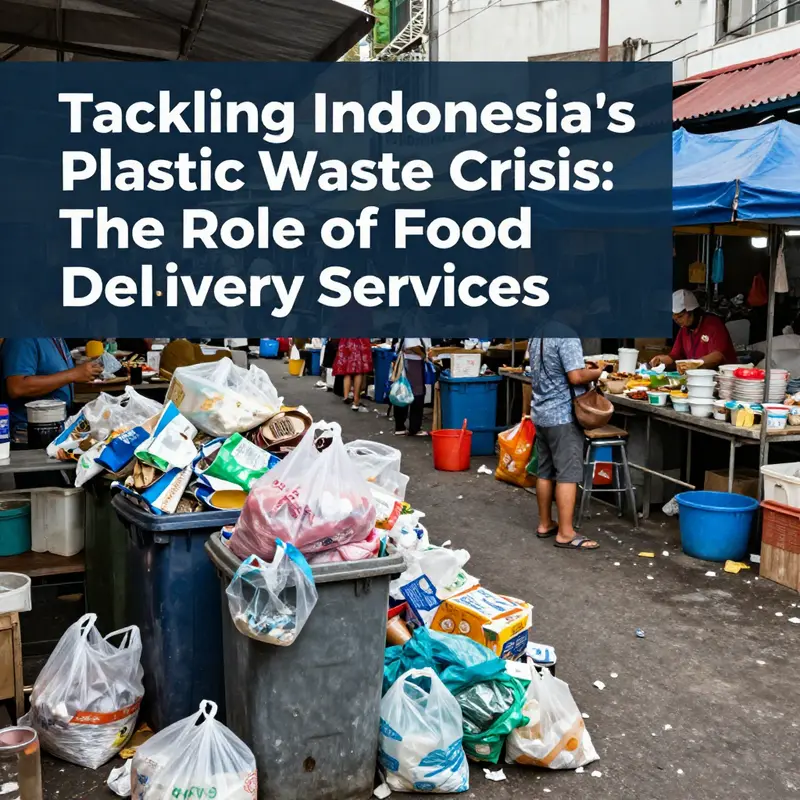
Indonesia’s rapidly expanding food-delivery ecosystem has become a defining feature of the modern urban landscape. A digitally fluent generation orders with frequency that reshapes daily life, turning convenient meals into a routine habit. In this context, plastic packaging has emerged not merely as a byproduct of convenience but as a stubborn driver of waste that tests the limits of a waste-management system already strained by rapid urbanization and uneven infrastructure. While the country contends with a broader plastic-pollution challenge, the specific footprint of food delivery packaging—cups, clamshells, bags, utensils, and the often overlooked cable ties that secure orders—offers a pointed illustration of both the scale and the complexity of the problem. The interplay between consumer behavior, packaging design, and the capabilities of waste collection and recycling forms a cascade: every high-frequency order becomes a small but persistent contributor to a larger, slower-moving crisis. And within this cascade lie opportunities for nudges, incentives, and systemic reforms that could alter the trajectory of Indonesia’s plastic footprint without dampening the appetite for convenient, affordable meals.
The demographic profile driving these trends is central to understanding the challenge. Millennials and Generation Z together constitute a large portion of online food ordering users, with estimations suggesting tens of millions of active participants in a given year. When this cohort orders an average of three to four times weekly, the cumulative impact on packaging waste quickly becomes measurable in a national context. Even if individual orders are small in isolation, the aggregate volume—especially of single-use items like cable ties used to secure multiple items per order—can translate into thousands of metric tons of plastic waste each year. Consider the arithmetic: if a single order includes one cable tie, and a robust segment of the ordering population sustains the same frequency, the annual output of plastic tied to packaging becomes a meaningful fraction of the national waste stream. This is not merely a clutter issue; it is a signal about the design choices that permeate everyday consumption and how these choices interact with public-infrastructure gaps.
A core facet of the problem is the dependency on disposable packaging that favors immediate use over end-of-life viability. PET and polystyrene remain common in many hot-meal and takeaway formats due to their barrier properties and cost-efficiency. Yet those same materials pose significant recycling challenges when the collection and sorting systems are not precise, consistent, and widely accessible. In places where municipal waste management battles to keep up with growth, recycled content and end-of-life processing become a bottleneck. The result is a situation where materials labeled as recyclable in theory are effectively landfilled or misrouted in practice. The tension between ideal recycling conditions and on-the-ground realities underscores a broader truth: technical recyclability alone cannot solve the problem; it must be coupled with a design-for-recovery approach and a waste-system capable of capturing and processing the material stream reliably.
Among the packaging elements, the humble cable tie may seem trivial, yet it embodies a crucial point of failure in the recycling loop. Cable ties are notoriously difficult to detach during recycling and often end up as mixed-in plastic waste that contaminates other streams or leads to mechanical disruptions in sorting facilities. In Indonesia, where the scale of delivery services compounds every nuance of packaging, these small components accumulate into a visible symbol of a misaligned system: a packaging solution built for fast delivery and low cost but not for circularity. The research landscape around 2025 has highlighted this issue and urged greater public awareness, not as a policing mechanism but as a foundation for voluntary reductions and informed consumer choices. The demonstration of how tiny behavioral nudges can yield outsized environmental benefits offers a beacon for policy design that respects consumer autonomy while shifting default practices toward sustainability.
The behavioral insight that has captured attention in other parts of the world provides a plausible pathway for Indonesia to explore similar gains. A landmark study published in Science used a simple yet powerful nudge: defaulting to no cutlery and rewarding customers for opting out with loyalty points. The result was a dramatic increase in the proportion of orders without plastic utensils, a change driven by subtle shifts in choice architecture rather than coercive mandates. Although the study focused on cutlery, the underlying principle—modifying defaults and tying them to tangible rewards—translates to other packaging components. If a platform or a restaurant ecosystem in Indonesia can default to excluding cable ties, while offering modest incentives for choosing packaging-free or cable-tie-free options, the same logic should apply. The potential is to convert a minor inconvenience into a widely adopted practice that reduces plastic output without complicating the ordering experience. A carefully designed nudge could respect consumer preferences and safety concerns while gently steering behavior toward lower-widelity packaging practices.
Implementing such nudges, however, must be complemented by broader systemic changes. The roots of Indonesia’s plastic crisis are not solely about consumer choices; they are embedded in urban growth patterns, a legacy of single-use plastics, and gaps in waste-collection networks. To complement nudges, a strategic, multi-stakeholder approach is essential. Public awareness campaigns have to be paired with practical options: clear labeling that communicates recyclability or compostability; accessible alternative packaging that performs under heat and humidity; and reliable waste collection and sorting facilities that can handle a wider array of materials. In this sense, the challenge becomes not only to reduce the use of plastic but to rewire the entire chain from packaging design to end-of-life processing.
Within this systemic frame, new packaging models and circular-economy thinking have begun to emerge in other contexts. The idea of transforming agricultural or agro-industrial residues into usable packaging is particularly compelling for an economy with abundant agricultural by-products. A notable example from India demonstrates how sugarcane bagasse—an agricultural residue—can be converted into biodegradable takeout packaging. Such innovations offer a blueprint for what could be possible in Indonesia, leveraging locally available materials to reduce dependence on fossil-fuel-based plastics. A business plan published in 2025 envisions scaling circular-economy packaging solutions to address Indonesia’s plastic crisis at a national level. While the specifics of implementation will depend on local supply chains, regulatory support, and consumer acceptance, the core logic is clear: embed recyclability, compostability, and circularity into the design of packaging from the outset, and align incentives so that every stakeholder—from chefs to customers to waste-collection crews—has a stake in keeping packaging out of landfills and waterways.
The path toward such a vision is not merely technical. It requires a rethinking of value, cost, and trust. Packaging that is fully recyclable or compostable must be cost-competitive with conventional plastics to see broad adoption, especially in a price-sensitive market where margins are thin and vendors rely on efficiency. At the same time, the quality and safety expectations around hot meals demand materials that perform reliably under heat, resist leaks and deformation, and maintain the integrity of the food. Consumers, on their side, must trust that packaging used for takeout is hygienic and safe, even when it undergoes a short journey from restaurant to doorstep. The tension between safety, convenience, and environmental responsibility is not easily resolved, but it can be navigated through thoughtful design, transparent communication, and cross-sector collaboration.
Design strategies that align with both consumer needs and environmental goals are increasingly framed around three intertwined pillars: substitution, reduction, and recovery. Substitution involves replacing single-use plastics with materials that have lower environmental footprints or better end-of-life options. The bagasse-based packaging mentioned earlier is a leading example of substitution that leverages local agricultural by-products to create sturdy, heat-tolerant vessels. Reduction focuses on limiting the quantity of packaging and trimming nonessential components, such as unnecessary cable ties, packaging layers, or oversized containers. Recovery emphasizes expanding the ability to collect, sort, and recycle or compost materials that are currently not recovered at scale. Each pillar is interdependent: substitution without better recovery can merely shift waste to another form; reduction without viable substitution can compromise food safety or product integrity; recovery without meaningful substitution can stall long-term progress if the waste stream remains too complex to process.
The Indonesian context adds a layer of specificity to these strategies. A country with a young, digitally adept population, a vibrant street-food culture, and a network of small and medium-sized enterprises operating in a high-volume delivery environment creates both a challenge and an opportunity. On the one hand, small operators may face higher per-unit costs when switching to alternative packaging or when streamlining the number of cable ties used. On the other hand, the same ecosystem offers a testing ground for innovative, scalable models that can be piloted quickly, iterated, and expanded. Localized pilots can evaluate the performance of sugarcane-based packaging for hot meals, test consumer acceptance of bagasse-based takeout containers, and measure the impact of default plastic-free options on both waste reduction and customer loyalty.
In pursuing these avenues, partnerships become a central engine of progress. Government agencies, industry associations, non-governmental organizations, and civil-society groups all have roles to play. Public-awareness campaigns can illuminate how everyday packaging choices translate into visible environmental outcomes, while regulatory frameworks can provide a predictable environment for investment in alternative materials and recycling infrastructure. Collaborative initiatives can extend beyond packaging to waste collection and sorting, improving the likelihood that discarded materials are properly diverted from landfills. The strength of such partnerships lies in the shared objective of reducing plastic pollution while preserving the affordability and convenience that define the food-delivery experience. The goal is not to create a punitive regime but to foster a culture in which sustainability is embedded in both the design of packaging and the behavior of customers and operators alike.
As a design philosophy, a move toward packaging that is either recyclable with high recovery rates or compostable in feasible municipal settings demands careful attention to heat resistance and consumer safety. Hot meals require materials that resist deformation, leakage, and scent transfer. For consumers, the experience of holding a hot container should be reliable and hygienic. These requirements often lead to trade-offs: highly conductive or robust materials may come at a higher cost or complicate end-of-life handling. The challenge is to identify formulations and designs that strike a balance—materials that can withstand typical delivery conditions, maintain food safety, and still fit neatly into recycling or composting streams. The emerging literature on sustainable packaging design emphasizes not only material properties but also the user experience. When packaging is difficult to separate or clearly labeled as recyclable, consumer willingness to participate in a recycling program declines. Conversely, packaging that clearly communicates its end-of-life pathway and offers convenience in disposal can increase participation rates, amplifying the environmental benefits of any substitution or reduction strategy.
From a systems perspective, the most compelling path forward blends nudges with infrastructure enhancements. On the behavioral side, default settings that reduce the presence of nonessential plastics can influence habitual ordering patterns. Incentives can reinforce these defaults, encouraging customers to opt into more sustainable choices without sacrificing perceived value or convenience. On the infrastructure side, improvements in waste collection, sorting capabilities, and the development of supply chains for alternative materials are necessary complements. A robust, coordinated approach would specify clear targets for cable-tie reduction, define preferred packaging alternatives for hot meals, and establish measurable milestones for increasing the share of recyclable or compostable packaging in the takeaway segment. In this vision, every order contributes to a broader system that captures value from waste rather than treating it as a one-time expense.
The potential for cross-border learning is substantial. Observing how neighboring economies experiment with agricultural by-products as packaging feedstocks provides practical insights into what can be achieved at scale. The sugarcane-bagasse model from India, referenced in recent explorations, demonstrates how local resources can be redirected into innovative, compostable packaging formats. Indonesia can adapt these lessons by mapping available agricultural residues, engaging local manufacturers, and aligning regulatory incentives to support a transition toward circular packaging. A phased implementation plan could begin with pilot programs in select urban areas, testing heat-tolerant bagasse containers for hot meals, pairing them with consumer education campaigns, and tracking waste diversion outcomes over multiple delivery cycles. If successful, such pilots could inform a broader rollout that integrates packaging reform with improvements in recycling and waste-management infrastructure. The idea is to create a scalable template in which packaging decisions are aligned with material availability, consumer preferences, and the capabilities of the local waste system.
An important consideration in any such transition is cost. While the upfront price of alternative materials may be higher, the total cost of ownership can improve when waste management savings, litter reduction, and reputational benefits are factored in. Moreover, consumer goodwill—often a decisive factor in the competitive landscape of food-delivery services—can be mobilized as a value proposition. If customers perceive a platform as actively reducing plastic waste through thoughtful packaging choices and clear communication about end-of-life options, loyalty can deepen even in price-competitive markets. For operators, the challenge is to integrate these choices into existing procurement and logistics processes with minimal disruption to delivery times and service quality. This requires not only investment in new materials but also redesign of packing configurations, supply chain partnerships, and data-driven monitoring to quantify environmental impact in real time.
The integration of these ideas into a coherent strategy for Indonesia rests on three practical steps. First, implement behavioral nudges that default to minimal, nonessential packaging and provide incentives for customers who opt into more sustainable choices. Second, accelerate the development of alternative packaging through local partnerships that leverage agricultural by-products and other renewable feedstocks, ensuring that materials meet safety and performance standards for hot meals. Third, strengthen waste-management infrastructure so that collected materials are efficiently recycled or composted, closing the loop and turning what was once waste into a resource stream that can fund further improvements. While these steps require coordination and time, they also offer a clear roadmap that aligns with the country’s urban growth trajectory and its environmental commitments. The outcome would be a more resilient food-delivery ecosystem, one that preserves the convenience that millions rely on while gradually rewriting consumption patterns toward a cleaner, more circular future.
To illustrate how these ideas can manifest in concrete design choices, one can imagine packaging that reduces or eliminates nonessential components without compromising safety or usability. For example, a takeout container designed to perform well under heat could be paired with a liner or an outer shell made from a compostable or recyclable substrate. The objective would be to maintain food integrity and consumer convenience while ensuring that the packaging is compatible with existing recycling streams or municipal composting programs. In parallel, a move toward packaging that minimizes the number of separate items—such as trays or multi-part containers—could reduce the overall material footprint. Such design simplifications would not only cut waste but also streamline the sorting process for recyclers, increasing the likelihood that materials are recovered rather than diverted to landfills.
At the heart of these changes lies a culture shift that values waste not as an inevitable by-product but as a material with potential value when properly managed. This perspective hinges on transparent communication about end-of-life options and on building trust between consumers, restaurants, and waste-management entities. If a customer understands that choosing a recyclable or compostable option is not just a personal preference but a contribution to a broader environmental goal, participation becomes more meaningful. The role of measurement cannot be overstated. Tracking orders with and without cable ties, monitoring the uptake of alternative packaging, and quantifying recycling or composting rates are essential for refining strategies and demonstrating progress over time. Transparent dashboards and regular reporting can help maintain momentum and keep stakeholders accountable while providing the public with tangible evidence of improvement.
In closing, the path to reducing plastic waste from food delivery in Indonesia is not a single reform but a constellation of interlocking choices. Nudges can steer consumer behavior toward simpler, lower-impact packaging. Substitution can replace problematic materials with viable, circular alternatives that align with local resources. Recovery can be strengthened through investment in waste management and recycling infrastructure. Together, these elements form a system-level response that respects the needs of a young, dynamic population while addressing the environmental costs that accompany rapid growth. The chapter above outlines a holistic vision where packaging design, consumer behavior, and public infrastructure reinforce one another, moving toward a future in which the convenience of food delivery no longer comes at the expense of polluted streets, waterways, and oceans. The journey will require collaboration, innovation, and an unwavering commitment to turning waste into value, but the potential reward—a cleaner environment, healthier communities, and a more sustainable urban economy—justifies the effort. The conversation is ongoing, and the steps discussed here offer a practical, scalable starting point for a national dialogue about how to reshape Indonesia’s plastic footprint in a way that keeps pace with a flourishing, modern food-delivery landscape.
Internal resource for further reading: best-price-recyclable kraft paper disposable rectangle take-away salad bowl PP lid 750ml microwavable sugar use embossing
External resource for broader context: https://www.science.org/doi/10.1126/science.adf5743
Reimagining the Takeout: A Cohesive Path to Sustainable Packaging in Indonesia’s Food Delivery Boom
The rapid ascent of food delivery in Indonesia has reshaped urban life, transforming how people access meals and how restaurants reach customers. Yet behind the convenience sits a stubborn material reality: plastic packaging waste that increasingly chokes land and water systems. Indonesia occupies a troubling position in the global waste landscape, with the food delivery surge intensifying pressure on an already strained waste management infrastructure. In this moment, innovations in packaging design and material science are not merely technical curiosities; they are essential components of a broader strategy to curb plastic pollution, protect ecosystems, and build a more resilient economy. The challenge is not only to reduce waste but to reimagine packaging in ways that align with local needs, supply chains, and cultural practices while keeping the customer experience intact. This chapter unfolds that reimagination as a narrative of material choices, systemic design, and collaborative action, showing how sustainable packaging can become a core differentiator for brands, a public good, and a driver of economic opportunity in Indonesia’s rapidly changing food landscape.
The current waste predicament has several interconnected dimensions. First, the sheer volume of single-use packaging accompanying takeout orders is significant. Containers, bags, lids, utensils, and the occasional cable tie accumulate at a pace that overwhelms municipal sorting and recycling facilities. Cable ties, in particular, have gained attention for their durability and resistance to conventional recycling streams. Their persistence in the waste stream highlights a broader problem: many packaging components are built to perform in the moment but lack end-of-life pathways. Second, the reliance on plastics such as polyethylene terephthalate (PET) and foam-style polystyrene for hot meals compounds the difficulty of material recovery. While some of these polymers are technically recyclable under optimal conditions, the practical realities of informal waste collection, mixed streams, and limited end markets create barriers that often render recycling economically unviable. The result is a cycle where packaging travels from kitchen to customer with apparent efficiency, only to reemerge as pollution and environmental risk.
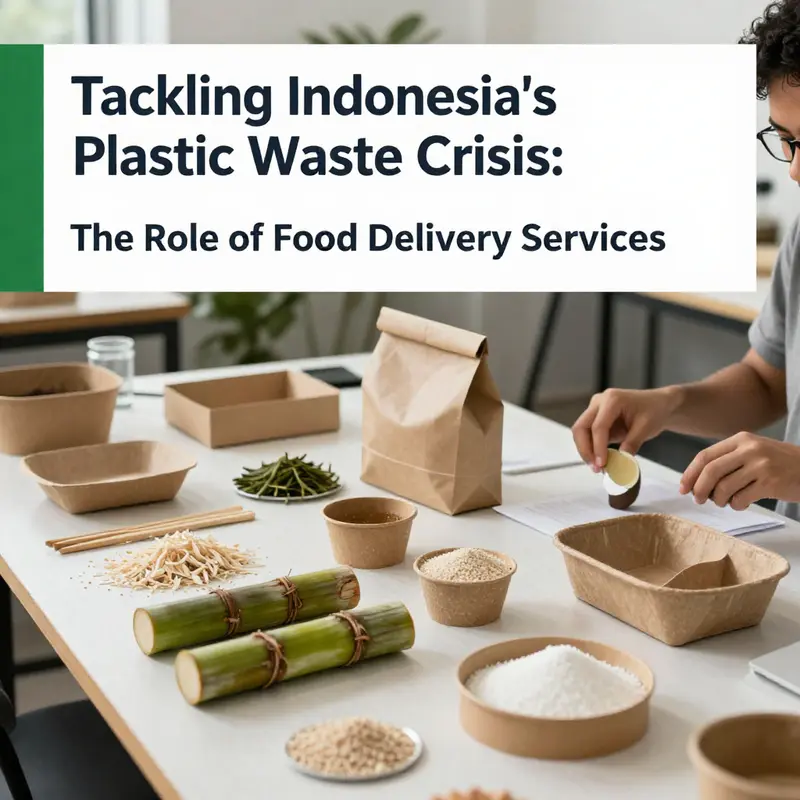
Against this backdrop, cutting-edge material science and business model innovations are delivering options that could tilt the balance toward sustainability without compromising speed or affordability. Biodegradable materials, plant-based polymers, advanced coatings, and renewed recycling technologies are converging to offer alternatives that can function at scale in Indonesia’s vibrant food-delivery ecosystem. Sugarcane bagasse, bamboo, and palm leaf fiber have emerged as practical biobased substrates for containers and cutlery. Sugarcane bagasse, a byproduct of the sugar industry, is particularly promising because it leverages existing agricultural waste streams and can be fashioned into compostable trays and bowls that meet the performance needs of hot and cold foods alike. Bamboo offers renewability and a distinct material profile that can be molded into sturdy, heat-resistant packaging, while palm leaf fiber provides a natural finish and compostability that appeals to eco-conscious consumers. These materials are not esoteric experiments; they represent scalable options with established supply chains in many regions and a demonstrated ability to decompose under appropriate conditions.
Plant-based polymers derived from cassava or cornstarch present another path forward. These bio-plastics can mirror the functional properties of conventional plastics, enabling rigidity, moisture resistance, and lightness while reducing dependence on fossil fuels. The transition to bio-based plastics, however, is not a panacea. The life cycle performance of these materials depends on context—agricultural inputs, processing energy, and, crucially, the availability of suitable end-of-life infrastructure. In Indonesia’s context, where industrial composting facilities are still developing in many places, the actual degradation of bio-plastics hinges on creating complementary waste-management channels that can handle them responsibly. This reality underscores a central theme: sustainable packaging is as much about systems as it is about materials.
Alongside these material innovations, the field is witnessing advances in coatings and barrier technologies that extend shelf life and protect food quality without introducing problematic additives. Non-toxic coatings that leverage layered double hydroxide nanoplatelets, for example, can enhance gas barrier properties in flexible packaging. The practical upshot is twofold. First, better barrier performance reduces spoilage and food waste, a parallel environmental benefit to lower packaging volume and weight. Second, improved shelf life can support delivery models that minimize temperature excursions and microbial risk, a critical factor for hot meals and ready-to-eat options that are central to Indonesia’s delivery culture. When such coatings are paired with compostable or recyclable base materials, the overall environmental footprint can be meaningfully reduced, provided end-of-life outcomes are reliable and accessible to consumers.
Concurrent with material and coating innovations, there is a quiet but powerful revolution in recycling technologies. The circular economy vision—keeping materials in productive use for as long as possible—depends on the ability to sort, process, and remanufacture post-consumer packaging into new products. In Indonesia, this means progressing beyond the traditional dichotomy of “recyclable” versus “not recyclable” by developing robust collection networks, improving contamination control, and expanding local markets for recycled material. Mechanical recycling remains a backbone for many plastics streams, but chemical recycling and advanced sorting technologies are increasingly relevant to more complex multi-material packaging. The integration of these technologies with labeling systems that clearly indicate end-of-life options can empower consumers to participate more effectively in the circular loop. Together, these technologies and processes can transform packaging from a one-time use artifact into a resource that sustains livelihoods, reduces virgin material demand, and signals accountability to generations of diners who value stewardship as part of their dining experience.
The global momentum around sustainable packaging is reflected in alignment with broader FMCG trends. Brands and retailers worldwide are pushing for less reliance on virgin plastics, improved recyclability, and clearer guidance for end-of-life. Indonesia’s policymakers and public campaigns are beginning to reflect this direction, recognizing that enduring solutions require not only innovative materials but also supportive policy environments, robust waste management infrastructure, and consumer engagement that translates environmental intent into daily practice. The sector is increasingly willing to experiment with circular economy models that treat packaging as a shared asset belonging to the supply chain, rather than a disposable afterthought. This shift matters because it reframes decisions around design, procurement, and logistics. When packaging is designed with reuse or easy recycling in mind, it becomes a lever for reducing environmental impact while preserving food safety, performance, and user experience.
A growing body of research emphasizes that small, concrete steps can yield significant aggregate benefits. Public awareness campaigns that demystify what is recyclable, what isn’t, and why certain components like cable ties matter in the waste stream can alter consumer behaviors. In 2025, studies underscored the critical need to reduce the use of challenging materials and to promote safer, more readily recyclable alternatives. Indonesia’s response includes pilots in which restaurants and delivery platforms collaborate to test packaging that is both functionally robust and environmentally responsible. These pilots explore a spectrum of approaches, from entirely compostable boxes and cutlery to reusable containers earned through deposit schemes or take-back programs. The objective is not just to cut waste but to cultivate a culture where sustainability is expected, measured, and rewarded in the market.
This evolving landscape is not a solitary enterprise but a coordinated effort that spans producers, retailers, waste-systems operators, and consumers. To be effective at scale, innovations must meet several criteria: they must perform as well as or better than conventional plastics in terms of barrier properties, heat tolerance, and mechanical strength; they must be cost-competitive with existing packaging ecosystems or supported by incentives that justify the investment; they must be compatible with existing or thoughtfully upgraded waste infrastructure; and they must be legible to consumers so that end-of-life choices are clear and actionable. The Indonesian context adds another layer of nuance. Climate, urban density, informal waste sectors, and regional disparities in infrastructure mean that a one-size-fits-all solution is unlikely. Instead, a portfolio of approaches—ranging from plant-based and biobased materials in some markets to recyclable plastics with improved collection in others—will likely be most effective. The strategy is to pursue diversification in material options, reinforced by system-level design that makes responsible disposal the default option rather than an exception.
The narrative of innovation also intersects with business model evolution. Packaging is increasingly seen not as a singular product but as part of a broader service proposition. For instance, packaging as a service, with return or refill mechanisms, can transform waste from a cost center into a value opportunity. In parallel, localized supply chains for biobased materials can generate employment and stabilize procurement in rural areas, linking agricultural sectors with urban demand for takeout. A 2025 business plan proposing circular economy models illustrates how such approaches can scale beyond pilots by embedding them into the strategic DNA of platforms, restaurants, and waste-management partners. This is where policy, public appetite, and private enterprise converge. When consumers recognize that sustainable packaging aligns with reliable service, reasonable price, and visible environmental outcomes, demand shifts from passive acceptance to active preference.
Despite the promise, several barriers require deliberate attention. Cost remains a primary constraint; biobased materials and advanced coatings often carry higher upfront expenses than traditional plastics. However, the life-cycle cost picture can be favorable when long-term waste-management savings, reduced litter, and improved brand equity are considered. Performance parity is another hurdle. Food delivery demands packaging that keeps hot foods hot, cold foods cold, and greasy items contained without leaks or deformation. Designing for this dual requirement—sustainability and performance—requires careful material selection, innovative geometry, and, at times, hybrid solutions that blend biobased substrates with protective coatings. Consumer acceptance is equally critical. Some customers equate green packaging with gimmickry or believe sustainable options are less convenient. Clear communication about material composition, disposal instructions, and end-of-life pathways is essential to build trust and avoid confusion. Finally, the waste-management ecosystem must mature. Without reliable collection, sorting, and processing infrastructure, eco-friendly packaging will struggle to reach its full potential. This reality calls for governance that incentivizes investment in infrastructure, supports testbeds for new materials, and encourages industry-wide collaboration to align standards and labeling.
In Indonesia’s vibrant urban and peri-urban landscapes, the path forward is not isolated experimentation but an integrated program that links material science with practical deployment. The potential lies in leveraging local agricultural byproducts, strengthening regional processing capabilities, and building consumer pathways that reward sustainability. Sugarcane bagasse, bamboo, and palm leaf fiber can be scaled through regional mills and composting networks, while cassava- and corn-based polymers can be produced closer to major markets, reducing transport emissions and increasing resilience against global supply shocks. These materials can be complemented by advanced barrier coatings that extend shelf life and reduce waste from spoilage, and by recycling technologies that convert post-consumer packaging into new feedstock rather than sending it to landfills or informal burn pits. The combination of these elements offers a holistic approach—one that centers on performance, affordability, and environmental integrity.
The implications for stakeholders are far-reaching. For food-delivery platforms and restaurants, sustainable packaging becomes a strategic differentiator. It signals a commitment to community well-being, offers marketing advantages, and aligns with investor expectations around environmental, social, and governance targets. For local governments and waste-management agencies, it provides an opportunity to reframe waste streams, broaden the base of recyclable materials, and extend the lifespan of urban infrastructures. For consumers, it translates into clearer choices, greater transparency, and a sense of participation in a collective effort to protect rivers, seas, and neighborhoods from plastic pollution. And for workers in agriculture, manufacturing, and logistics, it can open opportunities in new supply chains, skilled production roles, and service-driven models that value circularity as a core economic principle.
A practical glimpse of how these concepts translate into daily practice can be seen in methods that integrate design, logistics, and consumer education. Consider a packaging system that uses compostable bagasse bowls for some hot meals and reusable, returnable containers for others, paired with clear labeling that explains end-of-life options and a straightforward process for returning or dropping off containers. In such a system, the environmental advantage becomes tangible, not theoretical: fewer landfilled or littered items, better resource utilization, and a social signal that responsible consumption can coexist with the convenience of delivery. To keep the narrative grounded, it is helpful to reflect on a concrete but representative example in the Indonesian context, where a packaging approach can be anchored in existing agricultural streams and urban waste networks. A packaging model that emphasizes local raw materials, compatible end-of-life pathways, and scalable logistics can be tailored to regional realities, ensuring that innovations reach communities where they are most needed and most likely to benefit from them. This approach reduces the friction that often accompanies new materials and processes while reinforcing accountability across the value chain.
For readers seeking a concrete entry point into this evolving field, a practical lens can be found in documented explorations of sustainable packaging technologies and their applications. One accessible resource synthesizes a wide range of innovations—from biodegradable fibers and plant-based polymers to coatings and recycling breakthroughs—within the framework of responsible packaging design. These insights help bridge the gap between laboratory feasibility and real-world deployment, offering guidance for policymakers, businesses, and practitioners who want to accelerate Indonesia’s transition toward greener packaging in the food-delivery sector. The broader aim is not only to reduce plastic waste but to cultivate a packaging ecosystem that is adaptive, resilient, and inclusive, capable of supporting Indonesia’s dynamic consumer economy while protecting the environment that sustains it. The chapter’s narrative thus advances a vision of packaging that honors both speed and stewardship, aligning the aspirations of a digitally connected society with the long-term health of ecosystems and communities.
As the sector progresses, the question becomes not whether sustainable packaging is possible in Indonesia, but how to scale and sustain it across diverse cities and regions. A multi-pronged strategy emerges from the convergence of material science, waste-management reform, and market incentives. First, accelerate the adoption of biobased and compostable materials in areas with accessible composting capacity or reliable municipal take-back programs. Second, expand the reach of plant-based polymers and resilient coatings in contexts where performance demands are high and consumer expectations are clear. Third, invest in smart labeling, standardized recycling and composting codes, and consumer education campaigns that demystify disposal options and reduce contamination in recycling streams. Fourth, foster circular collaboration across stakeholders—agricultural producers, material manufacturers, packaging designers, delivery platforms, waste collectors, and local governments—to align incentives, share risks, and standardize practices. Fifth, pilot and evaluate localized circular-economy models that can be adapted to different urban scales, from dense megacities to growing regional hubs, ensuring that solutions are not only innovative but also practical and affordable.
In sum, the path toward sustainable packaging for Indonesia’s food delivery services is a journey rather than a single destination. It requires integrating new materials with new business models, and marrying consumer education with robust waste-management infrastructure. The opportunity extends beyond cleaner streets and healthier rivers. It promises a more resilient economy where agricultural byproducts contribute to value-added packaging, where packaging itself becomes a recyclable or compostable resource rather than a persistent pollutant, and where the customer experience remains fast, safe, and satisfying. The momentum is building, and with it comes the responsibility to turn ambition into action. As researchers, policymakers, business leaders, and communities collaborate, the story of Indonesia’s takeout packaging can evolve from a burden of waste into a beacon of sustainable practice that others might follow. The detailed exploration of the technologies and applications in this chapter offers a roadmap for that transformation, one that honors local realities while embracing global advancements.
For readers who want to explore concrete examples of the kinds of packaging innovations discussed here, see the following resource that surveys emerging technologies and their applications in sustainable food packaging: senang05-promotion-large-porridge-350ml-double-wall-eco-friendly-disposable-round-kraft-paper-soup-bowl-with-lid-cup-bucket.
External resource reference: Innovative and Sustainable Food Packaging Technologies, Elsevier (2026), https://www.sciencedirect.com/science/article/pii/S258914072600003X
Final thoughts
The comprehensive examination of food delivery services and their impact on Indonesia’s plastic waste highlights the pressing need for change within the industry. Innovative solutions and the commitment to sustainability can pave the way for a dramatic reduction in plastic waste output. As industry players from bubble tea shops to catering teams consider their practices, the advantages of eco-friendly alternatives cannot be overstated. United efforts will not only enhance brand reputation but significantly contribute to safeguarding Indonesia’s beautiful landscapes and marine ecosystems.