
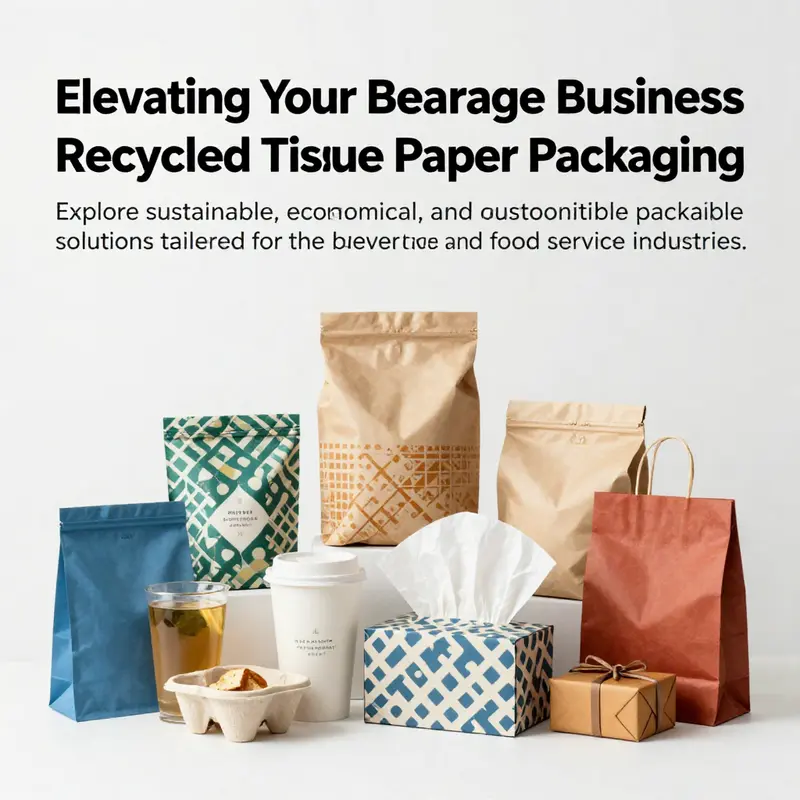
As the demand for sustainable practices in the F&B industry grows, recycled tissue paper packaging is leading the charge. This eco-friendly alternative not only minimizes environmental impact but also enhances brand appeal. For bubble tea shops, restaurants, food trucks, and event planners, understanding the profound benefits of recycled tissue paper is critical. In our exploration, we’ll delve into its sustainability and environmental impact, the economic advantages of integrating this packaging solution, and how customization opens the door to unique branding opportunities.
Unboxing Sustainability: The Environmental Footprint and Potential of Recycled Tissue Paper Packaging
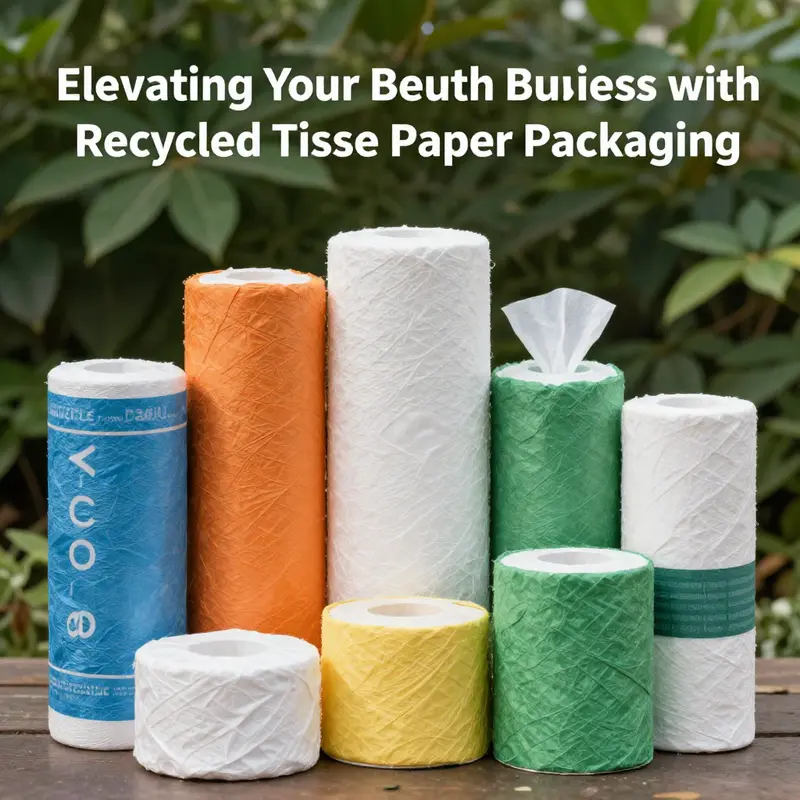
Recycled tissue paper packaging has emerged as a quiet revolution in how brands think about protection, presentation, and responsibility. It is not merely a filler or a wrap; it is a material statement about how products are valued from the moment they leave the factory floor to the moment they reach the consumer. The chapter that follows intertwines the science of materials with the story of responsible consumption, showing how recycled tissue paper can fulfill dual aims: safeguarding goods and reducing environmental impact. In many ways, it embodies a practical aspiration of the circular economy–keep the value in materials for longer, and return them to useful lives at the end of their first journey. When this mindset is embedded in packaging design, the unboxing experience becomes a contribution to a broader environmental narrative rather than a one-off moment in a consumer’s day. The result is a packaging choice that resonates with sustainability-minded customers without sacrificing performance, aesthetics, or brand integrity.
At the heart of recycled tissue paper packaging is a straightforward premise: it is largely made from post-consumer waste or recycled pulp. Choosing secondary materials means fewer trees felled, less disruption to forest ecosystems, and a lower pressure on virgin pulp supply. The impact on greenhouse gas emissions, when forests are spared and energy and water inputs are managed efficiently, is meaningful. This is not a distant ideal but a practical outcome observed across the production chain. Recycled tissue paper offers similar strength and versatility to traditional tissue, while reducing the upstream demand for virgin fiber. The material can function as a protective layer, a filler, and even a surface for branding, all in a way that aligns with responsible procurement policies. The lifecycle perspective matters here: it is not only what happens during packaging use but what happens after disposal that defines sustainability. In this sense, recycled tissue paper packaging becomes a lever for waste reduction and resource conservation across the entire supply chain.
Manufacturing realities further shape the story. Recycled tissue paper manufacturing typically consumes less energy and water than traditional papermaking. This translates into a more resilient supply chain in which energy demand is steadier and less vulnerable to volatility in fossil fuel markets. Water use, a critical factor in many papermaking processes, benefits from advances in closed-loop systems and optimized cleaning cycles that minimize waste. In many facilities, process improvements have yielded tangible reductions in environmental impact, while maintaining or improving sheet strength and wrap performance. These operational efficiencies, when scaled to bulk production, also translate into cost advantages that are attractive to high-volume users such as e-commerce fulfillment centers and manufacturing warehouses. The economics of sustainability matter because they enable brands to maintain responsible packaging without sacrificing competitiveness in price or lead times.
End-of-life realities are central to the environmental promise of recycled tissue paper. The biodegradable and compostable nature of the material means it can re-enter natural or controlled environments rather than lingering in landfills. In a world where consumer waste management habits vary, the ability to compost or biodegrade after use offers a practical path to reducing long-term pollution. The compostability of tissue paper is especially powerful when combined with responsible waste streams that support organic recycling. Of course, the practical outcomes depend on local composting infrastructure and consumer participation. Even so, the potential to cut landfill volumes and associated leachate concerns is a meaningful advantage. Beyond the trash can, the material’s recyclability remains a key attribute. If properly handled in recycling streams, tissue paper can re-enter the pulping process and contribute to new fiber, keeping the loop closed and reducing the pressure on virgin resources once again. The net effect is a lifecycle that prioritizes reuse, recovery, and responsible disposal as central design assumptions rather than afterthought mechanisms.
Color, texture, and branding are sometimes cited as challenges for recycled tissue paper. The reality is nuanced. Recycled tissue offers a range of colors and finishes that support a broad spectrum of brand aesthetics, from understated elegance to vibrant retail appeal. While some users note that color saturation may be gentler than conventional papers and that texture variations can occur between batches, these attributes do not inherently compromise performance. In many applications, the subtle differences in surface feel or hue can even contribute to a distinctive, premium look that communicates sustainability as a design attribute rather than a mere afterthought. The key is to integrate these aesthetic realities into packaging briefs so that color choices and finishes align with product storytelling and consumer expectations. When brands plan ahead, they can exploit the best attributes of recycled tissue–its warmth, its natural texture, and its earth-friendly impression–without letting minor color or texture variations derail a cohesive unboxing experience.
The environmental advantages of recycled tissue paper radiate across multiple dimensions of a brand’s sustainability program: conserve forests by reducing virgin pulp demand; lower energy and water consumption during manufacturing; curb greenhouse gas emissions associated with logging and conventional papermaking; and reduce landfill waste through biodegradability and compostability. Yet the value is not just in environmental metrics. A truly sustainable packaging option should enable circularity while supporting brand differentiation. Customization through offset printing, for instance, allows brands to embed logos, messaging, and identity into the tissue itself. The result is not only a protective layer but a vehicle for storytelling–one that communicates that sustainability is integral to the product’s value proposition. Luxury and premium markets often leverage this capability to create a memorable unboxing ritual that reinforces perceived quality and responsible sourcing. The synergy between ecological integrity and brand experience is not a compromise; it is a strategic alignment that can enhance consumer loyalty and market relevance.
Aesthetic considerations intersect with practical performance in ways that matter for brands seeking to protect a wide range of goods. Recycled tissue paper has proven to be a compatible wrapping and filler material for items ranging from cosmetics and apparel to electronics. Its moisture resistance attributes, particularly when paired with moisture-protective finishes or coatings, help safeguard items during transit and in storage. In addition, the material’s cushioning properties contribute to product protection without adding significant bulk. This is especially valuable in high-throughput settings where space efficiency and weight are critical. The ability to supply recycled tissue in continuous rolls supports automated packaging lines, while pre-cut sheets offer consistency and ease of handling for manual applications. Both formats contribute to efficient workflows and waste reduction by enabling precise cutting and minimal offcuts. The choice between formats often rests on the operational profile of the business, including the degree of automation, the speed of packaging lines, and the typical item sizes being wrapped.
From a design perspective, the move toward sustainability does not require brands to sacrifice impact. On the contrary, the environmental story can become a signature feature of the unboxing experience. Offset printing on recycled tissue enables the display of logos and brand marks with a level of detail that can rival printed tissue on non-recycled substrates, depending on the technique and ink choice. When combined with color-matched branding and thoughtful typography, recycled tissue can carry premium cues that align with high-value product categories such as fragrance, cosmetics, and fashion accessories. The consumer perception of a sustainable packaging option improves when the tissue itself embodies green principles–recycled content, recyclability, and compostability–while delivering a tactile experience that feels substantial and purposeful.
Compatibility with archival and sensitive materials is another aspect that broadens the appeal of recycled tissue paper. Acid-free variants can protect delicate items from chemical interactions that might lead to discoloration or deterioration over time. While not every application requires acid-free tissue, having the option expands the range of safe uses and reinforces trust with customers who prioritize preservation and long-term care. It also opens opportunities for collaborations with artists, galleries, museums, and heritage brands that seek packaging solutions aligned with conservation standards. In short, recycled tissue paper can be both practical and protective, and it can be designed to meet the rigorous demands of sensitive materials without compromising ecological objectives.
The broader environmental narrative is reinforced by the principles of the circular economy. Recycled tissue paper packaging supports the safe storage, reuse, and eventual recovery of valuable goods, creating a system in which the value of materials circulates at higher levels for longer. This is not only an environmental achievement; it is a governance and resilience achievement as well. When brands adopt recycled tissue paper in their packaging mix, they engage in a practice that aligns with regulatory expectations and consumer preferences that increasingly favor green solutions. The move toward greener packaging complements other corporate sustainability activities, creating a cohesive framework in which packaging decisions reinforce supply chain integrity and stakeholder trust. As regulations evolve and consumer mindfulness grows, recycled tissue becomes less of a niche option and more of a standard practice in responsible product presentation.
Practical implications for brands begin with a clear understanding of form and function that best suit their operations. Continuous rolls provide efficiency on automated lines, enabling high-speed wrapping and throughputs that can reduce handling time. Pre-cut sheets offer predictable thickness, size, and tension, which minimize waste and simplify inventory management. Both formats benefit from precise cutting systems, which reduce offcuts and maximize material utilization. The choice between formats is not binary but a hybrid strategy that optimizes performance and waste reduction across product families. For instance, a catalog of items that vary widely in shape and size may benefit from a combination of continuous rolls for bulk shipments and pre-cut sheets for smaller, delicate items.
The journey we have traced–from post-consumer waste to durable protection, to consumer delight, to recycled content returning to new fiber–frames recycled tissue paper packaging as more than a material option. It is a platform for responsible practice, a conduit for brand storytelling, and a tool for reducing the environmental footprint of consumer goods. The opportunities extend beyond the packaging itself to the broader ecosystems in which products are designed, manufactured, and consumed. Businesses that treat packaging as a strategic lever can influence supplier behaviors, influence consumer expectations, and contribute to a culture of sustainable design that grows more robust with each passing year. The openness of recycled tissue to customization, its compatibility with sensitive materials, and its scalable production make it a practical choice for a wide range of industries while staying faithful to ecological priorities. As industry players continue to innovate, the material’s role in shaping responsible packaging narratives will only strengthen, reinforcing the idea that sustainability can be deep, durable, and delightful all at once.
For readers seeking a concrete example of how an organization might integrate such packaging into existing workflows, consider a practical path of combining recycled tissue with complementary materials that enhance performance and aesthetics. A layered approach can provide moisture protection, cushioning, and a premium feel without sacrificing recyclability. When brands prioritize the end-to-end lifecycle–sourcing, manufacturing, packaging, and disposal–they build resilience into their products and cultivate consumer trust. This holistic view makes recycled tissue paper packaging not just a choice among many, but a fundamental component of responsible product design. In the long run, the environmental benefits, paired with the opportunity to craft distinctive unboxing experiences, create a compelling case for embracing recycled tissue as a central element of sustainable packaging strategies.
Internal link for further reading on a practical application of kraft paper packaging: disposable kraft paper takeaway box with clear lid and customizable print. This example highlights how design flexibility and sustainability can converge in a single packaging solution that supports diverse product ecosystems while maintaining a clear ecological profile.
External resource for broader context on waste management and recycling: EPA’s overview emphasizes that recycling remains a core pillar of sustainable waste management, underscoring why materials like recycled tissue paper can contribute to a more circular economy. See https://www.epa.gov/sustainable-management-waste/recycling-essential for a broader policy and practice perspective. The chapter’s emphasis on lifecycle thinking aligns with these principles, reinforcing how corporate choices interact with public systems to shape environmental outcomes.
From Waste to Worth: The Economic Promise of Recycled Tissue Paper Packaging in Modern Commerce

Across the spectrum of modern packaging, recycled tissue paper stands out not just as a green choice but as a strategic economic asset for brands navigating tight margins, volatile supply chains, and rising expectations for responsible business. The chapter that follows threads a coherent narrative about how recycled tissue paper packaging translates environmental stewardship into cost efficiency and competitive advantage for retailers, manufacturers, and logistics operators alike. It begins with the material’s roots in post-consumer streams and moves through the layers of cost, regulation, and consumer perception that together shape a durable business case. The aim is not to extol virtue in abstraction but to illuminate tangible financial dynamics that small and large players alike can translate into budgetary clarity and long-term value. In this light, recycled tissue paper is not merely a substitute for virgin pulp; it becomes a lever—one that can lower input costs, reduce waste fees, and strengthen brand equity without sacrificing performance or aesthetic appeal.
Material economics in packaging often hinges on the frictions between supply, energy, and throughput. Recycled tissue paper leverages a relatively straightforward logic: it substitutes virgin fiber, which requires significant energy and water to harvest, process, and refine, with post-consumer fiber that has already undergone the initial transformation toward utility. The energy profile of tissue recycling is typically leaner than that of producing new paper from wood pulp. While nothing in manufacturing is energy-free, the incremental savings from recycling can be meaningful when scaled to the volumes typical of large e-commerce fulfillment centers and consumer goods warehouses. In practical terms, the cost of raw material, which often constitutes a large slice of packaging expenditure, becomes more predictable when derived from recycled streams. This predictability matters in a procurement landscape that prizes stability as much as price reductions.
Beyond raw material costs, the operational cost structure of recycled tissue packaging benefits from efficiency gains that accrue at multiple points in the supply chain. Continuous rolls, designed for high-volume automated packaging operations, enable faster machine throughput and reduced handling with fewer human touches. Pre-cut sheets, conversely, offer uniformity and ease of use for manual or semi-automatic wrapping stations. Both formats, when paired with precise cutting systems and robust stock management, minimize waste and maximize yield. The ability to standardize on a few thicknesses, weights, and finishes helps procurement teams lock in volumes, forecast demand, and negotiate better terms with suppliers who specialize in recycled substrates. A practical implication is that the total landed cost per unit can become more stable over time, even if the per-ton price of recycled fiber fluctuates in the broader fiber market.
From the consumer-facing side, the economic story of recycled tissue packaging intertwines with brand economics in a way that amplifies both loyalty and willingness to pay. Sustainability is no longer a niche consideration; it sits at the core of corporate narratives and product storytelling. When a brand can claim that its protective wrapping and display materials are derived from recycled sources, the implied value transfer—from environmental stewardship to customer trust—becomes measurable in several ways. First is the enhancement of perceived value, particularly in categories where packaging signals quality, such as cosmetics, apparel, or premium gifts. A green, tactile tissue wrap conveys care and thoughtfulness that can elevate a customer’s unboxing experience without adding material weight or cost. Second is customer retention. Brands that consistently demonstrate responsible practices tend to secure repeat purchases and favorable word-of-mouth, especially among increasingly environmentally conscious consumers who connect values with purchase decisions. Third is price elasticity. When the packaging itself embodies sustainability, consumers may exhibit a higher willingness to pay for premium variants, knowing the packaging aligns with broader ethical commitments. This dynamic is especially pronounced for premium product lines where presentation matters as much as performance.
The economic calculus extends to waste management and regulatory footprints. In many regions, recycled tissue packaging reduces the burden of landfill waste, a factor that carries direct financial relevance for companies with waste disposal contracts that price by tonnage. The fewer kilograms headed to landfills, the lower the variable costs tied to waste handling. In parallel, jurisdictions increasingly offer incentives, subsidies, or tax breaks for organizations that embrace circular economy practices. The Dubai example, cited in industry analyses, illustrates how municipal strategies designed to divert waste from landfills can translate into tangible financial benefits for companies that align packaging decisions with local sustainability programs. While incentives vary by region, the underlying economic logic remains consistent: when a business helps close the loop on materials, it can secure not only lower disposal costs but also favorable regulatory treatments that offset the cost of transition and support ongoing investments in greener packaging solutions.
In practice, this translates into a layered cost advantage. First, there is the straightforward material cost: recycled tissue fiber, sourced from post-consumer streams or recycled pulp, often carries a lower unit price than virgin pulp, particularly when economies of scale are in play and sustainability credentials unlock bulk purchasing terms. Second, energy and emissions considerations come into play. The recycling loop typically consumes less energy per ton of output than producing equivalent virgin fiber, and this energy efficiency compounds as production scales. Third, there is the savings associated with waste management. Companies that switch to recyclable tissue packaging can renegotiate contracts or reduce fees tied to landfill diversion, often with multi-year horizon benefits that help stabilize budgets in a market characterized by volatility in raw materials. The synergy of these factors is not merely additive; it compounds as volume grows and as packaging operations mature toward more automated workflows.
However, the financial logic does not stop at the factory gate. The broader corporate finance impact includes improved working capital dynamics and comparatively lower environmental risk. When procurement teams consolidate purchases of recycled tissue packaging, they can reduce supplier fragmentation and unlock volume discounts that improve gross margins. The consistency of supply—especially when tied to established circular economy partnerships—also reduces stockouts and production delays, translating into higher throughput and fewer missed sales opportunities. In highly cyclical industries such as cosmetics or fashion, where product life cycles can be short and seasonality strong, this resilience is a meaningful competitive edge. A consistent supply of protective tissue that still delivers on aesthetics allows marketing and product teams to preserve seasonal campaigns and unboxing experiences without compromising budgetary controls.
The story of risk is a companion to the story of reward. Recycled tissue packaging reduces certain material risks—such as exposure to price shocks in virgin pulp markets—while introducing others that are commensurate with responsible sourcing practices. For example, supply continuity hinges on robust post-consumer collection streams and stable recycling infrastructure. In markets where recycling rates are rising but infrastructure remains uneven, brands may face transitional costs to align logistics with sustainable fiber streams. This is where thoughtful supplier relationships, joint process improvements, and clear specifications become critical. The trade-off is not merely about selecting a greener option; it is about choosing a partner ecosystem that can deliver consistent quality, color, and finish on a scalable timeline. Brands that pursue this alignment often experience smoother production planning, fewer quality incidents, and better predictability in monthly packaging spend.
The consumer-facing dimension of the economics deserves particular emphasis. For brands that seek to differentiate on sustainability, the packaging itself becomes a marketing asset. The tactile experience of recycled tissue packaging—its feel, its color range, and its ability to convey a premium yet eco-friendly image—contributes to a holistic brand narrative. In sectors where the packaging environment competes for attention in crowded retail and e-commerce channels, the ability to combine visual appeal with environmental responsibility translates into stronger brand recall and longer-term loyalty. Moreover, as retailers and marketplaces increasingly prioritize sustainability across their own operations, brands using recycled tissue packaging can enjoy enhanced alignment with retailer sustainability scoring, potential preferential treatment in supplier programs, and greater access to green logistics strategies.
To translate these broad dynamics into concrete decisions, businesses must look at practical levers that influence profitability. The choice between continuous rolls and pre-cut sheets is a primary dimension. Continuous rolls optimize for high-throughput packaging lines, enabling automated wrapping, more uniform tension, and less downtime for changeovers. This format supports cost efficiencies in large-scale operations, where even small reductions in cycle time accumulate into meaningful annual savings. Pre-cut sheets, conversely, reduce handling complexity and cut waste at the point of use, which is particularly attractive for mixed SKUs, boutique brands, or operations that emphasize flexibility over ultra-high volume. The right balance between these formats is guided by operational realities: line speed, conversion equipment, and the predictability of packaging demand. In both cases, compatibility with offset printing for branding and messaging opens a pathway to customization that preserves environmental integrity while elevating perceived value.
The capacity to customize, while maintaining sustainability, differentiates recycled tissue packaging in a crowded market. Offset printing on recycled tissue allows brands to weave logos, color palettes, and design motifs directly into the protective layer that accompanies products. This is not mere decoration; it is a continuation of brand storytelling that starts the moment a consumer encounters the package. Luxury and premium product lines, in particular, benefit from this integration, where unboxing becomes part of the product’s overall value proposition. The environmental claim, reinforced by the aesthetic, strengthens the narrative around responsible consumption and thoughtful design. It is a synthesis of form and function: packaging that protects, presents, and communicates a brand’s commitment to circularity.
In considering the total cost of ownership, procurement teams and sustainability officers must also account for the lifecycle benefits of recycling. Over time, as regulatory expectations tighten and consumer demand for green products grows, early adopters of recycled tissue packaging may enjoy lower regulatory risk. They benefit from a forward-looking stance that anticipates stricter packaging mandates, stricter waste containment standards, and improved recyclability metrics. The Dubai example underscores a broader regional pattern where policy and practice reinforce each other to create a more favorable financial landscape for circular packaging solutions. Companies that commit now to recycled tissue packaging position themselves to capitalize on future incentives, streamlined compliance, and the reputational advantages that accrue when business practices align with public sustainability objectives.
The economic story is not solely about numbers; it is about the ecosystem surrounding packaging choices. Trade partners, recyclers, and equipment suppliers contribute to a web of interdependencies that affect lead times, quality control, and total cost. Aligning with suppliers who can provide certified recycled tissue that meets performance specs helps safeguard product protection, color consistency, and printability. Certification matters because it signals to customers and retailers that sustainability claims are verifiable, not aspirational. In an era of greenwashing risk, robust standards and third-party verification become a component of economic value, reducing reputational risk and enabling more aggressive marketing strategies anchored in trust.
From the shop floor to the storefront, the economic benefits of recycled tissue packaging ripple through the business model in ways that are often underestimated. The reductions in raw material costs, combined with energy savings and waste management benefits, create a foundation for improved margin without sacrificing performance. The branding benefits—when packaging is both eco-friendly and visually compelling—enable premium pricing and stronger loyalty signals that compound over time. And the regulatory and system-level advantages, illustrated by regional programs that reward circular practices, provide a tailwind that supports return on investment for early and sustained adopters. The net effect is a cohesive business case: recycled tissue packaging reduces cost, elevates brand value, and builds resilience into supply chains, all while aligning with the growing expectations of a circular economy.
To connect these ideas with concrete choices that packaging teams can apply today, consider the interplay of material selection, format, and printing approach as a single decision framework. Start with the fiber story: prioritize recycled content from post-consumer streams, seek certifications that verify recyclability and responsible sourcing, and verify that the material’s barrier properties align with the product category. Then define the format strategy around line capabilities and SKU mix: use continuous rolls to maximize throughput where line speed is high, and pre-cut sheets where a broad range of SKUs demands flexible handling. Finally, integrate branding through offset printing on the tissue itself or on an outer wrapping layer that complements the tissue’s look and feel without compromising recyclability. When these elements converge, the packaging system becomes a reliable contributor to gross margin, brand equity, and sustainability metrics that matter to investors, retailers, and customers alike.
In this light, the economic benefits of recycled tissue paper packaging are less about a single attribute and more about the composite effect of material savings, process efficiency, brand differentiation, and regulatory alignment. The story is not hypothetical: it is being realized by businesses that view packaging as a strategic asset rather than a cost center. Each decision to adopt recycled tissue as a primary packaging or protective layer can unlock downstream advantages—from improved waste diversion metrics to enhanced supplier collaboration and, ultimately, a more resilient and competitive market posture. The cumulative impact on cost, value, and risk is why many forward-looking organizations are weaving recycled tissue into the core of their packaging strategies rather than treating it as a boutique or opportunistic choice. In markets where consumer expectations and regulatory frameworks increasingly converge on sustainability, the economic logic becomes not only robust but essential for sustaining growth while honoring environmental responsibilities.
As with any strategic material choice, execution matters. The transition requires clear specifications, reliable supply channels, and integrated planning across procurement, production, and packaging design. It also invites a broader collaboration with recyclers, logistics partners, and branding teams to ensure that every touchpoint in the packaging chain reinforces a consistent sustainability narrative. When such collaboration takes hold, the result is a packaging system that not only protects goods and facilitates efficient handling but also communicates a credible commitment to circularity in ways that resonate with consumers, retailers, and regulators alike. In short, recycled tissue paper packaging is not a niche environmental feature; it is a practical instrument for improving cost efficiency, strengthening brand perception, and advancing a credible, scalable path toward a circular economy.
Internal link note: For brands exploring how sustainable packaging complements branding work beyond tissue, see the example of eco-friendly printed-logo paper cups used in take-away contexts, which illustrates how design and material choices can reinforce a cohesive sustainability narrative across product categories. eco-friendly printed-logo paper cup packaging.
External resource: The Dubai Zero Waste to Landfill program and broader circular economy initiatives offer a broader macroeconomic lens on how packaging choices connect to regional sustainability strategies and economic incentives. External reference: https://www.dubaipowerandwaterauthority.gov.ae/en/sustainability/zero-waste-to-landfill
The Unboxing Canvas: Customizing Brand Stories with Recycled Tissue Paper Packaging
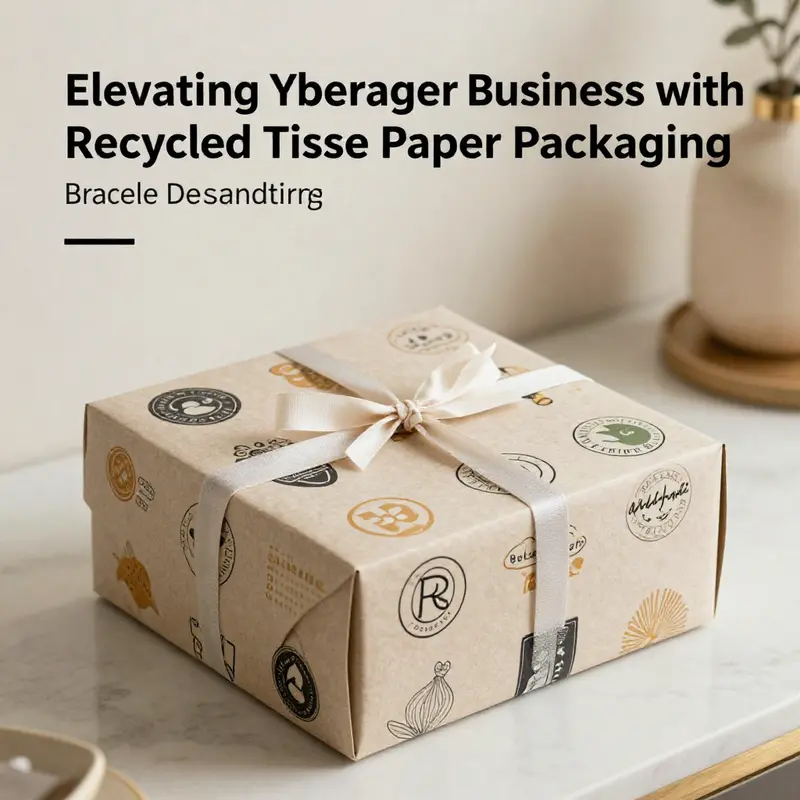
Internal link reference for further context: custom-logo eco-friendly kraft catering packaging. This example illustrates how a printed, branded element on a sustainable tissue paper framework can align with a broader packaging system that emphasizes recyclability, aesthetic refinement, and a premium user experience. While each brand’s journey will differ, the underlying principle remains constant: design and sustainability should co-create value in every unboxing moment. As consumer expectations continue to evolve, the ability to integrate customization with robust environmental performance will increasingly define packaging leadership in the sustainable packaging landscape. External resource: https://www.tetrapak.com/innovation/recycling-and-sustainability
Final thoughts
Embracing recycled tissue paper packaging is not just a step towards sustainability; it’s a strategic move for beverage businesses aiming to stand out in a competitive market. With numerous environmental benefits, cost-effective solutions, and ample opportunities for customization, this packaging option enables you to present your brand responsibly and stylishly. By implementing these eco-friendly practices, your brand can attract conscious consumers and boost its reputation in the expanding green market.