

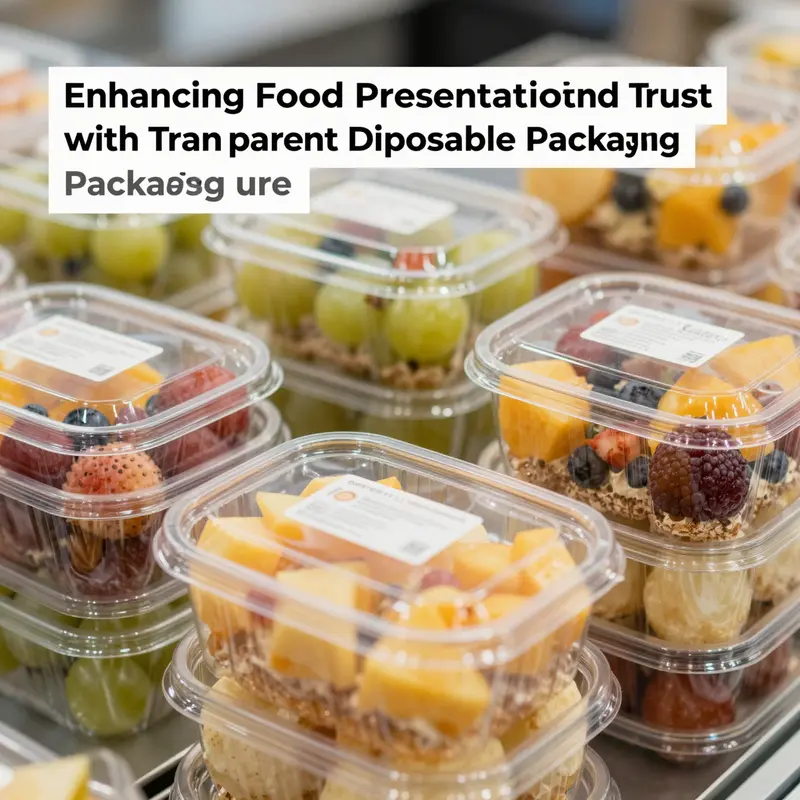
In a bustling market where first impressions are everything, the presentation of food plays a pivotal role in consumer decisions. Transparent disposable food packaging boxes offer a unique solution, allowing customers to visually assess their food before purchase, leading to increased trust and satisfaction. This article delves into the key advantages of transparent packaging, emphasizing its visual clarity, versatility, durability, and material considerations. For bubble tea shops, restaurants, and catering services, adopting these boxes not only enhances convenience and hygiene but also strengthens brand perception. By understanding the benefits detailed in the following chapters, businesses can make informed decisions to boost customer engagement and operational efficiency.
null
null
Seeing Through Service: The Cross-Industry Reach of Transparent Disposable Food Packaging Boxes
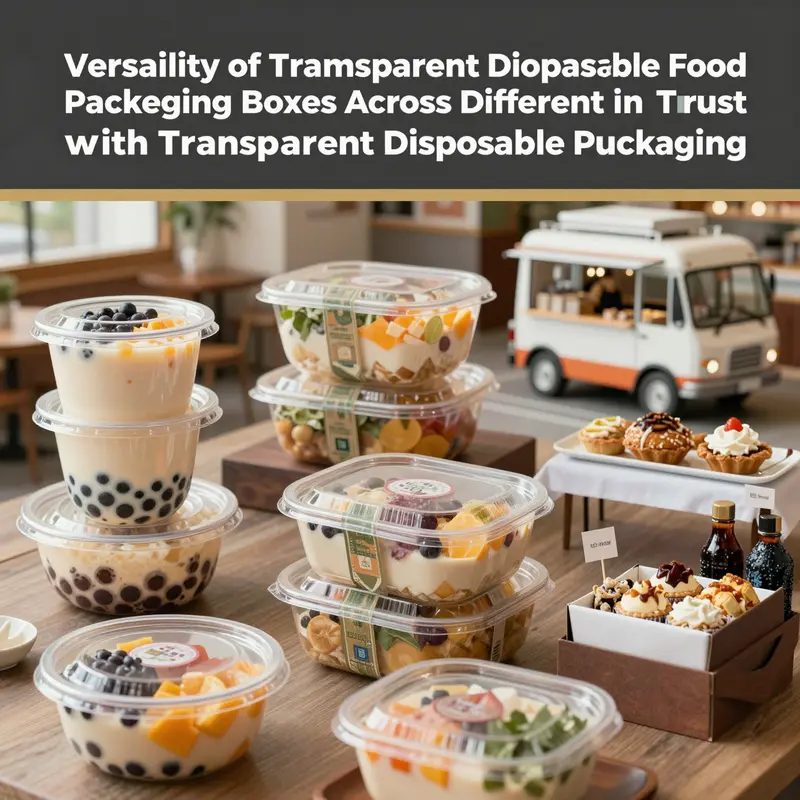
When visibility becomes a feature of packaging, the product itself gains a voice. Transparent disposable food packaging boxes do more than contain; they reveal. That simple clarity reshapes how consumers perceive freshness, how retailers present products, and how industries communicate quality, safety, and reliability. The chapter that follows traces the threads of this visual honesty as it threads through service food, retail goods, healthcare, electronics, automotive components, and even education and events. It is a narrative of how a single design attribute—clear, unobtrusive containment—can ripple across sectors, shaping expectations and practices without demanding a different language for each audience. The story begins with the most immediate beneficiaries: the diners, shoppers, and caretakers who rely on packaging to protect, present, and persuade, sometimes all in the same breath.
In the realm of food service, where meals travel from kitchen to customer in moments that can decide satisfaction, the value of transparency is most tangible. A takeout box that lets the lantern glow of a glossy noodle dish or a crisp salad speak for itself reduces guesswork. It allows color, texture, and portion to be evaluated in an instant, an almost instinctive glance that can influence whether a customer chooses one option over another. Clarity also doubles as a practical shield against disappointment: if the sauce has breached the seal, or if a component looks dry or unevenly reheated, the consumer is alerted before the first bite. This immediacy translates into trust and repeat business. The design often pairs clear materials with practical features—leak-resistant walls, foldable flaps, and stackable geometry—that support busy kitchens and mobile delivery without sacrificing presentation. In many cases, these boxes are built from robust polymers that balance durability with lightness, ensuring that a hot stir-fry or a saucy snack remains contained during transport while still allowing the consumer to assess the contents at a glance. The choice between materials like polypropylene for heat tolerance or PET for exceptional clarity is rarely just a technical decision; it is a statement about the intended use, the desired user experience, and the operational realities of a food-service operation.
Beyond the dining table, the same honesty of visibility wreaks its influence in retail and consumer goods. Shoppers moving through aisles want to confirm color, texture, and consistency at a moment’s glance. A transparent container for fruits, vegetables, or ready-to-eat portions makes it possible for the consumer to inspect without opening, reducing handling and potential contamination. For cosmetics or consumer care products, clear packaging highlights the hue and texture of the product inside, adding to brand storytelling by letting the product speak through its appearance. In these contexts, the visual interface is not merely a passive backdrop but an active component of marketing: clarity enhances perceived freshness, quality, and care in handling. The packaging material must perform in ways that protect product integrity while preserving shine and transparency. This often means selecting materials that resist fogging, maintain rigidity, and withstand the rigors of shelf life and shipping. The result is a packaging ecosystem that supports fleeting consumer attention with a single, unadorned but highly persuasive window into the product.
In healthcare and pharmaceuticals, transparency carries an even more explicit code of safety and compliance. Clear packaging allows patients, clinicians, and pharmacists to inspect contents, verify dosages, and scan expiration indicators without compromising sterility and traceability. The non-toxic and odorless properties of suitable plastics ensure that sensitive substances remain uncontaminated and uncontaminating during handling and transport. In such settings, visibility becomes a safeguard: it helps prevent mix-ups, supports accurate dispensing, and reinforces adherence to medical standards. While the boxes in these environments may not always be the showpiece of consumer delight, their clarity becomes a quiet partner to precision, a nonverbal assurance that the container will perform as promised without introducing risk.
The electronics and automotive sectors find value in the same principle, albeit applied to different goals. For small components, trays, protective casings, and disposables used in assembly lines or after-market packaging, transparency accelerates visual inspection and inventory control. When components are neatly arranged in clear, defined compartments, workers can verify part numbers, orientations, and quantities at a glance, reducing errors and waste. In automotive maintenance contexts, where tiny connectors or fasteners must be stored in an organized, readily identifiable way, transparent packaging supports efficiency, safety, and throughput. The same logic extends to education and event settings, where transparent packaging underlines cleanliness and branding during promotions, sample distributions, or catered gatherings. A modern, professional appearance—clean lines, precise edges, and a clear window into the contents—aligns with the expectations of institutions, attendees, and potential sponsors. In these environments, the packaging does more than hold; it conveys an attitude toward hygiene, organization, and reliability that resonates with audiences from students to executives.
Across these varied domains, the materials behind the transparency must earn their keep. The most common workhorses are sturdy, clear polymers that balance rigidity with flexibility, resisting leaks and maintaining shape under pressure. In many cases, the materials chosen deliver a practical blend of heat tolerance, microwave compatibility, and chemical resistance, enabling containers to function through refrigeration, reheating, and transport. This durability matters, not only for protecting food but also for ensuring that the container can be reused or disposed of in a hygienic and predictable manner. When a box leaks, cracks, or fogs, the transparency that once inspired confidence becomes a reminder of fragility, a break in the visual contract with the consumer. Therefore, the design language around transparent packaging often emphasizes a tight seal, precise fold lines, and smooth edges, all of which contribute to a mess-free, reliable experience. The interplay between clarity and practicality is not a compromise but a coordinated system, where visibility serves as both a display feature and a quality-control mechanism.
As the market evolves, so does the conversation around sustainability and lifecycle responsibility. The appeal of transparent packaging is sometimes tempered by concerns about environmental impact, particularly with single-use plastics. Yet the narrative is shifting toward materials and configurations that honor both transparency and stewardship. Clear plastics that are highly recyclable or compatible with established waste streams offer a practical path to minimize landfill, while innovations in biodegradable or compostable options expand the spectrum of choices for brands seeking to reduce footprint without surrendering the benefits of visibility. The research landscape notes a growing interest in eco-friendly formulations and packaging systems that maintain clarity and performance while aligning with regulatory expectations and consumer demand for greener solutions. In this context, transparency is not a trend but a platform for responsible design: a transparent box can be both a sales tool and a sustainability statement when crafted with materials and processes that respect recyclability, compostability, or reuse where feasible.
The sourcing landscape for transparent disposable packaging is global, with a broad array of options that reflect different production capabilities, regulatory environments, and cost structures. The market has long supported a robust supply network, enabling buyers to source a range of sizes and styles for diverse applications. While the specifics of suppliers may shift with demand and policy, the underlying principle remains constant: the best solutions balance clarity, durability, and compatibility with the intended use. For buyers, this means aligning material choices with the functional requirements of hot and cold foods, the protection needs of perishable products, and the aesthetic expectations of the brand or retailer. It also means considering the downstream implications of recycling and disposal, since the end-to-end value of a packaging system depends on how well it integrates with waste streams and recovery programs. When an organization designs its packaging around transparency, it should also design for flow—how boxes stack, nest, and ship without waste, how they resist tearing and leaks under real-world handling, and how they maintain a crisp, clean appearance from factory floor to consumer table.
A particularly instructive thread in this wider tapestry is the way manufacturers and retailers communicate through packaging as a single, cohesive message. The clarity of a container is not isolated from branding; it is part of the broader narrative about care, quality, and consistency. Consumers infer product attributes from the packaging itself—freshness, portion size, and even the perceived value of the food inside. Retailers leverage that inference to reduce uncertainty at the shelf and to create a more engaging display. In the end, the transparency becomes a competitive differentiator: a visual doorway into the product that invites trust and speeds decision-making.
The chapter’s exacting length and texture come from recognizing that this is not a single-use contrivance but a suite of tools designed to adapt as needs change. A single transparent container can be repurposed from a display unit in a bakery case to a take-out vessel for a busy street stall, to a storage solution in a household kitchen. It can carry ready-to-eat meals, fresh produce, or sample-sized medical products. It can also be a practical placeholder in an educational setting where students or attendees sample foods or demonstrations while maintaining clean, paper-thin barriers between hands and contents. In every case, the objective remains consistent: clarity that preserves the integrity and appeal of what’s inside, plus practicality that keeps operations smooth and hygienic. The end result is a packaging ecosystem that supports speed, trust, and scalability across industries without demanding a new packaging language for each use case.
To illustrate the practical bridge between concept and application, consider a scenario where a retailer wants to showcase a premium mushroom salad with a bright, appealing color profile. A transparent container highlights the greens, the earthy tones, and the glossy dressing, inviting a consumer to imagine the texture and aroma. In another scenario, a healthcare facility might rely on clear packaging to simplify inventory checks and dosage verification for compact, portion-controlled meals designed for patients. A factory floor, meanwhile, benefits from clear trays that enable quick visual inspection of components, preventing mix-ups and ensuring quality control before assembly. Even in automotive contexts, small components can be keyed and identified with the help of transparent containment that aids the assembly line’s efficiency and accuracy. The thread tying these use cases together is not just visibility—it is the alignment of packaging design with the workflow, hygiene, and decision processes of each sector.
As discussed earlier, the broader material strategy often centers on PET for clarity and rigidity, or PP for toughness and higher heat resistance. The choice reflects a careful assessment of the product, the environment, and the consumer’s journey from shelf to mouth or mouth to storage. The packaging must also speak to sustainability goals, offering recyclability or compostability where possible and ensuring compatibility with existing waste streams. The conversation around materials is not merely technical; it is strategic. It asks what trade-offs a brand is willing to absorb for clearer visibility and how to balance cost with performance. The ideal outcome is a transparent solution that protects and presents, respects safety and hygiene, and aligns with an organization’s environmental commitments.
For readers seeking a concrete example of the kind of transparently presented packaging that powers cross-industry utility, consider a design that emphasizes an unobtrusive, clear lid paired with a robust base. Such configurations can render the contents instantly legible while providing a secure seal that minimizes leaks and preserves freshness. In these arrangements, each element—shape, wall thickness, lid mechanism, and closure integrity—works in concert to deliver a reliable user experience. The resulting container becomes not just a vessel but a trustworthy partner in the consumer’s routine, whether they are grabbing a quick lunch, selecting produce in a market, or picking up a post-surgical meal at a clinic. The cross-pollination of ideas across sectors—how a box for pastries can inform a tray for electronics parts, or how a leak-resistant design for sauces can influence a medical-dose packaging—illustrates the universality of transparency as a design principle.
To anchor the discussion in practical sourcing realities, the market offers a spectrum of options, from compact, locally sourced runs to large-scale manufacturing capabilities that support bulk purchase and customization. Buyers can find a range of sizes and styles intended for different functions, with the recognition that transparency must be matched to the product’s physical and chemical demands. The procurement choice often hinges on a balance between clarity, barrier properties, heat tolerance, and end-of-life considerations. In an industry that increasingly prioritizes sustainability alongside performance, transparent packaging is not a surrender to permanence but a pivot toward smarter, more efficient use of materials, better communication with consumers, and a design language that speaks honestly about the product it holds.
In closing, the versatility of transparent disposable food packaging boxes lies not in their ability to perform a single task but in their capacity to adapt to diverse workflows while maintaining a consistent narrative of clarity. This clarity informs consumer trust, supports brand presentation, sustains safety and compliance, and underpins operational efficiency across an array of industries. It is a design philosophy that treats transparency as an asset, not a limitation—an asset that travels easily from the kitchen to the store, from the clinic to the workshop, and from an event podium to a classroom. As markets evolve, the conversation around these containers will continue to evolve as well, expanding into more sustainable formulations and smarter, more integrated packaging systems that honor both the visual appeal and the practical realities of modern commerce. For readers who want to explore related packaging choices that leverage transparency in innovative ways, a detailed example of a transparent container with a clear lid showcases how design, material science, and consumer expectations converge in a single, persuasive product statement. See the example here: disposable kraft paper takeaway box with clear lid. To delve deeper into material standards and performance insights that underpin these decisions, an external resource offers a comprehensive overview: https://www.benjaminross.com/food-box-disposable-overview-material-standards-technical-specifications-performance-insights.
Durability and Practicality of Transparent Disposable Food Packaging Boxes
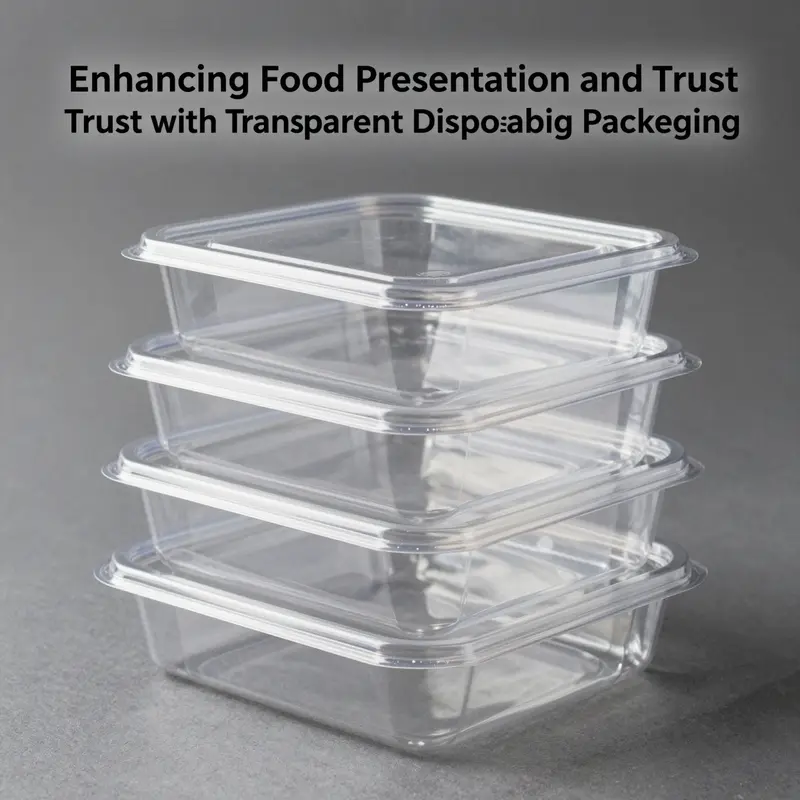
Durability and practicality of transparent disposable food packaging boxes depend on material choice, design, and the realities of modern foodservice. These single-use containers have evolved from simple visibility aids into purpose-built tools for efficiency, hygiene, and trust. Polypropylene (PP) is the workhorse for transparent boxes, with attributes like high tensile strength, impact resistance, and deformation resistance under normal loads, helping boxes hold their shape through stacking, transit, and handling. PP-based boxes can be leak-resistant and shatterproof, making them reliable for foods that travel with sauces or liquids. This reliability reduces spills, protects flavors and portions, and supports brand trust and hygiene in foodservice. Temperature exposure is important. PP resists typical heat during transport and serving, and many PP-based designs tolerate temperatures approaching 100°C for short periods, enabling reheating or serving hot meals in the container. Food-grade PP minimizes odor, taste transfer, and contaminant migration, and the transparent walls reflect strict production controls to maintain clarity and overall food safety. Transparency helps both consumers and retailers. Clear visibility aids portion control, inventory management, and reducing waste by letting people see contents without opening. In retail, visibility can enhance product appeal and instill confidence. With sturdy walls and reliable lids, the packaging supports stable stacking and reduces tipping in vending or delivery settings. Design features contribute to practicality. A well-fitted lid preserves moisture and keeps contaminants out, while reinforced rims and interior ribs improve resistance to deformation during quick handling. These details matter in high-volume settings such as cafes, fast-food, bakeries, and hotels. Durability intersects with sustainability. PP offers a balance of durability and cost-effectiveness, with recycling considerations differing from PET. The choice depends on end-use temperature, item weight, and environmental goals. Recyclability and reuse potential should be weighed, aiming to minimize material use while preserving performance. Availability and sourcing matter. A broad supplier base and global platforms enable bulk purchasing and consistent supply, supporting reliable performance and lower total costs. A range of sizes—from compact 400 mL portions to larger 1500 mL servings—lets operators tailor packaging to products and reduce waste. Ultimately, durability and practicality arise from material science, engineering design, and operational realities. When aligned, transparent disposable boxes preserve the appearance and integrity of food, while supporting hygiene and efficient handoffs from prep to plate.
Seeing Through Performance: The Material Science Behind Transparent Disposable Food Boxes
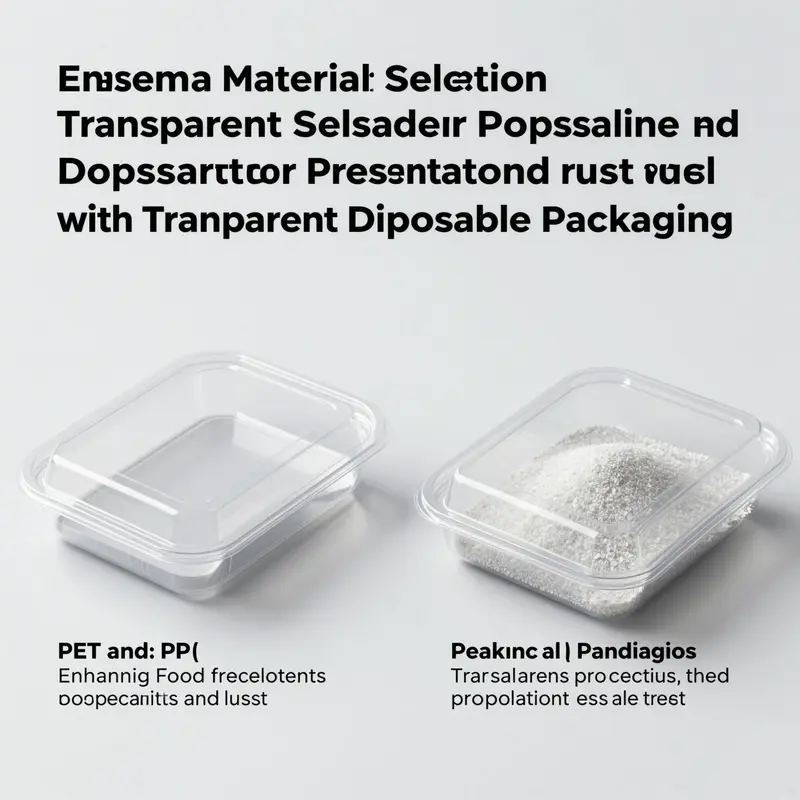
Material selection for transparent disposable food packaging boxes is more than a technical footnote. It is a decision that shapes how a product presents itself, how it travels from producer to consumer, how it behaves when heat and moisture are involved, and how it ultimately fits into a system aimed at safety, efficiency, and sustainability. In this domain, two polymers—PET and PP—stand as the dominant contenders. Each brings a distinct philosophy of performance, which means the best choice depends on the food format, the handling path, and the life cycle the packaging is expected to endure. Clarity, durability, heat tolerance, and end-of-life considerations all coalesce into a strategic decision that can alter a brand’s ability to communicate quality while preserving practical constraints like cost and recyclability. The narrative around these materials is not a reduction to a single rule but a careful alignment of product requirements with material behavior, process realities, and consumer expectations for visibility and hygiene.
Clarity is the first, most intuitive criterion. PET has long been celebrated for its glass-like transparency, delivering brightness that can elevate the perceived freshness of strawberries, the vivid color of a salad mix, or the delicate texture of a pastry. Its optical properties are exceptional: light transmittance often surpasses 90 percent, with haze kept to a minimum. This means the product inside reads with a fidelity that no opaque alternative can easily replicate. From a marketing and consumer-trust standpoint, the look of the container itself becomes part of the buying experience. When a shopper can assess ripeness, color, and texture without opening the box, confidence rises, and that confidence translates into a higher likelihood of purchase. This is not merely cosmetic; it changes the way products are presented on shelves, in display cases, and online thumbnails that try to hint at real-world appearance.
Yet transparency is not a universal solution. PET’s strength in optical clarity can be tempered by its thermal and mechanical limits. PET’s maximum service temperature typically sits around 70–80°C. While this makes it superb for cold foods and short-term chilled use, it constrains hot-fill processes or scenarios that involve reheating the contents in the over-the-box context. In practice, PET can deform if exposed to higher temperatures for extended periods or if it experiences rapid thermal transitions during transport. This means a container that looks pristine at purchase may loosen its edge if a consumer tries to heat the contents in the packaging or if the product remains in a sunlit vehicle cabin. Moreover, while PET is generally food-safe, repeated use or exposure to heat can introduce wear that undermines long-term cleanliness and optical quality, nudging designers toward single-use assumptions and reinforcing the perishability of the packaging object itself.
Polypropylene, by comparison, is celebrated for its heat resilience and resilience in the face of microwave exposure. PP can tolerate temperatures up to roughly 167°C before softening, and many modern transparent PP formulations achieve striking clarity with light transmittance exceeding 90 percent and very low haze. This performance makes PP a compelling choice for hot foods, microwavable meals, and containers intended for reheating or serving warm items directly. The ability to use a transparent PP box for hot soups, noodle dishes, or grain bowls reduces the need for additional containers at the point of service and can simplify the consumer experience. The downside, however, is that PP’s surface can appear slightly less glass-clear than PET, sometimes delivering a subtly warmer or more satin-like finish. In practice, many designers recognize that “maximum transparency” is not the sole objective; rather, the aim is to achieve a balance where the visual display remains compelling while the container confidently supports the product’s thermal and mechanical demands.
This is where the concept of a hybrid approach—melding the strengths of both materials—comes into play. In some packaging architectures, a PP body provides heat resistance and structural integrity, while a PET lid or a PET-based insert preserves high visibility for the product itself. The implication for design is nuanced: layering materials requires attention to sealing methods, thermal expansion, and the potential challenges of end-of-life processing. A two-material system can deliver a best-of-both-worlds outcome, but it also calls for rigorous compatibility testing, careful selection of barrier properties, and clear labeling about the intended use. The bottom line is that the choice is rarely binary; it is a spectrum of options that can be tuned to a particular food format, service model, and consumer promise.
The lifecycle and recycling considerations add another layer of complexity. PET and PP operate within different recycling streams, and the feasibility of returning a transparent box to a closed loop depends on regional infrastructure. PET’s long history of recycling has built a broad and mature system that can support clear, post-consumer reuse in many markets. PP’s recycling channels are equally important, though the economics and processing quality can vary significantly by locale. When a design relies on a hybrid system, the end-of-life scenario becomes more complex, since facilities must separate materials and ensure compatibility with downstream processes. For brands, the decision to favor a single-material solution over a hybrid design often reflects an assessment of end-of-life practicality as much as performance during use. In other words, the packaging choice sends a signal about the product’s total environmental footprint, not just its immediate functional performance.
These material decisions ripple through the production line and the supply chain. PET and PP have different molding characteristics, surface finishes, and process windows. PET’s rigidity is a blessing for stackability and protection during transit, but it can demand stricter quality control in extrusion and blow-molding to preserve optical clarity, free of scratches that would mar display quality. PP, with its formidable formability and heat resistance, often yields higher yields in high-speed production and can tolerate a broader set of processing conditions. However, achieving the top-tier transparency with PP requires refined surface treatments, additives, or co-polymers that push the cost ceiling somewhat higher than a straightforward PET solution. In markets with cost-sensitive buying, PP’s lower material cost and robust performance in hot-fill contexts can win by a margin, while in premium display contexts, PET’s superior clarity remains appealing.
From a user experience perspective, the container must deliver not just visibility but hygienic assurance and ease of handling. A transparent box should resist staining from fruit juices and sauces, display clean seams that signal integrity, and offer lids that seal reliably under transport. PET’s stiffness can contribute to strong seam integrity, but its rigidity must be matched with compatible lids and sealing systems to prevent warping in heat or pressure. PP’s flexibility can be an advantage for sealing and snap-fit lids, yet it requires careful attention to surface finish and gloss to avoid fingerprinting and smudges that erode the perceived cleanliness of the package.
For product developers and procurement teams, the material choice is a balancing act among four pillars: visibility, temperature performance, recyclability, and cost. PET is often the preferred option when the priority is maximum clarity and cold-chain stability, where the product’s perception of freshness is elevated by a crystal-clear shell. PP tends to win where heat resistance and reusability—paired with reasonable cost—are critical, particularly for hot meals and reheatable formats. The decision can also hinge on market expectations and regulatory scrutiny: a brand operating across regions with strict microwavable-use standards may lean more toward PP, while a company emphasizing premium presentation in display-heavy environments may invest in PET. In both cases, the packaging must be designed with the end-user’s journey in mind, from display to purchase, to transport, to storage, and finally to disposal.
An important corollary is the role of coatings and surface treatments. Both PET and PP can benefit from coatings that improve scratch resistance, water resistance, or adhesion for decorative prints while preserving transparency. These coatings, however, must be compatible with food contact regulations and stable under the temperatures the package will encounter. The choice of coating can also influence recyclability, because certain multilayer systems complicate material separation during recycling; thus, designers may pursue barrier layers that minimize interference with standard recycling streams. The broader implication is that transparent packaging is not a single-material artifact but a system: the resin, the lid, the coating, the seal, and the printing or labeling scheme must harmonize to deliver the desired performance while supporting sustainable end-of-life options.
A crucial takeaway for practitioners is the necessity of clear specification and rigorous testing. Material datasheets, migration tests, and real-world heat and leak tests should guide whether PET or PP—or a hybrid approach—best suits a given product. This is not hypothetical; it is about ensuring consumer safety and maintaining brand integrity under real conditions of use. In addition to standard mechanical and thermal tests, practitioners must evaluate how the chosen material responds to the product’s actual food matrix, the expected handling environment, and the time frame from packaging to plate. The alignment of product design with material performance minimizes the risk of failure, reduces waste, and upholds the consumer’s perception of quality.
In closing this contemplation of PET versus PP, it is useful to acknowledge that the conversation continues to evolve as new resins, coatings, and recycling technologies emerge. A growing portion of the packaging industry explores layered films and barrier innovations that can push the envelope on both clarity and heat resistance without resorting to price-inefficient composites. Such developments remind us that material science is not a static choice but a spectrum of possibilities, each with its own environmental and economic trade-offs. The most successful packaging solutions will be those tailored to a product’s specific journey: the kind of food, the display and handling requirements, the consumer’s expectations for visibility and hygiene, and the region’s recycling infrastructure. The goal is not to declare a universal winner but to empower designers to select the material that optimizes the product experience while supporting responsible stewardship of resources.
For readers seeking actionable reference, the U.S. Food and Drug Administration (FDA) provides guidelines on food-contact materials that are highly relevant to choosing PET, PP, and layered solutions. This external resource offers detailed orientation on what constitutes acceptable materials and how to interpret migration data, helping practitioners avoid unintended chemical exposure in everyday packaging. senang02-top-fashion-double-wall-pe-coated-lunch-lid-matt-lamination-embossing-eco-friendly-rectangle-bowl-sushi-potato-chips/ The broader conversation also invites designers to consider the entire packaging system: the trays, seals, and lids, and how each element contributes to the product’s overall safety and presentation. As markets diversify, the ability to choreograph materials, processes, and end-of-life strategies becomes a competitive differentiator rather than a mere technical preference.
In practical terms, the decision to favor PET, PP, or a hybrid approach must reflect the product’s temperature profile, duration of contact, handling conditions, and post-consumer landscape. It demands cost-aware optimization that accounts for raw material price, conversion efficiency, and the economics of recycling. The best outcomes emerge when packaging decisions are integrated early into product design, with cross-functional teams weighing performance, aesthetics, and life-cycle impact in unison. When a bakery wants to showcase a loaf’s crumb and glaze, or a takeout service aims to deliver a hot pasta dish with a transparent lid that remains clear, clear design thinking informs the material choice and the packaging’s future path. The material decision becomes a narrative about trust, reliability, and responsibility—an invitation to consumers to see the product clearly, to trust what they see, and to participate in a packaging ecosystem that values safety, efficiency, and a lighter environmental footprint.
External resource: https://www.fda.gov/food/food-contact-materials
Final thoughts
Transparent disposable food packaging boxes stand out not only due to their clarity but also for their functionality and versatility across multiple sectors. By integrating these boxes into your food service operations, you enhance visibility, assure quality, and improve customer satisfaction. Understanding the difference in materials and practical applications can help your business make informed choices that align with your brand’s goals and consumer expectations. Embrace this innovative solution to elevate your food presentation and win over more customers.