

In the vibrant food landscape of Nogales, Chile, plastic containers play a crucial role in ensuring food safety and accessibility. As the demand for quality food packaging continues to rise among bubble tea shops, restaurants, and catering services, understanding the fundamentals of food safety standards is imperative. In this article, we will delve into the food safety standards that govern plastic containers, explore the economic implications of their use, analyze the geopolitical context of the plastic container industry, investigate societal attitudes, and highlight recent technological advancements. Each chapter will build toward a comprehensive view of how these containers influence the food industry in Nogales, emphasizing their importance for businesses and consumers alike.
From Nogales to Chile: Navigating Food-Contact Plastic Containers Across Borders
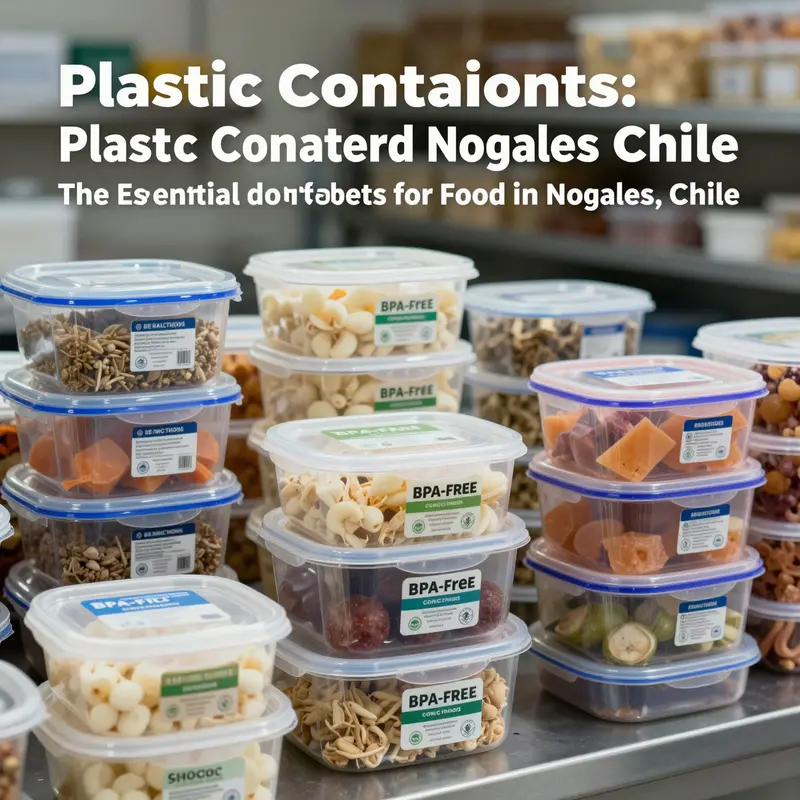
In the world of food packaging, every container carries more than its contents. It carries responsibility, traceability, and a map of compliance that stretches across borders. For a region like Nogales, where supply chains mingle with border trade and the pace of retail and food service quickens every day, the choice of plastic containers for food becomes a decision that touches health, commerce, and confidence. The journey of a simple plastic pouch or lid from a manufacturing floor to a consumer’s table is governed not only by local habit or consumer preference but by a layered regulatory landscape that seeks to ensure safety at every link. When we examine the practicalities of food-contact plastics in Nogales and, more broadly, in trade with Chile, we begin to see how standards converge and diverge, how risk is managed, and how packaging professionals build a resilient, compliant supply chain that can shine in both domestic markets and export destinations.
At the heart of any discussion about plastic containers for food is the question of safety in direct contact with food. In Mexico, where Nogales sits at the edge of commerce and proximity to the United States accelerates the flow of packaging materials, there is a clear emphasis on food-contact materials meeting specific safety criteria. A foundational premise is that materials intended for contact with edible products must not migrate harmful substances into food in amounts that could pose a risk. This is codified in national standards for packaging and food-contact plastics, with particular attention paid to chemical stability, regulatory migration limits, and the hygiene of production environments. For businesses operating in or through Nogales, this translates into a compliance discipline that begins with material selection and extends through the entire production and distribution chain. The goal is practical: containers that perform reliably—no leaks, no unexpected chemical transfer, no contamination—while remaining compatible with the fast pace of retail and the reliability demanded by retailers and consumers alike.
Beyond the border, the narrative shifts when the destination is a market like Chile, where the regulatory framework for plastic containers that contact food is even more explicit and tightly woven into public health oversight. Chile’s regulatory architecture places plastic utensils, containers, films, and related components squarely under stringent controls to ensure consumer safety and to maintain trade integrity. A central pillar is Article 126 of the Chilean Food Safety Regulations, which requires that all plastic items in direct contact with food satisfy defined safety properties. In practice, this means rigorous attention to the chemical stability of materials, precise migration limits, and hygienic manufacturing conditions. Enforcement rests with the Chilean National Sanitary Authority, known for its role in ensuring that products entering the Chilean market or circulating within it meet clear safety criteria. When Nogales-based producers or exporters consider Chile as a destination, they must anticipate these expectations as part of a broader compliance strategy that encompasses not just the product, but its documentation, testing history, and traceability chain.
The contemporary Chilean regime also reflects a broader update in food hygiene management. Effective from mid-2025, a comprehensive standard for food production facilities and contact materials has been introduced. This modernization comprises a structured framework of requirements that emphasizes traceability, ongoing safety, and demonstrable compliance. For plastic food containers exported to or imported into Chile, the implication is straightforward: manufacturers must prepare safety certification documents and undergo the testing procedures necessary to verify compliance with the national rules. This approach aligns with the general trend in food-contact regulation toward greater accountability—where a container’s safety is proven through evidence rather than assumed, and where supply chain actors are required to maintain records that enable rapid recalls or investigations if concerns arise.
For businesses amid Nogales’ dynamic corridor, these two regulatory stories—Mexico’s emphasis on food-contact safety and Chile’s rigorous, traceable framework—create a practical rhythm. The first rhythm concerns material choice and product design. Plastics intended for direct food contact must be selected with migration and stability in mind, and designs must minimize opportunities for contamination. There is also an operational rhythm: facilities handling these materials need robust hygiene practices, clean-in-place or equivalent cleaning regimes, and clear separation between raw materials, packaging components, and finished goods. The second rhythm is documentation. A compliant pathway requires meticulous records, including the material specifications, supplier certifications, batch traceability, and evidence of testing that demonstrates safety for food contact. As Nogales businesses routinely move products into distribution networks that feed markets across the border, these documentation requirements become the connective tissue that preserves trust across buyers, regulators, and consumers.
A practical implication for Nogales’ packaging ecosystem is material flexibility paired with stringent verification. Suppliers and manufacturers increasingly favor materials and processes whose performance is well characterized in terms of splash resistance, chemical resilience, and ease of cleaning. The movement of goods across borders often demands that containers be compatible with both cold-chain and ambient conditions, resisting cracking or deformation under typical handling scenarios. In a cross-border setting, this also means choosing container formats that are easy to inspect, store, and transport, while still providing the visibility and tamper-evidence features retailers rely on. The emphasis on food-grade clarity and protection from leakage aligns with consumer expectations of freshness and hygiene, particularly for fruit, produce, prepared foods, and other perishable items commonly distributed through Nogales’ regional networks.
Sustainability has become an important undercurrent in the packaging conversation as well. Across markets, there is growing interest in recyclable or compostable materials, provided they meet safety standards and maintain the functional integrity required for food contact. The shift toward eco-friendly packaging does not undermine the safety calculus; instead, it adds another layer of compliance work. Materials and packaging configurations must still pass migration tests, and suppliers must maintain traceable, auditable records that verify the environmental claims alongside safety credentials. In Nogales, where the supply chain intersects with consumer markets and regulatory regimes on both sides of the border, the ability to demonstrate both safety and environmental responsibility can be a differentiator for traders and retailers alike.
From a workflow perspective, organizations navigate this landscape by integrating quality management and regulatory compliance into everyday operations. The process begins with supplier selection and incoming inspection, where raw materials are evaluated for food-contact suitability and batch-specific certifications. Production lines must be monitored to ensure hygienic conditions and to prevent cross-contamination between packaging materials and other process streams. During packaging, the container design and closure systems are tested for leak-proof performance and compatibility with common food storage conditions. Finally, post-production testing and documentation capture the material’s journey—from raw material to finished container to shelf, including the critical migration and hygiene-related verifications that regulators might seek during audits or market surveillance.
In this light, the social and economic value of compliant packaging becomes clear. A Nogales facility that can reliably demonstrate compliance with Mexican standards and the applicable Chilean rules can participate more confidently in cross-border trade, with packaging that satisfies retailers, regulators, and end users. The value is not merely risk avoidance; it is customer trust, supply chain resilience, and a platform for growth. This is especially pertinent for businesses seeking to align with trends toward transparency and traceability, where the ability to track a batch, verify its safety credentials, and present a clear compliance narrative becomes as important as the packaging’s functional performance.
Alongside safety and compliance, there is room for strategic packaging choices that respond to market demands without compromising regulatory requirements. For example, packaging configurations that enable easy inspection and efficient stacking reduce handling risks and improve waste management downstream. The growing availability of sustainable, food-grade materials in formats such as kraft-based or coated-paper alternatives suggests paths to reduce plastic reliance while maintaining the essential attributes of food-contact plastic containers when needed. This is not a retreat from safety; it is a recalibration of how packaging designers balance barrier properties, functionality, and environmental considerations in a way that remains compatible with stringent standards in both Nogales and Chile.
For professionals who want to ground their decisions in concrete guidelines, it is helpful to keep in view the broader regulatory landscape while staying close to the practicalities of daily operations. A robust approach begins with a clear understanding of the material’s intended use, the conditions of storage and transport, and the target markets. It requires documentation that can withstand scrutiny, including supplier declarations, testing results, and traceability records. It also invites ongoing dialogue with regulators and industry bodies to stay abreast of updates to standards and to anticipate changes in export controls or market requirements. In Nogales—and in any cross-border context—this proactive stance protects both health and commerce, ensuring that packaging supports safe consumption while enabling trade to flow smoothly.
The packaging choices around food-contact plastics in Nogales, with an eye toward Chile, reveal a landscape where safety, documentation, and practical performance are inseparable. The steps a company takes today—careful material selection, rigorous hygiene practices, meticulous record-keeping, and a willingness to explore sustainable packaging options—are the steps that keep products moving across borders with confidence. It is a narrative of steady compliance, thoughtful design, and the shared goal of safeguarding health while sustaining commerce. And it is a reminder that a container is never merely a container; it is a node in a system that connects producers, regulators, retailers, and consumers, across borders and through time.
To connect these ideas to real-world options that emphasize responsible packaging while remaining aligned with current trends in Nogales and the broader market, consider the following example of packaging options centered on sustainability and safety: eco-friendly, disposable kraft-based containers designed for take-away and food service can offer practical benefits when used in conjunction with robust safety certification and migration testing. Such choices illustrate how the sector is embracing responsible packaging without compromising safety or regulatory compliance. For readers who want to explore concrete packaging formats and supplier options that align with these principles, one relevant resource provides an overview of kraft-based, eco-friendly take-away packaging and related items. For a concrete example of this category, you can explore the link below:
eco-friendly disposable kraft catering boxes
As the Chilean regulatory framework continues to evolve, and as Mexican standards adapt to new risk profiles and market demands, the thread remains clear: food-contact plastics must be safe, traceable, and fit for purpose. The path from Nogales to Chile is not a straight line but a corridor of compliance where each link—material choice, manufacturing hygiene, testing, documentation, and cross-border logistics—must be secure. The official texts that anchor these requirements are accessible to those who seek them, and they underscore a common objective: protect consumers while enabling legitimate trade. For those who want to consult the formal foundations of Chile’s approach to food safety standards, the Ministry of Health’s legislation pages provide authoritative guidance on current laws and procedures that govern plastic contact materials and related packaging. This resource can be found here: Ministry of Health of Chile – Legislation. (https://www.gob.cl/salud/legislacion/)
Cross-Border Packaging and Local Resilience: The Economic Tides of Food-Grade Plastic Containers in Nogales, Chile
Nogales sits at a curious juncture where local markets expand across a border that many goods traverse daily. In this setting, the choice of packaging is not simply a matter of convenience; it becomes a pivot around which producers, distributors, and retailers map risk, cost, and opportunity. Food-grade plastic containers, widely used to hold and transport fresh produce, prepared meals, and shelf-stable items, shape the pace and resilience of the supply chain. Transparent walls reveal what lies inside, a feature that helps vendors communicate freshness to customers and helps buyers assess quality quickly. In Nogales, where many producers operate small to mid-sized farms and cooperatives, such packaging can reduce spoilage, protect produce from contamination, and enable easier handling during loading and unloading at markets or at cross-border points. The immediate economizing effect is visible in reduced waste and improved turnover, which often translates into higher volumes moving through local stalls and a broader set of offerings available to consumers who rely on daily purchases.
Yet the story of plastic containers is not just one of savings. The economic arc includes the costs of compliance, waste management, and environmental stewardship. Regulatory frameworks targeting materials that contact food—standards that set limits on contaminants and specify labeling, testing, and hygiene practices—impose upfront and ongoing costs on producers and distributors. In Nogales, these costs intersect with the realities of small-scale operation, where margins are narrow and cash flow is episodic. The pressure to keep prices competitive while meeting safety norms can spur investment in more standardized packaging solutions and training, but it also risks squeezing smaller players who lack access to storage, testing facilities, or reliable suppliers. The border economy magnifies these dynamics. When packaging improves shelf life and traceability, it eases cross-border logistics, helps farmers access urban markets in larger metropolises, and opens doors to more formal retail channels. This ripple effect foster s employment, from packaging line workers to logistics staff at distribution hubs, and it can attract investment in local pretreatment and inspection activities that further formalize the supply chain.
On the other hand, the economic calculus must account for externalities. Global studies emphasize that plastics contribute to both improved food security and environmental costs. In urbanizing contexts, plastics have been shown to support extended shelf life and safer transport, reducing losses that would otherwise erode farmer incomes and consumer purchasing power. However, the same plastic products accumulate in the landscape if waste systems cannot keep pace. In southern Chilean contexts and similar regions, this tension between short-term efficiency and long-term environmental costs creates a complex risk matrix. Microplastic contamination of soil and waterways can undermine soil health and crop yields over time, potentially affecting the reputation and marketability of locally produced foods. If packaging waste becomes a significant burden for municipal budgets, it may reduce funds available for other critical services, indirectly affecting the livelihoods of farmers and the vibrancy of markets where plastic containers are a routine feature.
Within Nogales, waste management is both a local service and a municipal challenge that shapes economic outcomes. The costs of disposal, recycling, and potential remediation are not merely environmental concerns; they translate into taxes, fees, and service charges that land on the shoulders of producers and retailers. If the existing infrastructure cannot efficiently sort and recycle plastics or recover energy from waste, disposal becomes a hidden tax on small businesses, eroding profitability and delaying reinvestment. Conversely, a well-functioning circular economy, even in a border town with tight margins, can unlock new flows of value. Returnable or durable packaging systems, where feasible, can reduce recurring purchase costs and minimize waste, while compostable or bio-based alternatives, if properly sourced and certified, can soften end-of-life impacts without sacrificing the performance needed for cold storage, transportation, or display at point of sale. The challenge lies not in discarding plastics altogether but in aligning material choice with a realistic, workable system for reuse, recovery, and safe disposal that respects both local capabilities and international expectations.
Addressing these dynamics requires a careful alignment of policy signals, market incentives, and practical infrastructure. Standardization plays a crucial role: clear labeling, consistent material types, and predictable supply channels help producers forecast costs, plan inventories, and reduce spoilage. Regulatory alignment with national standards—such as materials in contact with food meeting defined safety criteria—encourages investment in compliant packaging and helps retailers avoid costly recalls or penalties. For Nogales, the opportunity lies in integrating packaging choices with the broader development goals of the region: improving food security, supporting urban markets, and sustaining the livelihoods of smallholder farmers who increasingly depend on formal retail networks. When policymakers and industry stakeholders design programs that subsidize testing, certify compliant suppliers, or incentivize recycling and reuse, the cost burden on small operations can be softened while outcomes for consumers improve.
In contemplating practical pathways, it is helpful to consider the role of packaging beyond mere containment. The material’s performance—its clarity, barrier properties, and resistance to temperature fluctuations—affects consumer trust and product quality. Clear containers reduce the need for labels or secondary packaging to communicate freshness, a factor that can lower production and display costs. At the same time, the durability of these containers under the rigors of transport—from production facilities to market stalls and through cross-border shipments—determines the rate of breakage and loss, which in turn feeds back into prices and margins. The economics of Nogales’ food sector thus hinge on a delicate balance between efficiency gains and the costs of waste management, compliance, and environmental stewardship. This balance also intersects with broader questions about how the community values sustainability, how retailers price in environmental risk, and how small producers can access financing to modernize packaging approaches without compromising cash flow.
An important facet of this balancing act is the adoption of packaging formats that reduce waste and support local circular economies. Encouraging reuse where feasible, promoting recyclable or compostable options, and establishing clear end-of-life pathways can help Nogales participants capture some of the long-run savings that come from reduced material throughput. Infrastructure investments—such as municipal or private-sector partnerships that create convenient drop-off points for recyclables, or micro-utilities that process packaging waste locally—can transform a potential cost center into a revenue neighbor to the local food economy. In the near term, simple measures, like improving inventory discipline, standardizing container sizes to fit existing logistic networks, and training workers to stack and store containers properly, can yield immediate reductions in spoilage and labor time. Over the longer horizon, strategic collaborations among farmers, processors, wholesalers, and retailers can create standardized packaging ecosystems that align with international norms, reduce regulatory risk, and improve access to capital for small operators seeking modern, compliant solutions. These pathways, pursued with sensitivity to Nogales’ border realities and regional capacity, can tilt the economic equation toward resilience, efficiency, and shared prosperity.
The literature on plastics and food systems lends a cautious optimism to this narrative. A global perspective underscores that plastic materials can act as enabling infrastructure for food storage and distribution, particularly when paired with effective governance and robust waste management. The same literature highlights the risks of poorly managed plastic use, including environmental degradation and potential barriers to trade when residues or contamination become a concern in export markets. For Nogales, that means recognizing both the potential to strengthen local production and the responsibility to safeguard soil health, waterways, and community well-being. If the town’s producers and retailers invest in compliant packaging, invest in training, and participate in systems that recover and reuse materials, the economic upside can be meaningful: lower losses in the supply chain, more stable prices for farmers, and broader choice for consumers who depend on affordable, fresh foods. But if waste is unmanaged, or if recycled streams are weak or poorly coordinated, the same packaging can become a drag on the local economy, producing hidden costs that accumulate over seasons and years.
To illustrate how such considerations take shape on the ground, consider the practicalities of choosing a packaging approach that aligns with Nogales’ scale and capabilities. A common pathway is to adopt packaging that offers reliable barrier properties, good visibility, and compatibility with cold storage, while minimizing the risk of chemical leaching or heat-related degradation. The decision framework must weigh initial purchase costs against lifecycle costs, including cleaning, maintenance of storage facilities, and disposal or recycling fees. In markets where consumers prize transparency and freshness, the visual appeal of clear packaging matters not just for sales but for trust. This is especially relevant for perishable produce and ready-to-eat items that pass through multiple hands before reaching the consumer. Where appropriate, packaging programs that emphasize durability and reuse can reduce the cumulative material inputs over time, even if upfront costs appear higher. In such cases, collaborations with local distributors and retailers to implement take-back or redistribution schemes can extend the useful life of containers and lower the overall cost-per-use for participants.
Still, the wider economic consequences of packaging choices extend beyond the borders of Nogales. The cross-border dimension introduces additional considerations, from tariffs and import-export compliance to the reputational effects of environmental performance. In markets that increasingly scrutinize packaging footprints, Nogales producers risk paying for poor environmental stewardship in the form of restricted market access or higher risk premiums on insurance and financing. Conversely, a reputation for responsible packaging practices can become a competitive asset, attracting retailers who value traceability and sustainable supply chains. This is not merely about compliance; it is about building a sustainable image that resonates with shoppers who are increasingly attuned to the environmental costs of the goods they buy. In a world where urban consumers demand reliability, and where regulators emphasize safety and sustainability, Nogales sits at a critical juncture. The choices made by farmers, aggregators, and retailers regarding food-grade plastic containers will influence not only immediate profits but the longer arc of regional prosperity, ecological health, and social well-being.
In sum, the economic implications of plastic containers for food in Nogales are not simple. They are the product of interconnected forces: the tactical gains in shelf life and logistics, the structural costs of waste and compliance, and the evolving expectations of markets that prize transparency and responsibility. The chapter invites readers to view packaging decisions as strategic investments in resilience, rather than as isolated cost items. By foregrounding waste management, regulatory alignment, and opportunities for reuse, Nogales can harness the benefits of plastics to support a more secure and dynamic local food system. And by recognizing the risks and building robust end-of-life pathways, the community can mitigate costs while preserving soil and water quality for future harvests. The story of Nogales packaging, then, is a story of adaptation—an ongoing negotiation between efficiency, safety, and stewardship that echoes across border towns and agricultural corridors around the region.
This is where producers, policymakers, and researchers converge. The evidence from broader studies points to a nuanced conclusion: plastics can assist in feeding growing urban populations and stabilizing livelihoods when accompanied by strong governance and infrastructure. They can also become a vector for waste and contamination if neglected. For Nogales, success will hinge on visible indicators of progress—reduced spoilage rates, faster market turnover, lower disposal costs, and cleaner landscapes—that reflect the alignment of packaging choices with local capacities and regional ambitions. The path forward lies in pragmatic, incremental improvements that respect the constraints of small producers while leveraging the efficiencies that modern, food-grade packaging can offer. The resulting economic narrative will be one of incremental gains in productivity, paired with careful stewardship of the environment and an emphasis on inclusive growth across the value chain.
Internal link: disposable kraft paper takeaway box
For a broader look at how plastics intersect food security and urban development, see the external reference: Plastics, Food Security, and Sustainable Urbanization. https://www.mdpi.com/2306-5729/10/1/27
Border Currents and Food-Grade Packaging in Nogales
Nogales sits at the cross-border edge where food-grade packaging becomes a logistical interface. In border towns, containers are not merely vessels but nodes that connect producers, distributors, and shoppers across different regulatory regimes. The design of plastic containers—clarity, leak resistance, and durability—reflects safety standards and practical needs in busy markets.
Even without a formal geopolitical dossier for Nogales Chile, similar dynamics shape packaging decisions: cross-border trade pressures standardization, regulatory cues about safety and migration, and demand for visibility and shelf-ready performance. Containers must withstand temperature changes, prevent leaks, and support labeling and environmental expectations while remaining cost-effective for varied buyers.
A practical scenario imagines a transparent container used for fruit packs, salads, or prepared foods, versatile enough for local display and cross-border transport. This object becomes a small logistics system, linking harvest to shelf and adapting to market formats. The discussion closes with questions about local manufacturing alignment, supply chains, and how border policy influences packaging innovation.
Between Borders and Bins: Reimagining Food-Container Attitudes in Nogales, Chile
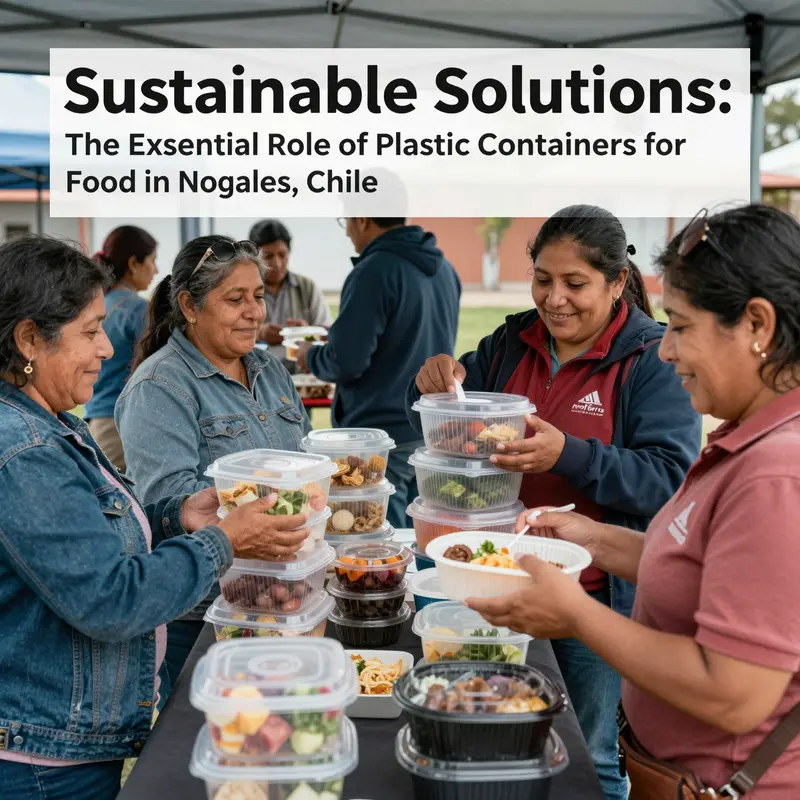
The question of how a community negotiates the use of plastic containers for food in a town like Nogales, Chile, opens a corridor into the ways everyday choices are shaped not merely by availability or price, but by a lattice of social norms, economic pressures, and evolving ideas about safety, hygiene, and the environment. There is a genuine gap in direct, place-specific data for Nogales, Chile, on how residents think about, select, reuse, or discard plastic food containers. Yet the topic matters because packaging is a hinge between small-scale food economies and larger systems of waste, recycling, and health protection. When we examine Nogales through the lens of packaging attitudes, we start to see how seemingly small preferences ripple into municipal waste streams, cross-border trade patterns, and the social contract around food safety. The larger arc of plastic use in the global food system presses in from everywhere, but the texture of local attitudes emerges only when we listen to how people tell stories about convenience, cost, and care for family health. In Nogales, these stories are filtered through the realities of market access, the rhythms of daily life, and the particularities of local waste management that shape what is considered acceptable, desirable, and responsible packaging practice.
One of the most persistent themes across communities grappling with plastic packaging is the tension between convenience and caution. Plastic containers promise speed, stackability, and a predictable seal that keeps food fresh for longer, especially for take-away meals, market snacks, and prepared foods. In many urban and semi-urban parts of Latin America, including border towns with intricate cross-border commerce, those advantages carry practical weight. Vendors rely on easy-to-handle packaging to move perishable items quickly, while households appreciate containers that can be used again or stored compactly in limited kitchen space. But alongside efficiency, there is concern—often voiced in households, markets, and local media—about the cleanliness of containers, the safety of materials in contact with food, and the long-term fate of plastic waste when its life ends. In Nogales, Chile, these concerns are not abstract. They touch daily routines—from how a grandmother stores leftovers to how a small shop handles packaging waste after a busy lunch hour.
A core thread in understanding attitudes toward plastic containers in Nogales is the role of information and trust. When people know that a container is labeled as food-grade or approved for contact with edible products, they are more likely to accept it as safe and legitimate. However, certification labels travel unevenly across borders and markets. Consumer confidence often rests on visible cues—clear, unbroken seals; clean surfaces; and a reputational signal from a seller who can vouch for the hygiene of the packaging. In a setting where informal networks and family-owned shops play a central role, trust is built through repeated positive experiences with certain vendors and through word-of-mouth that explains why a particular packaging choice works well for a given product. In Nogales, such social verification can outweigh formal laboratory assurances when time, cost, and accessibility dominate decision-making. Thus, attitudes toward plastic containers intertwine practical assessments of safety with relational judgments about the people who supply them.
The social texture of Nogales also reflects broader economic realities. In markets where households balance limited incomes, the price of packaging is not a mere line item but a determinant of how much food can be purchased and stored. Plastic containers that are affordable and durable may be favored because they enable families to portion meals, reuse containers for multiple purposes, and reduce food waste by preserving freshness. Yet the flip side is the cost of disposal and the burden of cleaning used containers. Waste management infrastructure—whether formal municipal services or community-driven recycling efforts—shapes how people think about the end-of-life of plastic packaging. If disposing of containers creates visible litter or touches congested streets, residents may grow wary of plastic in general, despite appreciating its functional benefits. Conversely, if local norms reward reuse and repair, individuals may cultivate habits that extend the life of containers, blending traditional frugality with modern packaging technology.
Cuisine, street food, and everyday meals all interact with packaging choices in Nogales. Food safety is a visible concern, and containers are not simply empty shells but guardians of hygiene during transit and storage. In households where food is prepared in advance and transported to markets or work sites, a secure, leak-proof container offers reassurance that meals remain uncontaminated. For vendors who operate small stalls or mobile carts, the reliability of a container—its ability to withstand rough handling, temperature variations, and repeated use—can determine whether a product remains appealing over a busy morning or an afternoon rush. Yet there is also a cultural penchant for straightforward, low-friction solutions. If a container is perceived as too complicated to clean, or if the labor required to maintain it outweighs its benefits, people may shy away from it, preferring simpler, reusable options where feasible. In Nogales, the balance between ease of use and concerns about cleanliness becomes a practical guide to packaging adoption.
This balancing act intersects with environmental concerns that are now part of everyday conversation in many communities. Plastic pollution is no longer a distant problem but a local one, with visible implications for streets, waterways, and the health of urban ecosystems. In Nogales, residents may see plastic waste accumulating along curbs, or hear of recycling centers that operate irregularly, and these observations shape their attitudes toward plastic containers. The social narrative often emphasizes personal responsibility—what individuals can do to minimize waste while still meeting daily needs. Community leaders, educators, and shopkeepers may promote messages about sorting waste, rinsing containers before disposal, and choosing packaging that is easier to recycle or repurpose. These micro-level educational efforts interact with macro-level policy signals, such as national or regional guidelines about materials that come into contact with food, and with international market expectations about packaging safety and sustainability. In this sense, attitudes toward plastic containers in Nogales are not only about immediate practicality but also about how people situate themselves within a broader environmental ethic that is increasingly difficult to ignore.
From a research-design perspective, a complete portrait of Nogales’ social stance on food packaging would require listening across spaces where people exchange goods, from households to small retailers to public markets. It would also demand attention to gendered and generational differences, since women often shoulder the responsibilities of food storage and preparation, while younger shoppers might prioritize convenience and novelty. The role of education cannot be overstated: knowledge about what constitutes safe contact with food, how to interpret labeling, and how to reduce waste can shift everyday choices. Yet education alone does not determine behavior. In many households, budgeting constraints, cooking rhythms, and the availability of alternatives define what is feasible. In such settings, plastic containers might be embraced not only as a packaging solution but also as a practical tool for managing the complexities of work, family life, and urban living.
The regulatory dimension also colors social attitudes, even when local data are sparse. In neighboring contexts, compliance with food-contact safety standards acts as a signal of legitimacy and quality. For Nogales, Chile, the question of how closely local practices align with international or regional standards becomes a lens through which communities interpret risk and trust. If shops and households perceive that certain standards are protective and credible, they may gravitate toward containers that carry these assurances, even when the costs are higher or the supply chain longer. On the other hand, if regulatory enforcement feels distant or opaque, communities may rely more on experiential knowledge and informal testing of packaging quality. The interplay between regulation, market supply, and everyday practice is a dynamic force shaping attitudes toward plastic containers for food in Nogales, Chile, and it is a vivid reminder that packaging cannot be studied in isolation from the social and economic ecosystems it serves.
In the absence of a single, definitive study for Nogales, Chile, researchers can still draw useful inferences by examining parallel cases in similar urban-rural interfaces and border-regions. The global narrative about plastic pollution, as well as the literature on social factors influencing consumer behavior and waste, provides a scaffolding for understanding how Nogales might navigate its packaging choices. The social repertoire—habits of reuse, trust networks, concerns about safety, and the daily arithmetic of budgeting—together shape whether plastic containers are embraced as essential tools or approached with caution as potential waste and risk. The real question, then, becomes how communities can align convenience with responsibility, ensuring that food remains safe and accessible while waste is minimized and disposed of in environmentally sound ways. This alignment requires not only clever product design and regulatory clarity but also ongoing dialogue within communities, markets, and schools about what kind of packaging the future should reward.
To move from description to action, Nogales could benefit from cross-border knowledge exchange that translates best practices in food-contact safety and sustainable packaging into locally relevant guidance. Even in places where data are scarce, communities can cultivate norms that emphasize safe handling, transparent labeling, and practical reuse where feasible. The stories people tell about containers—their durability, their cleanliness, their role in preserving meals, and their ultimate fate—become a kind of collective map. As Nogales continues to evolve within the broader currents of global packaging trends, the chapter of its local attitudes toward plastic containers for food offers a reminder that materials are not neutral: they carry histories of household labor, market mechanics, and the shared desire to feed families with confidence and care.
Internal link: senang05-eco-friendly-disposable-kraft-paper-12oz-porridge-bucket-portable-microwavable-paper-soup-cup-with-lids
External resource: For a broader reference on plastic container packaging for food, see the following external source. Plastic Clear Food Container Packaging for Fruit. https://www.alibaba.com/product-detail/Plastic-Clear-Food-Container-Packaging-for_1600782459337.html
Nogales Across Borders: Tracing the Evolution of Food-Grade Plastic Containers, from a Mexican Border Hub to Frontier Innovations
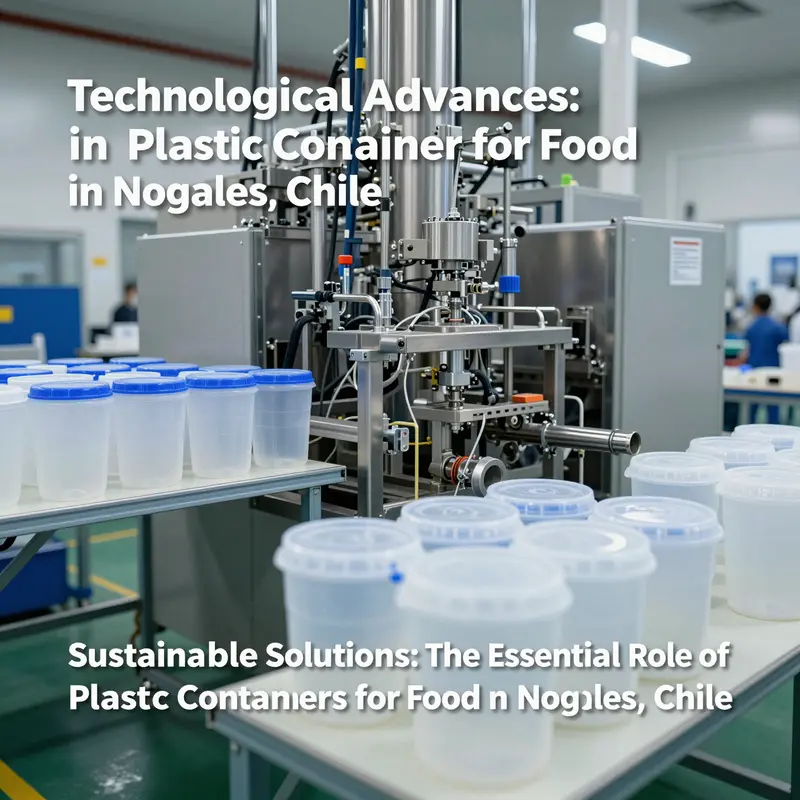
Nogales sits at a crossroads where cross-border trade, agriculture, and urban logistics converge. In the northern Sonora gateway, packaging decisions carry immediate consequences for freshness, waste, and cost, because every pallet that leaves the packing shed must endure a journey across customs, climates, and time. The evolution of food-contact plastic containers here is not about a single product line but about how materials science, regulatory expectations, and practical logistics coevolve in a frontier economy. Local distributors balance glass-like clarity with barrier performance, light weight, and compatibility with filling lines, while also considering end-of-life handling and the realities of municipal waste streams. Mexico’s NOM-FF-045-SCFI-2016 provides the guardrails that translate into consumer protections and cross-border reliability, ensuring that containers used from the orchard to the store shelf meet shared safety standards. In Nogales, container choice is a proxy for product quality: a reliable seal and low oxygen ingress help preserve freshness, while transparency supports quality assessment at the point of sale. Yet no one can ignore sustainability pressures, pushing the industry toward recyclable and, where possible, compostable options, renewed coating technologies, and smarter life-cycle thinking that ties resin sourcing, manufacturing, use, and end-of-life handling into a circular economy frame. Across the border and across markets, the same forces—costs, performance, and policy—shape decisions, but Nogales remains a practical laboratory for how these forces play out in real-time: high-volume turnover, cold-chain realities, and multi-modal logistics demand packaging that is robust, adaptable, and economical. The broader Chilean and global contexts illuminate this trajectory, showing how innovations such as barrier-enhanced polymers, smarter recycling streams, and container designs that balance rigidity with recyclability are gradually migrating into border economies. While Nogales has not yet adopted every advanced material, the guiding trend is clear: better packaging that preserves product quality while reducing waste, with visibility and safety front of mind for consumers and retailers alike. A tangible thread in this evolution is the rise of paper-based and paper-coated formats that offer improved end-of-life perception without sacrificing display integrity, coupled with seal technologies that resist leaks and enable resealability in busy retail environments. In practice, the choice of container becomes a strategic decision: procure from suppliers who can deliver reliable performance at scale, ensure compatibility with existing filling lines and cold-chain logistics, and align with regulatory expectations and consumer concerns about provenance and sustainability. The Nogales story thus mirrors a broader global shift toward packaging ecosystems that are not just passive vessels but active contributors to food safety, traceability, and waste reduction. Looking ahead, the future of food containers in Nogales will likely hinge on continued material innovation, end-of-life infrastructure improvements, and collaborative procurement that bridges public policy, industry, and local practice. The goal is to create containers that perform under demanding conditions—protecting flavor, texture, and safety—while enabling efficient distribution, clear consumer communication, and responsible waste management that respects both the regional reality and the wider planetary context.
Final thoughts
As we navigate the multifaceted landscape of food packaging in Nogales, Chile, it is clear that plastic containers serve more than just a functional purpose. They embody safety, economic viability, and social acceptance, while also reflecting advances in technology. Businesses and consumers alike benefit from their use as they ensure compliance with safety standards, support local economies, and align with societal preferences. Acknowledging these factors allows stakeholders to make informed decisions that elevate both service quality and consumer satisfaction.