

In the ever-evolving landscape of event planning and food service, disposable white plastic cups with handles play a pivotal role by combining convenience, functionality, and style. Ideal for bubbly celebrations or serene gatherings alike, these cups are tailored to meet the diverse needs of bubble tea shops, restaurants, catering services, and corporate events. In this discussion, we will dive into their importance, explore the latest market trends, examine environmental considerations, and look at innovative solutions that address the future of disposable tableware, thus providing a comprehensive overview.
Handles That Invite Connection: How Disposable White Plastic Cups With Handles Shape Party Experience
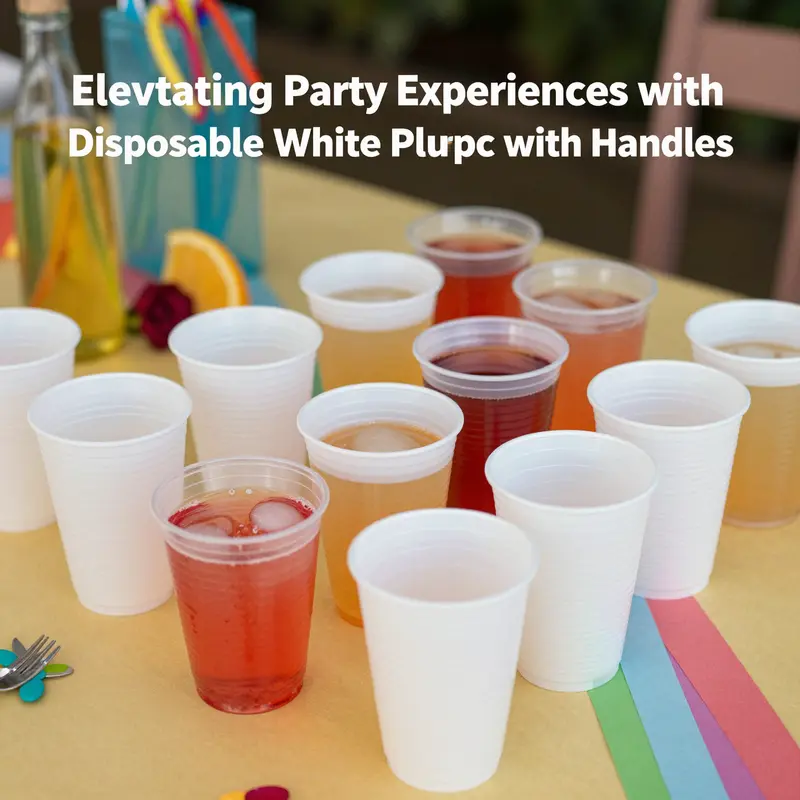
At gatherings big and small, the simplest tools can steer the flow of a celebration as surely as the music or the menu. The disposable white plastic cup with a modest handle sits squarely in that role. Its design is unassuming, yet it supports a kind of hospitality that guests notice in quiet ways. When a host sets a line of cups beside a beverage station, what looks like a basic item becomes a lynchpin for comfort, ease, and smooth movement through the event space. The white cup with a handle is not merely a receptacle for drink; it is a facilitator of interaction, a safeguard for cleanliness, and a bridge between varying beverages and varied guest preferences. Its perceived simplicity masks a set of practical decisions that every planner must weigh, from material choices to disposal considerations, each choice echoing the larger currents that shape how modern gatherings are hosted and enjoyed.
The core appeal rests on convenience. These cups are designed for single use, a feature that translates into a straightforward postevent rhythm: guests can savor their drinks, and hosts can wrap up without the tangle of washing dishes in crowded kitchens or crowded venues. In party settings where food stations, bar corners, and mingling clusters create a constant flux of activity, the ability to rely on disposable vessels becomes a practical relief. The presence of a handle specifically enhances usability in environments where guests move through crowds, mingle outdoors, or lean toward hot beverages such as coffee, tea, or spiced mulled drinks. The handle provides a secure grip, reducing the risk of spills as attendees navigate tables, shoulders, and doorway lines. It also makes these cups more forgiving in outdoor scenes where gusts of wind or uneven surfaces can challenge even the most careful drinkers. In this way, the handles contribute to a smoother guest experience, not by adding spectacle but by removing friction from the moment of service.
Hygiene follows as a closely linked benefit, an advantage that resonates in settings ranging from intimate family celebrations to larger corporate events. The disposable nature of the cup minimizes cross-contamination opportunities that might arise when shared glassware is used across many guests. While guests may choose to refill, the single-use design provides an initial barrier that simplifies sanitation planning for organizers and caterers. The combination of a neutral white canvas and a practical grip lends itself to a clean, orderly beverage presentation. The cups read as a uniform baseline that ensures consistency across different beverage offerings, from clear sodas to milk-based drinks, from citrusy spritzes to hot brews. Even when the menu shifts during the evening, the cups remain a reliable constant—an anchor amid changing drink options and evolving guest needs.
Versatility is another hallmark. The neutral white color is a strategic advantage because it harmonizes with nearly any party theme or décor. Whether the setting leans formal with crisp linens and chandeliers or casual with backyard lighting and garden themes, the cup fades into the background in a way that allows the drink and the glassware to take center stage. For hosts who want to experiment with color or texture elsewhere in the event, the white cup acts as a neutral frame, letting floral arrangements, table runners, or lighting schemes shine. This adaptability matters when a party morphs through stages—from welcome cocktails to late-night coffee—toasting speeches, all without needing to swap vessels. The simplicity of the cup becomes a quiet design decision that supports a cohesive aesthetic rather than competing with it.
From the guest experience perspective, the ergonomics of a cup with a handle are not trivial. The design recognizes that a hot beverage should be portable and stable, especially when guests are moving from conversation to activity or stepping outside for fresh air. The handle invites a confident grip and reduces the chance of accidental spills, a practical benefit that becomes noticeable during lively moments such as toasts, dancing, or impromptu games. The user experience extends beyond the moment of holding a drink; it includes the ease of passing a cup around a group, of reorienting a cup when balancing a plate or a napkin, and of stacking and restocking cups during peak service periods. Lightweight by design, these cups are simple to transport, store, and reuse in the sense that servers can maneuver with fewer breakages and less fatigue. The result is a smoother service rhythm that hosts can lean on when the event’s tempo accelerates toward the peak hours of social interaction.
Material choices were framed early in the life of these disposable vessels, and today they remain a decisive factor in how they perform across contexts. The cups commonly rely on food-grade plastics such as polypropylene and polystyrene. polypropylene, with its heat resistance, makes it a sensible option for serving hot beverages safely. This material orientation helps meet the demand for coffee stations, tea bars, or hot chocolate corners at events held in cooler venues or during evening hours. Polystyrene, meanwhile, offers a cost-effective path for cold drinks and bulk service where price per unit becomes a prominent consideration for budgets that must accommodate hundreds or thousands of guests. The tradeoffs are clear: heat tolerance and safety concerns for hot drinks on one side, affordability and abundance for cold drinks on the other. Hosts and caterers often navigate these choices with an eye toward the event’s specific needs, guest expectations, and logistical realities such as refrigeration, handling, and waste streams.
Beyond raw performance, there is a broader conversation about environmental responsibility that has become inseparable from the discourse around disposable cups. Industry trends point toward eco-friendly alternatives driven by regulatory changes and shifting consumer preferences toward sustainability. Businesses are exploring compostable bioplastics and plant-based polymers that can align with increasingly stringent waste management systems, while still delivering the user-friendly features that parties rely on. In practice, this means a spectrum of options from traditional PP and PS cups to those that are designed to break down under specific disposal conditions or in industrial composting facilities. The lifecycle of a disposable cup—from production to disposal—becomes a focal point for thinking about the environmental footprint of a party. Hosts who value sustainability may balance the convenience and hygiene advantages of disposables with a careful assessment of disposal capabilities at their venue, whether it be a private home, a community hall, or an outdoor park with defined waste streams.
The environmental conversation also reframes the question of how many cups to use and how to handle postevent cleanup efficiently. Even as the cups simplify cleanup in a practical sense, responsible waste management requires planning around recycling streams, composting where possible, and selecting materials that align with the local infrastructure. In this way, the seemingly small choice of a disposable cup with a handle becomes a gateway to larger discussions about resource use, waste reduction, and the evolving responsibilities of hosts and manufacturers to minimize environmental impact. Some brands and suppliers are responding by offering biodegradable or compostable options that rely on plant-based materials. These alternatives may require specific disposal pathways to achieve meaningful breakdown, but they represent a meaningful step toward aligning party logistics with environmental stewardship. The dialogue around disposables is evolving, and the cups with handles are uniquely positioned to be compatible with both practical party needs and broader sustainability goals when the right materials and disposal methods are chosen.
Choosing between heat-tolerant and cost-conscious options often arrives at a practical crossroads. If the event centers on warm beverages and toasts, hosts may favor PP-based cups for their heat resilience and safety credentials. If the priority leans toward bulk service with tight budgets, PS-based options might be considered for their economical footprint. In either case, the ergonomics of a handle, the quiet elegance of a white surface, and the predictability of a disposable format create a reliable toolkit for party logistics. The conversation extends into the planning phase where estimates of guest count, beverage lineup, service style, and venue constraints inform the decision. A well-chosen disposable cup with a handle complements the service flow by reducing bottlenecks at the beverage station, shortening refill times, and enabling ushers or servers to maintain a steady pace as guests circulate. It is the integration of design, material science, and event planning that makes these cups more than mere vessels; they act as enablers of a more seamless and enjoyable party atmosphere.
For those who want to consider alternatives without sacrificing the sense of occasion, there is value in looking at complementary options that share the same functional benefits. A paper cup with a lid may be appealing for certain themes or for venues that emphasize compostable waste streams, while still providing a dependable grip and a neutral aesthetic. The broader takeaway is that the choice of cup is a lever hosts can pull to shape the guest experience, the operational ease of service, and the environmental posture of the event. The white cup with a handle remains a versatile, pragmatic tool that supports a wide range of party formats, from weddings and baby showers to backyard barbecues and corporate mixers. Its enduring relevance lies not in novelty but in the quiet reliability it offers as a steady partner in hospitality.
As hosts anticipate future gatherings, the role of these cups will continue to intersect with evolving materials science, waste infrastructure, and consumer expectations. The hospitality industry increasingly recognizes that the smallest details—the height of a rim, the thickness of a wall, the curvature of a handle—can affect perception, ease of use, and downstream waste. In this sense, disposable white plastic cups with handles embody a delicate balance: they deliver convenience and hygiene now, while prompting ongoing reflection about sustainability, recyclability, and lifecycle optimization for the events of tomorrow. And though the surface is unadorned, the impact on guest comfort and service efficiency is tangible enough to make these cups a recurring feature in the planning discussions that accompany every successful party.
For readers seeking additional perspectives on where disposable cups stand within the broader ecosystem of takeout and party ware, an accessible overview of sustained options and practical tradeoffs can be found through a detailed resource on white plastic cups with handles. This external reference provides context on material choices, handling considerations, and environmental implications that complement the insights shared here. External resource: https://www.disposablecup.com/white-plastic-cups-with-handles
Internal note for further reader exploration: hosts who are curious about alternatives that align with eco conscious branding can explore fiber or paper based options that support custom logos and branding while remaining mindful of disposal pathways. For instance, a search into eco friendly printed logo paper cups offers a compelling parallel path for those who wish to diversify beyond traditional plastic disposables while maintaining convenience and consistency at the service station. See one such option here: eco-friendly printed-logo paper cup.
Handles, Sustainability, and Style: Market Trends Redefining Disposable White Plastic Cups for Parties
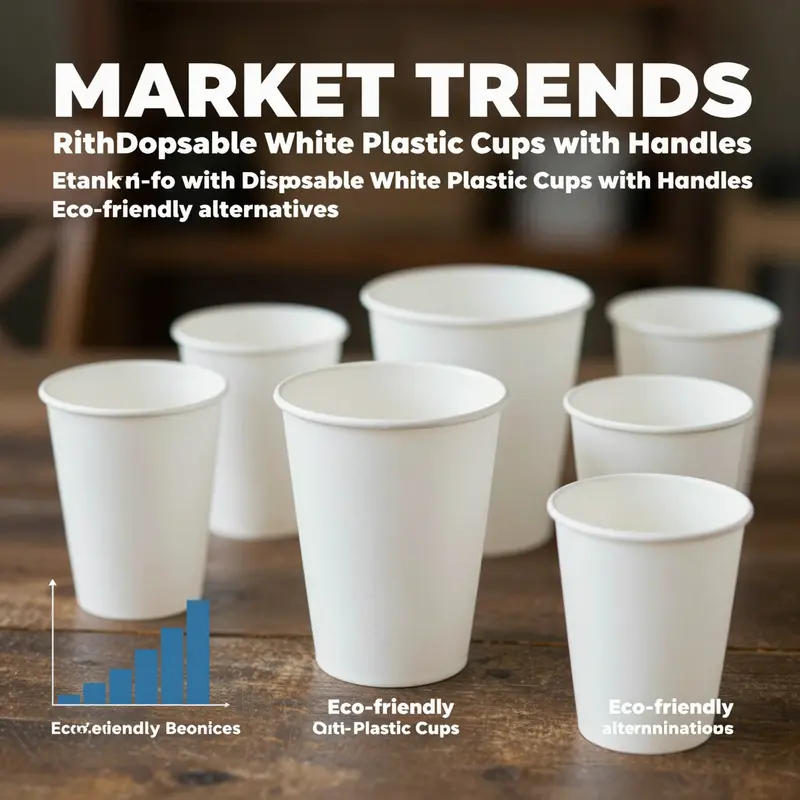
The landscape of partyware is being rewritten by a trio of forces that might seem unlikely bedfellows at first glance: practicality, sustainability, and design-driven elegance. Disposable white plastic cups with handles sit at the crossroads of these currents, emerging not merely as convenience items but as symbols of how the event industry negotiates complexity. Hosts who once prioritized cost and speed are now balancing those imperatives with expectations around environmental responsibility and the sensory experience of a well-curated gathering. In this context, the cups themselves become a lens through which we can observe broader market dynamics, from materials science and regulatory shifts to consumer psychology and wholesale logistics. What follows is a narrative of how trends converge to shape choice, usage, and the lifecycle of a product that remains a staple in many celebrations, from intimate home parties to larger festive occasions, even as the discourse around single-use plastics becomes more nuanced and forward-looking. The central question for planners, caterers, and retailers is not merely what the cups can do in a moment of celebration, but how they perform across a lifecycle that increasingly foregrounds sustainability, durability, and design finesse without compromising the convenience that hosts rely on during a busy event schedule. In practice, this means considering both the momentary needs of guests and the longer-term implications of material choice, manufacturing practices, and post-use pathways, all of which feed into a market that is dynamic, complex, and highly attuned to customer values.
One of the most consequential shifts in this space is the rising demand for sustainable and eco-friendly alternatives. Consumers today are more aware than ever that the convenience of disposables comes with environmental responsibilities. The market response has been to explore materials that maintain the performance profile hosts expect—neat, sturdy, and safe for both hot and cold beverages—while reducing the environmental footprint. Biodegradable and compostable materials, particularly those based on PLA (polylactic acid) derived from cornstarch, have moved from novelty to credible options. These materials promise a lower carbon footprint in certain life stages and offer a clearer end-of-life story if paired with accessible composting streams. Yet the choice is never simple. PLA, for instance, can perform well in many beverage applications, but its compostability hinges on industrial facilities that can reach the temperatures and residence times required to break it down efficiently. Without robust composting infrastructure, the real-world environmental benefit may be less than envisioned. This has spurred ongoing innovation and a more nuanced understanding of lifecycle analyses, where the total environmental impact—cradle to grave—encompasses raw material extraction, production energy, transportation emissions, usage, and end-of-life processing. In this context, the industry increasingly frames disposables not as absolutes but as part of a spectrum of solutions tailored to specific event profiles, budgets, and local waste-management capabilities.
The practical allure of disposable white cups with handles remains compelling, even as sustainability narratives expand. The handles themselves are a focal point of ergonomic design, offering a secure grip that minimizes spills during lively moments—whether a toast, a dance-floor moment, or a family-style buffet where guests are juggling plates and cups in limited space. The handle adds a tactile confidence that can translate into reduced waste from accidental drops, fewer scalding incidents when hot beverages are served, and a smoother overall service flow for bar or catering staff. In events that feature a mix of hot coffees, warm teas, and chilled beverages, the capacity to safely accommodate a range of temperatures without changing vessels is a practical advantage that cannot be understated. For hosts managing casual backyard gatherings or more formal affairs alike, this blend of safety and ease becomes a decisive factor in the decision to standardize on a particular cup size, typically ranging from 8 to 16 ounces, with the complement of a sturdy wall construction designed to resist breakage and keep drinks at their intended temperature long enough to preserve guest satisfaction.
Beyond the physics of the cup itself lies a broader design narrative that increasingly values aesthetics and customization. Contemporary events often call for disposables that align with a chosen theme or brand identity, and the rise of customization options echoes this demand. White cups, once chosen primarily for their neutrality and cost-effectiveness, are now frequently embedded with branding elements, decorative finishes, or even subtle textural accents that elevate their presence on a table. The market thus embraces a spectrum of finishes—from smooth matte looks to lightly glossy surfaces that catch candlelight or uplighting in venue settings—without sacrificing the minimalism and clarity that white disposables convey. This is where the concept of “functional design” deepens: cups must appear clean and elegant while delivering dependable performance under varied lighting, temperatures, and handling conditions. In practice, vendors are expanding capabilities to accommodate bulk orders with rapid turnaround, ensuring that event planners can match a cohesive visual language across multiple service points without sacrificing delivery timelines or quality.
A significant lever in this evolving marketplace is customization with a purpose. Attendees increasingly expect that the disposable tableware supports their event’s narrative, whether it’s a wedding, a corporate function, or an intimate shower. Custom branding through printed logos, color accents, or even embossed textures allows organizers to extend the event’s theme from invitations to last-minute mementos. The logic is straightforward: when guests recognize a consistent design language across cups, napkins, and plates, the overall guest experience feels more curated and considered, even if the objects are designed for one-time use. This trend aligns closely with the broader move toward wholesale and bulk purchasing models that make branded disposables accessible for a wide range of buyers, from small venues to large-scale planners. In such models, the cost-per-unit can drop significantly as order volumes rise, creating an economic incentive to prioritize higher-quality, design-conscious disposables that still meet the practical demands of busy service periods.
As the market grows more sophisticated, the choice between traditional plastics and newer materials continues to reflect a balancing act between cost, performance, and environmental responsibility. Polypropylene remains a staple for hot beverage service thanks to its heat resistance and resilience, while polystyrene offers a cost-effective option for cold drinks. Yet both materials face scrutiny as regulations tighten and consumer expectations tilt toward greener options. The push toward biodegradable plastics and compostable alternatives creates a spectrum of viable options, each with its own trade-offs. For example, bioplastic cups may deliver improved end-of-life outcomes but can require specialized composting streams or may behave differently under certain reuse or stacking conditions. The industry response has been to invest in safer, more robust formulations and to explore hybrids or layered approaches that preserve break resistance, thermal performance, and ease of disposal. In this context, the market’s adaptability is essential, allowing hosts to choose a solution that aligns with the event’s scale, location, and waste-management infrastructure while still meeting the comfort and convenience that handles provide during service.
The wholesale dimension of this market reinforces its resilience and reach. Online platforms and global suppliers enable event planners, caterers, and retailers to source in bulk with predictable lead times and scalable options. The ability to order large quantities with consistent quality and the option to customize at scale supports a market that must balance speed, cost, and environmental considerations. This is particularly relevant for events that rely on consistent tableware across multiple locations or venues, where standardization reduces on-site confusion and accelerates setup. At the same time, the rise of sustainability-focused purchasing criteria means buyers increasingly demand transparent information about the materials, manufacturing processes, and end-of-life pathways associated with each cup. Providing clear lifecyle data becomes part of the value proposition, not merely a compliance detail, and in turn motivates manufacturers to publish more rigorous assessments and to participate in third-party certifications that reassure buyers about environmental performance.
From a design and material science perspective, the chapter on disposable white cups with handles is far from closed. The knowledge base is expanding to include better heat management, improved break resistance, and finishes that resist staining while remaining visually neutral enough to blend with a host’s decor. Break resistance matters at parties with active children or crowded guest flow, where accidental bumps are common. A cup that can withstand minor drops without cracking or leaking preserves the event’s ambiance and reduces the cost of replacement during a single service window. In upscale settings, the elegance of a well-finished cup matters as much as its reliability. Subtle texturing, improved rim rigidity, and more refined edge finishes contribute to a perception of quality that guests can feel, even in a single-use product. This combination of tactile appeal and dependable performance helps explain why disposables with handles have endured in the market despite ongoing environmental debates: they deliver a balance of user-friendliness, service efficiency, and perceived value that is hard to replicate with alternatives that require more extensive cleanup or investment.
As hosts navigate these trade-offs, there is a growing emphasis on end-of-life realities as a central consideration in product choice. Recycling infrastructure and waste-management capabilities vary widely by region, which means that a cup’s environmental footprint is not purely a function of the material itself but of the post-use system it enters. In some markets, a well-designed recyclable or compostable cup can significantly reduce environmental impact when paired with robust collection and processing streams. In others, the absence of suitable facilities can limit the green potential of any disposable option. This reality underscores the importance of lifecycle thinking in procurement decisions: buyers must assess not only the cup’s performance at the table but also how the cup will be managed after guests have gone home. The most resilient market players are those who provide transparent guidance about end-of-life pathways, collaborate with waste-management partners, and offer materials that align with existing local capabilities.
Within this framework, one practical takeaway for event planners is to view cup selection as a multi-criteria decision. Price remains a factor, especially for high-volume events, but it no longer sits alone at the top of the list. Durability, heat tolerance, and spill resistance are weighed against environmental goals and the available disposal options. A cup that performs reliably under heat while remaining sturdy when stacked and transported can reduce waste through fewer replacements and less on-site mishandling. Meanwhile, the aesthetic dimension—clear white surfaces that read as clean and modern—enables hosts to preserve the visual identity of an occasion without introducing a distracting palette of additional colors or textures. In short, the chapter on trends shows how hosts are learning to couple the practicality of a disposable white cup with the sophistication of a well-executed event concept, all while remaining mindful of sustainability as a guiding principle rather than a peripheral concern.
To illustrate how these trends translate into real-world choices, consider how a typical event planner might approach a mid-sized wedding reception, a corporate mixer, or a family reunion. The decision process begins with temperature needs and expected guest behavior, then moves to volume planning and waste-management readiness. The planner will weigh options for 8-ounce, 12-ounce, and 16-ounce cups, balancing the expected beverage mix against the server’s capacity to manage multiple service lines efficiently. In settings where hot beverages feature prominently, polypropylene-based cups may be favored for their heat resistance, while for purely cold-service moments, polystyrene or bio-based alternatives may be highlighted for cost-effectiveness and consumer perception. But even as the material choice evolves, the handle remains a constant anchor for user experience, offering comfort to guests and a practical edge to servers during busy service windows. The trend toward customization adds another layer of decision-making: should the cups echo the wedding color scheme, align with a corporate brand, or carry a discreet watermark that remembers a milestone event? The answers are guided by budget, venue, and guest expectations, but they are all anchored in the same core idea—the disposable cup can contribute meaningfully to a guest’s impression of the occasion when designed and deployed with care.
For readers seeking actionable options that reflect this convergence of form, function, and responsibility, consider options that foreground eco-conscious formats and branding flexibility. For example, one way to align with growing sustainability goals is to choose cups that can be paired with clearly identified end-of-life options, whether industrially compostable or widely recyclable, complemented by clear on-site messaging about disposal. An additional layer of value can be created through branding that integrates the event theme with the cup’s silhouette and surface texture, so guests feel a subtle but intentional coherence across the tableware. This is not merely about branding for its own sake; it is about creating a cohesive guest experience where every touchpoint—from invitations to place settings—contributes to a sense of intentional design and thoughtful stewardship. Alongside these design and sustainability considerations, buyers are increasingly guided by wholesale channels that offer predictable quality and scalable customization, ensuring that the promises of the product translate into reliable execution across multiple venues and dates.
In summary, the current market dynamics for disposable white plastic cups with handles reflect a sophisticated integration of practical performance, sustainable material options, and design-driven customization. The cups are no longer viewed solely as a low-cost, disposable convenience; rather, they are seen as a strategic component of experience design that must harmonize guest comfort, event aesthetics, and environmental accountability. This holistic view is shaping procurement conversations, supplier innovations, and the way waste management is planned at the outset of an event. As materials science advances and regulatory and consumer expectations continue to shift, the path forward for these cups—and for the vendors who make them—will likely emphasize not just the ability to serve but the ability to do so in a way that aligns with a more sustainable, more stylish, and more efficient event ecosystem. For readers curious to explore practical examples of eco-friendly and branded paper cup options that echo this trajectory, see the broader conversation around printed-logo, eco-friendly cups here: eco-friendly printed-logo paper cup. In parallel, ongoing research into material specifications and performance benefits continues to evolve, offering a richer basis for decisions at every scale. For a deeper dive into the technical dimension of cup handles, their specifications, and performance advantages, an external resource provides a rigorous overview: Understanding Plastic Paper Cup Handles: Key Specifications, Industrial Applications, and Performance Benefits (https://www.benjaminross.com/understanding-plastic-paper-cup-handles/).
Beyond Convenience: The Environmental Realities of Disposable White Plastic Cups with Handles at Parties
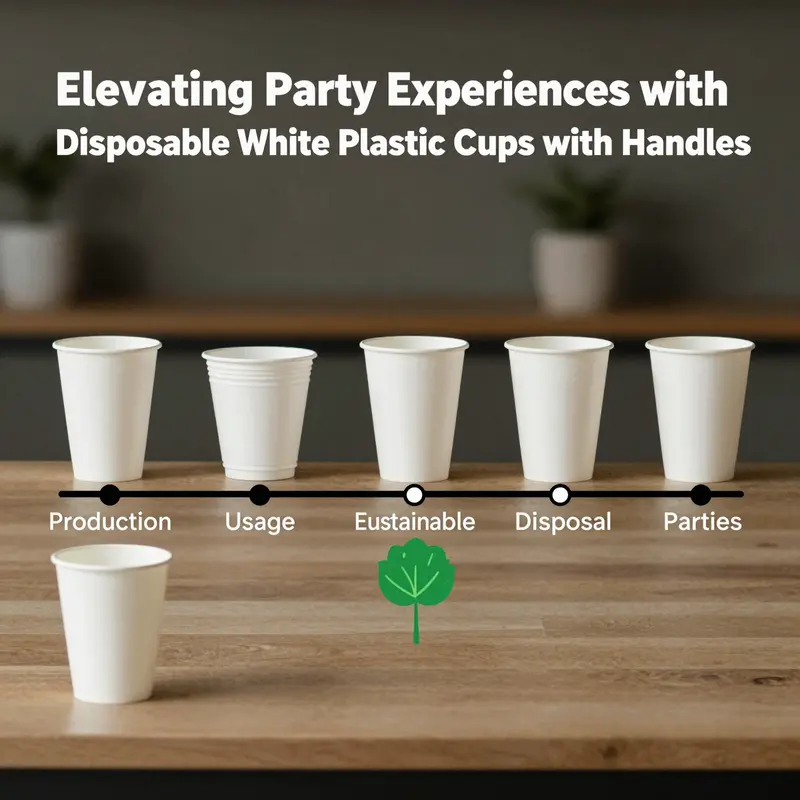
Disposable white plastic cups with handles present themselves as quiet workhorses of social gatherings. They arrive in stacks, ready to be distributed with beverages that range from hot coffee to sparkling punch, from iced tea to cocktails. Their handles offer a practical grip, a small design feature that reduces the chance of burns or slips during lively celebrations. In the moment, their utility can feel almost seamless: a host pours, guests sip, the mess is contained, and the next round slides into place. Yet beneath that surface of convenience lies a wider, slower-moving current of environmental considerations that deserve attention for anyone planning a party that aspires to be thoughtful about resource use and waste. The choice to rely on disposable cups with handles carries with it a set of implications that stretches from the factory floor to the landscape where plastics accumulate, and from the initial production costs to the long tail of waste management. To understand their place in a modern event, one must trace not only the immediate benefits but also the material pathways, the energy footprints, and the social expectations that shape how these cups are produced, used, and ultimately discarded.\n\nAt the heart of the environmental discussion is material composition. Most disposable cups with handles are fashioned from common plastics such as polypropylene or polystyrene. These are petroleum-based polymers designed for mass production and low unit cost. Their appeal in a party setting lies in their durable, lightweight nature and their opacity to heat and cold, which makes them reliable for a broad spectrum of beverages. However, the very properties that make these cups so convenient also anchor them to a set of environmental challenges. Polypropylene and polystyrene do not biodegrade in any realistic sense within natural environments or in typical landfills. They accumulate as persistent plastics that can endure for decades, if not centuries, and when they break down, they can fracture into microplastics that infiltrate soil and waterways. The microplastics narrative is not a distant concern; it is an ongoing, real-world issue affecting wildlife, soil health, and the quality of the ecosystems that communities rely on. The everyday act of tossing a cup into a bin is thus connected to larger cycles of environmental persistence, with potential consequences that extend far beyond the moment of use.\n\nThe environmental footprint of these cups begins long before the moment they are picked up at the event. The production phase itself requires energy and raw material inputs derived from fossil fuels. Plastic manufacture involves petrochemical feedstocks, complex processing, and significant energy consumption. The transportation of raw materials to manufacturing sites, and then of finished cups to distributors and event venues, adds further emissions through fuel use, packaging, and the logistical web that supports modern consumer goods. Even when the cups are used only once, their life cycle is a chain of energy use and emissions that accumulates over millions of individual servings across countless events. This is not to condemn disposables in every situation, but to acknowledge that there is a trade-off between the immediate convenience they offer and the longer-term environmental costs that accompany single-use products.\n\nIn addition to production and use, disposal infrastructure plays a pivotal role in determining how environmentally responsible a party can be with disposable cups. If a city or event space provides a robust system for waste separation—clear streams for recyclables, general waste, and compostables—there is a clearer path to reducing environmental impact. Yet the availability and effectiveness of such systems vary widely by location. Some biodegradable or compostable cup options promise a lower environmental footprint, but they require proper industrial composting facilities to function as intended. In ordinary landfills, or when contaminated with other waste streams, these materials can perform no better than conventional plastics. The critical point is not simply the presence of a compostable label, but the existence of the appropriate end-of-life infrastructure to honor that promise. Without it, the environmental benefit is muted, and the burden shifts toward the very systems that must process residual waste.\n\nFor hosts who are weighing options, the interplay between practicality and sustainability often leads toward compromise. Reusables—glass, stainless steel, or ceramic cups with handles—offer a pathway to dramatically reduce waste over time. They excel in repeat-use contexts and can be integrated into event planning in ways that align with long-term sustainability goals. They do demand a different kind of logistics: on-site washing, drying, and careful counting of pieces to prevent breakage and loss. In settings with ample staff, clean-up crews, and facilities for washing, reusables can be both practical and environmentally preferable. For large gatherings where the energy and water costs of washing may be non-trivial, hosts might consider a hybrid approach: reusables for certain beverage stations while using disposables for others where quick turnover is essential. The key is to examine the entire system—what guests drink, how waste streams are managed, and what infrastructure is available—to determine whether disposables can be used responsibly or if a reusable strategy would yield better outcomes in the long run.\n\nIf disposables must be used, there is a responsibility to select products that maximize environmental performance within the constraints of the event. One approach is to seek products that carry recognized compostable certifications and to coordinate with local waste services to understand what facilities exist. Another strategy is to lean toward materials that allow for more straightforward recovery, such as cups designed for easier recycling in your jurisdiction, or those that may be more readily collected in a local compost program. The choice then becomes not merely about the cup’s appearance or grip but about how well the cup fits into a sustainable waste-management plan. It is also worth noting that the decision to use disposable cups should be accompanied by a clear communication to guests about proper disposal practices. When guests understand how to help separate waste, the likelihood of contamination in recycling or compost streams decreases, which in turn improves the overall environmental performance of the event.\n\nThere is another dimension worth considering: consumer expectations. In many communities, a certain level of convenience is associated with hospitality. Guests may be more forgiving of disposables if the event is well organized, the cups are clean, and the overall waste-management plan is evident and effective. Yet rising awareness about plastic pollution has shifted expectations in many places. Event planners now face a nuanced balancing act: delivering a smooth, enjoyable guest experience while staying aligned with evolving social norms around sustainability. The careful selection of disposables, the adoption of reusable alternatives where feasible, and transparent communication about end-of-life handling can together shape a party that satisfies guests and avoids contributing to long-term environmental harm.\n\nWithin this broader frame, it is helpful to consider the role of design in reducing environmental impact. Even among disposables, thoughtful design can influence waste outcomes. For instance, cup geometry that reduces spillage and enables easier stacking and transport can lower breakage and waste at the event site. Materials that improve recyclability or compostability without sacrificing necessary performance can also contribute to better end-of-life outcomes. The conversation around design is not only about the cup itself but about the entire system of consumption it supports—the cups, the beverages, the serving apparatus, the cleanup process, and the post-event waste stream. When hosts take a holistic view, they can ask better questions: Will the local recycling facility accept this material? Is there an industrial composting option for these cups? How much water and energy will be required to wash reusable wares? What is the most practical route to minimize waste while preserving the guest experience? The answers will vary by location, but the act of asking the questions is itself a step toward more responsible event planning.\n\nTo connect this broader perspective with concrete choices, some hosts turn to eco-friendly alternatives in certain contexts while retaining disposables in others. For cold beverages, paper-based or plant-based options may provide a more favorable environmental profile when paired with local composting programs. For hot drinks, reusable vessels or specially designed single-use cups with lower environmental footprints might be considered, bearing in mind the necessity of appropriate disposal pathways. The central message is that the environmental footprint of disposable cups with handles is not fixed at the moment of purchase; it is shaped by the entire chain—from raw material extraction and manufacturing through distribution, use, and end-of-life handling. A host can influence that footprint by aligning choices with local waste infrastructure, by promoting reuse where possible, and by selecting disposables that are compatible with the available recycling or composting streams.\n\nFor readers who want a practical stepping-off point, a closer look at related options can be enlightening. Some hosts and planners explore switching to alternatives that emphasize sustainability without sacrificing the user experience. In certain contexts, this might mean incorporating a blend of options, such as reusable glassware for certain courses or beverage stations and carefully chosen disposables for others. The decision is highly contextual, and it benefits from a clear assessment of local facilities and guest expectations. It is also helpful to view disposables within the larger framework of responsible consumption. While disposables will always have a place in events where quick cleanup is essential or where washing facilities are limited, their environmental costs call for deliberate planning and informed choices that reflect both practical constraints and stewardship goals. As the landscape of waste management evolves, so too will the options available to event organizers, making ongoing education and adaptation a meaningful part of responsible hosting.\n\nFor further reading about sustainable management of plastics and related considerations, see the broader resources on environmental stewardship and waste management that guide decision-making beyond a single event. This broader context helps frame the chapter’s focus on disposable cups with handles as one piece of a larger conversation about materials, energy use, and long-term planetary health. The aim is not to prescribe a single path but to empower hosts to make choices that reflect their values, the specifics of their venue, and the capabilities of their local waste infrastructure. In this way, the act of hosting can become an invitation to thoughtful consumption and responsible disposal, rather than a routine that overlooks the environmental implications of everyday conveniences. For those who want to explore practical alternatives to disposable cups altogether, a glance at eco-friendly options for beverage service can illuminate viable pathways that align with a sustainable event strategy. eco-friendly paper cup options.
null
null
Final thoughts
In summary, disposable white plastic cups with handles are more than just practical items; they are essential tools that enhance experiences at parties and events. By understanding their role and keeping pace with market trends, businesses can cater to client needs effectively while prioritizing sustainability. As we look ahead, embracing innovations in this space can lead to better service delivery and a positive environmental impact. Your next event can effortlessly combine style and convenience by utilizing these versatile cups.