
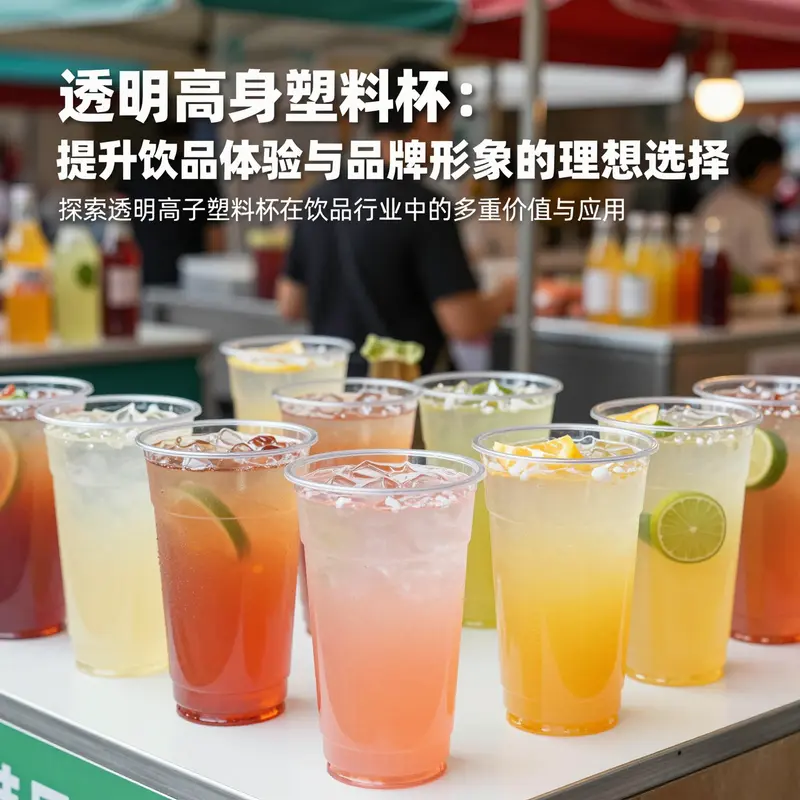
透明高身塑料杯以其优越的耐用性和多功能性,成为饮品行业首选的盛装工具。本篇文章将深入探讨这种杯子的特性、市场状况和设计创新,帮助泡茶店、餐饮连锁、食品卡车、活动策划及企业采购团队全面理解其应用价值。每个章节都将揭示透明高身塑料杯如何不仅仅是盛装饮品的工具,更是提升客户体验和品牌形象的重要伙伴。
Clear Tall Cups: Utility, Clarity, and Everyday Versatility
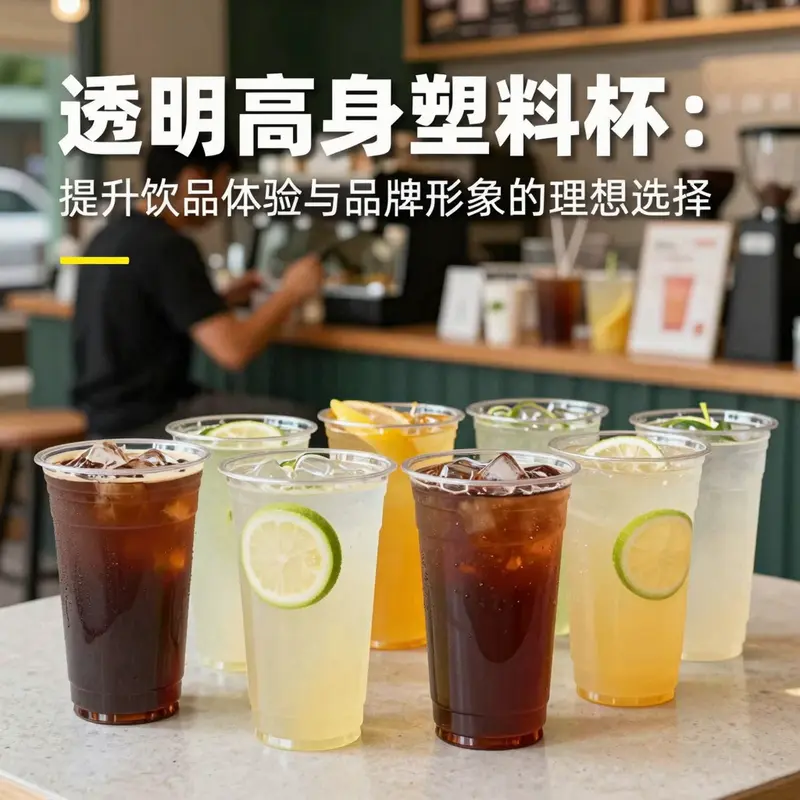
Clear tall plastic cups sit at the intersection of utility and presentation. They are more than simple vessels; they shape how a beverage looks, feels, and travels from a service station to a guest’s hand. The appeal lies in a triad of visibility, strength, and design that makes these cups work across homes, cafés, events, and catering settings.
Beyond their look, the choice of materials matters. Most are made from food-grade polymers such as polypropylene, polycarbonate, or Tritan. Their transparency is not merely cosmetic; it enables bartenders to assess color and clarity at a glance, and it helps guests judge freshness and quality. The material also informs durability and temperature tolerance.
Strength often comes from thicker walls and thoughtful wall geometry, producing a sturdy feel without sacrificing lightness. Double-wall options add insulation, keeping drinks cooler to the touch and reducing condensation on the outer surface. Ergonomic textures—gentle grooves or subtle ridges—improve grip, even when hands are wet from condensation or in humid environments.
Temperature versatility is a hallmark. Clear tall cups are designed to handle a wide range of beverages, from iced coffees and fruit waters to hot tea or other warm drinks, without warping or transferring heat to the hand. This versatility simplifies inventory for operators who want a single line of cups for a mixed beverage program.
Safety and cleanliness are foundational. Reputable cups are BPA-free and manufactured to meet food-safety standards, with quality controls that minimize risk in everyday service. In addition to safety, the clear walls make the drink visually central, supporting presentational goals without compromising practicality.
In use, these cups support branding and presentation. They can be customized with logos or artwork, turning a disposable cup into a mobile billboard that travels with the customer. Careful design consideration ensures that branding remains legible and the beverage remains the visual focal point rather than being overwhelmed by graphics.
The market offers a range of sizes—from samples and test pours to standard cold-drink sizes and larger tall cups for generous servings. Their height and diameter are chosen for stable table presence and easy stacking for storage and restocking.
Looking ahead, improvements in recycled content and recyclable packaging continue to evolve, aimed at reducing environmental impact while preserving clarity and safety. The balance between sustainability and performance remains a central concern for manufacturers, operators, and designers alike.
Clear Tall Cups: Market Dynamics, Materials, and Design
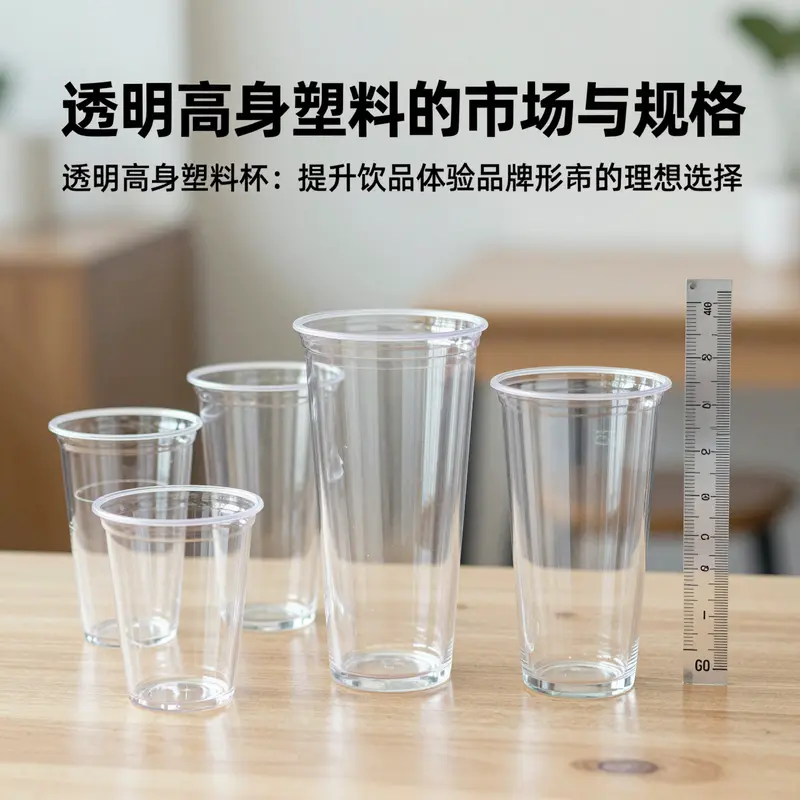
Clear tall plastic cups have become a familiar sight in many beverage settings, prized for their clarity, simplicity, and versatility. Their transparency highlights the drink inside, while their shape and construction support practical use in busy service environments. This chapter surveys the market dynamics, core specifications, materials choices, and design trends that shape this cup category.
At the heart of the discussion are the typical capacities and geometries that address different consumption occasions. A common 360 ml (12 oz) cup serves iced coffee, juice, and cold tea, while a 500 ml option covers larger servings. Taller formats around 680 ml provide a balance between generous capacity and a stable footprint, with heights around 14 cm and diameters near 9.8 cm contributing to stacking and balance. There are also smaller or specialty variants, including compact 160 ml options and standard mouth diameters around 95 mm, designed for on the go packaging. These variations illustrate how one design can be adapted to different use cases without sacrificing the advantages of clarity and lightness.
Materials used for these cups usually include PET, PS, or PP. PET offers stiffness and excellent clarity, PS provides impact resistance and cost benefits, and PP balances heat tolerance with flexibility. The absence of BPA in reputable products reinforces consumer confidence. The optical clarity of these polymers is not only about appearance; it influences perceived cleanliness and quality, helping beverages look their best on display.
A notable design evolution is the adoption of double wall structures in premium versions. Double wall insulation helps keep drinks cooler longer, reduces exterior condensation, and can improve grip. Although these cups may cost more, they deliver enhanced user experience and perceived value by minimizing sleeve use and posterity of the cold beverage. This example shows how material choice and engineering can elevate a disposable vessel into a more premium hospitality experience.
Branding and customization also play a growing role. Cups can be printed with logos, colors, or seasonal artwork, turning a simple vessel into a canvas for brand storytelling. In large venues or events, such customization can drive recognition and recall, while on the back end the cups remain functionally reliable for stacking, sealing with compatible lids, and withstanding a range of beverage temperatures. Quality control and consistent optical clarity remain essential as cups move through supply chains from factory lines to retailers and hospitality outlets.
From a procurement perspective, buyers consider price, thickness, and whether a lid or sleeve is included. Suppliers offer a range of options, and bulk purchasing can yield favorable unit costs and predictable inventory. The sourcing landscape is increasingly global, with online platforms facilitating bulk orders, but buyers also seek assurances on food contact safety, material origin, and environmental attributes to meet regulatory and sustainability goals.
In short, clear tall cups balance visual appeal with practical performance. They are designed to showcase beverages while providing dependable service in a variety of settings. The ongoing evolution of materials, insulation options, branding capabilities, and supply chain platforms suggests that this category will continue to adapt to evolving consumer expectations and environmental considerations, while remaining a staple in hospitality and food service.
Crystal Clarity and Smart Design: The Innovation and Added Features of Clear Tall Plastic Cups
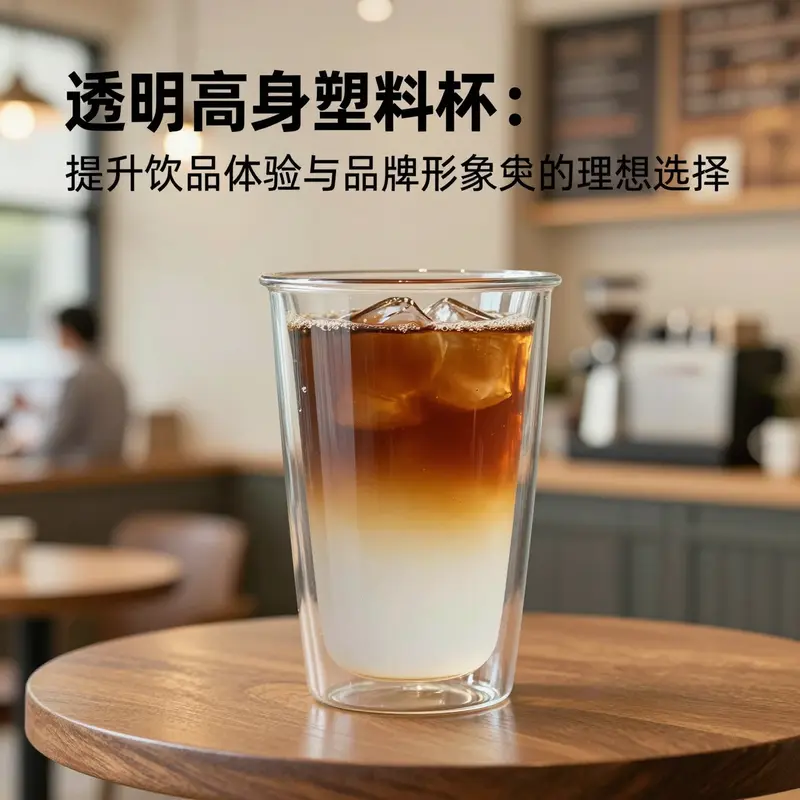
Clear tall plastic cups have transcended their basic role as simple beverage vessels. In today’s dining and event environments, they function as canvases for safety, efficiency, and personality, all while delivering the convenience that consumers have grown to expect. The journey from a transparent container to a thoughtfully engineered tool reveals a convergence of materials science, human-centered design, and practical marketing. At the heart of this evolution lies a quiet but powerful commitment to safety. Modern clear tall cups are predominantly BPA free, a baseline that addresses long standing concerns about chemical migration. Yet the most significant advance is not just that they are free of a controversial chemical; it is the way the materials themselves have been refined to withstand the rigors of real life. One material commonly associated with the safety and clarity demanded by daily use is a high performance, high clarity polymer that can endure repeated contact with hot and cold beverages without deforming or imparting undesirable flavors. In practical terms, this means a cup that can hold a freshly brewed hot coffee in the morning and a chilly fruit juice at a summer festival, without compromising safety or user experience. The ability to withstand temperatures up to near boiling while maintaining crystal clarity is nothing short of essential for busy venues where turnover is high and hygiene standards are non negotiable. Such resilience is not merely a function of heat tolerance; it reflects a broader trend toward materials that resist the yellowing and clouding that can occur with age and repeated cleaning. The result is a cup that preserves its visual appeal over time, a factor that matters when presentations rely on the perception of freshness and quality. Beyond the material itself, the design of the cup often incorporates a double wall or enhanced insulation in higher end lines. The double-wall approach creates a micro thermal barrier that minimizes condensation on the exterior. This reduces the risk of damp, slippery surfaces and also prevents cold drinks from chilling the fingers, which is a subtle yet important comfort factor for customers who are moving through crowded spaces or walking outdoors. In many cases, this insulation is achieved without adding bulk, preserving the slender silhouette that makes tall cups so versatile for stacking, storage, and transport. The architectural integrity of the cup—its wall thickness, its seams, and its lid interface—also speaks to an attention to detail that blends form and function. The lid design, often incorporating a patent like opening mechanism and a secure locking feature, is more than a convenience. It is a critical barrier against leaks during transit, a consideration that matters for takeout orders, catered events, and busy counters where the last thing a server needs is to chase a runaway beverage down the aisle. The interplay between lid and cup is a small but sophisticated system. When sealed properly, it creates a dependable, spill resistant package that customers can carry with confidence. In outdoor and event settings, this level of reliability becomes almost as important as the drink itself. The tangible benefits of secure closures extend to safety and sanitation. A leak resistant design helps prevent messes that could otherwise occur during transport or accidental tipping. That reliability reduces the need for additional accessories such as sleeves or wraps, which in turn cuts down on waste and simplifies service. This streamlining of accessories is part of a broader trend toward user friendly, low friction solutions that do not demand extra steps from staff or customers. In parallel with containment and safety considerations, the transparency of the cup serves a distinct practical purpose: visual monitoring. Being able to see the liquid level, color, and any sediment or layering within a beverage is not only satisfying from an aesthetic standpoint but also functional. Tea enthusiasts, for example, can gauge infusion strength at a glance; athletes and health minded individuals can monitor hydration and color changes that signal dehydration or over consumption; parents can keep an eye on the progress of a child’s drink. This level of visibility supports conscious consumption and precise beverage preparation, reducing waste and enabling better communication between server and guest. Coupled with visual clarity, the ergonomic and ergonomic friendly details elevate the experience. Many cup designs integrate features such as back straps and silicone sleeves, or other forms of grip enhancement, to improve handling. The silicone sleeve, besides offering a comfortable tactile surface, can absorb some impact in the event of a drop, providing a surprising layer of protection for the cup and reducing the likelihood of spills. Such features are particularly valuable for outdoor events, markets, or large gatherings where transport between service points and seating areas is frequent. The idea of an enhanced cup reaches into measurement and portion control as well. Precise dual scale markings—carefully calibrated to standard beverage sizes—assist in daily hydration tracking, portioning for recipes, or standardizing servings in a casual catering context. When a cup communicates its capacity clearly, it becomes a practical tool that supports health goals and accurate beverage service without requiring external measuring devices or complicated software. The aesthetic language of clear tall cups is not incidental. Some brands pursue a design language that blends sportiness with citrusy freshness, using color accents, bold typography, or minimalist line art that suggests a modern, health conscious lifestyle. The goal is to turn a functional object into something that feels like a lifestyle accessory, capable of conveying the mood of a brand or event. At the same time, the finish and color palette of the cup maintain a sense of universal usability. A clean, transparent body paired with a dark lid or a monochrome exterior can create striking contrasts that pop in marketing displays, in social media posts, and on packaging shelves. In this sense, the cup is not merely a vessel; it is a stage prop for taste, wellness, and presentation. These design and material innovations do not occur in isolation. They are shaped by standards, testing, and a growing body of independent assessments that verify performance and safety. The capacity to withstand repeated washing, exposure to hot liquids, and sterilization in some settings is validated by rigorous testing protocols. When a cup passes these tests, it becomes a reliable choice for a wide range of customers—from home cooks and families to hospitality professionals and event planners. The practical implications extend into the supply chain and procurement decisions. Retailers and food service operators are increasingly looking for cups that can support both consistent quality and flexible branding opportunities. As a result, many producers offer customization options such as logo printing, color matching, and volume based discounts that align with a marketing strategy while preserving a clean, professional look. The opportunity for branding comes with its own set of considerations, including the choice of print area, ink durability, and the potential impact on recyclability. A responsible approach keeps sustainability front and center, focusing on inks and processes that minimize environmental impact while sustaining legibility and color fidelity in the finished product. It is here that the discussion moves from the technical to the practical, illustrating how design decisions ripple through cost, customer perception, and end of life management. In the context of consumer choices, the appeal of clear tall cups often lies in their balance of visibility, safety, and convenience. They enable quick assessment of beverage strength and freshness, offer a versatile platform for brands during promotions, and support hygiene-friendly handling through leak resistant closures and dependable seals. The best iterations deliver a sense of confidence to both servers and guests: you can pour, seal, carry, and sip with a minimal cognitive load, knowing the container will perform as expected. This is not a singular breakthrough but a continuum, where incremental improvements in material science, manufacturing methods, and ergonomic detailing accumulate into a superior consumer experience. The broader implications extend beyond the cup itself. When hospitality providers, event organizers, and brands embrace cups that emphasize safety and usability, they enable smoother service, reduce waste, and reinforce consumer trust. In a marketplace where choices abound, the clarity and reliability of a cup can influence perceptions of quality, cleanliness, and care. To that end, ongoing research and development—driven by safety benchmarks, consumer feedback, and evolving consumption patterns—will continue to refine the balance between transparency, temperature tolerance, leak prevention, and aesthetic appeal. And while the specifics of materials and features may vary across manufacturers, the underlying objective remains the same: a clear tall cup that performs reliably in a variety of contexts, from intimate gatherings to crowded venues, while supporting responsible consumption and thoughtful branding. For readers who want to explore the broader spectrum of beverage cup options with a sustainability lens, there are avenues to consider that highlight design versatility without compromising safety or function. Disposable double-wall craft paper cups with customizable logos offer a contrasting approach to disposables, inviting designers and operators to weigh the tradeoffs between material choice, branding impact, and end-of-life considerations. Such decisions are part of a larger dialogue about how everyday containers can be both practical and principled, shaping the way people drink in public spaces while reflecting a brand’s values and commitments.
External resource: https://www.cfoodnews.com/tech/2026/03/25/tritan-safety-standards.html
Clear Tall Plastic Cups as Brand Banners: Commercial Use and Customization
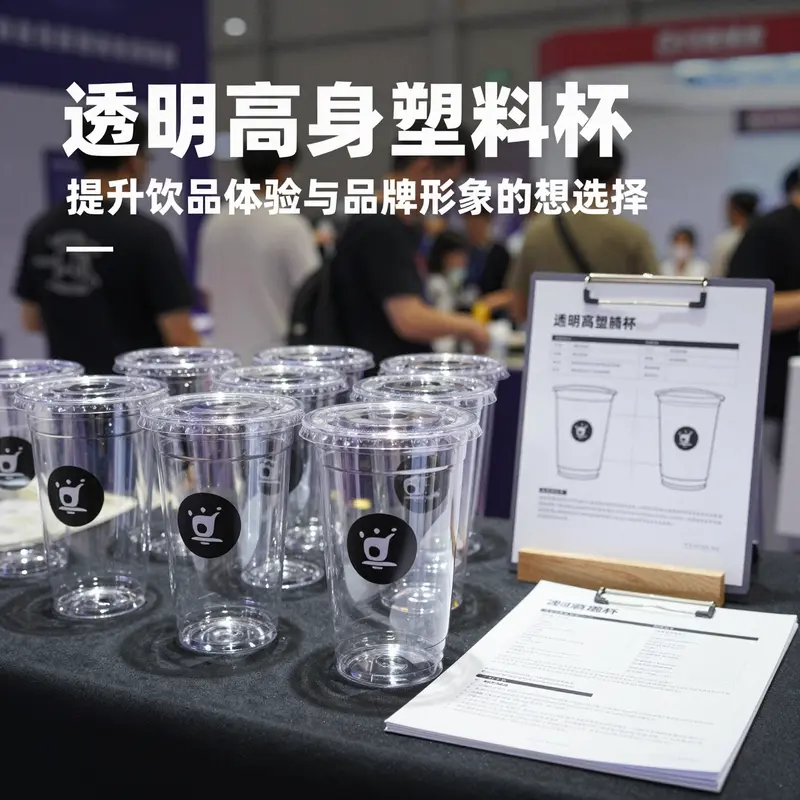
The tall, clear plastic cup functions more than as a simple container. In the fast-paced world of food service and events, its tall, transparent silhouette becomes a quiet handshake between the product and the consumer. The cup’s visibility invites the eye to travel from the beverage’s color to its texture, from the top foamy cap of a cappuccino to the radiant hue of a fruit tea, and in doing so, it elevates perceived quality. This is not merely about holding liquid; it is about presenting a beverage as a crafted experience. For businesses, the clear tall cup is a versatile asset that blends durability, visibility, and efficiency into a single, mass-producible form. The material is typically BPA-free to safeguard health, and the options extend beyond mere aesthetics to practical advantages in service, storage, and branding. In many cafeterias, bakeries, and casual dining chains, the single vessel serves a spectrum of needs—from hot beverages to cold, from neon-tinged fruit drinks to silky milk tea—making the choice of cup a strategic decision with implications that ripple through customer perception and operational flow.
Among the most sought-after specifications are cups with capacities around 10 ounces (roughly 295 milliliters), 20 ounces (about 591 milliliters), and the larger 680-milliliter class. The latter, a popular option for substantial servings, typically stands about 14 centimeters tall and carries a diameter near 9.8 centimeters. These measurements balance capacity with stability, ensuring that the cup remains manageable in staff hands and secure in transport, even when stacked in busy service lines or packed into an outdoor catering setup. The tall form factor matters not only for volume but for presentation: the extra height enhances the beverage’s color gradient, reveals layered ingredients, and supports a clean, professional look that customers come to associate with reliability and care.
A core design consideration is the wall structure. Single-wall cups are well suited for steady cold drinks, while double-wall constructions provide superior insulation, reducing condensation and protecting hands from the chill of iced beverages. The double-wall option also carries a premium feel that aligns with upscale beverage programs, such as specialty iced coffees or layered fruit teas. When heat is involved, clear plastic cups with heat-tolerant polymers and compatible lids offer the security needed for hot beverages on the go, along with a splash-resistant seal that minimizes spills during transit. In every case, the transparency of the cup is a strategic feature. It gives consumers an instant read on color, clarity, and even foamy texture, allowing a drink to communicate quality before a single sip is taken.
From a commercial standpoint, the tall clear cup transcends mere utility. It becomes a vehicle for brand storytelling, especially when equipped with a lid, a straw, or a simple paper band that can serve as a promotional surface. A business can leverage this canvas to reinforce brand identity through color schemes, slogans, or taglines, turning every takeaway into a portable advertisement. In practical terms, many programs pair these cups with sealed, stackable lids that minimize leakage during busy service and transport. This combination supports the demands of quick-service environments where throughput matters as much as the beverage’s appearance. The result is a reliable, efficient system where cups act as the front line of customer experience—visible, functional, and consistent across shifts and locations.
Another dimension of the commercial value lies in customization. ODM (original design manufacturing) and OEM (original equipment manufacturer) services enable enterprises to imprint logos, promotional messages, or artwork directly onto the cup. The imprinting may cover a portion of the cup or wrap entirely around the circumference, delivering a striking, mobile advertising platform that travels with the product. The ability to imprint a logo, a tagline, or a call to action makes each cup a small but potent marketing tool during events, exhibitions, and everyday service. In practice, customization is not simply about brand visibility; it also communicates quality and attention to detail. A well-executed print job on a clear cup accentuates color in the beverage itself, while a carefully chosen lid and matching straw can complete a cohesive brand presentation. For enterprises planning large campaigns, the option to print on bulk purchases—often in pallets of 500 or 2000 units—simplifies inventory management and ensures consistency across locations.
The economic logic of customization also hinges on durability and supply. A reliable supplier network provides consistent quality across batches and ensures that the cups can withstand the wear of busy kitchens and outdoor events without compromising clarity or integrity. This reliability is essential for operations that rely on uniform presentation. When a business commits to a branded cup program, it seeks more than a decorative touch; it wants a stable, scalable solution that aligns with procurement cycles and seasonal demand. In this frame, the tall clear cup becomes part of a broader service ecosystem, where packaging, lids, bands, and prints are coordinated to optimize both customer experience and back-of-house efficiency. The result is a seamless flow from order to service, with the cup acting as a steady platform for both beverage and brand messaging.
The commercial opportunities expand further when cups are positioned as part of event and hospitality packages. Weddings, conferences, charity galas, and festival receptions often rely on custom-printed cups to create a cohesive visual language across catering stations and bars. In these environments, the emphasis shifts from sheer volume to a curated aesthetic aligned with the occasion. A wedding, for example, may call for a clear tall cup that captures the shifting colors of a signature mocktail or a fruit-forward beverage, with a subtle accent color and an emblem that denotes the event. In such settings, the cup doubles as a keepsake and a conversation starter, extending the event’s branding beyond the moment of service. Even outside formal occasions, corporate service programs benefit from this approach. Each cup becomes a micro-mcanv as clients or employees recall the brand long after the beverage is finished.
From a sustainability standpoint, clear tall plastic cups are increasingly positioned as recyclable and BPA-free. Brands understand that customers scrutinize packaging choices, and many programs emphasize responsible manufacturing and end-of-life disposal. In particular, cups designed for reuse or easy recycling tick a critical box for venues seeking to balance guest experience with environmental stewardship. The market’s evolution toward safer, more recyclable materials reinforces a trend toward responsible consumption without sacrificing the clarity and reliability that customers expect from takeaway beverages. As suppliers innovate, they explore coatings and barrier layers that preserve clarity longer and resist staining, while still enabling recycling streams. The net effect is a product that supports both consumer satisfaction and sustainable business practices, two pillars that increasingly define modern hospitality and retail.
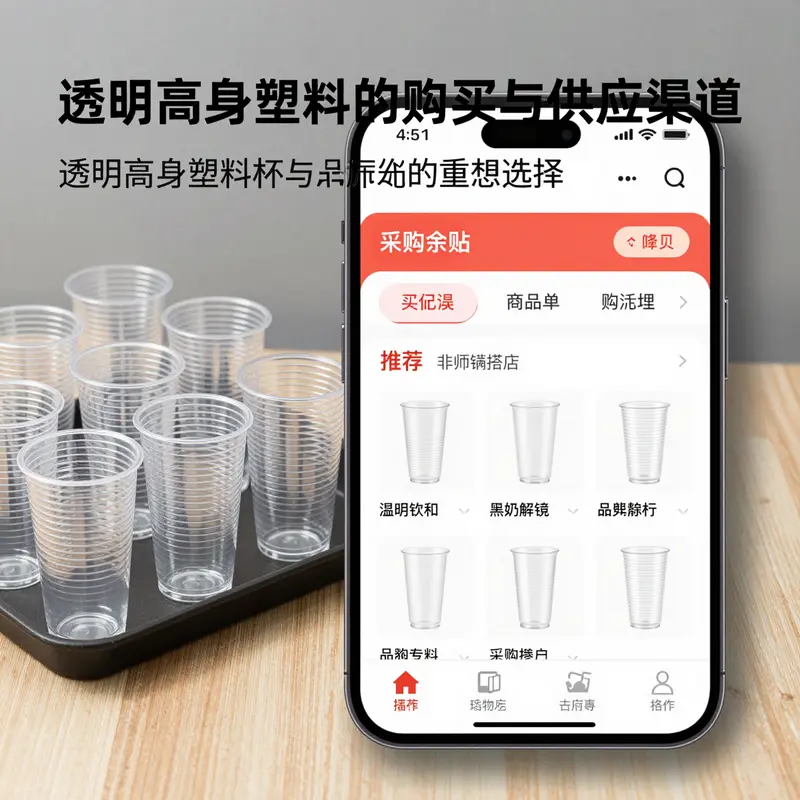
The procurement pathway for these cups reflects a shift toward bulk purchasing and streamlined delivery. Retailers and service chains look for reliable sources that can deliver consistent quality in large quantities, with options to customize and tier the packaging to suit different service models. Whether the context is a cafe’s morning rush or a catered outdoor event, the tall clear cup supports the cadence of modern service: fast filling, clear visibility, and minimal disruption during handling. The ability to obtain cups in bulk, with consistent dimensions and printing capabilities, reduces downtime and ensures that baristas and servers can focus on preparation and guest experience rather than on managing inconsistent stock. In this sense, the cup is not merely a vessel; it is a logistical artifact that embodies efficiency, branding, and customer engagement in a compact, repeatable form.
As the market for clear tall plastic cups matures, the interplay between functionality, aesthetics, and branding will continue to shape choices at every level—from kitchen shelves to event staging. The cups become more than passive receivers of beverages; they are active contributors to the consumer journey. When designed with clarity, appropriate insulation, secure lids, and thoughtful branding, these cups help transform a simple drink into a memorable moment. They enable establishments to tell a consistent story in a single, portable object, turning every serve into a small yet meaningful expression of care for the guest. In this way, the commercial and customization potential of clear tall plastic cups reflects a broader shift in retail and hospitality: packaging that communicates value, supports efficiency, and amplifies brand presence without sacrificing the everyday practicality customers rely on for takeout and in-house service.
For readers seeking concrete demonstrations of how customization can be implemented in practice, one illustrative example highlights the feasibility of adding a bespoke logo to a cup through ODM/OEM pathways. The concept of a logo-centric, disposable cup—designed to carry a brand’s visual language—offers a compact, mobile advertisement that travels with the beverage from preparation to consumption. The appeal lies in turning a routine item into a strategic touchpoint, expanding brand visibility in a way that is both economical and scalable. When combined with effective lid designs, color-coordinated bands, and a selection of sizes to cover most standard beverage servings, the cup becomes a cohesive component of a company’s marketing and service strategy. In short, the clear tall plastic cup is not just a disposable container; it is a versatile platform for visual storytelling, customer engagement, and efficient operations that together support a compelling return on investment.
External perspective on market dynamics reinforces this view. Real-world supplier information shows that manufacturers have already integrated customization capabilities into their core offerings, enabling brands to tailor cups to specific campaigns and events. This aligns with a broader industry movement toward flexible, scalable packaging solutions that can be produced in bulk while maintaining brand fidelity. The result is a practical, information-rich purchasing environment in which hospitality operators, event organizers, and corporate clients can collaborate with suppliers to deliver a consistent, high-quality beverage experience. See an example of market-scale customization and product options in external market listings at: https://detail.1688.com/offer/697458341759.html.
Internal link for related exploration of customization options can be found within the broader catalog of disposable cups. For readers who want to see practical, design-forward customization examples, the concept of a disposable, double-wall, craft-cup with a custom logo demonstrates how branding can travel with the beverage. This kind of option illustrates the broader principle that the cup is a moving canvas for brand identity, one that can be tailored to fit a range of service styles while preserving the essential clarity and usability that customers expect. To explore a closely related customization pathway, consider a product line featuring custom logos on multi-size cups designed for coffee and tea service: custom-logo-for-coffee-tequila-cups.
In sum, the commercial and customization narrative surrounding clear tall plastic cups demonstrates how a seemingly simple object can support a sophisticated mix of function, aesthetics, and brand communication. The cups’ transparency, capacity range, insulation options, and printing capabilities create a versatile platform for hospitality and promotional programs alike. They help ensure that every cup not only delivers beverage but also reinforces a business’s promise of consistency, quality, and care. As brands continue to refine their packaging strategies, the tall clear cup will remain a central, adaptable element in the pursuit of memorable guest experiences and efficient, scalable operations.
External resource for market context: https://detail.1688.com/offer/697458341759.html
null
null
Final thoughts
透明高身塑料杯以其超凡的特性和广泛的用途,已经成为饮品行业中不可或缺的一部分。从市场趋势到创新设计,再到商业应用,它们不仅提升了客户的饮用体验,更成为企业品牌形象的重要载体。了解这些信息无疑能帮助各类饮品商和活动策划者更好地选用合适的产品,助力他们在竞争中脱颖而出。