
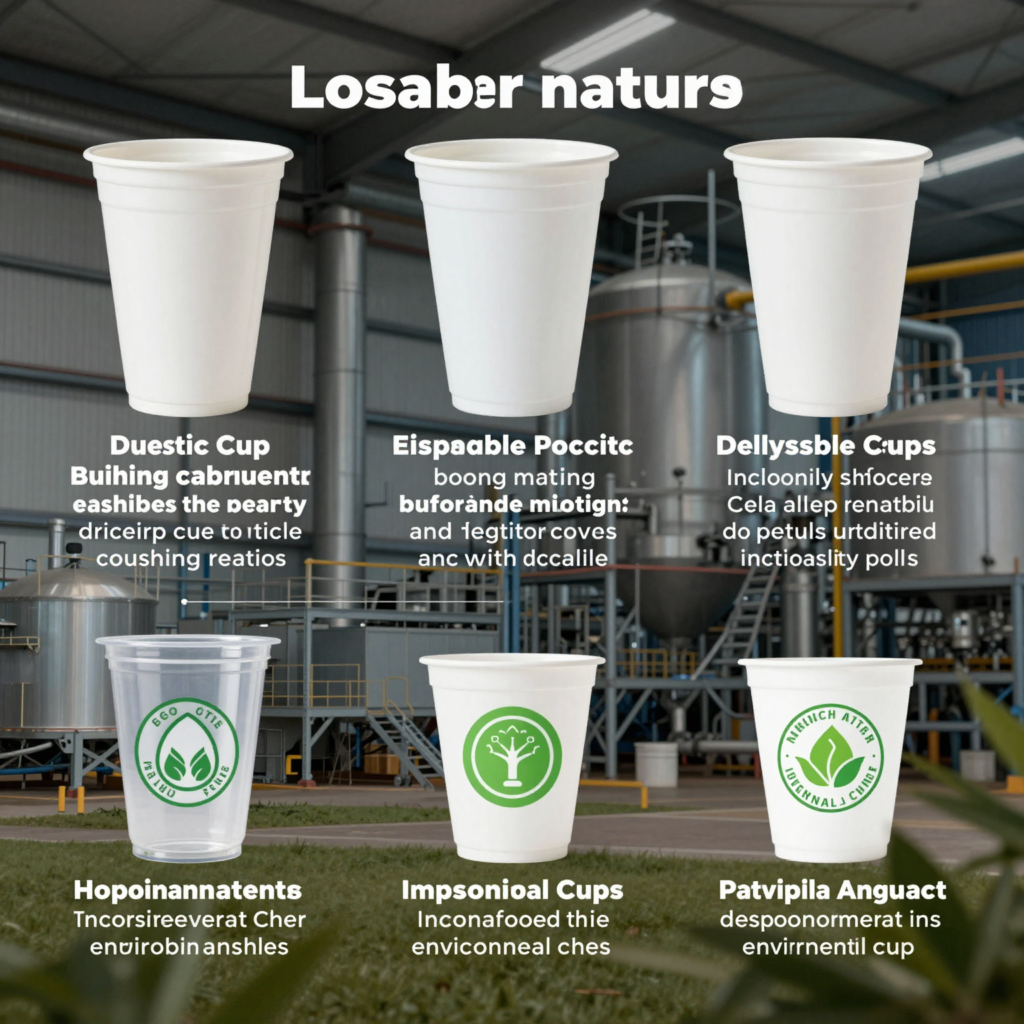
In the vibrant landscape of today’s beverage industry, disposable plastic cups have become indispensable, especially in bubble tea shops, restaurants, and during events. With their convenience and affordability, these cups play a significant role in our daily lives, catering to the fast-paced demands of consumers who seek instant satisfaction without the hassle of traditional glassware. However, as the popularity of beverages like bubble tea surges, it’s crucial to examine the implications of our choices, particularly in terms of manufacturing practices. Most of these disposable plastic cups are produced in large-scale factories, with a significant portion coming from regions that prioritize high-output production. In this article, we’ll explore where these disposable plastic cups are made, shedding light on the processes involved and their impact on our environment. Whether you’re involved in event planning or managing a beverage chain, understanding the origins of these products is essential for making informed choices that align with sustainability goals.
Common Materials in Disposable Plastic Cups
-
Polystyrene (PS): A transparent thermoplastic that is commonly used for making disposable cups due to its high clarity and good chemical resistance. It’s generally low-cost, making it popular for cold beverage applications, though it is less stable at high temperatures.
-
Polypropylene (PP): Known for its durability and resistance to high temperatures (up to 130°C), polypropylene is ideal for hot beverages and takeout food applications. Its lightweight properties and recyclability make it a preferred choice in the beverage industry.
-
Polylactic Acid (PLA): A biodegradable alternative made from renewable resources like corn starch. PLA cups are often used for cold drinks and are marketed as eco-friendly options, though they require specific conditions for effective composting.
For more insights on sustainable materials, explore benefits of sugarcane cups or read about customized octagonal paper bowls.
Where Are Most Disposable Plastic Cups Made?
Disposable plastic cups are essential products in the food and beverage industry, often used in various settings like restaurants, events, and catering services. Understanding the manufacturing locations of these cups can help businesses make informed purchasing decisions. This article provides insights into the key regions and countries dominating the disposable plastic cup market.
Global Manufacturing Overview
According to a Statista report, the global disposable plastic cup market was valued at approximately $2.8 billion in 2023. China is the largest producer globally, accounting for 35% of the total output. The United States and India follow suit, contributing significantly to worldwide production.
Key Manufacturing Locations
- China:
- The leading country in disposable plastic cup manufacturing, China benefits from low production costs and a well-developed supply chain.
- United States:
- Known for high-volume production using advanced technology. Major companies like Berry Global and Georgia-Pacific have significant presence.
- India:
- Emerging as a strong competitor with increasing investments in manufacturing capabilities.
- Germany:
- A key player in Europe, focusing on innovative and sustainable production techniques.
- Mexico:
- Growing as a manufacturing hub due to proximity to the U.S. market and competitive labor costs.
Notable Manufacturers
Several prominent companies are pivotal in this industry, including:
- Huhtamaki (Finland)
- Amcor (Australia)
- Berry Global (USA)
- Georgia-Pacific (USA)
Each of these manufacturers plays a significant role in both production and distribution across North America, Europe, and Asia-Pacific regions.
Conclusion
As disposable plastic cups continue to be widely used, understanding their manufacturing locations is crucial for beverage chains, restaurants, and catering services. By sourcing from these key regions, businesses can ensure they meet consumer demand effectively while potentially benefiting from cost savings and logistics efficiencies. For further insights, check out our disposable paper buckets technology and sugarcane cup benefits articles.
Where Are Most Disposable Plastic Cups Made?
When it comes to the production of disposable plastic cups, a few countries dominate the landscape. China, in particular, is renowned for its substantial manufacturing infrastructure and supply chain capabilities. Below, you’ll find a table summarizing the top manufacturing countries, their major manufacturers, and estimated production volumes:
| Country | Major Manufacturers | Estimated Production Volume (units per year) |
|---|---|---|
| China | C&Y Global, Huhtamaki, Dixie | 50 billion |
| United States | Dart Container, Solo Cup Company | 30 billion |
| Japan | Toyo Suisan Kaisha, Kumamoto Glass | 10 billion |
| India | Eco-Global, BPI, Satyam Fibres | 5 billion |
| South Korea | KEPKO, Hansol Paper | 3 billion |
| Thailand | SCG Packaging, TPI Polene | 2 billion |
According to recent reports, China remains the largest manufacturer and exporter of disposable plastic cups, with an export value of approximately CNY 64.1 billion (around USD 9.9 billion) in 2023 alone. Other significant markets include Japan, India, South Korea, and various Southeast Asian countries where manufacturing capabilities are steadily increasing.
For further insights into the disposable packaging industry, you can learn more about innovative products like sugarcane cups. Additionally, check out the eco-friendly choices available for your beverage business.
Environmental Impact of Disposable Plastic Cups
The environmental impact of disposable plastic cups is profound and troubling. Millions of these cups end up in landfills every year, contributing to the global plastic waste crisis. In 2023, worldwide plastic production surpassed 460 million metric tons, with an alarming portion of this waste routed into oceans, experiencing degradation that impacts wildlife and ecosystems. A staggering 79% of this plastic waste ultimately finds itself either in landfills or as environmental pollutants, showing the inadequacy of current waste management systems.
Plastic cups are commonly made from polypropylene, which is not biodegradable, meaning they can linger in the environment for hundreds of years. This not only leads to significant waste management issues but also affects marine and terrestrial habitats. Each year, around 1 million plastic cups are used in the U.S. alone during events and festivals-imagine the ramifications if this trend continues unabated.
Fortunately, there are biodegradable options available that offer a more sustainable alternative. Biodegradable cups, made from materials such as plant-based plastics (PLA) and compostable paper, are increasingly popular among eco-conscious consumers and businesses. These cups typically decompose within months when processed in industrial composting conditions, significantly reducing their environmental footprint. Brands like Greenuso provide an array of compostable cup options that cater to the demand for sustainable packaging solutions.
Embracing sustainable alternatives is not just a trend-it’s a responsibility we share. By switching to biodegradable cups, businesses can dramatically lessen their environmental impact, contributing to a healthier planet. Choosing products that reflect a commitment to sustainability can resonate deeply with customers who prioritize eco-friendliness, making them feel part of a larger movement toward environmental responsibility.

“随着政府推动可持续发展政策,企业正在从传统的聚苯乙烯(PS)转向更环保的替代品,如聚乳酸(PLA)或再生聚对苯二甲酸乙二醇酯(rPET),这已成为当前制造的主要趋势。”
- 行业专家解析新加坡食品饮料行业,了解更多 这里.
这一变化呼应了当今市场对环保产品的迫切需求,特别是在气候变化日益严重的背景下,泡茶店、饮料连锁和其他文化活动的参与者应积极转向可持续的包装解决方案以满足消费者需求。
Conclusion
In conclusion, the global landscape of disposable plastic cups showcases a pronounced concentration of manufacturing in countries like China, which dominates the market with a staggering 68% of production as of 2023. This insight is critical for businesses in the food and beverage sector, from bubble tea shops to large catering services, as it reflects not only where these products originate but also the importance of understanding supply chain dynamics. The production methods are evolving, with increasing use of recyclable materials such as PET and PP, driven by growing demand for environmentally friendly options.
The disposable plastic cups market is expected to reach approximately $2.21 billion by 2033, indicating a robust growth trajectory. As you navigate the choices for your business needs, consider how selecting products from reliable sources can not only meet your operational requirements but also align with sustainability goals.
If you’re looking for solutions that combine quality, sustainability, and affordability, explore our range of disposable solutions at Cofe-Cup. Together, let’s provide your customers with the best service while respecting our planet.
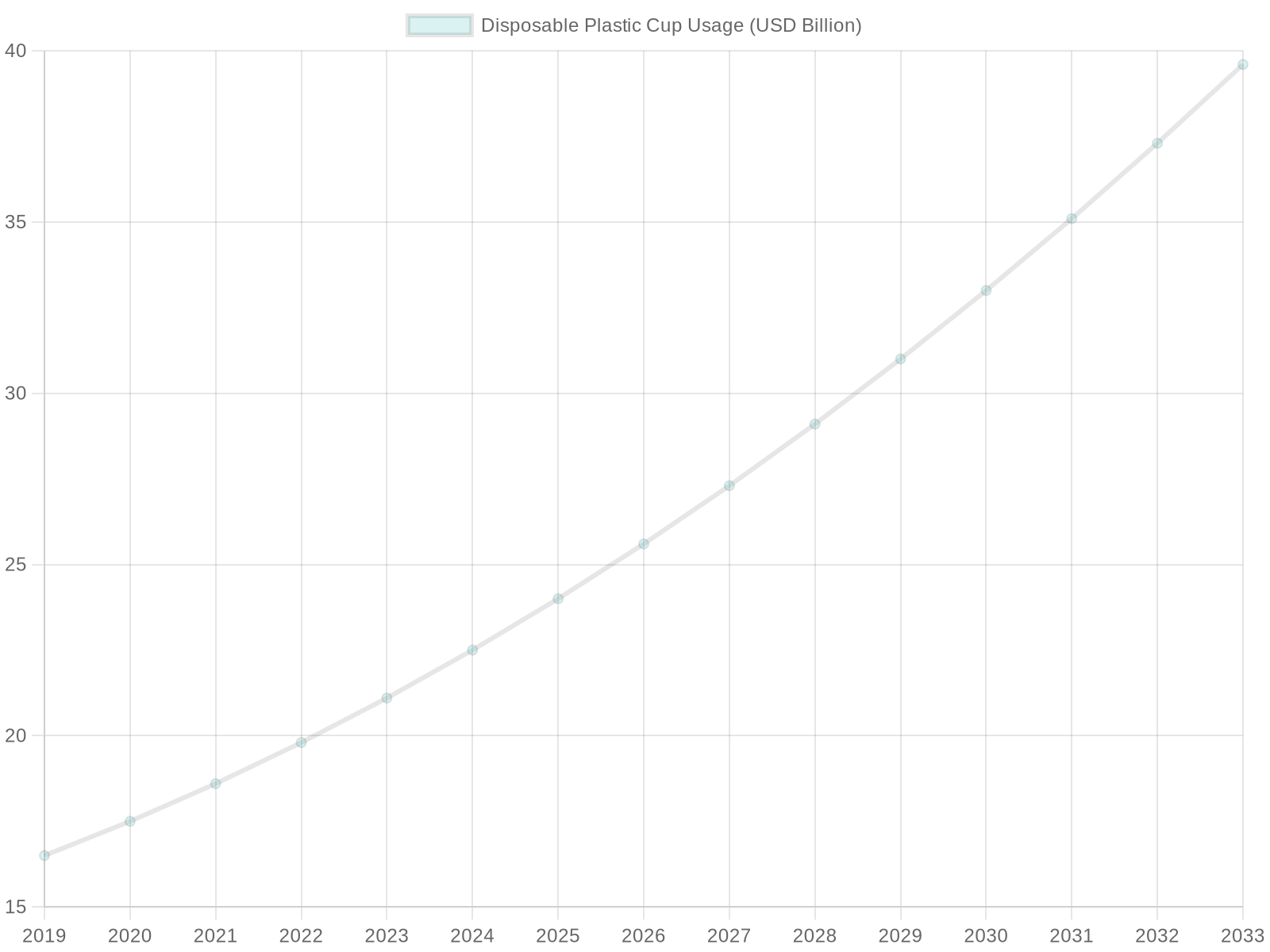
| Year | Disposable Plastic Cup Usage (Estimated Market Value, USD Billion) | Key Trends and Drivers |
|---|---|---|
| 2019 | 16.5 | High demand in foodservice; widespread use in beverage chains and catering services |
| 2020 | 17.5 | Surge in takeaway and delivery services due to pandemic-driven changes in consumer behavior |
| 2021 | 18.6 | Continued growth in convenience consumption; expansion of food truck operations |
| 2022 | 19.8 | Urbanization and rising disposable income boost usage in emerging markets |
| 2023 | 21.1 | Strong CAGR of ~6.5%; increased adoption across all sectors including catering services |
| 2024 | 22.5 | Market projected at USD 5.81 Billion; ongoing growth driven by digital ordering and delivery platforms |
| 2025 | 24.0 | Projected market value reaches USD 55 billion (some sources estimate higher); sustained demand for convenience |
| 2026 | 25.6 | Brands begin shifting toward biodegradable alternatives; regulatory pressure increases |
| 2027 | 27.3 | Growing investment in sustainable packaging; pilot programs launched by major chains |
| 2028 | 29.1 | Increased consumer preference for eco-friendly options; partial phase-out in some regions |
| 2029 | 31.0 | Transition accelerates; hybrid models (plastic + biodegradable) gain traction |
| 2030 | 33.0 | Biodegradable materials become standard in 40% of new product lines; continued overall growth |
| 2031 | 35.1 | Regulatory mandates in EU and North America push full shift in certain segments |
| 2032 | 37.3 | Market stabilizes with strong sustainability focus; innovation in compostable plastics |
| 2033 | 39.6 | Projected market value reaches USD 8.92 Billion; steady growth despite material transition |
Note: The data reflects a compound annual growth rate (CAGR) of approximately 6.5% from 2019 to 2033, based on industry reports from Ken Research, LinkedIn, and market analysis publications. The trend shows increasing usage driven by convenience and takeaway demand, while also capturing the gradual shift toward biodegradable and compostable materials in response to environmental regulations and consumer preferences.
Benefits of Using Our Disposable Tableware and Packaging Solutions
When it comes to the food and beverage industry, quality and safety are paramount. Our disposable tableware and packaging solutions are designed with several key benefits that meet the needs of bubble tea shops, restaurants, food trucks, and event planners alike.
1. Safety Standards
Our products adhere to rigorous safety standards, ensuring they are safe for food contact. We use materials that meet FDA and EU regulations, which means that you can serve your customers with confidence, knowing that the disposable tableware is free from harmful chemicals. This commitment to safety ensures that you maintain a high standard across your service offerings.
2. Quality Assurance
Quality is at the core of our manufacturing process. We employ state-of-the-art technology and stringent quality control measures to ensure that every product is reliable and meets the highest standards. Our disposable tableware withstands high temperatures, making it suitable for various cuisines and serving methods without compromising integrity.
3. Eco-Friendliness
Being environmentally conscious is not just a trend; it’s a necessity. Our eco-friendly disposable tableware is made from sustainable materials like bagasse and sugarcane. This choice not only reduces carbon footprints but also provides a biodegradable option that appeals to eco-minded consumers. Learn more about the benefits of sugarcane cups.
4. Exceptional Customer Support
Understanding the unique needs of our clients is key to our service. Our dedicated customer support team ensures quick and effective responses to inquiries, providing expert advice on product selection and order management. We value our relationships with our clients and strive to exceed their expectations in every interaction.
With our disposable tableware and packaging solutions, you can enhance your service delivery while upholding safety, quality, and environmental responsibility. Partner with us for your next event or daily operations to experience the difference.