
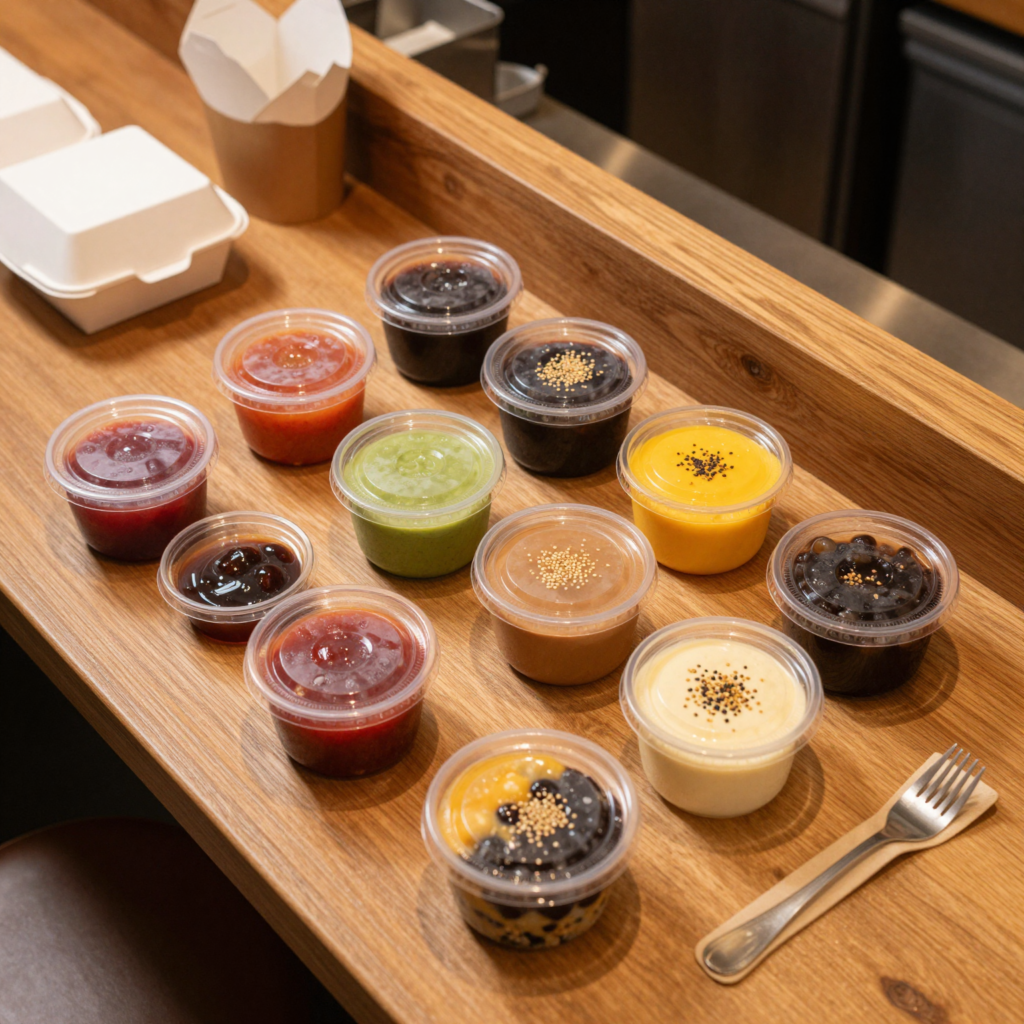
The Struggle Is Real: Finding the Right Small Plastic Food Containers for Your Business
You know that moment when a customer orders a side of sauce, a sample portion, or a single dessert to-go, and you scramble to find a container that’s not comically oversized or flimsy enough to leak everywhere? If you run a bubble tea shop, restaurant, food truck, or cater an event, you’ve likely faced this exact headache. The search for reliable, appropriately sized packaging shouldn’t feel like a part-time job-yet for many food service professionals, sourcing the perfect vessels for dips, dressings, toppings, and small portions is a persistent pain point.
Whether you need portion cups for boba pearls, sauce containers for food truck tacos, or sampling cups for a corporate event, knowing where and how to buy small plastic food containers that check all the boxes-durable, food-safe, leak-resistant, and budget-friendly-can make or break your daily operations. The global plastic food containers market is projected to reach nearly $50 billion by 2030, and with that growth comes an overwhelming number of choices. Too often, business owners end up with containers that crack under pressure, lids that won’t stay on, or bulk orders that take up precious storage space without fitting their actual needs.
This isn’t just about grabbing any container off a supplier’s shelf. You need solutions that support portion control (keeping food costs in check), preserve freshness (so your products stay appetizing from kitchen to customer), and reinforce your brand image (because packaging speaks volumes before a single bite is taken). The right small plastic containers can streamline your service, reduce waste, and even elevate how customers perceive your business.
That’s exactly why we put this guide together. From bubble tea shops needing reliable sealable cups for tapioca pearls to event planners requiring uniform portion cups for tasting menus, we’ll walk you through everything you need to know. This guide will help you choose the perfect containers for portion control, freshness, and brand image-so you can stop worrying about packaging and get back to what you do best: serving your customers.
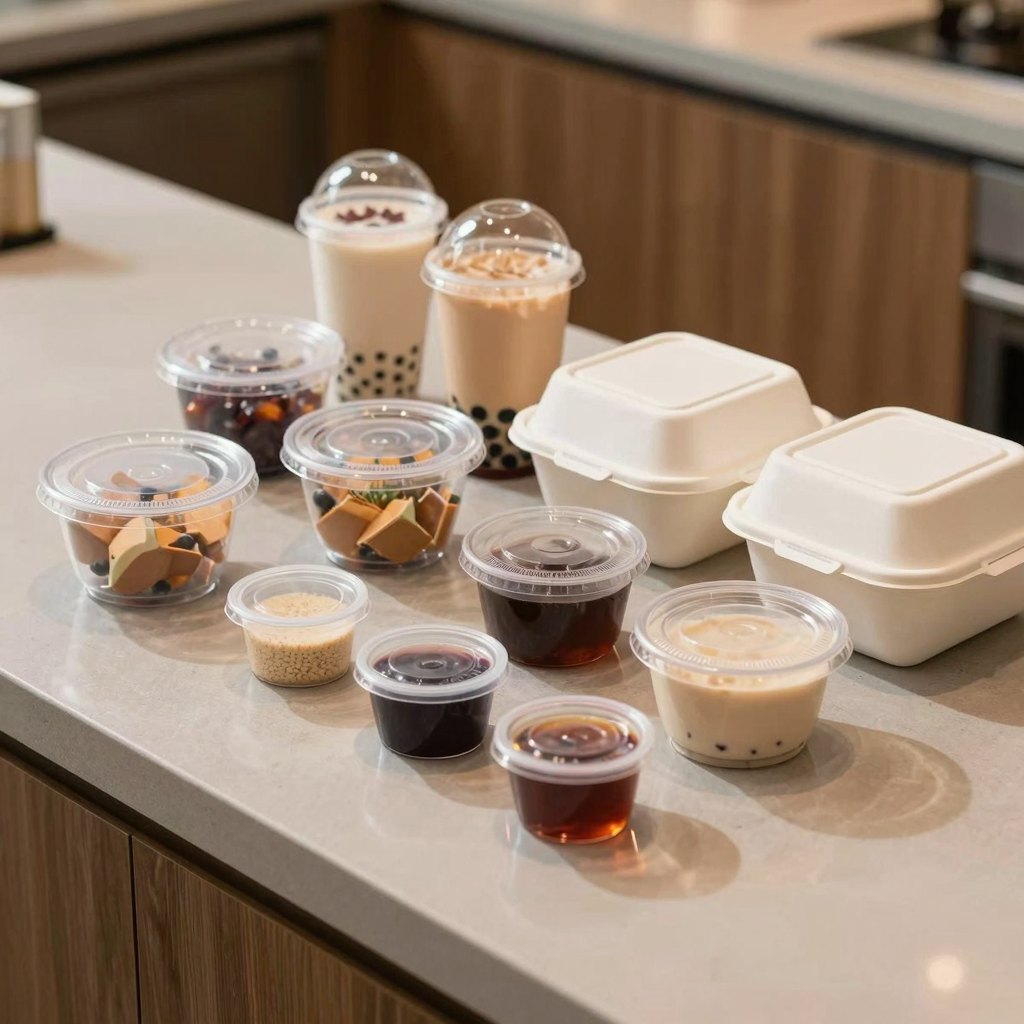
This image captures the versatility and professional appeal of small plastic food containers in a real food service setting. From compact 2oz condiment cups perfect for sauces and dressings to larger 8oz containers ideal for side dishes, bubble tea servings, and takeout portions – every piece is designed to meet the demands of busy commercial kitchens, beverage chains, and catering operations. The warm lighting highlights the clarity and sturdy build of the containers, reinforcing the message of quality and reliability for businesses looking to buy small plastic food containers in bulk.
Why Small Plastic Food Containers Matter for Your Business

If you run a bubble tea shop, restaurant, food truck, or catering operation, the containers you choose affect more than just storage – they impact your bottom line, your customer’s experience, and your team’s daily workflow. Quality small plastic containers with lids aren’t just an expense; they’re a strategic investment. Let’s break down why.
1. Portion Control and Cost Savings
One of the fastest ways to boost your profit margins is by reducing waste – and the right containers make that surprisingly simple. By using portion control containers in standardized sizes, you ensure every serving is consistent, every time. According to a 2024 National Restaurant Association report, businesses that adopted standardized portion containers reported an average 18% reduction in food waste and a 12% decrease in ingredient costs. That’s money that stays in your pocket rather than heading to the compost bin.
Whether you’re portioning out boba pearls, sauce toppings, or prepped meal ingredients, having the right-sized container eliminates guesswork. You’ll stop over-serving, reduce spoilage from opened bulk packages, and gain far better control over your food cost percentages. When buying disposable food containers bulk, the per-unit cost drops significantly, making high-quality packaging even more affordable.
2. Customer Satisfaction and Brand Perception
Let’s be honest – nobody likes a leaky takeout container. A flimsy lid that pops off in a delivery bag or a container that cracks under pressure reflects poorly on your business. Sturdy, well-designed small plastic containers with lids send a clear message: you care about quality.
Leak-proof seals keep sauces and soups where they belong – inside the container, not all over your customer’s car. Clear, durable plastic lets your food look as appetizing as it tastes, which builds trust and encourages repeat orders. In the competitive world of food service, small packaging details shape how customers remember your brand. A container that holds up well is a container that earns loyalty.
3. Operational Efficiency
Your staff’s time is valuable. Quality small plastic food containers are designed with workflow in mind. They stack neatly, saving precious fridge and shelf space – a major win for busy commercial kitchens. Many are microwave-safe, allowing customers to reheat without transferring to another dish, and they’re lightweight enough for easy transport.
Standardized sizing means your team can grab, fill, and seal containers faster without fumbling with mismatched lids. The result? Faster service during rush hours and less frustration in the back of house. It’s the kind of operational improvement that adds up shift after shift.
The Bottom Line: Three Key Benefits at a Glance
-
📊 Portion Control & Cost Savings – Right-sized containers reduce food waste by up to 18%, cut ingredient costs, and maximize profit margins by eliminating guesswork in every serving.
-
🌟 Customer Satisfaction & Brand Trust – Sturdy, leak-proof lids and durable builds protect your reputation, keep deliveries mess-free, and show customers you value quality.
-
⚡ Operational Efficiency – Stackable, microwave-safe, and easy-to-use designs save storage space, speed up prep work, and make life easier for your team during every shift.
Ready to explore options? Check out our selection of bulk paper bowls for eco-friendly alternatives, and learn more about containers with lids designed for professional food service.
Types of Small Plastic Food Containers: A Complete Breakdown
When it comes to food service packaging, not all containers are created equal. Whether you’re running a bustling bubble tea shop, a fast-moving food truck, or managing corporate catering for hundreds, choosing the right small plastic food containers can make or break your operation. From holding perfectly portioned dipping sauces to securing fresh boba pearls, the right container keeps your food fresh, your customers happy, and your workflow efficient. Below, we break down the four essential types of small plastic food containers every food business should know about.
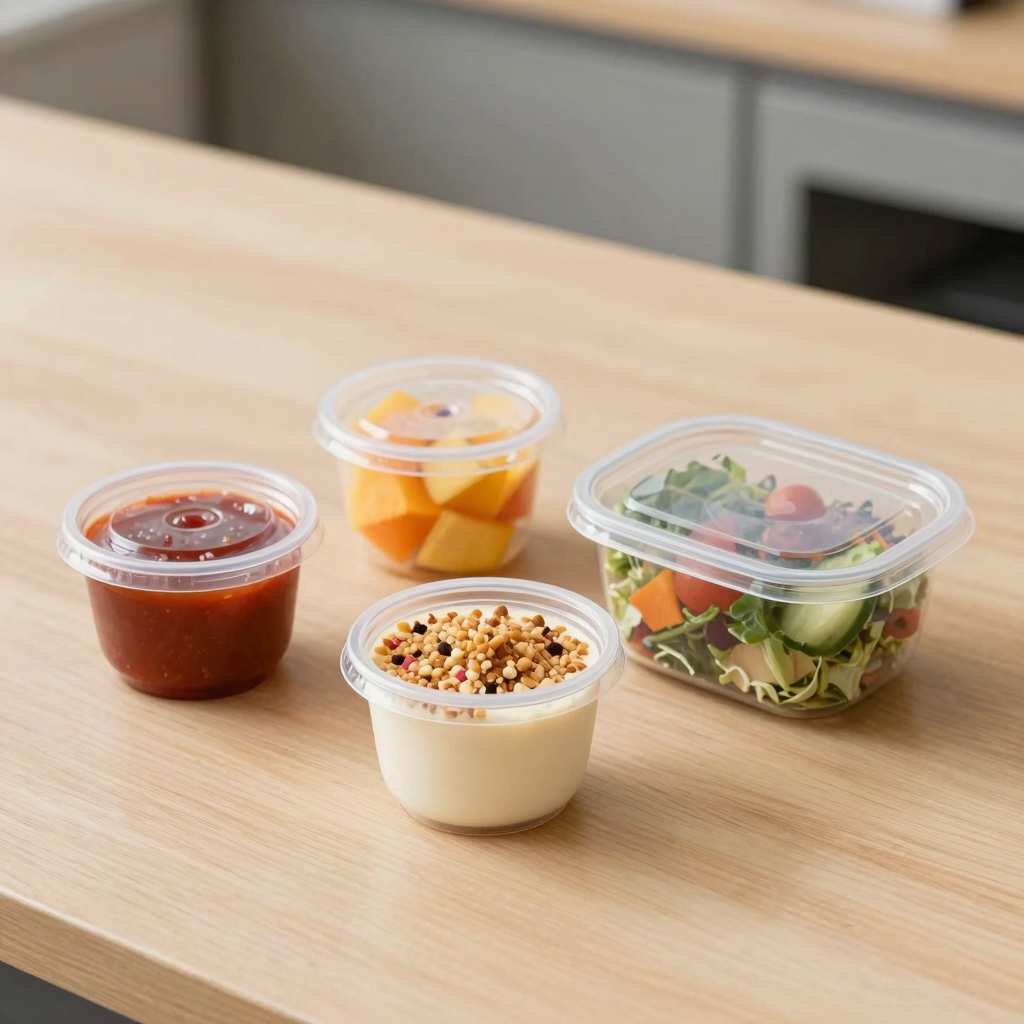
🧂 Condiment Cups with Lids (1oz-3oz)
The smallest but mightiest players in the food packaging world, condiment cups typically range from 1oz to 3oz and come with snap-on or peel-off lids. These are ideal for sauces, dressings, and dips that accompany main dishes. For Restaurants, 2oz cups are perfect for ranch dressing, ketchup, or specialty aioli served alongside fries or wings. Food Trucks love them for hot sauce and salsa verde portions. Bubble Tea Shops can use 1oz cups for individual servings of honey, syrup, or sweetened condensed milk add-ons. If you want to stock up efficiently, you can buy small plastic food containers in bulk to keep costs low and prep time faster.
🥗 Portion Cups (4oz-8oz)
Stepping up in size, portion cups in the 4oz to 8oz range are workhorses for sides, fruits, desserts, and grab-and-go items. For Event Planners, 4oz cups are ideal for individual fruit salads, pudding shots, or coleslaw at catered events. Bubble Tea Shops can use 5oz or 8oz cups to serve tapioca pearls, popping boba, or jelly toppings on the side so customers can customize their drinks. Food Trucks rely on 8oz portion cups for individual servings of guacamole, pico de gallo, or side salads. These containers stack neatly, making storage a breeze for high-volume operations.
| Container Type | Common Sizes (oz) | Best For |
|---|---|---|
| Condiment Cups | 1, 2, 3 | Sauces, dips, dressings, syrups |
| Portion Cups | 4, 5, 8 | Sides, fruits, desserts, toppings |
| Souffle Cups | 1.5, 2, 3 | Dry toppings, sprinkles, nuts, powders |
| Deli Containers | 8, 12, 16 | Grab-and-go, samples, leftovers |

🧁 Souffle Cups for Toppings & Dry Items
Don’t let the fancy French name fool you – souffle cups (1.5oz to 3oz) are simple, wide-mouth containers designed primarily for dry or semi-dry ingredients. Unlike condiment cups that excel with liquids, souffle cups are better suited for dry toppings like sprinkles, crushed nuts, chocolate chips, and cinnamon sugar. Bubble Tea Shops can use 2oz souffle cups for brown sugar crystals, matcha powder, or coconut flakes that customers sprinkle over their drinks. Restaurants can serve parmesan cheese, crushed red pepper, or croutons in these cups alongside soups and salads. Because of their wide opening, souffle cups are also great for thick sauces or guacamole that need easy scooping access. When you buy small plastic food containers for dry goods, souffle cups offer the most versatility for the price.
🥡 Deli Containers for Grab-and-Go Sides & Samples
Deli containers – those clear, sturdy cups with tight-sealing lids – usually range from 8oz to 16oz and are recognized by their threaded tops and leak-resistant design. These are the gold standard for Food Trucks and Catering Services that need to transport salsa, guacamole, or coleslaw without spills. Event Planners use 8oz deli containers for individual pasta salads, fruit medleys, or dessert samples at tasting events. Bubble Tea Shops can repurpose 12oz deli containers for large topping portions or even small trial-size bubble tea samples for new flavor launches. Their transparent walls let customers see exactly what they’re getting, adding visual appeal to your presentation. For operations that prioritize durability and reusability, consider pairing these with eco-friendly options like sugarcane bowls for business for a more sustainable service lineup.
📊 Quick Reference: Choose the Right Container for Your Business
| Business Type | Best Container Choice | Ideal Use Case |
|---|---|---|
| Bubble Tea Shops | Condiment cups (1oz) + Portion cups (5oz) | Syrups + boba pearls |
| Restaurants | Condiment cups (2oz) + Souffle cups (2oz) | Dipping sauces + dry toppings |
| Food Trucks | Portion cups (8oz) + Deli containers (12oz) | Sides + salsa/guacamole |
| Event Planners | Deli containers (8oz) + Portion cups (4oz) | Individual samples + desserts |
💡 Pro Tip: Stock Smart, Serve Better
The global food service packaging market was valued at approximately $139.75 billion in 2024, according to Grand View Research, with plastic containers making up a significant share. By choosing the right mix of condiment cups, portion cups, souffle cups, and deli containers, you can minimize waste, reduce prep time, and improve the customer experience. Whether you need leak-proof lids for dressings or wide-mouth cups for chunky salsa, knowing your container types is the first step. Ready to streamline your packaging? Learn more about bulk paper bowls for larger serving needs, or stock up on the perfect small containers today!
A Quick Guide to Small Plastic Food Container Materials
Choosing the right material for your small plastic food containers makes all the difference – whether you’re packing sauces for bubble tea, prepping grab-and-go salads, or portioning out condiments for your food truck. Here’s a clean, side-by-side comparison of the four most common container materials so you can pick what works best for your business.

Material Comparison at a Glance
| Material Type | Best For | Key Benefits | Considerations |
|---|---|---|---|
| Polypropylene (PP) | Hot foods, microwave reheating, soups & sauces | Microwave-safe up to 164-170°C; durable & impact-resistant; recyclable (Code #5); inert & non-toxic | Higher cost per unit than PS or PET; slightly cloudy appearance (not fully transparent) |
| Polystyrene (PS) | Cold items, condiments, single-use sauces | Crystal-clear visibility for product display; cost-effective for high-volume use; lightweight | Brittle – can crack under pressure; not microwave-safe; poor heat resistance (warps above 100°C) |
| PET (Polyethylene Terephthalate) | Cold salads, fruits, cold beverages, deli portions | Crystal-clear, glass-like transparency; highly recyclable (Code #1); strong & lightweight | Not microwave-safe; single-use recommended; can deform with hot or acidic contents |
| PLA (Compostable Plastic) | Eco-friendly branding, cold foods, short-term storage | Plant-based (corn starch); industrially compostable; renewable sourcing; premium eco-image | Very low heat tolerance (below 60°C); shorter shelf life; higher cost; requires industrial composting facilities |
Note: Our PP and PET containers meet FDA safety standards.
Making the Right Choice for Your Business
Small plastic food containers aren’t one-size-fits-all. For bubble tea shops and beverage chains, PET containers offer the crystal clarity customers love for seeing fresh fruit toppings and cold jelly cubes. Restaurants running hot takeout programs will appreciate the microwave-safe durability of PP for soups, stews, and saucy sides. Food trucks and catering services that portion out condiments and cold sides at scale often rely on cost-effective PS containers. And for event planners and corporate teams focused on sustainability goals, PLA compostable containers help tell a compelling eco-story – just be mindful of their temperature and shelf-life limitations.
If you’re looking to round out your packaging lineup with paper-based options, check out our octagonal paper bowls for noodle and salad service, or explore our sugarcane bowls for business for a fully compostable fiber alternative.
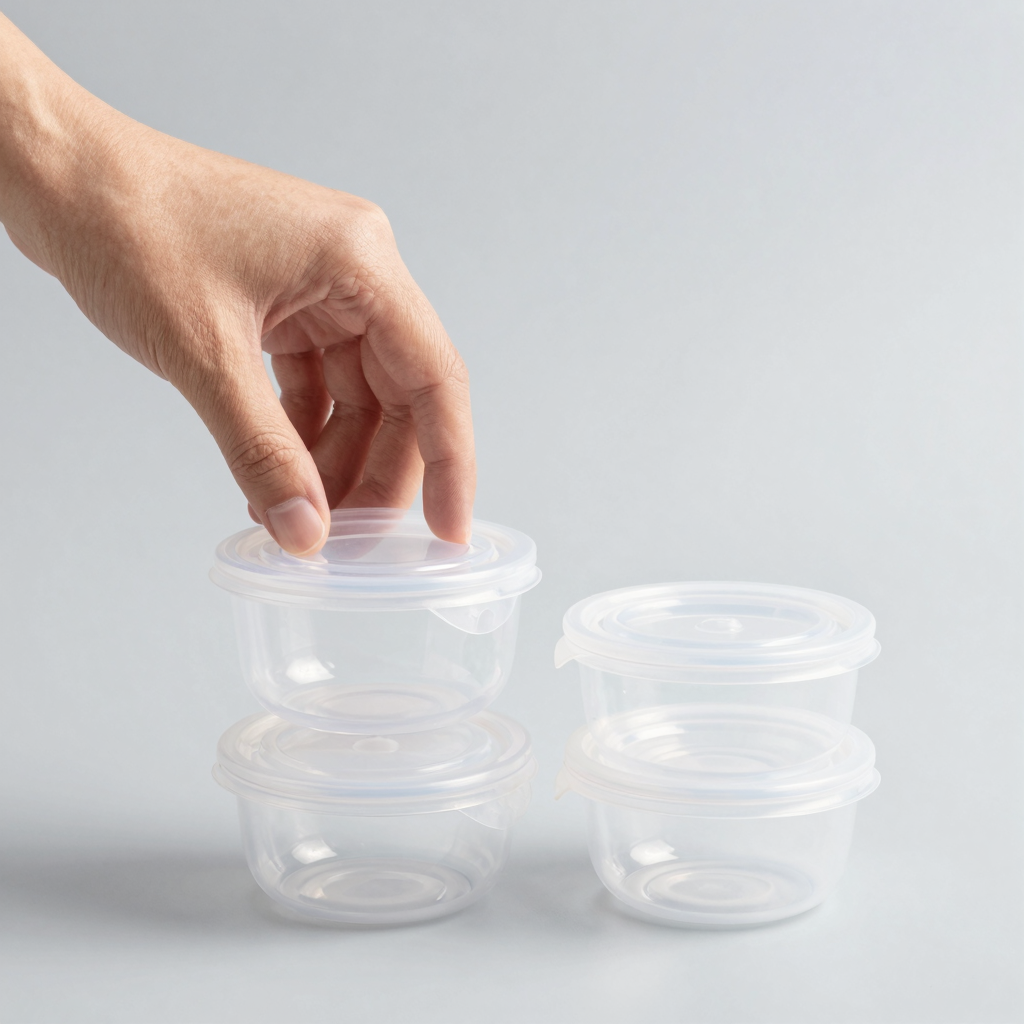
This clean, professional product image showcases the hallmark feature that matters most in commercial kitchens: a reliable, leak-proof seal. The hand pressing down on the lid visually confirms the satisfying “snap” closure that keeps sauces, dressings, toppings, and prepped ingredients securely contained – whether in transit, on the shelf, or during service.
The neatly stacked containers beside it reinforce the space-saving, stackable design that streamlines storage in busy back-of-house operations. For beverage chains and food service businesses sourcing bulk paper bowls or portion cups, this level of secure sealing translates directly to reduced waste, less mess, and greater customer confidence in every order.
5 Key Features to Look for When You Buy Small Plastic Food Containers
Choosing the right small plastic food containers isn’t just about picking the cheapest option off the shelf – especially when your bubble tea shop, food truck, or catering business depends on them for daily operations. The wrong container can mean soggy toppings, leaking sauces, unhappy customers, and a bruised brand reputation. Here are five critical features you need to evaluate before you buy.
1. Leak-Proof Lid Technology
If you’re handling takeout and delivery orders, leak proof containers small are non-negotiable. Nothing kills a customer’s experience faster than boba tea syrup or salad dressing dripping out of a container during transit.
Modern leak proof containers small rely on two main technologies:
- Dual-seal lids – These feature an inner silicone gasket combined with an outer snap-lock rim, creating two barriers against leakage.
- Snap-on lids – A simpler but highly effective system where the lid clicks firmly into grooves around the container rim.
For bubble tea shops, where toppings like tapioca pearls, jelly cubes, and pudding are stored in liquid, a dual-seal lid prevents cross-contamination and keeps prep stations clean.
2. Material Safety Certifications
Your customers trust you with their health, which means every container that touches their food needs verified safety credentials. When sourcing BPA free plastic food containers, look for these certifications:
- BPA-Free – Container contains no Bisphenol-A, a chemical linked to health concerns
- FDA Approved – Polypropylene plastic complies with FDA standards for food contact
- Food-Grade Compliance – Material is safe for direct contact with all food types
- EU/LFGB Certified – Meets European food safety standards
3. Temperature Resistance
A container that works in the fridge but cracks in the microwave isn’t just inconvenient – it’s a liability. Look for microwavable small plastic containers made from polypropylene, which is approved under FDA standards for microwave use. These containers can typically withstand temperatures from -20°F up to 250°F, making them suitable for microwave reheating, freezer storage, and hot-fill applications.
4. Clarity and Presentation
Crystal-clear plastic containers showcase your food. High-clarity polypropylene or PET containers offer optical-grade transparency, scratch resistance, and UV stability to prevent yellowing over time. When customers see perfectly layered ingredients through clear packaging, it builds instant trust and appetite appeal.
5. Stackability and Nesting Design
Space is valuable in commercial kitchens. Look for containers with stackable geometry, nesting ability, and modular sizing. These features maximize vertical storage and reduce storage footprint by up to 50% when not in use.
The Bottom Line: Invest in leak-proof design, BPA-free materials, microwave safety, visual clarity, and smart stacking to ensure every container you send out maintains the quality your customers expect.
Expert Insight: Why Container Quality Matters for Food Safety

When it comes to food service packaging, quality isn’t just a nice-to-have – it’s a business necessity. Poorly made containers can compromise food safety, damage your brand reputation, and cost you money in refunds and lost customers. We spoke with industry expert Sarah Mitchell, a Food Safety Consultant with 15 years of experience in food service packaging, about why container quality should be a top priority for any food business.
“In my years advising restaurants and food chains, I’ve seen how choosing subpar containers backfires – leaks lead to refunds, thin plastic cracks and customers notice. When businesses buy small plastic food containers from a trusted manufacturer, they’re not just buying packaging. They’re investing in food safety, customer trust, and operational peace of mind.”
– Sarah Mitchell, Food Safety Consultant, 15 years in food service packaging
Sarah’s experience echoes what industry data consistently shows. The global food container market was valued at $1,571 billion in 2023 and is projected to reach $2,273 billion by 2032, driven largely by the explosive growth of food delivery and takeout services. With more meals being transported than ever before, the integrity of your packaging directly impacts food safety outcomes.
The Real Cost of Subpar Packaging
Studies show that packaging quality is one of the top factors consumers evaluate when assessing food safety during delivery. Leaking containers, cracked lids, and flimsy materials don’t just create messes – they create food safety hazards. Cross-contamination, temperature loss, and physical contamination from broken plastic are all risks that increase with low-quality containers.
For businesses looking for reliable options, sourcing from a trusted paper bowl manufacturer ensures consistent quality standards. Similarly, whether you need containers for sauces, toppings, or side dishes, choosing wholesale bulk paper bowls from a reputable supplier gives you both quality and value.
When you invest in proper food-grade containers, you’re protecting your business from the bottom up – fewer refunds, happier customers, and the confidence that your food arrives exactly as it should.
Sizing Guide: Choosing the Right Small Plastic Food Container Volume
Choosing the correct container size is one of the most impactful decisions you can make for your food service operation. Get it right, and you’ll reduce food waste, control costs, and keep customers happy with perfectly portioned servings. Get it wrong, and you’re either throwing away unused product or leaving customers wanting more.
That’s why we’ve created this data-driven sizing guide. Whether you run a bubble tea shop, a food truck, a catering service, or a corporate cafeteria, matching your menu items to the right portion control containers is essential for operational efficiency.
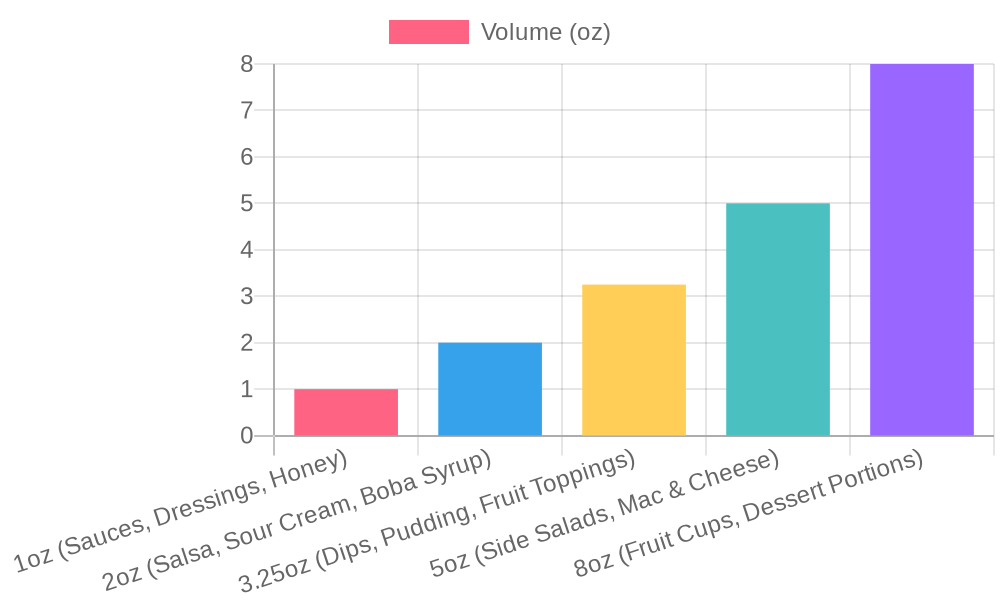
Chart: Small Container Size Recommendations by Food Type
How to Choose the Right Size
1oz Containers – Perfect for the little things that make a big difference. Use these for single-serve sauces (ketchup, mustard, ranch), dressings, honey, and dipping sauces. They’re also ideal for bubble tea shops that want to offer small honey or syrup add-ons without over-pouring. At this size, every drop counts – and every drop gets used.
2oz Containers – Your go-to for salsa, sour cream, guacamole, and boba syrup samples. If you’re running a food truck or catering event, these are fantastic for offering tasting portions or side accompaniments. The 2oz size hits that sweet spot where customers feel they’ve received a generous sample without you giving away the farm.
3.25oz Containers – A versatile mid-range option that works beautifully for thicker dips (hummus, spinach artichoke, queso), pudding cups, fruit toppings, and yogurt parfait layers. This size is particularly popular among dessert shops and cafés looking to buy small plastic food containers that can handle creamy, spoonable items with ease.
5oz Containers – Step up to this size for side salads, mac and cheese samples, fruit medleys, and heartier sides. It’s also a smart choice for catering companies that need to portion out individual servings of pasta salad or coleslaw. This is where you start transitioning from “taste” to “meal component.”
8oz Containers – The heavyweight of small containers. Use these for grab-and-go fruit cups, dessert portions (puddings, mousses, parfaits), and larger side dishes. For bubble tea chains, this size works great for toppings like popping boba, jelly, or tapioca pearls when sold in larger quantities. Customers see this as a satisfying single-serving size.
Pro Tips for Minimizing Waste
- Match the container to the portion size exactly. Using an 8oz container when 5oz would suffice not only wastes material but encourages over-portioning.
- Consider your lid type. For thinner items like sauces and dressings, choose containers with tight-sealing lids to prevent leaks.
- Think about stacking and storage. Standardized sizes stack better, saving valuable storage space in your kitchen or service area. For more insights on sustainable packaging solutions, check out our guide on sugarcane bowls for business to explore eco-friendly alternatives.
- Test before you commit. Order samples of different sizes and run a trial week to see which volumes your customers actually consume versus throw away.
By carefully selecting the right container sizes for each menu item, you can slash food waste by up to 20% while boosting customer satisfaction. And if you’re looking for eco-conscious options, don’t miss our article on compostable hamburger box bulk purchasing for larger sustainability initiatives.

Small plastic food containers arranged with fresh greenery – a subtle reminder that even practical packaging can embrace an eco-conscious aesthetic.