

In the bustling realm of beverage service, the significance of 12 oz disposable clear plastic cups transcends mere functionality. These cups are not only a practical choice for bubble tea shops and restaurants but also a vital component in catering services and event planning. As beverage chains and food trucks seek efficient solutions, the understanding of the economic, technological, and environmental implications associated with these cups becomes crucial. This exploration will highlight how adopting high-quality disposable cups can streamline operations, enhance customer satisfaction, and promote sustainable business practices.
Clear Value at Scale: The Economic Tapestry of 12 oz Disposable PET Cups
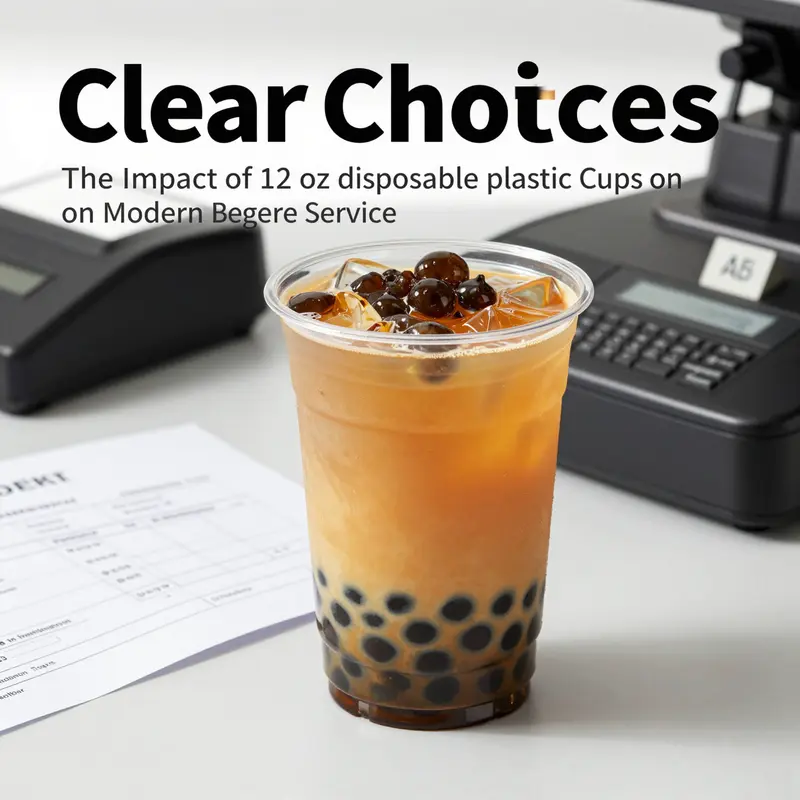
The economics of 12 oz disposable clear plastic cups unfold like a quiet architecture of modern food service. They are not merely containers; they are components of a system that strings together supply, cost, branding, and waste to create a level of convenience that hosts and vendors depend on daily. In a market that prizes speed, reliability, and presentation, these cups—composed primarily of PET plastic for clarity and durability—function as the mundane backbone of countless beverage businesses. They enable a consistent, hygienic experience from the moment a drink is poured to the moment it reaches a customer. The cost dynamics, however, run deeper than sticker price. They reflect a broader story about manufacturing scale, regional specialization, and the trade-offs between short-term savings and longer-term considerations such as regulatory pressure and consumer demand for sustainability.
At first glance, the economics are straightforward. The unit price of a 12 oz clear PET cup can be astonishingly low when produced and purchased in bulk. In bulk marketplaces, price ranges illustrate how economies of scale amplify value. For orders around 100,000 pieces, the unit price can be as low as US$0.021 per cup. Compare that with smaller runs—say, 5,000 pieces—where the price typically sits in the US$0.03 to US$0.065 band. The disparity is not random; it mirrors the fixed costs shared across large production batches, the efficiencies of high-speed extrusion and forming lines, and the logistics of long-haul shipping from a dominant manufacturing hub. For operators running high-volume beverage programs—cafes, quick-service restaurants, catering outfits, and events—the arithmetic is compelling: the larger the order, the lower the cost per cup, allowing more room for margins or for redirecting savings into faster service, better lids, or branding opportunities.
This price structure is not incidental. It reflects a manufacturing ecosystem that has been optimized around China and other low-cost hubs where established extrusion, filling, and packaging lines are tuned for PET cups. The supply chain advantages here are twofold. First is the sheer volume of production capacity, which supports a steady flow of cups even as orders for custom features rise. Second is the sophistication of logistics, including container shipping and regional distribution networks that keep lead times predictable for buyers who must staff events or retrofits with precise schedules. In practice, this means a cafe can commit to a monthly forecast that locks in pricing and ensures a steady supply, avoiding the price volatility that sometimes affects niche packaging categories.
Customization adds a nuanced layer to the economics. While price pressure is a powerful driver, many buyers seek ways to embed branding into their packaging. The same manufacturers who can supply basic, crystal-clear cups also offer customization options like logo printing, color accents, or branded sleeves and lids. The value proposition here is twofold. On the one hand, branding on disposable cups extends a business’s reach and reinforces customer recall at the point of consumption. On the other hand, the incremental costs of branding can be surprisingly modest when ordered at scale—especially when a minimum order quantity (MOQ) hovers around 100,000 units. In this regime, the per-unit impact of printing or labeling becomes a small fraction of the total price, or even negligible if the supplier includes the feature as part of a package deal. For operators juggling tight budgets, the ability to couple branding with everyday service in a single procurement flow is a decisive efficiency.
Yet, the allure of price and branding must be weighed against environmental considerations that increasingly shape procurement strategies. Plastic cups are inexpensive in the short term but carry longer-term costs that echo through waste streams, regulatory environments, and corporate social responsibility profiles. Many jurisdictions are moving to curb single-use plastics through taxes, bans, or stricter packaging requirements. As governments layer in these costs, the apparent savings from low unit prices may be offset by higher fees—either direct, such as material or disposal taxes, or indirect, such as compliance costs associated with recycling programs or extended producer responsibility schemes. In some markets, the price of a cup cannot be viewed in isolation from the entire lifecycle cost of the beverage packaging system. The same economy that makes a bulk purchase tempting also nudges buyers to consider alternatives—reusable systems, compostable materials, or innovative film coatings that improve recyclability—if those options align with long-term policy trajectories and consumer expectations.
These regulatory and societal pressures are not abstractions. They influence the economics of scale by altering the relative costs of plastic versus alternative materials. Compostable or biodegradable variants may command a premium up front, but they can alter the cost calculus over the lifecycle by reducing disposal burdens or aligning with public procurement policies that favor sustainability. In markets with stringent environmental policies, the long-run profitability of traditional PET cups can be eroded, not by the price of the cup itself, but by the combined costs of compliance, waste handling, and potential penalties for noncompliance. In response, many producers and distributors are innovating not just on materials, but on processes—such as improving recyclability, investing in recycled-content PET, or adopting peels and lids made with lower environmental footprints. The net effect is a market where the cheapest cup on a shelf is no longer the sole metric of value; the broader footprint and end-of-life obligations increasingly shape what counts as a smart economic choice.
From a production standpoint, the sheer scalability of 12 oz clear PET cups speaks to a robust and resilient manufacturing system. The extrusion and thermoforming equipment used to create these cups is designed for high throughput, enabling cost efficiencies that are not available in slower, artisanal processes. Once a supplier has a proven line, the marginal cost of additional cups declines with each incremental batch. The presence of a reliable MOQs—often around 100,000 units—makes sense in this context. It reduces unit handling costs per cup, optimizes the use of raw materials, and streamlines downstream packing and shipping. For businesses, the crucial implication is predictability: the ability to forecast demand, lock in pricing, and secure a stable supply chain reduces operational risk. In times of market volatility—whether due to port congestion, fuel price shifts, or sudden spikes in demand for catering services—the advantage of a predictable, high-volume supplier becomes a strategic asset.
Another layer to consider is how these cups interact with lids, inserts, or other ergonomics that influence total cost. Lids that snap securely, heat-resistant properties for hot beverages, and compatibility with tight-fitting seals all contribute to customer experience and the perceived value of the service. For operations that emphasize quick service, the compatibility of cups with lids and accessories matters as much as the base price of the cup itself. In many supplier ecosystems, packages that include cups and compatible lids are priced as a bundle, creating additional savings at scale. This bundling is not purely about price; it also minimizes procurement friction. A single purchase can cover multiple components of the serving system, reducing administrative overhead, reducing the risk of mismatched sizes, and ensuring a consistent customer experience across all channels—dine-in, takeout, and event catering.
The role of bulk suppliers extends beyond the price per piece. They serve as a bridge between demand and supply, translating forecasts into manufacturing throughput. For buyers, this means that a well-structured sourcing plan—one that anticipates peak seasons, promotional surges, or large events—can yield favorable terms that extend beyond unit cost. Some suppliers offer free samples, a practical cue to test fit and compatibility before committing to a large MOUs. This risk-mitigation step is often worth the time, because it preserves the investment in branding or packaging while avoiding the costs of misalignment between machine capabilities and shipping realities. The decision calculus, then, is multi-dimensional: price per cup, the reliability of supply, compatibility with lids and branding options, and the long-run policy and environmental considerations that influence total cost of ownership.
Within this broader economic tapestry, regional specialization matters. A concentration of production in China, where mature supply chains for PET cups exist, helps stabilize prices and shorten lead times for many buyers around the world. The geographic focal point of production interacts with the global logistics network to set expectations about delivery times and shipping costs. For buyers with urgent timelines, marketplaces and suppliers often present filters by region, supplier type, and average delivery times. These filters are not just convenience features; they are practical tools for aligning procurement with operational realities. In the end, the most cost-effective cup purchase for a given business is rarely a simple unit-price calculation. It is a holistic investment decision that weighs volume, customization, reliability, lifecycle costs, and the evolving landscape of environmental policy.
When a business considers the alternative packaging options—reusable systems, compostable alternatives, or different plastics—it must weigh the incremental costs against the non-monetary benefits: customer satisfaction, brand mapping, and corporate strategy. Reusable systems demand a different set of operational capabilities, including washing, scheduling, and consumer behavior shifts. Compostable options may come with higher upfront costs and more complex disposal requirements. In many scenarios, 12 oz clear PET cups retain a clear advantage in terms of throughput, ease of use, and predictable performance, especially in venues that need quick turnover. The economic argument for a low-cost, high-volume cup remains compelling for many operators, especially where the durable, transparent presentation of beverages enhances sales or where disposability aligns with fast-service logistics. Yet, the chapter of this story remains unfinished. The sustainability chapter is being written in parallel across many markets, and the questions remain about whether the current cost advantages will endure as waste management systems evolve and consumer preferences continue to tilt toward responsible packaging.
Pricing and supplier information offer a concrete map for decision-making. The numbers illustrate what many buyers already observe in practice: bulk orders deliver the strongest economic leverage, and the total cost of ownership includes more than the sticker price. As the industry evolves, buyers may find that the most economical choice is not solely the cup but the cup in an optimized system—one that couples branding, lid compatibility, and waste handling with responsible sourcing. For those navigating this space, it can help to keep a few guiding questions in view: How does volume demand align with MOQs and lead times? Do customization options unlock meaningful brand value relative to incremental costs? What are the end-of-life implications, and how might future regulations reshape the cost-benefit outlook? The answers will vary by market, but the logic remains consistent: scale can magnify both savings and risk, and a well-structured procurement plan translates the promise of low unit prices into durable, sustainable, and profitable operations.
In practice, the decision to purchase 12 oz clear PET cups at scale often comes down to balancing the fast pace of beverage service with the slower, grinding long-run dynamics of policy and consumer expectations. The cost of a cup, when viewed through the lens of a café’s daily rhythm, is a snapshot of a larger system where speed, cleanliness, presentation, and reliability intersect with evolving environmental norms. The economics of scale are not a simple arithmetic exercise; they are a negotiation with a broader set of factors that determine how a business can deliver consistent experiences at a predictable cost. The cups do their job quietly, but the choices around them speak loudly about what a business values—efficiency, branding, sustainability, and resilience in a world where change is constant.
For readers seeking concrete pricing references and supplier profiles, current listings on major bulk marketplaces provide a practical benchmark. These sources show a broad spread in unit cost depending on order size, with larger commitments delivering substantial savings. While the numbers are compelling, they should be interpreted as part of a larger procurement strategy that considers branding, packaging compatibility, and environmental policy—factors that can shift the balance over time. The story of 12 oz disposable clear cups is thus not only about economics in the narrow sense; it is about how a simple, transparent vessel becomes a node in a network of decisions that shape how beverage businesses operate, compete, and adapt to a changing world. The seemingly mundane cup embodies an economic logic that underpins the efficiency and scalability of modern service.
If readers wish to explore current pricing and supplier options directly, they can refer to the following external resource for a detailed snapshot of market offerings: https://www.alibaba.com/product-detail/12oz-Clear-Plastic-Parfait-Cups-with_62498743107.html?spm=a2700.114103.0.0.3d7c3a4fKgGnUo. This link offers real-world illustrations of price bands, MOQs, and logistics considerations that ground the narrative above in practical terms. For further context on related packaging categories and to see how similar decisions play out across different materials, an internal reference page that discusses eco-friendly paper cup options provides a comparative look at branding and sustainability considerations in a broader packaging strategy. eco-friendly-printed-logo-paper-cup-page.
Clear, Connected, and Cleaner: The Next Chapter for 12 oz Disposable Clear Plastic Cups

The familiar silhouette of a 12 oz disposable clear plastic cup has become a quiet constant in cafes, stadiums, office break rooms, and pop-up events. It is easy to overlook just how much technology, design thinking, and environmental consideration have converged in this everyday item. Today, the 12 oz cup stands at the crossroads of clarity and capability: clarity of the beverage it contains, clarity of its lifecycle, and clarity of brand impact. In a market saturated with choices, this cup family is no longer defined solely by its capacity or its transparency. It is increasingly defined by a confluence of eco-conscious materials, smarter engineering, and customization that ties directly to consumer perception and operational efficiency. What began as a simple vessel for cold drinks, hot coffee, tea, juice, or bubble tea has grown into a platform for learning about materials, manufacturing discipline, and the evolving expectations of the customers who encounter it. The evolution is not about chasing novelty for novelty’s sake but about aligning the cup with larger consumer and societal narratives—sustainability, traceability, and branding that travels beyond the beverage to the moment of consumption itself.
At the heart of this evolution is material science. The traditional stalwart, PET, remains prized for its clarity, barrier properties, and relatively inert behavior in contact with beverages. Yet the rising tide of sustainability concerns has pushed researchers and manufacturers to expand the material palette. Biodegradable PET, PLA, and PP are making inroads, offering paths toward compostability or reduced environmental burden while maintaining FDA compliance for food safety. The promise is not a single perfect material but a family of options that can be chosen based on the beverage profile, the expected end-of-life path, and the logistical realities of the operation. For hot beverages, the materials must withstand thermal cycling without warping or leaching, while for cold drinks they must preserve that coveted crystal-clear look. The shift toward certified materials—such as BPI certification for biodegradable components—helps reassure buyers who must meet corporate sustainability targets and regulatory expectations. The result is a 12 oz cup that can handle a hot coffee with the same reliability as an iced tea, and with a more transparent story about what happens after its moment of use.
The conversation about materials dovetails with a broader design narrative that emphasizes durability and user experience. Modern cups have become sturdier, with thicknesses that push toward 30 percent more heft than older variants. This durability translates into fewer concerns about cracking when the cup is gripped, bumped, or passed along lines at a busy event. It also means better resale value for operations that reuse or repurpose packaging in the supply chain, as the physical experience of the cup can convey a sense of quality that aligns with premium beverages. Yet durability does not come at the expense of clarity. Manufacturers continue to protect the pristine, glassy look of the cup so the beverage’s color remains the star, and fingerprints stay less visible on the surface. The ergonomic form—slightly tapered in the grip, with a comfortable base and a lip that invites a smooth sip—also contributes to a more satisfying consumer interaction. In a world where presentations can influence taste perception, the simple act of pouring a drink into a well-designed cup can elevate a consumer’s overall experience, especially in retail or event contexts where first impressions matter.
Customization has emerged as a strategic capability that makes the cup more than a passive container. Brand identity, promotional campaigns, and event branding find a natural ally in these cups through logo printing, graphic customization, and even stackable configurations that optimize storage and transport. The ability to imprint a logo or a distinctive graphic onto the cup surface transforms the cup into a moving billboard, a phone screen-sized canvas that carries brand messaging from the storefront to the consumer’s hand and back through social sharing. In high-volume settings—whether a crowded festival, a large conference, or a multi-unit cafe network—this capability translates into tangible gains in visibility and consistency. The practical side of customization often involves more than aesthetics. Stackable designs and standardized dimensions reduce warehouse space and streamline logistics, enabling faster fulfillment, easier inventory management, and lower breakage rates during handling. The net effect is a packaging solution that not only shows off color and flavor but also supports brand consistency, operational efficiency, and a more seamless customer journey from order to sip.
But the cup’s evolution is increasingly characterized by what some call “smart packaging.” This is not yet ubiquitous, but it is becoming a notable thread in the narrative. Embedded sensors or tiny chips integrated into the cup or base open the door to lifecycle tracking, usage analytics, and supply chain optimization. Imagine a coffee cup that can record its journey from factory to cup, or a system that can indicate when a cup has reached end-of-life and should be recycled or collected for composting. These smart features move disposable cups from being passive containers to becoming data-enabled partners in the beverage experience. They promise not only better operational oversight for manufacturers and retailers but also extended insight for researchers about consumer behavior patterns, beverage preferences, and consumption contexts. While not all applications are ready for mass deployment, the trajectory is clear: smart packaging is becoming a more accepted element of packaging strategy, and disposable cups are among the frontiers where this trend is taking root.
The sustainability dialogue that frames material choices also shapes how these cups are used, marketed, and disposed of. The push toward eco-friendly options reflects broader societal goals: reducing plastic waste, accelerating compostable solutions where appropriate, and improving the overall environmental footprint of single-use packaging. The conversation is nuanced. Not all compostable or biodegradable materials behave the same way in every disposal stream. Industrial composting facilities exist in many regions, but home composting remains limited for certain polymers. This complexity has nudged suppliers to provide clearer guidance on end-of-life scenarios, certifications, and performance standards. It also pushes buyers to align disposal practices with the capabilities of their local waste-management infrastructure. For coffee shops and restaurants, this means selecting materials and packaging configurations that are compatible with their specific waste streams, while also communicating clearly to customers how to dispose of cups responsibly. In practice, this translates into educational signage, staff training, and simpler, more consistent packaging choices that help avoid contamination of recycling or compost streams. In the long run, the most successful cups will be those that combine a high-quality drinking experience with a transparent, achievable path to disposal that aligns with local systems and consumer expectations.
All of these developments—materials, design, customization, and smart features—shape the purchasing choices of cafes, food-service chains, and event organizers. The economics of 12 oz cups in bulk require careful consideration of cost-per-piece, minimum order quantities, and the lifetime value of the packaging as a branding asset. Market dynamics show that buyers are not simply seeking the lowest price per unit; they want predictable lead times, reliable performance, and the confidence that the cup will perform under mixed-use conditions, from a hot espresso to a chilled bubble tea. The ability to source cups that fit within a company’s sustainability goals, while still meeting the demands of speed and reliability, has become a competitive differentiator in a crowded market. Suppliers in this space emphasize not only the base product but also the optional add-ons that complete the packaging ecosystem: compatible lids that seal securely and preserve temperature, sleeves for grip and branding, and even packaging configurations that maximize transport efficiency and minimize waste. In this sense, the 12 oz cup becomes a modular component of a broader beverage program rather than a standalone item.
The procurement landscape for bulk purchases reflects the scale and variability of demand. Listings often highlight favorable economies of scale, with prices that drop as volume increases and with flexible shipping arrangements that accommodate different regions and urgency levels. Buyers weigh the trade-offs between price, lead time, and the certainty of supply. The availability of thousands of related products—each with its own set of finishes, textures, and compatibility options—underscores the breadth of choice that modern buyers navigate. In this context, a well-informed decision hinges on holistic evaluation: the material composition, the cup’s compatibility with lids and heat resistance, the environmental certifications of the materials, and the supplier’s reliability in delivering large orders on time. This is where the chapter’s broader narrative about innovation intersects with practical sourcing realities: no matter how advanced the materials or how elegant the design, a cup’s impact is only as good as its ability to be produced, delivered, and used without interrupting service or inflating costs.
The visual and experiential aspects of the cup also deserve attention. The clear cup is not merely a transparent vessel; it is a stage for the beverage’s color, clarity, and presentation. The beverage becomes the tangible proof of quality, and the cup acts as a frame. In retail settings, this presentation can influence impulse purchases; at events, it can reinforce a brand’s aesthetic through color coordination and printed graphics. The transparency invites trust, letting customers gauge the beverage’s appearance before the first sip. Fingerprint resistance and a glossy finish maintain that pristine look, even after repeated handling. These are not cosmetic features alone; they contribute to customer perception, mood, and even taste expectations, aligning the physical experience with the brand promise.
As the sector contemplates lifecycle impact, many operators adopt a practical mindset: choose materials that perform under real-world conditions, select designs that minimize waste through efficient stacking and reducing over-packaging, and communicate end-of-life options clearly to customers. The conversations around compostability and biodegradability are not about abandoning plastic altogether but about selecting the right tool for the right job and the right waste system. A cup that can be composted industrially, for instance, may be ideal for a large festival with access to such facilities, while other contexts may benefit from high-quality recyclable or reusable packaging in concert with a strong recycling stream. The essential aim is to harmonize beverage service with environmental stewardship, not to force a single pathway onto every venue or consumer. In this climate, the 12 oz cup transcends its status as a disposable item and becomes a testbed for responsible innovation, brand storytelling, and operational excellence.
Where does this mean for the future of the 12 oz clear cup in a world that moves toward smarter, greener packaging? It points to a future in which the cup is part of an integrated packaging system that customers encounter from the moment they choose a drink to the moment they recycle or dispose of the vessel. It suggests a future where materials science, production discipline, and data-driven logistics reduce waste and improve transparency. It signals that the most successful cups will be those that offer not only a reliable drinking experience but also a clear, verifiable narrative of sustainability, plus practical benefits for busy operations. In short, the 12 oz disposable clear plastic cup is evolving from a straightforward container into a responsive component of a broader beverage ecosystem. The challenge and the opportunity lie in balancing clarity with responsibility, speed with sustainability, and customization with simplicity. The result can be a cup that does more than hold liquid; it helps shape the drinking experience, informs the supplier’s traceability, and reflects a brand’s commitment to both quality and conscience.
For readers exploring related packaging ecosystems beyond the clear-plastic category, this is a reminder that many brands are extending their design and sourcing thinking into other materials that complement or substitute traditional cups. A related avenue is the eco-friendly, double-wall, craft-paper cup family that supports hot beverages with a strong branding surface and a built-in impression of sustainability. These paper cups demonstrate how a packaging system can be designed to meet consumer expectations for warmth, texture, and legibility while aligning with compostability goals where feasible. The broader takeaway is that packaging innovation is less about a single material or form factor and more about how a beverage program aligns with customer values, operational realities, and environmental considerations. The cup, in its many iterations, becomes a conduit for brand experience, environmental responsibility, and efficient service—the trifecta that defines modern beverage retail.
Internal link reference for further exploration: eco-friendly double-wall craft paper cups with custom logo. This example of packaging customization shows how brands can extend their identity into the container itself, creating a cohesive experience across channels while maintaining the practical benefits of a compact, stackable, and industry-compatible packaging option. See also the broader discussion on how materials and design choices at the cup level influence perceptions of quality and sustainability throughout the supply chain.
External resource for further reading: https://www.alibaba.com/product-detail/FULING-1000pcs-ctn-12-oz-PET-plastic_1601589467881.html
Clear Choices, Complex Footprints: Tracing the Environmental Costs and Promising Alternatives of 12-Ounce Disposable Cups
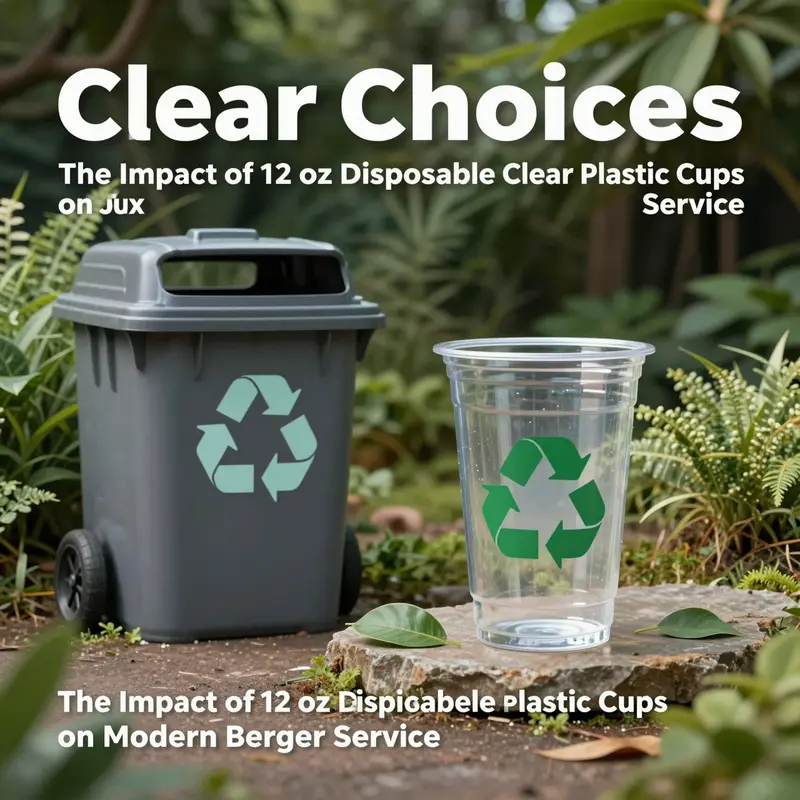
The sight of a perfectly clear 12-ounce cup can be inviting in a cafe lineup or a catered event. Its transparency promises purity of the drink inside and a neat, disposable ease that many customers and operators rely on. Yet behind that clean, glossy surface lies a spectrum of environmental questions that complicate the simplest act of taking a beverage to go. This chapter treats the 12-oz clear disposable cup not as a single, uniform product, but as a point where materials, waste systems, consumer behavior, and design ingenuity converge. In doing so, it threads together the practical appeal of these cups with the larger imperative to understand their lifecycle—from raw material choices to end-of-life outcomes—and to explore what sustainable progress can look like in an industry built on convenience and speed. By examining material composition, disposal realities, and the emerging family of alternatives, readers gain a grounded picture of both the challenges and the opportunities that define modern single-use drinkware. The discussion, while anchored in the 12-oz cup, resonates with broader questions about how design decisions shape environmental footprints across the take-away packaging landscape. Material composition sets the stage for the environmental story of these cups. A substantial portion of disposable cups that are marketed for clear visibility rely on polystyrene (PS), a material chosen for its rigidity, lightness, and cost efficiency. PS can deliver a crisp, clear presentation that consumers associate with cleanliness and quality. At the same time, PS is not readily biodegradable and can persist in environments for centuries. The coating and additives used in different manufacturing streams can also influence recyclability. In practice, many cups labeled as clear plastic are not equally amenable to recycling, especially when contamination from food residues or liquids enters the mix. The result is a divergence between what the label promises and what the waste system can actually recover. In some market contexts, polystyrene remains a dominant option because it supports thin-wall construction, which reduces material use per cup, while still delivering sufficient strength for hot or cold beverages. The tension between performance needs and end-of-life consequences thus becomes a central tension in any responsible procurement decision. The broader life cycle of a 12-ounce cup cannot be fully understood without acknowledging the role of alternative materials. PET, known for its clarity and strength, often competes with PS in applications requiring see-through appeal and reliable stiffness. The recyclability profile of PET is generally more favorable in well-established systems, yet it is not a universal solution. In some contexts, PET remains challenging to recycle if the stream is contaminated or if facilities lack compatible processing capabilities. Polylactic acid (PLA) and other biobased polymers have gained attention as compostable or partially compostable options, especially when designed for industrial composting. These materials can, in principle, reduce long-term environmental harm by enabling controlled decomposition under specific conditions. However, their performance in ordinary municipal waste streams is not guaranteed. Even when a cup is labeled as biodegradable or compostable, the actual fate hinges on the presence of industrial composting infrastructure, consumer participation, and the alignment of labeling with local waste policies. This complicates the promise of green at the packaging level and highlights the need for clear, consistent messaging about disposal pathways. Disposal realities further complicate the environmental calculus. In many regions, curbside recycling remains imperfect for cups and similar rigid plastics due to collection contamination, sorting limitations, or gaps in the supply chain. PS cups, in particular, often end up in landfills because their light materials can easily escape collection streams, or because the presence of food residues leads to lower recycling purity. Incineration is another common end-of-life pathway in places where energy recovery is prioritized or where recycling markets are weak. From a lifecycle perspective, this means that even ubiquitous, widely used cups may contribute disproportionately to waste volumes when their end-of-life destinations are constrained by infrastructure or consumer behavior. The challenges underscore a critical point: the environmental footprint of disposable cups is not solely a materials problem; it is a systems problem that demands coordinated improvements in recycling, composting, and consumer education. The search for sustainable progress has yielded a family of alternatives that promise to tilt the balance toward lower environmental impact. Biodegradable and compostable options, often built from blends that include PET, PLA, or PP, have gained traction as part of a broader shift toward materials designed to break down under industrial composting conditions. These products are frequently engineered to meet food-safety standards, including FDA-compliance considerations, while offering the possibility of reduced long-term persistence in the environment. The logic is straightforward: if a cup can be composted industrially rather than languishing in a landfill, the net greenhouse gas emissions and waste burden can be reduced. Yet this potential is not automatic. The actual environmental benefit hinges on the availability of appropriate composting facilities, the correct sorting of materials at the consumer and municipal levels, and a design that aligns with the composting process. In other words, the best-case scenario depends on a functioning system in which expectations about disposal match real on-the-ground capabilities. As a result, the pursuit of sustainable cups often leads to a portfolio approach: combine material innovation with pragmatic waste management improvements, supported by clear labeling, consumer education, and better design that facilitates separation and processing. The evolution of product design has mirrored these shifting priorities. New iterations emphasize not only the material but also the shape, stacking, and heat resistance that influence consumer experience and waste generation. Some innovations aim to minimize material use without sacrificing performance; others explore modular designs that simplify lid integration or enable easier recycling. There is also growing attention to end-of-life versatility, such as cups that can be collected alongside paper or compostable packaging streams or cups designed to be compatible with standardized lids and closures that reduce leakage and contamination. These design considerations connect directly to real-world take-away contexts: cafes, event operators, and food service providers must balance the desire for a clean, clear presentation with the practical realities of waste streams, return rates, and consumer behavior. The interplay of these factors means that even incremental design tweaks can reshape the environmental footprint in meaningful ways over time. From a policy and consumer-behavior standpoint, meaningful change requires more than material substitution. It calls for an ecosystem approach that aligns manufacturing choices, retail offerings, waste management capacity, and consumer habits. Education around disposal pathways what can be recycled, what can be composted, and what should be discarded as general waste has a decisive role. The effectiveness of any substitution from PS to a biodegradable alternative depends on whether the end user understands the disposal options and whether the local infrastructure can process the chosen material. In many regions, there is a disconnect between product labeling and the actual waste system capabilities, which can inadvertently undermine sustainability goals. This is not a purely academic concern. It translates into real decisions for buyers who must weigh price, performance, and the likelihood that a cup will complete its lifecycle in the intended way. The economics of disposal—costs of recycling or composting, the availability of curbside programs, and the presence of take-back or composting facilities—significantly influence what kinds of cups are adopted in practice. When a cup is inexpensive to manufacture but expensive to dispose of or fails to enter the appropriate waste stream, its environmental advantage rapidly erodes. In this context, it becomes clear why the story of the 12-ounce disposable cup is not simply about a single material or a single disposal outcome. It is about the interdependence of material science, waste logistics, policy frameworks, and consumer culture. The most credible path forward combines transparent labeling with robust waste infrastructure, enabling clear decisions at the point of purchase and at the curbside. It also invites manufacturers and retailers to consider end-of-life outcomes at the design stage, choosing materials not only for their immediate performance but for their compatibility with a future waste system that can actually process them. In practice, this means pursuing options that are not only technically feasible but also contextually appropriate for the regions and markets in which they are used. It means communicating clearly about whether a cup is designed for industrial composting, curbside recycling, or standard disposal, and it means advocating for broader investments in waste processing and collection. Only with such alignment can the environmental advantages of innovative materials or smarter designs be fully realized. The overarching message remains pragmatic and hopeful. While advances in biodegradable and compostable materials represent important steps toward reducing harm, the most effective solution continues to be a reduction in the reliance on single-use items altogether. This is not a call to abandon convenience but an invitation to reframe it within a system that recognizes the value and the limits of today’s waste management capabilities. Reducing consumption, improving recycling and composting infrastructure, and encouraging responsible consumer behavior are complementary strategies that can magnify the impact of any material choice. For buyers and operators, the practical takeaway is to look beyond upfront cost and toward lifecycle costs and end-of-life feasibility. The goal is to select cup options that align with the capacity of local facilities, minimize contamination, and integrate with waste streams in a way that makes disposal less ambiguous for the consumer. In doing so, the industry can gradually shift toward a future in which the simple act of reaching for a clear cup also signals a shared commitment to environmental stewardship. To connect these considerations to real-world choices, it helps to look at how the market is already experimenting with different pathways while remaining sensitive to the realities of waste systems. Some buyers are gravitating toward clearly labeled compostable cups that specify industrial composting compatibility, while others seek recycled content cups or products designed for easy separation in mixed streams. The design logic increasingly favors not just visual clarity of the beverage but also clarity about the product’s lifecycle. When the messaging is honest about disposal and when the infrastructure supports it, both operators and customers can participate in a shared commitment to reducing environmental impact without sacrificing the convenience that comes with take-away service. Even as these developments unfold, it is vital to track the broader environmental footprint, including energy use in production, transport emissions, and the cumulative effects of waste management. In this sense, the journey of the 12-ounce cup becomes a touchstone for evaluating how material choices, product design, and waste policy converge to shape the sustainability of everyday consumer habits. The take-home insight is nuanced: there is no single silver bullet that instantly makes the standard 12-oz clear cup a green product. Instead, progress comes through layered improvements—better materials where feasible, smarter design to enable efficient processing, transparent disposal guidance, and a robust waste infrastructure capable of handling diverse streams. Each layer reinforces the others, yielding a more reliable, more accountable take-away packaging system. As researchers and practitioners continue to analyze life-cycle impacts and experiment with alternative materials, the conversation remains anchored in practical realities. For readers who operate desks, kitchens, or storefronts that rely on these cups, the challenge is to balance cost, performance, and end-of-life considerations in a way that aligns with local waste realities and community expectations. In doing so, the industry can gradually shift toward a future in which the simple act of reaching for a clear cup also signals a shared commitment to environmental stewardship.
Final thoughts
As beverage service continues to evolve, the choice of 12 oz disposable clear plastic cups represents a critical junction of efficiency and responsibility. Understanding the economic benefits, embracing technological advancements, and addressing environmental concerns will not only aid in enhancing service but also solidify a brand’s commitment to sustainability. By fostering the right partnerships and investing in quality products, beverage businesses can thrive in a competitive market while making impactful decisions for a better tomorrow.