
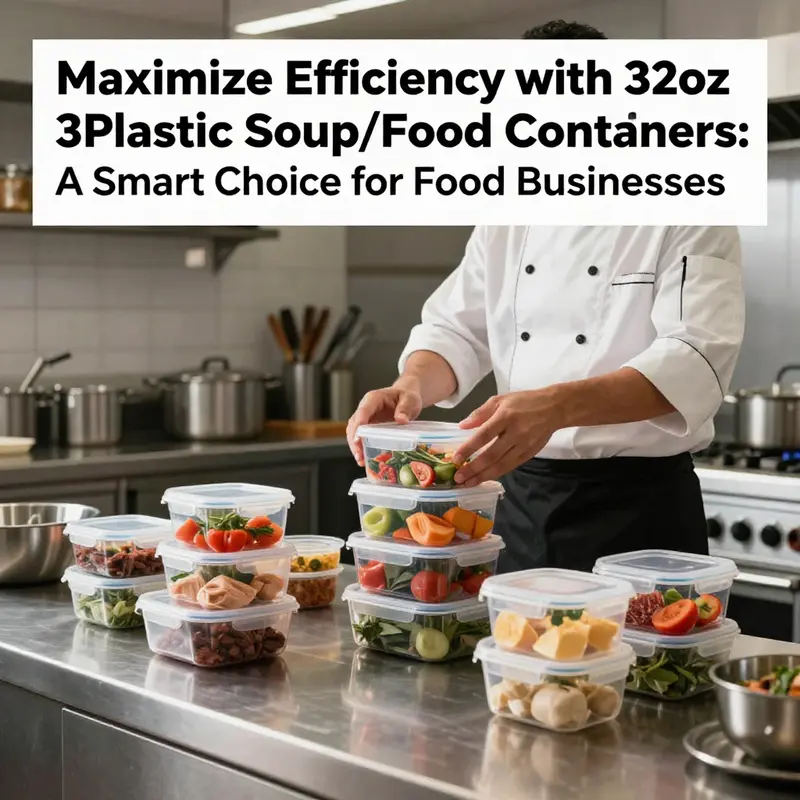
In the food service industry, choosing the right packaging can make a significant difference in operational efficiency and customer satisfaction. The 32oz plastic soup/food container with lid stands out as an ideal solution for various businesses, from bubble tea shops and restaurants to food trucks and catering services. This article will delve into the key specifications and features of these containers that enhance their usability. We will explore market trends and purchasing information to help businesses make informed decisions. Finally, we’ll cover how custom manufacturing can meet the specific needs of businesses, ensuring that they receive high-quality, tailored solutions that fit their operational demands.
Large-Volume Convenience: The Design, Safety, and Everyday Reach of 32oz Plastic Containers with Lids
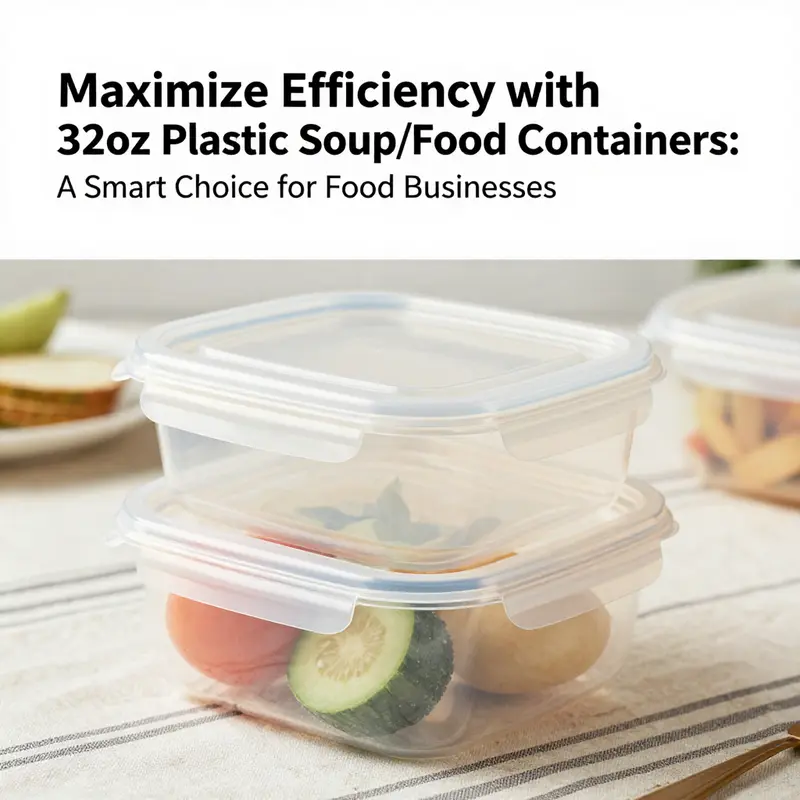
The practical elegance of a 32-ounce plastic container with a lid lies not in flashy features but in the quiet consolidation of capability, safety, and scalability. In kitchens that chart the rhythm of meal prep, catering, and take-away service, a single container can become an axis around which routines rotate. It must hold hot soups and cool salads with equal grace; it must be sturdy enough to survive a day on a delivery route; it should reveal its contents without unveiling a dozen hidden labels. The best of these containers do not shout their presence. They work obliquely in the background, making food safe, portable, and easy to manage across a spectrum of settings, from home meal-prepping sessions to high-volume catering operations. This chapter threads together the core specifications, material science, design pragmatics, and supply-chain realities that give 32-ounce plastic containers with lids their distinctive utility, while keeping the focus firmly on the practical needs of users who rely on them every day.
Material and safety considerations anchor the entire conversation. The primary material is a type of polypropylene PP plastic, chosen for its balance of durability and chemical stability. PP is known in the industry for resisting cracks and for handling repeated cycles of opening and closing without losing its seal. It is a food-grade option, meaning it is designed to be in contact with edible contents without transferring undesirable flavors or compounds. In this context, a crucial reassurance for users is the absence of Bisphenol A BPA; the containers are marketed as BPA-free, a point of emphasis that aligns with growing consumer expectations for chemical safety. The BPA-free label does not merely reassure a shopper at the point of purchase; it underpins confidence for meal-prep enthusiasts who reuse containers week after week and for institutions that bake these containers into their standard operating procedures. The emphasis on food safety extends beyond material choice to include regulatory alignments—certifications such as FDA compliance and ISO 9001 quality-management systems are frequently noted in supplier documentation. These signals collectively reassure buyers that the containers meet consistent safety benchmarks, a critical consideration for anyone who anticipates repeated use, freezing, microwaving, or dishwasher cleaning.
Capacity and dimensions offer a practical lens through which to evaluate a container’s fit within a kitchen workflow. The 32-ounce capacity translates to roughly 946 milliliters, a generous cavity suited to hearty soups, stews, grain-based bowls, salads with substantial portions, or voluminous leftovers. The typical footprint is compact enough to fit neatly in a standard refrigerator shelf yet ample enough to serve as a complete meal container for one person. The geometry—approximately 115 millimeters in length, 85 millimeters in width, and 140 millimeters in height—creates a thoughtful balance between surface area and depth. This balance matters in several ways. A shallow profile can help with quick cooling and faster reheating, while a deeper form supports larger portions without crowding the lid seal. The lid diameter, about 115 millimeters, ensures a snug, uniform seal that minimises the risk of leaks during transport. The clear plastic typically used for these containers adds a practical advantage: transparency enables quick content identification without having to remove the lid. In busy kitchens, this visibility reduces the time spent opening multiple containers to locate the right dish, a simple efficiency with real-world impact.
Design and functionality converge in features that matter during daily use. The seal is not merely a marketing claim but a functional attribute that protects contents from spills and maintains temperature—both critical for customer satisfaction in take-away contexts and for preserving the integrity of pre-prepared meals. A snap-on lid that closes firmly reduces the chance of leaks when a box is jostled along a courier route or stacked in a busy carryout area. In environments where space is at a premium, stackability becomes a meaningful attribute. These containers are designed to nest or stack in a way that saves shelf and freezer space when they are empty, and that organises them efficiently when they are filled. Clear visibility, as noted, doubles as a flow-enhancing property; it supports inventory management and reduces the time spent identifying contents during restocking or reordering. The combination of clarity, seal integrity, and stackability contributes to a user experience that feels straightforward yet is underpinned by careful engineering.
The multi-purpose nature of a 32-ounce container extends far beyond simple soup storage. They are routinely applied to meal-prepping regimes, where portions are measured and stored for the week ahead. They are popular for leftovers, offering a robust home for yesterday’s dinner that can be safely reheated later. They serve well for packing lunches that are sufficiently hearty to sustain longer workdays, trips, or school days. In catering or small- to mid-sized food-service operations, these containers provide a dependable solution for packing, portioning, and presenting large servings without compromising on integrity or portability. This cross-functional versatility is one of the reasons why the 32-ounce format has become a staple in many culinary arsenals. The fact that these containers can tolerate temperature swings—whether they face freezing conditions in a freezer or the higher heat of a microwave when reheated—adds another layer of practicality. The typical top-rack dishwasher compatibility further heightens their appeal for households and businesses that value ease of cleaning and reusability.
From a materials science perspective, understanding the resilience of PP under repeated thermal cycles helps explain why these containers perform consistently across a broad spectrum of use cases. PP’s heat resistance allows them to endure brief exposures to high temperatures that occur during microwaving, while remaining robust against cracking in cold storage. The combination of heat tolerance, chemical inertness, and mechanical strength means a single container can be used for both hot liquids and cold foods without warping or staining. In practical terms, this translates to fewer replacements and less waste over time, which remains an ongoing topic in food packaging discussions. The environmental considerations tied to reusability and end-of-life options—recyclability in many jurisdictions and the potential for compostable variants in others—add another layer to the decision-making process for buyers who weigh sustainability alongside cost and convenience. Consumers increasingly expect packaging to support reuse, recycling, or composting in alignment with local waste-management frameworks. The 32-ounce container with a lid, therefore, becomes a small but meaningful contributor to these broader environmental narratives when chosen with an eye toward durability and lifecycle.
Supply chain realities shape how users actually obtain these containers and how suppliers plan their production and logistics. On the consumer side, these containers are readily available through major online retailers, with multiple brands offering 32-ounce options that emphasize food-grade safety and leak-proof performance. Buyers exploring bulk purchases for a restaurant, café, or community kitchen often encounter options sold in larger packs that bring down per-unit costs and simplify stock control. The wholesale pathway frequently traverses a different ecosystem from consumer retail, as it intersects with industrial-scale manufacturing, customization capabilities, and international trade considerations. In regional supply chains, a strong network of manufacturers in coastal or river-adjacent provinces supports the rapid translation of design concepts into finished products. For enterprises seeking customization—whether it involves logo imprinting, specific liner materials, or packaging configurations—the landscape expands to include silkscreen or pad printing, lid variants, and even bespoke packaging counts such as 100, 500, or 1000 units per order. Delivery timelines reflect the scale and complexity of these engagements: while first orders may require longer lead times (for example, 30 to 45 days in some cases), subsequent orders often move faster (7 to 15 days) as production lines stabilise and logistics channels are established. The ability to meet FDA, ISO 9001, and other international certifications becomes essential when a buyer is coordinating with multiple facilities or when the containers are destined for markets with rigorous regulatory environments. The practical upshot is clear: the container must not only perform well in the kitchen but must also travel efficiently from the supplier to the end user, with predictable quality and reliable delivery timelines.
A nuanced appreciation of packaging and lifecycle also helps explain why many buyers lean toward the 32-ounce size as a default. It sits at a sweet spot between single-serving portions and shared family meals, making it adaptable to a wide range of use cases. In households, it supports portion-controlled meal prep and reduces the frequency of running to the store for smaller boxes. For restaurants and catering outfits, it scales up to bulk service while still preserving the modularity of a single-portion model that can be assembled with minimal overhead. Transparency, as a design choice, enhances the user experience by enabling easy identification of contents. In a busy service environment, the ability to casually glance and confirm the contents of a container contributes to speed and accuracy in order fulfilment. The practical implications extend to inventory management as well: transparent containers simplify stock checks, assist with product rotation, and reduce waste by helping staff quickly distinguish between soups, stews, salads, and other dish categories.
The procurement landscape—both for individuals and for organisations—reflects distinct priorities. Individuals purchasing for home use typically value straightforward access to a wide selection of packs and a clear emphasis on safety and value. The recommendation tends to be to select options described as BPA-free and food-grade, with an eye toward reputable retailers that offer reliable customer service and product transparency. For businesses, the calculus expands to include the cost per unit, the predictability of supply, and the ability to tailor packaging to brand identity and operational workflows. In many cases, the ability to source from regional manufacturers capable of meeting international standards such as FDA and ISO 9001, while also offering options for custom printing, becomes a decisive factor. When a business commits to bulk procurement, it may also explore the broader ecosystem of packaging components—dishwasher-safe designs, microwave-safe liners, and even printing options for logos or nutritional information. These features are not mere embellishments; they shape the customer experience, influence per-order margins, and influence how often containers are reused versus discarded after a single cycle.
The narrative around 32-ounce containers with lids must also reckon with the broader food-service ecosystem. In kitchens and catering environments, the equipment envelope extends beyond the container itself to include lids engineered for reliable sealing, containers designed for stacking efficiency, and menus that encourage consistent portioning. The clear plastic aesthetic integrates seamlessly with the visual language of modern take-away services, where customers may judge a meal’s freshness from the container’s appearance as much as from its contents. The ease of reheating in a microwave and the safety of freezing storage align with a robust meal-prep culture that thrives on convenience without compromising safety. These practical attributes—airtight seals, clear visibility, microwavable and freezer-friendly design, and compatibility with automated warewashing—collectively form a package that supports both household routines and professional throughput. In the end, the container is a tool that translates culinary intention into tangible outcomes: a hot lunch that remains hot enough to be enjoyed, a soup that travels without leaking, a salad that remains crisp, and a portion that travels well across a delivery route.
From a procurement perspective, some buyers also weigh the environmental narrative of packaging choices. Reusability becomes a central thread: a container that survives many cycles reduces the per-use footprint relative to a single-use alternative. It is not just about avoiding waste; it is about enabling a practical habit—prepping meals in reusable vessels, reusing the same container for multiple days, and opting for materials that withstand repeated cleanings in home dishwashers or in commercial warewashing equipment. The option to select variants that are recyclable at the end of their life adds another dimension to the sustainability calculus. Even where compostable or PLA-lined alternatives exist, the PP-based containers described here offer a familiar balance of durability, safety, and economy. They are a reminder that sustainability in packaging often involves a spectrum of choices rather than a single perfect solution, and that informed decisions can align convenience with responsible waste management.
As with any packaging decision, the practicalities of usage—how the containers integrate with existing workflows—shape their real-world value. In a home kitchen, a 32-ounce container with a secure lid simplifies weekly meal-prep routines. It supports batch cooking, portion control, and the ability to reheat meals without transferring to another vessel. In a restaurant or catering operation, the same container can be deployed to portion soups, burrito bowls, grain dishes, or salads, enabling streamlined assembly lines and predictable plating for service events. Its versatility allows staff to adapt quickly to changing menu demands, seasonal offerings, or event-specific requirements. Clear labeling and easy-to-read contents can be enhanced with simple branding touches or color accents on the exterior, while maintaining compliance with food-safety guidelines. The design’s longevity helps reduce the need for frequent repurchases, contributing to a more stable supply chain and more predictable budgeting for both households and businesses.
To connect this discussion to practical resources, consider how a reader might translate these specifications into action. For individuals, exploring options that emphasize clear plastic visibility, BPA-free safety, and microwave compatibility can yield reliable everyday containers for meals. For organisations handling large volumes, engaging with suppliers capable of bulk packaging and customization while maintaining adherence to safety standards becomes essential. In any case, the choice of container should support a workflow that minimizes fuss and maximizes reliability—from the moment a meal is prepared, through storage, transport, reheating, and consumption. The choice influences not just the user’s daily routines but the broader operational efficiency of kitchens and catering teams, especially when scaled up to serve hundreds or thousands of meals across multiple events or days.
One more thread worth highlighting is the global nature of the supply chain that underpins these containers. While the material and the design are universal enough to be implemented in many markets, the most efficient production and distribution networks often span multiple regions. The connection points—from raw material sourcing to moulding and finishing, through to warehousing, packaging, and export—shape both cost and lead time. For buyers seeking customization, suppliers can offer options including different imprinting techniques, multiple packaging configurations, and varying minimum order quantities. For those reading this in the context of a broader packaging strategy, the governance of these decisions matters: clear specifications, transparent quality assurance processes, and reliable after-sales support can convert a routine purchase into a durable, long-term capability for an organisation.
To situate this discussion in a concrete decision-making frame while preserving the narrative’s continuity, think of the 32-ounce container with a lid as a modular element in a larger system of food-preparation and service. It interacts with a range of other components—from lids and seals to labels and internal dividers—that collectively determine the user experience, waste streams, and operational efficiency. The container’s simplicity is its strength: a straightforward, well-engineered vessel that performs reliably in diverse contexts. Its success hinges on marrying sound material choices with thoughtful design details, meeting safety and regulatory expectations, and aligning with practical logistics considerations that keep costs predictable and supply lines robust. In this sense, the 32-ounce container with a lid stands as a compact but potent embodiment of how packaging design translates into everyday practicality, turning culinary intent into dependable, portable, and reusable food experiences.
For readers seeking deeper practical resources or examples of related packaging options in related contexts, a relevant internal reference can be found here: food-grade takeaway bowls with lids. This link provides an example of how similar food-grade takeaway solutions are described and marketed, illustrating how design choices—capacity, safety guarantees, and dimensional compatibility—translate into concrete product specifications that support both home and business use.
External reading can further illuminate the broader landscape of 32-ounce containers and their practical deployment in real-world settings. For a detailed overview of purchasing options and product attributes on a major retail platform, see the external resource: https://www.amazon.com/dp/B0CQKZP7VJ. This reference offers a snapshot of how buyers evaluate features such as leak resistance, safety certifications, and batch availability, which complements the design-focused perspective outlined here and reinforces how concrete procurement choices influence day-to-day operations in kitchens and catering environments.
In sum, the 32-ounce plastic soup/food container with a lid emerges as more than a simple receptacle. It is a well-balanced convergence of material science, ergonomic design, and supply-chain pragmatism that supports safe, efficient, and scalable food handling. Its capacity is ideally suited to a wide array of foods, from liquid soups to hearty salads, and its lid provides a reliable barrier against leaks while enabling easy transport. The container’s transparency, durability, and temperature resilience contribute to a user experience that is both intuitive and dependable. As supply chains continue to evolve and consumer expectations about safety and sustainability remain high, these containers illustrate how careful choices in packaging can harmonize practicality with responsible stewardship, enabling both households and businesses to move meals from preparation to plate with confidence and ease.
Sized for Sauce and Storage: The 32oz Lidded Plastic Container in a Changing Packaged Food Market
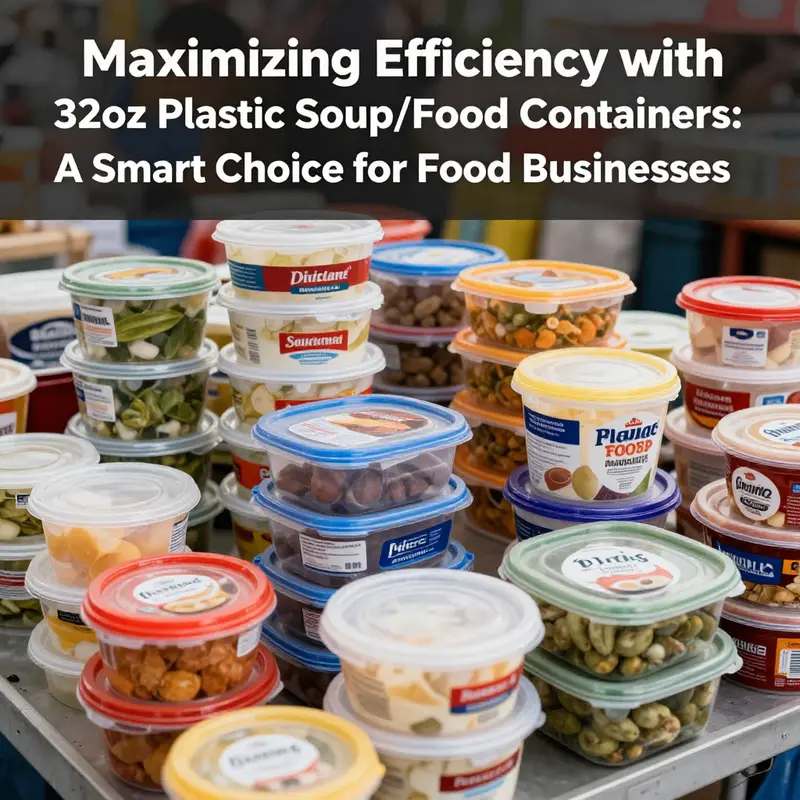
The 32oz plastic soup and food container with a lid sits at a practical crossroads where capacity, safety, and convenience converge. In foodservice and at home, the 32oz size—roughly 946 milliliters—has emerged as a versatile standard. It is large enough to hold a hearty serving of hot soup, a robust portion of chili, or a generous bowl of pasta, yet compact enough to be stacked, carried, and stored without crowding a cabinet or a car trunk. The common dimensions associated with this capacity—an approximate diameter of 11.5 centimeters and a height around 14 centimeters—make it a familiar silhouette in kitchens and on takeout shelves. Material choices for these containers are equally essential to their everyday utility. The mainstay is a food-grade polypropylene, a robust plastic known for its durability, clarity, and resistance to heat and cold. It is designed to withstand microwave reheating and freezing without compromising the contents, and more than a simple feature list, this combination of properties translates into real-world advantages: fewer spills during transit, reliable performance in both kitchen and delivery environments, and the ability to rewarm and reuse the container when appropriate.
A lid is not merely an afterthought but a core element of the packaging system. The snap-on cap on many 32oz designs provides a dependable seal that minimizes leaks and preserves temperature and texture during transport. In practical terms, that means a hot soup can travel from kitchen to desk without staining a bag or staining clothes, and a cold salad or grain bowl can be portioned and closed with confidence for midday meals or catered events. The lid also serves as a guard against moisture loss, helping to maintain the integrity of delicate ingredients like sauces, dressings, or toppings that might otherwise separate or pool during transit. The result is a container that supports a broad spectrum of offerings—from comforting soups and stews to chilled dishes and meal-prep assortments—without requiring a different vessel for each use.
Beyond capacity and seal, there is a broader story at play about how 32oz containers fit into the evolving landscape of packaging design. Transparent designs have become increasingly common, and the clarity of the container makes it easy for customers to identify contents and portion sizes at a glance. The ability to see what lies inside reduces the need for labeling or opening containers to verify contents, which is a subtle but meaningful enhancement to the user experience, particularly in busy kitchens, cafeterias, or catering setups. At the same time, many manufacturers emphasize a wide-mouth profile that facilitates easy filling and pouring. The larger opening is especially welcome when adding complex ingredients like grains, chopped vegetables, or layered foods, reducing the friction of assembly and improving overall service speed.
Another design evolution centers on space efficiency. Stacking features and stackable footprints on many 32oz models allow operators to maximize cold storage, pantry space, or shelf real estate in a transport vehicle. This matters not just for retailers and caterers but for households that meal-prep and ship meals to family members or roommates. In a world where delivery fleets and meal kits are proliferating, the ability to stack safely reduces the footprint of inventory and speeds up loading times, ultimately contributing to lower handling costs and more predictable delivery windows.
In the market, a clear divide exists between disposables and reusable high-density options. Single-use plastic containers still dominate many fast-service and takeout contexts due to their light weight and predictable performance. Yet a quiet shift is underway as consumers and operators search for durability, reusability, and long-term cost efficiency. High-density polypropylene variants are particularly well-suited to dishwashing and repeated use in household environments, where durability and resistance to wear and tear matter as much as initial price. The interplay between disposables and reusables pushes manufacturers to refine materials and closures that offer both safety and long-term value, whether a product is destined for a quick pickup or a multi-use kitchen routine.
Sustainability remains a central driver of choice, even as the 32oz format remains deeply rooted in practicality. On the surface, plastic packing may appear at odds with environmental concerns, but the industry is increasingly moving toward solutions that make recycling and waste reduction feasible at scale. Some players are exploring variants built from plastics with higher compatibility for recycling streams or with content that can be reclaimed more efficiently after use. The broader environmental conversation also embraces alternatives such as paper-based or hybrid packaging with biodegradable or compostable inner linings. These developments are not about replacing the 32oz plastic container in every use case but about expanding the set of options available to brands that want to balance convenience with environmental responsibility. In fact, flexible packaging strategies now often include options that combine the convenience of a sturdy 32oz vessel with liners or outer materials designed to support end-of-life recovery, enabling a clearer path toward circularity where feasible.
From a procurement perspective, the 32oz container is a commodity in many supply chains, yet the choices within that commodity carry meaningful implications for cost, reliability, and brand alignment. For retailers and foodservice operators looking to stock up, there is a spectrum of packaging configurations. Some buyers prioritize cost-per-unit for bulk applications, favoring standard, unprinted or minimally printed versions that slide into existing workflows with predictable performance. Others seek value-added features such as microwavable compatibility, dishwasher-safe finishes, or FDA- and ISO-certified manufacturing processes that reassure customers about safety and quality. For households and small offices, the decision matrix is different but still centered on reliability, ease of use, and the confidence that a container can withstand multiple trips in a bag, in a car, and through a microwave oven if reheating is part of the plan.
In the commercial sphere, the conversation often extends beyond the product itself to the wider ecosystem of packaging and logistics. Vendors may offer customization options including color, labeling, and even imprinting. The ability to tailor packaging with logos or promotional graphics can be important for catering firms, event organizers, or corporate cafeterias seeking to reinforce brand identity. At the same time, lead times and minimum order quantities become practical considerations. For a first order, a typical supplier might require a 30 to 45 day lead time to manufacture and ship a new configuration, with faster turnaround possible for subsequent orders, usually in the 7 to 15 day range depending on production capacity and location. Certifications such as FDA compliance, ISO 9001 quality management, and EU conformity standards are often highlighted to reassure buyers that manufacturing processes meet recognized safety and quality benchmarks. These facets—material choices, lid integrity, design for use, sustainability considerations, and procurement logistics—coalesce to shape how organizations select the right 32oz container for their particular context.
Within this broader framework, it is helpful to see how one might navigate a practical purchasing path. For household use, the goal is straightforward: find a product that is food grade, microwave-safe, leak-proof, and easy to clean. In that scenario, consumers typically favor a clear or lightly tinted container that makes it simple to gauge portion sizes. The lid should snap snugly and resist popping open during transport. For families managing regular meal prep, a pack of 12 or 24 units often strikes a balance between cost and convenience, with the flexibility to repurpose containers for leftovers or quick lunches. The consumer choice is guided by clear labeling around safety and performance, along with assurances about dishwashing compatibility and freezer resilience for those who prepare meals in advance.
For commercial buyers, the calculus shifts toward volume, consistency, and brand alignment. A typical program may involve selecting a baseline container that can handle both hot and cold foods, paired with an airtight lid that can tolerate a busy service schedule. In catering and takeaway operations, the ability to maintain temperature—hot or cold—across delivery routes depends not only on the container but also on the insulating components used in packaging configurations. In many cases, buyers will consider packaging that is compatible with stacking systems and insulated carriers, optimizing the overall efficiency of each delivery run. In addition, the reliability of suppliers—lead times, minimum order quantities, and after-sales support—becomes crucial. The ability to adjust order volumes in response to demand fluctuations, seasonal surges, or special events adds resilience to a business model built around fast service and consistency.
Another dimension often discussed by operators is the evolving emphasis on end-of-life outcomes. While plastic will remain a dominant platform for speed and versatility, retailers and foodservice operators are increasingly evaluating options such as recyclable PP variants, containers designed for easier separation of materials at the recycling facility, or packaging combinations that incorporate recycled content. The sustainability conversation does not demand a wholesale shift away from the 32oz plastic container but invites a broader view of how packaging choices fit within a brand’s environmental commitments. In practice, this translates into a careful weighing of trade-offs: the cost of upgrading to a more recyclable or compostable material, the impact on supply chains, and the real-world performance in both kitchen and customer hands. In markets where regulation or consumer expectations are pushing for greener options, suppliers may offer hybrids or laminated constructions that balance functional requirements with environmental considerations, enabling brands to maintain service levels while signaling responsibility to their customers.
In sum, the 32oz lidded container remains a core instrument in the modern dining and takeout toolkit. Its enduring appeal lies in a simple equation: ample capacity paired with reliable sealing, clear content visibility, and a design that supports both efficient handling and flexible usage. Yet the market around it is not static. It continues to expand with new materials, new coatings, and new ways to think about end-of-life outcomes. For decision-makers, the challenge is not just choosing a container that fits a recipe or a menu but selecting a system that harmonizes safety, performance, cost, and sustainability across the entire lifecycle—from procurement to service to eventual disposal or recycling.
For those who want a broader look at how these packaging ecosystems are evolving, there is a wider conversation about the kinds of takeout and meal-prep solutions that accompany the rise of 32oz containers. A related resource explores how disposable packaging can blend with more sustainable materials, including cases where paper-based or compostable liners sit inside otherwise traditional containers that seal tightly and travel well. This broader view helps frame the 32oz container not as a standalone product but as a component within a complex, evolving supply chain that aims to deliver food safely, conveniently, and with a reduced environmental footprint. Access to such perspectives can be helpful when planning a packaging strategy that scales with demand and reflects a brand’s values. See this reference for a broader look at packaging combinations and their implications: senang-disposable-biodegradable-kraft-paper-matt-lamination-clear-plastic-combo-pastry-dessert-tiramisu-cake-food-container-packaging.
As you consider the practical questions of buying versus building a program around 32oz containers with lids, a few guiding ideas can help align choices with needs. First, clarify the primary use case: hot soups and stews demand a robust lid with a secure seal and a container that tolerates microwave reheating. Cold bowls and salads benefit from a clear body that showcases contents and an easy-to-open lid that resists leaks in transit. Second, map the procurement path to the scale of use. Individuals may comfortably source small packs from general retailers, while foodservice operators will rely on bulk sourcing that offers predictable lead times and transparent pricing structures. Third, evaluate end-of-life considerations even within the realm of plastic packaging. If a brand is committed to sustainability, it may prioritize containers with recycled content or improved recyclability, while still meeting the practical demands of the kitchen. Finally, consider the broader packaging ecosystem, including compatibility with nested storage systems, labeling capabilities, and potential for customization that supports branding without inflating costs.
In this evolving market, information matters as much as inventory. Buyers who understand the technical basics—the capacity in liters, the exact material properties, the sealing performance, and the service terms of suppliers—will make smarter choices that pay off in reliability, customer satisfaction, and total cost of ownership. Those choices also position brands to respond more effectively to shifts in consumer demand, whether the driver is convenience, temperature control, or the desire for packaging that signals stewardship. The 32oz container with a lid is more than a container; it is a node in a network of products and processes that together shape how food travels—from kitchen to table, from catering event to home kitchen, and from store shelf to recycling stream.
External resource for broader context on packaging trends and sustainability in takeout containers: Walmart product page on 32oz disposable plastic meal prep containers with leakproof lids
From Resin to Ready-to-Ship: The Architecture of 32oz Plastic Soup Containers
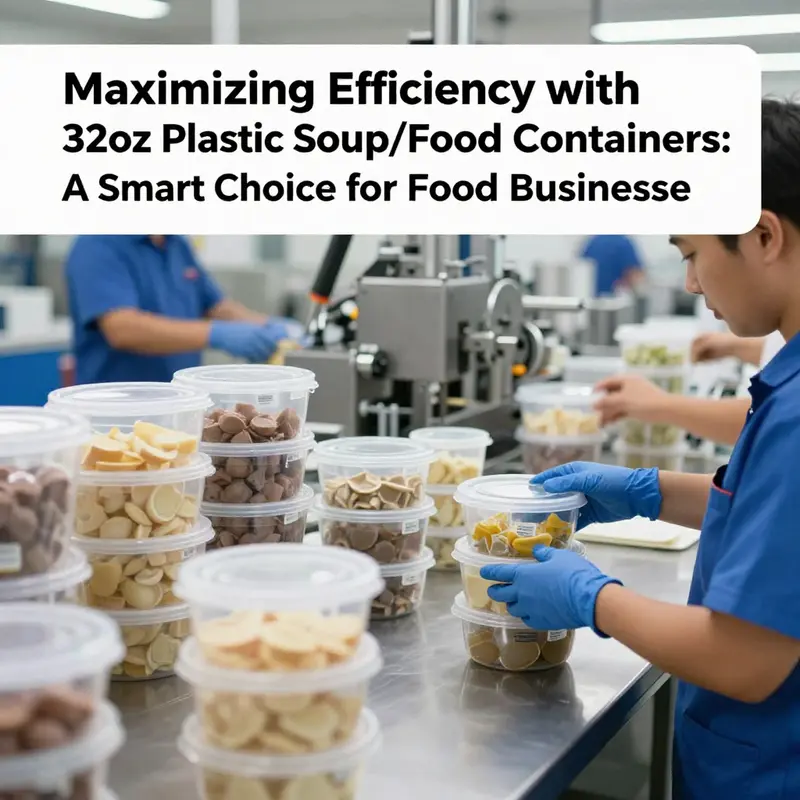
In the world of takeout packaging, the 32-ounce plastic soup container with a lid sits at the interface between heat, handling, and brand perception. Its job is to hold hot soups and hearty meals without leaking, while surviving the rough logistics of kitchens, carriers, and customers. The container is usually made from polypropylene (PP), a food-grade polymer chosen for its stiffness, heat resistance, and light weight. BPA-free is a common safety claim that reassures operators and diners that no BPA migrates into foods.
The physical form matters: wall thickness, base geometry, and lid design all influence sealing, stacking stability, and microwave performance. The snap-on lid must engage firmly, create a leak-resistant barrier, and be easy to open in busy service environments. The 32-ounce size is versatile enough for soups, stews, salads, and mixed bowls, making it a staple for takeout and catering.
From resin pellets to finished part, the journey emphasizes consistency. Injection molding tooling must reproduce a precise exterior geometry, while cooling channels and gate locations govern part dimensionality. Quality checks at multiple stages—after molding, after trimming, and after assembly—help ensure the lid fits squarely and the seal remains intact across thousands of cycles.
In practice, suppliers balance cost, performance, and sustainability. Material choices favor PP for durability and recyclability, while labeling and branding are layered into the process through color, logos, and printed information that stays legible under heat. Even as brands seek greener options, the core packaging function remains: to protect, transport, and present food with reliability.
Final thoughts
Selecting the right packaging is crucial for food businesses aiming to deliver quality and convenience. The 32oz plastic soup/food container with lid is an excellent choice for its durability, safety, and versatility. Understanding market trends and accessing customization options allows businesses to tailor their packaging solutions to fit their needs effectively. As you navigate the options available, remember that investing in quality food containers will not only enhance your offerings but also streamline your operations for success.