

In an era where food presentation and convenience matter more than ever, 3 compartment disposable food containers have emerged as indispensable tools for various sectors, from vibrant bubble tea shops to bustling catering services. These containers offer not only functionality but also a means to elevate customer experience and streamline food service processes. This article delves into the materials that make these containers a go-to choice, explores their diverse applications in numerous industries, examines the pressing sustainability trends impacting disposable packaging, and provides insights into the market potential and growth outlook for 3 compartment disposable solutions. Each chapter articulates the role these containers play and equips businesses with information to make informed choices.
null
null
Between Compartments: How 3-Compartment Disposable Containers Shape Modern Food Service
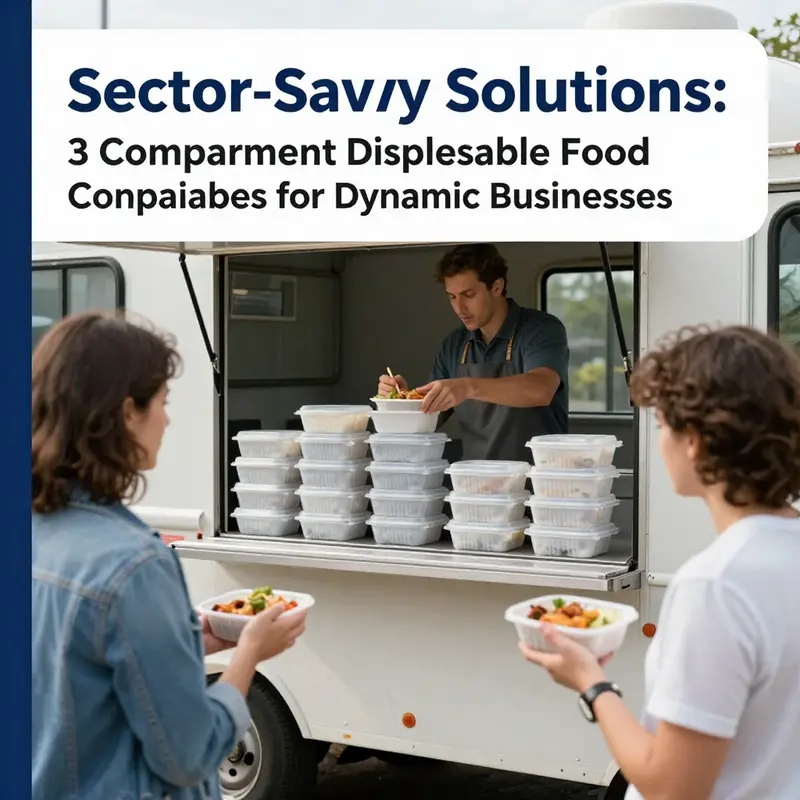
Three-compartment disposable food containers sit at the intersection of practicality and presentation. They are designed to preserve texture, flavor, and appearance while enabling portion control and efficient transport. The base tray, interior partitions, and a secure lid create a predictable geometry for kitchen staff and delivery teams. This design supports a consistent customer experience from plating to consumption, helping to prevent cross-contamination and maintain presentation. In fast-casual, takeout, catering, and meal-prep contexts, the three-compartment format provides reliability and efficiency. Materials such as PP, CPET, and bagasse each bring distinct performance and sustainability profiles that influence heat tolerance, moisture management, and end-of-life outcomes. Operators balance cost and functionality with environmental goals by choosing a mix of materials suited to specific menu items and service channels. Overall, the container becomes a practical touchpoint that harmonizes food integrity, handling efficiency, and brand values.
Redesigning the Tray: Sustainability Trends Redefining 3-Compartment Disposable Food Containers
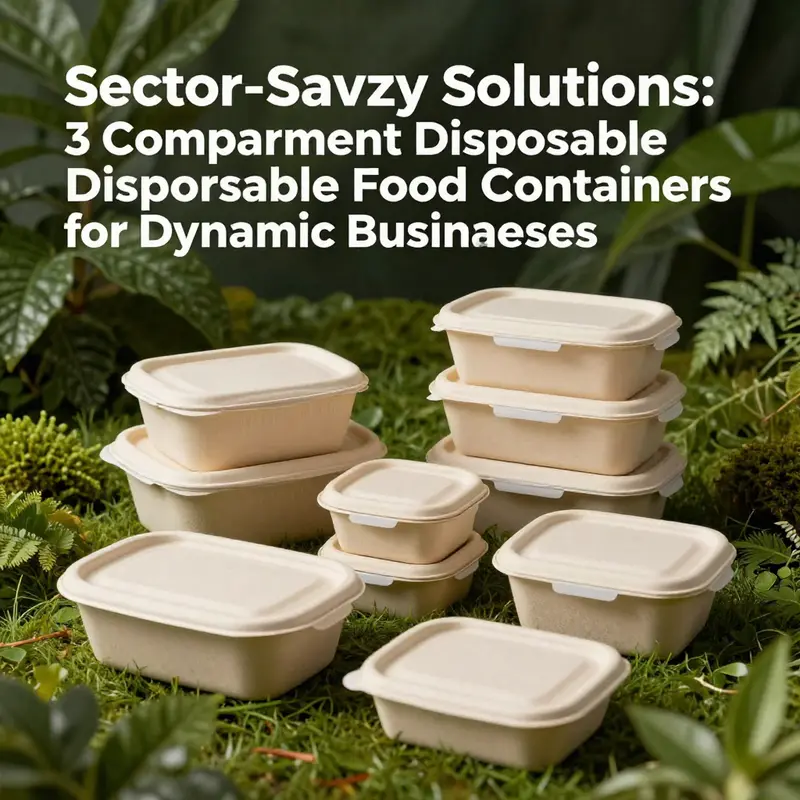
The sustainability landscape surrounding three-compartment disposable food containers is less a static choice of materials and more a shifting mandate that shapes every link in the supply chain. It is a trajectory driven by evolving consumer expectations, tighter regulations, and a growing recognition that packaging must do more than simply hold and transport food. Today, the conversation about these trays centers on how design, material science, and end-of-life pathways intersect to create packaging that respects both taste and the planet. The result is a marketplace where moisture and grease resistance, leak prevention, portion control, and shelf stability coexist with compostability, recyclability, and even reusability, depending on the brand’s goals and local waste infrastructures. In this sense, the three-compartment format is not just a practical solution for separating foods; it is a platform for accountability, traceability, and responsible consumption. The most visible trend is a clear move away from conventional petroleum-based plastics in regions with stringent environmental policies. Polystyrene, once a common choice for its rigidity and lightness, is increasingly viewed as an environmental liability due to its long decomposition time and the microplastic challenges it poses when discarded. Similarly, while polypropylene offers resistance to oils and moisture and remains microwave-safe, its long-term environmental footprint and end-of-life management continue to fuel scrutiny from regulators and consumer advocates alike. The net effect is a market pull toward materials that demonstrate not only performance but a demonstrable commitment to sustainability. This means embracing materials that can be returned, reused, or responsibly degraded without leaving behind persistent residues. The shift toward molded fiber options, particularly those derived from sugarcane bagasse, bamboo, and other plant-based feedstocks, reflects a broader intent to align packaging with circular economy principles. Sugarcane bagasse, in particular, has positioned itself as a readily scalable, renewable feedstock that can provide strong structural integrity while offering compostability under appropriate industrial conditions. The appeal is not merely ecological; it is also economic and practical. For many operators, these plant-based solutions reconcile the need for sturdy, leak-resistant compartments with the desire to reduce dependence on fossil-based inputs and to signal environmental stewardship to customers who scrutinize the packaging they encounter every day. The compatibility of these materials with existing production lines is a practical consideration as well. For instance, processes that were optimized for plastics can sometimes be adapted to bagasse or PLA-based composites with only modest adjustments. Likewise, advancements in barrier coatings and moisture management enable paperboard and molded-fiber systems to rival plastics in resisting oils and sauces, preserving the integrity of multiple food items within a single tray. In many markets, this dual achievement—strong performance and a credible sustainability narrative—has become a decisive factor for restaurants, caterers, and meal-prep operations seeking to differentiate themselves through responsible packaging practices. The narrative is complemented by innovation in material science that broadens the practical palette for tray designers. Modern PLA-lined paperboard, for example, has been engineered to deliver markedly better moisture and grease resistance than earlier iterations. This progress helps bridge a critical gap for paper-based solutions, which historically struggled to match the leak resistance of plastic trays. While these advances do not always render paper solutions universally heat-tolerant, they expand applicability to a wider range of ready-to-eat and takeaway scenarios. The result is a more diverse ecosystem where customers can choose packaging aligned with their brand’s environmental commitments without sacrificing performance. The industry is also turning toward certification schemes that translate sustainability claims into credible, verifiable standards. Frameworks such as OK Compost or BPI certification serve as navigational beacons for buyers who must demonstrate compostability to regulators or to consumers who wish to see tangible proof of end-of-life compatibility. These certifications do more than verify material composition; they provide a pathway for traceability and accountability across manufacturing and waste streams. For brands, achieving such credentials often means partnering with suppliers whose processes are certified green from raw material sourcing through finished goods. In this context, the role of the supplier becomes as critical as the material itself. When selecting partners, many organizations demand transparent disclosures about energy use, water management, waste generation, and emissions in addition to the typical material specifications. Regions like Zhejiang and Guangdong have emerged as hubs of eco-innovation, where factories combine advanced extrusion, molding, and coating technologies with stringent environmental controls to deliver packaging that meets the expectations of Western markets and the compliance requirements of the European Union and other strict regulatory regimes. The implications extend beyond the warehouse or kitchen. Smart packaging features are gaining traction as a way to communicate sustainability to consumers while also guiding end-of-life actions. QR codes embedded on the lid or exterior surfaces can link to sustainability reports, recycling instructions, or compostability guidelines. This transparency is increasingly valued by customers who want to understand the lifecycle of the products they purchase. It also supports brands that pursue circular economy models, enabling them to track usage and collect packaging at the point of sale for return, cleaning, or proper disposal. In many operational settings, the shift to sustainable materials coexists with, rather than replaces, a robust focus on performance and cost. PP and CPET remain widely used for their reliability and cost-effectiveness, especially in high-volume takeout and meal-prep contexts where a tight budget and predictable supply are essential. However, as circular economy pressure intensifies and recycling streams mature, the financial calculus increasingly includes the full lifecycle cost and the value of recoverable energy or materials. The price gap between plastics and bio-based, compostable, or molded-fiber options can narrow over time as waste-management systems become more efficient and as consumer demand for green solutions grows stronger. For businesses seeking to balance sustainability with economics, the decision may hinge on regional infrastructure. If a city or region supports industrial composting and has an established return-and-reuse network, bagasse-based or PLA-coated packaging can be highly viable. In other contexts, where composting is limited or uneven, certified recyclability or reuse schemes may offer a more practical path. The underlying shift is toward packaging that not only serves the immediate function of protecting food but also participates in a more intentional end-of-life story. Circular economy concepts translate into concrete business practices, including the adoption of reusable, returnable trays for high-end catering operations. In these models, durable trays—crafted from recycled materials and designed for cleaning and redistribution—are collected, sanitized, and circulated, reducing the volume of disposable packaging required over time. While this approach requires sophisticated waste management infrastructure and reliable collection systems, it represents a compelling pathway to decouple packaging growth from waste generation in settings where resources and regulatory incentives align. Consumer education also plays a vital role in shaping outcomes. At the point of purchase, brands can guide customers on how to dispose of or recycle their containers, reducing contamination in recycling streams and improving the overall efficiency of waste management. QR codes and printed instructions help demystify end-of-life actions, turning a simple takeaway container into a component of a larger sustainability narrative. The interplay between material science and consumer behavior is not merely theoretical. It manifests in real-world choices that brands make every day about which compartmental configurations to offer, what coatings to apply, and how to design lids that minimize leakage even when multiple sauces or sides are present. This is particularly important for three-compartment designs, where the potential for cross-contamination increases if seals fail or if the interior geometry does not accommodate precise portioning. In this sense, the three-compartment format becomes a constructive constraint that stimulates innovation rather than a barrier to progress. It invites designers to rethink geometry, seal technology, and material layering to achieve robust performance with an environmentally responsible footprint. Even as plant-based and fiber-based solutions gain momentum, there remains space for hybrid approaches that blend strength, moisture resistance, and compostability. Some operators explore laminates that couple a paperboard base with a thin, well-engineered bio-based coating. Others experiment with molded-fiber trays that mimic the rigidity of plastics while offering a path to compostability under industrial conditions. The challenge lies in aligning the performance expectations of diverse cuisine types with the realities of composting and recycling facilities in different regions. The roadmap ahead is one of collaboration across industries—between foodservice operators, packaging manufacturers, waste-management entities, and policymakers. Strengthening regulatory alignment with actual recycling and composting capabilities reduces the risk of “greenwashing” while accelerating the adoption of truly sustainable solutions. In practice, this means favoring suppliers with verifiable environmental credentials, ideally located in eco-innovation hubs that specialize in sustainable packaging and operate under green manufacturing standards. The focus on regional centers, such as those in Zhejiang and neighboring provinces, reflects a strategic understanding that sustainability is not a single material choice but a networked system of production, logistics, and post-consumer handling. Suppliers in these hubs are often prepared to tailor packaging to Western market requirements, ensuring that design, chemistry, and end-of-life pathways align with regulatory expectations and consumer values. As global export forecasts project growth in the disposable container market, the leaders will be those who couple performance with authentic sustainability breakthroughs. The proof is not only in tests of heat resistance, stiffness, and leak resistance, but in the ability to trace a product’s life from raw material to end-of-life disposal and to demonstrate responsible stewardship at every stage. For readers who want a tangible glimpse of what sustainable 3-compartment containers can look like in practice, consider the broader family of kraft-based, compostable, and recyclable options that are finding traction with forward-looking brands. Even as the industry experiments with new composites and coatings, there remains a recognizable value in packaging that can be composted under industrial conditions and that communicates its credentials clearly to consumers. For those curious about specific examples of packaging that balance these concerns, a wide array of suppliers is pursuing these goals with certifications and transparent reporting. This convergence of material science, design ingenuity, and environmental accountability signals a substantive shift: sustainability is moving from a niche consideration to a core strategic component of packaging design for three-compartment disposable food containers. It is not merely about reducing waste; it is about embedding responsibility into every design decision, from the choice of feedstock to the end-of-life instructions provided to the consumer. A chapter like this one would be incomplete without acknowledging the critical role of collaboration and continuous learning. Brands that embrace sustainability do not stand alone; they participate in knowledge-sharing networks, pilot programs, and cross-industry partnerships that test new materials, validate compostability claims, and refine recycling streams. In practice, this means engaging with suppliers who can demonstrate credible green manufacturing processes and who are prepared to adapt to evolving standards. It also means supporting waste-management infrastructure that can do justice to innovative solutions, whether through municipal organics programs, industrial composting facilities, or highly structured take-back schemes. In a market where packaging choices contribute to a brand’s environmental promise, transparency becomes both a policy and a preference. Consumers increasingly expect to see not only the product’s functional performance but also its lifecycle story. Therefore, the integration of sustainability into the core narrative of three-compartment containers must be authentic, measurable, and accessible. The takeaway for stakeholders is clear: to stay competitive and compliant, invest in materials and systems that deliver performance while reducing ecological impact, pursue certifications that validate your claims, and cultivate supply chains that can adapt to the pace of regulatory change and consumer demand. The journey is ongoing, with regional strengths in eco-innovation serving as catalysts for global adoption. As the market continues to expand, those who blend rigorous sustainability credentials with practical design innovations will shape the future of takeout, catering, and meal-prep packaging in ways that honor both appetite and the earth. Internal links can illuminate this path further. For readers exploring kraft-based options that fuse practicality with eco-friendliness, a detailed example of a kraft-based, lid-enabled bowl illustrates how a single container can embody multiple sustainability attributes while remaining suitable for a variety of cuisines and delivery contexts. senang kraft paper octagonal bowl 1200ml waterproof eco-friendly disposable salad bowl for snack candy pet food lid. https://cupbowlpack.com/product/senang-kraft-paper-octagonal-bowl-1200ml-waterproof-eco-friendly-disposable-salad-bowl-for-snack-candy-pet-food-lid/ The broader dialogue about eco-innovation is amplified when one considers the regional ecosystems that birth these solutions. China’s eco-innovation hubs are increasingly central to the conversation, with suppliers and manufacturers collaborating to align packaging innovations with strict environmental compliance frameworks in major markets. The interplay between regional manufacturing capabilities and international demand creates a dynamic where sustainability is not a peripheral concern but an integrated capability that can be scaled across borders. External resource: https://www.sustainabilityjournal.com/china-eco-innovation-hubs-sustainable-food-packaging-2026
Three-Compartment Disposable Containers: Market Dynamics, Materials, and the Path Forward
Three-compartment disposable food containers have emerged as a versatile solution for chefs, operators, and home cooks who value portion control, freshness, and portability. The market is driven by demand for ready-to-eat meals, takeout, and meal-prep services across restaurants, catering, schools, and healthcare facilities, with global disposable food packaging spending in the tens of billions and expected to grow steadily. Material choices balance performance, cost, and sustainability: polypropylene (PP) is affordable and microwave safe but limited by heat resistance; CPET offers stronger heat tolerance and durability, albeit with environmental considerations; bagasse and other plant-based options add compostability but can carry higher costs and moisture sensitivities. In addition to performance, brands are increasingly focusing on end-of-life options, certifications, and transparent labeling to meet regulatory and consumer expectations, which in turn shapes supplier offerings and packaging design. Design trends include customizable logos and branding on lids and boxes, leak-resistant seals, and stackable formats that support efficient transport and storage. Looking ahead, the market will likely see continued material innovation, smarter supply chains, and broader adoption of sustainable packaging that preserves food quality while aligning with circular economy goals. The result is a robust, adaptable category that enables consistent portioning, reduces waste, and supports brand storytelling across foodservice and retail channels.
Final thoughts
As the demand for convenience and efficiency in food packaging grows, investing in 3 compartment disposable food containers will equip businesses with the necessary tools to thrive in a competitive environment. Understanding the materials, applications, and sustainability trends will enable businesses to align their packaging choices with customer expectations and environmental responsibilities. With diverse options like Polypropylene, CPET, and Sugarcane Bagasse, there’s a solution for every need—from gourmet meals to casual takeout. Now is the time to embrace these versatile containers and elevate the dining experience.