
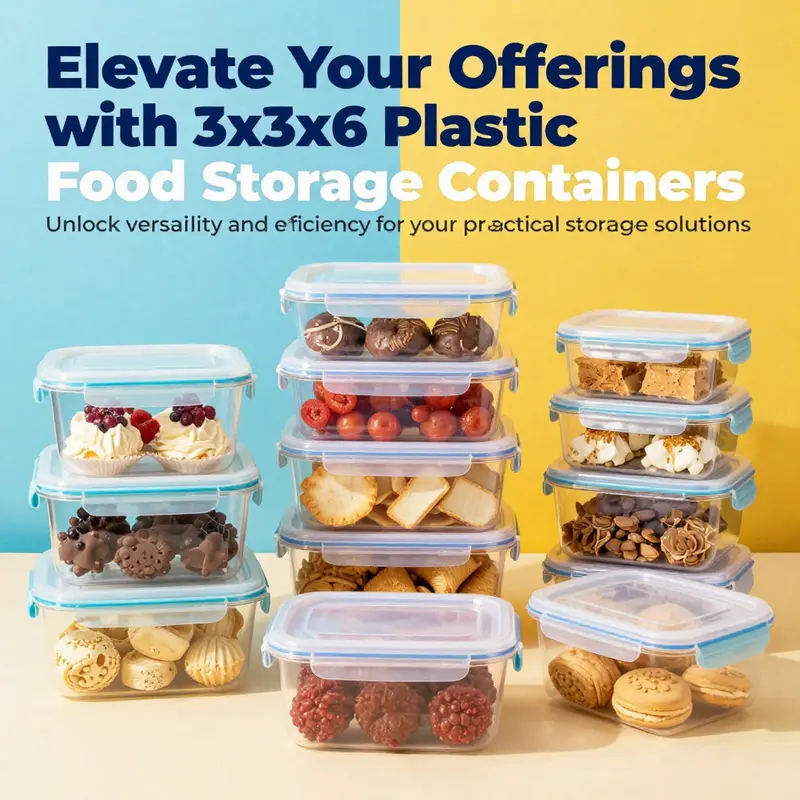
The rising popularity of small-scale food offerings in various sectors calls for effective storage solutions. The 3x3x6 plastic food storage containers provide an adaptable and functional option for businesses looking to enhance their service. This article delves into five key areas: the material and design of these containers, current market trends and economic insights, their versatile applications in different settings, safety standards, and consumer preferences regarding customization. Each chapter will provide valuable insights for Bubble Tea Shops, Restaurants, Food Trucks, Catering Services, Event Planners, and Corporate Procurement Teams, guiding them to make informed decisions about their packaging needs.
Material, Form, and Function: Unpacking the Design Logic of 3x3x6 Plastic Food Storage Containers
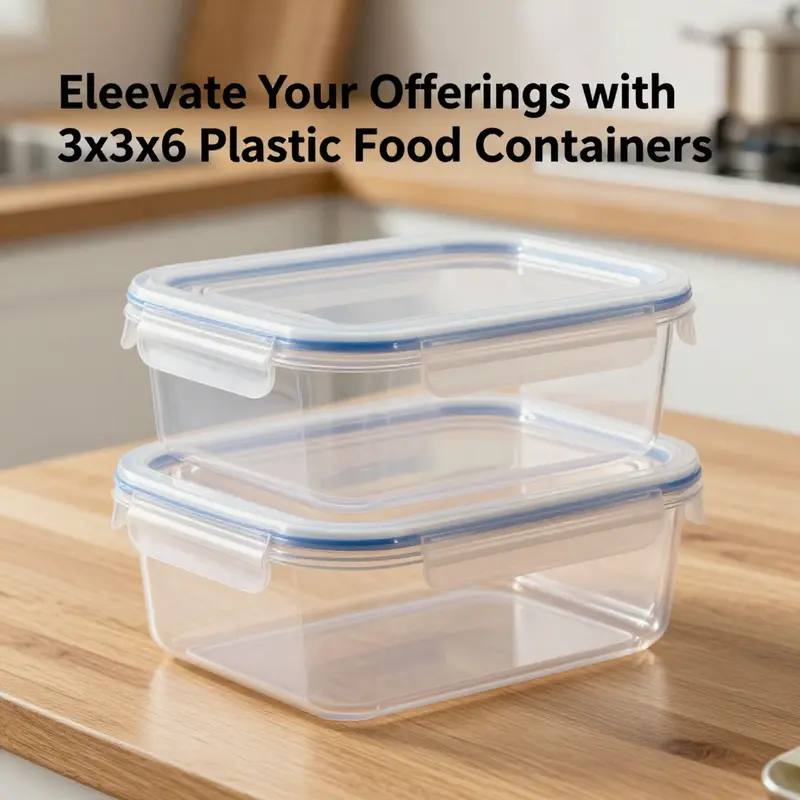
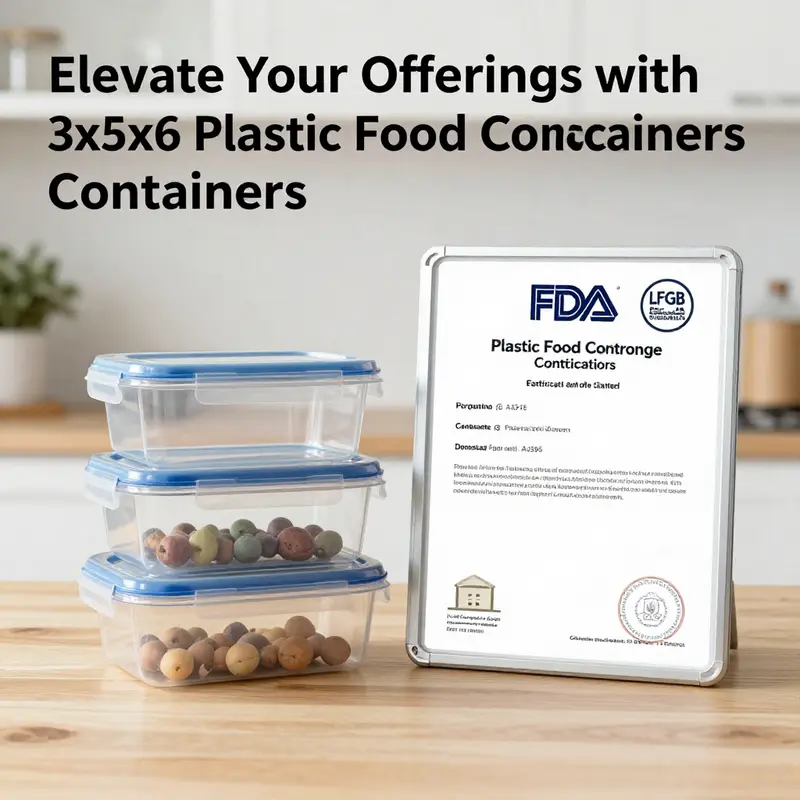
The 3x3x6 plastic food storage container is more than a simple box for leftovers or party favors. It sits at the intersection of chemistry, engineering, and everyday practicality. To understand why this particular size and configuration has become so ubiquitous, it is essential to examine how material choices interact with form and how that interaction shapes performance in real kitchens, bakeries, and event spaces. The basic material story often lands on food-grade plastics such as HDPE and PP, each chosen for a balance of safety, resilience, and cost. HDPE, or high-density polyethylene, is favored for its moisture resistance and impact safety. It forms a sturdy shell that can handle the bangs and drops common in busy kitchens, while its chemical resistance helps protect the contents from odors and contaminants that might otherwise migrate into stored items. HDPE is also widely recyclable, which adds an environmental dimension to its practical appeal. Yet HDPE has limits. It typically offers good barrier properties against moisture but is not the best choice for high-heat scenarios and prolonged UV exposure, which can lead to surface degradation. In contrast, polypropylene brings higher heat resistance into the mix. PP’s lighter weight coupled with improved resilience makes it a popular choice for reusable containers that see frequent cycling through dishwashers, freezers, and microwaves—where products are labeled as microwave-safe. The compatibility of PP with higher temperatures reduces the risk of cracking or warping during reheating, a common use case for portion-controlled meals. Together, HDPE and PP represent two sides of the same coin: safety and durability balanced against the practical realities of storage, temperature variance, and reuse. From a materials science perspective, both HDPE and PP are designed to minimize the migration of possibly undesirable substances into food, a crucial concern in food contact materials. Materials in contact with food are subject to diffusion or migration, a process that ritualizes the caution behind labeling and certification. Those labels—FDA, LFGB, and similar approvals—serve as a handshake between manufacturers and consumers, signaling that the plastic has met recognized thresholds for safety. The science behind this assurance is not merely regulatory. It rests on the predictable behavior of polymer chains, their interaction with food, and the way additives are controlled to avoid unintended transfer. In the context of a 3x3x6 container, the option to use certified food-grade plastics is not an afterthought. It is a design parameter that informs lid design, sealing performance, and surface finish, all of which contribute to long-term usability and the avoidance of flavor contamination or contamination risks that could arise from micro-leaks or adsorption of odors. The referenced material discussions reflect a broader body of work on how materials interact with food under common storage scenarios and temperature ranges, a topic explored in depth across current engineering and materials literature, including discussions on migration and safety in food contact plastics. In practice, designers and manufacturers deliberately select polymers to optimize not only safety but also consumer experience, which includes transparency for easy content identification and a modicum of stiffness that prevents squashing under seasonal storage demands. Transparency remains an important feature for these trays. It allows kitchens to quickly identify contents without opening each compartment, a convenience that reduces handling, minimizes exposure to air, and helps preserve freshness. The translucent or clear nature of the containers is not incidental; it is a design choice that enhances usability across home kitchens, bakeries, and catering services where speed matters as much as accuracy in portioning. The 3x3x6 designation—three rows, three columns, and six compartments per tray—embodies a modular philosophy that aligns with portion control and meal-prep workflows. The precise arrangement supports efficient stacking and storage, a practical benefit when refrigerators and pantry shelves are space-limited. In many models, the design accommodates a stackable lid or clip-on seal that contributes to moisture protection and freshness retention. The sealing mechanism—whether an airtight snap-on lid or a hinged cover—varies among suppliers, but the underlying goal remains consistent: minimize air exchange with the surrounding environment. When lids are properly integrated with the base, the combination yields a better barrier to external contaminants and more reliable preservation of the internal contents, particularly for dry items like cookies or small confections that can rapidly lose texture or flavor if exposed to air. The seal quality also informs the container’s freezer performance. For many users, freezing portions is a daily reality—prepared meals, frozen desserts, or ingredient kits that must endure extended storage. A robust seal helps prevent freezer burn and maintains the original texture and aroma of the contents. Likewise, dishwasher durability is a practical concern for busy users who rely on top-rack cleaning to keep turnover high and labor low. Smooth surfaces resist staining and odor retention when the containers are cleaned promptly after use, while rounded corners facilitate easier washing and reduce the risk of residual buildup in seams. The potential for customization also shapes the design conversation. For gift packaging at weddings or birthdays, a degree of personalization—logo printing on lids or sides—can enable the container to function as a branded package. The viability of such customization depends on the production process and the surface area available for printing, as well as the chosen material’s ability to hold a durable graphic through repeated use and washing. The environmental argument for reusability further strengthens the case for 3x3x6 containers. The idea is straightforward: a durable, reusable plastic container can replace a larger number of disposable packaging instances. Recyclability of HDPE and PP in many municipal programs adds a post-consumer value stream, albeit with caveats about local infrastructure and consumer disposal habits. In a world increasingly conscious of plastic waste, these factors push consumers to choose products with clear labeling, durable construction, and unequivocal suitability for food contact. Yet the model is not without limitations. UV exposure can affect some plastics, leading to brittleness or discoloration with prolonged sun exposure. For items stored in windowsills, car trunks, or sunlit pantries, this is more than a theoretical concern; it translates to real-life durability questions and potentially shorter service life. Heat sensitivity matters too. While PP demonstrates superior heat resistance to HDPE, not all 3x3x6 containers are explicitly labeled microwave-safe, and users must heed manufacturer guidance before attempting to reheat food directly in the container. Odor retention remains a practical headache for some foods, especially those with strong flavors or fats that can permeate the plastic over time. The experience of using these containers in different settings—from family kitchens to professional pastry shops—becomes a story of balance. The design is a careful negotiation between safety, convenience, and longevity. And while the performance characteristics described above hold across many products in this category, buyers should still verify certifications, reusability guidelines, and lid compatibility before committing to a given model. For readers seeking ongoing reference to the broader landscape of packaging and storage materials, one helpful path is to explore related content in the storage and packaging sections of relevant supplier and industry resources, such as the storage containers category linked here: storage containers. This holistically connects the practical concerns of material behavior with real-world choices about what to buy, how to use it, and how to dispose of it responsibly at the end of its life. The integrated picture—material selection, sealing performance, modular geometry, and environmental considerations—offers a coherent lens through which to view the 3x3x6 container as a system rather than a mere container. In the end, the chapter of everyday utility that these containers compose rests on a rigorous alignment between what the plastic can safely do, how the geometry supports organized storage and portion control, and how end users treat the product across cycles of use and reuse. The resulting utility is not simply about keeping food fresh; it is about enabling reliable meal planning, reducing waste, and presenting small portions with clarity and care. External references anchor this understanding in a broader scientific context, illustrating how migration and safety concerns shape the design choices manufacturers pursue for food-contact plastics. External resource: https://www.engineering.com/PlasticJugGuide
Small Box, Big Trends: Market Currents and Economic Outlook for 3x3x6 Plastic Food Storage Containers
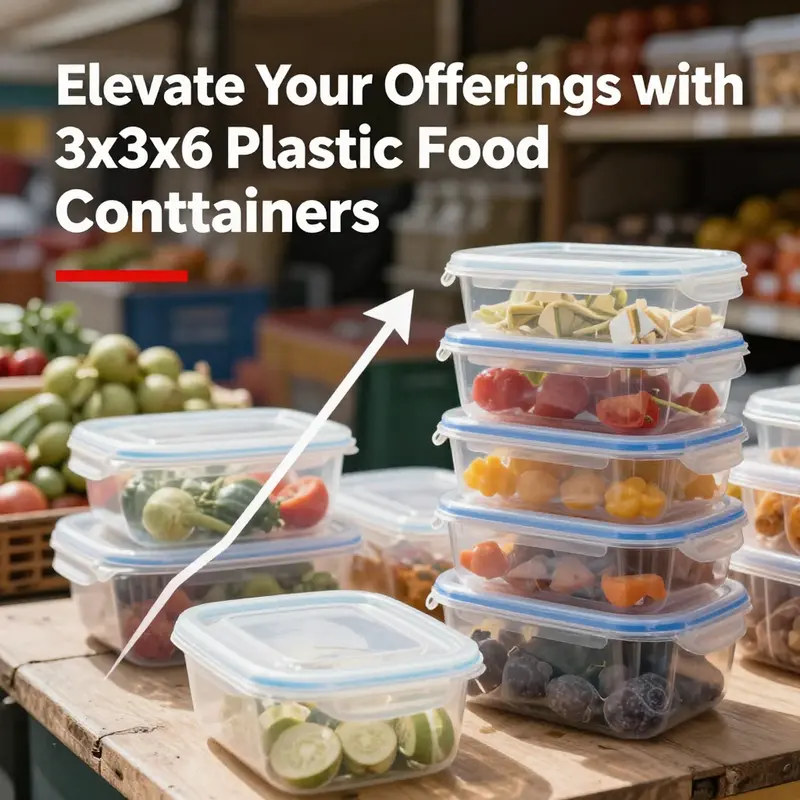
The 3x3x6 inch plastic food storage container is more than a simple vessel. It is a compact crossroads where convenience, safety, and sustainability converge, revealing how tiny units can reflect broad shifts in consumer behavior, regulatory policy, and global supply chains. In kitchens, bakeries, and party planning, this modest form factor serves multiple roles, from storing pastries and cookies to acting as gift boxes for celebrations. Its transparent walls provide immediate visibility of contents, a feature that resonates with today’s emphasis on information and control. Yet the real story lies beneath the surface: how this size class navigates evolving environmental rules, shifting consumer preferences, and the economics of a plastics-driven ecosystem. As the market for plastic food containers continues to grow, the 3x3x6 option serves as a telling test case for durability, safety, and adaptability in a world that increasingly values responsible production alongside affordability.
Regulatory pressure and sustainability concerns are shaping the trajectory of all plastic containers, including the 3x3x6. Governments around the world have tightened limits on single-use plastics and are pushing for materials that are recyclable, reusable, or compostable. In major markets, this translates into a push toward bio-based plastics such as polylactic acid (PLA) and polyhydroxyalkanoates (PHA), as well as improved end-of-life pathways. The aim is not merely to reduce waste but to redesign packaging so that even small containers contribute less to environmental burdens. For manufacturers, this shift raises questions about material performance, migration risks, and regulatory compliance across regions with divergent standards. Consumers are not passive participants; they increasingly demand transparency about sourcing and manufacturing, and they expect products to align with personal values about health and the planet. The 3x3x6 container sits at the intersection of these expectations: it must be reliable in everyday use while also offering a pathway to greener choices through recyclable or compostable options and clearer labeling.
Material choices reflect the tug-of-war between cost, performance, and sustainability. While traditional plastics remain economical for mass production, the industry is testing blends and new polymers that offer lower environmental impact without sacrificing clarity, strength, or sealing performance. Bio-based options may reduce reliance on fossil feedstocks, but they also introduce considerations about barrier properties, heat resistance, and compatibility with food safety standards. The end goal is to deliver a container that can withstand daily handling, preserve contents, and be responsibly disposed of or repurposed. In practice, this means clear, crack-resistant walls for easy content identification, robust lids with leak-proof seals for sauces and liquids, and design tweaks that make disassembly and recycling straightforward. The evolution toward sustainable materials is not a niche trend; it is becoming a baseline expectation that informs both product development and supplier selection in the wholesale market.
Innovation in sealing and multi-functionality is particularly impactful for the 3x3x6 format. Consumers expect more than mere containment; they want assurance that contents stay fresh and intact, whether stored in a pantry, a freezer, or a small office fridge. Modern versions emphasize enhanced sealing—tight, reliable lids that resist leaks and moisture intrusion—and compatibility with microwave, freezer, and dishwasher cycles. This multi-functionality broadens the container’s use cases, from quick reheating of bite-sized pastries to portion-controlled meal prep that fits into busy schedules. At the same time, smart features are moving from novelty to practicality. QR codes or NFC tags embedded in lids can link to recipes, track ingredients, or provide expiration reminders, making the container part of a broader kitchen workflow. For households and professional kitchens alike, modular, stackable designs that integrate with larger storage ecosystems improve space efficiency and organization, which is especially valuable in compact homes, cafes, or event venues where every inch of storage matters.
Design has become a key differentiator, particularly for younger consumers who value aesthetics and brand identity as part of their daily routines. A clear, high-visibility design that looks contemporary on a shelf can become an element of personal style, sharing on social media as much as it serves a practical purpose. Yet taste and trend must be balanced with safety and reliability. The health-conscious consumer segment seeks non-toxic materials with clear, credible safety credentials and minimal migration risk, underscoring the importance of transparent labeling and evidence of compliance with food-contact standards. Accessibility and ease of use also matter, particularly for the elderly or anyone who handles containers daily. Simple lid configurations, intuitive opening mechanisms, and durable construction reduce frustration and increase repeat use, reinforcing the container’s role as a dependable kitchen ally rather than a disposable afterthought.
The rise of on-demand food delivery, meal-prep subscriptions, and in-office snacking patterns has amplified the demand for small, durable, portable containers. The 3x3x6 inch size is a natural fit for single portions, sauces, or ingredient kits intended for quick assembly or travel. In this context, stability in design becomes crucial: a container that can travel without spilling while staying attractive and easy to open is a practical requirement. The need for sturdy, reusable packaging is also linked to the broader shift toward sustainable packaging practices, even as consumers continue to demand cost-effective options. The result is a market where price remains important, but value increasingly includes durability, ease of use, and the container’s potential to be repurposed rather than discarded after a single use.
From an economic standpoint, the global market for plastic food containers is expanding, driven by urbanization, the growth of e-commerce, and the expanding footprint of food service and home-delivery ecosystems. Recent forecasts place the market size at around USD 209.76 billion in 2025, with a projected rise to roughly USD 217.92 billion in 2026. This trajectory signals robust demand for standardized, durable packaging that can be produced at scale and sold across regions with varying regulatory regimes. The economics of plastic remain compelling in many segments due to material affordability and the efficiency of high-volume manufacturing. However, resin price fluctuations, supply chain challenges, and regional certification requirements introduce variability that suppliers and buyers must navigate. The ability to adapt—whether by switching to recyclable materials, adopting bio-based options, or offering modular designs that fit diverse storage needs—will separate leading suppliers from those who rely on a single, traditional approach.
Competition in this space is intense and interconnected with broader packaging ecosystems. Large, multinational players coexist with a network of regional manufacturers and specialty suppliers. Success hinges on a combination of scale, reliability, and the ability to deliver on regulatory and safety commitments. In addition, the capacity to customize—through logo printing or branded packaging—can be a differentiator for promotional events, wedding favors, or corporate gifts, aligning with consumer desires for personalized yet practical packaging. For buyers, the choice often extends beyond the container’s dimensions and price: it includes certification assurances, traceability of materials, and the ability to align with sustainability goals while maintaining consistent quality across batches.
In sum, the 3x3x6 plastic container embodies a broader set of market forces. It is a product whose value proposition is increasingly defined by its environmental footprint, its resilience in daily use, and its adaptability to evolving consumer lifestyles. The container’s future depends on material innovation that reduces ecological impact without compromising safety or performance, on sealing and functional enhancements that meet the demands of modern kitchens and workspaces, and on design sensibilities that resonate with diverse consumer groups while delivering reliable, repeatable results in high-volume production environments. Its path forward will be shaped by how well manufacturers can blend sustainability with practicality, how effectively they integrate smart features into everyday storage, and how they respond to the expanding ecosystem of storage solutions that accompany the growing importance of organized, efficient living spaces. For readers seeking a broader catalog of storage options and related packaging solutions, see the storage containers category for an expanded view of comparable formats and customization potential.https://cupbowlpack.com/product-category/storage-containers/
External resource: For a broader market context and deeper data on the global plastic containers landscape, consult the Global Info Research report on plastic food containers.
Small Boxes, Big Impact: How 3x3x6 Plastic Storage Containers Streamline Spaces, Savings, and Service
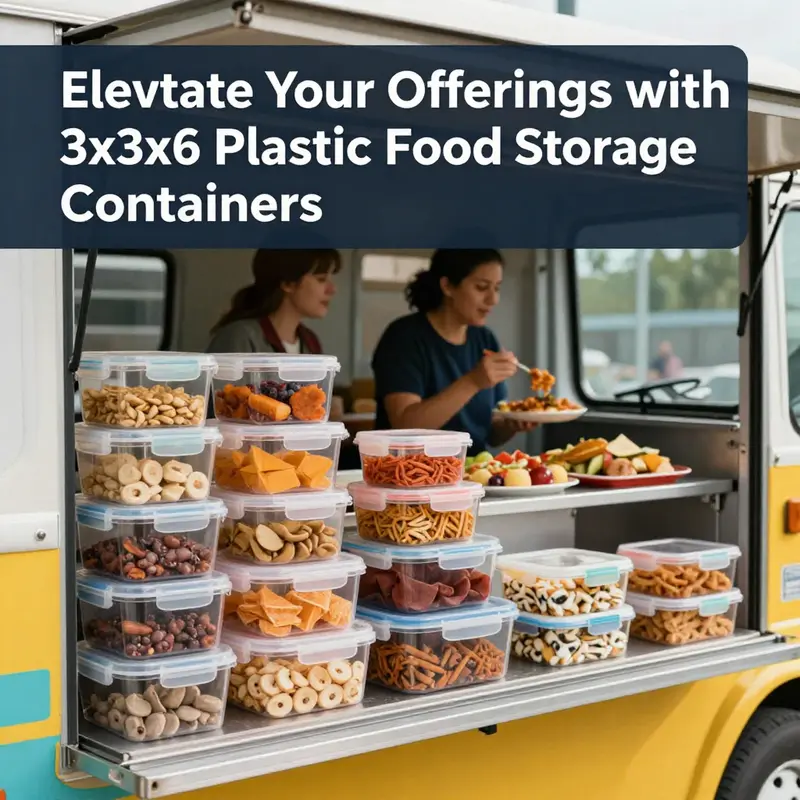
A small cube once tucked away in a drawer can quietly transform how a space operates. The 3x3x6 plastic storage container, modest in its dimensions, is powerful in its versatility. Its height and footprint translate into a unit that fits neatly into standard shelves, pantry cubbies, cafeteria lunchlines, and even the backs of delivery vans. What makes this size so effective is not any single feature but the harmony of design, material choices, and practical use cases that reveal themselves only when you work with them closely. The container’s 3 by 3 inches footprint, scaled to 6 inches in height, creates a modular system. It is just tall enough to hold a measurable portion, yet compact enough to nestle against others in a row or stack securely in a cooler or a cabinet. This balance matters in environments where space is a premium and speed matters as much as safety. In the everyday home kitchen, for example, five or six of these units can turn a crowded spice drawer into a readable, label-friendly landscape. The transparent walls—often a hallmark of this size range—grant immediate visual access to contents, reducing the rummage-and-alter routine that so often turns a quick task into a scavenger hunt. With small dry goods like spices, grains, seeds, or bite-sized snacks, the container becomes a structured citizen of the pantry, a uniform citizen that plays well with others in a system built for efficiency and cleanliness. Material safety underpins that reliability. When the containers are made from food-grade polypropylene, they offer a level of chemical stability that resists odors and stains, preserving the original character of stored items over repeated use. This is especially valuable for households that portion out snacks, store dried foods, or keep refrigerated ingredients for short periods. The PP base also tends to handle the cycling of freezing and refrigeration without becoming brittle or dull, an important consideration for spaces that lean toward meal-prep rhythms rather than single, one-off storage. Where cleanliness is a priority, transparency again becomes a strategic advantage. Seeing contents without opening lids reduces the number of times a product is exposed to air and handling, which subtly extends freshness and minimizes contamination risk. In environments where hygiene is non-negotiable—schools, daycare centers, or office break rooms—the ability to confirm contents at a glance supports safer, quicker service and reduces misplacement among countless daily tasks. The lid, often designed to seal tightly, is a critical companion in these settings. A secure seal helps maintain moisture control and prevents leaks, a feature that proves especially valuable when transporting contents between workstations, classrooms, or delivery points. The value of a well-sealed lid becomes clearer in scenarios such as shared kitchens or catering prep lines, where a robust seal prevents cross-contamination and keeps odors contained within a single unit. In many practical terms, the 3x3x6 container sits at the intersection of form and function. Its compact geometry supports organization while its materials and lids support safety and usability. The uniform shape supports stacking, so multiple units can be stacked in a refrigerator or stacked within a drawer, freeing up valuable space for larger containers or appliances. In a busy café or a school cafeteria, this stacking capability translates into fewer trips to the supply room, faster restocking, and a calmer service line where staff can locate the right portion without slowing the queue. The size also lends itself to precise portioning. For prepped ingredients—chopped vegetables, small fruit portions, or sauces held in modest quantities—the 3x3x6 box becomes a predictable, repeatable unit. This predictability helps kitchens standardize recipes, measure portions, and minimize waste. When every box holds an identical amount, forecasting yields and costs becomes more straightforward, a subtle but meaningful edge in highly repetitive service environments. The key to realizing all these benefits is applying the containers where their geometry makes sense. In a home kitchen, you may use them to organize a drawer of baking ingredients: tiny packets of baking soda, cocoa, or sprinkles can all slip into a single box while remaining easy to locate. In a bakery or dessert shop, they can cradle cupcakes, truffles, or fondant decorations for a party or event—held upright to maintain presentation and prevent crushing. The clear walls become a storytelling feature for gift packaging as well. When a box doubles as a gift vessel, the perception of value expands beyond the contents inside. A neatly arranged assortment of cookies or bite-sized confections in transparent boxes communicates care and attention to detail, making the packaging itself part of the gift experience. For event coordinators planning weddings or birthdays, the size becomes an instinctive choice for favors. The consistent dimensions make it easy to assemble, label, and customize, and the option to print logos or messages on lids or sides adds a personalized touch that enhances the overall impression. This is where procurement considerations intersect with design intent. Suppliers in the wholesale space frequently emphasize the need to balance price with durability, safety, and customization. The price range, often influenced by material and whether lids are included or customized, provides a practical lens through which buyers evaluate feasibility for large-scale use. A minimum order quantity, commonly starting around a hundred pieces, is a practical threshold for retailers and caterers who want steady, predictable supply without excessive storage of unused stock. However, for smaller event planning runs or classroom projects, some suppliers accommodate smaller batches, reflecting a recognition that flexibility can unlock new uses for these modest containers. A critical decision point concerns certifications. Food-contact safety certifications, such as FDA or LFGB compliance, become an important signal for schools, hospitals, or large food-service operations where regulatory requirements influence purchasing choices. Buyers weighing their options need to balance certification with the intended environment. If a setting demands rigorous hygiene standards, those certifications offer reassurance that the container meets established safety norms over many wash-and-use cycles. While the technical assurances of safety matter, the everyday realities of use often drive adoption as much as compliance. The 3x3x6 format embodies a pragmatic approach to storage that aligns with current layouts in kitchens, offices, and event spaces. Its portability, visibility, and compatibility with existing shelving and refrigeration systems reduce the friction of adoption. The ability to tailor lids and outcomes—whether to include a tight seal, moisture protection, or easy-open features—adds a layer of customization that helps buyers align the product with brand aesthetics or event themes. In thinking about the broader ecosystem of this container size, it is useful to map the flow from manufacturing to end use. Bulk wholesalers provide the leverage of cost savings and scale, while smaller buyers benefit from the flexibility to purchase in moderate quantities and to request customization such as logo printing on lids or sides. The transparency of the design supports quick audits in storage areas, where mismatched or nonuniform containers can create confusion. A consistent form factor, paired with reliable materials and sealing options, positions the 3x3x6 container as a backbone for efficient storage and dependable service. If you’re exploring options for your own setting, consider how you will store and retrieve items. Will you be repurposing them for gift packaging, kitchen organization, or prepped ingredients for a catered event? The answer informs whether you prioritize lighter weight plastics or more robust, leak-proof lids, and whether you need food-grade certifications or branding capabilities. For further exploration of options in this category, you can browse the storage containers catalogue that corresponds to practical packaging and organization needs: Storage Containers category. The right container in the right configuration can turn a crowded shelf into a clean, navigable map of contents, a factor that quietly supports both efficiency and satisfaction in how people consume and share food. In sum, the 3x3x6 plastic storage container is not just a passive vessel. It is an active facilitator of order, safety, and generosity in daily life. Its clean lines, transparent walls, and dependable lids combine to make it a practical unit that scales from home kitchens to professional kitchens, from school lunchrooms to outdoor events. It invites a disciplined yet flexible approach to food storage—one that respects space, prioritizes hygiene, and enhances the integrity of what ends up on the plate or the party favor. External resources and wholesale ecosystems further support its adoption by offering cost-effective access, customization, and safety assurances for diverse users. By considering whether lids are necessary, whether food-grade certification is required, and whether personalized customization matters, buyers can align this versatile container with their precise needs and budgets. For those seeking broader sourcing context beyond a single supplier, the wholesale landscape provides a spectrum of options that can adapt to growing or seasonal demand, ensuring that the practical elegance of this compact box remains accessible whenever needed. External resource: https://www.alibaba.com/wholesale/container-bin-set_12.html
null
null
Compact Confidence: Safety, Style, and Personalization in the 3x3x6 Plastic Storage Landscape
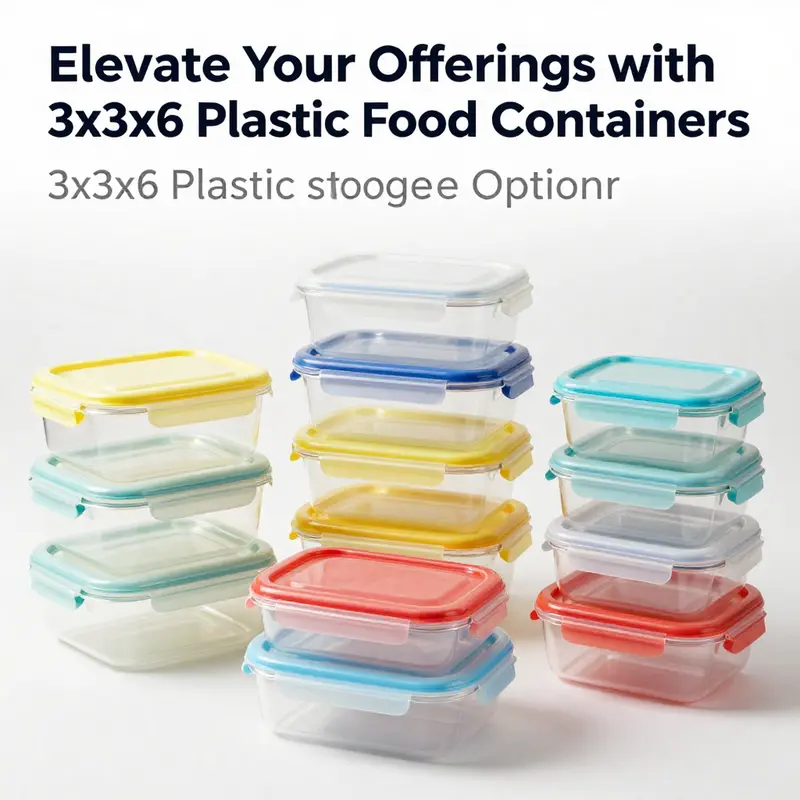
In the quiet choreography of a bustling kitchen, a small, clear box can do a surprising amount of work. The 3x3x6 inch plastic storage container is one of those unassuming performers, a compact vessel that balances portion control with everyday practicality. Its modest dimensions hide a versatility that extends beyond home use into bakeries, dessert shops, and even event planning where gift packaging and party favors demand both function and a touch of personal flavor. When we examine why these boxes endure, the thread running through consumer choices becomes clear: safety, transparency, and the opportunity to tailor the container to a specific task or aesthetic. The appeal lies less in novelty and more in how well a simple shape can adapt to diverse needs while keeping food safety promises intact and the kitchen organized.
A foremost consideration for contemporary buyers is safety. The modern consumer evaluates containers through the lens of health, not just convenience. Food-grade materials that resist chemical leaching are non-negotiable in most households and commercial settings. The preference leans toward polymers known for stability under typical storage conditions, particularly polypropylene (PP) and high-density polyethylene (HDPE). These materials are favored because they resist absorption of odors and flavors, maintain structural integrity over repeated use, and present a lower risk of toxic migration into stored foods. In the marketplace, this translates into clear signals from suppliers about BPA-free construction and compliance with food-contact standards. Such assurances are not merely regulatory checkboxes; they translate into confidence. When a container is labeled with credible certifications or is described as food-grade safe, it reduces decision friction for buyers who must balance cost, performance, and safety in a crowded shopping landscape.
Transparency, meanwhile, remains a defining feature. The visual clarity of a 3x3x6 container enables quick content identification, a quality that cuts down on waste and time spent rummaging through a crowded fridge or pantry. Clear packaging supports better inventory management, enabling a household to see if a pastry, a handful of cookies, or a small sample of candies is available at a glance. In a world where planning meals, party quotas, and gift assortments hinge on accurate counts, a see-through container acts as a constant, passive organizer. It also serves a practical purpose for small businesses and event planners who rely on accurate display and presentation. The transparency of the container becomes part of the product experience, letting the contents shine without demanding complex labeling to communicate what’s inside.
Form and function converge most effectively when the design considers space. The 3x3x6 profile is inherently compact, but buyers increasingly seek features that maximize efficiency in storage systems. Stackability, for example, is not merely about height; it’s about predictable stacking that minimizes wasted space in crowded shelves or retail displays. A well-designed lid that seals against moisture and keeps items dry without clamping down on the interior space is equally important. The lid’s gasket, the overall hinge mechanism, and the ease of opening and closing all affect daily use, especially in busy kitchens or service environments where many containers are opened and closed in rapid succession. These tiny mechanical details accumulate into real-world benefits: less spill risk, fewer spoiled items, and a more orderly workspace where staff or family members can quickly retrieve what they need.
Beyond safety and practicality, customization has emerged as a powerful differentiator. The modern consumer seeks containers that align with personal taste, branding, or event theming. Customization ranges from decorative touches to functional enhancements. One pathway is the addition of printed labels on lids or sides, enabling households to mark contents clearly. Another option is color variation within a family of containers, allowing a kitchen or a shop to code items by category—cookies in one color, pastries in another, and nuts in a third. For small businesses and home bakers, the capacity to imprint a simple logo or a brand motif on the lid can transform a standard container into a ready-made gift box or product sample that carries a subtle, cohesive identity. In some configurations, very light, food-safe inks are used to create a custom look without compromising safety or washability.
The range of configurations has broadened in step with consumer imagination. Sets may include varying heights or optional inserts that segment a single box into several compartments. This flexibility is especially valuable for organizing treats for events, where different components—mini cupcakes, candies, and small cookies—must travel together yet remain distinct. The ability to tailor a set to a party’s color palette or to a bakery’s signature assortment amplifies the perceived value of the container itself. When a shopper can select not only the size but also the internal layout or the lid’s finish, the container becomes part of a larger system, a modular tool that supports organization rather than merely storing items. For entrepreneurs, this modularity reduces the need for multiple different packaging solutions and helps create a consistent, on-brand experience from storage to presentation.
Sustainability has become inseparable from customization and safety. Consumers increasingly gravitate toward reusable designs that can be recycled or repurposed at the end of their life cycle. The conversation around 3x3x6 containers often moves beyond a single-use mindset to consider long-term use, repairability, and the potential for rebranding with renewed materials. Brands and manufacturers respond by highlighting recycled content or post-consumer waste inputs, along with options that emphasize durability and reuse. The broader sustainability narrative also invites attention to end-of-life options, such as recyclability in municipal programs and the possibility of returning or repurposing containers in a circular economy framework. This shift reflects a fundamental consumer value: products should perform well today while reducing environmental impact tomorrow. Even when the container is small, its lifecycle story matters to buyers who weigh purchase decisions against personal ethics and community impact.
From a consumer behavior perspective, the trend toward customization is closely tied to the perceived value and the user’s sense of control. The literature on food packaging behavior highlights that people increasingly associate safety, transparency, and sustainability with overall product quality. This triad shapes willingness to pay for enhanced design features, while still recognizing price sensitivity in bulk purchases. In scenarios like home catering, wedding favors, or party gifts, the ability to customize a standard container becomes a practical differentiator that can elevate a simple treat into a memorable experience. The desire for a coherent aesthetic—whether that means matching a color scheme for a wedding or aligning with a shop’s existing branding—drives buyers to seek out containers that can be easily personalized without prohibitive cost or complexity. In this sense, a 3x3x6 container is not just a storage tool; it is a canvas for expression, a small but telling part of a larger narrative about care, presentation, and responsibility.
The market landscape reflects these shifting preferences in predictable ways. On wholesale platforms, buyers encounter a spectrum of options, from basic, transparent PVC or PP boxes to more sophisticated solutions with certification, customization, and multi-pack configurations. The price spread often correlates with material quality, certification status, and the degree of customization offered. Minimum order quantities can shape purchasing decisions for small businesses and individuals alike, nudging some toward smaller batches for trial runs and others toward larger orders for ongoing events. For anyone evaluating these products, the key is to map needs—whether a simple, reusable container for daily snacks or a gift-ready box that signals thoughtfulness—to the features available: material safety, clear visibility, secure sealing, and the potential for branding or color coding. Think of the container not as a one-off purchase, but as part of a storage ecosystem that supports efficiency, reduces waste, and enhances presentation.
For those navigating pantry organization or seeking to align a purchase with a broader brand or event theme, a practical source of inspiration and options can be found in the storage containers category. This resource can help buyers compare sizes, lid designs, and customization capabilities across a range of products. storage containers provides a convenient starting point to explore how small boxes can be integrated into a larger system that respects safety, aesthetics, and sustainability. In assembling a lineup for a kitchen, bakery, or celebration, that systemic view matters: it’s easier to maintain consistency when each container choice echoes the same standards and the same attention to detail.
As part of a broader reading on consumer preferences and material choices in food packaging, researchers emphasize the convergence of safety, transparency, and sustainability. The narrative is not merely about what a container can hold; it is about how it does so with less risk, more clarity, and greater respect for the environment. This is the heartbeat of the 3x3x6 category: a compact form factor that invites customization without compromising safety, a transparent design that makes content legible, and a durable, reusable promise that aligns with a modern ethos of responsible consumption. The choices buyers make are less about chasing the latest trend and more about selecting a dependable system that can flex with changing needs—whether the day calls for a few cookies for the family, a batch of cupcakes for a party, or a curated gift box that speaks to a brand’s story. In that sense, the 3x3x6 container embodies a philosophy of kitchen efficiency: every inch, every seal, and every label contributes to a better organized, better presented, and more thoughtful food storage experience.
External reading can deepen this understanding. For those interested in the broader implications of safety, transparency, and sustainability in packaging, a detailed study offers additional context about consumer behavior and material choices in food storage contexts: https://www.sciencedirect.com/science/article/pii/S0958166924001782.
Final thoughts
The 3x3x6 plastic food storage containers represent an ideal solution for various food-centric businesses, catering to diverse application needs while ensuring safety and style. Their capacity, combined with customization possibilities and adherence to safety standards, not only enhances your service but also resonates with consumer demands. Embracing these containers can lead to significant improvements in organization, presentation, and customer engagement. This investment in packaging quality could very well streamline operations and elevate overall customer satisfaction.