
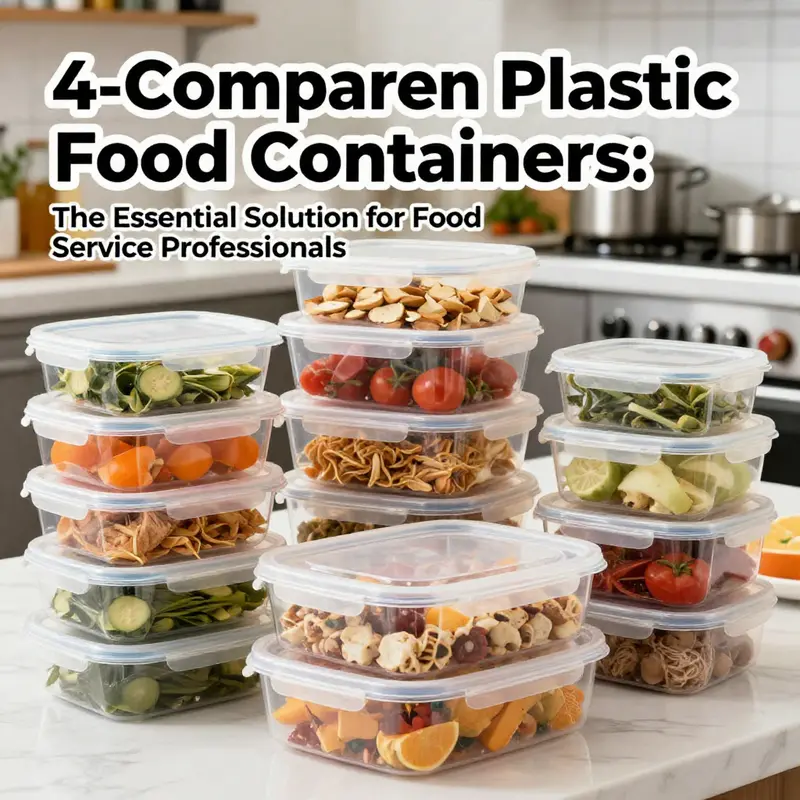
In an era where efficiency and presentation are key in the food service sector, the 4-compartment plastic food container serves as an invaluable tool. These containers are designed to cater to diverse culinary needs, ranging from meal prep in restaurants to catering services for events. Their versatility not only allows for organized meal arrangements but also supports businesses in achieving their cost-effectiveness and branding goals. In the following chapters, we’ll explore the various applications of these containers in meal prep and catering, analyze the materials that ensure their durability and safety, delve into the economic implications for food service operations, consider eco-friendly alternatives, and highlight customization opportunities that enhance brand identity.
Seamless Portions: How 4-Compartment Plastic Containers Shape Modern Meal Prep and Catering
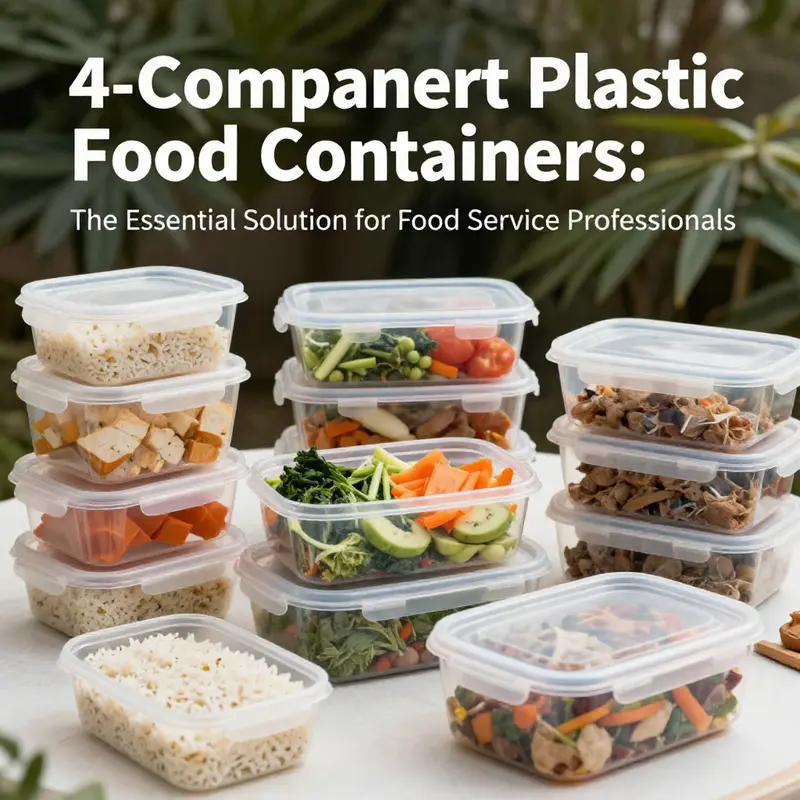
Four-compartment plastic containers have become more than just packaging; they are a disciplined approach to how meals are planned, stored, transported, and enjoyed. In kitchens that prioritize efficiency and consistency, these multi-compartment vessels enable a single, coherent workflow: each section holds a distinct element of a meal, preserving its own texture and temperature while preventing cross-contamination of flavors. For home meal preppers, the logic is the same but scaled to individual needs. A well-sized four-compartment box can separate proteins from starches, vegetables from sauces, and even a small dessert from the rest of a balanced plate. This design supports precise portion control, which is not merely about reducing waste but about guiding daily eating patterns. It helps maintain dietary goals, whether those goals are keto, vegan, low-sodium, or high-protein, by providing a clear, uncompromised view of what a meal contains. The result is a practical tool that translates dietary planning into a tangible, portable experience. The containers’ transparency is not incidental. When users can see each item distinctly, it reduces the guesswork that often accompanies meal prep. It also makes labeling and compliance easier for kitchens that must meet particular nutritional standards. In the setting of a busy kitchen or a crowded event, this clarity translates into speed. A cook can assemble four compartments in minutes without worrying about cross-flavor contamination, while servers and caterers can deliver plated or buffet-style meals with consistent presentation. The versatility of four compartments also extends beyond the daily routine. In catering, these containers excel for buffet lines or boxed lunches where uniform portions and clean lines matter. They support a predictable service flow, ensuring that a guest receives a balanced combination of protein, grains, vegetables, and a sauce or spread. The design, then, is as much about how it functions as about how it looks on a tray. The ability to visually segment a meal aligns with how many diners perceive value: a neat, well-arranged plate signals thoughtfulness, portion integrity, and an expectation of consistent temperature from the first bite to the last. In practice, this translates into fewer substitutions, reduced friction during service, and a smoother handoff from kitchen to table or to takeaway. Materials chosen for these containers play a crucial role in delivering that reliability. The most common options—polypropylene (PP), polystyrene (PS), and PET—offer a blend of strength, lightness, and cost efficiency that makes them well-suited for both home use and large-scale operations. PP, the workhorse in many meal containers, brings heat resistance that is valuable for reheating or keeping hot components warm during transit. With the right labeling, such containers can be microwave-safe, allowing users to reheat meals directly in the container without an inconvenient transfer. This capability supports the modern habit of meal-prep services delivering ready-to-eat options that customers can reheat in minutes. Yet, the practical reality is that not all PP or PS containers are universal in every kitchen; consumers should always check microwave and dishwasher guidelines on the labeling. Another benefit is their grease and moisture resistance, which helps preserve the integrity of sauces and oils that might otherwise seep into neighboring compartments. When used correctly, these materials resist the common pressures of transport—from stacking to jostling in a delivery bag—without compromising the seal on the lid. The lid, often equipped with a reliable gasket or a snap-on mechanism, is more than a simple cover. It is an essential partner that preserves freshness, controls spills, and helps maintain the separate identities of each meal component, especially in transit where shifts in temperature could otherwise erode texture and flavor. For operations that prioritize sustainability, there is a growing segment of eco-friendly options based on biodegradable materials like cornstarch. Compostable alternatives address the environmental concerns that accompany single-use packaging while still delivering the pockets of separation that four-compartment designs promise. The trade-offs in this space—such as slightly different heat tolerance, storage stability, or composting requirements—are becoming a central part of strategic conversations in both home and commercial settings. Businesses that run meal-prep services or catering operations increasingly explore these options to align packaging choices with broader sustainability goals, whether asked by clients or mandated by local regulations. Transitioning to greener materials may also influence branding and customer perception, signaling a commitment to responsible waste management without sacrificing the reliability customers expect from a dependable take-away or meal kit experience. As with any packaging choice, the economics matter. For bulk procurement, four-compartment containers are frequently sold through wholesale channels, with pricing models that reward volume and predictable demand. The market often presents MOQs in the thousands, which suits restaurants, meal-kit providers, and event caterers planning regular, ongoing service. Custom branding is another layer of value; many suppliers offer the option to imprint logos or information on lids or containers, turning a practical box into a marketing and branding asset that travels with a customer’s meals. In short, the four-compartment design is not just a practical solution; it is a flexible platform for scaled meal preparation, consistent presentation, and responsible hosting. Its strengths reveal themselves most clearly when we watch a kitchen adapt to varied dietary plans, or when a caterer seeks to maintain a uniform dining experience across dozens or hundreds of service points. The compartments give chefs a reliable framework within which to express culinary intent, while consumers gain confidence that their meals will arrive ready to enjoy, with textures and flavors preserved as intended. This synergy—between form, function, and user experience—explains why four-compartment containers endure as a staple in meal prep and catering. A broader look at how these formats fit into industry standards and production realities helps illuminate why they behave so reliably under pressure. Mold design and production processes are engineered to optimize wall thickness, lid fit, and seal integrity, ensuring that even when a container is stacked high in a shipment, each bite remains discrete and appetizing. These technical considerations underpin the everyday simplicity we rely on: grab a box, know what’s inside, and trust that it will perform from kitchen to table. For readers curious about related packaging formats and supplier approaches, this example provides a snapshot of the ecosystem. senang-750ml-eco-friendly-kraft-rectangular-take-away-salad-paper-container-square-paper-bowl-with-lid offers a window into how multi-compartment designs sit within a broader family of takeaway solutions, including eco-conscious options that complement the four-compartment ethos without sacrificing practicality. While it is not identical in material or configuration, the shared objective—clarity, efficiency, and dependable performance—binds these formats together in kitchens that prize consistent outcomes. For a deeper dive into the technical standards shaping these containers, industry guides emphasize the importance of precise mold design, material performance, and the interoperability of lids and bases. A complete, authoritative treatment of these standards appears in dedicated reference materials that catalog the essential properties and testing criteria used to certify reliability across commercial applications. Such resources help manufacturers optimize performance while helping buyers assess suitability for their specific service model, whether it involves daily meal prep cycles, high-volume catering, or seasonal events. The practical implications extend beyond a single use. When a business commits to four-compartment containers, it commits to a broader operating rhythm: standardized portions, predictable reheating, reliable transport, and a coherent brand experience across every meal that leaves the kitchen. That rhythm is particularly valuable in meal-prep services that need to balance dietary variety with logistical simplicity. It enables kitchens to assemble a week’s worth of meals with consistent quality, knowing that each container preserves its internal boundaries and resists leakage. It also supports operators who need to manage cold-holding and reheating, as well as those who aim to minimize cross-contamination risks between components with different storage temperatures or textures. In catering, this translates into smoother service during peak hours, reduced plate waste, and the ability to deliver the same visual appeal regardless of audience size. By combining four distinct compartments with robust materials and thoughtful lid design, manufacturers enable a seamless chain from preparation to consumption. The result is a packaging solution that does more than hold food; it reinforces the culinary intent, respects the integrity of each component, and aligns with the evolving expectations of consumers who value convenience without compromise. External considerations, such as end-of-life disposal and recyclability, remain part of the equation, especially as regulators and customers increasingly demand clarity about environmental impacts. While plastics offer advantages in performance and cost, ongoing dialogue about sustainable options and responsible waste management continues to shape how these containers are designed, marketed, and used in both homes and commercial kitchens. The overall takeaway is clear: four-compartment plastic containers deliver a practical, scalable, and customer-focused approach to meals, enabling precise portioning, clean presentation, and dependable performance across the diverse settings where meals are prepared, transported, and enjoyed. External resource: Understanding 4 Compartment Black Disposable Plastic Bento Lunch Box With Clear Lid: Complete Guide to Standards, Properties, and Industrial Applications.
Layers of Reliability: Material Integrity, Durability, and Safety in 4-Compartment Plastic Food Containers
Material integrity sits at the heart of every 4-compartment plastic food container. These multi-compartment vessels are not just convenient; they are also a promise to keep meals separate, preserve freshness, and protect safety across delivery, meal prep, and catering workflows. In practice, the choice of polymer shapes every facet of performance, from how heat transfers through a lid to how a container travels through a crowded kitchen, onto a delivery route, and finally into a consumer’s refrigerator. The dominant materials—polypropylene (PP), polystyrene (PS), and polyethylene terephthalate (PET)—each carry a distinct set of advantages and constraints. Understanding these differences in a connected, narrative way helps operators balance the demands of hot foods, cold items, transit, and reuse with the realities of cost, availability, and environmental responsibility. The discussion that follows treats these materials not as abstract codes but as active participants in the daily choreography of food service and storage, where tiny shifts in composition can ripple into safer handling, better shelf life, and more reliable packaging performance.
Polypropylene, often preferred where demands are highest, stands out for its heat tolerance and resilience. A high melting point—around 160°C in ideal conditions—gives PP containers the capacity to handle hot meals, soups, and curries without warping. This heat resilience is a practical advantage for both hot-fill and reheat scenarios, where the container must endure temperatures near the cooking or serving point. In addition, PP’s chemical inertness helps minimize migration of additives or migrants into food, a core consideration for safety standards. The material is widely recyclable in many regions under recycling code #5, which adds a sustainability thread to the performance story. Yet the same durability that makes PP attractive can become a pitfall if the container is subjected to ultraviolet exposure for prolonged periods. UV light can degrade the polymer, affecting clarity and mechanical properties over time. In households and crowded commercial environments, repeated high-temperature cycles can also lead to slight warping or deformation, especially at the interlocking seams where lids seal and compartments meet. These nuances matter because a warping edge or a loose seal can undermine leak resistance, compromise stacking stability, or degrade heat retention during transit.
Polystyrene, by contrast, trades some heat tolerance for light weight and rigid structure. Its insulation properties are robust enough to keep cold items cold for a longer window, which makes PS-based designs appealing for cold or lukewarm meals and grab-and-go snacks. PS containers are typically economical to produce, a practical attribute for high-volume operations or short-term use. However, PS carries notable limitations that constrain its suitability for hot foods and extended use. It is not microwave-safe in many conventional forms, and when exposed to heat, there is a real risk of softening or melting, with potential migration of additives into the food. Environmental concerns compound these functional cautions: PS is less favored in many recycling streams and has faced bans in urban areas where disposable packaging becomes a visible pollution issue. As a result, PS is more often chosen for cold-item delivery or single-use applications where heat exposure is minimal, and where extreme durability is not a central requirement. This makes PS a useful check on the spectrum of material choices—an option for constrained scenarios, but rarely the sole solution for a varied menu or a high-turnover service.
PET is prized for its transparency, which enhances product visibility and presentation in takeout and retail settings. The clarity of PET can make a dish look more appealing, a factor that matters in competitive food presentation. Beyond aesthetics, PET provides a strong moisture and gas barrier, helping to retain freshness and extend shelf life for certain items. Yet PET’s limitations are equally real. It softens at relatively moderate temperatures, which restricts its suitability for hot foods and lengthy reheating. Its microwave usability is limited, complicating any workflow that relies on in-container reheating. PET can also absorb odors over time, a nuance that can influence flavor perception and consumer satisfaction after repeated use. In practice, PET is often chosen for cold or room-temperature storage or for portions intended to be consumed soon after purchase. It offers durability and visual appeal, but its temperature boundaries and microwave compatibility require careful alignment with menu items and service expectations.
Alongside these material choices, durability and safety standards set the framework within which containers operate. The best designs are capable of withstanding a wide temperature range, typically from -20°C to 120°C, to accommodate freezer storage and microwave or oven-assisted reheating in jurisdictions where these uses are permitted. A robust structure resists leaks, jiggles, and punctures during transit—an essential attribute for delivery platforms and catered events where every container must seal reliably and maintain content integrity. Secure lids, interlocking edges, and well-engineered seams contribute to leak resistance and stackability, enabling efficient cold or hot chain logistics and compact packing in vehicles or storage racks. These features are not mere conveniences; they are practical safeguards that reduce the risk of cross-contamination and product loss, particularly when handling sauces or liquid components that demand clean separation between compartments.
Regulatory oversight anchors material choices in safety. Food-grade compliance, informed by bodies such as national and regional food-safety authorities, ensures that the materials do not release harmful substances into food, that barrier properties remain stable, and that the packaging supports sanitary handling across the supply chain. The lifecycle of a container—from raw resin to finished product—often includes checks for chemical migration, surface stability, and resistance to cleaning processes. In a market that scales from a single household to a fleet of food trucks and multi-site catering operations, these standards become a common reference point, guiding procurement decisions and supplier audits. Subtle interactions—such as thermal cycling, contact with hot liquids, or repeated washing in commercial dishwashers—are all part of the broader safety narrative. The emphasis on high-heat tolerance, chemical inertness, and predictable performance under pressure helps ensure that each compartment retains its form and function even under demanding service conditions.
The conversation about material choice would be incomplete without acknowledging environmental considerations that increasingly shape purchasing behavior. While PP offers a compelling blend of durability, heat resistance, and recyclability, the broader environmental footprint of plastics remains a complex topic. Some manufacturers are exploring eco-friendly alternatives that emphasize biodegradability or compostability, including cornstarch-based or bagasse-derived options. These developments are part of a growing trend toward circular packaging systems, where end-of-life options are aligned with local waste-management capabilities. For some operators, this translates into a strategic decision to balance immediate functional needs with longer-term sustainability goals, especially in markets that actively incentivize recycling or composting programs. The choice then becomes not just about cost or performance, but about how a container fits within a regional waste ecosystem and a brand’s environmental commitments.
The bulk purchasing dynamic adds another layer to the decision matrix. In high-volume contexts—such as catering services, meal-kit providers, and large-scale takeout operations—procuring containers in bulk often comes with price advantages and customization opportunities. The economics of scale can favor a particular material family if it aligns with a supplier’s manufacturing capabilities and regional recycling infrastructure. Yet scale also invites scrutiny of durability under repeated use or extended cold-chain exposure. When orders must cushion peak periods or seasonal spikes, the material’s resilience—its resistance to cracking, warping, or lid-sealing failure—becomes as important as its initial cost per unit. In practice, the decision often rests on a balance among performance criteria, lifecycle considerations, customer expectations, and the realities of waste management in the specific operating region.
In summary, polypropylene remains the most versatile and dependable overall choice for 4-compartment plastic food containers, given its heat tolerance, safety profile, and recyclability in many systems. Polystyrene offers a lightweight and cost-friendly option well suited to cold-item applications, while PET provides clear presentation and strong barrier properties for cold or room-temperature items. The best decision for any operation lies in a thoughtful assessment of menu composition, service patterns, re-heating plans, and local disposal capabilities. Ultimately, the material choice shapes not only how a container performs under pressure but how a business is perceived through reliability, safety, and responsibility across every link of the food-service chain.
For readers seeking a broader view on safe handling and packaging choices, a foundational resource on plastic packaging safety can be consulted to reinforce understanding of how these materials interact with food in real-world settings: https://www.foodsafety.gov/food-safety-basics/safe-food-handling/plastic-food-packaging. In addition, a related packaging reference page discusses kraft-based and alternative packaging options that may complement or contrast with plastic solutions in the broader ecosystem of takeout and meal-prep packaging. For a concise example of related packaging content, see the related product page on kraft-based packaging options. packaging product page.
Economies in Separation: The Economic Impact of Four-Compartment Plastic Food Containers on the Food Service Industry

The four-compartment container straddles function and economics in the food service industry. Its value goes beyond separating components; it translates into measurable gains in efficiency, waste reduction, and customer experience. In kitchens, keeping items distinct from preparation to delivery streamlines workflow, reduces cross-contact risk, and preserves the integrity of flavors and textures during transport. That translates into fewer returns, less waste, and more predictable costs when scaled across hundreds or thousands of orders.
From a logistics perspective, lightweight yet sturdy designs minimize shipping damage and lower fuel costs in takeout and delivery. Volume buyers negotiate MOQs and unit prices that reflect scale economies, enabling predictable margins. Material choices such as polypropylene PP offer heat resistance and recyclability, while newer eco-friendly options are expanding the toolbox as regulatory and consumer expectations shift.
The overall economics hinge on balancing performance, cost, and sustainability, with well designed packaging delivering reliable cost efficiencies at volume. Brands that integrate packaging with labeling and branding can improve order accuracy and reduce mispackaging, contributing to indirect savings. In short, four-compartment containers can be a strategic lever for throughput, quality control, and margin protection in modern food service.
Rethinking 4-Compartment Containers: Toward Eco-Friendly, Reusable, and Biodegradable Solutions
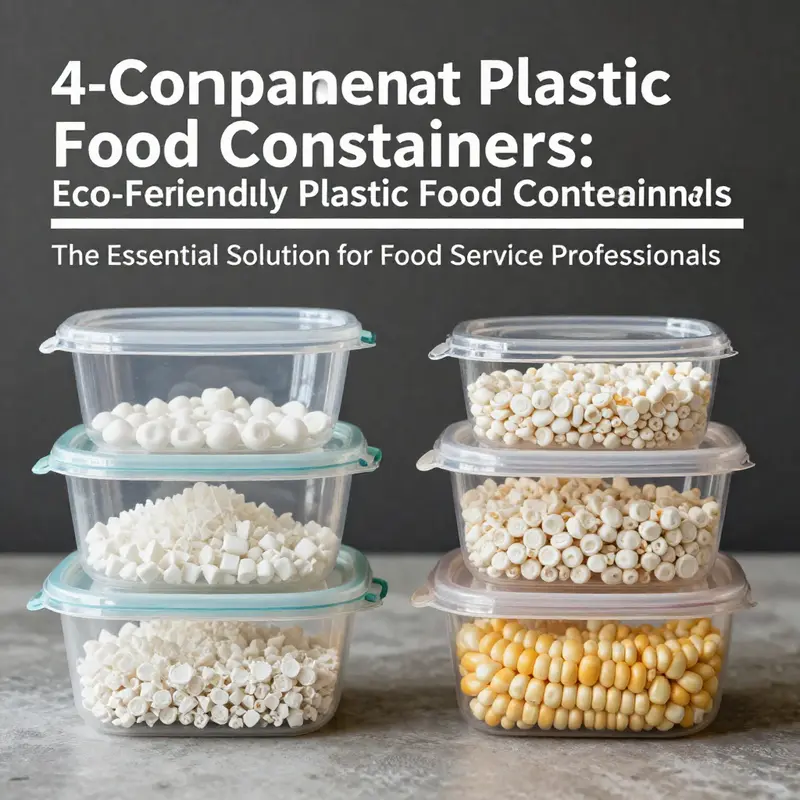
The environmental footprint of 4-compartment plastic food containers extends far beyond the moment they hold a meal. Their ubiquity in homes, schools, takeout windows, and catering operations makes them a frequent entry point for plastic waste, a material that shows persistence long after its utility expires. Across global supply chains, the end-of-life story for these containers is often disappointing: even in regions with established recycling programs, only a fraction of plastics are recycled, and many four-compartment designs fall out of the recycling stream due to mixing of materials, coatings, or complex seals. This reality helps explain why the conversation around eco-friendly alternatives has shifted from just making better plastics to rethinking the entire packaging system. If a container is not reliably recycled or composted at scale, it becomes a potential source of microplastics, leaching into soil and waterways over time, a consequence that scientists and policymakers increasingly view as unacceptable. The statistic from the broader waste streams picture—only a minority of plastics ever produced are ultimately recycled—signals that improvements must come from both material choices and how we manage end-of-life, not from a single “green” label on a box.
In this context, the conventional 4-compartment design, valued for its ability to separate foods and keep flavors distinct, meets a paradox. The same features that make it convenient—divided sections, secure lids, and a compact footprint—also constrain its recyclability. Many containers rely on simple polypropylene or polystyrene blends, sometimes with coatings, and frequently with sealed lids that complicate separation. Even when the base resin is technically recyclable, municipal programs may not accept mixed-material products or items with non-recyclable foams and adhesives. The result can be a mismatch between the container’s functional benefits and its true environmental outcome, a tension that invites more thoughtful design choices and consumer behaviors.
To address these concerns without sacrificing practicality, several eco-friendly avenues have gained prominence. The strongest candidates either reduce reliance on conventional fossil-based plastics, improve end-of-life outcomes, or extend the lifecycle of the packaging through reuse. One compelling thread in this evolving landscape is the use of plant-derived, compostable, or biodegradable alternatives that align more closely with circular economy principles. They are not a panacea, and they bring their own caveats—such as required industrial composting infrastructure, or limitations with high-fat or oil-rich foods—but they represent a deliberate shift from single-use plastics toward materials that can return to the biosphere or be repurposed more cleanly.
Eco-Friendly Alternatives
Cornstarch-based disposable containers are designed to be biodegradable and compostable under industrial conditions. Made from renewable resources like corn starch, these items resist oil and water well enough for many food items and can be heated in microwaves and stored in refrigerators, depending on labeling. They serve as a practical one-time option where the local waste system supports composting, and they can dramatically reduce long-term plastic accumulation when properly processed. Yet the performance profile of cornstarch-based options can vary, especially for very hot, fatty, or liquid foods, where the structural integrity may degrade more quickly than conventional plastics. This underscores the need for accurate product labeling and consumer guidance about which foods and temperatures are appropriate.
Paperboard containers offer another route that emphasizes renewables and end-of-life versatility. When uncoated with plastic or wax, they biodegrade and compost readily and remain recyclable in many systems. Their strength lies in short-term storage and takeaway scenarios where a crisp image and easy handling are valued. However, paperboard generally cannot withstand high heat or oily foods as effectively as plastics, which means it is often best suited to cold or mildly warm, dry foods or items with minimal liquid. The shift toward paperboard also invites attention to sourcing—ensuring that the fibers come from sustainable, responsibly managed forests—and to coatings that might hinder compostability.
Glass and stainless steel serve as the archetypal reusable options. They resist staining and lingering odors and can be washed and reused countless times, closing the loop through durability rather than degradation. The upfront cost and heavier weight are trade-offs that influence consumer adoption in everyday meals and quick-service settings. For businesses, long-term reuse can translate into lower waste and better total costs, but it requires robust cleaning protocols and careful handling during transport and storage to prevent breakage and ensure food safety. In the end, the most effective reuse strategy aligns with consumer behavior, facility capabilities, and consistent maintenance schedules.
Silicone containers straddle the line between flexibility and longevity. They tolerate heat, remain lightweight, and are often designed with secure, airtight seals that help maintain freshness. Their durability supports repeated use across microwave, oven, and freezer applications, a profile that makes them attractive for households and meal-prep services seeking a low-plug-in sustainability solution. Nevertheless, silicone’s environmental advantages depend on the full lifecycle: manufacturing energy, potential end-of-life challenges, and the fact that some silicone products are not accepted by every recycling stream. Awareness and proper disposal guidance remain essential.
Beeswax wraps and similar zero-waste covers can complement these materials, providing a reusable option for lids or coverings around bowls and containers. While not a direct substitute for liquids or hot foods, beeswax-based solutions reduce capillary plastic use for a wide range of cold or room-temperature items and help minimize waste when paired with reusable containers.
Another avenue worth highlighting is the emergence of bagasse-based or sugarcane pulp options. These fibers, sourced from agricultural byproducts, can be molded into shapes suitable for meals and take-away contexts. Their fiber composition can provide a natural feel and a degree of heat tolerance that is acceptable for many menu items. Importantly, bagasse-based products often pair well with composting streams tailored to agricultural residue products, offering a more compatible end-of-life pathway than conventional plastics. A representative example within this family demonstrates how plant-derived, microwave-safe, disposable dinnerware can function as a practical bridge between single-use convenience and environmental accountability. For readers exploring this option, a diagnostic example is accessible through bagasse-based disposable dinnerware resources. bagasse-based disposable dinnerware.
The overarching narrative here is not to demonize plastics or to promise flawless substitutes at every price point. It is to recognize that the environmental costs of 4-compartment containers come from more than their function. They arise from the lifecycle—from raw material extraction to manufacturing, use, and, crucially, end-of-life management. If each step is optimized with sustainability in mind, a path emerges where meal separation remains intact, but the waste footprint is significantly reduced. This path requires collaboration among designers, manufacturers, retailers, waste managers, and consumers, each playing a role in shaping outcomes that align with local waste infrastructure and ecological priorities. It also calls for honest labeling and communication so users understand what happens after the last bite—whether a container is destined for recycling, industrial composting, or a reusable lifecycle.
From a design perspective, the dialogue between functionality and sustainability centers on material compatibility and processing realities. A multi-compartment container must still seal reliably, withstand necessary temperatures, and resist leakage. Yet if the chosen material cannot be effectively separated or processed at end-of-life, the sustainability benefits may be negated. This is why many practitioners advocate for simplifying material streams and pursuing designs that minimize coatings, adhesives, and multilayer laminates that complicate recycling. The simplest path to improvement often lies in selecting materials with well-established end-of-life options in common municipal systems and in ensuring that branding and labeling do not obscure the necessary disposal instructions. In practice, the most effective solutions integrate reuse where feasible, supported by consumer education about proper washing, sanitizing, and reuse cycles, alongside a credible story about compostability or recyclability.
The broader implication of these shifts is a transition toward packaging that supports a true circular economy. Reuse-focused models require investment in infrastructure, cleaning protocols, and logistics that sustain a high rate of product turnover without compromising safety or quality. Compostable materials demand reliable industrial facilities and clear consumer guidance to avoid contaminating recycling streams. Paper-based and bagasse-based options depend on responsibly sourced inputs and end-of-life facilities that can handle organic fibers. All of these paths share a common thread: packaging design must harmonize with waste management systems, consumer habits, and regulatory realities to deliver tangible environmental benefits.
As researchers and practitioners refine these approaches, the conversation continues to evolve around how to balance cost, performance, and sustainability. This balance is not static; it shifts with advances in material science, changes in municipal capabilities, and evolving consumer expectations. The challenge is not simply to replace one material with another, but to reframe how we think about the entire meal-supply chain—from supplier choices and kitchen practices to consumer behavior and waste processing. In this reframing, even small changes—like choosing a more recyclable resin, adopting a compostable plate in suitable contexts, or promoting the reuse of sturdy containers—can contribute to meaningful improvements over time. The goal remains clear: to preserve the convenience and nutritional benefits of organized meals while reducing the long-term environmental costs that accompany careless disposal.
For those seeking a practical lens on waste management, it is useful to anchor decisions in the realities of local infrastructure and consumer education. Ensuring that end markets exist for the chosen material is as important as the initial design. In some communities, industrial composting is available and can transform plant-based disposables into usable compost. In others, robust recycling streams are the best option, provided that the product is designed for easy separation and does not contaminate the stream with incompatible coatings. A nuanced approach recognizes that the optimal solution may differ from one location to another, and it invites manufacturers to prototype and test alternatives in tandem with waste managers and regulators to identify the most effective pathways for their specific markets.
External resource: EPA Plastics in the Environment
Branding and Customization for 4-Compartment Containers
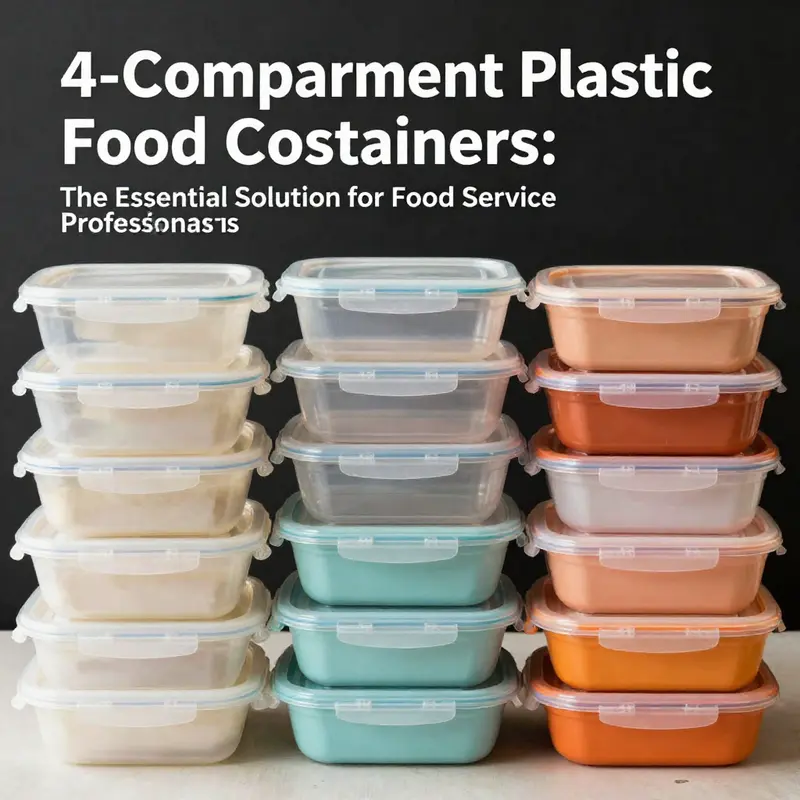
In a market where packaging communicates a brand as much as the product itself, the 4-compartment container becomes a platform for identity and experience.
Customization is a strategic tool that aligns visuals, materials, and structure with a brand promise. Visual branding options include logo imprinting, color stories, and lid design to create a cohesive look across shelves and touchpoints. Material choices like polypropylene offer durability and heat resistance, while eco-friendly variants enable sustainability storytelling. Size and structural features can be tailored to support brand cues and meal configurations. A branded container becomes a mobile ambassador that reinforces trust and recognition at every stage of the customer journey.
Final thoughts
The exploration of 4-compartment plastic food containers reveals their multifaceted benefits for food service professionals. From enhancing operational efficiency in meal preparation and catering to providing opportunities for brand visibility and cost savings, these containers prove their worth across various culinary environments. Additionally, with the rise of eco-friendly alternatives, businesses can align their packaging choices with sustainability goals. Recognizing the adaptability and advantages inherent in these containers is essential for modern food service, enabling businesses to thrive in a competitive market.