
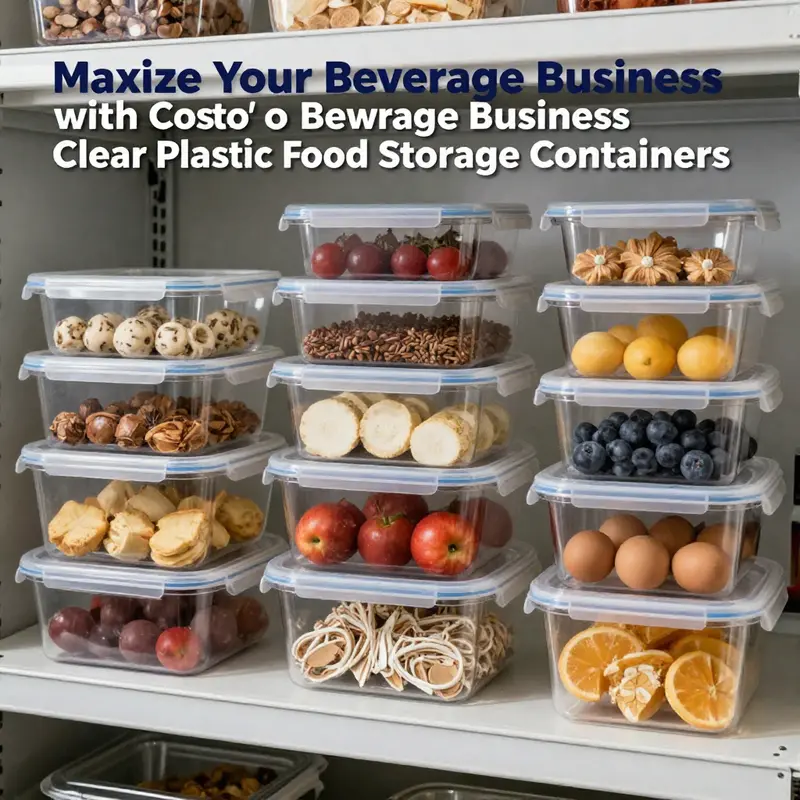
Whether you’re running a bubble tea shop, restaurant, food truck, or catering service, organization in the kitchen is key to delivering top-notch beverages and dishes. Clear plastic food storage containers from Costco provide an efficient solution to meet the diverse needs of the foodservice industry. From their sturdy construction to their ability to streamline operations, these containers are an excellent investment. This article will delve into their notable features and benefits, practical buying and usage guide, and real customer experiences that underscore their effectiveness in enhancing storage solutions for your business.
Crystal Clarity in the Pantry: How Clear Plastic Food Storage Solutions Keep Food Fresh and Kitchens Organized
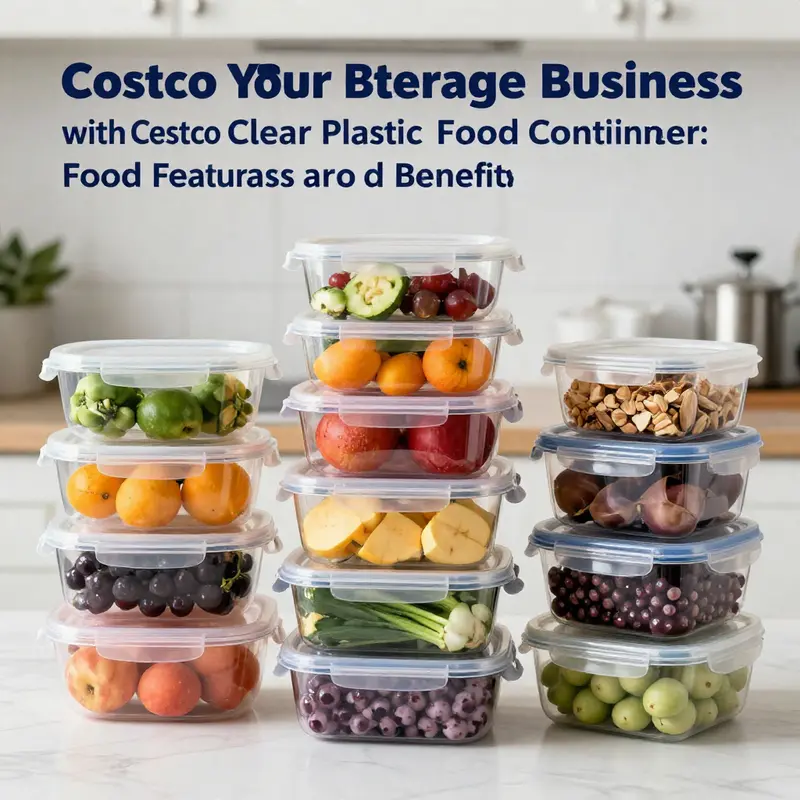
The kitchen is a landscape of rhythms: the steady cadence of meal prep, the scatter of ingredients, the steady hum of a fridge that never seems to hold enough shelves. In that everyday tempo, the containers we choose can quietly reshape how we cook, store, and even think about our food. Clear plastic storage options from the store-brand line that many families rely on bring a mix of visibility, simplicity, and practicality that matches how people actually live today. These containers are not flashy gadgets; they are everyday tools that, when chosen with care, reduce waste, streamline routines, and extend the life of leftovers. Their value begins with something as simple as seeing what’s inside at a glance. The transparent walls offer instant recognition of what sits in the fridge or pantry, so we don’t waste time opening several lids to check if the last week’s leftovers are still neat and safe to eat. This visibility supports better portion control, meal planning, and the kind of organization that keeps a family kitchen from slipping into chaos during busy weeks. It’s not just about keeping food fresh; it’s about keeping the workflow of a household calm and predictable, even when schedules swing from work to school to after-school activities. The containers’ clear design also reduces the mental load of meal planning. When you know what you have, you can build menus around what’s on hand rather than making an urgent last-minute trip to the store. In effect, visibility becomes a daily ally, turning a cluttered cabinet into a working pantry where each item has a legible story of its own.
Material safety sits at the core of these products. The containers typically rely on high-quality polypropylene or polyethylene, materials chosen for their durability and resistance to everyday handling. The BPA-free promise is not merely a label; it speaks to an ongoing concern about how food contact with plastics can influence taste, odor, and safety. For many households, that BPA-free assurance is foundational. It allows families to store a wide range of foods—from in-season fruits to soups and grains—without the nagging worry that often accompanies plastic usage. The safety story is complemented by a practical one: these materials adjust to the demands of a modern kitchen. They withstand the daily bumps of a busy household, resisting cracking and maintaining their shape when handled, shuffled, or stacked. The combination of safety and durability makes these containers attractive for long-term use, a critical factor when families consider the total cost of ownership rather than the upfront price alone.
The design language of these containers is not merely about what is inside but how it travels and resides in the home. The transparent body is paired with lids designed to seal—often tightly—to hold in moisture and flavor while keeping out odors that can migrate through the fridge. Airtight seals, sometimes enhanced by a gasket, create a barrier against air exposure that accelerates spoilage. That barrier works alongside the lid’s geometry to prevent leaks, whether items sit upright in the fridge, lay flat in the freezer, or travel in a lunchbox to school or work. A well-sealed container acts as a miniature fortress for food, preserving texture and aroma over longer periods. In practical terms, this means batch cooking can become more feasible. A family may prepare several meals on a Sunday, portion them into these containers, and rely on the airtight seals to preserve freshness through the week. This is especially valuable for soups, stews, grains, and chopped vegetables, which benefit from being kept in uniform portions that reheat evenly and maintain integrity without becoming tepid or discolored. The push toward airtight design also supports the broader goal of reducing food waste. When leftovers stay fresh longer, there is less pressure to discard last week’s meal because it has taken on an off-note or soggy texture.
Space efficiency emerges as a practical art form in kitchens that balance recipes and rack space. A key capability of many clear plastic storage options is their stackability. The design often anticipates tight stacking without sacrificing easy access, an important factor for anyone who stores dry goods, cereals, snacks, fruits, and vegetables. Stacking not only increases the capacity of a pantry or cabinet but also encourages a more orderly approach to storage. When containers nest neatly, shelves stop feeling crowded, and food routines gain a sense of order that reduces the chance of forgotten items slipping into the back corners. This is particularly valuable for batch cooking and bulk shopping, where a single afternoon can yield a year’s worth of organized meals. In turn, that organization contributes to a more efficient grocery cycle, allowing families to optimize quantities, dates, and rotations with fewer missteps. The practical result is a kitchen that breathes easier, with clear visuals guiding decisions about what to cook, what to refrigerate, and what to freeze for later meals.
Beyond visibility and storage efficiency, the durability of these containers bears emphasis. The materials chosen—PP or PE—are selected for resistance to heat, impact, and the everyday wear that comes with regular use. The dishwasher becomes a reliable ally for maintenance, a factor that matters to households striving to keep cleaning simple. The ease of cleaning reduces friction around kitchen chores and helps sustain a routine in which containers are ready for reuse rather than accumulating residue or stains. Yet a word of caution accompanies this convenience: not every model is safe for microwave or oven use. The safety labeling on each item is essential, as some containers can safely reheat food, while others are best reserved for cold or cool reheating only. The same caution also applies to oven safety; while many pieces can withstand occasional warming, they are not intended to be used as bakeware. In short, the daily realities of cooking and storage call for careful attention to how each container is specified, because using the wrong one for heat can compromise both safety and the food’s texture.
Color and clarity play a subtler but significant role in how these containers function within a kitchen’s ecosystem. The sheer transparency of the body makes the contents legible, which reduces the number of times lids are removed for guesswork. When a pantry door opens, the practical benefit is immediate: you see the vegetables, grains, or sauces clearly and can decide what to pull for a meal without needing to label every container. Additionally, a consistent, neutral exterior helps these containers blend with other kitchenware, avoiding a visual clutter that can come from mismatched colors and shapes. The lids themselves often echo this understated approach, aiming for straightforward operation—press-on, snap, or twist-lock mechanisms that align with the rhythm of meal prep. The careful lid design, while simple on the surface, becomes a cornerstone of performance. A reliably sealed lid reduces the likelihood of flavor transfer between containers and minimizes the risk of cross-contamination from one item to another in a crowded fridge. For households that juggle multiple meals or diet plans, that safeguard is more than a convenience; it can help preserve the integrity of a dish’s profile as it moves from fridge to plate.
In the wider landscape of kitchen storage, these clear plastic options sit alongside glass and other materials, each with its own strengths. Glass can offer remarkable heat resistance and an inert feel, but it demands more careful handling and can be heavier. Plastic, particularly the BPA-free varieties used in common store-brand lines, emphasizes lightness and practical affordability. The choice is not merely about the material; it is about the function the user seeks: visibility, flexibility, and a practical price point that makes reorganization feasible for many households. For families navigating tight budgets, the combination of durability and cost-effectiveness makes clear plastic storage a compelling choice. The containers become a long-term investment in reducing waste and in supporting daily routines that benefit from quick identification, reliable sealing, and manageable cleanup.
An often overlooked but important consideration is how these containers integrate with broader household practices. Many households adopt batch cooking or meal-prep routines, and the containers’ design supports these patterns. In batch cooking, cooks prepare large quantities of meals that can be portioned into uniform units. The uniformity speeds up both packing and reheating, ensuring consistency across meals. The ability to label or code contents quickly becomes part of a broader habit system—labels can be applied or color-coded lids used to distinguish between different recipes or dietary needs. Even without fancy labeling systems, the transparency of the body invites intuitive organization: you know what’s inside without opening the lid. This reduces the temptation to over-rotate or open every container in search of a specific ingredient, which in turn preserves the food’s texture and flavor better.
From a consumer perspective, the economic angle cannot be ignored. The store-brand line often presents an attractive price-to-performance ratio, making it possible for households to equip their kitchens with multiple sizes and configurations. The range of sizes supports both bulk storage and everyday use, from small snack portions to larger family meals. The ability to reuse and rearrange containers over time aligns with a practical, long-term approach to kitchen maintenance. When families consider the cost of storage across a year, the value of durable, reusable containers becomes evident. The less often containers need replacement due to cracking or warping, the more the initial investment pays off, particularly for households that rely on freezer storage or frequent meal prep. In this way, the contours of a kitchen’s storage system reflect not only taste and habits but also a pragmatic calculus about value, reliability, and peace of mind.
Of course, no product category lives in isolation. The pantry ecosystem includes lids, seals, and the occasional accessory designed to support easy stacking, secure closure, and clean maintenance. The best practices for using clear plastic containers center on choosing the right fit for the job: a size that accommodates a typical batch, a lid that seals effectively, and a design that supports straightforward stacking without leaving awkward gaps. A thoughtful approach to these choices translates into tangible daily rewards: faster meal prep, clearer fridge organization, and less time spent searching for mismatched lids. It also translates into a more sustainable kitchen practice. By prioritizing reusability and reducing reliance on disposable packaging, households can curb waste and extend the useful life of what they own. It’s a quiet, steady form of efficiency that accumulates across weeks and months, gradually restructuring how a family eats, stored, and even recycles.
To close the loop, it’s worth acknowledging that the world of storage solutions is diverse, and each household will find its own balance. The clear plastic option shines when the goal is quick recognition, practical durability, and a friendly price point. It is the kind of toolkit that supports everyday cooking, makes leftovers approachable, and helps families bring order to the front of the fridge. In practice, choosing this option means embracing a straightforward system: a mainstay in the kitchen that respects both safety and simplicity. It invites you to see at a glance what you have, to seal in freshness with confidence, and to arrange your space so the act of cooking feels less like a chore and more like a well-orchestrated routine. And in the end, that is the core benefit—clarity that translates into better food management, less waste, and more time to savor meals together.
Internal link reference: For readers exploring related storage options in the same space, you may encounter durable, eco-conscious alternatives such as kraft-paper octagonal bowls with lids. See further details here: kraft-paper-octagonal-bowl-pet-lid-waterproof-eco-friendly-disposable-customizable-snack-pet-food-salad-containers-1l.
External resource: https://www.costco.com/clear-plastic-food-storage-containers.page
null

null
Seeing Clearly: How Clear Plastic Storage Containers Shape Everyday Food Organization

In kitchens that hum with the daily rituals of feeding a family, the simplest tools often become the quiet engines of efficiency. Clear plastic storage containers, with their transparency and practical design, have a way of turning chaos into clarity. They let light flood the pantry shelves, reveal every item at a glance, and transform the act of storing into a system that respects time, space, and leftovers. For households that rely on batch cooking, weekly meal plans, and a steady rhythm of meal prep, these containers are less a novelty and more a trusted backbone of daily routine. The way they are used, the way they fit into the rhythms of a kitchen, reveals more than durability or price. It reveals how families conceptualize food itself: as something to be organized, not merely stored; as nourishment to be mapped through space and time; as an object that can help minimize waste and maximize flavor across the week. The experience of using clear plastic containers is, in many ways, an experience of daily optimization, where visibility is the first act of stewardship and where airtight seals become the second line of defense against spoilage, moisture, and the drift of forgetfulness.
What customers commonly describe in practice aligns with the promises of the product’s design. The transparency is not just a convenience; it becomes a habit. When you can see what’s inside—whether the last portion of a lasagna, a stash of chopped peppers, or a batch of rice that needs portioning for the week—you reduce the cognitive load of meal planning. You don’t have to rummage or guess. This visibility translates into tangible behaviors: faster reheat decisions, more accurate inventory checks, and a renewed confidence in pantry or fridge organization. The mental gymnastics that often accompany kitchen chores are simplified, so labor hours shift from searching for food to actually preparing it. In that sense, the appeal of clear containers goes beyond aesthetics. It’s about turning a hectic kitchen into a workflow where information about our food is always within reach and always actionable.
Durability remains a mixed story in real life, however. For everyday use—storing leftovers, dry goods, or baked items—the containers tend to perform reliably. They resist the everyday wear and tear of hands, fridge doors, and the occasional nudge from a grocery bag. Reviewers often praise the lightweight feel that doesn’t strain the arms during loading or transport. Yet, when pushed by heavy pressure, sharp objects, or rough handling, some users notice that the plastic can show dents or scuffs. The conversation surrounding durability is not a simple yes or no; it’s a nuanced assessment of use cases. The same properties that make these containers practical—lightweight construction, modular shapes, and stackability—also shape how people perceive their value. In households where the goal is affordable organization rather than premium packaging, these containers frequently win out on functional grounds, even if they don’t win every battle against heavy-duty wear.
A notable strength frequently highlighted by customers is the reliability of tight-sealing lids. The seal is more than a feature; it is a guarantee of freshness in the minds of users who store leftovers or bulk-batch meals. A dependable seal can mean the difference between a fridge with a week’s worth of ready-to-eat meals and a compromised batch that dries out, leaks, or absorbs odors. This capability matters especially for delicate items like baked goods that benefit from moisture control, or for dry goods that need to stay crisp and free from pantry dust. In practice, a tight seal translates into fewer waste episodes and more confidence when freezing or refrigerating portions. It also makes the containers more versatile, enabling them to travel well during moves or family trips, where space is at a premium and every item must earn its keep in a packed vehicle.
The geometry of these containers—clear walls, uniform rims, and standardized lid shapes—also plays a quiet but important role in how people organize. Clear visibility aligns with systematic shelving, while uniform dimensions support efficient stacking, nestling, and space planning in small kitchens. For many cooks, the ease of stacking means more usable shelf space, which in turn makes room for a broader range of ingredients. In a pantry or fridge where space is finite, this can be the pivotal factor that makes a home organization system workable. The combination of transparency and stackability often leads to a more intuitive, almost intuitive, approach to stocking and meal planning. You can see the contents without removing the lid, you can re-stackleftovers after a quick check, and you can reallocate portions with minimal disruption to the rest of the shelf. This sense of order can support a broader shift toward mindful consumption, where items are tracked and used before they lapse.
Feedback from users also highlights the containers’ versatility across different storage contexts. In pantry drawers, they keep bulk grains, nuts, and cereals tidy and visible. In the refrigerator, they hold prepped vegetables, fruit portions, and dairy-friendly snacks with a degree of moisture control that helps preserve texture. For some households, these containers become central to a weekly batch-cooking routine. A large pot of soup or a roasted tray of vegetables can be portioned into several containers for future lunches, dinners, or quick add-ons for school breaks. The clear walls serve as a reminder of what’s handy and what needs attention, nudging cooks toward more proactive meal planning and fewer impulse runs to the grocery store for forgotten items.
The design’s pragmatic philosophy also extends to handling and cleaning. Many users appreciate that these containers fit into common dishwashers, and a substantial portion are described as microwave-safe. These properties make reheating simple and reduce the number of dishes to scrub after a meal. The upside is clear: less time spent washing, more time for cooking, sharing, or simply enjoying a moment of calm around the table. Yet the same stories that celebrate ease of use also remind readers to respect the limits of plastic. Temperature extremes, repeated microwaving, or aggressive use in the oven can stress plastics in ways that alter fit, seal integrity, or surface texture. Readers who balance convenience with care often adopt a rule of thumb: treat the containers as workhorse gear for day-to-day storage, but avoid using them for tasks that demand extreme heat or sharp, pointed impacts. In other words, these containers excel in the quiet, repetitive tasks of everyday life rather than as all-purpose tools for every culinary scenario.
From a broader perspective, the impact of clear plastic storage on reducing waste is often cited in user anecdotes. When leftovers are visible and clearly labeled, it becomes easier to re-aim the week’s meals rather than letting food slip into the back of the fridge and purple‑blue fog of forgotten items take hold. The practice of batch cooking—the creation of multiple meals at once—maps well onto these containers, and the containers’ sizes offer practical options for portioning different recipes. The narrative here is not merely about keeping food fresh; it’s about creating a routine where food is planned, tracked, and used with intention. In this sense, the containers become a tool for stewardship—helping households manage food lifecycles, conserve resources, and align daily eating patterns with a broader aim of reducing waste.
For readers seeking more granular insights, the landscape of user reviews reflects a spectrum of experiences. Many reviews emphasize the balance between cost and function, noting that the value doesn’t rest solely on the price tag but on how well the containers perform in real kitchens over time. A recurring theme is that the appeal lies in practicality rather than luxury. The cases where users report high satisfaction often involve a mix of transparent visibility, secure lids, and broad compatibility with common kitchen setups. In contrast, some reviewers point to limitations in durability when subjected to rough handling or heavy pressure, or to a perceived value gap when comparing with premium alternatives. These perspectives are not contradictory but complementary, offering a rounded view of how these containers fit into diverse household routines. By listening to both sides, one can appreciate that the best storage system is not a single miracle product but a thoughtfully chosen assortment that aligns with a family’s cooking tempo, storage footprint, and waste-reduction goals.
A final thread in customer experiences centers on how these containers integrate with broader organizational systems. People who curate pantry shelves with labeled bins and color-coded lids often find that clear containers serve as a visual anchor. The contents—grains, legumes, nuts, or leftovers—become instantly legible, and the act of moving items in and out of storage becomes less fraught with guesswork. The containers’ uniform shapes and lids can harmonize with modular shelving, turning the kitchen into a space of predictable routines rather than a collection of scattered, mismatched pieces. When a home operates with this level of coherence, even small decisions—what to cook tonight, what to thaw for tomorrow—are grounded in readily accessible information. In that sense, the experience of using clear plastic containers is as much about psychology as about plastic chemistry: a practical method to align daily habits with the goals of organization, efficiency, and mindful consumption.
From a catalog of impressions, several practical tips emerge for readers aiming to optimize their own use of these storage tools. First, consider a core set of sizes that covers both everyday leftovers and bulk-prepped ingredients. A predictable assortment makes it easier to create a cohesive storage system rather than a miscellany of mismatched containers. Second, label everything with a simple, legible system—dates, contents, and maybe a quick reheating note. The clarity of the walls takes care of content visibility, while labels guard against the fog of memory that can creep in over time. Third, pair containers with a reliable labeling or bookmarking method on the shelves themselves. When shelf positions reflect meal planning, it becomes almost second nature to reach for the right container at a glance. Finally, balance plastic with glass where appropriate, especially for high-temperature needs or for items that require a longer, more inert storage environment. The goal is not to replace one material with another but to optimize a toolkit so that each material fulfills its best role in the kitchen ecosystem.
As readers move through their own kitchens, these insights translate into personal narratives about order, predictability, and the satisfaction that comes with an organized space. The clarity offered by transparent containers helps turn the act of storing food into a mindful practice, where planning, preservation, and practical use converge. The result is not just a kitchen that works; it is a space that supports healthier habits, reduces waste, and makes the everyday rituals of cooking and eating a little more humane. For some, this is the quiet victory of a well-chosen storage system: a set of clear walls through which one can watch, plan, and enjoy food with a greater sense of control and appreciation.
To connect these lived experiences with concrete resources, readers can explore a specific example of related packaging solutions that emphasize the same values of clarity, accessibility, and practical function. This internal reference points to a catalog entry that foregrounds the idea that clear plastic forms can be part of a broader ecosystem of food containers designed for reliability, ease of use, and safe handling. This example showcases how a simple design choice—clear walls and secure lids—becomes a backbone for everyday organization and mindful consumption. The relationship between these products and kitchen routines reveals how design choices in storage containers ripple outward, shaping how families plan meals, how leftovers are repurposed, and how space is managed in ways that reduce waste and support healthier, more efficient cooking.
For readers who want to see how real users describe their experiences with similar storage solutions, there is a wealth of verified feedback on major retailer sites and trusted third-party platforms. These voices illuminate the nuanced realities of daily use, from the small triumphs of discovering a perfect leftover portion to the occasional trade-offs between price and longevity. The common thread is that the best storage systems grow with a household’s needs. They adapt to the cadence of groceries, the scale of family meals, and the evolving preferences for how food is planned, stored, and enjoyed. When seen through this lens, clear plastic containers emerge not as disposable gadgets but as adaptable components of a larger, patient process of managing food as a resource. In that sense, the chapter you’ve just walked through is less about a single product and more about a philosophy of kitchen organization that prizes visibility, simplicity, and thoughtful stewardship.
Internal resource note: for readers interested in a related packaging example that emphasizes the blend of clear, durable material with practical closure features, see the internal reference linked here: clear-plastic-combo-pastry-dessert-tiramisu-cake-food-container-packaging.
External resource: for a broader view that captures consumer experiences with clear plastic food storage containers across a major retailer, refer to the external source of customer reviews and product specifications here: https://www.costco.com/clear-plastic-food-storage-containers
Final thoughts
Costco’s clear plastic food storage containers emerge as a valuable asset to businesses in the food and beverage industry. Their durability, versatility, and transparency enhance not just organization but also food safety and waste reduction. By choosing these containers, bubble tea shops, restaurants, and catering services can improve their operations and deliver exceptional service to their customers. Investing in these storage solutions is a step towards streamlined processes and increased efficiency. Don’t miss the opportunity to elevate your business with Costco’s reliable containers.