
As sustainability becomes increasingly essential for businesses, the utilization of compostable products is a game-changer, especially in the beverage industry. For bubble tea shops, beverage chains, restaurants, food trucks, catering services, event planners, and corporate procurement teams, the demand for environmentally-friendly alternatives is on the rise. This article explores the free sample program for 8oz compostable paper cups offered by Beixuan. Each chapter sheds light on the variety of options available, the straightforward process to obtain samples, and the significant environmental impact these choices can have. By the end, you will be equipped with the knowledge to take a sustainable step forward in your business practices.
How the Free Sample Program Lets You Test 8oz Compostable Paper Cups Before Buying
How the Free Sample Program Lets You Test 8oz Compostable Paper Cups Before Buying
A well-run free sample program changes how buyers evaluate sustainable packaging. For businesses deciding whether to switch to 8oz compostable paper cups, an offered sample can remove guesswork. A physical cup in hand shows how materials perform, how printing looks, and whether the supplier can meet practical needs. This chapter explains what to expect from a sample program and how to use it to make confident purchasing decisions.
Receiving a sample starts with clarity. Most suppliers ask for contact and shipping details, and many offer the sample itself at no charge while requesting that the buyer covers delivery. Some suppliers will ship samples quickly if the buyer provides a freight account number for common couriers. Payment for shipping is usually straightforward and can be handled through typical online transfer methods.
The sample you request should match the specification you plan to order. For 8oz options, ask for the exact construction you intend to use. Common constructions include single-wall paper with a water-based aqueous lining, and paper with a compostable PLA coating. A water-based aqueous lining offers plastic-free composition and can often be home-compostable when certified. A PLA-coated cup uses a compostable bioplastic derived from plant starches, and that coating changes how the cup behaves with heat and liquid. Requesting the correct lining type will save time and prevent surprises during testing.
When the sample arrives, test it under real conditions. Start with a practical hot beverage test. Pour coffee or tea at the temperatures you serve, then hold the cup for the duration you expect customers to carry it. Watch for softening, leaks, and heat transfer to the hand. If the cup will be used for cold drinks or bubble tea, fill the cup with cold liquid and any additives like ice or syrup. Observe any delamination, sogginess, or seam issues. A thorough tactile test reveals much about structural integrity.
Leak and seam testing matters. Heat combined with pressure highlights weak seals. Fill the sample, place it on a flat surface, tilt it gently, and press along the seam. Look for seepage or spreading of moisture. Some cups perform well in quick tests but show problems when handled continuously. Simulate the full user journey, including placing a lid on the cup, as lids can expose sealing issues not visible with an open cup.
Compostability claims should be verified. A free sample is an opportunity to review any certificates or technical data the supplier provides. Ask for third-party certification details and, if possible, the testing protocols used. Home-compostable claims mean the product should break down in a domestic compost environment within a defined timeframe. Industrial compostability has different criteria and conditions. If home compostability is a priority, request documentation that specifically references home-compostable standards.
Testing for real-world composting helps validate claims. If feasible, conduct a small compostability trial. Cut the sample into pieces, add it to a home compost bin, and check degradation over weeks and months. Keep records of temperature, moisture, and the presence of other organic matter. While a short trial won’t replicate industrial conditions, it will indicate whether the material fragments and decomposes reasonably. Many businesses rely both on supplier documentation and modest in-house trials before committing to large orders.
Printing and branding are another reason to request samples. Free sample programs frequently include blank cups, but some suppliers will produce printed prototypes. Test color fidelity, registration, and clarity of fine lines. Request a mock-up with your logo or a key color to see how inks and coatings interact with the cup surface. When evaluating printed samples, examine drying times and the feel of printed areas. Rub a finger over the ink to test durability and adhesion.
Ask about customization limits. Some suppliers allow full-color wraps, spot colors, or simple single-color prints with short turnaround times. Enquire about minimum order quantities for custom prints, and whether sample printing was handled on production equipment or in a special run. Understanding these limits helps you plan lead times and budget for the first full order.
Packaging and logistics also come into play. A sample reveals how cups are nested, how many fit per carton, and what protective packaging is used. Nesting efficiency directly affects shipping costs and warehouse storage. Note any damage that occurs during transit, then discuss protective packing options with the supplier. If you plan to store cups for an extended period, confirm recommended storage conditions to avoid humidity-related issues.
Use the sample to evaluate supplier responsiveness. A free-sample program that runs smoothly indicates a supplier that values transparency. Track communications from sample request to delivery. Were technical questions answered promptly? Was tracking provided? Did the supplier clarify any limitations of the sample? These interactions are strong signals of reliability and ongoing support.
Consider sample kits for side-by-side comparison. Some providers offer kits with multiple sizes or constructions. Requesting an 8oz plus a 12oz sample, or two 8oz versions with different linings, makes comparison straightforward. Place the pairs under identical tests to see differences in performance, compostability, and print quality. A comparative approach speeds decision-making and makes trade-offs clear.
Cost transparency is important. While the sample itself can be free, shipping costs and potential fees for printed samples add up. Some suppliers will bill shipping to a freight account. Others will request reimbursement through common payment methods. Clarify all potential charges up front to avoid surprises. If international shipping is involved, account for import or customs fees that could arise.
After validating materials and performance, request technical data sheets. These documents should outline material composition, coating type, weight, thermal performance, and any certificates. They help procurement and quality teams evaluate the cups against internal standards. If you have regulatory needs, ask the supplier to supply compliance documentation for food contact safety.
Scale-up considerations shape the final decision. Samples show product performance, but ordering at scale introduces logistics and financial variables. Discuss minimum order quantities, lead times, and any price breaks for larger volumes. Understand production capacity and seasonal effects on lead time. Ask about packaging options for bulk orders and whether protective inserts or palletization practices will change with volume.
Communicate disposal instructions clearly. Compostable cups only deliver environmental benefits if they are disposed of correctly. Use your sample to design on-cup messaging that guides users to the right disposal stream, whether home composting or industrial compost. Clear instructions reduce contamination of recycling streams and help customers recycle or compost correctly.
Finally, keep testing iterative. A single free sample helps you decide on a supplier and product, but periodic re-evaluation remains wise. Materials and manufacturing processes evolve. Request fresh samples before large reorders to verify consistency and to test any new printing options or lid pairings.
For businesses exploring sustainable cup options, a free sample program is a practical, low-risk step. It validates compostability claims, confirms handling performance, and enables realistic branding tests. When requesting samples, specify the lining type, request technical documentation, simulate real use, and run basic composting tests if possible. Use the insights to negotiate production terms, set expectations for lead times, and design disposal communication that maximizes environmental benefit.
If you’re ready to see specific free sample options and product details, one authoritative listing of 8oz free-sample paper cups is available here: https://www.made-in-china.com/products/detail/753342396225/Free-Sample-8-oz-Coffee-Cups-White-Cardboard-Cups-for-Vending.html
For a practical example of an internal product page showing eco-friendly 8oz and 12oz paper cup offerings, see this product listing that can help you compare specifications and printing options: eco-friendly printed logo paper cup (8 oz / 12 oz).
Free Samples on the Green Path: Exploring 8oz Compostable Paper Cups for Takeaway
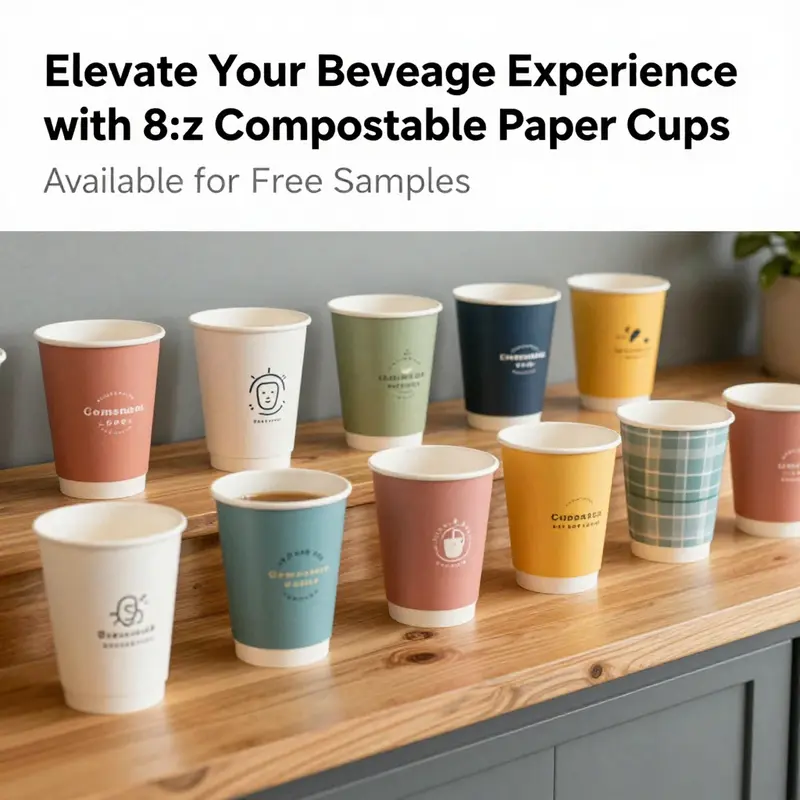
Free samples have a surprising ability to accelerate change in how businesses choose packaging. For operators who want to move beyond petrochemical plastics, the ability to test a small, compostable 8oz cup without committing to a full order lowers the barrier to experimentation. The 8oz size is a familiar standard for coffee and tea, and it also fits many bubble tea offerings and cold beverages. The test phase matters: it reveals how a cup feels in the hand, how it holds up during a hot pour, and how well branding prints on its surface. It also reveals the practicalities of dealing with eco-friendly materials, such as how moisture interacts with the paper, whether the lining is water-based or plant-based, and how the cup behaves in a home composting system or a municipal facility that accepts compostables. In markets increasingly conscious of waste, these small decisions scale up into significant sustainability impacts, especially when a business is evaluating not only product performance but the end-of-life story of its packaging.
When a supplier advertises free samples of an 8oz compostable cup, it typically means the product itself is offered at no charge—only the delivery cost is paid. The free-sample approach invites operators to compare different materials and manufacturing methods side by side. One option that often appears in these sample programs is a cup with a water-based aqueous lining. This type of lining eliminates plastic in the barrier layer, leaving a cup that many environmental advocates describe as plastic-free and suitable for home composting. The practical implication is meaningful: customers who want to minimize their own footprint can confidently pass cups to household compost bins, provided local programs accept such materials. The trade-off, however, is that home compostability depends on the presence of the right conditions at home or in a community composting facility. It raises questions about heat tolerance, moisture, and time to break down—factors that can affect the cup’s performance in a busy café setting.
Another common option that comes up in free-sample conversations is a PLA-based cup. PLA, or polylactic acid, is derived from plant starches and is marketed as biodegradable or compostable in appropriate facilities. A PLA-enabled cup can be an excellent bridge between consumer expectations for a sustainable product and the realities of modern waste infrastructure. It’s robust for hot beverages, handles the steam and moisture well, and, under the right conditions, breaks down within industrial composting timelines. For businesses that serve takeaway beverages to a wide audience—hot coffee, iced tea, or bubble tea—the PLA route can be attractive because it supports a compostable label while preserving the sensory experience of the drink. Yet the PLA pathway can carry caveats: some facilities may not accept PLA cups, and home composters may not always provide the necessary heat or microbial action for rapid breakdown. In other words, the decision between water-based lining and PLA isn’t purely about compostability; it is a question of local waste infrastructure, customer education, and the life cycle of the packaging in question.
The opportunity to obtain free samples extends beyond the material science of the cup. It includes the chance to test branding opportunities that can affect consumer perception. Several suppliers offer cups that can be printed with logos, colors, or full branding, turning packaging into a moving billboard that reinforces a business’s sustainability story. This combination of performance testing and visual customization allows a café, a bubble-tea shop, or a catering outfit to evaluate not only how the cup feels and performs but also how the branding looks in real life—the ink, the placement, and the durability of the print when the cup is filled and handled at a busy counter. The prospect of free samples with customization is particularly appealing to smaller operators who want to experiment with green branding before committing to a larger order. It’s a practical way to see if the visual impact aligns with the brand’s values and with the message it wants to send to customers who are increasingly aware of packaging origins and end-of-life options.
In the practical realm, how you move from interest to action is straightforward, even if it seems novel to some buyers. On product pages that carry these sample programs, there is often a conspicuous option such as “Request Sample” or a live chat prompt. A quick message requesting a free sample with delivery charged to a freight account can move the process forward. The speed of response is part of the value; a supplier who can prepare samples quickly, sometimes with the help of a freight account such as a standard courier service, demonstrates a readiness to support business testing. The arrangement is more than a courtesy. It is a validation step: can the supplier deliver on spec and on time? Will the sample cup hold up under testing conditions, and can the supplier meet a potential lead time for a larger order? The answers to these questions shape the decision-making process and reduce risk in early procurement.
As the testing unfolds, it’s useful to think about the broader environmental and logistical considerations. Compostable cups are not uniform, and the term “compostable” covers a spectrum of materials, processes, and waste pathways. A water-based lining cup is typically marketed as plastic-free and suitable for home composting, but only if the end user has access to a home system that accepts such items. In commercial settings, the cup may still be accepted in municipal composting streams, but acceptance can vary by region. Conversely, a PLA cup’s performance hinges on the composting facilities in operation nearby. Industrial composting can deliver rapid breakdown, yet not all cities provide such programs, and some customers want to recycle or reuse components rather than compost. For operators, the testing process should not just measure performance with beverages; it should also assess compatibility with staff routines, dishwasher or cup-warming practices, and counter-space constraints in high-volume environments. The free-sample stage becomes a proving ground for these real-world considerations, translating laboratory-type assessments into actionable procurement insights.
In addition to material performance and end-of-life considerations, the sampling journey intersects with marketing and sustainability storytelling. A cup printed with a brand’s logo, when used in a cafe, can communicate a commitment to a circular economy and responsible waste management. The act of sharing a free sample with a small business partner can create collaborative dialogue about what customers experience when they encounter sustainable packaging. Suppliers often highlight the possibility of quick sample preparation and even express willingness to tailor samples if a freight account is available. This openness accelerates the testing phase and invites a conversation that extends beyond the cup to the supplier’s broader capabilities—whether that includes customizable sizes, a range of lids, or compatibility with different beverage formats. For brands exploring the market, these conversations become data points that feed into decisions about packaging families, supplier relationships, and the messaging used in marketing and product labeling.
Looking back at the landscape of options, a few practical patterns emerge for readers considering sampling as a pathway to greener takeout packaging. The first is that there is real variation in the cup’s base material and protective lining, which translates into differences in biodegradability, compostability, and waste stream acceptance. The second is that the value of free samples rests not only in their immediate usability but in their ability to reveal lead times, pricing corridors, and the reliability of the supplier’s service—factors that loom large when a business scales up from pilot tests to full production. Third, the experience of ordering and receiving samples, including the mechanics of sending freight and the methods of payment, can itself signal how smoothly a supplier might operate if orders grow. If a market is moving toward more sustainable packaging, the ability to tap a sample, check the fit, and proceed with a small experimental order becomes more than a convenience; it becomes a strategic step in aligning procurement with corporate sustainability goals.
To connect this practical pathway to the broader content of the chapter, it is useful to circle back to a real-world thread that highlights the way these options unfold in markets that value both performance and conscience. An internal example in the ecosystem of eco-friendly, printed, and customizable cup options shines through a particular listing that foregrounds a best-price proposition for 8oz plastic-free, single-wall craft paper cups. The presence of such options on supplier pages illustrates how price, packaging integrity, and environmental claims can converge in an accessible format for businesses that want to test different configurations before committing to larger volumes. The combination of free samples, customization potential, and clear environmentally responsible narratives makes the sampling process not merely a procurement exercise but a strategic move toward aligning product packaging with a brand’s sustainability promises.
In the broader arc of the article, the sampling chapter serves as a bridge between just-the-right-materials decisions and the downstream realities of waste management, consumer expectations, and supplier reliability. It underscores that, for operators who want to move responsibly, free samples are not a gimmick but a structured, low-risk approach to discovering what works in their specific context. They reveal how a cup performs under heat and moisture, how well it holds up when printed branding is applied, how swiftly a supplier can respond to a test request, and how the final packaging can fit into the business’s operational flow. The journey from a free sample to a principled packaging choice is not linear; it is iterative. A business may start with a water-based lined cup and later switch to PLA if the end-user ecosystem and waste infrastructure align more closely with the company’s strategic goals. Or it may begin with a PLA system and then test a water-based alternative to assess whether customers accept the difference in composting pathways. In this way, free samples act as a practical tool to explore, compare, and eventually converge on a packaging solution that meets both performance standards and environmental commitments.
Overall, the free-sample pathway for 8oz compostable cups is a microcosm of sustainable procurement. It embodies the tension and synergy between product design, waste management realities, brand communication, and supplier collaboration. It invites businesses to test responsibly, learn quickly, and build relationships that matter in a market where packaging choices reverberate through consumer perception and municipal waste streams alike. The practical steps—navigate to product pages, click to request samples, consider whether a freight account is available and how payment will be arranged—are small, repeatable actions that can accumulate into a more resilient supply chain for sustainable takeout packaging. And as more operators embrace compostable, plant-based, and plastic-free options, the free-sample channel remains a valuable instrument for testing ideas, validating outcomes, and presenting customers with packaging that does not merely contain a drink but also communicates a commitment to the future of wasteless consumption.
Internal resource note: for readers interested in how branding can be integrated with eco-friendly cup solutions, a representative listing highlights a best-price 8oz plastic-free single-wall craft paper cup. This example illustrates how price, packaging integrity, and environmental claims can converge in an accessible format for businesses that want to test different configurations before committing to larger volumes. For a direct look at that offering, see the internal page: Best-price 8oz plastic-free single-wall craft paper cups.
External resource: https://www.alibaba.com/product-detail/8-16oz-Compostable-Customized-Printing-Coffee_1600427878877.html?src=google&albch=shopping&spm=a2700.12804722.0.0&searchKey=8oz+compostable+paper+cups+free+sample
Step-by-Step Guide to Getting Your Free 8oz Compostable Paper Cup Sample
Requesting a free sample of 8oz compostable paper cups is a practical first step when you want to evaluate material, print quality, and usability before committing to a larger order. The process is straightforward when you know what to ask for, how to verify the supplier, and how to manage shipping and costs. This chapter walks through the entire flow, from initial outreach to the moment the sample arrives, with practical tips to make the evaluation meaningful and to keep the transaction secure.
Start by clarifying what you want from the sample. A clear, concise list of requirements saves time and prevents misunderstandings. Specify that you need an 8oz cup, note whether you want a single-wall or double-wall design, and indicate the compostable lining or coating you prefer—options include fully plastic-free aqueous linings or compostable bioplastic linings derived from plant starches. If you need the cup to withstand hot liquids, ask about heat resistance and insulated properties. Add any printing expectations, such as a simple logo placement or a test print to evaluate color fidelity. Finally, state whether you want lids included in the sample package. Being precise up front reduces back-and-forth and helps the supplier prepare the right evaluation sample.
When you contact a supplier, use a professional but succinct message that includes your specifications. Provide a shipping address, contact phone number, and any delivery restrictions. If you want a faster turnaround, offer a freight account number for a courier service and indicate your willingness to cover delivery charges. Many manufacturers will provide the physical cups for free and only request payment for shipping. If you prefer them to handle shipping, ask for a breakdown of freight costs before authorizing payment. Keep the initial contact short and focused, and request an estimated lead time for sample preparation and dispatch.
Verification is an essential step. Use available verification tools on major sourcing platforms or ask the supplier for proof of quality and legitimacy. Request photos of the production line, sample images taken from different angles, or documentation that confirms compostability or material composition. Certifications and lab test results can be helpful, but not every supplier will have the same documents. If you receive any test reports, check the issuing laboratory and the dates. Cross-check the supplier’s contact information, business registration details, and any online reviews or platform verification badges. A verified supplier or one with transparent communication is less likely to cause shipping or quality issues.
Clarify the sample terms. Some suppliers will send a single cup, while others might provide a small pack to let you test multiple uses. Ask whether the sample is a standard catalog item or a custom prototype. For custom designs, there may be additional costs or minimum order quantities attached. If the supplier offers to develop a new mold or a custom printed batch, request a timeline and a price estimate for the prototype stage. Knowing whether free samples extend to custom-printed cups or are limited to plain stock cups will help you plan budgets and timelines.
Handle payment and fees carefully. When a delivery fee is required, choose secure payment channels. Prefer secure platform payment systems where available, or established third-party methods that provide buyer protection. Avoid sending funds via unknown channels without confirmation of shipment details. If the supplier asks you to pay for expedited shipping, request a tracking number immediately after dispatch. Retain receipts and any transaction evidence until you confirm acceptance of the sample. Clear documentation protects you if disputes arise and helps with customs or local courier claims if something goes wrong in transit.
Track shipping and prepare to inspect the sample on arrival. Ask the supplier for a tracking number and an estimated delivery window. When the package arrives, inspect the outer packaging first for damage. Document the unboxing with photos or short video clips. Check the cups for material consistency, wall thickness, print placement, and overall finish. If lids were included, test fit and seal. For compostability claims, perform basic checks like tactile inspection and odor absence. For practical tests, fill the cup with hot water and observe warp resistance and leakage over a few minutes. Take notes on any visual defects, mismatches in color, or unexpected odors.
Evaluate the environmental claims with a pragmatic approach. Compostable labels may refer to industrial composting or home composting. If the supplier advertised a home-compostable aqueous lining, request any supporting documentation and ask about the expected breakdown timeline under home composting conditions. If the cup uses a compostable bioplastic lining, inquire whether it requires industrial composting facilities. These distinctions matter for your end users and waste management practices. Gather the compostability information and plan how you will communicate proper disposal to your customers if you move forward with a larger order.
Use the sample to test branding and user experience. If you asked for a printed test, evaluate print clarity, color matching, and registration. Consider the tactile experience too: a slightly textured exterior might improve grip but affect ink sharpness. Test how the cup feels when held for several minutes with hot liquid. Notice whether condensation forms with cold drinks, how comfortable the rim feels during sipping, and how the cup stacks if you need to optimize storage. These practical observations often reveal small but significant differences between suppliers that lab reports alone will not show.
After you finish the inspection and testing, provide structured feedback to the supplier. Share photos, video clips, and a short list of pros and cons. Be specific: mention warp at a certain temperature, misalignment of print by a measurable margin, or a desirable trait like a strong seal between lid and rim. If the sample meets your needs, ask for a price quotation for your target order quantity and confirm lead times and shipping terms. If adjustments are required, specify the changes and request revised samples or a small proto run. Clear, actionable feedback speeds up iteration and helps the supplier hit your requirements faster.
If the sample highlights issues you cannot accept, consider alternatives before abandoning the supplier entirely. Ask whether material changes can be made, such as switching linings or adjusting wall thickness. In some cases, a slightly different compostable lining will improve heat resistance or print adhesion. If the supplier cannot modify the product to suit your needs, seek another manufacturer or explore different compostable substrates. Use your sample experience as a benchmark when comparing new offers.
Plan your next steps for scaling. Once a sample satisfies your criteria, request a full quotation that includes production lead time, packing methods, minimum order quantity, and shipping options. Ask about quality control procedures and what happens if a shipment arrives with defects. If you intend to order custom printed cups, request digital proofs and a small pre-production run to confirm final print quality. Ask the supplier whether they offer warehousing or direct fulfillment services if you plan to sell under your brand. Negotiate payment terms that protect both parties, such as milestone payments tied to production stages.
Finally, use the sample experience to inform customer communication and labeling. If a cup is home-compostable, create clear disposal instructions for your customers. If industrial composting is required, provide guidance on where to dispose of the cups locally. Good labeling and transparent messaging reduce confusion and support the environmental claims of your packaging.
For a hands-on example of a compact 8oz paper cup offering with compostable options, see the product listing for an 8oz paper cup that supports printing and compostable options.
External reference: https://www.beixuancup.com
How 8oz Compostable Paper Cups Shift the Waste Equation: Materials, Lifecycle, and Real-World Impact
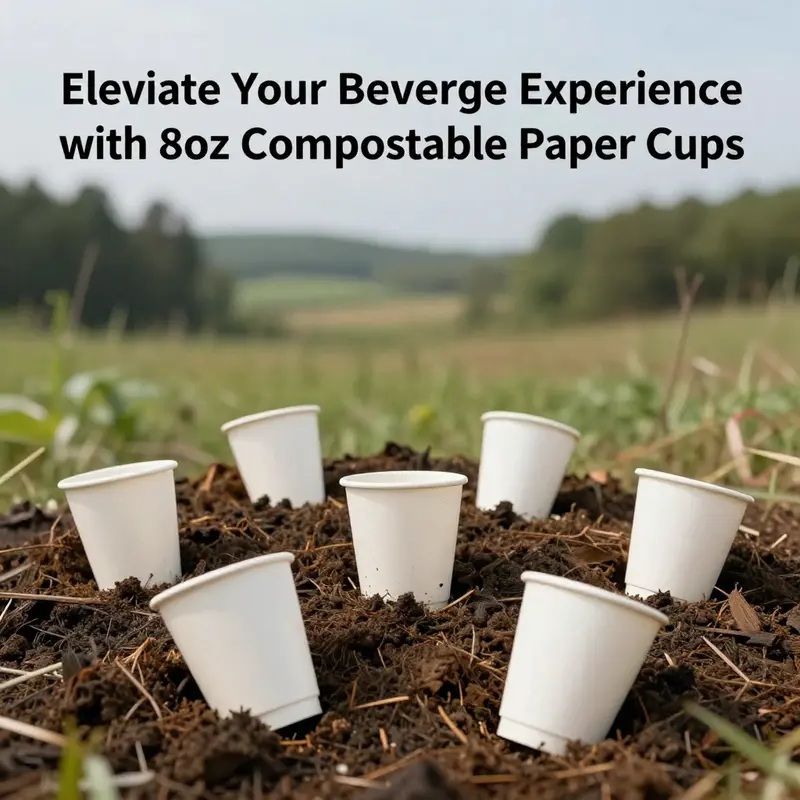
Compostable 8oz paper cups promise a cleaner alternative to conventional single-use cups. The claim is simple: swap plastic-lined paper cups for cups that break down and return to the soil. The reality is more nuanced. To understand the environmental impact, you must follow a compostable cup through its entire life. That includes raw materials, manufacturing energy, use, disposal, and what happens if the cup is misrouted to landfill or recycling.
Materials, lifecycle and the role of composting infrastructure
Most conventional paper cups use a thin plastic lining to keep liquids from soaking through the paper. That lining prevents the cup from biodegrading and makes recycling difficult. Compostable 8oz paper cups, by contrast, use plant-based laminates. One common option is PLA, a polymer made from fermented plant sugars. Another approach is a fully paper-based or bagasse (sugarcane fiber) construction that requires no plastic film. Both strategies reduce dependence on fossil-derived plastics and lower the risk of leaving persistent microplastics in the environment.
The environmental advantages begin with raw materials. Plant-derived polymers and fiber byproducts like sugarcane bagasse come from renewable sources. They often require less energy to grow and harvest than extracting and refining fossil fuels. When production uses recycled fibers or post-industrial residues, it further reduces the demand for virgin pulp. Less virgin extraction means fewer trees cut and less land converted for pulp production. It also reduces upstream greenhouse gas emissions associated with raw material processing.
Manufacturing impacts still matter. Processing plant-based polymers into cup linings consumes energy. The paper forming, coating, and finishing steps emit greenhouse gases and use water. However, life-cycle assessments generally show lower overall emissions for compostable cup systems compared with plastic-lined ones, when the compostable material is actually composted. That benefit narrows or disappears if compostable cups are landfilled, incinerated, or otherwise disposed of improperly. Thus, disposal pathways are central to any realistic calculation of environmental benefit.
In industrial composting facilities, conditions are optimized for breakdown. High heat, controlled moisture, and microbial activity accelerate the decomposition of PLA and other compostable materials. Within weeks or months, cups that are industrially composted are transformed into organic matter and carbon dioxide. This diverts waste from landfills and contributes to soil health when the resulting compost is used correctly. For organizations that can access municipal or commercial composting, compostable 8oz cups close a loop. When teamed with food-service programs that collect organic waste, these cups help convert waste into resources.
Home compostability is a separate consideration. Some compostable cups are certified home-compostable. These break down in backyard compost systems at lower temperatures and without industrial controls. Many PLA-lined cups, however, need the higher temperatures of industrial facilities to fully degrade. This creates a mismatch between consumer expectations and real-world outcomes. If a cup labeled compostable is tossed in a backyard pile or curbside bin intended for mixed recycling, its environmental promise is unlikely to be fulfilled.
The availability of composting infrastructure is uneven. Urban areas with food-waste collection and commercial composters create strong demand for compostable products. Rural regions or places without organics programs do not. Miscollection remains a persistent problem. When compostable cups are placed in recycling streams, they can contaminate recyclate and complicate processing. Conversely, when traditional cups are buried in landfills, their plastic linings can persist for decades. Systems design matters: the best material yields benefits only when matched to local sorting and processing capabilities.
Product performance and consumer behavior also influence impact. Compostable 8oz cups must meet functional needs: leak resistance, heat tolerance, and stackability. If a compostable cup fails at the point of use, consumers may replace it with alternatives that carry a higher overall footprint. Clear labeling, staff training in cafes, and visible collection bins help reduce contamination. Education campaigns that explain what compostable means and how to dispose of these cups correctly multiply the environmental gains. Small operational changes—like keeping lids separate from cups for compost collection—make a measurable difference.
Another essential aspect is transparency and certification. Independent certifications indicate whether a cup is suitable for industrial or home composting. They also guard against greenwashing. Certification programs typically require third-party testing that demonstrates biodegradation under specified conditions. Buyers should look for clear declarations of compostability type and compliance with recognized standards. That clarity helps purchasers evaluate claims and match product choice to local infrastructure.
The carbon footprint of compostable cups is often debated. When assessed over a full life cycle, compostable options usually emit fewer greenhouse gases than plastic-lined counterparts if composted properly. Key drivers include renewable feedstocks and the avoidance of fossil-fuel-derived polymers. The production emissions for plant-based materials can be offset further when the compost produced replaces synthetic fertilizers or improves soil carbon storage. However, if compostable cups are landfilled, methane production can become a serious concern unless landfill gas is captured. The net climate benefit therefore rests on correct disposal.
Waste economics matters too. Businesses choosing compostable 8oz cups must account for collection, hauling, and composting fees. The material cost difference between compostable and conventional cups has narrowed in recent years. The operational cost of setting up organics collection, though, remains a barrier for some small vendors. That said, many food-service outlets recover costs through reduced waste hauling, customer goodwill, and participation in sustainability programs. For event organizers, compostable cups can simplify waste separation when paired with on-site composting partners.
Contamination and sorting technology are evolving. Optical sorters, near-infrared sensors, and manual quality control help separate materials at recycling facilities. Yet compostable laminates can still confuse systems designed for plastics. Municipalities can mitigate this through route-specific education and by investing in organics collection. Producers can help by designing cups with clear visual cues and by choosing materials compatible with existing collection streams.
Finally, the broader systems perspective is essential. Switching to compostable 8oz paper cups is not a silver bullet. It is a meaningful step within a suite of strategies that includes waste reduction, reusable serviceware, and improved material recovery. For many businesses, a phased approach works best: trial compostable cups via free or low-cost samples to assess fit. Evaluate local composting options before committing to a large purchase. Train staff and label bins. Monitor contamination rates and adjust practices.
A single cup’s story illustrates the point. A compostable 8oz cup made from bagasse and an approved plant-based lining can keep a coffee warm, avoid fossil-derived plastic, and, when correctly composted, return nutrients to the soil. That outcome requires compatible infrastructure and informed handling. Without those elements, the cup’s material benefits may not translate into environmental gains. The thoughtful buyer recognizes that materials, logistics, and behavior must align to achieve real impact.
If you are considering switching to compostable 8oz cups, inspect certifications and match product features to your disposal options. Trial orders and samples are an effective way to test performance and local processing. For a look at a typical eco-friendly 8oz and 12oz paper cup product offering, see the product page for an 8 oz / 12 oz eco-friendly printed paper cup. Practical experience, combined with clear labeling and staff training, will determine whether compostable cups deliver on their promise.
For a deeper technical overview of compostable paper cups, their composition, and real-world performance under different disposal pathways, consult this industry guide: https://www.anhuinature.com/compostable-paper-cups-guide/
Final thoughts
Adopting 8oz compostable paper cups not only fulfills the rising demand for sustainable options but also enhances the brand image of businesses within the beverage industry. With the simplicity of obtaining free samples from Beixuan, companies can instantly assess how these eco-friendly cups can fit into their service model, engaging customers while promoting responsible consumption. This shift towards compostable products is not just a trend; it reflects a commitment to preserving our planet for future generations. Make the switch today and embrace the positive outcomes of sustainable practices in your operations.