
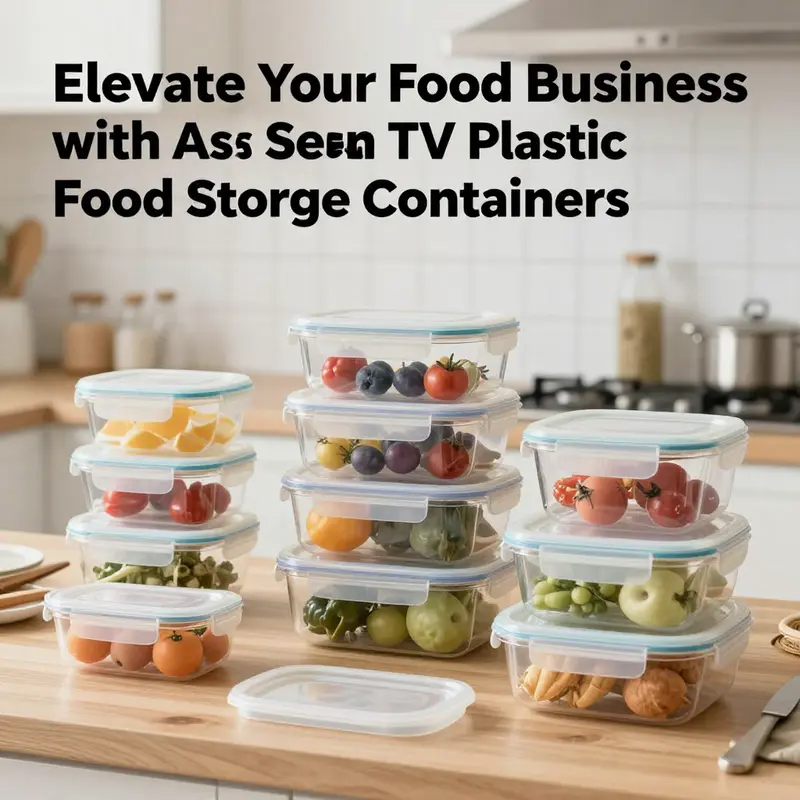
In today’s dynamic food industry, having reliable storage solutions is essential for streamlining operations and maintaining food quality. As Seen On TV plastic food storage containers provide a versatile and efficient method for organizing various food items, whether in a bustling restaurant, food truck, or during catered events. Their unique designs offer stackability and transparency, ensuring ease of access and a professional appearance. Each following chapter explores the convenience, effectiveness, market availability, and material quality of these containers, creating a comprehensive understanding of how they can improve your service and make your food storage needs more manageable.
Sealing in Convenience: The Allure and Craft of TV-Marketed Plastic Food Storage Containers
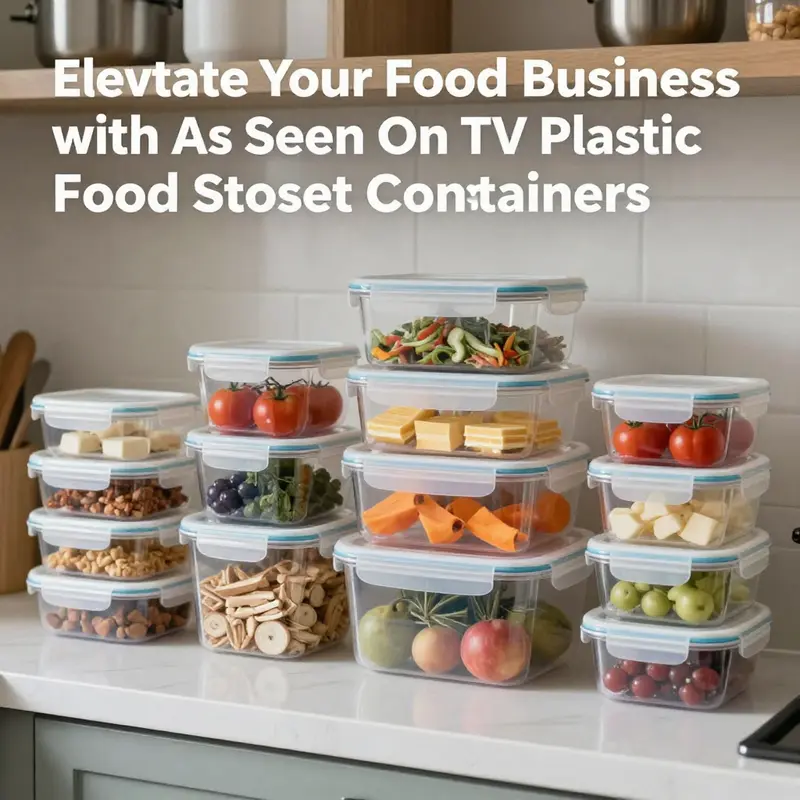
In the modern kitchen, a certain family of plastic storage containers has carved out a niche that blends everyday practicality with a marketing-smart design. These TV-marketed sets are not just a collection of bowls and lids; they are a system—a portable wardrobe for leftovers, dry goods, andsnack-sized portions that promises both order and accessibility. Their ubiquity in major retailers and the wholesale market speaks to a demand that goes beyond mere emptiness of space. Consumers want containers that are easy to see, easy to stack, and easy to seal. They want a kitchen that looks tidy at a glance, and they want to reach for a container without hunting through a cabinet or a crisper drawer. When you walk into a kitchen that has adopted this kind of system, you can feel the difference: a quiet economy of motion, a sense that food storage is not a chore but a workflow. The appeal rests on thoughtful design as much as on the promise of freshness, and the best of these sets marry form and function in a way that makes everyday tasks feel a touch less fragile and a little more confident.
The most recognizable element of these systems is the combination of clear, usually square or rectangular containers and locks-on-lids that emphasize a tight seal. The soft geometry of the shapes reduces wasted space while maintaining compatibility with standard shelf dimensions. A typical configuration features dozens of pieces that span a range of sizes—from approximately 8 ounces to 24 ounces and beyond—so that everything from open bags of crackers to diced vegetables can be contained in uniform shapes. A standout feature of the design is the carousel or spinner rack option that retailers often showcase. This arrangement places the storage system on a revolving base, which not only saves counter or cabinet space but also makes every piece instantly accessible. The rotational access minimizes fumbling and reduces the number of times a user has to rummage through a stack to locate a small lid or a specific size. In a busy kitchen, this is more than a convenience; it is a subtle catalyst for workflow efficiency, turning storage into a smooth, almost graceful, routine rather than a repetitive hurdle.
Behind the appealing visuals lies a practical claim: the combination of clear bodies and snug lids helps minimize air exposure, which can slow the pace of moisture loss and odor migration. The transparency is not merely cosmetic—it is a functional advantage. When you can see what’s inside at a glance, you reduce the number of times you open containers in search of a particular item. The lids themselves are typically designed to click or snap into place, creating what manufacturers describe as a tight seal. That seal matters more than it might appear, because it directly influences how long leftovers stay appetizing and how well pantry staples retain their aroma and texture. In a world where food waste is a social concern as much as a financial one, these sealing mechanisms become a practical ally in daily meal planning and portion control.
Material choices are central to the narrative of TV-marketed plastic storage. The sets frequently claim food-grade safety, with claims that the plastics are BPA-free and recyclable. The actual chemistry varies by line, but common materials include polypropylene (PP) and polystyrene (PS). PP is valued for its resilience and chemical resistance, making it a common backbone for containers that claim microwave and dishwasher compatibility. PS, while less forgiving with heat, has long been favored for clear, rigid bodies that showcase contents without the need for opaque coloring. The emphasis on being food-grade and odor- and stain-resistant is practical, particularly for households that habitually stock spices, sauces, and leftovers. The recyclable aspect aligns with a broader push toward responsible consumption, even as the life cycle of plastic products remains a topic of ongoing conversation in sustainability circles.
A key aspect of the product narrative is appliance compatibility. Many sets are pitched as microwave-safe for reheating, dishwasher-safe for convenient cleaning, and freezer-safe for long-term storage. These claims, when accurate, expand the versatility of the containers far beyond simple leftovers. They enable a more fluid approach to meal planning: batch cooking, meal-prepped lunches, and organized bulk storage in a way that keeps food safe and visually accessible. The practical upshot is a kitchen that can adapt quickly to a range of routines—from weekday lunches to weekend batch cooking—without introducing extra layers of complexity. The goal, then, is not merely to corral containers but to integrate them into daily life so that they support instead of disrupt it.
From a user-experience perspective, the most immediately noticeable convenience is the labeling-friendly payload that many sets include. Labels and dry-erase pens, often tucked into the lid compartment or the base of the carousel, offer a simple method to track contents, date storage, and identify portions with a quick glance. This feature reinforces the broader value proposition: better organization translates to less food waste, fewer last-minute grocery runs, and more predictable meal timing. The labels function as a small but meaningful cognitive shortcut, reducing the mental load of planning meals around what’s available in the fridge. When you pair clear containers with legible labels, you create a personal system that is easier to navigate and easier to sustain over time.
The commercial narrative surrounding these sets also speaks to scalability and affordability. A 49-piece configuration is frequently highlighted in promotional materials and in-store displays, offering a comprehensive range of sizes that can cover most household needs. For families, single professionals, or students, that breadth allows a single purchase to function as a complete storage ecosystem. The ability to buy in multi-piece configurations also makes it easier to have a uniform appearance across the kitchen, which can contribute to a sense of order even when life grows chaotic. And because the sets are marketed through large retailers and wholesalers, the price-to-value proposition can be compelling, especially when one considers the reduced waste and the improved meal-prep efficiency that a well-organized system can unlock over time.
The broader supply chain around these products is equally telling. Manufacturers emphasize food-grade materials such as PP, along with designs that maximize durability and reuse. For retailers and wholesalers, the opportunity to offer options in bulk or as part of a modular assortment makes sense when the demand is for a system that can adapt to different household sizes and cooking styles. Some suppliers even advertise MOQs—minimum order quantities—ranging from a few hundred to several thousand units, underscoring how these products travel not only into homes but also into commercial settings like cafeterias, small eateries, or office kitchens that prize consistent organization. In this sense, the TV-marketed storage system becomes part of a broader ecosystem of kitchen efficiency that spans both consumer and business contexts.
The practical logic of these containers also extends into pantry architecture. A thoughtful carousel or stack-friendly design invites vertical storage strategies that optimize shelf real estate without sacrificing visibility. In smaller kitchens, this approach can be transformative. Vertical storage frees up lower cabinet space for appliances and cookware while keeping frequently used items within easy reach. Even in larger kitchens, the visual order created by uniform shapes and transparent lids can reduce clutter and make the act of meal preparation feel more deliberate and less hurried. The aesthetic impact matters, too: when a kitchen conveys a sense of calm and predictability, it becomes easier to plan, shop, and cook with intention rather than reactively grabbing whatever is at hand.
From a user-safety standpoint, it is worth noting that while the sets are marketed as safe for daily use, the long-term performance hinges on a few critical details. The integrity of the sealing mechanism is central. If a lid develops a crack, warp, or a loose snap, the seal can deteriorate, compromising freshness and inviting odors into adjacent containers. Similarly, repeated cycles of microwave heating or dishwasher cleaning at high heat can affect the plastic’s structural integrity. Users who treat their containers with care—avoiding extreme heat beyond specified limits, hand-washing when recommended, and replacing lids that show signs of wear—will likely enjoy a longer, trouble-free lifespan. In essence, the decision to invest in a cohesive set is also a decision about maintenance: the more consistently one follows care guidelines, the longer the system stays reliable and visually tidy.
When the conversation shifts from how these containers work to how they fit into everyday life, the most persuasive truth emerges: organization reduces friction. Preparing meals, packing for work or school, and managing leftovers all become more predictable activities when you can see content clearly, trust the seal, and access the right size quickly. A well-chosen set becomes less about the novelty of a carousel and more about a dependable partner in daily routines. It is this blend of practical functionality and thoughtful design that sustains their popularity, even as consumer preferences evolve toward different materials, sustainability considerations, and new storage concepts.
For readers who want to explore options within a broader home-storage framework, these TV-marketed containers sit comfortably within a larger category of storage solutions. They can be integrated with other organizing tools that emphasize modularity, stackability, and label-ready surfaces. In the kitchen, this means you can build a cohesive system that extends beyond leftovers to dry staples, snack packs, and even small batch ingredients that are stored for quick access. The goal is harmony: containers that look uniform, perform consistently, and contribute to a sense of order that is both practical and pleasing to the eye. As a part of the home-storage ecosystem, these containers are not a one-off purchase but a scalable solution that supports evolving cooking habits and family dynamics. Explore the broader category of Storage Containers to see how these pieces can complement other organizers and shelving options that you may already use in your space.
External resources and ongoing consumer conversations continually reinforce the practical value of these sets, particularly when they strike a balance between affordability, durability, and ease of use. For readers seeking current availability, price points, or real-user feedback across different retailers, a close look at market listings can be instructive. To gain a sense of how these sets are positioned in the market and what shoppers say after real use, you can refer to contemporary product pages from major retailers and consumer marketplaces. External stimulation of this kind helps illuminate the practical realities of owning a system like this, ranging from everyday convenience to the occasional maintenance considerations that come with any plastic storage solution.
For more context on how such storage systems are promoted and how they perform in real-life kitchens, consider visiting the Storage Containers category linked above. It can offer a helpful sense of scale—how different sizes relate to one another, how lids and seals vary across lines, and how labeling or color-coding options can further enhance usability. In short, the appeal of TV-marketed plastic food storage containers lies not only in their immediate looks or claims, but in how they fit into a cohesive kitchen routine—how they enable you to see, store, and retrieve with confidence, and how they invite you to build an organized space that supports your cooking and your life.
External resource: https://www.walmart.com/ip/As-Seen-On-TV-Food-Storage-Containers/1234567890
Freshness Under Pressure: The Real Performance of As Seen On TV Plastic Food Storage Containers

Every kitchen aisle is crowded with storage ideas pitched as time-saving miracles, and among them, As Seen On TV plastic food storage containers occupy a curious place. They are designed to be the practical workhorses of everyday life: stackable to save cabinet space, transparent enough to glimpse what’s inside, and affordable enough to tempt a cartful of leftovers and pantry staples. The appeal is immediate. A lid snaps shut with a reassuring click, a boundary is created between yesterday’s meal and today’s appetite, and the urge to tidy becomes a tangible, repeatable habit. Yet the question that lingers beyond the display of bright sizes and clever lids is straightforward: how effectively do these containers preserve freshness, and how long can that freshness reasonably be expected to last when a consumer uses them in a typical home setting?
From the marketplace to the pantry, the common design goals for these containers emphasize two practical outcomes. First, they aim to protect food from spills and external contaminants, a fundamental need in busy households where kids, roommates, or late-night snack runs are part of the routine. Second, they seek to manage space efficiently. A 49-piece set with multiple sizes — from compact 8-ounce portions to larger 24-ounce servings — is marketed as a solution that can be integrated into drawers, shelves, and even a spinning carousel to ensure quick access. The truth of the matter, however, rests in the mechanism that sits between container and food: the seal. The seal is the gatekeeper of freshness. Without a robust seal, air, moisture, and odors can travel in and out, and the cycle of oxidation, moisture loss, or unwanted microbial activity begins to intrude upon the stored item. In the context of these widely available plastic containers, the typical design does not deliver an airtight or vacuum-sealed environment. Instead, it offers a good but imperfect barrier that reduces spill risk and exterior contamination while leaving air exchange largely governed by the lid’s fit and the plastic’s aging characteristics.
The material itself—plastic—provides a reliable, everyday utility. It is tough enough to survive the bumps of a busy kitchen, transparent enough to let leftovers get noticed without opening the lid, and inexpensive to manufacture and replace. The research notes that these containers are primarily made of plastic, offering basic protection against spills and surface exposure. They perform well for securing dry goods against incidental exposure and for organizing a spectrum of foods in a modestly tidy system. Yet plastic, in this context, does not inherently extend shelf life the way materials or technologies designed for atmospheric control do. There is no built-in vacuum or true airtight seal in the basic lineup, which means that while the contents are shielded from direct contact with the outside world, the air inside the container remains a variable. Oxygen molecules, humidity, and odors can still interact with the stored food over time, albeit at a reduced rate when compared with an open container. This distinction matters greatly when the aim is longer freshness or flavor retention for perishable items.
That said, the practical performance of these containers should not be dismissed. They excel as a versatile solution for everyday storage and organization. They help minimize cross-contamination odors in a fridge, keep track of portions, and reduce the need for multiple mismatched vessels that clutter shelves. They are particularly convenient for leftovers, sliced fruits, or prepped ingredients that are consumed within a few days. The lids, while not universally airtight, generally provide a secure seal that prevents accidental spills during movement or stacking. For many households, this level of protection is sufficient to preserve texture and moisture for a reasonable period when combined with sensible food handling practices. A user who stores similarly sized portions, re-labels containers, and keeps a consistent rotation can maintain a functional system that reduces waste and streamlines meal planning without requiring a high-tech storage setup.
To understand freshness in a broader sense, it helps to compare this category with more advanced options that specialize in air exclusion. True airtight sealing systems create a barrier that minimizes air exchange, helping to slow enzymatic reactions, oxidation, and moisture-driven spoilage. And vacuum-sealing technology actively removes air from the storage environment, which can markedly extend the time food stays closer to its original attributes. In this light, the basic As Seen On TV plastic containers can appear limited. They do not typically offer the expansion and versatility of stretchable silicone or the active air removal found in dedicated vacuum systems. The difference is not merely academic; it manifests in practical outcomes for a range of foods. For perishable items such as cooked proteins, delicate greens, or cut fruit, the absence of a true airtight or vacuum environment means a slower deterioration rather than a complete preservation of peak quality. For longer-term storage in refrigerators, freezers, or even cabinets, you may notice more rapid moisture loss, flavor transfer, or textural changes than you would with higher-tech alternatives.
This comparison is not a blanket condemnation of the basic plastic containers. They have a place in the kitchen as a convenient, accessible, and affordable solution for everyday storage and organization. They support the workflow of meal preparation and leftovers management, which in turn reduces waste and makes daily routines smoother. The practical takeaway for consumers is to match expectations with needs. If the goal is quick access, neat stacking, and reasonable protection against leaks during ordinary use, these containers deliver well. If the objective is maximizing shelf life for a broad range of perishables or minimizing flavor and texture changes through advanced air control, then exploring options that incorporate true airtight sealing or vacuum technologies becomes appropriate. In kitchen practice, that balance between convenience and preservation defines when to lean on the baseline plastic solutions and when to upgrade to more specialized storage.
Market realities add another layer to this discussion. These plastic storage vessels are widely available at major retailers and through wholesale channels, giving them broad reach and easy access. The appeal of a 49-piece set that covers multiple sizes and includes a dedicated mechanism for easy access—like a spinning carousel that keeps frequently used containers within reach—appeals to households seeking an organized, space-efficient approach. The availability of such sets signals a consumer preference for turnkey organization kits, where the problem of clutter is addressed as a single purchase rather than a series of smaller one-off buys. The trade-off, however, remains the intrinsic sealing technology. Buyers are invited to weigh the value of a tidy storage system against the need for advanced freshness preservation depending on what foods they most often keep on hand and for how long.
From a design and materials perspective, the emphasis on food-grade polypropylene (PP) and related plastics reflects a cautious approach to safety and odor resistance. PP is known for being relatively inert, resistant to stains, and compatible with typical food storage scenarios. Yet, as the rotating cycle of use continues, plastic components may experience wear that nudges seals away from their initial tightness, or micro-abrasions that invite minor air exchange. This is not a dramatic defect; rather, it represents the normal aging of everyday kitchen gear. Consumers who want to maintain freshness over longer periods may perform routine checks: ensuring lids still clasp securely, inspecting rims for chips or warping, and keeping containers away from heat sources that could accelerate material degradation. The lifecycle of any storage system hinges on such maintenance, and the basic plastic containers are no exception.
So where does one draw the line between practicality and aspiration? The answer lies in recognizing the different storage needs that arise in a given home. For dry goods—the type of pantry items that benefit from clear visibility and predictable portioning—these containers offer a dependable, affordable solution. They help organize, label, and manage the flow of ingredients, making it easier to see what’s on hand and plan meals accordingly. For leftovers that must stay fresh for more than a couple of days, or for items that require longer-term preservation, the best practice is to pair the baseline containers with storage strategies that reduce air exposure. This might involve using containers designed with tighter seals, or adopting other techniques such as freezing portions when feasible or using supplemental methods to remove some of the air in the container before sealing.
In the end, consumers are presented with a spectrum of choices, each with distinct trade-offs between cost, convenience, and freshness. The As Seen On TV plastic storage set embodies the judgment call many households make: prioritize accessibility, visual order, and everyday reliability over the more stringent demands of long-term freshness preservation. To those who primarily seek a practical, accessible system for organizing a busy kitchen, it remains a compelling option. For others who handle highly perishable items or who store food for extended periods, considering additional tools that specifically target airtightness or air removal will yield greater gains in freshness and quality over time. If you’re curious about expanding your options beyond the basics, you can explore the broader category of storage containers and what it offers in terms of design variety and seal performance. See the storage containers collection for a broader sense of how containers can balance accessibility with sealing integrity.
External resource discussions and consumer testing increasingly emphasize the importance of sealing mechanisms and air control in real-world use. The landscape suggests that the most satisfying choices often combine solid basic containers with either upgraded lids or supplementary technologies that actively manage air exposure. As the kitchen continues to evolve toward smarter organization, the throughline remains clear: the best storage solution is the one that aligns with how you cook, store, and reuse food, while keeping your countertops uncluttered and your ingredients fresh enough to enjoy at their peak. For reference on more advanced air-control approaches and how they compare to traditional plastic designs, see external resources that discuss vacuum and airtight technologies in contemporary storage systems: https://www.perfectpack.com/.
Beyond the Aisle: The Ubiquity and Practicality of TV-Style Plastic Food Storage Containers
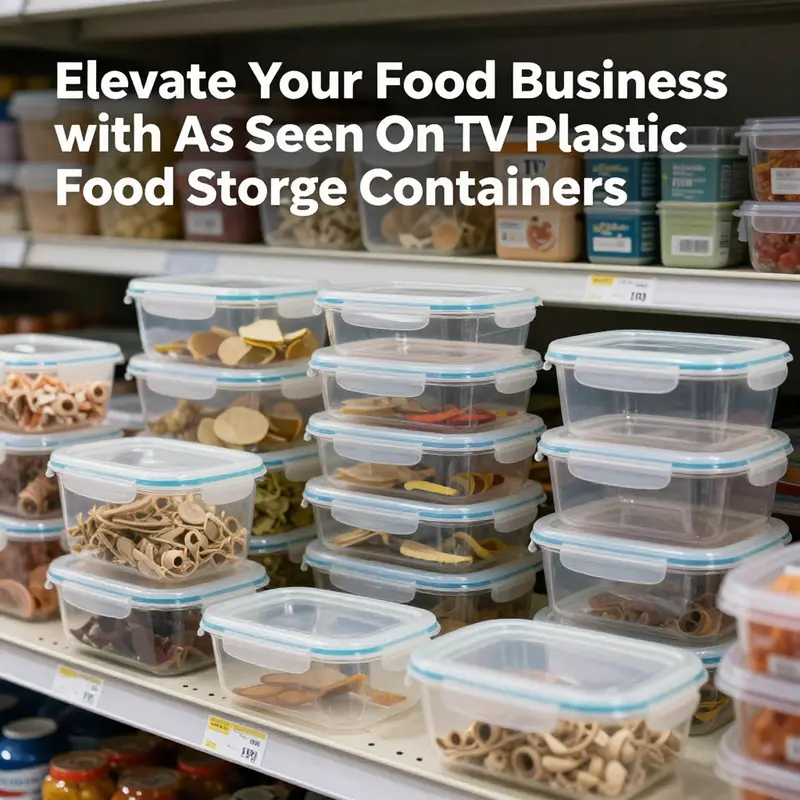
A kitchen is a stage for daily routines, and TV-style storage containers have become dependable props in that script. Their presence on pantry shelves and in grocery-store displays reflects a broad, reliable demand for simplicity, predictability, and ease of use. These containers travel from mass retailers to home kitchens through a mix of channels that emphasize value and accessibility, turning a common product category into a familiar habit rather than a luxury purchase. The end result is a widely available system that helps households store leftovers, dry goods, and snacks with clear visibility and minimal fuss.
Design attention centers on two practical goals: stackability and seal integrity. Containers nest neatly to save space, while lids that snap or screw tight limit moisture exchange and odor transfer. The practical value is easy to measure: fewer mislaid lids, faster cleanup, and less repeated rummaging when planning meals. Sizes are chosen to mirror everyday tasks—from small lunchbox portions to larger batches of leftovers—and the transparency of bodies reduces the cognitive load of everyday organization.
From a market perspective, availability is shaped by a mix of national retailers, warehouse clubs, and wholesale suppliers. The result is a broad price spectrum and frequently bundled sets, with features such as rotating carousels or label-friendly surfaces designed to enhance daily use. Material choices, often polypropylene, balance safety with durability and cost, supporting many wash-and-reheat cycles while keeping production affordable. Consumers increasingly weigh environmental considerations, seeking durable, reusable options that can be repaired or replaced as needed rather than discarded.
Practical buying guidance emphasizes robust sealing performance, ease of opening for all ages, and how well the set fits existing storage space. Rather than chasing one flashy item, many shoppers look for a cohesive system: multiple sizes in a single purchase, reorderable components, and compatibility with common dishwashers and microwaves where appropriate. In other words, TV-style storage containers are less about novelty and more about dependable routines that reduce decision fatigue and waste in daily life.
In sum, the TV-style plastic storage category reflects a durable, accessible approach to kitchen organization. Its reach across retailers and its emphasis on practical design help households keep ingredients visible, portions controlled, and spaces tidy, turning simple containers into a reliable framework for everyday meals and longer-term freshness.
BPA-Free Promises and Practical Realities: The Material Truth Behind As Seen On TV Plastic Food Storage Containers

The allure of As Seen On TV plastic food storage containers rests as much in their clever design as in the promise that a simple lid and clear walls can keep yesterday’s meals fresh for tomorrow. The chapter you’re about to read charts a path from the glossy marketing claims to the everyday realities of material quality. It asks not only whether these containers seal tightly enough to keep odors and moisture at bay, but also what the plastics themselves are made of, how those plastics behave under normal kitchen routines, and what that means for safety, longevity, and practicality. In the end, the story is less about a single container and more about a system of storage that hinges on material choices, manufacturing standards, and user behavior, all converging to determine whether a product earns a place in the crowded, busy world of home kitchens.
At the core of any food storage solution lies the resin that forms the body of the container and, closely tied to it, the lid. The materials commonly described in consumer discussions are BPA-free plastics that aim to minimize risk while preserving clarity and durability. The phrase BPA-free has become a shorthand for safety in the eyes of many shoppers, yet it is worth unpacking what that means in practice. BPA-free plastics cover a range of resins, with polypropylene (PP) being a frequent default for many budget-friendly storage options. PP offers a robust balance of rigidity and lightness, resists staining, and maintains its shape through repeated cycles of freezing, microwaving (when allowed by the manufacturer), and washing. In some product lines, designers lean on other BPA-free resins as well, including newer polyolefin blends and specific BPA-free polycarbonate formulations. The result is a spectrum rather than a single material, and that spectrum matters when assessing how a container will perform over time.
Durability and everyday usability hinge not only on the resin but on how that resin is shaped, reinforced, and joined to the lid. A well-engineered container relies on a tight-fitting lid that seals the contents and minimizes exposure to air. Airtight and leak-proof lids are not mere accessories; they are activated by the geometry of rims, gaskets, and latch systems designed to tolerate typical kitchen handling. The lids may be snap-on, screw-top, or hinge-assisted, but across all designs the goal remains the same: to create a barrier against moisture loss, odor migration, and potential contamination. Clear walls help with quick visual checks of what’s inside, reducing the need to open multiple containers to identify contents. In practice, visibility and sealing performance drive satisfaction. When both are reliable, the user is less inclined to replace containers prematurely, and the storage system becomes a quiet backbone for meal prep and pantry organization.
Those two elements—material choice and lid integrity—also influence how these containers age. A plastic that maintains its clarity and resists odor absorption will stay looking new longer, which in turn reinforces user confidence. Conversely, when a resin begins to show wear—yellowing, minor cracking, or odor retention after a simple cleaning cycle—the perception of safety and value can decline quickly. The marketplace recognizes this dynamic, which is why many manufacturers emphasize durability alongside safety. It is not unusual to see packaging and labeling highlight features such as dishwasher-safe or freezer-safe designs, while also marking requirements about microwave use or heating guidance. The practical takeaway for consumers is simple: treat the container as a system, not a single component. The resin, the lid, and the way they interact under the specific conditions of your kitchen all contribute to overall performance.
The design language of these containers often nods to the demands of modern kitchens: they must be stackable to fit a crowded fridge, easy to clean, and able to handle a variety of food types—leftovers, sauces, dry goods, or baby servings—without conspicuous transfer of flavors. The transparency of the plastic is a small but meaningful advantage, reducing guesswork and helping to map out a week of meals. Yet transparency has its caveats. In some resins, pigments or additives can affect long-term safety or raise concerns about staining or odor transfer. For this reason, the broader conversation around material quality emphasizes not just what is claimed, but what the science supports about how plastics interact with food, heat, and repeated use.
Safety considerations are central to any discussion of kitchen plastics. The emphasis on BPA-free plastics has become a baseline expectation for many buyers. BPA, or bisphenol A, has a long history of scrutiny because of concerns about endocrine-disrupting activity when released into food. The shift toward BPA-free materials has driven manufacturers to explore alternative resins, but the safety question does not end with a label. Under high heat or aggressive cleaning cycles, some plastics can release compounds of concern, even if they are BPA-free. This reality is highlighted by researchers and health authorities who point to estrogenic activity as a potential risk when plastics are stressed by microwaving, dishwasher cycles, or harsh residues. The caveat here is not a condemnation of all plastic containers but a reminder that material stability under real-world conditions depends on both the product’s design and the consumer’s adherence to guidelines. As one respected line of expert commentary emphasizes, following the maker’s instructions on microwave and dishwasher use is essential if you want to preserve the material’s integrity and minimize any risk of leaching.
Movies and infomercials may cast plastic storage as an almost magical fix for disorganization, yet the practical truth rests on a careful balance of material safety, sealing performance, and user habits. For example, even when a container is marketed as microwave-safe, not all plastics are intended for long or repeated exposure to high heat. Some lids or gaskets may degrade or warp with repeated cycles, compromising a seal and inviting spills or uneven freezing. Likewise, dishwasher-safe labeling suggests a resilience to high temperatures and detergents, but aggressive cycles or high heat can still wear down seals or cause warpage over time. The upshot is that the most reliable decision is to appreciate what the material is designed to endure and to respect those boundaries. A conscientious user treats these containers as part of a kitchen routine that rewards consistent loading, proper portioning, and careful reheating practices.
The literature surrounding material quality often points to a practical pairing: containers that are clear and lightweight with BPA-free assurances, paired with lids that snap or seal tightly to reduce air exchange. The idea is to maximize freshness by limiting exposure to air, moisture, and temperature fluctuations—three factors that can accelerate oxidation, moisture loss, or microbial growth in foods. When a container design successfully curtails air infiltration, it also helps to slow the pace at which taste, texture, and aroma deteriorate in stored foods. In this sense, the value of a good container is not merely about keeping your soup from spilling; it’s about maintaining a predictable environment for food across days in the fridge or weeks in the freezer.
From a consumer perspective, the material story also intersects with affordability and accessibility. The ability to purchase in bulk or in multi-piece sets is often marketed as a way to simplify organization, from a kitchen carousel to a stackable system that minimizes clutter. Suppliers frequently promote these sets as cost-effective ways to equip households with a versatile range of sizes, designed to accommodate everything from small leftovers to bulk dry goods. This, in turn, reinforces the practical role that material quality plays in everyday life: if the resin and lid cooperate under many kinds of use, the set becomes a true workhorse in daily routines. A well-constructed, BPA-free plastic storage option can be a dependable companion for families managing meal prep, school lunches, and pantry organization, turning a simple plastic box into a reliable tool for reducing waste and saving time.
For readers who want to see how a broader storage ecosystem fits into this picture, a look at the storage containers category can be illuminating. It helps frame how these products sit among other containers that share a common goal: to consolidate storage space while preserving the integrity of the contents. Explore this category to understand how materials, sizes, and seal mechanisms align with different kitchen workflows, from small apartments to family-sized households. storage-containers category offers a lens into the breadth of options that exist and how they relate to the core ideas discussed here.
As with any discussion of materials and health, the consumer should also be aware that plastics are only part of the equation. Alternatives to plastic, such as glass, offer non-reactive surfaces and resistance to leaching, even under repeated heating, though they trade off weight and fragility. The decision between plastic and glass often boils down to a balance of convenience, safety, and lifestyle needs. The opportunity to weigh these factors thoughtfully is one reason why readers benefit from a clear understanding of how everyday containers are designed, how they perform, and how they age under routine use. The ongoing conversation about safety and durability is not about banning plastic storage but about selecting products that align with specific usage patterns and following care instructions that preserve their integrity.
To help readers navigate the safety landscape with more confidence, consider the broader regulatory context. The scientific and regulatory communities encourage ongoing assessment of materials used in contact with food, including how they respond to heat, detergents, and repeated use. For those seeking more information on BPA-free plastics and health risks, the U.S. Food and Drug Administration maintains resources that summarize what is known about the potential effects of contact with food and the safety considerations for different resins. This external resource offers a grounded reference point for readers who want to dig deeper into the science behind the labels and the practical implications for everyday kitchen use.
In sum, the material quality of these containers rests on a triad: safe, BPA-free resins; lids that provide a reliable seal to limit air exchange; and user practices that respect the products’ stated guidelines. When all three elements align, plastic containers can deliver on the promise of freshness, convenience, and organization without sacrificing safety. The key is to recognize that not all BPA-free are created equal, to respect the stated compatibility with microwaves and dishwashers, and to avoid overreliance on a single feature as a guarantee of performance. This integrated perspective helps demystify the marketing language and invites readers to evaluate containers as part of an intentional kitchen culture aimed at reducing waste and simplifying daily routines.
External resource for broader context: https://www.fda.gov/food/chemicals-in-food/bpa-and-plastics
Final thoughts
Implementing As Seen On TV plastic food storage containers can significantly benefit food businesses by enhancing organization while preserving food quality. The convenience, effectiveness, extensive market availability, and high material quality of these containers make them a smart investment for any food-related operation. Whether you manage a bubble tea shop, a restaurant, or events, choosing these containers can lead to streamlined processes and happier customers. Make the switch today to elevate your dining experience and ensure your food remains fresh, stylishly stored, and always ready to serve.