
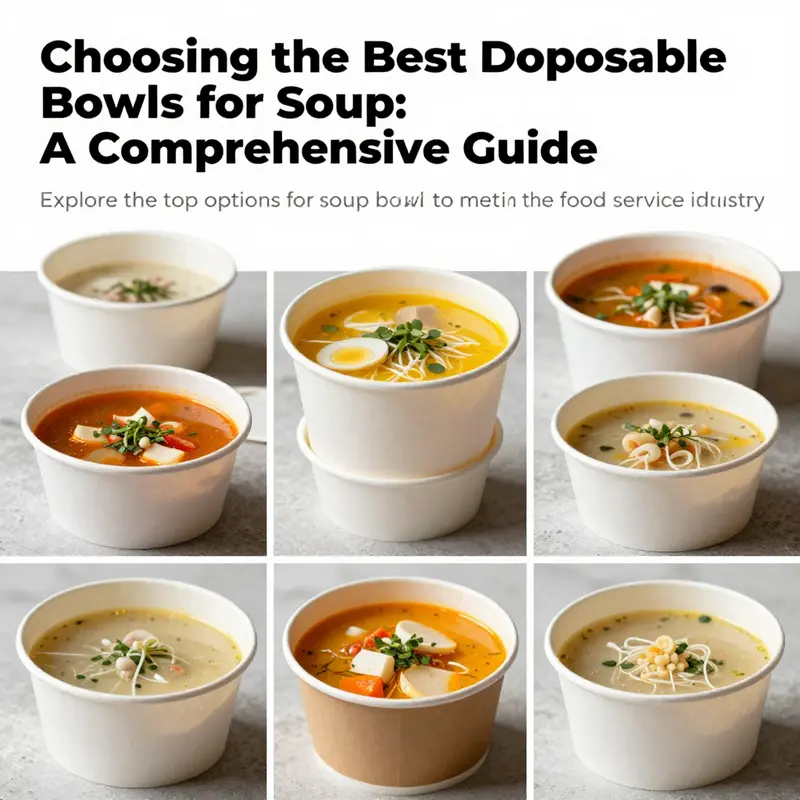
In the bustling world of food service, offering quality to-go options is crucial—especially for soup, a staple in many menus. Selecting the right disposable bowls helps to maintain the integrity of your liquids while also providing convenience and sustainability. This guide provides an in-depth look at the best available disposable soup bowls: from those excellent for everyday service to eco-friendly choices that align with modern environmental standards. By examining paper bowls with waterproof coatings, plant-based PLA options, and budget-friendly recycled paper bowls, we’ll explore how each option meets the diverse needs of bubble tea shops, restaurants, food trucks, catering services, event planners, and corporate procurement teams. Embrace the best practices in serving delicious soups while keeping your business aligned with sustainability and customer satisfaction.
null
null
Heat, Harmony, and Bioplastic: PLA Plant-Based Bowls as the Eco-Friendly Answer for Hot Soup
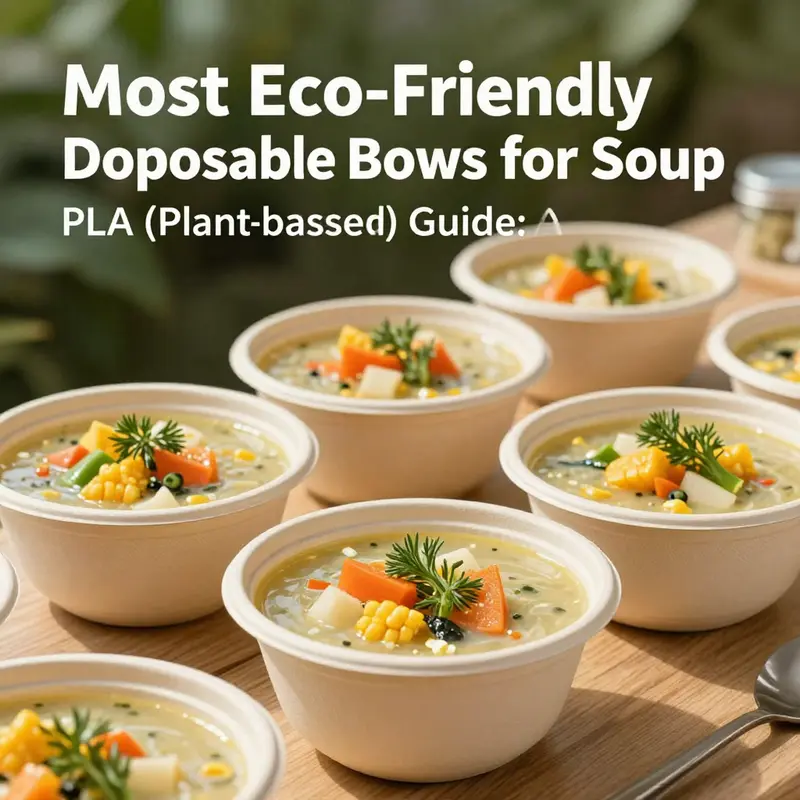
The challenge of serving soup in a disposable format sits at the intersection of temperature, containment, and responsibility. Hot bowls must cradle heat without surrendering to leaks, while the vessels themselves should minimize environmental impact. In this quest, PLA plant-based bowls have emerged as a compelling option for many food-service operators and home hosts alike. They embody a growing philosophy: that convenience can coexist with careful stewardship of resources. This chapter explores why PLA-based options—particularly those built around plant-derived polymers and reinforced, water-resistant coatings—have become a reference point for eco-friendly takeout and event ware. It is a story about material science meeting menu needs, about choices that keep soups steaming without turning the disposal stream into a problem. As the discussion unfolds, the goal is not to crown a single universal solution but to illuminate how PLA-based bowls fit into a broader strategy of heat management, waste separation, and sustainable procurement that aligns with how soups travel from kitchen to consumer while preserving the planet for the next simmer.
PLA, or polylactic acid, sits at the heart of this conversation. It is a bioplastic derived from renewable resources such as cornstarch or sugarcane. The appeal is straightforward: replacing fossil-fuel-derived plastics with a material sourced from plants reduces dependence on nonrenewable feedstocks and lowers the lifecycle footprint, at least in the contexts where industrial composting is available. PLA is designed to be compostable in conditions found in many commercial facilities, which makes these bowls attractive to venues aiming to reduce waste volumes in a tangible way. Yet the reality of composting infrastructure matters. Home compost bins often do not reach the temperatures necessary to trigger the breakdown of PLA, and not all municipal programs accept PLA-based products. The practical upshot is that the environmental win of PLA bowls hinges on appropriate waste streams and local facilities more than on the raw material alone. When readers consider eco claims, they should weigh the full lifecycle: feedstock cultivation, manufacturing energy, distribution, and, critically, end-of-life handling. The narrative of PLA is inseparable from the chain of facilities that can responsibly process it, not merely the chemistry in a bowl.
A key feature of PLA-based bowls is that many are designed with water-resistant coatings or inner linings that preserve the paperboard structure while keeping soups from seeping through. In effect, the vessel can offer the warmth and flow-control needed for hot soups without sacrificing the integrity of the container. The coating itself is typically plant-based or otherwise food-safe and designed to withstand heat without disintegrating in the first few minutes of service. For soups that arrive piping hot, this design is essential. It prevents the wet interior from softening the outer layer too quickly and helps ensure a secure lid or sleeve can be used for transport. The combination—paperboard with a plant-derived coating or lining—also tends to be lighter in weight, which is a practical advantage for takeout teams and outdoor events where portability translates into smoother guest experiences and less fatigue for staff.
When we talk about heat, it is important to set expectations for PLA bowls. PLA bowls are typically rated to handle hot liquids up to roughly 180°F (82°C) in standard consumer use, with some fortified designs claiming higher thresholds under controlled conditions. This range covers many common soups, broths, and chowders encountered in casual dining, takeout, and event catering. However, it is prudent to recognize that temperatures well above this band or soups that remain at near-boiling temperatures for extended periods can challenge even the best-constructed PLA bowls. In practical terms, this means planning for short containers of hot soup rather than attempting to keep very thick or highly emulsified soups at extreme heat for long durations in a disposable bowl. The design intent behind PLA bowls is not only to withstand heat but to manage it predictably in a service flow where meals move quickly from kitchen to customer. For venues that routinely serve scalding soups in large volumes, it is wise to test a sample batch under real-world conditions, ensuring the lining does not delaminate, warp, or compromise insulation in transit.
Durability is another axis by which PLA-based bowls earn their reputation. The wall thickness and the quality of the coating or lining influence resilience during handling, shallow stacking, and the occasional bump or drop during delivery. A well-made PLA-backed bowl will maintain its shape when grasped by a hot rim and will resist flexing when a lid is pressed into place. Deep walls and reinforced bases reduce the risk of collapse under a hot load, while a well-designed lip contributes to a clean, confident grip for the consumer. These attributes matter not only for a pleasant, spill-free eating experience but also for operational efficiency. In a busy takeout window or an outdoor event, staff can rely on bowls that resist leakage and maintain a presentable appearance as they are carried back to guests. The consumer-facing impression—an elegant curve, a smooth rim, and a bowl that feels sturdy in the hand—extends beyond aesthetics and feeds into perceptions of quality and care.
From a waste-management perspective, the PLA option shines when paired with clear, credible labeling. The most reliable PLA-based bowls carry certified statements such as “compostable” or “biodegradable” only if they are truly designed for industrial composting facilities. In practice, this means that the consumer should place the bowls in the appropriate compost stream where available, or at the very least into a designated waste bin that aligns with local guidelines for compostables. The labeling should be robust enough to withstand routine washing and handling, avoiding ambiguous claims that might lure users into placing the bowls in recycling or landfill streams where the product cannot be processed. This is where third-party certifications become essential. Labels such as BPI certification or OK Compost accreditation offer a form of verification that the product’s compostability claim aligns with industry standards and actual waste-management capabilities. For a business, these certifications translate into clearer procurement criteria and a more reliable end-of-life story that can be communicated to customers who want to understand the environmental footprint of their meals.
One practical insight for managers and planners is to view PLA-based bowls as part of a broader packaging strategy rather than a stand-alone solution. The environmental impact is amplified when paired with a compatible waste program and trained staff. For example, at events or venues with on-site composting, the PLA bowl can be a straightforward fit into a waste stream that also collects other compostables like food waste and paper napkins. The more complex reality emerges in places where composting is scarce or inconsistent. In those contexts, a PLA-lined bowl remains a compelling option if it is accompanied by explicit guidance to guests about proper disposal, or if it is part of a closed-loop program run by the event organizer or restaurant. The net effect is that PLA-based solutions work best when they are embedded in a system that recognizes and respects the conditions required for compostability. Without that systems thinking, even the most advanced material technology risks becoming a well-intentioned but underutilized answer.
For buyers exploring options and aiming to understand the spectrum of eco-friendly choices, it is constructive to think about three facets: heat tolerance, leak resistance, and end-of-life pathways. In many cases, the best PLA-based bowl is one that balances these features with a straightforward supply chain. The right supplier will offer consistent thickness, a uniform inner coating, and a packaging statement that makes the product easy to identify in a waste stream. A dependable supplier can also provide test data or sample runs that demonstrate heat performance under real-world conditions, which helps buyers avoid surprises when a large order arrives. The decision is rarely about a single property in isolation; it is about a constellation of performance metrics that, together, create a reliable experience for both kitchen staff and guests, while clearly communicating environmental intention to customers who care about where their soup ends up after the last spoonful.
The practical reality of procurement for PLA-based bowls is tied to the availability of the disposable-bowls category in the supplier’s catalog. For teams seeking to align with sustainability goals, it is useful to explore the broader range of options within that category, looking for bowls that explicitly indicate plant-based content or compostable coatings. The category itself serves as a gateway to understanding how plant-based materials integrate with paperboard structures to deliver a product that looks and feels like a conventional takeaway vessel but behaves differently at the end of its life. To keep the conversation anchored in practical steps, consider starting with a small pilot: order a batch of 12–16 ounce PLA-based bowls for hot soups, test their performance in your kitchen workflow, and evaluate their end-of-life results with the local waste program. Such a pilot not only confirms the heat tolerance and structural integrity but also clarifies whether the local composting stream accepts the product as labeled. A considered, data-driven approach reduces risk and builds confidence in expanding the use of PLA-based bowls across menus and events.
A broader landscape of eco-friendly options remains in view for readers who want to compare PLA-based bowls with other plant-forward alternatives. While PLA represents a plant-based polymer approach, there are related pathways that leverage different plant-derived feeds, such as cornstarch or bagasse fibers, to craft bowls that are fully compostable in industrial facilities. These materials can offer comparable heat resistance and structural performance, with their own distinct sets of advantages and caveats. For instance, some plant-fiber bowls provide excellent heat tolerance, a strong barrier against moisture, and rapid decomposition rates under the right composting conditions. The trade-offs often come down to the nuance of each facility’s capabilities and the precise legal and regulatory framework governing compostability claims. Businesses that value transparency will want to vet claims and seek third-party verification to ensure that the end-to-end story—from sourcing to disposal—remains coherent and credible in the eyes of customers who increasingly demand accountability from the products they choose for everyday meals.
To further ground the discussion, many eco-conscious operations consider not only the material itself but also the packaging ecosystem around it. The coatings and liners that enable water resistance in plant-based bowls are themselves part of the sustainability equation. When these coatings are derived from renewable sources or are certified to be compatible with commercial composting streams, they help ensure that the entire bowl remains a viable feedstock for compost rather than a contaminant in a recycling stream. In the best scenarios, a PLA-based bowl is paired with an uncoated outer shell or a recycled paperboard base that minimizes plastic content anywhere in the package. This approach reduces the potential for microplastics and aligns with broader corporate goals around circular economy strategies. The design emphasis is practical: create a bowl that feels sturdy in the hand, performs reliably in hot conditions, and completes a complete life cycle that ends in compost rather than landfills whenever possible.
The conversation about eco-friendly bowls for soup cannot ignore the cautionary notes that accompany any material choice. For example, some claims on the market may reference compostability without clarifying whether industrial facilities are required to realize the benefit. Consumers and professionals alike should seek clarity about whether a product is labeled 100% compostable and certified by recognized bodies. They should also verify that the intended disposal pathway—industrial composting, municipal composting, or home composting—matches the facility capabilities in their community. When these questions are addressed, PLA-based bowls emerge not as a single remedy but as a reliable option within a nuanced, regionally adaptive waste-management landscape. In other words, their environmental value is as much about how people use, collect, and dispose of them as about the material science inside the bowl itself.
From a logistical viewpoint, the procurement process for PLA-based bowls benefits from a clear understanding of size and capacity. A standard 12–16 oz range tends to align with most soup portions offered in casual dining and takeout contexts. It is substantial enough to hold a meal without overflow yet compact enough to stack efficiently in service carts and tofit within standard cup holders or buffet lines. In addition to capacity, the shape and rim construction influence the ease of sipping and the ability to seal with lids or sleeves. A well-engineered rim provides a comfortable sipping edge and reduces the chance of leaks at the point of transfer to the guest. The overall shape should also accommodate a variety of soups—from broths to heartier chowders—without compromising the integrity of the vessel or the dining experience. The goal is to deliver a frictionless customer experience: a bowl that looks poised for a hot serving, feels balanced in the hand, and comes with a credible environmental story that diners can share with others.
The broader takeaway for readers who want to implement PLA-based bowls is this: the best eco-friendly choice is not a single product but a system oriented toward credible composting pathways, transparent labeling, and consistent performance under real-world conditions. The PLA-based option often strikes a favorable balance between heat resistance, leak-proof design, and environmental responsibility, particularly when the supply chain supports proper end-of-life processing. The system mindset also invites businesses to coordinate with waste-service partners to ensure that compostable bowls are not inadvertently dropped into recycling or landfill streams. The extra step of staff training, clear signage, and customer guidance contributes to an experience where sustainability is apparent in both the front-of-house service and the back-end waste management. Thus, the PLA-based approach becomes a practical, credible choice that harmonizes hot soup service with a genuine commitment to environmental stewardship.
In considering your next supply decision, it can be helpful to anchor your evaluation in a single, tangible touchpoint: the disposable bowls category itself. This isn’t merely a catalog page; it is a doorway to understanding how plant-based plastics can work in concert with paperboard structures to produce a product that feels familiar to customers yet carries a more intentional ecological narrative. For readers who want to explore the available options in disposable bowls further, the disposable bowls category offers a curated range that can be assessed against heat tolerance, leak resistance, and end-of-life considerations. Disposable Bowls. This link serves as a practical starting point for teams assessing their takeout packaging portfolio and seeking to align with sustainability goals while maintaining service quality. It is not a conclusion but a doorway to deeper inquiry, a reminder that the path to truly eco-friendly soup service lies in thoughtful choices across materials, coatings, and waste streams. The journey from kitchen to consumer is a collaborative one, requiring collaboration among suppliers, waste-management facilities, and diners who care about how their meals finish their life cycle.
As we connect this chapter to the broader arc of the article, the PLA plant-based bowl emerges not as a perfect cure-all but as a well-founded option with a credible environmental story. It embodies a practical synthesis of performance and principle. The in-the-field realities—how hot the soup remains when it travels, how reliably the bowl resists leaks, and how the waste stream handles compostable materials—define whether PLA-based solutions deliver real value. Businesses and individuals who prioritize a future where everyday meals can be enjoyed with less ecological cost will likely find PLA-based bowls a compelling starting point. They offer a blend of heat compatibility, sturdy design, and a compostability narrative that resonates with customers who want to support products that reflect their values. This narrative is not about abandoning convenient disposables; it is about choosing the option that makes the most sense given local composting realities, supplier transparency, and the willingness to integrate disposal choices into daily operations. The result is not merely a bowl that holds soup but a small, tangible step toward a more sustainable way of feeding people in a world where hot meals and environmental responsibility can coexist with grace and practicality.
External resource note: The broader ecosystem for plant-based, compostable bowls also includes industry examples and supplier data that illustrate how these materials perform in real-world settings. For readers seeking an additional reference—particularly on the performance and end-of-life aspects of cornstarch-based and other plant-derived bowls—an external resource provides further context and practical data about materials and certifications. External resource: https://www.alibaba.com/product-detail/DECHEN-Cornstarch-Disposable-Bowls-Eco-friendly_1600489358782.html
Budget-Friendly and Sustainable Disposable Bowls for Soup: The Recycled Paper Bowl Advantage

When a food service operation is tasked with serving hot soups to a diverse crowd, the choice of disposable bowls becomes more than a convenience. It is a decision about performance, cost, and the kind of footprint the business leaves behind. The recycled paper bowl option emerges as a thoughtful compromise that aligns with tight budgets and growing sustainability expectations without sacrificing reliability. In practical terms, these bowls are made from post-consumer recycled kraft paper, a material choice that reduces virgin material demand and channels waste back into a circular flow. The result is a product that not only serves hot liquids with dignity but also signals to customers and regulators that the entity behind the steam and aroma cares about the life cycle of its packaging. The environmental argument is not merely rhetorical. Studies and certifications associated with recycled paper bowls indicate a meaningful reduction in environmental impact compared with traditional plastic-based alternatives. In many cases, the footprint reduction can be quantified as up to thirty percent less impact, depending on the specific supply chain and waste management system in place. That number matters when a caterer is weighing multiple serviceware options for a season of repeat events, or when a school district is trying to meet ambitious waste diversion goals while still offering comforting, familiar meals to students on chilly days.
Beyond raw material choices, the practicality of recycled paper bowls is a key driver of their appeal. These bowls are designed to handle a wide range of hot soups and stews, driving plausible use across cafeterias, takeout counters, and outdoor festivals alike. A deliberate emphasis on durability accompanies the post-consumer content: the walls are sturdy, and the base is reinforced to resist sagging under heat and weight. The design acknowledges the realities of transport and service—the inevitable bumps and jolts of lunch lines, curbside pickups, and multi-stop deliveries. A well-applied spill-resistant lip and a secure seating edge work together to reduce leakage during transit, with empirical estimates suggesting meaningful reductions in leakage incidents. In environments where drivers and patrons juggle containers, the assurance of a secure lip translates into fewer cleanup incidents and greater customer satisfaction, which in turn supports positive word-of-mouth and repeat business. The practical benefits extend into service speed and operational efficiency; because these bowls often come in microwave-safe variants, reheating and serving becomes simpler for kitchens that want to minimize steps between bulk cooking and individual servings. In a busy lunch line or a catered outdoor event, the ability to heat the soup directly in the bowl without transferring to a second vessel saves minutes per batch and reduces handling—a small but cumulative efficiency that adds up over dozens or hundreds of servings.
One of the most compelling aspects of the recycled paper option is its compatibility with responsible disposal and end-of-life management. The material is labeled as biodegradable and compostable, with certifications and standards that give buyers confidence about its efficacy and safety in a broader sustainability program. The inclusion of post-consumer recycled content further reinforces this story: the product is not merely a single-use convenience but a piece of a larger framework aimed at keeping materials in circulation rather than consigning them to landfills. Within this framework, the recycled paper bowl can be integrated into a composting stream in facilities that accept such materials, provided the local waste infrastructure supports that pathway. For organizations that operate under strict environmental regulations or internal sustainability mandates, those certifications—often accompanied by third-party verification—provide a measurable backbone for supplier audits and internal reporting. The ability to communicate clear environmental credentials to customers, investors, or campus administrators can be a decisive factor in choosing these bowls over alternative options.
From a design perspective, the versatility of recycled paper bowls is one of their strongest selling points. They are commonly offered in a range of sizes—from modest 12-ounce portions to more substantial 26-ounce servings—covering most soup needs encountered in casual dining, institutions, and event catering. This size spectrum ensures that a single product family can service various menu items without forcing customers to juggle multiple disposables. In addition to serving soup, these bowls can hold salads, rice bowls, noodle dishes, or even breakfast bowls, making them a multi-purpose asset in a service program. The ability to heat directly in the microwave can be a time-saver for staff and a convenience for customers who want to reheat leftovers at their desks or in their dorm rooms, underscoring the flexibility of the format in modern dining workflows. In short, the recycled paper bowl is not a one-trick pony; it is a practical, adaptable tool that fits a broad spectrum of service contexts while staying aligned with budgetary and environmental goals.
To ensure the performance of these bowls meets real-world needs, buyers should consider a few critical attributes. First is heat resistance. Even though recycled paper bowls are built to handle hot liquids, it is essential to confirm the specification for hot liquids and, where possible, look for indications such as microwave compatibility. A bowl that can safely hold hot soup up to a comfortable threshold reduces the risk of warping, leaking, or deformation during service. The second attribute is leak resistance. A secure lip and reinforced walls help prevent spills when the bowl is carried, passed across the counter, or loaded into takeout bags. Given the stakes in a busy service environment, even a modest improvement in leakage performance can translate into cleaner packaging, reduced customer complaints, and improved operational efficiency. The third attribute is scalability and mix-and-match potential. A robust product family that offers multiple sizes allows an operation to optimize portion control and reduce the number of different disposables stocked. Consolidating to a single family of bowls streamlines inventory management, keeps storage neat, and minimizes the risk of mismatched lids and bowls at critical moments. The fourth attribute is the end-of-life story. Buyers should look for evidence of biodegradability and compostability, ideally coupled with recognized certifications and labeling that support waste-diversion goals. While the end-of-life path is not guaranteed in every jurisdiction, the presence of credible labels and third-party verification improves the likelihood that the packaging will be processed in a sustainable manner where facilities exist.
A practical implication of this product category is its alignment with institutional procurement standards. Many school districts, universities, and corporate cafeterias maintain strict sustainability criteria for packaging. Recycled paper bowls that carry credible certifications can help these institutions meet waste diversion targets and demonstrate compliance during audits. In addition, certifications such as FSC for responsibly sourced paper fiber and other regulatory attestations help reassure procurement teams that the product meets broader environmental and safety requirements. For organizations that must report to external stakeholders, the ability to point to third-party verification can simplify the evaluation process and support a more compelling sustainability narrative. The performance attributes, combined with the economic and regulatory advantages, make recycled paper bowls a formidable option for a wide array of operations—from bustling urban cafés to quiet campus dining halls.
In thinking about the overall service experience, the user journey matters as much as the technical specifications. Customers want foods they recognize and a packaging system that keeps their meals intact, even as they travel from the pickup window to a seat or a curbside stop. A spill-resistant lid with a secure lip reduces the likelihood of nectar-like soup sloshing along the way, preserving the integrity of both the meal and the customer’s clothing or bag. The microwave-safe attribute adds a practical dimension for consumers who want to enjoy a warm soup later or for staff who need to reheat in-house without shifting their workflow to a different vessel. The ability to heat directly in the bowl also reduces the number of dish utensils required, a small victory for both kitchen operations and customer convenience. Moreover, the visual and tactile experience of a recycled paper vessel—its matte texture, natural tones, and the feel of recycled fibers—contributes to a consumer perception of responsibility. This perception, while not the sole driver of choice, can influence customer preference in markets where sustainability storytelling is valued as part of the brand identity.
For readers seeking a quick point of comparison with other disposable options, it is helpful to recognize how the recycled paper bowls stack up in the broader landscape. Paper bowls with waterproof coatings, for instance, provide strong heat resistance and leak-proof performance comparable to their recycled counterparts, often with slightly higher heat tolerance and sometimes more robust compostable coatings. Plant-based PLA bowls push further into the eco-friendly space, leaning on renewable resources for compostability, though they can have heat resistance limitations in extreme conditions. Recycled paper bowls occupy a middle ground that frequently resonates with institutions prioritizing cost efficiency, waste reduction, and a credible sustainability narrative without compromising essential functionality. Styrofoam and other petroleum-based materials are widely discouraged due to health and environmental concerns, including non-biodegradability and potential chemical leaching, making recycled paper bowls a more responsible default for many operators.
To connect these considerations to everyday practice, imagine a school cafeteria serving a daily menu of soups and stews during late fall and winter. The kitchen would benefit from a bowl that tolerates heat, resists leaks, and can be heated in a microwave if students want seconds or reheated leftovers. The custodial team would appreciate the disposal flow that minimizes cleanup time and aligns with the school’s recycling and composting programs. The procurement team would value the ability to source in bulk at a predictable, lower cost per unit, with documentation that supports ESG reporting. The dining team would notice how the bowl’s design contributes to fewer spill incidents, a small but meaningful improvement in service quality during peak lunch hours. In such a context, the recycled paper bowl becomes more than a container; it is a facilitator of efficient operations, responsible stewardship, and consistent guest experience.
For readers interested in exploring related options within the same family of disposables, a quick reference to the broader category of disposable bowls can be useful. An internal online catalog or supplier portal often hosts a curated selection that includes variations in coating, fiber content, and lid compatibility. In a real-world purchasing workflow, a brief evaluation of the available options can help determine whether the best path is to standardize on a single bowl size and lid combination or to adopt a tiered approach that matches portions to serving context. To learn more about the range of options and how they align with different service needs, you can browse the disposable bowls category here: Disposable Bowls.
In terms of sourcing strategy, the recycled paper bowl presents an accessible entry point for businesses that want to balance cost with responsibility. The materials and processing steps are designed to be compatible with common waste streams in many communities, while the post-consumer recycled content supports the circular economy by reintroducing used fibers into new products. The production process, when aligned with sustainable manufacturing principles and credible certifications, can help ensure that the final product meets safety and environmental expectations without imposing prohibitive costs. The market has increasingly recognized that the best options are those that do not force a trade-off between performance and responsibility. Instead, they deliver dependable service during busy lunch periods and then contribute to a more sustainable waste management profile when the meal is finished. The recycled paper bowl thus presents itself as a pragmatic, responsible choice for soup service that aspires to be both budget-conscious and future-friendly, meeting the needs of customers today while acknowledging the broader impact of packaging decisions on tomorrow’s world.
An additional layer of practicality comes from understanding how these bowls perform across different types of soups. Heavier, oil-rich soups tend to test the limits of any disposable vessel, but a well-designed recycled paper bowl often maintains integrity under such conditions, especially when paired with a robust lid or sleeve during transfer. Lighter broths and vegetable-based soups typically show excellent performance, with minimal risk of seepage when the walls and bottom are reinforced. The microwave-safe attribute allows reheating directly in the bowl, which can be particularly valuable for events where guests may want a quick reheat after seconds and portions have cooled slightly, ensuring the experience remains pleasant and warm. The design team behind these bowls understands that the best products in this category are those that stand up to varied menu needs, withstand the rigors of transport, and still support efficient waste handling at the end of service.
From a lifecycle perspective, the recycled paper bowls participate in a broader conversation about packaging waste and sustainability goals. The emphasis on post-consumer content means that a portion of the material originates from consumer-driven waste streams, keeping materials out of landfills and feeding a circular economy model where possible. The FSC certification provides assurance that the wood fiber used in paper products comes from responsibly managed forests, reinforcing the narrative of stewardship and sustainable resource use. While not every jurisdiction has the same composting infrastructure, the existence of compostable labeling and third-party verification helps facilities and users make informed choices about how to dispose of the bowls after use. The combination of recycled content and responsible sourcing creates a compelling value proposition for institutions that must demonstrate progress toward waste reduction targets and responsible supply chain practices.
In closing, the recycled paper bowl represents a pragmatic, principled choice for soup service that integrates cost efficiency, dependable performance, and an authentic commitment to sustainability. It is a versatile tool in a modern kitchen or service line, capable of supporting a wide array of menu items beyond soup while still aligning with recycling and composting objectives where possible. The user experience—the warmth of the meal, the ease of handling, and the confidence in a clean, secure transfer—becomes a measurable part of the service quality that customers remember. And as procurement and sustainability reporting grow more sophisticated, these bowls offer a tangible way to demonstrate progress without sacrificing the simple joys of a hot bowl of soup enjoyed in a shared moment of nourishment.
External resource: For a concrete example of a leading compostable option with robust post-consumer content, see the following external resource: https://www.ecoproducts.com/products/compostable-paper-soup-bowls-16oz
Final thoughts
In sum, selecting the best disposable bowls for soup is an important decision that combines functionality, affordability, and eco-friendliness. Paper bowls with waterproof coatings remain the most popular choice, striking a balance between durability and quality. For those prioritizing sustainability, PLA bowls present a fantastic plant-based alternative deserving of consideration, while recycled paper bowls prove to be a smart budget-friendly option without compromising on sustainability. By understanding your specific needs and leveraging these insights, you can enhance your service offerings for soups, ensuring customer satisfaction and environmental responsibility.