
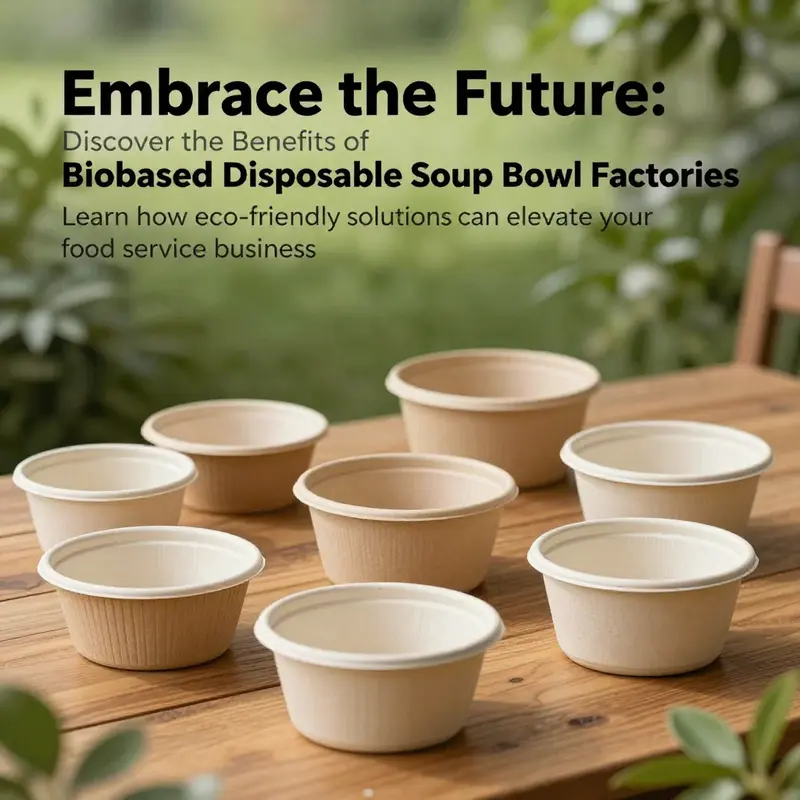
In a world increasingly cognizant of environmental sustainability, biobased disposable soup bowls are emerging as a superior alternative to traditional plastic options. These innovative bowls, crafted from renewable resources like bagasse, cornstarch, and pulp, not only serve their purpose effectively but also contribute to a greener planet. As food trucks, restaurants, bubble tea shops, and catering services commit to sustainable practices, knowing the leading manufacturers of these eco-friendly products becomes essential. This comprehensive overview will delve into notable manufacturers and market trends, offering insights into how adopting biobased solutions can benefit your business in the long run.
From Bagasse to Banquets: Inside a Premier Biobased Soup Bowl Factory
The humming foundry in Guangdong Province carries more than the scent of heated starch and resin-like adhesives. It embodies a shift in the way service ware is imagined, moving from fossil-derived convenience toward renewable, compostable alternatives that promise to fit a high-demand hospitality economy without compromising performance. In the heart of China’s expanding biobased materials corridor, one factory stands out for its blend of scientific rigor and industrial pragmatism. It has built a reputation not merely for producing a disposable item, but for shaping a supply chain that honors safety, end-of-life responsibility, and scalable response to the needs of food service, delivery platforms, and large-scale events. The company’s leadership is anchored in the belief that sophisticated biotechnology can translate renewable feedstocks—things like agricultural residues and plant-based polymers—into tableware that behaves like conventional disposables in the dining setting, yet leaves a far lighter footprint when discarded. This conviction informs every step of the operation, from raw material sourcing and quality control to mold design and logistics management, and it clarifies why the factory has become a reference point for customers seeking reliability in an industry where timing and consistency are as important as the environmental promise itself.
At the core of its production philosophy is a deliberate embrace of renewable feedstocks. The factory’s design draws on abundant agricultural byproducts such as bagasse, plus cereals and pulps, as a foundation for biobased polymers that can endure hot soups and cold desserts alike while remaining compostable under appropriate conditions. This choice of inputs is not simply about reducing carbon footprints; it is also about resilience in the supply chain. Bagasse, for instance, is not a single-season luxury; it is a material stream that can be integrated with existing milling and pulping operations. The company leverages partnerships with suppliers who share a commitment to consistent quality, ensuring that every batch of material meets defined standards for safety and performance. In practice, this translates into a production rhythm that is sensitive to seasonal availability yet engineered to maintain steady output. Even when demand spikes—as it routinely does for holidays, festivals, or cooperative delivery campaigns—the plant can adjust with minimal disruption, thanks to modular processing lines and an adaptable workflow that has been refined over years of collaboration with customers who value rapid prototyping and customization as much as they value dependable delivery times.
The narrative of this factory cannot ignore the technological thread that weaves its processes together. Advanced biopolymer processing plays a central role, guiding everything from how a raw feedstock is refined to how a final product is shaped, sealed, and qualified for distribution. The staff blends know-how from polymer science with practical manufacturing know-how, ensuring that each bowl performs under heat and pressure while maintaining a crust of compostability that aligns with international standards. In the laboratory and the workshop alike, quality checks are integrated into daily routines, not relegated to end-of-line testing. The result is a lineage of products that can travel through busy kitchen environments, withstand the rigors of hot liquids, and resist leaks when transported under varied weather or traffic conditions. What distinguishes this operation is not only its end product but the discipline with which it verifies compostability through certified programs and its readiness to support customers who must demonstrate environmental stewardship to regulators, investors, and consumers.
The factory’s value proposition for customers is broader than a single thermal or mechanical specification. It is an ecosystem built on reliability, export readiness, and a transparent narrative about sustainability. The leadership has positioned the plant as a strategic partner for food service providers seeking to replace single-use plastics with renewable alternatives that do not demand compromises in operational efficiency. This means a suite of services that extends from design consultation and rapid prototyping to scalable production and precise packaging options. The company can tailor not only the geometry of bowls to fit specific service models but also the packaging and branding accompanying them. In this context, a branded line can be developed that communicates a commitment to sustainability without sacrificing the speed necessary for efficient service or the aesthetic expectations of customers. Such customization is increasingly important as venues seek to align their brand narratives with tangible, verifiable environmental performance.
In practice, the factory’s market approach reflects a broader global trend toward circular supply chains. Hospitality operators face mounting pressure to reduce waste and optimize waste streams, and biobased disposables are increasingly positioned as a viable element of these strategies. The plant’s operations are designed to align with waste diversion programs, industrial composting where available, and, when appropriate, home-composting scenarios for consumer-level end-of-life. While the latter remains contingent on local composting infrastructure, the company actively documents its material pathways and provides customers with guidance on compatible disposal methods. That transparency matters in a marketplace where downstream partners—from catering firms to event organizers—must communicate with end-users about how to dispose of items responsibly. The factory’s public-facing materials emphasize not only product performance but also the lifecycle attributes of the materials, reinforcing trust with institutions that value credible sustainability claims.
The regional and international context in which this factory operates helps illuminate its strategy. Guangdong’s vibrant ecosystem for sustainable manufacturing feeds immediate supply lines while exporting know-how to markets hungry for responsible packaging options. The plant’s leadership understands that customers are not only buying a bowl; they are buying a system—one that includes feedstock stewardship, process controls, and a credible track record on safety and end-of-life outcomes. This awareness translates into a culture of continuous improvement. Investment in process optimization reduces waste in every stage—from material prep to molding and sealing. It also drives energy efficiency and resource conservation, two factors increasingly prioritized by customers who must demonstrate compliance with environmental reporting standards and procurement criteria. The factory’s alignment with these expectations has become a competitive differentiator as the biobased materials sector matures and more players enter the field.
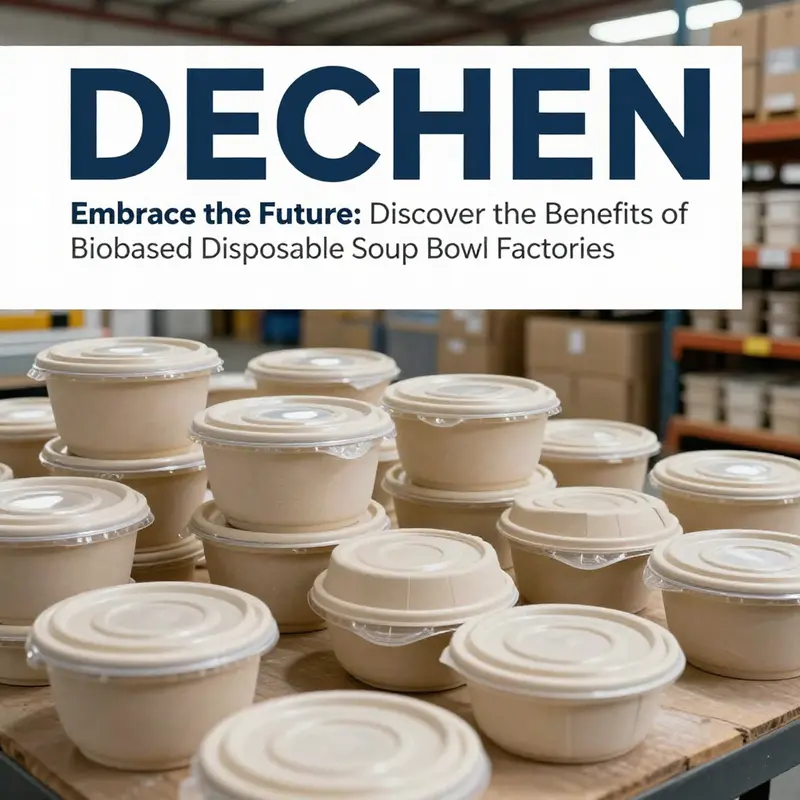
All along the value chain, collaboration is the engine that keeps the factory advancing. Relationships with material suppliers, technology licensors, and packaging partners are structured to enable fast iteration without sacrificing reliability. A practical example of the market’s texture can be seen in the range of packaging and service options that accompany the bowls. The plant often provides illustrative packaging configurations and branding concepts that clients can adapt quickly, a capability that proves especially valuable for event planners and large fleet operators who must coordinate countless meals under tight deadlines. In one illustrative case, a community event sponsor required a reliable supply of disposable bowls with lids to ensure seamless service across food stations and mobile delivery points. The plant translated this brief into a customized batch that met heat and cold tolerance requirements, matched the sponsor’s branding standards, and included a secure lid feature to prevent leakage during transport. The result was a coherent, end-to-end solution that reduced waste, eliminated plastic components, and reinforced the sponsor’s environmental commitments throughout the event. A practical way readers can glimpse this marketplace reality is to explore product pages that showcase the breadth of options available from market participants who share the same sustainability objective. For instance, one widely circulated category of container is documented in the industry’s supplier catalogs and can be accessed through a dedicated product page: senang05-disposable-26oz-kraft-paper-soup-cup-bowl-with-paper-lid-takeaway-lunch-packing-takeout-food-packaging-bucket. This link serves as a tangible touchpoint for readers who want to see how a robust, customizable, and recyclable option is positioned in the marketplace, illustrating how industrial scale can harmonize with sustainability design.
Looking forward, the factory’s trajectory mirrors the sector’s evolution toward more sophisticated, higher-integrity biobased packaging ecosystems. Industry gatherings, such as the anticipated Bio-based 2026 conference in Shanghai, provide a staging ground for ideas that shape policy, standards, and cross-border collaborations. The event’s focus on “Packaging Use of Bio-based/Compostable Materials” is particularly resonant for a plant that seeks to translate laboratory breakthroughs into practical, scalable products for the global service industry. For readers and industry stakeholders, these gatherings are not merely networking opportunities; they are accelerators of learning, enabling manufacturers to benchmark against the latest developments in material science, certification regimes, and consumer expectations. The factory’s leadership attends such forums to exchange insights on material performance, regulatory alignment, and the evolving economics of renewable inputs. In this sense, the plant is not a static producer of bowls but an active participant in a learning ecosystem that seeks to push the boundaries of what compostable, biobased tableware can achieve in real-world settings.
The broader narrative around this premier factory is one of responsible growth and reciprocal value creation. It demonstrates how a well-run biobased production operation can deliver on the environmental promise of renewable materials while preserving the reliability, speed, and branding flexibility demanded by the hospitality industry. It is a story about designing for the end of life as much as for the dining table. It is about balancing the tension between material performance and compostability, between global sourcing and local impact, and between rapid prototyping and rigorous certification. It is about turning the waste streams of one sector into the feedstock of the next, creating a loop in which the tableware of today can become the resource for tomorrow’s soil, while never compromising the service quality that diners expect. As markets continue to mature and procurement professionals demand greater transparency, this factory’s approach—grounded in material science, process discipline, and collaborative problem-solving—offers a compelling blueprint for the industry. It is a reminder that the path to sustainable serviceware is not a single invention but a practiced method of bringing renewable chemistry to the everyday act of sharing a meal.
External resource: For a broader look at the biobased materials ecosystem and to explore related industry developments, readers can visit https://www.bio-basedlink.net.
Biobased, Safe, and Scalable: How a Ningbo Supplier Reframes Disposable Soup Bowls for a Circular Economy
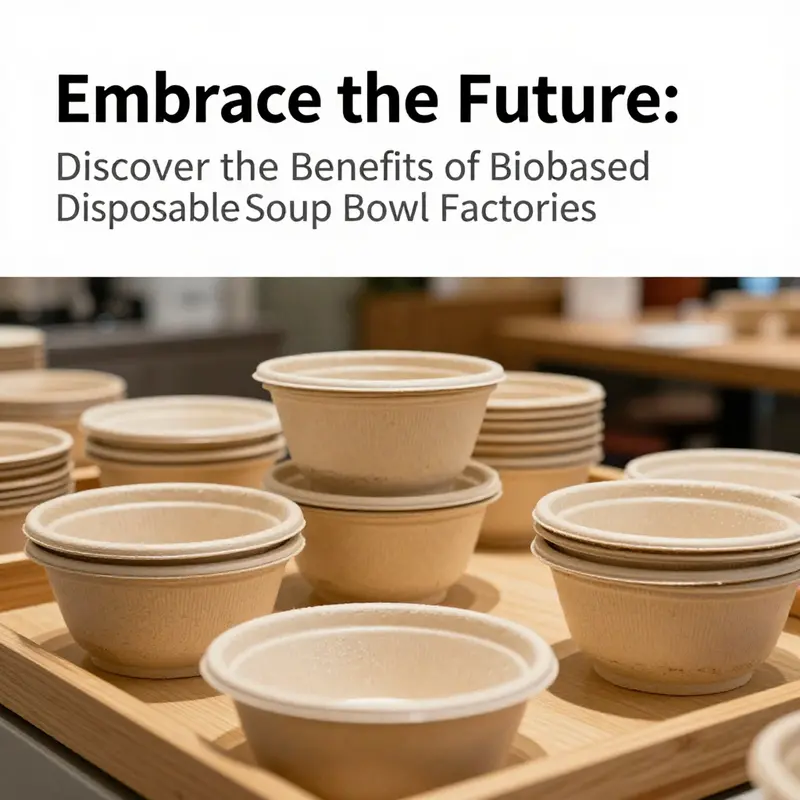
In the crowded landscape of disposable tableware, biobased soup bowls are steadily shifting from a niche alternative to a trusted mainstay for kitchens and events that want to reduce plastic waste without sacrificing performance. The story of Ningbo Greenhome International Trade Co., Ltd. embodies this shift. Based in a city that has long stood at the crossroads of manufacturing lanes and logistics hubs, the company has positioned itself not merely as a supplier of compostable bowls but as a conduit for sustainability that aligns with today’s stricter safety norms and the rising demand for materials that perform in real-world food service contexts. Its rise mirrors a broader industry transition where feedstocks like sugarcane pulp and other renewable fibers are increasingly woven into everyday utensils, from soup bowls to straws and lids, to form a coherent ecosystem of biobased, end-user friendly products. The result is an offering that can satisfy hot soups, cold foods, and everything in between, while remaining faithful to the principles of compostability and safe contact with food.
Ningbo Greenhome’s product range, anchored by compostable food packaging derived from sugarcane pulp, demonstrates the practical potential of biobased materials to replace conventional plastics without compromising performance. The materials used are designed to be 100% biodegradable, which means that end-of-life disposal can align with consumer habits and municipal composting programs where available. Importantly, these products are vetted for direct contact with food. This emphasis on safety is not an afterthought but a core element of the design process. For hot foods, the bowls must resist deformation and maintain integrity; for cold foods, they must retain form and resist soaking or leakage. The company underscores heat resistance and leak-proof design as standard expectations, not exceptions, which expands the usability of bowls from casual takeout to more demanding food service scenarios. In practice, this translates into reliable performance in cafés, delivery kitchens, corporate catering, and even large-scale events where managing waste streams matters as much as delivering a satisfying consumer experience.
The safety standards that accompany these biobased solutions are not mere marketing claims. They reflect adherence to stringent food-contact regulations that are familiar to buyers across North America and Europe. Materials that meet FDA guidelines and CE/EU safety requirements reassure buyers that they are choosing products suitable for direct contact with a wide range of foods, from broths and gravies to creamy sauces and stews. This regulatory alignment is critical, especially for operators who must maintain consistent inventories across markets and avoid last-minute compliance challenges. The result is a smoother path from supplier to kitchen, with fewer roadblocks in the cross-border supply chain and a clearer route for distributors who favor traceable, certifiable products.
A key point of differentiation for Ningbo Greenhome is its integrated, end-to-end supply chain. The company draws on a spectrum of inputs—wood, bamboo, paper, bio-based polymers like PLA, and sugarcane pulp—to deliver versatility and scale. This mix of materials is not accidental. It enables a portfolio capable of meeting varied customer requirements, from bulk orders for urban delivery services to customized, branded packaging for events that seek to reinforce their sustainability promises. The supply chain is designed to absorb fluctuations in demand while maintaining the integrity of the product in transit and on the shelf. For buyers who want more than off-the-shelf items, the option to customize remains a central pillar. Logo printing, bespoke bowl sizes, and tailored packaging align with clients’ branding strategies and operational needs. The company’s flexibility is reflected in how it envisions its role in the broader ecosystem—not merely as a source of disposable bowls, but as a partner that helps shape a circular economy in the food-service sector.
Quality assurance sits at the heart of this model. Ningbo Greenhome carries credentials that signal trustworthy performance to global buyers. The company is a Diamond Member and an audited supplier, markers that underline a commitment to transparent governance and consistent product quality. In practice, these credentials translate into rigorous supplier evaluations, adherence to international trade standards, and ongoing oversight that reduces risk for buyers who operate across borders. Such assurances matter deeply in a field where the cost of failure can include product recalls, reputational damage, and wasteful returns. They also matter for buyers who seek long-term relationships with suppliers capable of supporting programmatic sourcing, co-creation of new packaging modalities, and steady, predictable lead times—even as markets evolve with new regulations and shifting consumer expectations.
Beyond the bench and the loading dock, Greenhome’s sustainability narrative speaks to a broader ambition: to reframe how end-users perceive waste. Sugarcane pulp-based products, for example, are designed to decompose under household composting conditions where feasible, helping end-users close the loop on waste in a practical, accessible way. This is not mere rhetoric. It responds to a real consumer interest in materials that minimize the burden on landfills and reduce reliance on fossil-based inputs. It also acknowledges the complex reality of waste infrastructure, recognizing that not all municipalities have robust composting programs. By providing materials that are home-compostable where possible, the company acknowledges and supports divergent waste-management landscapes, while still offering industrial composting options when required.
The material palette—sugarcane pulp, PLA, and other bio-based polymers—also has implications for design and performance. Sugarcane pulp is prized for its rigidity and heat tolerance, attributes that help soups travel safely from kitchen to customer. PLA, derived from renewable crops, offers a different set of performance characteristics, with advantages in clarity and printability for branding pursuits. The choice of material often comes down to balancing cost, performance, and end-of-life expectations. Ningbo Greenhome’s approach, which embraces multiple material streams rather than a one-size-fits-all solution, enables it to tailor bowls to specific use cases—from everyday takeout to premium, event-grade presentations—without compromising sustainability or safety. This versatility is precisely what many buyers require as they diversify their packaging ecosystems to better reflect corporate social responsibility commitments and consumer expectations for greener choices.
Customization becomes a practical bridge between sustainability and business needs. In a market where operators seek consistent branding across tens of thousands of service points, the ability to imprint logos and brand messages on disposable tableware adds value beyond the material itself. It reinforces a narrative of responsibility that can resonate with customers who are increasingly mindful of the environmental footprint of their meals. The capacity for bespoke sizes and configurations means bowls can be matched to menu portions, reducing over- or under-servicing and contributing to waste reduction at the source. This is not merely a packaging concern; it ties into the broader logistics and operational planning that define efficient food-service operations in both tight urban environments and dispersed, high-volume events. The general principle is straightforward: when bowls perform reliably and align with sustainability goals, procurement decisions shift toward biobased options with clear end-of-life pathways rather than toward plastic equivalents that carry hidden environmental costs.
A final thread in this narrative is the projection of how such suppliers influence the behavior of buyers and the trajectory of the industry. When a supplier demonstrates clear safety credentials, robust supply chains, and a willingness to collaborate on branding and packaging, it lowers the barriers for hospitality groups, delivery platforms, and event planners to adopt these solutions at scale. The result is a more resilient, responsive ecosystem where biobased bowls are not a niche alternative but an accepted standard in everyday food service. This progression is reinforced by the broader industry context, where the shift toward compostable and bio-based packaging is increasingly seen as compatible with performance demands and consumer expectations. It also invites a deeper consideration of lifecycle impacts, from feedstock sourcing to transit, use, and end-of-life management. In this sense, Ningbo Greenhome’s model offers a concrete blueprint for how biobased soup bowls can be integrated into large-scale operations while maintaining safety, branding flexibility, and responsible waste practices.
For readers who want to connect these ideas to practical sourcing options, the landscape of available suppliers and product formats offers a tangible starting point. A representative example of how the market leverages similar biobased principles is captured in online product catalogs that emphasize compostable packaging derived from plant fibers and pulp. This family of products illustrates how materials science and supply-chain design converge to deliver bowls with reliable heat resistance, leak prevention, and a clear pathway to end-of-life management. The alignment of safety standards with supply-chain credentials further strengthens buyer confidence and expands the potential for these solutions to become standard fare across food-service channels. In short, the Ningbo Greenhome model demonstrates that sustainability, safety, and scalability can be harmonized in a way that serves both the planet and the bottom line.
Internal link to related product capability: Senang05 food-grade takeaway bowls.
External resource for broader industry context: https://www.alibaba.com/product-detail/100-Compostable-Food-Packaging-Sugarcane-Pulp_1601354987142.html
Biobased Solutions in Disposable Soup Bowl Manufacturing: The Shantou Europe-Pack Case and the Rise of Sustainable Foodware
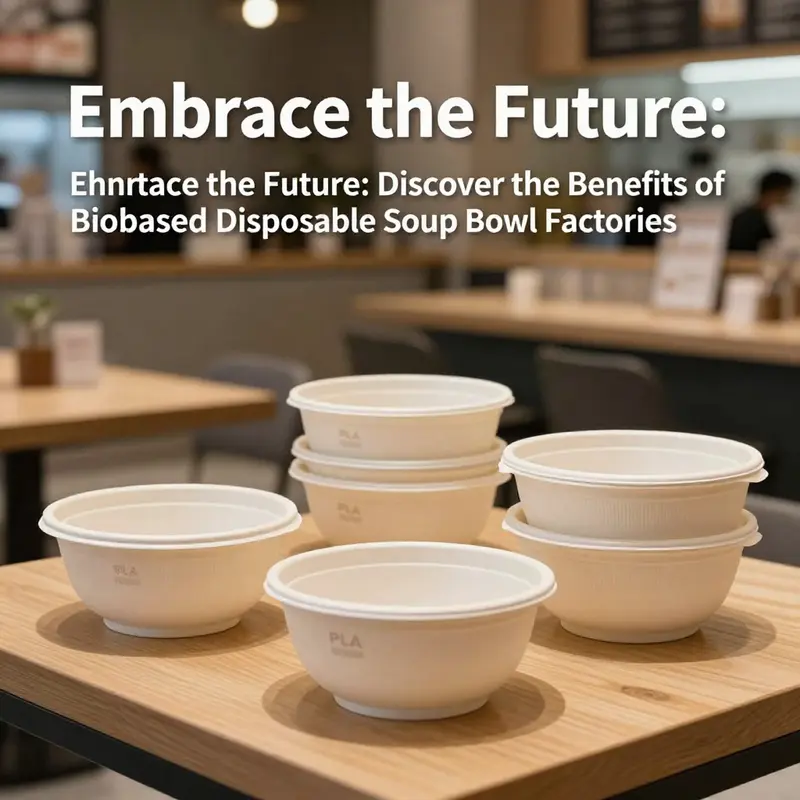
Across the crowded landscape of foodservice ware, a quiet but influential transformation is taking shape. It is not only about replacing petrochemical plastics with greener feedstocks; it is about rethinking how a bowl, a lid, or a simple service dish can align with a kitchen’s needs, a brand’s identity, and a consumer’s growing expectation that convenience should not come at the expense of the planet. In this evolving ecosystem, Shantou Europe-Pack Plastic Co., Ltd. emerges as a pertinent example of how a manufacturing and trading operation in China can navigate the shifting currents of demand for biobased, disposable tableware. The company positions itself at the intersection of sustainability, customization, and scale. Its portfolio, described in industry directories and trade profiles, highlights a focus on biodegradable and biobased disposable tableware, including bowls designed for hot, cold, and mixed foods. The emphasis on materials sourced from renewable feedstocks signals a broader industry trend: the move away from conventional fossil-fuel–derived inputs toward compostable or easily recyclable alternatives that can fit into modern foodservice operations without sacrificing performance.\n\nWhat distinguishes this player in a crowded field is not just a catalog of products but a deliberate integration of material science with practical service. Their biobased soup bowls are crafted from sustainable inputs that can withstand the exigencies of busy kitchens—heat resistance, microwave compatibility, and a degree of durability that reduces breakage during handling and transport. This combination matters, because the foodservice environment rewards reliability as much as it rewards responsibility. A bowl that cracks under heat, or a lid that leaks during transit, undermines the user experience and can undermine trust in a brand’s environmental claims. By focusing on heat resistance and leak-proof design, the company signals a commitment to both performance and sustainability.\n\nMaterial choices lie at the heart of the shift toward biobased ware. The discourse surrounding these products often highlights renewable crops and the concept of biobased content, with practical implications for storage, service, and waste management. In the case of this manufacturer, the emphasis is on biobased plastics derived from renewable crops—materials that can offer the familiar convenience of single-use disposables while reducing reliance on nonrenewable resources. This approach aligns with a broader industry move toward products that can be shown to meet food-safety standards and regulatory expectations, including compatibility with standard packaging and labelling practices. The dialogue around safety is not merely procedural; it reflects a market demand for confidence—restaurants, caterers, and event planners want to know that sustainability and safety go hand in hand.\n\nBeyond the material story, the commercial model behind such producers matters just as much. Shantou Europe-Pack operates as both manufacturer and trading company, a dual role that can shorten supply chains and improve responsiveness to customers who require quick iterations, custom features, or flexible order quantities. The capability to offer custom OEM plastic products—where logos, packaging designs, and even bowl geometries can be tailored—allows the business to align with brand identity in a way that commodity items cannot. In a market where many operators seek to project an eco-conscious image, the ability to pair a sustainable product with customized branding becomes a value proposition in its own right. The revenue range reported in industry assessments—tens of millions of dollars annually for comparable outfits—suggests a scale that can support investments in more advanced biobased materials, tighter tolerances in manufacturing, and more robust quality assurance processes.\n\nAn important dimension of Shantou Europe-Pack’s strategy is its positioning within a broader materials dialogue. Biobased ware is increasingly deployed in response to a spectrum of client needs: some customers demand compostability under home conditions, while others are satisfied with industrial composting or simply a reduced carbon footprint and lower lifecycle impact. The company’s emphasis on heat resistance and practical usability shows sensitivity to the day-to-day realities of foodservice operations. A bowl that functions reliably in a fast-paced kitchen—whether used for rice, salad, or baby food—helps maintain the rhythm of service while still signaling environmental stewardship. The tradeoffs are also part of the conversation: biobased materials often come with considerations about cost, supply stability, and end-of-life infrastructure. The operator must balance these elements against taste, texture, packaging density, and the ergonomics of serviceware that must survive wide temperature ranges, reuse cycles, and rapid sanitation protocols.\n\nIn terms of end-of-life, the landscape remains complex and regionally variant. Some biobased and compostable tableware is designed to degrade under household composting conditions, while others require industrial facilities to realize the intended environmental benefits. The narrative around such products is not simply about disposal; it is about how end-of-life pathways connect with procurement decisions, municipal services, and consumer expectations. For a manufacturer that bridges production with trading, there is strategic value in offering a spectrum of formats and finishes that can be aligned with local waste streams and sustainability programs. The goal is to minimize waste while maximizing performance and branding impact in the eyes of customers who are increasingly mindful of the full lifecycle of the items they purchase.\n\nThe manufacturing discipline behind these biobased bowls deserves close attention. A plant that can deliver consistent quality at varying run sizes, while meeting stringent food-contact standards, signals a mature operation. The standards landscape—encompassing food safety, consumer protection, and environmental claims—mandates rigorous quality control, traceability, and documentation. A company that can demonstrate compliance with recognized food-safety benchmarks positions itself not merely as a supplier of green products, but as a trusted partner to brands that must satisfy regulatory and consumer scrutiny. In practice, this translates into robust supplier management, clear specifications for raw materials, and reliable performance testing. For clients, it reduces risk and accelerates adoption of new packaging formats that are increasingly demanded by restaurants, caterers, and event organizers seeking both performance and responsible messaging.\n\nAs a case study in a broader ecosystem, this producer’s narrative illuminates a pattern repeated across many regional manufacturing hubs: the integration of sustainability with customization and commercial scale. The market’s appetite for biobased, compostable, and recyclable options has created opportunities for players who combine technical know-how with flexible commercial terms. The ability to offer custom logos, packaging designs, and branding support helps transform a functional serving solution into a core component of a customer’s sustainability story. It is this alignment of capability and narrative that fosters deeper, longer-term relationships with foodservice operators who want to differentiate themselves not just through flavor and cuisine but through responsible sourcing and waste-conscious serviceware.\n\nTo ground this discussion in a tangible consumer-facing touchpoint, consider how such bowls appear in the market where customers interact with takeout and delivery. A practical example of similar formats in use can be found in the broad family of disposable, kraft-paper–based soup bowls with lids. These items illustrate the demand arc—durable enough to hold hot liquids, compatible with quick-service operations, and capable of bearing branding that reinforces a restaurant’s or event’s environmental commitments. For readers exploring product catalogs, a representative option in this space demonstrates how a disposable vessel can be designed for reliability and visual appeal, while supporting a shift toward greener materials. You can explore a concrete example here: disposable 26oz kraft paper soup bowl with paper lid (https://cupbowlpack.com/product/senang05-disposable-26oz-kraft-paper-soup-cup-bowl-with-paper-lid-takeaway-lunch-packing-takeout-food-packaging-bucket/).\n\nThe dialogue among producers, buyers, and waste managers is becoming more nuanced as the industry learns how to optimize the life cycle of these items. For manufacturers like the one under discussion, success hinges on three intertwined capabilities: access to reliable biobased inputs, the ability to translate that material advantage into high-performance products, and the maturity to deliver these products at a scale that matters to foodservice players. The first pillar requires stable supply chains for renewable feedstocks and consistency in material properties across batches. The second pillar rests on engineering processes that can shape sustainable materials into durable, heat-tolerant, and user-friendly designs. The third pillar involves building commercial ecosystems—certifications, quality assurances, and partnerships—that reassure customers who must meet branding, regulatory, and logistical requirements. When these elements converge, the result is more than a green alternative; it is a credible, scalable solution that sustains business growth while advancing environmental objectives.\n\nIn the broader arc of the biobased disposable ware story, Shantou Europe-Pack’s focus on biobased content and customization exemplifies how a regional player can influence global supply dynamics. The competition is not simply who can claim the greenest claim, but who can deliver consistency, safety, and brand-aligned service at a price point that sustains demand across niche culinary applications and mass-market hospitality. The market is not monolithic; it tolerates a mosaic of material choices—from plant-based fibers to biobased plastics—each with its own performance envelope and end-of-life considerations. The challenge for manufacturers lies in communicating these nuances to buyers who must balance cost, function, and sustainability across hundreds of SKUs and varying customer journeys. The opportunity, however, is equally clear: as more brands commit to sustainability, the demand for biobased disposable ware is likely to expand, spurring continued innovation in materials science, process optimization, and integrated packaging design that can travel from kitchen to curbside with minimal environmental impact.\n\nExternal reference for further context on the company and its market landscape can be found here: https://www.alibaba.com/product-detail/Shantou-Europe-Pack-Plastic-Co-Ltd_1600378192487.html
null
null
From Bagasse to Bistro: Charting the Future of Biobased Disposable Soup Bowl Factories
A shift is quietly gathering steam in the world of food service and packaging: a rise in biobased, disposable soup bowls that promise to perform like traditional plastics while leaving a softer footprint on the planet. The drivers are clear and converging. Governments are tightening single-use plastics rules, consumers are more conscious about waste, and businesses are increasingly measured by their sustainability footprints. In this milieu, biobased disposable soup bowl factories are redefining how containers are sourced, manufactured, and disposed of. The story is not merely about replacing one material with another; it is about reimagining the entire lifecycle of a commonly used piece of tableware, from its raw inputs to its eventual end of life, in a way that aligns with a circular economy.
At the heart of this transformation lies a trio of renewable feedstocks that have become the backbone of modern biobased bowls: bagasse, cornstarch, and plant-derived polymers. Bagasse, the fibrous residue left after juice extraction from sugarcane, offers a robust, fiber-rich base that can be formed into bowls with a reasonable barrier against leakage and moisture. Cornstarch, processed into biobased polymers, brings versatility and accessibility, enabling bowls that resemble conventional disposable ware in stiffness and heat resistance while maintaining compostability under appropriate conditions. Plant-derived polymers, including polylactic acid (PLA), expand the design space further, allowing for smooth molding, clear or translucent aesthetics, and a spectrum of barrier properties that help keep soups hot and meals fresh. Together, these materials present a spectrum of choices for manufacturers who must balance performance, cost, and environmental impact.
The performance story is nuanced. Many biobased bowls are designed to withstand both hot and cold foods without warping or leaking, and their end-of-life options vary with the feedstock and processing route. Some are engineered for industrial composting, where high temperatures and controlled conditions break them down into compost and water over a matter of weeks. Others may be suitable for household composting or home-based waste streams, depending on the material blend and the thickness of the wall. The key is to align product specifications with an efficient, practical disposal route for end users. In practice, this alignment means building bowls that meet food safety standards, deliver reliable heat resistance, and offer predictable degradation timelines under real-world conditions. The emphasis is less on a single magical material and more on a portfolio of solutions that can be matched to customer needs and regional waste-management infrastructure.
The manufacturing frontier mirrors this material diversity with an emphasis on precision and scale. Biobased bowls benefit from advances in molding and forming technologies that improve dimensional stability and surface finish. Higher throughputs and tighter tolerances reduce waste in the production line, while new additives and barrier coatings extend shelf life and performance without compromising compostability. The costs of biobased inputs have fluctuated, but manufacturers are increasingly able to optimize formulations to balance performance with affordability. In many facilities, the shift to biobased inputs involves retooling existing lines or adopting modular equipment capable of handling different feedstocks. This adaptability is crucial for scaling production to meet fluctuating demand from food-service chains, event planners, and delivery platforms that seek sustainable packaging options at competitive prices.
Beyond the factory floor, the industry is actively weaving together supply chains, waste streams, and consumer behavior into a more cohesive system. The concept of a circular economy—where materials are designed for reuse, recovery, or composting and then reprocessed into new products—has moved from a theoretical ideal to a practical business objective. In this framework, biobased bowls are not a dead-end product but a node in a closed-loop system. Design decisions increasingly consider end-of-life pathways: can the bowl be diverted to composting with minimal contamination? Is the material compatible with existing compost streams or with municipal waste programs? Are lids or coatings themselves biodegradable or compostable in standard facilities? These questions guide not only product design but also partnerships with waste-management providers, local authorities, and certification bodies.
The regulatory environment accelerates this lifecycle thinking. Across many regions, bans and restrictions on conventional plastics create a growing demand signal for alternatives that can fulfill the functions of disposables without the same environmental footprint. The path to compliance is multifaceted. It requires clear labeling, validated compostability or recyclability claims, and robust traceability from raw material source to end-of-life outcome. Standards and certifications matter because they reassure customers and help prevent greenwashing. For biobased bowls to reach scale, manufacturers must navigate a mosaic of regional rules, each with its own definitions of what constitutes compostable material or acceptable food-contact safety. The industry’s growth thus hinges as much on credible testing and transparent disclosure as on breakthrough chemistry or clever marketing.
Market dynamics in this space are not abstract. A regional snapshot shows a substantial and accelerating demand for biodegradable disposable tableware. Within Europe, the disposable bowls market has already crossed the USD 4.5 billion mark in a single year, a signal of both size and momentum. Growth is not uniform, but it is persistent. Consumer-facing brands, hospitality operators, and quick-service platforms are all reevaluating packaging portfolios, seeking materials that project sustainability without compromising the reliability and convenience customers expect. The expansion is aided by improvements in supply chain reliability for renewable inputs and by a growing ecosystem of manufacturers who can offer customization, consistent quality, and scalable production.
In this environment, the leading players—those who can combine material science, robust manufacturing processes, and credible certifications—are the ones most likely to steer the market. Yet the story is not simply about capture by a few large names. It is increasingly a story of collaboration: collaborations with waste-management systems to ensure proper end-of-life disposal, partnerships with logistics networks to reduce transit emissions, and alliances with retailers and food-service operators who want transparent, sustainable packaging solutions. The result is a more integrated value chain in which the sustainability of a bowl is closely tied to the efficiency and ethics of every step in its journey from raw feedstock to final disposal.
For practitioners and researchers alike, one practical signal stands out: the need to balance a broad material palette with precise processing controls. The industry cannot rely on a single, universal solution. Instead, it must cultivate a spectrum of biobased options that can be matched to specific use cases, regional waste streams, and customer expectations. This requires a level of process flexibility in factories, enabling quick transitions between bagasse-based formulations and cornstarch or PLA-based alternatives as market demands shift. It also calls for ongoing investment in understanding how additives, surface treatments, and barrier coatings interact with composting environments. The goal is not only to achieve performance parity with conventional ware but to ensure that the end-of-life pathway is clear, practical, and economically viable for end users.
The trajectory is reinforced by consumer and corporate commitments to sustainability. Businesses are integrating packaging strategies into broader environmental, social, and governance objectives, and shoppers increasingly reward or penalize brands based on packaging choices. In such a climate, biobased bowls serve not merely as substitutes for plastic but as signals of a company’s willingness to participate in responsible, long-term stewardship of resources. As regions continue to ban or restrict conventional disposables, the ability to offer credible, well-supported biobased options becomes a strategic differentiator. This alignment of policy, market demand, and material capability bodes well for factories that can consistently deliver safe, high-quality products at scale while maintaining transparent, verifiable claims about compostability and end-of-life performance.
From a practical standpoint, the industry is learning to couple product design with real-world disposal realities. In areas with mature waste-management infrastructure, bowls that are truly compostable can be directed into dedicated streams, reducing the burden on landfills and improving the quality of compost produced. In places where household composting is common, products designed for home compostability can offer additional pathways to reduce waste intensity. The most successful manufacturers will be those who can tailor their formulations to these diverse contexts, offering a spectrum of options that align with local capabilities and consumer habits. Such adaptability is not merely a competitive advantage; it is a necessity for achieving the broad adoption required to move the market forward.
In the near term, the market outlook remains favorable but contingent on continued progress in regulation, material science, and infrastructure. Companies that invest now in flexible manufacturing, credible certification, and collaborative waste solutions will be well positioned to capture a significant share of demand as the world increasingly prioritizes sustainable packaging. The value proposition extends beyond the disposable itself: it encompasses the assurance that a bowl can perform reliably in service, and then responsibly re-enter the material loop after use. As this paradigm becomes more widely understood, the appetite for biobased packaging solutions will expand, unlocking new opportunities for product differentiation and system-level improvements across the foodservice ecosystem.
External reference for deeper market insights: https://www.qyresearch.com.cn/reports/4481676/biodegradable-disposable-tableware
Internal reference for practical packaging options: eco-friendly disposable kraft paper soup bowls with lids. Tracking this thread of development—materials, manufacturing, and end-of-life design—helps illuminate how a seemingly simple item like a bowl can become a pivotal component of a more sustainable food system.
Final thoughts
As businesses continue to align with eco-conscious values, the shift towards biobased disposable soup bowls becomes not just a trend, but a necessity. Each manufacturer mentioned provides unique solutions tailored to various needs, ensuring that your choice in disposable tableware reflects both quality and sustainability. By investing in these eco-friendly options, food service establishments can significantly reduce their environmental footprint while appealing to conscious consumers. Embrace this change and lead the culinary scene toward a more sustainable future.