
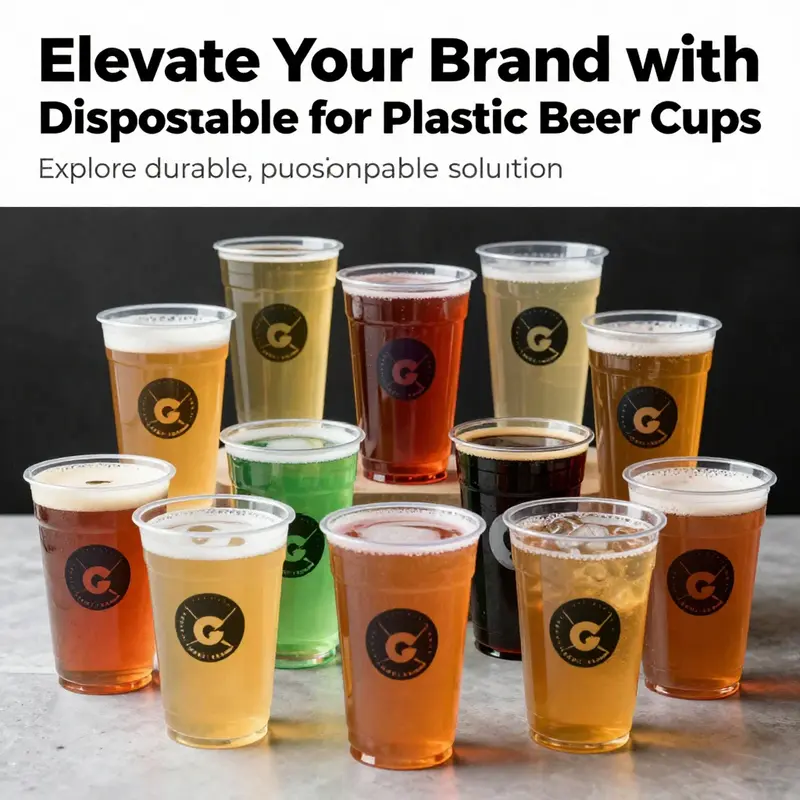
Disposable plastic beer cups are not just convenient—they also offer a unique branding opportunity for businesses in the beverage industry. With the ability to customize these cups with your logo and design, your establishment can stand out whether it’s a bustling restaurant, a trendy food truck, or an event planning service. This article dives into the essential aspects of customizable disposable plastic beer cups, from the materials that ensure durability to the printing options available, and the growing market demand that proves their versatility.
Clear Branding, Durable Carriers: The Material Science Behind Logoed Disposable Plastic Beer Cups
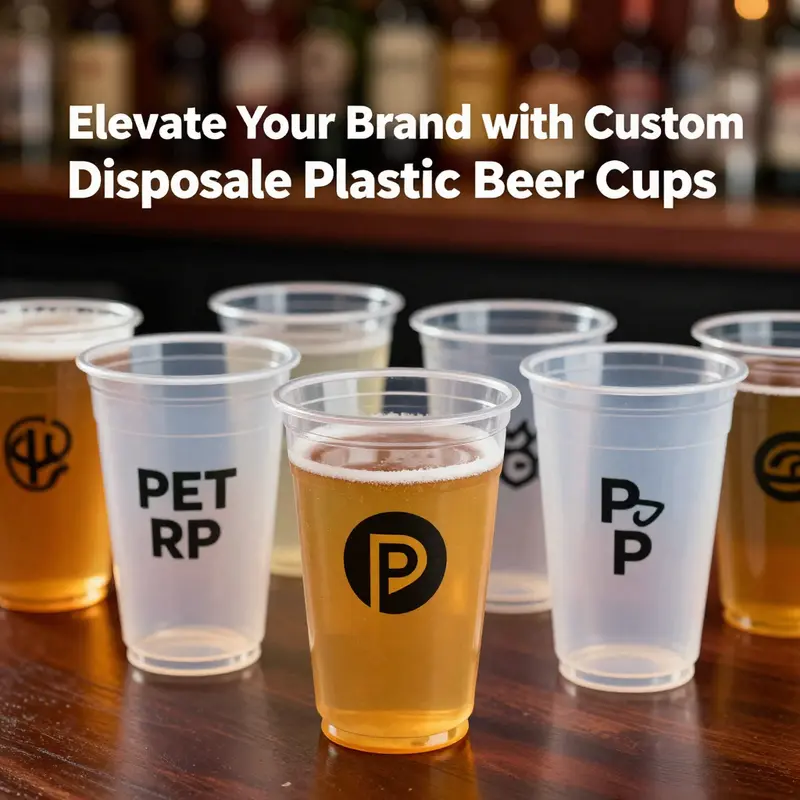
Disposable plastic beer cups with logos sit at a curious crossroads of branding and practicality. They travel from the floor of a stadium concourse to the table at a backyard party, all while carrying a brand’s message in a way that feels almost incidental yet intentionally pervasive. The core of their performance rests on a simple, stubborn truth: the material must be food-safe, it must withstand the chill and moisture of beer, and it must serve as a reliable canvas for logos and colors that catch the eye in crowded, fast-paced environments. Behind these everyday images lies a carefully chosen material strategy, most often centered on two polymers—polyethylene terephthalate (PET) and polypropylene (PP)—each delivering a different balance of clarity, strength, barrier properties, and processing compatibility. The decision between PET and PP is not merely a technical preference; it is a branding choice that shapes visibility, consumer experience, and the environmental footprint of a drink service at scale. The properties of these materials, the methods used to apply logos, and the lifecycle implications together form a narrative that connects the beer inside the cup with the brand outside the cup, turning a disposable vessel into a mobile advertising platform while trying to maintain beverage integrity and a responsible end-of-life story.
PET and PP are both widely used because they meet the escalating expectations of food-contact safety and printability while offering different advantages in a world that prizes clear visuals and reliable performance. PET is renowned for its exceptional clarity. A cup made from PET presents a transparent surface that invites the beer’s color and carbonation to be part of the presentation. That visual openness enhances branding because the logo sits against a clean, high-contrast backdrop, making hues pop and detail remain legible even when the glass is sweating. The rigidity of PET further contributes to a sense of premium quality in the consumer’s hand. A stiff cup resists flexing during handling and transport, which reduces the risk of cracking or buckling that could mar the logo or compromise the seal around a lid. In terms of barrier properties, PET excels at preserving carbonation. Its low permeability to gases means beer stays fizzier longer, a quality that matters for both consumer satisfaction and the event’s reputation for reliable pours. Recyclability is another defining feature; PET is accepted by most municipal recycling programs, aligning with growing sustainability expectations from brands and venues that want to demonstrate responsible waste management. Yet PET is not a panacea. Its usability is largely limited to cold beverages because hot liquids can cause deformation and safety concerns with certain filling temperatures. This limitation is not merely a technical footnote; it governs where and when PET cups are deployed in a fast-moving service setting and how a logo will read under UV or indoor lighting in a dimly lit arena.
PP, the other frequent choice for logoed disposable beer cups, presents a different set of strengths. Its chemical resistance makes PP highly resilient when the cup encounters the diverse chemical milieu of beer—especially where flavor compounds and trace additives might interact with plastics. PP also tolerates slightly higher temperatures, extending the usability window into environments that hover around room temperature or in open-air settings on mild days. While PP is not as rigid as PET, it offers notable impact resistance and flexibility, which means cups can withstand drops and rough handling without cracking. This durability is particularly valuable in crowded venues where cups are stacked, shuffled, and tossed into bins during cleanup. From a branding perspective, PP’s surface remains smooth and print-friendly, supporting high-quality logo application via screen printing or label adhesion. Both materials share the advantage of being compatible with common printing methods designed to produce durable graphics that resist moisture and condensation. The logos stay legible when condensation beads up and streams down the cup, a practical attribute for a product that is designed to be held for extended periods in queue lines or at tables under bright venue lights.
The dialogue between PET and PP is not just about material performance; it is also a conversation about how a logo performs in real-world conditions. The surface of either polymer is smooth and non-porous, an essential prerequisite for high-quality logo reproduction. Screen printing has long been the workhorse technique for applying bold, durable graphics to these cups, delivering crisp edges and thick pigment layers that resist wear through multiple cold pours. In some supply chains, the logo is applied via printed labels or heat transfer methods, depending on the scale of production and the desired color range. Most often, brands want a palette of one to six colors, balanced to ensure legibility against the background of a clear or tinted cup. The choice of color and the fidelity of reproduction matter because a logo in a busy setting competes with the color and movement of the crowd. PET’s crystal clarity tends to amplify the logo’s brightness on a transparent canvas, allowing whites and brights to remain vivid even after exposure to light and moisture. PP’s slightly frosted or opaque tendencies can alter how certain colors appear, sometimes softening edges or muting hues in direct light. In practice, this means the branding team must test color choices carefully against the chosen material and the lighting conditions of the event venue.
Another practical consideration is the lifecycle of these logoed cups, which often fall somewhere between “one-time use” and “short-term reuse.” The market has long marketed these cups as disposables that can be recycled after use, but in many settings they function as a temporary, single-serving vessel that carries the brand into a limited social moment. That dynamic—where the cups are intended to be discarded yet ideally collected for recycling—touches on the broader sustainability narrative that brands are increasingly asked to tell. PET’s widespread recyclability is a strong point here, yet the actual recycling rate depends on local infrastructure and consumer participation. The same is true for PP, which enjoys significant recyclability in many programs, but the outcome hinges on the capture rate at the end of the event’s waste stream. Consequently, the effective environmental impact of logoed cups is not defined solely by the material choice but by the chain of custody: procurement, distribution, post-use collection, and processing. This underscores why many suppliers in this space emphasize both material performance and responsible end-of-life options, aligning with the broader push toward circular economy practices in the beverage and event industries.
From a safety and standards perspective, these cups are designed for food contact, and many operate under certifications that reassure buyers about safety and quality. FDA considerations and ISO 9001 certification are common benchmarks in reputable supply chains, signaling that the cups meet criteria for food-grade materials and consistent manufacturing processes. Such standards support consumer trust when logos are applied directly to the cup surface, ensuring that the container and the printed graphics do not introduce off-flavors or contaminants during cold-dispense scenarios. The regulatory framework also guides how the cups can be stored, transported, and handled, particularly in high-volume environments where quick turnover is essential. In practice, this translates into a robust vendor ecosystem where material choice, print method, and process controls come together to deliver a reliable, brand-consistent product that can be scaled across events and venues with predictable performance and quality.
The performance of logoed cups in the field is also shaped by the practicalities of production and supply chain logistics. Production hubs in regions with high-volume manufacturing capabilities offer economies of scale that make it feasible to print and package cups in quantities that meet the common MOQs of ten thousand to one hundred thousand units. The ability to offer a broad set of sizes—eight, twelve, and sixteen ounces, among others—aligns with standard glassware and beer-pouring practices, ensuring a seamless transition from kegs and taps to disposable service. This sizing flexibility supports branding strategies that aim to present a consistent visual experience across a portfolio of products and events. In many markets, the availability of transparent lids is an added layer of convenience that protects the beer during transport and makes it easier to manage logistics from the bar to the customer’s hand. The presence of lids can influence the perceived value of the cup, especially in premium or craft beer contexts where presentation matters. Yet the lid itself can influence the printing strategy and the visual footprint of the logo, as a lid seam or edge may partially obscure a portion of the design if not accounted for during the artwork stage.
The branding implications of material choice extend beyond appearance to tactile perception and handling. PET’s rigidity often yields a more premium, “glass-like” feel when held, which can positively influence consumer perception of the beer’s quality. PP’s flexibility, while sometimes perceived as less premium, can translate into a cup that feels more forgiving in contact with hands of varying sizes and temperatures. In mixed-use environments—where the cups will be picked up, swapped, stacked, and reused in quick succession—the choice between PET and PP can tilt toward the option that minimizes breakage, reduces leakage risk, and ensures a consistent grip. The printing surface also plays a decisive role: the smoother, non-porous PET surface can enable sharper logo reproduction and richer color depth, while PP’s surface may require slightly different printing parameters or additional surface treatments to achieve a comparable glow. Brand teams who optimize for visible, durable logos generally find PET to be their preferred canvas for premium presentations, especially for craft beers or limited-edition branding campaigns where the logo must convey complexity and clarity at a glance.
The environmental narrative surrounding logoed plastic beer cups is a moving target, shaped by consumer expectations, municipal recycling capabilities, and the evolving landscape of single-use plastics. While both PET and PP are recyclable in many jurisdictions, the on-the-ground reality of recycling rates depends on local programs and consumer participation. For organizations aiming to reduce waste, this means not only choosing the right material for performance and branding but also investing in clear waste streams, educating event attendees about recycling, and providing convenient sorting options. The branding opportunity, in this context, becomes part of a broader commitment to sustainability. A logo that communicates care for the environment can reinforce a brand’s broader messaging about responsible consumption, while the cup’s end-of-life handling demonstrates a tangible connection between marketing and practice. The result is a narrative that ties the visual identity on the cup to the actual behavior of attendees and organizers in managing waste after the moment of celebration.
To someone designing a logo strategy around disposable beer cups, the material choice should be guided by a few practical questions. Will the event be predominantly cold or cool, with servings that remain well below room temperature for extended periods? Is durability in crowded spaces a higher priority than maximum optical clarity? How critical is a high-fidelity color reproduction for the logo under varied lighting conditions? Will the cups predominantly serve beer in a venue where recycling infrastructure is strong, or in a setting where end-of-life options are more limited? The answers will steer decisions toward PET for higher clarity and barrier performance in premium contexts, or toward PP when durability, impact resistance, and slightly warmer environments dominate. Each material offers a viable path to effectively branding a disposable cup, but the path the brand chooses will reflect its priorities for beer presentation, user experience, handling practicality, and lifecycle impact.
In weaving together material properties with branding outcomes, marketers and designers should also acknowledge how the broader ecosystem—printing capabilities, tolerances for color fidelity, and the availability of compatible lids and accessories—shapes the final look and feel of the logoed cup. The printing process should be designed with the cup’s material in mind, with tests that verify logo legibility under condensation and light exposure. The packaging and distribution chain must consider the cups’ rigidity or flexibility during stacking, shipping, and on-site deployment. And, crucially, the end-user experience should be studied: how a customer perceives the logo as the cup cools, how the logo holds up under moisture, and how the cup’s weight and balance contribute to a comfortable hold during prolonged events. When all these elements align, the logo becomes more than decorative art; it becomes a coherent message that travels with the cup, reinforcing brand values while delivering a reliable, enjoyable drinking experience.
For readers who want to explore related discussions about logo-centric disposable packaging beyond plastic cups, consider examining a related option that emphasizes design flexibility and branding across different disposable formats: disposable double-wall craft paper cups with custom logo. Such comparisons illuminate how the underlying principles—clarity, durability, and printability—translate across materials, while also highlighting the different consumer expectations tied to paper versus plastic in various event contexts. In practical terms, a brand evaluating an event-wide packaging strategy may weigh the advantages of a PET or PP cup against paper counterparts to determine which surface best showcases the logo, which temperature range is most common for the beverages served, and how end-of-life considerations align with corporate sustainability goals. The decision is rarely about a single attribute but about a harmonious integration of optics, touch, performance, and responsibility that can be scaled from a single venue to a nationwide series of events.
External resource for deeper technical context: Plastic Promotional Beer Cups Complete Guide: Applications, Types, and Practical Uses in Engineering. This guide provides a broader technical framing for material selection, printing methods, and performance expectations across different beverage-cup formats, helping teams align engineering specifications with branding ambitions and regulatory requirements. https://www.plasticpromocups.com/plastic-promotional-beer-cups-complete-guide/
null
null
null

null
Final thoughts
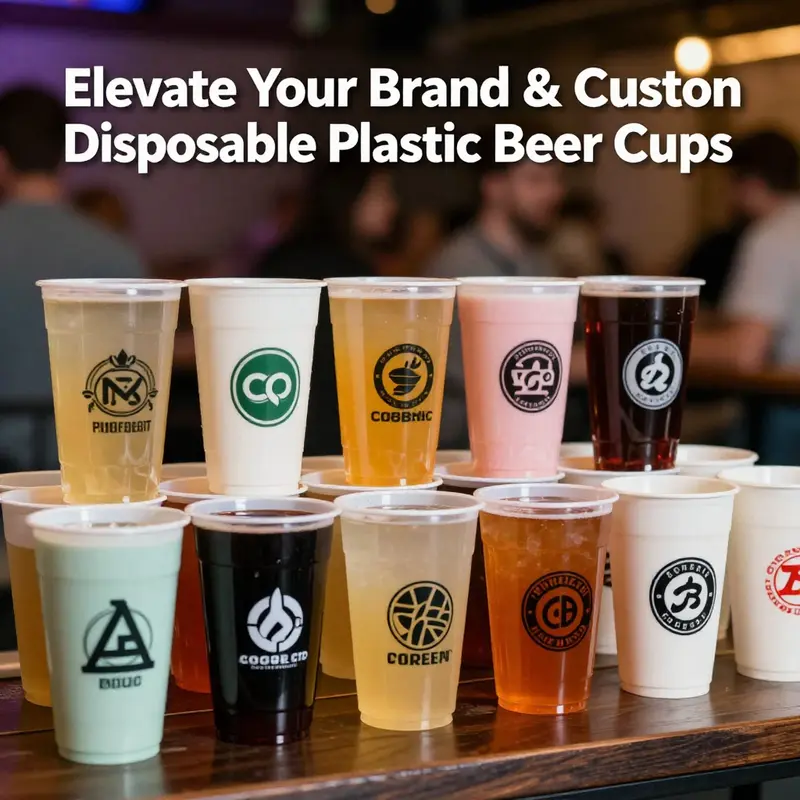
Customizable disposable plastic beer cups provide a practical and impactful solution for beverage businesses looking to enhance brand visibility. By choosing high-quality materials and utilizing creative printing options, your brand can captivate your target audience in diverse settings—whether in restaurants, at festivals, or during corporate events. With growing market demand for sustainable and customizable products, investing in these cups not only elevates your service but also helps distinguish your brand in a competitive landscape. Explore these options today and consider how they can elevate your beverage service.