
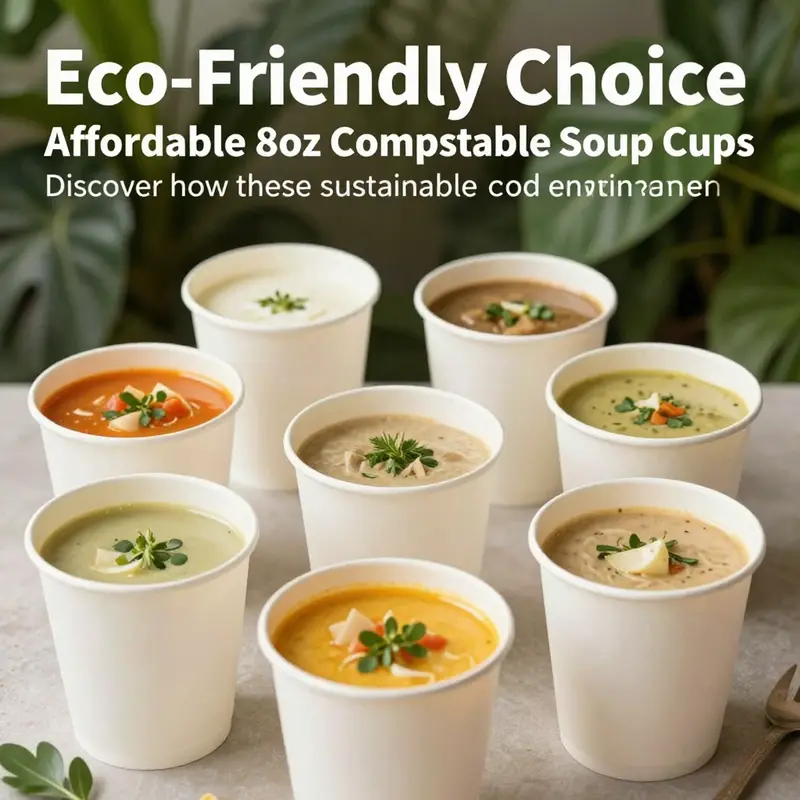
As more consumers become environmentally conscious, businesses in the beverage and food industries must adapt to changing demands. Cheap 8oz compostable paper soup cups offer a practical and sustainable solution to serve delicious soups and beverages while minimizing ecological footprints. This article explores the multifaceted benefits of these cups, discussing their environmental impact, economic viability, and regulatory standards. Each chapter sheds light on essential aspects that can help your establishment make informed decisions in choosing the right disposable solutions.
Economy in a Cup: Navigating the Tradeoffs of Cheap 8oz Compostable Paper Soup Cups
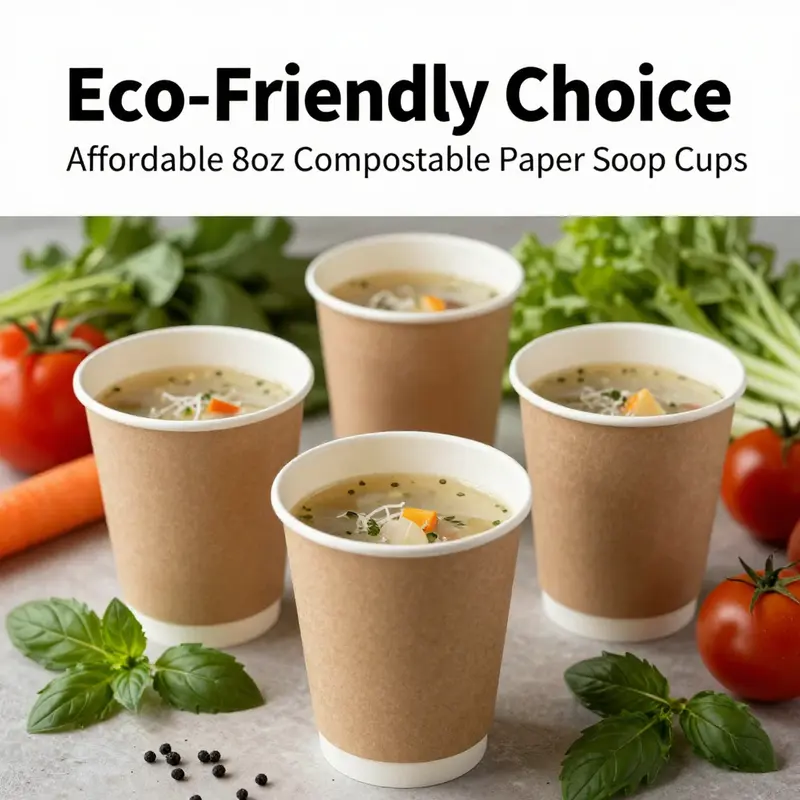
Take-away dining has become a battlefield of choices where cost, convenience, and conscience collide. In this landscape, cheap 8oz compostable paper soup cups have emerged as a familiar solution for cafés, food trucks, and quick-service restaurants aiming to project responsibility while keeping expenses in check. The promise is compelling: a smaller footprint than petroleum-based plastics, a finish that repels spills, and the comfort of a familiar size for soup and noodle broths. Yet beneath the surface, the story of these cups unfolds as a nuanced negotiation among material sourcing, manufacturing trade-offs, end-of-life realities, and the everyday behavior of consumers who must decide how to dispose of them. The result is not a single verdict but a spectrum where sustainability is conditional on choices made far upstream and far downstream in the product’s life cycle. As with many green claims in the packaging world, the truth about cheap 8oz compostable cups is less about absolutes and more about the systems that enable or thwart truly circular outcomes.
To begin with, material sourcing sits at the heart of the environmental profile. The baseline for most of these cups is a fiber-based substrate drawn from wood pulp. When producers rely primarily on virgin wood fiber, questions arise about deforestation and habitat integrity, especially in regions where forests face pressure from expansion or conversion to other uses. Suppliers may mitigate these concerns by turning to sustainably managed forests, or by integrating post-consumer recycled fibers into the mix. Certifications such as forest stewardship schemes can provide some assurance, but the presence of such assurances depends on the rigor of certification programs, the traceability of supply chains, and the incentives that steer mills toward responsible forestry. In practice, the cheapest options often skew toward lower-cost fiber sources, where the environmental safeguards may be thinner and the risk of unwanted ecological trade-offs higher. This is not a universal indictment of all compostable cups, but it is a sober reminder that price signals in the market can reflect sourcing choices that matter, even when the final product is claimed to be compostable.
Even when feedstock is responsibly sourced, the journey from raw pulp to a finished cup involves processing steps that define its ultimate environmental character. A common strategy to render paper cups water-resistant—so they can handle soups and broths without leaking—relies on moisture barriers derived from coatings or biobased resins. Polylactic acid, a coating derived from carbohydrate feedstocks, is a well-known example in many discussions of compostable packaging. Under industrial composting conditions, such coatings can break down within a constrained environment of high heat and moisture activity. But industrial facilities capable of achieving those conditions are not universally available. In other words, a cup designed to be compostable in theory may not degrade as intended in practice if the local composting infrastructure or the disposal pathway is missing or misused. Home composting, in particular, is rarely a reliable route for these products, and even in industrial contexts the speed and completeness of composting can vary. The environmental rewards hinge on whether the composting stream actually reaches a facility equipped to process the material and whether that facility maintains the necessary temperature, moisture, and microbial activity to drive decomposition efficiently.
End-of-life realities extend beyond the technicalities of composting. A recurring challenge is contamination. Many consumers are uncertain about whether a compostable cup belongs in a compost bin or a trash can, and labeling alone cannot fully reverse this ambiguity. When compostable items end up in the wrong stream, they can contaminate recycling streams or simply contribute to landfill mass. The infrastructure problem is acute: even in regions with some industrial composting capacity, capacity is limited and often concentrated in larger urban centers. The result is a disconnection between product design and waste-management reality. A broader systemic issue emerges: the success of compostable cups depends on a functioning waste-management ecosystem that accepts, sorts, and processes them efficiently. In places where such infrastructure is underdeveloped, what seems like a greener option becomes a logistical dead end. A widely cited figure highlights the scale of the challenge: the proportion of organic waste processed in industrial composters remains modest in many countries, meaning that a large share of compostable packaging ends up in landfills where it degrades slowly, potentially emitting methane, a potent greenhouse gas. The practical implication for buyers is clear: sustainability claims tied to compostability gain strength only when disposal pathways align with product design, and that alignment requires coordinated policy support, municipal investment, and consumer education.
On the consumer side, behavior is a decisive lever. Effective disposal hinges on whether customers separate compostables from ordinary waste, and whether they recognize the limits of “compostable” labeling on packaging that might have been intended for industrial facilities only. Clear, accurate labeling is a necessary but not sufficient condition; it must be accompanied by accessible local composting options, or, at minimum, reliable guidance about acceptable disposal routes. In many communities, part of the challenge lies in public awareness. If customers treat a compostable cup as a regular waste item simply because they see it as part of a green product category, the intended environmental benefits evaporate. The interaction of consumer habits with municipal capabilities thus becomes part of the life-cycle equation. In this sense, the environmental impact of cheap 8oz compostable cups is not a closed loop but a chain whose strength depends on the weakest link in the chain—raw material sourcing, manufacturing practices, disposal infrastructure, or user behavior.
Yet there are meaningful positives to acknowledge. When compostable cups replace petroleum-based plastics or non-biodegradable papers, they can reduce dependence on fossil feedstocks and shift waste streams toward biological cycles. The potential is to return nutrients to soil or to feed industrial composting systems that produce useful compost for agriculture and landscape management. The critical word here is potential: the actual environmental gain is conditioned by the strength and reach of composting infrastructure, the clarity of labeling, and the integrity of sourcing. If a municipality or a regional network invests in expanding industrial compost capacity and educates residents about proper disposal, the environmental dividends multiply. In such an optimized system, the cup ceases to be a simple packaging choice and becomes a component of a broader circular economy—one that recovers resources rather than simply transferring waste from one waste stream to another.
From a business perspective, the cost-per-unit dimension of cheap 8oz cups is shaped by several intertwined factors. The minimum order quantities, lead times, and the economics of scale all interact with the price of the raw materials and coatings. In the market segment examined here, large-volume buyers can secure favorable unit costs, but at the expense of supplier leverage and supplier diversity. Low-cost options may be tethered to a narrow supplier base, potentially increasing risk if supply constraints emerge. The trade-off is stark: the more aggressively price-focused a supplier is, the more likely the product relies on low-cost feedstocks or simplified processing routes that can compromise environmental performance in visible ways—whether through fiber sourcing, coating chemistry, or end-of-life outcomes. Conversely, higher-cost options that emphasize responsibly sourced fibers, bio-based coatings, and verifiable composting compatibility may offer stronger environmental credentials, albeit at a price point that challenges tight budgets and thin margins for take-away operators.
This tension between price and sustainability is not merely an ethical dilemma; it has practical implications for brand positioning and customer perception. Consumers increasingly expect packaging to reflect a credible environmental narrative. In some cases, a business can leverage compostable cups as part of a broader sustainability story, aligning with educational campaigns about proper disposal and supporting local waste-management improvements. In other cases, if the underlying infrastructure remains weak or if disposal guidance is unclear, the same packaging can invite skepticism about green claims. Retailers and food-service operators thus face a delicate balance: they must weigh the allure of inexpensive cups against the risk of greenwashing perceptions if the broader waste-management system does not deliver real gains.
The design dimension also deserves attention. Some cups are engineered with features that reduce leakage risk, improve stackability, or support branding through printed logos and color schemes. While these aspects are valuable for operational efficiency and customer experience, they should not be conflated with environmental superiority. A cup might be leak-resistant and visually appealing while still performing poorly in a local composting stream. Conversely, a minimalist, no-frills cup with a straightforward compostable claim can offer substantial environmental advantages if the local disposal infrastructure is capable of handling it. This reality underscores the need for transparent disclosures about the lifecycle of the product, including the origin of fibers, the nature of coatings, and the disposal pathways that will actually process the cup after use. Without such transparency, decisions about which cup to choose become a negotiation of imperfect information more than a simple optimization problem.
For buyers who want to navigate this landscape with greater clarity, the key is to articulate a realistic set of criteria that reflect local waste-management realities and business constraints. If the community has a robust industrial composting network or supports municipal programs that accept compostable packaging, a compostable cup can perform as advertised and contribute to a measurable reduction in plastic waste. If not, the same cup could fail to deliver meaningful environmental benefits, even as it substitutes for a non-compostable alternative. In practice, this means engaging with suppliers who can provide documentation about fiber sourcing, coating chemistry, and composting compatibility, while also seeking assurances about labeling clarity and third-party certifications where possible. It also means partnering with local waste-management authorities to understand what streams are available, what the acceptance criteria are, and how consumer education can be supported through signage, in-store guidance, and online messaging.
Within this broader context, a single product category—cheap 8oz compostable paper soup cups—becomes a microcosm of the larger sustainability conversation. It illuminates how environmental virtues are made tangible only when the entire system aligns: sourcing that respects forests and soils, manufacturing that minimizes energy use and avoids questionable chemistries, disposal that actually feeds into a recycling or composting stream, and consumer behavior that respects the disposal pathways. In the best-case scenario, these cups are not merely disposables but catalysts for a more intentional approach to packaging, one that recognises the need for reliable composting infrastructure, consistent labeling, and coordinated efforts to educate the public about how to dispose of compostable packaging properly.
From a practical standpoint, buyers seeking to leverage this category should consider not just the unit price but the broader value proposition. Price is a valid driver, but it should be weighed alongside supply reliability, the credibility of environmental claims, and the availability of disposal options in the target markets. A supplier that can demonstrate fiber-sourcing traceability, provide clear disposal guidance, and offer scalable solutions for different business sizes may deliver better long-term value than a cheaper option that only looks favorable at the point of purchase. While the market will continue to press for lower costs and faster delivery, the experience of municipalities and consumers suggests that the most meaningful progress occurs when cost is balanced with resilience, transparency, and an honest accounting of what truly happens to these cups after use.
The dialogue around these cups would be incomplete without acknowledging the regulatory and policy dimensions that shape their adoption. Standards and certifications matter, not merely as marketing signals but as practical guardrails that can improve consumer confidence and supplier accountability. In regions where policies encourage or require compostable packaging to be collected through dedicated streams, the ripple effects can be substantial. They can spur investment in composting infrastructure, improve sorting practices, and foster consumer habits that align with the end-of-life intentions of the product. Conversely, in environments where policy leans toward general waste streams or lacks robust composting options, the environmental benefits of compostable cups may be muted. The upshot is that policy design and local waste-management capability are not abstract concerns; they directly influence the real-world impact of these cups and, by extension, the decisions operators make about whether to adopt them in the first place.
Amid all these considerations, there is a practical reminder for readers who are seeking to understand or purchase such cups: examine not just the packaging, but the entire ecosystem it operates within. The packaging is a signal of intent, a visible commitment to reduced plastic use, and a tangible interface with customers. Yet the real test lies in whether the waste generated from that packaging is intercepted and processed in a way that returns nutrients to the soil rather than occupying a landfill. When a restaurant chooses to use compostable cups, it is entering a partnership with waste-management infrastructure that may be very different from its existing supply chain. This is not a failure of the product but a call to synchronize corporate sustainability goals with community-level capabilities. In that sense, the cup becomes a shared instrument in a broader effort to reframe waste as a resource, a shift that requires collaboration across producers, retailers, municipalities, and citizens.
As a final reflection, consider the nuanced takeaway for those who market, design, or select cheap 8oz compostable cups. The decision is rarely binary: it involves weighing price against potential and considering the likelihood that disposal pathways will translate into actual ecological benefits. When these cups are chosen with a clear understanding of local composting options, robust labeling, and commitments to responsible sourcing, they can contribute meaningfully to reducing the footprint of take-away dining. When any one link in the chain is weak, however, the environmental gains can be compromised. The careful buyer thus treats these cups not as a silver bullet but as a calculated choice within a system that must be, and can be, strengthened over time. In a world where regulatory, infrastructural, and behavioral factors are all in motion, the true value of cheap 8oz compostable cups lies in the willingness of stakeholders to align incentives, share information, and invest in the kinds of waste-management improvements that allow compostable packaging to fulfill its promise.
For readers seeking a practical example of how such products can fit into a broader sustainability approach, consider exploring options that emphasize environmental stewardship alongside practical features like leak resistance and branding opportunities. The right supplier can offer cups that balance affordability with credible environmental claims, while also providing the documentation and guidance needed to communicate those claims to customers. In this sense, the cup becomes part of a larger narrative about how businesses navigate a transition toward more sustainable packaging solutions—one that recognizes price pressures, market demand, and the need to invest in systems that deliver real environmental benefits. To learn more about how these options can align with branding and take-away operations, you can explore resources that discuss eco-friendly, printed-logo paper cups designed for take-away use. eco-friendly printed-logo paper cups (8-oz to 12-oz).
As you plan next steps, remember that the journey of a cup from manufacture to compost is a chain of decisions. Each link—fiber sourcing, production methods, disposal logistics, and consumer behavior—carries weight. The most durable environmental gains emerge when all links are strengthened together. It is this systems thinking, rather than a single attribute, that will determine whether cheap 8oz compostable cups can truly contribute to a more sustainable food-service ecosystem. And while the market will continue to push for lower costs and higher convenience, the most resilient solutions will be those that integrate economic viability with a credible path to meaningful environmental outcomes. In the end, sustainability is not a destination but a continuous, collaborative process—one that begins with the choices made about a simple cup and extends into the practices of entire communities dedicated to responsible waste management.
External reference: For a detailed overview of composting practices and their environmental implications, see the EPA resource on composting and biogas. EPA – Composting and Biogas.
Thin Walls, Big Impact: The Economic and Environmental Case for Affordable 8oz Compostable Paper Soup Cups
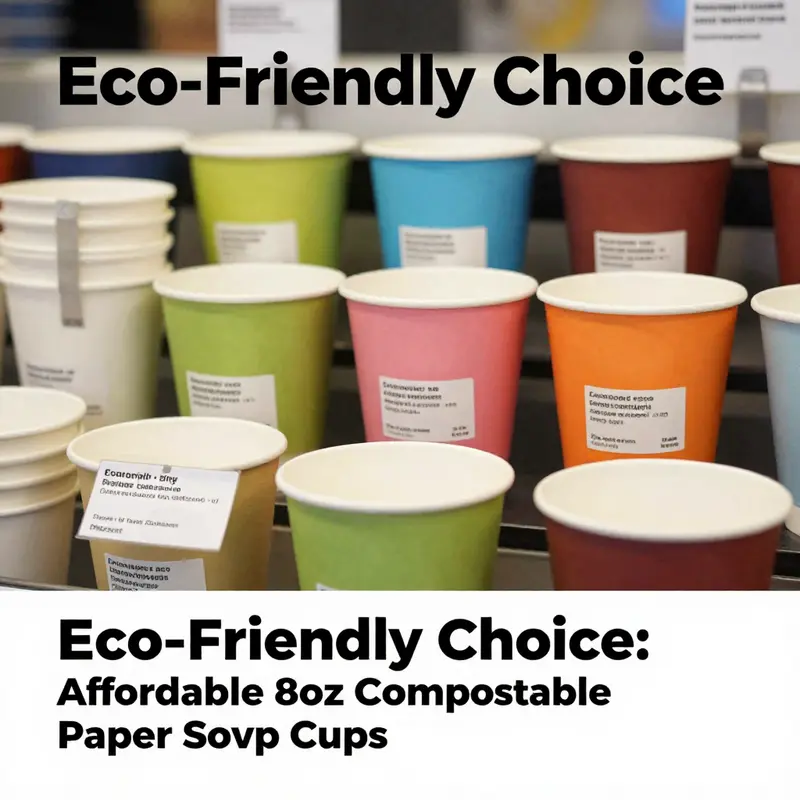
A quiet pivot is unfolding in food service packaging. Across cafés, food trucks, meal-kit providers, and grab-and-go grocery corners, the demand for packaging that respects the planet without breaking the budget is turning into a practical standard. At the heart of this shift sits the humble 8-ounce compostable paper soup cup. It is not a flashy novelty but a pragmatic choice that marries cost discipline with environmental responsibility. When a business seeks to balance tight margins with a growing consumer expectation for sustainability, the affordability of these cups becomes more than a number on a price sheet. It becomes a strategic lever that can influence menu design, service models, and waste management practices. The chapter that follows weaves together pricing reality, material science, market momentum, and supply-chain dynamics to explain why cheap 8-ounce compostable cups are gaining traction in the cost-conscious but quality-driven world of modern food service, and how smart buyers can harness this momentum without sacrificing safety or performance.
From the outset, the economics are driven by scale. The simplest truth is that per-unit cost falls as order size rises, and this is especially true for compostable paper cups made for hot soups and stews. In bulk markets, unit prices can skew as low as a few cents per cup, often ranging between roughly US$0.025 and US$0.048 depending on customization, order size, and the level of features attached to the cup, such as a vented lid or a leak-resistant seal. This price window is not incidental; it reflects a mature supply chain that has optimized the use of renewable fibers, streamlined conversion processes, and standardized packaging configurations that minimize waste in production. For many operators, such pricing is not merely affordable; it is a gateway to adding compostable options without resorting to heavy subsidies or dramatic menu reimaginations.
The practical arithmetic of volume purchases reveals where real savings live. A typical 8-ounce cup sold in high volumes at a minimum order quantity can unlock a substantially lower per-unit price than small, irregular buys. The math becomes even more compelling when the cups are part of a broader packaging suite that includes vented or airtight lids, and possibly a printed or branded surface. For example, a bulk bundle of several tens of thousands of cups can translate into per-unit costs that approach or dip below five cents in some configurations, especially when the buyer negotiates terms that match production runs with demand cycles. The economics of such configurations are not merely about price per cup; they also balance lead times, stock-keeping unit (SKU) management, and the cost of carrying inventory. In many cases, more favorable tiered pricing is paired with more predictable delivery schedules, reducing the risk of stockouts during peak seasons and enabling steadier cash flow through predictable purchasing.
To understand the full picture, it is essential to look at the materials and their impact on total cost of ownership. These cups are generally made from renewable plant-based fibers, including bagasse from sugarcane, bamboo fibers, or recycled paper streams. The choice of material influences not just the environmental footprint but also the processing energy, water use, and waste handling costs associated with production. Bagasse-based cups, for example, tend to offer good resistance to moisture and heat, while maintaining a lighter weight profile that can lower freight costs per unit. Recycled-fiber cups often strike a balance between stiffness and barrier performance, delivering dependable performance for soups served in busier environments. These materials are chosen with an eye toward both performance under heat and compliance with safety standards for food contact. Factoring in end-of-life outcomes—whether home compostable or industrially compostable—adds another layer to the cost calculus. The value proposition strengthens when businesses recognize that compostable options can help avoid plastic-related disposal fees or penalties in jurisdictions that regulate or tax plastics more aggressively.
Material choice matters, but the story does not end there. The environmental credentials attached to these cups—being compostable, plastic-free, and often certified for food contact—build brand trust in ways that can translate into increased customer loyalty and willingness to pay for sustainable options. Consumers are increasingly sensitive to the lifecycle of the packaging they encounter, and a product that can be composted in industrial facilities or home compost piles (where permitted) reduces the perceived guilt associated with takeout meals. This, in turn, can influence repeat business. The broader market trend toward disposables that align with circular economy goals is not a niche curiosity; it is a mainstream expectation in many urban and suburban markets. As regulations tighten around single-use plastics, operators who have already adopted compostable alternatives may experience smoother compliance trajectories and fewer last-minute substitutions that disrupt service.
In qualitative terms, price is only one dimension of value. The equipment and process features attached to the cup—like a leak-resistant seal, a venting system that accommodates steaming hot liquids, and a correctly engineered lid—have real economic implications too. A cup that leaks or collapses under heat creates waste, damages product presentation, and requires additional labor for cleanup. By contrast, a well-designed, leak-proof system minimizes spillage, reduces customer complaints, and lowers the need for extra napkins or protective packaging. These operational savings accumulate across a week, a month, or a season and ultimately contribute to a lower total cost of ownership. When a supplier offers customization—whether printing a logo, adding color branding, or selecting specific sizes within a consistent line—the upfront cost may rise slightly, but the incremental marketing value and customer recognition can drive higher basket sizes and improved store-level efficiency.
Reliability is another dimension of value. In a market that prizes speed and consistency, the ability to source from reputable suppliers with clear lead times, predictable quality, and well-documented compliance credentials becomes a competitive advantage. For businesses with high-volume or seasonal demand, the predictability of delivery, even at a longer lead time, can be more valuable than an opportunistic low price from an inconsistent supplier. In this context, the typical minimum order quantities and delivery windows—such as MOQs in the tens of thousands and lead times measured in weeks rather than days—are not obstacles but guardrails that help a buyer plan production schedules, staffing, and even marketing campaigns around a reliable packaging backlog.
The regulatory and safety landscape adds yet another layer to the total value proposition. Compellingly, many compostable cups meet recognized food-contact standards and have certifications indicating suitability for contact with hot liquids. For operators, this reduces risk and simplifies supplier validation. It also supports a cleaner, more transparent supply chain, where customers can feel confident that the packaging they choose aligns with their own sustainability commitments. While the specifics of compliance can vary by jurisdiction, the trend toward harmonized standards around compostable materials, fiber sourcing, and end-of-life management is clear. This regulatory clarity helps stabilize the market for durable, cost-effective, compostable cups by reducing the ambiguities that sometimes accompany emerging green products.
From a market perspective, consumer preferences are shifting in predictable ways. A growing cohort of customers values brands that do not merely claim sustainability but demonstrate it through tangible, verifiable packaging choices. Home-compostable and plastic-free options are increasingly seen as a basic expectation for takeout, especially in urban districts, campuses, and corporate cafeterias where waste diversion programs are actively promoted. When a business chooses an affordable 8-ounce compostable cup, it is signaling a commitment to a cleaner waste stream without compromising service speed or menu flexibility. This alignment of values translates into competitive advantage—customers may choose a venue based on packaging ethics as much as on taste, temperature, or price. The economic implication is straightforward: sustainable packaging, when priced accessibly, can become a differentiator that does not erode margins but rather complements them by supporting repeat visits and favorable word of mouth.
As with any procurement decision, buyers should consider the design and printing options that accompany these cups. The ability to customize printing, within reason, adds branding value and can be an important part of marketing strategy, particularly for takeout-focused operations, small chains, or seasonal menus. The right design choices—whether a logo, a color theme, or a simple instructional graphic about compostability—can improve product recognition and enhance consumer trust. Importantly, customization should be aligned with the practical realities of production and logistics. Not all customization carries the same economic weight, and selecting options that balance visual impact with production efficiency is key to preserving affordability over the life of a packaging program.
From the procurement side, the supplier relationship matters. Disciplined sourcing practices, including evaluating a supplier’s production capacity, certifications, and geographic location in relation to the buyer’s operations, contribute to cost stability. A well-structured procurement approach considers not just the quoted per-unit price, but the total landed cost, which includes freight, duties, handling, and any incremental charges for customization or special packaging. For many buyers, negotiating terms such as EXW, FOB, or CIF is not only about price; it is about the total time-to-market and the reliability of receiving consistent product quality batch after batch. These factors collectively determine how smoothly a business can transition to a compostable cup program, how quickly it can scale, and how resilient its supply chain will be in the face of disruption.
The numbers tell part of the story, but the full narrative is about how these cups fit into a broader system of sustainable service. A practical approach for operators is to view the 8-ounce cup as a modular element of a takeout strategy that emphasizes speed, safety, and sustainability. The cup must withstand the rigors of transport—steam, heat, and jostling—while maintaining a clean, professional look that reinforces a brand’s eco-friendly positioning. The lid, often an integral feature, should offer a reliable seal and, ideally, compatibility with a vented design to manage steam and pressure. The economics of packaging in this space are significantly improved when suppliers can deliver consistent performance along with predictable pricing and timely delivery. This means fewer emergent costs from defective batches and less demand for overstock or expedited freight just to accommodate unexpected shortages.
In sum, the economic viability and cost-effectiveness of these cups rest on a few interwoven pillars. First, scale matters: larger orders unlock lower unit costs and more favorable terms. Second, material choice and end-of-life options influence the total cost of ownership through waste management, compliance, and brand value. Third, reliability and supply-chain discipline reduce hidden costs associated with stockouts, quality issues, and regulatory risk. Fourth, consumer expectations for sustainable packaging gradually become a concrete driver of sales and loyalty when paired with a price point that remains accessible for a wide range of operators. When these elements align, the result is a packaging solution that makes sustainability affordable, not an aspirational add-on that strains budgets.
For readers who want to explore a concrete market snapshot, consider the consumer marketplace where bulk-ready packs are displayed with clear pricing. A representative product listing shows a pack of 250 compostable kraft paper cups with vented lids priced at a value-oriented level that makes compostable packaging accessible for small-scale operators as well as larger hospitality outfits. Such examples illustrate that today’s market can offer substantial savings per cup while maintaining the safety, functionality, and environmental benefits that consumers increasingly expect. The practical takeaway is straightforward: when you plan with scale, lifecycle costs, and supply reliability in mind, cheap 8-ounce compostable cups do more than reduce expense. They enable a more sustainable service model that resonates with modern customers and strengthens a brand’s standing in a competitive landscape.
Internal link reference for further context on practical cup options and take-away packaging concepts can be found here: disposable 8oz single-wall paper cup with lid.
External reference for a marketplace pricing snapshot and consumer-facing listings: https://www.amazon.com/dp/B0CZJXVQZT
Compliant and Cost-Conscious: Food Safety, Compostability, and Certification for Cheap 8oz Paper Soup Cups
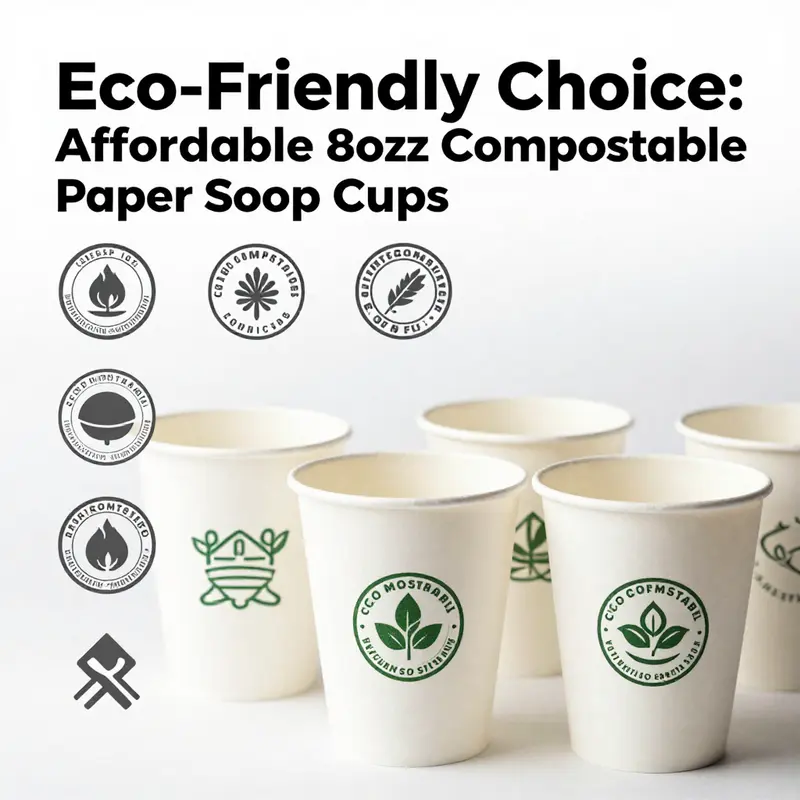
Ensuring that a cheap 8oz compostable paper soup cup is both safe for food contact and genuinely compostable requires careful navigation of regulations, testing, and practical sourcing choices. Buyers, designers, and operators must balance cost pressures with documented safety and environmental claims. This chapter weaves together the regulatory essentials, common material choices, testing expectations, labeling rules, and procurement realities that define what “compliant and cheap” can realistically mean for an 8oz compostable paper soup cup.
Regulatory and compostability essentials begin with food-contact safety. In many key markets, materials that touch food must meet explicit, written requirements. Those rules aim to prevent chemical migration into food and to ensure materials do not cause harm when used at expected temperatures. For jurisdictions following North American guidance, regulators require that components intended for food contact are safe under intended use. In the European model, food-contact materials fall under overarching food-safety legislation that requires traceability and proof that substances will not transfer unsafe amounts to food. In practice, manufacturers provide declarations of conformity, migration test reports, and specifications for each raw material used in a cup.
Compostability adds a second layer of standards. A compostable claim must rest on accepted test protocols that verify biodegradation, disintegration, and absence of ecotoxic residues. Two widely referenced standards specify compostability performance in municipal or industrial composting systems and in some cases in home composting. Compliance demonstrates that after a defined timeframe, the product will break down to non-toxic residues under specified conditions. Buyers should expect third-party certificates that match the intended disposal environment. A cup tested for industrial composting will not necessarily degrade in a backyard pile. Clear documentation prevents mislabeling and prevents unintended contamination of recycling or compost streams.
Material choices directly influence both compliance and price. Paperboard sourced from rapidly renewable fibers can form the structural body of the cup. To contain liquids and prevent leakage, the interior typically receives a coating or lining. Plant-based linings such as polylactic acid (PLA) or other certified compostable coatings are common when compostability is required. These linings need their own safety documentation and compostability test results. Alternatively, recyclable paper cups often use thin polyethylene coatings; those can be cheaper but are not compostable and impair recyclability in many systems. For a cost-sensitive, compostable 8oz cup, expect a trade-off: plant-based linings increase production complexity and unit cost, yet they permit compostable claims that meet customer demand.
Testing and certification are the backbone of credible claims. Food-contact testing typically includes overall and specific migration tests, heavy-metal screening, and, when relevant, thermal aging studies to simulate hot-fill conditions. Migration testing confirms that constituents do not transfer into food above permissible limits. Independent laboratories issue reports that suppliers use to support declarations of conformity. For compostability, accredited laboratories run biodegradation and disintegration tests under controlled composting conditions. Certificates or lab reports should indicate which standard the product passed and under what test conditions. When a cup is intended for commercial composting, the supporting documentation must reflect industrial composting tests.
Labels and on-pack claims are tightly regulated too. A compostability claim without an appropriate certificate invites regulatory scrutiny and consumer skepticism. A manufacturer or brand should provide a clear statement of where the cup is compostable—industrial facilities, home piles, or both. Claims should avoid absolute guarantees such as “will compost everywhere” unless backed by a home-compostable standard. Food-safety claims should also be supported by documentation available to downstream customers. If the cup uses a plant-based lining, labels should disclose the material class and any relevant handling notes, such as maximum recommended temperature, to avoid misuse that could weaken safety or compostability.
A pragmatic buyer will ask for a packet of documents with every sample and production run. That packet should include a certificate of analysis for the paperboard, safety reports for any coatings, migration test results for simulated hot and cold exposures, and the compostability certificate specifying the standard and test lab. A declaration of conformity referencing applicable food-contact legislation and a chain-of-custody statement for fiber origin are also valuable. These documents reduce risk, support compliance audits, and protect brand reputation.
Manufacturing controls and quality assurance measures affect both safety and consistency. To control variability, manufacturers define raw material specifications and maintain incoming goods inspection. Production lines that apply compostable coatings must control temperature, coating weight, and curing parameters to ensure a uniform barrier. Poorly controlled processes can cause delamination, pinholes, or inconsistent barrier performance. Those defects can lead to leaks, faster contamination, and product returns. Sampling plans and retention protocols help to isolate issues quickly. For buyers seeking large volumes at low price, insisting on documented process controls and a robust quality management system reduces long-term costs associated with failures.
End-use conditions matter. A cheap 8oz soup cup used to hold hot, oily broths faces different stressors than one used for cold soups or chilled desserts. Heat accelerates migration and can change the integrity of linings. Oily or high-salt foods may interact differently with coatings. Therefore, manufacturers define use-case limits for each cup type and provide testing evidence for those uses. Where the intended use includes high temperatures or long holding times, buyers should demand hot-fill testing and real-world trials. In many cases, selecting a slightly more expensive cup with verified hot-use performance can be cheaper than absorbing the costs of product failures, service disruptions, and brand damage.
Compost infrastructure considerations are often overlooked but essential. Certifying a cup as industrially compostable is meaningful only where municipal or commercial composting exists. In some regions, industrial composting capacity is limited, and compostable packaging ends up in landfill or an incinerator, negating the intended environmental benefit. Conversely, where composting networks accept certified compostable packaging, the material contributes to organic recycling streams and soil amendments. Buyers should align procurement decisions with local disposal realities and educate customers and staff about proper disposal pathways. Clear labeling that states “commercial composting only” or “home compostable” helps direct products into the correct stream.
Supply chain transparency supports compliance. When sourcing cheap 8oz compostable cups, purchasers should verify raw material origins and ensure traceability from pulp through final product. Chain-of-custody information helps with sustainability claims and with verifying that no banned additives or contaminants were introduced upstream. Responsible suppliers will provide material safety data sheets for coatings and adhesives. They will also disclose whether recycled fibers enter the paperboard, and they will show how any recycled content affects food-contact compliance. In some cases, recycled fibers require additional testing to ensure contaminant levels remain below regulatory thresholds.
Regulatory landscapes evolve, so staying current is critical. Standards for compostability and food contact are updated as scientific understanding changes. New testing methods and shifting limits may influence whether a previously acceptable material remains compliant. Buyers should request that suppliers notify them of regulatory changes that impact certification or use. Long-term contracts can include clauses requiring suppliers to maintain compliance with named standards and to supply updated documentation when tests are renewed or laws change.
Procurement realities shape the cost side of the compliance equation. Cheap per-unit prices often result from economies of scale, simplified specifications, or relaxed service terms. Typical minimum order quantities for low-cost production runs are large; manufacturers amortize tooling and setup across volume. Buyers who require custom printing, bespoke sizes, or short runs will face higher unit costs and longer lead times. Trade terms such as EXW, FOB, and CIF influence landed cost and risk allocation. Negotiation levers include order size, lead time flexibility, and tolerance for standard stock finishes versus custom printing. A cost-aware buyer will map total landed cost, including certification, sampling, testing, and logistics, not merely the factory price per cup.
Risk management must be practical and proportionate. A brand can mitigate risk through several measures that do not always require premium spending. First, insist on third-party testing for each major raw material change. Second, retain independent lab testing on a regular cadence to verify ongoing compliance. Third, implement a clear claims policy that aligns product labels with certified performance. Fourth, educate downstream partners and customers about appropriate disposal. Finally, incorporate contingency plans in procurement contracts for product recalls or nonconformances.
Operational handling influences compliance too. Storage conditions matter for coated paper cups. High humidity, prolonged exposure to heat, or mechanical damage can impair coating adhesion and barrier performance. Warehouses and foodservice outlets should follow supplier recommendations for storage and handling. Training staff on correct stacking, lid application, and time limits for holding filled cups reduces incidents of leakage and maintains food safety.
A few practical checks when evaluating an 8oz compostable paper soup cup sample help separate credible offers from claims-heavy marketing. Check the cup for consistent coating coverage and absence of pinholes. Inspect seams and join lines for secure bonding. Request written use-case limits for temperature and hold-time. Ask for the full certificate package, encompassing migration tests, compostability certificates, and declarations of conformity. Confirm the compostability certificate references the appropriate standard and shows the testing laboratory and test results. Finally, verify that on-pack claims accurately match the certificates provided.
Beyond standards and testing, communication matters. Clear, honest labeling reduces the risk of misuse and speeds correct disposal. If a cup is certified only for industrial composting, say so plainly. If it is suitable for hot liquids up to a specific temperature, state that limit. Such transparency reduces consumer confusion and ensures the environmental and safety benefits materialize in practice.
Meeting both food-safety and compostability expectations for a cheap 8oz paper soup cup is achievable, but not automatic. It requires intentional design, careful supplier selection, and robust documentation. Low cost must not mean undocumented compromises. Instead, cost pressures should drive smarter choices: selecting proven coatings, insisting on essential testing, and scaling volumes to spread certification and tooling costs. Buyers who demand clear compliance evidence can secure cups that are affordable, safe, and beneficial to the circular economy.
For buyers seeking practical examples and supplier options, it can be useful to review product listings that show material specs and certification details. One such listing provides direct product information for an eco-friendly 8 oz paper cup product page.
For detailed technical information on compostability test methods and standards referenced in this discussion, consult the ASTM International website: https://www.astm.org
Final thoughts
The shift toward sustainable packaging is not merely a trend; it is a necessity that the food and beverage industry must embrace. Cheap 8oz compostable paper soup cups represent a smart investment in both the environment and your bottom line. By choosing these eco-friendly alternatives, you can enhance your brand’s image, meet consumer demands for sustainability, and comply with safety regulations. As we move forward, prioritizing environmentally responsible practices will not only secure the future of your business but also lead to a healthier planet. Let this be your call to action: explore the advantages of compostable options and partner with suppliers who understand your needs.