
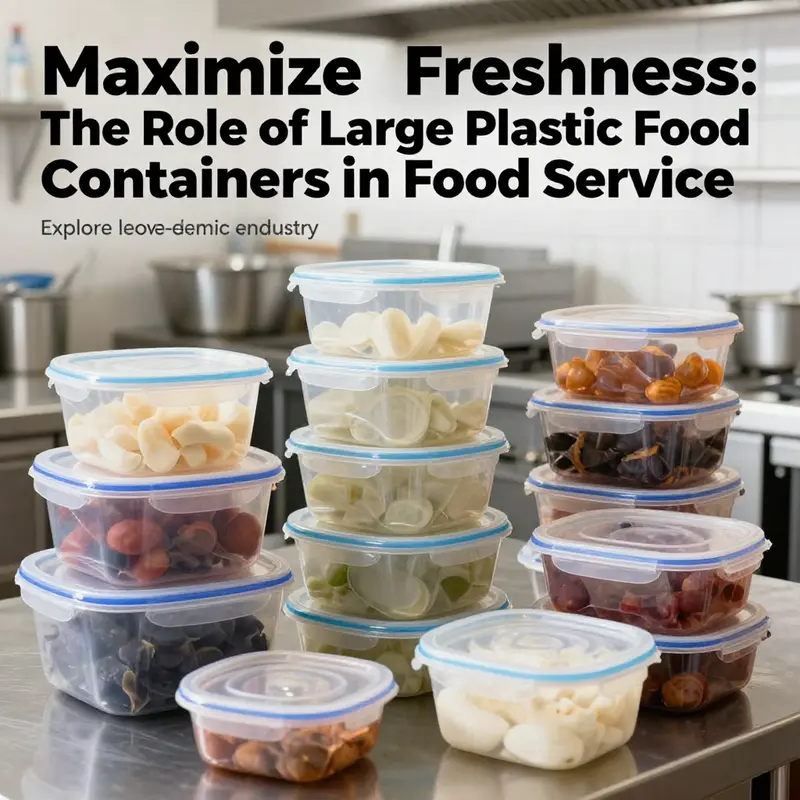
Large plastic food containers are not just storage solutions; they are essential tools for professionals in the food service industry. From bubble tea shops to catering services, these versatile containers support meal preparation and storage while ensuring food safety. In the following chapters, we will explore the specific applications of these containers, their material properties and compliance standards, and the latest market trends and procurement strategies that can help businesses make informed choices. By understanding these factors, businesses can improve their efficiency and maintain quality in every aspect of food handling.
Room for Seconds: Large Plastic Food Containers as the Backbone of Modern Meal Prep and Storage
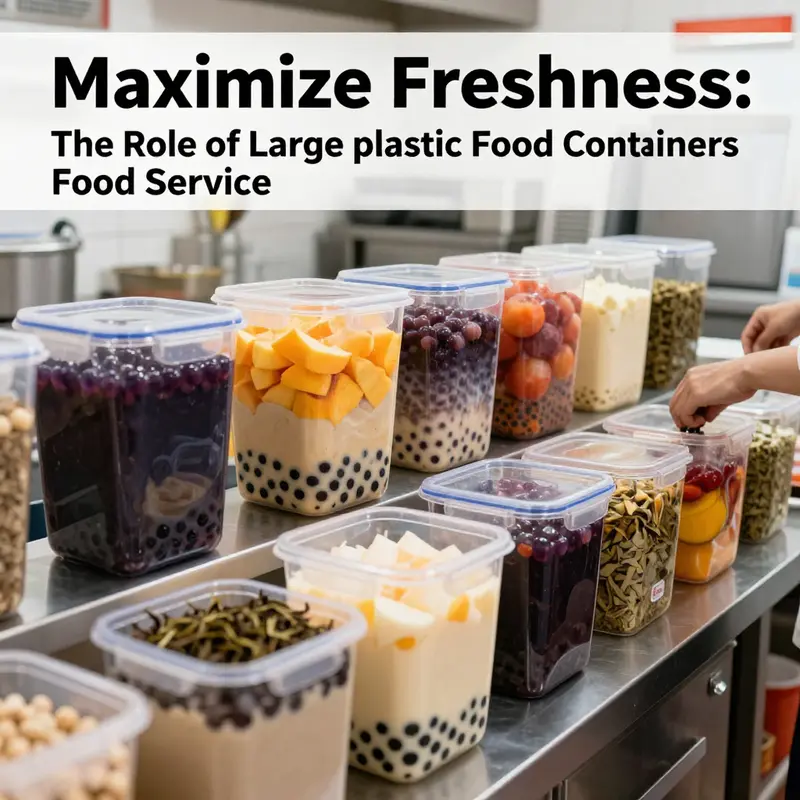
Large plastic food containers sit quietly at the core of how many kitchens—home, office, and beyond—plan, prepare, and preserve meals. They are not flashy, but their practical design forms a silent backbone for everyday cooking routines. The materials most commonly chosen for these containers—polypropylene and high-density polyethylene—are selected for a precise blend of safety, durability, and chemical resistance. These plastics can withstand the daily stresses of kitchen life: repeated washing, exposure to cold in freezers, and the occasional rise in temperature during reheating. Their rectangular, stackable shapes are more than a matter of aesthetics; they optimize space, allowing refrigerators and cabinets to hold more with less clutter. Transparent walls let cooks glance at contents without pulling every container out, a small but meaningful ease that streamlines grocery planning and reduces food waste. And when a lid snaps shut, the moment of containment becomes a guarantee of hygiene and freshness, a crucial feature for anyone juggling bulk storage or meal prepping for a week ahead.
The versatility of large containers is one of their defining strengths. They are designed to accommodate a spectrum of food types—from bulk grains and chopped vegetables to cooked proteins and layered leftovers. For batch cooking, they become the perfect canvas for organizing ingredients before the pot or pan ever heats. When it is time to eat, they transition seamlessly from pantry to fridge to microwave or oven, depending on the material’s heat tolerance. This adaptability matters in real kitchens where routines ebb and flow. A container that can hold rice and beans one day, and carry a portion of reheated curry the next, reduces the need to juggle multiple storage solutions. In commercial settings, the same logic extends to meal-prep operations, cafeterias, and catering setups where predictable, uniform storage simplifies inventory control, labeling, and meal assembly for dozens or hundreds of portions.
Space efficiency remains a central advantage. Large rectangular designs maximize the usable volume per square foot of storage space. They fit neatly side by side on shelves and slide neatly into refrigerated drawers where round containers would leave awkward gaps. The clear walls that many models feature are not just about visibility; they contribute to a disciplined kitchen workflow. When contents can be identified at a glance, cooks waste less time searching and guessing, and they can portion accurately without opening multiple containers to verify contents. Clear containers also aid in labeling and rotation, a simple but effective practice to minimize spoilage and keep track of freshness across a busy week.
A central feature that accompanies the material choice and shape is the lid system. Airtight seals, snap-on closures, and locking mechanisms transform containers from simple storage vessels into reliable guardians of flavor and texture. For leftovers and prepped meals, an airtight seal preserves moisture or dryness as required, curbing the tendency for foods to dry out or become limp. Locking lids add a layer of leak resistance that is especially valuable for transporting meals to work, school, or picnics. In environments where meals are shared among a team, uniform lids also contribute to consistency and efficiency, reducing the time spent hunting for compatible tops. The lid design, while sometimes overlooked in favor of capacity and material, is a critical determinant of real-world performance in both domestic kitchens and crowded commercial spaces.
Safety considerations thread through every discussion of large plastic containers, because the promise of convenience must be balanced with health and regulatory standards. Not all plastics are equally suited to every food scenario. Household intuition might suggest heating any plastic container to speed reheating, but health experts warn of potential chemical leaching when certain plastics are exposed to heat or used for long storage. The concerns around substances such as BPA and other additives have prompted many cooks to seek safer options, particularly for hot meals or for items stored for extended periods. Polypropylene has established itself as a practical choice in this context because of its ability to retain structural integrity at higher temperatures relative to many other plastic types. Its familiar advantages include a relatively high heat tolerance, chemical resistance, and general stability during repeated cycles of use and washing.
Within the spectrum of PP-based containers, the protections are not uniform, and thus a cautious approach is warranted. PP can maintain its form when heated briefly in a microwave, depending on the exact formulation and lid compatibility, and it often withstands typical dishwasher cycles. Yet larger or thicker variants may show reduced microwave compatibility, which invites a balanced use plan: heat in appropriate containers designed for reheating, or transfer to a heat-safe vessel when required. Meanwhile, durability and scratch resistance help the containers endure the rigors of daily use, from chopping boards and sharp utensils to stacking in a busy fridge with a tendency to crowd. For many cooks, these practical attributes translate into fewer trips to the recycling bin, as reliable containment extends the usable life of food storage units.
In response to safety concerns, many practitioners now discuss safer material options such as glass or silicone for hot storage or reheating. Glass storage options, particularly when they are designed for the home kitchen, can offer excellent inertness and resilience under heat, without some of the chemical questions that plastics pose when heated. Silicone, valued for its flexibility and heat tolerance, presents another path for those who want a non-plastic option for certain meals or storage modalities. The narrative around safety is not about demonizing plastics; it is about matching the right material to the right use case, and about recognizing that a diversified approach to containers can better align with varied dietary needs and comfort levels with unknowns in long-term exposure.
Market realities reinforce these decisions. The global food container market has grown substantially as households and businesses increasingly adopt meal-prep routines and bulk storage practices. Projections indicate continued expansion driven by demand for affordable, durable storage solutions that simplify inventory management and food safety. Yet as consumer awareness of health and environmental issues rises, the market also presents opportunities for safer materials, higher recycled content, and more sustainable end-of-life options. The tension between affordability and safety, between convenient design and environmental stewardship, shapes ongoing product development and procurement strategies across households and enterprises alike.
In practice, the decision to use large plastic containers often interlocks with procurement considerations that go beyond price alone. For businesses, evaluating material quality, regulatory compliance, and supply chain reliability becomes essential. The standards governing food contact materials—whether aligned with FDA guidelines in some regions or EU regulations elsewhere—guide what manufacturers can claim and what buyers should expect in terms of performance and safety. This is especially relevant for bulk purchases or wholesale orders where the risk of inconsistent supply or subpar materials could disrupt entire meal-prep workflows. Sustainability enters the calculus as well: customers increasingly favor containers that are recyclable or made from recycled content, and they seek assurance that the packaging aligns with broader environmental goals. These preferences influence supplier selection, contract terms, and the design of long-term storage strategies across the food service ecosystem.
Within the practicalities of daily use, users encounter a few limits that deserve attention. One recurring concern is odor absorption, which can mar the flavor of future meals if containers are not properly cleaned and dried. Thorough cleaning, thorough drying, and sometimes dedicated containers for strongly scented ingredients can mitigate cross-contamination of smells and flavors. Another caveat is the balance between durability and weight. Large containers offer generous capacity, but their heft can make handling in crowded refrigerators or on crowded prep tables less forgiving. This is particularly true for commercial kitchens where staff move quickly and must handle many containers with efficiency and care. In such settings, the uniformity of shape and lid design helps streamline workflows, reduce misplacement of lids, and make cleaning easier because fewer odd-sized containers exist in the rack.
For households, the management of large containers often translates into routine practices that protect value and quality. Establishing a simple labeling system—date of storage, contents, and portion size—minimizes waste and makes weekly planning more predictable. A consistent color-coding approach or lid system can further clarify what belongs in the freezer, fridge, or microwave. When selecting containers for everyday use, consider models with dedicated lids and clear walls, so that contents are easy to identify and the seals remain intact after repeated cycles of washing. A practical example of this approach is to note a specific case where a take-away style, multi-compartment container with a secure lid can handle both dry grains and moist leftovers, turning a frantic lunch routine into a smoother, more reliable process. This kind of everyday practicality is what keeps large plastic containers a fixture in many kitchens, even as new materials and designs enter the market.
The narrative around large plastic containers would be incomplete without addressing the social and logistical logistics of acquiring them. In many markets, wholesale and bulk options are readily available, with configurations designed to meet institutional needs as well as home use. The procurement logic typically considers minimum order quantities, delivery lead times, and customization options, alongside the core questions of material safety and end-of-life disposition. A well-structured purchasing approach asks not only about price but also about the supplier’s ability to provide consistent quality, to meet regulatory requirements, and to deliver on time across multiple locations. In a world where efficiency and safety define competitive advantage, these containers become catalysts for better inventory control, reduced spoilage, and a more sustainable approach to feeding people at scale. The bulk dynamic invites organizations to align storage solutions with kitchen workflows, from refrigerated warehouses to portable meal kits, ensuring that the containers chosen today will support a reliable chain of meal preparation and service tomorrow.
To illustrate a practical nuance, consider how a well-chosen large container system supports a typical week of meal prep in a mixed-use environment. A cook might prepare grains, roasted vegetables, and a protein or plant-based substitute in separate large containers. Each item is portioned into meals that can be assembled in minutes, with lids closed tight to maintain texture and moisture. During the weekday mornings, staff or family members can grab a ready-made portion for lunch, quickly reheat if needed, and return any unused portions to the fridge for later. The system also makes it easier to rotate ingredients, ensuring nothing sits too long and that the flavors remain balanced. The ability to see what’s inside at a glance reduces the cognitive load of meal planning and frees mental energy for more creative culinary decisions later in the week.
From a reference standpoint, the conversation about safety and functionality is supported by ongoing research and industry discussions. For those who want to explore more on the safety front, a trusted overview discusses how plastics used for food storage interact with heat, how regulatory standards are applied, and what consumers should know about safe reheating practices. The aim is not to alarm but to empower informed choices that align with personal health goals and household routines. In this context, it becomes clear that large plastic containers, when selected with care and used as intended, offer a viable, cost-effective, and adaptable storage solution that supports the rhythms of modern life. They enable batch cooking, reduce waste, and help households and food-service operations manage time and resources more efficiently.
For those who want to explore a practical example of a container designed for everyday use, consider a take-away style, food-grade option that emphasizes safety and ease of use. This kind of container—with a secure lid, clear walls, and a size well-suited to a single meal or a few servings—illustrates how design choices translate into real-world benefits. The full value lies not only in the capacity but also in the confidence it provides: confidence that a meal will remain fresh, that it will travel well, and that it will reheat effectively if needed. Such confidence is the quiet force behind meal-prep habits that many people rely on to maintain balanced diets during busy weeks. If you want a concrete reference to a model of this type, you can explore a representative option that emphasizes heat-safe materials and durable construction, accessible at the following link: food-grade take-away bowls with lids.
In sum, large plastic food containers are more than gear for storage. They are enablers of strategic food management, helping households and businesses plan ahead, minimize waste, maintain hygiene, and keep flavors intact across the journey from prep to plate. They exemplify how thoughtful design—rooted in safe materials, practical shapes, and reliable lids—can transform routine cooking into a process that is orderly, efficient, and satisfying. As materials science evolves and consumer priorities shift toward safer and more sustainable options, these containers will likely continue to adapt, offering improved performance while remaining accessible and affordable for a broad spectrum of users. The next chapters will further unpack how these evolving design priorities influence sourcing decisions, lifecycle considerations, and the balance between convenience and environmental responsibility, guiding readers toward a nuanced understanding of storage solutions in the modern kitchen.
External reference for further context on safety considerations in plastic food containers is available from Healthline, which provides a broad overview of how various plastics interact with foods during heating, storage, and everyday use. For readers seeking a concise, evidence-based summary, see the Healthline article on plastic food containers safety: https://www.healthline.com/health/food-nutrition/plastic-food-containers-safety
Between Safety and Sustainability: The Material Story Behind Large Plastic Food Containers for Bulk Storage
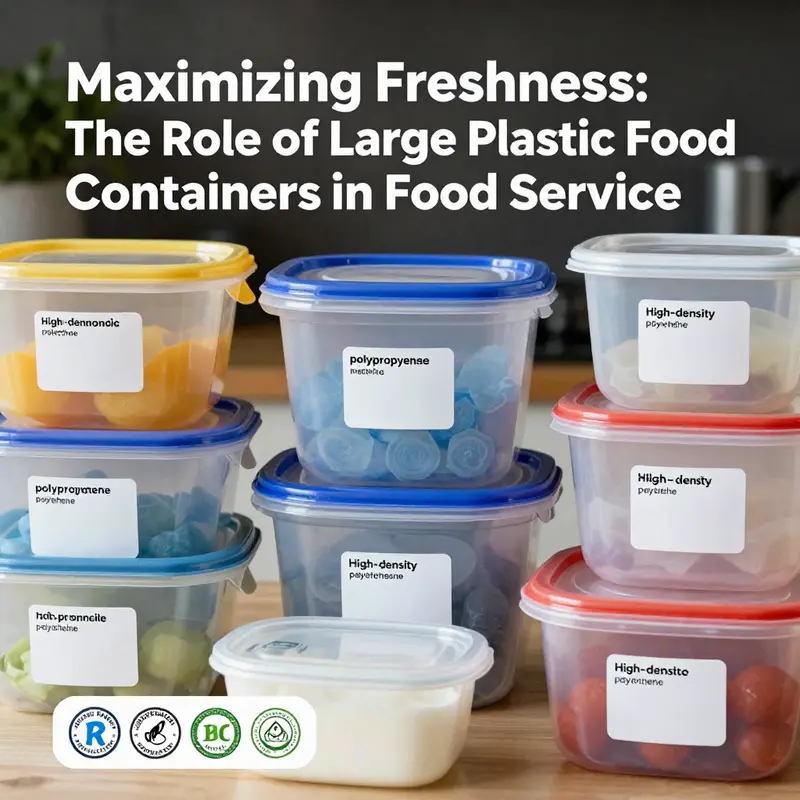
The large plastic food containers that populate kitchens and storerooms are rarely just crates for food. They are the visible tip of a longer, more intricate iceberg of material science, regulatory diligence, and environmental consideration. In the quiet hum of a commercial kitchen or the orderly stillness of a warehouse cooler, these vessels perform a complex ballet: they temper heat and cold, resist chemical interactions, and endure repeated use without surrendering integrity. The chapter that follows looks beyond shape and lid to the material heart that makes each container fit for purpose. It examines three dominant players in the large-container landscape—polypropylene (PP), recycled PET (rPET), and polystyrene (PS)—and it weaves their properties into the practical questions that drive procurement, safety, and sustainability decisions. The aim is to illuminate how material choices influence performance, compliance, and the long arc of environmental responsibility, while keeping the discussion grounded in everyday realities of storage, reheating, and service delivery.
At the core of material selection is a simple, but consequential, triad: heat tolerance, chemical stability, and barrier performance. In large rectangular forms—favored for space efficiency, stackability, and visibility through clear walls—these properties translate directly into how well a container can hold hot meals, cold ingredients, or liquids without leaking, absorbing odors, or transferring unwanted flavors. PP, rPET, and PS each bring distinct strengths and limitations to this triad, and each shapes the container’s suitability for different operations, from a home meal-prep regime to a high-volume catering or hospital kitchen. The practical upshot is that the same family of products can span a spectrum from everyday reuse to long-term bulk storage, once the material’s particular character is matched to the intended use and to the regulatory expectations that govern food contact.
Polypropylene is the workhorse of the family, prized for its combination of heat resistance, chemical inertness, and mechanical resilience. A thermoplastic with a typical melting point well above 160°C (320°F), PP offers a margin of safety that makes it appropriate for microwave-safe and dishwasher-safe applications. Its chemical stability means it can withstand contact with a broad array of foods, including hot soups or stews, without compromising the material itself. This stability translates into durable service: PP containers tolerate repeated cycles of use, washing, and stacking with only gradual, if any, degradation in performance. In the context of large containers—where capacity often reaches several liters—the durability of PP matters as much for longevity as for food safety. A container that remains structurally sound after hundreds of cycles reduces waste and supports cost-effective inventory management.
Where PP truly shines is in direct-to-table or direct-to-microwave workflows. In many regions, PP-based food contact materials are certified to meet FDA and EU food safety regulations, providing confidence that the container is appropriate for direct contact with hot foods and liquids. The assurance is not merely about consumer health; it is also about predictable performance. PP resists deformation under typical kitchen use, preserves lid seals, and supports robust, snap-on or locking closures that keep contents secure during transport. The upshot of these properties is a container that can shuttle from fridge to microwave to table with minimal risk of leakage, crusted residue, or compromised hygiene. Yet, even with PP’s strengths, a practical choice must consider the expected reuse cycle, the operating environment, and the cleaning regime. A container designed for daily reuse in a busy kitchen will require excellent chemical durability and resistance to detergents used in thermal cleaning because any weakening of the lid seal or wall integrity is a pathway for contamination or spoilage.
Recycled PET, or rPET, introduces a different set of advantages and considerations. Its appeal is twofold: environmental stewardship and a clear, glass-like visibility that helps staff quickly identify contents. rPET is made from post-consumer recycled PET, which advances circular economy principles by diverting plastic from landfills and encouraging reuse across cycles. Visually, rPET containers offer a crystal-clear appearance that is ideal for menu labeling, portion control, and inventory checking. The clear walls reveal color and texture of the contents, which is particularly valuable in bulk storage where multiple ingredients share a shelf or a refrigerated row. In terms of barrier properties, rPET provides good moisture and gas barriers, contributing to food freshness for cold storage and longer shelf stability for certain products. However, a critical limitation is heat resistance: rPET is typically not microwave-safe due to lower heat tolerance, a factor that often makes it inappropriate for reheating applications. This dichotomy—clear visibility and solid barrier performance on one hand, limited heat resilience on the other—shapes how rPET containers are deployed: ideal for cold storage, ready-to-eat meals stored in the fridge or freezer, and presentation-ready packaging where reheating is not required.
Compliance plays a central role in any material choice. rPET products distinguished by rigorous testing and certifications—often aligned with ISO 22000 food safety management systems—reflect a manufacturing ecosystem that emphasizes both safety and traceability. The certifications reassure operators and regulators that the material has been scrutinized for potential contaminants, migration limits, and overall suitability for food contact. The absence of heat tolerance for microwave use becomes a design constraint rather than a flaw; it simply channels the rPET option toward cold-chain storage, chilled or frozen foods, and take-home meals that are reheated using separate containers or devices designed for heat exposure. In regions where environmental concerns and consumer expectations around recyclability are high, rPET also helps align operations with sustainability targets, while maintaining compliance with established safety frameworks. The message is clear: material choice is a compass that points toward specific workflows and regulatory expectations, not a universal solution for all situations.
Polystyrene, including its foam-based forms, represents another point on the spectrum. PS is lightweight, offers excellent thermal insulation, and is widely used in fast-food and take-away contexts due to its low cost and ease of production. The insulation capability of PS helps keep hot foods hot and cold items cold during short-duration transport, a feature highly valued in delivery and dine-out services. Yet PS carries notable caveats. Its heat resistance is limited; temperatures above approximately 70°C (158°F) can cause deformation or migration of certain additives, making it less suitable for prolonged contact with hot foods or for use in microwaves. From a regulatory perspective, PS must comply with FDA and EFSA guidelines for food contact materials, and its environmental footprint has attracted significant scrutiny. The environmental concerns are not trivial: PS is less biodegradable and presents challenges for recycling at scale in many jurisdictions. These realities shape how PS is used—often in single-use or short-term contexts, or in applications where insulation needs are time-limited and the packaging life cycle is tightly scoped. The environmental consequences, regulatory expectations, and performance profile of PS collectively encourage a careful, time-bound application in large-container programs.
All three materials—PP, rPET, and PS—are embedded within a broader design and procurement ecosystem that emphasizes space efficiency and hygiene. Large containers are often rectangular to maximize refrigerator and freezer real estate, while the transparent walls enable quick visual checks of contents without opening. The lids, frequently airtight and designed with locking mechanisms or snap-on closures, are not afterthoughts; they are integral to preserving freshness, preventing leaks, and maintaining hygiene across multiple handling steps. In many operations, a single container may serve diverse cargo—from solids like chopped vegetables to semi-solid offerings like grains or stews, to liquids and leftovers. The ability to withstand freezer temperatures, to be dishwasher-safe, to tolerate occasional microwave exposure, and to resist odor retention all hinge on a careful pairing of the material with the intended use. The risk of odor absorption, for instance, looms large if a container is not properly cleaned or if the material is particularly porous. PP’s resilience can mitigate this risk, while PS’s insulation advantage may be offset by its propensity for odor retention if cleaning is incomplete. In practice, this means that storage protocols, cleaning cycles, and re-use expectations must be aligned with the chosen material’s properties to sustain hygiene and sensory quality over time.
From a procurement perspective, the decision calculus extends beyond raw performance. It includes evaluating material quality, regulatory compliance, and sustainability, as well as the reliability of the supply chain. PP-based containers are frequently positioned as the default for high-use, up-tempered items because of their universal heat resistance and durability. When the goal includes minimizing environmental impact, rPET becomes an attractive option, provided its heat-related limitations are accepted within the intended workflow. In contrast, PS may be selected for insulated transport or single-use scenarios where cost per unit and insulation performance offer clear benefits, but with a keen eye on end-of-life management and regional recycling infrastructure. The procurement process in large-scale operations often involves testing for migration, sensory tolerance, and compatibility with standard cleaning agents. It also contends with regulatory mapping: ensuring that the chosen material aligns with FDA or EFSA expectations for direct food contact, and confirming that any additives or colorants meet safety standards.
In this landscape, the concept of sustainability cannot be an afterthought. The materials’ life-cycle implications feature prominently in decision-making. PP is typically recyclable, and when handled in established recycling streams, can form the backbone of a sustainable loop for reusable containers. rPET’s selling point is precisely its recycling story: post-consumer bottles transformed into high-clear, durable containers that preserve freshness while reducing virgin plastic input. PS, especially in foam formats, has faced regulatory and public scrutiny due to its low biodegradability and variable recycling performance; in some regions, its use is restricted or discouraged in dietary contexts. The interpretive frame for these realities is pragmatic: sustainability is not a single material attribute but a portfolio decision that weighs recyclability, energy use, and the feasibility of district-level or national recycling systems. Large containers, by their scale and reuse profiles, provide a clear lens for measuring these outcomes. Every cycling of a container—from wash to reuse to potential refurbishment—carries embedded energy costs, a hidden part of its environmental footprint that modern supply chains attempt to minimize through design for durability, modular lids, and standardized dimensions that optimize transport and handling.
Beyond material properties and regulatory compliance, a well-considered approach to large plastic containers recognizes the practical implications of real-world use. A container’s ability to withstand repeated cleaning with caustic or alkaline detergents, the compatibility of seals with hot water, and the resilience of hinges and latches under frequent opening and closing cycles all affect day-to-day performance. The material choice implicitly dictates what kind of cleaning regimen is appropriate and how long a container can remain in service before refurbishment is needed. For example, a PP-based container can tolerate higher heat levels and more aggressive cleaners, reducing the risk of residue buildup and odor transfer compared with some PS formulations. On the other hand, while rPET offers superior clarity for fast visual checks of ingredients, care must be taken to ensure that the heat exposure remains within safe limits and that the cleaning cycle does not compromise the integrity of the thin barrier layers that keep contents fresh. These practicalities are not mere convenience; they are prerequisites for maintaining food safety and product quality across a broader supply chain where containers travel through multiple hands and environments.
A further layer of complexity arises when considering the broader regulatory framework that shapes how containers are manufactured, tested, and marketed. The FDA’s guidelines on food contact materials establish the baseline expectations for safety and permissible substances, including migration limits and the need for materials to demonstrate that any additives do not pose a risk to consumer health. The EFSA complements this with its own risk assessments and allowable concentration ranges for substances used in packaging. ISO 22000 and related management systems add an organizational dimension, ensuring that manufacturers implement robust hazard analysis and critical control point (HACCP) planning and ongoing risk monitoring. For large containers, these standards translate into a product family that not only performs reliably but also offers traceability, cleanability, and consistent quality across batches. The synergy between material science and regulatory oversight helps frame a container’s lifecycle—from design through production to use and end of life—as a coherent compliance story rather than a series of disjointed requirements.
In practical terms, the material properties and compliance narrative converges on the end user’s experience. A kitchen manager evaluating options will weigh heat tolerance against the desire for ultra-clear visibility, while a procurement team balancing cost against environmental impact will navigate the trade-offs between PP’s recyclability, rPET’s sustainability narrative, and PS’s insulation advantage. The decision is rarely about one perfect material; it is about a system in which shape, lid design, closure mechanism, and material chemistry interact to deliver reliable performance. The rectangular footprint, for instance, optimizes cold storage and stacking, but it also imposes constraints on seal geometry and lid complexity. A robust lid that maintains an airtight seal without becoming unmanageably stiff after dozens of cycles is a product of careful engineering that respects the chosen material’s thermo-mechanical limits. In this sense, material selection informs, but does not dictate, the container’s design language. The design must harmonize with the material’s strengths while compensating for its weaknesses through thoughtful engineering—whether that means reinforcing rib structures in PP walls, selecting a specific closure geometry that tolerates repeated cycles on rPET, or choosing a foam-based insulation approach in PS where heat retention is a priority.
From an industry viewpoint, the procurement and usage of large plastic containers are as much about consistency and reliability as about raw material performance. A dependable supply chain reduces variability in wall thickness, lid fit, and closure strength, which, in turn, minimizes the risk of leakage, contamination, or breakdown during transport. The presence of standard dimensions and modular components across material families helps facilities streamline training, reduce errors, and accelerate the onboarding of new staff. It also supports more precise inventory planning, a critical factor when large volumes and multi-location operations are involved. As with any strategy that seeks to balance throughput with safety, the emphasis is on predictable, repeatable outcomes, underpinned by material science and rigorous compliance frameworks. When done well, the chain of decisions—from raw material selection to end-of-life recycling—renders containers that perform consistently in varied environments, meet safety expectations, and contribute to a broader sustainability narrative without compromising practicality.
The future of large plastic food containers will likely hinge on continued refinement of materials and the expansion of recycling technologies that improve the circularity of both PP and PS, while maintaining the clarity and barrier performance that many operations rely on for display and freshness. Innovations in additives, colorants, and surface treatments may further mitigate odor absorption and enhance ease of cleaning, which, combined with more robust testing regimes, will push the envelope on how long a container can stay in service without performance degradation. In parallel, policy developments and industry initiatives aimed at reducing single-use plastic consumption are likely to nudge buyers toward longer-lived, reusable solutions that emphasize lifecycle assessment and responsible disposal. The challenge for designers and operators remains clear: to align material properties with user needs and regulatory obligations in a way that upholds safety, minimizes waste, and sustains efficiency across complex supply networks.
As readers consider the practical implications of material choice, it is helpful to refer to a broader ecosystem of packaging resources. In wholesale contexts, packaging options such as brown kraft paper noodle boxes with matt lamination demonstrate how design priorities—stackability, visibility, and durable finishes—translate across material families. This example illustrates that the core concerns of large plastic containers—safety, hygiene, and efficiency—are part of a holistic approach to packaging that includes sustainability goals, supply chain resilience, and user experience. When assessing material options for large containers, remember that the best choice emerges from a balanced view of performance, compliance, and lifecycle impact rather than from a single attribute alone. Informed decisions will always hinge on aligning the container’s properties with the operational realities of storage, reheating, and service, while honoring the regulatory frameworks that preserve consumer safety and industry integrity.
For readers seeking official guidance on materials safety and food contact standards, the FDA provides foundational resources on food contact materials and what you need to know about compliance. This external reference helps ground the discussion in regulatory realities and supports the practical decisions described above. https://www.fda.gov/food/food-contact-materials/food-contact-materials-what-you-need-know
In summary, large plastic food containers sit at an intersection of material performance, regulatory certainty, and sustainability considerations. PP offers warmth-tolerant durability for frequent use and reheating, rPET delivers clear visibility and a sound recycling story while accepting heat-based limitations, and PS provides strong insulation and cost-effectiveness for specific short-term or insulated transport needs. The optimal choice depends on the intended workflow, the environment, and the regulatory landscape that governs food contact. When these factors are thoughtfully balanced, large plastic containers can deliver reliable performance, protect food safety, and contribute meaningfully to a more sustainable packaging ecosystem.
From Supply to Sustainability: Rethinking Procurement of Large Plastic Food Containers in a Market Shaped by Traceability and Resilience
The market for large plastic food containers is undergoing a quiet revolution. Beyond the obvious needs of capacity, durability, and cost, buyers in both home kitchens and larger operations are increasingly judged on a constellation of attributes that touch sustainability, safety, and continuity. In this chapter, we explore how the macro shifts—sustainability mandates, digital traceability, and supply chain resilience—are reshaping procurement decisions for large rectangular and other high-capacity containers. The narrative here ties together the practical realities of storage, reheating, and organization with the longer arc of how packaging choices reflect a company’s values, risk posture, and long-term strategy. The result is not a simple equation of price versus performance, but a holistic approach that treats packaging as a strategic asset rather than a marginal cost.
At the core of current market dynamics lies a demand for materials that can travel a gentler path through the product lifecycle while still delivering the performance customers expect. Large plastic containers are prized for their light weight, impact resistance, chemical compatibility, and the way their transparent walls and rectangular geometry maximize space in refrigerators, freezers, and storage shelves. Yet those advantages come with scrutiny: the life cycle of plastics, end-of-life disposal, and the energy footprint of production matter more to both regulators and consumers than ever before. As a result, the market is moving toward mono-material designs and clearer signals about recycled content, recyclability, and resilience. Industry analyses project that the segment of recyclable and high-recycled-content plastics in food packaging will grow at a notable pace, driven by policy incentives, brand commitments, and consumer awareness. This trend is not merely a compliance story; it is a market-shaping force that alters how buyers evaluate suppliers, what constitutes a reliable supply, and how the total cost of ownership is calculated over the container’s life.
To understand how procurement must adapt, one can begin with material choices. The current wave prioritizes single-material constructs that simplify recycling streams. The appeal is not only environmental but logistical: when a container is made from a single polymer, with a straightforward additive package, it tends to recycle more consistently and with less mixed-plastic contamination. This matters in bundled programs that include reverse logistics and reprocessing services. Suppliers that can demonstrate a clear chain of custody for recycled content—backed by third-party certifications and verifiable digital records—offer buyers a form of assurance that goes beyond a sticker on a box. In practice, this means conversation shifts from “Does it hold up in the microwave?” to “What is the container’s carbon footprint, and how is recycled material traceable from cradle to cradle?” The emphasis on traceability has grown into a strategic capability. Brands and large buyers are no longer satisfied with generic sustainability claims; they seek auditable data, with a digital ledger that reveals the origin of feedstock, processing steps, and end-of-life fate.
The digital dimension of packaging is no longer optional. Smart features and connectivity promise improved shelf life management, reduced waste, and streamlined inventory. Freshness indicators, tamper-evidence seals, and even RFID-enabled inventory tags are moving from novelty to standard in certain segments. For large-scale operations, this translates into tighter control over stock, reduced spoilage, and better alignment between procurement cycles and product lifecycles. The advantage is twofold: fewer losses from expired contents and more precise planning about when to reorder containers in tandem with the products they house. The broader lesson is that packaging is becoming a component of the product system, not merely a protective shell. A container design that communicates its status or supports automated inventory reconciliation can become a strategic enabler of lean operations.
Regional dynamics also influence procurement choices. While manufacturing remains concentrated in certain hubs, buyers increasingly seek diversification to reduce vulnerability. The push toward nearshoring, regional supply networks, and diversified supplier bases reflects a desire to cushion the business from geopolitical tensions, transport disruptions, and sudden shifts in demand. For buyers who manage thousands of containers across multiple sites, a resilient supply chain is not a luxury but a prerequisite for consistent service and predictable costs. This resilience rests on more than stockpiling; it hinges on relationships with suppliers who can scale, innovate, and maintain quality in the face of disturbance. A reliable supplier, in this sense, is a partner who can co-develop solutions that balance performance with sustainability, while maintaining transparency about capacity and lead times.
One of the most consequential shifts in 2026 and beyond is a move away from pure price comparisons toward a holistic Total Cost of Ownership framework. The old habit—chasing the lowest unit price—often ignores costs embedded in durability, transport efficiency, and end-of-life management. A TCO lens evaluates how a container performs during heavy use, how its lifetime energy and water costs compare, and what the disposal or recycling costs look like at scale. In practice, this translates into questions about impact resistance for long-term storability, heat tolerance for reheating, and the container’s compatibility with existing dishwasher, microwave, or freezer workflows. It also means assessing the downstream costs of recycling or disposal, which can be material in regions with advanced waste management infrastructure or in programs seeking higher recycled content levels.
The procurement process itself is evolving to reflect these priorities. Buyers increasingly seek strategic partnerships rather than transactional suppliers. What matters now is not only technical capability but also the supplier’s capacity for ongoing research and development, automation, and integrated recycling programs. A supplier’s ESG performance and supply chain visibility are becoming non-negotiables in the due-diligence process. When a supplier can point to verifiable data on recycled content, demonstrate end-to-end traceability, and provide credible third-party certifications, buyers gain a level of confidence that is reflected in risk pricing and contract terms. The consequence is a procurement landscape where collaboration—co-design, co-innovation, and shared commitments to circular economy goals—outweighs short-term price advantages. In practice, this means long-term agreements, with clauses that address continuity of supply, material assurance, and innovation roadmaps for future packaging needs.
Customization and agility are also prominent in modern procurement playbooks. The market rewards container designs that can be tailored to specific product lines, shipping conditions, or storage environments. A future-ready container may feature enhanced barrier properties to extend shelf life, a lighter weight to reduce transport emissions, or unique geometries to optimize stacking in particular cold-chain configurations. The emphasis is on high-value packaging solutions that improve product stability, reduce waste, and minimize the overall environmental footprint. Yet customization must be managed with discipline: it should align with scalable manufacturing processes, predictable lead times, and transparent cost structures. The combination of customization with robust process control yields a more resilient supply chain—one capable of adapting to new product formats or market requirements without sacrificing quality or sustainability.
Sustainability claims, in particular, require rigorous verification. As buyers demand greater accountability, suppliers are pushed to supply documentation that can withstand external scrutiny. Third-party certifications such as recognized recycled-content standards and lifecycle assessment data become essential. In addition, the growth of carbon footprint labeling across platforms has raised expectations that a container’s environmental footprint will be clearly communicated and auditable. The result is a packaging ecosystem where buyers can compare not only the performance and price but also the verifiable environmental attributes and lifecycle costs associated with each option. In this environment, procurement teams benefit from data-rich dashboards that consolidate material composition, recycling compatibility, energy intensity, and supply chain reliability into a single, decision-ready view.
The purchasing equation also must consider safety and regulatory compliance. Large plastic food containers used for foods and beverages are subject to evolving standards that govern material safety, migration limits, and labeling requirements. In many jurisdictions, this translates into rigorous testing regimes for contact materials, including compliance with food-safety regulations such as FDA or corresponding EU standards. The demand is not simply for containers that perform in storage and reheating but for containers that pose minimal risk to consumer health and align with ongoing regulatory modernization. For large-scale operations, compliance becomes part of the supplier selection filter—an assurance that the chosen partners will remain in good standing as rules evolve and as markets expand into new geographies. The practical impact is a more thoughtful supplier screening process, with a focus on traceability, documentation, and the capacity to respond promptly to regulatory updates.
All of these factors—sustainability, digital traceability, smart functionality, supply chain resilience, and rigorous cost-of-ownership thinking—converge on a single message for procurement teams: packaging is a strategic lever. It is not an afterthought attached to finished goods, but a critical node in the network that connects product integrity, waste reduction, and overall business risk management. The market outlook reinforces this conclusion. A 2026 industry overview highlights how recyclable content and mono-material designs are becoming standard expectations, driven by consumer demand and policy direction. The same overview notes that brands are bundling value-added services—such as testing, recycling, and carbon-footprinting—into supplier offerings. In effect, the relationship between buyer and supplier is expanding from a transactional exchange to a collaboration anchored in sustainability, risk management, and continuous improvement.
With this backdrop, procurement teams can approach large plastic food container sourcing with a clearer framework. Start with material strategy: lean toward mono-material systems that maximize recyclability and minimize contamination between streams. Require transparent data on recycled content and lifecycle impact, and insist on verifiable certifications that accompany every batch. Build a supplier ecosystem that can scale and respond to disruptions, while maintaining a stable pricing and delivery profile. Implement a TCO approach that looks beyond purchase price to total logistics, storage efficiency, energy consumption, and end-of-life management. Invest in partnerships that foster innovation—especially in design optimization, barrier performance, and lightweighting strategies that reduce transport emissions without compromising product safety or durability. Embrace smart packaging concepts where appropriate, not as gimmicks but as practical tools for reducing waste and improving inventory control.
Incorporating these principles into everyday practice requires disciplined governance, clear communication, and a willingness to reassess established routines. For teams new to the idea of treating packaging as a strategic asset, the shift can feel gradual. It often begins with small pilots: testing a mono-material line in a controlled setting, evaluating the end-to-end supply chain for a handful of SKUs, or partnering with a supplier to co-develop a tailored container with enhanced sustainability features. The payoff emerges as improved predictability, reduced waste, and a stronger brand story—one that can be shared with customers who increasingly value responsible packaging choices. The long arc is a market in which large plastic food containers are not only technologically capable and cost-effective but also environmentally accountable and transparently sourced. The transition is not instantaneous; it is a deliberate evolution that aligns procurement practice with the broader ambitions of responsible manufacturing and circular economy goals.
To illustrate the practical texture of this evolution, consider the path from conventional to sustainable container ecosystems in large-scale operations. Companies that succeed in this transition do not simply swap materials; they rearchitect their procurement networks to accommodate traceability, recycling, and supplier collaboration. They foreground data interoperability, enabling downstream users to access material declarations, migration test results, and end-of-life pathways with ease. They design supplier scorecards that capture not just on-time delivery and defect rates, but also the reliability of recycled-content claims and the robustness of reverse logistics programs. They implement governance processes that ensure continuous improvement across the entire packaging value chain, from initial design concepts to end-of-life outcomes. In this way, the procurement of large plastic food containers becomes a disciplined practice that underpins safer storage, more resilient operations, and a credible environmental narrative for stakeholders and customers alike.
The journey has practical implications for day-to-day decision-making. When faced with multiple supplier options, procurement teams should compare not only the immediate price and capacity but also a constellation of long-term factors: the availability of post-consumer recycled content, the efficiency of the supplier’s recycling stream, and the existence of a credible carbon-footprint labeling program. They should examine whether the supplier can provide digital proofs of origin for recycled content, enabling audits and certifications that can travel across borders. They should assess whether the proposed container design aligns with the organization’s waste-management strategies and recycling capabilities. In regions where waste infrastructure is advanced, the scale and speed of recycling efforts can materially affect the preferred material choice. In places with developing systems, the emphasis may shift toward durability and reuse within controlled parameters to minimize waste while awaiting broader redemption of recyclates. The common thread is clarity: a well-defined procurement brief that communicates not only functional requirements but also sustainability objectives and risk tolerances.
An important nuance in this landscape concerns the tension between innovation and reliability. Buyers want containers that push the envelope in terms of leakage resistance, heat performance, and space efficiency, yet they also demand proven performance histories and predictable supply. The answer lies in a staged approach to innovation. Early pilots can test new materials or design concepts with limited SKUs, paired with robust data gathering. As confidence grows, scalable deployments can proceed with contracts that include performance milestones, lifecycle data, and exit ramps if the performance or supply reliability does not meet agreed thresholds. This measured pace reduces risk while enabling a gradual shift toward more sustainable and traceable packaging solutions. It also allows procurement teams to incorporate the learning into future specification sheets, design briefs, and supplier development programs, ensuring that gains in sustainability do not come at the expense of product safety or operational efficiency.
Finally, the chapter would be incomplete without acknowledging the broader ecosystem in which these changes occur. Regulatory landscapes are evolving, with stricter definitions of safe materials and more rigorous reporting requirements on supply-chain practices. Consumer expectations are shifting toward transparency and ethical sourcing, and corporate ESG commitments increasingly hinge on packaging choices. The interplay of policy, market demand, and corporate strategy creates a dynamic environment where best practices are not static but continually refined. For buyers, this means embracing a living procurement framework—one that can adapt to new standards, new materials, and new means of verification without sacrificing the core performance that large containers must deliver. The result is a more confident, resilient, and responsible approach to obtaining large plastic food containers that serve both current needs and future ambitions.
To connect the thread back to practical sourcing and supplier relationships, consider the value of building a small ecosystem of trusted suppliers who can provide not only the containers but also the testing, certification, and recycling services that validate sustainability claims. A coordinated approach to supplier development—rooted in shared goals around material science, automation, and lifecycle management—creates a pipeline of innovations that can be scaled as business needs grow. It also distributes risk across multiple partners, reducing exposure to any single point of failure in supply or compliance. In this environment, procurement teams that cultivate strategic partnerships with their suppliers are better positioned to navigate the uncertainties of global markets while maintaining the integrity of storage solutions and the sustainability commitments that increasingly define modern brands.
As a final reflection, the market signals a convergence of efficiency, safety, and environmental accountability in large plastic food container procurement. The shift from price-only decisions to a balanced, value-driven framework reflects a broader transformation in how organizations conceive packaging. Packaging is no longer a mere container; it is a steward of product quality, a participant in the circular economy, and a visible marker of corporate responsibility. The road ahead will reward those who embed sustainability and traceability into the core of procurement strategy, while maintaining the disciplined rigor that keeps operations smooth, costs predictable, and products safe. In concert with these developments, the practical choice of container design, material, and supplier relationship becomes a tangible expression of an organization’s readiness to manage risk, invest in innovation, and tell a credible story about how it delivers value to customers and communities over the long run.
For readers seeking a broader context on the sustainability trajectory of recyclable plastics and their economic implications, a recent market analysis provides detailed projections and drivers that align with the trends described here. External research suggests an ongoing acceleration in demand for recyclable materials in food packaging, supported by policy frameworks and corporate commitments that favor transparent supply chains and verifiable recycled content. This external lens helps anchor the discussion in a wider industry movement toward responsible packaging solutions that can coexist with the practical demands of large-scale storage and meal-prep workflows.
One practical takeaway is to view the procurement process through the gate of data and collaboration. Start by establishing a baseline for current performance—leakage, durability under repeated freezing and reheating, stacking efficiency, and end-of-life handling. Then map this baseline to sustainability attributes: recycled content, recyclability, and supply-chain transparency. Build a plan to incrementally upgrade to materials with higher recycled content or simpler recycling pathways, while maintaining or improving performance. Create partnerships with suppliers who are ready to demonstrate their ESG credentials through auditable documentation, digital records, and third-party certifications. Finally, embed flexibility into procurement contracts. Allow room for innovation, yet anchor agreements in measurable outcomes and clear milestones. In doing so, organizations can turn the procurement of large plastic food containers into a strategic capability—one that supports operational excellence, regulatory compliance, and a credible environmental narrative that resonates with customers and communities alike.
Internal link to related packaging concept: senang kraft paper octagonal bowl with lid 1L. This resource illustrates how packaging formats beyond traditional plastics are being designed for durability, leak resistance, and user-friendly handling, while also emphasizing the role of design in enabling recycling streams and end-of-life management. senang kraft paper octagonal bowl with lid 1L
External resource for broader market context: https://www.mordorintelligence.com/industry-reports/recyclable-plastics-market
Final thoughts
As businesses continue to evolve, the importance of efficient storage solutions like large plastic food containers becomes increasingly apparent. They not only assist in maintaining food safety and quality but also enhance workflow efficiency across various food service sectors. By staying informed about material properties, compliance standards, and market trends, operators can make smarter purchasing decisions that align with their needs and sustainability goals. Investing in reliable food storage solutions is a step towards ensuring long-term success and satisfaction in any bustling food operation.