
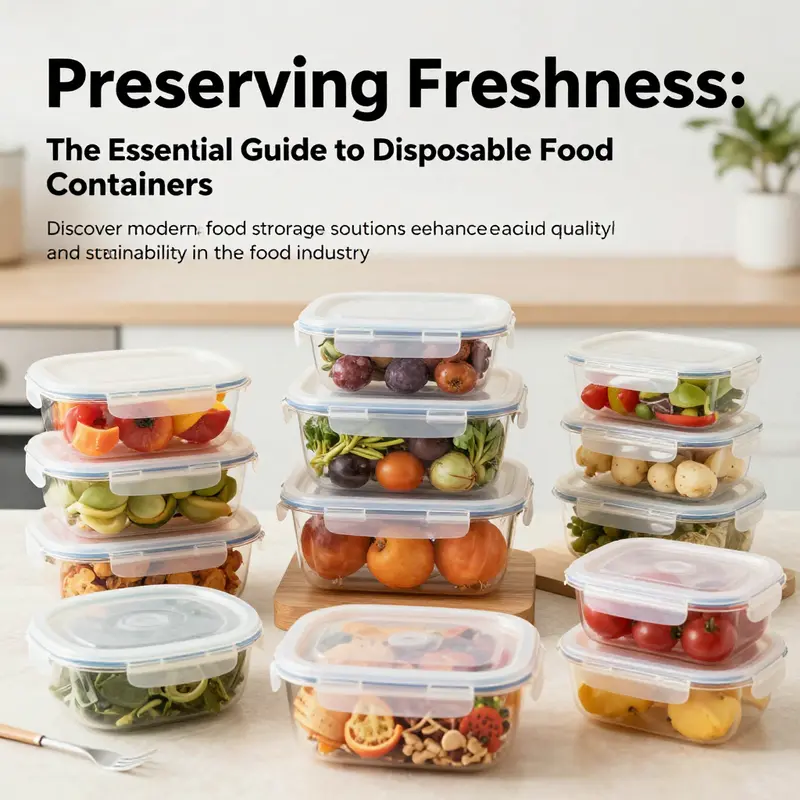
In today’s culinary landscape, maintaining food quality and freshness is paramount, especially in bustling environments like bubble tea shops, restaurants, food trucks, and catering services. Disposable airtight food containers have emerged as a pivotal solution for businesses aiming to streamline their operations while ensuring customer satisfaction. These versatile containers not only keep food secure and fresh but also cater to a growing demand for sustainability. This article delves into the functionality and design of these innovative storage solutions, explores the materials used and their impact on the environment, examines commercial applications across various food service sectors, and highlights current market trends and consumer preferences that are shaping the future of food storage.
Sealed for Freshness: The Quiet Engineering Behind Disposable Airtight Food Containers

Airtight disposable food containers are not merely vessels; they are the unsung engineers of modern food logistics. They shape how quickly we can move meals from preparation to plate, how safely we can transport soups through crowded hallways, and how reliably a single lid can preserve texture, aroma, and color. At first glance, a disposable container may look simple—a plastic tub with a lid. Yet behind that simplicity lies a deliberate architecture designed to minimize air exposure, prevent leaks, and reduce contamination. The core idea is straightforward: seal the contents away from the air and moisture that drive staleness and spoilage. The outcome is a practical, hygienic, and portable solution that aligns with the needs of meal prep operations, corporate catering, and even high-demand delivery services. In this context, the containers function as the quiet infrastructure of time and trust, a dependable middleman between kitchen craft and consumer experience. They enable portions to travel intact, meals to reheat and serve efficiently, and food to be shared without the risk of cross-contact or mess. The result is a system that supports speed without sacrificing safety, flexibility without needless waste, and consistency across a spectrum of foods, from delicate salads to hearty stews. The science of this design begins with the seal itself. An airtight lid is not a luxury; it is an essential feature that determines how long a product retains its moisture balance, how resistant it is to spills, and how well it withstands temperature swings. In disposable formats, lids are typically molded from durable plastics, chosen for their balance of rigidity and lightness. While some culinary applications explore glass or stainless-steel possibilities, the bulk of disposable options rely on polymeric materials that can be produced in high volumes, enabling broad distribution and reduced per-unit costs. The seal depends on a combination of a tight cap, a well-mated groove, and sometimes a gasket that fills micro-gaps. The engineering here is not about creating a single perfect seal but about delivering a reliable performance across countless cycles of opening, closing, refrigeration, reheating, and stacking. The ordinary act of twisting a lid becomes a repeatable ritual that keeps products intact, which is especially important in busy settings like catering kitchens or on-site food trucks. Yet the value of airtight containers extends beyond protection from leaks. The environmental conditions inside the container—the balance of oxygen and moisture—greatly influences freshness. When air contact is minimized, dry items stay crisp longer, and moist items are shielded from rapid condensation that can dilute flavors or encourage spoilage. This is why the materials chosen for these containers matter as much as the seal itself. Polypropylene and polyethylene are common workhorses, favored for their temperature resilience and availability in a wide range of shapes and sizes. They handle the temperature demands of typical office lunches and cold-chain transport, and many are rated to withstand some reheating in a microwave. Nevertheless, a clear caveat accompanies the convenience: not all disposables are microwave- or oven-safe. The heat sensitivity of certain plastics means users must check product specifications before reheating, to avoid warping, leaching, or unsafe handling. Such cautions underscore a broader truth about disposable packaging: convenience must be balanced with appropriate use. When a container is intended for reheating, the design may incorporate higher heat tolerance, vented lids, or materials explicitly tested for microwave compatibility. In other cases, the container remains excellent for cold storage and cold transport, while hot meals are transferred to microwave-safe receptacles before serving. The design language here is prudent and purposeful. Visual transparency is a defining feature of many disposable, airtight containers. Clear, see-through lids or walls enable quick identification of contents without the need to open the container. In fast-paced kitchens, this visibility reduces handling time, supports portion control, and speeds throughput. It is a small but meaningful improvement in workflow, especially in environments where countless boxes move through storerooms and walk-in freezers. Alongside transparency, many containers embrace modularity through compartmentalization. Removable dividers allow chefs and meal-prep services to separate different components of a single meal. This capability simplifies portion control, preserves the individuality of side dishes, and helps maintain texture by preventing contact between wet and dry elements. For units designed for multi-dish service, the ability to segregate sauces, grains, and proteins becomes a practical advantage rather than a mere convenience. The physical footprint of these containers often emphasizes lightweight yet durable construction. The use of polymers such as PP or PE contributes to a balance between stiffness and resilience. This balance allows containers to resist crushing under moderate loads, to stack securely for transport and storage, and to resist deformation when chilled or frozen. Lightweight materials also translate into lower shipping weights and reduced energy consumption in distribution chains, a detail that increasingly matters to operators seeking efficiency without sacrificing reliability. Yet there is a tension at the heart of disposable packaging: the trade-off between disposability and sustainability. The industry has responded with a spectrum of options. On one end, traditional plastics remain widespread due to cost, performance, and infrastructure compatibility for recycling streams. On the other, newer materials and manufacturing approaches explore molded fibers, bagasse, bamboo, or cornstarch-based composites that promise compostability or easier end-of-life processing. These sustainable alternatives aim to preserve the airtight performance while addressing concerns about plastic waste. The challenge for practitioners is to choose containers that align with their environmental goals and their operational realities. Compostable or biodegradable options introduced into the workflow must still deliver a reliable seal, maintain food safety, and survive the rigors of transport from kitchen to consumer. The shift toward eco-friendly designs often involves trade-offs, such as slightly reduced shelf-life performance under certain conditions, or a different set of temperature tolerances. In practice, therefore, sustainability considerations require a careful reading of product specifications, a clear understanding of end-of-life processing in a given jurisdiction, and a willingness to adapt supply chains to new materials when appropriate. The conversation about materials naturally leads to a broader discussion of durability and reliability. Disposable containers, by definition, are designed for a single or limited number of uses. This single-use orientation is not an accident; it reflects the economics of mass manufacturing and the demands of high-volume catering and takeout services. But durability remains essential. Containers must resist leaks, prevent spills, and maintain structural integrity through freezing, refrigeration, transport, and occasional exposure to heat. Softening, warping, or lid loosening can undermine the trust that food-service operators place in their packaging. The best designs anticipate these risks with robust lid-locking mechanisms, precise tolerances, and well-mugged sealing surfaces. Of course, a practical system also considers the human element—the customer who handles, opens, and consumes the product. The easier a container is to open, close, and stack, the more consistently it performs in real-world settings. A good design reduces the likelihood of user error, decreases handling time, and supports a smoother hand-off from kitchen to consumer. This is where user experience and engineering converge. In addition to basic features, manufacturers increasingly offer containers with specialized attributes. For instance, certain lids may include venting options to reduce pressure build-up when hot sauces or stews are transported. Others offer removable dividers, enabling easy reconfiguration for different meals throughout the week. Some designs incorporate color-coded lids or markings to facilitate quick identification of contents or dietary categories. All of these refinements, while seemingly small, contribute to a more reliable and efficient service model. They enable operators to scale up their packaging operations without sacrificing quality, safety, or speed. The practical implications of these design choices ripple through the supply chain. In meal-prep operations, standardized sizes and shapes streamline assembly, labeling, and inventory management. In corporate cafeterias or school settings, predictable portion sizes help with budgeting and nutritional planning. In catering and event settings, strong leak resistance and secure lids protect both the food and the presentation, particularly when moving trays across venues or loading distribution vehicles. Bulk packaging—such as 24-count sets or larger cartons—further enhances cost efficiency, enabling small businesses to access essential packaging at a reasonable price while offering large institutions predictable procurement cycles. The interplay between form and function in disposable airtight containers is, therefore, a study in balance. The most effective solutions harmonize seal integrity, user-friendly design, material performance, and thoughtful considerations of sustainability. In that balance, one can find the practical realities of a fast-moving food ecosystem: containers that keep meals fresh, containers that travel well, and containers that support safe handling from kitchen bench to customer hand. For readers who want to see concrete examples of how these design principles translate into real-world packaging choices, a representative catalog illustrates how transparency, compartmentalization, and robust sealing converge in a single product family. senang02-disposable-eco-friendly-kraft-box-boat-shape-pla-coated-custom-packaging-for-fast-food-cookie-sugar-tray offers a helpful glimpse into how eco-friendly kraft packaging can be configured for fast-food contexts while maintaining the integrity of the contents. senang02-disposable-eco-friendly-kraft-box-boat-shape-pla-coated-custom-packaging-for-fast-food-cookie-sugar-tray. This example points to a broader trend: suppliers are increasingly blending performance with sustainability, turning everyday containers into small but meaningful acts of environmental responsibility. To connect these ideas to the literature and practice of the field, researchers and practitioners can consult foundational analyses that distill the structure, grades, and application benefits of disposable food containers. The underlying research notes how the combination of airtight lids, compatible materials, and practical features supports not only freshness but also logistics efficiency across diverse settings. External benchmarks emphasize the importance of choosing materials that meet safety and regulatory expectations while aligning with sustainability goals, a balance that continues to guide product development and procurement strategies. For those exploring the technical literature on container design and performance, a detailed scholarly resource provides a comprehensive map of the key grades, structure, and application benefits that shape how these containers are built and used in food systems. https://www.google.com/search?q=Understanding+3pcs+Disposable+Food+Container+Key+Grades+Structure+and+Application+Benefits&source=hp&ei=9KjQZ5u1JfS70PEP4p2L-AI&iflsig=ALs-wAMAAAAAZxHdYgD6mT8oWvEeVXyKqFbRlZGcN5Ow&ved=0ahUKEwjA6c3k4a2IAxWhiM4JHep9C5oQ6AEwAHoECAEQAg
Material Choices and Sustainable Pathways for Disposable Airtight Food Containers: Safety, Performance, and Environmental Responsibility

In the balance between convenience and conscience, disposable airtight food containers occupy a pivotal place. They are more than mere vessels; they are interfaces between ingredients and people, between stable meals and mobile lives. The choice of material shapes not only how well a container preserves flavor, texture, and safety, but also how it intersects with waste streams, recycling systems, and the broader goals of sustainability. To understand the current landscape, it helps to start with the core materials that have come to define this category, and then to trace how each option meets or challenges the demands of safety, heat resistance, and environmental responsibility. At the center of this discussion lies a practical truth: every material brings a set of trade-offs, and the most responsible choice depends on the intended use, the supply chain, and the end-of-life route envisioned by the user or the operator.
Polypropylene, commonly labeled as PP, dominates the mainstream market for airtight, disposable containers. Its popularity rests on a combination of resilience and versatility. PP can withstand repeated temperature fluctuations, with heat resistance typically cited around 100–120°C. This makes it a reliable candidate for hot foods and, when the product is explicitly marked as microwave-safe, for reheating meals directly in the container. The ability to tolerate such temperatures without deforming or leaking is not merely a convenience; it reduces the steps between cooking, packing, and serving, a precision that is crucial for meal-prep services and quick-service operations. Yet, this performance comes with caveats. The term microwave-safe, when applied to PP, hinges on proper labeling and the absence of certain additives or films that could complicate heating. Without explicit guidance, users risk exposing materials to conditions outside their tested range, which can compromise both safety and integrity.
Other plastics frame the conversation with a different set of capabilities and concerns. Polystyrene, particularly in foam form (EPS), has historically offered cost-effective insulation and rigidity, but it generally performs poorly under heat. Its structure may soften or degrade when confronted with hot liquids or acidic foods, and there have been ongoing concerns about chemical leaching under higher temperatures. Polyethylene terephthalate (PET) shares some of these high-temperature cautions. While PET offers strength and clarity, it is not typically the material of choice for hot-fill or reheating applications when used as a single-layer barrier, and its safety profile depends on the presence of barrier coatings and how it is processed in the final product. In practice, the safety discourse around these plastics is nuanced. Regulatory bodies, like the Hong Kong Food Safety Centre cited in contemporary guidelines, emphasize that risk is mitigated by using compliant products and by adhering to temperature and acidity specifications set by manufacturers and regulators. The overarching message is not a blanket prohibition, but a demand for informed use—read the labeling, respect the intended temperature range, and avoid mixing materials in ways that bypass the safeguards engineered into specific designs.
A second thread in the material story is the growing attention to sustainable alternatives that aim to decouple disposability from environmental impact. Bagasse, a byproduct of sugarcane processing, has moved from niche novelty to a mainstream option in many eco-conscious kitchens. Bagasse-based containers are typically strong, rigid, and capable of withstanding a fair degree of moisture and heat, though their heat tolerance and resilience can vary with thickness and processing method. These fibers can be molded into durable shapes that hold their form even when filled with dense or moist foods. Importantly, bagasse is renewable by design and is frequently marketed as compostable under industrial conditions. When such containers reach an industrial composting stream, the organic material can break down, leaving no persistent plastic residues behind. The environmental narrative here is not simply about biodegradability, but about aligning end-of-life with composting infrastructure, consumer behavior, and the upstream availability of certified facilities.
Paper and cardboard-based options enter the sustainability dialogue with their own set of strengths and constraints. Paper- or cardboard-lined containers, sometimes reinforced with bio-based films such as PLA, can offer a lower overall footprint compared with traditional plastics. They tend to perform well for dry foods and moderate-moisture items, and they often retain a natural aesthetic that appeals to consumers seeking sustainability cues. However, their heat resistance is generally more modest, and when used with hot or highly moist foods, they may require protective coatings or insulation to maintain performance. Coatings like PLA or other bio-based films can introduce compostability considerations, but they also add layers of complexity in recycling streams. The broader takeaway is that these materials can contribute to a lower environmental footprint, but only when the product design, use-case, and end-of-life disposal are harmonized with the realities of available composting or recycling infrastructure.
A practical way to navigate these material choices is to think in terms of end-of-life pathways and explicit safety assurances. BPA-free labeling has become a standard consumer expectation, reflecting concerns about potential xenoestrogen effects and the desire for safer packaging across layers of the supply chain. The emphasis on BPA-free materials often accompanies broader safety certifications and food-grade assurances. For many operators, this translates into a preference for materials with transparent safety narratives and tested performance under real-world conditions. Compostable and biodegradable materials present another appealing arc, but their real-world viability hinges on both cost and accessibility. Industrial composting facilities must be available and properly managed to realize the environmental upside. In the absence of such facilities, compostable materials can behave similarly to conventional plastics in the waste stream, raising questions about where and how disposal actually occurs.
These material selections also intersect with the design and manufacturing realities of disposable containers. The airtight seal that characterizes these products—whether achieved through snap-fit lids, gasketed rings, or clever interlocking geometries—depends on material properties such as surface finish, rigidity, and the ability to form resilient seals. PP’s rigidity and surface characteristics support reliable sealing, but the sealing system itself plays a critical role. Even a perfect polymer can fail if the lid geometry is flawed, if the gasket degrades over time, or if the product is subjected to repeated heating and cooling cycles that promote micro-cracking or warping. For fiber-based and compostable options, achieving a robust airtight seal that rivals plastic can pose a different challenge. Natural fibers can absorb moisture and swell, altering the pressure dynamics that keep air out. When these materials are used with coatings, the coatings themselves introduce new variables, such as barrier integrity, migration potential, and the environmental trade-offs of the coating chemistry.
A nuanced view emerges when safety, performance, and sustainability are considered in concert. The Hong Kong Food Safety Centre’s guidelines offer a framework for evaluating risk in this space. They underscore that the safe use of disposable plastic containers depends on aligning temperature, acidity, and labeling with what the product is designed to handle. The emphasis on proper usage is not a restriction for its own sake; it is a practical safeguard that helps prevent the unintended consequences of misapplied materials—for instance, heating a non-microwave-safe container with hot or acidic foods or using a low-quality, non-certified product that may leach or warp under stress. Consumers and operators alike benefit from clear labeling that communicates not only safety but compatibility with reheating, freezing, and storage conditions. In this sense, the lifecycle of a disposable airtight container flows from material choice to production standards, to labeling, to consumer behavior, and finally to end-of-life management.
Beyond the material properties and safety signals lies the broader question of sustainability strategy. For many businesses, the path forward involves balancing cost, performance, and environmental impact. Bagasse and paper-based options often appeal to brands seeking to demonstrate environmental stewardship without sacrificing structural integrity or user experience. Yet the reality remains that plastics will retain a role where extreme moisture barriers, high heat resistance, or ultra-lightweight designs are required at scale. The industry’s challenge, then, is to expand the repertoire of truly scalable, cost-competitive, and compostable or recyclable solutions. This means investing in better processing technologies, improving the availability of certified end-of-life facilities, and adopting design-for-disassembly practices that facilitate recovery and sorting downstream. The conversation is not merely about choosing one material over another; it is about engineering containers that can perform reliably during use and then exit the market in an environmentally respectful way.
The internal dimensions of this debate touch on real-world decision making for food-service operators and households alike. For food-service operations that move large volumes, the economic calculus often weighs durability, leak resistance, and shelf stability against waste management costs. An airtight container that endures a busy service window, resists leaks when transporting soups or sauces, and remains stable in a crowded commercial kitchen can offer meaningful savings over time. In such contexts, PP-based designs may be favored for their heat tolerance and reuse-friendly handling in some schemes, while in other scenarios, bagasse or paper-based options can deliver comparable performance with a credible environmental narrative that resonates with sustainability-minded customers. The key is transparency in labeling and design choices—and the readiness to communicate to customers how a given container aligns with their values and practical needs.
In practical terms, durability and performance must not be pursued in isolation from end-of-life realities. When a consumer or a business considers a switch to a more sustainable material, there is a chain reaction: production costs, supply chain readiness, and the availability of composting or recycling infrastructures all come into play. The packaging industry increasingly recognizes that the most responsible path is a portfolio approach. A mix of materials, each selected for a specific use scenario, can optimize both performance and environmental outcomes. For instance, a fiber-based container may be ideal for heat- or moisture-sensitive applications with moderate temperatures and shorter hold times, while a PP-based design may be better suited for higher-heat dishes or longer transit where a robust, leak-proof seal is essential. The challenge is not to force a single material onto all applications, but to tailor material choices to context while maintaining clear safety and disposal guidance.
From a lifecycle perspective, consumer guidance matters. Clear, accessible labeling on heat limits, microwave safety, and whether the container is certified compostable or recyclable helps all participants in the ecosystem make informed decisions. Education about where to dispose of fiber-based or compostable containers, and how to separate them from conventional plastics in recycling streams, can magnify the positive impact of these materials. The industry-wide move toward standardization in labeling, coupled with the growth of certified end-of-life facilities, holds promise for reducing contamination and improving recovery rates. In the absence of robust disposal infrastructure, the environmental advantages of compostable materials may be blunted, underscoring the need for coordinated policy, industry standards, and consumer participation.
To bring a concrete sense of how these materials translate into real-world choices, consider the idea of a mixed-material packaging system that prioritizes end-of-life compatibility. A bagasse-based container can provide rigidity, moisture resistance, and a credible composting profile for certain markets, while a PP-based option remains essential for high-temperature or highly demanding applications. The design challenge is to create containers that maintain airtight integrity across use cases, while also enabling efficient sorting and processing at the waste stage. This integrated approach—aligning material science with design, labeling, and disposal infrastructure—offers a credible path toward balancing the practical demands of food service with the imperative to reduce environmental impact.
For readers seeking a tangible example of the kind of materials conversation described here, a representative case is the bagasse-based, sugarcane-derived container family. These solutions embody the shift toward renewable feedstocks and compostable end-of-life outcomes. They illustrate how a product can deliver reliable performance while maintaining a credible environmental narrative. As with any material choice, the ongoing challenge is to ensure compatibility with food safety standards, to provide clear usage guidance, and to support consumers and operators through a transition that values both quality and responsibility. To explore one practical instance of this material path, you can review a catalog entry that highlights bagasse-based, self-erecting lunch-box designs suitable for sushi or other takeaway items. The anchor text for this reference is derived from the URL itself, and it points to an example of how fiber-based systems are being crafted for real-world service.
Ultimately, the future of disposable airtight food containers will hinge on how well the industry integrates material science with environmental stewardship. The most effective solutions will be those that do not ask users to compromise between safety and sustainability but instead deliver durable performance while enabling responsible disposal. As researchers, designers, and operators continue to refine formulations, coatings, and production processes, the story of these containers becomes less about a single material and more about a resilient, context-aware material ecosystem. In that ecosystem, polypropylene remains indispensable for many hot- and cold-application needs, while bagasse, paper, and other bio-based options bring compelling environmental advantages when paired with appropriate end-of-life pathways. The resulting landscape is one in which airtight performance, food safety, and environmental responsibility are not competing priorities but complementary dimensions of a thoughtfully engineered packaging system.
External reference: For a detailed overview of recognized safety guidelines and usage considerations, see the Hong Kong Food Safety Centre guidelines on disposable plastic food containers and related use recommendations. These resources help anchor material choices in real-world safety and regulatory practice, guiding both product developers and end users toward safer, more sustainable outcomes.
Internal reference: For a tangible example of bagasse-based packaging options in practice, you can explore a representative product entry framed around a bagasse sugarcane-based lunch-box system. This link provides a concrete illustration of how renewable materials are being translated into ready-to-use take-away packaging, with emphasis on strength, compostability, and practical handling in service environments. https://cupbowlpack.com/product/bagasse-sugarcane-biodegradable-self-erecting-lunch-box-for-sushi-snacks-3-4-5-compartment-takeaway-food-tray-15g-30g-50g/
External resource: https://www.foodsafety.gov.hk/eng/food-safety/2436.htm
Preserving Freshness at Scale: The Critical Role of Disposable Airtight Containers in Commercial Kitchens

When a kitchen serves hundreds or thousands of meals in a single day, the container that travels with the food becomes part of the product itself. The chapter on disposable airtight food containers reveals a quiet but essential truth: the journey from kitchen to consumer is as shaped by packaging as by recipe. In commercial settings, the interplay between hygiene, temperature maintenance, and logistical efficiency hinges on a single, pragmatic breakthrough—an airtight seal that guards against the wear and tear of time, handling, and transit. This is not merely about keeping food from spilling; it is about preserving texture, aroma, and safety in a chain that stretches from prep station to service staff to the plate in the customer’s hands. The containers that achieve this balance do so through careful material choices, thoughtful design, and an understanding of the diverse demands across industries, from high-velocity delivery to the controlled environment of hospitals and hotels.
At the heart of these containers is the airtight seal. The seal minimizes exposure to air and moisture, which are often the silent accelerants of quality loss. In hot meals, moisture can cause sogginess and thus dull the crispness of components such as fried items or roasted vegetables. In cold dishes, exposure to air can lead to drying or condensation that rearranges texture in ways customers notice. An airtight system, therefore, is not a luxury; it is a baseline for maintaining product integrity from the moment the lid clicks shut until the moment of consumption. The science behind this is practical. Materials chosen for these containers are selected for their stability under thermal stress and their ability to maintain a tight seal under repeated use in a busy environment. Polypropylene, a common choice for its balance of clarity, rigidity, and resistance to heat, can withstand reheating cycles and freezing conditions without compromising the seal. For applications where insulation is a priority, some designs rely on foam-enabled construction to slow the exchange of heat with the surrounding environment, helping to sustain a meal’s intended temperature through the length of its journey. In urban delivery contexts, where transit can be unpredictable, such insulation is a critical risk mitigator, turning uncertain travel times into predictable dining experiences for customers who expect meals to arrive hot, or at least at a safe and appealing temperature.
Beyond the physics of heat and moisture, the practical utility of disposable airtight containers lies in their ability to simplify operations. In fast-food and quick-service environments, these containers become a tool for consistency. Staff can prepare meals ahead of time, portion with accuracy, and seal with confidence, knowing the seal will hold under the vibrations of a delivery bicycle or a crowded catering event. The leak-proof dimension of the design matters as well. Liquids—soups, gravies, sauces—pose a unique challenge; a robust lid with a secure gasket prevents leaks that would otherwise complicate transport, contaminate bags, or create safety hazards for couriers. In catering and event management, where large quantities move through multiple hands and surfaces, the reliability of a single container to prevent spills can dramatically reduce the risk of contamination and the need for mid-service cleanup. Food display containers with airtight seals also preserve visual appeal, keeping foods looking fresh for longer while remaining shielded from environmental exposure and microbial intrusion. The more dependable the container, the more predictable the dining experience becomes for guests and clients alike.
Material choice also informs temperature versatility. While polypropylene supports reheating in microwave ovens and safe freezer storage, not all disposable containers share the same capabilities. Some models rely on foam insulation or other barrier solutions that excel at retaining heat but may have limits on microwave safety. Others prioritize sustainability, offering compostable or molded-fiber alternatives derived from bagasse, bamboo, or cornstarch. These eco-conscious options respond to an industry-wide push toward responsible packaging without sacrificing performance. Users should, of course, consult product specifications to verify reheating compatibility, seal integrity, and disposal pathways. The growing adoption of sustainable materials does not dismantle the core requirement of a reliable airtight seal; rather, it broadens the toolkit for operators seeking to balance operational efficiency with environmental stewardship.
In healthcare settings, the stakes are even higher. Hospitals and care facilities rely on disposable airtight containers to deliver patient meals that stay within safe temperature ranges while remaining free from cross-contamination. The controlled environment of a hospital tray means that a single secure seal can prevent cooling or warming inconsistencies from affecting patient comfort or safety. In hospitality, particularly within hotel operations and room service, the same principles apply: a hygienic, leak-proof, and microwavable-capable container supports an experience that feels seamless to guests who expect convenience alongside quality. The design language in these contexts emphasizes durability paired with ease of use. Hinged lids, precise snap fits, and occasionally gasket-assisted seals help staff work quickly while ensuring that a high volume of meals travels from kitchen to table without degradation.
The advantages extend into the realm of logistics. Disposable airtight containers enable a scalable approach to meal preparation and distribution. In a fast-paced kitchen, losing time on cleaning and sanitizing reusable dishes translates into delays and increased labor costs. Single-use solutions reduce those burdens by offering a hygienic, ready-to-serve option that aligns with strict sanitation protocols. This is especially valuable in settings like catering operations and large-scale event catering, where the ability to transport, reheat, and present meals with minimal handling creates a smoother workflow and a lower risk of cross-contamination. The economic logic often rests on bulk packaging and predictable unit costs, which makes these containers attractive to both small food-service outfits and large institutions. The availability of bulk packs—think standard counts per case—simplifies inventory planning and budgeting, easing the pressures of scale while maintaining consistent performance.
Sustainability considerations have evolved from a peripheral concern to a central axis of decision-making. The market now features a spectrum of materials that address the competing priorities of performance, cost, and environmental impact. While traditional plastics such as PP and EPS remain prevalent for their thermal efficiency and durability, there is a growing place for molded-fiber and biodegradable formulations made from bagasse, bamboo, or cornstarch. Compostable options offer a path to reducing end-of-life waste, particularly for venues with established composting streams or for segments of the market that aim to minimize landfill footprint. Yet this shift also introduces new caveats. Not all disposable containers are microwave- or oven-safe, and some materials may have compostability requirements that differ from regional waste-management infrastructures. Operators must weigh the full lifecycle implications of their packaging choices, including how the container is produced, used, and disposed, and ensure that end-of-life handling aligns with local policies and consumer expectations.
Despite these evolving materials and forms, the core idea remains unchanged: airtight containment is a driver of quality and safety across commercial food environments. This is especially true in sectors where hygiene and temperature control are paramount, such as healthcare facilities and hospitality operations, as well as in the high-throughput world of fast-casual and catering. The ability to stabilize a meal’s conditions through the procedural rigors of a supply chain—preparation, packaging, storage, transport, and service—turns what could be a fragile supply chain into a reliable system of delivery. The containers become a critical interface between the kitchen team and the customer, translating culinary intention into a stable and respectful dining experience.
From a design perspective, this reliability emerges from a combination of precise tolerances and robust sealing mechanisms. The most effective containers deliver not only a snug fit but a resistance to the mechanical stresses of everyday handling—slips, knocks, stacking, and moving through busy service lines. Some designs incorporate venting strategies for steam-prone items, while others favor snug, single-piece constructions that minimize crevices where bacteria might accumulate. The shapes vary as well, with round and rectangular formats remaining common, and more premium variants adopting octagonal or other geometries that optimize space in stacking scenarios or on display shelves. The overall effect is a system that supports speed and consistency, ensuring that each meal travels a predictable path from the kitchen to the plate.
Incorporating a practical example helps ground these ideas in everyday operations. For an example of eco-friendly kraft-based take-away packaging with an airtight seal, see this option: kraft-paper-octagonal-bowl-pet-lid-waterproof-eco-friendly-disposable-customizable-snack-pet-food-salad-containers-1l. While it highlights a particular form factor, the underlying considerations apply broadly: durability, seal integrity, user-friendliness, and compatibility with waste streams. The intent is to illustrate how a single packaging choice can embody the convergence of performance, sustainability, and operational practicality in a commercial setting.
Together, these threads—seal integrity, material behavior under temperature stress, leak resistance, and lifecycle considerations—compose a framework for selecting disposable airtight containers that align with strategic goals. A company focusing on speed and volume will prioritize containers that consistently seal under frequent use and are compatible with reheating or cold presentation. A company with a strong sustainability mandate will favor compostable or bio-based options, while ensuring that these choices do not compromise safety or customer perception. In all cases, the choice of container is a decision about reliability and responsibility. It is about balancing the immediate needs of service with the longer-term aspirations of waste reduction, labor optimization, and reputational integrity.
The collective result of these trends is a packaging ecosystem that supports a more resilient food-service landscape. When kitchens are able to deliver meals that maintain temperature and freshness, with minimal risk of leaks or contamination, the customer experience improves. Staff can operate with greater efficiency, knowing that the container will perform as needed from the moment the lid is closed to the moment the meal is enjoyed. And operators can more confidently connect their operational decisions with sustainability objectives, selecting materials and designs that align with broader environmental commitments. The net effect is a more predictable, safer, and more satisfying dining experience—one in which packaging, though often invisible, plays a starring role in quality.
External resource for deeper technical context on the composition and industrial applications of disposable food containers can be found here: https://www.researchgate.net/publication/398752640DisposableFoodContainersSCompositionClassificationandIndustrial_Applications
Sustainability, Sealing, and Shopper Priorities: Demand Drivers Shaping Disposable Airtight Food Containers

Market momentum for disposable airtight food containers now centers on two forces: sustainability and performance. Buyers no longer accept lightweight convenience as the only measure of value. They expect packaging that preserves food, reduces waste, and aligns with safety standards. This chapter traces how those expectations have reshaped product design, manufacturing, and procurement decisions, and offers practical insight into what consumers and businesses actually prioritize when choosing disposable airtight containers.
Consumer preferences are increasingly coherent and predictable. At the top of the list sits eco-consciousness. Shoppers, food-service operators, and corporate buyers have shifted from passive acceptance of single-use plastic. They want alternatives that break down responsibly or enter established recycling streams. This demand has translated into clear market pressure for materials such as molded fiber, bagasse, and other compostable substrates. These materials are often chosen because they pair perceived sustainability with functional benefits, like natural insulation and grease resistance. For operators who need extra durability, coated kraft paper or paperboard lined with food-safe barriers gives a balance between compostability and performance.
Yet environmental credentials no longer stand alone. Consumers want containers that work. Airtight seals, reliable lids, and leak-proof construction remain essential. A container that touts compostability but fails to stop a sauce from leaking will disappoint both customers and delivery platforms. As a result, manufacturers have prioritized hybrid approaches. They combine sustainable substrates with engineered lids or sealing technologies that mimic the protective performance of rigid plastic. This convergence of material science and mechanical design satisfies both ecological demands and functional needs.
Certification and safety sit at the intersection of these priorities. Buyers, especially enterprises and premium restaurants, require proof that a product is safe for food contact. Certifications from recognized bodies act as shorthand for reliability. They reassure purchasers about chemical migration, compostability claims, and overall compliance with food-safety laws. For biodegradable or bio-based containers, certifications provide credibility. Labels such as BPI compostable certification or equivalent third-party validators reduce buyer risk and support premium pricing. For companies exporting or supplying diverse markets, certifications aligned to regional standards simplify procurement and reduce regulatory friction.
Design innovation follows two parallel tracks: specialization and user experience. Specialized formats—compartmentalized trays, bowl-and-lid systems, and insulated containers—reflect a clear industry response to varied meal formats. Divided compartments keep dry and moist elements separate. Raised rims and gasket-style lids secure liquids and condiments during transit. Insulated double-wall designs maintain temperatures for extended periods. These features speak directly to modern food delivery models where transit times can be unpredictable and multiple-temperature meals are common.
Meanwhile, manufacturers refine the user experience. Easy-open lids, stackable bases, and transparent windows for visibility are subtle improvements that translate into measurable gains. For consumers, those touches signal convenience and care. For brands and operators, they reduce complaints and return logistics. The overall effect is a market where perceived quality is shaped as much by fit-and-finish as by raw material claims.
Price sensitivity remains real, but it is more nuanced. Many buyers now accept a higher price for demonstrable benefits. Restaurants that must guarantee a spill-free meal will pay more for leak-proof lids. Corporate caterers balancing large-volume budgets and sustainability targets will pay a premium to meet both. At the same time, budget-conscious segments, like cafeterias or casual takeout, still prioritize cost-per-unit and predictable supply. The market therefore bifurcates: one stream prioritizes cost-efficiency, the other prioritizes performance and sustainability. Successful suppliers manage both through tiered product lines and scalable manufacturing.
Commercial scalability and logistics play a major role in adoption. For high-volume operations, the cost of staff labor and cleaning can outweigh single-use costs. Disposable airtight containers reduce dishwashing loads, staff hours, and cross-contamination risk. They also simplify back-of-house workflows and speed up service. In delivery-heavy environments, consistent container dimensions improve packing density and reduce transport incidents. The predictability of disposable containers simplifies inventory planning and reduces dependency on fragile returnable systems.
Retail and food-delivery marketplaces amplify buyer expectations. Customer ratings and feedback quickly reveal packaging shortcomings. A single leak or soggy order can damage a reputation. As a result, procurement teams increasingly treat packaging as a component of the product experience. This mindset elevates airtight containers beyond mere containment. They become a brand touchpoint, affecting repeat business and reviews. Thoughtful packaging thus yields returns in customer loyalty and brand perception.
Material choices now factor in entire lifecycle thinking. Buyers evaluate manufacturing energy, end-of-life pathways, and potential contamination of recycling streams. Bagasse and molded fiber offer clear benefits: they are made from agricultural byproducts and often compostable. Yet end-of-life infrastructure matters. Compostable claims require collection and processing to realize environmental benefits. Where municipal composting is absent, recyclable materials or reusable models may be preferable. Pragmatic buyers weigh local waste systems against product claims to ensure a genuine net benefit.
Performance expectations drive technical specification. For reheating or freezer storage, temperature resistance is essential. For acidic or oily foods, grease and moisture barriers are required. For liquids, lid sealing methods and precision molding ensure leak resistance. Transparent windows made of certified recyclable PET can give visibility without compromising recyclability if designed properly. Buyers increasingly request detailed technical data—thermal limits, barrier properties, and full composition breakdowns—so they can match containers to menu items and storage plans.
Manufacturers respond with clarity and modularity. They offer product lines oriented by use case. One line may focus on microwavable bowls with venting lids. Another prioritizes heavy-duty soup cups with secure locking mechanisms. A third emphasizes fully compostable sets for events. This segmentation makes decisions easier for buyers. It also reduces trial-and-error in live service.
For procurement teams, a few practical filters simplify choice. First, define service needs: will meals be reheated, held hot, or transported cold? Second, map waste infrastructure and sustainability goals. If composting is available, choose certified compostable substrates. If not, prioritize recyclable or lower-impact plastic alternatives. Third, require safety and performance documentation. Certifications and test reports protect against false claims. Finally, pilot products in live service before committing to bulk orders. Trials reveal real-world performance gaps that lab specs often miss.
Smaller design details carry outsized value. Custom printing and branding deliver marketing impact and enhance perceived quality. Embossing, matte lamination, and premium closures signal intentionality. For this reason, many food businesses use tailored printing and finishes to differentiate their takeaway packaging. But customization must be balanced against cost and production lead times. For short-run promotions or seasonal menus, off-the-shelf yet well-engineered containers provide a better balance.
Sustainability claims without verification are a liability. Greenwashing risks erode trust. Buyers increasingly expect full transparency on material sourcing, additives, and end-of-life recommendations. Clear labeling that explains disposal instructions reduces contamination of recycling and compost streams. It also helps frontline staff and customers make the right choices. Education thus accompanies product rollout, and many manufacturers now include disposal guidance directly on packaging.
Innovation will continue along three axes. First, materials science will yield stronger, thinner substrates with lower environmental footprints. Second, sealing technology will improve the reliability of compostable-lid systems. Third, modular designs will allow a single container system to support multiple menu formats. These developments will further blur the line between reusable robustness and disposable convenience.
For businesses evaluating suppliers, the current landscape rewards partners who blend credibility and performance. Prioritize vendors who provide safety certifications, run meaningful pilot programs, and show lifecycle thinking. Look for containers that meet the real-world demands of delivery and dine-out service, not just idealized lab performance.
One practical example of the sustainable-performance intersection is the increasing availability of bagasse-based bowls designed for microwave use. These products combine renewable feedstocks with functional heat resistance and a compostable end-of-life. For an example of such an option, see this natural sugarcane bagasse pulp salad bowl.
Finally, market forecasts underscore the direction. Growth projections show steady expansion in the broader food-storage arena, while airtight systems capture rising share. This signals opportunity for manufacturers who solve the twin problems of effective sealing and genuine sustainability. Buyers who align packaging choices with operational needs and local waste infrastructure will see the clearest gains. For those reasons, purchasing airtight disposable containers is now a strategic decision, not a mere procurement checkbox. (Source: Household Food Storage Containers Market Growth Analysis (2026): https://www.researchandmarkets.com/reports/household-food-storage-containers-market-growth-analysis-2026)
Final thoughts
Disposable airtight food containers represent a crucial innovation in the food service industry, balancing functionality, sustainability, and consumer demand. As businesses continue to embrace these containers, they not only enhance operational efficiency but also contribute positively to environmental efforts. By understanding the diverse applications and current market trends surrounding these containers, food service providers can position themselves for future success in a competitive landscape. Integrating the use of disposable airtight food containers not only ensures that your offerings remain fresh and uncontaminated but also resonates with a growing consumer base that values sustainability and quality.