
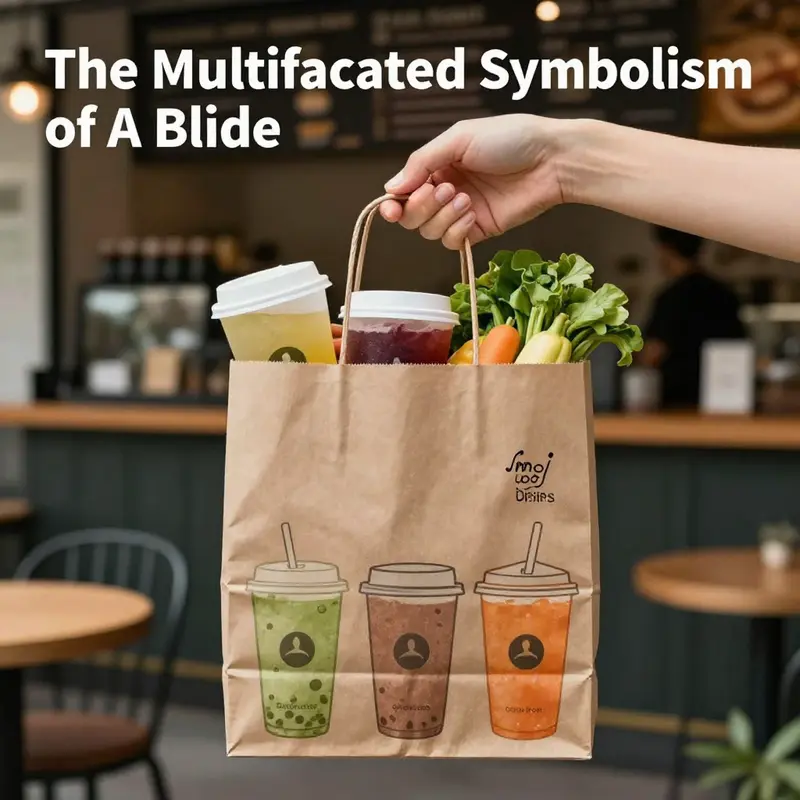
The image of a hand holding a paper bag is more than just a representation of goods; it encapsulates a world of consumerism, sustainability, and cultural narratives. For bubble tea shops, restaurants, food trucks, and event planners, understanding the visual and contextual significance of this image can enhance branding strategies and customer engagement. This article will delve into the visual diversity of this motif, its commercial applications in various service sectors, and its deeper cultural implications, providing a holistic perspective that can inspire innovative approaches to packaging and presentation.
Carrying Meaning: The Visual Language of Hands and Paper Bags in Modern Life

The image of a hand holding a paper bag is not merely a snapshot of an everyday gesture; it is a portable narrative that travels across scenes, markets, and screens, carrying with it a bundle of associations about value, care, and responsibility. In contemporary visual culture, this simple interaction has evolved into a versatile signifier that brands, artists, and platforms reuse to anchor messages around sustainability, human connection, and the tactile reality of commerce. A hand wrapped around a bag is more than a hold on a container; it is a quiet act of trust between a person and the things they have chosen to carry, an implicit promise that the contents will be treated with respect, and that the packaging itself participates in the story of accountability. From this small act springs a broad, almost cinematic vocabulary that designers mine to convey mood, status, and intention without saying a word.
The diversity of that vocabulary is striking. Photographs capture a spectrum of hands—adult and youth, male and female, across varying skin tones and ages—each holding a bag whose shape and material whisper different tones of meaning. A brown kraft bag with a rough texture might convey rustic warmth and craft, suggesting a product rooted in tradition and earth-friendly choices. A stark white bag, smooth and unbranded, radiates minimalism and purity, the kind of canvas that invites the viewer to project any number of brands or moments onto it. Color plays a crucial part as well; a bag with bold graphic prints can announce playfulness, energy, and contemporary design language, while a muted, understated pattern hints at sophistication and restraint. What matters is not only the bag but how the hand interacts with it—the way the grip presses or relaxes, the angle of the wrist, the openness of the palm—subtly guiding the viewer through a narrative of use and intention.
This spectrum of hand poses—grasping, cradling, lifting, resting—offers a kinetic grammar for visual storytelling. A tightly curled grip can imply procurement or possession, the moment of selection in a busy environment. A cradled bag, held close to the chest, evokes care and personal value, as if the purchase is more than a transaction and more like a gift or a token of affection. A bag lifted toward the light can become a stage for the material’s texture, the paper’s grain catching the sun and revealing fibers that signal environmental care. Even small shifts in posture—tilt, angle, or the distance from the camera—reframe the entire scene, shifting the emphasis from the contents to the gesture itself, from what is inside to what the act of carrying represents.
The bag, as a carrier, functions almost as a narrative device. Kraft paper evokes durability and utilitarian honesty; its natural hue and visible texture connect the hand to the material world in a tactile, almost celebratory way. White paper bags, often clean and crisp, introduce a sense of cleanliness, modern efficiency, and a blank space for branding to project its personality. Colorful bags—perhaps with floral patterns or geometric logos—turn the act of carrying into a statement of identity, a portable billboard that travels from store to street, from café counter to curbside pickup. In every case, the bag is not merely packaging; it is a surface onto which a brand imagines loyalty, a stage for social rituals like gifting, sharing, and receiving. The hand, in turn, becomes the conduit through which these social scripts are enacted and felt.
Beyond the aesthetic and commercial dimensions, there is a real-world resonance to these images grounded in sustainability and behavioral perception. The shift toward eco-friendly packaging is not simply a policy trend but a cultural moment that informs what viewers expect from everyday objects. A photo or illustration that foregrounds a paper bag’s texture, folds, and natural fibers can communicate a pledge of responsibility without preaching. The hand’s interaction with the bag becomes a quiet pledge to reuse, recycle, or repurpose, even in the absence of explicit textual messaging. This is not fear of waste but a confident, practical optimism about small everyday choices accumulating into larger ecological impact. The imagery supports a consumer mindset that values transparency, simplicity, and the tactile experience of material evidence—the way a bag’s weight, stiffness, or crumple tells a story about how it was made and how it will be disposed of.
Designers harness this language by experimenting with both photographic realism and graphic abstraction. On one end, realistic photography isolates hands and bags on clean backgrounds, often white, to emphasize form, texture, and composition. The isolation strips away context to reveal how a single object can embody a complete message: quality, care, and sustainability distilled into a mass-producible object. This approach is prevalent in retail and advertising where the goal is immediate clarity and emotional resonance. On the other end, vector illustrations provide scalable, high-clarity assets that remain legible across a wide range of media—from tiny app icons to large storefront banners. The flexibility of vectors means a brand can experiment with rhythm, proportion, and color without sacrificing legibility on any platform. The result is a visual continuum where the same core idea—hand and bag—can be presented in multiple tonalities, from earnest and organic to bold and stylized.
This diversity is not merely a stylistic preference; it is a strategic choice that mirrors evolving consumer expectations. In a marketplace saturated with images, authenticity and relatability become scarce commodities. The hand holding a paper bag offers a human bridge between production and consumption. Because the moment is artfully mundane, it feels accessible, trustworthy, and inclusive. The gaze of the viewer—invited by a natural hand posture and a familiar object—creates a space where viewers can project their own experiences: the café morning ritual, the bookstore detours, the bakery run, or the spontaneous gift exchange. It is in these everyday rituals that visual storytelling finds its most enduring power.
The visual ecosystem surrounding hand-holding paper bags also reflects broader shifts in how brands think about identity and consistency. In contemporary design, the bag becomes a brand extension, a portable surface for logos, textures, and messaging. The bag’s material choices—recycled fiber, unbleached pulp, or responsibly sourced paper—can be foregrounded to reinforce a narrative of ethical sourcing and stewardship. This is where the image transcends aesthetics and becomes a medium for values. A hand holding a bag with visible texture might be paired with a soft, natural light that communicates warmth and responsibility, while a bag with bold geometric prints may accompany sharper, high-contrast lighting to convey efficiency, modernity, and decisiveness. These choices are not arbitrary; they are deliberate decisions about tone, audience, and cultural moment.
The role of imagery in stock and design libraries further demonstrates how universal this motif has become. In practice, platforms that curate visual assets provide an array of hands of diverse skin tones and bag styles, acknowledging a global audience and the need for inclusivity in representation. The availability of multiple hand types, varying skin tones, and an assortment of bag forms supports the creation of campaigns that feel both local and universal. The result is a rich repository that designers can draw from to compose scenes that feel authentic to a range of cultures and contexts. The emphasis on diversity is not simply a matter of political correctness; it is a recognition that different viewers connect through different bodily cues and cultural cues. A hand that reads as direct and familiar in one cultural context may be perceived differently in another, and thoughtful image selection helps bridge those differences while preserving a shared human moment—the act of carrying something one has selected with intent.
To appreciate how this imagery translates into everyday experiences, consider the interaction between a consumer and a retailer’s packaging strategy. A paper bag can carry a whisper of a brand’s story through its texture, color, and form, even before the consumer prints a purchase or gift with a message. The moment of possession—the careful grip, the slight tilt to balance the contents, the subtle crinkle of the paper as it yields to pressure—suggests care and attentiveness. When a brand aligns its bag design with its environmental messaging, the handshake between product and purchaser becomes more than a transaction; it becomes a shared moment of values alignment. The hand’s gesture then functions as a social cue that reinforces the brand’s stance on sustainability without requiring explicit dialogue. In this way, the image participates in a broader ecosystem of consumer education and cultural normalization: recycling and reuse become ordinary, not aspirational, parts of daily life.
For designers and marketers, the practical implications of this visual vocabulary are manifold. The choice of bag style communicates the intended emotional texture of a campaign. Kraft bags with visible fibers signal grounded reliability and a human touch, suitable for artisanal, craft-oriented narratives. A clean white bag can set the stage for minimalism, sophistication, and premium positioning, particularly in contexts where the emphasis is on the product rather than the container. Colorful patterns extend the story into celebration, gifting, and social sharing, inviting playful engagement across platforms like social media where quick recognition matters. The ability to scale and adapt these visuals across formats—web banners, mobile apps, packaging proofs, and print collateral—depends on an understanding of how light, shadow, and texture interplay with the hand’s posture and the bag’s silhouette. In short, the hand and bag become a flexible, reusable narrative instrument that brands can tune to fit different campaigns, audiences, and moments in time.
To sustain this adaptability, practitioners increasingly turn to curated asset collections and standardized style guides that ensure consistency while allowing for variation. The inclusion of diverse hand models and an array of bag textures helps prevent fatigue and repetitive messaging. It also supports accessibility, ensuring that visuals remain legible across different devices and for people with varying perceptual needs. The result is a visual language that is both sturdy and supple: it can anchor a campaign with a sense of authenticity and then bend toward whimsy or seriousness as required. It travels well across contexts—retail windows, online storefronts, packaging prototypes, and editorial spreads—because it exploits a fundamental, shared human experience: the simple act of carrying something from one space to another.
In the design ecosystem, this concept often speaks to the tension between form and function. A paper bag’s form—its flat panels, its folds, its handles—becomes a three-dimensional stage for the human act of selection and transfer. The function is to protect, transport, and present; the form signals intention, care, and identity. When these elements are aligned in imagery, they reduce cognitive load for viewers. People instantly understand what they are seeing and what it means in the broader narrative of consumption and responsibility. This efficiency is valuable in fast-moving marketing environments where decisions are measured in milliseconds. The best images do not shout their meaning; they let the observer infer it through observation, experience, and cultural literacy. The result is a form of visual rhetoric that feels natural, inevitable, and honest.
Finally, it is worth noting how these images function as learning tools for new generations of designers and marketers. By studying the variety of hands and bags—their textures, colors, and the emotions their poses provoke—emerging professionals learn to read audience responses, to anticipate how different audiences will interpret the same gesture, and to craft visuals that guide interpretation without coercion. The repertoire grows richer as more voices contribute to its evolution, ensuring that the imagery remains relevant in a global market that values inclusivity, sustainability, and clarity. In short, the hand holding a paper bag becomes a microcosm of contemporary visual culture: a practical object loaded with meaning, a canvas for storytelling that respects both the viewer’s intelligence and the planet we share.
For readers who want to explore this visual vocabulary further, the paper-bags page on the design and packaging catalog offers a concise snapshot of how bag form and handle design translate into usable assets for campaigns. The evolution from hand-to-asset to brand statement is subtle yet pervasive, illustrating how even the smallest design decision can ripple through a broader communications strategy. The close-up look at bag textures, handle shapes, and color palettes reveals the care with which designers curate everyday objects to reflectCorporate memory and social values in a world increasingly attentive to how products are packaged, delivered, and reimagined as part of daily rituals. By paying attention to the quiet confidence of a hand that holds a bag, we glimpse how graphic systems, material choices, and cultural cues converge in a single, portable moment.
To ground these observations in practical resources, designers often seek authentic, versatile assets through curated collections that emphasize diversity, accessibility, and global appeal. The option to browse through a dedicated category—such as the product-category/paper-bags page—provides a structured starting point for teams building out campaigns, catalogs, and digital experiences. This approach supports a cohesive visual language that remains adaptable across channels while preserving an ethical and aesthetic standard. By linking the motif of the hand and the paper bag to a well-defined asset library, teams can ensure consistency without sacrificing variety, enabling faster iteration and more thoughtful storytelling.
In the broader arc of visual culture, the hand holding a paper bag remains a deceptively simple anchor that can carry complex narratives. It is a reminder that everyday objects are not neutral; they are vessels for memory, values, and social dialogue. The hand’s touch on the bag translates into trust, care, and belonging. The bag’s texture and color translate into identity, ethics, and choice. And the space between viewer and image—the moment of recognition when a familiar gesture clicks into place—transforms a routine act into a meaningful exchange. As designers, researchers, and practitioners continue to explore this motif, they will undoubtedly refine its ability to convey authenticity, connect with diverse audiences, and reflect a culture that increasingly prizes transparency and responsibility in the packaging of goods.
External reference: Freepik Hand Holding Paper Bag Vectors
null

null
Holding Memory: The Cultural and Historical Significance of Paper Bags in Everyday Life
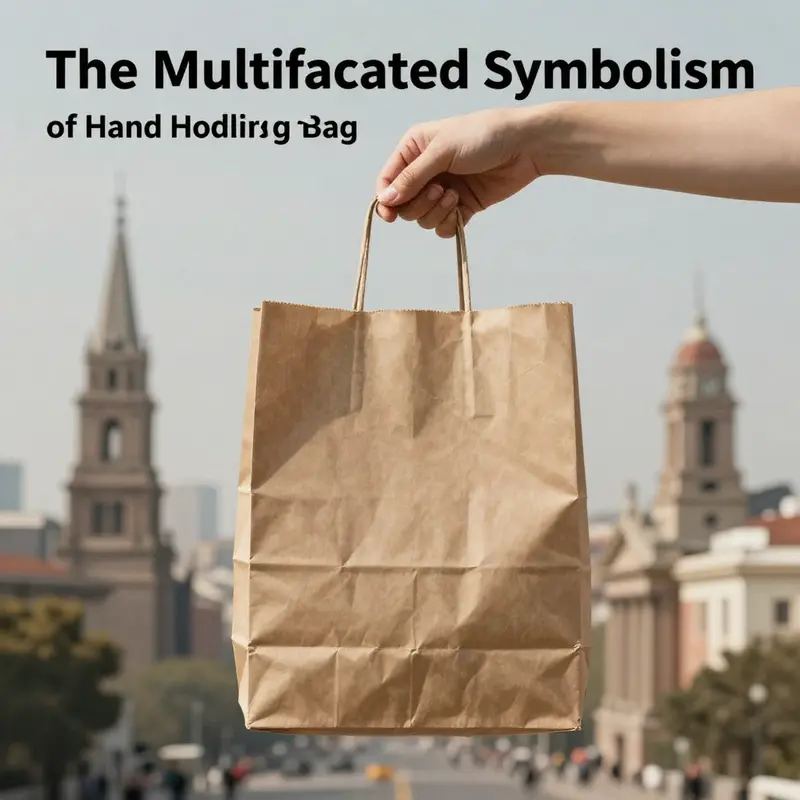
A hand holding a paper bag is more than a momentary transaction; it is a hinge between past and present, a small vessel that travels through time with the goods it carries and the stories it gathers along the way. The image looks simple, yet it concentrates a long arc of social change, from the hum of a shopfront to the memory that lingers after the bag is emptied. To look at a bag in the hand is to glimpse a folded history of retail transformation, design, memory, and belonging across generations. The hand becomes a proxy for the broader story of consumer culture with its ingenuity, aspirations, and rituals.
The late nineteenth century saw a practical pivot in everyday commerce as paper bags emerged to replace heavier, less portable options. Cloth and wicker bags had served as reliable carriers, but their limitations of bulk, weight, and cost became obstacles for a market expanding with department stores and the mass production economy. Paper offered a clean, light, and economical alternative that aligned with a new urban rhythm. The possibility of carrying multiple purchases in a single manageable package, the chance to walk home with a neatly arranged set of goods, and the idea of presenting a chosen possession in a modern form all converged in this shift. The bag did not appear in a vacuum; it was shaped by the channels of street life, the cadence of shopfronts, and the emergent celebration of convenience as a value in itself. The bag moved from mere utility to a small stage on which the daily drama of commerce played out.
As retail culture matured, the bag began to carry more than goods; it began to carry messages. The logos, typography, and color schemes printed on bags acted as an early form of branding that connected a shopper to a place and a story. Each bag became a portable advertisement, a micro billboard traveling from storefront to street and into households. In this way, the bag recorded the aesthetics and ambitions of its era. A bag stamped with a bold emblem conveyed a sense of prestige or playfulness; a more conservative design suggested practicality and reliability. These printed signatures turned bags into small cultural artifacts, revealing the visual language of a moment—the palette of popular slogans, the typographic sensibilities, and the tone brands aimed to project. They functioned not only as carriers but as carriers of taste, a way for shoppers to display alignment with a particular style or social milieu without uttering a word.
In contemporary discussions, the bag has increasingly become a mirror of values beyond simple consumption. The bag is described by some thinkers as a social and cultural record, not merely merchandise or packaging. This perspective reframes the bag as a mnemonic device, a tangible residue of urban life traced by the logos, messages, and textures imprinted on its surface. It captures a moment in the arc of a citys life — cafes, markets, pop up shops, and seasonal campaigns — creating a palimpsest of local economies and personal choices. The bag is thus not passive; it is an active witness to trends, identities, and relationships, a portable archive whose layers can be read by those who pause to examine its design, its wear, and the stories they evoke. The everyday act of carrying a bag becomes a quiet act of remembering, as if the bag itself has absorbed the atmosphere of the places it has visited, the conversations it has heard, and the tiny rituals that accompany a purchase such as receipt tucked in, corners torn, or a reusable fold.
In the rush of modern life, the bag sometimes slips into a more intimate role. It becomes a vessel of emotion, a receptacle for memories built around a particular cafe, a seasonal sale, or a gift. The psychological dimension of these memories is not trivial. A growing body of thought suggests that objects that accompany us through moments of joy, gratitude, and celebration acquire emotional resonance. Paper bags, with their tactile roughness, pliable folds, and subtle crinkles invite physical interaction—touch, squeeze, smooth, inspect—that strengthens the bond between sensation and memory. The ritual of placing a present inside a bag, or of preserving a bag as a keepsake from a special day, translates everyday commerce into a personal narrative. In this sense, the bag becomes a palimpsest of private life—an external repository for internal experiences, a portable scrapbook that travels with the owner through libraries, kitchens, and living rooms.
Across cultures, this symbolic potential expands further. In places where street life thrives on spontaneity and social exchange, the paper bag can stand as a marker of social practice: a shared code of generosity, a sign of a well-timed purchase, a quiet nod to sustainability when the bag appears again through reuse. The practice of collecting and cataloging bags transforms the object from mere artifact to collectible. This collecting is not simply hoarding; it is an act of preserving moments that would otherwise vanish with a receipt tape or a changed storefront. The bags carry stamped dates, event names, and unique typography that map a person’s experiences to places and occasions. In that sense, a bag captured in a photo becomes a tangible memory bank. It holds the scent of a cafe, the color of a storefront, and the sentiment of a moment, allowing the memory to be revisited with a sense of time travel that is completely ordinary in its occurrence yet profoundly sentimental in its effect.
The cultural significance of paper bags also intersects with cinematic representation. Film and television have frequently used the bag as a prop to signal a moment of transit or revelation. A bag carried across a border in a scene about travel may symbolize the tension between the familiar and the unknown. The bag presence in a bustling market can convey a cities vitality and the layering of economies and the proximity of strangers who become acquaintances, even if for a moment. The bag’s presence in cinematic space invites viewers to read it as more than a container; it becomes a narrative instrument, capable of shaping mood, pace, and even plot turns. The everyday object thus participates in storytelling at the level of gesture and posture, its physical form suggesting character and memory without a single spoken line.
This constellation of meanings—historical utility, branding, cultural record, personal memory, and cinematic instrument—constitutes the paper bag legacy. It is not merely a packaging choice but a social artifact whose form and function reveal how people move through markets, neighborhoods, and moments of celebration or routine. In a world increasingly oriented toward sustainability, the bag also embodies a discourse about responsibility and future facing choices. The shift toward eco friendly packaging reframes the bag identity from disposable convenience to a symbol of mindful consumption, a small everyday tool that invites reflection on waste, resource use, and the responsibilities we bear to future generations. This evolving identity is visible in the texture and weight of the bag, in the stubborn creases that speak of carry and reuse, and in the manners by which communities adopt and adapt its use to express values, aesthetics, and care for the environment.
For designers and collectors alike, the paper bag presents a fascinating field of study. It is an item that invites analysis at once practical and symbolic. Its dimensions, materials, and print processes tell stories about technology and craft, while its surface marks—scuffs, stamps, and wear—speak to social practices and economies. The bag simplicity hides a layered complexity: a product of industrial innovation, a canvas for graphic design, a stage for social ritual, and a relic that can be treasured long after its initial purpose fades. When approached with attentiveness, a hand holding a bag becomes an opening into a larger conversation about how people live with objects, how they assign meaning to ordinary items, and how those meanings shift as culture and technology evolve.
Within this wider discourse, the paper bag offers a tangible point of contact between past and present. It invites us to consider what we value in everyday life: efficiency, aesthetics, memory, sustainability, or some combination of all of these. It encourages us to see ordinary objects not as inert things but as participants in a living culture. The bag stands at the crossroads of commerce and intimacy, of public life and private memory, and it reminds us that even the simplest of carriers can carry a world of stories. As we learn to slow down and notice how a bag settles into the palm, how it bends to the contour of fingers, how it crinkles with a whisper at every turn, we begin to appreciate the subtle choreography that makes ordinary moments meaningful. In doing so, we honor not just a packaging choice but a cultural practice that has traveled through decades and across continents, from the halls of department stores to the quiet corners of personal memory.
For readers curious about the material culture surrounding this object, there is a spectrum of resources that charts its function and form. Designers and researchers alike can explore how bags function as design objects, how branding evolves with social trends, and how the act of holding a bag becomes a study in gesture, memory, and identity. The journey from a utilitarian container to a vessel of cultural memory offers a reminder that design is never neutral; it carries values, aspirations, and stories that outlive the moment of purchase.
Final thoughts
The symbolism of a hand holding a paper bag resonates across various contexts. For bubble tea shops, food trucks, and event planners, embracing the visual appeal, commercial potential, and cultural relevance of this image can lead to innovative branding solutions. By leveraging this simple yet impactful motif, businesses can enhance customer experience, reinforce sustainable practices, and create memorable brand narratives that resonate with their audience.