
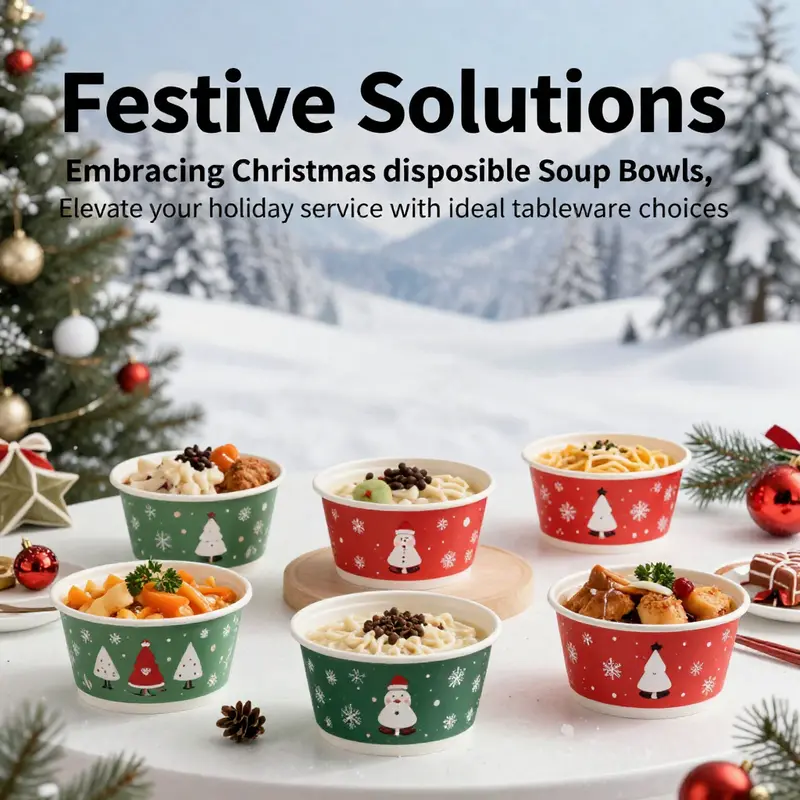
As the holiday season approaches, every detail matters in creating a memorable dining experience. Christmas disposable soup bowls offer the perfect blend of functionality and festivity for various businesses, from bubble tea shops to catering services. In this guide, we’ll explore the unique materials and designs that make these bowls a hit, current market trends and consumer preferences, their applications in catering and events, and effective sourcing strategies to enhance your holiday offerings. Each chapter provides insights and practical guidance tailored to help you make informed decisions about incorporating these versatile tableware options into your holiday celebrations.
The Festive Ring of Convenience: How Christmas Disposable Soup Bowls Merge Celebration, Comfort, and Practicality
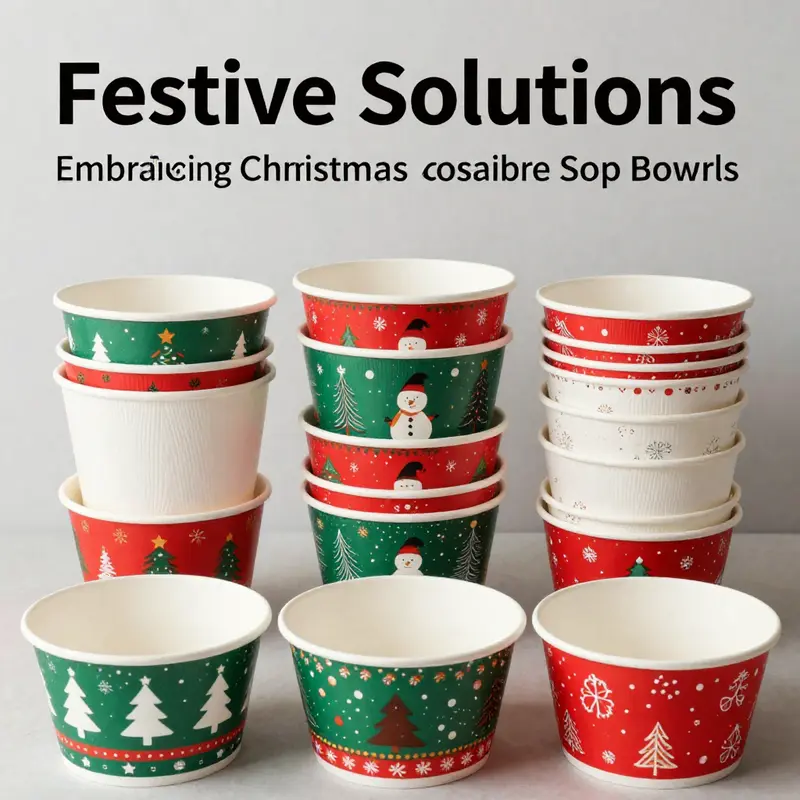
Christmas disposable soup bowls sit at an intriguing crossroads of holiday aesthetics and everyday practicality. They are not merely packaging; they are a small, deliberate stage set for gatherings where warmth, hospitality, and shared meals take center stage. The bowls’ appeal rests on a careful balance of form and function. They must hold up to the heat of a simmering soup, retain warmth long enough for a family to gather, and look festive enough to feel right at Christmas tables, potlucks, and community meals. In this sense, the bowls are as much a social cue as a cooking vessel. Their design choices—material, size, lid options, and decorative patterns—enable hosts to stage a moment of comfort without a heavy burden of cleanup or logistics. This is not simply about convenience; it is about enabling more space for conversation, more time for connection, and more confidence in hosting moments that can otherwise feel overwhelming during the holidays.
Material choices drive the core experience of these bowls. Paper-based options frequently draw strength from sustainable fibers and renewable reservoirs like bamboo, bagasse (the pressed pulp of sugarcane), or recycled paper. These variants are gaining traction because they align with a growing consumer demand for compostable, lower-impact tableware. The paper route is not a single story but a spectrum. Some bowls rely on a lightweight, liner-coated paper that keeps soups from soaking through, while others emphasize full compostability without sacrificing rigidity. The versatility of paper-based bowls makes them well suited to the seasonal rhythm of Christmas and Thanksgiving, when homes may host a mix of guests and courses.
Plastic bowls, by contrast, offer durability and a premium appearance that can mimic ceramic or porcelain. They are reliable in high-traffic settings: catering events, volunteer kitchens, or large family gatherings where the risk of breakage or chipping would complicate cleanup or service. Polystyrene and certain PET formulations provide heat resistance and a satisfying heft that helps soups feel substantial even when served in bulk. Yet these plastic options also invite careful consideration of environmental impact and end-of-life disposal, nudging hosts to weigh convenience against longer-term waste concerns.
The smallest details of construction—reinforced bases, smooth edges, and secure rims—are chosen to minimize leaks and maximize handling comfort. A well-built base reduces the chance of tipping when a bowl is cradled by both hands or set down on a crowded serving table. Smooth edges protect fingers while sipping and minimize drips that could mar a holiday tablecloth. For bigger meals where portions grow beyond a light starter, bowls in larger sizes often include more robust rims or even dome lids. The lids serve a dual purpose: they preserve heat and freshness and enable convenient transport for takeout or party-to-go meals. In homes and event spaces, the lid is not merely a functional add-on; it is a signal of care—an assurance that food remains hot and presentable as guests move from kitchen to table to living room to car.
The aesthetic language of Christmas disposable soup bowls is where the concept of a disposable object stretches toward remembrance and delight. Seasonal motifs—green and white plaids, metallic rims, lace-like trims, and delicate winter imagery—serve as a visual bridge between the familiar ritual of holiday meals and the clean, efficient logic of disposable tableware. These prints do more than decorate; they help frame the meal as a festive event, even when the setting is casual or hurried. When a host selects a bowl that carries a festive motif, it signals hospitality to guests and helps create a sense of occasion without requiring extra work beyond the usual cooking and serving.
Bulk packaging is another practical feature that makes Christmas disposable soup bowls attractive for both commercial and domestic use. It is common to find bowls sold in sets of 30, 50, or 60 units, making it easier to plan for generous portions and to manage inventory for longer celebration seasons. For caterers, weddings, or community events, the ability to pre-pack bowls in large quantities with consistent quality reduces the last-minute scramble that can derail holiday gatherings. The option to add logos, colors, or holiday patterns through customization further extends the utility of these bowls beyond simple containment. A family-hosted potluck can incorporate personalized branding through a custom color accent or a family crest, turning a practical item into a keepsake from the season. In a broader sense, customization transforms disposables from disposable to deliberately chosen elements of the event’s design scheme, reinforcing a cohesive look from entryway to dining table.
From the perspective of use cases, Christmas disposable soup bowls shine in a variety of settings beyond the home kitchen. They are a natural fit for event catering, where speed and reliability are as important as presentation. In a bustling catering operation, sturdy construction and reliable lids reduce the chance of spillage and temperature loss as multiple servings move between kitchen and venue. They also support takeout and meal kits, where guests appreciate a secure, heat-retaining package that keeps soup intact during transit. In emergency food distribution, the simplicity of a single-use container helps ensure hygiene and rapid turnover, enabling volunteers to serve warmth and nourishment to a large number of recipients with minimal cleanup. The temporary, festive appearance of the bowls also helps communities feel connected during the holidays, even when resources or time are constrained.
The design of Christmas disposable soup bowls is not neutral; it functions as a communication tool. The choice of material speaks to values—whether a host prioritizes compostability, durability, or perceived premium quality. The sizes selected align with social dynamics around serving styles, whether guests prefer refined portions in individual bowls or larger shareable servings for a family-style experience. The lids, often a practical necessity during transit or buffet service, also communicate a level of hospitality; they invite guests to take a moment to pause, appreciate the aroma of the soup, and anticipate the next bite without fear of spillage or cooling too quickly.
As we move through the season, the interplay between sustainability and celebration becomes increasingly visible. Paper-based bowls framed within compostable systems offer a path toward a lighter environmental footprint while preserving the social rituals that dinners and gatherings rely on. For hosts who want to balance this sustainability with the convenience of disposables, there are increasingly accessible options that emphasize recyclability, compostability, and responsible sourcing. The goal is not to abandon festive design or warmth but to harmonize them with evolving expectations around waste and stewardship. In other words, a Christmas meal can be festive, convenient, and considerate all at once.
For those who seek a concrete path to sustainability without sacrificing style, there is a notable option worth considering: eco-friendly kraft paper soup bowls with lids. These bowls embody a practical compromise between performance and environmental responsibility. They offer a sturdy, leak-resistant baseline that can handle hot liquids, while the kraft paper’s natural tones and minimalist finish provide a warm, rustic aesthetic that echoes winter gatherings. The lids add value for transport and buffet service, and the kraft composition supports composting or recycling streams where facilities exist. This approach allows hosts to maintain the tactile satisfaction of a hot bowl in a festive context while aligning with a growing demand for responsible consumption. eco-friendly kraft paper soup bowls with lids.
Beyond the immediate act of serving, Christmas disposable soup bowls prompt us to consider the broader ecosystem of holiday dining. They intersect with storage logistics, transport efficiency, and the lifecycle of materials. Storing bulk bowls requires careful stacking and protection to prevent deformation, especially for paper-based options that rely on moisture control. The ability to nest and stack without damage helps reduce logistics frictions for households and event teams alike. Transport considerations, too, come into play. Bulky accessories or heavy-duty lids demand careful handling in car trunks, kitchen pantries, or event spaces where space is at a premium. A well-designed bowl thus contributes to a smoother chain of custody from kitchen to table and back to disposal—minimizing mess and stress in a season already charged with activity.
From a cultural standpoint, these bowls serve as a microcosm of holiday pragmatism. Christmas invites warmth, abundance, and a sense of shared generosity. The disposable bowl, with its capacity to carry a portion of soup, a dollop of cream, or a swirl of garnish, becomes a vessel through which hospitality travels. It allows hosts to meet guests wherever they gather, whether around a formal dining table, a casual buffet, a community hall, or a kitchen counter crowded with pots and ladles. The design language—boxy or curved, matte or glossy, plain or patterned—each choice communicates a different mood of celebration. The key is that the vessel remains unobtrusive enough to let the food, the host, and the moment itself take center stage. A well-chosen bowl does not demand attention; it earns its place by supporting comfort, cleanliness, and continuity in shared meals.
For readers who are planning holiday menus, budgets, or event layouts, the takeaway is simple. Prioritize reliability, then layer in the festive details. Start with a material that aligns with your waste-management realities and your guests’ expectations. Then select sizes that accommodate various courses while maintaining a coherent table presentation. Finally, add a touch of seasonal charm through color, pattern, or texture that harmonizes with your overall decor. The result is not merely a disposable item but a well-considered element of the celebration that reduces stress, reinforces hospitality, and honors both people and planet. External considerations, such as local recycling or composting capabilities, will shape the ultimate choice, but the core idea remains clear: Christmas disposable soup bowls enable warmth, sharing, and organization—without tying hosts to a heavy cleanup burden when the feast is over.
If you want to explore practical options further, consider the broader family of disposable serving ware that accompanies these bowls. The same materials and designs often extend to other vessels—pods, cups, and lidded containers—that help create a consistent aesthetic across an entire event. The ability to print logos, colors, or patterns on multiple items in a coordinated way can elevate a gathering from casual to curated, while still preserving the practical benefits that make disposables appealing during a busy holiday season. In sum, the Christmas disposable soup bowl is more than a container; it is a thoughtful tool that shapes how a meal feels, how guests move through space, and how memories of the season are carried forward in a simple, recyclable, or compostable embrace of everyday life.
External resource for broader context: https://www.alibaba.com/product-detail/Disposable-Christmas-Soup-Bowls-Paper_1600428781569.html?spm=a2700.1.w5000370382.2.7f1a5b82pU1KtC
null
null
Seasonal Serveware at Scale: How Christmas Disposable Soup Bowls Elevate Catering and Holiday Events
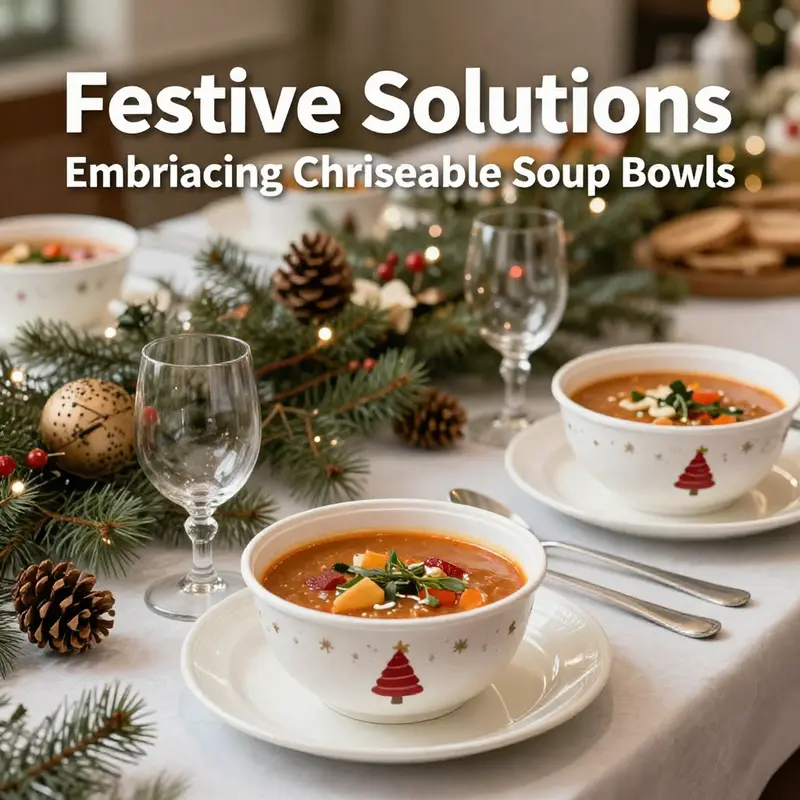
Seasonal events demand more than good food; they require an experience that feels effortless, cohesive, and festive from the moment guests arrive. Christmas disposable soup bowls sit at the intersection of function and décor, quietly shaping how meals unfold in kitchens, banquet halls, and pop-up holiday spaces. They are designed as single-use vessels, yet their impact extends far beyond cleanup. In catering and events, these bowls function as practical tools that respect the rhythm of a busy service while contributing to the look and feel of the season. They come in materials that balance heat resistance with easy disposal—papers with lined interiors, molded fibers that carry a warmth in their texture, or lightweight plastics that keep sauces from seeping through and sleeves from overheating hands. The range of sizes, typically from 8 to 12 ounces, is tuned to the common needs of a holiday menu: a robust serving of soup or stew as a main component, or a generous side that can accompany a roast, a chowder, or a hearty bean pot. In bulk packs, these bowls are a practical choice for large family gatherings, company parties, charitable meals, and community dinners where the focus is on generosity and ease rather than fragile glassware. The seasonal factor is more than color. The patterns—greens and whites in plaid, gold rims, lace-inspired trims, and winter motifs—echo the holiday décor and create a visually cohesive table or buffet line. A bowl can be a small but deliberate touch that ties together place settings, napkins, and centerpieces, letting guests feel the event’s theme without a single plate being a burden to handle or return. In many operations, this alignment between form and function is the primary reason for adoption. A well-chosen disposable option reduces friction, letting service staff focus on timing, heat, and portion control rather than on the logistics of dish reuse and sanitation. It also aids in risk management; for venues without a full washing station, or for those embracing a rapid service model, the single-use format minimizes cross-contamination concerns and ensures consistent hygiene standards across service windows. The practical benefits are complemented by a host of design and logistics advantages that make disposable bowls a natural fit for Christmas and other winter celebrations. The lightweight footprint of these products means inventory can be stored in standard shelving, arranged in neat bulk packs that fit into crowded kitchens or back-of-house corridors. They ship flat or compactly nested, reducing space requirements in a way that matters to a planner juggling multiple vendors and last-minute guest counts. Lids are more than a convenience feature; they are a crucial element for takeout and transport, a bridge between plated service and curbside pickup that preserves temperature and prevents spills during windy December commutes or snowy parking lots. When a caterer is asked to manage a crowd in an offsite venue, the ability to plate or fill bowls in advance and seal them with lids helps maintain a steady service pace, limit peak labor demands, and minimize the risk of sauce splashes on clothing or event décor. The choices extend from the everyday to the aspirational. Many suppliers offer customization options that allow event organizers or brands to imprint logos, event names, or holiday messages directly onto the bowls. Branding elevates the experience without the overhead of reusable tableware. Personalization can range from a simple color match to the event’s palette to more elaborate typography that resonates with guests, reinforcing the host’s identity and the event’s theme. In practical terms, customization translates into memory—guests leave with a tangible reminder of the occasion, and hosts gain a subtle channel for ensuring their event title or charity message is seen again in photos and post-event communications. For planners looking to weave branding into a formal or corporate gathering, the ability to print on disposable bowls provides a cost-effective alternative to more elaborate serviceware while aligning with sustainability goals and decor. A single design element, whether a crest, a seasonal motif, or a short phrase, can anchor a dining experience and unify table settings with minimal risk or cost in production. The ergonomics of modern disposable bowls also deserve attention. Advances in material science have produced sturdy, leak-resistant walls that retain heat without condensing into steam on the rim. This improves the dining experience by preserving the meal’s temperature longer and reducing the need for frequent reheating—an important consideration when service windows are short or guest flow is high. In addition, many contemporary options include a fit-for-purpose interior lining that minimizes staining and makes cleanup straightforward, while still offering the option to reheat safely if necessary. The takeout-ready and transport-ready designs broaden the bowls’ appeal beyond sit-down dining. For holiday markets, charity drives, or employee appreciation events held in non-traditional spaces, disposable bowls enable a flexible service model that can scale up and down with guest counts without compromising the festive atmosphere. The versatility extends beyond soup. The same vessels are well-suited for stews, chowders, and even desserts such as warm fruit compote or bread pudding, where the vessel’s depth supports generous portions and easy spoon access. That adaptability adds value when menus evolve, or last-minute substitutions are needed due to dietary considerations or inventory fluctuations. The sustainability conversation is increasingly central to decisions about disposable serveware. As more clients seek eco-friendly choices, manufacturers are responding with compostable and biodegradable options, reclaimed-wood textures, and coatings that balance performance with responsible end-of-life options. The trend toward materials that can be composted or recycled in standard streams is reshaping how planners evaluate a product’s total environmental footprint. In practice, this means selecting a bowl that aligns with the event’s sustainability narrative, whether that means choosing a product with a plant-based liner, a fully compostable shell, or a material that minimizes plastic content. For event teams with a strong emphasis on responsible procurement, the decision often comes down to a set of practical questions: Will the material perform under heat and moisture stress for the duration of service? Does it maintain its shape when stacked and transported? Will it degrade cleanly in a municipal composting stream if disposed of properly? How will it be perceived by guests who expect holiday styling and a sense of occasion without sacrificing hygiene or convenience? These considerations are particularly important in corporate settings where the brand’s values are on display in every detail of the event—down to the last bite and the last wrapper. To support a cohesive guest experience, the bowls can be paired with complementary elements that echo the event’s aesthetic. Coordinating colors with napkins, table runners, and signage creates a unified tableau that feels intentional rather than incidental. A well-choreographed service line, using bowls that match the décor, reduces visual noise and helps guests focus on the meal and the social moment. It also streamlines staffing, as servers can move calmly through lines with a predictable set of vessels, lids, and accessories. The culinary team benefits as well. When kitchen staff know the vessels will hold soups, stews, and desserts reliably, they can plan menus with confidence, balancing portion sizes and sauce thickening with the bowls’ capacity. This predictability translates into better inventory control, less waste, and a smoother service rhythm. The broader implications extend into philanthropy and community relief efforts during the season. Disposable bowls enable efficient distribution of hot meals at shelters, school drives, and charitable gatherings where resources are stretched and time is precious. The same properties that make these bowls practical for a wedding banquet or a corporate gala also empower volunteers to serve safely and with dignity in more austere settings. In this sense, the bowls function not merely as tableware, but as facilitators of connection—allowing hosts to extend hospitality even as logistical demands rise. For those who want a concrete example of how a well-chosen disposable option can fit a distinctive event, consider a scenario in which a holiday market uses a winter-themed, heat-stable bowl with a matching lid for hot soups. Guests can sample multiple stations, carry a personal bowl from one stall to another, and return to the main seating area to enjoy a warm meal without worrying about cross-contamination or cleanup chaos. The design language of such a choice communicates care for guests and attention to detail, reinforcing the narrative of a thoughtful, well-planned celebration. As sustainability conversations continue to evolve, the industry is likely to see continued innovation that preserves the festive look while enhancing end-of-life options. The push toward compostable packaging, recyclable coatings, and designs that minimize material usage without compromising strength will shape product development in meaningful ways. In parallel, the aesthetics will keep pace with trends in event styling, ensuring that holiday serveware remains a seamless extension of décor rather than an afterthought. The cumulative effect is a dining experience that feels both elevated and responsible, a rare convergence in a segment traditionally associated with convenience over consideration. For planners, that means a reliable toolset: bowls that hold heat, resist leaks, present a festive face, and support a brand’s or host’s ethical commitments. It means choosing vessels that fit the scale of the event, the speed of service, and the mood of the room. It also means recognizing that disposable serveware is not a budget line item to be minimized, but a strategic element that influences guest satisfaction, operational efficiency, and the perceived value of the holiday experience. In this context, Christmas disposable soup bowls are not merely containers. They are infrastructure for hospitality, a quiet backbone that allows the season’s warmth to shine through in every spoonful. External resources offer broader perspectives on how the shift to eco-friendly disposables is unfolding across the industry, highlighting trends, challenges, and opportunities for responsible procurement. For a deeper dive into sustainability trends in disposable tableware, see the external resource: https://www.greenbiz.com/article/eco-friendly-disposable-tableware-trends-2024. Internalizing these insights helps planners balance tradition with innovation, ensuring that each festive gathering is not only memorable but aligned with evolving environmental and social expectations. Kraft paper soup bowl with lid, used thoughtfully, becomes a quiet ambassador for the holiday season—one that serves warmth, reduces waste, and carries a design language that speaks to care and celebration without demanding heavy reuse or complicated logistics.
Choosing Festive Yet Practical: A Thoughtful Guide to Christmas Disposable Soup Bowls
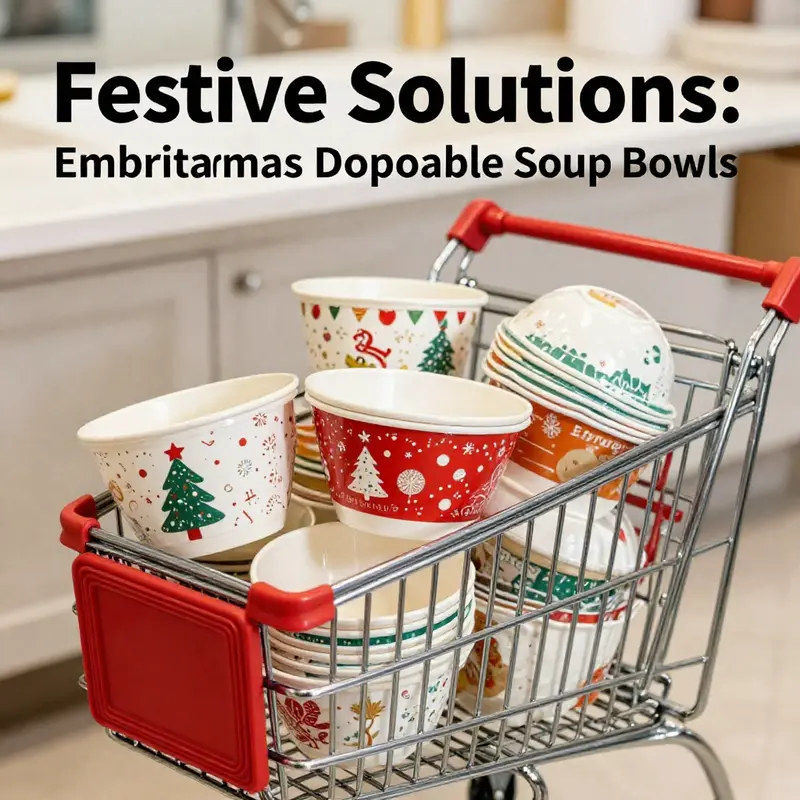
Selecting Christmas disposable soup bowls blends warmth, practicality, and responsibility. Paperboard with a lining can offer clean presentation and compostability, while molded fiber can deliver stiffness and heat tolerance. Plastic alternatives can enhance durability and lids, though their environmental footprint is larger. When choosing, consider heat resistance, leak protection, and whether the bowls fit the mood of the season with festive motifs. Bulk orders can reduce cost and simplify planning, and customization allows cohesive branding for events or gift boxes. For sustainability, look for fully recyclable or industrially compostable options and verify that coatings and liners meet food safety standards. Finally, think about transport, storage, and disposal at the end of the party: secure lids, nestable shapes, and clear disposal instructions help keep cleanup swift and waste to a minimum. With thoughtful selection, the bowls support warmth and hospitality without adding to the cleanup burden.
Final thoughts
Christmas disposable soup bowls not only elevate the aesthetic appeal of your holiday offerings but also simplify operational logistics during peak service times. By understanding the materials, current market trends, and effective sourcing strategies discussed, you can confidently integrate these products into your business for the festive season. Embracing these durable, visually appealing bowls will enhance customer satisfaction and streamline your holiday dining experience, making them a wise choice for any food service provider.