

In the competitive landscape of food and beverage service, branding has become more than just a logo; it’s an experience delivered in every aspect—from the drink you serve to the cup it comes in. This journey into creating plastic disposable cups with a logo unveils essential techniques tailored for Bubble Tea Shops, beverage chains, restaurants, food trucks, catering services, event planners, and corporate procurement teams. By diving deeper into the intricacies of hot stamping, injection molding, printing methods, eco-friendly approaches, and quality control measures, operators can enhance their brand visibility and customer satisfaction. Whether you are seeking aesthetic appeal, sustainability, or practical functionality, this comprehensive guide ensures that your branded cups stand out in any service environment.
The Imprint Behind a Brand: Hot Stamping as the Signature on Plastic Disposable Cups

Logo on a plastic disposable cup is more than a decorative detail. It is a claim of consistency, a promise of quality, and a bite-sized beacon of brand recognition that travels through every sip and every pause in line. When designers and manufacturers seek a finish that is durable, visually striking, and able to endure the handling and moisture that accompany a disposable cup, hot stamping emerges as a method with a distinctly premium language. This chapter traces how hot stamping transforms a plain cup into a branded object, how the process interacts with substrate, foil, and heat, and how it sits alongside other deployment methods in a modern production line dedicated to high-volume, logo-driven packaging. It is a narrative that ties together the aesthetics of shine, the engineering of adhesion, and the practicalities of scale, all while staying anchored to the central aim of making plastic disposable cups with a logo in ways that balance appearance, performance, and sustainability.
At its core, hot stamping is a dialogue between heat, pressure, and a designed image. A heated die—essentially a metal stamp carrying the raised logo or design—presses into a pre-cut foil and then onto the cup surface. The adhesive backing of the foil melts under the die’s temperature, bonding the foil to the plastic in a moment of clean, decisive transfer. What emerges is a raised, often metallic or richly colored logo that sits on the curved exterior of the cup with a tactile presence. The gloss and depth achieved by hot stamping are not merely cosmetic; they are a convergence of physics and aesthetics. The die’s temperature and the pressure applied determine the fidelity of the transfer, the edge sharpness, and the level of surface reflectivity that the consumer perceives as quality. In this environment, even the slightest misregistration or pressure imbalance can produce a halo, a misaligned edge, or a faint ghost of the logo on the cup sidewall.
To perform hot stamping successfully, several material choices and process steps must harmonize. The preparation begins with selecting the right plastic substrate for the cup and a compatible foil for the logo. Common substrates for disposable cups include plastics such as PET and PP, which readily accept foil transfer when paired with proper adhesives and surface energies. The foil itself can be metallic—often aluminum—providing that classic, eye-catching luster, or it can be a colored or matte decorative film designed to give a certain brand personality. The interaction between foil chemistry and substrate surface energy is crucial; if the surface is too slippery or if the adhesive is mismatched, the transfer may fail or result in incomplete coverage. Temperature settings, typically ranging from about 120°C to 250°C, must be tuned to the specific foil and substrate, along with the dwell time and the pressure exerted by the stamping die. Too much heat or pressure can distort the cup wall or cause the foil to bleed into fine details; too little can leave the image faint or prone to peeling under moisture exposure.
The operational advantages of hot stamping are numerous and tangible. Foremost is durability. The raised transfer resists smudging and abrasion far better than some printed finishes, making the logo legible even after repeated handling and damp conditions. The finish is inherently water-resistant, a critical factor for disposable cups that routinely encounter condensation, steam, or lingering moisture from beverages. The method also delivers fast production speeds, a key requirement for high-volume beverage service environments where millions of cups move through lines monthly. And because the process relies on a die rather than a digital print on each cup, color fidelity and edge definition stay consistent across batches, enabling brands to maintain a stable visual identity even as demand waxes and wanes.
The flexibility of hot stamping on curved surfaces is a substantial benefit. Cup walls曲 are seldom perfectly flat, and the ability of a heated, rigid die to imprint a logo onto a contoured form is a notable engineering feature. The method makes it possible to apply logos to regions of the cup that wrap around the body, avoiding the visual dullness that can accompany flat, printed areas. It also supports relatively quick changeovers, with new dies and foils introduced to switch branding or seasonal campaigns without retooling the entire cup design. In a world where brands seek consistent identifiers from the moment a consumer holds the cup, hot stamping offers a dependable, reproducible surface finish that supports a premium perception.
Yet hot stamping is not the only option for adding logos to plastic cups, and it sits within a spectrum of techniques that a modern manufacturer might deploy depending on scale, aesthetics, and sustainability goals. Injection molding, for example, can embed a logo directly into the cup’s structure during formation. This approach yields a raised feature as part of the cup wall itself and can be exceptionally durable since the logo becomes an integral aspect of the plastic. On the other end of the spectrum, techniques such as direct digital printing or screen printing apply logos to already formed cups. These methods can accommodate full-color imagery and gradients, providing flexibility for multi-color branding on PET or PP cups. Digital printing supports on-demand customization, while screen printing is well-known for its efficiency on larger runs where a simplified color palette suffices. Each method carries trade-offs in speed, cost per unit, and resilience to moisture or abrasion, and brand teams often select a combination of approaches to cover different product lines, service contexts, and consumer expectations.
In specialized contexts, eco-friendly production systems push branding into even more experimental territory. Continuous nanofiber technologies, for instance, may weave branding features into the manufacturing process in ways that are still developing in conventional cupmaking. While these systems hold promise for certain medical or high-performance applications, they remain relatively uncommon for mainstream disposable cups. The broader implication is that branding in the cup space is not a single-path journey. It requires a thoughtful evaluation of substrate compatibility, end-use conditions, and lifecycle considerations. As a result, many manufacturers begin with hot stamping as a core option when durability and a premium finish are priorities, then layer other techniques to meet particular campaign or product requirements.
From a quality-control perspective, hot stamping demands careful oversight. The alignment between the die and the foil, the adhesive’s consistency, and the cup’s surface condition all influence the final result. In practice, operators monitor transfer density, edge crispness, and any tendency toward sticking or misregistration as the equipment cycles through thousands of cups per hour. The outcome is not only a visually striking logo but a surface that remains legible and intact across a spectrum of handling scenarios—from vending machines and hand-to-hand exchanges to the moisture-rich environment of coffee breaks and pastry counters. The human elements—die maintenance, foil handling, and foaming or temperature drift—align with machine calibration to deliver the uniformity brands expect.
A chapter on hot stamping also invites reflection on the relationship between branding, sustainability, and end-of-life considerations. Foils add novelty and shine, yet the presence of a foil layer on a disposable cup has implications for recycling streams. Depending on the foil’s composition and the adhesive chemistry, the recyclability of a hot-stamped cup may be affected. Some manufacturers address this by selecting foils and adhesives designed for easier separation or by using logos that can be removed or facilitated during recycling. The dialogue here is not solely about aesthetics but about the broader system in which the cup is produced, used, and treated at the end of its life. For brands aiming to balance visual appeal with responsible stewardship, the choice of branding method can be part of a larger sustainability strategy.
In discussing the practicalities of hot stamping, it is useful to connect to real-world options that align with brand goals and production realities. One practical pathway is to explore how logos can be integrated when the product line emphasizes a consistent, eye-catching exterior across varying sizes and beverage formats. The option to link branding to a standardized foil design, paired with a robust adhesion strategy and substrate preparation protocol, yields a consistent finish across multiple cup diameters and volumes. The result is a cohesive brand statement that travels from the production line to the consumer’s hand with reliable presence. For teams exploring these paths, a direct look at supplier channels and design guides—while staying mindful of the need for continuous improvement in durability and recyclability—can illuminate how best to deploy hot stamping within a broader branding plan. See an example of a brand’s approach to logo integration in a convenience-oriented, logo-driven cup program through the internal resource that highlights custom-logo kraft paper cups, which offers insights into how logo placement and materials influence perceived value and practicality: custom-logo kraft paper cups.
Practically, the design and production teams often begin with a careful feasibility assessment. They examine the cup geometry, surface texture, and potential interference with other finishes, such as embossing, embossing combined with color, or protective coatings. They evaluate the logo’s size, line weight, and negative space to ensure the final image remains crisp after transfer. The foil thickness and the adhesive layer are chosen to optimize transfer while resisting peel in contact with moisture or heat from beverages. In some cases, it is advantageous to test a small pilot run to verify edge fidelity under actual service conditions before committing to a full-scale rollout. The pilot phase provides essential feedback about how the logo will perform when touched, how it reads from a distance, and how it holds up after repeated cleaning or exposure to beverages that might condition the cup’s surface differently. This iterative approach helps prevent costly line-wide reworks later in the supply chain.
The broader lesson here is that hot stamping is more than a technique; it is a strategic choice within a family of branding tools. When executed with attention to substrate compatibility, foil selection, process parameters, and end-use lifecycle considerations, hot stamping can deliver a logo that stands up to the realities of a fast-paced service environment. It can anchor a brand’s visual language on a disposable cup while preserving the integrity of the cup’s form and the user’s experience. And because the method integrates smoothly with high-volume production, it serves as a reliable bridge between concept and consumer encounter, ensuring that the logo remains legible and vivid from the moment a cup leaves the packaging line to the moment a drink is lifted at a crowded counter.
In summation, hot stamping offers a compelling combination of durability, speed, and surface versatility for plastic disposable cups bearing a logo. Its strengths lie in creating a tactile, glossy signature that endures through handling, moisture exposure, and repetitive use in a hurry. While injection molding can embed branding into the cup’s body and digital or screen printing can accommodate full-color logos on pre-formed cups, hot stamping remains a premier option for brands seeking a premium, consistent finish that signals quality at first glance. The choice of branding method should align with product design intent, production scale, material compatibility, and sustainability considerations, ensuring the final cup carries not only a brand mark but a story of thoughtful, well-engineered packaging.
For readers seeking a deeper technical dive into hot stamping techniques and their applicability to plastic substrates, the broader field offers authoritative guidance and best practices. For deeper technical guidelines, see the external resource that outlines hot stamping techniques and substrate considerations: https://www.napi.org/hot-stamping-techniques-on-plastic-substrates.
Logo in the Mold: How Injection Molding Makes Branded Plastic Disposable Cups Deliver Clarity, Durability, and Identity
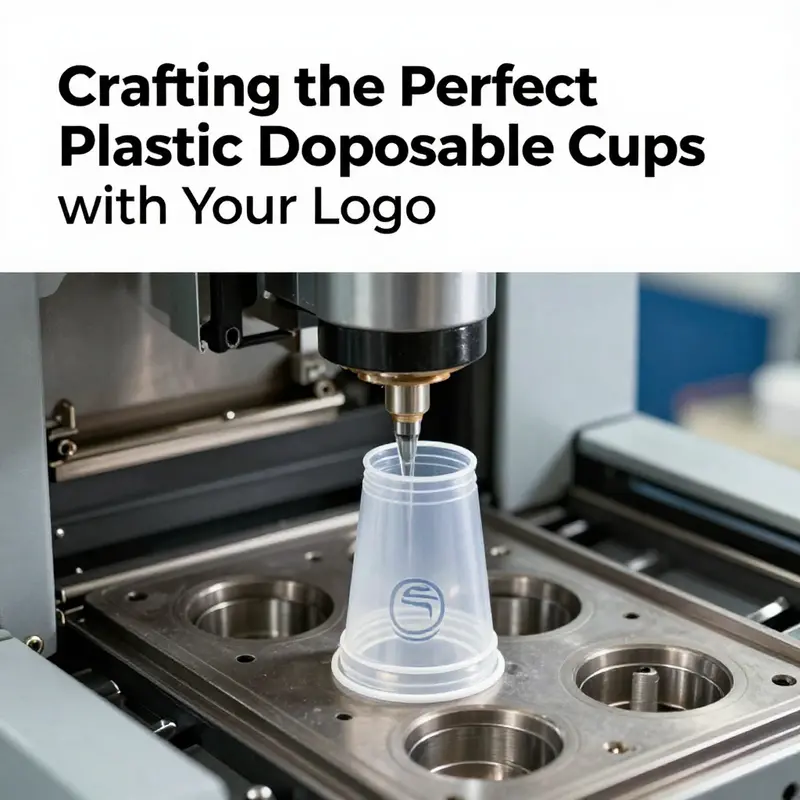
The moment a brand cup leaves the line and reaches a hand, it carries more than a beverage. It carries identity. The challenge for manufacturers is to fuse utility with a visible, durable mark that survives the life of the cup—from the first pour to the final rinse or discard. In the realm of plastic disposable cups, this fusion rests most reliably on injection molding. It is here that a logo can become an integrated feature of the cup itself, not merely a decoration added after the fact. The technique is widely used for high-volume production because it aligns with the compact geometry of a cup cavity, the speed required by large orders, and the need for consistent, crisp branding. When a logo is born in the mold, every cup that comes off the line carries the same precise silhouette, the same depth of imprint, and the same edge clarity. The result is branding that reads as clearly as the beverage inside, even under quick service conditions where customers are buying on impulse rather than contemplation.
The injection molding cycle that creates a logo-bearing cup begins with a design that merges aesthetic intent with engineering reality. The mold cavity is sculpted to a tolerance that anticipates plastic shrinkage as it cools. Logo details—whether raised relief, debossed impressions, or micro-textures—are embedded into the mold faces themselves. When molten plastic is injected at high pressure into the cavity, it fills every nook and cranny of the logo geometry. The pressure drives the polymer into sharp corners and fine lines, while the heat sets the plastic enough to lock the logo in place once it solidifies. The parting line, the location where mold halves meet, must be carefully positioned so that logo features sit on surfaces that will be visible and tactile without being obscured by seams. In modern factories, vertical injection molding machines are prized for their space efficiency and precision. They enable automated handling of cups through multi-step sequences—from injection to cooling to ejection—without sacrificing accuracy in logo reproduction.
Durability is one of injection molding’s strongest selling points for logoed cups. A raised logo that’s molded into the surface is inherently tougher than a sticker or a post-process print. Because the logo is a part of the cup’s wall, it won’t flake, peel, or rub away under typical hand-to-mouth use. This is especially important for cold beverages, where foaming or condensation can challenge surface finishes. The surface can be engineered to balance shine and traction; some customers want a matte texture around the logo to emphasize tactility, while others prefer a high-gloss surface that highlights clean lines of the imprint. The finished appearance is not just about aesthetics; it is about consistency season after season, batch after batch. Any variation in logo depth or in the uniformity of the wall thickness around the logo can become noticeable in a high-volume line, so the mold must be designed with uniform gating, careful venting, and balanced cooling to avoid warping that could distort the mark.
Material choice amplifies how effectively a molded logo reads. Optically clear plastics, such as PET or certain grades of PP, are common choices for cups designed to showcase beverages in bright, appealing color. These materials offer clarity that makes the logo appear against a clean, bright field, preserving legibility even when the cup contains opaque liquids or fruit-infused drinks. Yet with optical clarity comes processing sensitivity. Clear polymers are receptive to colorants and require tight control of temperatures during injection and cooling to prevent whitening at the logo’s edges or a hazy bloom across the surface. In practice, this means engineers may specify precise temperatures for the barrel, nozzle, and mold, maintain rigid cooling times, and sometimes use polishing or UV-curing steps in downstream handling to perfect the final visual appearance. In some designs, color is built into the polymer itself, while in others the logo may contrast with the cup body through a secondary layer or additive-rich masterbatch, chosen to maintain adhesion and color stability through the cup’s intended life.
The decision to mold a logo directly into the cup versus adding decoration after molding is often a function of volume, geometry, and branding needs. Injection molding excels at large-scale runs where the cost of a dedicated logo cavity is amortized across millions of parts. The same approach supports variations in logo size, boldness, or texture by altering the logo geometry in the mold or introducing different insert inserts into the same family of mold designs. In large production environments, automation is the partner of the mold: robotic pick-and-place systems move cups between stations; inline sensors verify that the logo is correctly registered relative to the cup geometry; quality control checks are conducted at multiple points in the line to catch miscores or flashing that would indicate mold wear or process drift. All of these elements work together to sustain a consistent brand signal across every cup in every shipment.
If the primary objective is to maximize self-contained branding within a reasonable cycle time, the injection mold can be crafted to imprint the logo with a raised feature that doubles as a tactile cue for the consumer. A raised logo reads clearly under hand-held viewing and provides subtle texture that can improve grip around the cup shoulder. Debossed logos offer a different tactile signature and a smoother surface that may be aesthetically preferable for certain beverages or brand families. The decision often rests on the intended consumer experience and the cup’s serving environment. For instance, a premium beverage brand might favor a thoughtfully contoured logo that appears to be a part of the cup’s architecture rather than a separate layer sitting on top. In other scenarios, a lighter touch might be desired, with the logo appearing as a fine detail that catches light rather than dominating the surface. Each choice informs the mold design, the material selection, and the downstream finishing steps that preserve the logo’s integrity through shipping, stacking, and stacking-induced pressure.
In discussions of broader branding strategies, some manufacturers push beyond the embedded logo to complementary methods that can coexist with injection molding. Hot stamping, for example, uses a heated metal die to apply a foil or pigment onto the surface of a finished cup. The result is a raised-feel or metallic accent that can convey a premium impression without altering the cup’s wall thickness. Direct digital printing or screen printing can be employed on pre-formed cups when small batches or rapid customization is required. These alternatives are especially attractive when a brand wants to test new logos, seasonal colorways, or limited-edition campaigns without the capital outlay of a new mold. However, with the exception of short-run or highly customized lines, these techniques typically require additional processing steps and can introduce variability in color fidelity or ink adhesion over time. In contexts where strict durability and high-volume efficiency are essential, injection molding remains the most robust path to a durable, legible logo that endures repeated handling and temperature changes.
Advancements do not stop at the gate of the mold. For brands pursuing sustainability alongside branding, there are explorations into production systems that weave branding features into the manufacturing process via nanofiber technologies or other integrated approaches. These systems are not yet standard in conventional disposable cups, being more common in specialized contexts such as medical or high-performance applications where branding must coexist with stringent performance criteria. Even so, the underlying principle is clear: branding can be conceived as a material and process attribute, not merely a surface treatment. When branding is integrated at the molding stage, it tends to be more durable, more scalable, and more resistant to the rigors of consumer use and disposal.
Despite the strengths of injection molding for logoed cups, there are practical trade-offs to consider. Thermoforming, for example, offers a cost-effective route for shorter production runs or simpler geometries. It can produce transparent or semi-transparent cups with clear visibility of beverages, but it often lacks the wall-thickness uniformity and the ability to reproduce highly detailed logos at the same scale as molded cups. For brands seeking sharp, intricate branding on a standardized cup body, thermoforming may require additional steps to ensure logo fidelity and consistent wall thickness. Direct printing methods, while flexible, have to manage ink adhesion, drying times, and potential abrasion during stacking or handling. In each case, the selection of resin—PET, PP, or other polymers—becomes a critical variable, influencing not only the appearance of the logo but also the cup’s performance with different beverages and under varying temperatures.
On the sustainability front, the choice of materials and the integration of branding must consider end-of-life implications. Clear PET and opaque PP have distinct recycling streams, and coatings or inks associated with logo decoration may affect recyclability. There is growing interest in coatings and additives that minimize environmental impact without compromising logo integrity. While the core technique is injection molding, the branding strategy—whether molded-in, foiled, printed, or coated—interacts with recycling pathways and consumer perceptions of environmental responsibility. The best practice often lies in a balanced approach: select materials that are readily recyclable, design logos that survive handling without requiring heavy inks or layers, and partner with suppliers who provide durable colorants and finishes that align with the cup’s intended life cycle.
From a practical standpoint, the decision about which branding approach to pursue should be embedded early in the product development cycle. Design for manufacturability must be aligned with branding goals. The mold must accommodate clean radii and uniform wall thickness so logo features remain visually consistent across tens or hundreds of millions of units. The process window—the range of temperatures, pressures, and cooling times that produce a good part—must be established and stabilized, because even slight drift can lead to logo blur or misregistration on the cup’s shoulder. Quality control becomes not just about the outer surface but about how the logo behaves through stacking, palletizing, and transport, where vibration and compression can alter the perceived sharpness of the mark. When these elements are harmonized, an injection-molded logo becomes more than a mark on a cup; it becomes a brand ambassador that travels with the product from the plant floor to the consumer’s table, and possibly beyond, in the recycling stream where the emblem may still be legible and recognizable.
In the broader conversation about branded plastics, the literature and industry practice point toward a mature, scalable solution for logoed disposable cups: injection molding, enhanced with targeted surface techniques when appropriate, and complemented by printing methods for customization at smaller scales or during testing phases. For readers who want to explore related technical discussions, one practical reference focuses on the scientific and design aspects of mold functionality and logo integration in plastic cup production. This resource offers deeper insight into the interplay between mold design, material behavior, and finishing options that determine the fidelity and durability of logos on disposable cups. External resource: https://www.sciencedirect.com/science/article/pii/S235214652400078X
To see how branding takes shape in a related segment of disposable vessels, consider how a representative range of customizable cups is described in online product catalogs that emphasize logo integration and design flexibility. For example, a reference page detailing custom-logo disposable cups demonstrates how brands implement logo features across different cup formats, including double-wall constructions that combine branding with thermal insulation. This example illustrates the practical variety in logo presentation, from embossed and debossed surfaces to printed accents, and how those choices align with production economics and consumer experience. senang-disposable-double-wall-craft-paper-cups-multi-size-6-24-oz-custom-logo-for-coffee-tequila
In summary, injection molding remains the cornerstone technique for producing plastic disposable cups with logos at scale. Its ability to reproduce fine logo details with consistency, coupled with the potential to embed branding into the cup wall itself, offers a compelling combination of durability and visual impact. When paired with careful material selection, disciplined process control, and thoughtful integration with complementary decoration methods, molded logos can become a defining element of a brand’s drinkware—one that travels, endures, and communicates value with every sip. This integrative approach ensures that the logo does not merely decorate the cup; it communicates a brand story through form, function, and finish, reinforcing recognition and trust at the moment of consumer contact.
Branding on the Fly: The Art and Precision of Direct Digital and Screen Printing on Logoed Plastic Disposable Cups
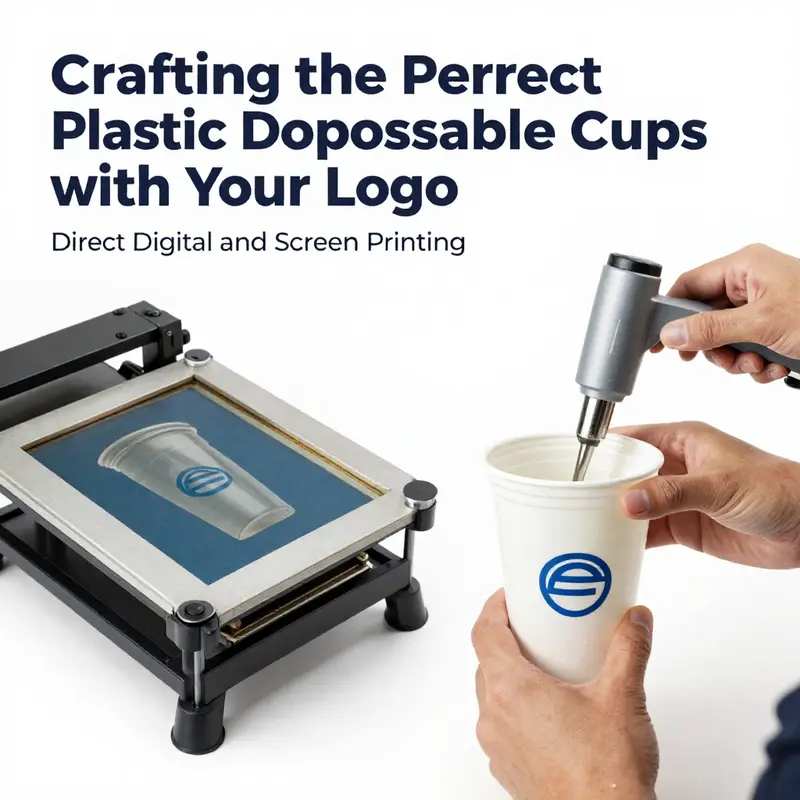
Branding on plastic disposable cups has evolved from a simple mark to a carefully choreographed interaction between design, material science, and production discipline. The logo on a cup is not merely decorative; it is a touchpoint that communicates brand presence, quality, and consistency to a fleeting audience. This chapter focuses on two core methods that drive logoed cups in modern manufacturing: direct digital printing and screen printing. Each method brings its own texture to the cup surface, its own rhythm of setup and run, and its own set of decisions for designers and fabricators. Both, however, share a common goal: a durable, vibrant logo that endures the journey from shelf to drink, without compromising the cup’s utility or the sustainability profile of the overall packaging solution.
Direct digital printing, often described in industry circles as a direct-to-cup process, applies ink directly onto the plastic surface using high-precision digital print heads. The inks used are typically UV-curable, which means they are cured instantaneously by exposure to ultraviolet light. This rapid curing is a key advantage in today’s fast-paced production environments because it minimizes handling time and reduces the risk of smudging or offsetting that can plague multi-step processes. For small to medium runs, digital printing offers an efficiency that is hard to beat. Short-run orders become feasible without the expensive plate or screen setups that characterize traditional print workflows, and the same setup supports a quick switchover from one design to the next. This flexibility is especially valuable for brands that routinely update seasonal artwork, run regional promotions, or offer personalized branding for events.
From a materials perspective, the surface of the cup matters as much as the ink. PET and PP remain the most common substrates for molded disposable cups, and digital printing technologies have evolved to work with these plastics when their surfaces are properly prepared. The surface chemistry and texture influence adhesion, with UV-curable inks designed to bond strongly to smooth, clean substrates. A well-prepared surface typically means a wipe-down to remove oils and dust, a possible corona or plasma treatment to activate the surface chemically, and controlled environments to minimize moisture during printing and curing. The result is ink that adheres firmly, resists abrasion from handling, and remains legible through the cup’s contact with liquids and ice.
Color accuracy in direct digital printing is a nuanced proposition. Print heads render gradients and fine details with impressive fidelity, yet the curvature of a cup surface introduces geometric challenges. Designers often leverage underprint strategies—where a light base layer or white underprint helps the final colors pop against the cup’s color and translucency—and rely on color management workflows that translate digital swatches into printing inks with predictable outcomes on a flexible geometry. Resolution is typically high enough to reproduce intricate logos, but extremely small type or ultra-fine line work may push limitations if the print pass count is constrained by run speed. When the design is complex, color variation across batches can occur if calibration drifts or ink batches shift slightly; thus robust quality control and traceable process logs become essential in production environments that rely on digital printing for logo fidelity.
Durability is another crucial axis. For disposable cups, the printed logo must withstand contact with beverages, condensation, and varying temperature profiles. UV-curable inks offer robust moisture resistance and fade resistance, reducing the risk of color migration or dissolution. Yet customers expect consistent appearance across a run and across multiple batches. Digital printing excels at delivering that consistency when the system is calibrated and validated for each substrate. It also supports personalization at the edge of a variable data capability: logos can be paired with event-specific text or serial identifiers, enabling traceability while maintaining a crisp, fixed logo shape.
Beyond the ink and surface, the workflow surrounding direct digital printing emphasizes speed and agility. The process begins with careful file preparation, ensuring logos are vector-friendly, color separations are defined for the specific ink set, and the artwork is sized to accommodate curved surfaces without distortion. The printer’s calibration involves a combination of test prints, colorimetric measurements, and pass-by-pass checks to guarantee repeatability. The curing step is a separate, finishing stage that solidifies the ink and prepares the cup for downstream handling. In many facilities, in-line or near-line quality checks use visual inspections and automated sensors to flag any misprints, misregistrations, or adhesion defects before the cups proceed to the packaging line.
Screen printing, by contrast, is rooted in a more traditional, bulk-oriented discipline. It remains an industry workhorse for large-scale production runs where consistency, opacity, and color brightness are non-negotiable. In screen printing, an ink-filled mesh screen carries a stencil of the logo. Ink is pulled through the screen with a squeegee, depositing a defined layer of color on the cup. The method excels at bold, opaque colors that stand out against the cup’s base material. This is particularly advantageous for logos that rely on strong contrast or require legibility from a distance in crowded retail environments. Screen printing’s thick ink deposit yields a tactile, sometimes slightly raised feel that many brands perceive as a sign of quality and permanence, even on single-use items.
The screen itself is a carefully engineered tool. Screens are prepared with stencils that translate vector logos into printable areas. Mesh counts, ink viscosity, and squeegee hardness are tuned to the line weight of the logo and the curvature of the cup. For curved surfaces, multiple passes or specially contoured screens might be used to ensure even ink distribution and accurate edge definition. The result is a robust print that can resist some degree of abrasion and moisture exposure, which is particularly important for cups exposed to drinks, condensation, or ice. In high-volume settings, the per-unit cost of screen printing tends to decrease as run length increases, making it the method of choice for brands seeking maximum unit economics on large campaigns.
From a design standpoint, screen printing imposes certain constraints. The number of colors that can be effectively reproduced in a single pass depends on the number of screens available and the complexity of the design. Each color typically requires its own screen, so designs with many hues can escalate setup time and material costs. However, modern improvements—such as multi-color automated screen lines and through-screen alignment technologies—have reduced the gap between digital and screen printing in terms of versatility. Ink choices for screen printing often emphasize opacity and color strength, with a preference for inks that maintain their brightness when the cup is filled with liquids. Matte or gloss finishes can be achieved depending on ink formulations and post-print coatings, adding another design dimension to a logo’s appearance.
When deciding between direct digital printing and screen printing for logoed plastic cups, several practical factors come into play. Order volume and run length are pivotal. DTC shines with short runs, quick turnarounds, and the ability to inject personalization at scale without rearranging plates or screens. Screen printing remains the workhorse for bulk orders where the cost per unit drops meaningfully with higher volumes and where the logo’s visual impact benefits from flatter, highly saturated color blocks. Design complexity matters too. Intricate color gradients, subtle shading, or variable data are often more cost-efficient in a digital workflow, while bold, two- or three-color logos with strong opacity can be exceptionally cost-effective with screens. Budget constraints and lead times will naturally steer choices, but so will sustainability considerations. Digital printing can produce less waste in some scenarios by eliminating plates and screens, though the ink chemistry and curing processes must be managed to minimize environmental impact. Screens require careful disposal of spent screens and careful control of ink waste; both approaches have evolved toward cleaner-technology ecosystems as brands demand responsible supply chains.
Material compatibility remains a shared foundation for both methods. PET and PP cups consistently respond well to these printing processes when surface preparation is executed correctly. The choice of ink systems, UV-curable for digital and solvent- or water-based for screen printing, must align with the substrate’s chemistry and the desired end-use scenario. In many facilities, a hybrid strategy emerges: the logo is applied digitally for a subset of SKUs or limited-edition runs, while a screened approach is deployed for the stable, high-volume lines that form the backbone of a program. This flexibility allows brands to maintain a consistent logo treatment across product families while optimizing cost, speed, and durability.
The broader context of branding on plastic cups also prompts consideration of sustainability and lifecycle impact. Eco-conscious readers will recognize that even the choice of printing technique can influence material choices, wash resistance, and recyclability. While advanced systems that embed branding during manufacturing, such as continuous nanofiber integrations, exist in specialized contexts, they are not yet standard for conventional disposable cups. For most brands, a pragmatic approach involves selecting a printing method that delivers durable logos without compromising the cup’s clean disposal profile, and then aligning that choice with a sustainable material strategy and responsible end-of-life management. A comprehensive exploration of modern cup manufacturing, quality control, and sustainability strategies is available in the referenced scholarly resource for readers seeking deeper technical context.
For brands exploring how to negotiate the branding on cups with a logo while balancing design freedom and production realities, a practical example of logo-enabled beverage packaging can be explored here: senang-disposable-double-wall-craft-paper-cups-multi-size-6-24-oz-custom-logo-for-coffee-tequila. This link offers a window into how logo-bearing cups are marketed and how customization can be framed for different consumer contexts, even as the underlying printing principles remain anchored in the same technological choices discussed above.
As the chapter closes its focus on method-driven branding, the reader is reminded that the choice between direct digital and screen printing is not merely a technical decision. It is a strategic one that ties together target audience, distribution channels, design language, and the broader sustainability goals of the brand. The two methods, while distinct in their operational DNA, can be orchestrated to deliver a cohesive branding story across product families. The next step in understanding logo-bearing cups is to connect these printing choices with the molding and material strategies that introduce further texture to branding—whether through raised features in the cup wall coming from the injection-molded logo or through surface treatments that complement printed graphics. In the meantime, practitioners should keep a close eye on evolving ink chemistries, environmental considerations, and the pace at which digital and screen printing continue to converge in capabilities and cost efficiency.
Branding with a Conscience: Eco‑Conscious Pathways to Logoed Plastic Cups
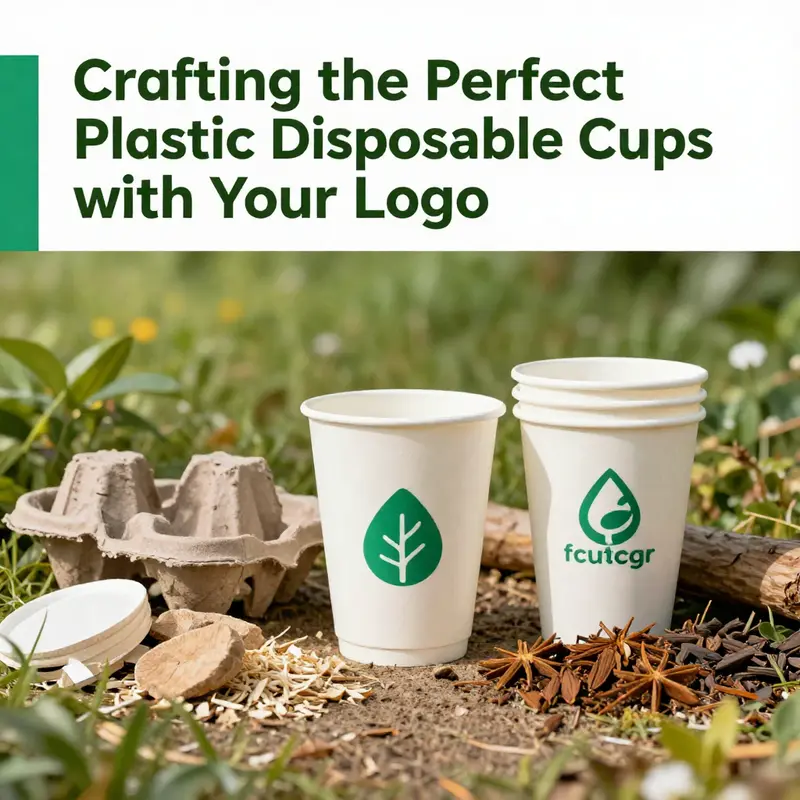
The aim of branding with a logo on a plastic disposable cup is no longer merely to catch the eye. It is to fuse visibility with responsibility, so that a brand message travels with the cup from event to exit, without leaving a heavier footprint on the environment. In this chapter, we explore how eco‑aware choices in materials, design, and branding techniques come together to produce cups that carry logos with clarity and durability while aligning with growing consumer expectations for sustainability. The challenge is not simply to print or mold a mark onto a cup; it is to integrate branding into a lifecycle that respects resource use, recyclability, and end‑of‑life options. As production scales shift, so do the trade‑offs between aesthetics, cost, and environmental outcomes, and the best path depends on context—volume, venue, and the intended life of the cup in the consumer’s hands and in the waste stream that follows afterward.
The most fundamental decision begins with material selection. Conventional petroleum‑based plastics offer reliable performance, heat tolerance, and cost efficiency, but they also carry a heavier environmental burden when disposed of. To address this, several eco‑minded material options are now widely considered in logoed cup programs. Biodegradable or compostable polymers such as polylactic acid (PLA) bring renewable feedstocks into the mix. PLA boasts a lower carbon footprint during production and can reduce the environmental impact of branding campaigns, particularly at events where branding happens in large volumes over a short period. Yet PLA is not a universal solution: its compostability is mostly realized in industrial facilities, and its heat resistance is generally lower than that of conventional PET or PP cups. This means careful consideration is needed for hot beverages or long‑held products, where a logo may need to withstand warmer serving conditions without compromising integrity. In practice, brands often pair PLA or other bio‑based options with clear messaging about end‑of‑life infrastructure, so consumers understand how to dispose of items properly.
Recycled content offers another compelling pathway. Incorporating post‑consumer recycled (PCR) material into cups reduces waste going to landfill and signals a commitment to circular economy principles. The target is not simply to reuse plastic; it is to maintain performance while fading less into the background of a global waste challenge. For many brands, the use of recycled content works best when the cup ecosystem includes compatible recycling streams and consumer education so that recycled cups are collected and processed efficiently. In some contexts, manufacturers combine recycled content with bio‑based layers to balance mechanical strength with sustainability storytelling, especially when a logo is a central element of the product’s brand narrative. The overall goal remains to design for recyclability: choosing cup shapes and lid materials that fit existing recycling facilities and avoid laminated or multi‑material constructs that complicate separation.
When it comes to applying a logo, the production method is as important as the material itself. Hot stamping, or hot embossing, remains a robust option for durable, high‑impact logos on plastic surfaces. A heated metal die impresses the logo into the cup under substantial pressure, creating a raised feature that can feel tactile and endure repeated handling. This method preserves the cup’s sense of premium branding while avoiding pigment‑laden inks that must be dealt with at end of life. For larger manufacturing runs, injection molding can embed the logo directly into the cup’s structure, turning the branding into a raised texture that is integral to the cup rather than applied afterward. The advantage is a highly durable, vandalism‑resistant feature that won’t flake or peel with normal use. Yet injection molding requires carefully engineered molds and larger upfront investment, so it suits high‑volume programs where the logo becomes a permanent element of the cup’s geometry.
For smaller runs or when the branding needs to adapt to existing cup lines, direct digital printing and screen printing offer flexible routes to logo application. Digital printers can reproduce intricate logos across a range of substrates, including PET and PP, with good ink adhesion when compatible inks and coatings are used. Screen printing is another practical choice, especially for bold, opaque logos that demand strong color coverage on clear or colored cups. In both cases, the choice of ink chemistry matters. Water‑based or soy‑based inks are increasingly preferred in eco programs, because they minimize volatile organic compounds and reduce toxicity concerns during production and disposal. Even with greener inks, brands must consider the full lifecycle: the ink layer should not impede recycling, and any coatings should be compatible with subsequent material separation or processing in the waste stream.
Beyond these established processes, there are more specialized approaches that can intersect with sustainability goals. Continuous nanofiber technology, for instance, enables branding features to be integrated during manufacturing in very selective contexts. While not common in conventional disposable cup production, such systems can embed branding elements at the fabrication stage for medical or high‑performance applications where sterility or barrier properties are critical. In routine consumer and foodservice contexts, however, these advanced applications remain limited to niche runs where the branding objective justifies the added complexity and cost. The overarching takeaway is that eco‑conscious branding is not a one‑size‑fits‑all equation; it is a spectrum in which material choices, process capabilities, and life‑cycle considerations converge to meet brand integrity and environmental responsibility at once.
Design optimization plays a pivotal role in this convergence. Reducing material usage without compromising the logo’s legibility is a practical design discipline. Simplified logos and strategically placed branding can achieve strong recognition with less ink or embossing, which in turn reduces raw material demands and energy consumption. For cups that are intended to be recycled in municipal streams, designers increasingly favor configurations that avoid multi‑layer laminates or hard coatings that hinder disassembly and recovery. In some cases, a recyclable cup and lid combination becomes an explicit sustainability story: a clear PET cup paired with a PP lid is widely recyclable in many systems, supporting a circular economy narrative that resonates with eco‑minded branding. When designers select colors, they also consider the environmental cost of pigments. Lighter palettes that require fewer coats of ink can still deliver high brand impact, while darker or metallic finishes may necessitate special inks or coatings that complicate recycling. The art of eco‑branding, then, is a balancing act between visibility, durability, and end‑of‑life simplicity.
The economics of eco branding cannot be ignored. PLA offers environmental benefits, but its higher production cost and reduced heat resistance compared with traditional plastics mean that it is often most appropriate for events or campaigns where the cup’s thermal durability is less critical and brand storytelling takes center stage. For mass distribution where hot beverages are involved, a hybrid approach might be warranted: one that uses bio‑based or recycled materials for the body, paired with a heat‑resistant coating or an embossed logo that remains legible and durable, all within a pathway that remains compatible with recycling streams. Such decisions inevitably involve a cost‑per‑unit calculation that weighs the incremental environmental benefits against the premium price and potential performance trade-offs. Yet consumer expectations are shifting. A growing segment of buyers expresses preference for brands that demonstrate clear environmental accountability, even at a modest premium. In many scenarios, the branding payoff—clear recognition at a distance, a tangible sense of quality, and a story about responsible production—can justify a sustainable material choice and a thoughtful branding method.
Inks and finishes are another axis where sustainability and branding meet. Water‑based and soy‑based inks offer real advantages in toxicity profiles and worker safety, aligning with broader sustainability commitments. They also tend to be more compatible with recycling processes, provided the ink layer is thin and the substrate is conductive to separation at the end of life. Clear or translucent cups can benefit from low‑gloss or matte coatings that do not introduce difficult recycling hurdles. Designers may choose to forego heavy lamination in favor of simple, readable logos that remain legible under typical consumer handling. When coatings are used, they should be selected with recyclability in mind, favoring barrier coatings that can be separated from the resin matrix during recycling where possible. The branding strategy then becomes a careful integration of color, texture, and contrast that preserves legibility across lighting conditions and handling while retaining recyclability as a core requirement, not an afterthought.
From a lifecycle perspective, eco‑conscious branding on plastic cups requires an honest accounting of end‑of‑life pathways. PLA, for instance, delivers a lower cradle‑to‑gate footprint but depends on industrial composting facilities to reach its environmental potential. If such facilities are sparse or misunderstood by end users, the perceived benefit can be undermined. Recycling viability is likewise dependent on local infrastructure, including the ability to reclaim PET or PP from cups and lids and to process any coatings or inks used for logos. Education plays a silent but critical role here: users who understand how to dispose or recycle cups correctly extend the environmental benefits of sustainable branding. In this sense, the logo itself becomes part of a story—one that communicates not only brand identity but the intent to minimize waste and to participate responsibly in a circular economy.
A practical takeaway for brands is to align the logo strategy with the chosen material system and the intended use context. For high‑visibility campaigns that run over a few days, hot stamping on a PLA body could offer a premium feel while signaling environmental intent, provided the product is clearly directed toward facilities capable of composting. For ongoing programs with large volumes, injection‑molded logos embedded in recyclable cups may deliver longevity and strong brand presence without compromising end‑of‑life options. When runs are modest or customization is a defining feature, digital or screen printing on recyclable substrates remains an efficient path, especially if inks are water‑ or soy‑based. In all cases, sustainability is not an add‑on but a core criterion that shapes material choice, process selection, and the branding narrative itself.
For readers seeking practical case insights that connect material science with branding outcomes, a related discussion on eco‑friendly logo printing for disposable cups can be explored here: eco-friendly-printed-logo-buy-paper-cup-take-away-coffee-cup. This linkage illustrates how flexible branding methods can adapt to different substrates while respecting environmental considerations, a theme that threads consistently through modern cup manufacturing. As the chapter closes, the path forward becomes a balancing act—between bold logo visibility and responsible production—guided by material science, process capabilities, and a clear commitment to sustainable outcomes. The most successful programs are those that tell a branding story while sincerely attending to the systems that carry those cups from hand to disposal.
External reading for deeper context on modern plastic cup manufacturing, quality control, and material transitions can be found here: https://www.sciencedirect.com/science/article/pii/S235214652400078X
Brand Marks That Endure: Logoed Plastic Cups in Practice
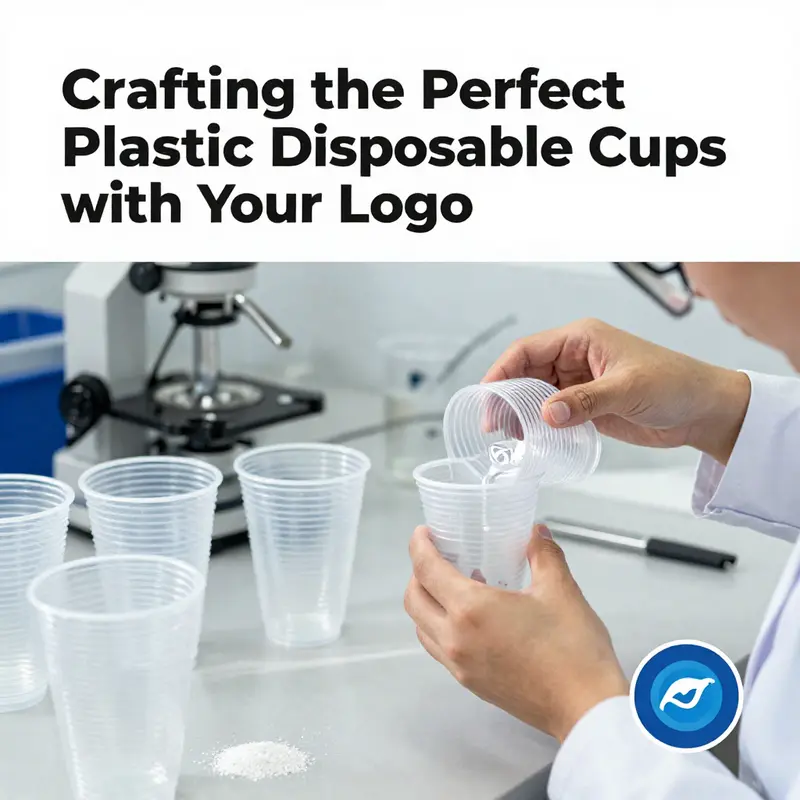
In the crowded world of beverage service, the cup is more than a vessel – it is a brand touchpoint. A durable logo on a plastic disposable cup communicates reliability, values, and consistency from the factory to the table and back through cleaning.
Material selection matters. PET offers clarity and strength for transparent cups; PP provides heat resistance and cost efficiency; PC lends high-temperature performance but raises safety questions; and polystyrene, while common, requires careful safety verification.
Embedded branding – where the logo is molded or blended into the resin – outlasts surface coatings because it cannot peel or wear away with washing or handling. Injection molding is ideal for large-volume production and can produce raised or recessed logos. Hot stamping creates a textured, durable impression without changing the cup’s core structure. Surface printing, including digital or screen printing, enables detailed logos but may fade with time or liquid exposure and must be chosen with adhesion and durability in mind.
Quality control is essential: material consistency, sealing integrity, heat and cold stability, and print permanence all matter for consistency across batches. Third-party safety verification and responsible end-of-life handling strengthen consumer trust.
For brands seeking practical guidance, the choice boils down to scale, desired texture, and lifecycle goals. A logo integrated into the substrate offers longevity; surface applications offer flexibility and customization. The best results emerge when branding strategy, manufacturing capability, and sustainability commitments are planned in concert.
As a concrete reference, consider how durable logos align material choice, branding method, and consumer experience to reinforce trust with every sip.
Final thoughts
Creating customized plastic disposable cups with your logo is a powerful branding tool that can enhance your business’s identity in an increasingly crowded marketplace. Utilizing techniques such as hot stamping and injection molding allows for consistent, high-quality results, while printing methods like direct digital and screen printing provide flexibility for varying production volumes. Furthermore, by embracing eco-friendly practices, businesses can not only appeal to the growing demographic of environmentally conscious consumers but also set themselves apart as leaders in sustainability. Lastly, ensuring rigorous quality control throughout the production process safeguards your brand’s reputation and delivers a superior product. By integrating these insights, your disposable cups can offer not only functionality but also memorable branding that resonates with customers long after their last sip.