
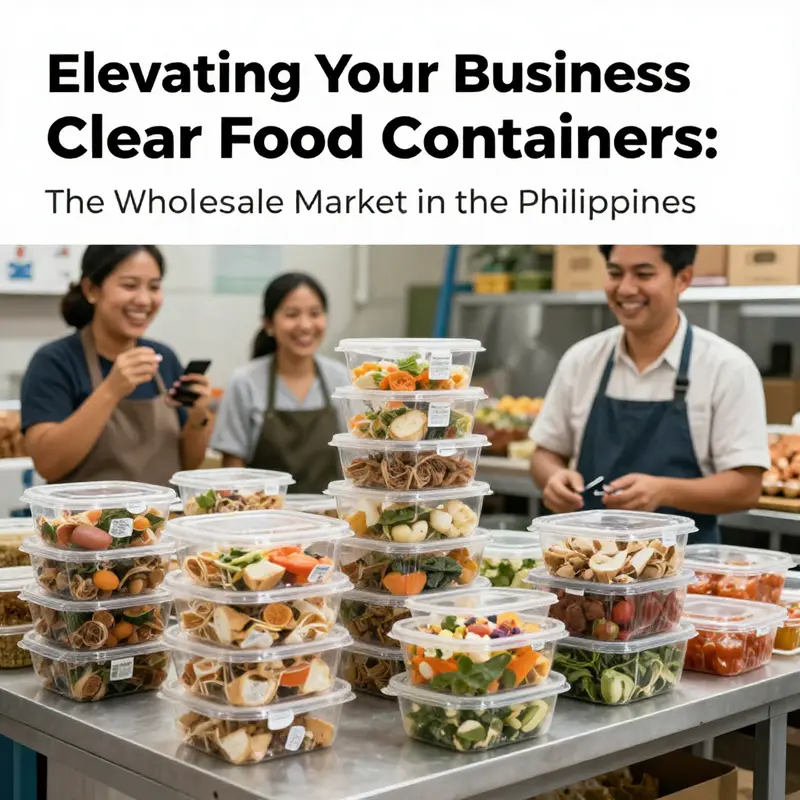
In today’s competitive food and beverage landscape, efficient, appealing packaging has become essential for businesses catering to a diverse clientele. The Philippines’ wholesale market for clear food containers has experienced substantial growth, driven by the need for versatile and consumer-friendly packaging solutions. As a bubble tea shop, restaurant, food truck, or event planner, understanding the nuances of sourcing these containers is crucial to gaining a competitive edge. This article delves into the dynamics of clear food containers in the Philippines, including key suppliers, material standards, and emerging trends. Each chapter provides valuable insights tailored to your business needs, ensuring you make informed decisions as you enhance your offerings with high-quality packaging solutions.
Crystal Clarity at Scale: Mastering the Wholesale Market for Clear Food Containers in the Philippines

Clear food containers act as more than simple vessels; they are the visible backbone of efficiency, accountability, and trust in the Philippine food economy. From bustling home kitchens that feed neighborhood demand to mid-sized caterers that stage events, wholesale buyers rely on packaging that is transparent enough to identify contents at a glance, while sturdy enough to protect freshness through long hours of handling and storage. In a market that blends local manufacturing with selective imports, the desire for clarity translates into a demand for consistency, reliability, and customization. The wholesale landscape is not merely about sourcing the right shape and size; it is about aligning procurement with safety standards, supply chain resilience, and the evolving expectations of a market that prizes hygiene, space optimization, and branding clarity. This chapter surveys how buyers navigate that landscape in the Philippines, where clusters of regional manufacturing, fortified by robust port access, support a thriving ecosystem of clear containers that meet diverse culinary needs.
Material choices anchor the entire decision process. The most common options in the wholesale space balance safety, durability, and cost. Food-grade plastics, particularly PET and HDPE, offer lightness, shatter resistance, and affordability in bulk, making them a practical preference for everyday storage, pantry organization, and takeaway applications. Tempered glass jars and containers, while heavier, deliver non-porous storage that can preserve flavor and aroma for longer periods without absorbing odors or staining. The choice between plastic and glass often hinges on use-case realities: a restaurant may favor stackable PET for bulk dry goods and ready-to-serve portions, while a household or boutique operation that emphasizes long-term storage of grains, spices, or snacks might lean toward glass for its inert, preservation-friendly properties. Importantly, suppliers emphasize that all materials marketed for food contact must meet stringent safety standards, including resistance to heat exposure, ease of cleaning, and inertness that minimizes interaction with stored foods. In practice, this means buyers are well served by requesting documentation that attests to food-grade status and testing results, rather than relying on appearance or price alone.
The technical specifications that buyers pore over are practical and often decisive. Across provinces and markets, common sizes tend to cover a broad spectrum—from compact 200ml units for condiments and snacks to multi-liter capacities that suit bulk ingredients and wholesale catering needs. Features like airtight seals ensure that stored contents stay fresh, while stackable designs maximize vertical storage in crowded kitchens, warehouses, or retail shelves. Some containers incorporate innovative lids with freshness indicators or push-button mechanisms, which can transform inventory management for businesses that track usage and waste. When combined, these attributes translate into real-world benefits: extended shelf life, reduced spoilage, faster restocking, and tighter control over portions during meal prep. Buyers should also consider compatibility with existing equipment—dishwashers and microwaves are common expectations—and verify that lids, gaskets, and seals retain performance after repeated cycles. In this context, the ability to customize lids, rims, or closure mechanisms becomes a strategic lever for brands seeking to standardize their operations while offering a consistent customer experience.
Regional dynamics shape how a buyer scales procurement in the Philippines. The packaging manufacturing sector is well established in areas such as Bulacan, CALABARZON, and Metro Manila, with each cluster offering distinct advantages. Proximity to major ports like Subic Bay and the Manila International Container Port minimizes transit times for imported stock and reduces logistics risk for bulk orders. Localized production in Bulacan, in particular, supports quicker replenishment cycles for regional distributors and wholesalers, keeping lead times predictable for urgent campaigns or seasonal promotions. The logistics calculus also involves currency considerations, import duties, and port congestion—factors that can widen or compress the total cost of ownership for a given container family. Buyers frequently weigh the appeal of lower upfront unit costs from international manufacturers against the reliability and responsiveness of local suppliers who understand domestic regulations, customs procedures, and the specific expectations of Philippine food businesses. In this balancing act, a prominent local supplier in the region often emerges as a reliable partner, offering not only a steady supply but also enhanced communication and faster responsiveness to changing demand. While price remains a consideration, the true calculus centers on lead times, fault tolerance in supply, and the confidence that a supplier can deliver bulk orders without compromising quality.
Sustainability has become more than a topical concern; it now informs supplier selection and product design. The market is increasingly attentive to eco-friendly options, including containers made from recycled or recyclable materials and designs that enable easier end-of-life processing. Wholesalers recognize that buyers—ranging from household consumers to food-service operators—are increasingly mindful of waste generation and packaging footprints. Materials that balance performance with recyclability, or that leverage post-consumer recycled content without sacrificing safety or usability, tend to hold a competitive edge. For many operators, this sustainability lens intersects with cost considerations, as eco-friendly options may require different manufacturing inputs or processing methods. Yet the long-term savings from reduced waste, improved consumer perception, and alignment with regulatory shifts toward responsible packaging help offset the initial premium. Buyers should therefore ask for transparency about the sourcing of materials, the recyclability of containers, and any certifications that demonstrate environmental stewardship, in addition to standard food-safety attestations.
Quality control is the invisible contract that binds buyers and suppliers in this market. Production capacity, throughput, and cycle times must align with order size and delivery schedules. A robust quality program typically encompasses incoming material inspection, in-process checks, and final testing of finished containers, including dimensional accuracy, seal integrity, and resistance to staining or odor absorption after repeated use. Certifications that demonstrate compliance with food safety standards—such as evidence of hygienic manufacturing practices and third-party testing—provide crucial assurance for buyers extending into multiple locations or partnering with large-scale operators. As wholesale volumes rise, the ability of a supplier to maintain consistent quality across batches becomes a defining factor. Buyers should request detailed technical specifications that specify materials, tolerances, and testing protocols, and they should arrange for pre-shipment samples to validate that production runs satisfy the defined criteria before large commitments are made. In this context, a careful sampling process acts as a risk management tool, reducing the chance of receiving mismatched units, ill-fitting lids, or containers that fail to meet stated food-safety standards.
The decision-making process for wholesalers and larger buyers also embraces the potential for customization. The market rewards suppliers who can translate brand identity into packaging that protects product integrity while enhancing consumer perception. Customization can cover a broad spectrum—from consultation on container geometry to branding on lids and embossing, or even designing lids with specific closure mechanisms suited to particular product lines. For rescuing or accelerating time-to-market, many buyers value suppliers who offer tested, ready-made configurations that can be quickly scaled for promotional campaigns or seasonal menus. To support an efficient procurement flow, buyers often prioritize suppliers who can provide precise material specifications, a transparent bill of materials, and reliable documentation for traceability. The result is not only a container that serves function well but one that aligns with enterprise-wide standards for quality, branding, and regulatory compliance. Embedded within this framework is the recognition that the best packaging partnerships are built on clear communication, precise specifications, and a shared commitment to consistent, high-quality outputs across a wide range of environments.
In practice, many buyers will consult specific product detail resources to gauge what is feasible in terms of customization and performance. While multiple options exist, the most relevant considerations revolve around how a given container will perform under real-world kitchen and service conditions. For example, a prospective buyer might examine a line of food-grade takeaway containers that offer standard sizes, tested sealing performance, and reliable access to replacement lids and gaskets. Such resources help translate abstract requirements—like “microwave-safe” or “dishwasher-safe”—into tangible expectations for bulk orders. The procurement journey often benefits from a structured approach: request complete technical specifications with materials, dimensions, and tolerances; obtain certifications that confirm compliance with food safety standards; and arrange for physical samples to test fit, seal integrity, and usability in the target operation. With these steps, buyers reduce risk while maintaining the flexibility required to respond to shifting demand, seasonal campaigns, and evolving consumer preferences.
The practical impact of these considerations becomes evident when buyers navigate the supplier landscape. A well-managed wholesale buy involves balancing cost against reliability, while maintaining a clear line of sight to quality and regulatory compliance. It also means recognizing when a local supplier, with a robust distribution network, can deliver faster and with better communication fit than seeking the lowest upfront price from overseas manufacturers. The goal is to create a steady supply loop that supports ongoing operations, seasonal peaks, and brand-building efforts. This requires disciplined vendor management, from established performance metrics to transparent lead times and after-sales support. When a buyer invests in a rigorous pre-purchase process—demanding detailed material specifications, verifiable certifications, and a small but representative set of samples—the path to bulk procurement becomes less risky and more predictable. The result is a more resilient packaging program that keeps product moving, protects quality, and reinforces consumer confidence in a brand’s cleanliness and professionalism.
For practitioners who want to see how these principles translate into real-world packaging choices, a practical touchpoint can be found in the details of branded, ready-to-ship take-away solutions. These options illustrate how a simple container can be designed to support not only efficient storage but also branding, inventory management, and customer experience. The selection process, informed by the factors above, typically emphasizes material safety, seal reliability, durability under repeated use, and compatibility with existing workflows. As the market continues to evolve, wholesale buyers will increasingly demand transparency about supply chain origins, environmental implications, and the sustainability profile of the containers they choose. In this evolving landscape, the most effective packaging strategies will be those that harmonize safety, practicality, environmental responsibility, and brand storytelling, delivered through consistent, scalable supply networks.
External resource: https://www.jarsphilippines.com/overview
Internal resource: Senang05-food-grade-disposable-kraft-paper-12oz-porridge-bucket-portable-microwavable-paper-soup-cup-with-lids
Clear, Connected, and Competitive: Mapping the Philippine Supplier Network for Wholesale Clear Food Containers
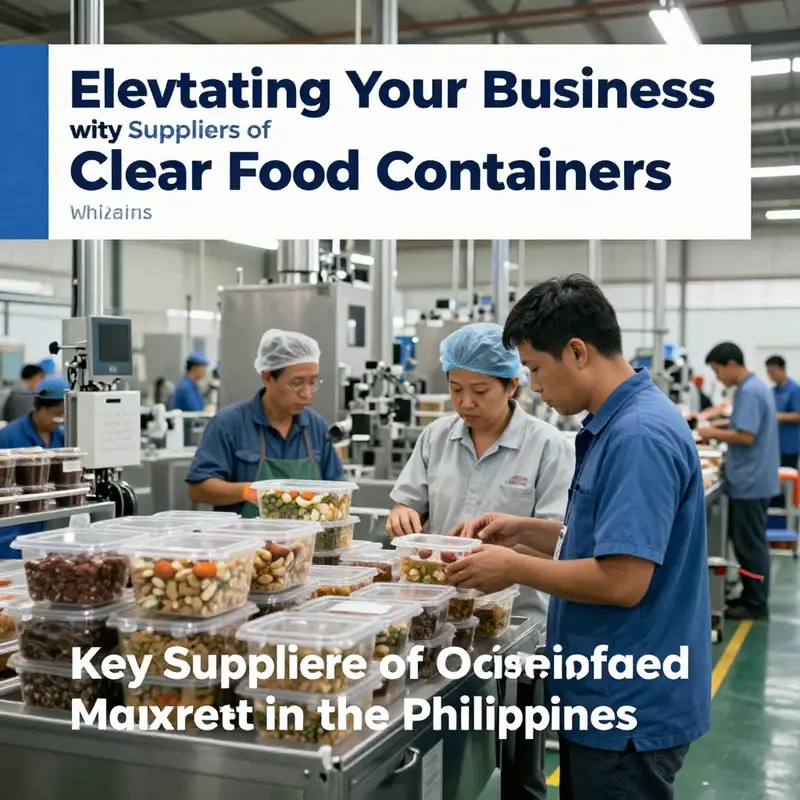
The Philippine market for clear food containers has evolved from a series of scattered workshops into a tightly knit ecosystem that blends local scale with global expectations. As domestic demand for hygienic, visually appealing packaging grows, buyers—whether securing stock for a retail chain, a hospitality outfit, or a startup food brand—discover that the country’s supplier landscape offers a compelling mix of cost efficiency, reliability, and sustainability. A core driver behind this momentum is the country’s network of manufacturing clusters where plastics, glass, and innovative papers converge to produce transparent or translucent containers that meet the high standards of food safety, ease of use, and brand presentation. These clusters, anchored in well-established industrial hubs, are supported by robust infrastructure, trained labor pools, and proximity to ports that streamline both domestic distribution and export readiness. All of this creates a business environment where lead times can be predictable, and communication lines with suppliers can be direct and efficient, a factor often cited by buyers who operate across borders and time zones.\n\nOne of the most persuasive advantages of sourcing clear food containers from the Philippines is cost discipline. Labor costs in the Philippines, when compared with major manufacturing regions in Asia, sit at a notably lower level. This relative cost advantage matters a great deal for mid-volume production runs where the difference between a forecast and actual demand is critical to margins. Lower labor costs, however, do not come at the expense of quality or reliability. What sets Philippine suppliers apart is the proven capability to combine lean production processes with strict quality control across large runs. This balance—cost efficiency tempered by rigorous standards—translates into competitive pricing without sacrificing performance in the field, a combination that resonates with buyers who must manage sizable inventories and multiple SKUs.\n\nLanguage and communication also play a decisive role in the sourcing equation. The Philippines has a long-standing reliance on English as a working language, which reduces the friction that can come with technical negotiations, material specifications, and quality audits. In practice, this linguistic fluency accelerates the procurement cycle. Contracts can be drawn up with clarity, technical data packs can be discussed in real time, and feedback loops from testing samples to mass production can be closed more quickly. For international buyers, this speaks to a smoother onboarding experience, less rework, and fewer rounds of clarifications that can otherwise erode margins or extend timelines. It is not just about speaking the same language; it is about reducing the risk of misinterpretation when material properties, tolerances, and cleanliness standards are at stake.\n\nGeography matters, too. The CALABARZON corridor—encompassing Cavite, Laguna, Batangas, Rizal, and Quezon—has long been identified as an industrial heartland for the country. Its infrastructure, ready access to skilled labor, and proximity to the Port of Manila and Subic Bay support a continuous flow of materials, components, and finished products. This arrangement minimizes the distance goods travel between production sites and distribution points, cutting transit times and lowering the risk of stockouts. The same logic applies to other clusters that are emerging to support export-oriented manufacturing, such as those in Cebu or Davao. While these regions may offer cost advantages and diversification of risk, the core advantage remains: a supplier network that can scale, respond to market shifts, and maintain consistent delivery practices across varied product families—from rigid clear containers to flexible, recyclable packaging substrates.\n\nSustainability is no longer a luxury feature in this space; it has become a baseline expectation. Philippine manufacturers are increasingly testing and adopting recyclable substrates, water-based inks, and energy-efficient production technologies. The supply chain narrative now often centers on the ability to present clear containers that do not merely meet local food safety regulations but also align with broader ESG commitments that major markets are mandating. In practice, this means more options in biodegradable materials such as bagasse or recycled PET, and a growing spectrum of finishes and coatings that improve product performance without compromising recyclability. For buyers who must report to sustainability teams or who serve customers with strict environmental criteria, the Philippine segment offers an appealing path: transparent containers that preserve the visual impact of foods, while reducing environmental footprints through material choices and cleaner manufacturing practices.\n\nThe supplier ecosystem, while mature in its core, remains open to collaboration, customization, and scale. Customization is increasingly common as brands seek to strengthen their market presence with branded logos, precise dimensional tolerances, and design variations that support different product formats. This ability to tailor containers—without sacrificing speed to market—helps buyers align packaging with brand strategy while leveraging local production efficiencies. A critical part of this process is the capacity to deliver on large orders with tight turnarounds. Production capacity and quality control are the twin pillars that sustain confidence when a retailer or chain expects consistency across thousands of units, sometimes across multiple SKUs, in a single shipment. The most effective buyers in this setting will request detailed technical specifications—materials, thicknesses, tolerances, temperatures, and cleanliness standards—along with clear documentation of certifications and contamination controls. Importantly, testing samples before committing to a bulk order remains a prudent step to verify that every parameter matches expectations in real-world conditions.\n\nAnother layer of keeping the supply chain resilient is the capacity for supplier diversification. While a local hub can offer speed and convenience, relying on a single source may introduce risk if demand shifts or disruptions arise. The Philippine supplier landscape, with its clustering and cross-regional networks, lends itself to a strategy of diversification without sacrificing the core advantages of local sourcing. Buyers can establish relationships with multiple suppliers who can produce similar clear container formats, thereby creating options for alternate materials, finishes, or production methods in response to price fluctuations, material shortages, or evolving regulatory requirements. In practice this means building a small, capable supplier base that can share responsibilities for critical SKUs, while maintaining visibility into production schedules, material sourcing, and quality assurance cycles. The result is a procurement approach that balances efficiency with resilience, a blend that is increasingly valued in food service ecosystems where margins can be thin and demand highly variable.\n\nFrom a practical standpoint, buyers should also prioritize transparency in supplier interactions. Detailed technical specifications, complete with material safety data, certifications, and labeling requirements, should be part of every initial inquiry. Where possible, buyers should request third-party certifications that attest to food safety compliance, migration limits for additives, and adherence to hygienic handling practices. This is not merely a box-ticking exercise; it is an essential element of risk management that protects brands, retailers, and consumers alike. Once a supplier is vetted, a staged testing protocol—ranging from physical drop tests and dishwasher compatibility to microwave safety and odor resistance—helps ensure that containers maintain their integrity under typical consumer use. The goal is to confirm that a bulk purchase will perform consistently across the life cycle of the product, from shelf to table.\n\nWithin this landscape, a practical route to deepen understanding of the supplier environment is to examine concrete examples of how customization and local capability translate into market advantages. Consider a case where a buyer needs a clear takeaway container with a secure lid, designed for bakery or deli applications, produced in moderate volumes with a quick lead time. The answer lies in a network that can combine local manufacturing efficiency with the flexibility to adjust design features—such as lid fit, material transparency, and printability—without sacrificing speed. A supplier in the region that demonstrates this balance can often deliver a solution that is both cost-competitive and brand-aligned, enabling a business to scale its wholesale operation with confidence. For readers seeking a tactile sense of what such locally produced solutions look like, a representative example from a disposable kraft paper takeaway box with a clear lid can serve as a practical touchstone. See this reference for a concrete case study of similar packaging configurations: Kraft paper takeaway box with clear lid wholesale food container.\n\nAs buyers weigh options, it is also wise to keep an eye on governance and market signals that may alter supplier dynamics over time. The Philippine packaging ecosystem benefits from ongoing investments in infrastructure, training, and export-ready capabilities. This supports not only local brands seeking to consolidate suppliers but also multinational buyers looking to diversify outside traditional production centers. The ability to coordinate across multiple hubs, maintain consistent quality, and adapt to changing regulatory frameworks positions the Philippines as a meaningful partner for B2B sourcing in clear food containers. The focus on eco-friendly substrates, cleaner production, and responsible sourcing aligns with global expectations, helping Philippine suppliers compete not only on price but on long-term value, reliability, and corporate responsibility.\n\nFor practitioners planning a sourcing program, the takeaway is straightforward: invest in a coherent supplier evaluation framework, insist on complete material specifications, and pursue a staged testing regime before committing to large orders. Leverage the country’s logistics strengths by aligning procurement calendars with port schedules and seasonal production rhythms in key hubs. Cultivate a small network of dependable suppliers who can cover required SKUs and offer a path to future capacity expansion, without surrendering the advantages that come with local production. By maintaining a clear focus on safety certifications, sustainability credentials, and transparent communication, buyers can build a resilient, scalable wholesale operation for clear food containers in the Philippines that serves both local markets and regional export ambitions.\n\nExternal context on the broader supplier landscape can be found in industry resources that map the Philippines’ packaging ecosystem and its growing B2B networks. For readers seeking a comparative view of supplier dynamics, logistics, and market trends across the region, this external resource provides a useful snapshot: https://www.sourcingmag.com/philippines-packaging-suppliers-b2b-sourcing-guide/.
Clarity Under Compliance: How Material Standards and Quality Assurance Shape Wholesale Clear Food Containers in the Philippines
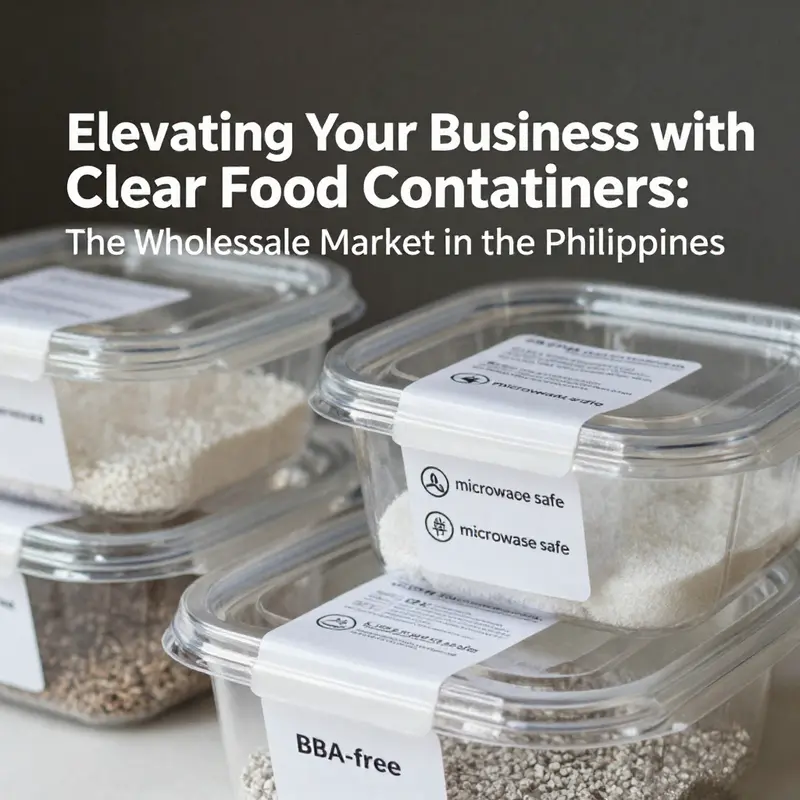
Clear food containers occupy a pivotal nexus in the Philippine wholesale packaging landscape. They are not merely vessels for meals or ingredients; they embody safety, transparency, and trust. In a market where thousands of units move through regional hubs and port corridors before reaching kitchens, retailers, and caterers, the integrity of the packaging materials becomes as critical as the contents they hold. The backbone of this integrity rests on a robust framework of material standards and quality assurance that aligns with national regulations, industry best practices, and the expectations of global buyers who increasingly demand conformity to international safety benchmarks.
At the heart of the regulatory environment is the Philippine Food and Drug Administration (FDA), whose Administrative Order No. 2014-0030 governs the labeling and packaging of pre-packaged foods distributed within the country. This regulatory scaffold is not a mere formality; it codifies the principle that any material coming into contact with food must be safe, non-toxic, and suitable for its intended use. For clear food containers, this translates into a strong preference for food-grade plastics such as PET (Polyethylene Terephthalate) or PP (Polypropylene). These materials are prized for their clarity, strength, and resistance to chemical migration, all of which are non-negotiable when bulk orders move through multiple hands and long supply chains. The FDA’s expectations extend beyond the material itself; they require documentation that demonstrates alignment with international safety benchmarks, including standards recognized by major regulators in the United States and Europe. In practice, this means suppliers should be able to present certified material safety data sheets, compliance certificates, and evidence of ongoing third-party testing.
For buyers and distributors, the implications are immediate and practical. Material safety is not a one-off accreditation but an ongoing commitment to quality control. Third-party testing, batch inspections, and traceability systems are not luxuries; they are essential components of a reliable supply chain. Traceability—connecting each container back to its raw material batch, processing run, and certificate of compliance—becomes a competitive differentiator. In markets that emphasize fast turnover and high volume, the ability to track and verify every batch reduces recalls, minimizes waste, and sustains consumer confidence. The quality assurance regime is reinforced by internationally recognized food safety management standards such as ISO 22000 and HACCP. When suppliers adopt these frameworks, they establish a systematic approach to hazard analysis, critical control points, and continuous improvement. The result is a chain of custody that moves from raw materials to finished product with demonstrable control points at every stage.
Labeling is another critical pillar. In addition to the material identity and safety assurances, clear containers must carry information that enables traceability and informed use. This includes resin identification codes that indicate the material family, the manufacturing date, and a batch number. Such labeling not only helps in quality assurance audits but also guides end users in storage, heating, and cleaning. A transparent labeling culture builds trust with retailers who must present consistent product stories to their customers and with food service operators who rely on predictable performance in busy environments.
Within this regulatory and quality framework, the choice of material remains central. PET and PP are widely recognized as suitable for food contact because they balance clarity with durability. PET offers high clarity, making it possible for consumers to visually inspect contents, which is particularly valuable in the sale and display of ready-to-eat foods. PP, with its excellent heat resistance, serves well for containers that must endure microwaving or dishwashing without compromising structural integrity. Yet the choice of material is not purely a technical decision; it is a risk management choice tied to supply stability and environmental considerations. As buyers increasingly weigh sustainability, the market witnesses a growing interest in options that blend safety with recyclability and reduced environmental footprint. Suppliers respond by highlighting recyclability credentials, the use of recycled content where feasible, and clear commitments to end-of-life programs. This is not just about adopting a glossy label of eco-friendliness; it is about genuine process controls, verified through audits and ongoing performance data.
All of these considerations occur within a highly regionalized supply network. The Philippines benefits from an established packaging manufacturing base in and around Bulacan, CALABARZON, and Metro Manila. These regions host a range of producers and distributors who specialize in food-grade containers and related packaging solutions. Proximity to major ports, such as Subic Bay and the Manila International Container Port, translates into tangible advantages for both domestic distribution and cross-border trade. For wholesale buyers, this logistical setup can reduce lead times, enable more reliable replenishment, and facilitate responsive stock planning during peak seasons. The logistics picture matters just as much as the chemical and microbiological assurances, because even the most rigorously tested container is only as good as the efficiency of its delivery to the customer’s hands.
A critical practical mindset for buyers is to cultivate a disciplined sourcing process rooted in technical clarity and evidence-based evaluation. Detailed technical specifications about materials, dimensions, and tolerance ranges are essential. It is equally important to request certifications that confirm compliance with food safety standards and to insist on product samples for testing before finalizing bulk orders. In a landscape where local suppliers can offer faster cycles and more direct communication than distant manufacturers, the cost calculus often weighs lead times and responsiveness as heavily as price per unit. The procurement team should also consider the broader sustainability narrative of each supplier—the extent to which their processes minimize waste, support recyclability, and align with corporate environmental goals. While a purely low-cost option from a distant supplier might be tempting, the hidden costs of longer lead times, miscommunication, or inconsistent quality can quickly erode the value proposition.
For those seeking concrete illustrations of packaging solutions that resonate with the local market’s emphasis on safety and practicality, a representative example from the broader packaging ecosystem can offer a tangible anchor. Consider the octagonal kraft paper container with a lid—the sort of sustainable, customizable packaging that often accompanies food service and wholesale channels seeking to balance clarity with environmental responsibility. This example showcases how a local supplier formats a packaging proposition with clear labeling, documented material safety standards, and a design that supports branding and product differentiation. While not a clear plastic container, it underscores the same underlying principle: packaging that is safe, traceable, and fit-for-purpose in bulk terms. To explore such packaging options, readers can view a local listing that features an octagonal kraft paper bowl with lid, which serves as a practical reference point for understanding how suppliers articulate material choices and compatibility with regulatory expectations. kraft paper octagonal bowl with lid.
In a mature wholesale market, the interplay between regulatory compliance and supplier capability becomes the deciding factor for who wins the business in a competitive bid. Buyers lean toward suppliers who can demonstrate a transparent, auditable quality system and who can provide robust documentation that their materials meet or exceed the standards set forth by the FDA and recognized international bodies. The emphasis is not solely on passing an initial audit; it is about sustaining a culture of safety and quality through continuous improvement, regular audits, and proactive communication. This is particularly important for wholesale channels where product turnover is rapid, and the risk of defects multiplying across batches is nontrivial. When a supplier’s quality assurance framework is mature—documented through ISO 22000 or HACCP alignment, consistent batch testing results, and reliable traceability records—buyers gain confidence that the containers will perform predictably under the pressures of high-volume distribution and diverse usage environments.
The sustainability thread, while not the sole determinant of material choice, increasingly informs procurement decisions. Eco-friendly options that minimize environmental impact are gaining traction, especially among retailers and food service operators who are building brand narratives around responsible packaging. In practice, this means more emphasis on recyclable materials, safer disposal pathways, and the use of materials with lower fossil-fuel footprints. Suppliers that can articulate a credible sustainability program alongside rigorous safety credentials stand out in competitive bids. For the wholesale market, the push toward greener choices does not dilute safety; instead, it reinforces the need for transparent communication about the lifecycle of containers—from production through use to end-of-life management.
In sum, the Philippine wholesale sector for clear food containers is anchored by a robust regulatory framework, reinforced by comprehensive QA practices and a regional manufacturing backbone that supports both domestic distribution and export-oriented logistics. The path from raw material to retail shelf is mapped by safety data, third-party testing, traceability, and a disciplined approach to labeling. While suppliers compete on price, the winning formula increasingly combines material integrity with reversible environmental benefits and a demonstrated ability to meet lead times demanded by bulk buyers. The result is a market where clear containers—not just for optical clarity but for safety, reliability, and brand integrity—play a central role in the country’s food ecosystem. As buyers become more discerning and regulators more articulate, the emphasis on validated materials, rigorous QA, and transparent documentation will continue to shape wholesale dynamics in the Philippines and beyond.
External regulatory reference: for the official framework governing packaging materials and labeling, see the FDA Administrative Order No. 2014-0030, which outlines the rules and regulations for the labelling of pre-packaged food products distributed in the Philippines. https://www.fda.gov.ph/Regulatory-Information/Orders-and-Notices/2014-0030
Clear Signals: Trends, Sustainability, and the Rise of Wholesale Clear Food Containers in the Philippines
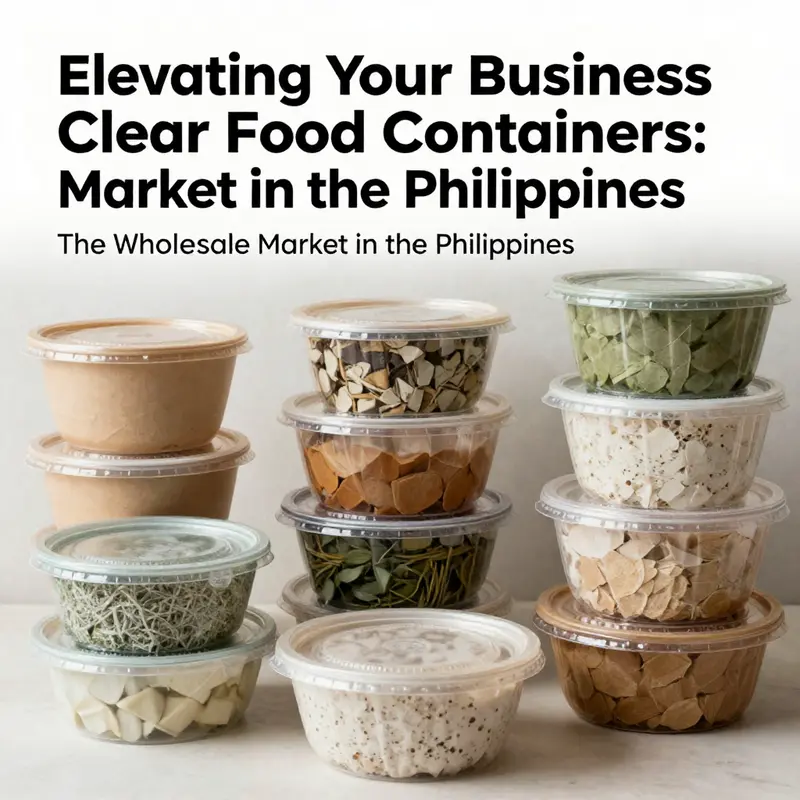
The wholesale market for clear food containers in the Philippines has evolved beyond a simple sourcing concern. It now reflects a broader convergence of consumer expectations, regulatory scrutiny, and practical logistics that together determine how businesses present, protect, and preserve their offerings. In many urban and peri-urban centers, clear containers do more than hold products; they convey transparency about content, freshness, and quality. The visible container becomes a promise to the shopper that what lies inside has been handled with care, stored safely, and prepared for consumption with minimal fuss. As a result, buyers in Bulacan, CALABARZON, and Metro Manila increasingly view clear packaging not as a commodity but as a strategic lever. The journey from sourcing to shelf is shaped by supplier dynamics, material choices, and an evolving appetite for designs that marry utility with brand storytelling, all within a framework of responsible production and sustainable practice.
Material standards sit at the core of the decision-making process. Food-grade containers must withstand the rigors of everyday use, whether they are destined for microwaves, dishwashers, or the immediacy of a quick-service setting. In the Philippine market, this translates into a careful vetting of what the container is made from, and how it behaves under heat, moisture, and repeated handling. Clear containers, whether fashioned from glass, PET, or alternative transparent polymers, are expected to resist staining and odor absorption while maintaining their clarity over time. Suppliers who can provide clear, detailed technical specifications—thickness tolerances, heat resistance, sealing capabilities, and compatibility with typical cleaning cycles—position themselves as reliable partners for restaurants, retailers, and institutional buyers alike. The emphasis on documentation is not incidental; it is a reflection of food safety culture that prioritizes traceability, batch control, and consistent performance across large orders.
Within this context, local supplier ecosystems take on particular significance. A notable example in Bulacan illustrates how the supply chain can leverage regional strengths—efficient distribution, close communication channels, and a robust regulatory backbone—to deliver predictable lead times and dependable service. Local sourcing matters because it shortens the distance between manufacturer and user, reducing the time to respond to demand shifts and the complexity of bulk orders. Yet the choice between local and overseas manufacturing remains nuanced. While some buyers pursue the cost benefits offered by distant producers, the cost of longer lead times, varied communication cycles, and the challenge of aligning quality control with strict food-safety standards can erode the financial math of wholesale purchases. In practice, the best paths balance price, reliability, and responsiveness, recognizing that a clear container is as much about timing as it is about material.
Customization stands out as a key differentiator in a crowded market. Businesses seeking to strengthen their market presence leverage a spectrum of options, from size variations to logo branding and lid configurations. The capacity to tailor dimensions or to apply brand-marking directly onto the container can transform a simple utility item into a marketable asset. The design dialogue extends beyond aesthetics; it encompasses ergonomics, stackability, and tamper-evidence, all of which influence how quickly a product can be moved from warehouse to point of sale. Customization also intersects with sustainability goals. For many buyers, a well-designed container reduces waste—by minimizing over-pack, enabling efficient stacking, or enabling modular configurations that fit standardized shelf spaces. When suppliers provide transparent, measurable specifications and the ability to prototype before bulk production, the relationship becomes a collaborative process aimed at reducing total cost of ownership while elevating consumer experience.
Quality control and production capacity shape the arithmetic of bulk procurement. In markets where demand can spike with promotions or seasonal shifts, a supplier’s ability to scale production without sacrificing uniformity is crucial. Rigorous in-line quality checks, clear acceptance criteria, and well-defined return or replacement policies give buyers confidence to commit to large volumes. From a buyer’s perspective, this translates into predictable turnaround times, consistent product performance across batches, and the flexibility to adjust orders in response to distribution needs. The Philippines’ manufacturing clusters, particularly those around Metro Manila and neighboring industrial belt towns, reflect a maturation in this regard. The presence of integrated logistics hubs, proximate ports, and a skilled labor pool supports not only faster replenishment but also the adoption of enhanced processes that reduce defects and improve consistency in high-volume runs.
Sustainability continues to redefine competitive advantage in the clear-container segment. The global shift toward eco-friendly packaging has landed with particular force in the Philippines, where government initiatives, rising environmental awareness, and a growing appetite for circular economy models push buyers to weigh recyclability, reusability, and renewable content alongside performance. The market is seeing a diverse range of options: containers made with recycled or recyclable materials, designs that enable reuse across multiple meal cycles, and packaging systems that minimize waste through smarter geometry and material efficiency. Innovations such as plant-based plastics, molded-fiber components, and paper-based coatings are beginning to appear in the broader packaging landscape, signaling a broader acceptance of alternatives to single-use plastics. For the wholesale buyer, the challenge is to balance the clean transparency of clear containers with the imperatives of sustainability. This doesn’t simply mean choosing the greenest option; it means selecting formats and materials that align with the product’s life cycle—from production to end-use disposal—and validating performance across cleaning cycles, temperature exposure, and long-term storage.
In parallel with material considerations, advances in packaging technology illuminate new ways to protect and connect with consumers. Smart or intelligent packaging, once the preserve of premium segments, is gradually seeping into mainstream packaging dialogues. Time-temperature indicators, QR codes that unlock supply-chain transparency, and even near-field communication tags that verify authenticity or offer recipe ideas are being explored by brands contemplating a future where packaging communicates more than just its contents. In the Philippine context, these innovations are often piloted in distribution channels that seek to minimize spoilage, bolster food safety, and foster consumer trust. For wholesale buyers, the practical implication is clear: when a supplier can offer compatibility with smart labeling or digital traceability tools, it strengthens the ability to manage recalls, track batch history, and provide value-added services to customers who require assurance and verifiable quality.
Another strand of current thinking centers on modular and functional design. Packaging is increasingly viewed as an integral part of the consumer experience, not merely a vessel. Resealable closures, easy-open lids, and stackable formats for ready-to-eat meals, snacks, and pastries respond to the realities of urban life where convenience and hygiene matter most. The design conversation also touches on shelf appeal: minimalist, culturally resonant aesthetics that reduce visual clutter while ensuring the product remains legible and appealing under store lighting. In the pastry and bakery segments, for instance, high-barrier films and vacuum-seal concepts work in concert with clear containers to maintain freshness and extend shelf life, enabling premium products to retain their texture and flavor during transport. While high-tech packaging may command a premium, the core trend is straightforward: better usability translates into higher throughput, lower spoilage, and stronger brand recall on crowded shelves.
Geographic concentration continues to influence how the market evolves. The clustering of manufacturing and distribution capabilities in hubs such as Metro Manila, supplementary nodes in CALABARZON, and nearby free zones creates an ecosystem where innovation can scale quickly. Proximity to ports like Subic Bay and Manila International Container Port reduces lead times for imported components and enables more agile responses to demand cycles. This logistical reality matters for wholesale buyers who rely on fast restocking and consistent supply during peak periods. It also encourages suppliers to invest in quality control, standardized packaging lines, and transparent communication channels that keep buyers informed from order placement to delivery confirmation. In this environment, local players can leverage knowledge of regional consumer preferences and regulatory expectations to tailor offerings that meet both safety standards and market realities, while still competing effectively against global suppliers on service levels and responsiveness.
For buyers navigating this landscape, the integration of sourcing with strategy is essential. It requires a clear map of requirements: precise material specifications, regulatory certifications, and the capacity to test samples prior to full-scale orders. It also demands a forward-looking view of how sustainability and technology will shape demand. The wholesale Philippines market for clear containers is robust not because it is the cheapest option, but because it presents a balanced proposition: reliability, the ability to customize, and a proven commitment to quality in a market that values both efficiency and environmental responsibility. In practice, this means engaging with suppliers who can articulate how their products meet food-safety standards, how they perform under repeated cleaning cycles, and how they manage waste or recyclability across the product’s life cycle. It also means acknowledging that the best sourcing decisions are those that harmonize price, lead times, and performance with a shared vision for a more sustainable packaging ecosystem.
As this chapter ties together the threads of material science, logistics, and design philosophy, it bears repeating that the future of wholesale clear food containers in the Philippines rests on the ability to deliver transparency in more ways than one. The container must be trustworthy, hygienic, and easy to use; it must support brands as they communicate value to consumers; and it must align with a broader environmental agenda that seeks to minimize waste and maximize reuse. For buyers, the path forward is not simply to chase the lowest price or the newest feature. It is to partner with suppliers who can present clear, verifiable specifications; who can provide prototypes and reliable lead times; and who can demonstrate a genuine commitment to quality at scale. In this sense, the evolution of clear containers mirrors the larger arc of Philippine packaging: a convergence of practicality, safety, and sustainability that serves both business growth and consumer welfare.
To readers seeking a concrete example of sustainability-oriented supplier practices within the broader packaging ecosystem, one can explore a case that emphasizes eco-friendly design and customizable solutions—an approach that resonates with the needs of wholesale buyers looking to differentiate their offerings while maintaining responsible packaging standards. For a practical reference to related eco-friendly packaging formats available in the market, see the following internal resource: eco-friendly paper cup product page. This example highlights how suppliers communicate sustainability credentials alongside functional specifications, reinforcing the idea that even within a market dominated by clear containers, there is room to align with circular economy goals without compromising performance. Additionally, for a broader perspective on how packaging technology is advancing in the region, external readers can consult smart packaging solutions from global leaders, which illustrate how time-temperature indicators, digital traceability, and consumer engagement features are shaping the next generation of packaging in the Philippines: https://www.tetrapak.com.ph/smart-packaging-solutions.
Final thoughts
Sourcing clear food containers wholesale in the Philippines presents an array of possibilities for businesses in the food and beverage sector. From enhancing customer experience with high-quality, attractive packaging to meeting environmental standards with sustainable options, understanding the supplier landscape and material regulations is fundamental. As you explore partnerships with local suppliers, leveraging customization and quality assurance, you position your brand to thrive amidst rising consumer expectations. The knowledge you’ve gained here serves as a roadmap to help you navigate this vibrant market, ensuring your business delivers not only exceptional products but also exceptional packaging.