

Clear hard plastic cups have become a staple in the beverage industry, from bustling bubble tea shops to elegant caterings. Their impressive durability and versatility make them suitable for serving both hot and cold drinks, meeting the needs of varied clientele. In a world increasingly focused on environmental impact, understanding the benefits of these cups can guide businesses towards smarter choices. This article delves into the durability and versatility of clear hard plastic cups, explores their environmental considerations, and examines current market trends and applications, providing a holistic view tailored for bubble tea shops, beverage chains, restaurants, food trucks, catering services, event planners, and corporate procurement teams.
Seeing Through Strength: The Durability and Versatility of Clear Hard Plastic Cups in Modern Serving

Clear hard plastic cups have earned a quiet, unglamorous reputation in the world of beverage service, yet their impact on how we experience drinks is anything but ordinary. When a guest reaches for a cup that is as transparent as a clean pane of glass, what they notice first is not merely the color of the liquid inside, but the promise that the vessel will hold and preserve that color with minimal distraction. Durability, clarity, and the capacity to adapt to a wide range of contexts come together in a design that has become a staple from casual coffee counters to grand wedding receptions and corporate gatherings. The story of these cups is not just about rigid plastic and cost savings; it is about a philosophy of serving that amplifies both practicality and presentation, without asking the user to compromise between convenience and experience. The material choices—principally PET, polyethylene terephthalate, and high-grade polystyrene—are chosen to balance strength with lightness, ensuring a vessel that resists deformation, chips, and cracks even when handled quickly, moved across crowded spaces, or stacked for transport. In practice, this translates to a level of dependability that hosts, caterers, and venue managers have learned to rely on. The cups endure the rough and tumble of fast-paced settings, where guests are served in succession and space is at a premium. They are not fragile glass; they are a robust stage on which beverages perform with grace and consistency. The rigidity inherent to these plastics is not merely a property of the material, but a feature that shapes the entire service experience. A cup that resists collapsing under the pressure of ice and a full pour reduces the risk of spills and accidents. A cup that maintains its shape as heat rises inside, or as a chilled drink is carried across a deck, prevents leaks and awkward moments that can derail a well-planned event. In this way, durability is not solely about raw toughness; it is about maintaining the integrity of the drink’s appearance, aroma, and temperature long enough for the guest to enjoy the moment rather than worry about the vessel’s fate. Clarity, the other half of the equation, is equally essential. The transparent material showcases the beverage as a visual centerpiece, allowing the color, gradient, and even the presence of bubbles to come alive in the light. A bright lemonade, a deep iced tea, or a layered cocktail—though we must note the beverage choices in this context—benefit from a vessel that does not fight for attention with patterns or textures on the side. The cup becomes a window, inviting observers to appreciate the drink’s composition and craftsmanship without distraction. This is especially important in settings where presentation matters, such as weddings or corporate events, where the color and clarity of the beverage contribute to the overall aesthetic and mood. The combination of strength and transparency also encourages a practical versatility that is hard to match with other disposable options. The same cup can hold hot coffee briefly (within the constraints of the material’s heat tolerance) or be used for cold drinks, smoothies, or juice with equal aplomb. The design does not require a separate vessel for each scenario; it provides a reliable canvas that supports a wide spectrum of beverages and occasions. In this sense, durability speaks not only to what the cup can withstand physically, but to what it enables—the ability to serve with confidence in environments that demand speed, efficiency, and consistent quality, from a bustling cafe line to a crowded outdoor festival.
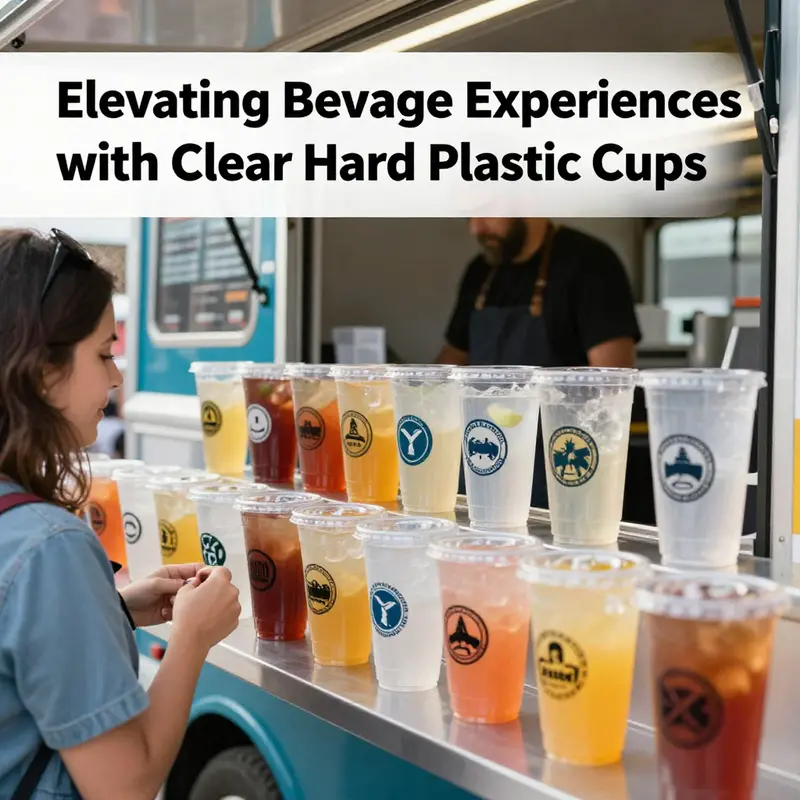
Behind the scenes, the chemistry of durability unfolds in several meaningful ways. PET and polystyrene offer a stiffness that resists denting and bending, which is critical when cups are stacked for bulk storage or transported en masse for large events. This stiffness is complemented by a smooth, uniform surface that resists micro-scratches and chips that might otherwise compromise the clarity or the tactile feel of the rim. The straight rim, in particular, is not simply a stylistic choice; it contributes to stability during pouring, assembly with lids, and stacking for compact transport. A clean, straight edge helps reduce spill risk when a server pours quickly or a guest lifts a cup in a busy room. It also makes the lip feel comfortable against the mouth, which can influence a guest’s perception of the drinking experience. Customization expands the practical reach of these cups beyond mere functionality. The ability to print logos, labels, or branding on the surface means organizations can convey identity and messaging at scale without introducing a secondary vessel for branding. Printed or labeled cups become part of a coordinated visual strategy at events, in hospitality spaces, or in retail settings—an affordable means of reinforcing a brand’s presence while maintaining a clean, minimalist aesthetic that emphasizes the drink itself. This customization, when executed with clear capabilities, can enhance perceived value, signaling attention to detail and a premium experience even in what is often considered a disposable context. Yet the pursuit of branding does not have to erode the simplicity that makes the cups so effective. Clear cups can host branding in a way that preserves drink visibility and the crisp lines that the cups’ designers envisioned. Digital printing methods enable precise logos or designs to appear without introducing opacity that would dull the liquid’s color or create visual noise. The goal is to strike a balance: branding that communicates identity while letting the beverage remain the focal point. In hospitality spaces, that balance is especially important because it supports a narrative of quality without compromising speed or hygiene. Another dimension of versatility lies in the cups’ suitability for different service styles and operations. In fast-service environments, stackability and bulk packaging translate directly into efficiency. A venue can stock large quantities, simplify inventory management, and shorten restocking cycles during peak times. The ability to pre-stack cups at multiple heights or in clearly labeled receptacles helps staff move faster and maintain a clean service area. In sit-down or semi-formal settings, where the visual presentation matters almost as much as the drink, the clear cup aligns with a refined atmosphere by presenting a crisp, modern look that complements a wide range of glassware, linens, and lighting schemes. In outdoor or weather-exposed contexts, the cups’ rigid structure can resist the sun’s glare and wind’s disruption better than more flexible alternatives, helping to preserve order and reduce the chance of spills or tipping when gusts sweep through a venue. In all these contexts, the cups also contribute to safety and hygiene in practical, everyday ways. Their rigid construction resists cracking under impact, an important feature when guests are dancing, chatting, or navigating crowded spaces with filled cups in hand. While not a substitute for careful handling, the toughness of these vessels reduces the likelihood of leaks after a minor drop, which in turn diminishes waste and cleanup time. The glass-like clarity further supports safety by enabling hosts to quickly inspect beverages for visual cues—foam, sediment, bubbles—that might indicate a need for stirring or replacement without opening a lid or removing a top.
Of course, any durable plastic cup sits within a broader ecosystem of materials, waste management, and environmental considerations. The narrative of sustainability is not about singling out a single material, but about choosing a path that minimizes environmental impact while meeting practical needs. Some clear hard plastic cups are marketed as BPA-free, reflecting a response to consumer concerns about chemical exposure. Others emphasize recyclability, aligning with broader recycling streams that communities support. A number of cups are designed to be compatible with standard lids, providing spill resistance for on-the-go consumption, a feature particularly valued by catering teams and quick-service outlets. In outdoor events or festivals, for example, the combination of a secure lid and a transparent cup can support a safer, more controlled drinking experience while maintaining the visual appeal of the beverage. The material codes and recycling options can vary, so it is important for operators to check local guidance and product specifications. In some cases, cups labeled with specific resin codes indicate a stronger emphasis on recyclability or reuse potential, while others highlight reduced environmental impact through manufacturing processes or material substitutions. The conversation around sustainability does not end with a single attribute; it weaves together material science, consumer expectations, and the practical realities of how cups are used, stored, cleaned, or disposed of in real-world settings.
From a practical standpoint, the durability and versatility of clear hard plastic cups are closely tied to the economics of large-scale serving. Bulk packaging, such as 100-count or 1000-pack options, often presents a compelling value proposition for venues that must balance cost with reliability. The ability to purchase in bulk reduces per-unit cost and simplifies procurement planning for busy seasons or large events. It also supports operational efficiency; staff can access a large, known quantity without frequent reorders during a single event, which minimizes disruption and keeps service flowing. The economic logic also intersects with branding opportunities. When a business can rely on a robust, clear vessel that carries its branding or messaging in a way that remains legible and visually appealing, the outcome is a coherent service experience that feels polished and thoughtful. This is not merely about aesthetics; it is about creating a consistent, predictable delivery of beverage service that staff can rely on, customers can trust, and organizers can scale up as needed.
On the technical side, the referenced guide to durable clear plastic cups offers a deeper dive into performance details, including how these cups perform under varying loads, temperatures, and handling conditions. The guide compiles practical data on material properties, processing methods, and typical use cases that help operational teams select the right cup for the right context. For readers who want to translate this knowledge into procurement decisions, engaging with such technical resources can illuminate how a cup’s wall thickness, rim geometry, and surface finish affect its behavior in real-world scenarios. The overarching takeaway is that durability is a multi-layered attribute, shaped by materials, geometry, processing, and the environment in which the cup is used. It is not a single metric but a tapestry of factors that determine whether a cup merely survives an event or actually enhances the guest experience by staying sturdy, clear, and visually appealing from pour to last sip.
In crafting a cohesive service narrative, it helps to imagine the cup as a silent partner in the dining or drinking experience. Its clear surface invites the drink to be noticed, its rigid body supports reliable handling, and its design facilitates clean, efficient operations. For instance, the combination of a rigid structure and a straight rim reduces wobble and improves pour stability, which matters when servers move quickly in crowded spaces. The transparency invites guests to read the color and mood of the beverage, contributing to the sensory journey that starts with sight before reaches the palate. When brands seek to extend their reach through customization, these cups offer a surprisingly flexible platform. A logo or brand motif can be applied in a way that enhances, rather than obstructs, beverage visibility. The balance between branding and drink readability is delicate, but with careful design choices—such as contrast-aware printing and select placements—the result can be both informative and aesthetically pleasing. The end effect is a service experience that transcends the simple act of drinking: it becomes a moment of visual coherence, brand engagement, and tactile satisfaction, all anchored by a dependable vessel.
The broader implications of durability and versatility extend into the everyday rhythms of hospitality and event planning. In a cafe, a fast-food line, or a social gathering, clear hard plastic cups contribute to a predictable workflow: staff can pour, cap, and serve with minimal breaks in movement; guests can carry, sip, and enjoy with minimal interruptions. The cups’ resilience reduces the potential for interruptions caused by chipped rims or cracked bottoms, issues that can complicate service, waste time, and disrupt guest flow. Their versatility reduces the need for a large assortment of vessels, allowing operators to standardize on a single, adaptable solution that covers coffee, juice, smoothie, soda, and even specialty beverages near the upper end of their temperature tolerance. When the environment demands quick turnover and hygienic integrity, the cups’ straightforward, clean design reinforces a culture of efficiency and cleanliness without sacrificing the aesthetic that guests expect from a well-run operation.
The practical implications extend into storage and logistics as well. Stackability means fewer pallets, less floor space, and easier transport—an advantage when events require moving large quantities of equipment from warehouse to venue or when multiple locations rely on the same inventory. The ability to stack without damage supports more predictable inventory management and reduces the risk of breakage during handling. For organizers, these traits translate into fewer spillages and less waste, which is particularly meaningful in outdoor or high-traffic environments where weather and crowd dynamics can amplify risk. In this sense, durability becomes a strategic asset that touches every stage of the service chain, from procurement and storage to handling, presentation, and cleanup. It is not a mere material property; it is a facilitator of consistent, high-quality guest experiences across a spectrum of contexts.
In sum, the durability and versatility of clear hard plastic cups emerge from a thoughtful alignment of material science, design, and practical use. They embody a balance between strength and transparency, between branding potential and beverage visibility, and between bulk efficiency and careful presentation. They support a modern serving ethos that values reliability, hygiene, and aesthetics in equal measure. For operators seeking to elevate their beverage service without complicating operations, these cups offer a compelling proposition: a sturdy, clear vessel that holds up under pressure, showcases the drink, and scales from intimate gatherings to large-scale events. As the industry continues to explore sustainable materials and responsible disposal, the conversation around these cups will likely evolve, reinforcing the idea that durability and versatility can coexist with environmental stewardship. The result is a beverage presentation that remains clean, confident, and compelling, cup after cup, pour after pour.
External reference for deeper technical context and performance data: https://www.amazon.com/dp/B0CQZ9X8KJ
Internal reference for related product category and usage scenarios: food-grade take-away bowls with lids
Weighing the Footprint: How Clear Hard Plastic Cups Affect People and Planet
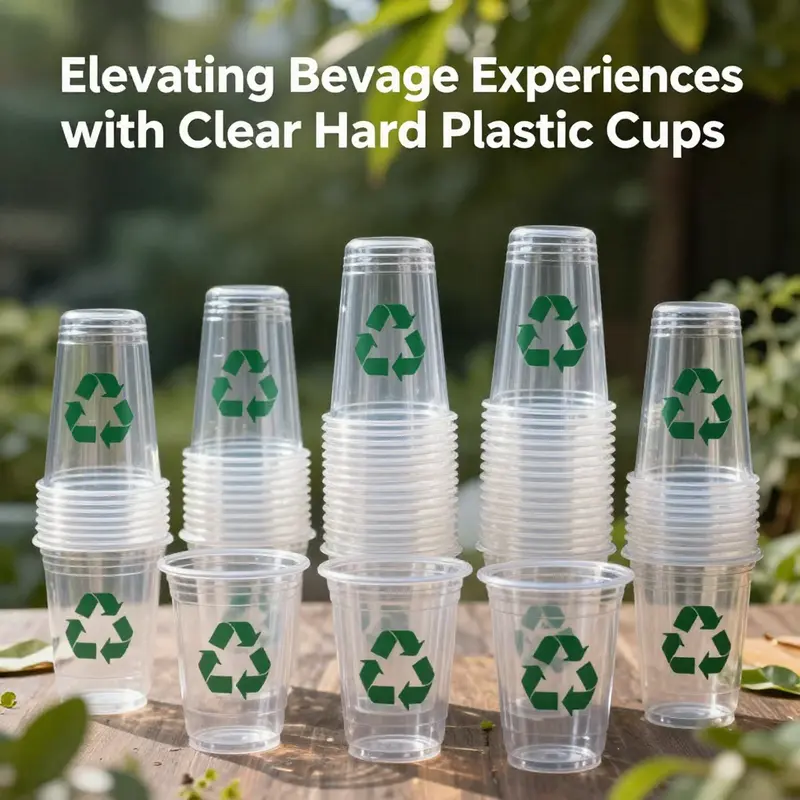
Clear hard plastic cups are attractive for many reasons. They show the drink, stack neatly, resist dents, and feel sturdy in hand. Those qualities make them a default choice for catered events, quick-service outlets, and social gatherings. Yet their environmental footprint is complex. It begins long before the cup reaches a table and stretches far beyond the moment it is tossed away. This chapter traces that footprint across production, use, and disposal. It also explores the less obvious impacts — microplastics, recycling realities, and trade-offs among materials — and offers pragmatic steps that businesses and organizers can take today.
The manufacturing story starts with fossil-fuel feedstocks. Common resins used for rigid clear cups include polystyrene and polypropylene. These polymers come from petrochemicals. Extracting and refining those hydrocarbons consumes energy and emits greenhouse gases. Manufacturing adds more emissions through high-temperature processes and injection molding or thermoforming. The result is a product with a tangible carbon cost per cup. For single-use items, that embodied carbon is apportioned to an item that may live minutes in use. When multiplied across thousands of servings, the total emissions become significant.
Material choice shapes that cost. Some life-cycle studies show polypropylene can require less energy to produce than certain bioplastics. Other assessments highlight that plant-based alternatives can reduce fossil-carbon emissions during feedstock growth. However, comparing materials requires looking beyond production energy. End-of-life behavior, transport distances, and real-world composting or recycling infrastructure matter. A cup that is theoretically compostable may have no practical advantage if it ends up in landfill or a mixed recycling bin.
Durability and clarity are strengths that also create challenges. Hard plastic cups resist breakage and can be reused several times in ideal conditions. But their common use pattern is single service then discard. Once discarded, these cups persist. Polymers like polystyrene and polypropylene do not biodegrade within human timescales. In landfills they can lie virtually unchanged for centuries. In natural environments they fragment under sunlight and mechanical forces. That fragmentation creates microplastic particles. These tiny fragments disperse widely. They are found in oceans, lakes, soils, and even in the air. Microplastics can carry adsorbed pollutants and can be ingested by wildlife. They also enter food webs, presenting potential risks to human health.
Recycling promises to close the loop, but practice often falls short. Clear hard cups carry polymer identification codes, yet that does not guarantee recycling. Many municipal programs do not accept certain rigid plastics. Contamination with food or liquids further reduces recyclability. Sorting facilities rely on automated systems that struggle with small, thin items. Even when cups are collected and sorted properly, the economics of recycling matter. The value of recovered plastic pellets fluctuates. When virgin resin is cheaper, recycled material may be sidelined. As a result, recovery rates for many clear hard plastics remain low. Facilities that can handle clear, uncontaminated rigid cups exist, but they are not ubiquitous.
A recurring challenge is mixed-material products. Some clear cups include additives or surface coatings for clarity or rigidity. Lids, sleeves, or coatings may be of different polymers. Those combinations complicate sorting and reprocessing. The single-use convenience offered by disposable clear cups is often coupled with a multi-material reality that reduces recycling viability.
Comparing clear plastics to alternatives requires nuance. Paper cups have long held a reputation as more sustainable. Yet most paper cups are lined with polyethylene or another barrier to prevent leaks. That lining creates recycling and composting challenges. Industrial compostable paper variants use plant-based coatings, but they require specific conditions to break down. If those conditions are absent, these cups behave like conventional disposables. Bioplastics such as polylactic acid (PLA) offer industrial compostability, but their life-cycle impacts vary. Some studies indicate that PLA may consume more energy during production than polypropylene. The net climate and pollution consequences depend on feedstock sourcing, the energy mix during manufacture, and how the product is managed at end-of-life. Thus, a simple material swap does not automatically yield better environmental outcomes.
Beyond material substitution, design and logistics influence environmental performance. Lightweighting reduces material per cup and lowers transport emissions. Stackable, nested forms save space during shipping and storage, cutting fuel use. Designing cups for easy cleaning and reuse encourages multiple-use cycles, spreading embodied impacts across more servings. When reuse is not feasible, designing for recyclability helps. That means minimizing mixed materials, avoiding problematic additives, and labeling clearly to guide consumers and sorters.
Policy and systems thinking are central. Individual choices matter, but system-level changes move the needle faster. Extended producer responsibility (EPR) programs shift waste costs back to producers. EPR can incentivize manufacturers to design for recyclability and to invest in collection infrastructure. Local procurement policies can favor returnable or reusable options for public venues. Investment in industrial composting and specialized recycling technologies expands the feasible options for alternative materials. Where such infrastructure is missing, policy can support its buildout.
On the ground, event planners and businesses have several practical levers. Reusable cup systems reduce waste most effectively when logistics support them. A well-run return system for reusable cups can dramatically cut disposables. That requires collection points, washing capacity, and clear incentives for returns. Deposit-return schemes work well in many settings. They pair a small fee with a refund upon return and can be scaled for festivals, campuses, and corporate events.
When reusable systems are not practical, select disposables strategically. Choose cups made from a single, widely recyclable polymer. Confirm that local recycling programs accept that material. Request minimal packaging and choose suppliers who can document recycled content in their products. Where compostable options are used, verify access to industrial composting and post clear disposal instructions for attendees. Mis-sorting compostable items into recycling streams can cause contamination and higher downstream costs.
Operational habits matter too. Educate staff and guests with concise signage. Place conspicuous disposal stations labeled for recycling and composting. Use color-coded bins and simple pictograms showing what goes where. Train servers to separate lids from cups when needed. Dirty or liquid-laden cups are less likely to be recycled. Quick pre-rinse stations at large events can improve recyclability, though they require water and attendant labor. Balance the environmental trade-offs of water use against improved recovery outcomes.
Supply-chain choices influence impact upstream. Source materials and finished goods from partners that reduce transport emissions. Consolidate shipments and order in quantities that match demand to avoid overstock waste. Consider local manufacturers to shorten distribution distances. Work with suppliers who disclose life-cycle assessments or environmental product declarations. Those documents can reveal trade-offs and allow more informed procurement.
Marketing and procurement often focus on visible sustainability claims. Buyers should look for substance behind the claims. Ask vendors for third-party verification of recyclability or compostability. Request information about resin content, recycled content percentages, and whether post-consumer recycled material is used. Vendors should be able to explain how their products behave in real-world recycling systems. If they cannot, treat claims cautiously.
There are technological innovations that can improve outcomes. Chemical recycling can convert mixed or contaminated plastics back into feedstocks. While promising, these technologies are still scaling and require energy inputs that affect overall footprints. Improvements in sorting technology, such as near-infrared optical sorting and AI-enhanced conveyor systems, increase the share of material that is recoverable. Investment in these front-end sorter upgrades, however, depends on municipal budgets and recycling market demand.
Look also at smaller design shifts. Lids that snap into place and remain attached during emptying make separation easier. Cups with molded-in markings for identification reduce the need for applied labels that can contaminate recycling streams. Using monochrome materials simplifies sorting. Each incremental change can raise overall recovery rates when adopted at scale.
Equity and access must be considered. Not every community has the same infrastructure. Rural areas often lack industrial composters and have limited recycling options. Policies that assume access to advanced waste management systems can inadvertently penalize these communities. Businesses operating across many regions should align their packaging choices with the lowest common denominator in their supply chain or take steps to support infrastructure improvements in underserved areas.
Cost remains a practical constraint. Reusable systems require capital for collection and washing. Compostable alternatives can carry higher per-unit costs. Recycling programs can be more expensive when contamination is high. However, when lifecycle costs are accounted for, there is often a favorable case for investing in reuse and improved waste management. Evaluating total cost, including disposal and environmental externalities, reveals true value beyond per-item price.
null
null
Final thoughts
Clear hard plastic cups represent a perfect blend of functionality, aesthetic appeal, and environmental consideration for various industries. Their durability ensures they can handle both hot and cold beverages with ease, making them a go-to choice for bubble tea shops, restaurants, and event planners. Emphasizing eco-friendliness by opting for BPA-free and recyclable options can attract conscious consumers and elevate brand identity. With an understanding of their versatility and the market trends related to these cups, businesses can effectively enhance their beverage service offerings and create memorable experiences for their customers.