
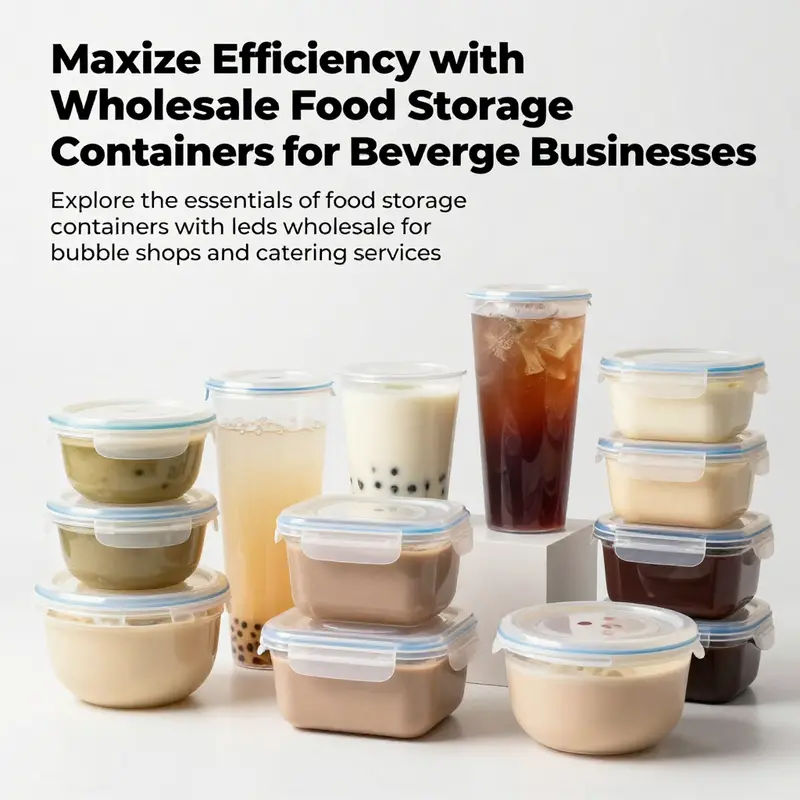
The growing demand for efficient food storage solutions is reshaping how beverage shops, restaurants, and catering services manage their offerings. Food storage containers with lids are essential not only for preserving food quality but also for enhancing workflow efficiency. As the market adapts to consumer preferences and innovative materials, businesses must stay informed on the latest trends, container types, supplier strategies, and customer needs. This exploration provides strategic insights into sourcing the right wholesale food storage containers, ensuring businesses meet both operational efficiency and customer satisfaction.
How Wholesale Market Forces and Innovation Are Reshaping Food Storage Containers with Lids
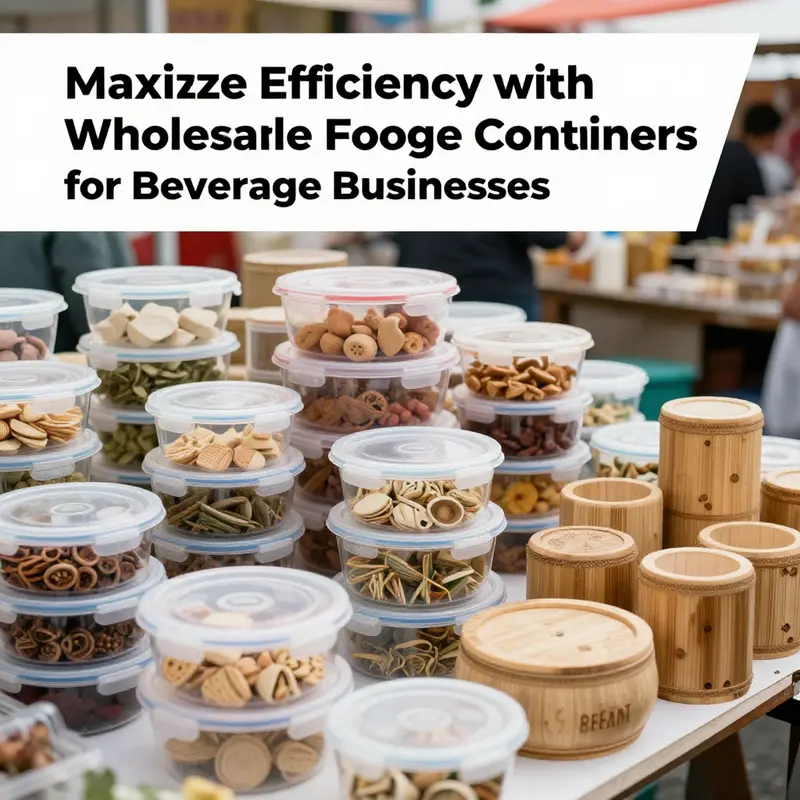
The wholesale market for food storage containers with lids is no longer defined by simple unit costs. Buyers now navigate a landscape shaped by intelligent design, sustainability goals, and digital supply chains. These forces change what retailers and manufacturers offer, and they alter how procurement teams evaluate value. The result is a market where performance, certification, and lifecycle thinking weigh as heavily as price. This chapter traces those converging trends and explains practical implications for bulk buyers and suppliers.
A primary shift is the move from commodity thinking to feature-driven differentiation. Historically, most wholesale orders focused on volume and the lowest possible price per unit. Now, two parallel streams exist. One stream competes on very low cost for basic, short-life use. The other pursues premiumization, offering durability, multifunctionality, and certified safety. This split is visible across materials. Low-cost polymer containers still dominate high-volume use cases where disposability works. At the same time, glass and stainless steel lines attract buyers who prioritize reusability, food safety, and brand positioning. Recognizing which stream applies to a given customer base is essential when placing large orders.
Material choice now signals more than cost. Glass, for example, delivers perceived quality and longevity. Many glass containers in wholesale assortments also feature airtight seals via silicone gaskets or metal clips. That combination supports microwave, freezer, and dishwasher compatibility, which appeals to households and retailers focused on long-term value. High-boron silicate glass further expands options for thermal stability, enabling products that can move from oven to table. Stainless steel entries answer another buyer need: rugged, hygienic storage for on-the-go meals and institutional kitchens. Meanwhile, plastics remain attractive where economics rule. However, rising regulation and consumer pressure are forcing manufacturers to source higher-grade polymers. Recycled and food-grade polymers have become central to sustainability claims.
Sustainability is not a marketing buzzword. It drives specification decisions in procurement meetings. Regulatory moves in several regions now limit single-use plastics and favor recyclable or biodegradable solutions. Manufacturers respond by redesigning product families. Paper- and bagasse-based bowls now coexist with reusable glass and metal. Some wholesale suppliers provide mixed assortments that pair inexpensive disposable liners with reusable outer shells. Others offer fully compostable single-use solutions that address short-term needs without long-term waste. For buyers, this requires clearer sorting of use cases. If the product will touch hot food, the material must meet heat resistance standards. If the product will be marketed as compostable, the supply chain must verify industrial compostability claims. In practice, that means requesting third-party test reports before placing large orders.
Another powerful trend is smart and connected storage. Smart containers incorporate sensors, RFID tags, or simple counters built into lids. These features enable inventory visibility and food freshness tracking. For retail clients and food service operators, smart lids help reduce waste by monitoring shelf life. For manufacturers, offering smart-enabled lines opens higher-margin opportunities. The smart market scales as connected-home adoption grows. Whole supply chains will need to support firmware updates, communication protocols, and data privacy assurances. Wholesalers considering smart containers should plan for post-sale support and interoperability testing. This changes buyer-supplier relationships. Sales cycles lengthen, but lifetime value rises when products deliver actionable intelligence to end users.
Premium features beyond electronics also matter. Leak-proof seals, stackable geometry, clear labeling areas, and modular nesting for transport significantly influence purchase decisions. Certifications such as UN testing for leak resistance, food contact approvals, and material traceability raise a product above commodity alternatives. For bulk buyers supplying institutional customers, these certificates are not optional. They enable placement in sensitive markets and justify higher price points. Vendors that can bundle certification documentation into product catalogs gain an advantage in request-for-proposal processes.
Digital transformation inside manufacturing and procurement is accelerating. Smart factories and modern execution systems reduce lead times and increase repeatability. For wholesale buyers, this means more consistent quality and the ability to place smaller, more frequent replenishment orders without premium costs. When factories integrate digital twins or advanced planning systems, they can model demand scenarios and reduce overproduction. This stability benefits buyers by lowering inventory risk. It also supports customization at scale, allowing for branded lids or color variants without prohibitive tooling fees.
Service-oriented models are also emerging as an important market response. Rather than selling containers once, some suppliers now offer lifecycle services such as leasing, take-back schemes, and refurbishing programs. Circular leasing models for reusable containers help manage raw material price swings. They also appeal to corporate sustainability goals. For procurement teams, these models introduce new contract structures. They shift capital expenditures toward operating expense models and require tracking and reverse logistics. But they also reduce landfill contributions and can extend customer relationships.
Supply chain responsiveness is a practical lens through which buyers evaluate vendors. Fast response times indicate operational discipline. Suppliers that answer inquiries quickly and clearly tend to process orders faster and provide better specification support. For wholesale purchasers, this reduces lead-time uncertainty. It also reduces the risk of specification mismatch. When assessing suppliers, measure response time, sample turnaround, and problem-resolution speed. These metrics often predict long-term reliability more accurately than a low unit price.
Certification and independent verification matter more than ever. Importers must insist on third-party test results and factory audits. Such documentation protects against reputational and compliance risks. It also de-risks private-label programs where the buyer’s brand is on the line. Certifications commonly requested include food contact compliance, material composition testing, and claims that support recyclability or compostability labeling. Buyers should integrate these verification steps into supplier selection. Doing so prevents costly returns and helps maintain retailer trust.
The phenomenon of a K-shaped market is visible in many categories. Commodity plastics face intense competition and overcapacity, which pushes prices down. Meanwhile, high-performance, certified, and differentiated products command resilient demand and premium pricing. This creates strategic choices for wholesalers. One path competes on price and scale. The other focuses on margin, service, and brand alignment. Both are valid, but they require different supply chain setups. Low-cost supply chains emphasize minimal customization and aggressive logistics. Premium supply chains invest in quality control, certification, and flexibility.
Design for logistics is an overlooked advantage. Container geometry affects palletization, transport costs, and storage efficiency. Efficient nesting and stackability reduce freight costs. Containers that ship flat or stack tightly when empty reduce air freight and warehousing expenses. For large wholesale orders, these efficiencies compound into significant savings. Procurement professionals should ask suppliers for packaged dimensions, nest ratios, and load plans. Small changes in design often yield outsized reductions in freight expense.
Innovation extends into niche functional enhancements. Vacuum-sealed lids with one-touch pumps preserve freshness for dry goods. Modular sets with interchangeable lids increase perceived value. Multi-compartment lids support meal-prep trends. Each incremental feature can justify a higher wholesale price if it addresses a distribution or consumer need. Evaluate which functional upgrades deliver measurable benefits to end customers and retailers before adding them to an assortment.
Risk management also deserves attention. Raw material price volatility and transportation disruptions remain realities. Mitigation tactics include multi-source strategies, staggered order placements, and buffer inventory for critical SKUs. Contracts with clear reorder points and minimum lead times reduce the risk of stockouts. Buyers should also build clauses for quality non-conformance and late delivery. These clauses protect margins and limit exposure when volumes scale.
Brand positioning in wholesale catalogs now factors into material choices. Retail buyers often choose products that align with their sustainability narratives. Offering an assortment that balances recyclable plastics, compostable disposables, and premium reusable options increases appeal. For instance, pairing a recyclable PP lid with a bagasse bowl creates an attractive hybrid for quick-service operators. Linking product features to clear sustainability metrics helps retailers make purchase decisions and communicate value to consumers.
Finally, procurement agility is a competitive asset. Markets shift. Regulations change. New materials and features appear. Buyers who streamline their supplier onboarding process, require transparent lead-time reporting, and maintain a clear certification checklist adapt faster. They can introduce new products to market sooner, keep pricing competitive, and reduce the impact of regulatory shifts.
For wholesalers and procurement teams focused on long-term growth, the path forward is clear. Treat containers as systems, not commodities. Factor in lifecycle cost, certification status, and end-use suitability. Evaluate suppliers for digital maturity and service offerings. Design assortments that reflect both low-cost and premium demand streams. And adopt procurement processes that prioritize responsiveness and verification. These actions will position businesses to capture growth in a market that values intelligence, sustainability, and dependable supply.
For more data on the projected growth and drivers of the market, refer to the Global Food Container Market report: https://www.marketsandmarkets.com/Market-Reports/global-food-container-market-18292.html. For an example of how eco-friendly paper bowls with lids are presented in wholesale catalogs, see this eco-friendly kraft paper salad bowl with lid.
From Bulk Shelves to Kitchen Shelves: Navigating the Wholesale Market for Lidded Food Storage Containers
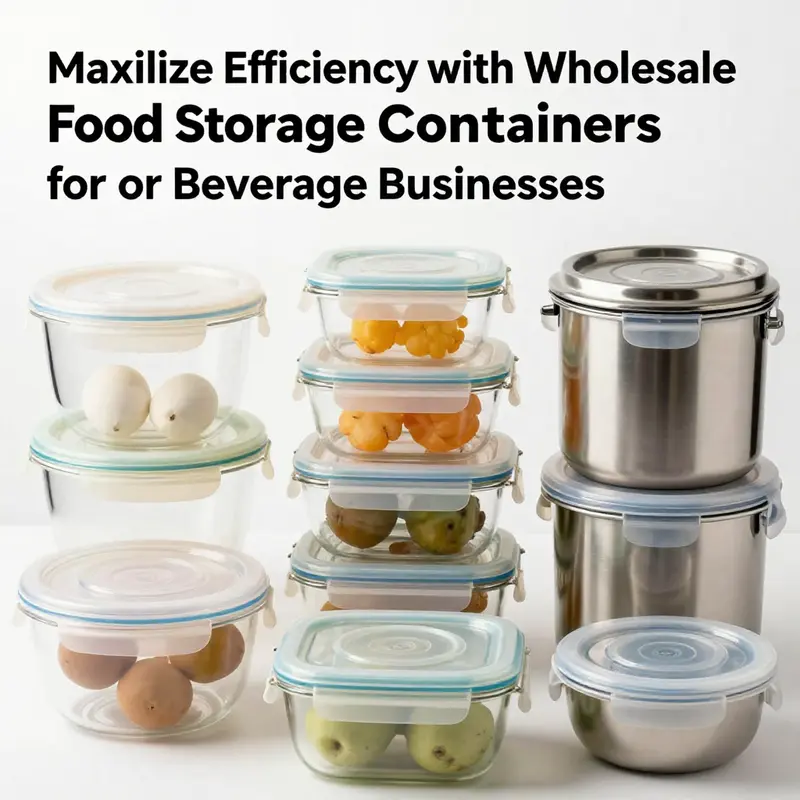
In wholesale procurement for lidded food storage, buyers balance cost, reliability, and lifecycle impact. This chapter provides a concise overview of material families (glass, plastic, stainless steel) and how lid designs influence durability, safety, and handling. It emphasizes supplier selection, certifications, and the way bulk dynamics shape packaging choices. Practical takeaways include standardizing lid sizes, considering recyclability, and planning for scalability across foodservice, retail, and industrial operations.
Glass containers offer clarity and rigidity, with borosilicate or tempered glass favored for thermal stability and easy inspection of contents. Lids typically use silicone gaskets or metal bands to seal and protect freshness. Plastic options leverage PE, PP, and LLDPE for light weight and cost efficiency, while expanding into insulated or vented designs for delivery and prep needs. Stainless steel provides rugged durability and hygienic performance, though at higher unit costs and different logistics considerations. Specialized and industrial-grade vessels extend containment and processing capabilities for high-volume environments.
Across all materials, successful bulk sourcing hinges on clear specifications, reliable lead times, and validated certifications (e.g., food safety, microwave or dishwasher suitability). Standardizing lid types and ensuring compatibility across container families reduces complexity, lowers risk of misfits, and improves handling in warehousing and transport.
The wholesale market rewards procurement strategies that couple technical due diligence with supplier performance data, enabling resilient sourcing that scales with seasonal demand and changing menus or product lines.
null
null
Demand by Design: How Consumer Choices Shape Wholesale Food Storage Containers with Lids
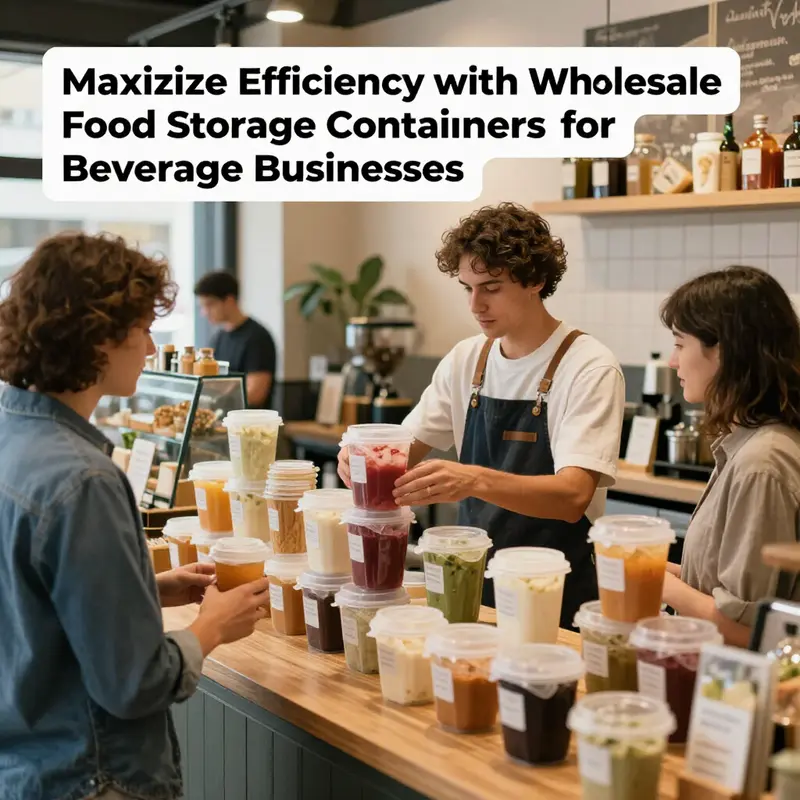
Consumer priorities have become the primary compass guiding wholesale decisions for food storage containers with lids. Wholesalers no longer respond only to price signals. They must interpret nuanced preferences that combine performance, sustainability, and everyday convenience. This chapter traces those preferences and translates them into practical sourcing and product-development guidance for buyers handling bulk procurement.
A clear thread runs through current demand: consumers expect containers to solve real daily problems. Leak resistance ranks high, especially for people who commute or rely on prepared meals. Odor control matters for long-term storage of pungent foods. Durability matters to those who view containers as a long-term investment. When these functional requirements intersect with environmental concerns, they form a decision matrix that favors higher-quality items. Buyers who assume low price is enough risk misalignment with end-user expectations.
Willingness to pay more for demonstrable performance is a measurable trend. Many consumers will spend extra when value is transparent. For wholesalers this translates into product tiers. Entry-level, low-cost polymers still serve high-volume, short-term needs. However a meaningful portion of market demand now seeks mid- to premium-tier solutions. These offer better seals, thicker walls, and materials designed for repeated use. The implication is that procurement strategies must balance unit cost against expected lifespan and perceived value.
Sustainability is no longer optional. Reusable, recyclable, and low-toxicity materials influence purchase decisions across demographic groups. Interest in BPA-free materials remains strong, and buyers commonly ask for independent test reports. Some markets want containers made from recycled plastics or biodegradable polymers. Others prefer long-life materials like glass or stainless steel that reduce lifetime environmental impact. For wholesalers, offering a range across this spectrum allows them to address both eco-driven buyers and cost-sensitive channels.
Design and usability determine repeat purchases. Consumers prefer lids that are easy to open and reclose, even with wet hands. Airtight seals are a baseline expectation for many buyers. Stackability, transparent walls, and modular designs also affect picking behavior. Space efficiency in kitchens drives demand for stackable sets with uniform dimensions. For retailers and foodservice clients, modular systems that support portion control and display are attractive because they simplify merchandising.
Material choices must satisfy multiple use cases. Plastic containers remain economical for high-volume orders. They are lightweight and inexpensive to ship. But many buyers see plastic as a shorter-term solution. For customers prioritizing long-term use and microwave, freezer, and dishwasher safety, glass is appealing. Tempered or borosilicate glass resists thermal shock, and added silicone gaskets or metal clips create reliable airtight seals. Stainless steel answers a different set of needs: durability, easy cleaning, and a premium feel. Each material involves trade-offs between price, weight, breakage risk, and perceived sustainability.
Innovations in lids and sealing systems deserve special attention. Simple snap lids work for many applications. Yet vacuum-sealed lids and one-touch pumps are now visible in the wholesale catalog. These extend the freshness window for dry goods like coffee and spices, and for perishable items when used with compatible containers. Vented lids are growing in popularity for produce and items that need breathability. Sellers who showcase these features in predictable, demonstrable ways win trust from buyers focused on performance.
Aesthetic choices are increasingly important for home and retail markets. Minimalist, modern designs with ribbed glass or bamboo accents appeal to eco-conscious buyers. Natural lids, like bamboo or wood-grain finishes, communicate sustainability even without technical claims. Clear walls let users identify contents quickly, reducing food waste. For wholesale buyers, packaging and display-ready design help retailers convert interest into sales.
Lightweight, disposable, eco-friendly options remain part of the mix. Many foodservice buyers require recyclable or compostable containers with lids. Paper-based bowls with waterproof coatings and PP lids serve quick-serve outlets that still need leakage protection. Wholesale buyers should recognize that single-use sustainable options are often chosen for hygiene, convenience, or regulatory reasons. Combining reusable and compostable SKUs in a portfolio lets wholesalers supply a full service offering to diverse clients.
Procurement strategies must evolve accordingly. First, specification clarity is essential. Wholesalers need to define performance metrics for leak resistance, seal longevity, temperature tolerance, and material safety. RFPs and purchase orders that include measurable acceptability thresholds reduce misunderstandings. Second, quality assurance must go beyond visual inspections. Independent third-party testing and certifications for food contact safety are crucial, especially for international purchases. Buyers should request documentation on migration testing and compliance with relevant food safety standards.
Supplier responsiveness matters in operational terms. Fast communication, clear lead times, and the ability to handle order changes affect downstream inventory planning. Buyers report fewer disruptions when suppliers respond quickly to queries. A disciplined supplier that provides prompt updates helps manage seasonal demand spikes and promotional cycles. Wholesalers should include response-time metrics in supplier vetting criteria and in service-level agreements.
Logistics bring practical constraints into the decision. Glass sets are heavier and more fragile. They increase shipping costs and require protective packaging. Bulk orders of glass may call for staggered shipments or local warehousing to reduce transit risk. Plastic and metal offer shipping efficiencies but bring questions about long-term environmental impact. For international sourcing, consider minimum order quantities, customs handling, and the availability of replacement parts like lids in future orders.
Pricing strategies must reflect total cost of ownership. A slightly higher per-unit price for a durable container can yield lower lifetime cost. Wholesalers should develop clear value narratives that explain how premium features reduce returns and generate stronger repeat business. Demonstrating lifecycle advantages helps justify higher margins to retail partners and B2B clients.
Transparency and traceability build trust. Modern buyers ask where materials come from, and how products are manufactured. Wholesalers should be prepared to share supply-chain details. Claims about recycled content or biodegradability need documentation. Independent audits and supply-chain mapping reduce the risk of greenwashing accusations and support B2B sales conversations.
Packaging choices influence both procurement and retail performance. Attractive shelf-ready packaging reduces retailer labor. Compact packing that maximizes container protection while minimizing volume yields transportation savings. For disposable options, unions of compostable bases with properly fitting lids support both function and sustainability claims. Consider offering marketing collateral that highlights use scenarios and care instructions. Simple, clear instructions on lid maintenance increase customer satisfaction and reduce returns.
Customization matters for many buyers. Custom branding, color choices, and size assortments let wholesalers serve different channels. Foodservice and retail clients often want logo-ready lids or branded inserts. Modular sets that let buyers combine sizes create cross-selling opportunities. However, customization increases lead times and minimum order quantities. Wholesalers need processes that balance flexibility against the operational complexity of multiple SKUs.
Testing the market at scale requires smart sampling. Wholesalers should offer small sample lots for pilot programs. These allow clients to evaluate leak resistance, lid fit, and consumer response. Pilot feedback informs reorder decisions and reduces the risk of overcommitment. Sampling also provides data on warranty claims and real-world durability, which improves forecasting.
For buyers focused on emerging features, monitoring innovations is essential. Vacuum sealers, silicone gaskets, and hybrid materials that mix glass with natural lids are areas to watch. These features often command a premium but can create distinct category advantages. Wholesalers should maintain a portion of their catalog for experimental SKUs. This approach lets them test uptake without tying up capital in large inventories.
Service and after-sales support influence long-term relationships. Clear return policies for defective lids and replacement-part availability increase buyer confidence. Training materials for retail partners and foodservice clients that explain correct sealing techniques reduce misuse. A small investment in education pays off with lower return rates and improved product perception.
Finally, segmentation of offerings creates clarity for buyers. Presenting products in logical groups—economy, reusable eco, premium glass, stainless steel—helps clients understand trade-offs. Each segment should list key performance indicators. For example, leak rate under specified conditions, dishwasher safety, and expected lifecycle. Clear segmentation accelerates decision-making and reduces negotiation friction.
The wholesale landscape for containers with lids is shifting from commoditized transactions to value-driven partnerships. Consumers push demand toward reliability, sustainability, and thoughtful design. Wholesalers who translate these preferences into clear specifications, diversified material portfolios, and transparent supply chains will secure stronger relationships. Offering balanced solutions—ranging from economical disposables to premium, long-lasting containers—enables wholesalers to meet both immediate needs and long-term market shifts. By aligning procurement practice with the priorities that matter to end users, wholesalers can transform consumer preferences into repeatable business outcomes.
For a detailed look at consumer preferences across multiple product categories, consult the relevant survey results here: https://www.researchgate.net/publication/381759286ConsumerPreferencesforReusableFoodPackagingSurveyResultsAcross40ProductCategories
For an example of an eco-conscious disposable option with lid compatibility, consider this 750ml recyclable kraft salad bowl with a PP lid: 750ml recyclable kraft salad bowl with PP lid.
Final thoughts
As businesses in the beverage and catering industries continue to navigate changing consumer expectations and operational challenges, understanding the dynamics of food storage container options is crucial. The right containers not only enhance product freshness but also streamline service efficiency. By staying attuned to market trends, leveraging diverse options, and refining sourcing strategies, businesses can ensure they are well-equipped to meet customer demands while optimizing their operational processes. Choosing reliable suppliers and high-quality products will be instrumental in achieving success in this competitive landscape.