
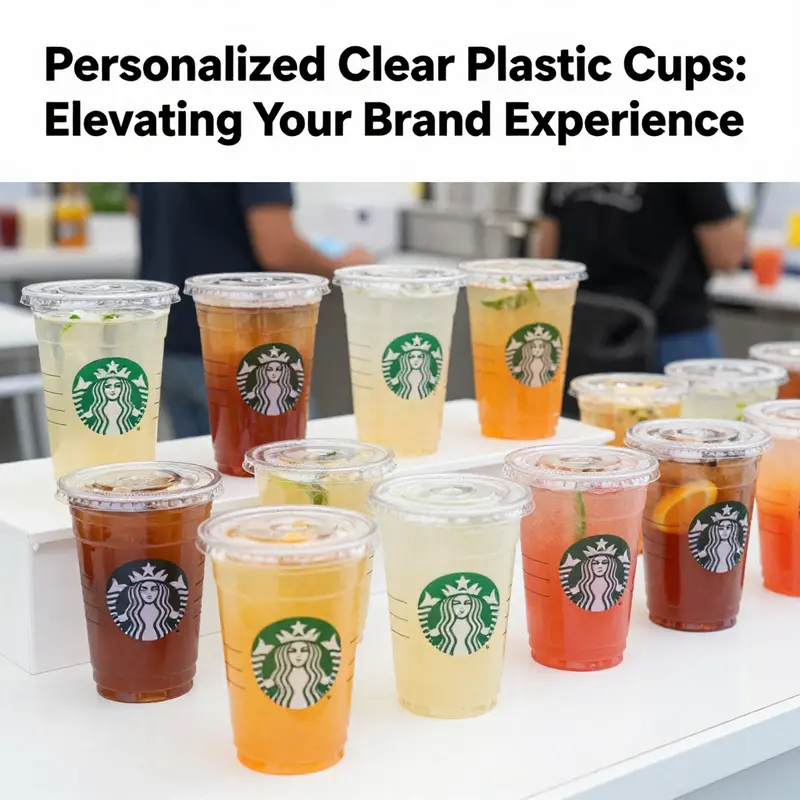
Personalized clear plastic cups are not just vessels for beverages; they are powerful branding tools that cater to a diverse audience, ranging from bubble tea shops to corporate event planners. With their customization capabilities, these cups help businesses stand out while also meeting practical needs. In this exploration, we will discuss three key aspects of personalized clear plastic cups: the innovative world of 3D printed cups, the elegance and durability of reinforced transparent cups, and the endless possibilities of custom designs for any occasion. Each chapter will guide you through how these products can enhance your offerings, engage customers, and promote sustainability.
Seeing the Brand in 3D: Technical Anatomy, Production Workflow, and Practical Uses for Personalized Clear Plastic Cups

Technical Anatomy and Production Flow
3D clear plastic cups are designed to combine visual depth with everyday function. At their core, these cups are transparent carriers of brand identity; they let liquids and printed artwork exist together in a single, eye-catching object. To deliver both clarity and three-dimensional embellishment, manufacturers rely on a handful of materials and tightly controlled processes. Understanding the anatomy of these cups clarifies why they cost more than plain disposables, how they perform in service, and where they best fit into event, retail, and food-service strategies.
The typical raw materials are food-grade PET or polypropylene. PET delivers exceptional optical clarity, resisting hazing and permitting light transmission above ninety percent. Polypropylene is tougher against impact and offers better heat resistance for certain uses. Both materials comply with major food-safety regulations when sourced and processed to specification. Material choice drives other attributes: wall thickness, temperature tolerance, and the feasibility of certain decoration techniques. Wall thickness usually falls between 0.3 mm and 1.2 mm. Thinner walls reduce weight and cost but lower rigidity. Thicker walls add heft and perceived quality while improving dimensional stability for complex 3D textures.
Temperature performance matters because personalized cups serve a wide beverage profile. Properly produced PET and PP cups can tolerate temperatures up to approximately 95°C and down to roughly -20°C without cracking or visually distorting. That range supports cold brews, smoothies, chilled mocktails, and many hot service applications when lids are involved. Still, heat exposure near the upper limit accelerates stress on printed or embossed decor. For hot-fill applications, designers favor polypropylene or specialized resins and validate each run through thermal cycling tests.
Optical clarity is a central spec. High-clarity cups allow layered effects—holographic inserts, internal embossing, and printed patterns visible through the wall—to read crisply. Manufacturers target light transmission greater than ninety percent for premium pieces. Measuring optical clarity requires consistent sample geometry and calibrated instruments. Small differences in resin quality, melt temperature, and cooling rates can produce perceptible variations in transparency.
Capacity ranges generally span 150 mL to 500 mL in standard catalogs, but custom sizes are routine. Molded features and 3D embossing require additional design constraints; for instance, deep embossing needs greater wall thickness or supporting ribs to prevent collapse. Mold complexity increases with decorative depth, adding to tooling time and cost.
The production workflow balances mass efficiency with precision finishing. It begins with high-purity resin pellets that must be free from contaminants and colorants. Those pellets are melted and formed into preforms or extruded sheets depending on the chosen molding system. For blown cups, preforms are heated and blow-molded in precision cavities. Blow molding yields seamless shapes and can accommodate in-mold textures for a 3D look without additional finishing steps.
When visible 3D elements are required, manufacturers integrate decoration at specific stages. In-mold decoration (IMD) mounts printed or pre-stamped films inside the mold. During blow molding, the film fuses to the cup surface, producing a durable, integrated image. IMD supports metallic and holographic films, which create depth without raising scratch or rub-off concerns. Laser engraving can be applied later to etch fine details into the cup wall. Laser marks are precise and permanent but must be applied to surfaces designed to accept them, since localized heating can alter optical clarity.
Additive methods, including some forms of 3D printing, enter the workflow mainly at the prototyping stage. Rapid prototypes allow testing of unusual geometries, lid interfaces, and embossed patterns before committing to expensive metal tooling. For limited-run bespoke cups, small-batch 3D-printed inserts or overlays may be bonded to molded cups, achieving the desired tactile or visual effect. These approaches are flexible, yet they tend to raise unit costs and may introduce surface imperfections or adhesion challenges.
After forming and decoration, cups undergo cooling and trimming. Cooling must be rapid enough to lock in geometry, yet controlled to avoid internal stresses that reduce clarity. Trimming removes flash and sprues and readies the lip rim for sealing with lids. Dimensional accuracy here is essential; handmade or imprecise trims lead to inconsistent sealing and customer dissatisfaction.
Quality control is woven into each step. Visual inspection checks for haze, warping, and visible inclusions. Dimensional gauges and automated vision systems verify rim concentricity and wall thickness. Food-safety tests include migration studies for additives and extractables, and mechanical testing validates drop resistance and stack integrity. Batch traceability is standard: each shipment should link to resin lots and process parameters in case of recalls or client queries.
Packaging and sterilization complete the cycle. Cups intended for retail or events are often packed in sterilized conditions with protective separators to preserve embossed details. For longer supply chains, careful secondary packaging prevents abrasion and UV exposure, which could degrade printed films or holographic foils.
Design and decoration are where 3D clear plastic cups transform into brand tools. The possibilities span from subtle raised logos to deep, sculpted textures that change with viewing angle. The most durable decorations are those incorporated during molding—IMD and in-mold labels—because they become part of the cup structure. External printing methods such as pad printing, screen printing, or digital direct-to-surface printing remain viable for single-color logos or multi-color art. Pad printing maps well to curved surfaces; screen printing can lay down thicker, tactile inks; digital printing handles complex gradients and photographic detail.
For brands seeking a high-impact finish, combining multiple techniques works well. A holographic IMD base gives depth, while a selective pad-print overprint adds brand text or a matte overlay. However, each added process increases complexity and cost. Designers should specify tolerances early and test plate proofs or prototypes to avoid surprises.
Sustainability considerations now influence material selection and marketing claims. Many buyers request BPA-free resins and preferentially choose materials with established recycling streams. PET is widely recycled, making it attractive for single-use applications where end-of-life recovery is feasible. Still, the presence of multilayer films or metallic foils complicates recycling. Cup designers who prioritize circularity opt for single-polymer systems and avoid mixed-material decorations. They also plan for label and lid compatibility to keep recycling streams uncontaminated.
Operationally, costs derive from tooling, decoration methods, material grade, and production volume. Metal molds for blow molding represent the primary one-time expense. Simple molds cost less and deliver rapid cycles. Complex textured molds with embedded IMD features require greater investment and longer lead times but reduce per-unit finishing. For large runs, amortizing tooling across volume is sensible. For smaller events or test markets, limited runs using external overlays or small-batch molded parts reduce upfront spending, though unit costs rise.
Lead times vary accordingly. Standard tooling and production runs can take weeks to a few months, depending on mold complexity and decoration alignment. Prototyping and iterative sampling shorten time-to-market decisions but may add an extra week or two. Clients should plan artwork and dielines early. Artwork intended for through-wall visibility needs reversed or layered design thinking; designers must imagine how light and liquid will modulate perceived colors and depth.
Quality assurance includes tests beyond visual inspection. Stack testing assesses how many cups can be nested without deformation. Seal testing validates lid fit and leak resistance. Thermal cycling checks for dimensional drift across service temperatures. Food-contact compliance mandates migration and extractable testing under defined conditions. For reusable designs, sanitation protocols and chemical compatibility testing are necessary.
Practical applications benefit from matching technical choices to intended use. In beverage retail, premium shops leverage 3D clear cups to showcase layered drinks. The transparency highlights ingredients and textures, and 3D decoration strengthens brand recall. For events, cups function as collectible keepsakes when they sport memorable embossing or holographic features. Retail and e-commerce brands use clear cups in gift bundles and sample sets, where transparency contributes to perceived value and unboxing drama. In food service, clear cups are popular for desserts, parfaits, and cold salads; they show contents and reduce the need for secondary display packaging.
A few trade-offs deserve attention. Highly textured or holographic decorations may complicate recycling. Deep embossing can trap residues, challenging post-use cleaning. Very thin walls conserve plastic but undermine rigidity and tactile quality. 3D printing techniques can offer unique forms, but surface finish and microscopic layer lines may be unacceptable in premium contexts. Designers should weigh aesthetics against lifecycle and handling realities.
Logistics and inventory strategies further influence product choice. For event planners, maintaining a small inventory of generic clear cups plus a local partner for on-demand decoration saves money and reduces waste. For brands launching national campaigns, centralized production with robust QA and consistent finishes ensures uniformity across regions. Both models require aligning lead times with promotional calendars.
Regulatory and labeling practices must be considered. Cups intended for food use must meet regional regulatory standards. Labels and marketing claims about recyclability or compostability must reflect the actual material stream. For example, a cup with a metallic foil cannot claim simple recycling even if the base polymer is recyclable. Clear, accurate labeling helps avoid greenwashing accusations and protects brand trust.
Finally, the creative possibilities are substantial and often underused. Layered transparency can tell a product story: a printed inner layer showing fruit pieces, a holographic middle layer suggesting effervescence, and a clear outer surface for tactile interaction. When designers coordinate lid shape, sleeve options, and secondary packaging, the cup becomes a central element of a multi-sensory brand moment.
For teams evaluating 3D clear plastic cups, a practical step is to prototype a single SKU that reflects final decoration and service conditions. Test it in the intended environment, evaluate customer response, and confirm recycling and cleaning pathways. When done right, a personalized clear cup performs functionally, supports sustainability goals, and creates a visible, tactile brand presence that standard printed disposables cannot match.
For a contrasting option that emphasizes compostable and fiber-based packaging, consider reviewing eco-friendly printed paper ice cream cups with lids, which show how different substrates address sustainability and tactile expectations: https://cupbowlpack.com/product/senang07-eco-friendly-printed-logo-paper-ice-cream-cups-with-lid-ice-cream-paper-bowl-paper-ice-cream-cups-with-lid/.
For an industry-level technical reference on specifications and manufacturing steps for 3D clear plastic cups, consult the detailed guide available at: https://www.plasticcupexperts.com/3d-clear-plastic-cups-technical-specifications-production-process-applications/
Crystal Strength, Personal Flair: Personalizing Durable Clear Cups for Modern Gatherings

When a host plans a gathering, the cup is more than a vessel; it is a visible promise. It signals tone, quality, and attention to detail. In recent years, reinforced transparent cups have emerged as a compelling answer to a familiar tension: the need for both durability and visual clarity in containers designed for beverages. This chapter follows that tension as it unfolds in real-world settings where reliability matters as much as appearance. These cups fuse robust engineering with a clear, unbroken surface that invites the eye to follow the color and movement of the drink inside. They are not merely sturdy; they are designed to elevate the experience of sipping, whether in a bustling café, a high-volume banquet, or a family celebration. The result is a product category that can comfortably inhabit both the practical demands of service and the aspirational expectations of branding and design.
At the heart of reinforced transparent cups lies a deliberate choice of materials. Manufacturers combine advanced polymers with multi-layer structures to achieve a level of impact resistance that standard single-wall designs cannot match. The core idea is to create a cup that withstands the rigors of a busy service environment—daily drops, frantic stacking, and quick transfers between venues—without showing the telltale signs of strain. Yet this strength is paired with an almost startling level of clarity. The optical quality of the material remains high, preserving the drink’s hue and transparency so that the beverage remains the focal point rather than the containment. In this balance, the cups carry a premium feel. The design language favors sleek profiles, smooth rims, and crisp edges that enhance the hand feel and the perceived value of the beverage within.
The practical advantages of such cups go beyond aesthetics. In high-volume settings like restaurants, cafes, catering events, and large gatherings, stacking efficiency is a controllable variable that translates into operational smoothness. A reinforced cup can be stacked tightly without slipping into a brittle fatigue that would compromise integrity after a few cycles. This translates into faster service, reduced labor fatigue, and lower breakage rates during busy hours. Moreover, the robustness of these cups makes them suitable for both hot and cold beverages. The construction resists deformation when hot liquids are poured and remains rigid when ice and condensation are present. For venues that offer specialty hot drinks, this is not a cosmetic feature; it is a performance criterion that reduces spillage and improves customer satisfaction.
Despite their strength, reinforced transparent cups maintain a sense of elegance that feels appropriate for upscale settings. Clarity remains the defining trait, and the cups are engineered to minimize visual noise that can occur with other durable options. The result is a container that communicates quality and care. The surface remains free of waviness or clouding that can distract from the beverage’s color or the brand’s visual identity. In a market where presentation matters as much as content, the cup itself becomes a part of the storytelling. A client serving a sparkling beverage in a crystal-clear vessel reinforces a narrative of attention to detail and hospitality. It is this fusion of durability and refinement that makes reinforced transparent cups a natural choice for operators who want to project confidence without compromising on style.
From a design perspective, one of the strongest advantages is the cup’s ability to perform under variable environmental conditions. In outdoor venues, for example, cups must resist temperature fluctuations and wind-induced movement. In indoor events, they must withstand the constant handling of guests, the pressure of large-scale service, and the occasional dramatic gesture of toasting. The materials chosen for reinforced transparent cups are selected to preserve tensile strength and glass-like clarity across a wide temperature range. While some embodiments are not biodegradable, ongoing innovations in recyclable and reusable reinforced plastics are shaping a more conscientious path forward. This is not about chasing a single trend but about delivering a product that remains relevant as sustainability goals evolve.
Another dimension of value is cost-effectiveness in bulk. Suppliers recognize that for many operators, the calculus of cost per use includes not only the sticker price but the product’s lifespan in real-world usage. A cup that can withstand more handling and more stacking cycles reduces the frequency of replacements. In environments where the same event or theme repeats week after week, an investment in stronger cups translates into lower ongoing purchasing costs and improved inventory management. The economic logic is straightforward: fewer replacements, fewer disruptions, and better predictability in a service line that thrives on tempo and reliability. While these cups may demand a higher upfront investment than standard disposable options, the cumulative savings—paired with the enhanced consumer experience—often displace the initial premium.
Critical to the conversation about any durable disposable is the question of sustainability. In reinforced transparent cups, durability does not automatically negate eco-conscious considerations. On the contrary, the longevity of the container can be framed as an environmental advantage when used in forms that encourage reuse or recycling. The absence of biodegradability in some reinforced plastics is not an endpoint but a prompt to consider lifecycle strategies. Recyclability means operators should separate these cups from standard waste streams and route them to appropriate processing streams where possible. Reusable pathways—through accumulation programs at venues or brands—convert a single-use item into a long-lived asset within a customer’s event ecosystem. In others, lightweight, recyclable reinforced plastics designed to function with established curbside recycling infrastructures offer a practical compromise between performance and environmental responsibility. In short, durability and sustainability are not at odds here; they are complementary goals that can be aligned through thoughtful design and responsible end-of-life practices.
Beyond the bottle-to-beverage equation, the customization frontier adds another layer of value. Personalization is not a mere decoration; it is an experiential amplifier. Operators can imprint logos, color palettes, and thematic motifs directly onto the exterior of reinforced cups, turning a simple container into a tactile and visual extension of a brand or event concept. When done well, customization aligns with the event’s narrative, creating consistent branding across glassware, signage, and packaging. The result is a cohesive moment that guests carry with them as a memory of the experience. In this context, the clear surface is a canvas that respects the beverage’s integrity while inviting the eye to engage with the design. The practical benefit is that branding remains legible and vibrant even as service demands accelerate. The cup becomes a medium that communicates a message without competing with the drink for attention.
For teams focused on branding and experiential marketing, the ability to feature a distinctive logo, color scheme, or pattern on a durable clear cup can be a strategic differentiator. Customization in durable plastics often includes high-clarity printing, chip-resistant decorations, and inks that maintain visibility through condensation and temperature changes. The best programs consider not only the initial impact of a printed design but its survivability throughout the event lifecycle. A well-executed approach ensures that the logo remains visible from the point of pick-up through multiple serves and possibly even after guests finish their beverages. The result is a living, portable advertisement that travels with guests, reinforcing the event’s identity as they move through space and time.
From a consumer perspective, the perception of value can be directly linked to a cup’s feel and finish. A reinforced transparent cup that feels substantial in the hand communicates reliability and quality. Guests notice the weight of the cup, the smoothness of the rim, and the steadiness of the surface when held. These sensory cues contribute to a sense of care about the event and its offerings. Even the moment a guest sets the cup down becomes part of the experience, as a sturdy container reduces wobble, avoids drips, and supports a seamless handoff between service stations. In crowded venues, where efficiency and calm are at a premium, such subtle enhancements can reduce friction and elevate overall guest satisfaction. In this way, the cup becomes part of the choreography of service, a quiet enabler of smooth operation and memorable moments.
Yet no discussion of durability can ignore the trade-offs. Reinforced transparent cups are often thicker than their single-wall counterparts, which means they carry a slightly higher material footprint per unit. While the long-term efficiency arguments may offset some of this impact, operators must balance the desire for sturdiness with the practical realities of supply, storage, and waste. For some organizations, a hybrid approach makes sense: heavy-traffic situations rely on reinforced cups for durability, while lower-traffic or more casual settings may use standard options where appropriate. The strategic mix can optimize both cost and experience, ensuring that guests feel they’ve received a premium product without compromising sustainability goals.
In the broader market, the evolution of reinforced transparent cups is shaped by ongoing research into materials that combine rigidity, clarity, and resilience with improved end-of-life options. Industry players are exploring coatings and barrier technologies that preserve transparency while resisting scuffing or fingerprinting. Some designs emphasize edge-to-edge uniformity, ensuring that every cup in a batch looks and performs the same, which is essential for large events where uniformity matters for perceived quality. The promise of future variants is not just stronger walls or crisper optics; it also encompasses smarter packaging, easier sorting for recycling, and perhaps more straightforward returns for reuse programs. In a marketplace that increasingly values both efficiency and ethics, reinforced transparent cups occupy a moment of convergence where form, function, and responsibility meet.
For readers considering their own programs, a key question emerges: how do these cups integrate with other packaging and service elements? The answer lies in aligning the cup’s capabilities with the event’s logistics and the brand’s storytelling. If you are coordinating a multi-venue festival, for instance, you can design a consistent visual language across cups, napkins, coasters, and signage to reinforce recognition and mood. If you are hosting a wedding or corporate gala, you might pair the cup’s elegance with a monochrome palette or metallic accents that echo the theme. The goal is cohesion, not coincidence. The cup should feel like a deliberate choice that mirrors the guest experience, not an afterthought added to the cart. In the end, the reinforced transparent cup is a small but powerful instrument in the hands of planners who measure success in both operational efficiency and emotional resonance.
As a practical aside, the broader ecosystem around personalized cups—whether they are reinforced transparent variants or other durable, customizable formats—offers avenues for experimentation. Operators can test different print methods, layer finishes, and colorfast inks to see how they hold up under real-world use. They can also explore partnerships with suppliers who offer bulk discounts, reliable supply chains, and flexible customization options. The overarching narrative remains constant: a cup that stands up to the rigors of service while presenting a clear, attractive surface can elevate the beverage and the moment in which it is enjoyed. This is not merely about holding liquid; it is about shaping an experience that guests will remember and share.
In the spirit of exploring allied options for branding and personalization, consider the broader ecosystem of cup formats that exist alongside reinforced transparent cups. The landscape is diverse, including alternatives that emphasize eco-friendly materials, alternative shapes, and different presentation styles. For teams weighing options, the decision often hinges on the balance between performance, aesthetic impact, and lifecycle considerations. If your event requires an unbroken field of branding across dozens of service points, a durable clear cup with strong print potential and reliable stacking might be the most economical path to consistent guest experience. If, instead, your event centers on sustainability and reuse, you may opt for formats that maximize recyclability or reuse value without sacrificing legibility or style. The conversation is nuanced, and the right choice depends on the specifics of the venue, the expected volume, and the audience’s expectations.
To connect the thread back to the broader topic of personalization, the reinforced transparent cup demonstrates how a well-designed, durable container can serve as a strategic asset in experiential marketing. When a brand or event can extend its identity through a bottle-like clarity that remains untouched by handling, the cup becomes more than a container. It becomes a stage for color, contrast, and logo or motif. It invites conversation, invites photos, and invites a moment of shared ritual around the beverage. The practical advantages—durability, stackability, temperature tolerance—do not overshadow the emotional payoff. In the right setting, those qualities contribute to a sense of reliability, care, and hospitality that guests notice and remember long after leaving the venue.
For researchers and industry observers, the conversation around reinforced transparent cups is a reminder that material science and design aesthetics can converge to produce solutions that are both functional and expressive. The best products are not only resistant to wear but also faithful to the brand’s voice and the host’s intent. They honor the beverage and the moment it accompanies. In practice, this means suppliers and buyers must engage in dialogue about objectives, usage patterns, and end-of-life paths. When these conversations occur, the result is a product portfolio that can adapt to a wide variety of settings while preserving a core value: a clear cup that embodies strength and refinement, ready to carry the drink and the story that comes with it.
In closing, reinforced transparent cups offer a compelling blueprint for how durability and elegance can coexist in a single disposable item. They respond to the practical demands of busy service environments while supporting the nuanced goals of branding and guest experience. They acknowledge the responsibility that comes with disposable containers by providing options that can be reused or recycled where feasible and by encouraging thoughtful lifecycle planning. They also remind us that personalization is not optional flair but a strategic lever for engagement. As events grow more complex and audiences more discerning, the right cup can become a quiet but powerful ambassador for a brand, a theme, or a memory.
External resource: https://www.plasticcup.com/reinforced-transparent-cups-durability-meets-elegance. For further exploration of how brands leverage customization in cup design, you may also encounter alternatives in the landscape of personalized, multi-purpose serving solutions such as disposable double-wall craft paper cups with custom logo. This internal reference illustrates how the impulse to customize extends across materials, even as the underlying goals—clarity, durability, and memorable branding—remain constant across formats.
Clear Choices, Lasting Impressions: Personalizing Clear Plastic Cups for Every Moment
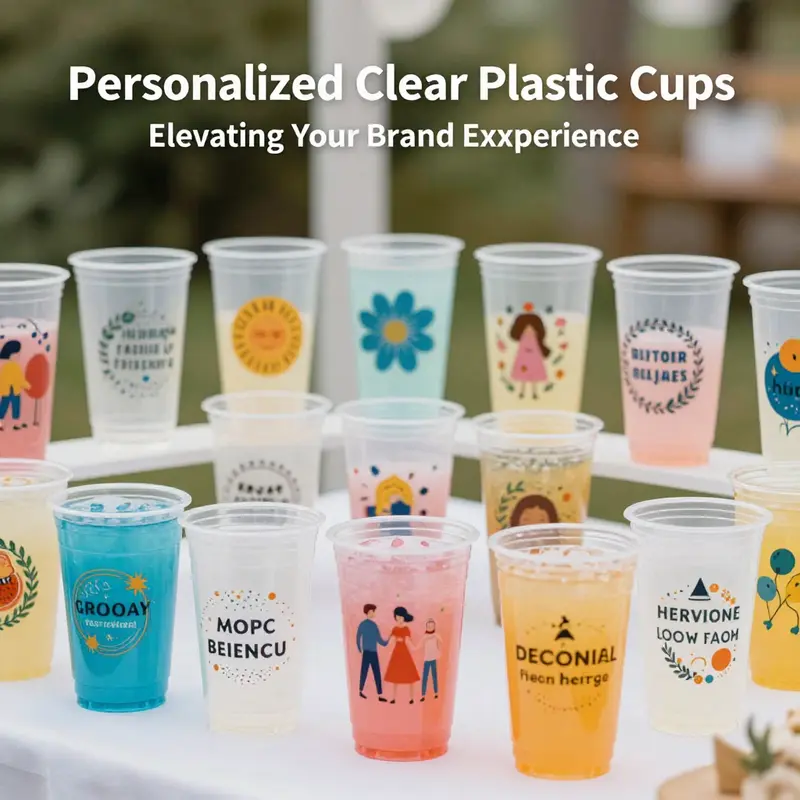
The simple clarity of a clear plastic cup leaves room for a story instead of a wall of color. When we choose cups with a personal touch, we are not just picking a vessel for a drink; we are selecting a narrative device that accompanies a moment—from a wedding toast to a product launch, from a family picnic to a fundraising gala. Personalization elevates beverageware from a basic utility to a keepsake, a memento that people can hold onto after the party ends. In spaces ranging from busy conference centers to intimate celebrations, customized clear cups become extensions of the occasion’s mood, its values, and its promises. They carry logos, names, dates, or custom artwork that reinforce memory long after the last drop is sipped. That is the essence of personalization: turning a disposable item into a meaningful artifact that travels from the event to the memory of those who attended.
The appeal of clear cups lies in their neutrality. The transparency creates a clean canvas for design and text, allowing colors, logos, and photos to breathe without competing with the beverage itself. When a design rests on a transparent surface, every choice—typeface, color palette, spacing—must work in harmony with the liquid and the setting. This demands a careful balance between aesthetics and legibility, between bold visual statements and the simple practicality that makes a cup easy to use. A well-executed personalized clear cup communicates professionalism at a corporate gathering, warmth at a family celebration, and playfulness at a community event. It signals that the host values both utility and experience, efficiency and delight. The juxtaposition of function and memory is what makes this category of drinkware so durable in both market appeal and social meaning.
Advances in customization technology have expanded what is possible while keeping the process accessible. Laser engraving and high-resolution printing enable precise typography and crisp imagery on a variety of plastic substrates. Laser-engraved names or dates can be subtle, elegant, and long-lasting, while full-color prints can reproduce photographic details with surprising fidelity. These techniques enable a spectrum of styles—from minimalist monograms that whisper rather than shout, to vibrant, thematic cups that turn a party into a coordinated visual experience. In addition to surface decoration, some manufacturers offer 3D-printed or molded elements that add depth and texture to the cup itself. While 3D printing promises near-limitless customization, it also introduces considerations about production cost, throughput, and potential surface imperfections. For organizers weighing simplicity against spectacle, the design conversation often centers on the intended use, the audience, and the event’s budget. The outcome is a beverage vessel that feels purpose-built for the moment it accompanies, rather than a generic reusable cup slapped with a temporary logo.
Material choices are central to the conversation about personalization. Clear cups are available in a range of plastics, including BPA-free variants designed to address growing consumer demand for safer, more health-conscious products. The choice of material interacts with durability expectations, cleaning methods, and environmental impact. For venues and brands aiming for long-term value, a dishwasher-safe, crack- and warp-resistant cup can stretch from a one-off event into a reusable option for daily service. The environmental argument strengthens when a cup is designed for repeated use rather than a single discard, reducing waste associated with high-volume events. Of course, trade-offs exist: durable, reusable options may require careful handling and higher upfront costs, while more economical disposable variants may suit large, time-constrained occasions. The best decisions emerge from a clear-eyed assessment of audience behavior, hosting context, and the event’s sustainability goals. In the end, material selection is not merely about safety or price; it is a statement about how a brand or host respects guests and resources alike.
The spectrum of sizes and styles further expands the decision space for personalization. Clear cups range from compact 16-ounce options suited for coffee and casual beverages to larger 40-ounce variants designed for shared gatherings or bold, celebratory servings. Beyond size, the range includes features that enhance practicality: leak-resistant lids, built-in straws, and ergonomic grips that improve one-handed use during commutes or active events. Some lines emphasize portability with collapsible forms or stackable designs, offering a hybrid of convenience and reusability. For food-service operators, the ability to choose the lid type and straw-integrated options also translates into operational efficiency, reducing spill risk and speeding service during peak times. For personal celebrations, a wider assortment of sizes allows guests to choose a cup that fits their drink and appetite, reinforcing the sense that the event is attentive to individual preferences.
Of equal importance are the design constraints that shape every personalized cup. Readability is non-negotiable; if text or logos are small or overly intricate, they lose impact in the crowded environment of an event or a busy restaurant. Color contrast matters, too. Light backgrounds demand darker type for legibility, while bold color choices must stay within the limits of the print or engraving process to avoid blurring or dulling after washing. Licensing and copyright considerations can complicate designs when featuring artwork, characters, or branded imagery. The designer’s eye must anticipate how the cup will be used—refrigerated beverages, hot drinks, or mixed-media presentations—and how those conditions affect color and clarity. In practice, this means testing proofs under typical event lighting and ensuring the final product remains legible from a distance as guests approach the beverage station. A well-considered design integrates typography with negative space, leverages the transparency of the surface, and remains legible when held at arm’s length.
Another layer in the design conversation concerns the cup’s role in branding and engagement. A personalized cup is a moving billboard that accompanies the guest beyond the event space, sometimes traveling back into daily routines. A thoughtful approach uses design as a memory cue: a date that marks a milestone, a logo that signals a brand partnership, or a simple, tasteful motif that echoes the event theme without dominating the drink itself. The objective is not to overwhelm the beverage but to create a cohesive visual story. When this balance is achieved, the cup becomes a helpful anchor for recall. Attendees may notice the cup again in photos, in social feeds, or in conversations days after the event, reinforcing brand presence or communal memory without appearing pushy or sales-driven. The result is a design that feels earned rather than imposed, helping the host extend the event’s emotional arc.
From a planning perspective, the shift toward personalization is also a shift in logistics. Online design tools let organizers experiment with layouts, fonts, and imagery before placing orders, which reduces waste and accelerates decision-making. Bulk pricing and quick-turn manufacturing options make customization feasible for a wide range of budgets. This accessibility invites experimentation—hosts can test multiple design concepts in a single order or tailor cups to different segments of attendees. It also sparks collaboration among event teams, marketing departments, and operations staff, who may each have a stake in how the cups reflect the event’s values and objectives. In practice, the best programs couple clear branding guidelines with flexible production runs, ensuring that the final product aligns with the event’s tone while retaining the ability to scale up or down as needed. The net effect is a beverageware strategy that is both creative and repeatable, capable of producing consistent impressions across multiple touchpoints.
Sustainability lies at the core of responsible personalization, especially as audiences grow more environmentally conscious. A growing number of providers emphasize BPA-free formulations, recyclable or reusable plastics, and transparency around end-of-life disposal. A durable, dishwasher-safe cup extends its life cycle, offering cost-per-use savings and reduced waste when compared with single-use alternatives. This practicality resonates with institutions and brands seeking to align guest experience with sustainability commitments. Yet, sustainability is not a one-size-fits-all proposition. In some contexts, a disposable cup with a well-planned design and responsible material choices can still be the most appropriate option for food safety, hygiene standards, and logistical simplicity. The key is to align material choices with the event’s scale, reuse expectations, and local recycling infrastructure, ensuring that personalizations do not create unmanageable waste streams. A thoughtful program may also incorporate guidance for guests about recycling or reusing cups in follow-up events, transforming a momentary token into a long-tail sustainability story. The evolving dialogue around eco-friendly design thus becomes an integral component of any personalization strategy, shaping both the creative language and the operational plan.
As markets evolve, so do consumer expectations about value and function. Personalization offers more than vanity; it creates a sense of belonging and ownership. A guest who receives a cup with their name or a favorite motif experiences a moment of recognition, which can tilt the perception of the event from ordinary to special. For venues and brands, the return on investment is often linked to guest satisfaction, word-of-mouth promotion, and repeat participation in future events. The cups may not only carry a message but also demonstrate care for the guest experience. In high-traffic settings, where guests may handle multiple cups or exchange them at different stations, a well-executed design remains legible and visually coherent from close range and from across the room. In quieter moments, when guests examine a cup up close, the design can reveal subtle textures, finishes, or micrographics that reward curiosity. The interplay between visible branding and personal touch thus becomes a strategic element in crafting memorable experiences without overwhelming the user’s sensory space.
The chapter’s thread returns to the principle that customization should serve people, not just products. When decision-makers focus on the user journey—how guests interact with the cup in line, at the table, or during transport—the design process becomes more humane and more effective. A clean, intuitive layout that can be read in seconds, paired with a robust material that stands up to real-world use, often outperforms more ambitious but fragile concepts. This pragmatic optimism is a hallmark of successful customization programs: they balance imagination with reliability, color with clarity, and spectacle with everyday practicality. Designers, suppliers, and event planners who embrace this balance can deliver personalized clear cups that do not shout but sing—subtly enhancing the moment, while quietly supporting the host’s broader objectives.
To illustrate how these principles translate into practice, consider the way a program might approach a multi-day conference or a multi-venue festival. A designer might propose a tiered approach: a main event cup featuring a bold, legible logo and a date line for easy memory capture; a secondary cup for workshops that uses a lighter palette and a different typographic style to differentiate sessions; and a specialty cup for a closing reception that incorporates a geometric motif echoing the event’s overall branding. The resulting family of cups communicates continuity while still offering variety, ensuring guests can easily associate each moment with the right visual cue. In retail and hospitality settings, the same logic applies: a cohesive family of cups across beverages, menus, and service channels reinforces brand presence without becoming visually chaotic. The strategic emphasis on readability, consistency, and purposeful variation yields a collection of cups that works harmoniously with both the beverage and the moment in which it is served.
The cultural shift toward personalization is not merely about aesthetics; it is also about community-building. A cup that carries a name or a photo can foster a sense of inclusion, making attendees feel seen and valued. In team-building events, a personalized cup can symbolize a shared achievement or a milestone, turning the beverage into a symbol of collective memory. In family gatherings, customization can reflect kinship, with monograms and dates marking generations and stories. The emotional resonance is subtle but potent, enabling hosts to cultivate goodwill and deepen engagement in ways that traditional, generic cupware seldom achieves. This is the quiet power of personalization: it travels with the guest, often long after the event ends, and becomes part of the ongoing conversation about what made the moment meaningful.
For readers exploring a broad landscape of options, an internal reference point helps situate the practical and emotional benefits of customized clear cups within the larger ecosystem of event design and brand storytelling. In related categories such as specialty cups and take-away packaging, the same design discipline applies: the container is a message carrier, and the message must be legible, resonant, and appropriate for the occasion. The logic of scale is also consistent—designs should scale cleanly from small to large runs, without sacrificing detail or readability. This coherence across formats makes the investment in customization not a one-off expense but a scalable asset across multiple events and campaigns.
In the end, personalized clear plastic cups become more than the sum of their parts. They fuse practicality with sentiment, design with durability, and commerce with care. They offer brands and hosts a versatile tool to shape experiences, reinforce messages, and create tangible memories. The cups function as hosts’ assistants—quiet, reliable, and unmistakably intentional. They remind us that even a humble vessel can carry meaning when crafted with attention to audience, context, and purpose. The result is not just a beverage container but a small, portable stage on which moments unfold and memories take shape. And as customization technologies continue to evolve, the potential for more nuanced, more sustainable, and more inclusive design only grows, inviting organizers to dream bigger about how everyday objects can participate in our stories.
For those curious to explore the practical side of cross-category inspiration, consider the broader ecosystem of take-away and single-use items that also rely on clear surface spaces for messaging. A related example shows how even non-plastic formats can carry personalization with the same logic of readability, durability, and brand cohesion. The underlying takeaway remains the same: when a host treats the cup as a designed element within a larger experience, every sip becomes part of a deliberate memory-making sequence. To see how similar design principles manifest in adjacent product families, one can observe what a hot-sale line of customized disposables in another category demonstrates about efficiency, impact, and the economics of scale. This cross-pollination highlights a central truth: the best personalization programs balance creative ambition with practical feasibility, ensuring the end product performs reliably while delivering a moment of delight. The result is a sustainable approach to drinkware that respects both guests and the world they share with us.
Internal reference for related exploration: hot-sale customized disposable single-wall paper ice-cream cups with lid.
External resource for market context: https://www.amazon.com/s?k=personalized+plastic+cups
Final thoughts
The rise of personalized clear plastic cups marks a significant development in both branding and consumer experience for businesses in the beverage and event sectors. As we explored, the technical specifications of 3D printed options provide unique customization, while reinforced transparent cups blend durability with sophistication. Additionally, the versatility of custom designs ensures that businesses can connect with their audience meaningfully. As you consider incorporating these products into your offerings, remember that not only do they serve a practical purpose, but they also elevate your brand’s image and sustainability standing in the market.