
In the ever-evolving food and beverage landscape, ensuring the safety and compliance of food contact materials, particularly plastic containers, is paramount. Food grade certification not only safeguards consumer health but also enhances brand reputation for businesses like bubble tea shops, restaurants, and catering services. This article explores the critical regulations and standards that dictate food grade certification, highlights its importance in the food industry, and offers insights into how to verify and comply with these essential standards, ensuring that your food service operations remain reliable and safe.
How Regulations, Testing and Documentation Prove a Plastic Container Is Food Grade
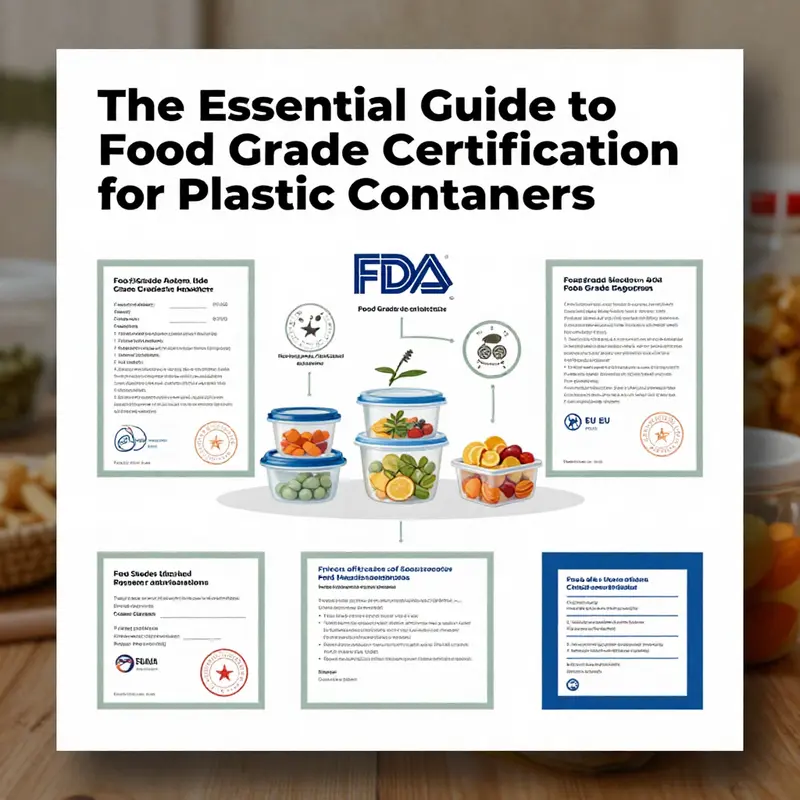
How Regulations, Testing and Documentation Prove a Plastic Container Is Food Grade
When a business chooses plastic containers for storing, preparing, or serving food, the question is not just material or color. It is whether the container meets the legal, scientific, and manufacturing criteria that guarantee safety in contact with food. A food grade certificate is the shorthand that confirms those criteria have been satisfied. But that certificate is not a single stamp; it is the visible result of layers of regulation, lab testing, manufacturing controls, and traceable documentation. This chapter walks through those layers, showing how regulations translate into tests, how test results become certificates, and what buyers should look for when they need assurance.
At the foundation are regulatory frameworks set by national and regional authorities. These frameworks define which materials and additive combinations are acceptable for food contact. They also set conditions of use and require that manufacturers demonstrate compliance through testing and records. In the United States, the framework sits under Title 21 of the Code of Federal Regulations. Approval pathways include explicit listings of monomers, additives, and polymers permitted for food contact. The regulatory approach emphasizes that any substance expected to migrate into food must be evaluated for safety under its intended conditions of use. In the European Union, the core rule is a general safety regulation covering all materials intended to come into contact with food. It requires that materials do not transfer constituents to food at levels harmful to human health, or that they impair food composition, taste, or odor. Across jurisdictions, regulators use two complementary concepts: specific migration limits for particular chemicals, and overall migration limits that control total migrant mass.
These legal frameworks inform the practical testing programs that deliver measurable proof. Migration testing is the primary tool. In these tests, samples of the plastic are exposed to food simulants under controlled temperatures and times. Simulants mimic the chemical behavior of foods: watery, acidic, alcoholic, or fatty. Laboratories use the appropriate simulants for the container’s intended use. For example, an item intended to hold oily foods will be tested with a fatty simulant. The lab measures how much of each target substance migrates into the simulant. Results are compared with regulatory thresholds. Beyond migration, standard testing screens for heavy metals, residual monomers, and known hazardous additives such as certain plasticizers or monomers of concern. For reusable containers, tests also assess how repeated use, cleaning, or heating affects migration.
Testing methods rely on established analytical techniques. Chromatography and mass spectrometry detect and quantify organic migrants. Atomic absorption and inductively coupled plasma techniques measure metal contaminants. Thermal analysis checks for changes in polymer structure after heat exposure. Laboratories following accredited methods and international standards deliver reports that regulators and buyers can trust. The credibility of a food grade certificate depends heavily on the methods used and the laboratory’s accreditation.
Third-party conformity assessment strengthens trust. Independent testing laboratories and certifying bodies verify that stated materials meet requirements. Recognized organizations offer product-level certification and facility audits. These audits review manufacturing processes, raw material sourcing, and quality control systems. They verify that written procedures are actually followed on the production line. A third-party mark is not a substitute for regulatory compliance, but it is an extra layer that buyers often require. For food businesses, evidence from an accredited third party simplifies supplier approval and reduces regulatory risk.
Manufacturing practices are another essential layer. Food contact performance depends on consistent production under controls that prevent contamination. Good Manufacturing Practice (GMP) for food-contact materials sets expectations for hygiene, segregation of incompatible materials, and traceable records. When GMP is applied, manufacturers maintain batch records, raw material certifications, and in-process controls. These records form the chain of evidence behind a food grade certificate, showing that the same tested formulation was used to produce a specific lot.
Documentation types matter. A responsible supplier provides a combination of records to support a food grade claim. Typical documents include a Declaration of Compliance (DoC), a Certificate of Analysis (CoA), material safety data sheets (MSDS), and third-party test reports. A DoC states that the article complies with the applicable regulations for specific uses. A CoA provides analytical data for a particular lot or shipment. MSDS documents hazards and safe handling, but it does not replace migration testing or regulatory declarations. Buyers should request the complete package. Examining only a label or a single certificate increases risk.
Labels and symbols on packaging provide quick cues but require verification. Standard markings include resin identification codes and common food-safe pictograms. A resin code indicates polymer type. Polymer choice influences performance: polypropylene and high-density polyethylene are widely used for food contact because of their chemical resistance. Polyethylene terephthalate is common for beverages; it offers good barrier properties. Polystyrene provides clarity but can have higher migration risk under heat. PVC can require restricted additives and special formulations due to plasticizer migration. The presence of a resin code alone is not proof of compliance. It is an identifier, not a certificate.
Temperature and intended-use statements are crucial. A container that is food safe for cold storage may not be safe for hot-fill or microwave use. Regulatory approvals and test reports should list the conditions under which the container was evaluated. Microwave and high-temperature performance deserve particular scrutiny. Heat accelerates migration and can change the chemical behavior of additives. When manufacturers claim microwave-safe or oven-safe performance, verify that the claim is backed by tests simulating the specified temperatures and durations.
Material composition goes beyond base polymer. Additives such as colorants, antioxidants, slip agents, and processing aids can dominate migration behavior. Some additives are subject to specific limits. Others require toxicological evaluation before inclusion in food-contact articles. A food grade certificate implies that any additives used meet regulatory acceptance for their intended use. Buyers should ask for full disclosure of restricted substances and an explicit statement on whether any regulated plasticizers or monomers are present.
Traceability and lot control close the loop. A food grade certificate tied to a batch without traceability is fragile. Proper systems link each container to raw material lot numbers and production records. This makes recalls manageable and ensures that the certified formulation is the one produced. When purchasing, insist on lot-specific documentation. For ongoing suppliers, periodic surveillance testing and certificate renewal provide continuing assurance as materials and suppliers change over time.
International supply chains add complexity because regulations vary. A container certified for one jurisdiction may not meet another’s rules. Global businesses need to match certificates to market-specific requirements. This means confirming that test conditions used in certification mirror the regulatory criteria of the target market. For U.S. distribution, a Food Contact Notification or an FDA listing of permitted substances can demonstrate acceptability. For the EU, compliance with the general regulation and, where relevant, specific measures covering monomers and additives, is essential. When in doubt, a regulatory crosswalk performed by a compliance expert clarifies gaps.
Third-party management systems and food industry standards augment product-level evidence. Certifications such as ISO 22000 or HACCP reflect a supplier’s food safety systems rather than the chemical safety of a polymer. Nonetheless, these standards often indicate that the supplier has structured controls around risk management and supply-chain safety. Combining a material-level certificate with facility-level certifications gives procurement teams a more complete risk profile.
How do buyers verify claims in practice? Start by requiring specific documentation: a DoC referencing applicable regulations, recent laboratory test reports for migration under declared conditions, a CoA for the supplied lot, and details of the manufacturing quality system. Confirm the testing laboratory’s accreditation, and check whether tests used standard food simulants and temperature profiles. For reusable items, request tests that address repeated use and cleaning cycles. For colored or printed containers, demand tests on the final decorated article, because inks and coatings can alter migration.
Because many buyers work with multiple product types, it helps to evaluate risk by use-case. High-risk uses include prolonged contact with fatty foods, hot-fill processes, or applications involving children’s food. Low-risk uses might include short-term dry food storage at ambient temperatures. Match the depth of documentation to the risk profile. For critical uses, insist on third-party certification and frequent surveillance testing.
Practical procurement tips reduce uncertainty. Ask suppliers for a template DoC they will sign, and list the legal references it covers. Require batch-specific CoAs and keep them in supplier files. If a supplier refuses to provide test reports, move on. Maintain a list of approved laboratories and periodically send retained samples for independent verification. For private-labeling, include contractual language requiring continued compliance and notification if formulations change.
Finally, consider end-of-life and recycling implications. Food contact safety does not end at use. Contamination during recycling streams can introduce hazards into future food-contact articles. Some jurisdictions restrict recycled content for direct food contact. Buyers looking for circular solutions should request documentation demonstrating that recycled streams are suitable for food contact and compliant with local rules.
A food grade certificate is not a magic stamp. It is a synthesis of regulation, robust laboratory evidence, controlled production practices, and ongoing traceability. When all elements come together, the certificate gives buyers confidence that a given plastic container will not transfer harmful substances to food under its intended use. To see an example of a supplier product page that emphasizes food-grade design and PP lids, review this example for context: food-grade reusable square salad bowls with PP lids.
For authoritative guidance on permitted food contact substances and regulatory expectations, consult the official resource on food contact materials provided by the U.S. regulatory authority: https://www.fda.gov/food/food-contact-materials/food-contact-materials-101
Why Food Grade Certification Matters for Plastic Containers: Safety, Compliance and Supply-Chain Confidence
Food grade certification for plastic containers is the practical assurance that materials touching food are safe. It connects laboratory science, regulatory frameworks, manufacturing practices, and buyer decisions into one continuous thread. For anyone responsible for sourcing, producing, or storing food, this certification is a functional safeguard. It reduces health risk, enables market access, and protects brands from costly recalls. The following discussion weaves the technical requirements and commercial realities into a single narrative that helps procurement teams, quality managers, and operations leaders make informed choices without getting lost in jargon.
At the core, food grade certification answers a single question: will the container transfer harmful substances into food under normal use? That transfer, called migration, happens when chemicals from plastic move into food. Migration increases with heat, time, and contact with fatty or acidic contents. Certification relies on tests that simulate realistic conditions and measure migration against established limits. Those limits are not arbitrary. They are based on toxicology, acceptable daily intakes, and decades of research. A certified container has been tested and shown to keep migration below levels regulators deem safe.
Certification carries multiple practical benefits. First, it controls health risk. Without verified materials and processes, a container might leach plasticizers, stabilizers, or monomers. These compounds can cause acute reactions in sensitive people and contribute to long-term health concerns. Certifying the material ensures that resin, additives, and any colorants meet safety criteria. Second, certification supports product integrity. Food packaged in compliant containers retains taste, color, and aroma better because the container does not interact with the food. Third, certification is often a contractual or retail requirement. Many foodservice buyers, grocery chains, and export markets require documentary proof of compliance before accepting goods.
Understanding what a certificate represents helps avoid common misconceptions. A food grade statement is not a single universal credential. Instead, it references compliance with specific regulations or standards. For example, compliance might mean meeting U.S. FDA food contact substance rules, adhering to EU Regulation 1935/2004 and 2023/918 for plastic materials, or satisfying ISO 22000 and HACCP systems that demonstrate process control across production. Each standard answers particular concerns. Regulatory approvals address material safety. ISO and HACCP certifications address management systems and contamination control across operations. Together, they form a robust assurance package.
Documentation is the visible proof of that package. Buyers should ask for a clear set of documents: a Certificate of Compliance or Conformity, a Certificate of Analysis (CoA), Material Safety Data Sheets (MSDS), and the results of migration testing. A CoA provides measured values for critical parameters and batch traceability. MSDS shows material hazards and handling recommendations. Migration reports show which simulants and conditions were used, and whether results meet applicable limits. Without these, a label claiming “food grade” is only marketing.
Manufacturing practices are as important as laboratory tests. A container made from a certified resin can fail to be food safe if contaminants enter during production, conversion, or packaging. Effective quality control starts with incoming material inspection. Resin lots should be traceable to suppliers, with certificates confirming grade and additive composition. The production environment must be controlled for foreign particles, lubricants, and cleaning agents. Equipment should be dedicated or validated for food contact runs. Post-production handling matters too. Clean storage and appropriate packaging protect finished containers from dust, chemicals, or pest contamination. Audits and third-party inspections verify these controls and are often part of certification programs.
For sourcing teams, cross-border trade complicates compliance. Regulations differ by jurisdiction. A container approved for one market may not satisfy another. For example, a formula permitted under a specific national list might not be accepted in a different regulatory domain. This creates a need for dual or multi-jurisdictional compliance planning when exporting. Buyers should require declarations that clarify which regulatory frameworks the product conforms to. Where necessary, insist on certificates tied to the target market’s rules rather than a generic assertion of safety.
Traceability and batch control make certification meaningful in practice. If a nonconforming batch is discovered, rapid recall and root-cause analysis depend on traceable records. Good documentation links finished products back to resin batches, additive lots, and production dates. This traceability enables efficient corrective actions and reassures buyers that issues will be contained and resolved. It also supports continuous improvement. Production trends in migration values or process deviations reveal where investments in controls pay off.
Quality is not static. Raw materials and additives evolve. Supply-chain disruptions force alternative sourcing. That is why certification is not a one-off event. Many markets expect periodic re-evaluation. Process validations, re-testing after material changes, and renewed audits maintain the standing of a certificate. A lifecycle view of certification keeps product safety aligned with manufacturing realities.
Practical procurement actions turn certification theory into operational security. First, specify requirements clearly in purchase orders. Define acceptable materials (such as specified polymers), required documentation (CoA, MSDS, migration test reports), and which regulatory standards apply. Include a clause requiring notification and revalidation when formulation or source changes occur. Second, evaluate suppliers for management systems. A supplier with documented quality management, regular internal audits, and a dedicated food-contact production line lowers risk. Third, perform risk-based incoming inspections. Randomized testing of finished containers and periodic migration testing provide an active verification layer beyond paperwork.
Beyond compliance, there is a growing intersection between food safety and sustainability. Buyers often ask whether food grade certification works with recycled content or compostable materials. The answer is: it can, but with careful validation. Recycled plastics require robust sorting and decontamination to ensure food-contact suitability. Compostable or bio-based alternatives demand testing for direct contact scenarios and for the stability of any binders or coatings. Certification pathways exist for these materials, but they demand extra diligence in tracing feedstock and verifying that the recycling or composting processes do not introduce contaminants.
Labeling and consumer communication deserve attention too. Labels that state “food safe” are helpful, but the best practice is transparent documentation available upon request. For business-to-business transactions, supply-chain partners expect detailed certificates tied to specific batch numbers. For retail-ready products, manufacturers should avoid vague terminology. Instead, use clear statements like: “Compliant with [applicable regulation] for food contact materials” and link to the supporting certificate. This clarity reduces friction with regulatory inspections and retailer due diligence.
Internal governance within organizations also affects food grade compliance. Cross-functional coordination between procurement, quality, production, and regulatory affairs prevents gaps. Procurement negotiates contract clauses. Quality verifies documentation. Production implements process controls. Regulatory affairs interprets which standards apply in given markets. A shared checklist and centralized document repository make this coordination repeatable. Training and periodic refresher sessions help personnel recognize the difference between acceptable documentation and insufficient claims.
When disputes arise, independent testing and third-party audits are decisive. A neutral laboratory verifying migration results settles conflicts between supplier claims and buyer concerns. Likewise, reputable certification bodies issuing audit reports provide confidence that production processes were reviewed objectively. Buyers should specify accepted third-party labs and auditors in their supplier agreements to avoid post-issue disagreements about competence.
Risk management also includes contingency planning. If a certified supplier faces a disruption, having pre-qualified alternate suppliers with comparable certification reduces business interruption. Maintain a short list of vetted sources and keep current copies of their certificates. During emergencies, rapid qualification based on document review and a limited set of confirmatory tests can bridge supply gaps without creating safety risks.
In commercial negotiations, understanding the value of certification protects both parties. Certification costs money. Testing, audits, and documentation add to unit costs. Buyers who demand extensive certification without acknowledging the cost may inadvertently push suppliers toward cutting corners. Clear, prioritized requirements help focus resources on the most important tests and audits. This approach balances safety with affordability.
Finally, the path from raw specification to compliant use includes a few nonnegotiable steps. First, define the regulatory target for the end market. Second, require supplier documentation aligned to that target. Third, verify manufacturing practices through audits or questionnaires. Fourth, maintain traceability for each batch and test finished product periodically. Fifth, keep certificates current and revalidate when materials or processes change. These steps form a continuous cycle of control that turns certificates into reliable protection.
For teams managing food-contact plastic containers, the value of certification is practical: it reduces exposure to health risks, secures market access, and builds supply-chain resilience. It translates toxicology into pass/fail criteria and manufacturing reality into documented assurance. When procurement, quality, and manufacturing operate with the same understanding of certification, organizations avoid missteps that could harm people and brands.
If you need an example of a supplier page that highlights food-grade containers with PP lids and reuse options, see the internal product information on food-grade reusable square salad bowls with PP lids. For technical reference on regulatory criteria and lists of approved food contact substances, consult the authoritative resource at the U.S. Food and Drug Administration: https://www.fda.gov/food/food-contact-materials/food-contact-substances
Certified Safe in Practice: Verifying Food-Grade Standards for Plastic Containers
A food-grade certificate is more than a label. It is a reflection of a chain of decisions that begins with resin selection and ends with containers that safely contact food under real-world conditions. The chapter that follows treats verification and compliance not as a bureaucratic hurdle but as a practical, continuous discipline. It explains how manufacturers translate high-level safety commitments into everyday packaging performance and how auditors and buyers read those commitments in the field. In this view, the certification process becomes a narrative of material science, process control, and responsible stewardship of public health, rather than a box-ticking exercise.
Central to this narrative are the regulatory frameworks that govern food-contact materials in major markets. In the United States, the U.S. Food and Drug Administration sets expectations that materials in direct contact with food must be non-toxic, chemically inert under storage and use, and capable of resisting degradation that could compromise the product. In Europe, the EFSA foundation operates with similar aims, translating scientific risk assessment into materials and migration limits that safeguard consumer health. The two frameworks converge on a core philosophy: plastics intended for food contact must not migrate harmful substances into the food at levels that could pose a risk, even after repeated use and exposure to common storage conditions. In practice, this means a multi-layered regimen of testing, documentation, and quality management that confirms safety across the product’s lifecycle.
From a materials perspective, the common-stay choices for food-contact plastics are familiar and well understood. Polypropylene (PP), high-density polyethylene (HDPE), and polyethylene terephthalate (PET) stand out because their chemistry is well characterized for food contact. Each resin brings its own balance of clarity, toughness, chemical resistance, and heat tolerance, and each must be used in formulations that comply with approved specifications. The absence of illicit additives is as important as the base resin itself. In particular, suppliers are expected to avoid hazardous materials such as phthalates and Bisphenol A (BPA), whose presence could undermine consumer confidence and trigger regulatory scrutiny. The emphasis is not merely on the absence of these substances but on the overall inertness of the material in contact with foods under typical storage and handling conditions.
Verification begins with a clear understanding of what “food grade” means in the intended market. In the U.S., compliance tools include listing through the FDA’s food-contact materials framework, with documentation that demonstrates the absence of prohibited substances and the suitability of the material for specific food types. In the EU, compliance often hinges on adherence to regulations such as 1935/2004 and related updates that establish the principle of suitability for food contact and the need for migration testing to verify that no undesired substances leach into food at harmful levels. This regulatory backdrop shapes the technical criteria used in testing laboratories, the information packaged for auditors, and the design choices baked into product development.
Migration testing stands at the heart of verification. It is the practical translation of theory into what you might call a measurable risk metric. Laboratories subject plastic containers to food-simulating environments that mimic real use: aqueous, acidic, fatty, and alcoholic foods can all interact with packaging materials in ways that influence the rate and scope of substance migration. The tests evaluate both overall migration, which is the total amount of substances that migrate into a simulant, and specific migration, which tracks particular compounds of concern. The selection of simulants and test conditions—temperature, duration, and surface area-to-volume ratio—follows standardized guidance so that results are comparable across products and markets. The goal is not to prove perfection in every scenario but to demonstrate that the materials perform safely within the expected life of the container.
A robust food-grade program also demands careful attention to the container’s hygiene, durability, and reusability characteristics. Hygiene requirements translate into cleanable surfaces resistant to microbial colonization and able to withstand routine washing and sanitizing regimes used in kitchens and storerooms. Durability ensures the container can survive handling, stacking, and transport without cracking, leaking, or undergoing material breakdown that could alter its safety profile. Reusability, where applicable, introduces additional considerations: repeated contact with food, cycles of cleaning, heat exposures, and potential chemical interactions must still sustain safety and performance. These dimensions are not auxiliary; they are integral to the risk assessment that underpins the decision to grant food-grade certification to a given container.
Third-party certifications play a pivotal role in reinforcing confidence. Independent bodies such as NSF International and ISO 22000-based food safety management systems provide external validation of a company’s claim to safety and quality. An ISO 22000 framework, for example, codifies a comprehensive approach to hazard analysis and critical control points across the organization, linking material selection, manufacturing processes, supplier controls, and traceability into a single, auditable system. The presence of such certifications signals that a factory has established controlled processes with documented evidence of conformance—evidence that auditors can verify across facilities, batches, and years. In many cases, audits consider not only the material and product aspects but the corporate and supply-chain governance that governs how those materials are sourced, manufactured, and distributed.
Documentation is the connective tissue of verification. Packaging documentation—Materials Safety Data Sheets (MSDS) and Certificates of Analysis (CoA)—serves as the primary repository of evidence. The MSDS communicates the chemical identity, hazards, handling procedures, and emergency actions associated with materials used in the packaging. The CoA provides batch-specific data on the resin composition, stabilizers, fillers, and any additives, along with test results that support claimed compliance. These documents are not decorative; they are the primary artifacts auditors review during facility inspections and supplier qualification. The practice of maintaining up-to-date documentation is essential for regulatory audits and for responding to inquiries from customers and retailers who rely on accurate safety signals.
Verification is not a one-time act but a continuous discipline embedded in product development and manufacturing. It begins with the design phase, where material selection and process choices are guided by known safety profiles and regulatory expectations. It continues through the supplier qualification phase, where inbound materials are tested or certified for conformity with the stated claims. It proceeds into the production phase, where in-line quality checks, machine monitoring, and batch sampling validate that ongoing production remains within spec. Finally, it reaches the distribution and use phase, where packaging must perform safely through typical storage, handling, and consumer exposure. In practice, this means setting up a web of controls—from raw-material supply agreements to finished-product testing plans—that collectively produce a defensible safety record.
Embedded in this chain is the clear understanding that standards apply across markets with nuance. A container designed for use in a U.S. retail setting must meet FDA expectations for food contact substances and may require specific migration limits for particular substances. A similar container bound for European distribution must endure EFSA-aligned evaluations, including considerations of cumulative migration and the broader risk profile of the materials involved. For manufacturers, this geographic complexity means designing with flexibility: selecting resins that are broadly accepted, establishing testing protocols that satisfy multiple regulatory frontiers, and preserving documentation that can be adapted to different regulatory schemas. The practical upshot is a culture of transparency and proactive risk management that benefits every stakeholder—from factory floor workers to end consumers.
The process of verification also supports a fair and stable marketplace. Buyers—whether food manufacturers, retailers, or food-service operators—benefit from clear, independent assurances about what is in contact with their food. For suppliers and manufacturers, strong verification systems reduce the likelihood of non-conformities, recalls, and reputational damage. The confidence that comes from a credible food-grade program makes it easier to negotiate supply terms, to communicate safety claims to customers, and to harmonize packaging choices with a broader sustainability and safety strategy. In practice, that means a consistent vocabulary in audits, a transparent chain of custody for materials, and the readiness to present documentation on demand.
This is where one practical strategy becomes particularly salient: the use of accessible, credible, and well-organized documentation that can be audited repeatedly with consistent results. A modern food-grade program emphasizes traceability—knowing not only where the container ends up but where each material originated, how it was processed, and which tests were performed at which stage. Traceability supports accountability and enables quicker investigation when questions arise about safety—questions that can arise from consumer concerns, regulatory inquiries, or supply-chain disruptions. It is a powerful counterpart to the migration data and the compliance claims often shown to customers, because it provides the provenance that underpins trust.
In parallel with the science and the process, an organization’s approach to verification is enriched by thoughtful communication. Auditors want to see that the company can explain, in plain terms, why certain materials were chosen, how they were tested, and what performance criteria were set at the outset. Customers want assurance that the packaging will not alter the quality or safety of their food. The best food-grade programs translate technical outcomes into accessible narratives—without oversimplifying the science. This clarity is not optional; it is a core component of a product’s safety profile that supports informed decision-making across the supply chain.
To illustrate how verification and compliance appear in practice without naming specific brands, consider a generic scenario in which a packaging manufacturer commits to a set of performance criteria for a plastic container intended for cold, semi-solid foods. The design team selects a resin system with a known track record for chemical stability and compatibility with common sanitizers used in food service. They specify a set of migration targets that reflect both FDA and EFSA expectations, and they document the intended food types and storage conditions. They then establish a testing program that includes at least one migration study against appropriate simulants and one mechanical-durability evaluation under expected handling loads. They implement a HACCP-based plan to manage process controls, along with ISO 22000-aligned procedures for supplier qualification and batch traceability. Finally, they keep MSDSs and CoAs up to date and accessible to auditors, customers, and regulators.
The internal linkage to practical examples can help illustrate how these elements come together. For readers seeking a concrete reference that aligns with the discussion of food-grade materials, consider a detailed product page that showcases a take-away bowl designed for safe direct-contact use. The page exemplifies how a consumer-oriented packaging item can embody the principles described here through the language of safety, certification, and practical performance: senang05-food-grade-500-750-1000ml-take-away-bowl-with-lids-packing-food-single-wall-fast-food-salad-bowls. The link anchors the idea of a food-grade design to a tangible product, illustrating how documentation, material choice, and testing translate into a usable object that users handle daily.
If one looks beyond the laboratory and into the marketplace, the interplay between verification, compliance, and consumer confidence becomes even more evident. The same migration tests and the same material choices that satisfy FDA or EFSA criteria must also be legible to environmental and social governance (ESG) expectations. As regulators push for greater transparency about supply chains, environmental impact, and end-of-life considerations, the food-grade certification framework expands to embrace life-cycle thinking. The packaging industry increasingly aligns safety and sustainability goals, recognizing that a container’s safety in food contact is inseparable from the responsibility of its production, usage, and disposal. Within this broader frame, verification and compliance remain the enabling disciplines that ensure safety is not lost in translation when a product crosses borders or changes hands.
The practical pathways to maintain compliance are unchanged in principle but refined in execution. Regular retesting, recalibration of analytical methods, and ongoing supplier audits are not chores but essential investments in safety assurance. When a batch meets all migration targets, when CoAs corroborate the composition claims, and when audits confirm robust control plans, a certification is earned and sustained. In settings where speed to market is crucial, the discipline of verification acts as a reliable guarantor that efficiency and safety can coexist. In short, verification and compliance are not about slowing down progress; they are about channeling progress through a framework that protects health, builds trust, and supports sustainable growth.
External reference for regulatory context and guidance: https://www.fda.gov/food/food-contact-materials
Final thoughts
Food grade certification for plastic containers is a crucial element in maintaining food safety and compliance in the beverage and food industry. For bubble tea shops, eateries, and catering services, using certified containers isn’t just about meeting regulations—it’s about protecting customer health and enhancing brand trust. From understanding the relevant regulations to ensuring thorough compliance checks, this guide serves as a vital resource for businesses eager to uphold high safety standards. By prioritizing food grade certification in your packaging choices, you contribute to a safer dining experience for all.