
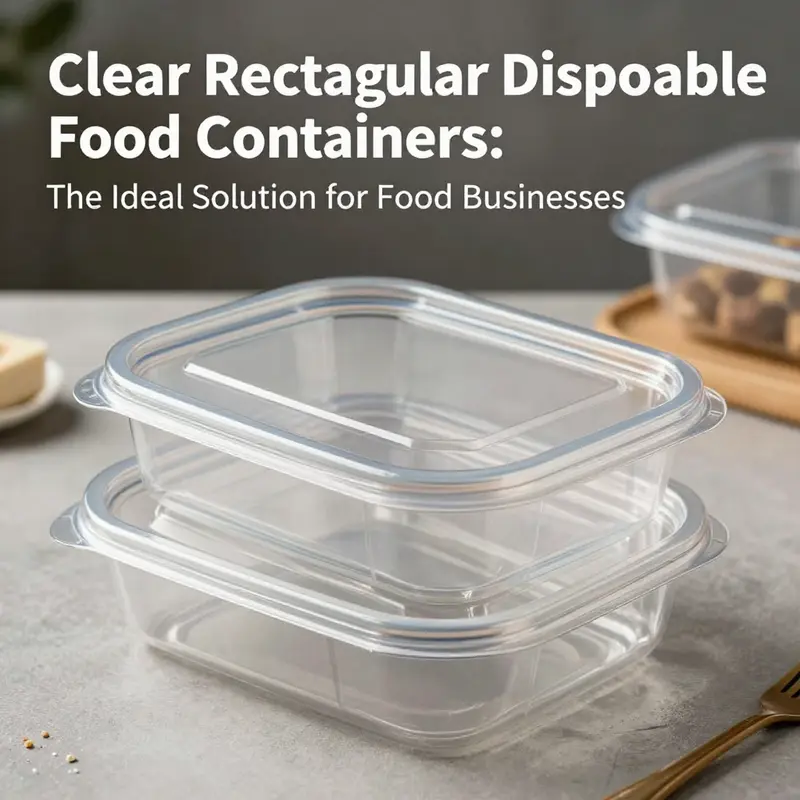
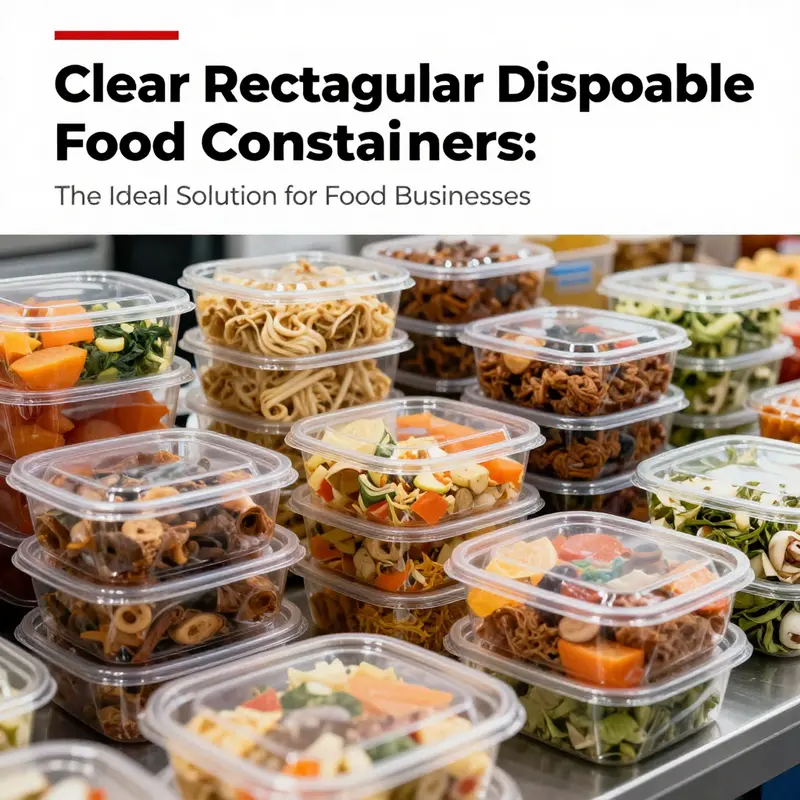
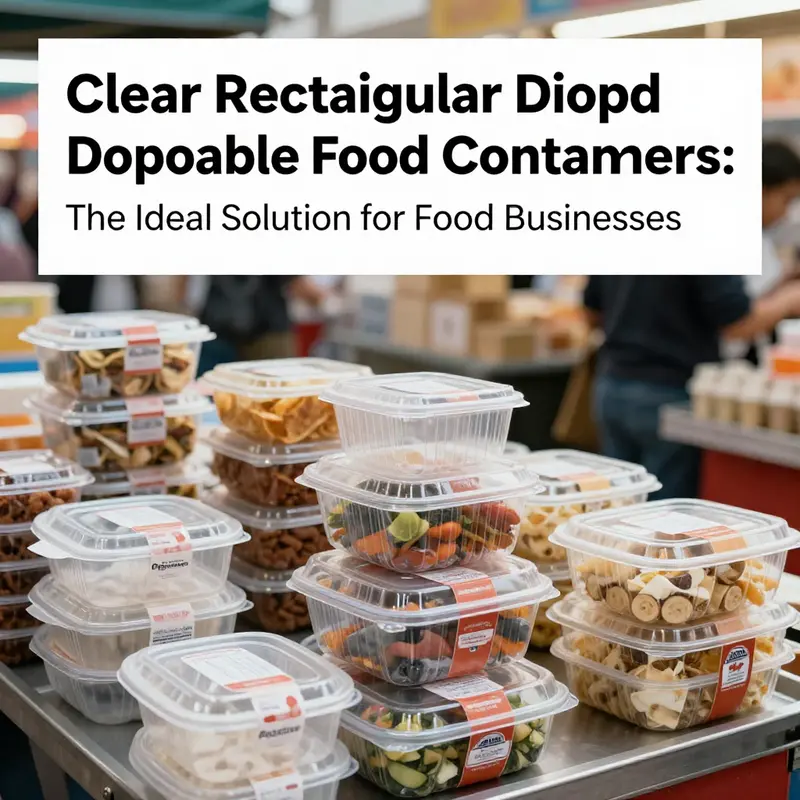
Clear rectangular disposable food containers have become essential in the food and beverage industry, providing functionality for bubble tea shops, restaurants, food trucks, catering services, event planners, and corporate procurement teams. Their transparent design not only ensures that meal contents are easily identifiable but also promotes a hygienic and practical approach to food service. This article delves into the versatility of these containers, their environmental impact, recent technological advancements, and emerging market trends, ensuring that businesses understand their value in today’s competitive landscape.
null
null
Clear by Necessity, Responsible by Design: Reassessing Sustainability in Rectangular Disposable Food Containers
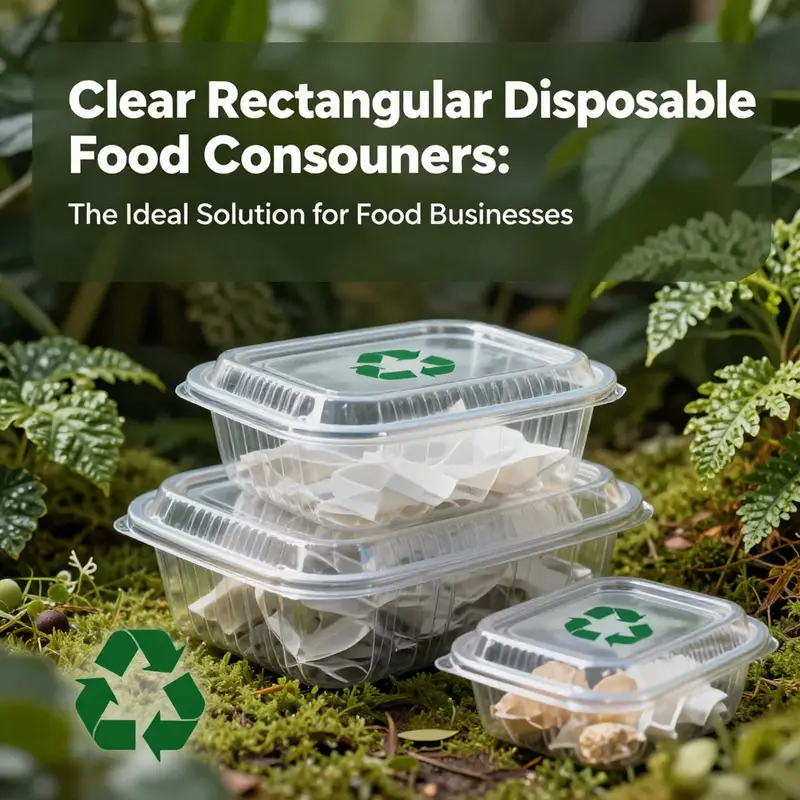
Clear rectangular disposable food containers are more than a convenience in the modern food system; they are a practical interface between sourcing, service, and storage. Their transparent walls invite quick recognition of contents, which speeds up prep, reduces handling steps, and minimizes the risk of mislabeling in busy kitchens, during delivery, and in crowded refrigerators. The typical construction leans on durable, food-safe plastics such as polypropylene (PP) and polyethylene terephthalate (PET). These materials deliver a combination of clarity, strength, and oil- and moisture-resistance that makes them suitable for a wide range of foods—from sauces and gravies to dry snacks and salads. The lightweight profile of these containers translates into lower transportation emissions relative to heavier packaging, a small but meaningful factor when fleets scale up to meet demand, and when millions of households rely on takeout streams week after week. The ability to withstand a spectrum of temperatures—some variants are microwave-safe, others are freezer-safe—adds to the practicality, enabling reheating and cold storage without a new container or additional handling. In many operations, clear rectangular containers also optimize space. Their uniform shape and tight tolerances mean they stack neatly, stackability becoming a logistic advantage in kitchens, warehouses, and delivery vehicles. In combination with secure sealing and reliable locking lids, these containers support the integrity of meals during transit, a crucial factor for customer satisfaction and brand reliability. The design choices surrounding these containers often balance multiple priorities: visibility, sealing performance, temperature tolerance, and ease of reuse or disposal. While the chemistry of these plastics is not the entire story, it is central to how a business can scale a takeout or meal-prep program while maintaining quality and consistency across thousands of meals per day. The practical synergy of transparency and ruggedness supports clearer inventory management, better portion control, and less waste due to spoilage or confusion about contents. Yet even as these containers deliver clear benefits in convenience and performance, they sit within a broader conversation about environmental impact and end-of-life responsibility that cannot be avoided when assessing their true value over time. The environmental discussion begins with material choices. High-density polyethylene (HDPE) and PP dominate the landscape, followed by PET for some rigid, crystal-clear variants. Each material brings a distinct profile of recyclability, mechanical performance, and heat resistance. HDPE is robust and widely accepted in many recycling streams, while PP excels in heat resistance and can often be molded into lighter, more durable forms. PET’s clarity is exceptional, and its recyclability varies by region, influenced by local infrastructure and market demand for recycled content. The clarity that makes these containers so useful also frames a paradox: it makes the waste stream easier to identify visually, but it does not guarantee easy recycling on the ground. This is because much of the environmental impact hinges on whether local facilities can collect, sort, and process these plastics efficiently. The overall story of sustainability, therefore, rests not just on the chemistry in the bottle or lid but on the system that handles the afterlife of packaging. In some places, recycling streams are robust and well integrated, with established collection programs, effective sorting, and stable downstream markets for recycled resin. In others, the infrastructure is fragile or fragmented, leading to a large proportion of used containers that end up in landfills or informal disposal streams. The consequence is a real disparity in environmental outcomes across geographies, which complicates business decisions that aim to balance cost, safety, and responsibility. A substantial portion of the environmental burden arises from the disposability mindset that has grown around takeout culture. The prevalence of single-use containers means a large volume of packaging enters waste streams each day. The challenge is not just the quantity, but the persistence of plastics in the environment and the limitations of some recycling systems to handle them efficiently. A 2019 study published in ScienceDirect highlighted that single-use containers contribute significantly to waste and raised concerns about their long-term recyclability. While that body of work underscores a critical tension, it also helps illuminate paths forward: the packaging that enables service can be redesigned to close the loop more effectively if markets, policies, and consumer behavior align toward reuse, recycling, or composting where feasible. The long-term goal is a system in which the material life cycle from production to end-of-life is part of a deliberate, transparent plan rather than a sequence of isolated decisions. Against this backdrop, many manufacturers have started exploring alternatives that respond to environmental concerns while trying to preserve the functional benefits of clear rectangular designs. Molded fiber and recycled paperboard, as well as composable or compostable coatings, are increasingly introduced as options that can reduce dependency on conventional plastics for certain applications. These materials tend to shine in contexts where heat resistance and repeated microwave use are less critical, or where composting infrastructure is widely available. The eco-friendly appeal is strong because these alternatives often derive from renewable resources and can be designed to decompose under appropriate conditions. However, challenges remain in terms of heat tolerance, moisture management, and actual composting realities in urban waste streams. A nuanced consideration of materials must also account for consumer expectations around durability and reliability. In households and professional kitchens, containers must perform under the rigors of daily use, resisting leaks, maintaining seal integrity, and withstanding repeated temperature fluctuations without warping or cracking. When a packaging option prioritizes sustainability, the trade-offs can show up in performance benchmarks—sometimes requiring design adjustments or different use-case restrictions. For instance, high-clarity PET may offer superior visibility but can be brittle under cold stress, while certain PP formulations may survive microwaving but have shorter shelf lives in high-heat or oil-rich environments. A thoughtful approach to material choice therefore weighs both functional requirements and environmental impact in parallel, rather than treating them as separate concerns. Another pillar of the sustainability conversation is end-of-life management. Even the most advanced material choices do not deliver full environmental benefits unless reuse or recycling practices are accessible and adopted at scale. The reality in many regions is that consumer behavior and municipal infrastructure profoundly influence outcomes. If households or commercial users do not sort packaging correctly or if facilities lack the capacity to process specific resins, the environmental advantage of a given material can be undermined. This underscores the importance of designing packaging with recyclability and the local waste ecosystem in mind. It also highlights the value of partnerships between manufacturers, waste processors, and policymakers to align incentives, improve collection rates, and ensure that recycling streams are both economically viable and practically achievable. Parallel to this is a growing interest in packaging innovations that aim to extend the usable life of containers through reusability. The notion of reusability, however, introduces new dimensions of logistics, cleaning, and return systems that must be integrated into the supply chain. For many operations, especially those with high volumes and tight margins, the economics of reuse can be challenging. Yet when designed thoughtfully, reusable options can reduce per-use environmental impact and offer a transparent route to resource conservation. Even when reuse is not universally feasible, clear rectangular containers can still contribute to sustainability by supporting efficient storage and reducing food waste. Their stackable geometry enables better space utilization in cold storage and transport, which in turn lowers energy demands across cold-chain activities. Clear labeling and uniform sizing help with inventory control, enabling more precise portioning and reducing spoilage. In short, the sustainability profile of these containers hinges on a layered strategy: selecting materials with recyclability in mind, aligning product design with the realities of local waste systems, and encouraging responsible consumer behavior that prioritizes proper disposal, collection, and, where possible, composting. This is not merely a product-level choice but a business and community-wide one. The environmental value of clear rectangular packaging increases when it harmonizes with broader sustainability goals, including reducing unnecessary material use, avoiding over-packaging, and streamlining the lifecycle of the packaging in ways that match local infrastructure. Some forward-looking producers respond by offering bulk or customizable packaging solutions that minimize inventory complexity and lead times while also presenting more straightforward recycling or composting pathways for end users. In practice, this means packaging designers and procurement teams increasingly consider the full lifecycle—from the initial choice of a transparent plastic to the conditions under which a container is disposed of after its final use. The insights from lifecycle analyses and comparative assessments help organizations implement smarter packaging strategies. A 2026 assessment suggested that robust recycling processes could cut environmental impact by roughly 25 percent, though this benefit is highly contingent on the established efficiency of local recycling systems and consumer participation. In other words, the same container can have a different environmental footprint depending on where it is used and how disposal is managed. Businesses aiming to optimize sustainability often pursue a hybrid approach: maintain the advantages of clear, durable containers while gradually integrating alternative materials in appropriate contexts, and invest in education and infrastructure that support recycling and proper waste handling. The decision matrix becomes a balancing act among performance, cost, and environmental responsibility. On the performance front, clear rectangular containers remain advantageous for fast-paced service environments. They provide reliable sealing, predictable stacking, and consistent portioning. These attributes translate into fewer spill incidents and less product waste, which indirectly reduces environmental impact by conserving food resources. On the cost front, the appeal of flexible supply chains—bulk shipments, varied sizes, and branding options—converges with sustainability goals when those options promote efficient production and recycling readiness. Customization, when done with an eye toward end-of-life considerations, can even reinforce sustainable practices by signaling to customers the container’s recyclability or compostability in compatible waste streams. For practitioners seeking practical guidance, the takeaway is not to abandon plastic packaging altogether but to adopt a systems-oriented mindset. This means choosing materials and designs that align with local recycling capabilities, exploring compostable or fiber-based alternatives where feasible, and empowering consumers with clear instructions for disposal. It also means acknowledging that no single solution will fit every use case. In many cases, a layered strategy—combining clear polypropylene or PET containers for temperature-sensitive foods with fiber-based options for ready-to-eat meals that travel shorter distances—can deliver the best balance of function and sustainability. To illustrate how a business can translate these principles into everyday practice, consider the role of packaging as part of a broader sustainability narrative. The decision to use recyclable polypropylene with clear walls, for example, can be paired with a customer-facing message about proper recycling and with partnerships that ensure convenient drop-off points or take-back schemes. In this sense, packaging becomes a communication channel as well as a containment system, signaling a commitment to responsible consumption and waste reduction. The conversation cannot ignore the realities of consumer expectations. People value clarity and convenience, but they also increasingly expect packaging to be kind to the environment and to the communities that handle waste. Transparency about what the container is made of, how it should be disposed of, and what alternatives exist when appropriate helps bridge the gap between product performance and environmental stewardship. When businesses invest in education and in infrastructure for end-of-life management, they empower customers to participate in sustainable practices. That empowerment is an essential element of the lifecycle of any disposable container, especially one designed to be clear, versatile, and efficient in handling beverages, soups, salads, and side dishes across varied service models. As the industry continues to advance, it is worth keeping in mind that the question of sustainability is not solely about the material on the shelf. It concerns the entire ecosystem that enables or hinders responsible use, recovery, and reuse. The aspirational path forward encourages ongoing innovation in materials science, packaging design, and waste-management policy, while also recognizing the practical realities of daily operations. In the end, clear rectangular disposable food containers will persist as a staple because they meet essential needs for visibility, protection, and convenient transport. Their sustainability, however, depends on an integrated approach that combines smart material choices, enhanced recycling or composting pathways, and consumer engagement that translates awareness into action. This integrated approach is not a distant ideal; it is a roadmap for kitchens, caterers, and retailers who want to serve meals with confidence and accountability. To readers seeking a concrete starting point, consider how you might reframe packaging decisions within your own operations. What percentage of your takeout volume could be directed to recyclable PP or PET with proven recycling streams? Are there contexts in which a molded fiber or recycled paperboard alternative could meet performance needs without compromising safety? How can you partner with local waste-management providers to improve collection and recovery rates? The path is iterative, but the benefits—reduced waste, clearer consumer communication, and a stronger alignment with sustainability goals—are tangible and measurable. Embedding these considerations into the everyday choices around clear rectangular containers helps integrate environmental responsibility into the core of food service operations, rather than treating it as a peripheral concern. For further reading on the environmental trade-offs involved, see a deeper examination of takeaway packaging and its lifecycle impacts at the following external resource: https://www.sciencedirect.com/science/article/pii/S095605301830425X. And for practical examples of how biodegradable and recyclable fiber-based options are reshaping the landscape in real-world contexts, you can explore the related discussion of kraft paper packaging and its variants in the linked internal resource disposable kraft-paper soup cup with lid.
Crystal Clarity and Commercial Resilience: Advancements in Clear Rectangular Disposable Food Containers
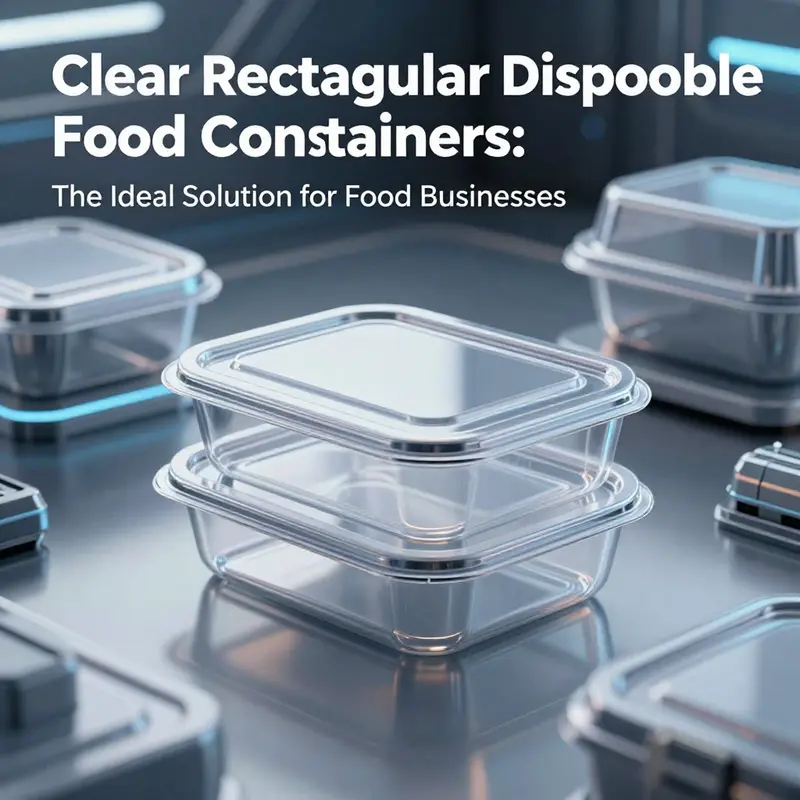
Clear rectangular disposable food containers sit at a compelling intersection of visibility, performance, and practicality. They are not merely choices for convenience but reflections of how modern food service, retail, and home meal preparation demand packaging that is honest about its contents, sturdy under variable conditions, and mindful of the environmental footprint. In the material sciences that underwrite these containers, a few threads weave through nearly every advancement: clarity that does not fade under oil exposure, strength that resists puncture and stress, and barrier properties that protect freshness without turning opaque. PET, short for polyethylene terephthalate, remains one of the most widely used bases because it delivers near-glass clarity, reliable moisture resistance, and a light touch on the wallet in mass production. When a consumer peeks at the meal inside, the product’s appearance promises honesty—no misleading haze, no fogging from condensation, just a crisp view of what lies within. This transparency is more than cosmetic; it supports the consumer’s decision-making, reduces the need to open and inspect containers, and keeps food safer by limiting unnecessary handling.
Behind that bright, glassy look lies a suite of engineered barrier properties that have evolved in step with consumer expectations. Oils and fats can migrate into packaging, altering taste and texture while also challenging the material’s integrity. Modern PET formulations and multilayer structures have improved barrier performance against oils and moisture without sacrificing optical clarity. In practical terms, that means sausages, sauces, or dairy accoutrements stay consistent longer in the package, reducing waste and protecting quality during transport from kitchen to table. The drive for clarity does not come at the expense of safety; the material choices and processing conditions are aligned with food-contact standards that govern safety across markets. It is this alignment that underpins trust in the containers that handle everything from delicate salads to hearty stews in both commercial and domestic settings.
Manufacturing innovations further elevate the everyday usefulness of clear rectangular containers. Their design emphasizes stackability and dimensional precision. When several dozen takeout portions are packed for delivery or shelf display, tight tolerances—down to millimeter-level accuracy—enable neat, stable stacking. This reduces the footprint of storage and streamlines the logistics chain, from kitchen prep lines to warehouse pallets and delivery vehicles. Lightweighting has become a powerful lever as well. By reducing material thickness where it does not compromise performance, manufacturers cut the container’s weight, lowering transportation energy and cost while preserving the rigidity needed to resist deformation under load. The balance between thin walls and structural resilience is a delicate one, achieved through advanced thermoforming and injection-molding processes that optimize wall geometry, ribbing, and base profile. The result is a container that feels almost effortless in use, yet performs reliably in busy service environments.
Functionality has also expanded in meaningful ways. PET containers have seen formulations and additives that increase heat tolerance for brief microwaving or hot service scenarios, expanding the contexts in which these boxes can be used. It is important to note that not all PET containers are oven- or microwave-safe, and labeling remains essential. But newer designs show that higher temperature tolerance is feasible for short, targeted exposures, enabling safer reheating or hot holding without compromising the container’s shape or seal. The story here is not a single material fix but a combination of resin chemistry, wall geometry, and seal integrity that together extend the functional envelope without turning packaging brittle or opaque.
From an environmental perspective, the conversation around clear rectangular disposables has matured beyond a binary of plastic versus paper. Recyclability has become a central objective, with attention to how the chosen polymer fits into established recycling streams. PET is widely recognized within many municipal systems for its recyclability, though the full environmental benefit depends on proper collection, sorting, and processing. In parallel with this, research into bio-based PET and other sustainable iterations seeks to reduce fossil fuel dependence while maintaining performance standards. These developments show a practical pathway toward packaging that preserves user benefits—clarity, barrier performance, and safety—while diminishing long-term ecological impact.
Even as material innovations push forward, the supply chain and business models around clear rectangular containers continue to evolve. Standardized capacities, typically ranging from a half-liter to around two liters, help align production with diverse market needs, from compact meal kits to bulk catering. The precision in sizing enables forcing a predictable fit within storage racks, transport totes, and display cases. Customization remains a common option, with brands and retailers seeking to imprint logos or product identifiers through methods such as silk screening or heat transfer. This branding is not merely decorative; it supports product differentiation in crowded markets, helps consumers recognize contents at a glance, and reinforces consistency in merchandising across multiple locations. The capacity to tailor dimensions, lids, and even color accents extends the value proposition beyond pure functionality to include marketing and brand continuity, a subtle but meaningful competitive edge in hospitality and meal-prep ecosystems.
Safety and regulatory compliance continue to shape the adoption of clear rectangular containers in global supply chains. Across jurisdictions, food-contact standards—such as those referenced in widely adopted guidelines and certifications—help ensure that the container materials and processing methods do not introduce any contaminants or residues into foods. The sequence from resin selection to finished container must be traceable, with quality controls that confirm material integrity, seal performance, and hygiene. Suppliers operating in this space increasingly emphasize certifications, including those related to food safety, risk management, and ethical manufacturing practices. The practical effect is a more robust framework for restaurants, caterers, and retailers who need reliable packaging that aligns with stringent quality expectations while maintaining agile supply capabilities. In this light, the clear rectangular format emerges as a practical canvas upon which safety, efficiency, and aesthetics converge.
The conversation about disposables is incomplete without considering how the market balances continuity and change. The appeal of a clear, rectangular container lies in its predictability: it stacks compactly, reveals its contents, and supports quick decision-making on the part of cooks, servers, and customers. However, producers and buyers increasingly weigh lifecycle considerations alongside performance. This includes evaluating end-of-life options, whether through recycling programs or incineration with energy recovery, and exploring regional differences in disposal infrastructure. The best outcomes arise when container design intrinsically supports recyclability, minimizes additives that complicate sorting, and uses the thinnest feasible walls without sacrificing functional reliability. In practice, this often means embracing a design philosophy that treats the container not as a disposable afterthought but as a system component that interacts with storage, handling, cleaning, and waste management processes.
To connect these threads back to real-world use, consider the ways suppliers respond to diverse service contexts. In kitchens with high-volume throughput, the ease of identification and rapid grab-and-serve workflows are enhanced by the container’s clear geometry and predictable indexing in racks and trays. In takeout and delivery operations, the container’s seal integrity and lid compatibility become decision criteria that influence customer satisfaction and operational efficiency. In retail and display settings, the opportunity to present food in transparent packaging supports consumer confidence and impulse choices, while the fit and finish of the container reflect upon brand quality even before a consumer opens the box. Across these environments, the clear rectangular format functions as a reliable baseline that supports both performance and perception, while still leaving room for innovation in materials, shapes, closures, and branding details.
The broader trajectory for these containers points toward continued refinement in materials science and circular design. Researchers and manufacturers are exploring smarter barrier polymers that maintain clarity while resisting oil infiltration, as well as hybrid structures that combine PET with protective layers, all in a way that remains compatible with established recycling streams. At the same time, advances in bio-based or recycled-content PET offer a path to reduce fossil fuel dependence and lower the carbon footprint of the packaging system. The aim is not to replace the clear rectangular container with something entirely different, but to push its capabilities further—enhancing safety, extending shelf life, enabling greater reusability where feasible, and aligning packaging choices with evolving expectations from governments, retailers, and consumers. In this sense, the clear rectangular disposable container is both a practical tool for today and a platform for tomorrow’s packaging innovations.
For readers seeking a concrete example of how different material families intersect with design goals in the real world, one can consider the spectrum from transparent PET to boards and papers that support clear-lid, take-away configurations. While the latter often involves their own regulatory and environmental considerations, the core idea remains consistent: transparent packaging should deliver clarity without compromising safety, while enabling efficient handling and responsible end-of-life management. This is the balancing act that defines modern clear rectangular disposables and their ongoing evolution in the service of food, flavor, and function. A single, simple choice in packaging can ripple through the supply chain, affecting storage density, travel safety, customer experience, and environmental outcomes.
Internal link for related design considerations: disposable kraft paper takeaway box with clear lid.
External resource for broader context: https://www.plasticsEurope.org/en/industries/plastic-uses/food-packaging
null
null
Final thoughts
In conclusion, clear rectangular disposable food containers offer versatility, sustainability, and technological innovations that are essential for modern food businesses. Whether you’re a bubble tea shop owner, a restaurant manager, or an event planner, understanding the benefits and market trends surrounding these containers can greatly enhance your service delivery. By choosing reliable suppliers and prioritizing eco-friendly options, you can contribute to a greener economy while meeting customer demands for quality and convenience.