
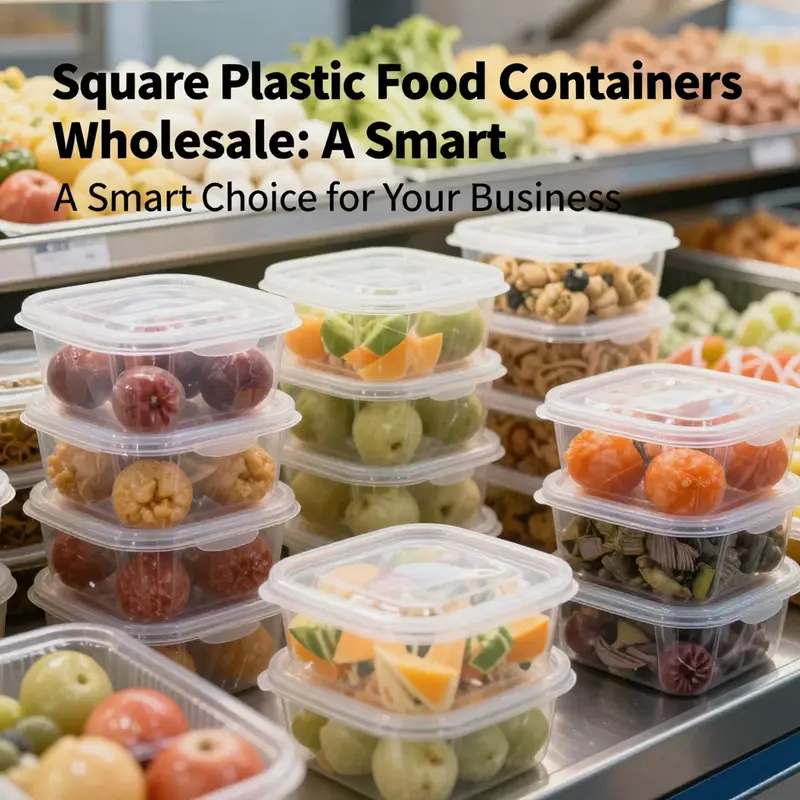
In today’s culinary landscape, whether you belong to the vibrant world of bubble tea shops, the bustling kitchens of restaurants, or the dynamic realm of food trucks and catering services, the efficient storage and service of food are paramount. Square plastic food containers are key players in this domain, perfectly blending space efficiency with durability. Their diverse applications serve a multitude of sectors, including event planning and corporate procurement. By understanding the unique features, top suppliers, emerging market trends, performance insights, and crucial considerations when selecting these containers, your business can better meet its operational needs. This article aims to provide a comprehensive overview of how square plastic food containers can elevate your food service capabilities while ensuring quality and convenience.
null
null
Partnerships in Profile: Navigating the Landscape of Top Suppliers for Square Plastic Food Containers Wholesale
The wholesale market for square plastic food containers has evolved from a simple storage solution into a finely tuned ecosystem of partners, standards, and capabilities. The square form, with its predictable edges and uniform footprint, delivers more efficient stacking, transportation, and storage than round counterparts. In a supply chain focused on speed, consistency, and cost control, choosing the right supplier is less about one-off price and more about a reliable rhythm of production, quality, and customization that aligns with a buyer’s operational calendar. This chapter surveys the current supplier landscape with an eye toward practical procurement decisions, bridging the gap between product features and the business realities of restaurants, caterers, meal-prep outfits, and retailers who rely on bulk purchases to keep kitchens buzzing and shelves stocked.
At the heart of this landscape sits a prominent Chinese manufacturer known for its breadth of packaging offerings, including square food containers in multiple materials. This factory, established at the turn of the century, operates with a sizable daily output that translates into scalable capacity for both pilot runs and global private-label programs. The core materials include polypropylene, polystyrene, and PET, with a portfolio that also reaches into newer, safer packaging options. A key advantage for wholesale buyers is the facility’s capability to operate on multiple production lines, including thermoforming and printing. This means clients can move from simple, unbranded containers to fully customized packaging with logos and specific color schemes, all under one roof. Importantly, the emphasis on food-grade materials aligns with widely accepted safety benchmarks, enabling buyers to pursue standards compliance without chasing multiple suppliers.
Beyond a single factory, several manufacturing hubs—especially in southern China’s Guangdong region—have built ecosystems around square containers. These hubs are praised not only for established, mature tooling and automation but for the speed and cost efficiencies that large-scale production affords. A typical lead time in this environment ranges from roughly two weeks to a few weeks, depending on order complexity and whether customizations are involved. The advantages extend into sustainability options, where factories are increasingly capable of offering eco-friendly alternatives. For brands aiming to meet evolving consumer expectations in Europe and North America, the capacity to source PLA-lined packaging or bagasse-based substrates alongside traditional plastics is a meaningful differentiator. In practice, this means buyers can assemble a portfolio that spans conventional PP or PS containers and greener, compostable lines that satisfy climate-conscious customers and regulatory requirements such as ASTM D6400 and EN 13432 certifications.
The marketplace also features a growing cohort of verified wholesale suppliers accessible through global sourcing platforms. These platforms act as gatekeepers of credibility, presenting buyers with pre-vetted manufacturers and transparent pricing for bulk purchases. For square containers, price points in these listings can be surprisingly favorable, reflecting the scale and efficiency of the suppliers. For example, certain square clear plastic containers with lids are quoted in the vicinity of a little over one US dollar per piece at bulk volumes, while related variants with integrated lids and more intricate designs may price somewhat higher. Such ranges are not just numbers; they map to tangible procurement strategies. Buyers can negotiate minimum order quantities, request rapid sampling, and secure more predictable lead times when dealing with reputable suppliers who demonstrate consistent quality control processes. The presence of documented compliance with material safety standards—such as FDA 21 CFR 177 and EU Regulation (EC) No 1935/2004—helps buyers reduce the compliance burden in their own markets, particularly when exporting to North America and Europe.
While price and compliance matter, so do the details of how a supplier operates. A well-run factory will emphasize three aspects: consistent material sourcing, rigorous quality control, and robust packaging customization. In practice, this means a supplier maintains traceable material certifications, enforces a three-stage QC process, and can accommodate private-label requests—from simple embossed logos to full-color packaging and lid designs. These capabilities are not just marketing gloss; they directly affect throughput, waste reduction, and the ability to scale with a buyer’s seasonal campaigns. For managers overseeing catering operations or meal-prep networks, the capacity to switch swiftly between standard boxes and branded, co-branded packaging without interrupting service is a significant competitive advantage.
In the broader supplier ecosystem, one often encounters a blend of standard wholesale offerings and more consultative, service-driven engagements. Some manufacturers position themselves as turnkey packaging partners, delivering not only containers but also related accessories, like matching lids, separators, or even insulated liners for temperature control. This level of integration can streamline procurement and reduce the administrative overhead of coordinating multiple vendors. For buyers exploring private-label opportunities, the key is to evaluate a supplier’s willingness and capability to customize print areas, lid configurations, and carton-level packaging. The best partners view customization not as a one-off project but as an ongoing dialogue that evolves with a buyer’s brand strategy and product lines.
Importantly, a growing segment within the wholesale arena emphasizes sustainability without sacrificing performance. Eco-conscious buyers are increasingly drawn to suppliers who can offer alternative materials, such as PLA blends or bagasse-based papers, for certain product lines. The push toward eco-friendly options is not merely a trend; it reflects consumer expectations and regulatory directions in major markets. For square containers, this means choosing suppliers who can deliver a mixed portfolio: conventional plastic variants for everyday use and greener options for premium lines or take-away services targeting sustainability-conscious customers. In practice, the choice becomes a strategic one: a diversified supplier base reduces risk, while a coordinated mix of materials can unlock new revenue streams and co-branding opportunities.
As buyers evaluate potential partners, documentation and transparency rise in importance. The most reliable suppliers present clear material declarations, evidence of regulatory compliance, and documented quality-control procedures. They can provide references from similar clients and, when appropriate, customer logos or packaging samples for review. The ability to supply multiple formats—single-compartment boxes, multi-compartment sets, and stacked or nested designs—helps buyers tailor inventory to diverse use cases, from portion-controlled meal prep to restaurant service and retail display. The result is a procurement environment where price is balanced by reliability, customization options, and the supplier’s willingness to engage in collaborative problem solving.
To illustrate how these factors manifest in practice, consider a pathway for a buyer seeking scalable private-label capacity. They begin with a market scan of regional factories in Guangdong and nearby hubs, focusing on those with established export experience and certifications. They request samples across several sizes and materials to benchmark performance in microwaves, freezers, and dishwashers. Meanwhile, they assess platform-sourced suppliers that provide transparent pricing and three-stage QC documentation. If a supplier can demonstrate a successful track record with private labels—complete with artwork approval processes, clear lead times, and a robust returns policy—the buyer gains confidence to place larger orders and negotiate favorable terms. In parallel, they map out a sustainability plan that includes a mix of conventional and eco-friendly options, aligned with their brand strategy and regulatory compliance in target markets.
For buyers who want a concrete touchpoint within the broader supplier landscape, one relevant example highlights how a particular line of packaging can support a buyer’s packaging strategy through a combination of standard square boxes and eco-friendly alternatives. This demonstrates the potential for a single partner to cover multiple needs—from basic daily-use containers to branded, logo-laden lines that reinforce a company’s identity in the market. It also underscores the importance of flexibility: the ability to adapt to shifting demand, to pivot between product formats as menus or offerings evolve, and to meet the seasonal spikes that often characterize hospitality and meal-prep businesses. Within this continuum, the role of the supplier is not just to sell containers but to provide a holistic packaging solution that aligns with a buyer’s operational tempo and strategic goals.
Amid these considerations, a practical note on user experience should not be overlooked. The most effective suppliers balance price with service quality, ensuring that orders arrive intact, lids remain secured, and replacements are available when needed. They recognize that in a busy kitchen, even small delays or missing lids can ripple into service gaps and dissatisfaction. Therefore, they design their workflow to minimize injury risk for workers during handling, ensure compatibility with standard dishwashers and microwaves, and maintain durability even after repeated use. They think beyond the single container to the entire system—how the lids seal, how easy it is to stack, how clean walls resist odor retention, and how accessible the containers are for quick cleaning and sanitization. Each of these elements feeds back into a buyer’s bottom line, through reduced waste, lower labor costs, and increased customer satisfaction.
When it comes to discovering supplier options, buyers should also be mindful of the online marketplaces and platforms that host multiple manufacturers. Such platforms often present comprehensive data sheets, user reviews, and performance metrics that help buyers compare alternatives efficiently. They enable more informed decision-making, especially for firms expanding into new markets or scaling production. And while the raw numbers—unit price, minimum order quantity, and lead time—are essential, the narrative behind those numbers matters too. A supplier’s capability to deliver on time, maintain consistent quality across batches, and respond quickly to design changes can determine whether a given container becomes a staple in a buyer’s lineup or remains a one-off experiment.
For readers seeking a direct, concrete example of how a packaging supplier can broaden a buyer’s options, consider a product page from a diversified packaging line that emphasizes access to food-grade materials, customizable branding, and scalable production. This particular listing illustrates how a supplier can position itself as a capable partner for square containers and related packaging needs, combining standard products with tailored options that support brand identity and customer experience. It also reflects the value of certifications and transparent QC—elements that help buyers build confidence in a supplier’s ability to support long-term growth and market expansion. Such examples illuminate a path for procurement teams to align their sourcing strategies with their broader business objectives, turning container selection into a strategic, value-creating activity rather than a routine transactional exercise.
As this landscape continues to mature, embracing a mixed strategy—reliable core suppliers with strong compliance records, complemented by a curated set of eco-friendly options—appears prudent. Buyers who invest in relationships with reputable manufacturers, who understand the nuances of materials, printing, and packaging design, will likely experience smoother cycles of restocking, branding, and product launches. They will also be better prepared to meet evolving consumer expectations, regulatory changes, and sustainability commitments without sacrificing efficiency in production or cost control. In short, the top suppliers for square plastic food containers wholesale are not just vendors; they are strategic partners capable of shaping a brand’s packaging narrative as surely as they shape its supply chain.
To explore perspectives beyond this narrative, readers can consult external insights into global supplier ecosystems that outline how manufacturers in major markets are coordinating capabilities, certifications, and logistics to serve a growing demand for reliable, compliant, and innovative packaging solutions. For a broader view of how suppliers in this sector operate and how buyers can navigate the landscape, see the following external resource: https://www.supplychaininsider.com/plastic-food-container-suppliers-china/ . Additionally, for a hands-on peek at a related packaging option that complements square containers in meal-prep contexts, consider this example: Senang05 Food-Grade Kraft Paper Soup Cups.
null
null
null
null
Smart Sourcing for Square Plastic Food Containers: Safety, Design, and Scale in Wholesale
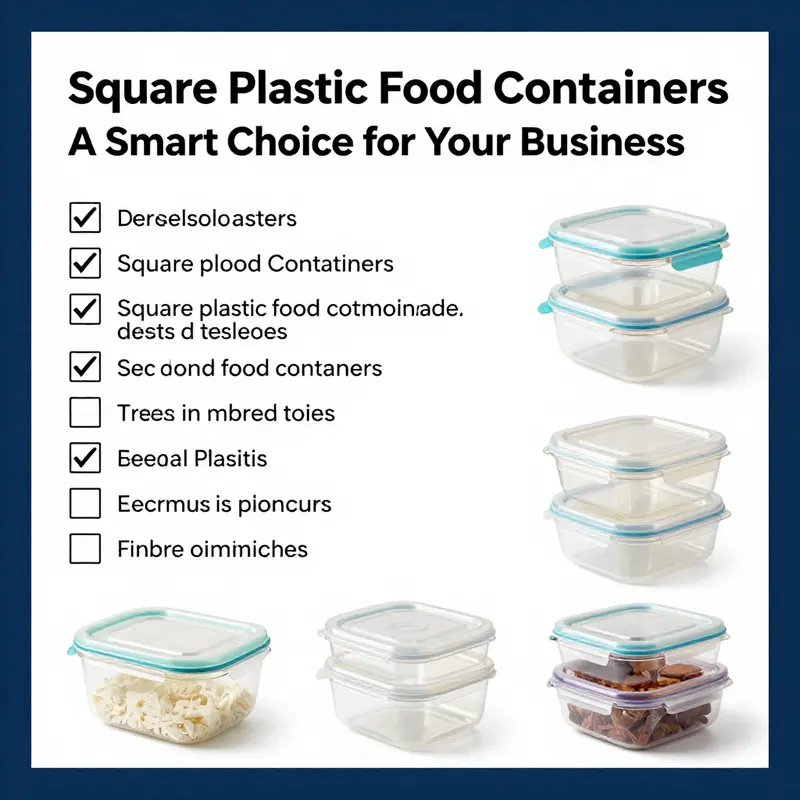
A concise, practical guide for wholesale buyers evaluating square plastic food containers. This chapter highlights safety, material choices, regulatory considerations, durability, design features, and supplier criteria essential for scale. It explains why polypropylene (PP) and high-density polyethylene (HDPE) are common food-grade options and how resin identification codes (2 for HDPE and 5 for PP) guide recycling and compatibility decisions, while noting that code 7 warrants closer scrutiny. The text emphasizes clear labeling, traceability, and the importance of test reports and certifications in demonstrating compliance. It covers heat and cold performance, stackability, lid integrity, and the need for smooth interiors to prevent residue buildup, as well as the role of transparency versus opacity in inventory management. It discusses evaluating samples and pilots, establishing minimum order quantities and lead times, and verifying a robust three-stage quality-control process. It also notes environmental considerations, total cost of ownership, and interoperability with existing warehousing and cleaning systems. A practical example describes reusable square containers with PP lids used in catering or institutional settings, illustrating how design choices translate into reliability, efficiency, and safety in wholesale operations. Finally, it references relevant standards such as GB4806.7 to frame a broader regulatory context.
Final thoughts
Square plastic food containers provide a blend of practicality, durability, and versatility, making them an excellent choice for bubble tea shops, restaurants, food trucks, and catering services. By understanding their key features, exploring top suppliers, acknowledging market trends, analyzing performance insights, and considering essential purchasing factors, your business can make informed decisions that enhance operational efficiency and customer satisfaction. Ultimately, leveraging the right square plastic food containers can lead to impressive cost savings and a heightened dining experience, paving the way for your business’s success.