
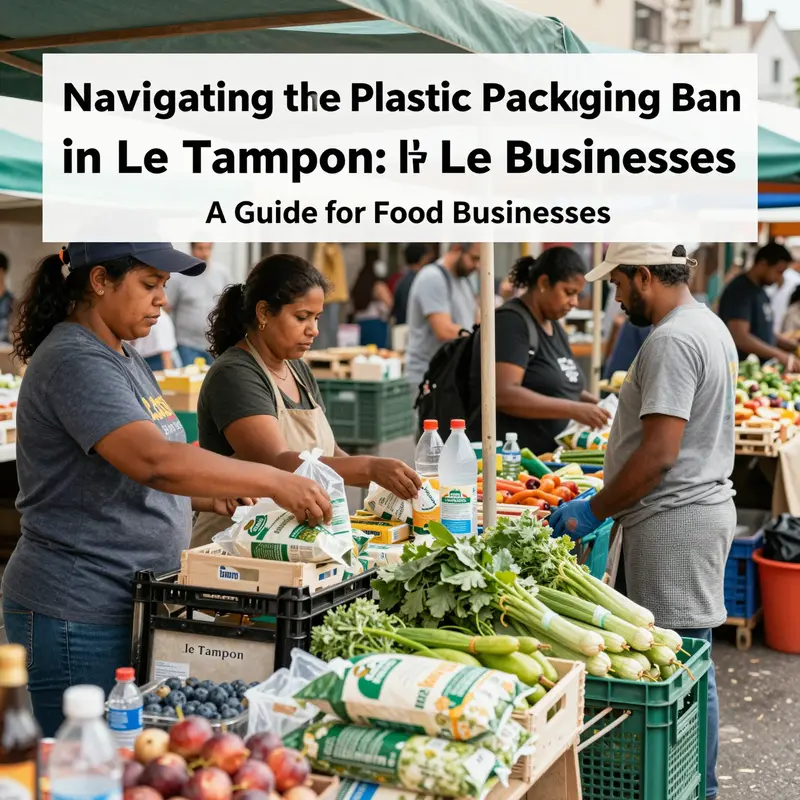
With increasing focus on sustainability and environmental stewardship, the French government is rolling out progressive regulations concerning plastic packaging for food. In Le Tampon, this shift presents both challenges and opportunities for bubble tea shops, restaurants, and catering services. The importance of understanding these regulatory developments is paramount as they influence operational strategies, customer perception, and even bottom lines. Subsequent chapters will delve into the specifics of the regulations enacted, analyze their economic implications, and assess their broader impact on society and the environment.
From Coasts to Cafés: Le Tampon’s Journey Through France’s Plastic Packaging Rules Toward a Circular Food System
The island breeze that sweeps across Réunion carries more than salt and rain; it also carries a political and economic current that shapes everyday choices in towns like Le Tampon. In recent years, France has embedded a broader commitment to curbing plastic waste into a compelling policy program. The aim is simple in its intent and complex in its execution: reduce single-use plastics, shift to recyclable or reusable packaging, and promote materials that either biodegrade in real-world conditions or can be reused many times. In Le Tampon, as in other French communities, this shift is not just about compliance; it is about rethinking the entire approach to how food is packaged, sold, and disposed of. The regulatory landscape has evolved in step with European Union directives and France’s own environmental code, setting a trajectory that local businesses must navigate with pragmatic adaptation and a clear sense of opportunity. The story of Le Tampon, therefore, is a microcosm of a continental transition that is entering a new phase as regulations tighten and cultural expectations adapt to more sustainable norms.
The country-wide progress began with widely publicized steps to phase out plastic packaging that could not be recycled or reused. A landmark change took effect on June 20, 2023, when France banned plastic packaging at the retail level for the sale of unpackaged fruits and vegetables. The objective was to cut down on incidental plastic waste at the source and to push retailers and producers toward alternatives that align with a circular economy framework. While this particular rule targets the retail setting, it resonated through the supply chain, compelling suppliers to rethink packaging configurations and to consider how even seemingly small choices—like the type of bag used for loose produce or the secondary packaging that protects delicate items during transport—can influence the life cycle of a product. In Le Tampon, this ripple effect was felt in markets and small grocers where customers expect fresh produce to be handled with care, yet not wrapped in layers of plastic that will outlive the freshness of the product by months.
Beyond this initial shift, a more ambitious horizon opened at the European level. The Packaging and Packaging Waste Regulation (PPWR), part of a broader EU framework, began to shape norms across member states by targeting the packaging that accompanies meals and sauces, particularly in on-premises consumption contexts such as restaurants, fast-food outlets, and hotels. As of August 12, 2026, the EU intends to ban single-use plastic packaging for condiments and sachets provided to in-house diners. While take-away sauces and single-portion condiments purchased in shops can still be used in certain configurations, establishments will be required to offer reusables—such as pressurized bulk dispensers or ceramic dishes—for in-house servings. This move is not only about reducing microplastic leakage; it is about redirecting consumer expectations toward durability, cleanliness, and the possibility of shared or refillable systems. In Le Tampon, where the tourism economy and local eateries blend with a resilient daily rhythm, restaurants and hotels are already recalibrating their approach to sauces and condiments, experimenting with bulk dispensers, reusable glass bottles, and clearly labeled packaging that communicates end-of-life options to customers.
France’s broader strategy has never rested on a single instrument. Since 2020, the country has progressively banned a range of disposable plastic items such as cotton swabs, straws, cutlery, lids, plates, ice-cream cups, and salad boxes, unless these products meet stringent standards—principally that they are made from materials with high bio-based content and that they are capable of home composting. The requirement for materials to be bio-based at least 50% (rising to 60% from 2025) reflects a careful calibration between encouraging innovation and ensuring real environmental benefits. The emphasis on compostability and bio-based content is designed to spur a market shift—one that supports new supply chains and encourages producers to adopt materials that can be integrated into regional waste management systems. In Le Tampon, this transition has reinforced the need for packaging choices that align with local composting schemes and with municipal collection practices. It has also pushed retailers to revise their labeling so that consumers can readily identify packaging that is recyclable or compostable, thereby closing the loop between use and end-of-life processing.
Local enforcement in Réunion, including Le Tampon, mirrors this national and European logic, even as the region contends with its own logistical and environmental particularities. The overseas departments receive support from national bodies and European funds to facilitate the shift toward more sustainable packaging. The federal framework ensures that polystyrene foam containers, for instance, are prohibited or restricted, and that packaging bears clear indications of recyclability or compostability. In practice, Le Tampon’s authorities have prioritized transparent enforcement, accessible guidance for businesses, and targeted inspections to ensure compliance with labeling norms. This approach helps minimize the information gap that often hinders small operators in more remote areas. It also fosters trust among consumers, who increasingly demand packaging that reflects environmental responsibility as a core value rather than a mere marketing claim.
A crucial instrument in this transition is the support provided by ADEME, the French ecological transition agency, which has launched regional initiatives in overseas departments like Réunion. The agency’s programs include grants and technical assistance designed to help restaurants and retailers in Le Tampon shift toward sustainable packaging solutions. For small businesses, the prospect of switching to compostable or reusable systems can seem daunting, given concerns about cost, supply stability, and the practicality of implementing new processes. ADEME’s role is to ease these concerns by facilitating access to appropriate materials, offering guidance on selecting compliant packaging, and helping businesses connect with suppliers that can deliver reliable performance under local conditions. The emphasis is not merely on compliance—though that is essential—but on enabling practical, long-term operational improvements that reduce waste, support local economies, and align with the broader goals of environmental stewardship.
The regulatory journey is never static, and in Le Tampon it continues to unfold as a conversation among policymakers, business owners, workers, and consumers. The interplay between policy and practice is most visible where everyday routines intersect with the regulatory timetable: the moment when a market stall or a small café decides how to present its food, how to package sauces for sit-down diners versus take-out, and how to label containers so that customers understand what can go into their home compost or local recycling stream. In these moments, the abstract outlines of a law become tangible choices about what is purchased, what is used, and what ends up in the waste stream. The challenge for Le Tampon—like other communities in France and across the EU—is to maintain a balance between protecting the environment and sustaining vibrant local economies that rely on the accessibility and affordability of safe, convenient packaging options. The regulatory framework, when implemented with clarity and support, can catalyze innovation in packaging design, prompt a rethinking of supply chains, and encourage the development of locally appropriate solutions that reflect Réunion’s unique climate, infrastructure, and cultural context.
What this means for a town such as Le Tampon is not merely a compliance checklist but a broader invitation to reimagine how food is packaged, displayed, and consumed. It invites restaurant operators to consider reusable systems for in-house dining—perhaps by offering bulk condiments in lab- or kitchen-grade bulk dispensers that minimize packaging waste, while ensuring hygiene and ease of use for staff and customers alike. It encourages retailers to experiment with paper-based or bagasse-based containers that are sturdy, visually appealing, and compatible with existing waste management practices. And it invites consumers to participate more actively in waste separation, to understand the life cycle of the packaging they encounter daily, and to reward efforts toward packaging that reduces environmental impact. In that sense, Le Tampon’s regulatory environment becomes a catalyst for cultural change, nudging communities toward choices that align economic viability with ecological resilience.
In discussing alternatives, it is important to acknowledge the practical realities that accompany this transition. Biodegradable materials, for example, require appropriate collection and processing facilities to realize their environmental benefits. Without accessible composting or industrial processing capacity, the advantages of biobased or compostable packaging can be limited. Le Tampon’s local authorities and ADEME’s regional programs therefore focus not only on the packaging materials themselves but also on the entire waste management chain. They emphasize the availability of composting pathways, the efficiency of recycling streams, and the ability of businesses to integrate new packaging with existing operational systems. The outcome is an ecosystem-wide improvement rather than a single technology shift. It is precisely this holistic approach—spanning policy, business practice, and consumer behavior—that holds the most promise for achieving durable reductions in plastic waste on Réunion and beyond.
As the regulatory timetable continues to unfold, there is room for entrepreneurial experimentation within the constraints of the rules. Local cafés and eateries can explore temporary, practical pilots that test the feasibility of reusable containers for dine-in service, or the use of refilled condiment stations that minimize packaging while upholding hygiene standards. The transition may be incremental, but its cumulative effect can be substantial. In Le Tampon, business owners who anticipate change and invest early in compliant packaging systems may benefit from early supplier familiarity, longer-term cost stability, and stronger alignment with consumer expectations for sustainability. The regulatory signal thus becomes a lever for long-term planning, not just a burden to be borne in the near term. It also opens opportunities for local suppliers and manufacturers who can tailor packaging to the island’s climate and market demands, reinforcing regional resilience and reducing dependence on distant supply chains.
To bring a concrete example into view while keeping with policy realism, consider the broader spectrum of packaging that businesses might employ as they transition away from single-use plastics. Paper-based options, bagasse fibers, and reusable glass or ceramic vessels for in-house dining are all possibilities under current rules, provided they meet performance, labeling, and end-of-life criteria. There is still a place for carefully designed, effective packaging solutions that protect food quality, ensure safety during transport, and minimize waste. In this milieu, suppliers of eco-friendly packaging play a crucial role by offering options that are practical for local operators to implement, meet regulatory requirements, and resonate with consumer expectations for responsibility and transparency. The conversation in Le Tampon, therefore, is not only about what is forbidden or required; it is about what is possible when industry, government, and citizens collaborate to create a more sustainable food system.
As with any regulatory transition, communication is essential. Clear, accessible information helps small businesses understand requirements, plan investments, and communicate with customers about the reasons behind packaging choices. The local authorities in Le Tampon have the challenge and the opportunity to translate detailed national and EU rules into practical guidelines that are usable in day-to-day operations. The emphasis on labeling—so that consumers can easily distinguish recyclable from compostable packaging—reflects a broader educational goal: to empower consumers to participate actively in waste reduction rather than simply following rules. The long-term effect of such education is a culture in which packaging decisions are made with a holistic understanding of environmental impact, resource conservation, and community well-being. In that sense, Le Tampon’s regulatory developments contribute not only to a cleaner environment but also to a more informed and engaged citizenry.
The road ahead will be shaped by ongoing policy development at both national and European levels. While the specifics can shift in response to new evidence, the general direction remains steady: packaging should be recyclable, reusable, or derived from bio-based materials; single-use options should be minimized; and labeling must clearly indicate end-of-life options. For Le Tampon and Réunion as a whole, this means continuing to expand the network of support for businesses transitioning to sustainable packaging, refining guidance to reduce confusion, and ensuring that waste management infrastructure keeps pace with the pace of innovation in packaging design. It also means fostering local manufacturing capacity where feasible so that replacements for single-use plastics can be produced domestically, reducing shipping emissions and strengthening resilience against external shocks. All of these elements—policy clarity, financial support, technical assistance, and robust waste infrastructure—work in concert to transform regulation from a set of prohibitions into a coherent strategy for sustainable economic activity.
In sum, Le Tampon’s experience embodies the broader French and EU trajectory toward a circular economy for food packaging. The city’s daily routines, its markets, its restaurants, and its households are being guided, but not dictated, by a framework that values recyclability, reuse, and responsible material choices. The practical impact on a seaside town like Le Tampon is a careful balancing act: protecting the environment while preserving the vibrancy of local life. The rules push for innovation in packaging design and logistics, create new market opportunities for sustainable materials, and encourage a deeper level of consumer participation in waste reduction. They also remind local actors that change is not a one-off event but a continuing process of adaptation, learning, and collaboration. As this process unfolds, Le Tampon stands as a test case for how communities can align policy, business, and everyday practice to advance toward a more circular and resilient food system. The challenge now is to sustain momentum, expand access to compliant packaging options, and keep the dialogue open among regulators, suppliers, and the public so that the island can meet ambitious environmental goals without sacrificing the quality and accessibility of its food culture.
For readers seeking a direct path to policy sources that inform these developments, the French Ministry of Ecological Transition maintains up-to-date information on regulatory changes and implementation timelines. This official channel provides context for the nationwide framework within which Le Tampon operates and offers guidance for businesses and citizens alike as they navigate the evolving packaging landscape: https://www.ecologie.gouv.fr.
Within the practical realm of packaging alternatives, some businesses are already integrating more sustainable solutions into their day-to-day operations in ways that illustrate the potential of the regulatory framework. For example, a growing segment of service providers and retailers are exploring the use of compostable or reusable options that fit the island’s waste management capabilities, alongside clear communication with customers about end-of-life options. In the meantime, the market for eco-friendly disposable options—while still developing—demonstrates how regulatory impetus can drive supplier diversification and price competitiveness, particularly when supported by public funding and technical guidance. The interplay between policy, market response, and consumer behavior is dynamic and ongoing, and Le Tampon’s path through this landscape will continue to illuminate how local adaptation can converge with broader environmental objectives.
Internal link note: To illustrate a concrete example of the types of alternatives being explored in alignment with this regulatory direction, readers can explore a related resource that highlights a range of eco-friendly disposable options, including bamboo utensils and other compostable or recyclable components. The linked page, derived from a product-focused supplier catalog, uses a descriptive anchor that corresponds to the URL’s content: disposable-eco-friendly-biodegradable-fork-spoon-knife-bamboo-utensils-dinnerware-cutlery-tableware-set-napkins.
In closing, the convergence of French national policy, EU directives, and local implementation in Le Tampon reflects a broader, purposeful shift toward a circular economy for food packaging. It shows how regulation can act as a catalyst for innovation and for building capacity within communities to manage waste more effectively. It also emphasizes the necessity of alignment among policy, industry, and consumer practices if the environmental ambitions are to translate into tangible improvements in everyday life. As Le Tampon continues to adapt, its story will contribute to a wider understanding of how compact, coastal towns can respond to the demands of modern sustainability while maintaining the vitality that makes them unique. The arc from ban to habit—through education, investment, and collaboration—holds promise not only for Réunion but for similar communities seeking to reimagine their packaging ecosystems in a way that respects local realities and global commitments alike.
Economic Currents in Le Tampon: Navigating France’s Plastic Packaging Ban and the Path to Sustainable Local Commerce
Le Tampon sits at a crossroads of policy and practice, a French municipality that mirrors the nation’s determined push to restructure how goods move from farm to fork and from shelf to table. The broader Anti-waste Law, with its long arc toward eliminating single-use plastic packaging by 2040, has already begun to reshape everyday business decisions. In Le Tampon, as in many corners of the country, the first tangible phase came with regulations banning plastic packaging for unprocessed fruits and vegetables at the retail level, effective in mid-2023. That policy, paired with the forthcoming EU-wide rules on single-use packaging for condiments inside dining venues, signals a shift not merely in materials but in the very economics of packaging. The local economy must now grapple with the logistical, financial, and behavioral consequences of these reforms, and the way Le Tampon responds will illuminate how similar communities might handle the transition across France’s green transformation agenda.
The most immediate economic pressure arises from the need to replace conventional plastics with alternatives that align with environmental objectives. For many food-related businesses—ranging from small cafés and market stalls to mid-sized retailers—the switch is not a simple swap of one material for another. It is a reassessment of supply chains, supplier agreements, and cost structures that were once underpinned by the relatively low price of single-use plastics. In the near term, the costs associated with alternative packaging—whether compostable materials that require specialized processing, reusable systems that demand sanitation protocols and return logistics, or packaging made from recycled content—tend to be higher. This is not merely a price delta but a redesign of operations. A restaurant shifting away from plastic wrap or single-use sachets toward paper-based wrapping, plant-based films, or durable containers may see expenses rise in the purchase phase, as well as in the back-end processes required to maintain food safety and preserve product integrity. The consequence is not only a higher bill of materials; it can cascade into labor, inventory management, and even marketing as operators explain new choices to customers accustomed to familiar packaging.
In Le Tampon, the impact is felt most acutely by those with tight profit margins and high-volume turnover. Large chains and formal retailers might absorb some of the higher costs through scale, but small, independent operators—many of whom rely on off-season tourism and local patronage—face a tighter squeeze. The risk of price transmission to consumers looms, particularly for staple foods and items with narrow margins. When the cost of packing shifts, so can the final price of a product, and with it, consumer demand. It is not a linear equation, however. The shift toward more sustainable packaging also opens doors to new value propositions. A café that markets its commitment to local procurement and waste reduction can attract customers who prioritize environmental responsibility. A market stall that adopts durable, reusable containers may cultivate loyalty among regular buyers who value traceability and a clear environmental narrative. In this sense, the economic landscape is bifurcated: costs rise in the short term, but opportunities emerge for differentiation, trust-building, and community engagement that can sustain demand in a changing market.
Logistics and supply chains undergo transformative stress as well. The immediate challenge is to identify reliable suppliers of compliant packaging that fits regulatory expectations and consumer expectations for functionality. In a geographically isolated context like Réunion Island, import dependence is a practical reality. The cost and availability of alternative packaging materials are sensitive to global market dynamics, and disruptions can be magnified by longer transportation routes and limited local manufacturing capacity. The transition demands more than a price comparison; it requires strategic sourcing, forecasting, and contingency planning. Businesses must evaluate whether to invest in in-house warehousing for alternative packaging, to contract with regional producers, or to explore joint procurement arrangements with peers to achieve better volume discounts. Each path carries its own risk profile and capital requirements, but taken together they create a more resilient local supply ecosystem that can withstand regulatory shifts and evolving consumer preferences.
Another facet of the short-term economic effect concerns consumer behavior and perception. When suppliers change packaging, there is a potential mismatch between familiar usability and new formats. Customers may value convenience and price highly, but they increasingly weigh environmental considerations as well. The willingness of shoppers to pay a premium for sustainable packaging is variable and influenced by local income levels, education, and cultural norms surrounding waste and recycling. In Le Tampon, as in many communities, food shopping patterns are a blend of daily convenience for residents and episodic purchases driven by tourism and events. In the latter case, the packaging narrative can become a differentiator—restaurants and markets that communicate a robust sustainability story, including the end-of-life pathways for their packaging, can convert the policy-driven shift into a market advantage.
A practical way to approach this transition is to explore packaging options that balance environmental performance with practical feasibility. In this regard, the local ecosystem can draw on a spectrum of materials—from responsibly sourced papers and cardboard derivatives to natural fiber composites and bagasse-based products. The cost and performance of these options depend on processing, compostability credentials, and the existence of viable end-of-life infrastructure. It is essential to distinguish between materials that are compostable in a home setting and those requiring industrial facilities with controlled composting temperatures and residence times. In a system where municipal composting capacity may be uneven, some packaging choices can inadvertently create waste management challenges if not matched to available infrastructure. This coordination between packaging vendors, waste management authorities, and end-users is critical to achieving both environmental and economic objectives.
The long horizon of France’s policy design suggests that the initial economic turbulence could be an unavoidable but temporary phase. The medium to long term promises gains that extend beyond direct cost savings. The anti-waste policy is a catalyst for regional economic transformation—one that can steer investment toward green manufacturing, research and development in sustainable packaging, and the adoption of circular economy models. If Le Tampon can attract or cultivate packaging innovators, the municipality could realize new jobs, new entrepreneurship, and a more diversified industrial mix. The shift may also lower public sector costs related to waste management and litter cleanup, as reduced plastic waste translates into cleaner streets, waterways, and public spaces. When waste streams become more manageable, municipal budgets can reallocate resources to prevention and education initiatives that strengthen community engagement with sustainability concepts.
A notable area of opportunity lies in the potential for circular economy models to take root in Le Tampon. The idea is straightforward, if challenging in practice: materials are kept in use for as long as possible, products are designed for easy disassembly and repair, and a robust system is established to return, reuse, refurbish, or remanufacture packaging. Some French towns have piloted these concepts with promising results, showing that a combination of incentives, convenient return logistics, and transparent labeling can encourage consumers to participate in reuse schemes. In practice, this means more than simply telling people to recycle. It requires a holistic approach that aligns product design, supply chain logistics, consumer incentives, and municipal waste processing capabilities. The economic payoff can be substantial: reduced demand for virgin packaging, lower waste management costs, and a greater share of local value captured within the community. In Le Tampon, developing such a system would likely involve partnerships among local producers, retailers, waste management operators, and perhaps regional research centers that study material performance, sanitation standards, and lifecycle analyses.
The landscape of opportunities is further enriched by consumer demand for transparency and eco-conscious branding. People increasingly expect businesses to explain where materials come from, what happens after use, and how waste is handled. This shift in expectations creates space for storytelling that links product, place, and policy. For some operators, the narrative itself becomes part of the product proposition. A café or market stall that can demonstrate a closed-loop approach—collecting used containers, sanitizing and refilling or redistributing them—creates a compelling value proposition that resonates with a growing segment of shoppers who value sustainability as a core attribute of their daily routines. In this environment, price pressure can be offset by loyalty, reliability, and the added value of a community-centric approach.
From a policy design perspective, the Le Tampon experience will hinge on the availability of targeted support measures that help small businesses navigate the transition. Training programs, technical guidance on compliant packaging, and financial incentives for adopting reusable or compostable solutions could soften the immediate cost burden and accelerate uptake. These supports would ideally be coupled with clear, simple messaging about the lifecycle of packaging materials and the environmental rationale behind the shift. When businesses understand not only the regulatory requirements but also the broader environmental and social benefits, the adoption curve tends to align with local capacities and consumer expectations rather than petering out in the face of higher upfront costs.
Crucially, the local economy cannot overlook the human dimension of this transition. Jobs are not merely displaced or created in a vacuum; they emerge within a system of training, entrepreneurship, and community collaboration. The demand for skilled workers in packaging design, material science, and waste management increases as the market grows more complex. In a place like Le Tampon, where small and medium-sized enterprises form the backbone of the local economy, providing accessible pathways for upskilling is essential. Government programs, regional development funds, and partnerships with educational institutions can create a pipeline that aligns workforce capabilities with new packaging technologies and recycling infrastructures. When workers gain competencies in areas such as compostability assessment, test methods for material performance, or logistics optimization for return systems, they contribute to a more resilient local economy capable of sustaining the environmental goals embedded in national policy.
The interplay of policy, business, and consumer behavior points to a shared destiny for Le Tampon: a shift from a linear, throw-away mindset toward a more circular, value-keeping system. This transformation—at once economic, logistical, and cultural—depends on deliberate coordination among stakeholders and a willingness to experiment with new business models. It invites careful attention to end-of-life pathways, to the capacity of local facilities to process different materials, and to the coherence of messaging that helps residents understand why these changes matter. The municipality’s leadership, working with business associations and waste management authorities, can help translate a sweeping policy framework into practical, day-to-day decisions that reduce environmental impact while preserving the vitality of local commerce.
In recognizing the need for practical packaging choices that can travel the distance between policy ideals and consumer realities, many operators have begun to evaluate resource-efficient options such as compostable papers, plant-fiber composites, and reusable systems that can be integrated with existing operations. A growing segment of the market emphasizes packaging that can be returned, sanitized, and reintroduced into circulation, reducing waste and creating a circular pipeline for materials. Emphasizing durability, safety, and user-friendliness in these designs helps ensure that the shift does not compromise the quality or appeal of food offerings. For instance, as operators search for cost-effective yet responsible solutions, they increasingly turn to versatile packaging formats that can be adapted for a range of products—from fresh produce and deli items to prepared meals and snacks. The goal is not simply to replace plastic with a different plastic or with a single alternative; it is to cultivate a portfolio of packaging options that meet diverse needs while aligning with environmental objectives.
Amid these developments, Le Tampon has an opportunity to leverage local identity in the packaging conversation. The region’s culture of agriculture, food traditions, and community markets can be reflected in packaging choices that emphasize provenance, seasonality, and sustainability. When packaging communicates a clear connection to local producers and ecosystems, it reinforces the narrative that sustainability is not an abstract policy but a tangible, everyday practice. This alignment can enhance consumer trust and support a broader adoption of eco-friendly packaging across the municipality. In turn, the demand for such packaging can stimulate local experimentation with materials sourced from nearby ecosystems or from regional suppliers, reinforcing the sense that the transition is both feasible and beneficial for local livelihoods.
To illustrate a practical pathway, several operators are exploring packaging options that combine sustainability with usability. One example is the use of durable, reusable containers that can be rinsed and refilled, paired with a simple collection system designed to minimize friction for customers. In some cases, retailers and food service operators are considering collaboration with packaging producers to develop standardized formats that simplify storage, stacking, and transport. Such standardization reduces waste and enables economies of scale that can help bring costs down over time. In the process, operators not only navigate regulatory compliance but also experiment with new business models that better align with the principles of a low-waste economy.
As these shifts unfold, the potential for meaningful collaboration becomes evident. Local governments, business associations, and waste management entities can coordinate to create a coherent framework that guides transitions while preserving the vitality of the local economy. This may include pilot programs that test reusable deposit systems, marketing campaigns that educate consumers about end-of-life options, and shared infrastructure for cleaning and sanitizing reusable containers. When designed thoughtfully, such collaborations can deliver measurable environmental gains and create a platform for sustained economic development that is consistent with national and European objectives.
For readers seeking concrete examples of accessible packaging options that align with sustainability goals, a practical reference is available on the broader ecosystem of eco-friendly packaging. These options illustrate how a community like Le Tampon can balance cost, performance, and environmental responsibility in everyday operations. eco-friendly kraft paper takeaway containers offer a glimpse into how durable, recyclable, or compostable materials can be integrated into a practical toolkit for local businesses. The goal is not to prescribe a single solution but to demonstrate that a thoughtful mix of materials can meet diverse needs while supporting regulatory objectives and customer expectations.
In the longer run, the narrative of Le Tampon’s economic adaptation will be shaped by the dynamic interplay of policy design, market innovation, and community engagement. The anti-waste framework incentivizes a move away from disposable habits toward solutions that preserve value, minimize waste, and foster local employment. This means that the municipality can expect a gradual shift in the composition of the local packaging market: more demand for recyclable or compostable materials, more experimentation with reusable systems, and a growing emphasis on packaging that is designed for end-of-life processing. It also means a need for ongoing dialogue among stakeholders to ensure that standards stay aligned with evolving technologies and waste management capabilities. In this context, the initial economic disturbances—costs, price pressures, and operational adjustments—are not merely obstacles; they are signals that the system is starting to reorganize itself around sustainability as an economic driver.
The path forward for Le Tampon, then, is not a single policy choice but a mosaic of coordinated actions. It requires clear communication about regulatory expectations, targeted financial or technical support for small businesses, and a willingness to experiment with new models that can demonstrate both environmental and economic value. By investing in knowledge transfer, fostering local collaborations, and encouraging innovative packaging solutions that fit the island’s logistical realities, Le Tampon can transform regulatory challenges into opportunities for resilient growth. In the end, the success of the transition will hinge on the degree to which the local community—consumers, shopkeepers, farmers, and policymakers—can see themselves as co-authors of a sustainable economy that preserves the vitality of local commerce while advancing France’s ambitious environmental objectives.
External resource for policy context: https://www.gouvernement.fr/en/anti-waste-law
Turning the Tide in Le Tampon: France’s Plastic Packaging Rules Redefining Food Containers and Community Life
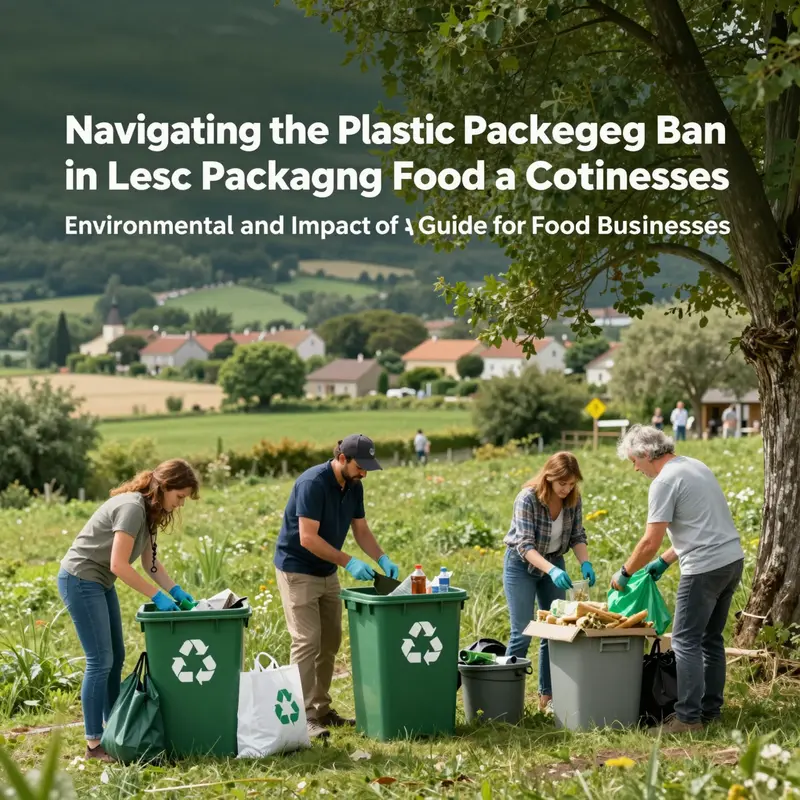
In Le Tampon, a town set on the volcanic spine of Réunion, everyday life is being quietly redirected by rules on plastic packaging. The changes reach from the stalls of the market to the kitchen shelves, and from school canteens to the waste collection routes that thread through neighborhoods. France has moved decisively to reduce throwaway plastics and to accelerate the shift toward reusable and compostable materials. Since 2020, a broad class of disposable plastic items has faced tighter restrictions, with standards that favor materials that are bio based and capable of composting or biodegrading. By 2023 many of the initial steps had become enforceable requirements for retailers and service providers, linking hygiene, safety, and environmental goals with practical procurement choices. The core idea is simple: packaging should not be treated as a disposable default but as a resource that can be reused or returned for cleaning.\n\nIn Le Tampon, the national and EU rules arrive as a local operating manual. A regulation implemented in 2023 bans plastic packaging in the retail sale of unpackaged fruits and vegetables, nudging vendors to present produce in ways that minimize waste while preserving freshness. This change has rippled through households, encouraging bulk buying, reusable bags, and containers that can travel home and be used again. Municipal waste streams show the first signs of transformation, with slower fill rates at landfills and a clearer separation of compostable materials. The impact on small traders has not been uniform. Some shops have embraced reusable systems and refill stations; others face higher upfront costs and the challenge of training staff and customers to adapt.\n\nLooking ahead, the EU packaging and packaging waste regulation PPWR places a broader constraint on the hospitality sector. From a future date, single use condiment sachets and small sauce packets may be prohibited in many on site venues. Restaurants and cafés will need to rely on larger containers, compatible with reuse, or on washable dispensers and durable dishware. The rule aims to cut microplastics that follow the food chain and to encourage logistics that minimize waste. For Le Tampon, it means rethinking service design, supplier contracts, and the everyday routines of cooks and servers.\n\nThe environmental transition has also required a shift in materials and supply chains. France continues to phase out or redefine disposable plastics, with a system that allows certain items to persist if their composition meets stricter standards for bio content and for end of life. The goal is to strike a balance between practicality, food safety, and environmental responsibility. Vendors are experimenting with compostable papers, bagasse based packaging, and durable, reusable systems for bulk ingredients and condiments. These innovations create new business models and even local green jobs, while challenging price considerations for small businesses and households alike.\n\nEquity remains a central concern. Not all households can readily afford compliant options, and price gaps risk undermining the environmental goals. Policymakers are exploring targeted subsidies, shared washing facilities, and incentives for shops to invest in reusable systems. In parallel, public information campaigns help residents understand how to sort waste, how to clean and reuse containers, and how to participate in local take back schemes. The social fabric of Le Tampon is being woven with the language of reuse, repair, and responsibility, turning what used to be ordinary plastic into a material to be managed with care.\n\nIn practice, implementation requires reliable infrastructure and clear guidance. Local authorities coordinate with waste processors, market operators, and schools to test different containers and workflows. Simple pilots, such as a common dishwashing station at a busy market or a community bottle return, can reveal what works in the town layout, the climate, and the local food culture. The result is a learning system in which small experiments scale over time, and where vendors share experiences about what reduces waste without sacrificing convenience or food safety.\n\nThe Le Tampon chapter illustrates a larger European project: environmental ambition aligned with social equity and economic viability. The policies push designers, retailers, and households to rethink what counts as waste, how materials move through the economy, and who bears the cost of transition. The path forward will continue to depend on practical evaluation, flexible policy design, and ongoing dialogue among residents, business owners, and public officials. If the trajectory holds, Le Tampon could offer a model for other communities as they pursue a cleaner, more circular food system in which packaging is valued, not simply disposed of.
Final thoughts
As the regulations surrounding plastic packaging for food containers in Le Tampon evolve, businesses must adapt to not only comply with these new laws but also embrace the opportunity to connect with customers who prioritize sustainability. By proactively addressing these challenges through innovative packaging solutions and marketing strategies, businesses can not only meet regulatory requirements but also contribute significantly to a more sustainable future for their community. The journey toward a greener Le Tampon is a collaborative effort, and every stakeholder has an essential role to play.